Emily James

The Glass Menagerie

07/11/25

Royal Lyceum Theatre, Edinburgh

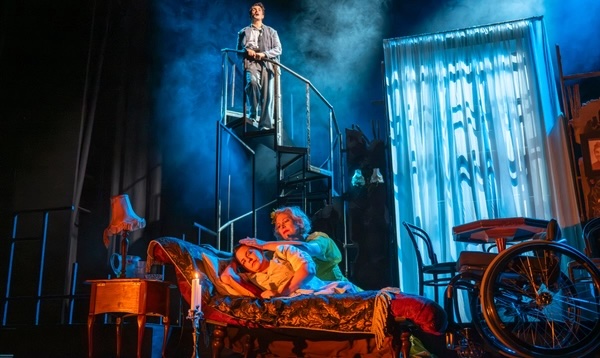
Directed by Andrew Panton, this production of The Glass Menagerie (from Dundee Rep, Citizens and the Royal Lyceum) is an altogether gentler and less histrionic affair than other interpretations I have seen – and all the more compelling for it. Emily James’ barely-there set echoes the characters’ fragility, underscoring the narrator’s opening assertion that the play “is not realistic.” The overt theatricality – the fourth-wall breaking; the exaggerated miming as the family eat a meal – paradoxically emphasises the underlying authenticity, the idea that this is “truth in the pleasant disguise of illusion”.

The time: 1937. The place: St Louis, Missouri. Our narrator is Tom Wingfield (Christopher Jordan-Marshall), and it’s no coincidence that he shares his initials with the playwright. The Glass Menagerie was described by Tennessee Williams as “a memory play,” a loosely autobiographical attempt to pin down his relationship with his emotional past – so it makes perfect sense that Tom should be an aspiring writer, desperate to escape the clutches of a dead-end job in a broken economy. He is consumed by the need for freedom in all its guises – creative, personal, sexual – bitterly resentful of his mother’s insistence that it is his duty to stay at home and provide for her and his sister.

His mother, Amanda (Sara Stewart), is the kind of fading Southern belle Williams is famous for, but – at least in this iteration – she’s less monstrous than Blanche DuBois or Maggie the Cat. This Amanda reminds me more of Austen’s Mrs Bennett: a woman made ridiculous by her desire to find a husband for her daughter, even though her zealotry makes perfect sense in a society where women are financially dependent on men. Stewart imbues Amanda with warmth and likability, while also making clear exactly why Tom finds her so intolerable.

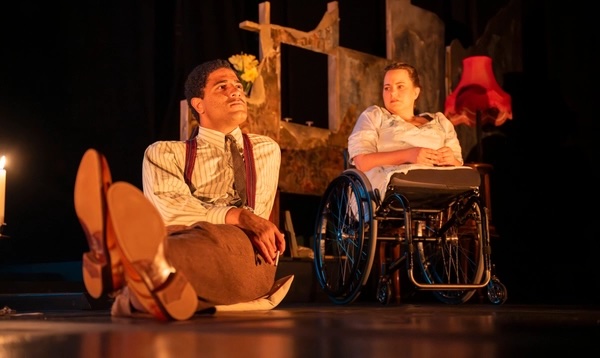
Amy Conachan’s Laura is irresistible. She is Tom’s older sister, but a combination of shyness and disability means that she is far less worldly-wise than him. In fact, they are opposites in almost every respect. While Tom finds the city too small and claustrophobic, Laura is agoraphobic, too terrified even to open the front door, let alone build a life for herself outside the home. Tom rails against his situation but Laura has ruefully accepted her lot in life, successfully side-stepping Amanda’s attempts to set her up on dates and dedicating herself to the care of her collection of delicate glass ornaments. So it’s all the more heartbreaking to see her open up to Tom’s kindly friend, Jim (Declan Spaine), only to have her hopes dashed by his smiling comment that he’d love to have a sister just like her. Exquisitely acted, the extended duologue between this pair is a real highlight for me.

The dreamy nature of the play is further emphasised by the music, liltingly performed by Spaine as the story unfolds, and Simon Wilkinson’s light design perfectly complements the ethereal atmosphere, at times illuminating the characters’ faces in such a way as to almost create cinematic close-ups, so that we’re forced to focus on their pain and misery.

This beautifully-realised production of The Glass Menagerie has only one more showing at the Lyceum, so you’ll have to be quick if you want to get yourself a ticket for tonight’s performance.

4.6 stars

Susan Singfield
The Snow Queen

25/11/23

Lyceum Theatre, Edinburgh

Hans Christian Andersen’s The Snow Queen has never been my favourite fairytale. Although there are plenty of gloriously memorable images – and the book I had as a child was beautifully illustrated – I’ve always found the plot unwieldy. Happily, in this very Scottish adaptation, Morna Young does an excellent job of clearing the dead wood, jettisoning some of the unnecessary complications and illuminating the story’s season-appropriate warm heart.

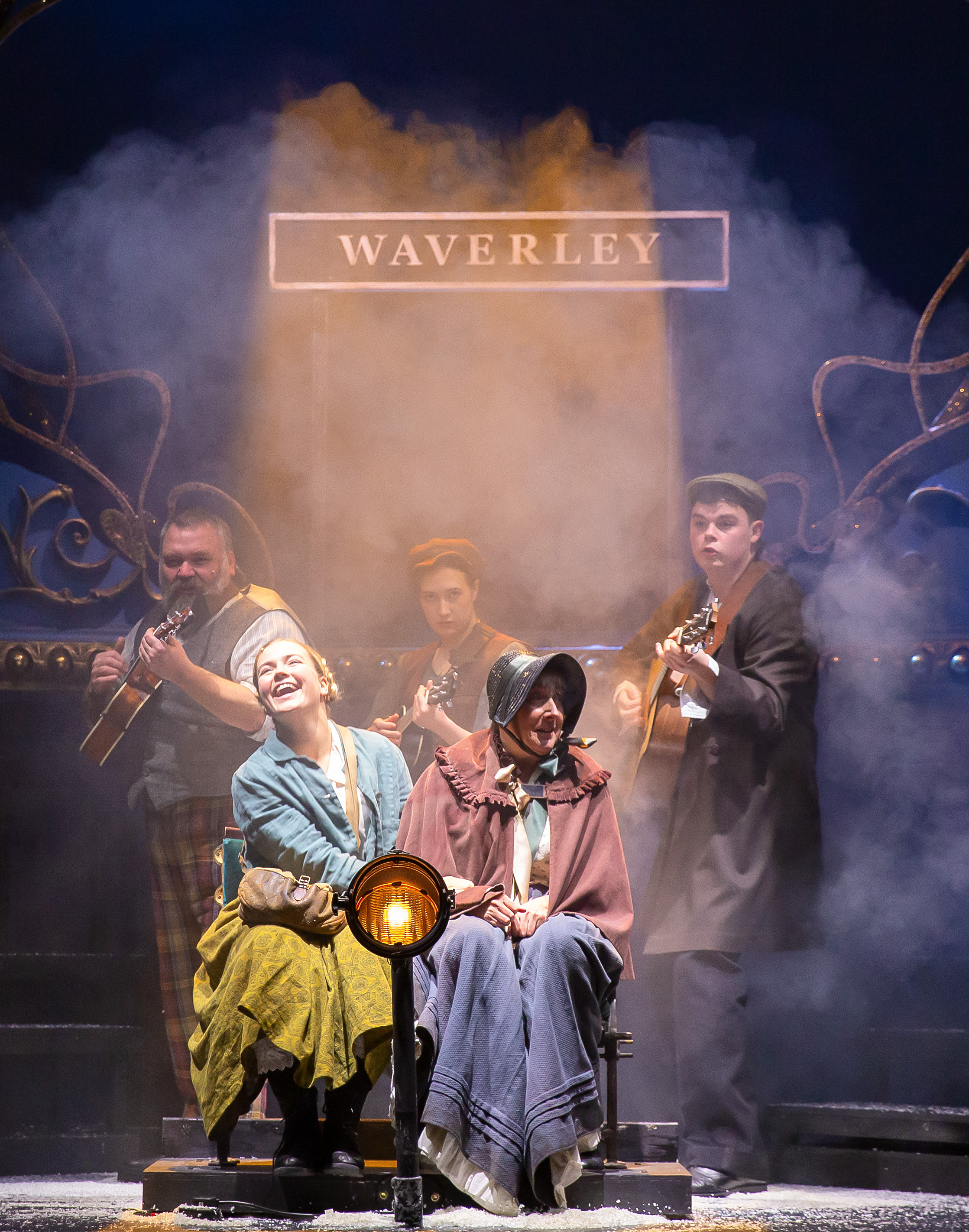
We start off in Victorian Edinburgh, where we were for last year’s An Edinburgh Christmas Carol. But we don’t stay there long: The Snow Queen is about a quest, so of course there’s an epic journey to be made. Best friends Gerda (Rosie Graham) and Kei (Sebastian Lim-Seet) are orphans, living with their respective grandparents. Every evening, they climb up onto the roof of their tenement to tend to their pot plants and plan for the future. Kei dreams of going to university, while Gerda wants to see the world.

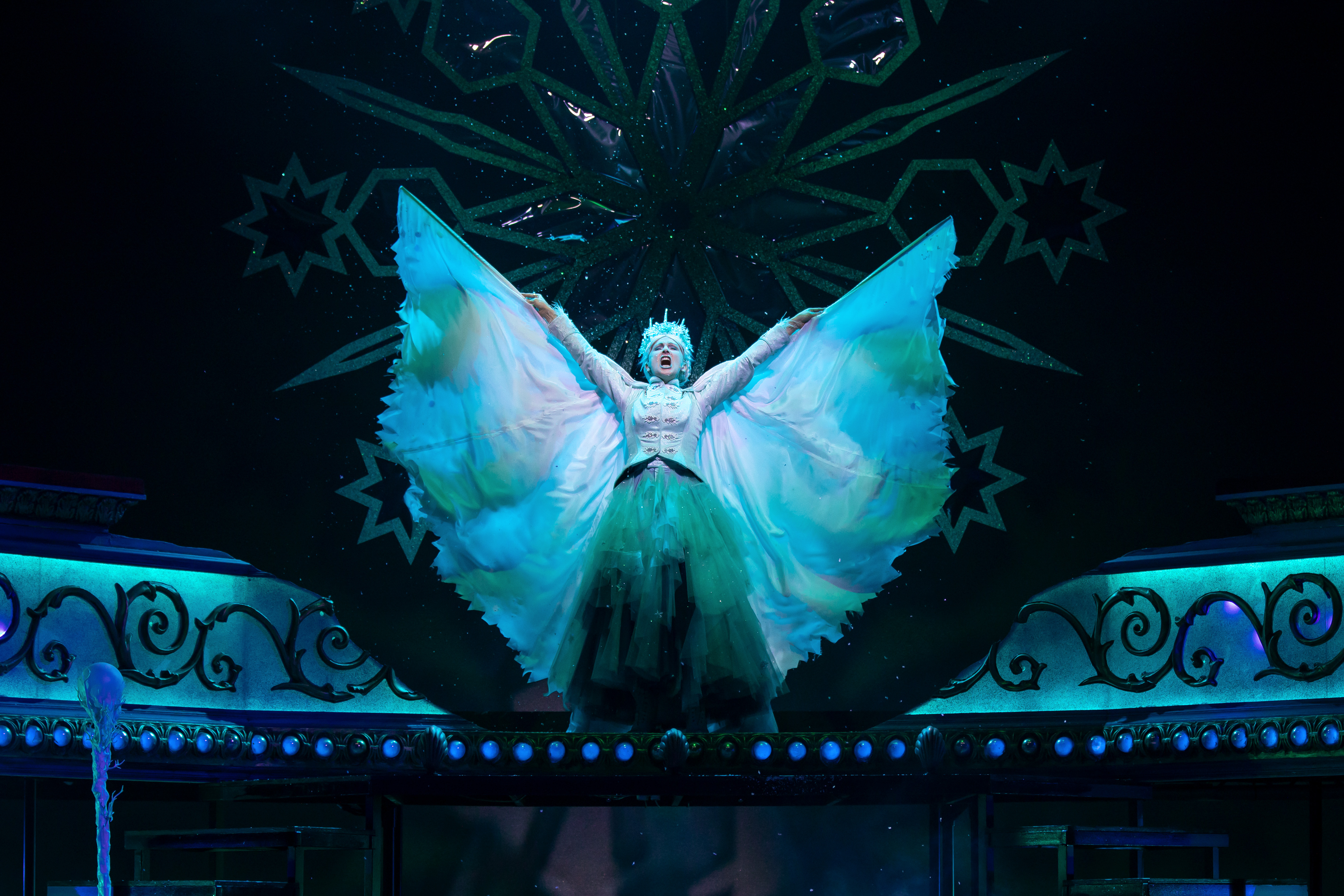
Meanwhile, in another realm, some trolls have broken a magic mirror and its shards have caused havoc, turning Beira, the Scottish Queen of Winter, into the evil Cailleach Bheur (Claire Dargo), determined to reign forever, and never relinquish her power to Bride, the Queen of Spring. Bride (Naomi Stirrat) isn’t strong enough to overpower the Snow Queen, but she does manage to slow her down – by planting five seeds of spring inside five human beings. So far, the Snow Queen has tracked down four… and now she thinks she knows where the fifth one lies. Kei doesn’t stand a chance. Corrupted by the magic mirror, he turns against Gerda and follows the Cailleach Bheur to her icy lair. But the Snow Queen has reckoned without Gerda, and underestimated the power of true friendship…

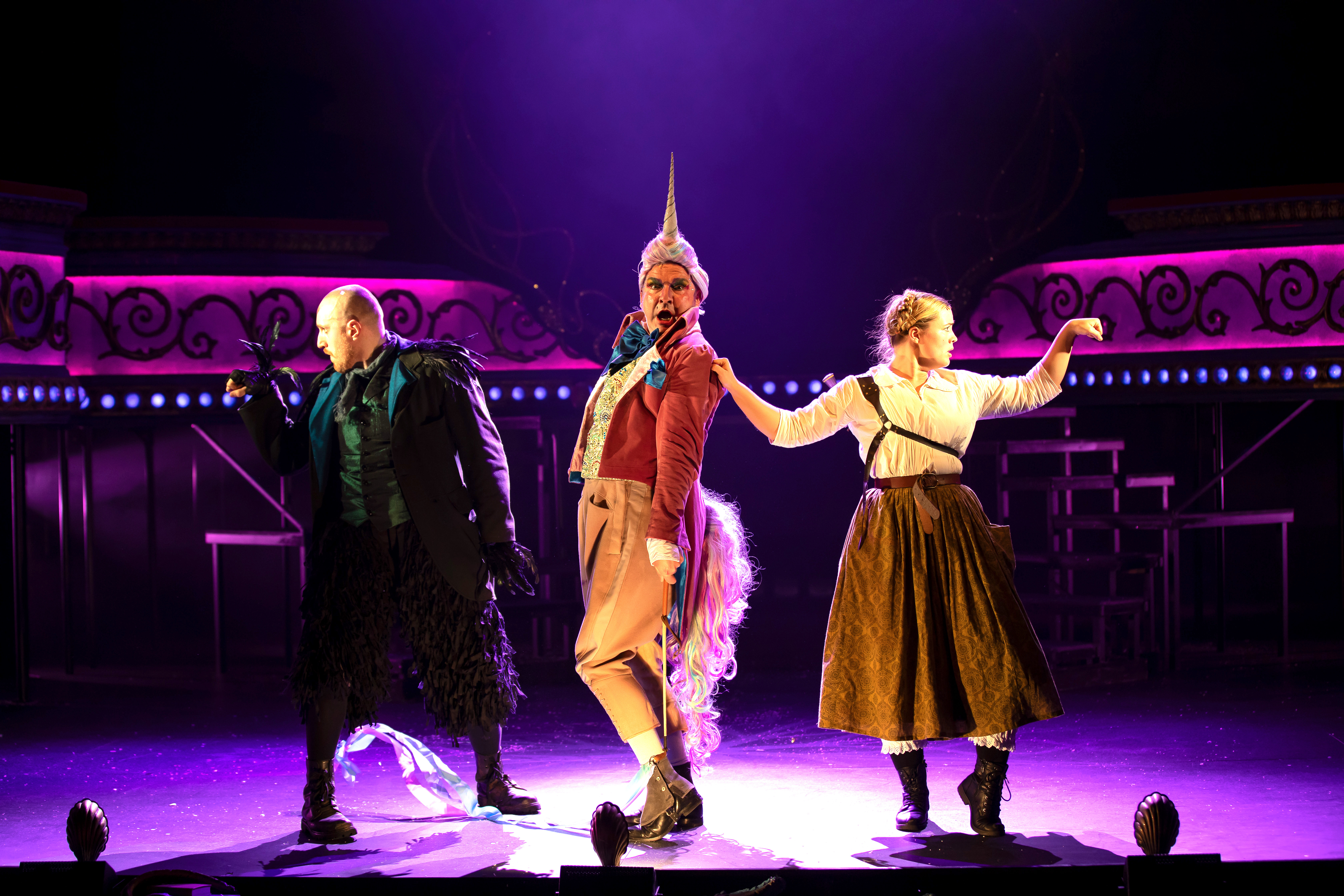
With a lively score by Finn Anderson and some very memorable songs – including Quines Gotta Fight and the innuendo-rich A Horse with a Horn – this production is as bold and vivacious as everything we’ve seen Cora Bissett direct. Graham and Lim-Seet convince as sweet and wholesome children, while Dargo’s white witch is suitably scary. Samuel Pashby – who plays Corbie, the Snow Queen’s corvid assistant – is an excellent clown, his gymnastic capers always engaging. But it’s Hamish the Unicorn (Richard Conlon) who steals the show, which does unbalance things a little – but, honestly, it doesn’t matter a jot. After all, this is a piece of festive family fun, and it’s hardly surprising that a rainbow-farting magical beast should be the mane (sorry) attraction.

I’m a little bit in love with Emily James’ set, which mirrors (and thus closes) the Lyceum’s dress circle, reflecting the theatre back at us. It’s huge and imposing and difficult for the actors to negotiate – and therein lies its beauty. The image is as in-your-face as it gets, too direct to count as subtext, and I admire its audacity. It’s impossible to ignore. James’ costumes are wonderfully opulent too: I’m drawn to the bright colours of the flowers in the fairy garden, and to the Cailleach Bheur’s shimmering pastels.

The Snow Queen straddles the line between theatre and panto, Hamish’s broad humour contrasting with the more serious underlying themes. For the most part, I think this works, although some of the jokes don’t land as well as they might, eliciting titters rather than belly laughs. Perhaps it would be an idea to have Hamish and Corbie engage more directly with the audience, signalling the tonal change. Nonetheless, the enthusiasm with which the final rendition of A Horse with a Horn is sung suggests that even the youngest attendees are fully on board.

A sparkling delight.

4 stars

Susan Singfield