Edinburgh

Night, Idiot

12/04/25

Traverse Theatre, Edinburgh

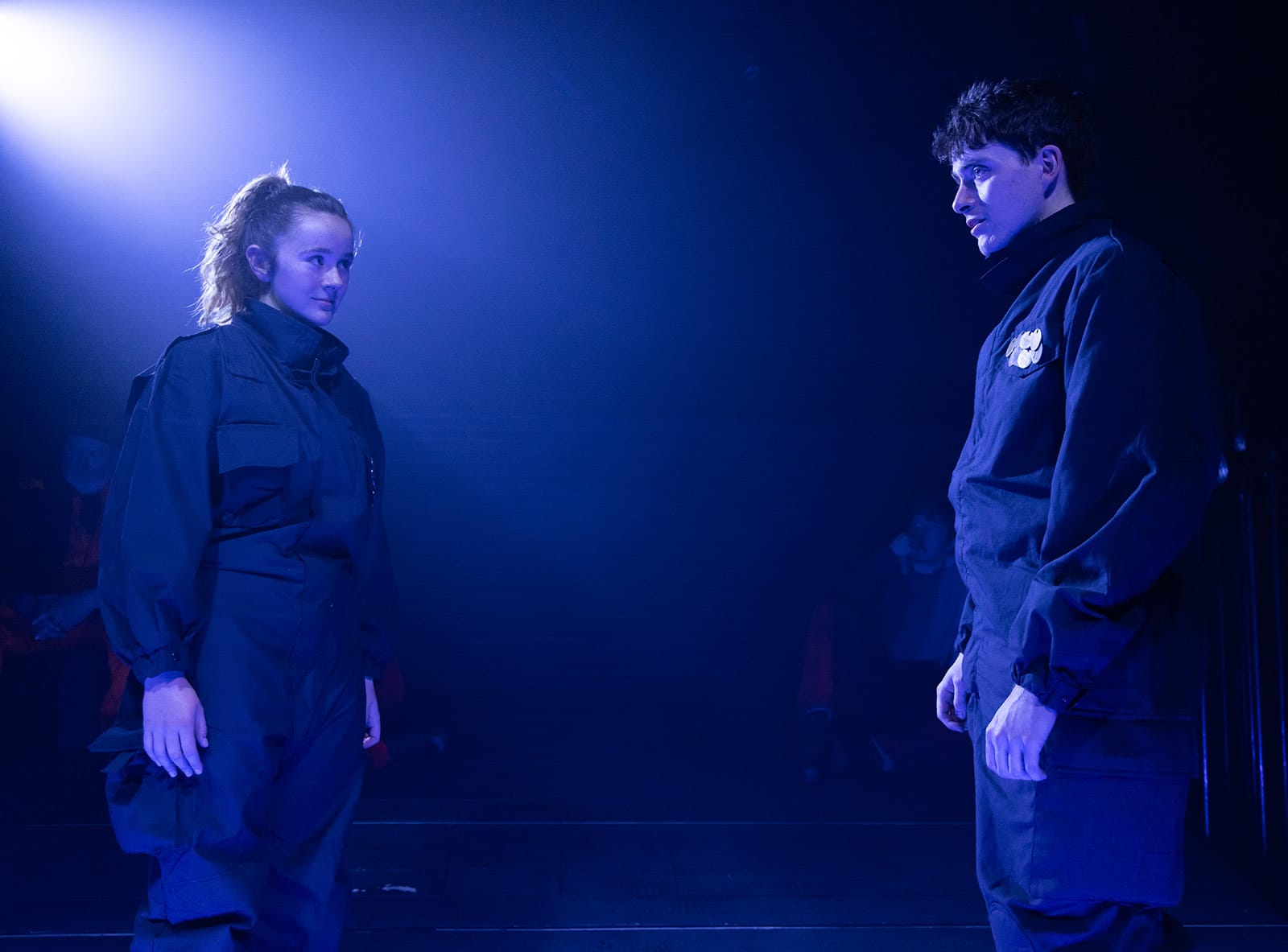
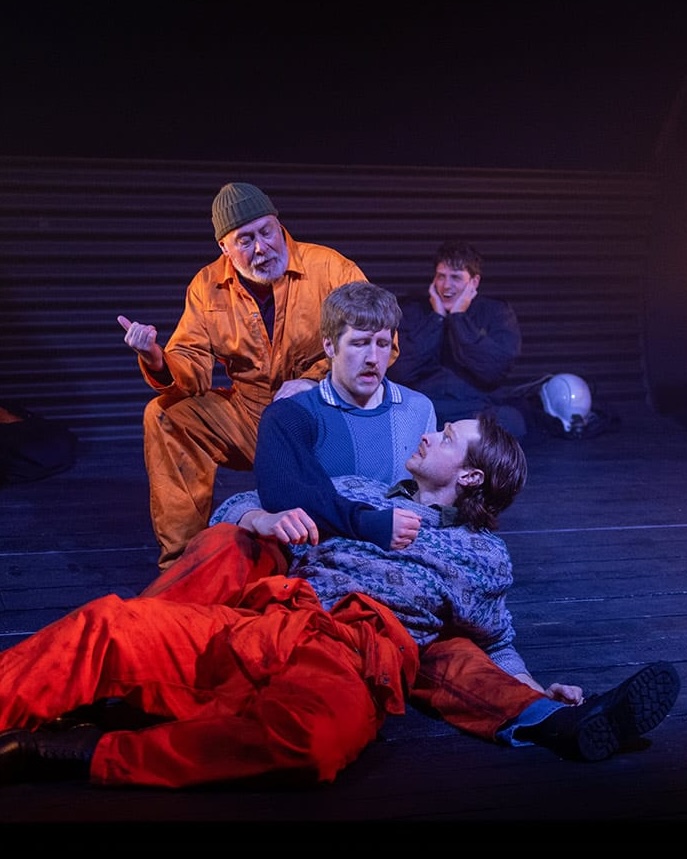
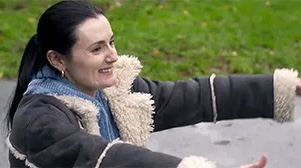
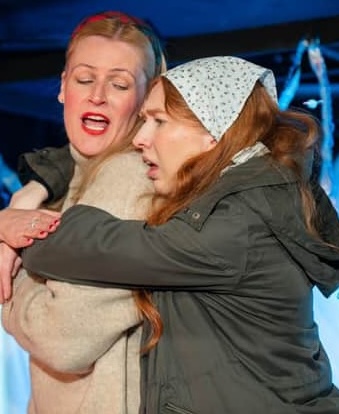
Night, Idiot promises to be a breezy comedy of manners, with a strong focus on inter-generational differences. Dani (Zoë Bullock) and her boyfriend, Paul (Andrew Barrett), have just moved into a new flat, and they’ve barely started unpacking when Paul’s mum, Ruth (Pauline Lynch), announces a visit. Zoë’s nervous: she’s only met Ruth once before and that didn’t go well. After all, it’s hardly Zoë’s fault that Paul is still working in a coffee shop, or that his great novel remains a concept rather than anything as concrete as a finished manuscript. So it’s Zoë’s job as a paralegal that pays the rent and bills; so what? That’s up to her and Paul. But Ruth has other ideas: she wants her son to fulfil his potential. And, more importantly, she wants grandchildren. Soon.

The first third is very funny, if sometimes a little far-fetched (surely no one is ever as blunt as Ruth in their criticism of their child’s partner?). But something is clearly troubling Dani…

And then things take a darker turn…

Directed by Shilpa T-Hyland, Night, Idiot is a dynamic piece of theatre: poignant, engaging and full of twists and turns. The script – by Bullock – is clever, offering clear insight into Dani’s mental anguish as she obsessively replays events, dwelling on every Sliding-Doors moment and pondering what might have been. These glimpses into the hypothetical are slick, and I like the fact that Bullock doesn’t offer any easy answers for us or Dani, and nor does she shy away from difficult themes.

Bullock and Lynch make an appealingly-fiery central duo, while Barrett ensures Paul is a sympathetic character, despite his uncommunicative nature and ultimate cowardice. Bullock in particular gets to show off her acting chops: watch out for her so-heavily-signposted-this-isn’t-a-spoiler rendition of Shrek and you’ll see exactly what I mean.

Night, Idiot is an ideal piece for A Play, A Pie and A Pint, with lots packed into the short running time. There’s emotional heft here and I find myself really rooting for the characters. Zoë Bullock is clearly one to watch.

4.3 stars

Susan Singfield
Kanpai

06/04/25

Grindlay Street, Edinburgh

We’ve lived in Edinburgh for around a decade, yet for a variety of reasons, have never eaten at Kanpai – only a few steps away from where we live – until a couple of friends suggest meeting there for dinner. First impressions are certainly promising. Behind that modest, unassuming doorway, there’s a relaxed and convivial dining room that exudes good vibes. Kanpai means ‘cheers’ and the name seems a good fit, even if we are still on the wagon. There’s an initially bewildering array of dishes to choose from but the friendly staff are more than happy to offer advice.

The recent boom in sushi restaurants around the city means that there are now plenty of venues offering this kind of cuisine, but it’s clear from the word go that Kanpai’s offerings are a step up from the low-budget eateries we’ve previously visited. There are four of us to dine so we opt to share everything, which means that a riot of dishes, each more colourful than the last, keeps arriving at short intervals before being promptly despatched.

Everything is perfect: the California and Tokyo hand rolls faultlessly assembled; the tuna and avocado maki melt-in-the-mouth delicious. ‘Pace yourself,’ I keep thinking, but then the next platter arrives and I can’t quite hold myself back. Amidst a plethora of excellence, a few dishes stand out from the rest, but I have to say, it’s a pretty high bar.

There’s a delicious plate of pan-fried chicken and vegetable dumplings, perfect when dunked in the bowl of accompanying sauce, and there’s a portion of Tappoyaki octopus fish cakes that are absolutely bursting with flavour. A mizo-glazed aubergine cooked in its skin is as soft and caramelised as you could possibly wish for – indeed, it’s impossible to resist scraping out the skin with a spoon to get those last flecks of goodness into your mouth.

There’s a platter of tempora king prawns, and though tempora can sometimes be my sticking point – the crispy batter tending towards greasiness – this is exactly as it should be: light, dry and crunchy, an object lesson in the fine art of deep frying. A teppan terriyaki salmon is the final course to arrive, perfectly cooked and wonderfully aromatic, the skin finished to an exquisite crisp, the flesh beneath soft.

Would we care to finish off by trying one of Kanpai’s ice creams? Hell, yes! I opt for white sesame flavour (black sesame is also available), while Susan tries the soba, which has a delicate nutty texture. It’s the perfect way to finish off a note-perfect meal and we leave Kanpai feeling that this is up there with the best Japanese food we’ve eaten in the city. One thing’s for certain, we’ll be back.

5 stars

Philip Caveney

The End

30/03/25

The Cameo, Edinburgh

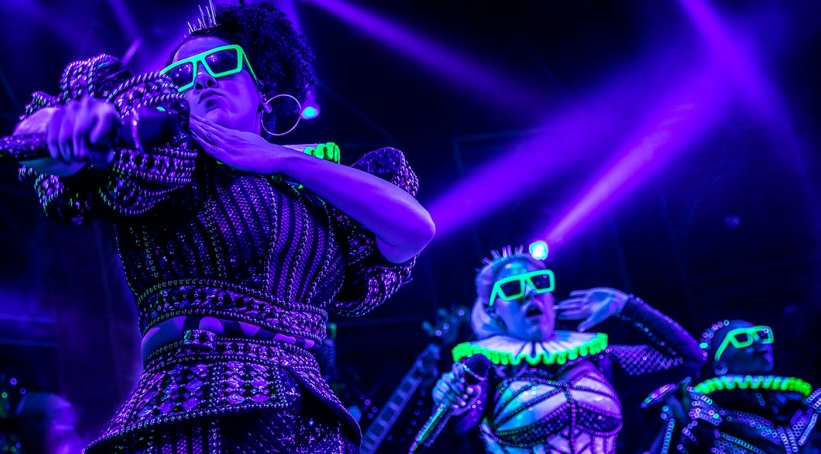
Joshua Oppenheimer might not be the most prolific of directors, but he’s certainly one of the most original. The documentary-maker’s first foray into fiction is a case in point: who else would offer us an unsettling post-apocalyptic… musical?

The setting is an oligarch’s nuclear bunker. There’s been some kind of climate disaster, precipitated by the billionaire’s fossil fuel company. Most of humanity is dead, but – decades after the fallout, far below the earth – a chosen few still live in luxury, albeit in the confines of some eerie salt mines.

Father (Michael Shannon) is the oligarch, Mother (Tilda Swinton) his wife and Son (George McKay) their twenty-year-old child, born underground. He has never seen the sky, never met anyone outwith their small circle – and never questioned his parents’ tales about their former lives. Instead, he immerses himself in building an intricate model of all the outside places he’s only ever heard about.

The bunker has three more occupants: Friend (Bronagh Gallagher), Butler (Tim McInnerny) and Doctor (Lennie James). The trio are touted as “part of the family” but it’s pretty clear they’re here to serve, to take care of the cooking, the cleaning and the rich people’s health. Father spends his time working on a self-aggrandising autobiography, resisting Son’s attempts to offer editorial advice, while Mother fusses endlessly over the exact positioning of the priceless artworks on the walls. Life ticks by, one day much like another, an opulence-clad monotony that fulfils none of them.

And then Girl (Moses Ingram) turns up. She’s the first outsider Son has ever met, and he’s smitten. But she’s had to leave her family behind, and her survivor’s guilt opens up new avenues of thought for Son. Why has his family been chosen, out of everyone, to inhabit this haven? And why, when the place is vast, are there so few of them? Once he starts to ask questions, everything changes…

Mikhail Krichman’s cinematography is sumptuous: the scenes in the salt mines are particularly beautiful, but every shot is a work of art, as meticulously framed as the Renoirs and Monets decorating the bunker.

The film is billed as a musical but, despite the lengthy spoken sections, it feels more like an opera, with its formality of tone and portentousness. The music by Marius De Vries and Josh Schmidt amplifies the heightened emotions, but the vocal parts are sensibly kept simple, which suits the non-singers in the cast (such as Swinton). Ingram, Gallagher and McKay are more accomplished, and they are given the most to do.

Despite its bloated running time, The End is a thought-provoking and startlingly unconventional movie, quite unlike anything else on the big screen. It’s not one you’ll find at a multiplex, but it’s definitely worth the price of a ticket at your local indie (or Picturehouse) cinema.

4.3 stars

Susan Singfield
Wasps

25/03/25

Traverse Theatre, Edinburgh

Cameron Forbes’ Wasps, the latest offering from A Play, A Pie and A Pint, buzzes along busily, like its  hymenoptera lookalike. Anchored by a gutsy performance from Yolanda Mitchell, this tragic coming-of-age monologue has quite a sting in its tail (sorry, not sorry).

Teenager Rianne (Mitchell) just wants to fit in. At school, she’s perfected the art of invisibility: if she dresses right, wears her make-up exactly so, earns just enough detentions, she can move through the corridors without attracting any attention at all. But there are downsides to never being seen. For one thing, her crush, Oran, doesn’t seem to realise she exists. And for another, not even her best friend notices when her life implodes…

I’m not usually a fan of so-called inspirational quotations but “what doesn’t kill you makes you stronger” serves as a pretty decent précis of Wasps‘ central message. And I mean that in a good way. Rianne faces some really serious problems – including a confrontation with her spheksophobia -which she has to dig deep to face up to. And yes, she emerges battle-scarred, but at least she’s no longer desperate to disappear. She’s bolder, braver and ready to take up space. A bit more… wasp-like.

Director Lesley Hart ensures that the pace never flags, so that the play has a convincingly propulsive teenage energy, and Mitchell does a wonderful job of conveying both Rianne’s turbulent emotions and her evident disdain for many of the people in her life, evinced by her scathing impressions of them.

Gillian Argo’s set is visually arresting. I like the hexagonal construction, suggestive of a wasp’s nest, and the flickering projections of the worker wasps . However, I’m not always fully convinced by the wasp analogy; the comparison is perhaps stretched a little too thin. I’m also left with a couple of nagging questions about the plausibility of some of what occurs. (I can’t elucidate without spoilers but let’s just say that, though social care in the UK is undoubtedly in dire straits, Rianne is a vulnerable child and her situation would surely be flagged up; she wouldn’t be left to deal with it entirely alone.)

Nonetheless, this is a sprightly, engaging piece of drama, with some lively writing and a spirited delivery – a worthy addition to the PPP canon.

4 stars

Susan Singfield
Eilidh, Eilidh, Eilidh

18/03/25

Traverse Theatre, Edinburgh

This three-hander, written and directed by Lana Pheutan, explores the rural housing crisis through the lens of drunken cousins, Eilidh (MJ Deans) and Eilidh Bheag (Chelsea Grace). The two women are in their late twenties, ready to embrace their adult lives but thwarted by the prevalence of AirBNBs on their native island, Skye. “I’m a teacher!” wails Eilidh. “I deserve my dream home…” While her sense of entitlement is quite comical – she’s been working for just a few years and her unemployed boyfriend isn’t even looking for a job – she’s not wrong in her assessment of a broken housing market, where flats are snapped up by remote investors before locals can even get a look in. But living back at her mum’s is starting to wear her down…

Her solution? To persuade Eilidh Bheag to break into a holiday let with her and then… um… Well. She hasn’t really worked out what should happen next. It just seemed like a good idea half an hour ago, when the pub landlord refused them a lock-in.

MJ Deans imbues Eilidh with lots of sass and self-righteousness, while Chelsea Grace’s Eilidh Bheag provides a calmer foil, tempering the former’s outrage with a few gentle home truths. After all, Eilidh Bheag is the one who’s stayed on Skye, while her cousin’s been living the high life in Glasgow for the past eight years. How dare she come back to the island and accuse her of pandering to tourists, being “part of the problem”? “You only care when it directly affects you,” snaps Eilidh Bheag at last, tired of being hectored. 

The altercation is disrupted by the unexpected arrival of Miss Nicille Mhicheil (Annie Grace), an elderly local resident. The dynamic changes, and an inter-generational element is added to the polemic, injecting more nuance. 

Pheutan’s direction is sprightly and the pace never drops, although the dialogue occasionally sounds a little too much like rhetoric, the issues taking precedence over the characters and their immediate situation. On the plus side, the occasional use of Gaelic serves as a reminder of the culture the community stands to lose, and also sounds very authentic (I’m from North Wales, so the pattern is a familiar one: it feels very natural to me to speak English with a smattering of Welsh phrases). 

Eilidh, Eilidh, Eilidh succeeds in raising awareness of an important problem – and even moots an answer, albeit a little simplistic.  All in all, this is a heartfelt and ultimately heartwarming piece of drama. 

4 stars

Susan Singfield
Felicity Ward: I’m Exhausting!

15/03/25

Traverse Theatre, Edinburgh

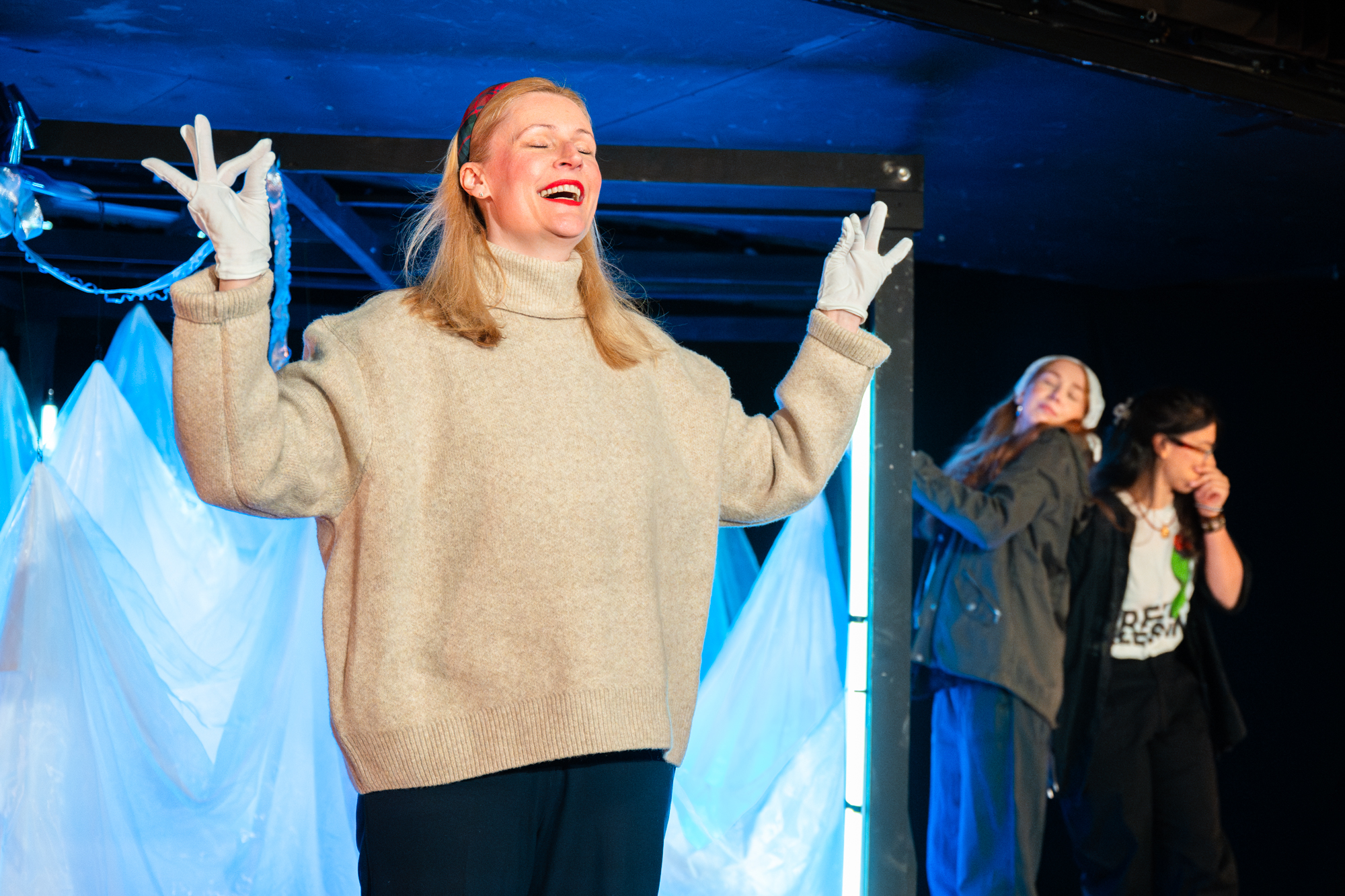
Felicity Ward’s manic energy is apparent from the moment we hear her shrieking, “Please welcome to the stage…” from the wings. She bounds on – which is in itself quite a feat, given the towering stilettos she’s wearing. And the tone is set for two hours of mayhem…

Ward is an experienced performer and it shows. The London-dwelling Aussie hasn’t done any stand-up for several months, she tells us, so why not “ease” back into it with a two-hour set? Actually, the show is a little baggy in places – I think I’d prefer a tight ninety minutes – but she has us in the palm of her hand and the Traverse 2 is rocking with laughter.

The subject matter is wide-ranging, from childbirth to the pandemic, from Quorn to, erm… fingering. There are also some weirdly wonderful animal impressions (more of these, please!), as well as some admirably frank references to mental health problems, particularly of the post-natal variety. Ward’s unfiltered openness is what makes her so engaging – well, that and her irrepressible mischievousness. She has an infectious laugh and the cheekiest smile you’ve ever seen.

I’m not usually a massive fan of comedians talking about parenthood because they mostly tread the same old ground, but Ward’s disarming admissions are bold and fresh. She makes us feel the horror of childbirth as well as the wonder; makes us laugh out loud (with schadenfreude) at her various mishaps.

I’m less keen on her weight-gain material. Previously a size 4, Ward bemoans “ballooning” to a size 14. While she aims for body positivity, claiming to love her belly, she also acknowledges that this material doesn’t really work now that she’s lost a lot of the weight, thanks to training for Australia’s Dancing With the Stars. It’s all a bit Bridget Jones and I’m not sure it ever would have sat well with me, especially as lines like, “When your leggings don’t fit, you know you’ve got a problem” and, “At least you’re never too big for a scarf” belie her supposed fat acceptance.

That aside, I have a thoroughly fabulous evening. Ward’s not lying with her titular assertion: she is exhausting. Her ADHD might be undiagnosed but it’s surely undeniable. She ping-pongs all over the place, physically and verbally – yet somehow manages to take us with her.

One thing’s for sure: I’ll be streaming the Australian version of The Office tonight. I can’t wait to see what this kinetic woman brings to the David Brent role. Meanwhile, I’ve laughed more than I have in ages. And I’ll never look at a giraffe in the same way again…

4.2 stars

Susan Singfield
Spring Awakening

12/03/25

Bedlam Theatre, Edinburgh

It’s mind-blowing to think that Frank Wedekind’s Frühlings Erwachen was written in 1890, when Kaiser Wilhelm II ruled the Deutsches Reich, Queen Victoria was on the British throne and Robert Gascoyne-Cecil (nope, me neither) was our PM. In a world where women weren’t even allowed to show their ankles, it’s not surprising that it was sixteen years before someone dared to stage this controversial exposé of the dangers of repression, with its bold depictions of teenage sexuality – not to mention rape, suicide and abuse.

Steven Sater and Duncan Sheik’s musical adaptation premiered on Broadway in 2006, exactly one hundred years after Wedekind’s play finally opened at Berlin’s Deutsches Theater, under the direction of Max Reinhardt. Despite the addition of some banging rock songs and more than a few profanities, this modern version actually pulls more punches than the original, most notably by omitting the rape and softening the ending. Nonetheless, it still has the capacity to shock, and to remind us that we make sex dangerous by hiding it, by making it taboo.

Set in 19th century Germany, this is a story about a group of young people coming of age under the stifling weight of moral expectations. Wendla (Hattie Sumners) asks how babies are made. Scandalised, her mother (Sophie Davis, who plays all the adult women) first shouts and then equivocates, condemning her daughter to an ignorance which will have severe consequences. Meanwhile, Moritz (Shaun Hamilton) is struggling to keep up with his schoolwork, and fear of failure takes him to a devastating place. Melchior (Daniel Fischer) seems stronger than the others: thanks to a combination of intelligence and a liberal mother, he’s more knowledgeable than his friends, and therefore better equipped to cope with life. Still, the authoritarian regimes of school and church soon drag him under too; no one is safe in this society.

Theatre Paradok’s production succeeds in conveying those most fundamental of teenage emotions: exuberance and despair (I’m guessing the student cast don’t have to dig that deeply to remember how raw and overwhelming those feelings can be). Sheik’s eclectic soundtrack is beautifully interpreted by musical directors Nonny Jones and Ruairidh Nicholson, the choral numbers being particularly impressive. The live band – hidden in the wings – are terrific, and plaintive solos by Sumners, Gemima Iseka-Bekano (Ilse) and Hamilton evoke some strong responses.

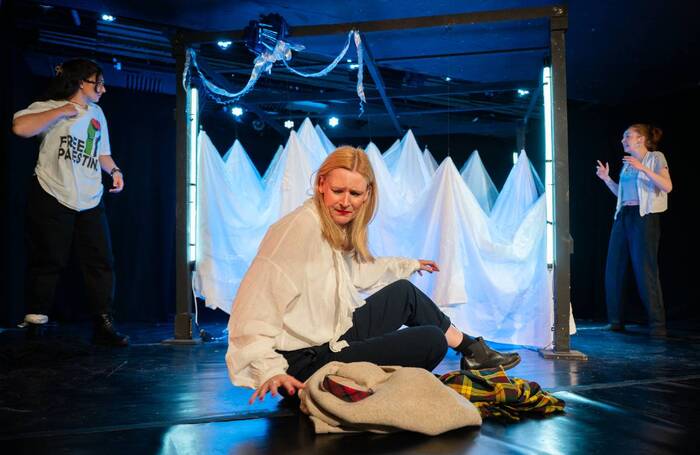
The show’s aesthetic is great. I love the androgyny of the costumes, with feminine dresses worn over masculine suits; the queer coding is fabulously done. The set is simple but very effective: items of underwear are stapled to a curtain framing a large gauze backdrop, onto which short animations and live videos are projected, creating an ethereal doubling effect and amplifying the characters’ emotions.

Directors Rue Richardson and Jane Morgan manage their large cast with aplomb. The play is dynamic and visually very appealing, from the arresting choreography (by Františka Vosátková, along with Richardson, Morgan and Andrea Adriana Prawono) to the boisterous shenanigans of the teenage boys. The gauze curtain makes metaphors literal: dead characters appear from ‘beyond the veil’, while ‘a veil is drawn’ over Wendla and Melchior’s lovemaking. However, Ernst (Michael Butler) and Hänschen (Max Middleton)’s homosexual relationship is placed boldly centre-stage – perhaps a subtle nod to the idea that some things shouldn’t be re-closeted.

I do have one criticism, and it’s the emergency exit door, stage left, which is open to the elements. Bedlam is a chilly venue at the best of times; tonight, with an outside temperature of 1°C, I could do without sitting in a freezing draught. And it’s not just the cold that’s a problem, there’s the noise of the city too: traffic and sirens and people passing by, all making a claim on my attention. I can see that the options are limited by the need to house the band, but – for the sake of one entrance and one exit – it’s surely not worth making the audience so uncomfortable.

Nevertheless, this production of Spring Awakening is a triumph: a lively, thought-provoking piece of theatre, as relevant now as it was more than a century ago.

4.2 stars

Susan Singfield

James Rowland: Piece of Work

08/03/25

Traverse Theatre, Edinburgh

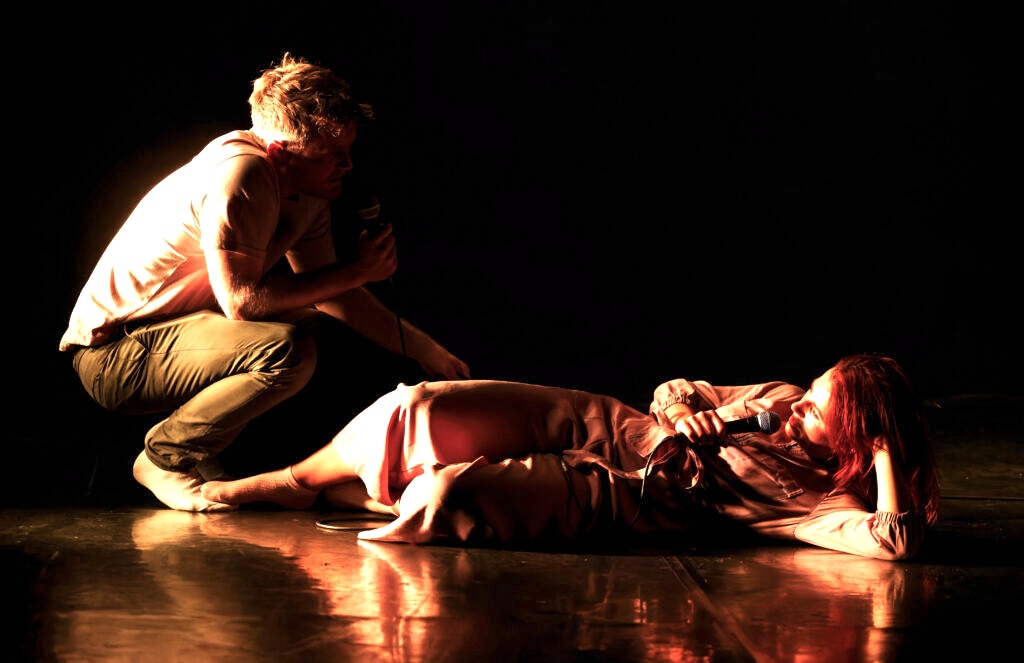
Piece of Work is the second in James Rowland’s Songs of the Heart trilogy. We saw the first, Learning to Fly, back in November 2023, and we’ve yet to catch the third, James Rowland Dies at the End of the Show. We’re here tonight with a friend and we’ve warned her about Rowland’s propensity for undressing, so none of us is particularly surprised when the show starts with him removing his T shirt and trackies and replacing them with plaid pyjamas. We’re just relieved he’s kept his undies on this time – and also a little confused by the costume choice. What do PJs have to do with anything? There’s nothing about him being in bed or even much about him being indoors…

Instead, this is a story about fathers and sons: about Rowland coming to terms with his old man’s death; about his ersatz brother, Chris, whose dad rejected him; and about The Prince of Denmark and Old Hamlet. The three narratives are interwoven, shining a (literal) light on the complexities of paternal relationships and their potentially devastating impact. Rowland, Chris, Hamlet – all abandoned, one way or another. All railing at their absent fathers for leaving them to deal with a scary, fucked-up world.

It’s also a story about suicide, and Hamlet’s ideation in the “to be or not to be” soliloquy is rendered very explicit here. It’s heavy stuff, but Rowland has a light touch, and knows just when to pull us back from the brink. His openness and affability make it easy to trust him with weighty topics without feeling overwhelmed.

It’s a great concept and Rowland has a charmingly vulnerable stage persona, but there are elements of the story that feel under-explored, especially the climactic confrontation between Chris and Dick, which feels almost thrown away. There’s surely more to explore in the tale of Rowland’s performance at the Royal College of Music too; for such a frank actor, it really seems like he’s holding back.

Nonetheless, I’m drawn into the story, and I find myself wanting to know where Rowland goes in the final part of this trilogy.

3.2 stars

Susan SIngfield

Driftwood

05/03/25

Traverse Theatre, Edinburgh

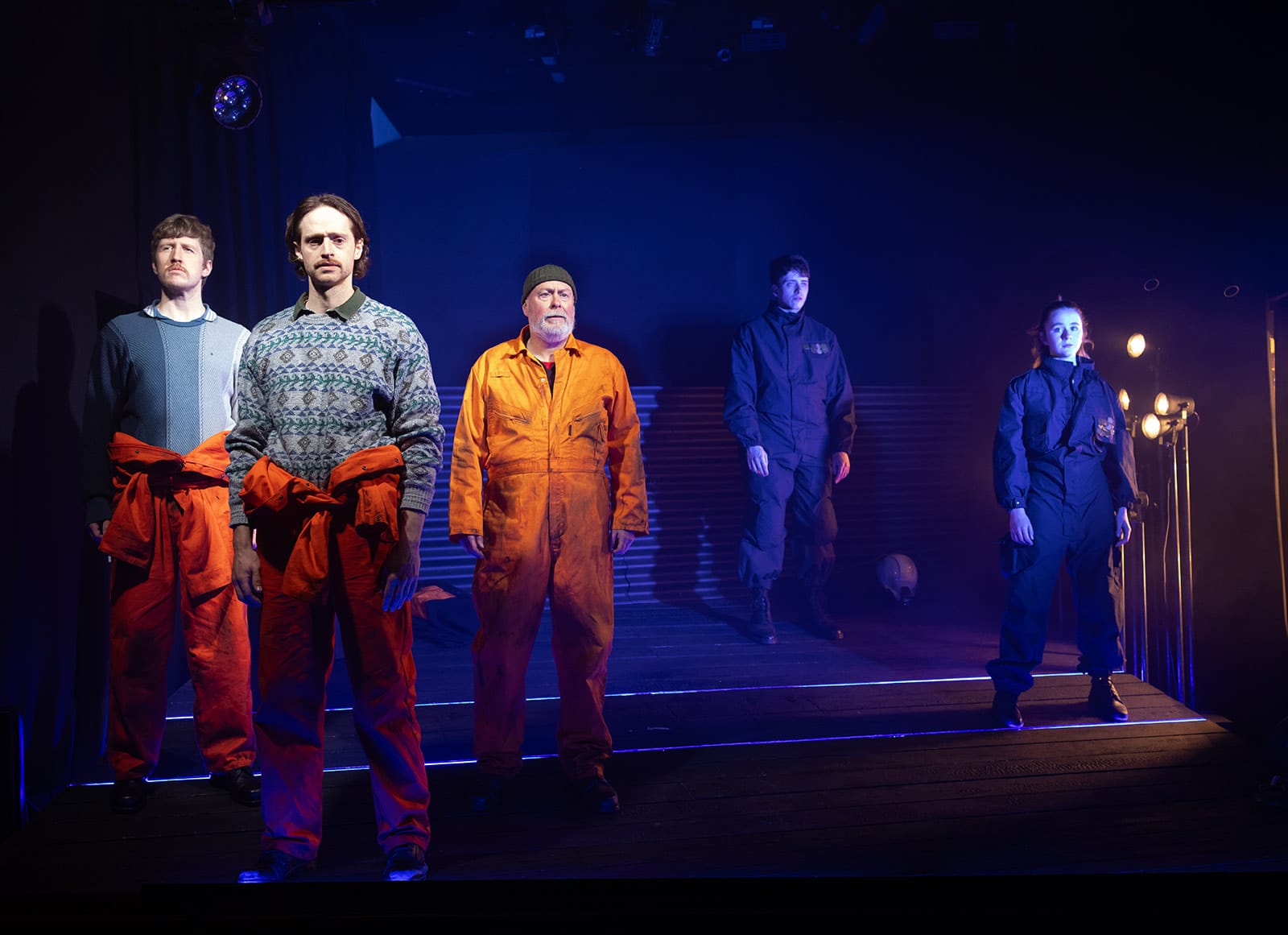
The opening moments of Driftwood are intense. To say this co-production by ThickSkin and Pentabus thrusts us straight into the action would be an understatement. One moment we’re in a brightly lit auditorium, muted chatter all around us, eyes drawn to the hypnotic rippling of the backdrop’s projected seascape. The next – without warning – there’s a blackout, paired with the thunderous roaring of crashing waves, and two boys, Mark and Tiny, in danger of drowning, are yelling each other’s names, desperately scrabbling to make it to shore.

That’s the past. And then, suddenly, we’re in the present. The boys are now men. Tiny (Jerome Yates) isn’t so tiny any more, and he hasn’t seen his older brother, Mark (James Westphal) in years. Not only is Tiny still in County Durham, he’s still in Seaton Carew, still living with their dad. He feels connected to the area – to its shoreline, its myths and to his family history. Anyway, he couldn’t leave if he wanted to. His dad needs a full-time carer and Tiny has filled that role for the past four years.

But now he finds himself on shifting sands. Dad is about to die. Mark – gay, estranged from his homophobic father – has come back from Manchester to say goodbye. The brothers love each other but they resent each other too. Tiny’s angry that he’s been left alone to cope, while Mark can’t quite forgive Tiny for sticking with the old man, nor for parroting his father’s homophobic slurs when he was young.

Tim Foley’s sprightly script keeps the story moving forward, even though most of the real drama happens offstage, the focus instead on the brothers’ relationship and their attempts to reconcile their differences. So we don’t get to meet Dad, nor to attend his funeral; we don’t see the arguments that led to Mark leaving; we’re told about but never shown the environmental protests dividing the town. It doesn’t matter. The piece feels very immersive nonetheless, thanks in no small part to Sarah Readman’s videos and Lee Affen’s rousing sound design. The ever-present image of the closed steelworks looming over the bay is affecting, reminding us throughout how bleak Tiny’s life is, his stubborn attachment to his home equal parts understandable and heartbreaking.

Yates and Westphal imbue both brothers with a likeable vulnerability: Mark’s obscured by a brittle carapace of self-protection; Tiny’s writ large in his wide-eyed naïvety. Co-directors Neil Bettles and Elle While strike an impressive balance between stillness and dynamism, Mark’s quiet rationalism contrasting effectively with Tiny’s chimerical obsessions. I especially like the funereal pace of the scene where the brothers dress for their father’s burial, the conceit conveying the emotions of the funeral without explicitly placing us there.

On tour until 31st March, Driftwood has – ahem – drifted on from Edinburgh now, but you can still catch it in Coventry, Ipswich, Leeds and Salford. It’s well worth an evening of your time.

4.2 stars

Susan Singfield
The Last Showgirl

02/03/25

Cineworld, Edinburgh

I haven’t seen any of Pamela Anderson’s previous work (Baywatch never appealed) so my knowledge of her is limited to three headline facts: red swimsuit, sex tapes and – recently – no make-up. I’m not surprised that this reductive list doesn’t do the woman justice, but I am impressed by her nuanced performance in Gia Coppola’s latest film.

Anderson is Shelly, the titular last showgirl, still strutting her stuff in a Vegas casino. The clock is ticking, both for Shelly and the show itself. They’re both past their sell-by dates, and they’re being pushed aside for newer, brighter, fresher fare. But the fifty-seven-year-old has devoted her whole life to Le Razzle Dazzle and she doesn’t know who she is without it. News of the show’s impending closure is utterly devastating.

The sacrifices Shelly has made are huge. For more than thirty years, she has placed this job before her marriage, her security, even before her daughter, Hannah (Billie Lourd). But it turns out her bosses owe her nothing in return: no pension, no severance pay, no training for a different job. And, this being the USA, she won’t even have any health insurance when the curtain falls for the final time. What has it all been for?

Kate Gersten’s screenplay is deceptively simple, a layering of vignettes that slowly build to something quite profound. We already know how vampiric the industry is, sucking the last drop of blood from its initially willing victims before callously discarding them and calling, “Next!” Here, we see what happens to the husks it leaves behind.

At its heart, The Last Showgirl is a film about delusion, about the myths we tell ourselves to justify our lives. Shelly clings to the idea that Le Razzle Dazzle is a cut above, a Parisian-style extravaganza of glamour and elegance. But when Hannah sees the show, she bursts her mom’s balloon. “I’d hoped it would be worth it,” she says, before eviscerating Shelly’s dream, denouncing it as tawdry and outmoded, a nude show like any other – nothing special at all.

And Shelly’s not the only one. Her old friend Annette (Jamie Lee Curtis) gave up dancing long ago, and claims to be happy working as a hostess on a casino floor. But she is sent home whenever the place is quiet, her boss favouring her younger colleagues. No wonder she drinks; no wonder she gambles. Jodie (Kiernan Shipka) is only nineteen, but she’s already starting to realise the costs of pursuing her art, as her family disown her. Meanwhile, Eddie (Dave Bautista) is immune to the devastation. He’s a nice guy, seemingly quiet and kind, but he’s not at the mercy of a sexist world. He’ll be kept on to do the lighting for the next batch of sexy young women who come to the venue to perform.

The Last Showgirl is – ironically – an unshowy film. The social commentary is sharp but it’s cleverly-cloaked; the characters bold but the performances restrained. There’s a lot going on beneath the rhinestones and feathers.

4 stars

Susan Singfield