
Edinburgh

In Two Minds

02/08/24

Traverse Theatre, Edinburgh

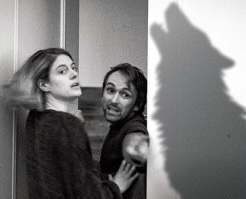
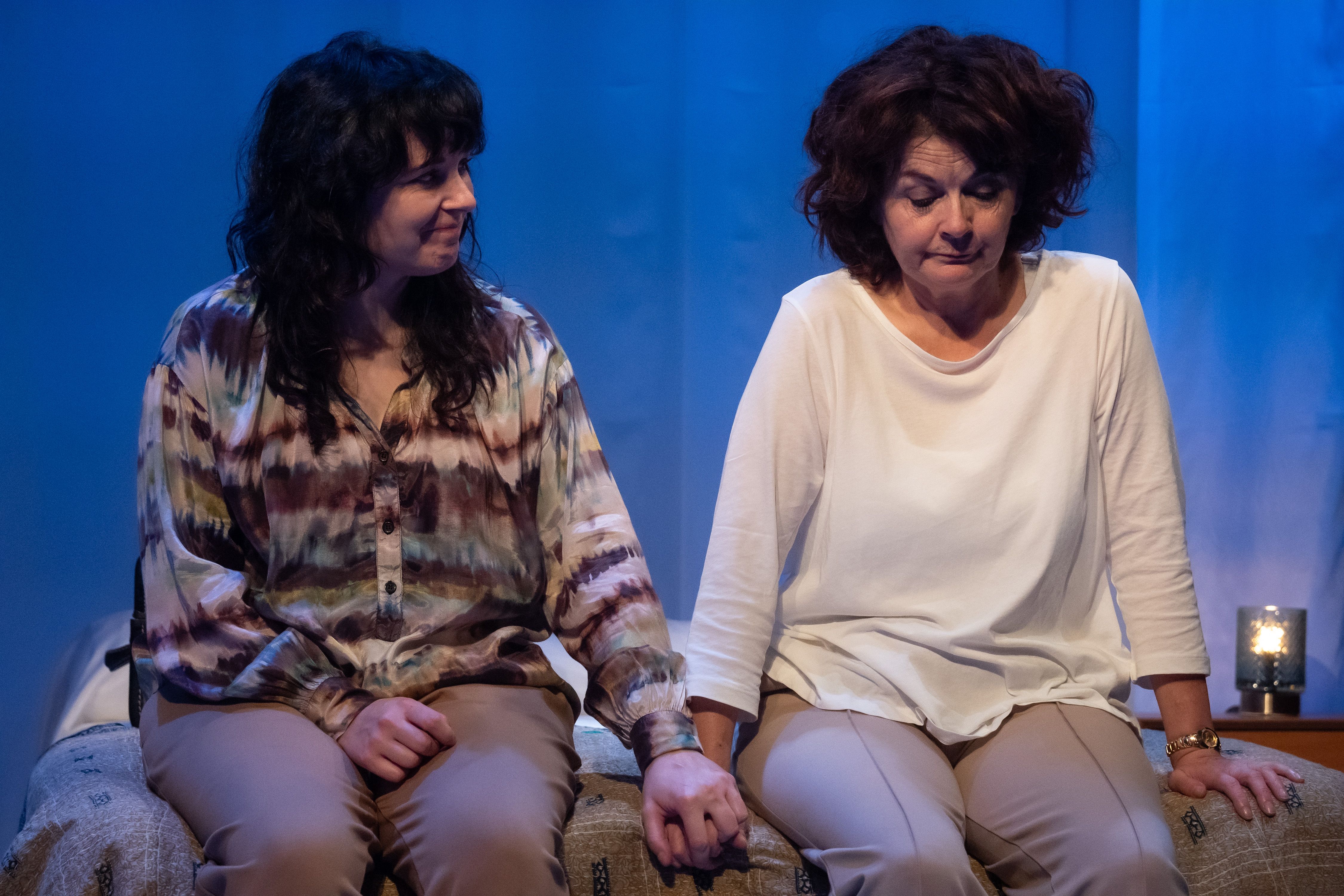
Joanne Ryan’s affecting two-hander explores the complex bond between a woman and her mother. Daughter (Karen McCartney) cherishes the tranquility of her minimalist studio apartment, but Mother (Pom Boyd) needs somewhere to stay while she’s having an extension built. Over the course of her protracted visit, their fragile relationship is pushed to breaking point.

It’s not just the accompanying clutter that grates on Daughter’s nerves. It’s the incessant talking, the veiled (and unveiled) criticisms, the sleeplessness – it’s all an intrusion into her hard-won peace. And she feels guilty too, because none of it is Mother’s fault. She has bipolar disorder.

Both Ryan’s script and Sarah Jane Scaife’s direction deftly convey how accustomed the characters are to Mother’s episodes. They’re not fazed; they have been here too many times before. There’s no dramatic reaction to her illness, rather a weary, frustrated sense of here-we-go-again. They know how this plays out and they know what they have to do. Over the years, they’ve learned to protect their relationship by maintaining some distance; forced together, it begins to disintegrate.

Boyd’s performance is flawless. She perfectly captures Mother’s brittle façade: her inability to stop talking, even when she knows that she’ll regret her words; her vibrant exuberance; her torpid misery. McCartney too is utterly convincing, clinging desperately to her career, trying to care for Mother without losing herself.

Alyson Cummings’ set embodies the quietude Daughter craves: simple, unfussy, light and clean. As soon as Mother enters, we can see the disruption she brings, even her kicked-off shoes a reproach to Daughter’s obsessive tidiness.

I’m not usually a fan of lengthy scene transitions and too many props, but Scaife uses them skilfully to illustrate both the passing of time and the steady accumulation of Mother’s belongings. The tension in these moments is further heightened by Rob Moloney’s unsettling sound design.

In Two Minds is a clever play, at once discomfiting and heartwarming. As well as an unflinching examination of the impact of mental illness on the protagonists’ relationship, it’s also a love story of sorts, and sure to be a success at this year’s Fringe.

4.2 stars

Susan Singfield

MaXXXine

08/07/24

Cineworld, Edinburgh

All hail MaXXXine, the third instalment of Ti West’s acclaimed horror trilogy.

Full disclosure: although I loved the second (Pearl), I haven’t seen the first (X). I’m planning to remedy that tonight, courtesy of Amazon Prime Video. Still, I don’t mind watching things in the wrong order – I’m not bothered by so-called spoilers. It reminds me of being a kid and borrowing books from the library based on what was on the shelf, rather than on their position in a series. If they’re good, they usually stand alone. And MaXXXine is very good.

The magnificent Mia Goth returns as the lead and she’s every bit as compelling as I’ve come to expect. Although this sort-of feminist, sort-of arthouse take on an 80s slasher movie isn’t perhaps as exquisite as Pearl, it’s nonetheless irresistible – beautifully crafted and clearly born of real affection for the genre.

Maxine Minx (Goth) is a successful porn actress, looking to cross over into mainstream movies before her star begins to wane. When she impresses the imperious Elizabeth Bender (Elizabeth Debicki), director of the controversial The Puritan, she lands the lead in its imaginatively-titled sequel, The Puritan 2. But there’s a Satanist serial killer prowling LA’s streets, and a dodgy detective called John Labat (Kevin Bacon) is trying to rake up Maxine’s past. “Whatever’s happening in your life that’s getting in the way of this movie,” says Bender, “Squash it.” And Maxine is determined to do just that…

Cinematographer Eliot Rockett perfectly recreates the low-rent look of 80s movies, all flickering edges and fuzzy VHS. There is a knowing, meta-quality on display throughout, although not in the glib, mocking style of some recent fright flicks, which simply invert the well-worn tropes. This is more of a love letter to Hollywood horror, with key scenes played out in the Bates Motel and behind those big white letters on the hill.

The supporting actors are almost as arresting as Goth, Debicki and Bacon in particular lighting up the screen. I especially enjoy Bender’s self-indulgent rationalisation of The Puritan 2 as a serious piece of art, and the deliciously sleazy Labat’s attempts to assert his dominance over Maxine.

There’s a message here too, and it’s about as subtle as Maxine’s perm: puritanical religion is more dangerous than adult entertainment. Whether or not you agree, the point is seductively made, and MaXXXine is a gory delight.

4 stars

Susan Singfield

TATTU

23/05/24

West Register Street, Edinburgh

It turns out that Rishi Sunak isn’t the only person getting wet…

In Edinburgh it’s been raining without pause for 48 hours, which partially explains why we arrive at TATTU looking like we’ve swum there fully clothed. We take refuge in the low-lit restaurant, underneath a ceiling that is packed with (fake, obvs) cherry blossoms and we peruse the menu. In recent years, traditional Chinese restaurants have struggled to survive amidst the plethora of Japanese and Korean venues that seem to be opening on British cities on an almost daily basis. TATTU advertises itself as a venue that contrasts traditional Chinese interior design with ‘forward thinking contemporary Chinese and Asian cuisine.’ We opt for the ‘Taste of TATTU‘ menu which offers two courses at £28.50 and three for £33.50, but of course diners can choose to eat al a carte.

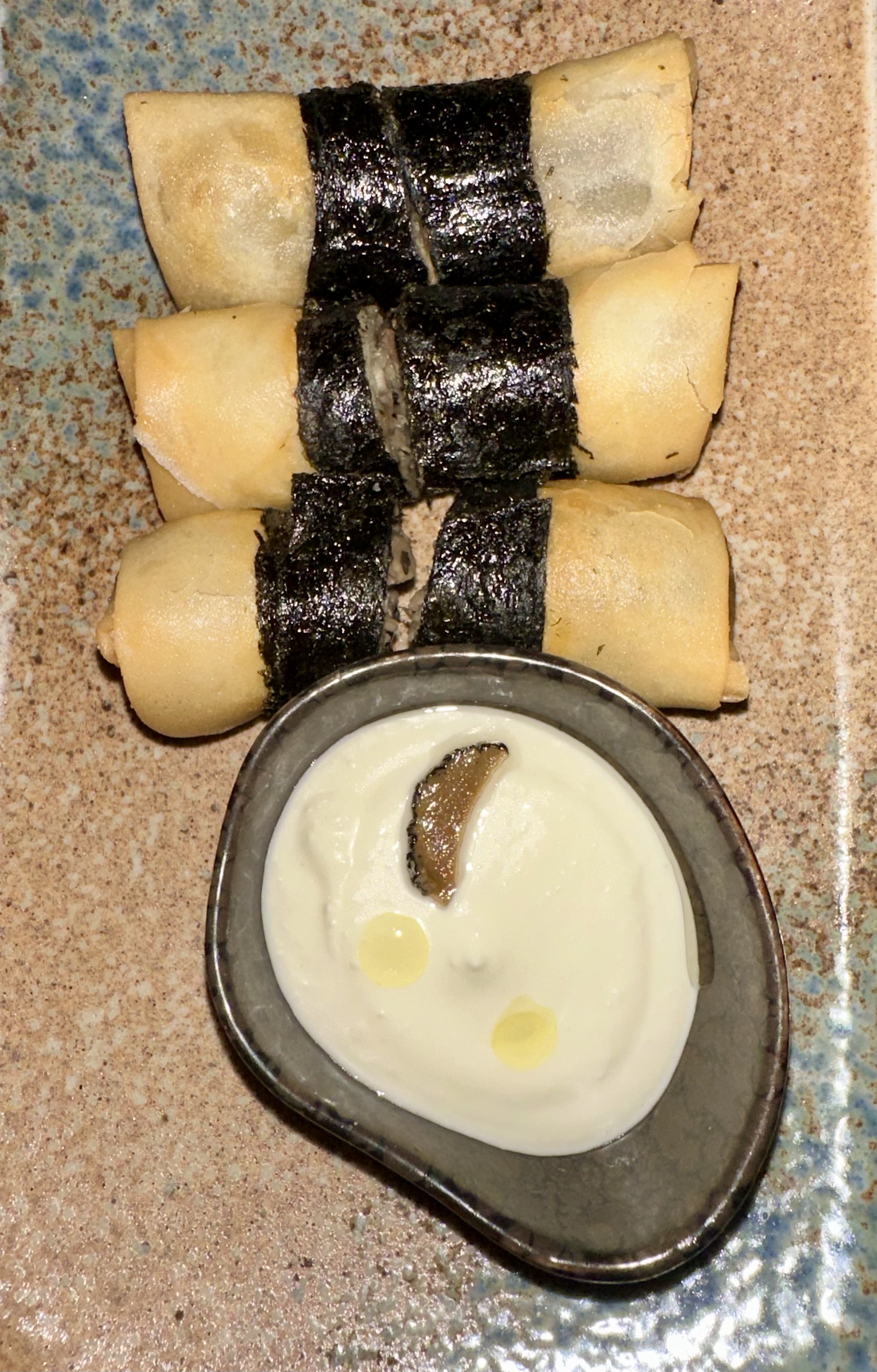
First up there’s a plate of Wild Mushroom Spring Rolls, which are intensely flavoured and accompanied by a truffle sour cream dip into which said rolls can be dipped. They are quite delicious as is the serving of Sugar Salt Crispy Squid. Though deep fried, it’s skilfully done, the little chunks of seafood dry and crunchy, peppered with green chilli, pomegranate and mint. This is insanely moreish and though I keep telling myself to leave some space for the main course, I am unable to resist hoovering up every last scrap.

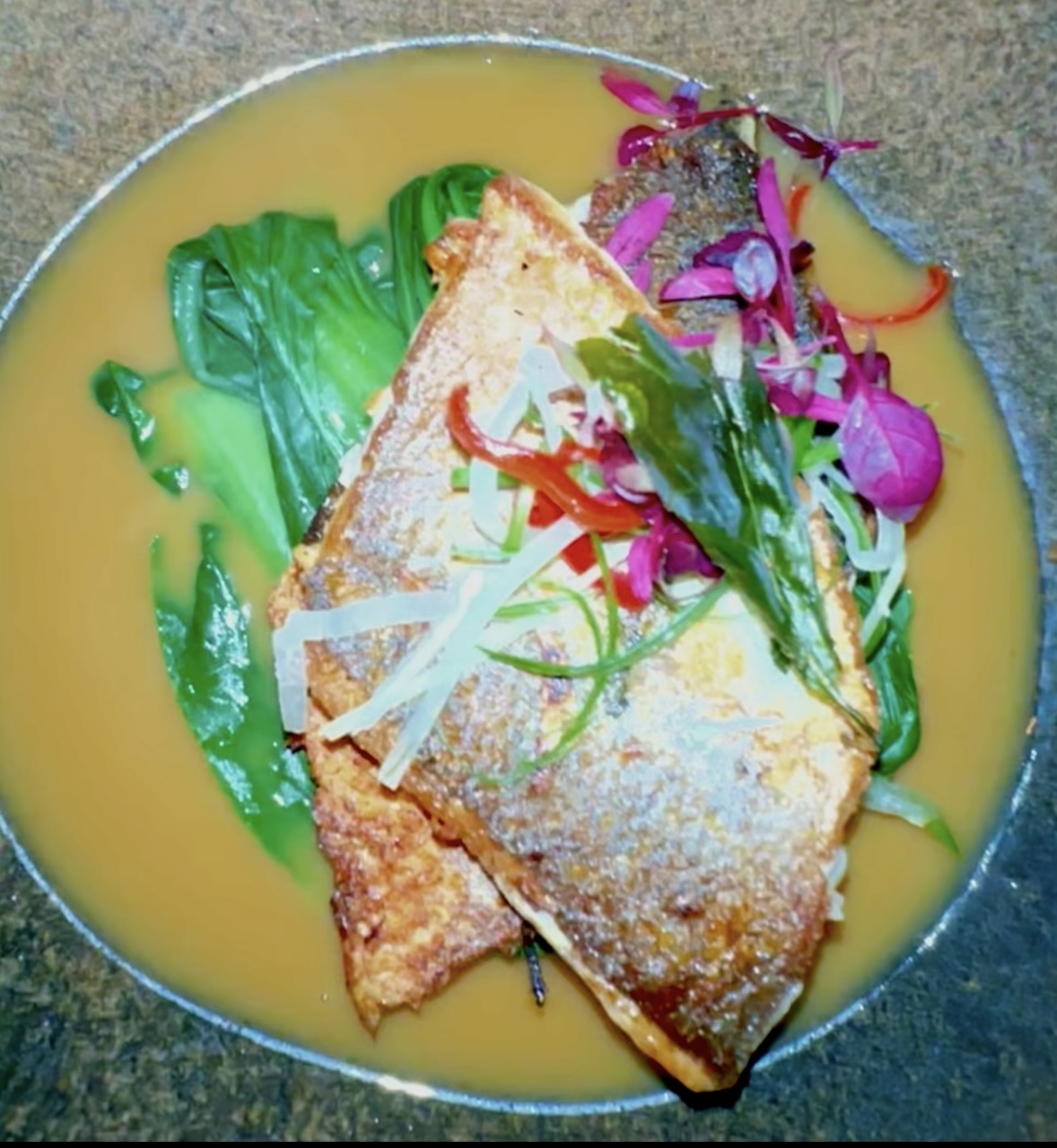
For my main meal, I’ve opted for the Wok Fired Angry Bird, which is, I suppose, the most traditional dish of the evening, deliciously sweet yet with a tantalising flash of heat in the sticky sauce. The chunks of chicken are liberally layered with roasted chilli peppers, cashew nuts and sesame honey soy. Susan samples the Sea Bass Chinese Curry, which just might be the stand-out dish of the evening, the large chunks of fish perfectly cooked with a crispy skin and softly flaking interior, nestled in a smooth curry sauce with lemongrass, kaffir lime leaf and pak choi.

Puddings can be a let-down in many Chinese restaurants – though I still harbour fond memories of the banana fritters I used to enjoy in my childhood, drizzled with ample dollops of warm golden syrup. There are just two desserts available on this menu, so we decide to sample them both and – as ever – we share them.

The Asian Pear Sticky Toffee Pudding offers a clever fusion of that most traditional of British puds with something more exotic in which the flavour of almonds, vanilla and cinnamon cut through. Yum! The Cherry Blossom is a bit of a show stopper, a bowl of cherry mousse covered with chocolate ‘earth’ from which sprouts a tree made from chocolate and candy floss. Our waiter, Mikey, performs a little bit of theatre with a jug coaxing forth clouds of dry ice which drift enticingly around the dish. Happily, the food is as tasty as it looks.

All in all, this is an ambitious concept, skilfully presented and I enjoy every mouthful. I’m aware as I gaze mournfully out of the window, that the rain has not eased off one iota since we arrived, so there’s the prospect of a damp, homeward trudge ahead of us, but TATTU manages to send me on my way feeling well satisfied.

4.2 stars

Philip Caveney

Hoard

19/05/24

Cineworld, Edinburgh

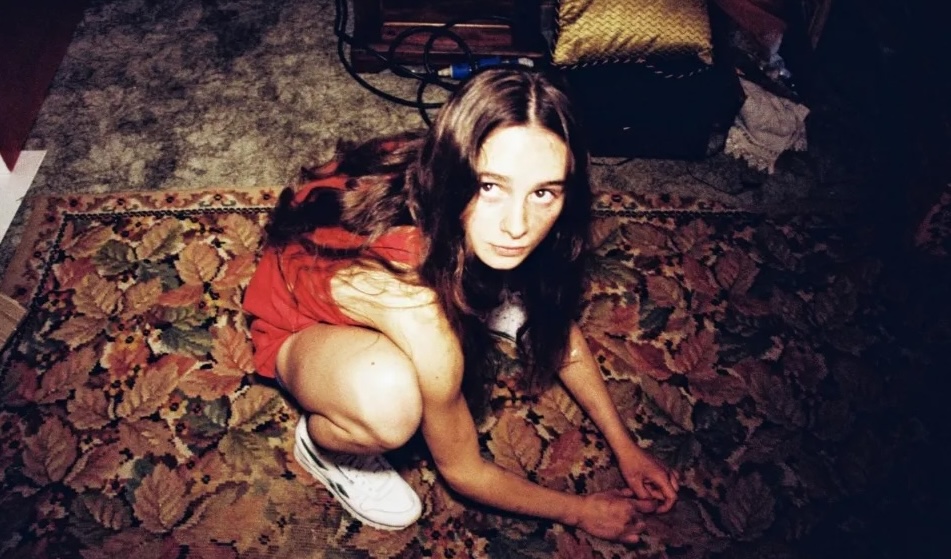
It’s London, some time in the 1980s. Cynthia (Hayley Squires) and her daughter Maria (Lily Beau Leach) are very close, with a whole host of funny rituals and secret games. They watch movies, threading popcorn on string; they dance until they fall over laughing; they go out at night, scavenging from bins.

The house is full to bursting. When she comes home from school, Maria has to climb over the detritus blocking the front door. Her pet ferret, Pearl, goes missing for days. She can’t find her PE kit. In trouble – again – for ‘forgetting’ it, she snaps at her mum. “I hate us. I’ve been to other people’s houses. They’re not like this.”

When the teetering mounds of junk literally crush Cynthia, Maria is taken into care.

Fast forward to 1994. Maria (Saura Lightfoot Leon) is sixteen now. ‘Mum’ is Michelle (Samantha Spiro), who’s been fostering her for years. Despite still being something of an outsider, Maria has been functioning quite well. But there’s a perfect storm brewing: she’s left school but doesn’t have a job; her only friend, Laraib (Deba Hekmat), is moving away; and news comes in of Cynthia’s death. Enter thirty-year-old Michael (Joseph Quinn), an ex-foster kid of Michelle’s who needs a place to stay for a few weeks. He’s a refuse collector, and Maria finds herself drawn to him, his smell kindling childhood memories. And then she begins to emulate her mother’s hoarding ways…

There’s a lot to admire about Hoard. It’s an ambitious piece, and debut writer-director Luna Carmoon depicts Maria’s fracturing mental health with an unflinching eye, managing to convey both her inner turmoil and how she appears to those outside. The thread of images – fireworks, sherbert, tin drums, irons – is boldly interwoven; and the metaphor-made-literal bullfight scene is particularly memorable. Both Leach and Leon evoke empathy for Maria, convincingly portraying her complex character. Squires is wonderful as Cynthia too, her brittle joie de vivre always just about to crack.

The first act is brilliant, but the early stretches of the second are less compelling: I find it hard to believe in Maria’s relationship with Laraib and in her interactions with the people at the pub. I don’t understand why the lovely Michelle would keep inviting her friend, Sam (Cathy Tyson), to bring her daughters over to visit, when she knows that they bully Maria.

Things pick up again as Michael and Maria fuel each other’s neuroses, spinning further and further out of control. It’s a tough watch – even stomach-churning – but that’s okay; it should be. The resolution, when it comes, is perhaps a little pat, but it’s a relief nonetheless. A short coda provides a clue as to where the story comes from, apparently inspired by events from Carmoon’s own life.

If the ambition sometimes exceeds the execution, Hoard is never less than interesting, and Saura Lightfoot Leon is certainly one to watch.

3.2 stars

Susan Singfield

IF

18/05/24

Cineworld, Edinburgh

Written, produced and directed by John “A Quiet Place” Krasinski, IF is quite a departure for the filmmaker. Instead of the unsettling horror and dread he’s renowned for, this sentimental kids’ film is essentially an exhortation not to put away childish things. “You have to stop,” says twelve-year-old Bea to her prankster dad, who needs surgery for his broken heart. “Never!” he responds, twirling his IV pole in a tango, smiling into the googly eyes he’s placed on its bag.

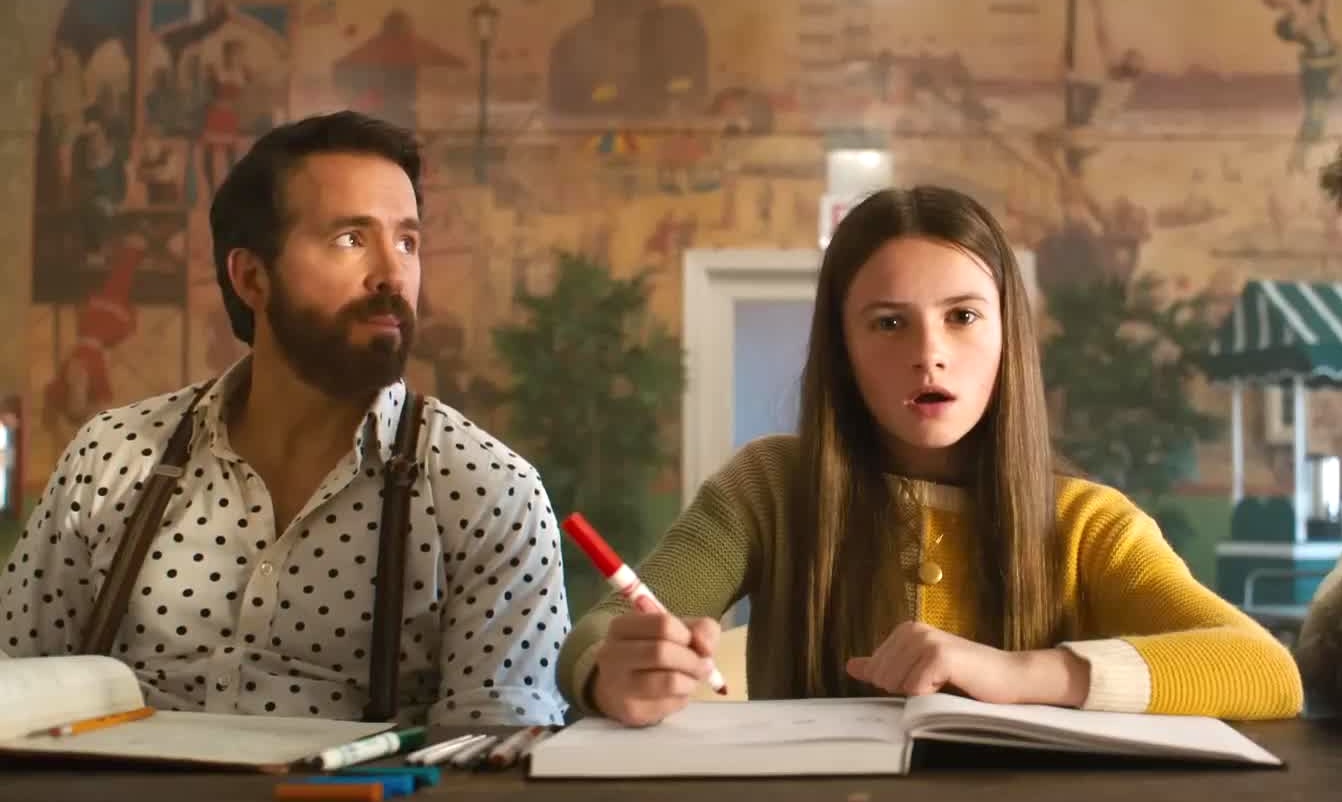
Bea (Cailey Fleming) has been through the mill. Her mom (Catharine Daddario) died of cancer a few years ago, so she’s understandably terrified when her dad (Krasinski) falls ill. His hospital is in New York, so Bea stays with her granny (Fiona Shaw) in Brooklyn Heights for the duration. It’s close enough for her to visit every day, and also gives her a chance to reconnect with some early memories – although she’s quick to remind her well-meaning granny that she’s not a kid any more.

But Bea soon realises that something strange is happening in the apartment building. Catching a glimpse of a girl-sized ballerina-butterfly, she follows it up the stairs, where she discovers a room inhabited by a man called Cal (Ryan Reynolds), whose job is to care for the abandoned IFs of the title: imaginary friends whose children have grown up and forgotten them.

The IFs provide a welcome distraction. Of course, at twelve Bea is far too old for an IF of her own, but she’s more than happy to help Cal find new placements for all those languishing in a retirement home in Coney Island…

There’s a lot to like: Fleming is a delightful performer, there’s an impressive array of stars voicing the IFs, and the whole thing looks wonderful, the blend of live action and animation beautifully realised. The underlying message, though simple, is nicely conveyed, and there are some memorable set pieces, including a jubilant dance number to Tina Turner’s Better Be Good To Me.

But IF is a frustrating film. The storyline is muddled, with gaping flaws in its internal logic and some unconvincing details that distract from the flow. If it’s a contemporary piece – as it’s meant to be – why does no one have a smartphone? And why is a twelve-year-old girl allowed to wander around a strange city at night alone? The one time her granny asks where she’s been, Bea simply shrugs and tells her, “Out with friends.” If this were a tale of benign neglect, then that might suffice, but nothing else in the story suggests that’s the case.

What’s more, for something that’s supposed to be a comedy, it’s not very funny. Giant cuddly-monster Blue (voiced by Steve Carrell) sneezes a lot and blunders around banging into things, but never quite reaches the level of clowning that elicits a laugh. The emotional stuff is better: Bea’s fear of losing her father is tangible, as is her granny’s inept desire to make her happy. But even here, there are untapped resources: Nurse Janet and Benjamin, a sick little boy in the same hospital as Bea’s dad, are two great characters played by two great actors (Liza Colón-Zayas and Alan Kim), both criminally under-used.

All in all, IF is a perfectly watchable film – but there’s a better one in there, struggling to get out.

3 stars

Susan Singfield

When Mountains Meet

26/04/24

The Studio at Festival Theatre, Edinburgh

When Mountains Meet is a very personal piece of gig theatre, composed by musician Anne Wood, who stands centre stage throughout, playing her violin and seeming almost to conduct proceedings.

Directed by Kath Burlinson and Niloo-Far Khan, this is the nostalgic story of Wood’s first meeting with her father. Raised in the Highlands by her single Scottish mother, the twenty-something Anne (Iman Akhtar) is a bold and fearless woman, happily hopping on a plane to Pakistan to try to get to know the man whose DNA she has inherited – and to connect with a culture that is both alien and hers.

Told through a blend of music, spoken word, projection and audience interaction, the production is as complex and disorienting as Wood’s relationship with her dad. It’s a gentle, welcoming piece – there’s a pot of kahwa tea on our table and four little ladoo sweets – but it encompasses some thorny themes, including feminism, poverty and the devastating effects of Partition. Anne’s father (Jamie Zubairi) is a kind and courteous man – a doctor, well-respected by all for his selfless commitment to building hospitals and helping the poor – but he is also unwilling to publicly acknowledge Anne as his daughter, her illegitimacy and creative career both proving sticking points. She is ‘taboo’.

With its cabaret-style seating, the storytellers (Akhtar, Zubairi and Hassan Javed) occasionally wending their way through the tables, this is an inclusive piece, and we’re carried along by its deceptively light tone, smiling as we make paper aeroplanes and hold stones in our hands. Wood’s violin is accompanied by Rakae Jamil’s sitar, Mary Macmaster’s electric harp and Rick Wilson’s percussion, and the result is a seamless fusion of Scottish and Pakistani influences. It all adds up to something very life-affirming: about how big the world is and how small we are; about acceptance, endurance and love.

When Mountains Meet is on tour in Scotland until the end of May, so why not seize the chance to see it if it’s in your vicinity? It’s a foot-tapping, thought-provoking gem.

4 stars

Susan Singfield

Mitsos – Serial Griller

20/04/24

Brougham Street, Edinburgh

It was way back in November 2017 that we first stumbled upon Taxidi – a charming little Greek restaurant just around the corner from where we live – and were absolutely knocked out both by the standard of the food and the relaxed, friendly atmosphere. It became a regular favourite and somewhere we often recommended to Edinburgh visitors. So, in January of this year, we were somewhat dismayed to see that it appeared to be closing down.

We needn’t have worried. The premises were simply undergoing a transformation into Mitsos – Serial Griller, under the same ownership. We vow to visit as soon as possible, but the best laid plans often go awry, and it’s quite some time before we finally find the opportunity. As the name implies, the little restaurant is now home to a sizeable charcoal grill and, as we enter the familiar premises, we’re greeted by the appetising aroma of roasting meat – though I should add that, as before, there are still plenty of vegetarian options on the menu.

We start with some marinated anchovies. These are quite the revelation. Plump and zesty, infused with lemon, parsley and garlic, they are about a million miles away from the dried up, salty things that come in tins. We eat them (perhaps ‘devour’ would be a more appropriate word) with slices of char-grilled pitta bread, which are are quite a revelation themselves, hot, crispy and so downright moreish that we have to rein ourselves back a little in order to have some to accompany the dishes that follow.

Next to arrive is a grilled chicken breast – marinated in yoghurt and cooked over charcoal. It’s accompanied by mild red onion and a delicious mustard, the meat wonderfully tender and as moist as you could ask for. Then comes the undoubted star of the show, a whole grilled sea bream, perfectly cooked, the flesh quite literally falling off the bone and as light as a feather. This comes with a lemon and coriander dressing, which brings out the delicate flavour of the fish. There’s also a lovely beetroot salad, flecked with manouri cheese and flavoured with mint and garlic, and a side of handcut chips. Suffice to say that we make very short work of it all.

We’ve left room for a pudding (naturally), so we’re initially disappointed to find that Mitsos only offers a choice of two, but the disappointment is short-lived because both prove to be delicious. There’s that most traditional of Greek desserts, baklava, this one fabulously sweet and sticky – and there’s Greek yoghurt. I’ll confess that the latter doesn’t sound inspiring, but I soon discover that this version of the classic dish is a cut above – a mouthwatering confection that comprises ultra thick spoonfuls of set yoghurt, heaped with a succulent berry compote and liberally sprinkled with chopped nuts. Good? It’s all I can do not to lick the platter clean!

We leave feeling comfortably full and already planning our next visit. Αντίο, Taxidi. Long live the Serial Griller!

5 Stars

Philip Caveney

The Girls of Slender Means

17/04/24

Lyceum Theatre, Edinburgh

Gabriel Quigley’s vivacious adaptation of Muriel Spark’s novel opens in the 1960s. Jane (Molly Vevers) is the editor of Elan magazine. Her bright young assistant, Bluebell (Molly McGrath), nervously pitches a feature, but Jane is distracted by news of a certain Nicholas Farringdon (Seamus Dillane)’s demise. Maybe she can write a piece about him? After all, she knew him, back in the day. And, just like that, she is hurtling down Memory Lane, back to 1945 and the months between VE Day and VJ Day, when she lived in the May of Teck…

The May of Teck is a pithily-straplined boarding house, “for the pecuniary convenience and social protection of ladies of slender means below the age of thirty years, who are obliged to reside apart from their families in order to follow an occupation in London.” The young occupants – who all work as secretaries – share everything: rations, deportment tips, clothes. One dress in particular, a Shiaparelli known affectionately as Scappers, is dear to all their hearts. They each get to wear it on special occasions; there’s a strict rota in place.

The first act is sprightly, frothy, almost determinedly light; the focus is on fashion and friendship, dancing and diets. Beautiful Selina (Julia Brown) carefully monitors her calorie-intake to ensure her hips don’t grow too wide to wriggle through the tiny bathroom window so that she can sunbathe on the roof. Live-wire Anne (Amy Kennedy) provides a caustic running commentary on everything and everyone, while angelic elocution teacher, Joanna (McGrath again), recites poetry and sews. Meanwhile, Pauline (Shannon Watson) never stops prattling about her love affair with famous actor Jack Buchanan, and our Scottish protagonist, Jane, forges fan mail to authors for her publisher boss, and dreams of being a poet herself one day. Her attempts to be taken seriously – her dowdy cardigan, her constant references to “brain work” – are undermined by her goofy awkwardness, wonderfully captured by Vevers.

There’s a tonal shift in the second act. As we get to know the girls better, we begin to see beneath the gilded surface. Their frivolity is revealed for what it is: a distraction from the horrors they have endured during the war. It shouldn’t come as a surprise; it’s been there all along in Jessica Worrall’s set design, the monochrome backdrop of bombed-out buildings a constant reminder that the girls’ colourful chatter belies a darker truth. But it shocks, providing an effective wake-up call. They are survivors. No wonder they cling so desperately to the fantasy Scappers provides.

Under Roxanna Silbert’s direction, the story has a clear contemporary resonance, and not just because we, like they, are living through the dying days of a Tory government, fearful of what might happen next. The production is impressive as a whole, but there are also some stand-out scenes, most notably the droll office sequence and the dance, where the girls’ boyfriends are represented by legless mannequins.

Spark’s lesson is clear. Don’t underestimate people because they seem shallow; you don’t know what’s concealed within their depths.

4.3 stars

Susan Singfield

The Trouble with Jessica

06/04/24

Cameo Cinema, Edinburgh

The Trouble With Jessica is at the Cameo tonight, and so are director Matt Winn and lead actor Shirley Henderson, here for a Q&A. The place is bustling. Indeed, the only seats we can find are in the very front row, but that’s okay. We settle down in the comfy velvet chairs and stretch our legs out, making the most of the space.

TTWJ is essentially a comedy of manners, drawing on elements of farce. It goes to some dark places – including suicide, depression and rape – but always (trust me) with humour, eliciting belly laughs from tonight’s audience. Winn treads that precarious line well.

Sarah (Henderson) and Tom (Alan Tudyk) have invited their best friends over for what Sarah dramatically announces will be the last dinner party they’ll host in this house. Tom’s latest architectural project has flopped, and they need to sell their beloved home to save themselves from going under. But Beth (Olivia Williams) and Richard (Rufus Sewell) have brought along an extra guest, a mutual ‘friend’ called Jessica (Indira Varma), whose recent memoir has become a bestseller. Sarah is not pleased. She’s no fan of Jessica’s and, as soon as the titular character begins to speak, it’s easy to see why. She’s awful.

And then she kills herself in Sarah and Tom’s garden.

Sarah is furious. The house sale might be jeopardised! Her kids might have to go to state schools! They might have to live in a rubbish part of London! There’s nothing for it. They’ll have to move the body, pretend the suicide occurred elsewhere…

Through all the deliciously heightened nonsense that follows, the only thing I find hard to believe is that Sarah and Beth would keep up their friendship with Jessica. She doesn’t seem to have any redeeming features. She’s slept with two of Beth’s boyfriends and flirts incessantly with Tom. She’s rude and demanding and I don’t know anyone who’d put up with her.

That aside, I enjoy this film.

There is a charming cameo from Anne Reid as a nosey neighbour, and a wonderfully sinister series of scenes with Sylvester Groth as the potential house buyer. Jonathan Livingstone and David Schaal are very funny as PCs Terry and Paul, working-class foils to all the hoity-toity hogwash (although PC Paul recognises a decent clafoutis when he sees one).

It’s a stylish movie. The camera often lingers on the loveliness of the house, like an estate agent’s puff piece, reminding us of what’s at stake. Yes, Sarah and Tom are very privileged and it’s easy to mock their first world problems – but no one wants to lose what they have accrued; no one wants to fail, to have to step backwards. Of course they’d probably be fine if it all went tits up – but it’s no surprise they don’t want to put that theory to the test. It’s more relatable than its milieu might make it sound.

I like the title cards that act as introductions to the various ‘chapters’, each beginning The Trouble With… Tension mounts as the quartet struggle to come to terms with what they’re doing, as well as to manage the practicalities. Henderson in particular is riveting, her brittle capriciousness a delight to watch.

The Q&A is interesting too; it’s good to find out a little more about the process – especially Winn’s composition of the score – and it’s always a thrill to be in the same room as the people you’ve just been watching on the screen.

Once home, I find myself googling clafoutis recipes. Guess what we’re having for pudding tonight?

4 stars

Susan Singfield

Mothers’ Instinct

30/03/24

Cineworld, Edinburgh

Benoît Delhomme’s directorial debut looks beautiful: every scene is a pastel-perfect work of art. Stepford-ish wives Celine (Anne Hathaway) and Alice (Jessica Chastain) are next-door neighbours, with identikit McMansions, impeccable wardrobes and lookalike husbands. Even their sons, Max (Baylen D. Bielitz) and Theo (Eamon Patrick O’Connell), are a matching pair: they’re best friends, just like their moms. But not everything in this 1960s paradise is as peachy as it seems, and Max’s sudden death exposes more than just grief…

Mothers’ Instinct works well in many ways: Hathaway and Chastain deliver performances as flawless as their characters’ powder-pink co-ords. Celine’s brittle devastation and Alice’s mounting unease are slowly revealed, leading us first one way and then another, as we’re not sure whose version of reality to believe. The tension crackles and there’s some fine melodrama at play here.

Sadly – and don’t read any further if you’re worried about spoilers – there’s also an embarrassingly regressive subtext: women without children are monstrous. A generous reading might be that this is what happens to women when motherhood is the only role they’re allowed (Alice, keen at the start of the film to return to her work as a journalist, is told by her husband to contribute something to her son’s school newsletter). But, as the film progresses, it feels more like an indictment of childless women: driven mad by the frustration of their most basic desire, they are dangerous and should be feared.

It’s 2024. I honestly thought this was going to go somewhere different, that it would tease us with the clichés and then pull the rug from under us. But no. This actually is the grieving-mother-turns-psycho insult that is suggested from the start.

In the face of this deep-rooted misogyny, it seems pointless to quibble about minor plot details, such as why the police wouldn’t suspect foul play when so many deaths occur in one small neighbourhood, or how a woman can walk on a lawn in stilettos without getting mud on her heels or crawl through a hedge without mussing up her hair.

Mother’s Instinct has a lot in common with its lead character: it’s beautifully put together, but fundamentally fucked up.

2.7 stars

Susan Singfield