Denzel Washington

Highest 2 Lowest

13/09/25

Filmhouse, Edinburgh

I first became aware of the work of director Spike Lee way back in 1986 at the press launch for his second feature, She’s Gotta Have It, and subsequently followed his cinematic evolution with big hitters like Do the Right Thing and Malcolm X. But since 2018’s BlackKkKlansman, Lee increasingly seems to have struggled to find focus.

Highest 2 Lowest (a loose remake of Akira Kurosawa’s 1963 film, High and Low) represents a considerable step up – a big, brash love letter to New York City, to Black music and, in particular, to Lee’s favourite basketball team, The Knicks.

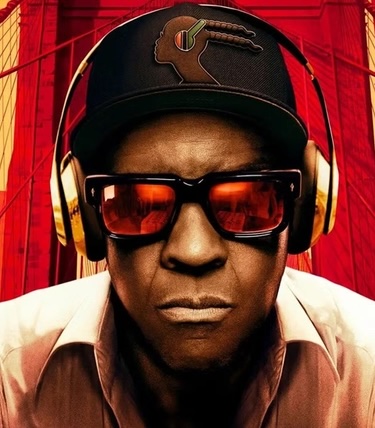
The film begins in grandiloquent style with a rendition of Oh, What a Beautiful Mornin as cinematographer Matthew Libatique’s cameras glide magisterially around the gleaming highrise apartment building that is home to near-legendary record producer, David King (Denzel Washington). He’s about to embark on a crucial bid to buy the record label that made his reputation, but his plans are rudely disrupted when he receives news that his son, Trey (Aubrey Johnson), has been kidnapped and held ransom to the tune of seventeen million dollars.

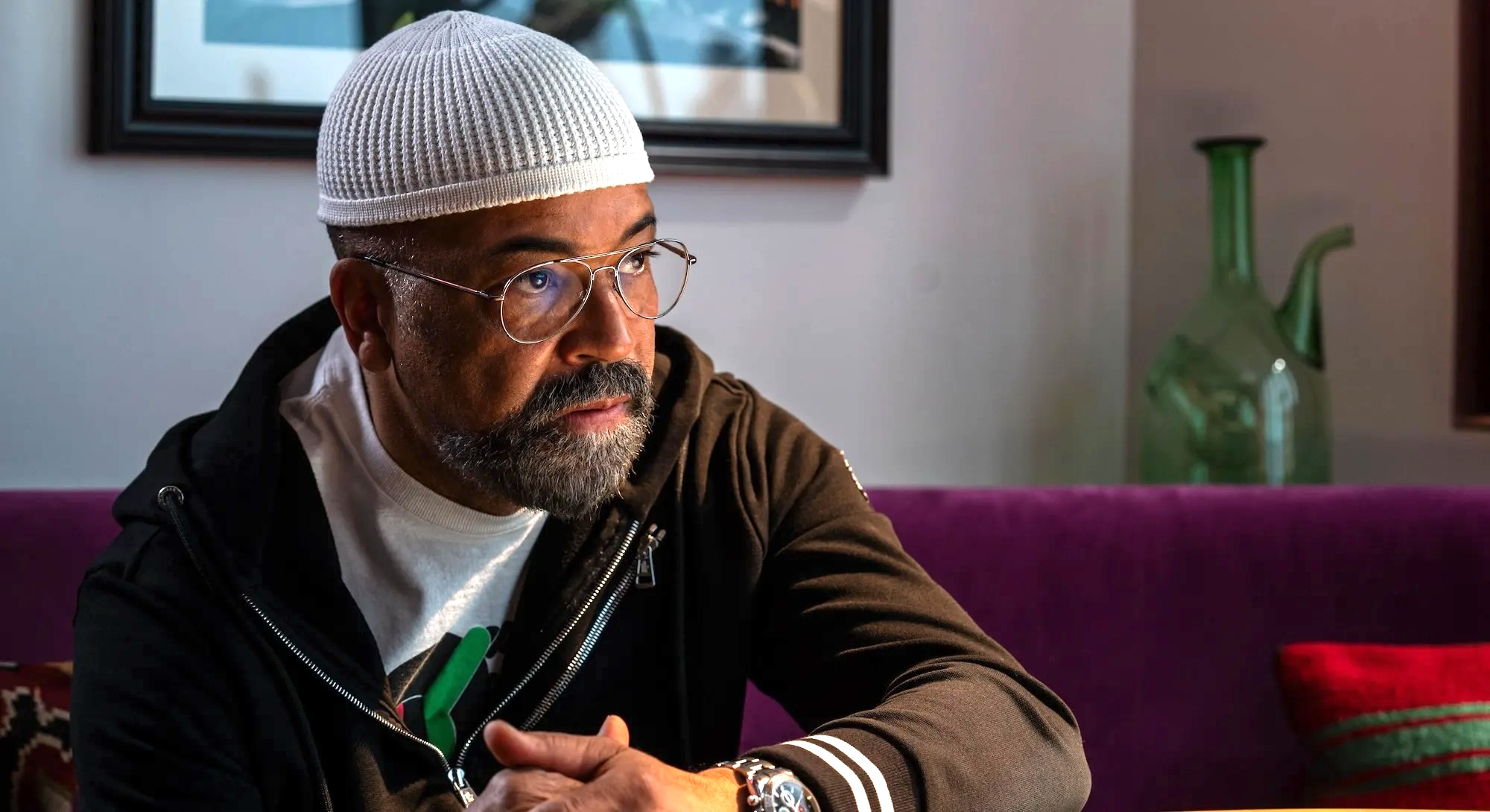
When it’s revealed that the kidnappers have mistakenly grabbed Trey’s best friend, Kyle (Elijah Wright), the son of David’s loyal chauffeur, Paul Christopher (Jeffrey Wright), things become very complicated indeed. David loves and respects Paul – but can he really be expected to pay an amount that will surely bankrupt him for the release of another man’s son?

It would be criminal to reveal anything more about the plot, but Highest 2 Lowest is an ambitious undertaking that largely succeeds. Since David is so involved with music, composer Howard Drossin has been given full rein to create a mesmeric soundtrack and, though in early scenes it can occasionally seem intrusive – in places his keyboards and strings seem to run rampant behind really important lines of dialogue – in others it meshes perfectly with the action. An extended sequence on a subway train packed with very vocal Knicks fans, intercut with scenes filmed at New York’s Puerto Rican Mardi Gras, is masterfully done and is one of the film’s high points.

Washington shows once again why he is one of the greatest actors of his generation. David King has music at his core and Washington’s mood seems to evolve with whatever track he’s listening to. His hostile confrontation with ambitious young rapper, Yung Felon (A$AP Rocky), evolves into a kind of rap duel which might sound strange on paper, but is a genuinely thrilling progression. If I have an issue, it’s that David’s wife, Pam (Ilfenesh Hadera), seems unbelievably submissive, bowing to her husband’s every decision – even when the result might leave her homeless – as though she has no say in the matter.

Reservations aside, this is bold and adventurous filmmaking of the highest order, with the sheen and dazzle of a 50s technicolour extravaganza. It deserves to be seen on the biggest screen available and is proof, if ever it were needed, that veteran filmmaker Spike Lee still has plenty to offer.

4.6 stars

Philip Caveney
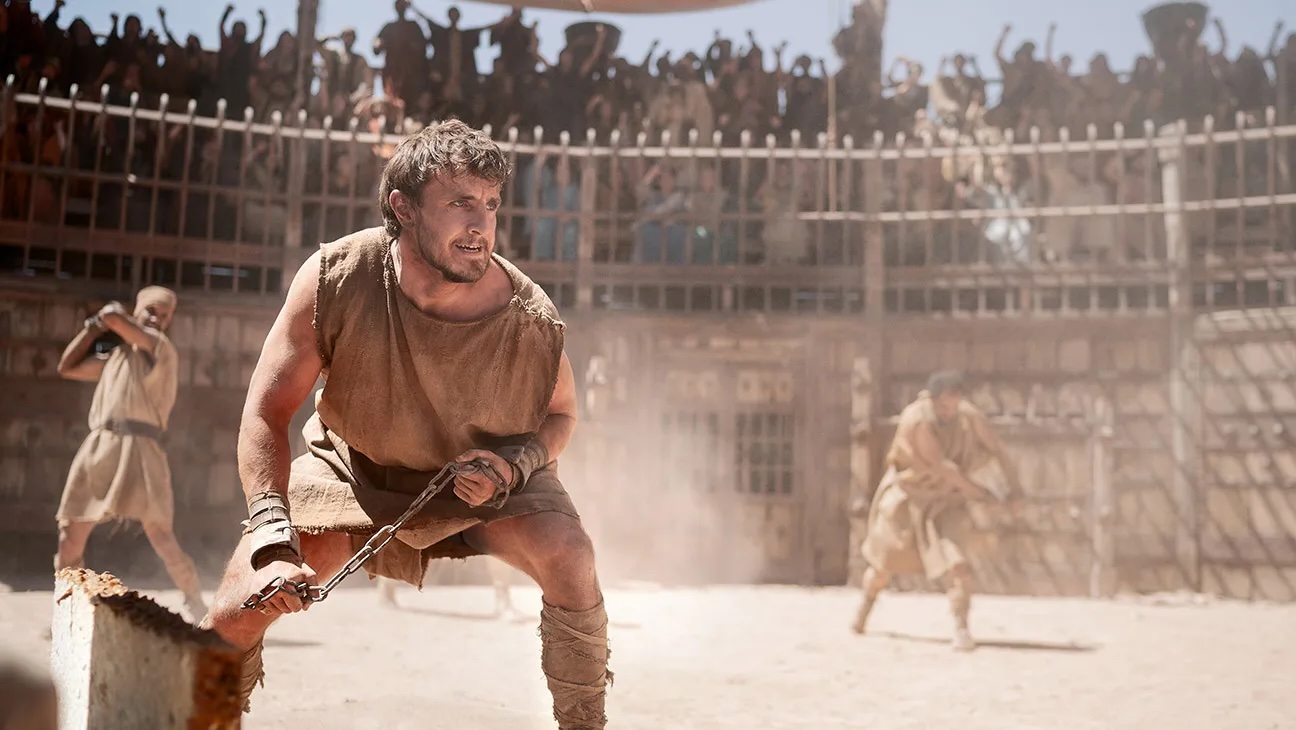
Gladiator 2

17/11/24

Cineworld, Edinburgh

Back in the year 2000, Gladiator was a significant game-changer. Ridley Scott’s sword and sandal epic, starring a lean, mean Russell Crowe, wowed audiences and critics alike. It was nominated for twelve Oscars and actually won five, including Best Picture and Best Actor for Crowe. Over the intervening years, Scott has often stated his intention of doing a sequel, if only he could find the right story. And finally, nearly twenty-five years later, I’m sitting in front of an IMAX screen, eager to see what he’s come up with.

I seriously doubt that Gladiator 2 will be picking up any awards (except perhaps for special  effects) because I suspect that galley has sailed. And to be honest, in most respects it plays more like a re-run of the original than an honest-to-goodness sequel. But don’t let that put you off.

It’s some thirty years after the death of Maximus when we first meet Lucius (Paul Mescal), a soldier living and working in Numidia, alongside his wife, Arishat (Yuval Gonen.) But it isn’t long before a huge fleet of Roman warships, led by General Marcus Acasius  (Pedro Pascal), appears on the horizon. As ever the Romans are looking to extend their empire and this is just the next step in their bid for world domination. An epic battle ensues, replete with giant trebuchets and fusillades of arrows. In the carnage, Arishat is killed and Lucius taken prisoner and ferried back to Rome. On the long sea voyage he (understandably) nurtures a desire for revenge on Acasius. 

Rome is no longer the glorious empire it once was. Ruled by despotic brothers, Geta (Joseph Quinn) and Caracalla (Fred Hechinger), it’s become a place where corruption holds sway and where cunning players like gladiator-master, Macrinus (Denzel Washington), can rise to positions of influence. Does the latter have bigger ambitions than buying and selling gladiators? Well, naturally he does.

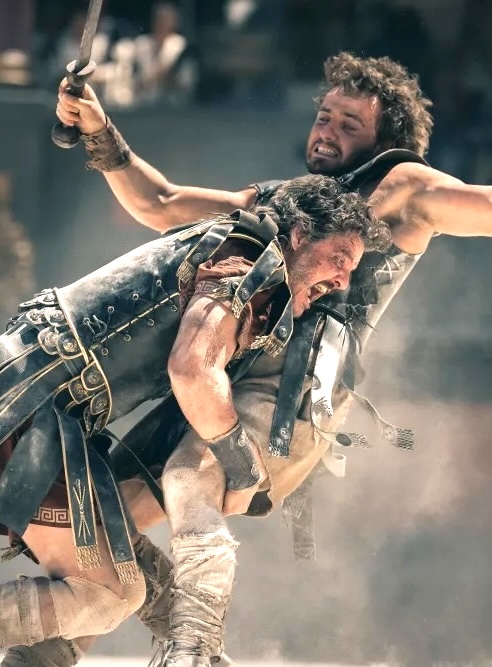
Macrinus quickly spots a quality in Lucius that he feels he can exploit and gets him into the arena at the earliest opportunity. Lucius, it turns out, has the ability to pulverise all who oppose him, even if he does pause every so often to quote Virgil. Could it be that he has some connection to the late Maximus? When we learn that Acasius’s wife is Lucilla (Connie Nielsen – the only major character to return from the original film), it soon becomes clear where this story is headed…

Gladiator 2 could justifiably be criticised for failing to explore new ideas, but this film’s DNA is all about its sheer sense of scale. Scott has always been a master of battle scenes, and lovers of spectacle can hardly complain about being short-changed in that department. Deep into his eighties now, Scott is a director who knows how to capture massive action set-pieces at testosterone-fuelled levels that are rarely even attempted these days. Wherever possible, he utilises real sets and thousands of extras in order to convey their magnitude.

There are some call-backs to the first film – scenes featuring wheat, whole lines of dialogue lifted from Gladiator 1 and that trope of stooping down to pick up a handful of earth, as though such actions can be inherited. And screenwriter David Scarpa even throws in a cheeky ‘I am Spartacus’ moment, which I think is fair enough under the circumstances. A suitably beefed-up Mescal effortlessly places a sandal-clad foot onto the A list while Washington is clearly having a whole ton of fun, camping it up as a devious player, who will seemingly let nothing get in the way of his rise to power.

There are a couple of missteps. An early dust-up in the Colosseum has Lucius and his fellow-captives pitched against a tribe of what appear to be shaved baboons, CGI creations that seem to have wandered in from some kind of demented science-fiction movie – and quite how the skinny, blonde-haired kid from the flashbacks has grown up to be Paul Mescal is one for the geneticists of the world to figure out.

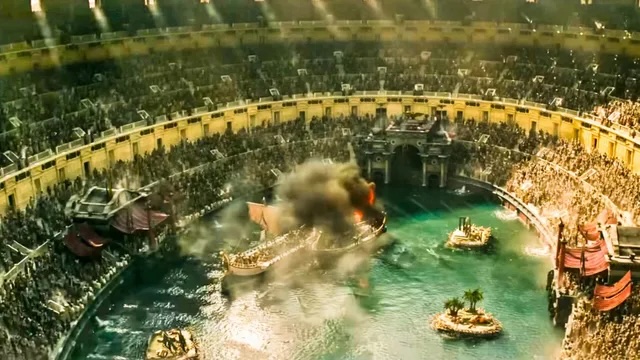
But if the aim of this film was to go bigger and louder than what came before (and I suspect that was exactly the object of the exercise) then it has succeeded in spades. The sequence where a pitched sea battle is enacted in the flooded coliseum is an extraordinary slice of action cinema (and, before you Google it. let me assure you such things did actually happen – though the addition of sharks might be a touch of artistic license). Likewise, Scarpa’s cast of characters is, for the most part, loosely based around real historical figures.

I know I say this a lot but don’t wait for streaming. See this on the biggest screen available and, as you watch, ask yourself that all important question:

“Am I not entertained?” For me, the answer is, most definitely a resounding, “Yes, I am entertained!”

4.5 stars

Philip Caveney

The Tragedy of Macbeth

01/01/22

Filmhouse, Edinburgh

I’m not sure what to make of the writing credit for this latest adaptation of Macbeth. The wording – ‘written for the screen by Joel Coen, based on the play by William Shakespeare’ – seems a tad… hubristic. Because this is mostly Shakespeare’s work, albeit deftly sprinkled with some movie dust. Coen’s direction here is sublime, and his pared back adaptation works really well. It’s just, y’know. ‘Play by William Shakespeare; adapted for the screen by Joel Coen’ would sit better.

But it’s my only real gripe (if I overlook the absence of a single Scottish accent in the, ahem, Scottish play). This is the best movie version I’ve seen – and I have seen a lot. Although Shakespeare never specifies the Macbeths’ ages, I’ve tended towards the view that they ought to be young: all that swagger and ambition and impatience. When they’re portrayed as middle-aged, something seems to be lost. Here, both lord and lady are actually old: they’re in their sixties; nigh on retirement age. And it all starts to make sense again: this is a last-ditch attempt to fulfil their dreams. Time and place “have made themselves” and the Macbeths can’t resist the temptation to finally realise their desires.

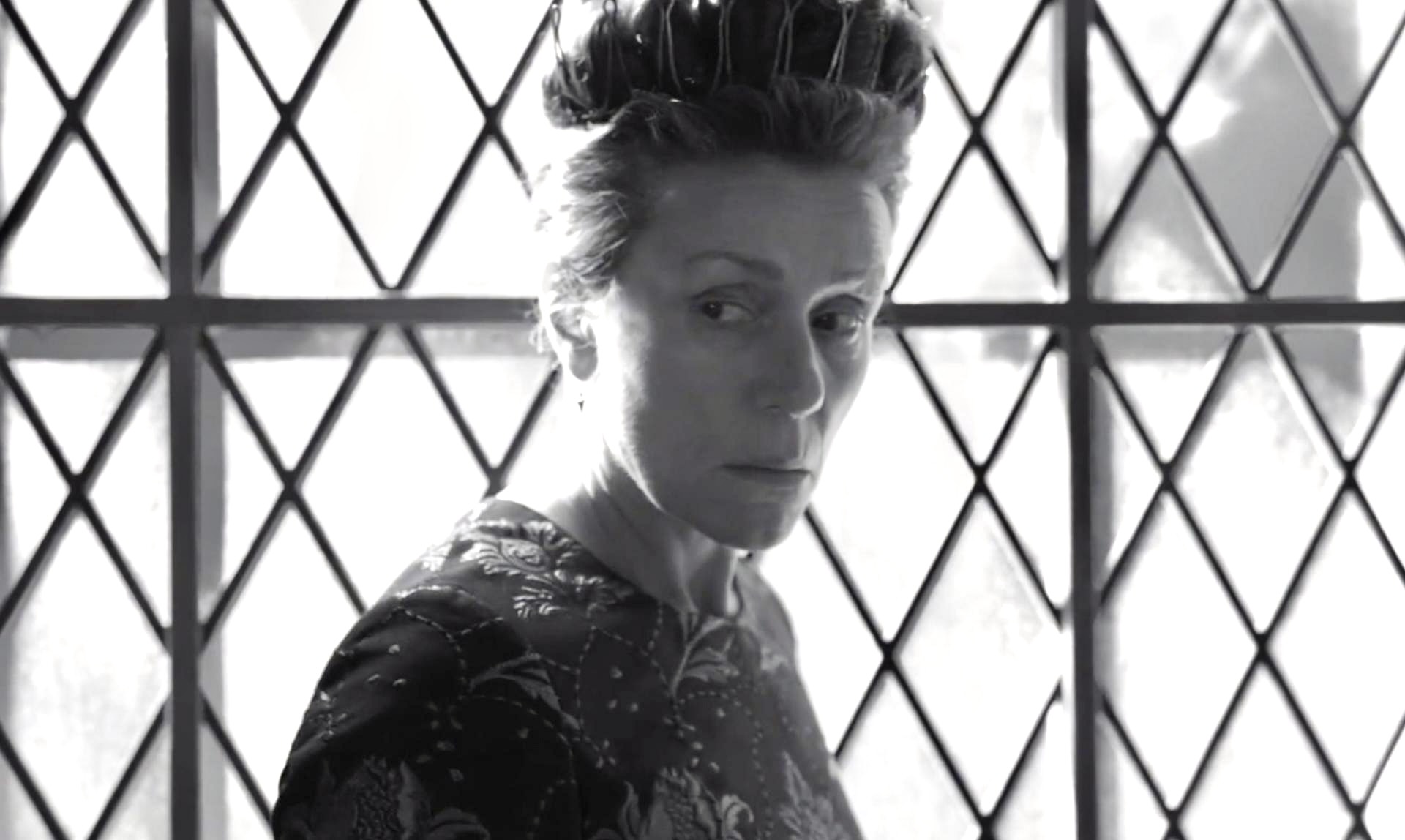
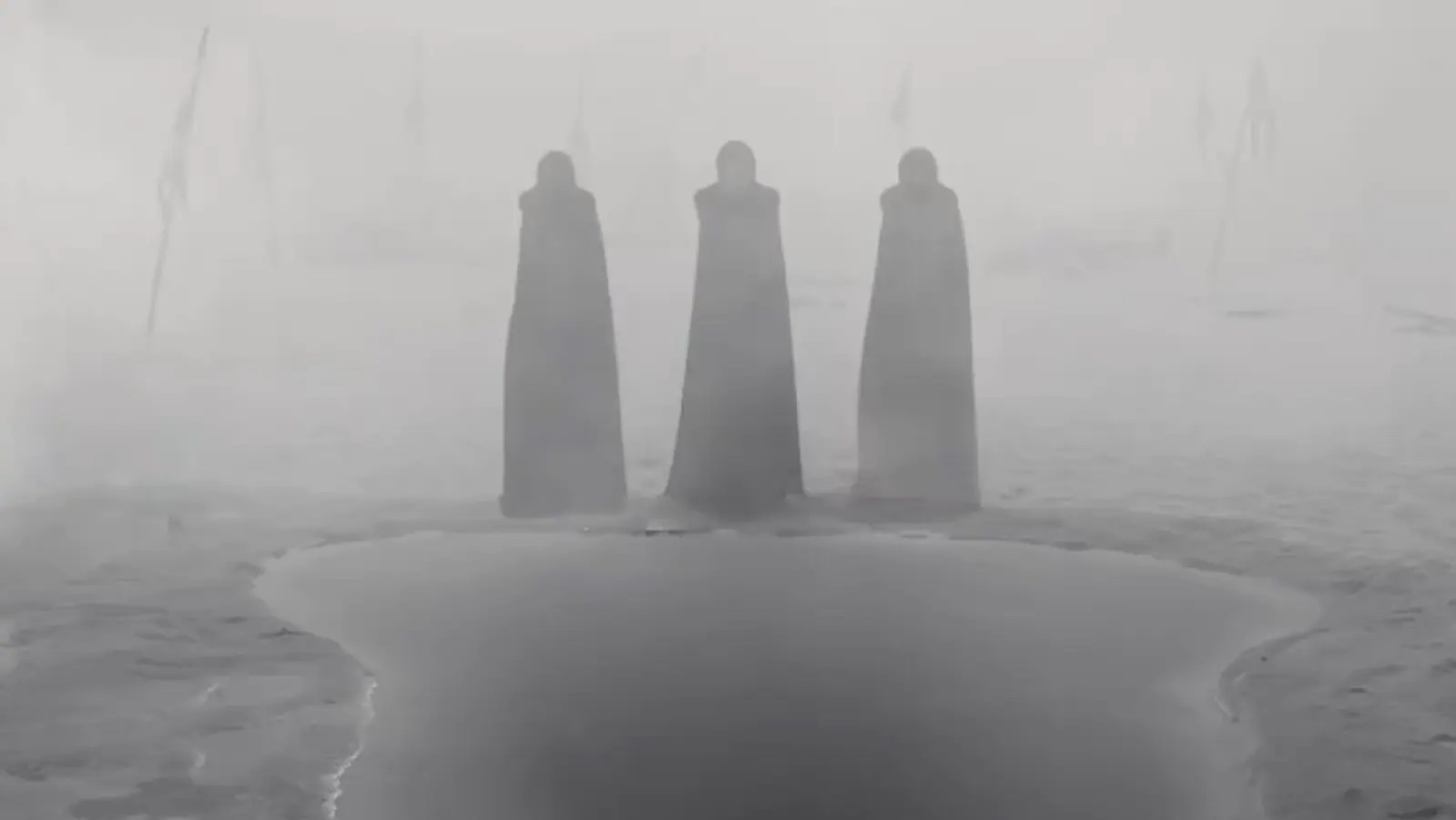
Shot in black and white, Coen’s Macbeth is a claustrophobic affair, with none of the epic battle scenes I’ve grown used to seeing in big-screen adaptations. Indeed, it feels very theatrical, the castle walls as contained and constraining as any stage could be. We rarely venture out of Macbeth’s castle; when we do, it’s into countryside so swathed in mist that very little is visible. This is a stripped back version of the play, shining a spotlight on the key elements and emotions.

Denzel Washington is magnificent as the flawed hero: this is a towering performance, at once imposing and accessible. We can believe in him as a good man corrupted by greed, unable to live with his own actions. Likewise, Frances McDormand gives us a Lady Macbeth we can understand: she’s not presented here as a temptress, leading Macbeth to his doom, but as his partner, his equal, persuading him to indulge in a shared fantasy. The consequences are as devastating to her as they are to him.

Kathryn Hunter – playing all three witches – is perhaps my favourite thing about this production. She’s a gifted physical performer, and lends the shape-shifting ‘weird sisters’ a wonderful unearthly quality. Again, Coen’s judicious employment of theatrical devices (it can’t be incidental that Hunter has worked extensively with Complicité) makes for a compelling and unusual movie; this is a successful hybrid.

Coen only deviates from Shakespeare when it comes to Ross (Alex Hassell). A minor character in the original play, he appears here as a Machiavellian schemer, sidling up to where the power is, with one eye always on what might happen next. He’s Iago; he’s Tony Soprano; he’s Dominic Cummings. The additional layer really works.

In short, this is a triumph. It lays bare the heart of Shakespeare’s play. So, proceed further in this business; be the same in thine own act and valour as thou art in desire, and get yourself to the cinema. This is too good to miss.

4.8 stars

Susan Singfield

The Equaliser 2

13/08/20

Netflix

Lost in the shuffle on its theatrical release two years ago, The Equaliser 2, like so many other middle-range thrillers, is now available to watch on Netflix. The franchise, of course, has quite a history. It started way back in 1985 on the small screen, when Edward Woodward played Robert McCall , a retired CIA operative with a penchant for wreaking violence on those villains reckless enough to disrespect his friends and neighbours.

In 2014, Denzel Washington stepped into McCall’s loafers and, under the direction of Antoine Fuqua, delivered a palpable hit, grossing 192 million dollars at the box office – proof if ever it were needed that there’s money to be made from mayhem. In this iteration of the character, McCall brought almost the entire stock of a DIY store into play during his violent altercation with some major league bad guys.

Several years later, and officially ‘deceased,’ McCall is still living a quiet life, reading quality literature, driving a Lyft taxi to make ends meet and occasionally breaking off to inflict major injuries on those who cross him or, more specifically, his friends. He also bonds with Miles (Ashton Sanders), a young local teenager with artistic ambitions who is being tempted into the world of drug dealing by some local hoodlums.

But when McCall’s old associate, Susan Plummer (Melissa Leo), is brutally murdered, McCall enlists the help of another former colleague, Dave York (Pedro Pascal), to seek out those responsible and unleash some Biblical level violence upon them.

In an illustrious movie career that stretches all the way back to 1979, it’s interesting to note that this is the first sequel that Washington has attached his name to and, to give it its due, it’s far from the stripped-down action-fest I was expecting. While there are obvious problems with any story that attempts to present a vigilante as somebody we should all be rooting for, Washington does manage to give the character a surprising degree of depth – though finally imbuing him with attributes that wouldn’t look out of place on a saint might be over-egging things. And I can’t help wondering how he manages to live such a comfortable existence on the money he makes from driving a taxi… he can’t be living on a generous pension, because… well, he’s dead, right?

Still, there are enough surprises in the plot to keep me guessing till the end and an extended climactic confrontation is given an extra layer of jeopardy when it takes place in the midst of a hurricane.

All in all, this makes for decent viewing in these impoverished times – but Denzel, mate, maybe don’t go for the hat trick, huh?

3.8 stars

Philip Caveney


Fences

05/02/17

Fences is a compelling movie, with towering performances from each of its actors. Adapted by August Wilson from his play of the same name, it tells the tale of an African-American refuse collector, Troy Maxson, and is a searing indictment of the American Dream. The film wears its theatrical origins with pride; there’s little attempt here to render the claustrophobic domestic story more cinematic: we rarely venture beyond Troy’s half-fenced yard.

Denzel Washington is Troy, a Willy Loman-esque character, reflecting bitterly on a  lifetime of thwarted ambitions and unrealised dreams. Indeed, the whole piece is very reminiscent of Death of a Salesman, and just as unflinching in its exposure of the fallacies we are sold. Washington’s performance is stunning: Troy is just about as flawed as a man can be – he’s selfish, demanding, dictatorial and often wrong – but we are always aware of the insecurities that drive him; we can always see the vulnerability that lurks beneath the brute. We might not like him, but he has our sympathy.

Viola Davis is equally irresistible, exuding depth and dignity; the characterisation here is impeccable. Powerless to protect her son, Cory (Jovan Adepo), from his father’s injustice, she nevertheless holds up a mirror to her errant husband, and doesn’t let him shy away from the truth of who he is. When Troy betrays her, her anguish is palpable – but so is her love. And it’s this love, I think, that holds the piece together, and redeems Troy – sort of – in the end.

Denzel Washington’s direction is confident and assured. The film builds slowly towards the inevitable tragedy at its heart and, for the most part, this pace works well. I felt the last half hour dragged a little, with perhaps too much crammed in to what is essentially a coda – but overall, there’s not much to complain of here. It’s a fascinating, well-told, cautionary tale. The Oscar nomination is very well-deserved.

4.5 stars

Susan Singfield

The Magnificent Seven

nesokb1uksa3vy_1_b

26/09/16

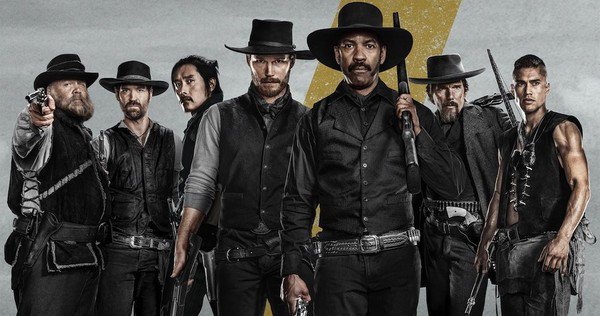
This was always going to be an important film for me. In 1960, when I was nine year’s old, my father took me to see John Sturges’ original version of The Magnificent Seven. It’s one of the first movies I can remember seeing on the big screen. I recall being thrilled by it and it was certainly instrumental in kindling the flames of what would become a lifelong obsession with all things celluloid. But of course, its storyline (itself inspired by Kurosawa’s Seven Samurai) wouldn’t really fly in this day and age. It tells the story of seven heroic cowboys who come to the aid of a village full of ‘lowly’ Mexican peasants who are being terrorised year after year by a gang of marauding bandits. If somebody was going to remake this particular classic, they would have to find a new approach – and to director Antoine Fuqua’s credit, he’s managed to do that.

If this version of the tale resembles another classic Western, it’s actually High Noon, where a bunch of townsfolk fail to come together to challenge a force of evil. Here, the denizens of Rose Creek are threatened not by bandits but by greedy industrialist Bartholomew Bogue (Peter Sarsgaard, doing the latest in a long line of creepy, evil stinkers). Bogue wants the land on which the town is built so he can mine it for gold and has offered each family a pittance in exchange for what they own. Anyone who  defies him is summarily executed and this includes the husband of Emma Cullen (Hayley Bennett), who, looking for revenge, sets out to recruit some help and chances upon law officer, Chisolm (Denzel Washington) as he goes about his deadly duty. He listens to her tale of woe and finally gets interested when she mentions Bogue. It’s clear from the start that there is some unfinished business between the two men. Chisolm promptly recruits a band of misfit heroes to help him rescue the town… they comprise an ex-confederate sniper (Ethan Hawke), a roguish gambler (Chris Pratt) a Mexican gunslinger (Manuel Garcia-Rulfo) a Chinese knife fighter (Byung Hun-Lee), a native American bowman (Martin Sensmeier) and a shambling mountain man (a barely recognisable Vincent Donofrio).

From there on, it’s pretty much a series of spectacular shootouts, set amidst stunning widescreen locations. (There’s an irony here in that the seven set out to protect Rose Creek and by the film’s conclusion, there’s not much of it left standing, but we’ll let that one go). Critics have complained that the film isn’t realistic (no, really?) but I think they’re missing the point somewhat. As a rip-roaring entertainment, The Magnificent Seven mostly succeeds in its aims and if it doesn’t quite match up to its famous progenitor, well, that was a shootout it was frankly never going to win, because what passed for valour in 1960 is going to look pretty reprehensible in 2016.

My favourite bit of dialogue in this version? Emma Cullen proudly telling the other townspeople that she’s quite clearly the only one with enough balls to take on the bad guys. Give this movie a fighting chance – it’s at least earned the right to that.

4.4 stars

Philip Caveney


The Equalizer

MV5BMTQ2MzE2NTk0NF5BMl5BanBnXkFtZTgwOTM3NTk1MjE@._V1_SY317_CR0,0,214,317_AL_

05/10/14

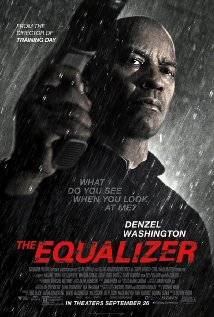
Older readers may have fond memories of a TV series featuring Edward Woodward as McCall, a retired MI6 operative who operates as an avenging angel for hire by anyone who finds themselves oppressed by villains. This film shares the basic plot and the character’s surname but, after that, all similarities end. Denzel Washington plays the American McCall, a quiet, seemingly mild-mannered chap who likes nothing more than a good book and a cup of herbal tea. He works at his local DIY superstore and often enjoys late night chats with a young call girl, Teri (Chloe Grace Moretz), who is employed by a gang of Russian mafiosi. When Teri gets beaten up by them, McCall swings smoothly into action, unleashing a maelstrom of bone-crunching violence and we begin to realise that he’s not quite as mild-mannered as we might have thought. The plot thickens (and the body count rises) when top Russian hit man, Teddy (Martin Csokas looking like Kevin Spacey’s evil twin) arrives from mother Russia to take care of business.

Director Atoine Fuqua has directed Washington before, notably to Oscar glory in Training Day, but trust me, this film isn’t going to win any Oscars. It’s something of a mixed bag. Early action sequences are stylishly handled and Washington exudes a gravitas that carries much of the rather lightweight material, but the extended climactic shootout may as well have been titled 101 Ways To Die In B & Q, as Denzel unleashes every power tool in the shop in order to take out the veritable army of Russian thugs that has come to kill him. And how many times must we watch the same tired trope of the good man avenging the helpless female victim? (Washington has done that better in Man On Fire for Tony Scott.) Having said that, there is a kind of guilty pleasure to be had by watching the action unfold.

It’s a curate’s egg of a film. Good in parts, but more often indigestible.

3.2 stars

Philip Caveney