Deborah Frances-White

Wicked Little Letters

19/02/24

Cineworld, Edinburgh

I’m primed to like Wicked Little Letters. With Olivia Colman, Jessie Buckley and Anjana Vasan as the triumvirate of talent at its helm, what could possibly go wrong?

And yet I find myself struggling to warm to this film. Despite fine performances from the three leads, as well as a stellar supporting cast (including Timothy Spall, Joanna Scanlan and Alisha Weir), it feels somehow both heavy-handed and insubstantial.

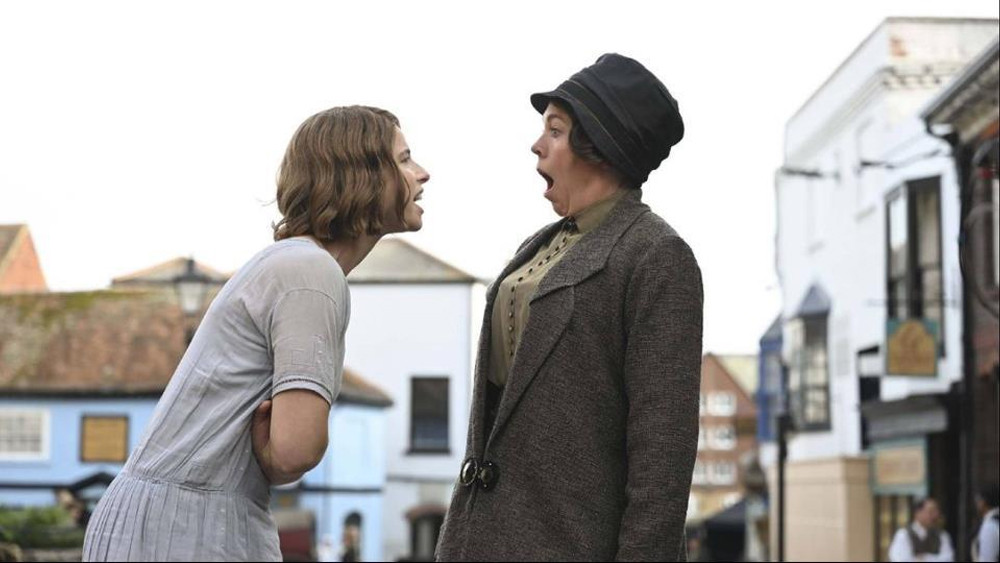
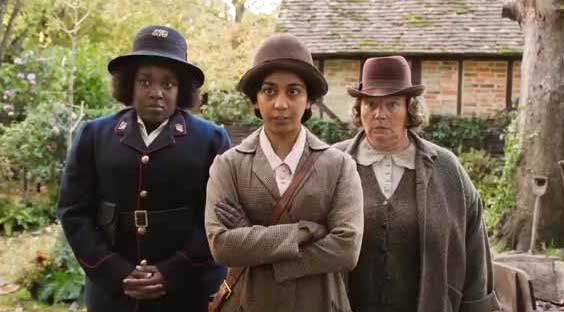
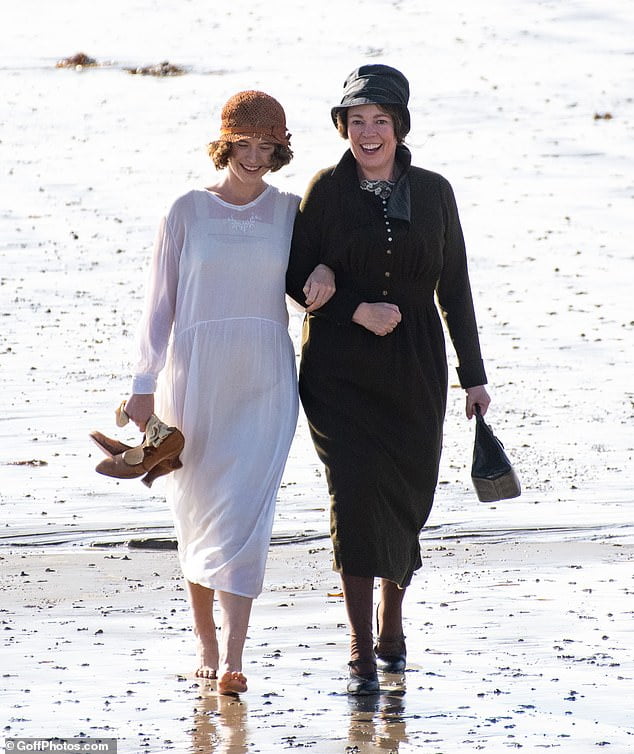
Set in 1920s Littlehampton, Wicked Little Letters is loosely based on a true story. Colman plays Edie Swan, a repressed spinster, unable to escape from her overbearing father (Spall). When a spirited Irish widow (Buckley) moves into the house next door – complete with daughter Nancy (Weir) and new partner Bill (Malachi Kirby) – Edie is delighted, but her friendship with Rose soon turns sour. Then Edie begins to receive poison pen letters, and the local bobbies know exactly where to lay the blame. But Woman Police Officer Gladys Moss (Vasan) thinks they may have jumped the gun…

To quote the very excellent Deborah Frances-White, “I’m a feminist, but…” the misogyny in this movie is cartoon-like, laid on with a proverbial trowel. At the same time, racial politics are completely ignored. I find it hard to believe that the same white male colleagues who openly sneer at Gladys because of her gender wouldn’t also have something to say about the fact that she’s Asian. Likewise, it’s incredible that Rose doesn’t face much anti-Irish prejudice, and no one ever mentions the fact that Bill is Black. I like the fact that the fictional characters are more diverse than their real-life counterparts, but intersectionality matters, and it doesn’t make sense to ignore it here.

At first, I enjoy the humour in Jonny Sweet’s script, but I get bored of the whole “sad stinky fucking foxy arsehole” sweariness; it’s repetitive and the shock value soon wears thin. Director Thea Sharrock does a good job of evoking a sense of time and place, and of allowing her cast to shine, but there’s no getting away from the thin material. It doesn’t help that there are no red herrings, or that what little suspense there is is squandered by revealing the culprit at the halfway point.

Colman, of course, is brilliant, managing to convey a perfect mixture of horror and triumph every time she utters a profanity – and this, along with Buckley’s brittle vivacity and Vasan’s wide-eyed determination, elevates the film. Wicked Little Letters works well as a character study, less so as a compelling narrative.

3.6 stars

Susan Singfield

The Children Act

10/09/18

Oh dear. I’m a little bit annoyed with The Children Act. Which is clearly not an ideal response. I can’t deny it looks good, and Emma Thompson’s star shines as brightly as it ever did (she’s magnificent, really; I am a true fan of her work). The supporting cast are pretty marvellous too. And yet… and yet.

My issues are all with the story, adapted for the screen by Ian McEwan from his 2014 novel. Thompson plays Fiona Maye, a high court judge who earns her daily crust making life and death decisions: is it right to sacrifice a conjoined baby to give his twin a better chance of survival? Even if his parents don’t agree? There are no easy answers to the dilemmas she faces, but she is a consummate professional, dedicated and compassionate,  focused and fair-minded.

And then, one explosive weekend, her husband, Jack (Stanley Tucci), reveals that he’s unhappy with the way she’s been neglecting their marriage and tells her he wants to have an affair. Reeling, Fiona answers her phone as Jack’s packing his suitcase, and picks up an urgent case. A Jehovah’s Witness teenager is refusing a blood transfusion; his doctors want to force life-saving treatment on the boy. This should be run-of-the-mill for Fiona, but she’s out of whack, thrown off by her own emotional turmoil. She visits seventeen-year-old Adam (Fionn Whitehead) in hospital, learns more about the leukaemia that threatens his life, asks him what he really wants.

Later, it transpires that what Adam wants is more than Fiona can give: he’s obsessed with her, phoning her, writing letters to her, asking her if he can live with her as a lodger or an odd-job man; he wants to learn from her. But I don’t really understand the underlying message here; I don’t know what I’m supposed to take away from this. Is the implication that Fiona should invest more in the boy? Or that she’s transgressed by opening up as much as she has? What’s the point of this final third; what is it trying to say?

Some of what’s implied may not be deliberate, but there are a few points that keep niggling at me. For example, the whole Jehovah’s Witness/blood transfusion thing. Why is this the only story I ever hear about the JW church (there is, I concede, a refreshingly different take in Deborah Frances-White Rolls the Dice)? It’s just another unfathomable religious stricture, and one that can only affect a tiny minority. Why does it have so much traction in fiction and film? Perhaps it’s just too soon after (the much better) Apostasy?

There’s also the vexed question of misogynistic stereotypes: why does Fiona Maye have to suffer for a successful career? She’s sacrificed her marriage; she’s sad about not making time to have children. Why? Why is this always the narrative? It’s boring and annoying to meet this cliché again. Her husband seems to be holding down his career okay, and he can fit in dinner and tennis and a semblance of a social life. Why can’t it be the same for her?

Ach, it’s a shame, because the acting really is sublime. I’m especially impressed by Jason Watkins’ turn as Maye’s hapless lackey, Nigel – an object lesson in the art of maximising the impact of what is really a small role. And the glimpse into the life of a judge is fascinating too; this feels as if it could be something better, if only it were less… restrained. As it stands, it doesn’t really work for me.

3.1 stars

Susan Singfield

Abigoliah Schamaun: Namaste, Bitches

06/08/17

Underbelly Cowgate, Edinburgh

Abigoliah Schamaun is as bold and unusual as her name. In fact, her moniker is one of the reasons we’re here (it’s memorable; we saw it on posters last year but didn’t have time to see her show); the other reason is Global Pillage, the remarkable Deborah Frances-White’s “diversity-based panel show.” The episode featuring Ms Schamaun was a stand-out, and made me want to see more of her output.

Namaste, Bitches reveals Abigoliah to be a hot mess of contradictions: she’s a fitness freak who drinks and smokes; a tattooed shave-head who loves Hello Dolly. And she’s unexpectedly sweet and appealing too. It’s a genuinely quirky, unpredictable hour, with delightfully warm and natural audience interaction. Philip and I are even called upon to learn some Bikram yoga, which definitely makes us look silly, but we’re not the butt of the joke; it’s a friendly kind of show. We laugh throughout, and leave with big smiles on our faces, feeling good about ourselves and the evening we have had.

She might be losing her voice, but Abigoliah has a lot to say – and it’s definitely worth listening to.

4.2 stars

Susan Singfield

The Guilty Feminist with Sofie Hagen and Deborah Frances-White

2016GUILTYF_GE

22/08/16

Gilded Balloon Teviot, Edinburgh

The Guilty Feminist is one of my favourite podcasts, and I enjoy being a member of the associated Facebook group, so I was very excited by the opportunity to see a live recording of the show.

Let’s be honest, though, a live recording of something that’s intended for another medium is rarely going to be a five star experience (sorry, Sofie! the podcast itself definitely merits the top rating, but the live show doesn’t… not quite). But this one certainly comes close.

The venue is packed out; the podcast’s popularity shows how well it chimes with the zeitgeist, and how appealing its non-preachy, inclusive approach to feminism is. And today’s topic, independence, is an interesting one, with special guest Mary Lynn Rajskub contributing some fascinating insights into a comic’s transient life.

In truth, all three women seem a little fringe-frazzled (Sofie complains of a hangover; Deborah, we learn, went to bed at 6am), but that’s only to be expected at this stage of an Edinburgh run. And the podcast is none the worse for it; their honest appraisals of how they feel and where they’re at are, in fact, what makes the programme so compelling. I’d like to hear more about Sofie’s mother and her “men leave; you have to learn to do it for yourself” philosophy, but there’s plenty here to hold my attention, and it’s as funny, challenging, emotional and demanding as regular listeners will have come to expect.

I wish I had the time to attend further recordings this week. I don’t. But I’m glad I’ve seen this one.

4.2 stars

Susan Singfield