David Bowie

Labyrinth

11/01/26

Cineworld, Edinburgh

Forty? Can it really be forty years since I went into a cinema to watch Jim Henson’s Labyrinth for the first time? Well, this being the 40th Anniversary re-release in a brand new 4K restoration, I guess it must be so. Back in 1986, I was certainly a David Bowie fan and The Muppet Show was a regular treat every Sunday, so naturally I was first in the queue to see it, though the mists of time have managed to erase which particular cinema the event took place in.

I can only recall that I enjoyed the experience, even if the particulars of the film itself remain hazy. So here’s my chance to clarify matters. Glancing around the busy auditorium, it’s clear I’m not the only one revisiting the past.

Sixteen-year-old Sarah Williams (Jennifer Connelly) is running late for the task of babysitting her infant half-brother, Toby. When she arrives, rushed and apologetic, her step-mother, Irene (Shelley Thompson), is angry and unforgiving. When Sarah discovers that Irene has given Sarah’s beloved teddy bear, Lancelot, to her brother, it’s the last straw. She impulsively wishes aloud that Toby could be abducted – by goblins from the titular book she’s just been reading.

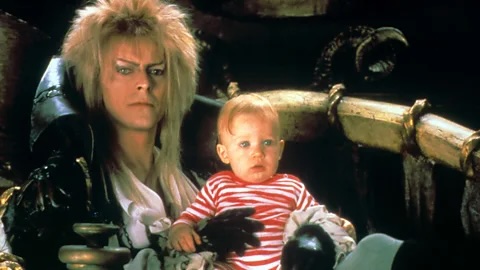
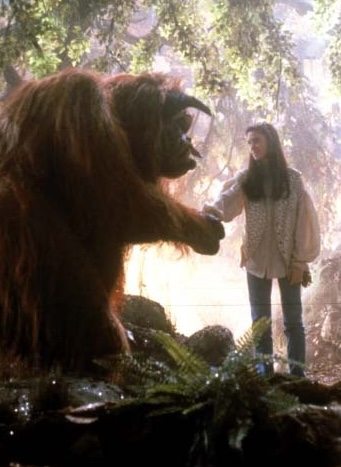
Whereupon the Goblin King, Jareth (David Bowie), grants Sarah’s wish and tells her that, in exchange for Toby, he will give her her deepest desires. When she decides she’s acted too rashly, Jareth sets her a challenge: she has just thirteen hours in which to rescue the child. If she fails Toby will belong to Jareth forever. So Sarah has little option but to set off into the labyrinth which lies between her and Jareth’s castle. On the way, she enlists help from some of the strange creatures she encounters.

Henson’s film divided the critics on its release. It had poor box office in America but was a palpable hit in the UK, where audiences had more of a taste for the weird. And make no mistake, Labyrinth is weird in the truest sense of the word. Scripted by Monty Python-stalwart Terry Jones, it’s heavily influenced by Maurice Sendak’s Outside Over There (which also features a child kidnapped by goblins). And isn’t there a bit of The Wizard of Oz about it? A teenage girl accompanied by three fantastical companions, each of whom will learn something on the journey? Hmm.

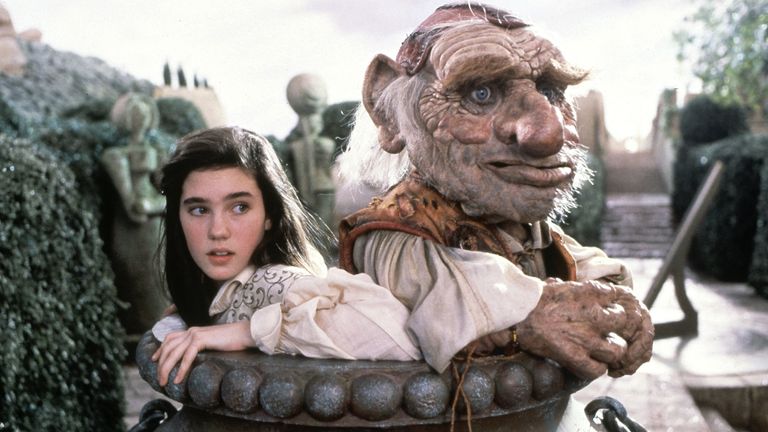
The film’s look is largely due to the influence of illustrator Brian Froud – every frame look like one of his gorgeous picture books. Lest we forget, there was no CGI in those pre-Jurassic Park days, so Henson is called upon to push the practical puppetry to its very limits, his team dreaming up incredible creations and building them from whatever they could lay their hands on.

Bowie fits effortlessly into this world, sporting an outlandish fright-wig, some very tight trousers and a bizarre accent, which sounds like somebody mangling RP to within an inch of its life. Whatever it is, it works. He also sings a few self-composed songs along the way, none of which is particularly memorable, but are perfectly suitable for the capering, twitching creatures that back him up.

A sequence towards the end of the film in which Sarah pursues Toby up, down and under a series of MC Escher-style staircases provides a suitably mind-blowing finale. Forty years may have passed since its creation, but Labyrinth has aged well and it serves to provide a fitting tribute to the late Jim Henson, a man who devoted his life to creating magic.

4.2 stars

Philip Caveney
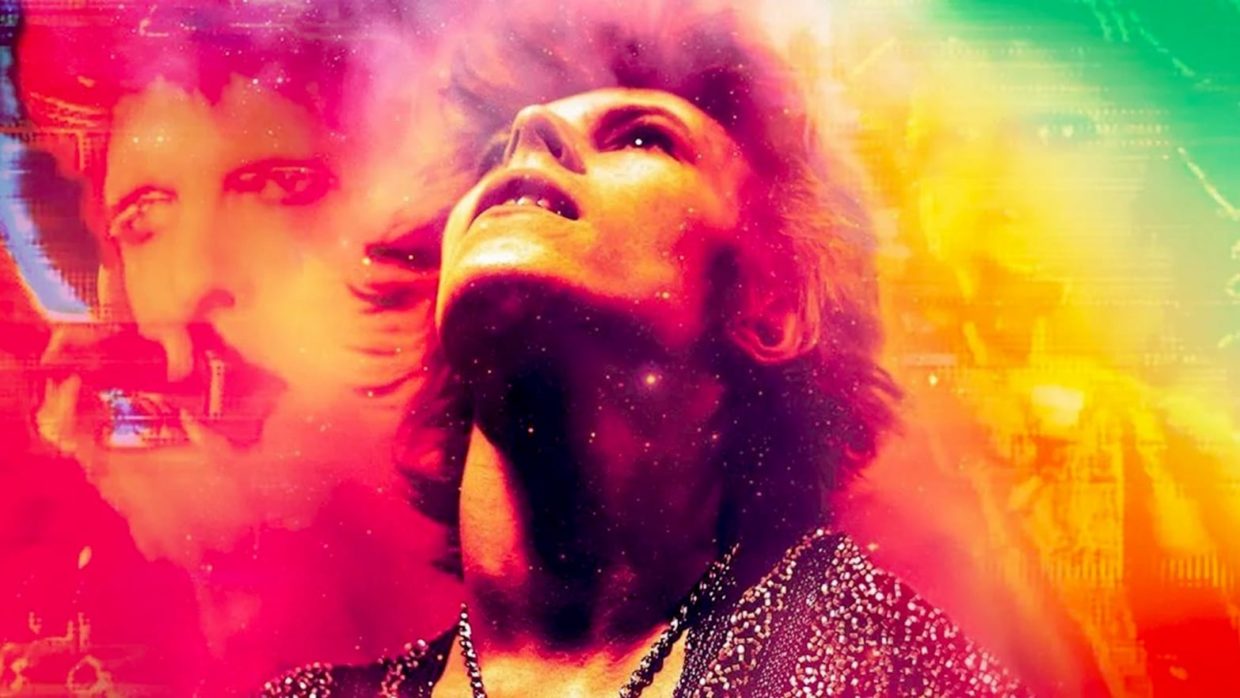
Moonage Daydream

20/09/22

Cineworld IMAX, Edinburgh

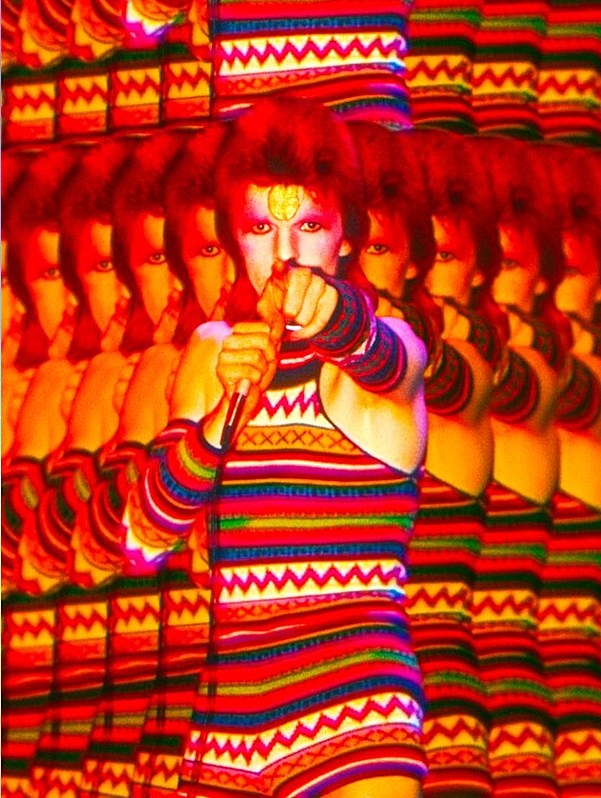
Anyone expecting a straightforward biography of the late David Bowie is in for a surprise. Brett Morgan’s art film (I hesitate to use the word ‘documentary’) is as experimental as anything I’ve seen in a very long while, a pulsing kaleidoscopic collection of vivid images and found footage, propelled by some of the most memorable rock songs ever committed to acetate.

In its peculiar way, it’s as elusive and enigmatic as its subject.

I was twenty when I first heard The Rise and Fall of Ziggy Stardust and the Spiders From Mars, already a little too old to be completely captivated by his androgynous alter ego, but it’s here that the film opens – with Bowie at the height of his fame, pursued everywhere by adoring fans, working-class kids doing their level best (and mostly failing) to appropriate his ‘look’. We learn only a little about his earliest years and there’s no mention of the infamous Angie, to whom he was married for a tumultuous decade. Morgan prefers to let the music do the talking, while the screen explodes with a myriad visual references: the films; the books; the paintings; the actors; the locations that influenced Bowie, that made him what he became – a rock chameleon, inhabiting a whole series of different personae, constantly reinventing ways to take an audience by surprise.

Viewed on the IMAX screen, the result is immersive, hypnotic, even overwhelming at times and, on the few occasions when Bowie is allowed to deliver an entire song, I’m thrilled by how contemporary it sounds. Of course his gender-fluidity was way ahead of the curve, but so too was the music, visiting places where few others dared to tread. And his presence here seems predominantly to be that of the wanderer, always on the move, visiting an endless list of new locations, always on the lookout for what can be assimilated into his ‘new’ sound. It’s interesting to note that it’s only when he finds happiness (through his marriage to Iman) that his music finally begins to lose its dangerous edge.

Some will find this too much of an assault on the senses, but for my money it serves as a fitting – and long overdue – tribute to one of the most remarkable performers in music history. And those who choose to come along simply to hear his best songs performed in Dolby stereo won’t be disappointed.

4.4 stars

Philip Caveney

The Man Who Fell to Earth

14/07/19

Nicolas Roeg’s challenging – and in many ways groundbreaking – feature first hit cinema screens in 1976, the year before Star Wars came along and changed the intergalactic movie game forever. The Man Who Fell to Earth came hard on the heels of three other Roeg successes: Performance, Walkabout and (best of all) Don’t Look Now, all of which demonstrated the director’s idiosyncratic approach to filmmaking and his absolute refusal to tell any story in a straightforward manner. Now back on limited release, it’s interesting to reasess TMWFTE on the big screen. I saw it in 1976 and haven’t watched it since. I remember being blown away by it at the time.

David Bowie plays space traveller Thomas Jerome Newton, who plummets down into the wilds of New Mexico, with a bunch of gold rings to pawn for ready money and with a bundle of  gamechanging patents in his back pocket. (Disposable cameras anyone? Tiny stero sytems? Nah, that’ll never take off.) Pretty soon, he’s a reclusive Howard Hughes type, living in New York, and using lawyer Oliver Farnsworth (Buck Henry) as the frontman for his various multi-million dollar business enterprises. Philandering university lecturer Nathan Bryce (the recently departed Rip Torn) notices the ripples that Thomas is making and soon ends up as an employee of the company.

On a trip back to New Mexico, however, Thomas falls in with ditsy chambermaid, Mary-Lou (Candy Clark), and the two of them quickly become an item. She introduces Thomas to the dubious joys of alcohol and, from there, he begins to take on the various shortcomings that humanity has to offer. As the film progresses, they exert an increasingly powerful hold on him, until he is finally subsumed by them.

It’s a dazzling trip, though some of the elements – viewed through a contemporary lens – have not aged particularly well. There’s an over-preponderance of long (and extremely graphic) sex scenes, some of which feel decidedly prurient – and the state-of-the-art makeup effects now – inevitably – look somewhat shonky. (The conceit here is that Bowie’s character stays the same age, while the human protagonists around him age dramatically.) But there’s little doubt about the power and grace of Bowie’s performance, even if it has to be said that he’s clearly portraying a character who is only one step removed from his own persona at the time.

Bowie would never again find a film role that fit him as perfectly as this one and Roeg too was about to see his fortunes decline with the failure of his next feature, Bad Timing, and the films that came after it. But TMWFTE stands as a testimony to an auteur at the height of his powers, a long, twisting kaleidoscope of a film, full of eyepopping images and wry observations on the depravity of mankind.

It’s not what you’d call perfect, but it’s well worth a look.

4.4 stars

Philip Caveney


This House

27/03/18

Politics. What’s it all about, eh?

Well, a viewing of This House will certainly make you feel a lot more informed on the subject. Not so much the more visible aspects of it – the ministers themselves –  as those who wheel and deal behind the scenes: the party Whips. There’s a live band up in the gallery, who offer a couple of spirited Bowie songs that eerily echo what’s happening down on the stage and, lest anybody assumes that politics inevitably make for dour viewing, please be aware that this is a lively, engaging piece, utilising humour to illuminate some grim facts. Ultimately, what the production does best is to demonstrate what an outmoded farce our political system is, and it’s very entertaining in the telling.

This play is a fiction, though it references many real players and actual events. It is the whips’ job to ensure that as many members as possible make themselves available to come in to the Commons and vote on the latest motion set before the house. Sometimes, they are called upon to make near superhuman efforts in order to effect a win – in some cases, even calling MPs in from their hospital beds! First performed at the NT’s 400 seat Cottesloe Theatre (or the Dorfman, as it’s now called)  in 2013, This House‘s success has created such demand that it’s now playing much larger venues, which obviously has something of a distancing effect, and I find myself envying the select band of spectators who are seated on green benches on the stage (in the House of Commons chamber) so that they’re woven into the very fabric of the piece. 

The action takes place in the years 1974 to 1979, when the UK famously had a ‘hung’ parliament and where the absence of a single voting member might result in the ruling Labour party having to vacate its seats. Everyone on the red side of the house is horribly aware that a certain Mrs Thatcher is waiting in the wings for her chance to rule the world… Oops, sorry, I mean, country. Obviously.

If the characters on both sides of the divide occasionally come across as caricatures – the Labour team all ‘eh up, lad, what’s ‘appenin’?’, the Tories as suave and slick as their Savile Row suits – I feel that’s entirely intentional on the part of writer James Graham. With such a big cast, it’s crucial that those time-worn divisions are made as broad and accessible as possible. In this, he succeeds admirably. With everybody on stage working their respective socks off, it’s difficult to single out individual performances, but I do like Martin Marquez’s turn as cockney wide boy, Bob Mellish, and Matthew Pidgeon’s ultra-groomed toff, Jack Weatherill, is also eminently watchable. Natalie Grady makes a big impression as the labour team’s ‘token’ female, Ann Taylor, ready to correct anyone who has the temerity to underestimate her abilities.

So, grab tickets for this and, if it’s at all possible, get yourselves as close to that stage as you can – perhaps, if you’re really lucky, even on it. Interestingly, it doesn’t cost more. You just need to ask when you make the booking.

4 stars

Philip Caveney