Damon Herriman

Better Man

01/01/2025

Cineworld, Edinburgh

Our first cinema trip of 2025 is to see a film that actually came out last year – Boxing Day to be precise. A further complication is that this would certainly have made our list of the best films of 2024 had we managed to squeeze it in a day earlier. No matter. Better Man is brilliant and I have every reason to believe I’ll still feel as strongly about it when it comes time to compile this year’s selection.

Pop biopics can be tricky beasts. You can play it straight like Bohemian Rhapsody, you can evoke a multi-layered fantasia, as in Rocket Man – or you can go for a balls-out, head-scrambling slice of pure invention, which is what Michael Gracey (of Greatest Showman fame) has done with the life story of Robbie Williams. I should probably add here that I’m not a rabid fan of Williams and his music (though Angels has long been a go-to for me on the rare occasions when I get to do a bit of karaoke). Had I not picked up on early rumours of this film’s delights, I would probably have let it slip under my radar.

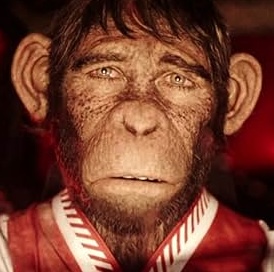
It’s hardly a spoiler to mention that Williams doesn’t even appear in his own biopic, apart from singing his best-known songs, but is instead portrayed by a CGI generated ape, mo-capped by Jonno Davies. This device is a stroke of genius, highlighting Williams’ sense of alienation, while also removing all worries of an actor not looking enough like the real man. Somehow, the metaphor renders many of the resulting scenes incredibly moving.

We first encounter our hero as a cheeky little monkey, living in a humble home with his mum, Janet (Kate Mulvany), his beloved gran, Betty (Alison Steadman), and his fame-obsessed dad, Peter (Steve Pemberton) – a pound shop Frank Sinatra, who heads off to seek his own fortune when Williams is just a boy. His son spends the rest of his life seeking his old man’s approval.

At the ripe old age of fifteen, fame unexpectedly beckons when Robbie auditions for a place in a new boy band being set up by would-be pop impresario Nigel Martin Smith (Damon Herriman). Against all the odds, he makes the cut – though it’s clear from early-on that he and the other band members are merely there to act as backup to Smith’s prodigy, Gary Barlow (Jake Simmance). As Take That embark on a punishing schedule of appearances around the UK’s gay clubs, it soon becomes clear that Robbie is having trouble handling the pressures of fame…

On paper, this may all sound straightforward enough but, as reimagined through Gracey’s mindset, the film is a collection of exhilarating, exuberant and occasionally devastating set pieces: there’s a wonderfully playful dance routine through the streets of London set to Rock DJ; a swooning waltz between Robbie and Nicole Appleton (Raechelle Banno) on the deck of a ship; and, best of all, a raucous rendition of Let Me Entertain You at Knebworth, which quickly escalates into an epic battle between Robbie and hordes of his inner demons. The film never flags but steps deftly into each successive interpretation with perfect timing. I keep having to stop myself from applauding.

Williams has been criticised for dishing the dirt on actual people, but it should be said that the person who comes in for most of the criticism is Robbie himself, often acting up like a spoiled brat with too much money in the bank. Viewers should be warned that the film is unflinching in its treatment of mental illness and self-harm. A funereal sequence set to the aforementioned Angels is particularly affecting and I don’t mind admitting that I view it through floods of tears.

One last thing: I know I say this far too often but, for the full effect, do see this one on the big screen. It’s a fabulous piece of filmmaking that effortlessly oversteps the relative simplicity of its subject to create something genuinely spectacular. And even if you don’t care one jot for Robbie Williams’ music, this one will still hit you in the feels.

5 stars

Philip Caveney
Run Rabbit Run

29/06/23

Netflix

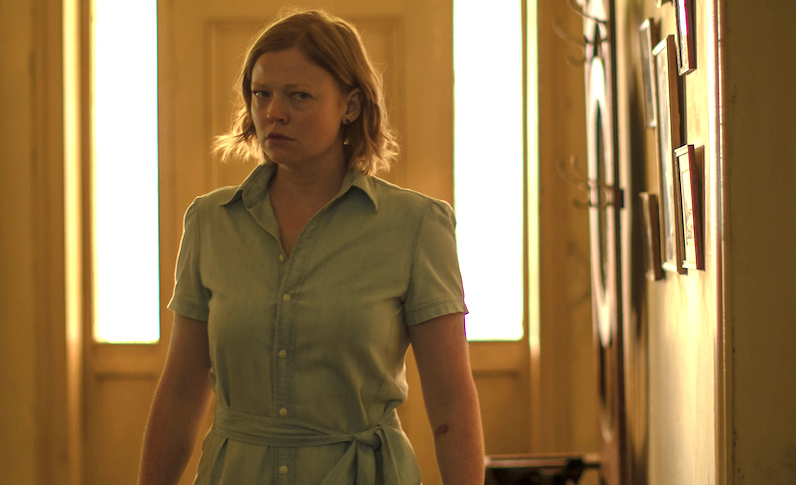
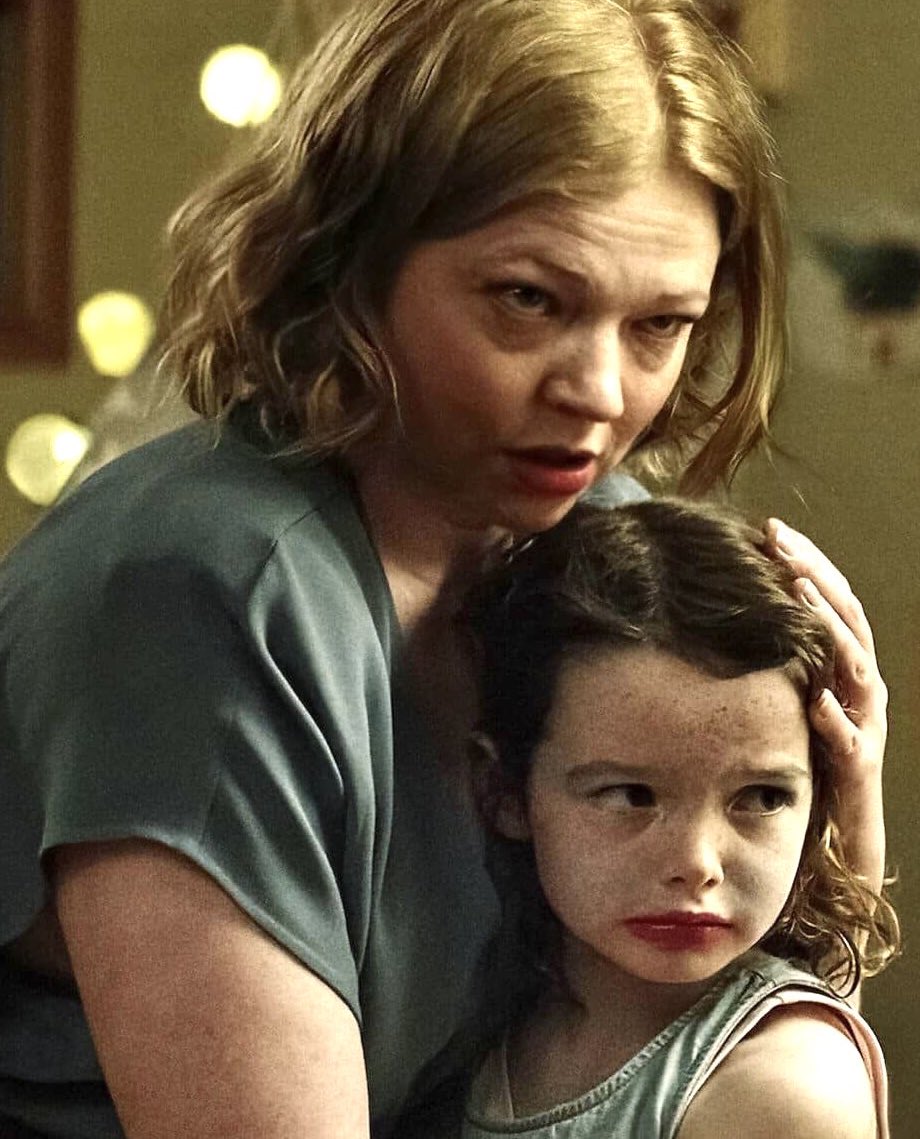
Run Rabbit Run is an unsettling psychodrama, set in an Australia that’s a lot darker and less sun-kissed than we usually see on screen. Woman of the moment, Sarah Snook, stars as single mother Sarah, whose orderly life disintegrates when her young daughter, Mia (Lily LaTorre), begins to exhibit some disturbing behaviours.

On the surface, Sarah seems to have it all: a good job, a nice house, a sweet kid and a civilised relationship with her ex (Damon Herriman). But underneath, she’s struggling. Her dad has just died, and her garage is full of his things, forcing her to confront a childhood trauma she’d rather forget. On Mia’s seventh birthday, a white rabbit appears from nowhere and the little girl adopts him as her pet. And then she starts to talk about things from Sarah’s past, things that she can’t possibly know…

It’s a simple enough story, but director Daina Read manages to generate real tension, despite what is obviously a low-budget, proving that you don’t need expensive gimmicks to make a scary, unnerving film. Sarah’s unravelling is slowly and meticulously examined, so that I’m holding my breath for much of the running time, genuinely fearful, wondering what is going to happen next.

I do suspect that much of the movie is on the cutting room floor. Early press releases (back when Elisabeth Moss was attached, before ‘scheduling conflicts’ meant she had to pull out) make much of the fact that Sarah is a fertility doctor, forced to confront her beliefs about life and death, but there’s not a lot of that in the version before me. True, we see Sarah wearing scrubs, and there’s one scene where she scans a pregnant woman, locating her foetus’s heartbeat, but beyond that and a solitary reference to her as ‘Doctor’, her job isn’t mentioned at all. In fact, when the rabbit bites her, she doesn’t seem to know how to treat the cut, so it’s hard to believe she’s even got a first aid certificate, let alone a medical degree. In addition – and I’m being deliberately vague here so as to avoid a spoiler – there’s quite a big event at the end that isn’t flagged up at all, so that I have to rewind to check if it really happened.

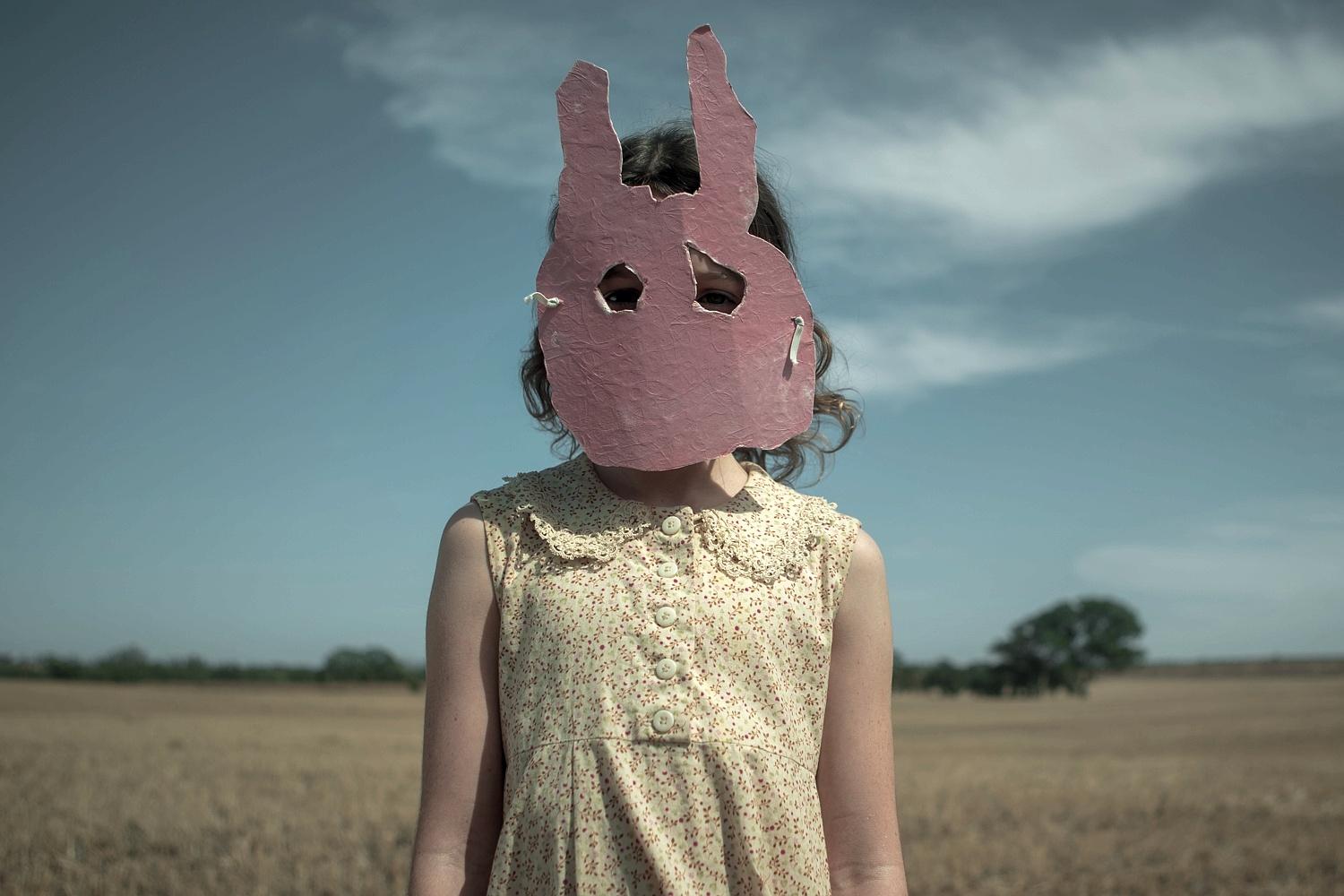
Despite these niggles, Run Rabbit Run is an enjoyably thrilling watch, and Sarah Snook and Lily LaTorre both carry it really well. Mia’s rabbit mask and the oblique Alice in Wonderland imagery are horribly spooky, and I find myself still thinking about this film when I wake up the next day.

3.8 stars

Susan Singfield

Judy & Punch

16/11/19

I grew up in a seaside town, where Punch & Judy shows were a familiar sight. I rarely watched one all the way through, but the characters have long been familiar. I like the tawdry end-of-pier atmosphere, the red-striped tent, the enthusiastic glove-puppeteering, the silly swazzle voice. I’m less drawn to the storyline, such as it is, especially to Mr Punch’s endless bashing of Judy, his long-suffering wife.

In Mirrah Foulkes’ feminist reimagining, Judy (Mia Wasikowska) seeks revenge. She and Punch (Damon Herriman) are both puppets and puppeteers, doomed to live their avatars’ mistakes. They’re skulking in Judy’s home town of Seaside (nowhere near the sea), holed up in her ancestral home, hoping to be spotted by talent scouts so they can move on to the big city. But their undoubted skills are marred by Punch’s alcoholism and unreliability: he can’t be trusted to look after their baby, nor to keep away from his mistress, Polly (Lucy Velik). But, when Punch’s selfish ineptitude wreaks real tragedy, Judy realises she’s had enough…

The action takes place in a vague, non-specific, sort-of-seventeenth-century England, and the set is sumptuous, all fairy tale turrets and higgledy-piggledy stone streets. But the picturesque streets belie a dark undercurrent, where the unctuous Mr Frankly (played with evident relish by Tom Budge) presides over regular stonings, hangings and banishments, punishments meted out to those hapless souls – usually women – who don’t quite conform to the town’s twisted rules.

There’s a change of pace as Judy finds kindred souls in the outcasts living in the nearby woods, an army of dispossessed women. In these sections, we see an alternative: a communal, accepting way of life, where everyone works for the common good. Interestingly, most of the humour is in the darker, Seaside-based scenes; in the woods, everything is more serious and contemplative.

The marionettes are important; their imagery is compelling. Glove puppets are usually used in real Punch & Judy shows (marionettes were used originally when they came to Britain from Italy in the 1600s, but were replaced by glove puppets soon afterwards). Marionettes are far more expressive, and their strings a well-worn metaphor for a lack of autonomy.

I like this film. It’s not subtle, but neither is its source material, and the gaudy slapstick of a Punch & Judy show is captured, even as it’s being subverted. Okay, so some of the accents are all over the place, veering from Yorkshire to Ireland by way of Jamaica within a single sentence,  and I don’t really buy the outcasts’ hippy Tai Chi sessions. But Wasikowska is convincing as the wronged woman, and Herriman horribly charming as her despicable husband. Daisy Axon makes a strong impression as Scotty, an outcast child who dreams of a forever home, and Benedict Hardie is excellent as bumbling policeman, Derrick. All in all, a sprightly, eye-opening affair.

4 stars

Susan Singfield