Colm Meaney

Bring Them Down

09/02/25

The Cameo, Edinburgh

In the Wild West, as we all know, men are men and they have vengeance in their hearts. And naturally they always take the law into their own hands. In the case of Christopher Andrews’ directorial debut, Bring Them Down, we’re talking about the West of Ireland, somewhere near Athenry, judging by what’s printed on the side of a van. The story is set in the present day but you’d be forgiven for thinking that it’s some time in the 1950s.

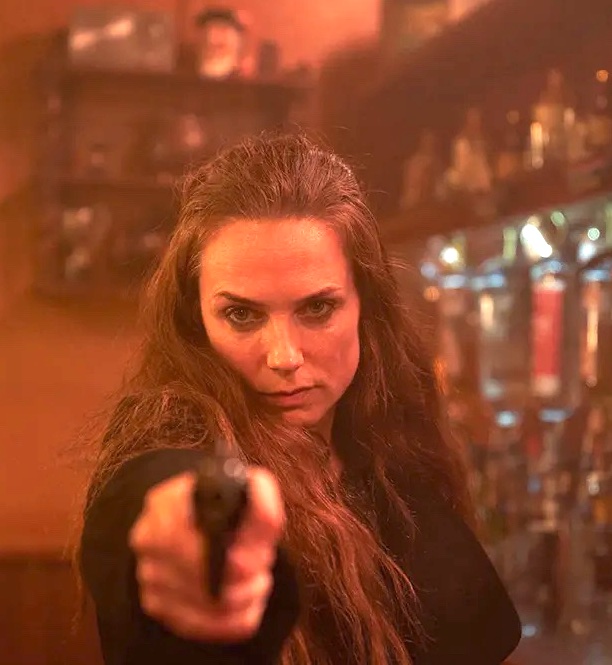
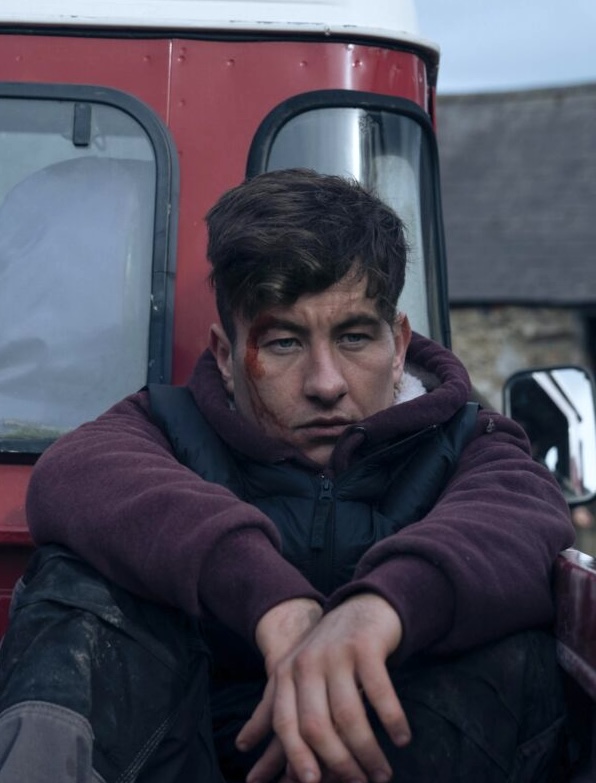
Michael O’Shea (Christopher Abbott) is a sheep farmer, stranded out in the middle of picturesque nowhere with his disabled father, Ray (Colm Meany), grumbling and snarking in the background. The two of them are constantly in dispute with their neighbour, Gary (Paul Ready), who is building holiday homes on adjoining land and seems to be spoiling for a fight. It doesn’t help that Gary is married to Caroline (Nora-Jane Noone), with whom Michael shares a troubled history (as we’ve seen in the film’s opening flashback). Gary and Caroline have a son, Jack (Barry Keoghan), who is tormented by the fact that his parents are in financial straits and appear to be on the verge of splitting up. He’s desperately on the lookout for ways to earn some extra money.

When somebody steals a couple of the O’Shea’s rams, Michael discovers them in Gary’s herd. He is at first reluctant to challenge his neighbours but, spurred on by his father’s angry tirades, Michael soon succumbs and sets off on a bloody quest for vengeance…

A more reductive view of the Irish would be hard to imagine. Every male character we meet seems intent on hurting, taunting or maiming those who get in their way and these people are seemingly unaware that the Garda even exist. Somewhere around the halfway point, Andrews’ script does a backward loop and offers a fresh perspective on what we’ve seen up to now, to indicate that things are not entirely as they seem, but it hardly helps matters, and I simply cannot credit one scene where Jack and his pal Lee (Aaron Hefferman) embark on an escapade so heinous it beggars belief.

There are other problems here. Keoghan is supposedly a teenager (Jack certainly acts like one) but unfortunately looks every day of his actual thirty-two years; and, while Abbott (an American actor, last seen undergoing supernatural changes in Wolf Man) makes a halfway decent stab at an Irish brogue and even delivers lines in Gaelige, this is thick-eared stuff that appears to offer an unpleasant subtext, suggesting that women shouldn’t be allowed to leave their men, as it messes them up.

Bring Them Down at least does what it says on the can. I leave the cinema wishing I’d skipped this film and looked elsewhere for a afternoon’s entertainment.

2.6 stars

Philip Caveney

In the Land of Saints and Sinners

07/04/24

Netflix

In recent years, Liam Neeson’s film output seems to have evolved into a series of geri-action brawls, so In the Land of Saints and Sinners comes as something of a breath of fresh air. Not that it doesn’t feature plenty of action – it does. But it’s also a deceptively gentle, almost pastoral, sort of film that has the good sense to show us enough about its many characters to make us care what happens to them.

Written by Mark Michael McNally and Terry Loane, the story takes place largely in the tranquil setting of Glencomcille, County Donegal. It’s 1976 and Finbar Murphy (Neeson) is a pillar of the community, kind, gentle and always ready to help anyone in trouble. He’s best friends with the local garda officer Vinnie (Ciarán Hinds) and enjoys a chaste but tender relationship with his neighbour, Rita (Niamh Cusack). But like many freelancers, Finbar has hidden depths.

Since the death of his wife, he’s worked for local crime kingpin, Robert McQue (Colm Meaney), helping to rid him of his enemies by taking them to a tranquil nook, despatching them with his trusty shotgun and burying them deep. He always plants a tree to commemorate each shooting and there are a lot of saplings in evidence.

But his latest victim (another contract killer)’s final words strike a chord with Finbar and make him think wistfully about abandoning this lucrative sideline and doing something less stressful. He asks McQue to pass on his cleaning-up duties to eager young hotshot, Kevin (Jack Gleeson), and McQue reluctantly agrees. But it isn’t long before the actions of nasty piece of work, Curtis June (Desmond Eastwood), recall Finbar to his former endeavours. Curtis is the brother of Doireann (Kerry Condon), a member of the provisional IRA, who, with two other members of her unit, is currently hiding out in in Glencomcille after fleeing a bombing incident in Belfast. Doireann is a force to be reckoned with and it’s clear that the tranquility of this sleepy suburb is soon to be rudely interrupted…

Though the ever-present threat of violence does inevitably build to a bloody conclusion, what really works for the film are the moments that lead up to it. Neeson is great here, as a kind, caring and avuncular character, always ready to do what has to be done when the situation demands it. He’s surrounded by the cream of Irish talent, not least Condon (a recent Oscar-winner, lest we forget, for The Banshees of Inisherin), who imbues Doireann with a fierce and unrelenting determination to destroy anyone reckless enough to stand in her way. Gleeson’s Kevin is also a revelation, a kid who’s never been treated kindly and who nurtures a hopeless ambition to go to California where, he’s been told, peace and love are currently in the air. Mind you, all the characters in this drama have the resonance of real people and that’s one of the elements that makes it work so effectively.

Director Robert Lorenz uses the majestic landscape of Donegal to the film’s advantage, counterpointing scenes of stark violence with the beauty and serenity of nature. It all makes for something far more nuanced than I’d normally expect to find in this genre – and ensures that the tragedy of its brutal conclusion is all the more affecting.

4.2 stars

Philip Caveney

Tolkien

04/05/19

The Tolkien Estate have taken against this biopic of the famous writer in no uncertain terms, but it’s hard to understand exactly why. As embodied by Nicholas Hoult, he’s an admirable fellow: handsome, witty and completely loyal to his friends – all attributes that he would eventually hand on to his fictional characters in The Hobbit and The Lord of the Rings.

The film concerns itself mostly with the writer’s early years: his childhood in Sarehole, Worcestershire (which would become the model for ‘The Shire’); his time at a boarding house in Birmingham, after the death of his mother, where he meets and eventually falls in love with fellow orphan, Edith Bratt (Lily Collins); and his school years at King Edward’s, Birmingham, where he and three close friends found a secret society, the TCBS. This fellowship continues when the boys go on to University, and it remains strong until the First World War intervenes and changes everything.

Director Dome Karukoski and screenwriters David Gleeson and Stephen Beresford are keen to show how Tolkien’s horrific experiences at the Battle of the Sommes contributed to the imagery that would dominate his future books, and the sequences that depict mythical beasts rising from the carnage of trench warfare are perhaps the strongest scenes here, handsomely mounted and never overdone. Tolkien’s protracted courtship of Edith, while rather less spectacular, is also nicely handled, and Hoult and Collins make an engaging couple. There’s a nice cameo by Derek Jacobi as the Oxford Professor who encourages Tolkien to develop his flair for languages, and another from Colm Meaney as the Catholic priest charged with the responsibility of ensuring that things work out for Tolkien in the long run.

While it’s certainly a gentle and low key affair, I find the film absorbing and, ironically, much more interesting than the great books themselves, which – try as I might – I have never really managed to enjoy. Don’t tell the Tolkien Estate. They’ll probably sue me. For heresy.

4 stars

Philip Caveney