Charli XCX

Saint Joan

21/03/26

Traverse Theatre, Edinburgh

Stewart Laing’s stripped-back adaptation of George Bernard Shaw’s Saint Joan is based not on the 1923 original, but on a screenplay Shaw wrote later (presumably with an eye on Hollywood), a script which eventually made it into print in the1960s but never transitioned to the big screen. It’s a shorter, tauter version of the story, which focuses on Joan’s origins – and on her subsequent trial.

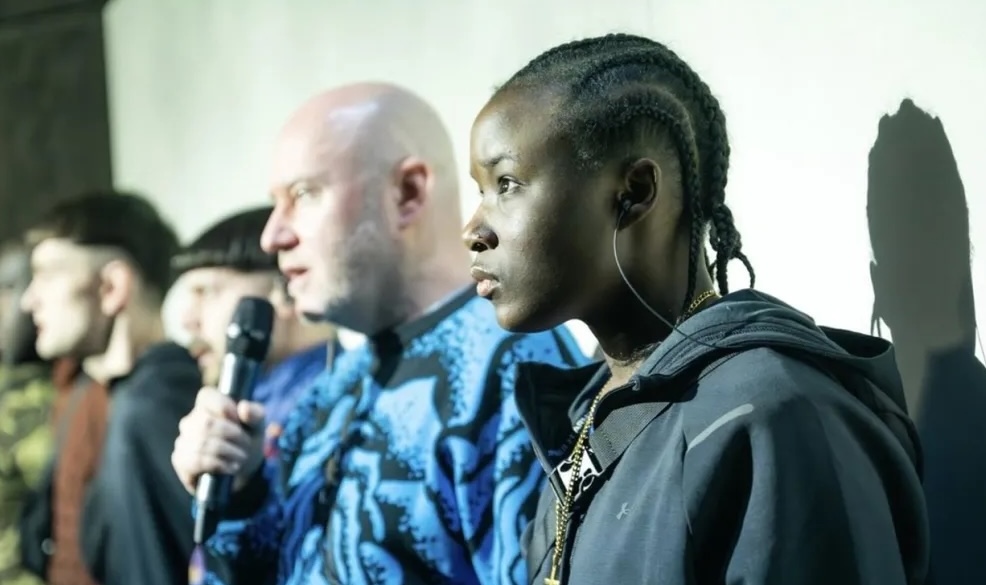
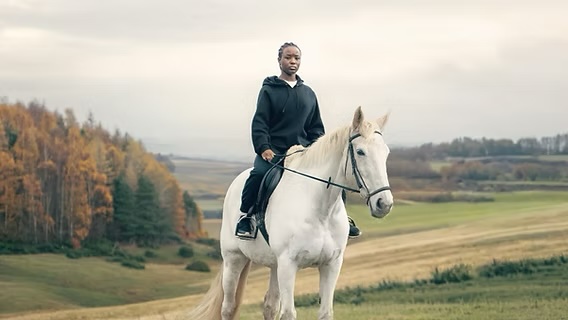
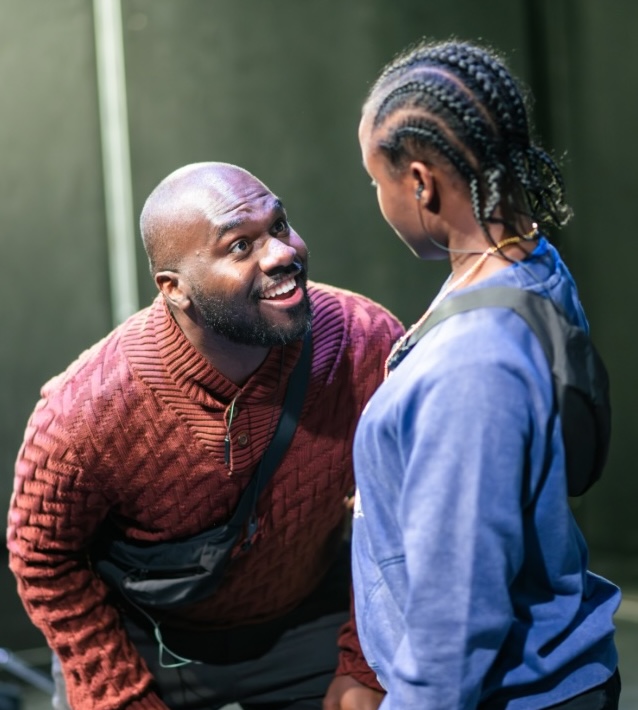
The piece is initially narrated by Chorus (Martin O Connor) as a series of action lines, inviting the audience to picture the scenes as they unfold. Joan (Mandipa Kabanda, in her theatrical debut), a sixteen-year-old peasant girl, turns up unexpectedly at the farm of Robert de Baudricourt (Thierry Mabonga), insisting that she be given a horse and a suit of armour. (Well we’ve all been there!) Voices in her head have told her that she must ride to the rescue of the city of Orléans, which is currently under siege by the English army. Those same voices assure Joan that not only can she save the city but, furthermore, she’s destined to be the one to crown the Dauphin in Rheims Cathedral.

Against all the odds, Robert is convinced by Joan’s visions and grants her request. The ensuing carnage in Orléans does appear to have a seemingly miraculous outcome with the French defeating the English, providing a turning point in the 100 years war. But of course, as we all know, history doesn’t have a happy ending planned for Joan – and all too soon, she finds herself on trial for witchcraft, judged and assessed by a bunch of toxic males, who feel threatened by her seemingly supernatural abilities. Only Ladvenu (Lewis MacDougall) finds some sympathy for her plight, but he is shouted down in the general chorus of ‘burn the witch!’

As I said earlier, it’s stripped-back and spare, but the harsh declamatory style of the dialogue sometimes makes it hard to follow proceedings – and it seems ironic that a huge blank screen standing onstage throughout is barely utilised as anything more than a handy barrier to conceal costume changes. There’s one brief sequence with a few static images and music by Charli XCX – and a longer filmed epilogue, created by Adura Onashile, which features a tarred-and-feathered Joan speaking directly to camera, evoking comparisons between her mission and the work of protestors against the current conflict in Palestine. Are social media activists channelling Joan as a prototype? This seems to suggest that they are – but, the inevitable effect is to make those earlier scenes seem even starker by comparison – and wouldn’t Joan’s immolation benefit from some suitably fiery visuals? I can’t help feeling this is a missed opportunity.

Still, this is a serious, thought-provoking performance piece with the six-strong cast moving from character to character with total commitment. MacDougall is particularly compelling as Ladvenu and Ross Mann manages to imbue elements of humour into the bullish, vengeful Chaplain. A four-way production between Raw Material, Perth Theatre, Aberdeen Performing Arts and Citizens Theatre, Saint Joan in at the Traverse until the 21st of March.

3.4 stars

Philip Caveney
“Wuthering Heights”

15/02/26

Cineworld, Edinburgh

I’ll be the first to admit: I’m not the biggest fan of Emily Brontë’s Wuthering Heights. I love its complexity, its uncompromising depiction of broken people and the wildness at its heart, but it just doesn’t speak to me as clearly as, say, Jane Eyre, Villette or The Tenant of Wildefell Hall. I’m not denying the author’s genius, but – for me – there are too many narrative layers between the reader and the central story; I don’t want the Lockwood and Nelly Dean filters. And, let’s be honest, it’s all a bit histrionic, isn’t it?

Emerald Fennell certainly leans into the melodrama in this sumptuous interpretation, and she’s sensibly expunged Lockwood (whatever purpose he serves on the page, it doesn’t translate well to film). However, some of the other changes are genuinely baffling. It’s like she’s made an adaptation of an earlier movie rather than the novel. It’s also – dare I say it? – like she doesn’t really get the book.

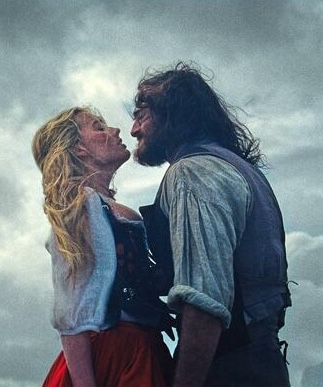
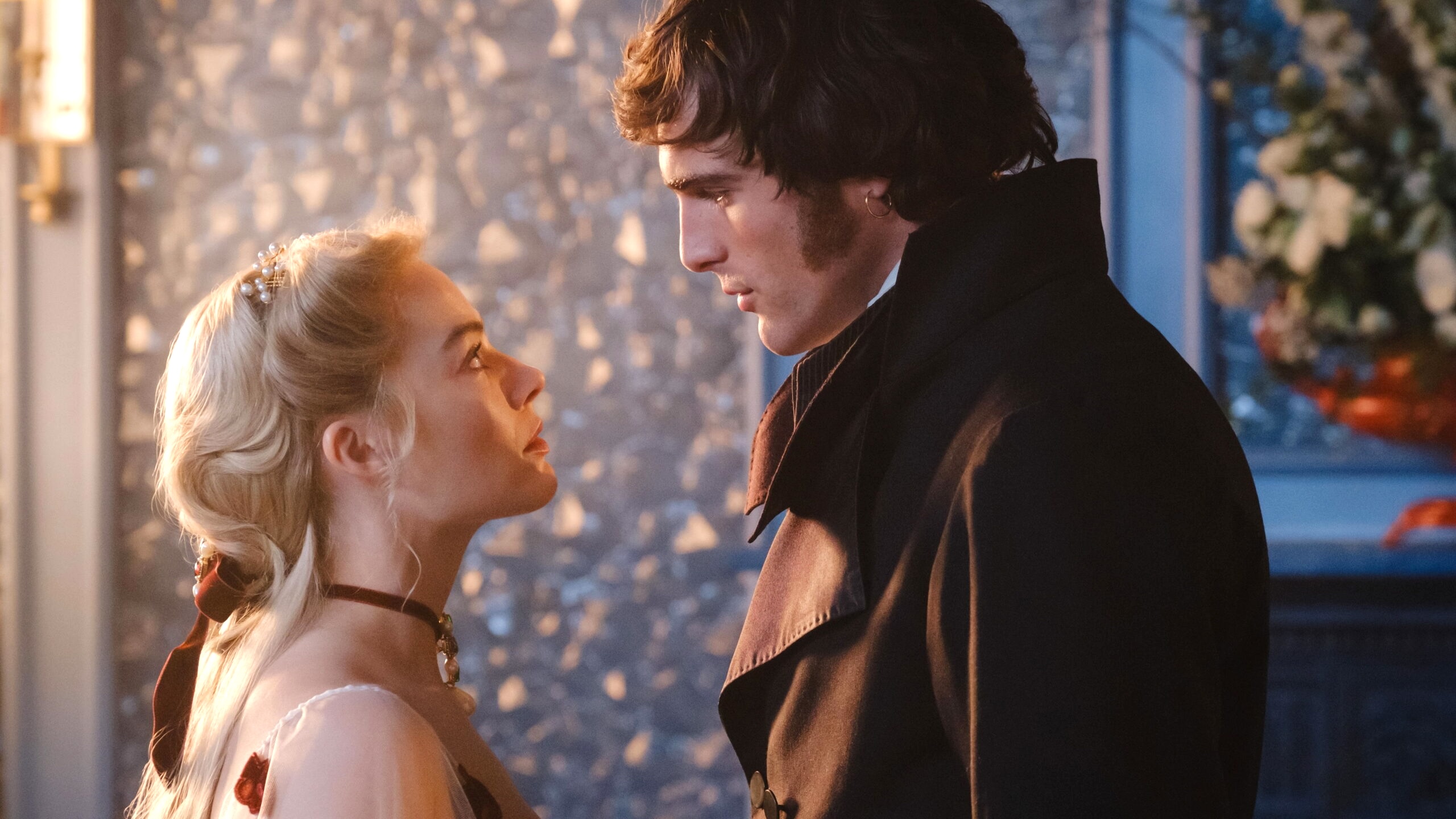
Let’s start with the most glaring problem: Heathcliff. He’s played by two perfectly competent actors: first Owen Cooper and then, in a sudden age-defying leap, Jacob Elordi. There’s no problem with their performances but, let’s face it, neither is right for the part – and not just because Elordi is a decade too old.

They’re white; Heathcliff isn’t.

While I’m not someone who expects screen adaptations to be exact replicas of their source material, I do think that something as fundamental to the character as Heathcliff’s race can’t simply be erased. His outsider status stems from the fact that he is visibly different from those around him; he is deemed an unsuitable match for Cathy because of his unknown ethnicity. Racism is the reason he’s rejected. It matters that he’s found at the Liverpool docks and not just the village pub. He’s persona non grata from the start. It also seems an odd decision to cast British Pakistani, Shazad Latif, as Edgar Linton. Why not swap the two leads?

What’s more, Fennell bottles out when it comes to Heathcliff’s monstrosity. She depicts him as a romantic hero, but that’s the antithesis of what Brontë wrote. The novel’s Heathcliff is a nuanced character, at once sexy, pitiful, admirable and monstrous. Like Frankenstein’s creature (a better casting for Elordi), we are shown the trauma that destroys him, but we also see the nasty brute that he becomes. Fennell’s iteration lets him off the hook: he’s not cruel or abusive, just too deeply in love. Making Isabella (Alison Oliver)’s degradation consensual is horribly tin-eared, especially the moment Heathcliff demonstrates that she could easily get away if she wanted to. I don’t think you need to be particularly socially aware to know that “Why doesn’t she just leave?” is a harmful, victim-blaming trope when it comes to domestic violence.

Leaving aside the obvious issue with Fennell deciding to omit the second half of the story, there are two further choices I need to question. First, why has Hindley been deleted from the tale? His role is shared between Mr Earnshaw (Martin Clunes) and Nelly Dean (Hong Chau): the former physically abuses Heathcliff, while the latter is jealous after being displaced in Cathy’s affections, and neither response rings true. And second, why doesn’t Cathy’s baby live? One of Wuthering Heights‘ main themes is emotional inheritance – but there’s nobody here to represent the next generation. It seems a glaring loss.

Novel aside, there are also some problems with the film itself. Everything is so over-the-top that it’s hard to take seriously. From Isabella’s “ribbon room” to Mr Earnshaw’s ridiculous alcohol-bottle mountains (never mind that he’s famously broke, glass was expensive back then and he’d have been more likely to get his booze in a refillable ceramic jug), there’s no subtlety here at all.

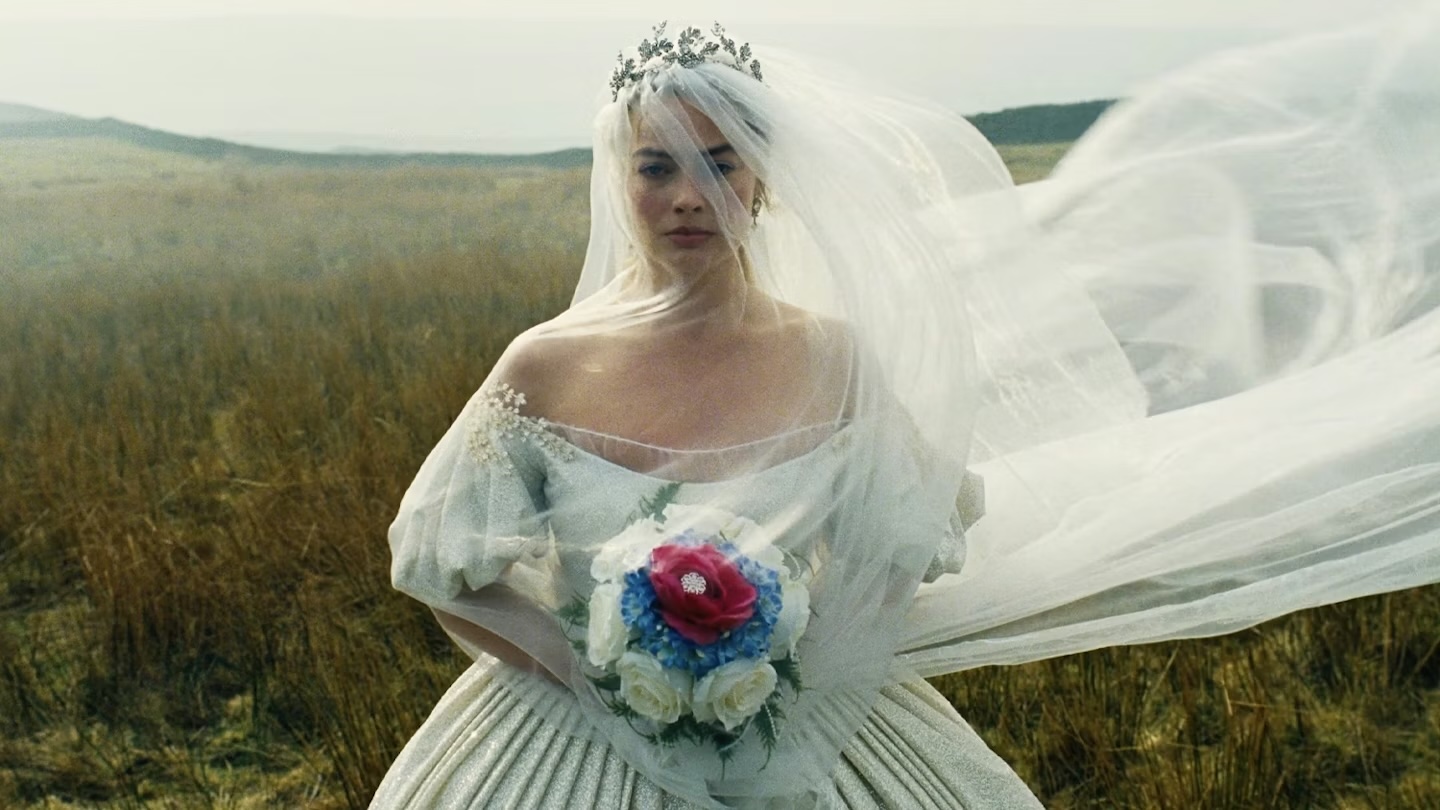
Is there anything to like? Yes. Charlotte Mellington and Margot Robbie both play Cathy well, although – like Elordi – Robbie is way too old for the role (Cathy is only supposed to be 18 when she dies, and Robbie is almost double that). The intensity of Cathy and Heathcliff’s relationship is convincingly drawn, and I love the black, red and white colour palette. The moors are perfectly windswept and gloomy, and the portrayal of an impoverished gentry clinging to its name is clear-eyed and unsentimental. I also quite like the music, with a score by Anthony Willis and an album’s worth of original songs by Charli XCX.

But, in the end, that’s not enough. This feels like a wasted opportunity from a promising young director whose blind spots have thwarted her passion project.

2.5 stars

Susan Singfield