C Aurora

Sinatra: RAW

17/08/24

C Arts Venues (C Aurora), Lauriston Street, Edinburgh

Tribute acts have long been a staple of the Fringe, but to describe Richard Shelton’s interpretation that way would be to do it a disservice. It’s 1971 and Sinatra is here to deliver his final performance. We’re in the Purple Room in Palm Springs (though in reality, we’re actually in the room where Susan and I go to cast our votes in government elections). Out saunters Shelton, the very personification of Ol’ Blue Eyes, and he launches into his opening song, accompanied on the piano by Campbell Normand.

It’s not just the voice, though it must be said that’s spot on – as smooth as warm honey, as powerful as high-tensile steel – Shelton also bears more than a passing resemblance to the great crooner and, as he casually mentions at the end, he’s actually wearing one of Sinatra’s suits. In between songs, he talks about the singer’s life: his meteoric rise to fame thanks to the adulation of his young followers, the Bobby Soxers; his clashes with band leader Tommy Dorsey; his doomed love affair with Ava Gardner… it’s all here, delivered in that familiar, hard-bitten voice.

As he reminisces, he works his way steadily through a bottle of Jack Daniels (which I presume is non- alcoholic because Shelton has to get to the end of August to finish his stint). At one point, he slips easily into the suave voice of Eddie Fisher and I think, “Wow, this guy really knows how to nail a British accent.” So to learn, at the very end, that Shelton is actually from Wolverhampton is quite the revelation.

In short, if you love Frank Sinatra songs, if you’d like to know a little more about the man’s turbulent history, if you hanker to hear a rendition of A Very Good Year that may bring you close to tears, then head for Lauriston Street at your earliest opportunity. Every evening at 9pm, Frank (or rather Richard Shelton) is waiting to perform for you. And those who enjoy a relaxed late-night experience might also wish to check out his other show, Sinatra and Me, which promises to be just as much of a revelation.

Oh and don’t bother to take your voting ID. That’s all done and dusted.

4.6 stars

Philip Caveney

Tituba

16/08/23

C Venues Aurora (Main House), Lauriston Street, Edinburgh

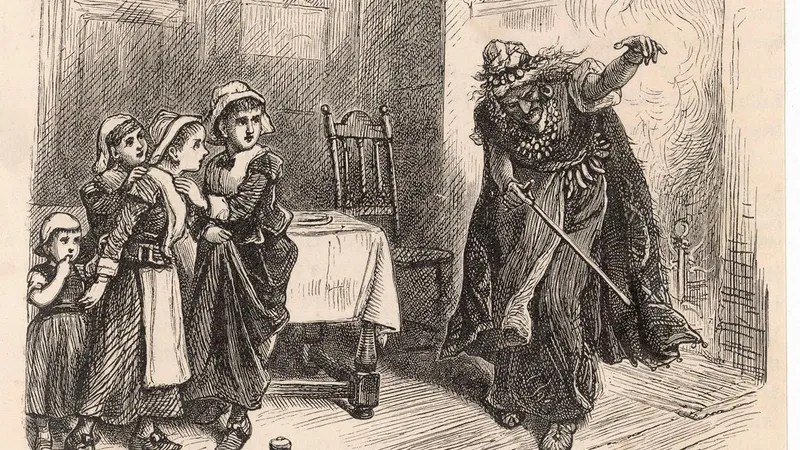
Written as a correction to Arthur Miller’s The Crucible, which relegates Tituba to the sidelines, Winsome Pinnock’s 2016 monologue reinstates her as a central figure, a key player in the Salem Witch Trials. Whereas Miller shows her practising witchcraft with the town’s white children, encouraging them to dance naked and sacrifice chickens, and then ignores her, Pinnock returns to the transcripts of the court cases, where Tituba was the first to confess, the first to name others and thus take her revenge on those who had enslaved her. Of course The Crucible is a wonderful play, but it’s a shame Miller silences Tituba as he does, because her story is really interesting, as well as important.

In this lyrical monologue, Pinnock explores Tituba’s backstory, as well as her motivation for denouncing the townspeople in Salem. I learn for the first time that she’s Caribbean, not African, and see how she has more reason than anyone else in the play to grasp this opportunity to seize power. Almost everyone in Salem is oppressed to some extent: the church exerts a strong grip, demanding adherence to its punitive codes. But there’s a clear hierarchy within this: first the white men, then the white women and then the white children. At the bottom of the pile are the Black women and children, the latter sold and sent away, the former worked to the bone and whipped on a whim. No wonder Tituba speaks out.

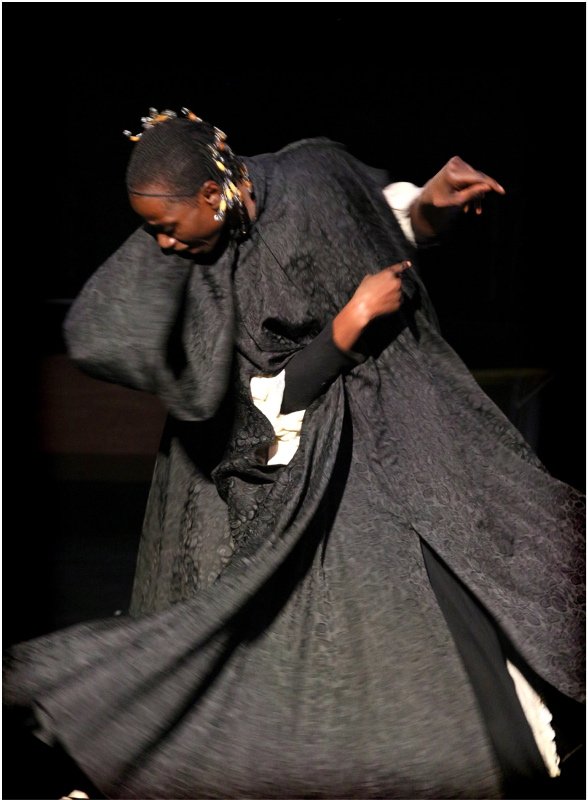
In this Africanus World production for C Venues, Faith Martin Abongo delivers an intense, compelling performance, accentuating the poetic rhythm of Pinnock’s words. This Tituba is riveting, illuminating; I learn a lot about her world. The section where she is beaten is hard to watch – as it should be – and it’s to Abongo’s credit that I can almost feel Samuel Parris’s cruel presence.

If there’s a criticism here, it’s to do with the staging. This is an intimate play, but the Main Hall is vast and cavernous and some of the words are hard to hear. I think the piece would work better if it were brought forward, closer to the audience, and if – instead of exiting between each scene, only to return moments later having made a simple costume change – Abongo were to remain onstage throughout.

All in all, this is a beautifully-crafted piece of writing, and Abongo does it justice.

3 stars

Susan Singfield