Betty Valencia

Black Hole Sign

08/10/25

Traverse Theatre, Edinburgh

There’s a great big metaphor hanging over the unnamed hospital where this dark comedy takes place. A hole has appeared in the roof of A&E and water is dripping down onto the floor. As the story progresses, so the problem steadily worsens, the ingress ever more destructive. 

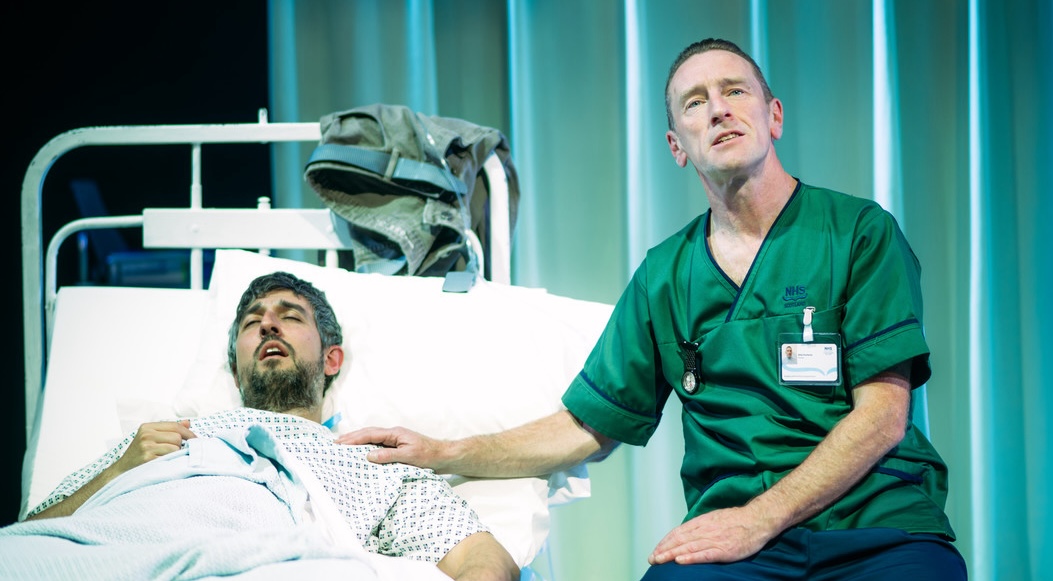
But senior charge nurse Crea (Helen Logan) and her team can only soldier on regardless, doing their best for their patients, no matter what. Crea has phoned for help about the roof only to be told (by a recorded voice) that she is number 74 in a queue. Her team include her right-hand woman, Ani (Dani Heron), currently doing a bit of soul-searching about her own future; affable porter, Tommy (Martin Docherty), who has long carriesd a torch for Crea; and Lina (Betty Valencia,) an almost cartoonishly helpless student nurse, who arrives chewing gum to ‘help her anxiety’ and who seems incapable of walking past a litter bin without knocking it over.

It’s clearly going to be a tricky night. Mr Hopper (Beruce Khan), a former alcoholic, is admitted with the fatal condition that gives the play its title, an inoperable affliction of the brain that is going to keep deteriorating and will cause his death in a matter of hours – but there’s no sign of anybody visiting him. Meanwhile, octogenarian Tersia  (Ann Louise Ross) is suffering from a urinary infection and is causing havoc as she experiences hallucinatory episodes that make her think that she is at a 1970s disco. The silver glittery shoes she’s wearing are all too real though.

At various points the play keeps cutting to an enquiry, some time later, where the members of staff have been called as witnesses and we learn that something really bad happened on that fateful night, resulting in a tragic death. It’s all too clear that somebody is going to have to pay the ultimate price for this disaster.

Playwright Uma Nada-Rajah is herself a staff nurse, who works in critical care, so it’s little wonder that, despite the sometimes slapstick levels of humour on display, the piece feels authentic, clearly inspired by events that the writer has actually experienced. It’s not the eviscerating howl of despair I came in expecting but then, such grim polemics can sometimes make for difficult viewing, so here the bitter pill has been sweetened with a shot of humour. Amidst the laughter, important points are being driven home.

It’s clear from the outset that tonight’s audience is on board with this fast-moving production, cleverly directed by Gareth Nicholls, though I must confess to being somewhat puzzled by a lengthy blackout, which – considering how little has changed when the lights come back up – seems unnecessary.

This niggle aside, the hearty applause at the play’s conclusion suggests that everyone present is in agreement with the story’s subtext. The National Health Service – one of the greatest institutions of modern times – is on its last legs and anything that forces this pressing concern into the spotlight is more than worthy of our attention.

4 stars 

Philip Caveney
Ivor

15/04/25

Traverse Theatre, Edinburgh

It’s Scarlet’s twenty-first birthday, and she’s promised to spend it with her mum. Single-parent Sarah (Laura Harvey) is beyond excited: she’s not enjoying her empty nest, and is determined to go the extra mile for her student daughter (Alice Glass). A landmark occasion requires a significant gift – and what could be more significant than an actual iceberg?

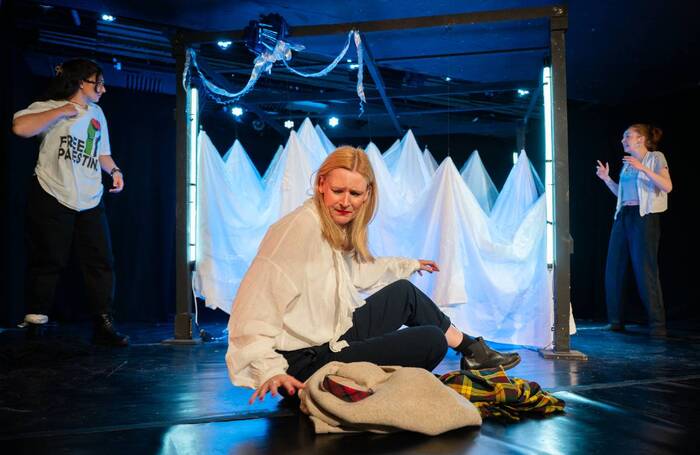
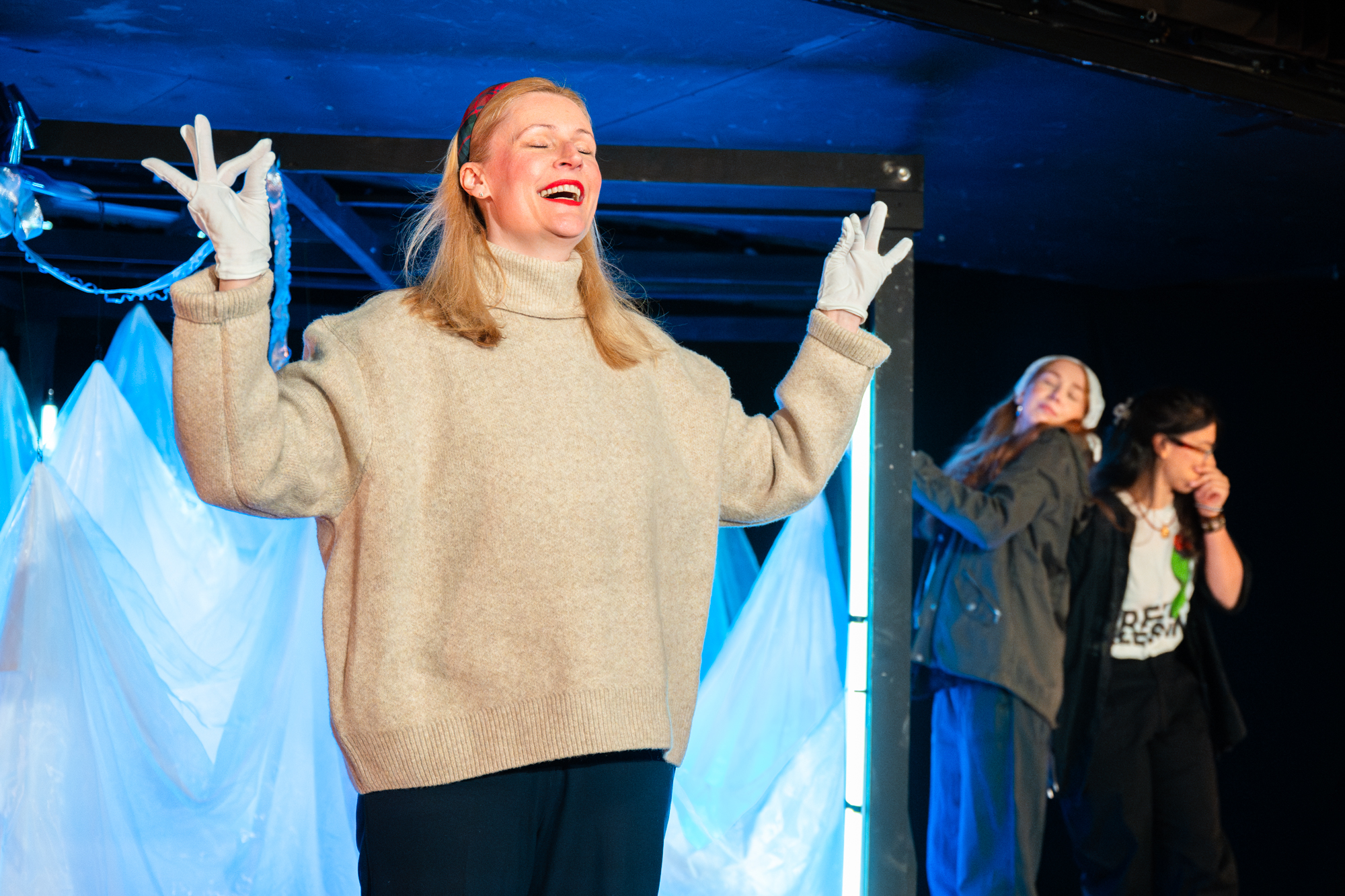
The titular piece of polar glacier – “Ivor” – dominates both the family kitchen and the Traverse 2’s stage: a great big hulking metaphor, displaced and dangerous.

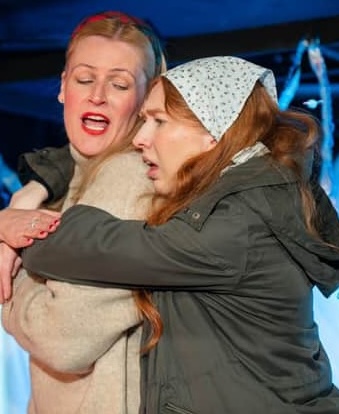
Scarlet’s not exactly delighted by the surprise. Not only is it weird, it’s also way too much. She feels suffocated by her mother’s ridiculous largesse. How now can she break the news that, in fact, she won’t be staying here after all? That she’s planning to go to London with her girlfriend, Jude (Betty Valencia), and has only popped in to collect something…

Jennifer Adam’s sprawling script encompasses ecological disaster, terrorism and helicopter parenting. The creaking, leaking iceberg symbolises more than the melting ice caps: it’s a reminder of the enormity of the task ahead for Jude and Scarlet, young women determined to save the world. Meanwhile, the petty squabbles and hypocrisies between the three loom just as large. It’s a lot to pack in to fifty minutes’ playing time and, although director Catriona MacLeod succeeds in pacing it well, I can’t help wishing there were a little less here. Valencia’s performance is strong, but I think the play would be more compelling without Jude, with a tighter focus on the mother-daughter dynamic, set against the ever-looming climate crisis.

Heather Grace Currie’s clever design almost fills the small stage with an Ivor comprising huge white sheets teased into peaks, which is quite an achievement on a small budget. Unfortunately, this affects the sight-lines, and I wonder if a more abstract construction – an up-lit empty frame, for example – might serve the piece better.

The idea behind Ivor is pleasingly quirky but, in its current form, it doesn’t really suit the PPP running-time. Given longer to develop its themes – Jude’s family’s experiences in Colombia in particular need a lot more attention – this could be a really fascinating play, with much to say about the troubled times we live in.

3 stars

Susan Singfield

Disfunction

24/10/23

Traverse Theatre, Edinburgh

Sadly, this is the final PPP of the season; Tuesday lunchtimes just won’t be the same without an invigorating hour of original theatre. Luckily, Disfunction (“with an ‘i'”) provides a rousing send-off. This is first-rate stuff: a beautifully distilled character study, with a slice of social commentary on the side.

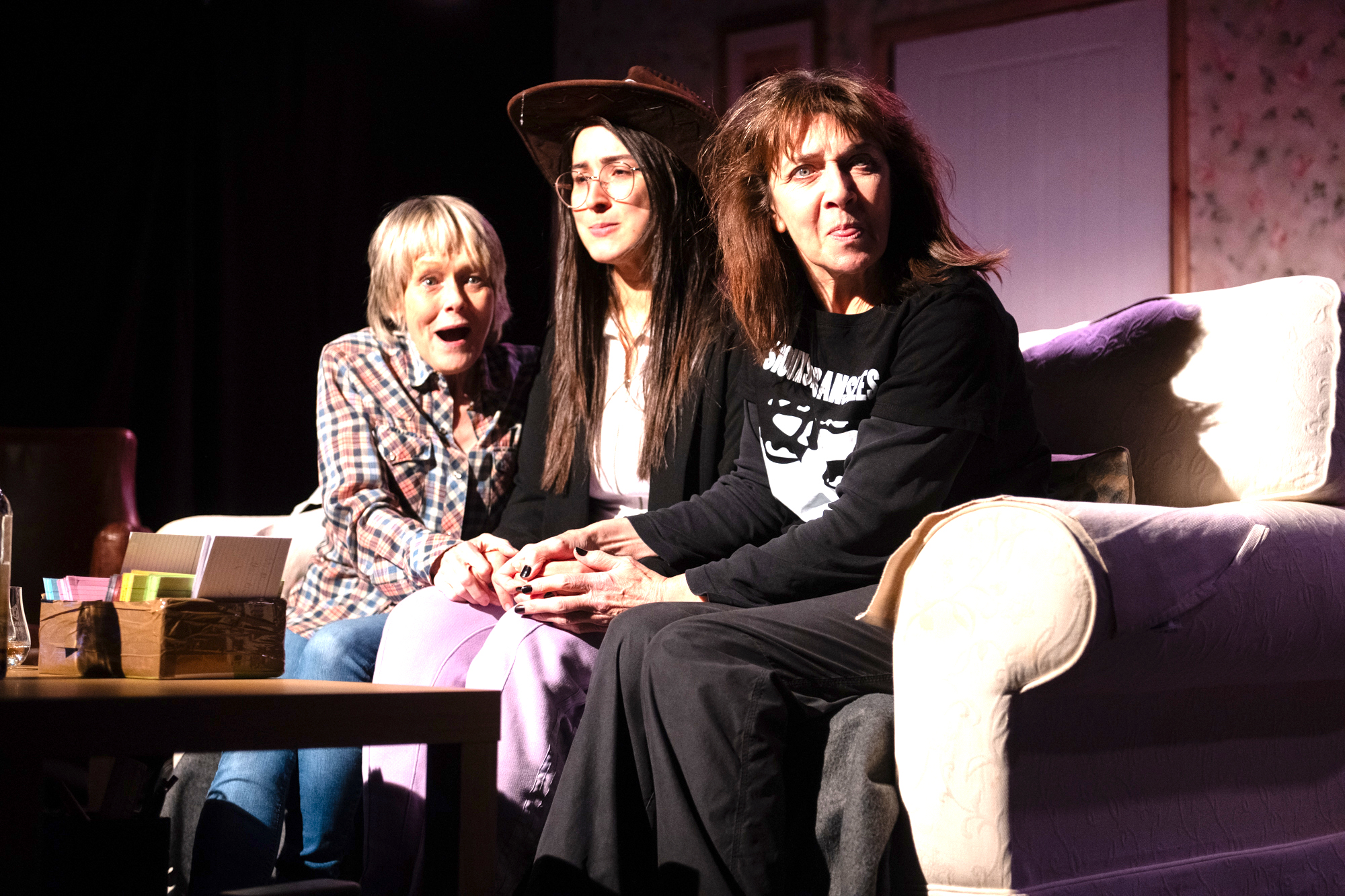
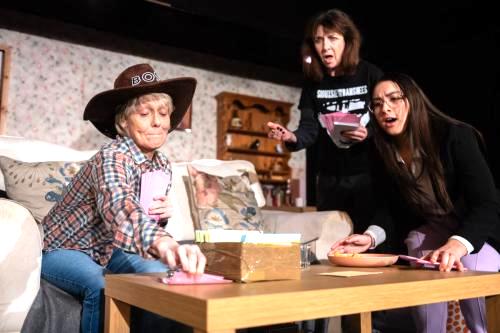
Kate Bowen’s play tells the story of sisters Moira and Melanie (Maureens Beattie and Carr respectively) and a game they’ve been honing for fifty years. Their goddaughter, Tanya (Betty Valencia), thinks she’s found a way to monetise their creation – by turning it into a sort of reality-TV experience, where viewers can pay to watch them play. At its best, the game is all Taskmaster-style fun: one round requires a blindfolded participant to put a pin in a map and then (sans blindfold) make their way to wherever the pin lands. Caveat: no cars allowed. Oh, and once they get there, they need to take a photograph of themselves. With four animals.

At its worst, the game is an exercise in, well, dysfunction. With a ‘y’.

The Maureens are surely two of Scotland’s national treasures, aren’t they? It feels like a real privilege to see these two great actors in such an intimate setting. They clearly relish their roles, especially Carr, who gets the plum part of the sassy, self-destructive Melanie. But Beattie is just as impressive as the more reserved and taciturn Moira, and Valencia more than holds her own as troubled Tanya, all bright-eyed desperation, a paper-thin smile covering her pain.

Lu Kemp’s kinetic direction means that the characters are always in motion (notable moments include a hilarious performance of Whigfield’s Saturday Night routine), and highlights that peculiar combative closeness that defines so many families.

Are there any negatives? Not really. Disfunction‘s role-playing political round perhaps stretches credulity (if there are only three people playing and each one has to ‘be’ a politician, who has set the questions to catch the others out?), but that’s my only gripe. Otherwise, it’s a pure delight. After all, as Tanya so cannily perceives, who doesn’t want to watch a bunch of strangers tearing themselves apart?

4.5 stars

Susan Singfield