Benicio Del Toro

One Battle After Another

04/10/25

Cineworld, Edinburgh

We’re uncharacteristically late to this one, mostly because in its week of release we are in a camper-van in the wilds of Scotland and no cinema in that vicinity is showing it. Not complaining, you understand, people need to have holidays, but this is a film by Paul Thomas Anderson, whom I’ve held in special esteem ever since watching Boogie Nights way back in 1997. And all those ‘best film of the year’ reports make me impatient to get back to civilisation.

Mind you, I’d be the first to admit that, in recent years, PTA has (at least for me) gone off the boil a bit. Unlike many of his followers, I didn’t really care for 2017’s Phantom Thread and his last offering, 2021’s Licorice Pizza, though a warm and appealing slice of nostalgia, wasn’t the finest work from the director of There Will be Blood and (in my humble opinion) his masterpiece, Magnolia.

One Battle After Another, as the name suggests, is an action film, perhaps the last genre I’d have expected this most enigmatic of film-makers to explore but, happily, he puts his own unique spin on it, producing a sprawling, multi-faceted tale set over the best part of two decades. It’s larger than life, peopled by a series of eccentrically-named caricatures and yet, once it settles into its stride, it manages to exert a powerful grip.

We first join the action as Pat Calhoun (Leonardo DiCaprio) and Perfidia Beverly Hills (Teyana Taylor), along with other members of their far-left terrorist group, French 75, launch an armed attack on a detention centre in California and free all of the captives. During the action, Perfidia encounters the unit’s commanding officer, Steven Lockjaw (Sean Penn), and – in a move intended to humiliate him – makes him masturbate at gunpoint. However, this only causes him to fixate on her, something that will have inevitable consequences further down the line.

Pat and Perfidia become partners, but their haphazard attempts to parent their baby daughter, Willa, seem doomed to failure – especially when Perfidia is captured and forced into witness protection, and Pat is left to deal with the situation alone.

Sixteen years later, Willa (Chase Infiniti) has grown to be an independent teenager, preferring to follow the guidance of her karate instructor, Sergio (an underused Benicio Del Toro), than her drug-addled old man. Pat hasn’t been involved in any terrorist activity in years, preferring to experiment with every drug he can lay his hands on but when, out of the blue, a coded telephone call reaches him, announcing that Lockjaw (now a Colonel) is coming after Willa, he’s forced to get up off the sofa and go to her aid…

From this point, the film pretty much delivers on the promise of the title – it’s a frenetic, explosive and breathless chase filtered through cinematographer Michael Bauman’s VistaVision lenses, and backed by Jonny Greenwood’s eccentric score. Written by Anderson and loosely based on Thomas Pynchon’s novel, Vineland, the director has reputedly been working on this project for something like 20 years so it’s remarkable that it feels as timely as it does.

DiCaprio is wonderfully endearing as the hapless Pat, desperately trying to remember passwords that he hasn’t used for far too long, while Penn, as the heinous, macho Lockjaw, is the personification of a living GI Joe action figure, a man committed to preserving his outward appearance, while inside he’s a festering, ambitious wreck. But strangely, it’s newcomer Infiniti who really impresses here as the quietly determined Willa, who, when pushed, snaps back with the stubborn tenacity she’s inherited from her mother.

One Battle After Another is a searing condemnation of contemporary America, a world where freedom has to be fought for with extreme violence, where the most cold-blooded assassins hide behind the personas of smiling, corn-fed patriots. PTA finds original ways to explore the most well-worn conventions. Even the old fall-back of the car chase is given a mesmerising makeover, as vehicles glide silently through a shimmering waterfall of desert roads like some kind of LSD-induced hallucination.

Despite a hefty running time of two hours and 41 minutes, the film flashes by in what feels like half that time and it’s clear pretty much from the outset that Paul Thomas Anderson is back on form. Whatever comes next, I’m already looking forward to it.

4.8 stars

Philip Caveney

The Phoenician Scheme

26/05/25

Cineworld, Edinburgh

Cinema fans can hardly have failed to notice that a new Wes Anderson movie is on general release. As ever, it features his usual bag of tricks: impeccably-framed images arranged in perfect symmetry on the screen; an extended set of famous faces, all of whom show up for every successive project and seem happy to put in cameo performances for shirt buttons; and, as ever, a plot that appears to have been created simply to redefine the term ‘off-beat.’

Anderson has long been a disciple of Verfremdungseffekt – the distancing technique devised by playwright Bertolt Brecht, employed to prevent an audience from easy identification with his characters. It’s always been there in Anderson’s work to some degree but, this time around, I can’t help feeling that it might have been too enthusiastically applied.

Call me old-fashioned, but I do like a character I can root for. Here, there really isn’t one.

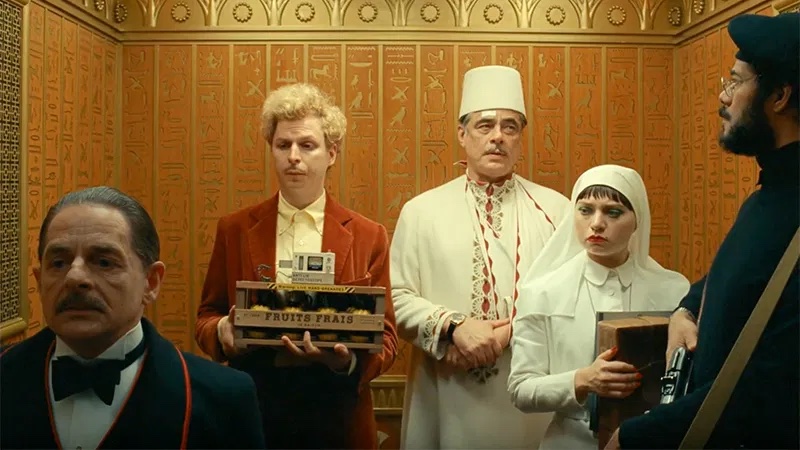
Wealthy and indomitable business magnate Zsa zsa Korda (Benicio del Toro) continues to thrive, despite the many assassination attempts that have been made on him by his rivals. After a near-fatal plane crash, he gets in touch with noviciate nun, Liesl (Mia Threapleton), who may just be his only daughter. (Korda has nine sons, several of them adopted, but he tends to spend as little time with them as possible.) Now, realising that he might be getting close to the end of his life, he has decided to offer Liesl a trial run as the sole heir to his considerable estate. He also takes on a new assistant, Bjørn Lund (Michael Cera), his last sidekick having been blown in half in the aforementioned plane crash.

The threesome must now travel around the fictional country of Phoenicia, where Korda has heavily invested in several major projects. A shadowy cabal of businessmen, led by Mr Excalibur (Rupert Friend), have raised the price of an all-important rivet used in the manufacturing process. This means that, unless Korda can persuade his business associates to take smaller profits, he is at risk of losing everything…

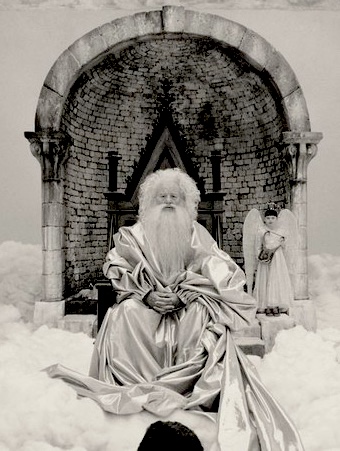
Even as I write this plot outline, I wonder why I’m bothering. Wes Anderson films are like art exhibitions. Some you love, though you cannot exactly pinpoint why. And others leave you flat for no easily-discernible reason. I’m not saying that The Phoenician Scheme is without merit. I sit watching it unfold, approving of its incomparable look and style, occasionally chuckling at some absurd lines of dialogue, even spotting the occasional movie reference. That Moroccan style club run by Marseille Bob (Mathieu Amalric), that’s a nod to Casablanca, right? And the black and white dream sequences, where Korda meets up with God (Bill Murray, naturally), are surely a reference to…

But this is pointless. I loved Anderson’s previous release, Asteroid City, which many viewers dismissed as another exercise in style over content. But this time, even I can’t seem to make myself care enough about the many characters I’m presented with. Korda’s growing relationship with Liesl could perhaps have been the hook that pulled me in, but that element feels somewhat under-developed.

That said, Anderson is one of the few film makers who walks his own path and refuses to compromise his vision. With names like Tom Hanks, Scarlett Johannsson and Benedict Cumberbatch ready and willing to bury their egos in walk-on roles, he’s in the rare position of being free to do exactly as he wishes.

So, why not give this a go? Chances are, you’ll completely disagree with me.

3.6 stars

Philip Caveney

The French Dispatch

23/10/21

Cameo, Edinburgh

The word ‘quirky’ could almost have been invented for Wes Anderson. Since his breakthrough with Bottle Rocket in 1996, the director has relentlessly followed the path less travelled. Along the way, he’s dallied with stop-frame animation and, in his live-action features, has developed a visual style used by nobody else in the business. Take off a blindfold in a movie theatre and watch ten seconds of any one of his films and, chances are, you’ll recognise his style instantly.

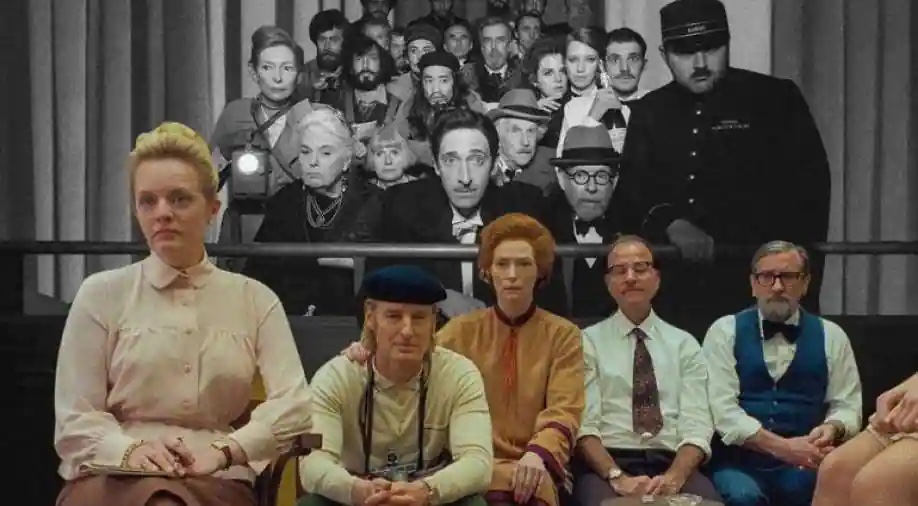
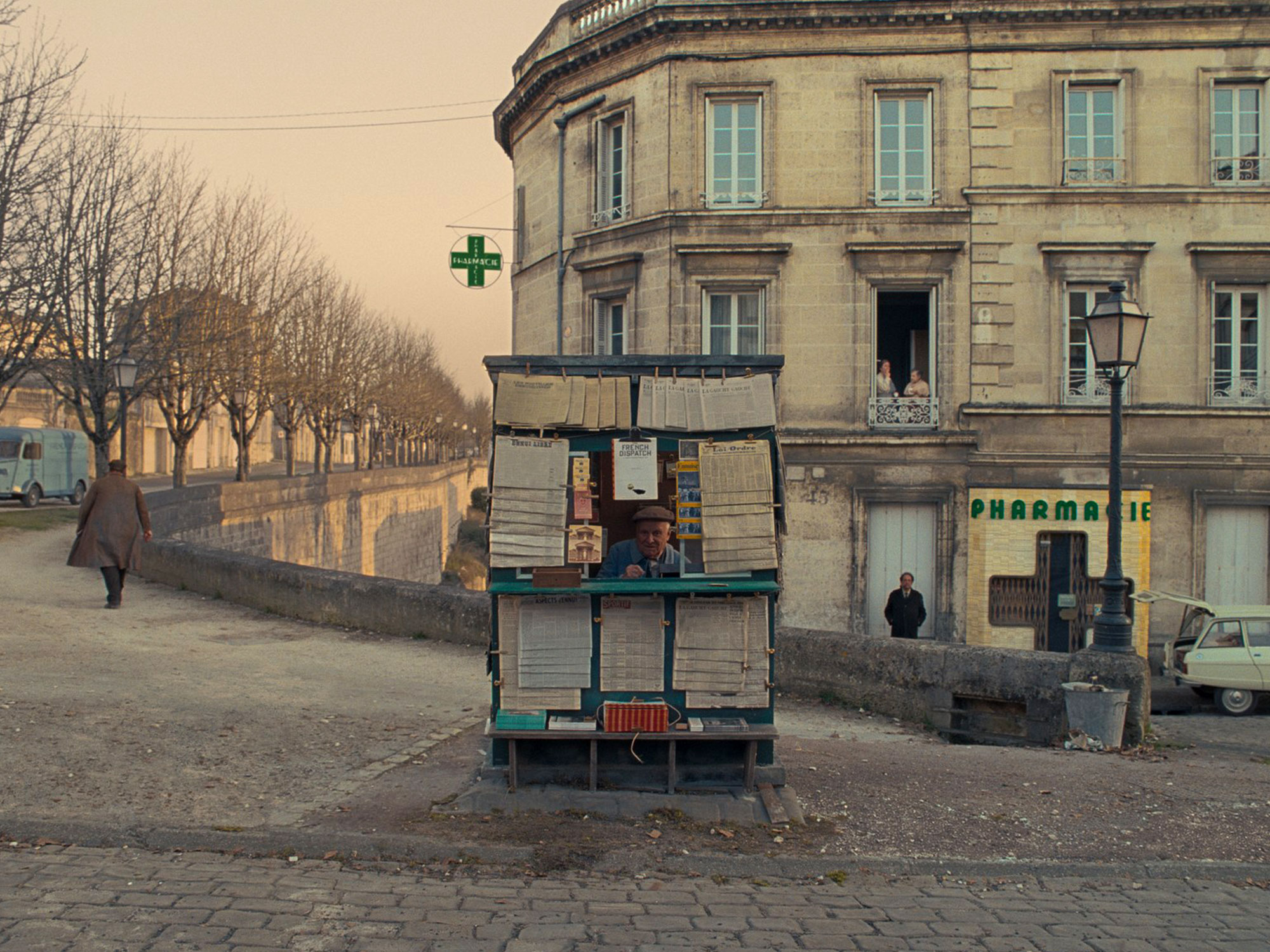
Now here’s the much-delayed The French Dispatch, a portmanteau made up of three short films, linked by a framing device. It probably has a valid claim for being the most Wes Anderson-like film yet as it employs all of the tics and, yes, quirks we associate with him: those bizarre doll house vistas; jarring cuts from colour to monochrome; weird frozen tableaux of action scenes – and characters that are as eccentric as they are amusing. And, of course, there’s also the WA repertory company, a seemingly endless supply of big-name actors, who seem perfectly happy to put their famous mugs in front of the camera, even if they’ve not actually been given much to do.

We begin at the offices of the titular publication, a New Yorker-style literary magazine that is itself an offshoot off a newspaper in Kansas, yet somehow has its headquarters at the top of a ramshackle building in the sleepy French town of Ennui-Sur-Blasé. It’s from here that editor Arthur Howitzer Jnr (Bill Murray) sends his various critics around the country to seek out and document stories of interest – and we are subsequently treated to three of them, all set in the 1960s.

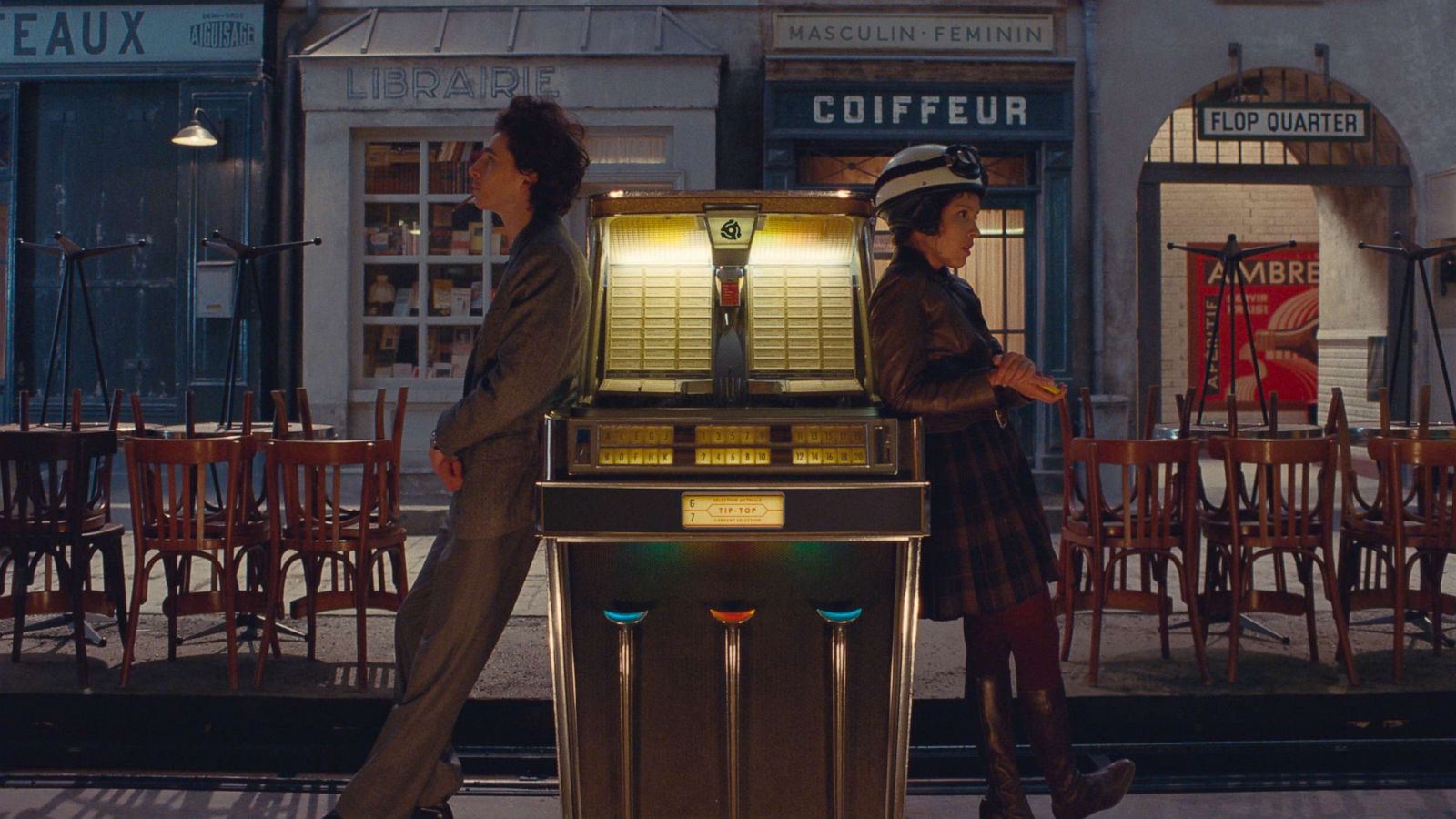
First up we have the tale of convicted murderer, Moses Rosenthaler (Benicio Del Toro), who, inspired by his love for prison warden – and sometime model – Simone (Lea Seydoux), decides to express his love, by creating works of modern art in tribute to her. He inadvertently becomes a cause celebre. Next there’s the story of journalist Lucinda Krementz (Frances McDormand) and her dalliance with dashing young revolutionary, Zefferelli (Timothée Chalamet), whose rebellion against authority is played out as a literal game of chess. Finally, there’s the story of writer Roebuck Wright (Jeffrey Wright), assigned to write a piece about celebrated prison chef, Nescafier (Steve Park), only to find himself caught up in a kidnapping drama involving the adopted son of the prison’s Commisaire (Mathieu Almaric).

The stories are dazzlingly told and the main theme here seems to be one of affection for an age that’s largely gone – a yearning for old-school journalism, when editors cared more about the writing than the money it might generate. Anderson – who co-wrote the story – also has much scorn to heap on the world of art, mocking the ways in which commerce waits greedily in the wings to get its hooks into the next big thing, qualities evidenced by Adrien Brody’s ruthless art dealer, Julien Cadazio. There’s some evident homaging going on here too. The second piece eerily captures the look of French new wave cinema – and did I imagine that little salute to The Twilight Zone’s Rod Serling?

I have to say that I admire The French Dispatch enormously, rather than love it. There’s always an element of grandstanding about Anderson’s work, a celebration of his own uniqueness that can sometimes feel a little too arch – and the parade of characters unleashed here are essentially caricatures rather than people I can believe in. Perhaps that’s entirely the point, but it’s a quality that can polarise audiences.

Suffice to say, if you’re a fan of the director, you certainly won’t be disappointed by what’s on offer here. This is Wes Anderson turned up all the way up to 11. And, in the unlikely event that it’s the first of his films you’ve seen, then enjoy the trip.

4.4 stars

Philip Caveney

Sicario

MV5BMjA5NjM3NTk1M15BMl5BanBnXkFtZTgwMzg1MzU2NjE@._V1_SX214_AL_

16/010/15

‘Cancel that holiday in Mexico!’

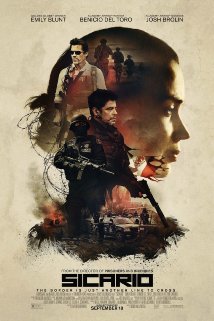
That would seem to be the overriding message of Denis Villeneauve’s white-knuckle ride of a thriller in which FBI operative, Kate Macer (Emily Blunt) finds herself mixed up in the violent world of the Mexican drug cartels. Assigned to work alongside Matt Graver (Josh Brolin) and the mysterious Alejandro (Benicio Del Toro, looking increasingly like Brad Pitt’s Puerto Rican twin) she starts off with high hopes and good intentions, as the team work their way towards the Mister Big who is responsible for the murder of hundreds of innocent people; but she soon discovers that, in this shady operation, the good guys are pretty much indistinguishable from the bad ones.

Blunt, of course, cut her action chops on the seriously underrated Edge of Tomorrow and she’s on excellent form here – but it must be said, that Taylor Sheridan’s script is incredibly misogynistic. Poor Kate is beaten, throttled and crushed at every opportunity and as the one character in the film with any apparent sense of decency, the film’s bleak conclusion seems to bray the fact that women should keep their nibs out and leave the rough stuff to the big boys. And wouldn’t it be nice if, just for once, a character’s motivations weren’t based around his desire to revenge himself on the man who killed his wife and daughter?

This is a shame, because in most other respects the film works brilliantly – there are tense shootouts aplenty, gripping covert operations and a nightmarish vision of Juarez that certainly won’t make it into the holiday brochures. But when the film’s central character is a strong woman, trying to stand tall in a male-dominated environment, her eventual failure to do so  does seem suspiciously like a missed opportunity.

3.8 stars

Philip Caveney