Benedict Cumberbatch

The Roses

30/08/25

Cineworld, Edinburgh

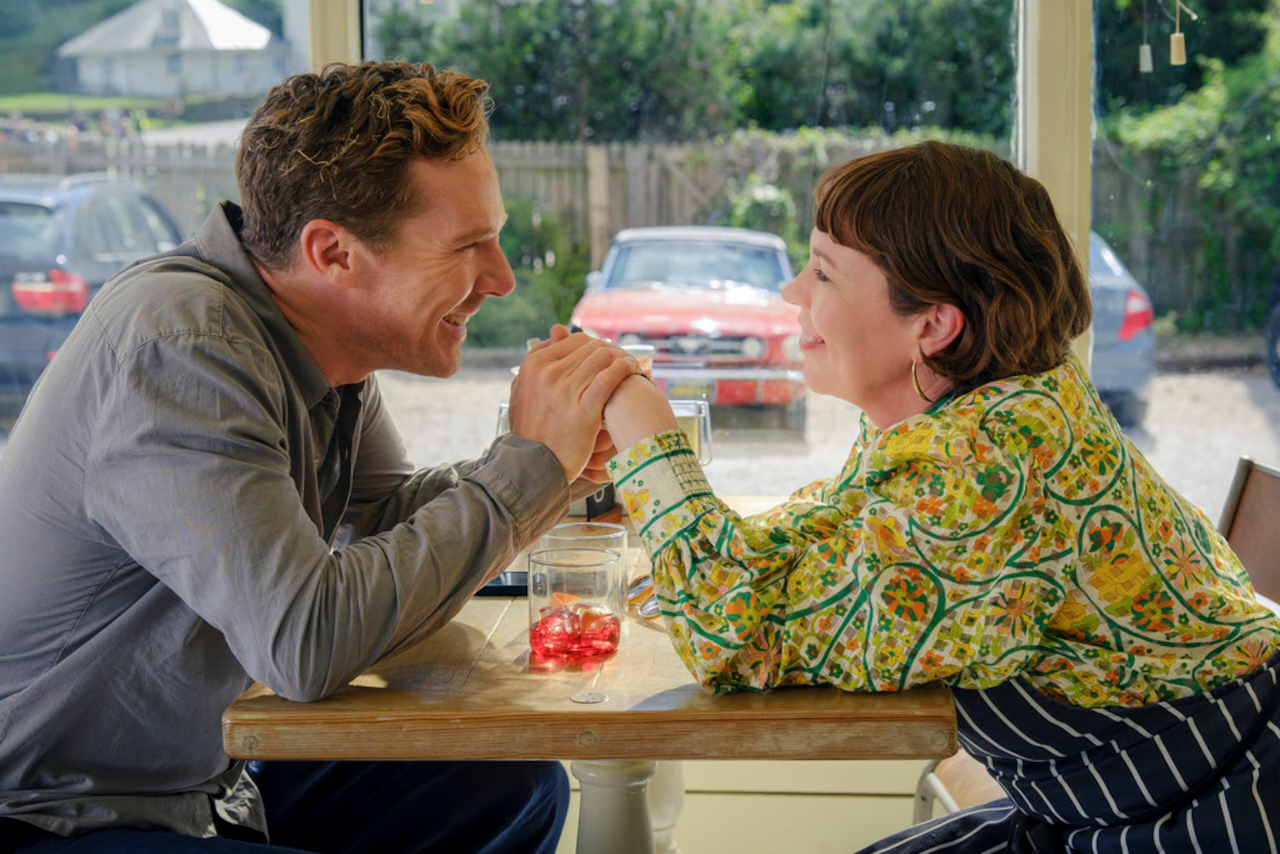
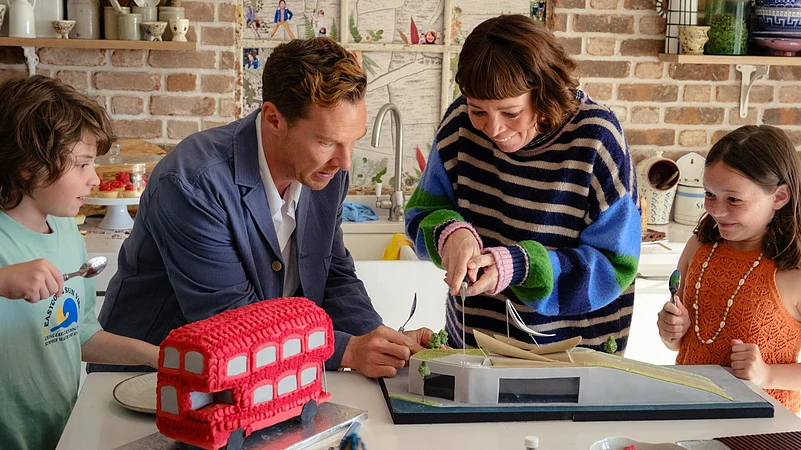
It’s an ill wind that blows nobody any good, so perhaps it shouldn’t come as a surprise to Theo Rose (Benedict Cumberbatch) when the very storm that shatters his career as an architect also heralds a renaissance for his restaurateur wife, Ivy (Olivia Colman).

Theo and Ivy have relocated from London to Northern California, where Theo has been commissioned to design a naval history museum. Ivy’s professional aspirations have been on hold since their two kids, Roy (Ollie Robinson/Wells Rappaport) and Hattie (Delaney Quinn/Hala Finley) came along, but now they’re busy with school and friends and she’s starting to get itchy feet. How long can she carry on cooking elaborate tasting menus for a family of four? Theo is nothing if not supportive, encouraging her to set up a new eatery, opening a few evenings a week.

But when Theo’s high-profile building collapses in a hurricane, he finds himself persona non grata in the architectural community, unable to find work. Meanwhile, seeking shelter from the same weather, an influential food critic is blown into Ivy’s restaurant, and her review catapults Ivy to stardom. It makes sense, then, for Theo to take over domestic duties, while Ivy capitalises on her success and expands her business.

But Theo finds it hard to cope with his sense of failure, and Ivy finds it hard not to resent his newfound closeness to their kids. Before long, their relationship begins to sour, their grievances mounting to monstrous proportions…

Directed by Jay Roach, The Roses is laugh-out-loud funny, as the couple’s responses to their problems escalate cartoonishly, their excesses both shocking and exhilarating to watch. At the same time, with such skilful actors in the lead roles, it’s also desperately sad: we’re bearing witness to the disintegration of a once-happy marriage, observing as two people find themselves travelling a path towards mutual ruin, unable to stop as the momentum builds.

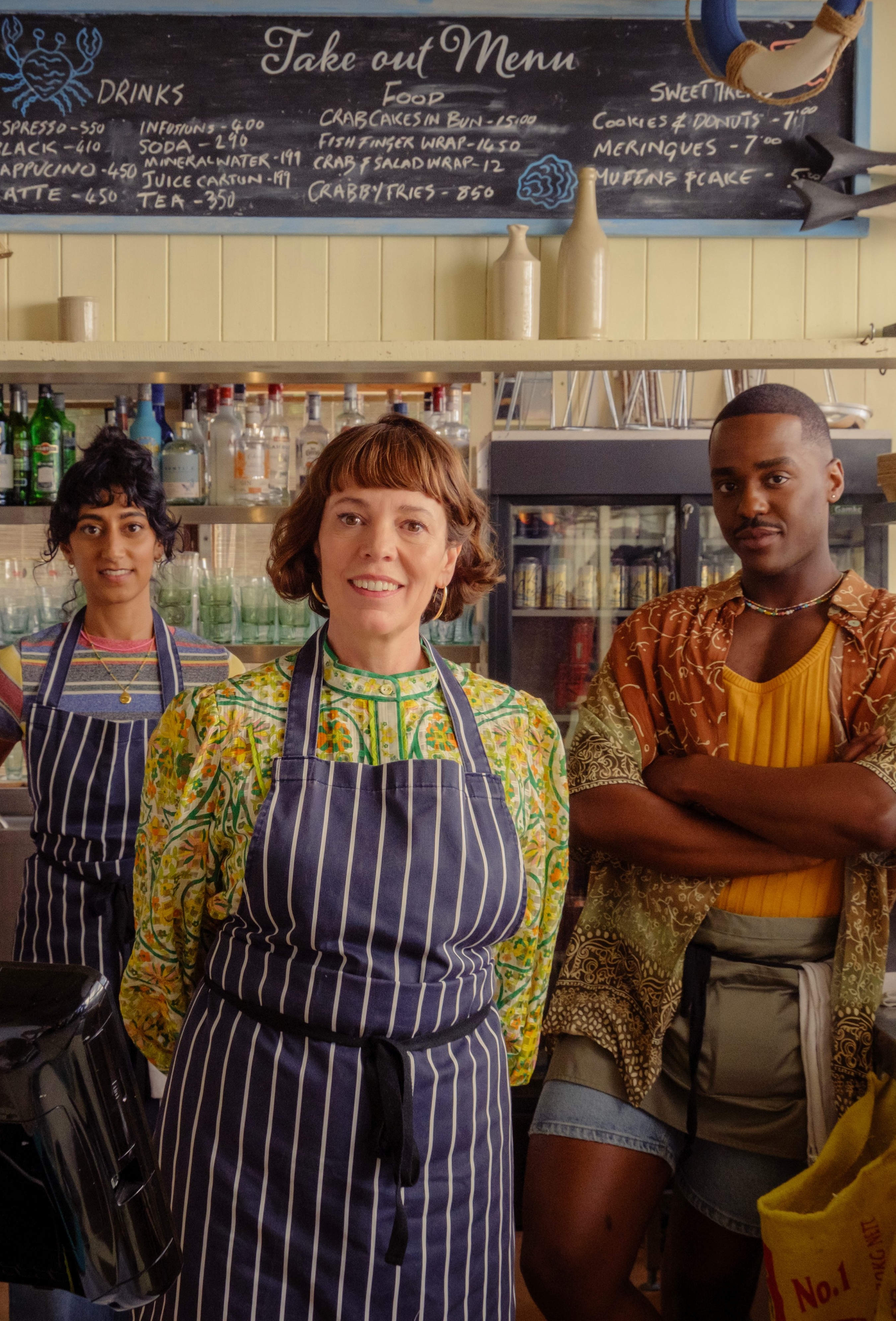
Despite its destructive premise, The Roses turns out to be a feelgood kind of film. Based on the novel by Warren Adler and famously filmed as The War of the Roses in 1989, Tony McNamara’s script is bitingly funny, with lots of arch lines and bitchy humour to lighten the tension. The supporting cast provide some excellent comic relief – particularly Ncuti Gatwa as Jeffrey, Ivy’s loyal waiter, and Kate McKinnon as Amy, the couple’s sex-starved friend.

As for the ending? I don’t think it’s giving anything away to say that it’s best described as “audacious”.

4.3 stars

Susan Singfield

Roald Dahl/Wes Anderson

29/10/23

Netflix

A new film by Wes Anderson is always an interesting proposition. Four new films – the longest of which has a running time of just thirty-seven minutes – is a downright intriguing one.

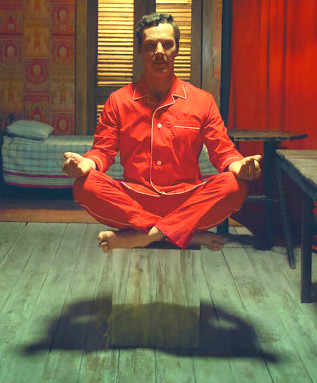
It must be said from the start that these are less motion pictures than illustrated stories (imagine, if you will, a kind of turbo-charged Jackanory and you’ll get the general idea). First up, there’s the aforementioned longest entry in the quartet, The Wonderful Story of Henry Sugar, which – to begin with – is told by Dahl himself (uncannily impersonated by Ralph Fiennes). The author begins to relate the story of the mysterious Imdad Khan (Ben Kingsley), a man who can see without using his eyes. Khan’s story is then picked up by two doctors (Dev Patel and Richard Ayoade) and they, in turn, transfer their attention to the titular character (played by Benedict Cumberbatch), a man who becomes obsessed with the notion of becoming an expert card cheat. (As you do.)

It’s all delivered as narration (at a breakneck pace) and, of course, the set dressing has the usual Anderson style: a series of exquisite puzzle-boxes, expertly linked together, opening and closing as the tale unravels. It’s beautiful to watch, but ultimately the story leaves me with a powerful sensation of so what?

The Swan (narrated by Rupert Friend) is, for me, the strongest narrative here, the distressing tale of a young boy called Peter (Asa Jennings), who is horribly bullied by a couple of local lads with access to a rifle (always a recipe for trouble) and which culminates in a poignant and rather distressing conclusion. The story is delivered by Friend as he wanders along a series of labyrinthine passageways and this is perhaps the most kinetic of the films.

The Rat Catcher features Fiennes as the central character, a rather creepy individual who visits a garage and offers his services to the proprietor (Friend again), while the tale is told by a narrator (Ayoade). The subtext of this one is rather less straightforward, as is the style. I can’t remember ever seeing an actor miming invisible objects in a film before! The rat catcher has assimilated all the qualities of the creatures he’s supposed to be eradicating and, when he fails in his attempts to locate them (in a haystack), he tries to make up for his failure in a demonstration of unpleasantness. Again, I feel that the story’s conclusion is rather underwhelming.

Finally there’s Poison, an account set in post-colonial India, in which Harry (Cumberbatch) lies in bed convinced that a krait (a venomous snake) is lying asleep on his chest and that the slightest move will cause it to bite him. A local police officer (Patel) and a doctor (Kingsley) are enlisted to resolve the situation and, to give them their fair due, they do their level best. The story culminates in a short and rather shocking demonstration of racism, which some viewers will find unsettling, but is surely the whole point of Dahl’s story – that former white rulers will always refuse to acknowledge their own failings. Strangely, Poison seems to have a similar theme to its predecessor.

With such brevity, it seems fairest to judge the four films as a whole – and indeed, Anderson has said that what attracted him to the idea is the notion that they comprise a kind of interlocking narrative. While this quartet is always visually compelling, I can’t help wishing that this inimitable director had settled on some better examples from Dahl’s extensive back catalogue. There are plenty to choose from.

If you have Netflix, they’re certainly worth clicking through. If nothing else, you’ll be charmed by their quirkiness and the uncompromising style that exemplifies Anderson’s approach to cinema.

3.4 stars

Philip Caveney

Doctor Strange in the Multiverse of Madness

06/05/22

Cineworld, Edinburgh

Another Marvel, another Multiverse – and am I the only one who’s growing a little weary of this device? It worked wonders in the Spider-Man franchise, but can it do the same for my other old go-to comic favourite, Doctor Strange? Well possibly, but I have to admit the main thing that draws me to this is the presence of Sam Raimi in the director’s chair.

Raimi has released some great movies over the years: The Evil Dead and its super-charged sequels, as well as A Simple Plan and Drag Me to Hell – but it’s a while since he’s had a chance to strut his cinematic stuff. While he’s always been a director who dances to his own tune, can he successfully apply those considerable talents to Marvel’s famously constricting template?

The answer is, ‘sort of.’

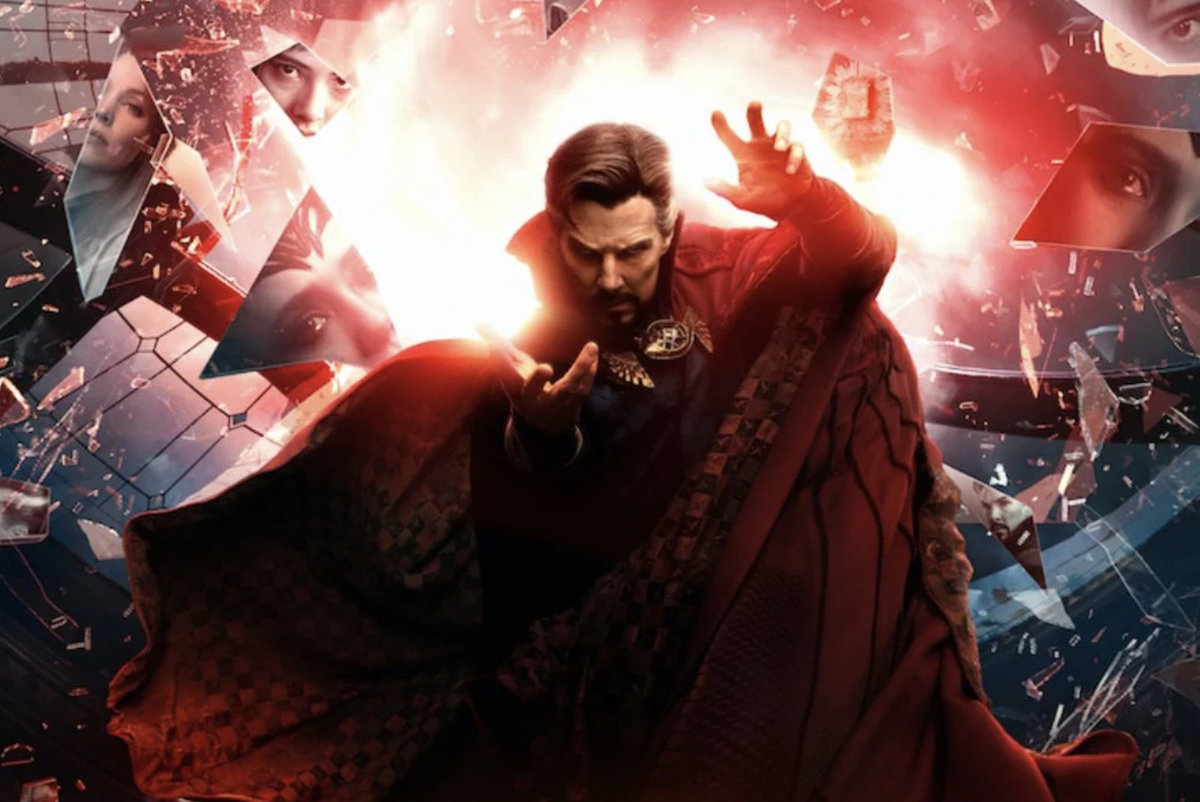
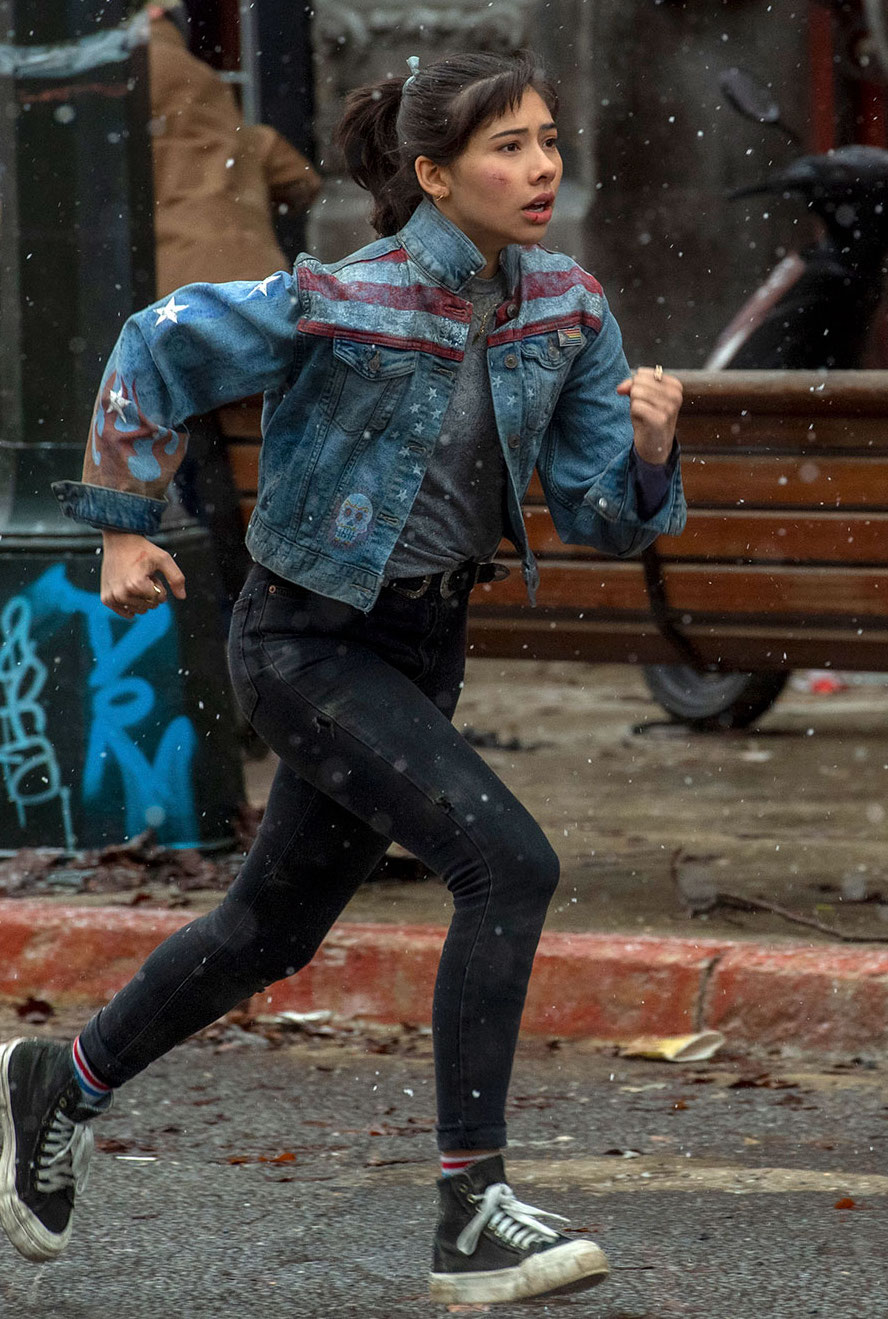
DSITMOM starts, appropriately enough with a dream sequence, where Stephen Strange (Benedict Cumberbatch) witnesses a twisted, evil version of himself attacking a teenage girl. But is it a dream? When, shortly afterwards, Strange encounters the girl in real life, she turns out to be America Chavez (Xochitl Gomez), who has the ability to travel across the multiverse with ease, though (rather conveniently) she doesn’t know how she does it. Or, for that matter, why. Nor can she explain why she’s being pursued by a giant one-eyed octopus. But hey, these things can happen, right?

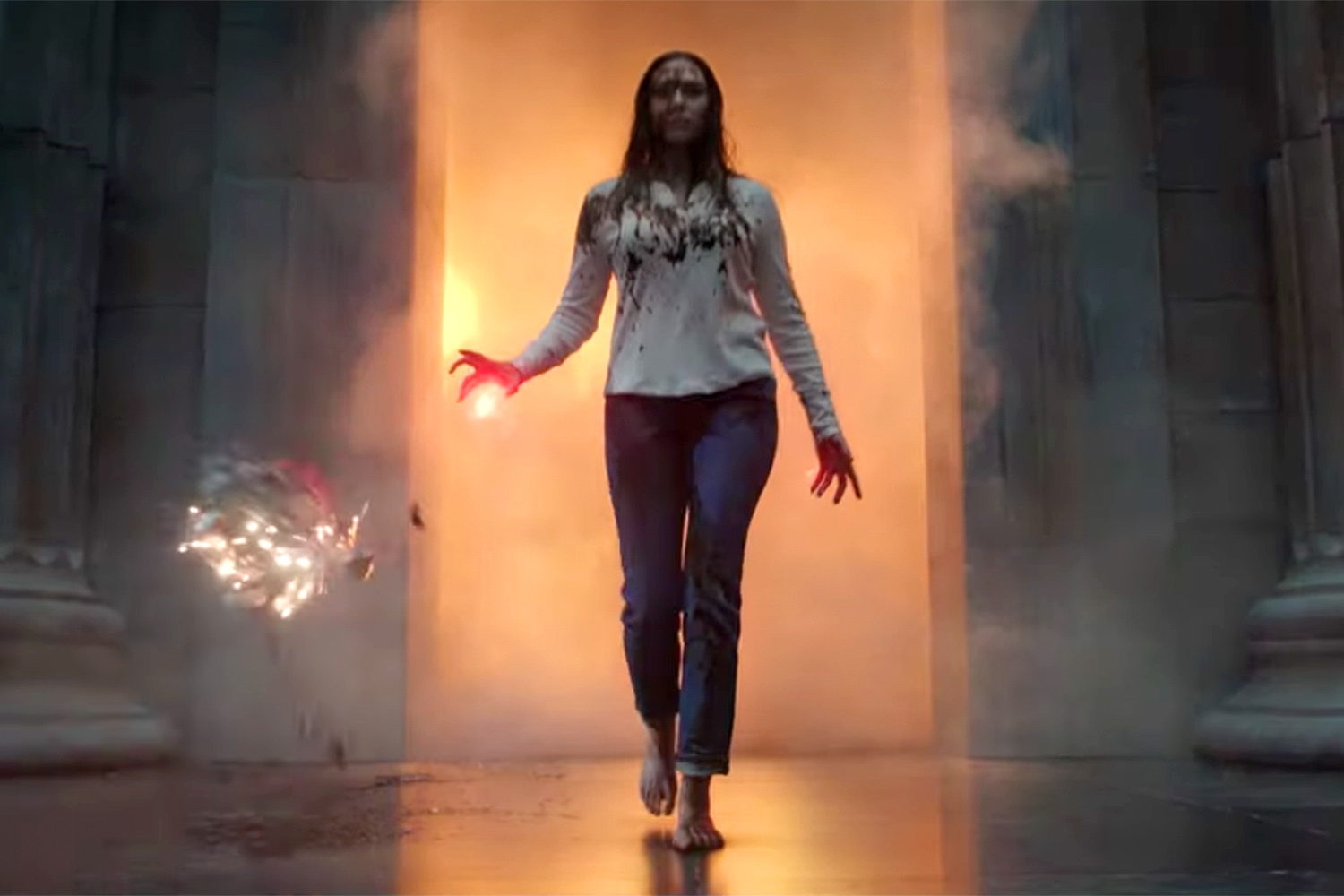
Sensing that she’s in danger (no shit, Sherlock), Strange seeks help from Wanda Maximoff (Elizabeth Olsen), only to discover that she’s not going to be any help at all. Demented by the recent death of her partner and terrified she might lose the two children she loves so much (the ones who don’t actually exist), Wanda decides to steal America’s power for her own wicked ends, an action that will cause the girl’s death. (Incidentally, for someone who’s supposed to be a genius, Strange seems to be very adept at putting his foot in things. He’s the one who messed everything up in No Way Home – and now this.)

I’m not going to relate any more of the plot because, frankly, it’s as mad as a box of frogs (I suppose the title should have warned me), but the more important question is, can this nonsense hold together as a movie, and the answer is ‘just about.’ DSITMOM is essentially a series of frantic action set-pieces, loosely strung together. Though they are occasionally eye-popping and sometimes make me feel that I’ve inadvertently dropped a tab of acid, they never really gel into a convincing story arc.

Different versions of popular Marvel characters keep popping out of the woodwork and in many cases are actually killed, but because we know they’re not the real McCoy, there’s no real sense of threat here. Cumberbatch gets to portray several different Stephens, which was probably more fun for him than it proves to be for an audience. The parts that work best for me are the Sam Raimi moments, the few scenes where he’s allowed to employ the tropes of low budget horror – and of course there’s the inevitable cameo from Bruce Campbell, which is always welcome. But too often Raimi’s singular vision is swamped in the sturm und drang of state-of-the-art special effects.

Elsewhere, actors of the the calibre of Benedict Wong, Chiwetel Ejiofor and Patrick Stewart are called upon to utter some truly naff dialogue, courtesy of screenwriter Michael Waldron.

The usual post-credits sequence suggests that Strange will be even stranger in the next instalment, if and when it happens. The enthusiastic applause from the mainly teenage audience at the end of this screening suggests that I may well be in the minority here.

Doctor Strange (and possibly Mr Raimi) will be back. Watch this space.

3.4 stars

Philip Caveney

The Electrical Life of Louis Wain

12/01/22

Cineworld, Edinburgh

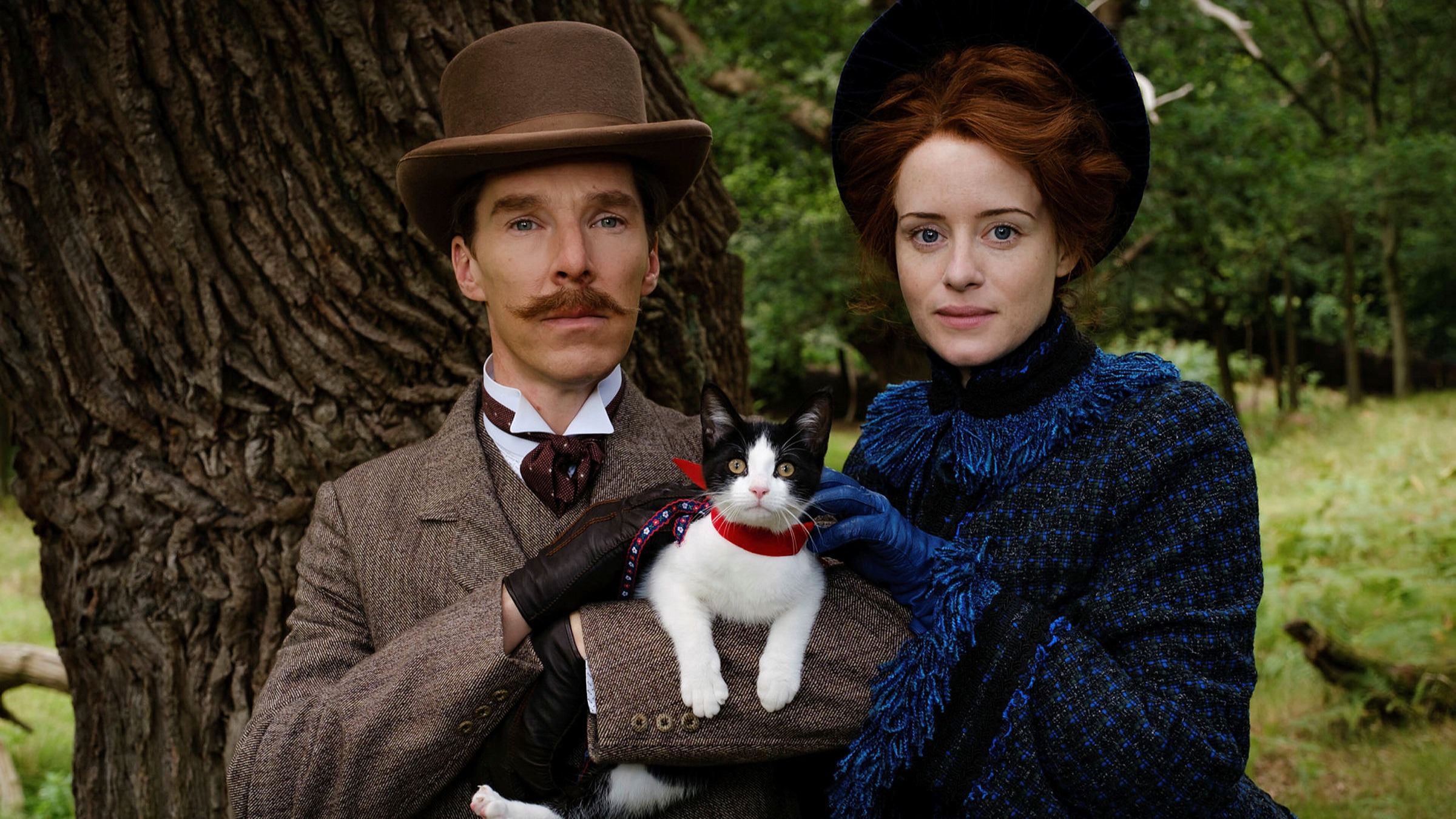
This eccentric biopic of Edwardian illustrator Louis Wain is a curious kettle of cat litter, a story so weird it can only be true. It’s centred around an impressive performance by Benedict Cumberbatch and features such a wealth of talent in the supporting roles that I can’t help feeling that the actor (also executive producer on this) must have called in some favours from his friends.

Cumberbatch portrays Wain at various points in his life, from bumbling, hyperactive youngster to grey and mentally frail in his final years. Cumberbatch manages to convince at just about every point of the journey. When we first meet Wain, he’s a freelance illustrator, who, at the age of twenty, is struggling to provide for the upkeep of his widowed mother (Phoebe Nicholls) and his five sisters, none of whom seem to have any prospect of marriage.

However, the family budget does stretch to paying for a governess to teach the younger girls and she’s Emily Richardson (Claire Foy), who, despite being ten years older than Louis, soon has him hanging on her every word in open-mouthed adoration, much to the disgust of his sour-faced older sister, Caroline (Andrea Riseborough).

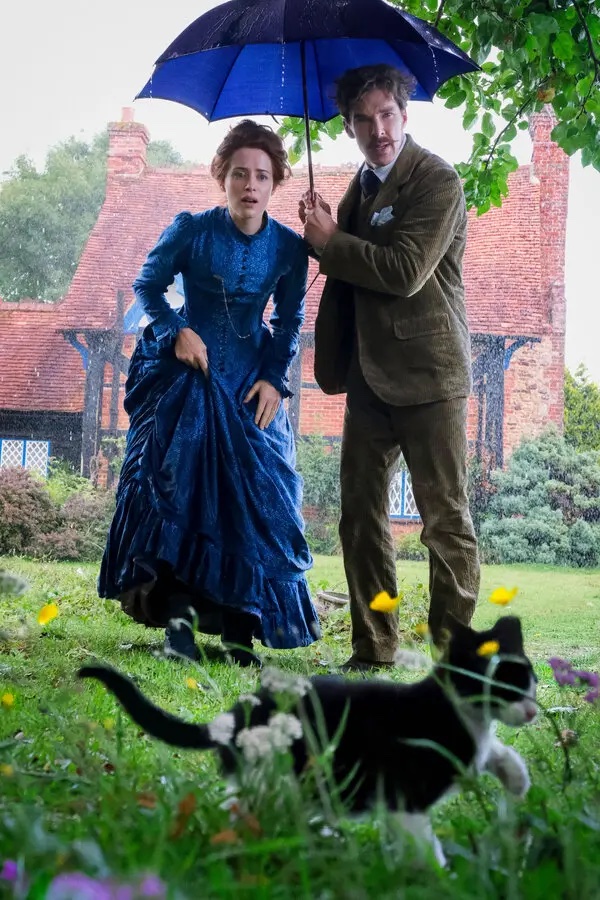
It isn’t long before Louis and Emily have married and moved to a picturesque cottage in the countryside. But then Emily receives some devastating news about her health – and moments later, the couple discover an abandoned kitten wandering in their garden, whom they promptly christen Peter. The cat is to have a profound effect on Wain’s career…

The film’s early stretches have a charmingly ramshackle quality, and I’m initially prepared to put aside my reservations about the screenplay by Will Sharpe and Simon Stephenson, which fails to give actors of the quality of Riseborough enough to do. Other luminaries can be missed in the blink of an eye. Hayley Squires, Taika Waititi, Richard Ayoade, Julian Barrett… they flit across the screen like phantoms with barely a line of dialogue between them.

When Wain’s patron, Sir William Ingram (Toby Jones), assigns him a double-page spread in The Illustrated London News to be filled with images of ‘comical cats,’ the artist’s career takes an unexpected leap skywards, but the film fails to soar in the same manner. It becomes bogged down in Wain’s inescapable problems, including his increasingly desperate struggles with schizophrenia and his inability to profit from his own artistic endeavours. (Message to all aspiring illustrators: ensure you copyright your work before you put it in the public domain. You’re welcome.)

From this point, the story fails to maintain a consistent tone and Wain’s bizarre ‘electrical’ theories are never explained clearly enough for us to understand either what they are or why they are considered important enough to include in the title. In its final stretches the film becomes more and more surreal, with landscapes turning into paintings and people turning into cats, while a theremin whines mournfully on the soundtrack. Having Nick Cave appear as the author H.G. Wells seems a step too bizarre and makes me wonder if this is supposed to be one of the hallucinations that Wain suffered towards the end of his life. Whatever it means, it feels like a misstep.

So, all plaudits to Cumberbatch for yet another in his dazzling collection of character studies. It’s quite an about-turn after the toxic masculinity of The Power of the Dog. Perhaps Charms of the Cat would have been a more appropriate title?

And, as for the film that contains said performance, it’s muddled and a bit of a disappointment.

3.4 stars

Philip Caveney

Spider-Man: No Way Home

17/12/21

Cineworld, Edinburgh

I’ve seen most of the superhero movies and the one franchise I consistently enjoy is Spider-Man. I suppose it makes perfect sense. I was a big fan of the comic books back in the day and the films – all three of the major strands – have always had that lightness of touch that somehow steps aside from the pomposity of so many Marvel projects. Played mostly for laughs, the ‘Spidys’ have a levity about them, as their young protagonist goes about his heroic duties, whilst trying to woo his girlfriend and ensure that he gets a proper education.

I was somewhat apprehensive when I picked up on the various rumblings about the Multiverse (inevitable, I suppose, after the success of Lord and Miller’s wonderful Into the Spider-Verse) and also, the heavily-trumpeted presence of a certain Doctor Strange, but, as it turns out, I needn’t have worried. While this is undoubtedly the most complex Spider-Film to date, the sparky script by Chris McKenna and Erik Sommers manages to keep things moving briskly along. Every time a scene threatens to become too portentous, they throw in a snarky comment or a bit of tomfoolery and everything blurs back into motion. The two hour running time is never allowed to drag.

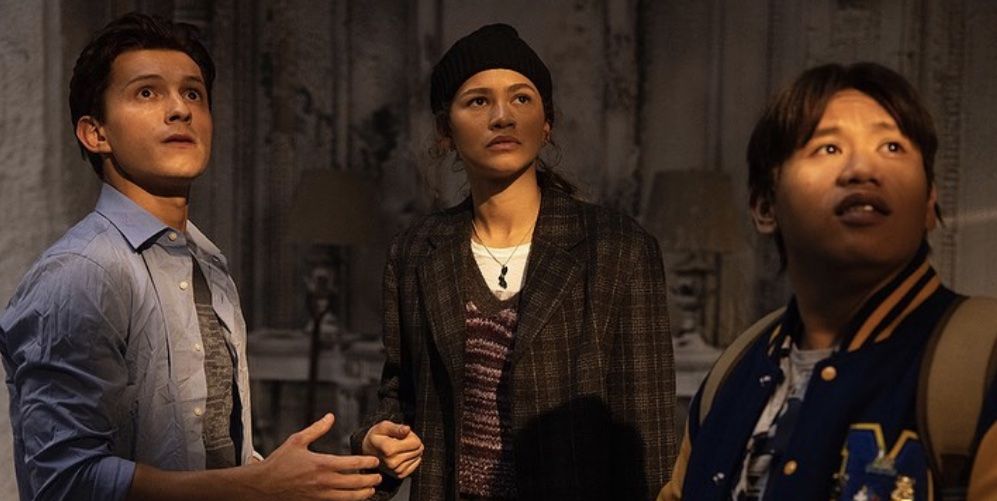
No Way Home picks up at the cliff-hanging moment where Far From Home left off – with Peter Parker (Tom Holland) being publicly outed. The ensuing fallout from that event kickstarts the new film straight into action and it barely stops to take a breath. It all feels horribly real as Peter, Aunt May (Marisa Tomei), MJ (Zendaya) and Ned (Jacob Batalon) are trolled, mocked and despised by the right-wing buffoons who have been listening to shock-jock, J. Jonah Jameson (JK Simmons). It’s weirdly prescient.

Feeling cornered and understandably worried about those he loves, Peter has what he thinks is a brilliant idea. He approaches his old pal Doctor Strange (Benedict Cumberbatch) and asks him to reverse time (as you do) so everyone will forget that he’s actually our favourite neighbourhood web-slinger.

Needless to say it’s a very bad idea.

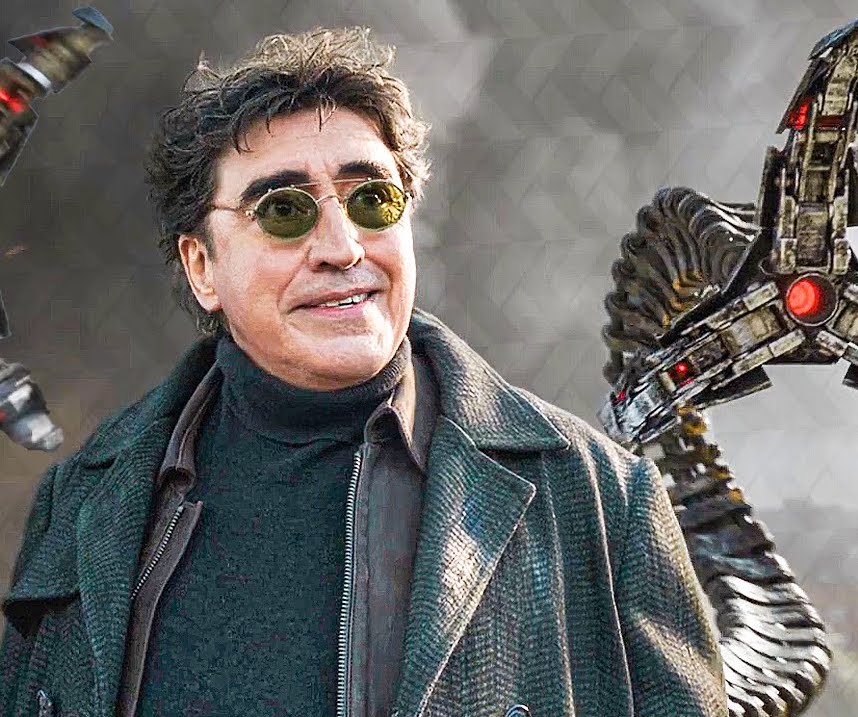
Strange’s celestial tinkering accidentally opens a breach in the Multiverse and, almost before Peter knows what happening, he’s being pursued by adversaries from across time – they include Doc Octopus (Alfred Molina), the Green Goblin (Willem Dafoe) and many, many others, most of whom are astonished to find that Peter doesn’t look anything like the man they remember, but are perfectly happy to try and kill him anyway. Luckily, he doesn’t have to fight them off single-handedly, because he’s offered help from an unexpected quarter…

As is so often the case with these movies, there’s an extended super-powered punch-up at the conclusion, but even this is saved from becoming tedious by liberal deployment of the aforementioned witty dialogue – and there’s a surprisingly poignant coda to the film, which ties all the multifarious strands neatly together. Holland has hinted that this may be as far as his involvement will go and I have to say, if he does choose to step away, he’ll be leaving a very accomplished trilogy to remember him by.

Mind you, it’s clear that this won’t be the end. A post-credits teaser dangles the dubious prospect of a Spawn/Spider-Man mash up, which really isn’t something I relish, but Sony are bound to want to involve their other big-selling franchise at some point, so we’ll see what happens on that score.

Those who are willing to stay in their seats till the credits stop rolling will be rewarded with a trailer for the upcoming Dr Strange movie, which looks… strange, to say the very least.

But meanwhile, No Way Home is well worth your attention. Even unapologetic spandex-haters should give this one the benefit of the doubt. Because, you know what? It rocks.

4.6 stars

Philip Caveney

The Power of the Dog

04/11/21

Netflix

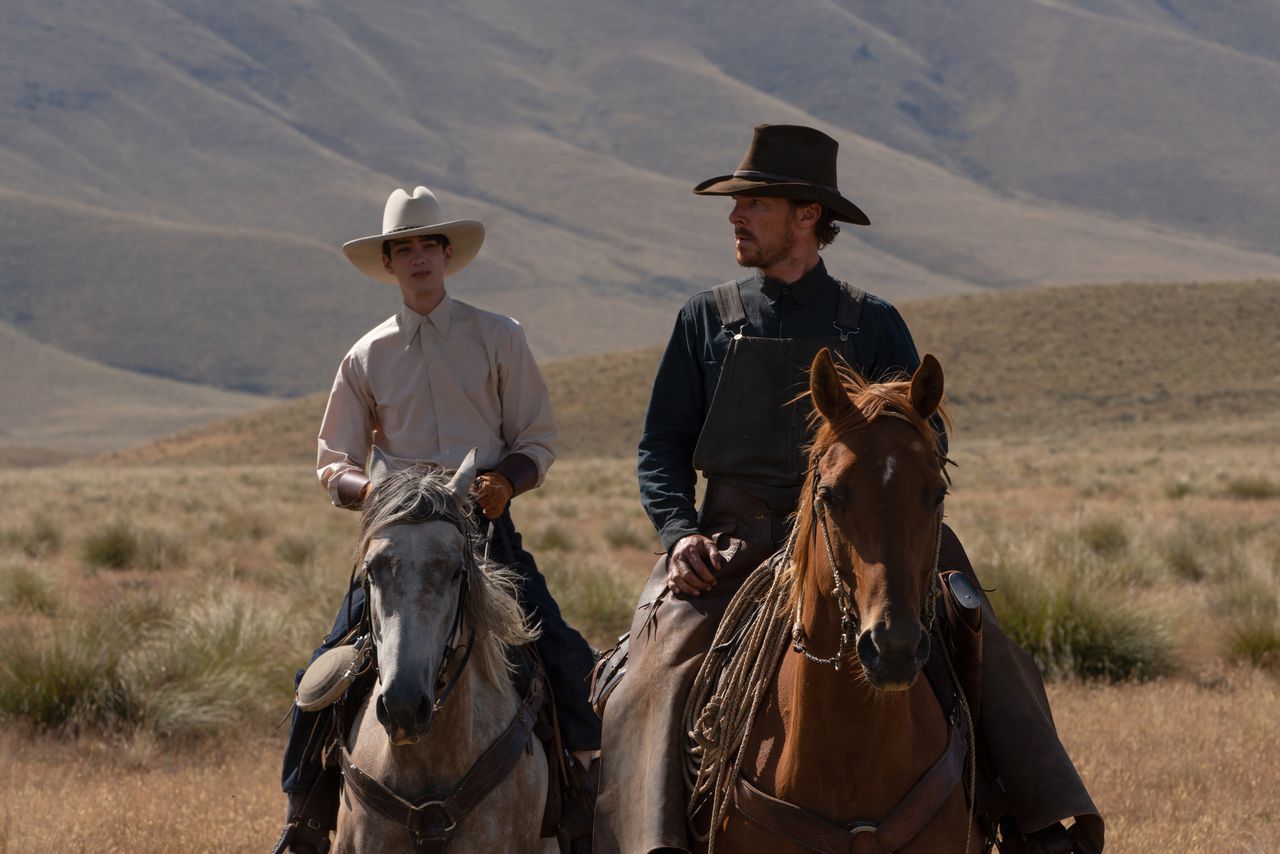
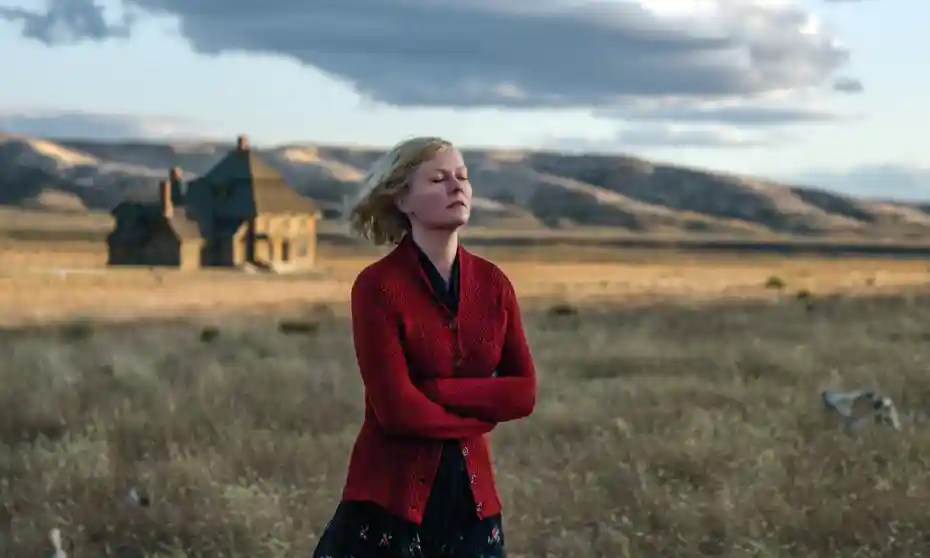
It’s been twelve years since Jane Campion directed a movie and now here’s The Power of the Dog, a ‘western,’ filmed in her native New Zealand, masquerading as Montana in 1925. It’s an interesting period in which to set a story. On the one hand we have cattle drives, carrying on pretty much as they have since the mid 1800s and, on the other, the streets are full of Ford automobiles, the new era clashing headlong with the old. Ari Wegner’s majestic cinematography recalls the best of John Ford, the machinations of mankind constantly in battle with the awesome wonders of the landscape.

It’s in this world that Phil Burbank (Benedict Cumberbatch) and his brother, George (Jesse Plemons), struggle to perpetuate the traditions of their family business, but they are dinosaurs, doomed to yield to the changing times. This is the first film in which writer/director Campion has chosen to feature a male lead and Phil is, perhaps inevitably, the consummate toxic male: cantankerous, vindictive and quick to demolish anybody who offers an alternative to his established way of life. Phil refers to his brother as ‘Fatso’ – to his face – and is not slow to heap disdain on anyone who stands in his path.

When George unexpectedly marries widow Rose Gordon (Kirsten Dunst), Phil is brutally critical of her, particularly when George encourages her to play the piano, something that she protests she’s actually not very good at. (She’s right, she’s not.) To rub salt into the wounds, Phil is an accomplished banjo player.

Rose has a son, Peter (Kodi Smit-McPhee), who has a predilection for making paper flowers and who is quietly studying to be a surgeon. Phil initially takes every opportunity to belittle him, encouraging the other ranch hands to mock him, because of his supposedly effeminate mannerisms.

But Phil has a secret. He is openly in thrall to the late cowboy Bronco Henry, the man who taught him to ride a horse, a man who he still keeps a shrine to in the stables. But as the story progresses, it’s clear that there was something more between the two of them, something that Phil hides from the eyes of the world. When Phil appears to soften and takes Peter under his wing, the scene is set for a psychological drama with a conclusion that you probably won’t see coming. I certainly don’t. It’s only after the credits have rolled that I’m able to piece the clues together.

Cumberbatch went ‘method’ for this and he inhabits the sweary, sweaty, alpha-male world of Phil Burbank with absolute authority. You’ll almost certainly despise him, which is, I think, Campion’s aim. Smitt-McPhee creates an enigmatic persona as Peter, a boy who keeps his cards close to his chest.

It’s perhaps unfortunate that Dunst’s character feels somewhat overshadowed in this male-dominated world, a woman who will allow herself to be driven to alcoholism rather than stand up for herself. What’s more, Thomasin McKenzie, a rising star after Last Night in Soho, has a thankless role as a housemaid with hardly a line of dialogue. I guess that’s simply a reflection of the era.

Plemons, as the monosyllabic George, is nicely drawn, though he’s mostly absent from the film’s second half and I miss the silent confrontation between the two brothers, where I think the story’s true power lies. Jonny Greenwood – who seems to be popping up all over the place at the moment – submits one of his quirky soundtracks.

Once again, Netflix has backed a winner. The Power of the Dog is a handsome film, expertly created and a genuine pleasure to watch. Cumberbatch has been hotly tipped for an Oscar and it won’t be a huge surprise if it comes to fruition.

4.2 stars

Philip Caveney

The Courier

19/08/21

Cineworld, Edinburgh

The Courier is a spy movie, so we know what to expect, right? Gun fights, car chases, heart-stopping stunts…

Well no, because this ‘based on a true story’ tale, set in the cinematically-neglected Cold War era, plays it straight and, for the most part, sticks pretty closely to the facts. It’s 1960 and America and the Soviet Union are engaged in the arms race, the two super powers moving inexorably nearer and nearer to nuclear conflict.

High-ranking Soviet intelligence officer Oleg Penskovsky (Merab Ninidze) can see the disaster that lies ahead. He contacts a couple of American tourists and asks them to take a message to the American Embassy, offering to supply the CIA with inside information in exchange for safe passage to the USA for him and his family.

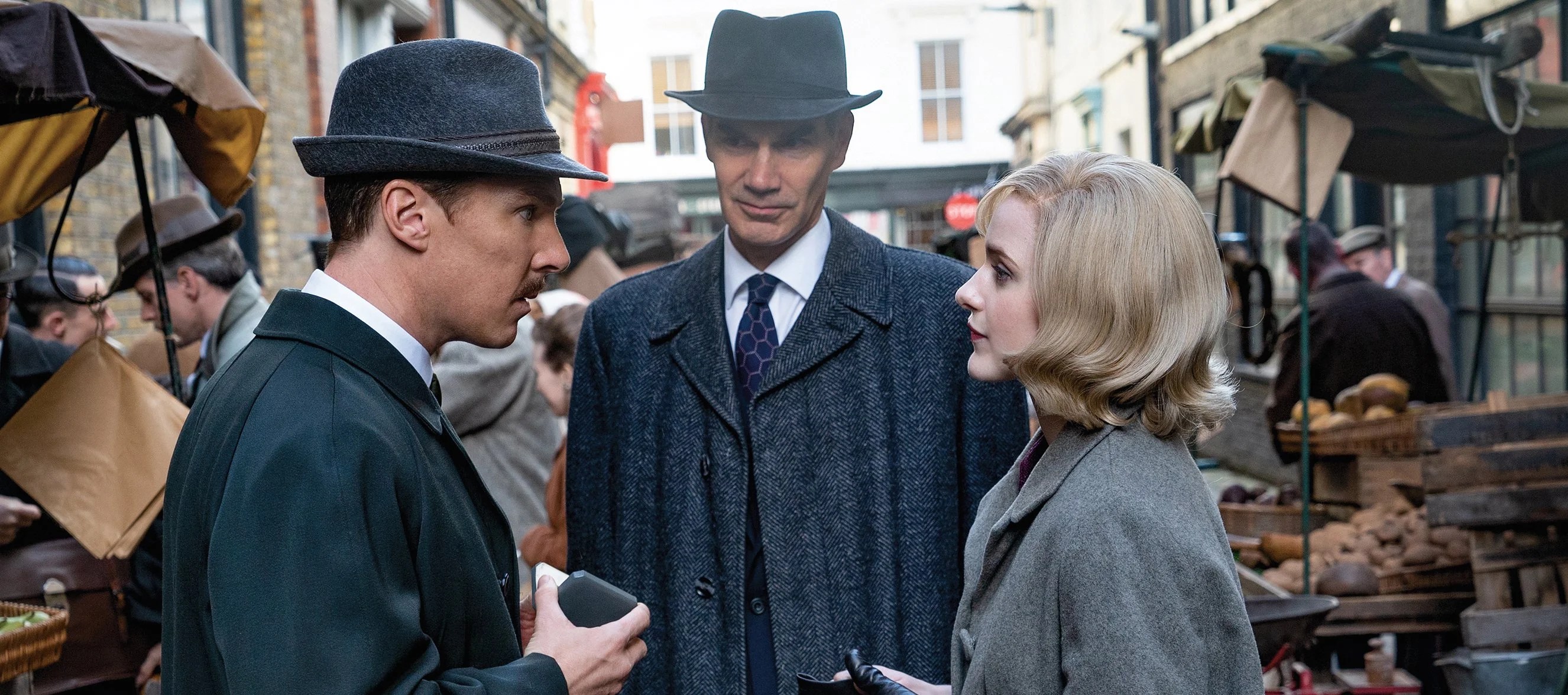
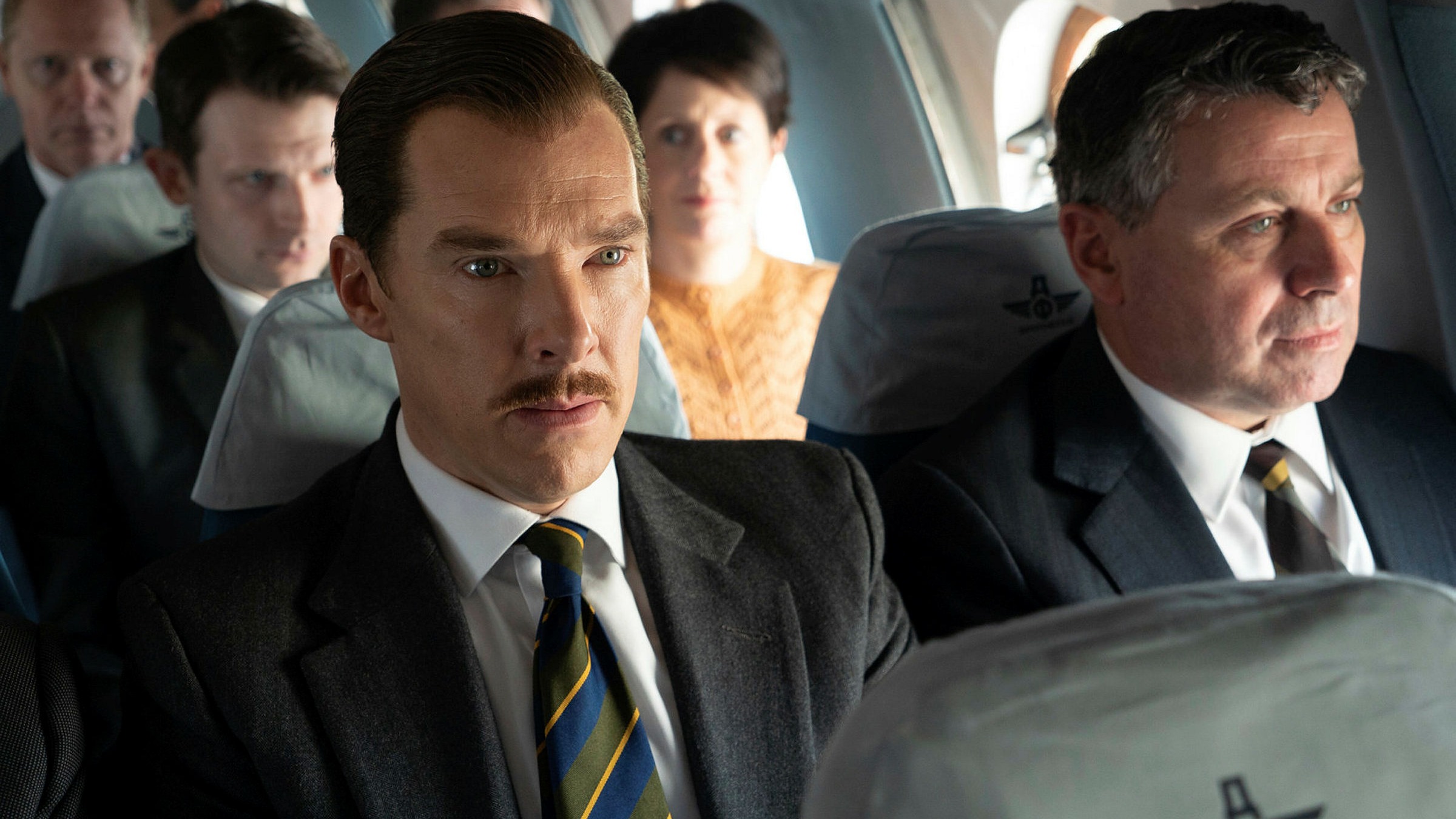
Some time later, CIA agent Emily Donavan (Rachel Brosnahan) approaches MI6, asking if they can suggest somebody who might act as a go-between for them. Agent Dickie Franks (Angus Wright) thinks he may have chanced upon the perfect recruit, innocuous businessman Greville Wynne (Benedict Cumberbatch), who spends most of his time travelling the world, wining and dining potential clients for his various business interests. Wynne would surely be above suspicion? So they ask him if he will be their inside man. At first Wynne is non-plussed, if perhaps a little flattered by their invitation, but, after some prevarication, he accepts their offer. Shortly thereafter, he finds himself making contact with Penskovsky in Moscow and carrying various secret messages back and forth between Russia and Great Britain.

But, of course, while this all might look dreadfully routine on the surface, the dangers of being discovered are just as nerve-wracking and the consequences every bit as deadly.

Director Dominic Cooke ensures that The Courier is strong on period setting: the drab, chain-smoking world of the early 60s is accurately depicted in every shot. Both Cumberbatch and Ninidze nail their roles with aplomb and Tom O’Connor’s script focuses on the developing friendship between the two men, making Wynne’s ultimate actions totally believable. Jessie Buckley takes a thankless role as Wynne’s buttoned-up wife, Sheila, and wrings every ounce of possibility out of it, proving once again what a consummate actor she is.

While the film might be short on action tropes, it never lacks suspense and, as Wynne’s deception begins to unravel, the stakes are increasingly cranked up for maximum tension. Also, this is a film that doesn’t back away from depicting the horrors of Wynn’s subsequent incarceration. (Next time I dine out, I think I’ll skip the soup course.)

Some heroes, it seems, are less showy than the Bonds and the Bournes – and here’s the proof that a spy movie can be thrilling without regular recourse to flashy sports cars and semi-automatic weapons.

4.6 stars

Philip Caveney

The Mauritanian

11/04/21

Amazon Prime Video

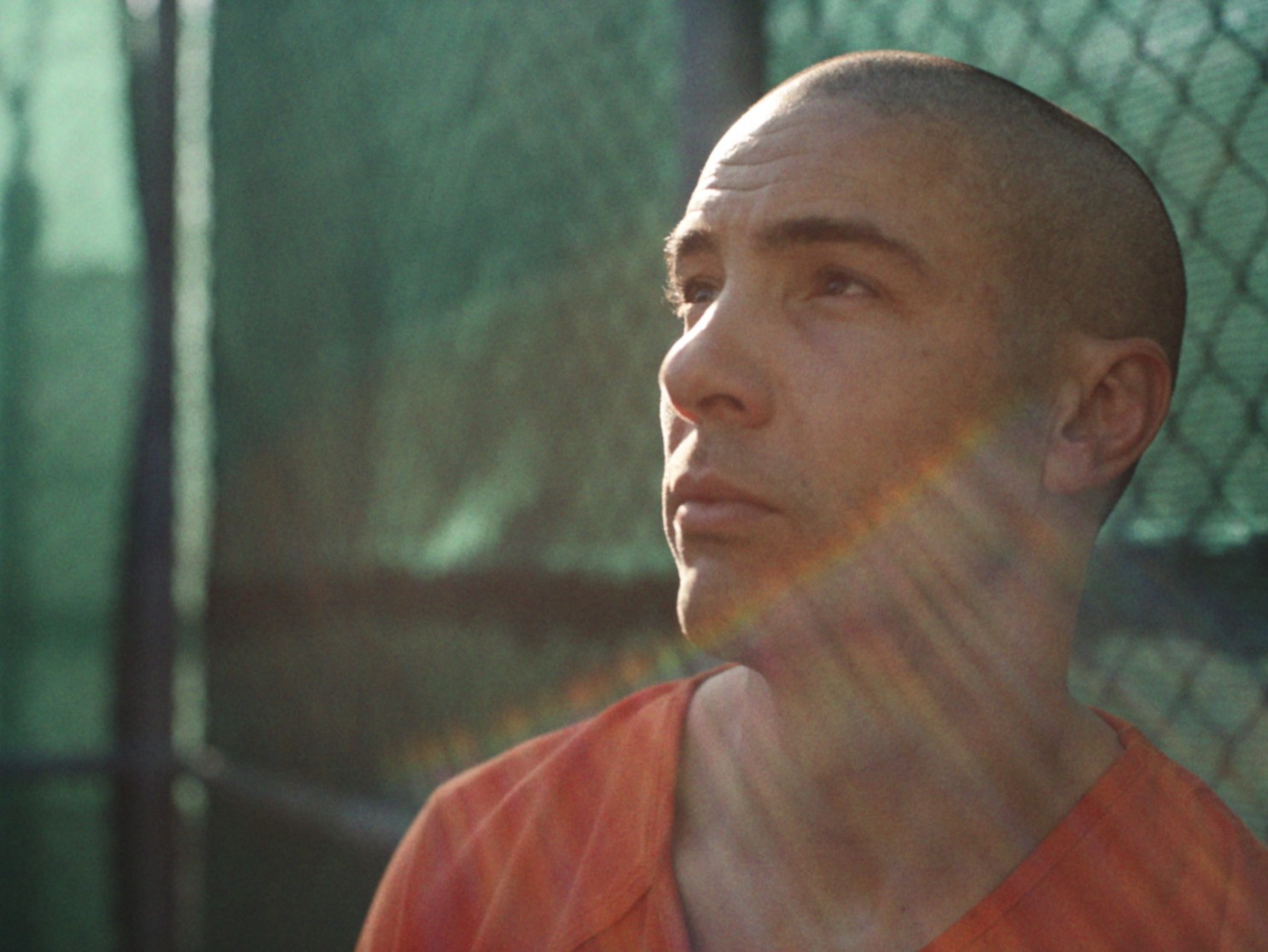
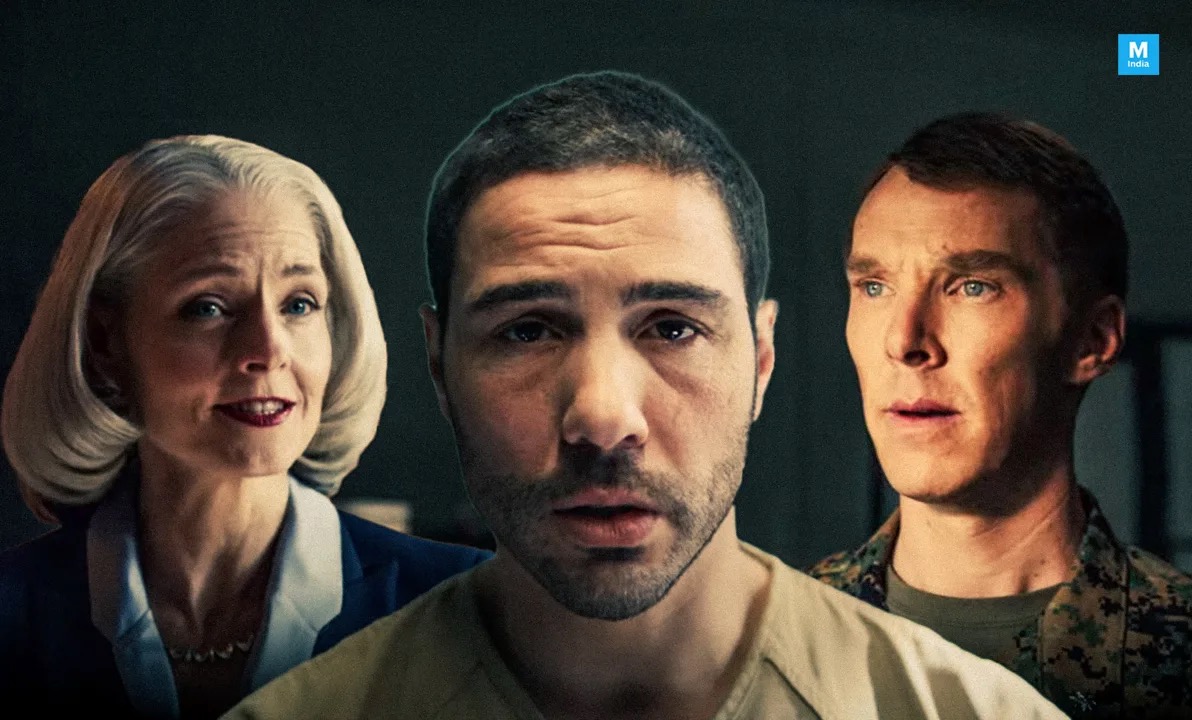
The Mauritanian has received mixed reviews, but I find it hard to see why anyone outside the “flog’ em, hang ’em” brigade would have a negative reaction here. It’s a nuanced and informative piece, making public the true story of Mohamedou Ould Slahi (Tahar Rahim), the eponymous young Mauritanian, who, suspected of links to Al Quaeda, was detained without charge at Guantanamo Bay for fourteen long years.

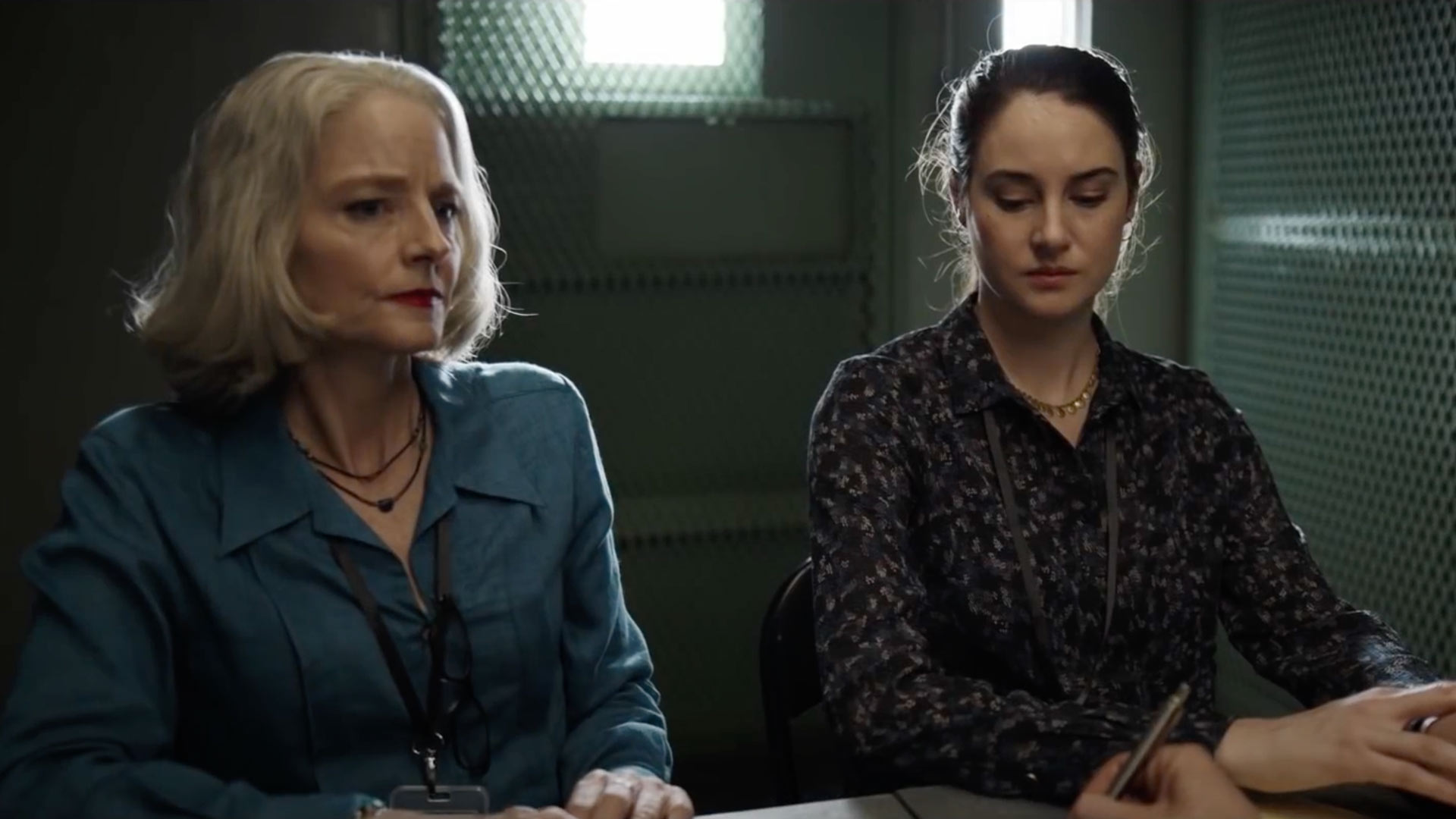
Kevin Macdonald’s film never points the reader in the direction of Slahi’s guilt or innocence, because that’s literally the point: we don’t know, and neither do the people who incarcerated him. Defence lawyer Nancy Hollander (Jodie Foster) reinforces the importance of this when she admonishes her young assistant, Teri Duncan (Shailene Woodley), for responding emotionally to Shahi’s written confession. ‘Everyone is entitled to a defence,’ she tells her, and, ‘Since when did this country start locking people up without a trial?’ Because Slahi has been picked up on the flimsiest of evidence, and if we lose haebus corpus then surely we lose the right to refer to our legal system as ‘justice.’

Military prosecutor Stuart Couch (Benedict Cumberbatch, who is – disconcertingly – even more convincing as a US army man than he is as an English toff) is tasked with representing the state and, initially, he’s more than willing. Shahi is accused of plotting the 9/11 terror attack, where Couch lost a close personal friend. But Couch is a man of principle, and he can’t proceed in good conscience when he realises that Shahi’s confession was coerced through torture, and that the rule of law has been abandoned. Couch wants the guilty parties to pay – but he wants to make sure they are, actually, guilty. (He’s picky like that!)

Rahim is a revelation in the central role. He is charming, erudite, angry and afraid. The torture scenes – artfully shot, hallucinatory flashbacks – are horrifying; no one, no matter what they’ve done, should be brutalised this way. Foster shines as you’d expect her to, depicting a version of Hollander that is all grim determination and moral rectitude, a fierce advocate for doing the right thing.

This isn’t an exciting film: it’s the slow, careful unveiling of an unpalatable truth – namely, that the USA is violating its own doctrine in a detention camp deliberately situated far beyond its shores. Out of sight, out of mind, seems to be the hope, but – as long as there are people like Hollander in the world – they will, hopefully, eventually, be called to account. In the meantime, there are still more than forty prisoners there, and their plight needs addressing.

The Mauritanian is well worth a few hours of your time.

4.1 stars

Susan Singfield
Brexit: The Uncivil War

31/05/20

Netflix

As an unabashed remainer (and a sore loser), I didn’t bother to seek this out on its theatrical release. But enough political water has passed under the bridge for it to pique my interest when I spot it still lurking on Netflix. Besides, it’s interesting to look back on this story at a time when Dominic Cummings has become arguably the most loathed man in the UK. He’s played here by Benedict Cumberbatch, who doesn’t look anything like the real McCoy, but who delivers a pretty good impersonation nonetheless.

Any fears I might have that the film would portray Cummings as some kind of maverick hero figure are soon dismissed. It’s clear that writer James Graham has no particular love for his subject. Indeed, Cummings is depicted as a self-serving nihilist, a man handed a difficult job, plus complete autonomy, who is determined to win at any cost, no matter how many lies and misdirections he needs to spin. The Cummings depicted here has no political convictions whatsoever, just the all-consuming need to demonstrate that he knows how to bend the voting masses to his will.

The film does a pretty good job of nailing the sequence of events that led to the ‘Leave’ victory and uses a combination of lookalike actors – Richard Goulding is a pretty convincing Boris Johnson and Paul Ryan spot on as Nigel Farage – with occasional glimpses of some of the real players thrown in for good measure. It’s left to Rory Kinnear as Craig Oliver, leader of the ‘Remain’ movement, to portray one of the few sympathetic (if inept) characters in this story. His bewilderment as he sees the possibility of winning the campaign rapidly slipping away from him is palpable and there’s a lovely scene where he and Cummings have a pint together and realise just how much of a game-changer the referendum has been – and how little the two men have in common.

It’s to the film’s credit that it never really takes sides. The Remain campaign is shown to be out of touch, unable or unwilling to change its traditional approach to suit the social-media-dominated times. Leave voters aren’t demonised either – they demonstrate legitimate concerns about the way they’ve been increasingly sidelined over the years.

If nothing else, this is eloquent proof that Cummings, a man who cares not a jot about political values might have no hesitation in flouting a set of rules he helped to create – and why Johnson and his crew might be so desperate to hang onto him, no matter what the cost to their credibility.

While I can’t say I enjoy this film – it feels suspiciously like having my nose rubbed in something rather nasty – it’s a thoroughly decent investigation of recent political history. And those seeking answers will find them here.

4 stars

Philip Caveney


The Current War

26/07/19

This biopic concentrates on the rivalry between two famous inventors and their race to be the first to give America the ‘miracle’ of electric light. The film starts in the year 1800, with Thomas Edison (Benedict Cumberbatch) on the verge of a breakthrough with his direct current system. But then up pops George Westinghouse (Michael Shannon), already a rich man from the gas industry, who proposes an alternating current version, which, he insists, will provide a cheaper and more powerful solution to the problem.

In the ensuing struggle to win the contract to light up America, fair play falls by the wayside; meanwhile, a Croatian genius by the name of Nikola Tesla (Nicholas Hoult) struggles to make waves with a series of inventions that have the potential to eclipse the achievements of both Edison and Westinghouse combined.

It’s a fascinating but incredibly complex story, and Michael Mitnick’s script intially feels scattershot as it leaps frantically from location to location in an attempt to nail down all its disparate elements. But it’s worth sticking with, because – after a rather shaky start – the film hits its stride and becomes genuinely compelling, with director Alfonso Gomez-Rejon doing a creditable job of capturing the period. The film highlights a fascinating conundrum when Edison is approached to use his technology to create a ‘humane’ way of executing criminals.

There’s a starry cast here with the likes of Tom Holland, Katherine Waterston and Matthew Macfadyen relegated to supporting roles.

It’s clear where the filmmakers’ loyalities lie. Edison is exposed as a hypocrite, a man obssessed with winning at all costs, at first opposed to using his technology as a weapon, next electrocuting animals willy nilly in order to cast his rival in a bad light. Westinghouse, on the other hand, is portrayed as a much more reasonable type, a man willing to step aside from the glory in order to achieve the greater good. It’s also clear (correctly in my opinion) that Tesla is held up here as the true genius, a man who constantly found his ideas appropriated by his rich financiers and who died destitute, without ever achieving his extraordinary potential.

The Current War isn’t exactly a perfect film, but it does illuminate the difficult birth of something that we now all take for granted, an invention that genuinely transformed the world as we know it. It also depicts the depths that people will sink to in order to see their names go down in history.

4 stars

Philip Caveney