Beneath

Revolver

23/08/25

Pleasance Courtyard (Beneath), Edinburgh

In 1966, when Revolver was released, my mum was 18 years old, and had already been a fan of The Beatles for quite some time. As a Liverpudlian teenager, she’d spent many a lunchtime in the legendary Cavern Club, and was lucky enough to attend the Fab Four’s notorious 1964 homecoming gig at the Empire. She was, naturally, a member of their fan club – and still has her Christmas Flexi Discs to prove it. So, when she was scheduling her visit to this year’s Fringe, it was obvious that there was one production she wouldn’t want to miss…

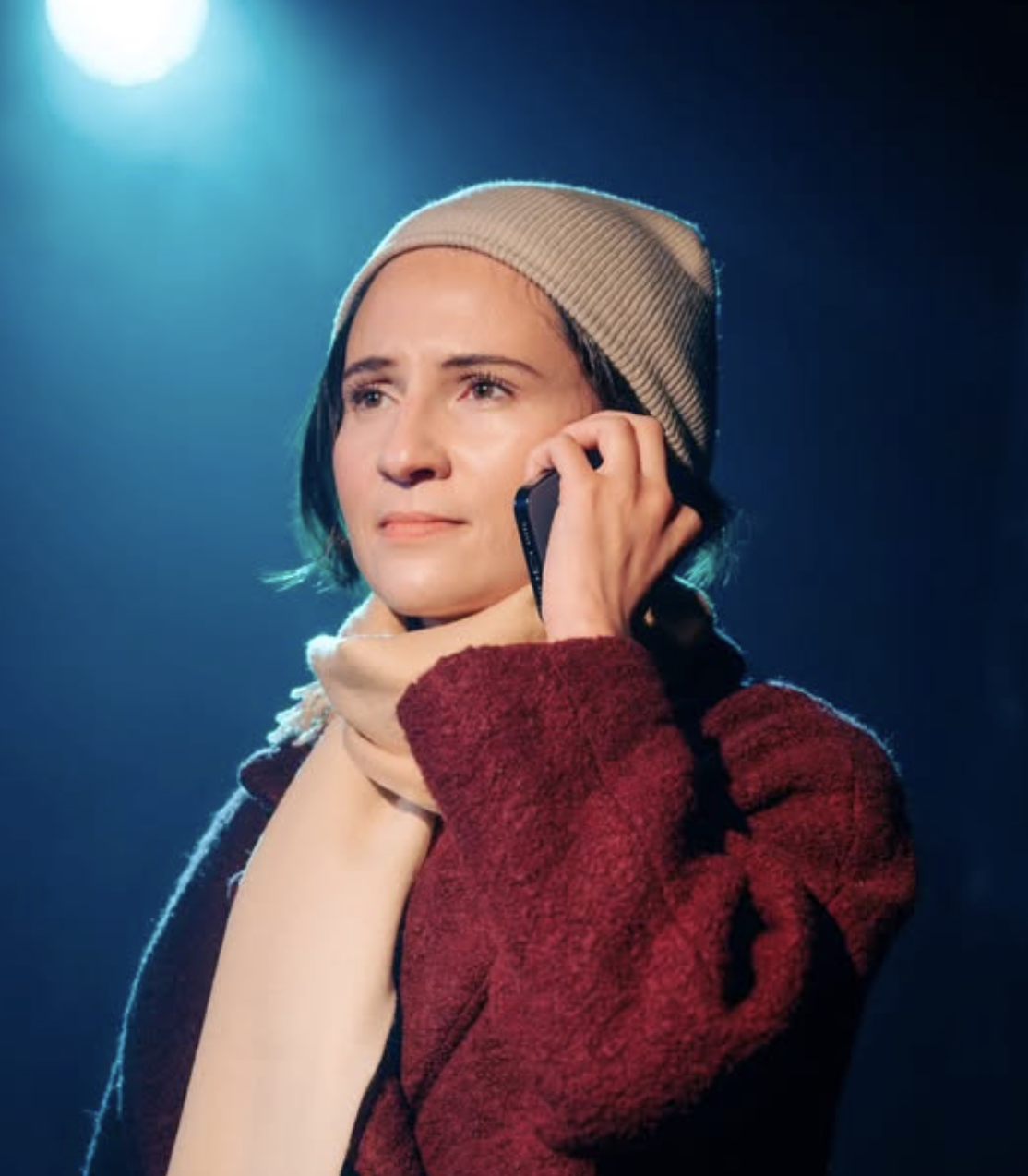
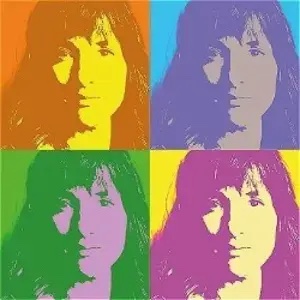
Writer-performer Emily Woof’s play doesn’t disappoint. It’s about three women, the first of whom is Jane Fraser, a former teacher turned TV-researcher, delighted to be working on a documentary about female fandom through the ages. The second is Helen, Jane’s mum, who spent her adolescence dreaming about John Lennon. And the third is Valerie Solanas: writer, activist – and pistol-wielding would-be killer.

Directed by Hamish McColl, Revolver is an intricate piece of theatre, dealing with the very questions Jane thinks the ‘Fangirls’ documentary should address. But, while the protagonist is thwarted in her endeavours by James, the ratings-driven film-maker who hired her, Woof makes her points cogently, drawing salient connections between fame and feminism, reverence and rage.

James’s sensationalist approach to the documentary – he favours the tagline ‘Young, Dumb and Fun’ – undermines the girls who screamed for their pop idols, ignoring the sociopolitical circumstances that gave rise to them. Woof uses Helen and Valerie to illuminate the disconnect between history and herstory, to validate the heightened emotions of teenage fans – and to shed light on the boiling rage that drove Solanas to shoot Andy Warhol.

Tracks from The Beatles album are played throughout, sometimes to mark transitions and sometimes as the soundscape. This works best when there is a clear association between the songs and what is happening onstage, e.g. Tomorrow Never Knows provides the perfect background to an acid trip. Occasionally, the song choices seem a little random, taking me out of the moment while I try to understand the link (Tax Man plays us out, for instance, and I don’t know why), but overall the soundtrack serves the piece well.

I like how knotty this is: Woof doesn’t shy away from the complexity of the issues at hand, and her performance is both bold and nuanced. I’m not entirely convinced by the sexual fantasy sequence (the language seems too sophisticated for an inexperienced young girl), but that’s my only quibble with the writing.

A thoughtful, exacting play, Revolver demands serious consideration from its audience. “Nobody can deny that there’s something there.”

4.4 stars

Susan Singfield
Mariupol

17/08/25

Pleasance Courtyard (Beneath), Edinburgh

Katia Haddad’s two-hander is an epic tale of love and loss spanning thirty years, exposing the quiet horrors of war: the tendrils that insinuate their way into ordinary people’s lives, strangling their hopes for happiness.

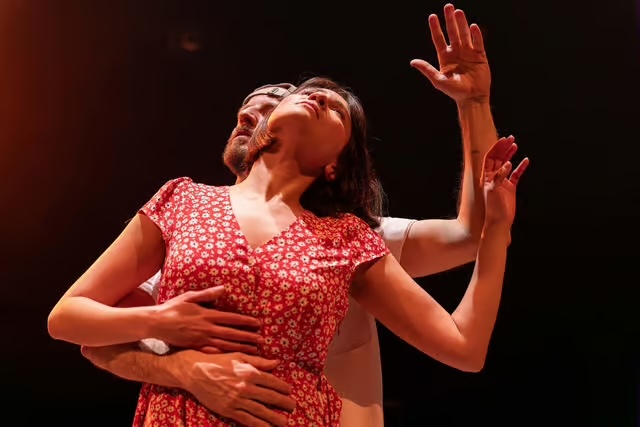
It’s 1992, a year after the dissolution of the USSR, when “Steve” and Galina (Oliver Gomm and Nathalie Barclay) meet at their friends’ wedding in the titular Ukrainian city. Steve (real name: Bondarenko, nicknamed for his karaoke renditions of Stevie Wonder songs) is a well-travelled naval officer, while Muscovite Galina is a literature student, who has so far only dreamed of seeing foreign lands. “You’re in a foreign land,” Steve reminds her, and he’s right: Ukraine is now an independent state. But it doesn’t feel foreign to Galina: “We speak the same language,” she says. And indeed they do, in more ways than one. But, after a whirlwind holiday romance on the picturesque Belosarayskaya Sandbank, it’s time for the two to say goodbye and return to their ‘real’ lives.

Three decades later, Russia invades Ukraine. Galina’s teenage son, a member of the Russian army, is captured by Ukrainian forces in Mariupol. She’s desperate to rescue him – and can only think of one person who might be able to help. But can Steve – who has lost everything and is fighting for his country’s very existence – really be expected to come to the aid of an enemy soldier?

Gomm and Barclay are both perfectly cast, delivering heartfelt but understated performances, which feel totally authentic. They seem to age before my eyes, and it’s impossible not to empathise with these two regular Joes, who ought to be free to focus on more mundane problems. Directed by Guy Retallack, Mariupol is an expertly-crafted piece of theatre, starkly illustrating the brutality of war without ever sensationalising it. Hugo Dodsworth’s monochrome video projections emphasise the awful devastation in Ukraine.

Of course, the ongoing nature of this particular conflict adds real urgency to the production, and I find myself crying as the dreadful human cost is laid bare. But tears are not enough. The play supports the David Nott Foundation, which trains doctors in countries impacted by conflict – including Ukraine – and I feel compelled to make a donation as soon as I get home. If you’d like to do the same, you can do so here: https://davidnottfoundation.com/.

A deeply moving and important play, Mariupol is horribly relevant but beautifully drawn.

4.7 stars

Susan Singfield

Kanpur: 1857

06/08/25

Pleasance Courtyard (Beneath), Edinburgh

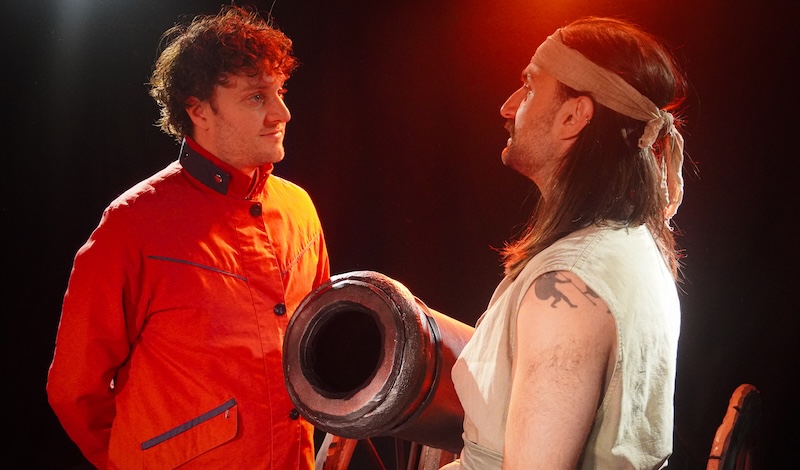
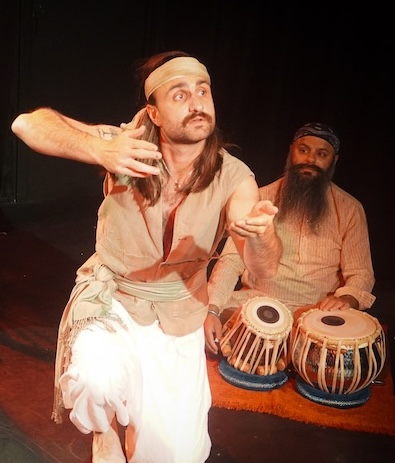
Set in Kanpur, India, in the aftermath of the so-called “Sepoy Mutiny,” an unnamed Indian (portrayed by the play’s author, Niall Moojani) is sentenced to death for insurrection. The captive is a Hijra, often described as ‘the third sex,’ who are traditionally assigned as male at birth, and can decide which gender they wish to assume in the fullness of time. The officer in charge of the execution, played by co-director Jonathan Oldfield, offers his victim an opportunity to speak, or rather demands that they do so. Afterwards, they will be strapped to a cannon and blown apart in front of a crowd of onlookers – or, as we’re known in these quarters, a Fringe audience.

A serviceable-looking cannon has been sourced, and it’s pretty much the only prop in evidence. I can’t help thinking about the difficulties of bringing such a cumbersome weapon down into the Pleasance Courtyard’s ‘Beneath’ performance space, but happily that’s not my job.

Oldfield’s officer serves in a distinguished Highland regiment, though his accent is – perhaps inevitably – cut-glass English. Now, he suggests, is the time for the condemned to explain what has brought them to this awful situation. A garrulous sort, the officer can’t stop interrupting his victim’s narrative, asking awkward questions, offering his own privileged perspectives, even at one point picking up a guitar and lending some lilting accompaniment.

Kampur: 1857 has interesting points to make about the nature of colonialism, reminding us that, during the conflict there have been acts of barbarism on both sides – though these observations come from Oldfield’s character, speaking from the more comfortable point of view of somebody who isn’t about to be evenly distributed across the landscape, and whose side’s reaction to the mutiny has been massively disproportionate.

The piece, which lies somewhere in that strange no-man’s-land between storytelling and drama is at its best when the two characters are exchanging views, bickering, joking, vainly trying to bring each other around to some shared worldview. Oldfield gets the best of it, his sneering superiority played at full-throttle, while Moojani’s dialogue is more reserved and contemplative. Meanwhile, tabla player Hardeep Deerhe provides a rhythmic accompaniment to his words.

It’s impossible not to feel swept up in the play’s final moments, as the victim waits, helpless and silent, their final seconds ticking inexorably away…

3.8 stars

Philip Caveney