Beanie Feldstein

Drive-Away Dolls

16/03/24

Cineworld, Edinburgh

Since their auspicious debut with Blood Simple way back in 1984 (when I had the honour of interviewing them for Manchester’s City Life magazine), Joel and Ethan Coen have unleashed a whole barrage of brilliant films. OK, so there have been one or two misfires in there, but few filmmakers have been so consistently prolific and on the button.

A few years ago they decided to take a sabbatical and work on their own individual projects. Older brother Joel landed first with The Tragedy of Macbeth, which – despite having possibly the most self-aggrandising screen credit in history – turned out to be one of the finest Shakespeare movie adaptations ever. Now it’s Ethan’s turn and Drive-Away Dolls, co-written with his wife, Tricia Cooke, is the result. The central story is so sniggeringly phallus-obsessed it might just as easily have been written by Beavis and Butthead.

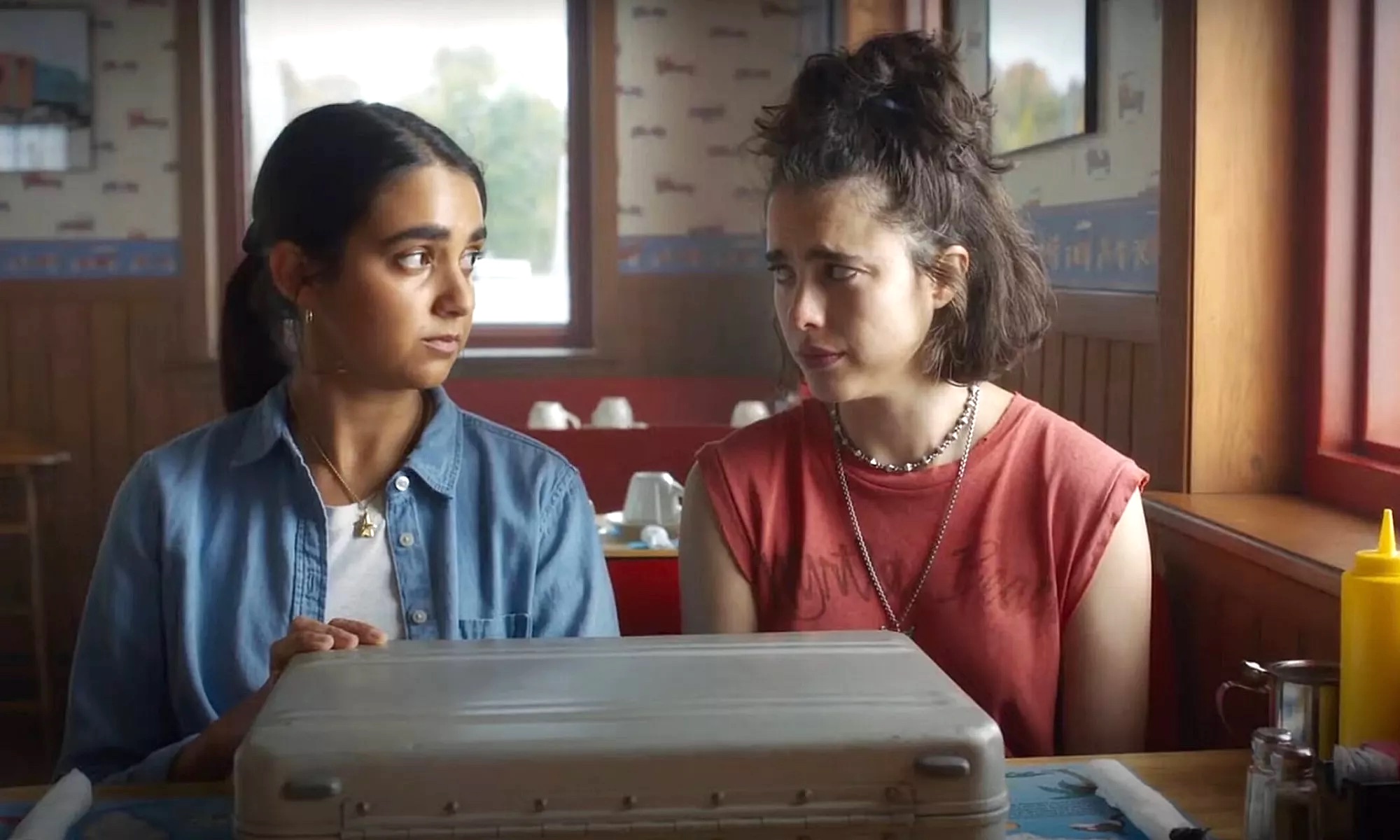
The ‘dolls’ in question are Marian (Geraldine Viswanathan) and Jamie (Margaret Qualley), two lesbian besties. Marian is reserved and socially awkward. She spends most of her spare time reading highbrow literature. Jamie is her polar opposite, with a propensity for raucous and ill-fated relationships. She’s in the process of messily breaking up with policewoman, Sukie (Beanie Feldstein), and urgently needs a change of scenery, so she talks Marian into taking her on a road trip to Tallahassee.

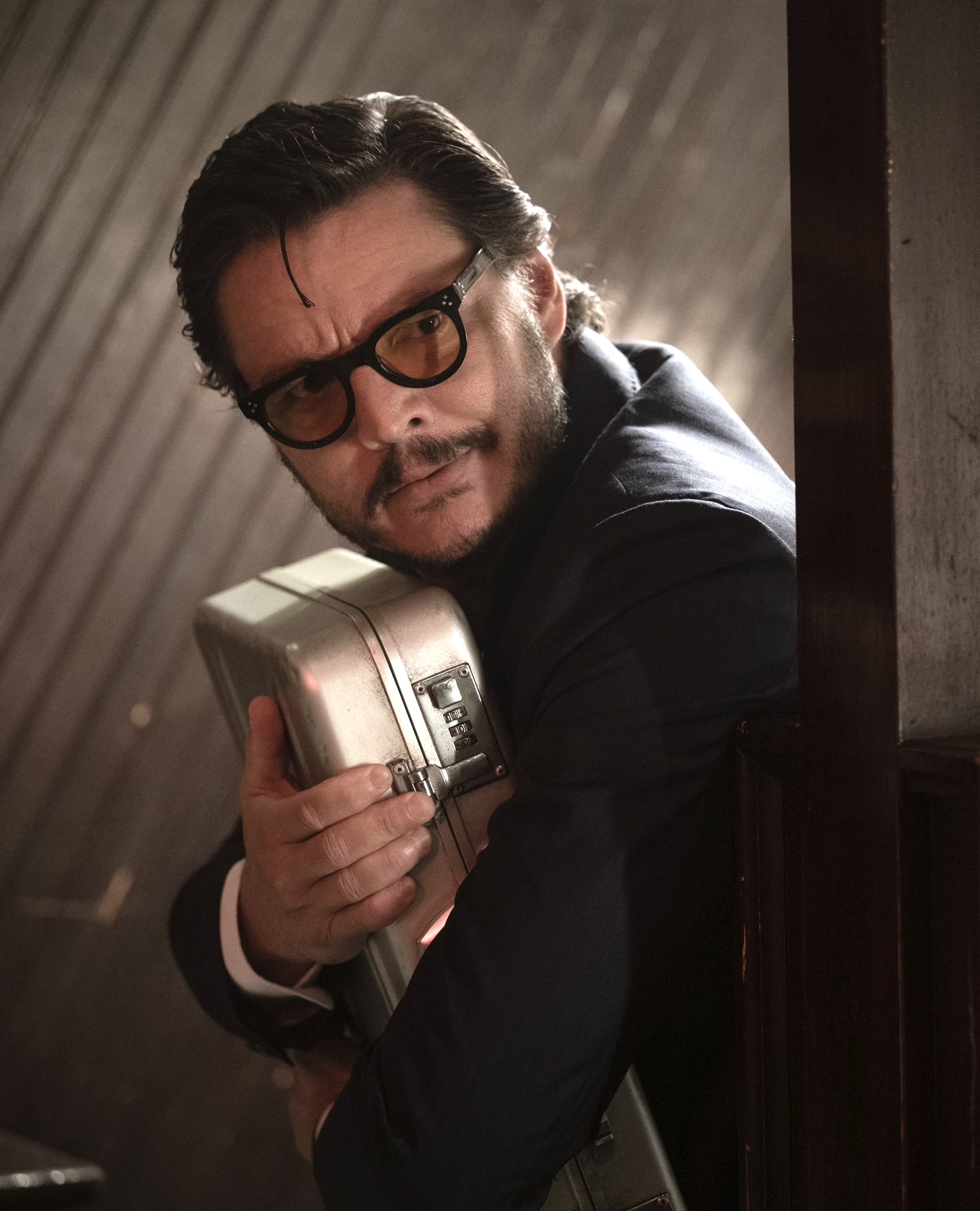
The women hire a drive-away vehicle from Curlie (Bill Camp) and set off on the long drive, blissfully unaware that they have got their wires badly crossed and that the boot of their car contains a metal attaché case containing something of great value. (This device feels so like the MacGuffin in Pulp Fiction, it surely has to be intentional.)

At any rate, Marion and Jamie are being pursued by a trio of bad guys, led by ‘The Chief’ (a criminally underused Colman Domingo), who want what’s in that briefcase. Rough stuff inevitably ensues…

While Drive-Away Dolls feels closer to familiar Coen territory than Shakespeare ever could, it’s exasperating to witness how consistently this fails to hit any of its chosen targets. Viswanathan and Qually are both engaging performers, but Qually in particular is stuck with the unenviable task of delivering slabs of frankly unbelievable dialogue, the kind of lines that no human character would ever utter. Furthermore, the women’s lesbianism is viewed purely through the male gaze: they are incongruously penis-fixated and the camera lingers on their bodies in a salacious fashion, which makes the whole thing feel dated as well as puerile. The villains are so inept that they fail to generate any sense of menace and, meanwhile, a string of A listers, including Matt Damon and Pedro Pascal (who presumably signed up for this on the understanding that it had the name ‘Coen’ attached), are reduced to cameo roles that give them little to do except die.

There are a few funny lines. A couple of weird psychedelic sequences, which seem to have drifted in from an entirely different movie, occasionally attempt to shift this ailing vehicle into a higher gear, but Drive-Away Dolls is a resounding failure that feels hopelessly stuck in first.

The news that the Coens are back together and already working on their next project can only come as a welcome relief.

2.5 stars

Philip Caveney

The Humans

04/12/22

Netflix

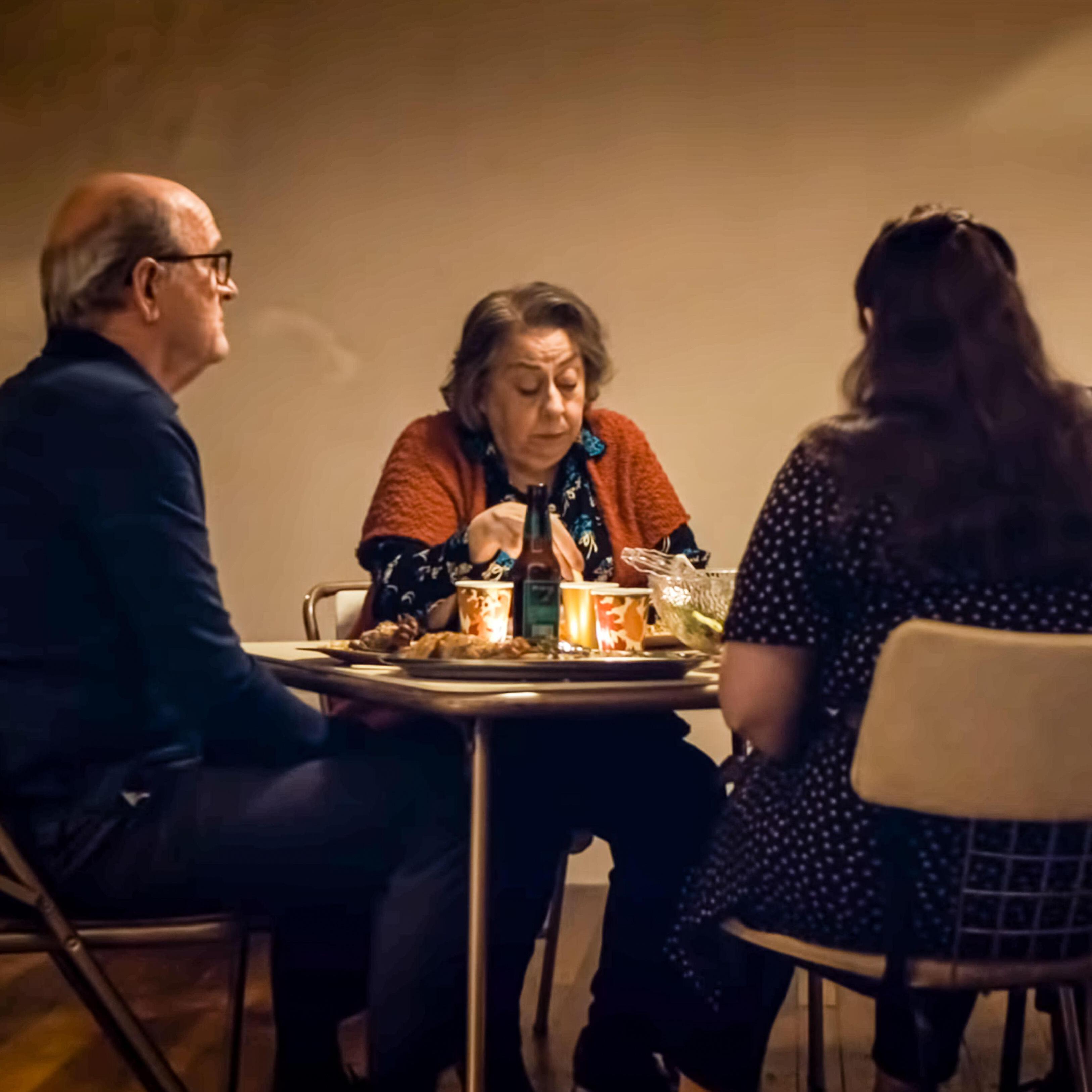
Adapting a stage play into a film can be fraught with difficulties and it’s not often that one manages to rise above the strictures that such a process imposes. The Humans is playwright Stephen Karam’s attempt to do exactly that with his Tony-Award winning drama. His ‘opening out’ procedure is to use the apartment where the action takes place almost as an extra character. As the extended Blake family go about trying to celebrate Thanksgiving, the ugly, ramshackle new home of Brigid (Beanie Feldstein) and Richard (Steven Yeun) has all the grim oppressiveness of a traditional haunted house. We watch the family conversing at the end of a filthy corridor or crammed into an awkward corner. The camera lingers on blistered plaster and rusting metal. It’s almost as though the place is sentient and spying upon them. The sense of impending dread is palpable.

But this is far from being a straightforward ghost story. The Blakes are haunted by their own sense of failure. Patriarch Erik (Richard Jenkins) seems obsessed with the idea that something bad is going to happen, and often refers to the near miss the family experienced with the tragedy of the Twin Towers. His wife, Deidre (Jayne Howdishell), laments another slip-up with her Weight Watchers schedule, while Brigid announces that she hasn’t managed to secure a grant to fund her career as a musician and will have to contemplate working in retail. Brigid’s sister, Aimee (Amy Schumer) is suffering from a debilitating illness and has broken up with her girlfriend, while Richard refers to mental health issues back in his youth. And Erik’s mother, Momo (June Squibb), sits in her wheelchair and unleashes the occasional string of what appears to be rambling gibberish…

The Humans is nobody’s idea of ‘a fun night as the flicks’. Indeed, it’s tortuous, uncomfortable and, at times, dismaying. And yet, it manages to exert a slow, powerful grip on me, as the tension slowly rises to boiling point. If there is no real resolution to the mess of unconnected distress that’s unearthed at the Thanksgiving from Hell, it should also be said that, in its own way, it’s a cinematic offering like no other and – to my mind – that makes it well worth checking out.

3.8 stars

Philip Caveney

How To Build a Girl

13/11/20

Apple TV

Caitlin Moran’s 90s-set semi-autobiographical novel makes an awkward transition to film, with Moran handling screenplay duties and Coky Giedroyc directing. I say ‘awkward,’ because there’s quite a lot here that I like, but there are also elements that, to my mind, don’t quite come off. Moran’s own beginnings are well-documented (as are those of a young Julie Burchill, whose very similar formative years may also, I think, have provided some of the inspiration for this tale) and it’s inevitable that I spend much of the film speculating about who certain characters might be based on.

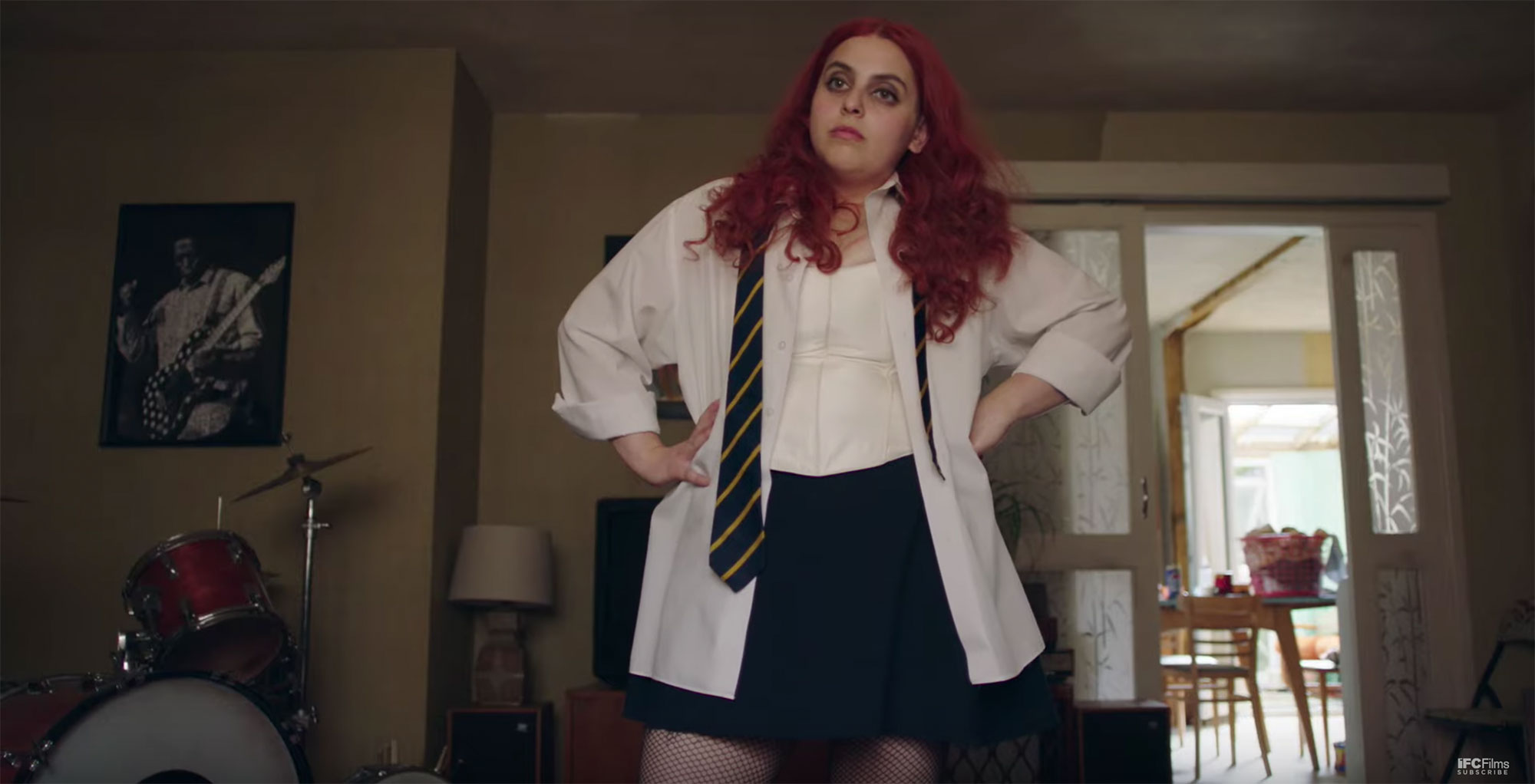
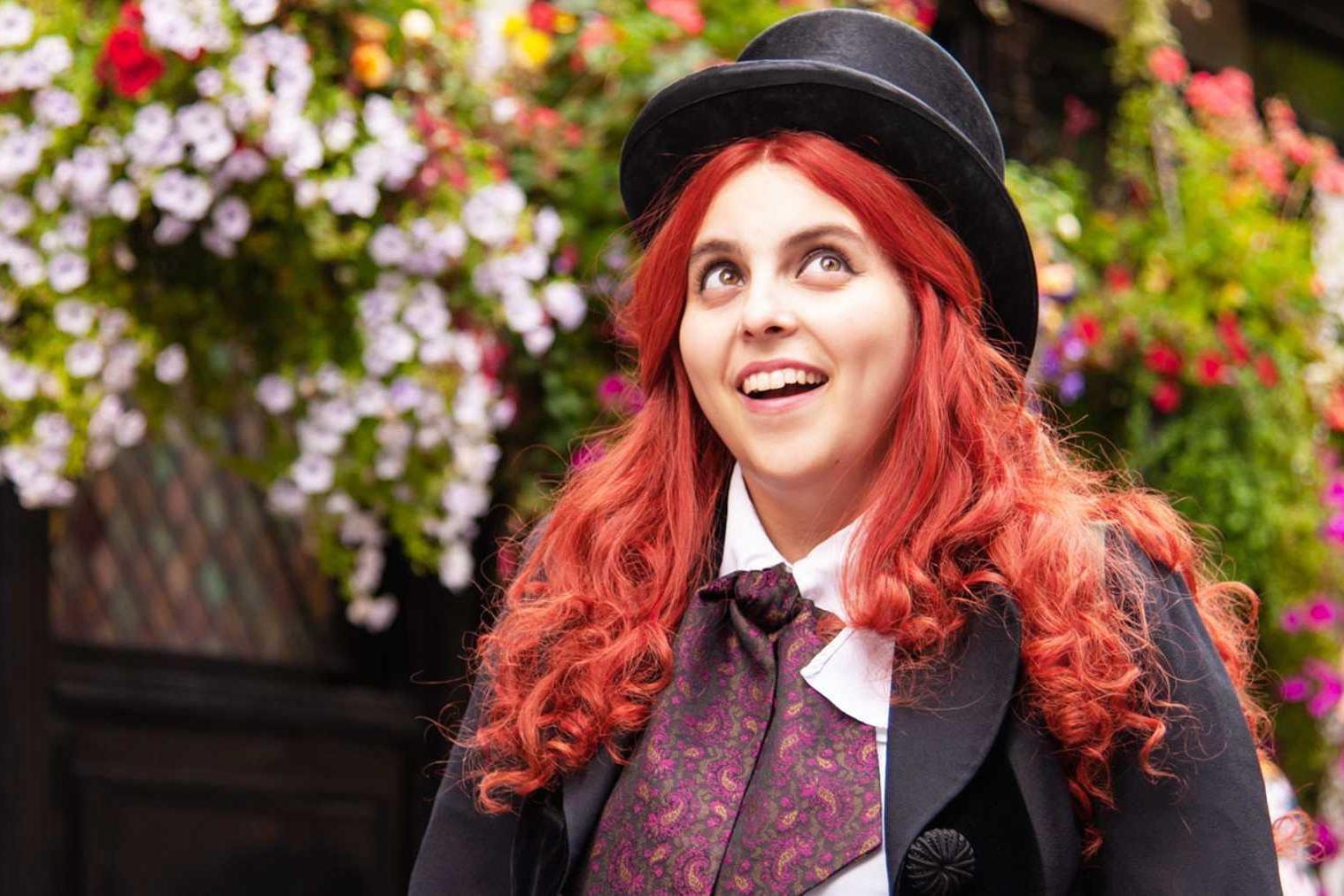
Beanie Feldstein stars as Johanna Morrigan, a literature-obsessed teenager who struggles to make friends in her hard-knock state school and whose only ally is her English teacher, Mrs Belling (Joanna Scanlan), who recognises her star pupil’s talent despite spending much of her time trying to rein her in. Johanna lives in a crowded council house alongside her knackered mum, Angie (Sarah Solemani), her jazz musician father, Pat (Paddy Considine), her brother, Krissi (Laurie Kynaston), and a whole clutch of squalling babies.

But when she enters and wins a local writing competition, it isn’t long before the world of music journalism beckons… and, almost before she knows it, she’s attending rock concerts and acquiring a reputation as the new hip gunslinger on the block, able to slay famous musicians with a single line of sarcasm.

But of course, all that careless bitching is sure to have repercussions somewhere further down the line…

Feldstein is a terrific talent, as her work in Booksmart attests, but, who decided to place her in a story set in Wolverhampton? To give Feldstein her due, she really does her best with what’s she’s been given, but her accent strays, inevitably, from Cardiff to Liverpool and all points in between, occasionally even paying visits to sunny California.

Furthermore, I’m not always entirely convinced by the depictions of working-class life on Johanna’s council estate, which at times feel distinctly caricatured, the memories of somebody who’s spent too many years in London’s hipster hangouts to achieve total recall.

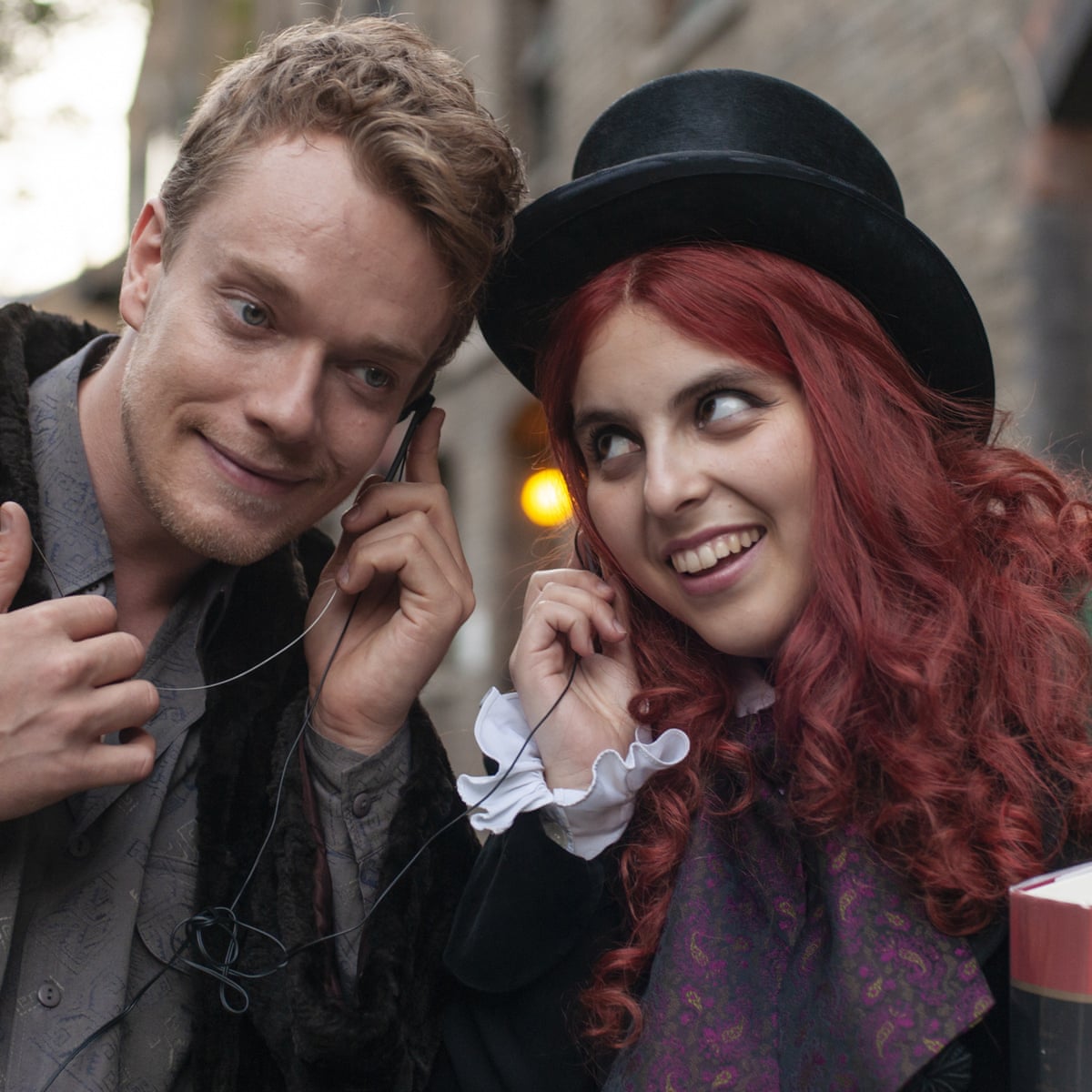
But perhaps I’m being too harsh. For the most part, How To Build a Girl galumphs merrily along, liberally peppered with cameo roles from a whole raft of well-known actors, many of whom are afforded barely a line of dialogue. (Clearly Moran and Giedroyc made full use of their address books.) Alfie Allen offers a nice performance as John Kite, the doomy, gloomy rock star whom Johanna falls head over heels for and there are some neat observations about the male-dominated world of music journalism in the 90s.

The overall result is pleasant enough, but the conviction remains that this would have flown more convincingly with an unknown in the lead role – preferably somebody from the Black Country.

3.6 stars

Philip Caveney

Booksmart

06/05/19

It’s the day before they graduate from high school, and best friends Amy (Kaitlyn Dever) and Molly (Beanie Feldstein) are secure in the knowledge that they have achieved first class grades. They’ve managed this by working hard and staying well away from the kind of distractions that their less dedicated classmates have enjoyed to the full – parties, romances, drink and recreational drugs. Amy and Molly are the kind of students who spend their leisure time in the library and who can’t help correcting the grammar on the graffiti in the school toilets. They are – basically – swots.

So when Molly discovers that all her hard-partying classmates are also going to graduate with honours and will attend the finest universities in the land, she’s understandably dismayed. She vows that, tonight, she and Amy will attend the wildest party in town, that they will pursue the long-held romantic interests they have deliberately set aside, and  indulge in all the hedonistic pleasures they can lay their hands on.

In short, they will, for once in their lives, let their hair down and enjoy themselves. The only problem is, they don’t actually have the address where the party is being held…

Dever and Feldstein are terrific as the central couple and the witty script expertly kindles the laughs as the duo experience alarming setbacks in their quest to experience those forbidden pleasures. There are some genuinely heartwarming moments too, as the girls finally address the unspoken issues that lie at the heart of their mutual dependancy.

The real strength of Booksmart, however, lies in the way it cheerfully sets up a whole string of audience expectations, only to cleverly subvert them – from the school’s sardonic principal (Jason Sudeikis), who moonlights as a taxi driver, to the resident rich kid (Skyler Gisondo), reduced to trying to lure friends to his party by offering them free iPads.  Nothing here is ever quite what you expect and none of the characters are allowed to descend into cliché.

Directed by actor Olivia Wilde, Booksmart is a joyful little peach of a movie: sharp, clever and perceptive. It’s sure to make you laugh and you may even emerge from the cinema (as I did) with a lump in your throat. Enjoy!

4.6 stars

Philip Caveney

Lady Bird

16/02/18

Greta Gerwig is a fascinating woman. After seemingly stumbling into the film business via a series of zero budget, mumblecore efforts, she has quickly demonstrated that she is a force to be reckoned with. The semi-autobiographical Frances Ha, written by Gerwig and directed by Noah Baumbach, plays like early Woody Allen and Lady Bird feels very much like a prequel to that film, with Saoirse Ronan stepping up to the plate to play a teenage version of Gerwig. From the opening sequence where Christine “Lady Bird” McPherson argues with her mother, Marion (Laurie Metcalf), in a moving car – and then throws herself out of it rather than continue the conversation – we are left in no doubt that this is the story of a troublesome teen, who is likely to get her own way in the end.

Christine lives in Sacramento but longs to go to college in New York, where she believes ‘culture lives’. But it isn’t as easy as that. Her father, Larry (Tracy Letts), recently lost his job, her adopted step brother, Miguel (Jordan Rodrigues), seems in no hurry to get one ,and its pretty much left to Marion, a psychiatric nurse, to bring home the bacon. Little wonder the thought of paying for a place at an Ivy League University doesn’t figure highly on her agenda. She and Christine have a troubled relationship and it’s this, more than anything else, that lies at the heart of this powerful and beguiling film, which Gerwig has chosen to direct herself. Typically, she handles it with great aplomb, somehow managing to make the running time fly past and coaxing wonderful performances from everyone involved, especially from Ronan and Metcalf, who make a winning combination.

The story is often very funny (a scene where the a drama group is run by a physical exercise coach is a particular stand out), but it’s powerful enough to occasionally tug at the heartstrings too. I particularly like Beanie Feldstein as Christine’s best friend, Julie, and there’s also a nice cameo from Timothee Chalomet as one of Christine’s patently unsuitable boyfriends. Oscar nominations have been announced and, who knows, in the present climate, the establishment might finally be ready to reward another female director, and Lady Bird could well be a surprise winner.

Whatever the outcome, this is a sublime piece of film-making that never puts a foot wrong and demonstrates only too clearly that Greta Gerwig is a talent to be reckoned with.

5 stars

Philip Caveney