Assembly George Square

Wodehouse in Wonderland

22/08/25

Assembly George Square (Studio 3), Edinburgh

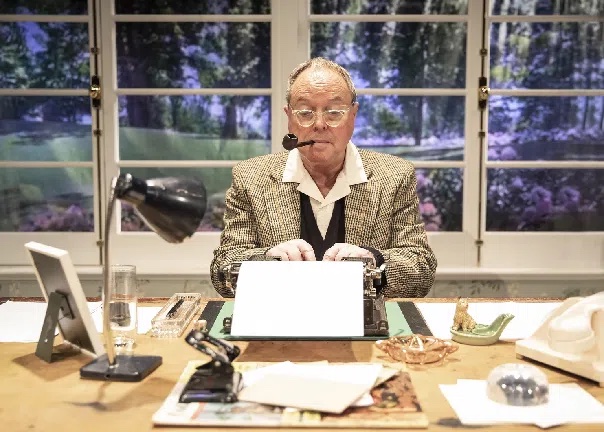
Not so much an impersonation as a celebration, Robert Daws is clearly having a whale of a time in William Humble’s Wodehouse in Wonderland, and, after a few minutes of uncertainty while I tune in to the tone of the piece, so am I. Wodehouse is, of course, one of those writers who almost defy belief: incredibly prolific, very successful in his own lifetime – but remembered now for the accusations levelled at him for his ‘collaboration’ with the Nazis during World War Two.

We meet him in the 1950s, living in exile in Long Island and reluctant to return to his British homeland. He’s still writing fiction (though a book now takes him six months rather than three) and he’s also hankering after another shot at writing for the theatre with his old partner, Guy Bolton, who lives nearby.

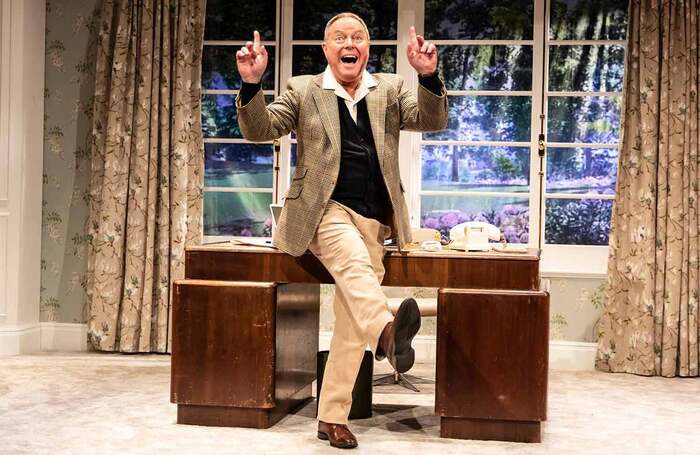
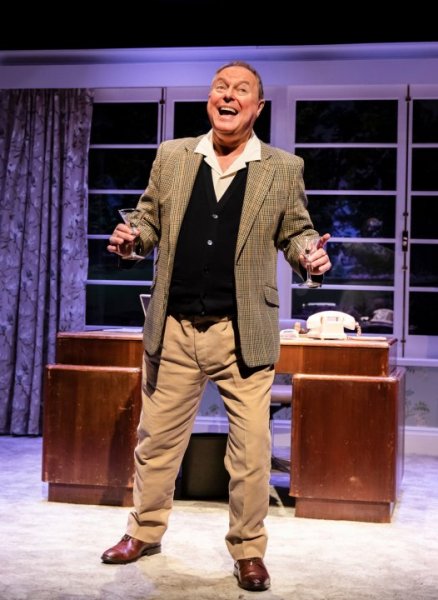
Daws offers a relaxed and jovial performance as Wodehouse, mixing martinis as he talks, expressing his intense dislike for the great Russian authors (too gloomy) and making slyly humorous observations about his wife, Bunny’s profligacy. He also speaks lovingly about his adopted daughter, Leonora – or ‘Snorkles’ as he prefers to call her – who he claims is his ‘Number 1 critic.’

He talks – with great reluctance – to his American biographer, who eventually nudges him in the direction of that unfortunate business with the Germans… and, lest the tone grow too serious, every so often, Daws interrupts proceedings to launch into a rendition of one of the author’s comic songs.

Wodehouse in Wonderland is a revelation in many ways. I was a fan of Jeeves and Wooster back in the day and read several of their adventures when (just like Wodehouse in his youth) I was sequestered in a rather unpleasant boarding school. I learn quite a lot about the author over the hour and realise that I have been misinformed about that ‘collaboration’ business – so it’s nice to have the record set straight.

Towards the conclusion, there’s also a moment of sweet sadness, which Daws handles with absolute assurance. While this may be best suited to those familiar with Wodehouse’s work, it’s not essential. Those looking to spend a pleasant and rewarding hour on the Fringe should find plenty here to keep them thoroughly entertained.

4.4 stars

Philip Caveney
The Other Mozart

05/08/25

Assembly George Square Studios (Studio Two), Edinburgh

You’ve heard of Nannerl Mozart, right?

Nope?

Me neither.

Her brother’s pretty well-known though. He’s so famous he’s known by just one name (which is probably a good thing, considering his original moniker was the unwieldy Joannes Chrysostomus Wolfgangus Theophilus Mozart – although he did later change this to Wolfgang Amadeus).

It turns out “Nannerl” (aka Maria Anna Walburga Ignatia; yep, Mama and Papa Mozart really liked long names) was something of a musical prodigy too, who toured with “Wolfie” when they were both children. This elegant production, written and performed by Sylvia Milo (in rotation with Daniela Galli), finally brings Nannerl out of the shadows and into the light.

It’s no great shock to discover that the reason we don’t know about her is because of her gender. Europe’s aristocracy were happy to watch a little girl perform, less so a grown woman. Here, with great artistry and precision, Milo shows us the toll this must have taken on the talented musician and composer, forced to watch her younger sibling garnering credit and acclaim while her own similar ambitions were thwarted, subsumed into marriage and motherhood.

Sadly, none of Nannerl’s original pieces survive, but Milo’s poised performance is beautifully complemented by Phyllis Chen and Nathan Davis’s compositions, which evoke the era perfectly, allowing us to believe in Nannerl’s genius.

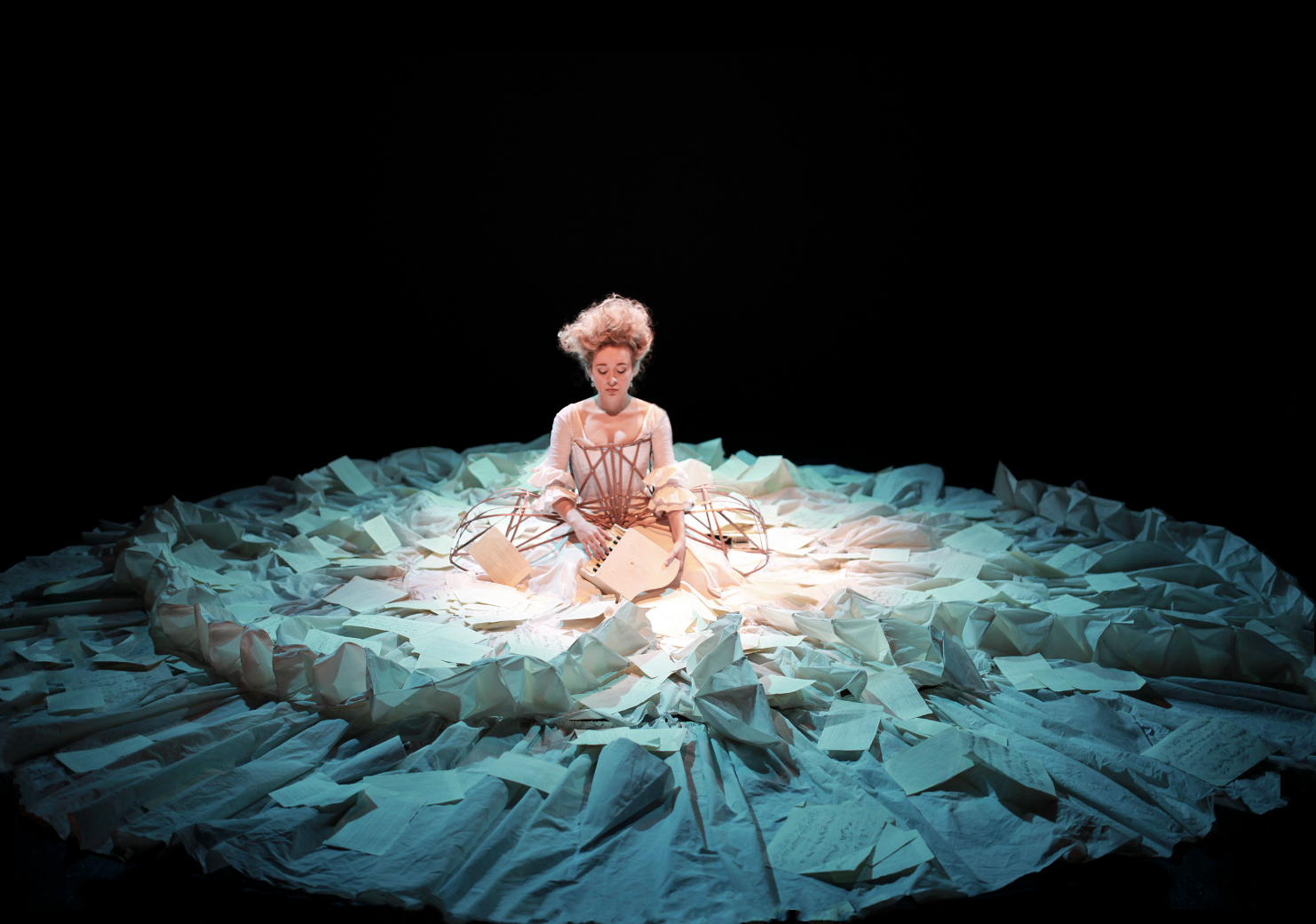
The Other Mozart, directed by Isaac Byrne, is a work of art: a sophisticated blend of monologue, music and movement – and it’s a visual marvel too. The set is the costume; the costume is the set: a giant dress, designed by Magdalena Dąbrowska, fills the entire stage, waiting, predator-like, to trap Nannerl in its fathomless drapes. The image is intensified by Miodrag Guberinic’s cage-like panier, constructed – I think – from music stands, constricting Nannerl but also amplifying her stature, so that she rises monumentally, towering over us, defying us to forget her name.

An object lesson in reclaiming women’s history, The Other Mozart is exquisitely conceived and realised, a magnum opus in its own right.

5 stars

Susan Singfield

Plenty of Fish in the Sea

20/08/24

Assembly George Square (Studio 2), Edinburgh

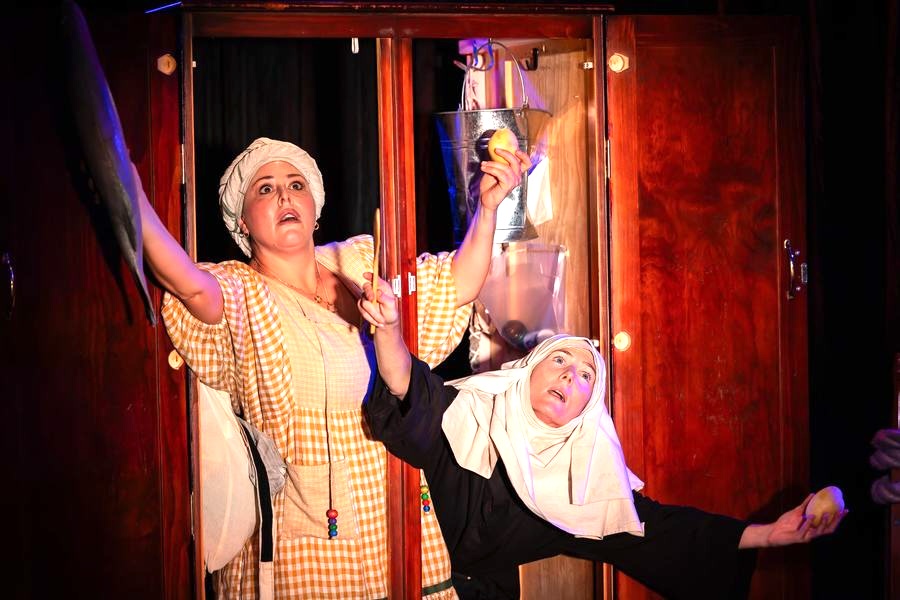
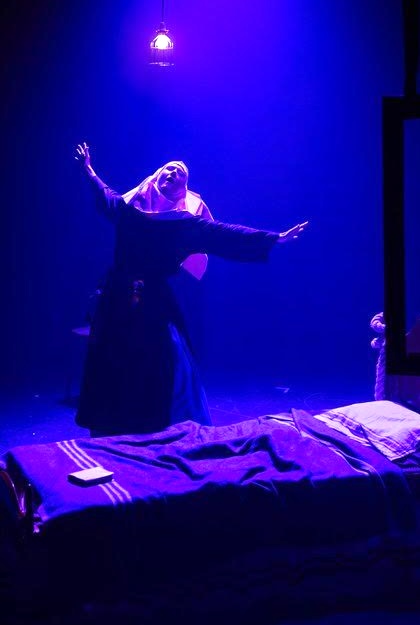
I hardly know where to begin with this one. Plenty of Fish in the Sea is – bear with me – an absurdist fable about a couple of isolated nuns (Madeline Baghurst and Emily Ayoub), who catch a man (Christopher Samuel Carrol) with their fishing rods; they then take hallucinogenic drugs and have wild sex with him before throwing him back into the sea. If ever proof were needed that the ‘seven basic plots’ theory is flawed, then look no further. I think it’s safe to say you haven’t seen this one before.

Devised by Baghurst and Ayoub of Clockfire Theatre Company, this is a mind-boggling delight. From the forbidding image of St Cotrillard to an obsessive plundering of the ocean and a gluttonous feeding frenzy, this is a play that defies explanation. It’s like being immersed in someone else’s fever dream. I’m hooked.

Clockfire’s roots lie in the Jacques Lecoq Theatre School, so this is – of course – a piece of perfectly-executed physical theatre, with some exquisite clowning. There are numerous elaborate set pieces, an abundance of striking tableaux that linger long after the final bow. There’s the nun (Baghurst), trudging along, pulling everything she owns behind her. There’s Bernadette (Ayoub), the silent novice, administering a mysterious salve to the man’s cheek – and then, cocaine-like, to her own gums. There’s the man (Carrol), passionately kissing a fish. And much, much more.

The props are simple: a cupboard, a bed, a window/picture frame. But they’re inventively designed (by Tobhiyah Stone Feller) and utilised to unsettling effect, with characters emerging, farce-like, from within the cupboard or behind the bed. Daniel Herten’s disquieting compositions add to the feeling of unease.

But what does it all mean? Ayoub says that the piece was “inspired by the modern societal pressures of ‘hook-up’ culture,” and there’s certainly something here about the soul-destroying nature of swiping right to find a mate. But it’s a lot more than that too. There’s surely a skewering of religion and consumerism, a commentary on human greed and the sheer silliness of the rituals we perform on an everyday basis. But Plenty of.. is a slippery fish, and it’s hard to pin it down.

And that’s exactly where its beauty lies.

4.3 stars

Susan Singfield

I Sell Windows

12/08/24

Assembly George Square (Studio 4), Edinburgh

Actors Daniel Blinkoff and Tamlyn Tomita, founders of LA Theatre Company Outside In, are committed to making a space where diverse voices can be discovered, evolved and shared. With its almost unimaginable variety of shows (more than three thousand, every day), the Edinburgh Fringe is a perfect match for such an endeavour, and Kacie Rogers’ I Sell Windows is an impressive addition to the programme.

Directed by Jaquita Ta’le, Rogers presents a monologue about love, trauma, thwarted ambition – and selling windows. Casement, sash, bay, awning: ‘Kacie’ can make your dreams come true. But first, you have to stop waiting to be ready and really start living…

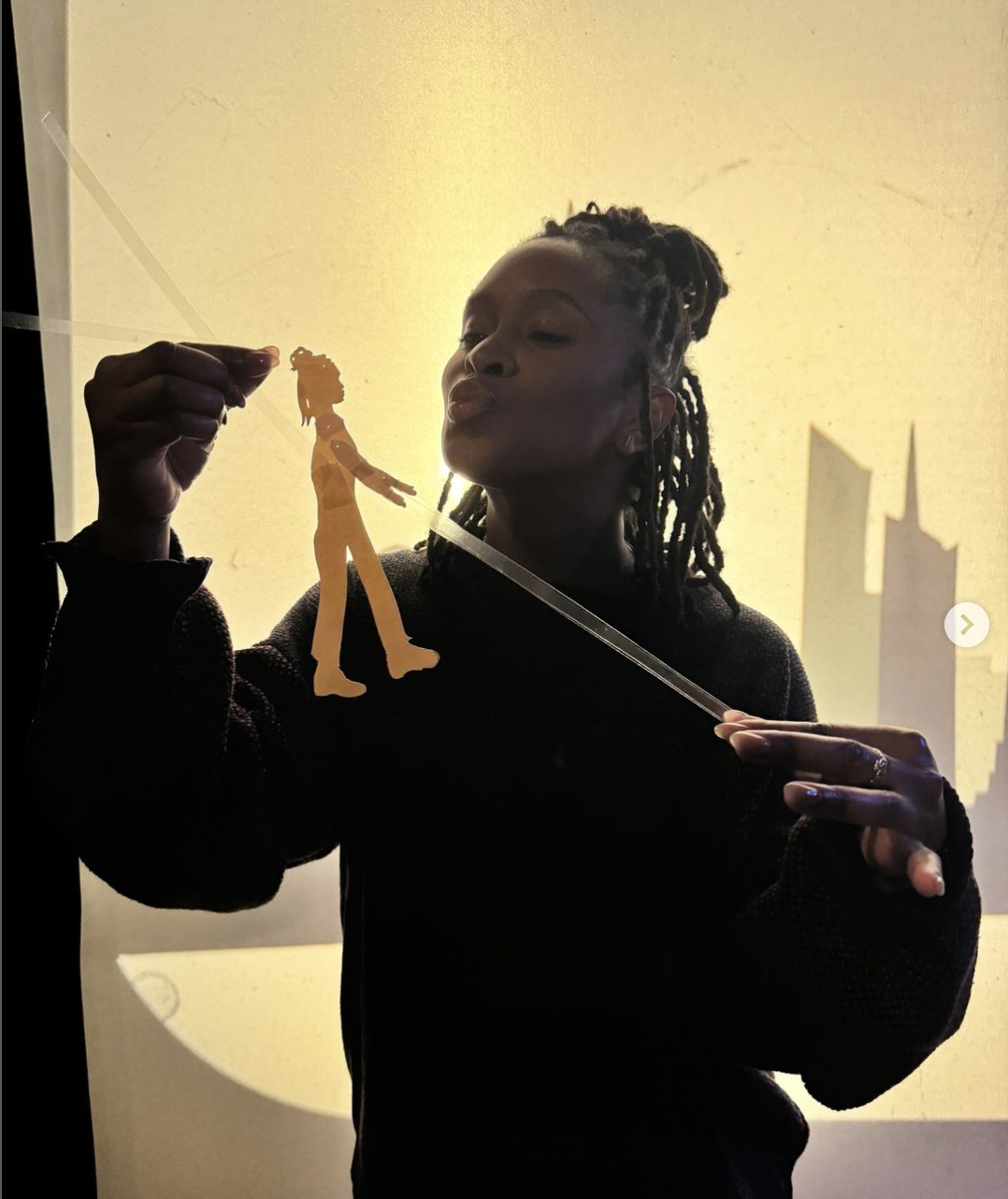
The fragmentary structure of the play reflects Kacie’s uneven mental health, as she struggles to come to terms with the death of her grandfather and the realisation that she may never earn a living as an actor. Reeling from the impact of these twin losses, she begins to implode, jeopardising her relationship and spinning out of control. Her breakdown is beautifully illustrated by the use of intricate shadow puppets (courtesy of Brittaney Talbot and Perry Daniel), as well as a sequence of recurring dreams, lit like the Northern Lights. Along with Rogers’ heartfelt a cappella rendition of Tracy Chapman’s iconic Fast Car, this amounts to both a profound character study and a rumination on the ways in which we are taught to value (and undervalue) ourselves.

Performed with verve, wit and absolute precision, I Sell Windows is a thoughtful play, ostensibly about one young Black woman’s experience, but applicable to every one of us.

4.2 stars

Susan Singfield

Artist/Muse

20/08/23

Assembly George Square (Studio Five), Edinburgh

The Wednesday Women’s Writing Collective (WWWC) is “a group of women and femmes dedicated to fostering creativity and uplifting marginalised voices”. In this piece, written by Diana Feng, Tegan Verheul, and Clarisse Zamba, their focus is on the anonymous artist’s muse, who – they posit – is a co-creator, and so merits some credit.

The Assembly’s Studio Five has a day job, spending eleven months of the year as a lecture theatre. On entering the small space today, I note that there are sheets of paper and pencils on the long bench tables. “Please feel free to do some life drawing,” the usher says.

On the stage, standing inside a large gilt frame, there is a woman. We pick up our pencils and begin to draw.

It’s a neat conceit, positioning the woman as an object, a thing for us to look at and attempt to recreate. It positions us as the artist too: we’re in charge of our creations, aren’t we? Except… without her, we have nothing to draw. Her style, the expression on her face, her demeanour; we have had no say in those. She is the image and we mere interpreters. (In my case, a pretty poor one at that…)

We never finish the drawings. Once the lights go down, the story begins. The woman steps out of the frame and bursts into life. She is Olivia Fernandez (Caterina Grosoli), a life model in the middle of a screaming row. Her sculptor boyfriend, Laurent (Luke Oliver), has found a new, much younger subject – and Olivia isn’t going to go quietly. As their argument grows more violent and heated, she seeks refuge in a stranger’s house. He – “Of course!” says Olivia, despairingly – turns out to be another artist, albeit a much quieter one. He’s Paul Patel (Sushant Shekhar) and he recognises Olivia: he’s seen her image captured many times. Before long, the two have fallen in love – but Paul is jealous and begs Olivia not to pose for anyone else. But how can their relationship survive if her wings are clipped? And, if his body of work depends on her body, how can he claim full ownership?

It’s an interesting premise and we find ourselves grappling with the thorny questions it raises for a long time afterwards. (What if the subject is a mountain or a piece of fruit? What if it’s a building – should the architect be acknowledged? Can we compare life models to musicians, in that a session player/occasional model doesn’t need to be named, but a band member/muse does?)

If the script itself isn’t as weighty as its themes, losing gravitas by centring on an improbable love story, it’s engaging nonetheless. Grosoli gives a sprightly performance as Olivia. Based on Fernande Olivier, Pablo Picasso’s muse, she is a bold, sassy young woman, and Grosoli imbues her with verve and spirit. I especially like the way that dance is used to symbolise her restless nature.

The play’s design is clever too, and I’m impressed by the judicious use of projection on the enticingly blank canvases.

The first thing I do when I get home is put a face to Fernande Olivier’s name, seeking her likeness in photographic as well as painted form.

3.4 stars

Susan Singfield

The Hunger

19/08/23

Assembly George Square (Studio 3), Edinburgh

Somewhere in the wilds of the Yorkshire Dales, there’s something seriously wrong down on’t farm.

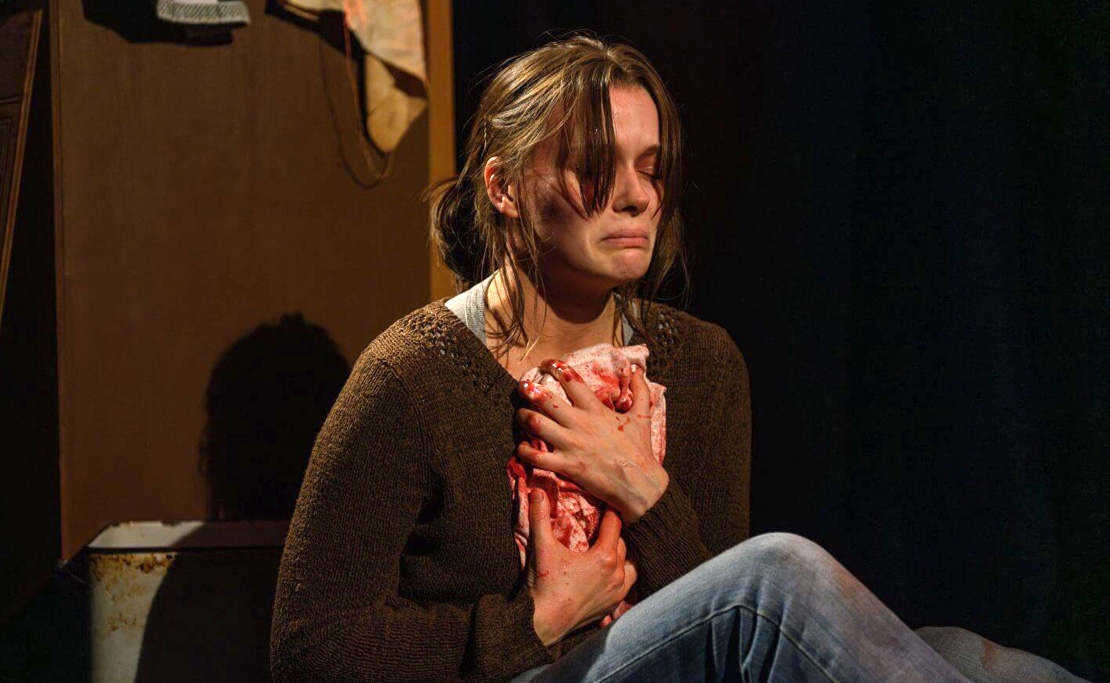
Deborah (Helen Fullerton) is desperately trying to protect herself and her teenage daughter, Megan (Madeleine Farnhill), as a terrifying epidemic holds the country in its sway. Something is turning ordinary people into creatures to be feared. Oh, they look normal but they have developed unnatural appetites.

The situation has been ongoing for a couple of years now, and is completely out of control, but Deborah is determined to soldier on, putting her trust in her free-range pigs, the way she always has. And thankfully, the prize sow is about to farrow, which will mean a fresh supply of good, wholesome food.

As for those occasional strangers who stumble upon the farm, they are dealt with in no uncertain terms because Deborah is very handy with a rifle and she’s not afraid to use it. She’s also determined to ensure that Megan will eat her three square meals a day…

The Hunger opens with a high-octane scene and keeps the same histrionic tone throughout. Both actors deliver intense, convincing performances, but I’m less happy with the storyline, which isn’t always entirely credible. If the two women have been cooped up together for so long, why does Megan have no idea what’s happening? There’s a revelation waiting down the line but this aspect of the script conspires to defuse it somewhat and, when it finally comes, it isn’t exactly a surprise.

A tense, horror-tinged production from Black Bright Theatre, this is the kind of dystopian end-of-the-world scenario that’s currently enjoying much popularity (and there are definitely echoes of The Last of Us here), but it needs a little more light to go with all that unremitting shade. Still, it keeps me hooked throughout, and I particularly enjoy the tense, open-ended conclusion, which steadfastly refuses to allow the audience to relax as we leave the theatre.

Maybe skip the visit to the kebab house on the way home.

3.8 stars

Philip Caveney
Blue

14/08/23

Assembly George Square (The Box), Edinburgh

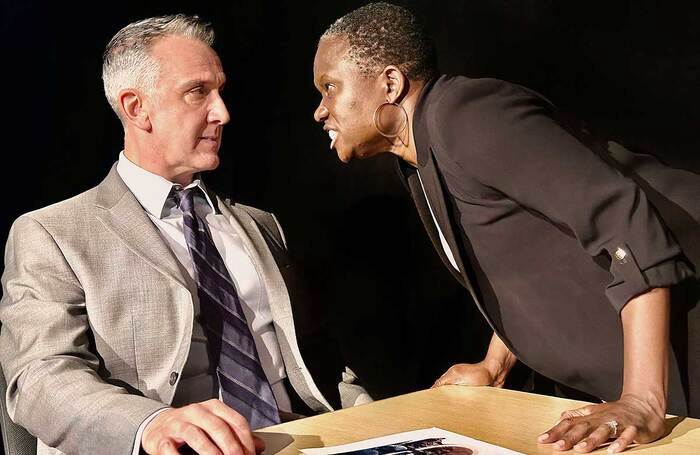
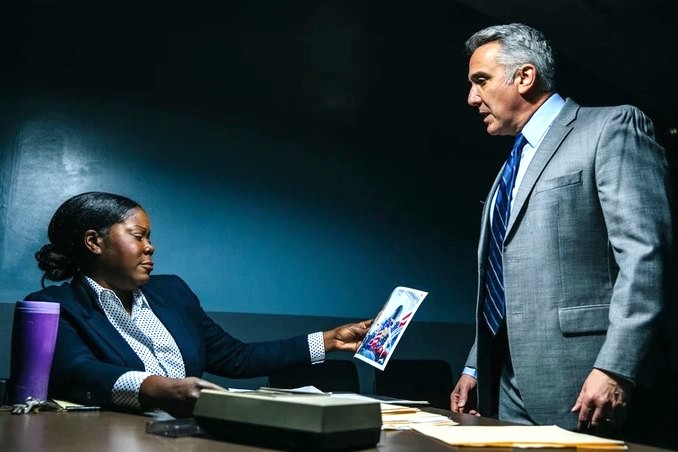
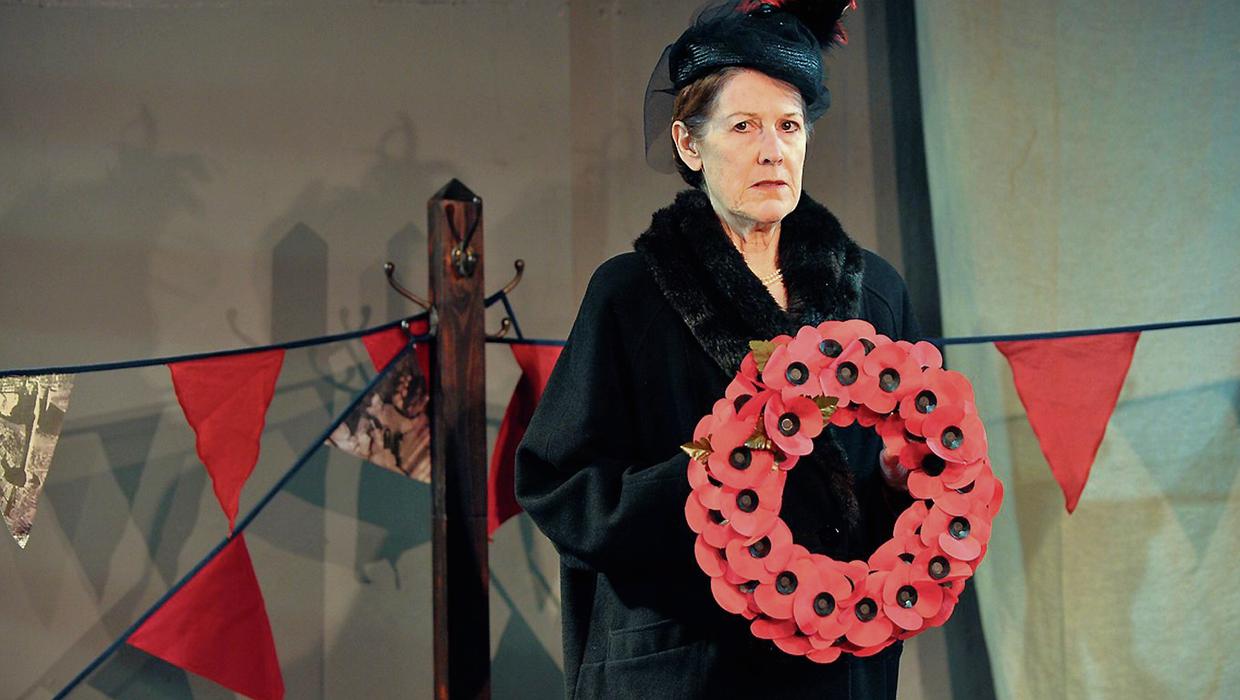
Blue by June Carryl is an intense two-hander, focusing on the aftermath of a police shooting.

Sully Boyd (John Colella), sorry, Sergeant Sully Boyd, as he is quick to remind us, is used to the Police Department’s internal discipline procedure. He’s had complaints levied against him before. Being interviewed by a fellow officer is just a formality, isn’t it? And anyway, this time the investigator is Rhonda Parker (Carryl), an old family friend. Sully’s known Rhonda since she was a kid; he was pals with her dad; heck, her husband used to be his partner, before he quit the force.

But something is different. For starters, this ‘mistake’ is much, much worse than the others. He’s shot and killed a Black motorist, and there’s no evidence that the guy did anything wrong. There is evidence, however, of Sully’s mounting racism, his conviction that something is being stolen from him, from all white men. As the aphorism goes, “When you’re accustomed to privilege, equality feels like oppression.”

Sully can reminisce about the good old days as much as he likes, but his true feelings have been brutally exposed, and another Black man has paid the price. African-American Rhonda isn’t about to let him off the hook…

Post-George Floyd, there has been a sea-change: first the groundswell of the Black Lives Matter movement and then pushback from those who think that, if Black lives matter, it means that white lives don’t. Blue is a blistering illustration of what this looks like in practice, of how a police force that is supposed to serve and protect us all equally is incapable of doing so, because its vision of ‘us’ is rooted in white supremacy.

It is to both Colella’s credit as an actor and Carryl’s as a writer that Sully does not come across as a two-dimensional baddy. He clearly sees himself as a decent guy, someone who’s put in his time serving his country, and just doesn’t understand why things have to change. He likes his position of privilege, even if he won’t acknowledge it.

However, it’s Carryl’s emotive performance that brings this important two-hander to its powerful and devastating conclusion.

4.6 stars

Susan SIngfield

Mrs Roosevelt Flies To London

23/08/22

Assembly, George Square, (Studio 5), Edinburgh

We’ve been devotees of Alison Skilbeck since 2017’s The Power Behind the Crone, so it’s a real pleasure to see her back at the Fringe after the uncertainty of the last couple of years. Mrs Roosevelt Flies to London is written and performed by Skilbeck, and directed by Lucy Skilbeck (no relation).

The title pretty much sums up what this monologue is about: the famous First Lady’s account of her dangerous journey to England’s capital in 1942. But the play opens twenty years after that, at the time of the Cuban Missile Crisis, with Eleanor fast approaching the end of her life and asking herself if the world is about to end in nuclear annihilation. Has all her hard work been for nothing?

Then we are whisked back down the years to her preparations for the trip, and we’re given insights into the various characters who surround her: the famous husband she loved and who secretly betrayed her; his controlling mother; the female journalist who became her best friend (and, as the gossips of the time suggested, her lover).

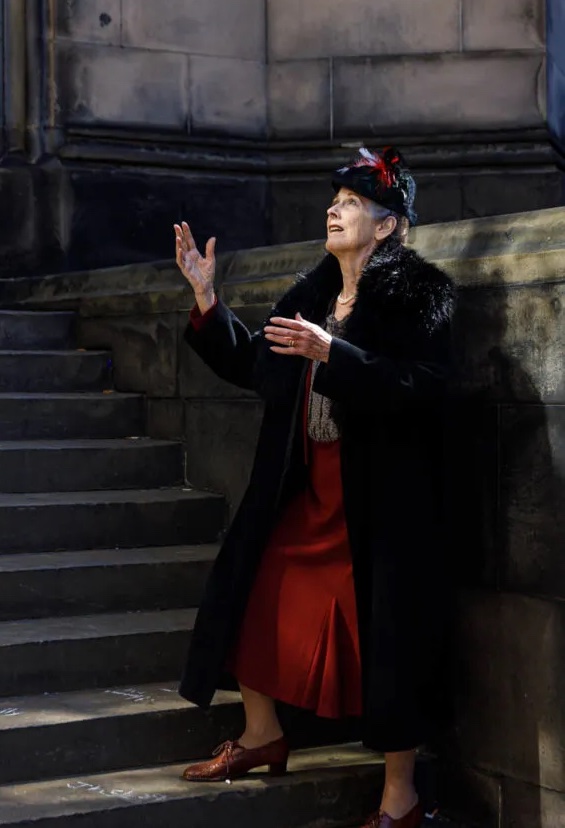
And then she’s off on her whirlwind tour, where she encounters an assortment of different characters, all of whom the actor inhabits with absolute authority, switching from one to the next as effortlessly as she puts on and takes off Eleanor’s famous feathered hat. Her brief impersonation of Churchill is an object lesson. Many actors would venture into the realms of caricature, but Skilbeck nails it perfectly. She’s an associate teacher at RADA, and it’s easy to see why.

I leave the show feeling I’ve had insights into Eleanor Roosevelt’s life that I wouldn’t have got from simply reading a biography about her. But it never feels like a history lesson and it’s gratifying to note that, even early on a Tuesday morning, Skilbeck is performing to a sold out audience.

4.5 stars

Philip Caveney
Les Dawson: Flying High

15/08/22

Assembly George Square (Gordon Aikman Theatre), Edinburgh

For many in the auditorium, this show is a trip down memory lane. For me, it’s more of an introduction. It’s not that I’m too young to remember Les Dawson – he was on TV when I was a child – but we never watched his show at home, although I saw bits of it at my grandparents’ house, or with my friends. As I walk along the Meadows, on my way to George Square, I try to recall what I know of him. There isn’t much: I’m stuck at gurning, gruff voice, fake bosoms and “my mother-in-law”.

No matter. Let’s see what light the inimitable (ha!) Jon Culshaw can shed on a man who was, for decades, a staple of popular entertainment.

This 480-seater theatre is packed. There’s clearly a lot of lingering affection for Dawson – and a lot of faith in Culshaw to deliver. The set looks promising: it’s lavish by Fringe standards, dominated by a large screen, designed to look like a 1980s TV. There’s also a piano (or, at least, the back of one; I can’t see from where I’m sitting if it’s real), and an aeroplane seat, from where much of the material is recounted.

The premise is simple: Dawson is on Concorde, flying to Manhattan to perform at a private party for a rich ex-pat from Leeds. He has agreed to write an autobiography and, until it’s done, Dawson can’t focus on the novel he really wants to write. So he decides to put his time in the air to good use, recounting the story of his life, from the terraced streets of Collyhurst to the Royal Variety Performance.

Culshaw’s affection for Dawson is evident in his performance, which focuses on the comic’s warmth and charm, as well as his natural humour. I hadn’t realised that Dawson harboured literary ambitions, but it makes sense: the jokes, I see now, are often lyrical flights of fancy, undercut by a crude punchline. He uses language in a way that shows he loves it, playing with words, creating startlingly beautiful images. It’s fascinating to see this burgeoning in his youth, as Culshaw shows us a young wannabe poet pushed into boxing by a well-meaning uncle who doesn’t understand. Who knew that Dawson was the Billy Elliot of his day?

I like Tim Whitnall’s script, with its fourth-wall breaking acknowledgement of theatricality, as Culshaw speaks from the screen in a range of guises: as John Humphreys, for example, or as Dawson’s cartoon ‘gossipy-women’ creations, Ada and Cissie. “You’re a narrative device,” Dawson tells Humphreys, “helping to set the time and place.”

This is more than just a good impression, although it’s certainly that too. Although this piece is basically a monologue, director Bob Golding ensures it never feels static, and the audience is audibly appreciative. I leave feeling fonder of Dawson than I ever expected to.

4 stars

Susan Singfield

Myra’s Story

26/08/21

Palais du Variete, Assembly, George Square Gardens, Edinburgh

Myra’s Story is a compelling play, and Fíonna Hewitt-Twamley is perfectly cast, delivering the ninety-minute monologue with wit and aplomb.

Myra’s story is a commonplace tragedy: she’s an alcoholic on the streets of Dublin, drinking to numb herself, to mask her problems. But, in the words of John Irving (and, later, Voice of the Beehive), ‘sorrow floats’ – and Myra soon discovers that she can’t drown her emotions in vodka. Instead, her troubles multiply, and she finds herself homeless, stumbling from hostel to park bench and back again. She’s the woman on the street from whom we avert our collective gaze, but here, in Brian Foster’s play, we are forced to look. To listen. To learn about the person behind the bottle. To see that she is just like us.

Hewitt-Twamley’s performance is flawless; she has a particular gift for eliciting empathy, as well as for delivering an impressive range of other voices. Foster’s writing is strong, and the story matters (it’s wonderful to see that the production has two Edinburgh homelessness charities as partners, namely Social Bite and Steps to Hope).

There’s only one problem here, and it’s the venue.

This is an intimate but popular play, which always poses a conundrum: it’s difficult to find a space that can accommodate a large audience as well as allowing the personal, confidential nature of the material to shine. Some compromise is needed. However, the Palais du Variete is not a compromise: it’s just wrong. It’s a huge brash place, gorgeously mirrored and with a large bar area, perfect for a late night variety show, and utterly wrong for a lunchtime monologue. There’s a party-vibe that seems at odds with the play; this is surely a piece that demands our full attention, but most people are clearly out for a laugh, knocking back pints of beer or glasses of wine, and there are loads of latecomers, trooping past us again and again, obscuring our view. Then there’s the endless trips to the bar and the toilet, causing further disruption, so we keep missing little moments and nuances.

I’m also irritated, I have to admit, by the fact that there are is no mention (beyond a pre-recorded line that everyone talks over) of the fact that masks are still a legal requirement here in Scotland, and that – apart from when people are actually drinking – they should be worn throughout the performance. Almost every other Fringe venue (including other Assembly sites) has someone on the door politely reminding people, and the vast majority comply. Here, it’s ignored, and the audience take their cue from that. It doesn’t feel particularly safe.

So there’s a disconnect between the quality of the play and the quality of the experience. The star rating below is for an excellent script, delivered with consummate skill. But I won’t be going back to the Palais du Variete.

4.5 stars

Susan Singfield