Apple TV

All of You

01/11/25

Apple TV

Simon (Brett Goldstein) and Laura (Imogen Poots) are best friends, who spend much of their time together, drinking and chatting shit in trendy London bars and nightclubs. From the moment we first encounter them, it’s pretty clear that they are just made to be a couple – but in the slightly futuristic world in which they dwell, the latest craze is a simple test that can identify the person who is your ‘soulmate.’ Simon is pretty cynical about the idea, but is prepared to pay the substantial sum for Laura to take the test and discover who her perfect match might be.

Then the story jumps forward several years. Laura is now married to Lukas (Steven Cree) – the affable and thoroughly likeable Scotsman who was identified in the selection process – and she’s pregnant with his child. But a complication has occurred and the only person handy to drive her to the local hospital is her old mate, Simon.

As the story continues in a series of flash forwards, it’s clear that at every stage, he’s still in thrall to Laura, ready to drop everything whenever she snaps her fingers – and, eventually, the inevitable consequence occurs…

All of You, co-written by Goldstein with director William Bridges, is a clever slice of minimalist cinema, one which trusts its audience to work out exactly what’s happening in each successive scene. Aside from the obvious flourishes – Goldstein’s beard varies in length from shot to shot – it also manages to convey more subtle changes in the characters as they grow older, amplifying those traits that are set in stone. It also features some fabulous locations around the UK.

Both Goldstein and Poots embody their roles with skill, hinting at the awful tragedy that lurks behind their jokey, smart-arse demeanours. From the word go, it’s clear that a reckoning is coming… but how and when will it occur?

If there’s a problem here, it’s that most viewers will (like me) think that one of the central duo is being a coward of the lowest order – I’ll leave it to you to decide which one that is – but it doesn’t make the eventual conclusion any less tragic. This Apple Original film didn’t qualify for a theatrical release but, for those with the appropriate subscription, it’s worth checking out. While it doesn’t exactly reinvent the wheel, it’s fresh enough to keep you hooked to the final frame.

3.6 stars

Philip Caveney
The Lost Bus

13/10/25

Apple TV+

A new release from Paul Greengrass is always worth further investigation, even though The Lost Bus, financed by Apple TV+, was only granted a fleeting cinematic release, so we’re obliged to catch it via streaming. Loosely based on a true story, it’s centred around the 2018 Camp Fire – a strangely innocuous name for what was actually the deadliest fire in Californian history, which claimed the lives of 84 people and destroyed hundreds of homes.

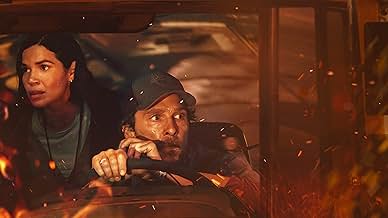
Matthew McConaughey, looking like a walking personification of the word ‘grizzled’, plays Kevin McKay, a down-on-his-luck school bus driver, based in the ill-named town of Paradise. Struggling to look after his invalid mother, separated from his wife and failing to communicate with his teenage son, Shaun (Danny McCarthy), Kevin has acquired something of a bad reputation. He is the driver who’s always running late, who often fails to fill out in his paperwork on time, and who’s constantly at odds with his dispatcher, Ruby (Ashlee Atkinson).

But when a deadly wildfire erupts in the California hills and high winds disperse the flames across a wide area, a class of twenty-two children and their teacher, Mary (America Ferrara), find themselves stranded at their elementary school. Ruby puts out a desperate call for someone to go to their aid – and the only person available to collect them is Kevin.

Sensing an opportunity for redemption, he heads for the school and picks up his passengers. But getting them to safety is no easy matter…

Greengrass sets out his stall from the opening scenes, presenting the fire’s inception. An electrical cable, pulled from a high tower by the rising wind, ignites the surrounding brush. From that point onwards, the blaze is presented as a hungry predator, rushing back and forth across the landscape, searching out its next target. It’s an inspired approach to the subject, one that inspires dread.

Just one day after watching the terrifying A House of Dynamite, I find myself once again plunged headlong into the realms of Stressville. But this being a true story, I can at least have the reassurance that there’s going to a happy ending… right?

Greengrass, who co-wrote the screenplay with Brad Inglesby, certainly keeps me guessing for a lot longer than is comfortable. His expert handling of the wildfire scenes, fuelled by Pål Ulvik Rokseth’s immersive cinematography, makes for exhilarating viewing as Kevin steers his rickety bus through what increasingly resembles the seventh circle of hell. (Note: no children were harmed in the making of this film. Honestly.)

McConaughey and Ferrara make an interesting chalk-and-cheese double act and, while some of the kids are allowed to be cute, they are never too shmaltzy. My only niggle is with the dialogue from the scenes featuring the fire team who are trying to handle the disaster, which veers uncomfortably close to exposition – but that’s a nitpick. The steadily mounting chaos keeps me on tenterhooks for the film’s entire two-hour running time.

All in all, this is an assured piece of action filmmaking, which highlights many of Greengrass’s distinctive hallmarks. I just wish I’d had an opportunity to view it on the big screen.

4.2 stars

Philip Caveney

F1: The Movie

25/06/25

Cineworld, Edinburgh

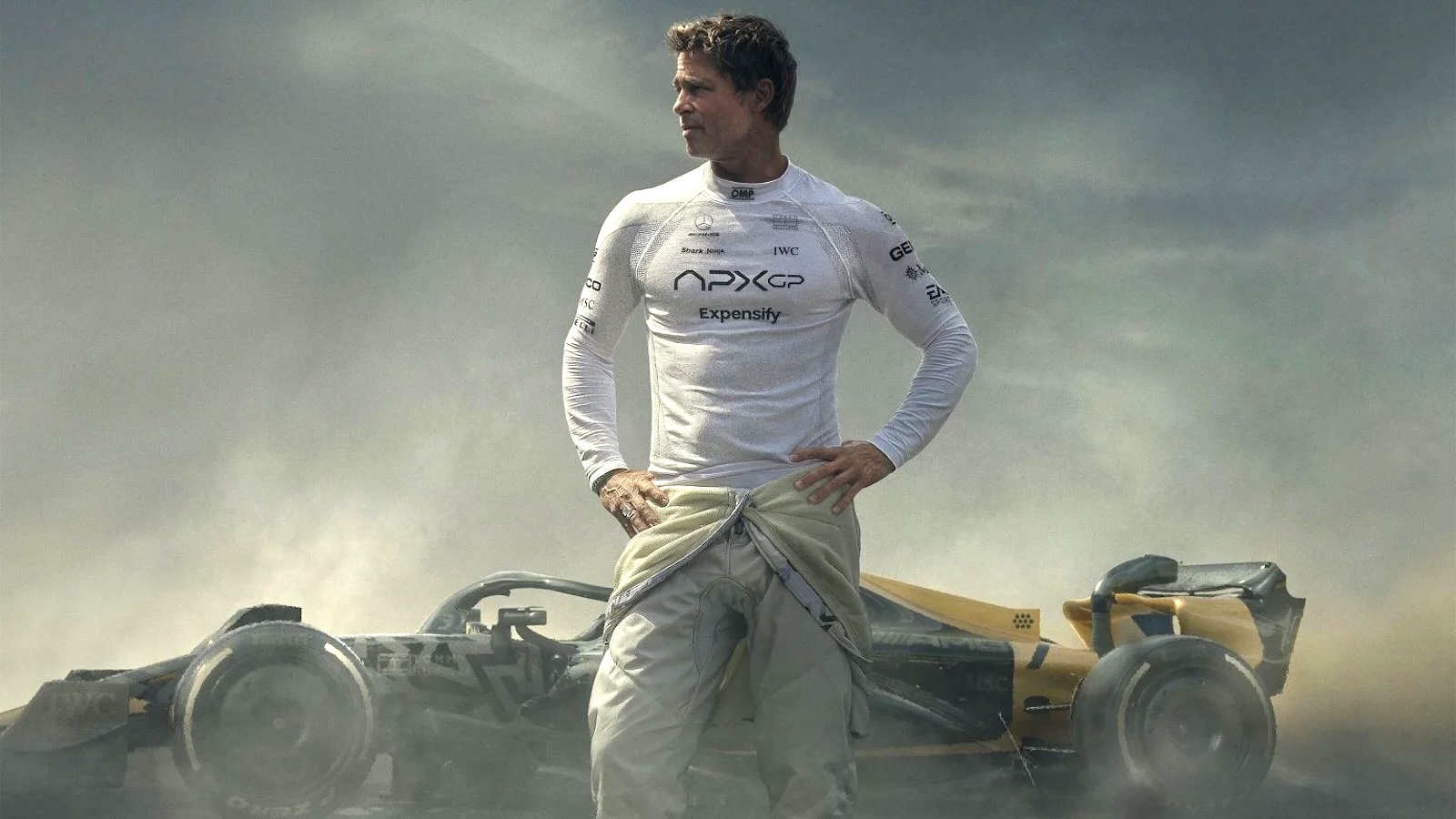
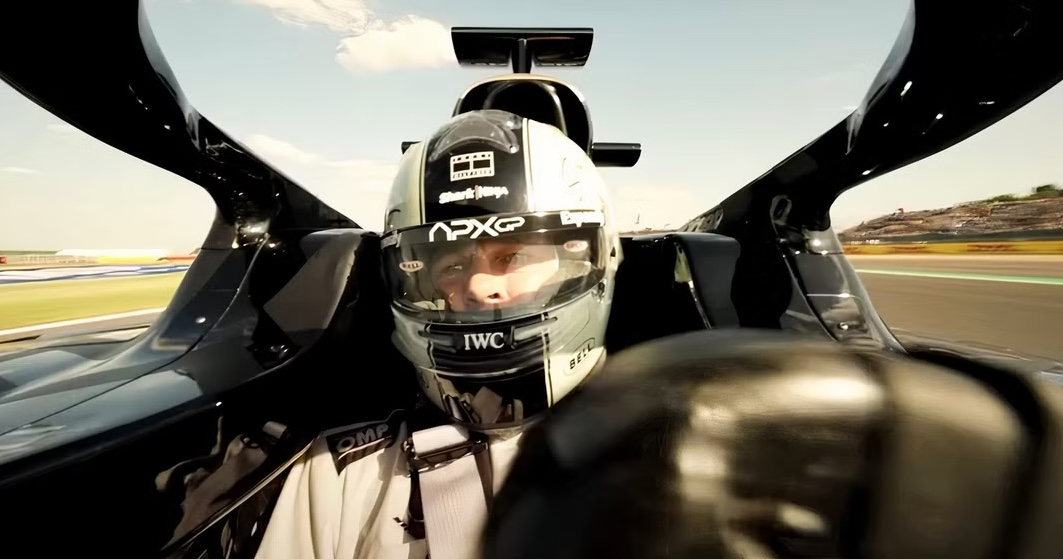
Capturing the appeal of Formula 1 in a feature film has eluded directors since the 1950s. This Apple production, helmed by Joseph Kosinski, has had a fairly troubled journey to its cinematic release and arrives boasting a rumoured production budget in the region of 300 million dollars – which Groucho Marx would doubtless have dubbed ‘one hell of a region.’ As somebody who cares not one jot for Formula 1, I had expected not to like this quite as much as I do. But Kosinski, pretty much as he did in Top Gun: Maverick, straps the viewer into the driving seat and stamps a virtual foot down hard on the accelerator. For the most part, it works.

Sonny Hayes (Brad Pitt) is a former F1 driver, who, after a near-fatal crash back in his youth, has lowered his sights somewhat. When we first meet him, he’s gleefully driving a jalopy around a less sophisticated track but he’s clearly learned much over the years and is easily picking up some decent prizes. Out of the blue, he’s approached by his old racing partner, Ruben (Javier Bardem), who offers him second seat on the APXGP Formula 1 team, he now runs, which is currently going through a bad patch. Ruben thinks that Sonny’s vast experience may be just the thing to help his team up the scoreboard.

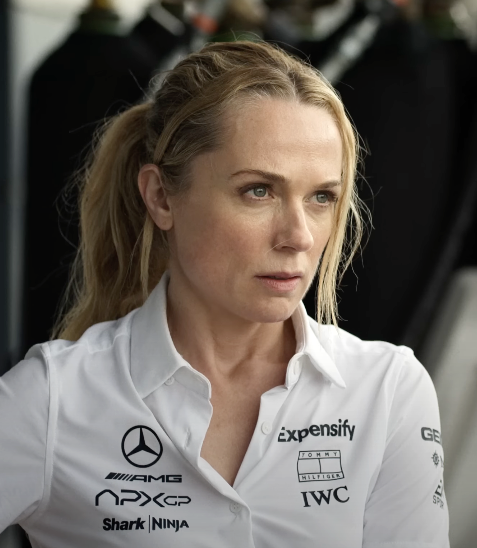
Sonny is initially reluctant to return to the fray, but eventually the offer of a first class plane ticket to London lures him to Silverstone. He’s immediately met with derision by the team’s young lead driver, Joshua (Damson Idris), and with reluctant interest by the team’s resident car designer, Kate (Kerry Condon). But it’s clear that over the ensuing season of high-stakes racing, Sonny’s relaxed and easygoing attitude is eventually going to win over all opposition…

With a running time of more than two and a half hours, F1: the Movie is probably going to find the bulk of its audience on streaming, but there’s no denying how handsome the film looks with cars thundering around the track to the raunchy backing of classic cuts from the likes of Led Zeppelin and Queen. One of the producers is Lewis Hamilton (who even I’ve heard of) and it’s clear that there are cameos scattered throughout proceedings from people I think I’m supposed to recognise. There’s also a little too much here for a rube like me about the various tricks of the trade that Sonny uses to clip seconds off each circuit. Characters debate the advantages of hard tyres versus soft tyres and various additional doo-hingies, leaving me none the wiser, but I’ve no doubt that fans of the sport will be nodding along in approval.

Pitt makes a great job of the lead role, giving us a character who’s driven by his inner demons but nonetheless remains eminently likeable. While his younger teammates are half killing themselves with their exercise regimes, he seems happy to throw a tennis ball around and head out for a leisurely jog. Condon is terrific as the straight-talking Kate, a perfect foil for Hayes’ cynical, hard-bitten one-liners. But I would like to see the excellent Kim Bodnia given more to do as the team’s principal, Kaspar, than just sit around, frowning furiously at a console.

Everything builds to a final showdown at the Yas Marina Circuit in Abu Dhabi, with the very future of the team hanging in the balance. Do they seriously think they’ve a chance of winning?

This makes for decent entertainment; indeed, one sequence, depicting a terrifying crash, actually has me gasping out loud. Aficionados will doubtless have different, more informed criticisms of the film, but for me, this is an enjoyable way to spend a couple of hours. Whether F1 will ever earn back that prodigious production budget remains to be seen.

3.8 stars

Philip Caveney

Blitz

09/11/24

Cameo Cinema, Edinburgh

Steve McQueen is always a fascinating filmmaker and I love the fact that I never quite know what to expect from him. Blitz is an Apple Original, destined to start streaming soon, but I would urge anyone interested to seek out an independent cinema where it’s showing, because this is a film that deserves to be seen on the big screen. As the name suggests, it’s set in 1940 as London undergoes the Blitzkreig, bombed on an almost nightly basis by the Luftwaffe.

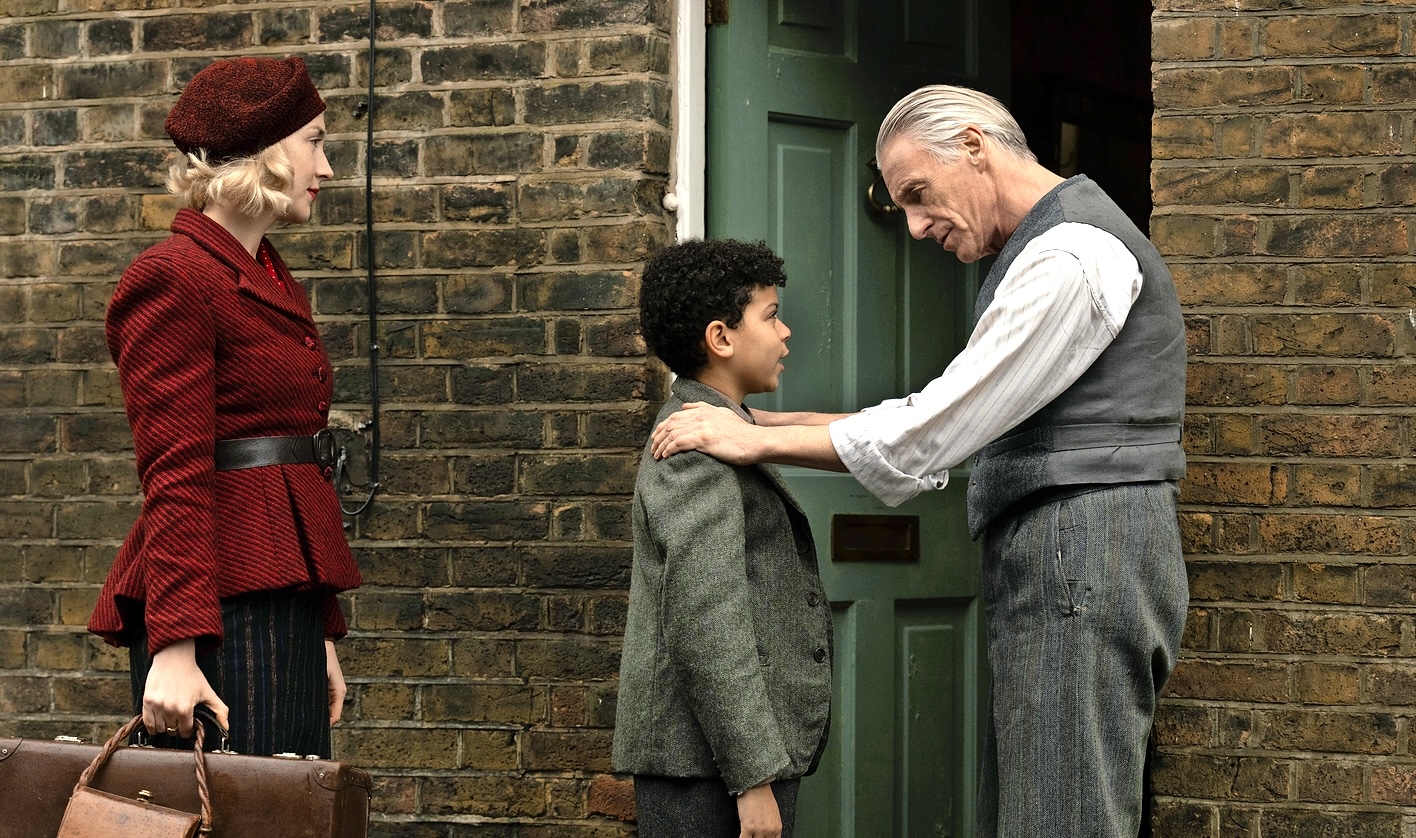
The story is centred around George (Elliott Heffernan), a young mixed-race boy, who lives with his mum, Rita (Saoirse Ronan), and his grandad, Gerald (Paul Weller), in a little terraced house in the city. George has never met his father, who we learn (in flashback) has been deported back to Grenada for entirely nefarious reasons. As the bombing becomes more intense, the government’s plan for the mass evacuation of children from the city is announced. George is reluctant to leave his mum but, together with a bunch of other youngsters, he’s put aboard a train heading for the safety of the countryside.

But George has other plans and, at his first opportunity, he jumps off the train and starts to make his way back along the track in the direction of home…

What ensues repeatedly puts me in mind of a YA adventure as George encounters a whole selection of characters on his way home: kindly Black air-raid warden, Ife (Benjamin Clémentine); callous Fagin-esque thieves, Albert (Stephen Graham) and Beryl (Kathy Burke); and a trio of friendly young boys who keep challenging George to do ever more reckless things. His odyssey is intercut with scenes of what’s happening to Rita: working in a munitions factory; heading out on the town with her friends, Doris (Erin Kellyman) and Tilda (Hayley Squires); even performing a song for the BBC when a live series visits the factory. Episodic it most certainly is but, unlike most of the Sunday evening dramas it might be compared to, the stakes here are perilously high and happy endings are by no means assured. Whenever the story is in any danger of heading towards sentimentality, McQueen (who also wrote the screenplay) finds a way to snatch it back and amp up the jeopardy, never allowing us to forget that these are dangerous, unpredictable times – and not everybody is destined to make it to the end of the line.

The production values are first-class throughout, the depictions of the war-torn city sometimes awe-inspiring, occasionally verging on high art. Blitz also offers a fresh insight into the era, the war seen from the point of view of a boy who suffers from racial slurs on a daily basis. A scene where George wanders through a deserted shopping arcade looking at an exhibition depicting the subjugation of slaves is particularly affecting; so too, an extended sequence at the Café de Paris which depicts a Black orchestra playing for the entertainment of exclusively white, upper-class customers – a frantic, sexually-charged show which is destined to be interrupted in heart-stopping fashion.

Ronan, as ever, portrays her character with absolute assurance and even demonstrates a decent singing voice but it’s Heffernan who is handed the biggest challenge here, carrying this powerful and affecting film with absolute authority. I’ve seen some decidedly lukewarm advance reviews for this, and am at a loss to understand why some critics have failed to appreciate its evident charms. It’s epic filmmaking of the highest order. As I said, it will be on your televisions soon, but it won’t look as awesome as it undoubtedly does on a cinema screen.

4.6 stars

Philip Caveney

Still: A Michael J Fox Movie

20/05/23

Apple TV

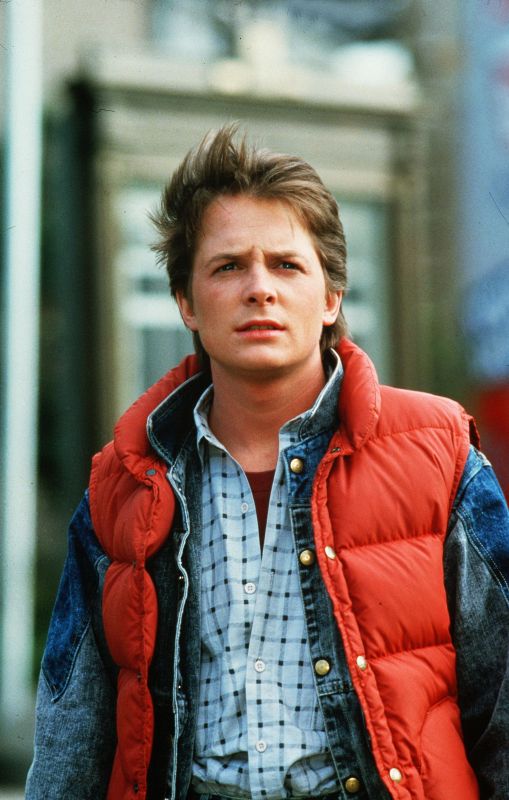
The name Michael J Fox is synonymous with three things: Marty McFly; a teenage, basketball-playing werewolf; and Parkinson’s disease. Mega-famous in the 1980s for smash hit films Back to the Future and Teen Wolf, Fox is just as well-known these days for his candid communications about living with a degenerative brain disorder. This inventive documentary, by Davis Guggenheim, is revelatory – about Fox, as well as about Parkinson’s.

Fox has always exuded on-screen warmth. He’s the epitome of likeable: wry, self-deprecating and funny. Whatever role I’ve seen him in, he brings these qualities to bear. Watching Still, it soon becomes apparent that that’s just who he is, which isn’t to denigrate his acting ability: he’s played a range of types – but always with a hint of sweetness shining through.

Guggenheim’s biopic is thoughtful and meandering, cutting between past and present, making clever use of film clips to illustrate key details of Fox’s life and character. From tiny live-wire working-class Canadian kid to tiny live-wire Hollywood star, we see how Fox’s kinetic energy (and general niceness) propelled him to success. It also enables him to live contentedly: unusually for someone in his career, he’s sustained a long and happy marriage and is clearly close to his four kids. Fox’s wife, Tracy Pollan, is an actor too (they met on hit TV show Family Ties) and the pair seem truly devoted. It’s lovely to see.

In some ways, the film is harrowing, because it doesn’t pull any punches about the realities of living with Parkinson’s. Fox falls over a lot and hurts himself when he lands: he’s broken all the bones around his left eye. He shakes uncontrollably, all the time; he struggles to walk. He relies on medication, very aware of when it’s wearing off and he needs his next pill. He has a lot of physio, which helps to keep him mobile. Presumably Parkinson’s sufferers without his kind of money can’t access quite so much one-to-one therapy; even with it, things are tough.

But in other ways, the film is uplifting, because – while it steadfastly avoids the ‘disabled person as inspiration’ trope – it also shows how the condition doesn’t really change the man. Michael is still very much Michael, with the same twinkle, the same humour, the same candour.

It’s fascinating to listen to him describe the tricks he employed in the early days of his diagnosis (aged only 29), when he was desperate to hide his tremors from the world. Once you know what he’s doing, footage from Spin City, the TV show he was making back then, takes on a whole new significance.

Still is a weirdly feelgood film – a testimony to a life well-lived.

4.6 stars

Susan Singfield

Cherry

16/03/21

Apple TV

The Russo Brothers – Anthony and Joe – are among the most successful filmmakers in history. Avengers: Endgame was, until recently, the most watched film ever (it was only a judicious re-release of Avatar that put that particular trophy back into James Cameron’s hands and that may be a temporary arrangement). It was always interesting to speculate about where the Russos would go next.

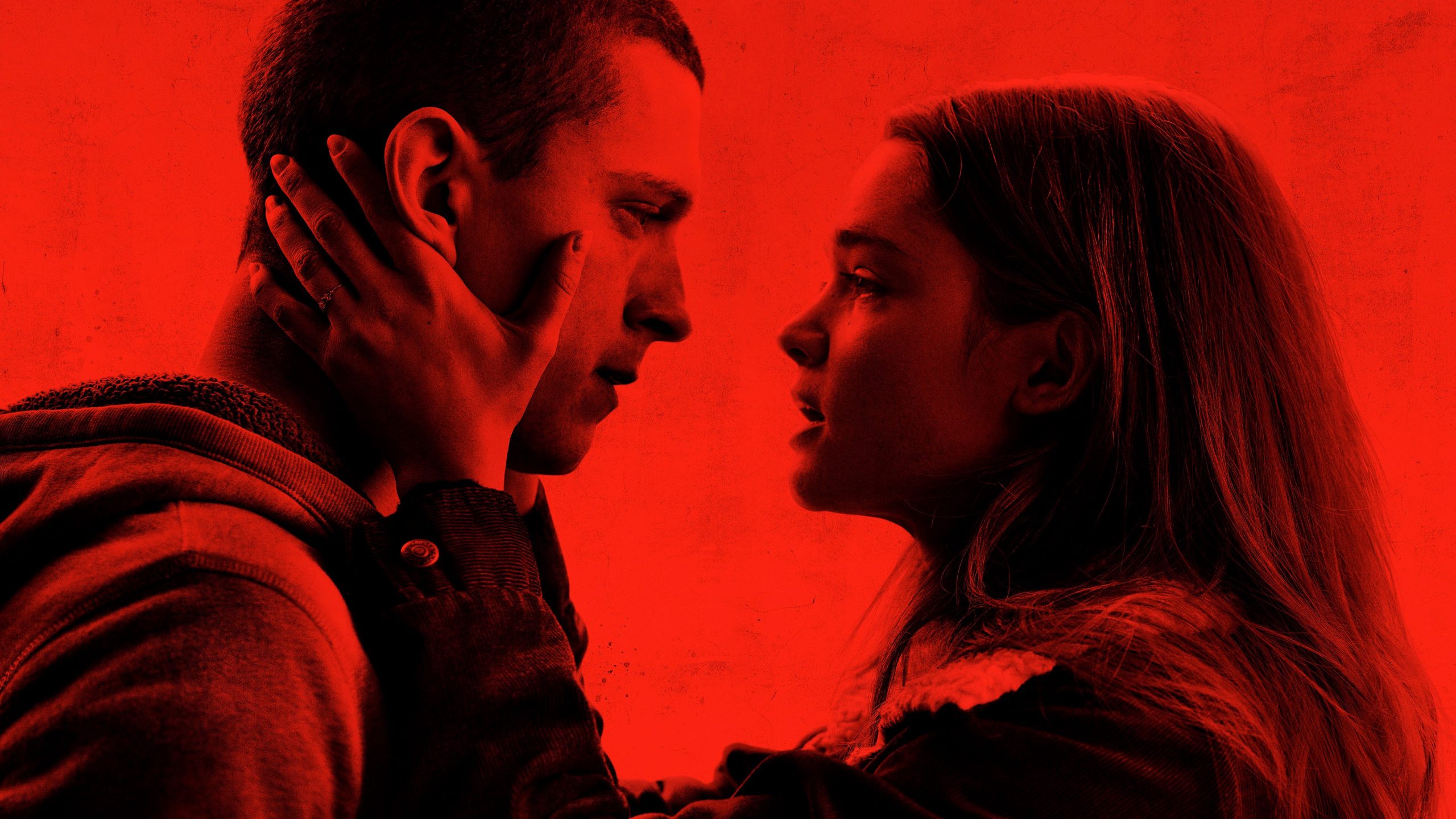
On the face of it, this Apple Original film seems a surprising move for them. Adapted from Nico Walker’s semi-autobiographical novel, it mostly concentrates on the life on just one man. Even though he’s played by Spider-Man’s Tom Holland, he’s a pretty ordinary Joe, not given to wandering about in brightly coloured spandex or indulging in extended punch-ups with supervillains. This is, ostensibly, an intimate story – and yet, the Russo’s bombastic style somehow gives it an epic scope, an almost operatic quality, which is enhanced by Henry Jackman’s stirring score.

When we first meet Cherry, he’s in the process of robbing a bank (not his first time) and is chatting amiably to the audience as he goes about it, a daring conceit that really pays off. He’s also about to make a decision that will change his life irrevocably.

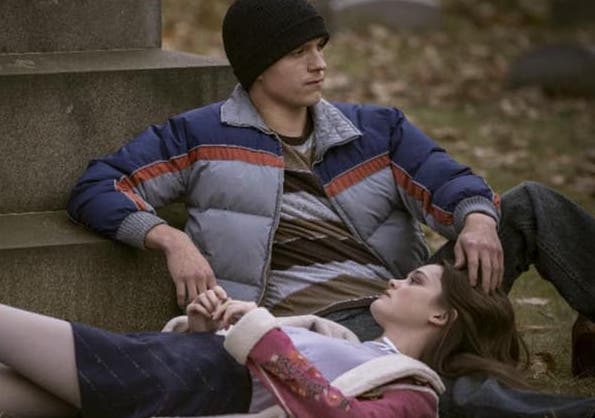
It’s at this point that the film whisks us way back to his fresh-faced teenage years, where, in the first of a series of separate episodes, he encounters Emily (Ciara Bravo), the young woman who will become his significant other. A romance duly ensues but, after Emily announces she wants to move to Montreal, Cherry rashly enlists in the army, realising too late that his partner has changed her mind. and he cannot change his. Soon afterwards, he’s plunged headlong into military training and, subsequently, armed combat. The film’s initial brash, cheerful tone veers into darker waters and keeps on going, full speed ahead.

Once out of the armed forces, and suffering from undiagnosed PTSD, Cherry seeks solace in drugs. At first he’s merely overindulging in Xanax and OxyContin, but then he and Emily start the long descent into hardline heroin addiction, in a series of no-holds-barred sequences that make Trainspotting look like a nice day at the funfair. Yes, this is unremittingly bleak subject matter but the story never relaxes its stranglehold on my attention. I find myself compelled as much as I’m appalled and, occasionally, I’m dazzled by unexpected bursts of brilliance.

The director’s final tour de force is the unfolding of fourteen years of narrative in one mesmerising tracking shot, accompanied by Puccini’s Vissi D’Arte. It’s an audacious move and really shouldn’t work, but somehow it’s pulled off with a flourish. Hats off to Tom Holland, who manages to give his all to a role that sees him age from boy to man with absolute conviction.

This really won’t be for everyone – the film never hesitates to show the depths that can be plumbed when drug addiction holds sway. Others have accused the Russo’s of employing style over content, but I disagree. Cherry’s story must be an all too familiar one for so many young soldiers, put through the mincer of warfare and then left to make their own way back into everyday existence. With its epic feel, Cherry makes that story both heroic and tragic in equal measure.

4.6 stars

Philip Caveney

The Banker

12/02/21

Apple TV

On the face of it, a ‘based on a true story’ film about two guys who decide to set themselves up as landlords sounds like it might make for fairly dull viewing.

But, when I tell you that the true story is set in America in the 1950s and 60s – and that the two guys in question are African Americans – you might begin to appreciate that there’s more to it than initially meets the eye.

In this Apple original, finally available after some protracted – and rather unpleasant – legal wrangles, Anthony Mackie stars as Bernard Garrett, a maths prodigy who, since childhood, has hankered after a career in real estate. He’s well aware, however, that the only way a man of his colour is likely to set foot in the swanky properties he longs to own, is if he’s wearing a janitor’s overalls. Undeterred, he sets to with a will and gradually begins to amass a portfolio. When he spots an opportunity to acquire the buildings where one of Los Angeles’ biggest banks is situated, he approaches wealthy club owner Joe Morris (Samuel L. Jackson) to help raise the necessary finance.

Joe himself owns quite a few properties around the city but has learned from experience that, even in liberal LA, nobody is going to allow two black guys to get away with something as audacious as openly owning such fancy real estate. So they hit on a plan: hiring Bernard’s employee and friend, the handsome, hapless and – crucially – white Matt Steiner (Nicholas Hoult) to be the visible ‘face’ of the enterprise. After some intensive coaching – which includes memorising complicated figures and (really important this) learning to play golf – the ruse works like a dream and soon Bernard and Joe (and Matt) are doing very nicely, thank you.

But then Bernard pays a visit to his father in his Texas hometown, and notices a nice little neighbourhood bank, all ready for the taking. Why not just buy the place? Then he can offer loans to the many black families in the area that can’t currently enjoy such a luxury. Joe is against the notion from the start, but Bernard manages to persuade him. Once again, they’ll put Matt in there as a figurehead. It worked before, right? But all three men are to discover that what works in Los Angeles just doesn’t fly in Texas…

The shameful truths behind this story are impossible to ignore. Certainly, for that first transaction, Bernard and Joe’s only crime is that their skin is the wrong colour. Think about that for a moment. Even in the supposedly progressive 1960s, two black men could not be seen to own expensive property. That is, although they could legally own it, in truth they couldn’t do so openly, because if it ever came to light, hundreds of horrified customers would close their accounts and run screaming in the direction of another bank. Kind of puts the great American Dream into sobering perspective, doesn’t it?

If I’ve made the film sound po-faced, it’s not. The screenplay, co-written by director George Nolfi, successfully mines what vestiges of humour there are in the situation, particularly in the early stretches when it all seems like a bit of a lark. Jackson’s caustic one-liners are particularly good. Of course, the treatment that Bernard and Joe subsequently receive at the hands of the American judicial system is anything but funny, though hearing that the case eventually helped to change the law does provide some consolation.

So if you’re ever going to watch a movie about two would-be landlords, this is definitely the one to go for.

4.2 stars

Philip Caveney
Memories of Murder

11/02/21

Apple TV

2020 will be remembered for many things and, alas, very few of them good ones – but it was the year that Bong Joon-Ho’s extraordinary film Parasite conquered the Oscars, carving its way through the opposition with apparent ease. For the director, it was the culmination of a varied career in cinema. Of course, he had already acquired many fans along the way, myself included. His 2016 monster movie, The Host is one of the best examples of an often underwhelming genre, while his 2013 film, Snowpiercer, though virtually annihilated by studio intervention, and never given a theatrical release, was subsequently adapted into a very successful Netflix series.

So the chance to revisit the director’s second feature, 2003’s Memories of Murder, is an opportunity not to be missed, especially when it comes with a dazzling 4K restoration.

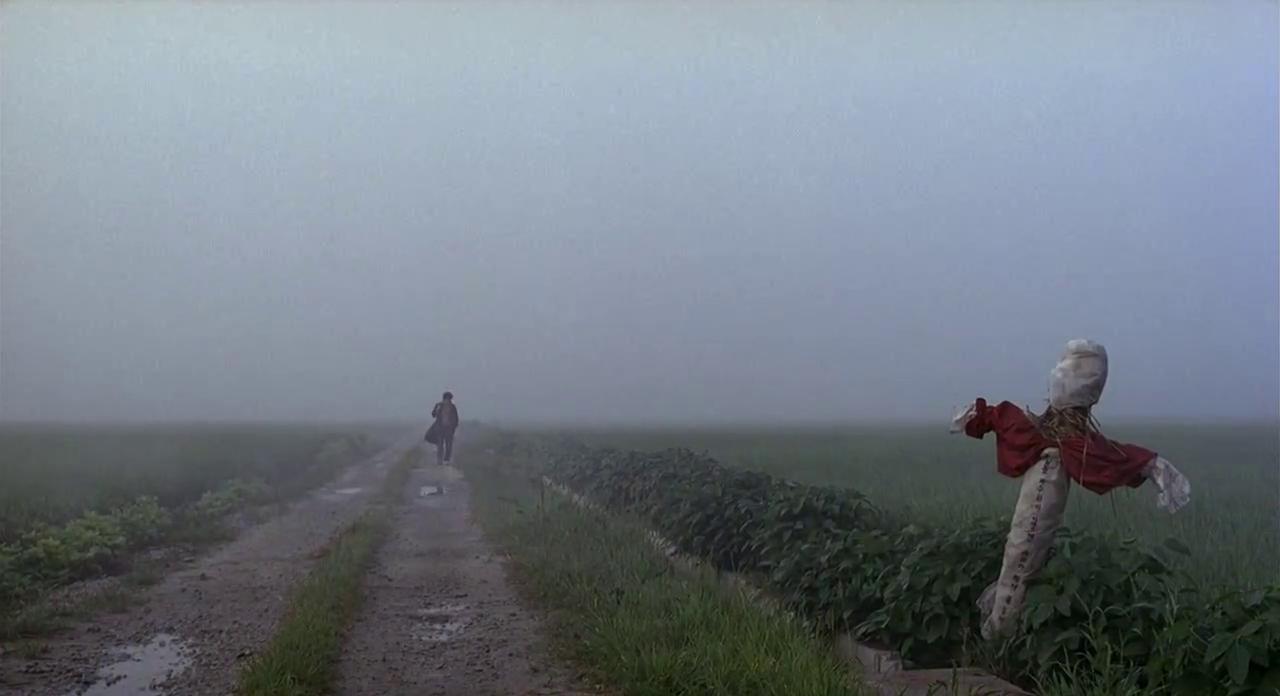
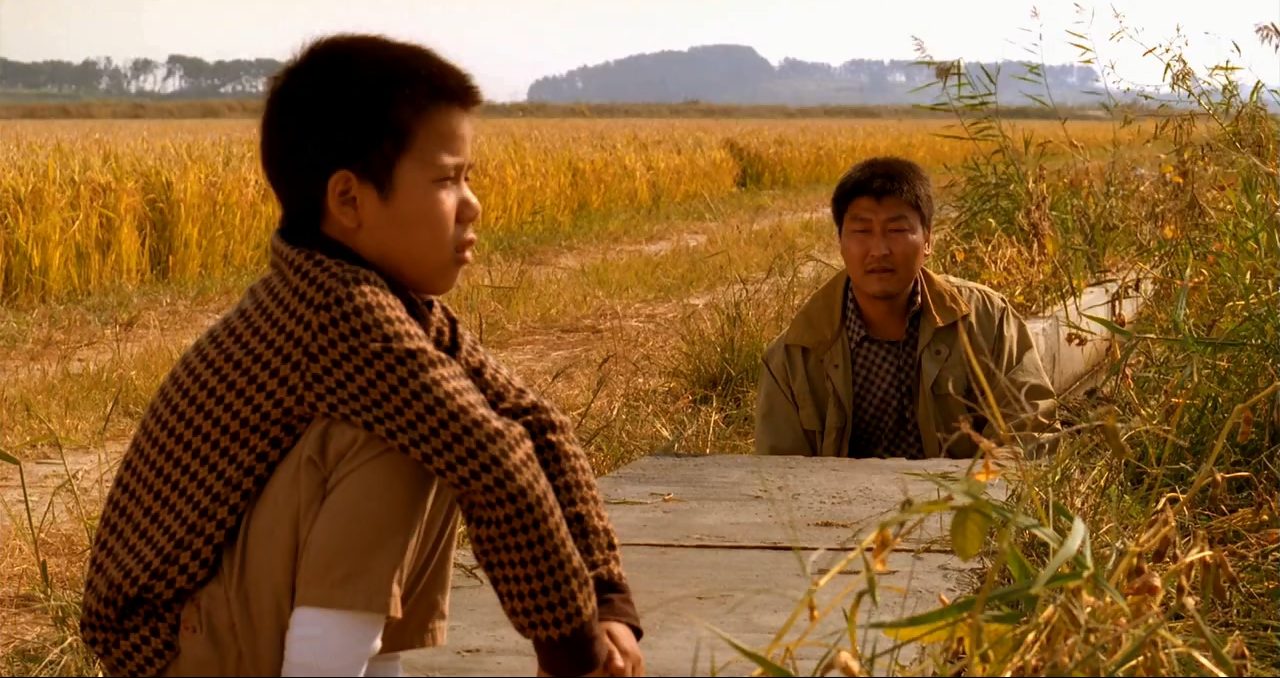
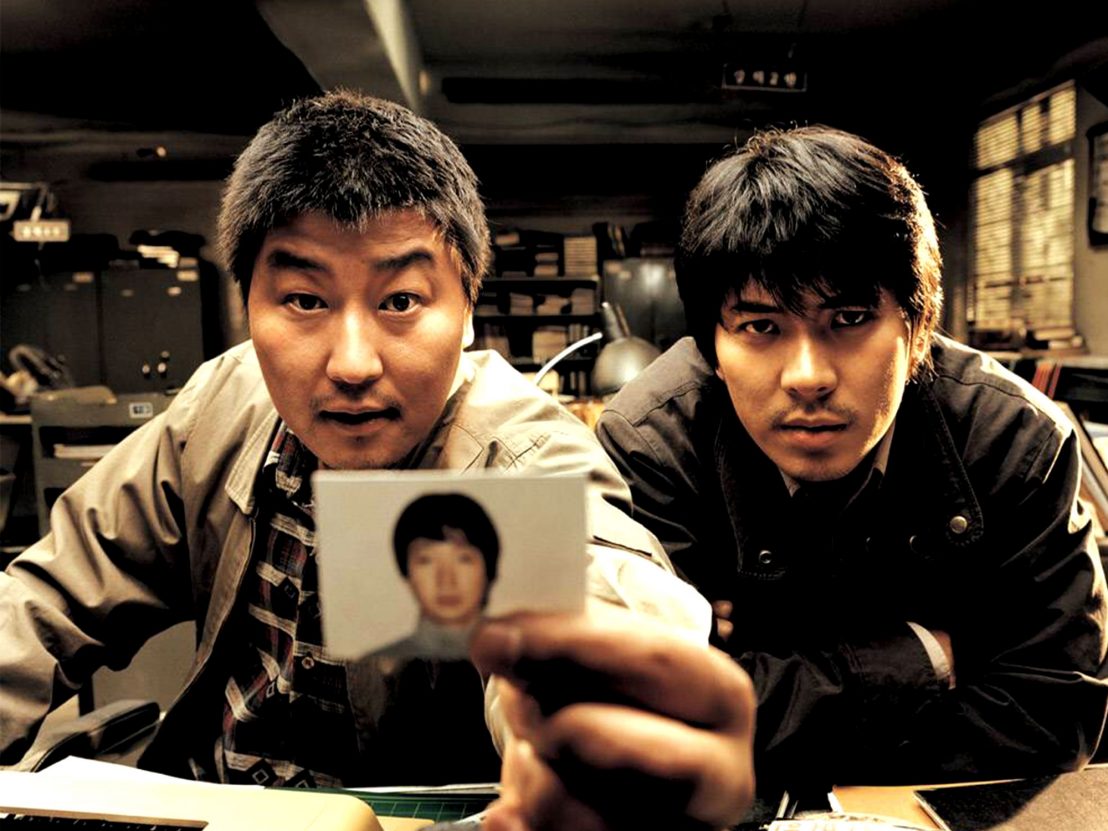
Inspired by South Korea’s first recorded serial killer case and set in the 1980s, the film depicts how a police force in a remote province struggles to come to terms with a series of baffling murders. Detective Park Doo-man (Kang-ho Song) is a rough-and-ready cop, convinced that he can identify a guilty suspect simply by looking at them, and ever ready to beat out a confession, aided by his even more quick-fisted assistant, Cho Yong-koo (Roe-ha Kim). But when Detective Seo Tae-yoon (Kim Sang-kyung) arrives from Seoul, he applies a more sophisticated approach to the investigation, quickly establishing that the department’s current chief suspect could never have committed the crime.

The two detectives find themselves at loggerheads and, as each new lead takes them down a series of bewildering rabbit holes, it’s anybody’s guess which of their approaches will prove most successful…

Memories of Murder manages to take a well-worn cinematic path and reinvent it as it goes. It’s hard to think of a Western serial killer film that so audaciously interweaves slapstick comedy throughout a very serious storyline, but it’s pulled off here with apparent ease. An early sequence, where the poorly-equipped cops flail oafishly around a crime scene, is perfectly judged – and it’s just the start, as Park Doo-man blunders headlong through a series of disasters, always managing to jump to the wrong conclusion, always missing the evidence that dangles right in front of his – supposedly magical – gaze. We really ought to hate him, but Kang-ho Sang somehow makes him immensely likeable – the same trick he managed so effectively in Parasite.

Meanwhile, his supposedly more sophisticated rival, Seo Tae-yoon, is driven by his own internal demons and, when he finally fixes on a possible suspect, finds himself in serious danger of resorting to the kind of approach he so despises. It’s at the film’s conclusion where the story really delivers its most powerful gut-punch, with a final shot that lingers in the memory.

This is far above the usual crime procedural. And, lest I give the impression that it’s a film that was unfairly ignored on first release, don’t be fooled. Memories of Murder won 31 awards at film festivals around Asia.

It’s simply that it took Oscar quite some time to catch on to a good thing.

4.4 stars

Philip Caveney
Elf

11/12/2020

Apple TV

It’s Christmas… or, as Noddy Holder would put it, ‘It’s Christmaaaaaaas!’

It is a fact universally acknowledged that lots of people have favourite Yuletide movies, ones they return to again and again in search of that warm, fuzzy feeling… and it’s also true to say, that there are many such films that I just haven’t got around to watching yet. But I’m gradually ticking the boxes.

Last year, for instance, I finally caught up with The Muppet Christmas Carol and was very glad that I did, because it turned out to be an utter delight from start to finish. True, I got to see it in an actual cinema, but we’ll let that one go, before I start sobbing uncontrollably.

For years now, friends – people whose judgement I generally trust – have repeatedly urged me to watch Elf, assuring me that it belongs in the same category as TMCC and, for the same number of years, I’ve been stolidly ignoring their advice. Maybe it’s the Scrooge in me. But in 2020, locked down and listless as I am, I no longer have a credible excuse not to catch up with it.

And, yes, my friends were right. It’s easy to see why this film remains a perennial favourite. It’s the story of Buddy (Will Ferrell), who, as an orphaned baby, inadvertently winds up aboard Santa’s sleigh and finds himself whisked off to the North Pole. He grows up alongside Santa’s elves, under the tender care of Papa Elf (Bob Newhart), who acts as narrator for the tale. Of course, being human, Buddy soon towers above his workmates and begins to realise that he’s not like the others. (Buddy clearly isn’t the brightest – I can’t help wondering, what took him so long?)

When he finally overhears the truth about his origins, he’s understandably dismayed. Where has he come from? Where are his roots? Santa decides to send him back to New York city in search of his real father, hard-bitten book publisher, Walter (James Caan).

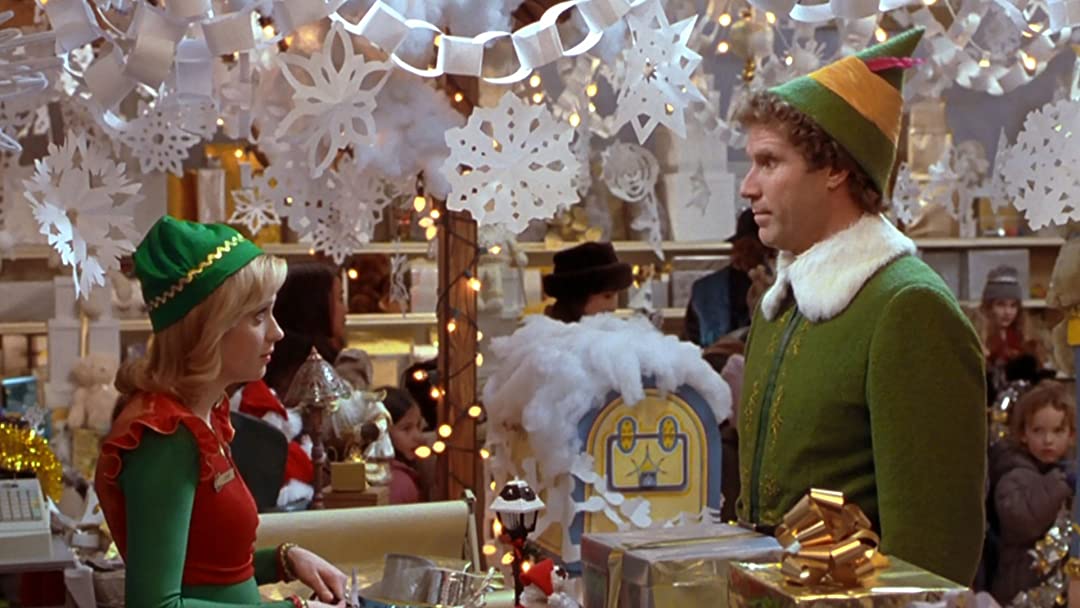
It’s probably pointless to list the plot in any more detail, since the film came out in 2003 and I’m way behind the wave on this one. It’s interesting to note, however, that the film is directed by Jon Favreau, long before he became the influential actor/director he is today, and that most of the effects utilised here are of the low budget, ‘forced perspective’ kind: simple, but effective. What makes Elf a winner, though, is the brilliant idea that lies at its core. Buddy is an innocent, a naive man-child who’s never been given the opportunity to grow up. His reactions to everything that happens to him in the big city are therefore priceless, genuinely disarming and often laugh-out-loud funny. Ferrell has, of course, enjoyed a varied career in the years since this film, but I doubt he’s ever been more appealing than he is here. Just the sight of him ambling around in that costume is enough to make a viewer smile.

What else do we have? Zooey Deschanel as Jovie, who works as a department store elf and whom Buddy falls for at first sight. Peter Dinklage plays hotshot kids’ author, Miles Finch… and, of course, Favreau can’t resist giving himself a cameo as Walter’s doctor. You want fuzzy feelgood? It’s here in abundance.

So, I admit it. I should have watched this sooner. Anybody who has recommendations for other Christmas movies I might not have seen, please feel free to let me know about them.

There are other boxes yet to be ticked.

4.2 stars

Philip Caveney
Greyhound

12/11/20

Apple TV

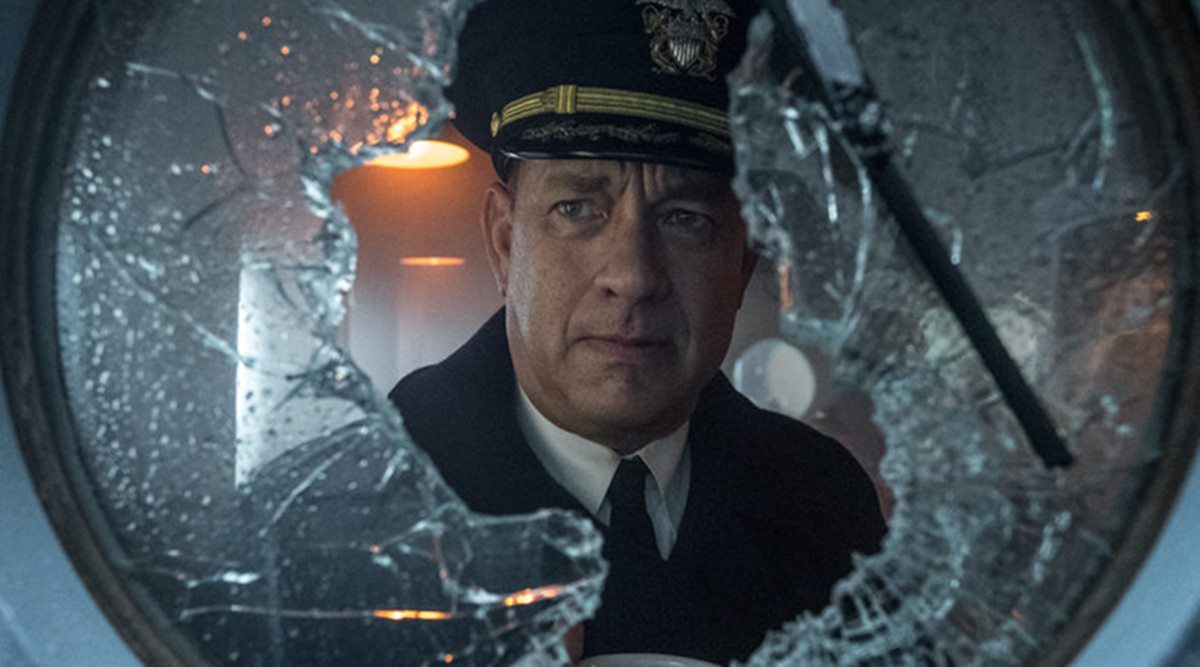
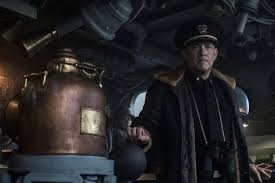
Not only does Tom Hanks star in this Apple Original as the harassed captain of a second World War American destroyer, he also wrote the screenplay, basing it on C. S. Forester’s classic novel, The Good Shepherd.

Hanks plays Captain Ernest Krause, charged with the monumental task of leading a huge supply convoy across the Atlantic, carrying much-needed provisions for the allied war effort. Krause knows that every man on the ship is looking to him for leadership and he’s also painfully aware that, beneath those restless waves, German U boats are waiting in ambush with the aim of sinking as many ships as possible. The pressure is palpable.

It’s evident from the start that formidable amounts of money have been lavished on this production. The depictions of life aboard ship are queasily authentic and there’s no denying the steadily mounting suspense that’s generated whenever a torpedo is launched in the general direction of Krause’s ship, The Greyhound. The shock and awe of naval warfare is brilliantly replicated, too, but that dogged dedication to authenticity makes everything a bit too technical for comfort, with Krause’s every directive being repeated ad infinitum by various members of his crew.

If there’s a major failing here, it stems from the fact that we learn precious little about any of the characters in the story. All we really know about Krause is that he prays every morning and that he never has time to eat. The excellent Stephen Graham, second-billed here as the ship’s navigator, has little opportunity to strut his stuff, while the equally excellent Elizabeth Shue, briefly glimpsed in a couple of flashbacks, has even less.

It’s clear that in his screenplay, Hanks wants to concentrate on the notion that the exploits of real heroes are largely unsung: that courage often comes from the most quiet and unassuming people – but the problem is, this leaves me wanting more than this film is ultimately able to deliver. It’s hard to care about people you don’t know and no amount of weaponry can ever hope to make up for that deficit.

There are admittedly some lovely details – a scene where Krause quietly removes his blood-stained shoes and puts on a pair of carpet slippers is strangely moving – and I like the moment when he unwittingly calls a member of his crew by the name of the man’s predecessor, recently killed in action – but such moments are not quite enough to make this cinematic vessel suitably seaworthy.

Don’t get me wrong. This film doesn’t exactly sink without trace, but the beating heart of the story is, sadly, missing in action.

3.4 stars

Philip Caveney