Anna Maxwell Martin

Fackham Hall

14/12/25

Cineworld, Edinburgh

I’ve never fallen under the spell of Downton Abbey (even though I loved Gosford Park, the film that spawned it), so I’m more than happy to see the franchise lampooned – and that’s pretty much the motivation behind Fackham Hall. Based by an idea by comedian Jimmy Carr and his brother Patrick (and adapted by three other writers), this sprightly tale thunders along at full gallop, flinging out a whole deluge of jokes, sight gags and historical references as it proceeds. Anyone who’s come to this expecting subtlety has clearly come to the wrong place, but that’s not a criticism. I enjoy the experience and, if a joke occasionally falls flat, well it’s reassuring to know that there’ll be another one along in the blink of an eye.

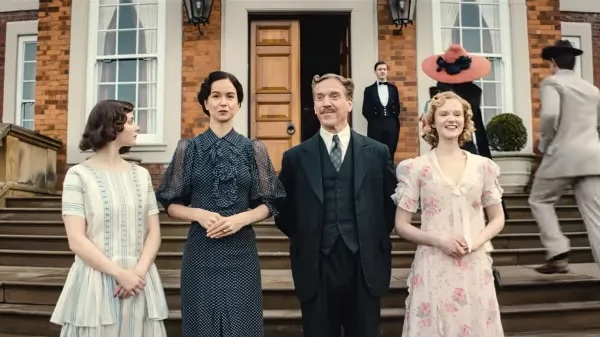
The titular hall is the ancestral home of Lord and Lady Davenport (Damian Lewis and Katherine Waterston). They have two daughters, Poppy (Emma Laird) and Rose (Thomasin McKenzie), and – in the time-honoured tradition of the upper classes – Poppy is due to marry her first cousin, the odious Archibald (Tom Felton), in order to keep their stately home in the family. But on the big day, Poppy simply cannot bring herself to do it – which inevitably puts a lot of pressure on Rose to step up and take one for the team.

But then handsome and homeless young pickpocket, Eric (Ben Radcliffe), is selected to deliver an urgent message to Lord Davenport and, on the way there, he and Rose cross paths. While this is unfortunate in one way – she’s at the wheel of a car and he’s on a bicycle – once they’ve set eyes on each other, it’s clear that romance is their destiny. But if Rose decides to be with Eric, what will happen to their family estate?

And then a key character is murdered – and the plot begins to thicken.

The recent reboot of The Naked Gun seems to have reignited the public’s taste for a decent spoof and, on that level, Fackham Hall doesn’t disappoint. I spend the film’s duration alternately chuckling, groaning and occasionally guffawing out loud at the film’s smörgåsbord of comic offerings. (The sight gags arrive so relentlessly, I’m actually in danger of missing some of them.)

Director Jim O’Hanlon keeps the pot bubbling nicely and the production is blessed with a cast of excellent actors, who appreciate that the secret of a spoof is to play everything absolutely straight. Anna Maxwell-Martin is great as the ruthless housekeeper, Mrs McCallister, and I love Tim McMullen’s deadpan performance as the butler, Cyril, who also doubles as a prototype AI assistant. Carr has a couple of funny cameos as a short-sighted vicar who specialises in making every sermon a series of tortuous misunderstandings. And I’m delighted by one of the Davenport’s house guests in particular: JRR Tolkien, who is working on what will become his best-known book, finding inspiration in the strangest places…

The big ‘reveal’ at the end will come as a surprise to absolutely nobody but, really, in something like this the usual rules of criticism feel somewhat superfluous. Some Downton diehards might clutch their pearls in outrage, but I have a lot of fun with this and no doubt many others – from both upstairs and downstairs – will find plenty to enjoy.

4 stars

Philip Caveney
Unforgivable

27/07/25

BBC iPlayer

Here’s that rarest of things: a full length, original film (as opposed to a TV series) from the BBC. A film, moreover, scripted by veteran playwright, Jimmy McGovern, who has been creating his his own brand of Liverpool-based drama since the early 1980s. Unforgivable, as the name suggests, makes for harrowing viewing. Indeed, it’s so unremittingly bleak that I find myself wondering if any of the central characters are going to catch a break somewhere down the line, but happily the story’s conclusion does at least offer a hint of redemption for its protagonist.

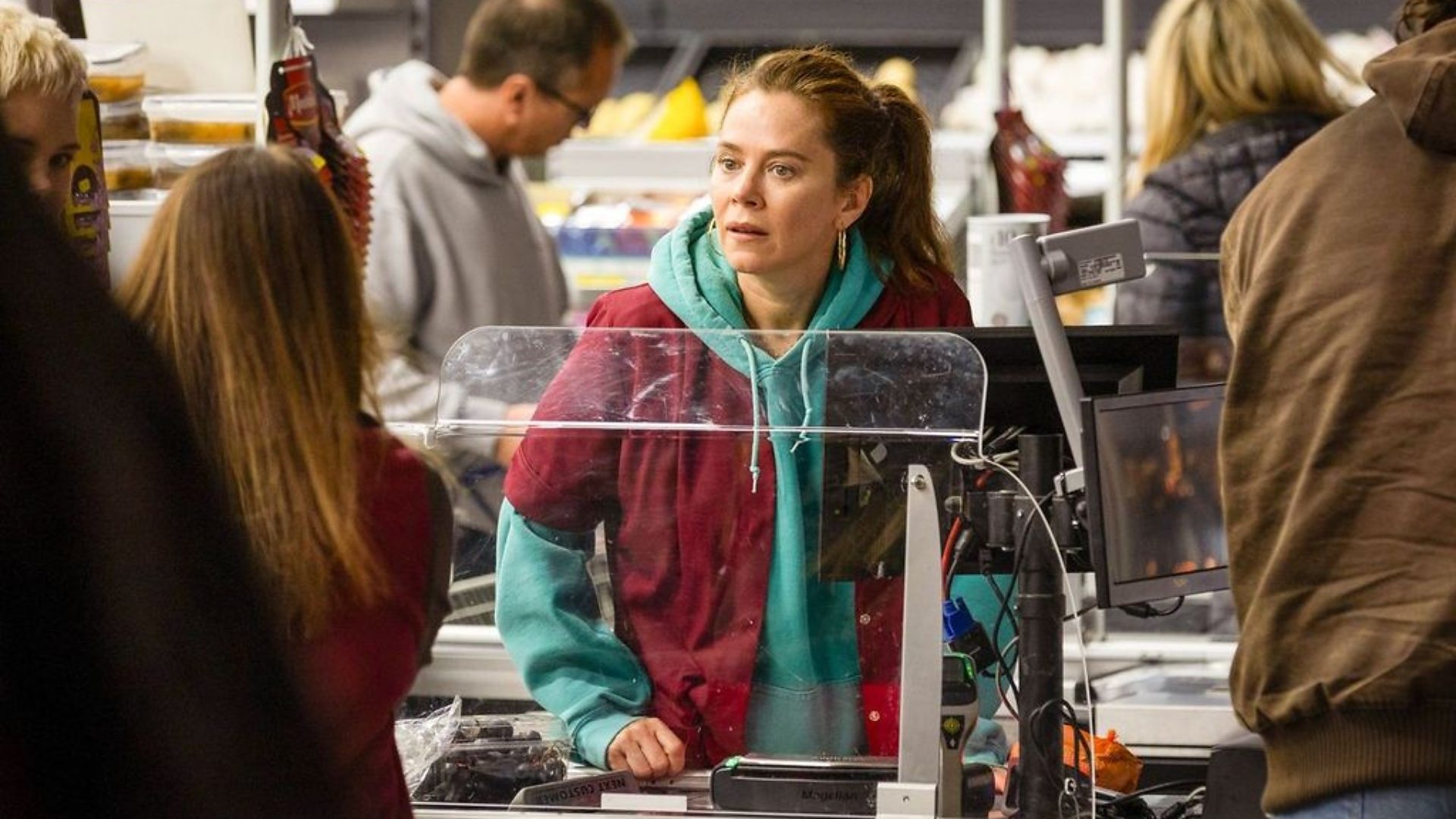
He is Joe (Bobby Schofield), a young man currently serving out a prison sentence for sexually abusing his teenage nephew, Tom (Austin Haynes). Since the incident, Tom has become electively mute, saying no more than ‘yes’ or ‘no.’ Joe is hated by just about everybody he encounters and that includes his sister, Anna (Anna Friel), who is struggling to cope with her traumatised son and his older brother, while desperately attempting to hang on to her job at a local supermarket. But then Joe and Anna’s mum dies, just as Joe’s parole comes up. He is summarily informed that he cannot return to the area where the abuse took place, not even to attend his own mother’s funeral.

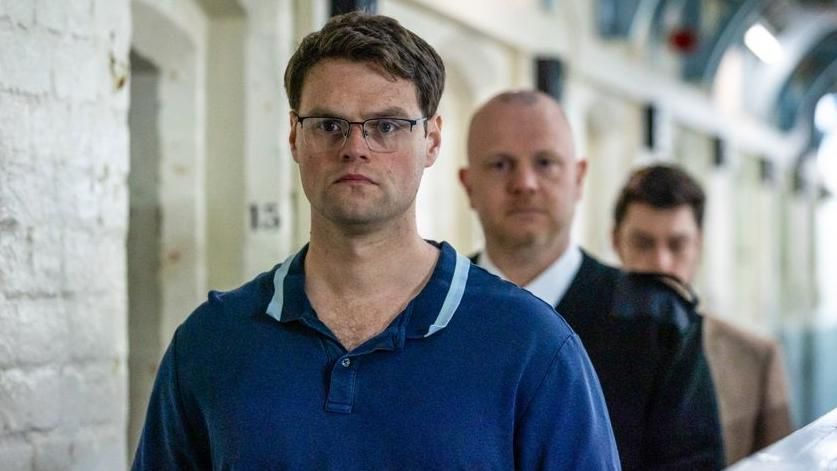
Former nun, Katherine (Anna Maxwell Martin), takes pity on Joe and accepts him into her halfway house. She also invites him to talk about his issues and, in returning to the subject of Tom’s abuse, Joe realises that in many ways he is as much a victim as a perpetrator…

All the time-honoured elements of a McGovern script are in place: a thorny central premise with no easy solution, a raft of superb performances – Haynes is particularly impressive, managing to convey utter misery despite having barely any dialogue – and Schofield too evokes our sympathy. Here is a man who has come to despise himself so much that, when pursued by a angry mob of vengeful thugs, he chooses to turn and accept his punishment. Friel utterly convinces as a woman pushed to the edge of reason and David Threlfall does his usual wonderful job as her father, Brian: quiet, brooding and terribly conflicted by something in his own recent past.

This compelling drama, sensitively directed by Julia Ford, has a central question at the heart of it. Do men who are abused as children and then go on to abuse others deserve any sympathy? McGovern never really provides a cogent answer, nor do I think he ever intended to. But there’s no denying that this powerful drama raises the issue with enough conviction to make us ponder if we really have the right to deny forgiveness.

4.6 stars

Philip Caveney

The Duke

09/03/22

Cineworld, Edinburgh

The latest entry in the ‘truth is stranger than fiction’ genre is The Duke – the final feature from versatile director, the late Roger Michell. This is the story of the improbably named Kempton Bunton (Jim Broadbent), an irascible campaigner for pensioners’ rights, women’s suffrage and, in his spare time, a would-be playwright. Quite why his script The Adventures of Susan Christ never found an audience is anybody’s guess.

It’s the early 1960s and ,while England’s capital is celebrating a new-found sense of freedom, life on the gloomy streets of Newcastle is a somewhat bleaker prospect, as Bunton stumbles from job-to-job, constantly losing them because of his propensity to stand up against any signs of injustice he encounters. His long-suffering wife, Dorothy (Helen Mirren), slogs her guts out as a home help to her more affluent neighbour, Mrs Gowling (Anna Maxwell Martin), in order to make ends meet. She is mortified when her husband is obliged to spend a short spell in prison for non-payment of his TV licence (free TV for OAPs being his current pet project).

Meanwhile the couple’s younger son, Jackie (Fionn Whitehead), dreams of building and selling luxury boats, while his brother, Kenny (Jack Bundeira), has his own run-ins with the police to contend with.

And then a valuable painting of The Duke of Wellington by Goya is ‘borrowed’ from the National Gallery – and when it winds up hidden in the back of the Bunton’s wardrobe, it’s only a matter of time before the merde hits the fan.

The Duke is an irresistibly enjoyable piece that manages to evade the cosy complacency of so many films aimed at more mature audiences. Michell’s direction cleverly juxtaposes glossy widescreen shots of London with the grubby, timeworn realities of 60s Newcastle and the humdrum rigours of everyday working-class life are convincingly captured. The Buntons feel like real characters rather than archetypes. A past sadness that Kempton and Dorothy share is skilfully revealed in Richard Bean and Clive Coleman’s canny script – and there’s also a twist to the tale that genuinely takes me by surprise.

But this is surely Broadbent’s film. He’s terrific in the central role, making us genuinely care about a character who was, by all accounts, a bit of a wastrel. The penultimate scene where Bunton stands up in court to discuss the art theft with his barrister, Jeremy Hutchinson (Matthew Goode), had me laughing out loud and is probably worth the price of admission all by itself. Meanwhile, Mirren handles her role as the family matriarch with her usual aplomb and even manages to knit aggressively.

I’m hoping that some enterprising theatre will finally decide to stage one of Bunton’s lost plays – I’d love to see whether Susan Christ achieves her ambitions – but until that happens, The Duke is sure to send you on your way with a smile on your face.

4 stars

Philip Caveney

The Personal History of David Copperfield

21/01/20

I arrive at the cinema expecting great things. The trailer for Armando Iannucci’s The Personal History of David Copperfield promises a rollicking ride through one of Dickens’ best loved tales, and I’m excited to see how it unfolds.

The promise is kept: it is a rollicking ride. A bit too rollicking, if I’m honest, careening  through the 350,000 word novel at breakneck speed. Well, it’s a lot to fit into two hours. There’s nothing here I’d lose – no padding or filler required – but I’d be tempted to add an extra thirty minutes to the running time, just to give the story space to breathe.

Dev Patel is the eponymous hero of his own life, and very good he is too, all genial affability despite his social-climbing and urgent need to impress. Born a gentleman, he’s forced into poverty when his widowed mother remarries, and his stepfather (Darren Boyd) takes against the boy. Young David is not too worried at first: the poverty he’s witnessed so far – visiting Peggotty’s quirky, loving family in their upturned boat/house – has given him a romanticised impression of the working person’s lot. A back-breaking job in a bottle factory soon disabuses him of this worldview, and he determines to find a way to live a better life.

Tilda Swinton and Hugh Laurie form a show-stealing double-act as David’s aunt Betsey Trotwood and her cousin Mr Dick respectively; in fact, there are almost too many perfectly-captured vignettes featuring too many wonderful actors. There’s Anna Maxwell Martin playing school mistress Mrs Strong – whoosh! There’s Benedict Wong as the ever-thirsty Mr Wickfield, and Rosalind Eleazar as his daughter, Agnes – whoosh! Daisy May Cooper’s Peggotty is warmly, wittily portrayed; Morfydd Clark’s Dora Spenlow a frothy, silly delight. I do like the sense of breathless chaos: the lack of deference to period drama genre-norms; the diverse casting that proves it can (and should) be done. There’s just no time to focus in on anything before it’s gone.

In short, each scene is beautifully rendered; each character cleverly drawn. But the story feels a little superficial, with none of the darkness or political poignancy of Dickens’ semi-autobiographical novel.

3.8 stars

Susan Singfield


Macbeth

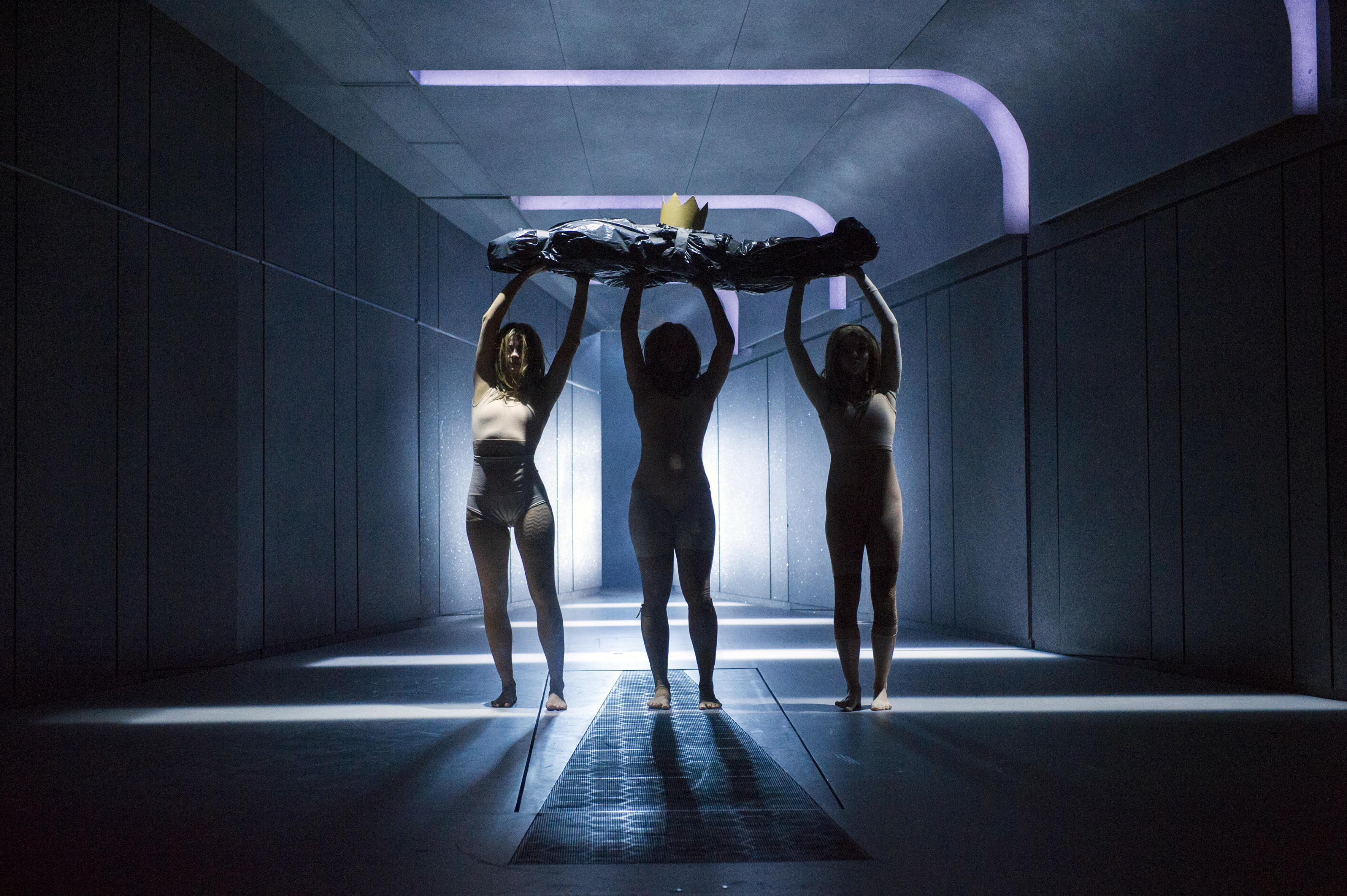
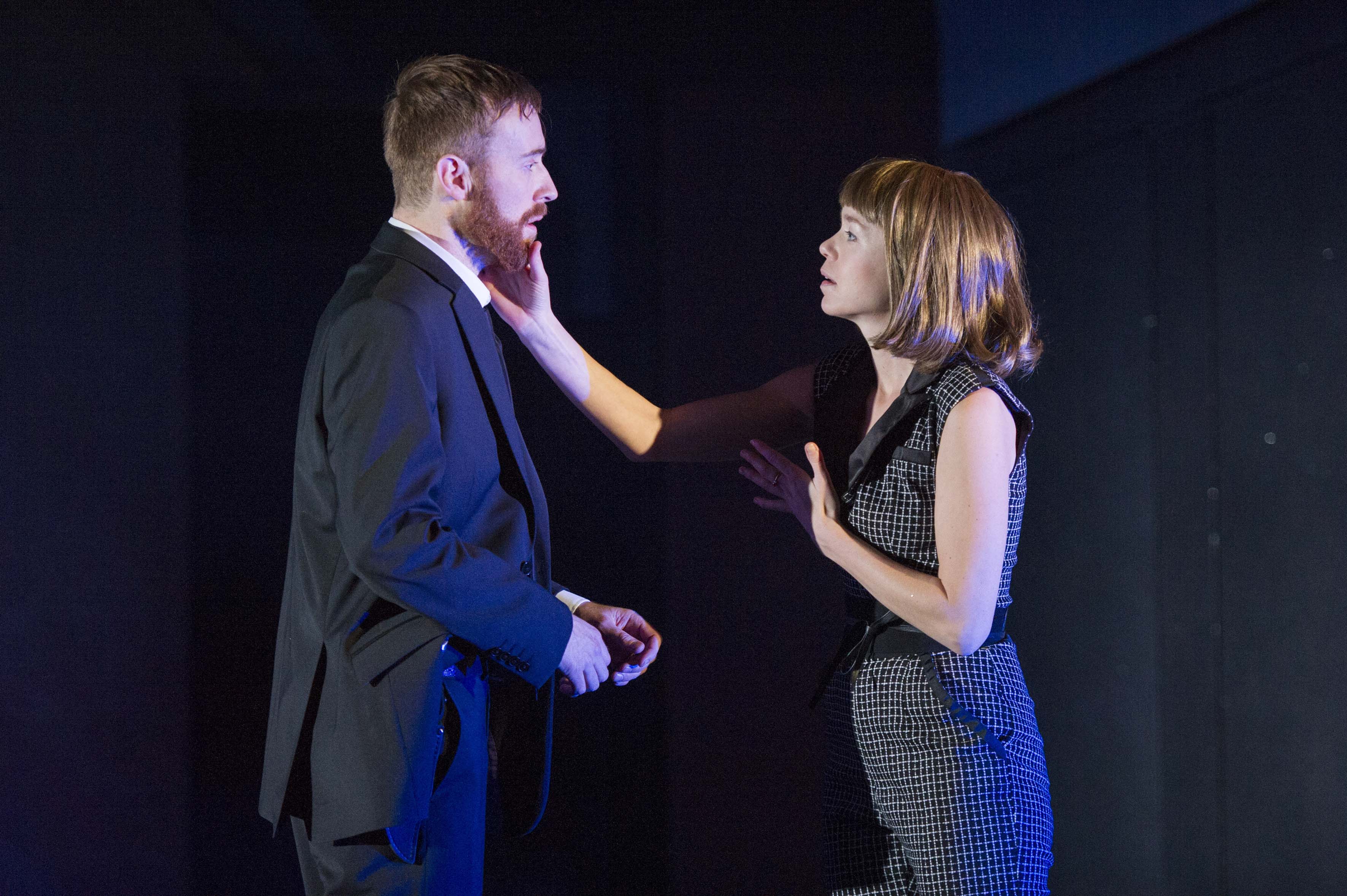
Clemmie Sveaas, Jessie Oshodi and Ana Beatriz Meireles in Macbeth. Photo by Richard Hubert SmithJohn Heffernan (Macbeth) and Anna Maxwell Martin (Lady Macbeth) in Macbeth. Photo by Richard Hubert Smith (2)

Home, Manchester

02/02/16

OK, so it’s yet another Shakespeare adaptation. And it’s Macbeth too – one of my favourites, but certainly not one that’s under-performed. Its length and relative simplicity make it a school curriculum staple, so regular airings are always assured: it’s an easy one to sell out.

But it’s this ubiquity that means it’s in danger of being – dare I say it? -boring. I’ve watched and read this play so often that, unless the director is bringing a fresh eye to it, I really don’t want to see it again. Especially after the recent much-acclaimed-but-actually-rather-dull film version, by Justin Kerzel (see previous review).

Luckily, Carrie Cracknell and Lucy Guerin’s production (for Home, Young Vic and Birmingham Rep) certainly brings that fresh eye. It’s not perfect by any means – there are a few jarring moments, and some lines that seem misjudged (that long pause between ‘hold’ and ‘enough’, for example, turning the latter into capitulation instead of a defiant battle cry), but it’s dirty and dangerous, just like it needs to be – and it’s sharp and witty  too.

It’s set in a version of the present, in a stark underpass, as grim as night. There are flickering fluorescent lights, and a sense of menace prevails. The body count is high, and murder is rife; the corpses are wrapped in plastic and tossed aside quite casually. This is certainly a brutal world.

And the witches. They’re my favourite thing. They’re twisted, haunted mannequins, moving their inhuman limbs in a foul and fearsome dance. They’re genuinely frightening, like horror-story dolls – sometimes pregnant, sometimes breast-feeding – and their gruesome game of Blind Man’s Buff makes the Macduff family murder a truly awful act.

The banquet scene is nicely done; Lady Macbeth’s madness is also a high point. It’s a strong production: daring and innovative and certainly not dull.

Highly recommended – although I suspect it will divide opinion.

4.2 stars

Susan Singfield