

22/10/23
Cineworld, Edinburgh
A quick glance at IMDB informs me that I first watched a Martin Scorcese movie way back in 1976 – Taxi Driver – and that I have seen pretty much every film he’s directed since. So naturally I am eager to see Killers of the Flower Moon, though somewhat apprehensive at its prodigious running time of three hours and twenty-six minutes.
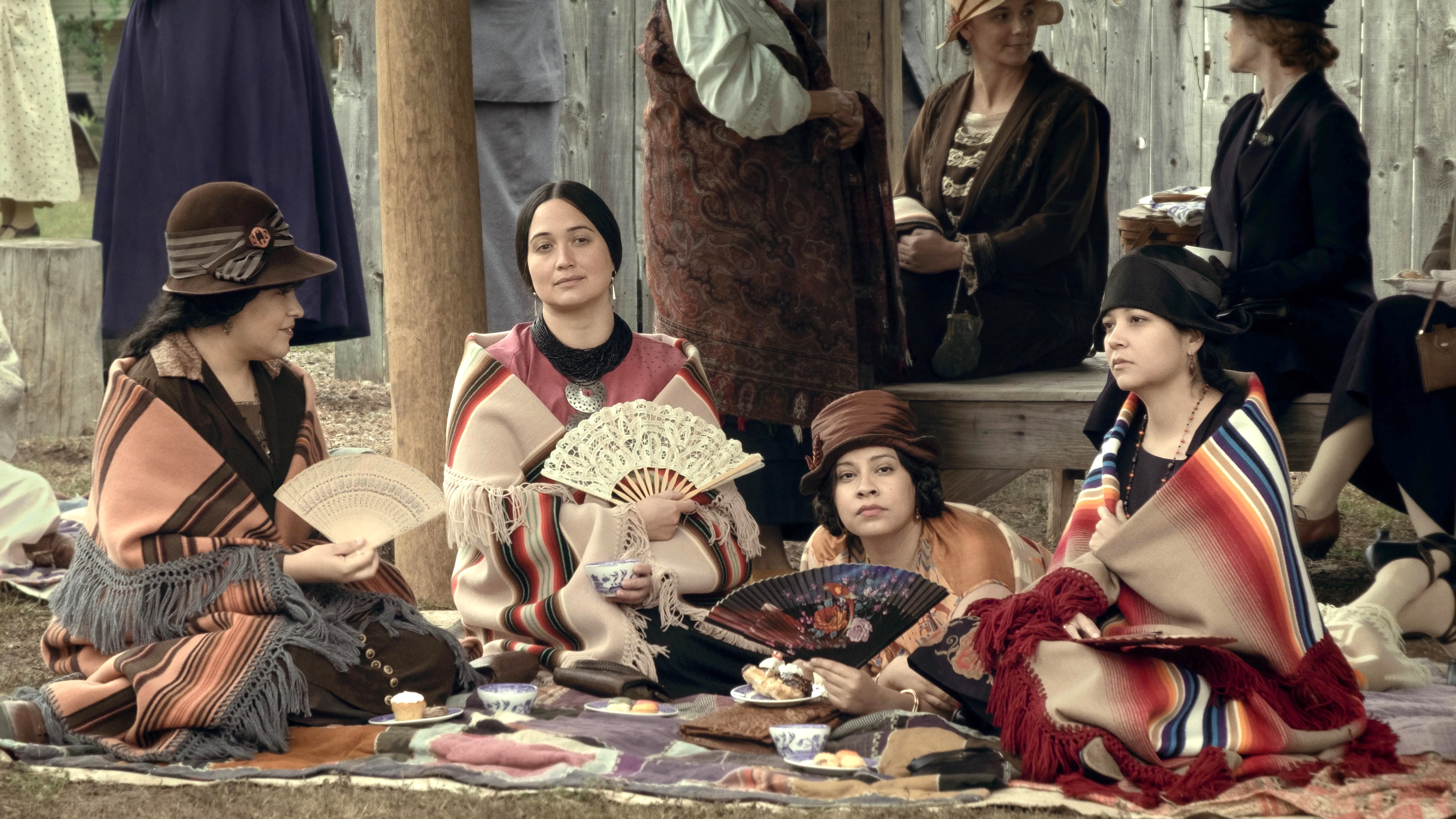
Set in the early 1920s, it tells the story of the Osage tribe, native Americans who, after being shunted unceremoniously from their Kansas homeland to a reservation in the wilds of Oklahoma, subsequently discover that the land they have been allocated contains vast quantities of crude oil – and that they are now the richest people per capita in the USA.
Of course, this being America, it’s complicated. For one thing, the Osage can’t just be allowed to own their own money. The very idea! In most cases, they must have a white guarantor to enable them to have access to it. And naturally, there are plenty of unscrupulous people in the vicinity, who are eager to put their hands on that wealth – even if it means arranging for the regular liquidation of certain members of the tribe. Suspicious deaths among the Osage are all too common, and such crimes are rarely even investigated.
Chief among the white opportunists is rancher ‘King’ William Hale (Robert De Niro), who purports to be the tribe’s greatest friend and has even learned to speak their language, but who secretly wheels and deals to ensure that large amounts of Osage money keeps flowing in his general direction. When his nephew, First World War veteran Ernest (Leonardo DiCaprio), arrives looking to make a new start, Hale ensures that he crosses the path of Osage woman, Mollie (Lily Gladstone), telling Ernest that this will be an opportunity for both of them to make a killing…
There’s no doubt that this true story, based on the book by David Gran, makes for compelling viewing – and the film’s two-hundred-million dollar budget ensures that Scorcese’s evocation of the era is beautifully realised. Many of the great director’s touches are in evidence here: the matter-of-fact quality of the murders; the chilling depictions of everyday cruelty and avarice; and, as ever, there’s Scorcese’s uncanny ability to choose the perfect music to accompany any given scene.
There are also three extraordinary performances to savour. Di Caprio as the sullen, selfish and frankly not-very-bright Ernest may be a career-best display of acting. He plays the role as a kind of arrested adolescent with a constantly glum expression, as though he’s being admonished for something he’s done (or maybe hasn’t done). Old hand De Niro is horribly oleaginous as Hale, a man so utterly devious, it’s a wonder he can manage to walk in a straight line. And Gladstone is terrific as Mollie, managing to convey so much with a withering look, a shrug, a silence. Her calm presence is somehow this turbulent story’s anchor.
The film’s first and concluding thirds, the set-up and pay-off – when FBI man Tom White (Jesse Plemons) arrives to initiate a long-awaited investigation – easily hold my attention, but that middle section feels decidedly baggy and and the constant stream of viewers nipping out for a judicious toilet break is really distracting. It prompts the inevitable question: does the film need to be so long? In my opinion, no. Trimmed back by an hour, this could have been even more satisfying. I can’t help but think wistfully back to the likes of Lawrence of Arabia and Doctor Zhivago, epic films that always included an intermission around the halfway mark for this very reason.
That said, I love Killer’s ironic coda, which presents an account of what we have just seen as a soapy ‘true crime’ vintage radio recording, and which also features a cameo from Mr Scorcese himself. But the film fails to mention the fact (which I read about elsewhere) that the heinous conditions that the Osage tribe suffers in this film persist to this day. They are still being stiffed by the oil companies, who have brazenly commandeered the ‘black gold’ that continues to bubble up from beneath their reservation. And their demands for justice remain unheard.
Land of the free? Don’t make me laugh.
4.2 stars
Philip Caveney
 Bouquets & Brickbats