2025

Mariupol

17/08/25

Pleasance Courtyard (Beneath), Edinburgh

Katia Haddad’s two-hander is an epic tale of love and loss spanning thirty years, exposing the quiet horrors of war: the tendrils that insinuate their way into ordinary people’s lives, strangling their hopes for happiness.

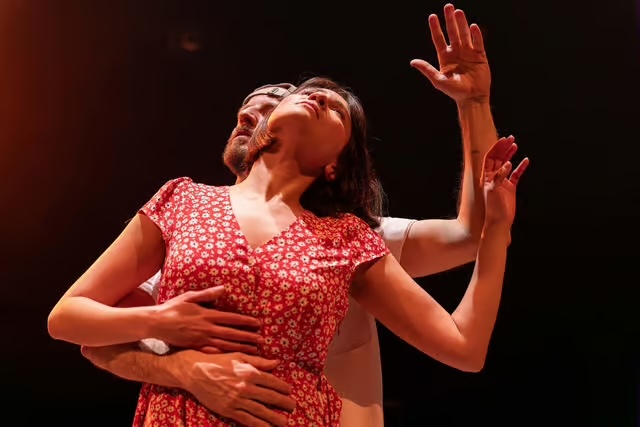
It’s 1992, a year after the dissolution of the USSR, when “Steve” and Galina (Oliver Gomm and Nathalie Barclay) meet at their friends’ wedding in the titular Ukrainian city. Steve (real name: Bondarenko, nicknamed for his karaoke renditions of Stevie Wonder songs) is a well-travelled naval officer, while Muscovite Galina is a literature student, who has so far only dreamed of seeing foreign lands. “You’re in a foreign land,” Steve reminds her, and he’s right: Ukraine is now an independent state. But it doesn’t feel foreign to Galina: “We speak the same language,” she says. And indeed they do, in more ways than one. But, after a whirlwind holiday romance on the picturesque Belosarayskaya Sandbank, it’s time for the two to say goodbye and return to their ‘real’ lives.

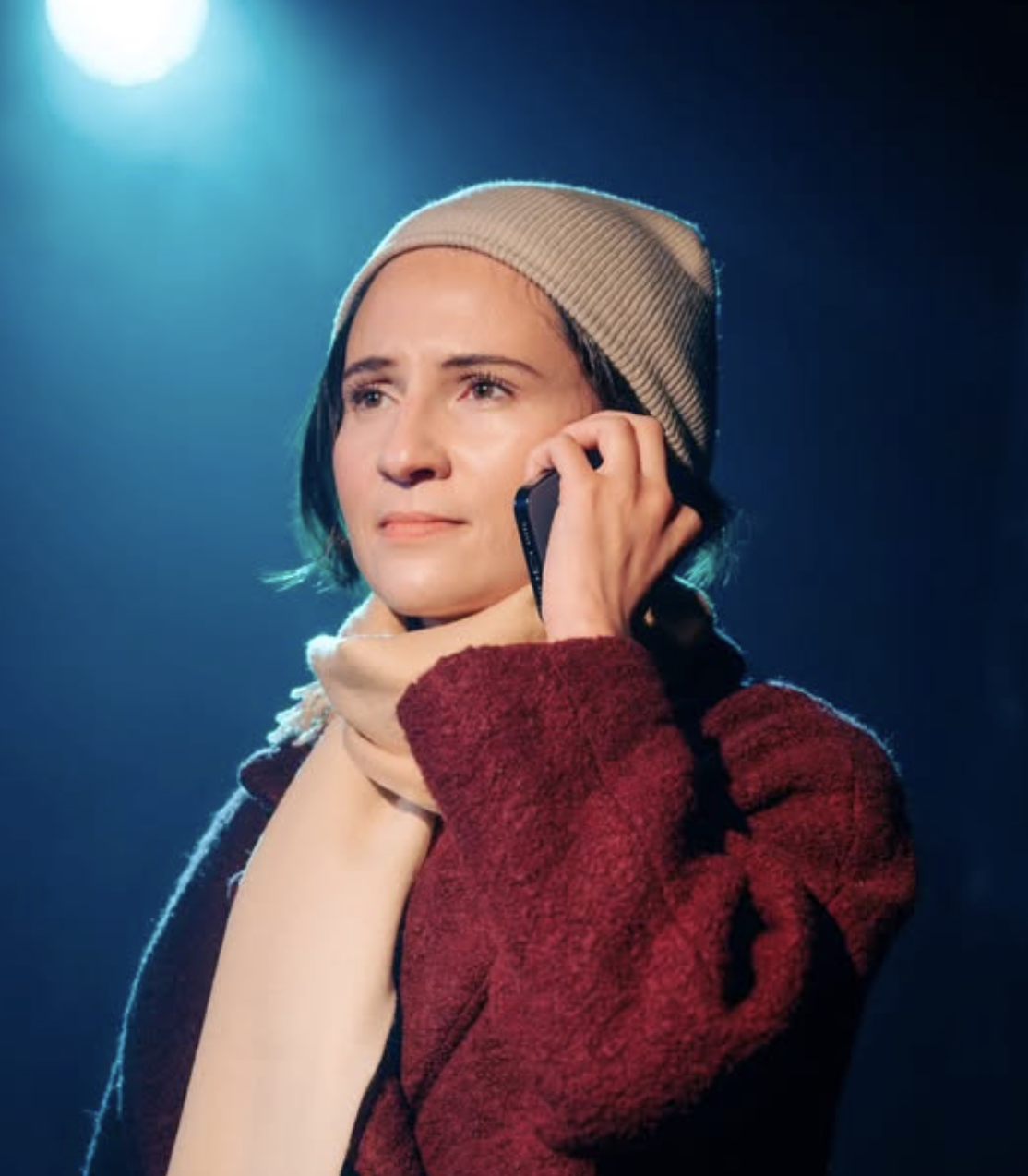
Three decades later, Russia invades Ukraine. Galina’s teenage son, a member of the Russian army, is captured by Ukrainian forces in Mariupol. She’s desperate to rescue him – and can only think of one person who might be able to help. But can Steve – who has lost everything and is fighting for his country’s very existence – really be expected to come to the aid of an enemy soldier?

Gomm and Barclay are both perfectly cast, delivering heartfelt but understated performances, which feel totally authentic. They seem to age before my eyes, and it’s impossible not to empathise with these two regular Joes, who ought to be free to focus on more mundane problems. Directed by Guy Retallack, Mariupol is an expertly-crafted piece of theatre, starkly illustrating the brutality of war without ever sensationalising it. Hugo Dodsworth’s monochrome video projections emphasise the awful devastation in Ukraine.

Of course, the ongoing nature of this particular conflict adds real urgency to the production, and I find myself crying as the dreadful human cost is laid bare. But tears are not enough. The play supports the David Nott Foundation, which trains doctors in countries impacted by conflict – including Ukraine – and I feel compelled to make a donation as soon as I get home. If you’d like to do the same, you can do so here: https://davidnottfoundation.com/.

A deeply moving and important play, Mariupol is horribly relevant but beautifully drawn.

4.7 stars

Susan Singfield
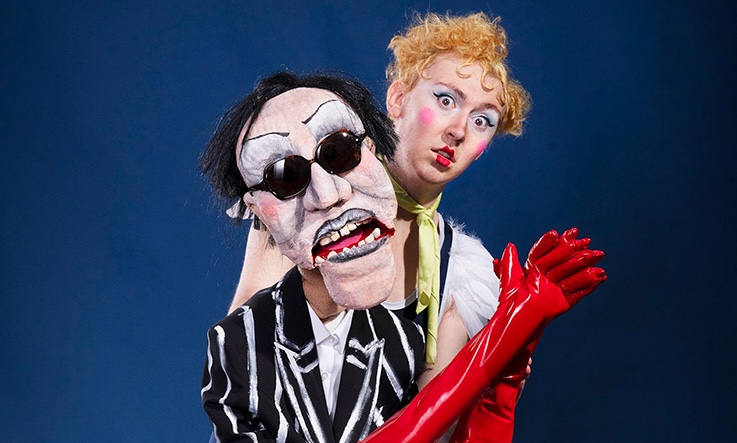
Lachlan Werner: Wondertwunk

15/08/25

Pleasance Dome (10 Dome), Edinburgh

Originality counts for a great deal at the Fringe and I have to say that Lachlan Werner has that commodity in spades. We’re here to catch his act mostly because a publicist we work with casually mentioned that she thought it would be ‘right up our street.’ The fact that it so definitely is probably says something about us, because this is utterly weird – but, I should add, in a good way. And it’s clear from the audience reaction that we’re far from the only ones delighted by what we’re viewing.

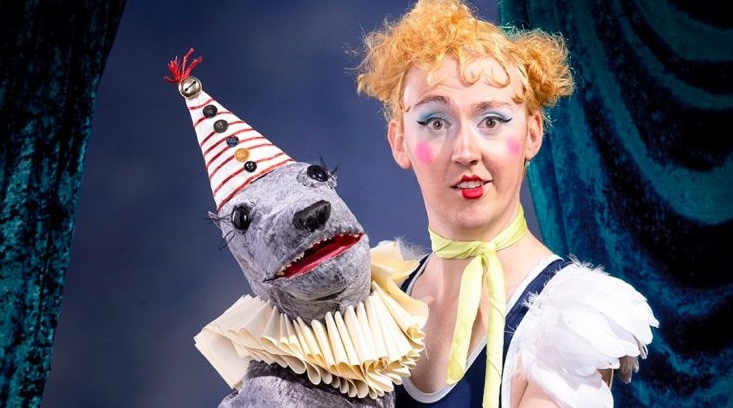
Werner plays Jack Hammer, the Strongest Boy in the World. He might not look the type to be lifting weights and bending steel bars, what with his impeccably-plaited curls, his grotesquely-painted features and his cupids-bow lips; and yet, thanks to some shonky-looking props, he manages these macho skills with ease. He performs every night in a circus owned by his clearly dodgy dad (depicted by a monstrous life-sized puppet), and his only friend in the world is a talented sea lion called Slippy, who, it turns out, can balance wine glasses on his nose.

Werner is a gifted ventriloquist, able to switch from his own cartoonish little voice to his dad’s gruff tones (or the distinctive bark of a sea lion) with apparent ease – and, while on paper the ‘jokes’ are simply a string of lame puns and outlandish boasts, there’s something so utterly beguiling in Werner’s delivery that I find myself laughing helplessly along from start to finish.

There are elements of horror in the story which put me in mind of the theatre of Grand Guignol, as Jack slowly begins to uncover grisly secrets about his father and, ultimately, himself. A guy from the audience is invited onto the stage to become his assistant and ends up as the object of his affection, an integral part of the show, as Werner flirts outrageously with him. By the show’s final stages, the entire audience is cheering Jack on, wanting him to to vanquish the powers of evil, to find a new identity and a suitably happy ending.

This show takes me completely by surprise and I’m fairly confident that other first-timers will have the same experience. One thing’s for certain: unless you’re already a fan of Lachlan Werner, you won’t have seen anything quite like it before. It’s sublime.

5 stars

Philip Caveney

The Other Mozart

05/08/25

Assembly George Square Studios (Studio Two), Edinburgh

You’ve heard of Nannerl Mozart, right?

Nope?

Me neither.

Her brother’s pretty well-known though. He’s so famous he’s known by just one name (which is probably a good thing, considering his original moniker was the unwieldy Joannes Chrysostomus Wolfgangus Theophilus Mozart – although he did later change this to Wolfgang Amadeus).

It turns out “Nannerl” (aka Maria Anna Walburga Ignatia; yep, Mama and Papa Mozart really liked long names) was something of a musical prodigy too, who toured with “Wolfie” when they were both children. This elegant production, written and performed by Sylvia Milo (in rotation with Daniela Galli), finally brings Nannerl out of the shadows and into the light.

It’s no great shock to discover that the reason we don’t know about her is because of her gender. Europe’s aristocracy were happy to watch a little girl perform, less so a grown woman. Here, with great artistry and precision, Milo shows us the toll this must have taken on the talented musician and composer, forced to watch her younger sibling garnering credit and acclaim while her own similar ambitions were thwarted, subsumed into marriage and motherhood.

Sadly, none of Nannerl’s original pieces survive, but Milo’s poised performance is beautifully complemented by Phyllis Chen and Nathan Davis’s compositions, which evoke the era perfectly, allowing us to believe in Nannerl’s genius.

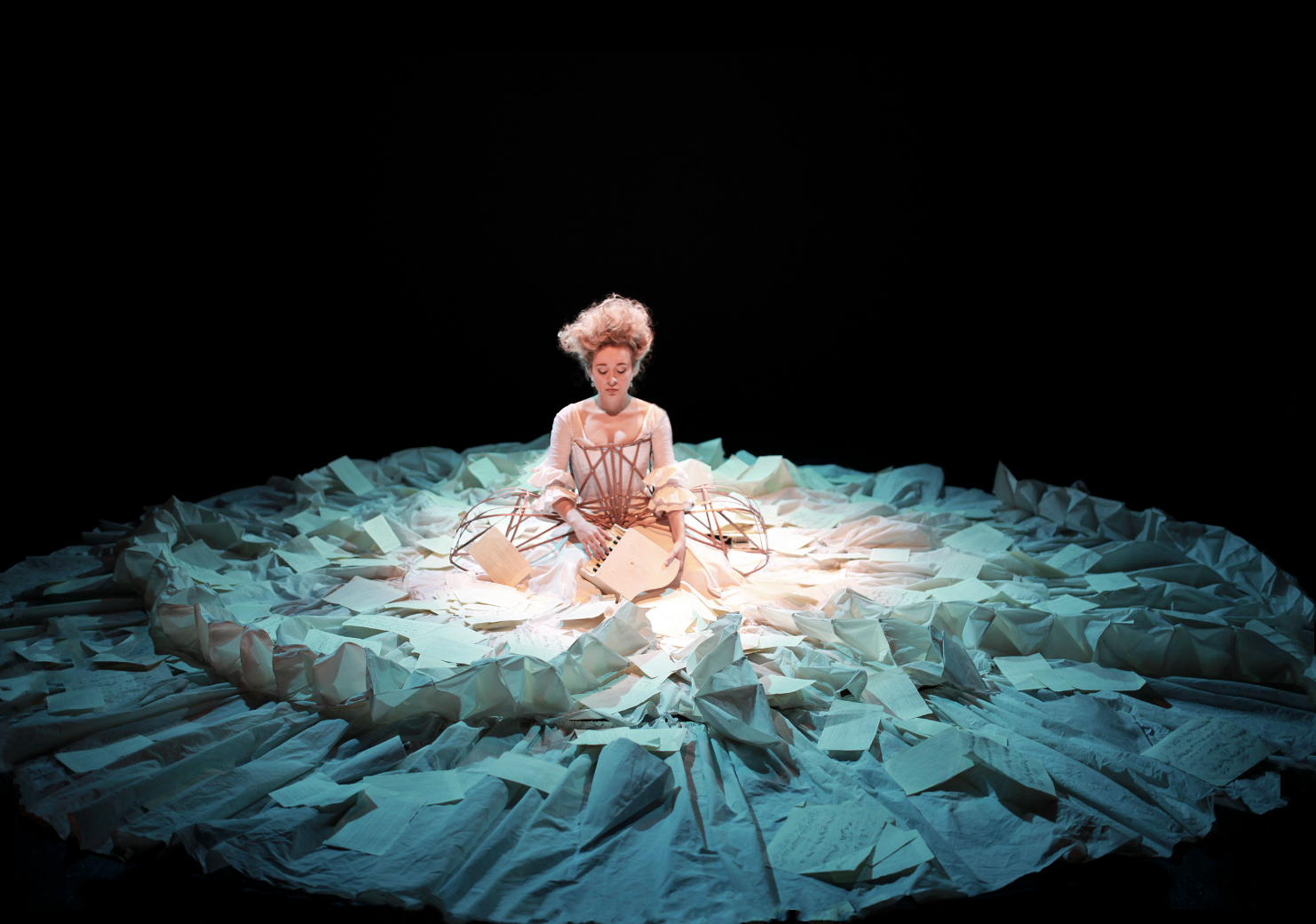
The Other Mozart, directed by Isaac Byrne, is a work of art: a sophisticated blend of monologue, music and movement – and it’s a visual marvel too. The set is the costume; the costume is the set: a giant dress, designed by Magdalena Dąbrowska, fills the entire stage, waiting, predator-like, to trap Nannerl in its fathomless drapes. The image is intensified by Miodrag Guberinic’s cage-like panier, constructed – I think – from music stands, constricting Nannerl but also amplifying her stature, so that she rises monumentally, towering over us, defying us to forget her name.

An object lesson in reclaiming women’s history, The Other Mozart is exquisitely conceived and realised, a magnum opus in its own right.

5 stars

Susan Singfield