Six by Nico

23/04/22

Hanover Street, Edinburgh

This one’s been a long time coming. When Six by Nico first opened in Edinburgh, way back in 2018, our lovely friends mooted it as an option for an evening out. But it was so popular, we couldn’t get a booking. We kept trying to find a suitable date, but to no avail. Then the pandemic happened and everything was put on hold. We ate a couple of Nico’s ‘at home’ meals, which were very nice, but the authentic Six experience still eluded us. Even tonight – when, finally, both we and our pals are free, and the restaurant is open – we’ve had to settle for a 9.15pm booking, which is definitely too late for us, but we can’t let this opportunity slide. This rendezvous carries a weight of expectation…

Six by Nico‘s concept is well known by now: it’s become a mini-chain, firmly established in eight cities around the UK and Ireland. It’s a fresh, simple idea: a themed tasting menu of six courses, which changes every six weeks. The presentation is very much ‘fine dining’, but the prices really are not. It’s £32 all in, and £27 for five matched wines. There’s no denying this is cheap.

Sadly, however, it appears that sometimes the old adage is true: you do get what you pay for. The current menu is called Ancient Rome, and it sounds promising on paper. But, although there are glimmers of excellence, it doesn’t cohere to make a pleasant meal.

Philip and both of our friends opt for the standard menu, which includes meat and fish. I go veggie for the evening, because I want to. The first course is the same for everyone: it’s ‘Cacio e Pepe, which is crispy pasta , black pepper and parmesan royale. (Mine’s supposed to be goat’s cheese, apparently, but it tastes of parmesan, so I don’t think it is. I’m not actually vegetarian though, so I’m not too worried, and I like the flavour anyway.) This is a tasty little morsel, if a little too creamy for my liking, and it bodes well for the meal.

Next up is ‘From Eggs to Nuts’ for all of us. This comprises a crispy egg, some white asparagus, hazelnuts and brown butter. The eggs, nuts and asparagus are good, but the ‘brown butter’ takes the form of a creamy sauce again, which proves a tad rich.

Cream seems to be a bit of a recurring thing. Did the ancient Romans really eat so much of it? The third (veggie for all) course is ‘Cavolo Hispi Arrostito’ and, honestly, I’m starting to feel a bit queasy now. The dish consists of pasta (again), roasted hispi cabbage, pickled girolle mushrooms, truffle foam and pecorino sardo. I’m expecting the mushrooms to have a vinegary tang, so that they cut through the dairy fat, but they don’t really. The acidic wine (this one’s Duas Margens) helps, but our friends have soft drinks, so there’s no such respite for them.

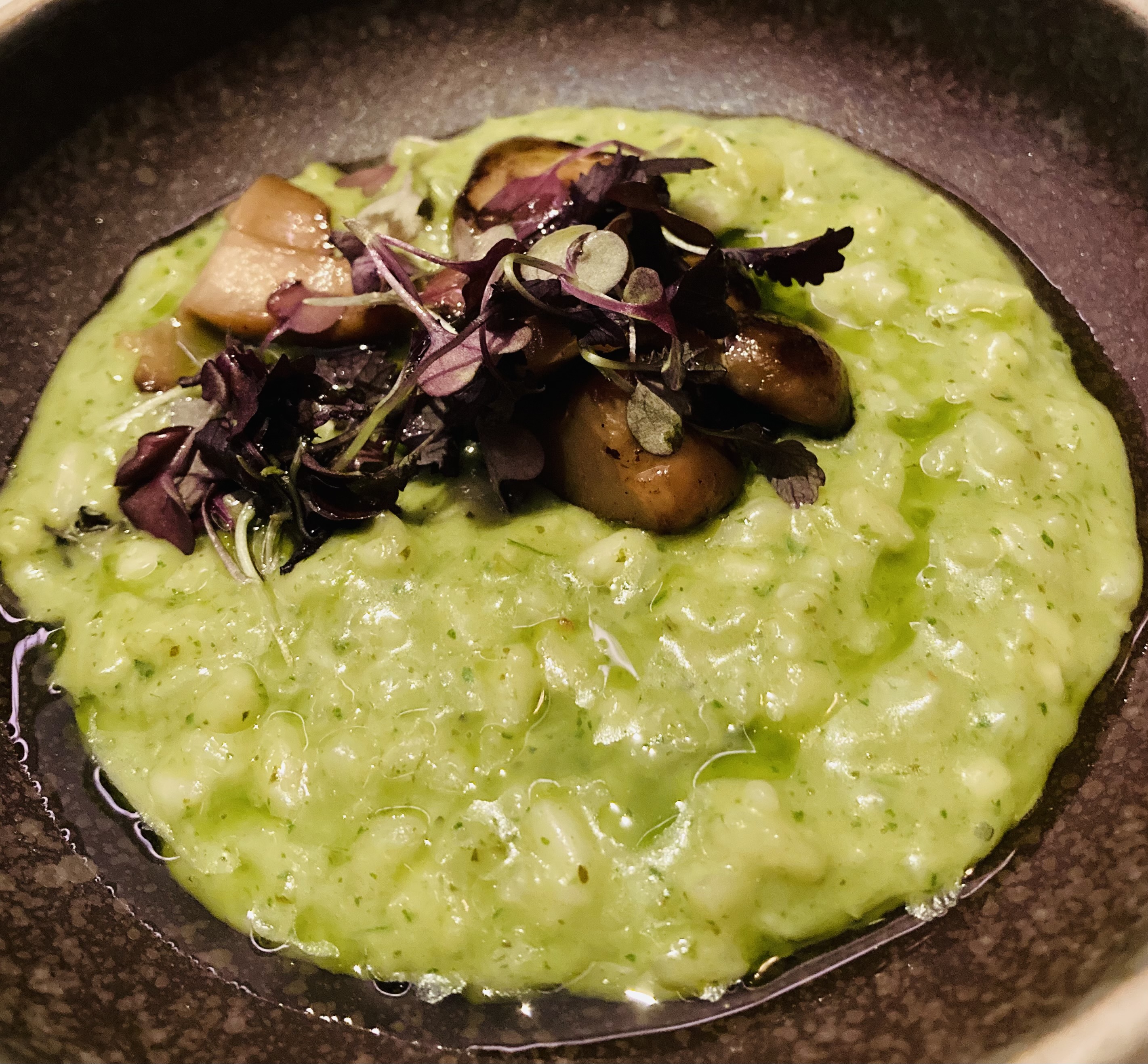
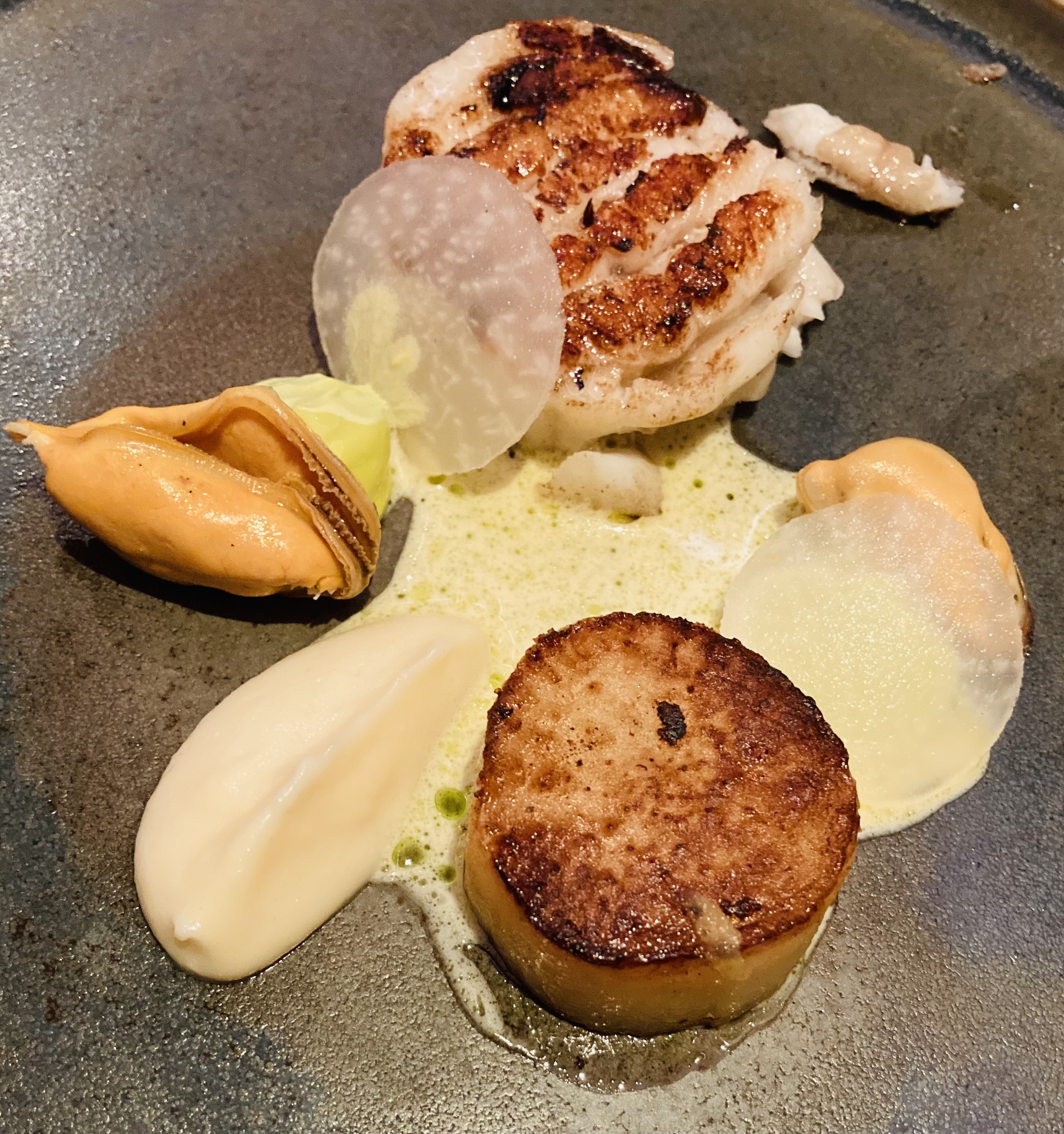
Course four (‘The Bay of Naples’) brings my favourite of the savoury dishes: a risotto of parsley, garlic and porcini mushrooms. It’s a bit repetitive with the fungi, but the risotto is delicious, with bold flavours and nicely firm rice – and there’s no cream, which is definitely a bonus. The others aren’t so lucky. They have sole, smoked mussels, lovage, white turnip and mussel… cream. This looks great, and there’s a theatrical flourish, as it arrives wreathed in smoke and covered by a glass cloche. Once the smoke has cleared, the fish turns out to be well-cooked and the smoked mussels are a hit, but none of them likes the pairing of sole with turnip, especially as the neeps are deemed ‘uncooked’ and ‘rock hard.’ “Unpleasant” isn’t a word you want to associate with your dinner.

The fifth course is called ‘The Great Feast of AD14’. For the meat-eaters, this means a small plate of pork (belly, rib and fillet), with fennel, bean ragu and a date and apple sauce. The pork fillet is very pink, which makes one of our friends uncomfortable, and the meat in general is declared ‘underwhelming.’ The date sauce gives it a boost, but the bean ragu has something creamy mixed in, so no one’s much in the mood for that. It’s a mean-looking dish, which doesn’t conjure up images of a great feast of any kind. Not that we want more. We’ve kind of had enough.

Again, I fare better. The veggie option is baked globe artichoke, with leak, curd, toasted hazelnut and walnut foam. There’s bean ragu on my plate too, but the creamy stuff is next to it rather than mixed in, so I can just leave it – and the ragu is delicious without, all tomatoey-smoky loveliness.

We’re disappointed and we’re flagging, but there’s still a course to go. Our young waitress is lovely – she’s trying really hard, and is all gauche charm and friendliness – so we rally, give her a smile as she rattles through her memorised lines about the wine, and wait to see what pudding brings.

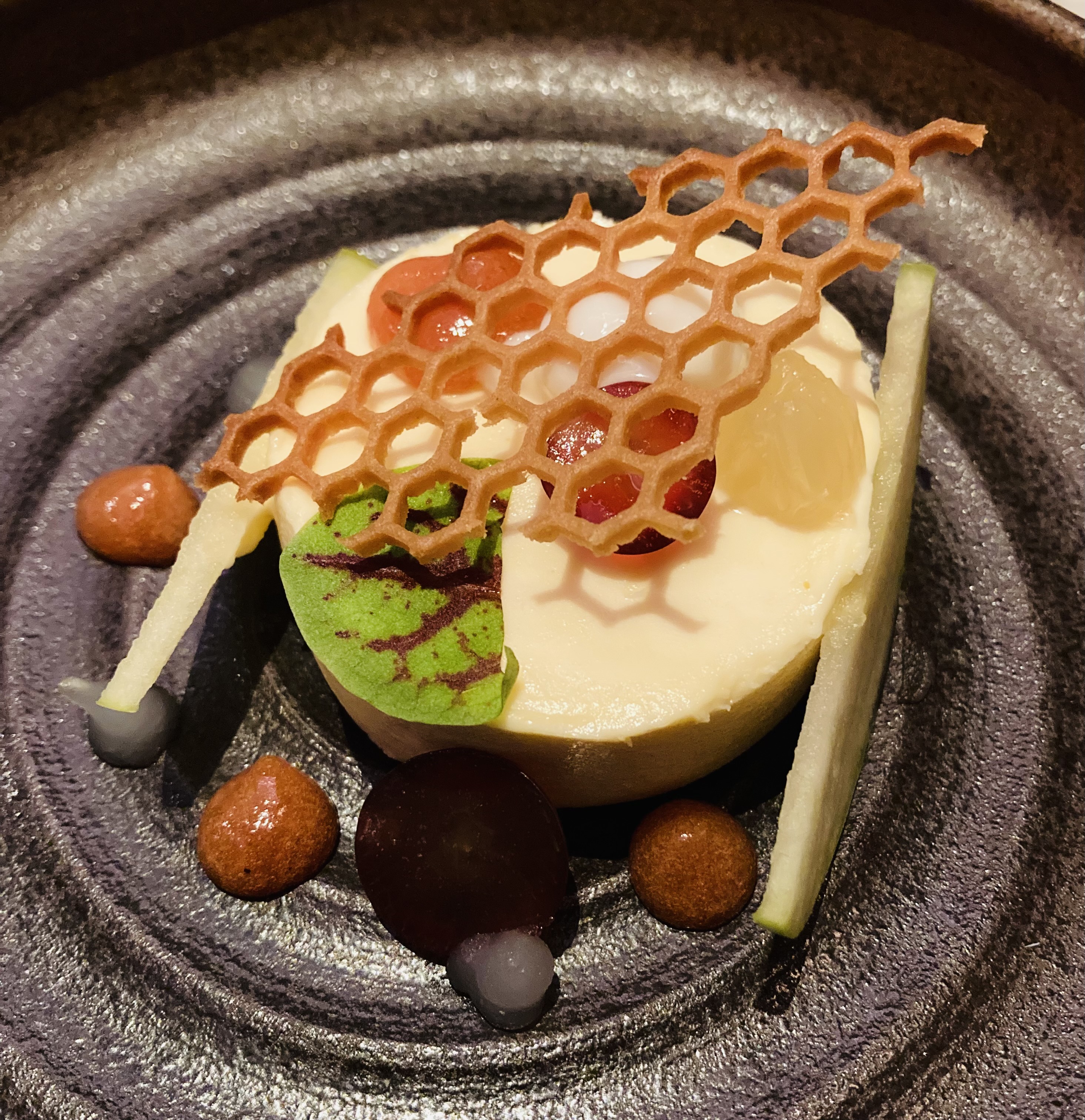
It brings a ray of sunshine. At last! The finale is excellent. The simple title (‘Honey and Cheese’) is deceptive. This is a honey parfait, served with ricotta cheese, preserved quince, fizzy grapes, pear and citrus. It’s bursting with fresh, zingy flavours – all complementing each other, each mouthful a delight. It shows us what this meal could have been.

But it’s not enough to save it. All in all, the menu just doesn’t work for us. There is no logical progression between the courses, no awareness that the dishes need to be more distinct (two courses with mushrooms, two with pasta, two with hazelnuts, five with cream). The next menu is ‘Hollywood’ and it reads well, but I don’t think we’ll be back. There are too many good restaurants in this city for us to bother with this again.

2.9 stars

Susan Singfield
The Unbearable Weight of Massive Talent

23/04/22

Cineworld, Edinburgh

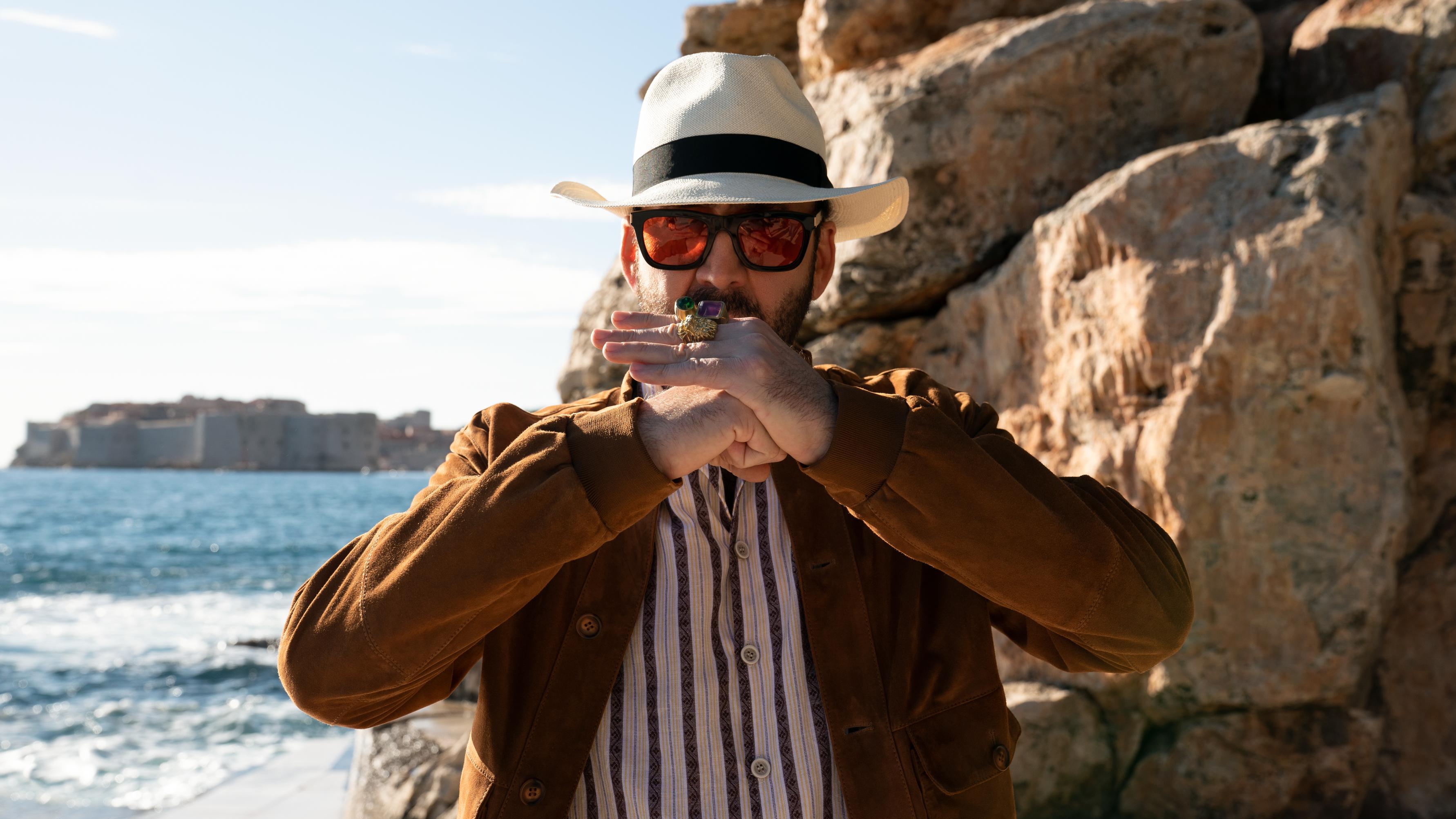
As most cinema-goers will testify there are actually two Nicholas Cages. One of them is the skilled actor who won an Oscar for Leaving Last Vegas and starred in a whole string of superior action movies like Face/Off and Con Air. Then there’s his more recent incarnation, the wild-eyed weirdo who seems happy to turn up for any old film, so long as there’s a pay cheque and a handy chainsaw. Unfortunately, we’ve been seeing rather too much of the latter Cage over the past few years.

TUWOMT takes this basic idea and runs with it, creating something that’s both incredibly meta and perfectly happy to hold the long-cherished values of Hollywood up to ridicule. Sometimes, a great idea comes from out of the blue and, luckily, director/writer Tom Gormican and co-writer Kevin Etten managed to persuade Cage to sign on for this bizarre project, because it really couldn’t have worked without him. The result is one of the most immensely likeable movies I’ve seen in quite a while.

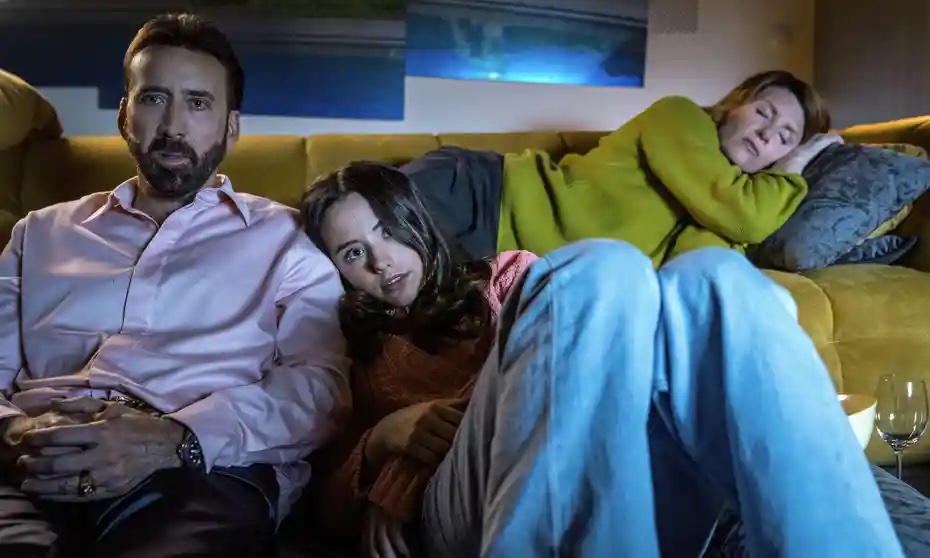
Actor ‘Nick Cage’ is on his uppers. He’s starred in a few too many stinkers and has failed to land the role he thinks might change his career for the better. He’s getting desperate – and it doesn’t help that his younger alter ego, ‘Nicky Coppola,’ keeps popping out of the woodwork to berate him for forgetting that he’s a film star first and an actor second. Meanwhile, he’s living in a hotel (where he owes $600,000 in back rent), he’s divorced from his long-suffering wife, Olivia (Sharon Horgan), and he’s rapidly losing the affection of his teenage daughter, Addy (Lily Mo Sheen).

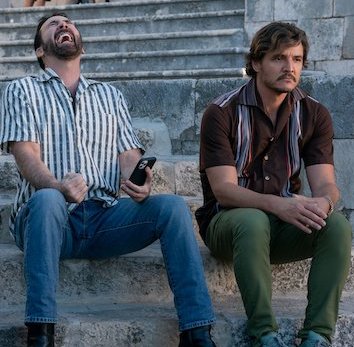
When Cage’s agent, Richard (Neil Patrick Harris), mentions that Nick has just been offered a million dollars to attend a birthday party in Mallorca, he reluctantly accepts and is whisked off to the mansion of Javi Guttierrez (Pedro Pascal). Javi is Nick’s number one fan and has a collection of Cage-related movie memorabilia to prove it. He’s also written a screenplay that he wants Nick to star in. Awkward.

Almost before you can draw a breath, events start to pile in from the wings. CIA operative Vivian (Tiffany Haddish) informs Nick that Javi is a dangerous criminal who may just have kidnapped the daughter of a prominent anti-corruption politician. She wants Nick to work with her to find out where the girl has been hidden. It doesn’t help that he and Javi are getting along like a house on fire, sharing an affection for great films like The Cabinet of Dr Caligari and er… Paddington 2. Oh, and one other thing. They’re planning to write a screenplay together…

If this is starting to sound distinctly unhinged, that’s exactly what TUWOMT is all about, but it’s crazy like a fox. There’s something infectiously funny about the idea of undermining the pomposity of Hollywood and Cage never holds back, investing his character – himself – with a whole raft of pretentious interests and self-destructive urges. He doesn’t actually play his part for laughs but attacks it with genuine acting skill and the film is all the funnier for it.

He and Pascal cook up a fine old bromance amidst the mayhem and, as their planned screenplay develops, so the film hurtles breathlessly from one set-piece to the next. Amidst the resulting onslaught of shoot-outs and car chases, there really isn’t time to stop for a moment and consider how unlikely it all is, but it hardly matters. While TUWOMT is unlikely to feature on future lists of ‘the best Nicolas Cage Movies of all time,’ it’s nonetheless a hoot from start to finish.

And it’s also proof that Paddington 2 – awarded a full 5 stars here on B&B – is one of the greatest films ever made.

4 stars

Philip Caveney

The Great Gatsby

21/04/22

Festival Theatre, Edinburgh

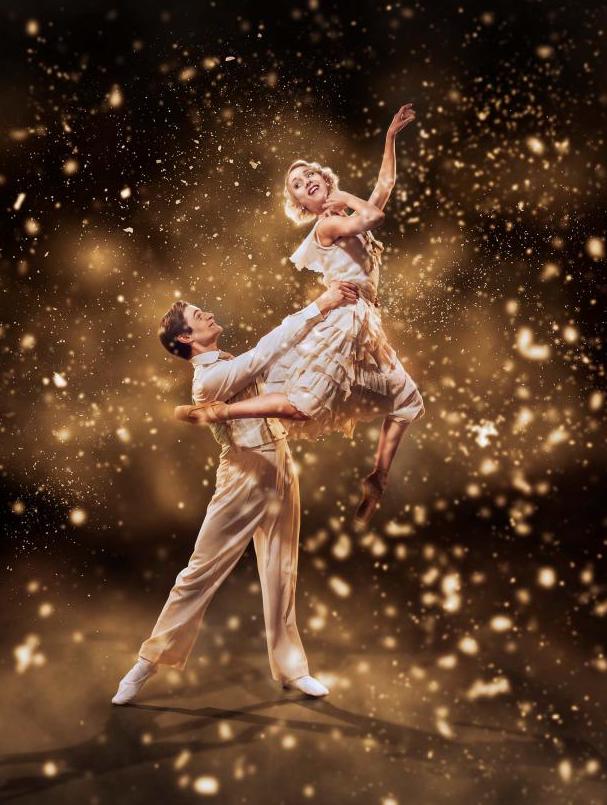
Regular readers of B&B may be somewhat surprised to see this review. We haven’t previously covered ballet, mainly because of a reluctance to show our general ignorance of the subject. But it is theatre, when all is said and done and, when we see that Northern Ballet’s adaptation of The Great Gatsby is to visit the city, it seems the logical choice for a starting point. F. Scott Fitzgerald’s famous novel is a story we already know, so we should have no problem following the action. And so it proves.

Actually, on reflection, Gatsby seems an inspired choice for the tricky metamorphosis of literature-into-dance. For one thing, those jazz-age excesses are perfectly suited to the medium and, for another, many of the novel’s most memorable scenes are built around visual motifs: the blinking green light of the Buchanan’s home on the horizon; those lavish parties frequented by alcohol-fuelled celebrities; the distorted reflections in the infamous room of mirrors.

Jay Gatsby (Joseph Taylor) spends his days reminiscing about his lost relationship with Daisy Buchanan (Abigail Prudames), back when he was a young soldier. He even gets to dance alongside his younger self (Harris Beatty), before four men in black raincoats and derby hats step out of the shadows and neatly illustrate how criminal activities turn Gatsby into the rich socialite he is today.

But wealth and success haven’t dulled the longing he still harbours for Daisy, who now lives with her husband, Tom (Lorenzo Trossello), and their little daughter – an adorable performance by Rosa Di Rollo – in their home across the bay (cue that blinking green light).

Into this turbo-charged atmosphere dances Daisy’s naive cousin, Nick Carraway (Sean Bates), who soon befriends Gatsby and then can only watch in dismay as he and Daisy become ever more entangled in a relationship that will surely end in tragedy.

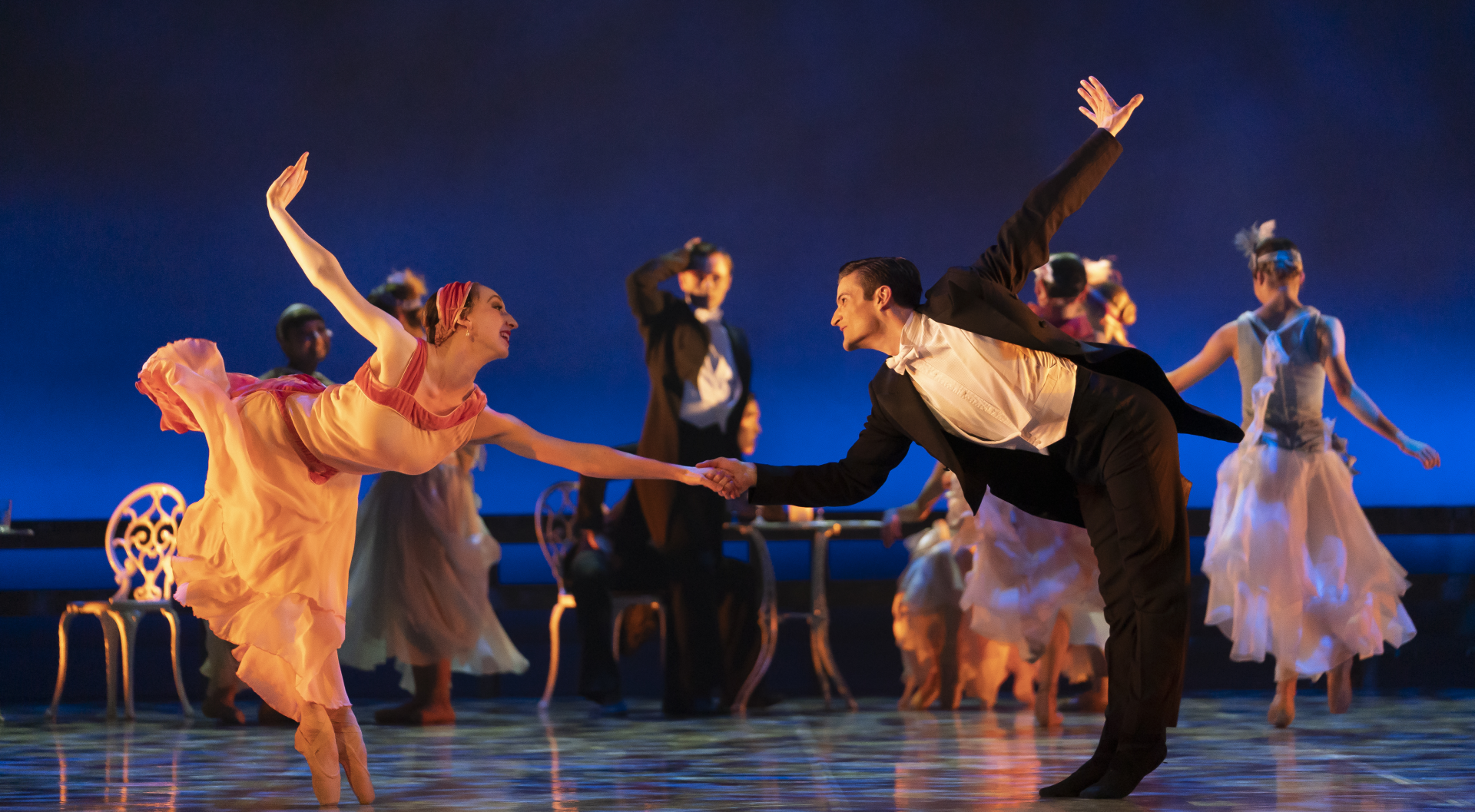
This stirring adaptation also feels curiously cinematic, an effect heightened by Jérôme Kaplan’s brilliant set design, which contrives to present physical events – even an entirely convincing road accident – with absolute authority. And the dancing, of course, is sublime. While I freely admit that I don’t know the difference between an arabesque and a jeté, I’m still enraptured by the cavalcade of physical perfection that whirls and leaps and pirouettes around the stage with apparent ease. I particularly enjoy the earthy physicality of Riko Ito as garage mechanic George Wilson, driven to distraction by his wife Myrtle (Minju Kang)’s affair with Tom Buchanan – and also the wonderfully accomplished ensemble pieces, where those epic parties of the roaring twenties are lavishly enacted in perfectly-tailored suits and glittering cocktail dresses.

The music of the late Sir Richard Rodney Bennett provides the perfect accompaniment for the story, encompassing as it does elements of jazz, ragtime and sweeping, soulful grandeur. We even get to hear the great composer sing in the production’s penultimate piece, a heartfelt rendition of I Never Went Away, which offers a poignant preface to a brutal and shattering conclusion.

So there we have it it. As an introduction to an art form, The Great Gatsby offers everything I was hoping for. Also, it proves a propitious night for a first foray into ballet, as long time choreographer and director David Nixon OBE is about to step down from the role he’s occupied for twenty-one years.

An emotional onstage presentation duly ensues and a heartfelt standing ovation caps an evening that will linger in my memory.

4.2 stars

Philip Caveney

The Meaning of Zong

20/04/22

Lyceum Theatre, Edinburgh

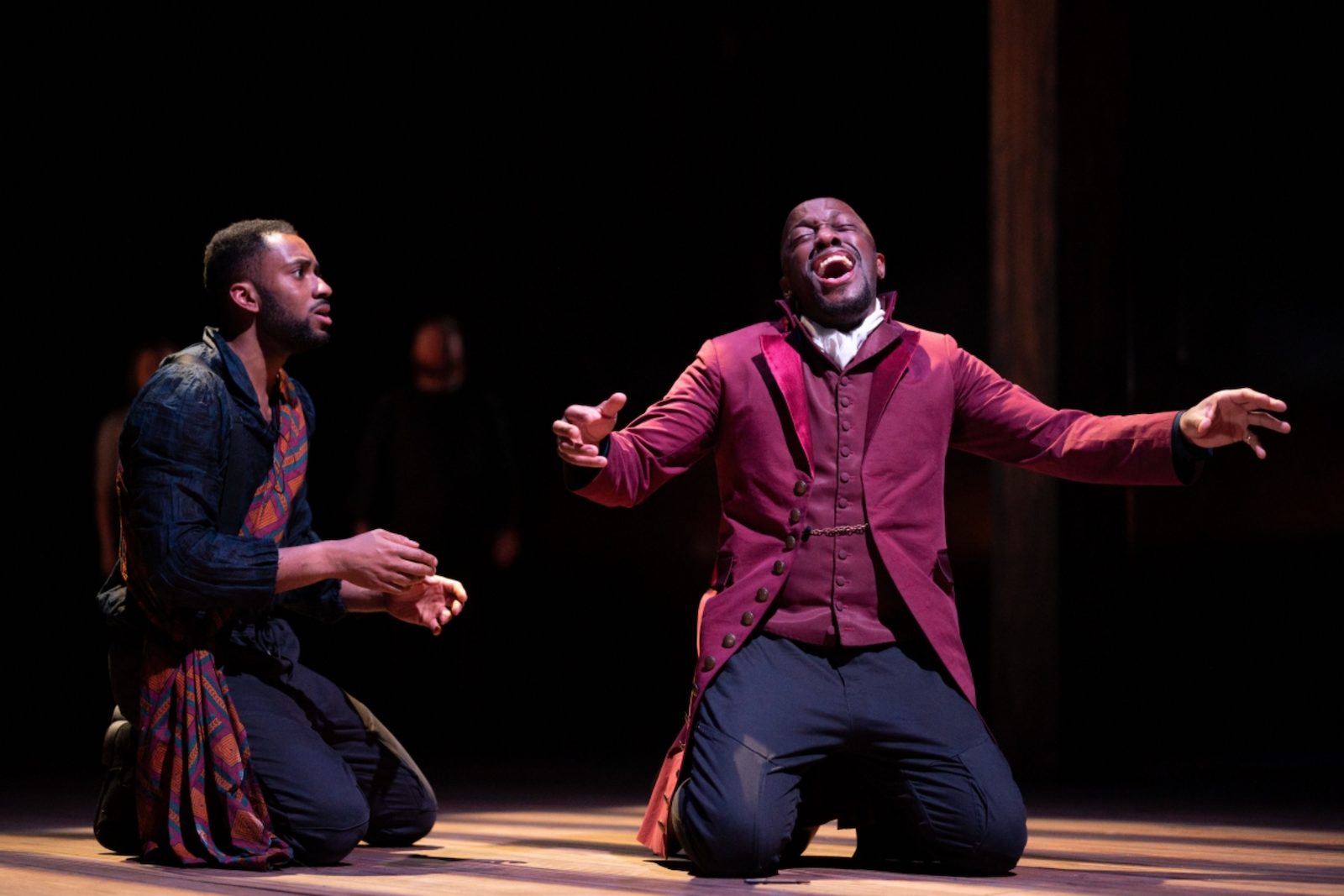
The Meaning of Zong opens in a contemporary UK bookshop, where Gloria, a young black woman (Kiera Lester), attempts to tell the white staff that they have misclassified a book about the Atlantic slave trade. They’re mystified. “It’s in African history,” they tell her. “But it’s British history,” she replies. They don’t understand, prevaricating with platitudes about ‘being allies,’ while vaguely insinuating that such decisions are taken by a distant boss. Gloria’s frustrated, but help is at hand, in the form of Olaudah Equiano (Giles Terera), a former slave, who steps out of the history book to tell Gloria (and us) his tale.

And the tale he tells is truly shocking: a shame-inducing account of an event so appalling it ought to be common knowledge. That it is not speaks volumes, illuminating the importance of that opening scene. If we don’t even acknowledge our history, how can we hope to learn from it?

In 1793, Oloudah tells Gloria, there was a massacre on board a British slave ship called The Zong. 132 slaves were thrown into the sea and left to drown, jettisoned because – so it was claimed – there was a shortage of drinking water, and so their killing was a “necessary” act. Not only did they commit murder, the ship’s owners also put in an insurance claim for the loss of their “property.” The insurers disputed the claim, of course (because some things are immutable), but not before Oloudah chanced upon the case, and joined forces with anti-slavery campaigner Granville Sharp (Paul Higgins) and shorthand secretary Annie Greenwood (Eliza Smith) to ensure the case was brought to public attention. The slave owners’ blatant dismissal of human beings as “cargo” caused outrage, and proved to be a significant step on the path towards abolition.

Although it’s an ensemble piece, this is very much Terera’s project: as well as playing Oloudah, he is both writer and co-director (along with Tom Morris). It’s a spectacular achievement, making bold social and political points, while still being playful and overtly theatrical. He pulls no punches and yet we’re on his side; he never lets us off the hook, but we feel galvanised rather than defensive.

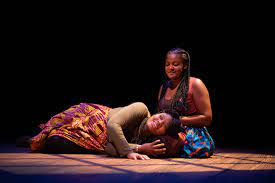
We never witness the massacre. Instead, we are shown the legal struggle Oloudah and Granville mount to have the court’s ruling overturned. Instead, we are shown the strength of three female slaves (Lester, Bethan Mary-James and Alice Vilanculo), recounting the story of Anansi, the spider god, calling on the spirits to save them. And one of them – unnamed – is saved, clinging to a rope, reaching through the years to become Terera’s inspiration for this devastating reminder of our collective guilt.

Jean Chan’s set is a thing of beauty, reinforcing the notion that everything is connected, that we can’t escape our past just by shutting our ears and hiding things away. Thus Westminster Hall’s magnificent wooden ceiling is also the slave ship’s hull; the judge’s bench is also a Waterstones bookshelf. The furniture we sit on, the cutlery we use, the sugar we sprinkle in our tea: these things are all linked to slavery, Oloudah tells Gloria – and the truth will out.

Sidiki Dembele’s onstage drumming is both powerful and provocative, first bringing the audience together then silencing us with its force. It’s the perfect accompaniment to a story that demands to be heard.

The Meaning of Zong has already finished its run at the Bristol Old Vic, and only has a few more days here in Edinburgh before it moves on to Liverpool. It’s worth seeking out. We mustn’t let this story fade away. It belongs in the bookshop’s window, not relegated to a forgotten shelf.

4.7 stars

Susan Singfield
The Northman

19/04/22

Cineworld, Edinburgh

It seems suspiciously like fate. Here I am – only just returned from a week in Shetland, where I’ve been researching Vikings – and this film is waiting for me at the local cineplex. Of course I have to see it. I can’t not see it. But I have some reservations. For one thing, despite the film’s almost indecent rash of five star reviews, I haven’t been exactly enamoured by Robert Egger’s previous offerings, The Witch and (more especially) The Lighthouse, both of which felt like cases of style over content.

It’s clear from the get-go, that The Northman is a big step up for Eggers (who co-wrote the screenplay with Sjon). His evocation of Viking life is vividly painted in freshly-spilled viscera across a massive landscape. The world-building here is dirty, ugly and thoroughly convincing. In the opening scenes, we meet young Prince Amleth (Oscar Novak), welcoming his father, King Aurvandil (Ethan Hawke), back from his conquests. Amleth’s mother, Queen Gudrún (Nicole Kidman), is rather less welcoming and the reason for that soon becomes clear. She has secretly allied with Aurvandil’s brother, Fjölnir (Claes Bang), who is determined to kill Aurvandil and his son, and take Gudrún as his wife.

If the story seems familiar, it ought to. The ancient Scandinavian legend of Amleth is the tale that initially inspired Shakespeare to write Hamlet.

Amleth manages to escape from the bloody mutiny and, when next we meet him, he’s grown into a thoroughly buff Alexander Skarsgård, who, adopted by another tribe, has become a fully-fledged wolf warrior, a berserker. An ensuing battle sequence leaves no femur unshattered, no skull uncleft. Those viewers who wince at bloody violence may prefer to avoid this film at all costs – or spend a lot of time looking away from the screen.

Amleth learns that his uncle Fjölnir has had his stolen kingdom taken from him and has been exiled to Iceland, where he’s attempting to make a new life for himself as a sheep farmer. Gudrún has gone with him and Amleth knows that he must follow. So he disguises himself as a slave (by first branding his chest with a hot coal) and stows aboard a boat taking a consignment of workers over to Fjölnir. On the hazardous journey across the ocean, he meets up with Olga of the Birch Forest (Anya Taylor-Joy), a self-professed earth witch, and quickly falls under her spell.

But can this new love quell the thirst for vengeance that has consumed him since childhood?

The Northman is by no means perfect. It’s at its best when depicting the savage lifestyle of the Vikings and I also love the hallucinatory images that often flood the screen, particularly Amleth’s repeated visions of the legendary Tree of Yggdrasill, where family members are suspended like ripening fruit from its entwined branches. There’s also a spectacular Valkerie ride that carries me headlong to Valhalla.

Kidman, though initially underused, does get one scene that puts an entirely different spin on circumstances and makes me appreciate why she’s a director’s go-to for so many difficult roles. I would also have liked to see more of Willem Dafoe who, as Heimar the Fool, has clearly been drafted in to fill the Yorrick-shaped hole in the piece.

If I have a criticism, it’s simply that the age-old theme of revenge offers little in the way of surprise – indeed, there’s one point in the film’s later stages that seems to offer a braver and less conventional solution to Amleth’s torture, should he be man enough to take it – but, perhaps inevitably, it’s thrown aside and our rugged hero goes back to the well-worn path he’s always been destined to tread. Which makes the final fiery confrontation a little underwhelming.

Still, there’s no doubt that this is Eggers’ most assured film thus far – and I’m definitely interested to see where he goes next.

4.2 stars

Philip Caveney

The Hermit of Treig

14/04/22

Mareel, Lerwick, Shetland

When we book our tickets for the The Hermit of Treig, it seems very fitting: we’ll be watching a documentary about a recluse living in a remote Scottish location, while we’re in a remote Scottish location! Such perfect symmetry! And it’d be a good idea, if it weren’t for the fact that Mareel – despite being the UK’s most northerly music, cinema and creative industries centre – doesn’t feel remote at all. It’s a bustling, vibrant place, and the Thursday evening showing is all but sold out.

Not that we’re complaining. We feel right at home. (In fact, Mareel is very much like HOME, one of our favourite Manchester venues). We sit in the sun-soaked, glass-walled bar for an hour before showtime, sipping beer and Prosecco, enjoying the buzz. The staff are friendly and the place pristine. It’s a real find.

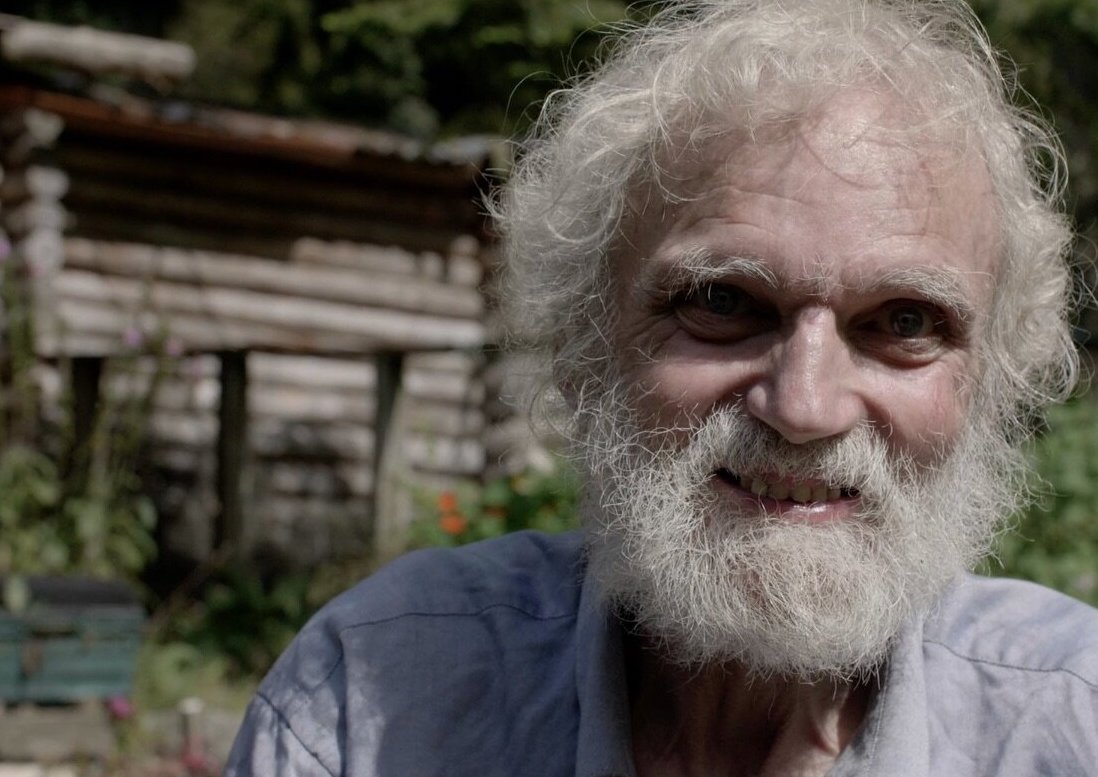
And Lizzie MacKenzie’s debut film is a find too. She’s spent ten years following Ken Smith, the eponymous hermit. And, over those years, a real friendship seems to have emerged. He may have turned his back on civilisation, but he’s an amiable sort: chatty and engaging and happy to share his musings.

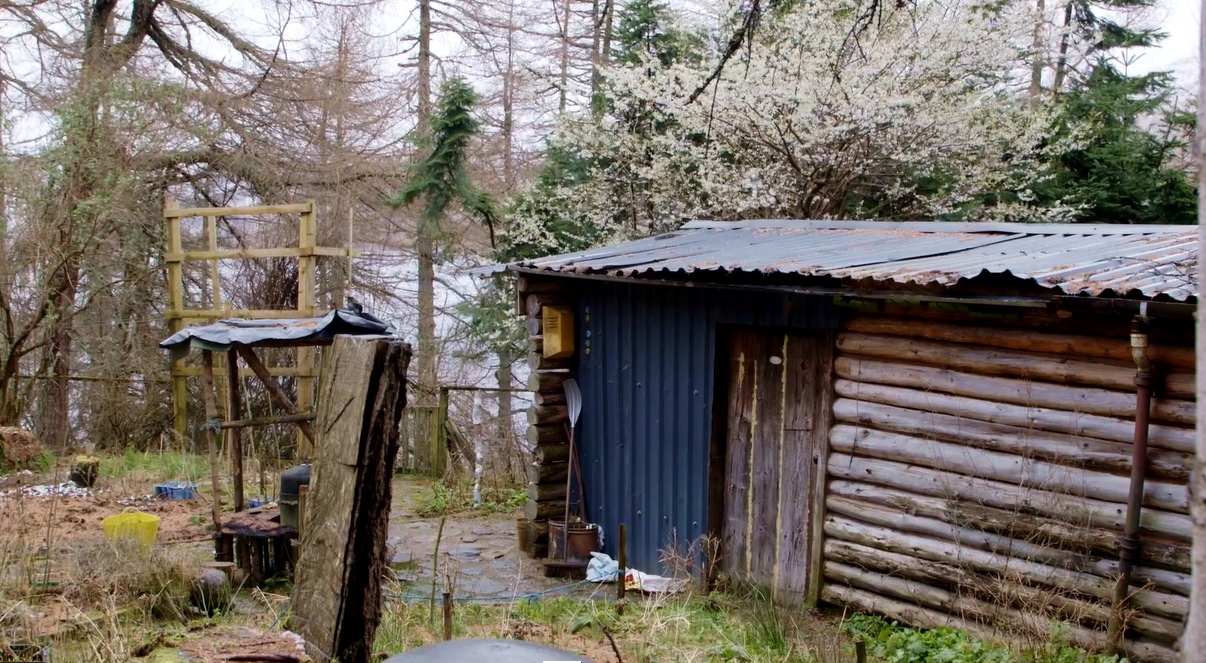
When he was twenty-six, Ken was viciously attacked, and suffered a brain haemorrhage as a result. His doctors feared he would never speak or walk again. But Ken pulled through and, as soon as he was well enough, he set off to live his life on his own terms. He went to Canada and lived wild in Yukon for a few years, before returning to the UK and heading north to Scotland. He walked the length and breadth of the country he says, before finally deciding to stay put near Loch Treig. And this is where the young film-maker finds him, living off-grid in a home-made wooden cabin, far far from any beaten track, foraging for food and revelling in his splendid isolation.

It’s a lovingly crafted film, with a tender heart; it’s easy to see why MacKenzie won the audience award at this year’s Glasgow Film Festival. It’s not just the cinematography (MacKenzie’s) and photography (Smith’s) that dazzle with their natural beauty; the documentary shimmers with kindness and humanity too. Ken is seventy-two years old now. He’s not as strong as he was. He’s had a stroke. How long will he be able to manage?

It’s heart-warming to see the local (okay, local-ish) community rally round. Everyone’s so respectful of Ken’s way of life. They try to help him, but they don’t dictate; they don’t attempt to change him. And Ken’s pretty accepting too: hopeful that he’ll be able to continue living independently in his beloved hut, but pragmatic about the possibility that he might not.

There are some gaps in the narrative that I’d like explained. Is Ken allowed to just build a home in the woods? How does he get his photographs developed? What was the story behind his first cabin being destroyed? There are tantalising hints at avenues left unexplored.

Still, just like Mareel, The Hermit of Treig isn’t what we expect. And, like Mareel, that’s absolutely a good thing.

4 stars

Susan Singfield

The Dowry

12/03/22

Commercial Street, Lerwick

We’re in Shetland, mainly for the purposes of researching a book I’m working on. But it would be rude, wouldn’t it, to pass up the opportunity to try out some of the local dining venues? We’re based in Lerwick and a wander around the town doesn’t reveal anywhere that looks particularly promising. However, an online check reveals that a place called The Dowry has several good reviews, and it turns out the place is only a short walk away from where we’re staying.

It’s a lively cafe bar, run by friendly young people and we’re soon enjoying a convivial drink while we peruse the menu and listen to a selection of Manchester music. Hang on, isn’t that Blossoms? Susan used to teach drama to the keyboard player! A case of synchronicity, I suppose.

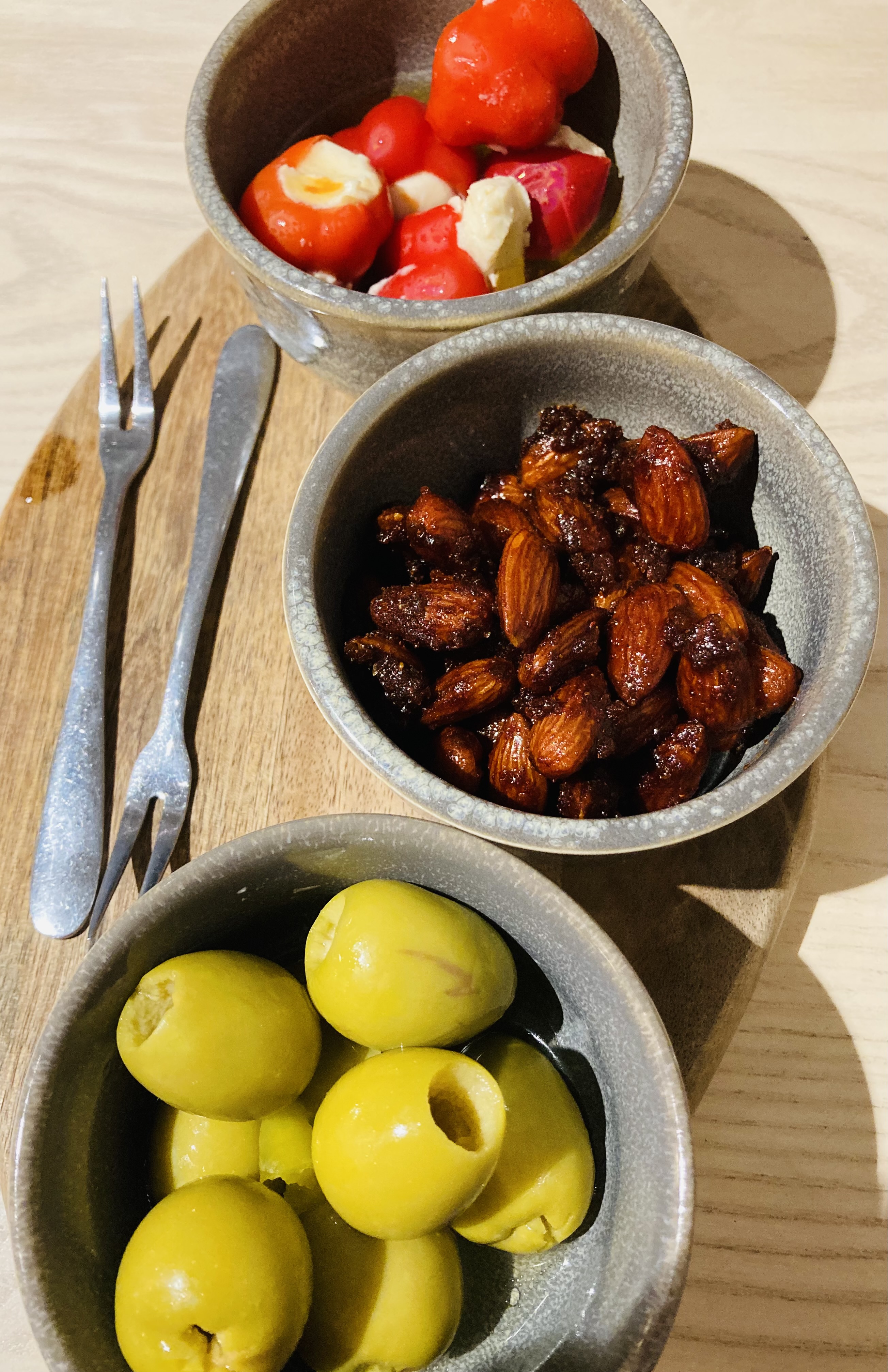
The concept here is shared plates so we order a starter of Gordal olives, sweet bell peppers and smoked almonds. Of course, there isn’t much preparation involved here but it’s a little triumph, the huge firm smoked olives making all other olives seem meh by comparison, the bell peppers sweet and stuffed with a creamy cheese filling and the almonds – though the first spicy/salty mouthful is disconcerting – quickly grow on me until they’ve become incredibly more-ish.

Next up we share a small plate of sesame Halloumi, which comes on a bed of Tabouleh, and is liberally decorated with blobs of yoghurt. There are two generously-sized chunks of cheese and, while this is a little bland, it’s more than made up for by the rich Moroccan flavours of the tabouleh and that tangy yoghurt.

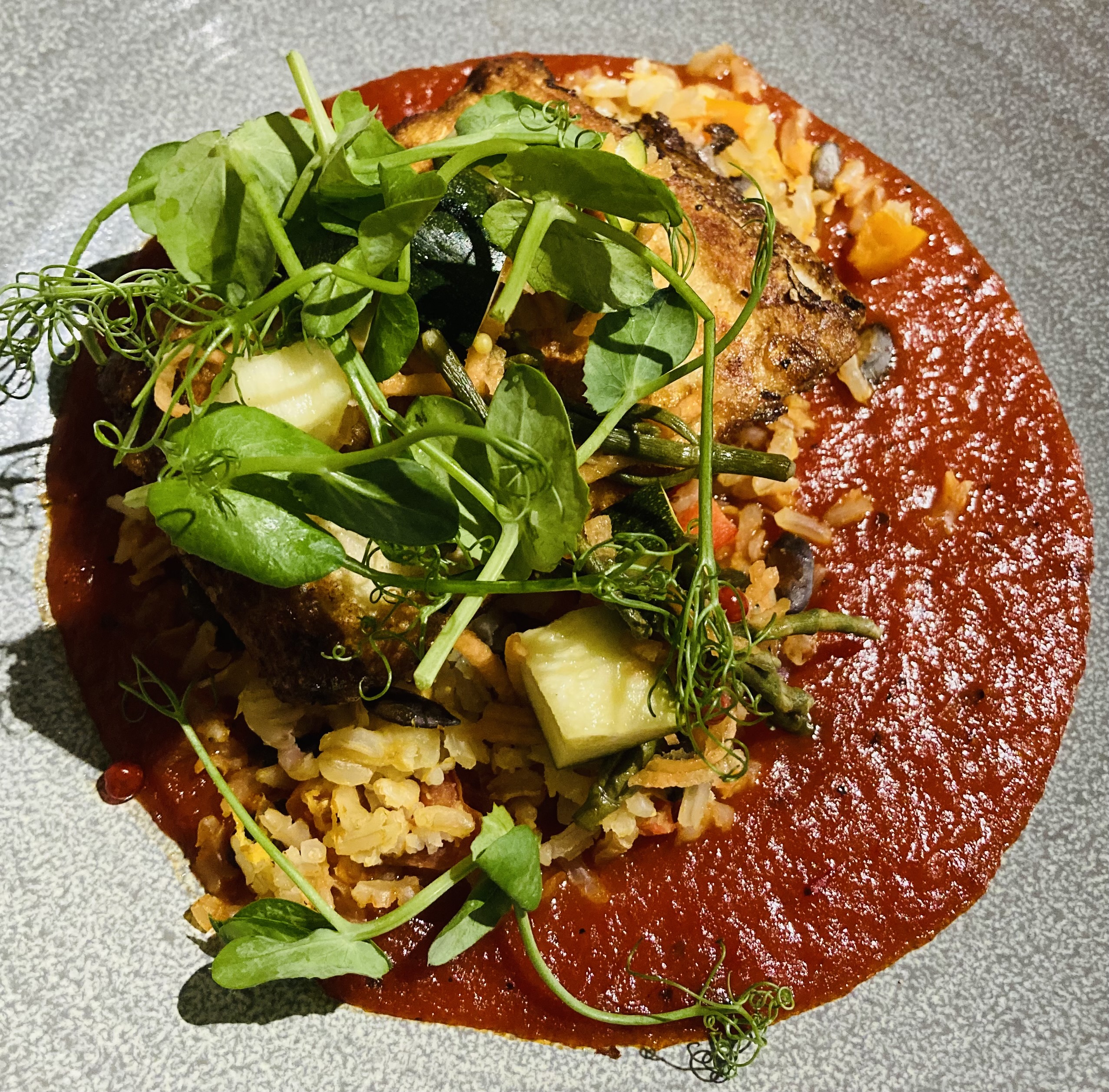
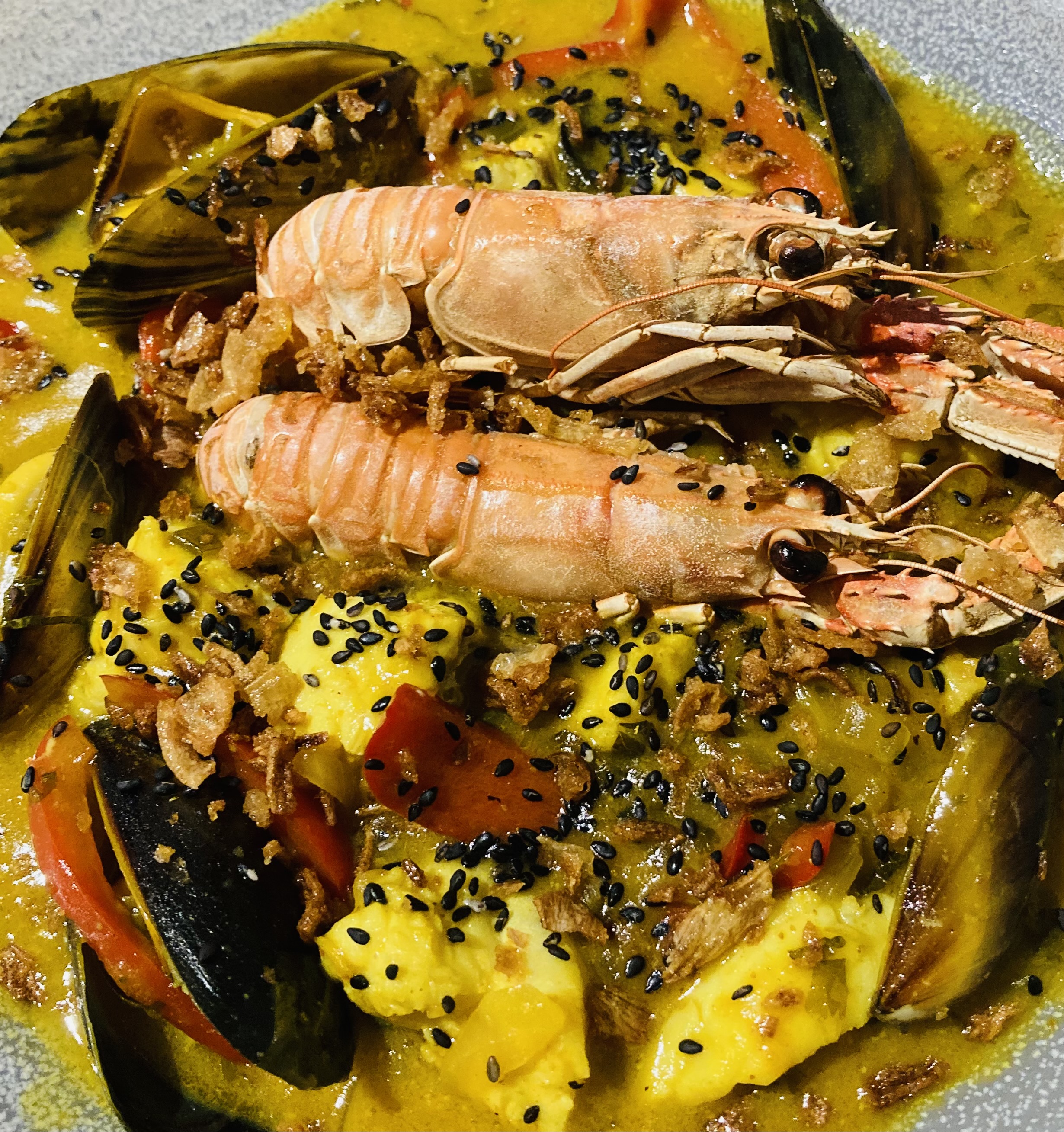
Two large, colourful plates follow. There’s a lovely pan-fried halibut which comes with brown rice, pickled veg and a deliciously sweet red pepper purée. The fish is perfectly cooked, a delightful flakiness under the crispy fried coating. There’s also a seafood stew, which features a couple of langoustines, some exemplary mussels, several beautifully cooked scallops, ling and monk – all ladled with a sublime lemongrass and coconut sauce. Everything on the plate is good save for the langoustines (and this is by no means the fault of The Dowry), which offer the usual dispiriting evisceration of heads, legs, carapace, only to leave an insubstantial scrap of flesh, which is gone in seconds. I’m beginning to feel the same way about lobster. It always looks so imposing on the plate yet hardly seems worth the effort. But I digress.

Overall, this is a thoroughly enjoyable dining experience: the food adventurous, the atmosphere buzzing and it’s excellent value for money. Unusually, we’re both too full to sample the puddings, though they sound worthy of further investigation another time.

So, if in Lerwick, do check out the Dowry. It’s worth your while.

4.2 stars

Philip Caveney

True Things

07/04/22

Cineworld, Edinburgh

Kate (Ruth Wilson) has reached a difficult point on life’s highway. 

She’s somewhere in her thirties and struggling to hold down a thankless job at a benefits office in Ramsgate, where her customers seem to specialise in hurling abuse at her. She has no significant other in her life, no real interests and spends much of her free time gazing wistfully at exotic locations on her computer screen. Her work colleague, Alison (Hayley Squires), is trying to hook her up with one of her male friends, telling her that she needs to start playing the field if she doesn’t want to be a spinster all her life – while Kate’s mum (Elizabeth Rider) criticises her daughter’s ‘difficult nature,’ which – apparently – makes her come across badly to others. Kate’s dad (Frank McCusker) just seems obsessed with giving her home-grown vegetables from his allotment.

It’s clear that Kate is badly in need of new horizons – and things change dramatically when she conducts an interview with ‘Blond’ (Tom Burke), a handsome stranger, who freely admits to having done time in prison and cheekily wants to know if she’s free for lunch later on.

Against all better judgement, Kate accepts the invitation and shortly thereafter finds herself engaged in frantic sex in a high rise car park. To say that she’s smitten by Blond would be something of an understatement. She becomes instantly obsessed with him, unable to function properly when he’s not there, constantly waiting for a call or a text or… something. 

The trouble is, Blond is in complete control of this dangerous liaison and careful to give nothing away about his situation or his intentions. As viewers, we learn as little about him as Kate does. He’s an enigma and a pretty toxic one at that. It’s crystal clear that, if Kate cannot break the powerful hold he has on her, she is destined for heartbreak.

Harry Wootliff’s powerful little film is a veritable powder keg of longing, a symphony of doomed ambition. It’s as much a meditation on the theme of loneliness as it is an examination of the powerful pull of sexuality. Wilson is terrific here, offering yet another of her bruised outsiders struggling to survive the vagaries of life. She takes Kate through a maelstrom of subjugation until she finally seizes agency on a Spanish dance floor, thrashing ecstatically around to the sound of PJ Harvey’s Rid of Me

Burke, meanwhile, makes me understand exactly why Kate is in Blond’s thrall, even when he’s being obnoxiously vague about his intentions or heartlessly exploiting her utter devotion to him. He is powerfully charismatic. The film is essentially a two-hander, with an underused Squires doing the best she can with the thankless role of Alison.

It could be argued that True Things is relentlessly one-note, but if that’s the case, then it’s a note played with utter perfection by skilled artists. The characters here feel absolutely genuine and the slow-burn, languorous atmosphere is further intensified by Ashley Connor’s woozy cinematography, which often depicts events in an out of focus haze. A scene where Kate reels drunkenly around at a house party almost has me reaching for the alka seltzer. Furthermore, there’s a delicious duality to what’s depicted onscreen. I’m not always certain that scenes I’ve just watched have actually happened or are simply imaginings plucked from within Kate’s troubled head-space 

This could easily be annoying but, in the case of True Things, it gives the film added depth.

4 stars

Philip Caveney

The Da Vinci Code

05/04/22

King’s Theatre, Edinburgh

Ah, The Da Vinci Code. That preposterous juggernaut of a 2003 novel: badly written, controversially researched, ludicrously convoluted – and yet, somehow, as popular as can be, selling more than eighty million copies worldwide. 

Dan Brown’s tale leans on other people’s cleverness: his protagonist, Robert Langdon, is a Harvard professor, whose sidekick, Sophie Neveu, is a brainy cryptographer. Their enemies are equally learned, and the murder at the heart of this high-octane mystery takes place in the highbrow setting of the Louvre. Indeed, the whole plot is reliant on the duo’s impressive understanding of theology, symbology and Renaissance art. All of this, of course, is just smoke and mirrors, obscuring what is – essentially – a cryptic crossword given legs. Nevertheless, it’s undeniably engaging; there’s a reason the novel was a runaway hit. 

This stage adaptation (written by Rachel Wagstaff and Duncan Abel) doesn’t shy away from the schlocky nature of the source material. Instead, director Luke Sheppard uses more smoke and mirrors, this time in the form of impressive technical effects and slick production values. If touring shows can sometimes seem a little lazy, this is anything but, and Brown’s silly story is elevated by some damn fine theatrics. 

The plot is pared back, so that there’s less obfuscation and greater clarity. There are fewer chases (thank goodness). Nigel Harman imbues Langdon with a credible seriousness: it’s an unshowy, subtle piece of characterisation that serves the production well. In many ways, he’s the still centre of it all: bemused at finding himself involved, but quietly determined to sort things out. Hannah Rose Caton’s Sophie is somewhat livelier, as suits the role, but neither she nor Harman dominate the stage. That’s not what this is about, after all. 

The focus here is on the clues, on the elaborate treasure hunt that sees the pair wielding guns and crossing continents, challenging religious doctrines and theorising about everything from the Mona Lisa to the Holy Grail. David Woodhead’s bold set – all gauze panels and moments of revelation – is complemented by Andrzej Goulding’s stunning video design, with luscious projections filling every wall. It’s a dazzling spectacle (and, naturally, there’s an extra frisson for us as an Edinburgh audience, when the depiction is of nearby Rosslyn Chapel).  

I like the chorus too: the company sits, blank-faced and hooded at the side of the stage, rising occasionally in sporadic chants and rituals, all precisely choreographed by Tom Jackson Greaves. 

So – admittedly somewhat to my surprise – watching this production is a real pleasure. And not even a guilty one. 

4 stars

Susan Singfield

The Eyes of Tammy Faye

28/03/22

Disney +

The Eyes of Tammy Faye never made it to ‘a cinema near us,’ despite being relentlessly trailed. Still, as previously documented, we’ve signed up to Disney+ for a short spell, thanks to their dastardly decision not to release Turning Red anywhere else – and the presence of Tammy Faye on the platform makes us slightly less aggrieved about it.

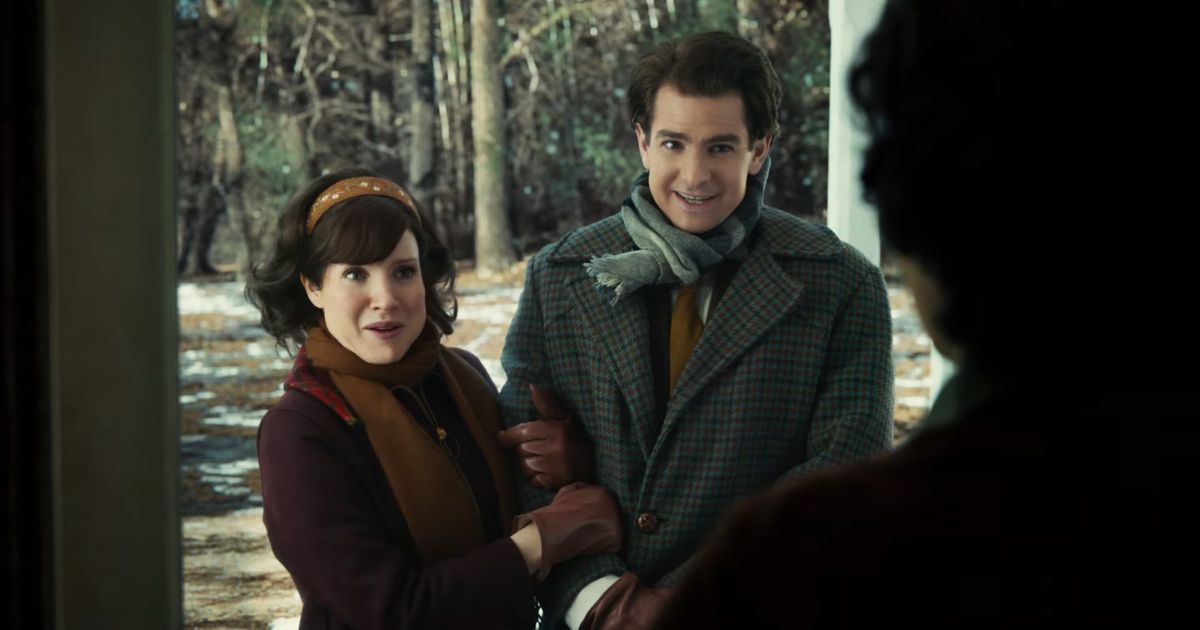
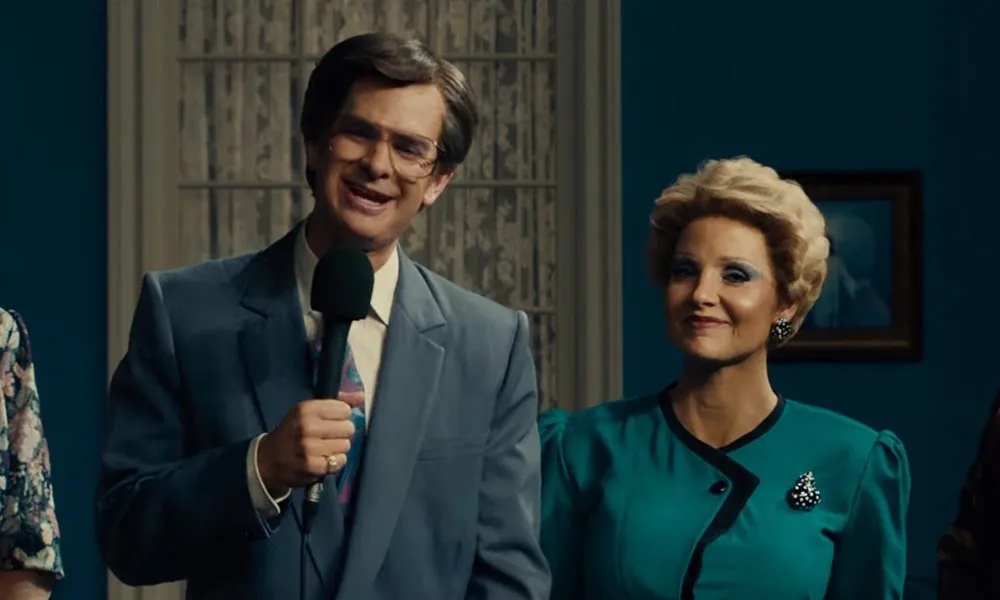
Michael Showalter’s film works just fine on the small screen; it’s about TV after all: an intimate biopic of one of the USA’s most infamous televangelists, based on a documentary by Fenton Bailey and Randy Barbato. After hosting a successful Christian puppet show for their local channel, Tammy Faye (Jessica Chastain) and her husband, Jim Bakker (Andrew Garfield), co-founded The PTL Club in 1974, and soon found they had a TV hit on their hands. By 1978, they were ready to embark on a new money-making project: a Christian theme park called Heritage USA, all funded by their fans/parishioners – or ‘partners’ as they referred to them.

The couple’s finances burgeoned along with their popularity, and they were soon splashing the cash, luxuriating in fur coats and art-filled mansions. Tammy gained notoriety for her outspoken support for the LGBT community, and particularly HIV/AIDS sufferers. Other high-profile evangelists disapproved of her convictions, but Tammy’s public preaching of love and acceptance made a real difference to the popular discourse. Jim, on the other hand, was causing controversy in other ways, and – in 1989 – found himself convicted on several counts of fraud and conspiracy, and was imprisoned for his crimes.

If Tammy is a woman of contradictions (and she is), then so is the film. There are some glorious sequences (the final rendition of Hallelujah, for example, and Tammy’s disarming approach to a group of teenage hoodlums poking fun at her). But there are also glaring omissions. The couple’s early path to local TV is never shown, and Richard’s extra-marital dalliances and abuses – both hetero and homosexual – are only tangentially referred to. Of course, we are seeing things through Tammy’s eyes, as the title makes clear, but her ignorance means that we miss some of the most compelling aspects of the tale.

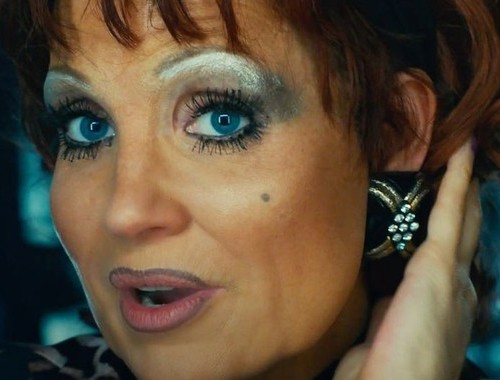
Make no mistake, Chastain is exceptional in the titular role: this is a truly stellar performance. Her Tammy is a wonderfully appealing woman, a heady mix of strength and vulnerability, naïvety and nouse. Even when she’s ridiculous – with her tattooed make-up and desperate smile – she’s somehow dignified and commands respect. Chastain pulled the Oscar for this last night, and it’s not hard to see why.

Still, a perfect performance doesn’t always equate to a perfect film, and this one sadly falls short.

3.7 stars

Susan Singfield