Soldiers of Tomorrow

09/08/23

Summerhall (Old Lab), Edinburgh

Former Israeli soldier, Itai Erdal, has an acutely focused view on the complex issues that surround the Arab-Israeli conflict and the occupation of Palestine, so much so that he, a former soldier himself, eventually decided to pack up his belongings and emigrate to Vancouver. It is his belief that the situation in Israel is fast approaching boiling point.

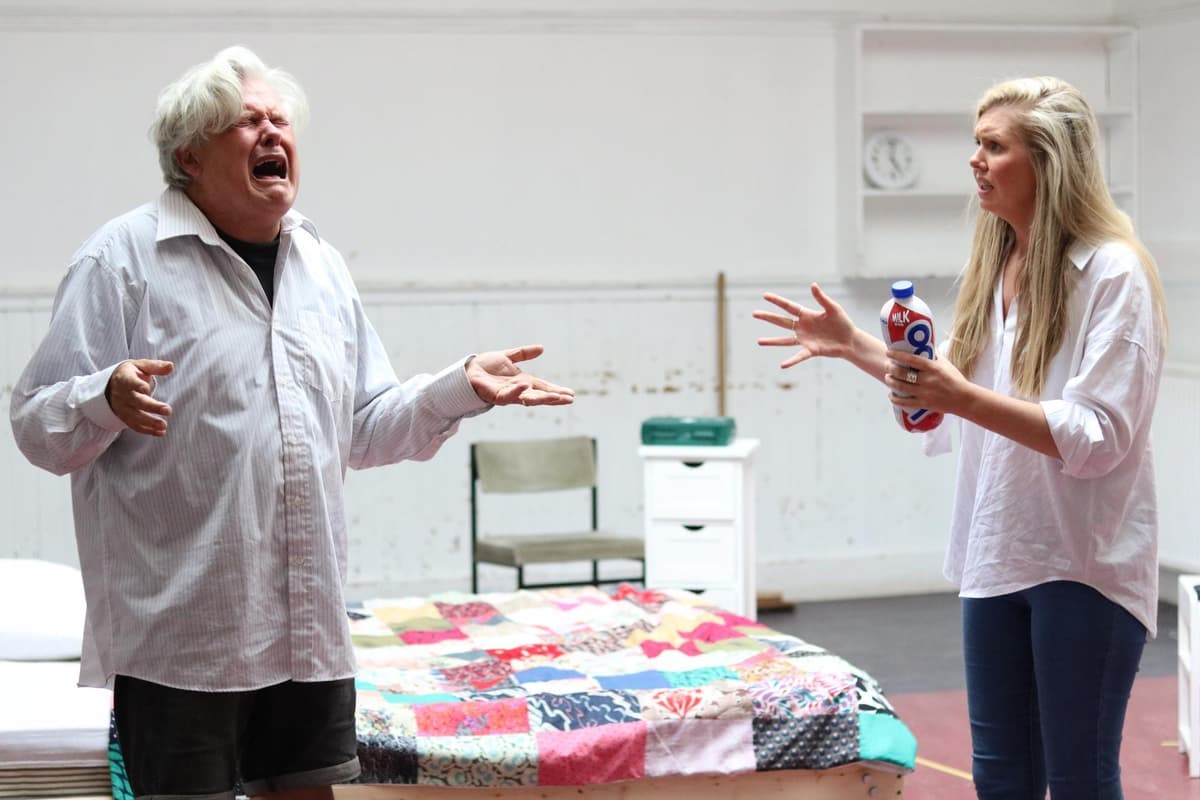
In the Old Lab at Summer Hall, battalions of tiny plastic soldiers stand guard as we enter the performance space. (A hapless audience member manages to stand on some of them and is clearly mortified, but this will prove to be ironic later.) Erdal enters and tells us a story about his regular visits to his barber, an Iraqi, who shaves him using an old fashioned straight razor – and how he can never quite stop himself from picturing this smiling, friendly man taking that razor and cutting his throat…

The following monologue takes in some of Erdal’s personal experiences in the Israeli army: interactions with his fellow troops; encounters with people who may or may not be dangerous. As he talks, Syrian musician Ermad Armoush plays live, complex pieces on traditional instruments, clearly with the intention of underpinning the monologue, though occasionally managing to obscure what Erdal is saying.

I’d be the first to admit that I’m woefully ignorant about the situation in the Middle East; as Erdal points out, many Westerners are uncomfortable discussing it, concerned about unintentionally sounding anti-Semitic. By the end of the show, I know a great deal more about the subject – a sequence utilising a whole collection of flags is particularly useful, effectively illustrating how Israel has been ruled by so many different nations over the millennia – but I feel that the delicate balance between lecture and entertainment is often too heavily weighted towards the former. At one point Erdal strides around with a very realistic automatic weapon which makes me feel really uncomfortable. That’s the point, I guess, and it works. Erdal is worried that his homeland is guilty of the very racism it was established to mitigate, and he’s distraught that his that his nephew, Ido, has recently followed in his footsteps and enlisted in the army.

It serves us all well to understand as much as we can about the Arab-Israeli situation, and there is much to learn from Soldiers of Tomorrow.

3 stars

Philip Caveney

Mystery House

09/08/23

Gilded Balloon Teviot (Turret), Edinburgh

Mystery House is screenwriter Wendy Weiner’s account of a genuine place, Winchester House. Created by the widow of the man behind ‘the rifle that won the West’, it has been a source of conjecture since its foundation stones were laid in 1866.

After her husband died from tuberculosis, Sarah ‘Sally’ Winchester devoted her life to creating this bizarre sprawling mansion with over two hundred rooms, where building work continued non-stop for thirty eight years until her death in the 1920s. 

Was it because she was terrified of what might happen to her if she ever allowed the work to cease? Well, that’s the official line, anyway… Because, of course, the Mystery House is said to be haunted. In fact, Weiner begins her talk with a disclaimer. If anything of a supernatural nature should occur, she cannot be held responsible for our safety. This sounds weirdly promising, though the show doesn’t really deliver on that score.

Instead, Weiner shines a light on the ways in which women are so often diminished, their pursuits limited purely because they are women – something that Weiner herself has experienced in her brushes with the House of Mouse (Disney Studios). She skilfully interweaves other narratives into her presentation too: the story of her father and his battle with cancer and an account of Abraham Lincoln’s widow, Mary Todd, and the shoddy treatment she received after her husband’s assassination.

Weiner is a confident and likeable performer and she handles the various strands of the story with aplomb, cutting effortlessly back and forth as the narrative unfolds. And yes, the Winchester House does seem a fascinating place to visit, even if the promotional guides have amped up some of the creepier details.

The promotion for this monologue suggests that it’s heading into darker territory than it actually visits, and there’s part of me that would like to see that side developed a little more – but this is nonetheless a fascinating insight into the place that was the inspiration for Disney’s Haunted Mansion.

3.8 stars

Philip Caveney

Please Love Me

08/08/23

Pleasance Dome (Ace), Edinburgh

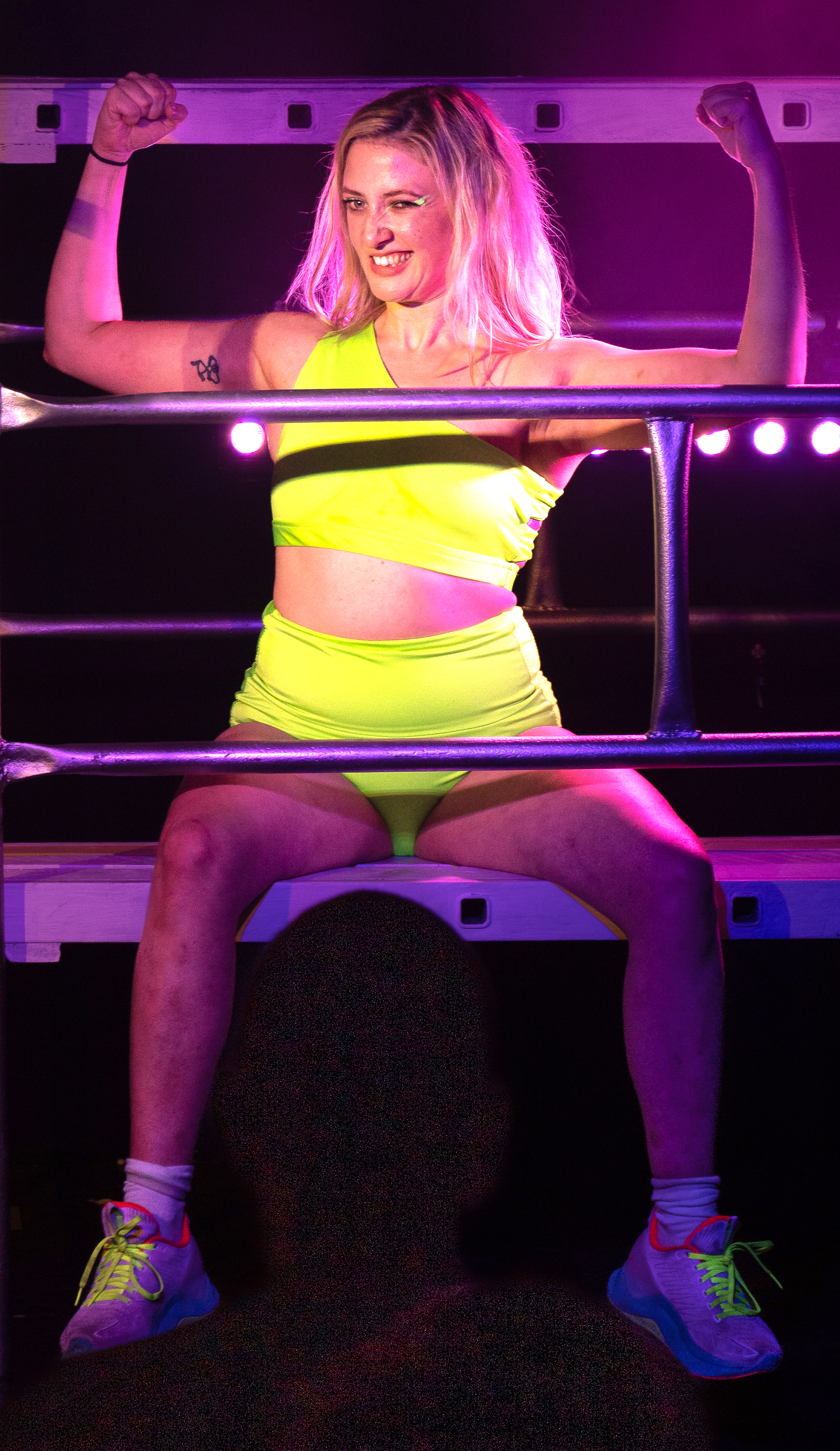
We last saw Clementine Bogg-Hargroves in Skank, a self-penned one-woman show, which was a bright spot in 2021’s weird semi-Fringe, even though it was largely about smear tests.  

This year’s offering is, if anything, even more up close and personal; certainly it’s more literally in-your-face. We’re in the front row, only a few feet away from the small stage, where there’s no shying away from Bogg-Hargroves’ intense, pleading gaze. Or her pole-dancing.

Please Love Me is, as the title suggests, all about need – specifically the need for love and validation. It’s also about the nature of choice, about how the decisions we make are actually part of our conditioning. “Please love me,” Clem asks again and again. By the end of the hour, we kind of do. 

In this deeply personal coming-of-age story (it’s “almost all, sort of, maybe true”), Bogg-Hargroves revisits her teenage years and her burgeoning sexuality. It’s all here: the funny stuff, the silly stuff, the friendships, trauma and heartbreak. Okay, so maybe we haven’t all done a stint as a stripper or fallen pregnant at nineteen, but I think the emotional landscape will be recognisable to most women; it isn’t hard to empathise.

Bogg-Hargroves is a disarming performer, and she’s ably supported by co-writer and director Zoey Barnes. Indeed, I’d like to see Barnes doing more; she has a likeable stage presence, and works well as a steady foil to Clem’s heightened emotions. The set is simple – a pole and some scaffolding – and, along with the costumes, cleverly contrives to create the visual impact of a strip club without the titillation.

Please Love Me is an engaging and disarmingly frank piece of theatre that raises as many questions as it answers.

4 stars

Susan Singfield

Blood of the Lamb

08/08/23

Assembly George St (The Front Room), Edinburgh

Arlene Hutton’s Blood of the Lamb pulls no punches: it’s a searing indictment of recent changes to abortion laws in the USA. Since Roe v Wade was overturned in June 2022, many Americans have lost their right to bodily autonomy: abortion is now illegal in many states, and history shows us that women will pay the price with their lives.

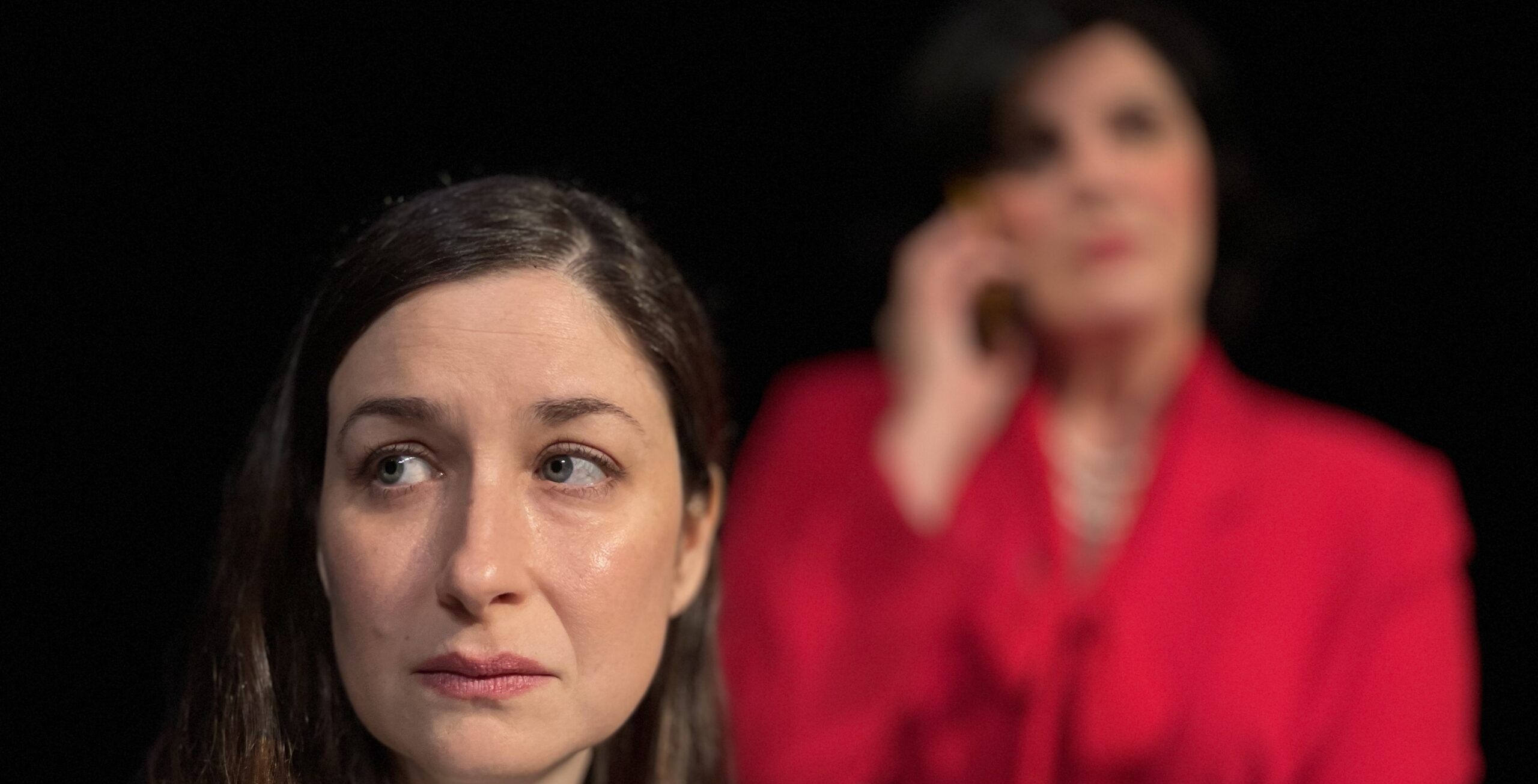
In this harrowing drama, Nessa (Dana Brooke) is on a flight from California to Illinois when she falls ill. The flight is diverted to Dallas, and she is given the devastating news that the much longed-for baby she is carrying is dead. But that’s not all. New state laws dictate that she must remain in Texas until the deceased foetus is born; the fact that this poses a serious threat to her own chances of survival is neither here nor there. The state has appointed a lawyer to represent ‘the baby’ and Val (Elisabeth Nunziato) is determined to follow the law to the letter. Even if the ink that wrote the letter isn’t quite dry…

Directed by Lyndsay Burch, this play feels claustrophobic: it’s like we’re all trapped inside the closed minds of the (male) lawmakers, like we’re all sharing Nessa’s grief and outrage, unable to escape from the small room she’s confined to. The Assembly’s ‘Front Room’ is a shipping container, and it’s the perfect venue for this stifling narrative.

Brooke plays the everywoman’s anguish very well, aghast at the preposterous nature of the situation she’s in, while Nunziato imbues the implacable lawyer with a believably awkward demeanour, caught between her almost fanatical faith and her desire to be a good person. It is to the actors’ and writer’s credit that this heartbreaking and powerful production also manages to make us laugh at times, though generally in disbelief.

I’m trying to resist calling Blood of the Lamb ‘Kafka-esque’, although it is, because that shifts the focus to its literariness. Instead, I want to call it ‘urgent’, because this kind of thing is actually happening in the real world. Now.

4.7 stars

Susan Singfield

The Trials of Galileo

08/08/23

Greenside @ Infirmary Street (Mint Studio), Edinburgh

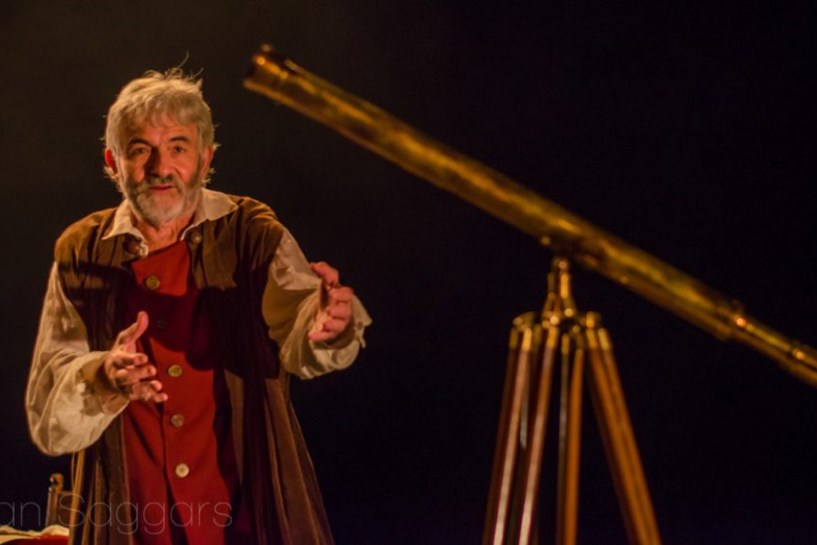
Veteran actor Tim Hardy is never less than excellent. Tucked away in this unassuming studio on Infirmary Street, his latest Fringe performance arrives without fanfare, but his reputation clearly precedes him: there isn’t a spare seat in the house. Of course, Galileo might have something to do with it too. It’s a cleverly chosen topic, curiously apposite in these post-truth times.

Written and directed by Nic Young, The Trials of Galileo is an insightful piece, illuminating a specific historical event, as well as the human and systemic failings that caused it. That event, of course, is the Roman Catholic Inquisition’s persecution of astronomer Galileo Galilei, in response to his assertion that the Earth revolves around the sun – contrary to the scriptures and therefore heresy. The great scientist’s frustration is palpable and compelling; it’s impossible not to wince as he does what surely most of us would do when threatened with torture, namely swallow down our fury and deny the truth we know. The description of that torture is horrifying, a stark and terrible reminder of what people are prepared to do to one another to stoke their egos or preserve their power.

Young’s words are finely-crafted, and Hardy knows how to give them weight, to cast light on the ridiculousness of Galileo’s situation: a great mind, forced to capitulate to those far stupider than he. How many people have suffered because of the blind faith religions (and quasi-religions, like Trumpism) demand, because inconvenient truths are hard to hear?

The biggest tragedy isn’t that Galileo was silenced; it’s that nothing much seems to have changed.

4.5 stars

Susan

Jo Caulfield: Razor Sharp

07/08/23

Stand 3, Edinburgh

As Fringe reviewers, we’re generally on the lookout for new acts. On the other hand, there are some old favourites that we just can’t stop returning to. Jo Caulfield is one such performer. This woman is an enigma, relentlessly old school in her approach, yet with an acidic edge that never feels old fashioned. She has the uncanny ability to nail her chosen target with a few carefully chosen put downs and move on to the next subject.

Razor Sharp is this year’s title and it sums her up very succinctly.

Out she comes and we can see she has a cob on about something and she isn’t holding back. People brave enough to sit in the front row are quickly excoriated, but here’s the thing: they love being demolished! A range of targets are unceremoniously despatched. Old grudges are aired in no uncertain terms. And, most importantly, we are all laughing uncontrollably, pretty much from the word go, at the comprehensive list of irritations she’s made notes on since we last saw her.

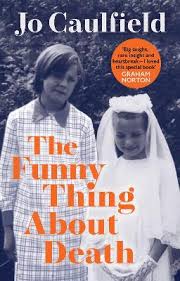
In a variation from her norm, she’s recently published a book, but – unlike many comics who go for the ‘how I became funny’ approach or the (inevitable) children’s series – she’s chosen to write about death, more specifically, the untimely demise of her beloved sister. Even more unusual, she’s donating all of the proceeds to Macmillan Cancer Support, and she’s already raised thousands of pounds. Yes, copies are available at the shows.

If you’re thinking that it all sounds a bit grim, relax. She reads a brief extract and, while there’s a thread of melancholy woven through the writing, it’s as incisive and bitingly funny as just about everything else she turns her attention to.

So, yes, there will probably be more groundbreaking comedians at the this year’s Fringe. There will be performers who will take you on a journey, who will make you look into your souls and rethink your very existence. But if you’re craving the experience of being absolutely helpless with laughter, this is where you need to come. And to those who quibble about her sharp edges, she has her own glorious riposte.

‘Unlikeable? Me? I’m fuckin’ delightful!’

4.7 stars

Philip Caveney

Alison Skilbeck’s Uncommon Ground

07/08/23

The Front Room, Assembly Rooms, Edinburgh

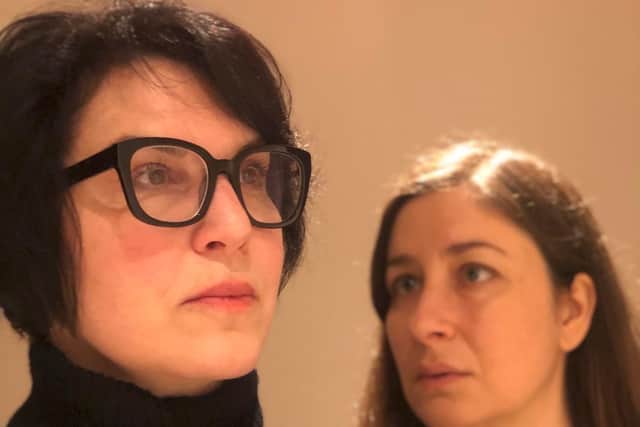
The last time we saw Alison Skilbeck, she was playing the role of Mrs Roosevelt in the comparative luxury of Studio 5, George Square. This year she’s appearing in The Assembly’s Front Room, a converted shipping container, but – as ever – she gives the performance her all, and we might as well be in a park somewhere in London, where the piece is set.

We first saw a Skilbeck performance back in 2017 (The Power of the Crone) and we’ve made a point of tracking her shows ever since, always interested to see where she’ll go next. The delightful thing is that we never really know what we’re going to get.

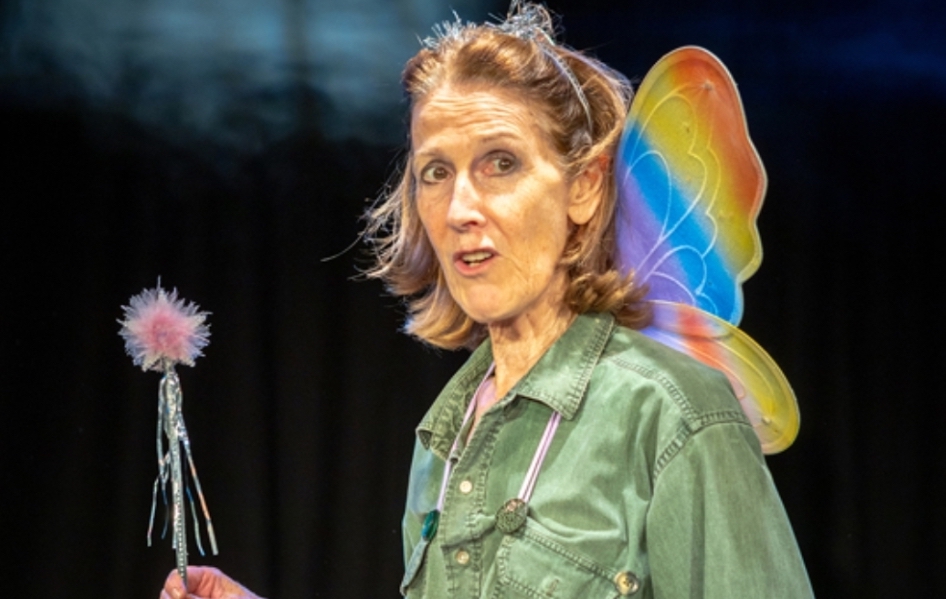
This year, she performs a collection of self-written monologues, set during lockdown. It features five human characters and one that … well, I don’t want to give too much away. As ever, she does that thing she always does, putting on a hat or a pair of fairy wings and suddenly inhabiting the character the item belongs to. These characters are not all female and they range from childhood to old age, but there’s something that interlinks them all, something we’re not fully aware of until the conclusion.

It’s a lovely piece of writing, gentle and lyrical, which captures the nuances of everyday speech with considerable skill, and an hour and ten minutes slips easily by. Along the way we are given some thoughtful insights into the human condition through the words of strangers we somehow end up caring about.

If this sounds like your cup of tea, it’s all waiting for you in a tin box on George Street.

4 Stars

Philip Caveney
After the Act

06/08/23

Traverse Theatre, Edinburgh

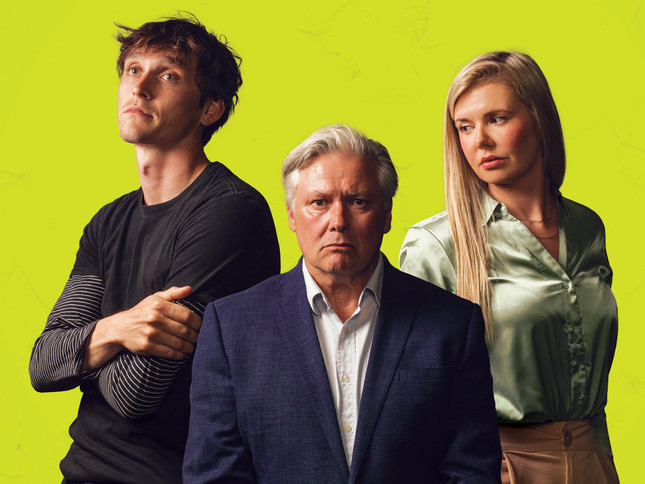
In 1988 I was in sixth form. I was (am) straight, and didn’t think I knew any gay people at all. No one was out. Nonetheless, when Section 28 was introduced – banning the promotion of homosexuality in schools – we all thought it was stupid. Not just cruel and regressive, but thick. We knew we couldn’t be encouraged into being gay, that no amount of advocacy by teachers – teachers! – could ever change who we were. Outlawing any positive mention of queer people though, that could hurt. We were only kids, but even we could see that.

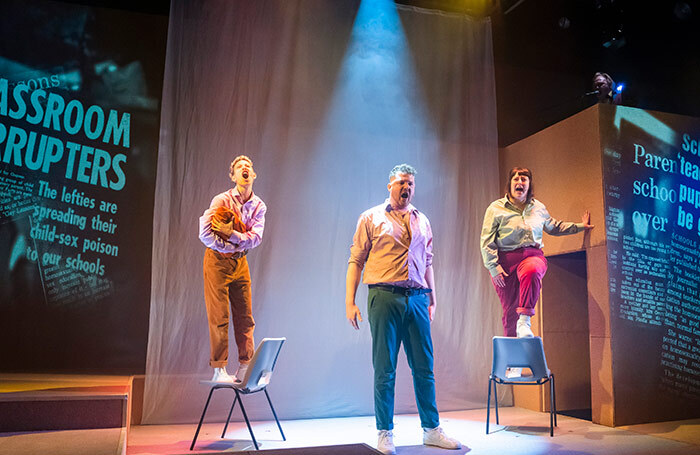
Breach Theatre’s After the Act shows just how much hurt there was. This musical, written by Ellice Stevens and Billy Barrett, with an original score by Frew, is a verbatim piece, relaying the experiences of LGBTQ+ students, teachers and activists who struggled and fought through Section 28’s fifteen-year reign. It’s both shocking and compelling, an object lesson in how to stage a polemic. By turning the words into songs, Breach Theatre give them extra weight and meaning, turning some into plaintive refrains and others into angry protest chants.

There are six performers onstage: two musicians (Ellie Showering and Frew) and four actors (Stevens, Tika Mu’tamir, EM Williams and Zachary Willis. Under Barrett’s direction, this is a lively, insistent piece; indeed, thanks to choreographers Sung-Im Her and Anouk Jouanne, the actors are always in motion, the interweaving stories physicalised into a complex web. Although the production is a serious one, focusing on some very real anguish, there are also moments of humour, of light shining through the darkness.

Much of what we’re shown is shocking. A couple of lesbian protestors disrupt the six o’clock news, and Nicholas Witchell – who wrestles one of them to the ground and puts his hand over her mouth so that Sue Lawley can carry on and read the day’s stories – is lauded as a hero rather than being done for assault. Another particularly striking statement comes from a member of Haringey Council’s Lesbian and Gay Sub-Committee, who notes, “We are at a disadvantage because we can only use rational argument, while the opposition are tapping into irrational fear and bigotry.”

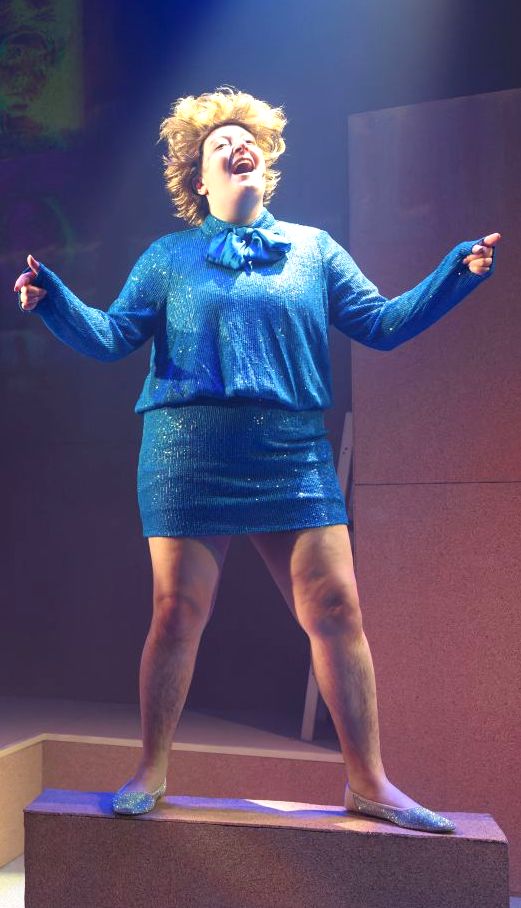
In the end, though, this is a triumphant piece of theatre. Stevens skewers Margaret Thatcher’s self-righteous ignorance in a comical depiction of the ex-PM: if she sounds ridiculous as she defends her nasty law, they’re her own words; she’s hoist by her own petard.

After the Act is vital viewing. Section 28 might have been relegated to the history books, but trans kids are in the middle of the same old battleground. We have to learn from what has gone before.

4.6 stars

Susan Singfield

The Grand Old Opera House Hotel

06/08/23

Traverse Theatre, Edinburgh

Occasionally you see a production that not only exceeds your expectations, but sends you out of the theatre exhilarated by its sheer invention. The Grand Old Opera House Hotel is one such play, a piece that fearlessly swings for the fences and hits all of its targets bang on. Part slapstick, part comic-opera, part mad-as-a-box-of-frogs spectacle, this is something you really don’t want to miss.

Aaron (Ali Watt) arrives at the titular establishment for his staff training and quickly learns that the recently rebuilt hotel is suffering from teething troubles. The electronic door numbers keep changing without warning, the lights flicker constantly and Aaron can hear people singing. A staff member tells him that, back in the day, the place was an actual opera house. It burned down sometime in the 1920s, killing the show’s cast in the process. Could Aaron be hearing their ghosts?

One of the singers he can hear is actually his opera-obsessed colleague, Amy (Karen Fishwick) – but Aaron doesn’t know that. He naturally thinks the place is haunted. If he just met up with Amy, in person, it would all be explained in an instant, but in a building with so many rooms, that’s not going to be easy…

It’s almost pointless to talk about the plot other than to say it all makes a twisted kind of sense. This delicious, sprawling extravaganza galumphs merrily through a whole gamut of different moods, characters and connections, barely stopping to draw a diaphragmatic breath. Isobel McArthur’s script is playful and exciting, while Ana Inés Jabares Pita’s set design opens up and interconnects like a Chinese puzzle box. Director Gareth Nicholls keeps his six-strong cast on their toes, moving through a whole series of lightning-fast costume changes, interacting, singing and sometimes even dancing for all they’re worth. It feels as though there are a lot more than half a dozen people on that stage. And in a way, there are.

McArthur keeps the pot simmering throughout, moving inexorably towards a tantalisingly prolonged conclusion. This is that rarest of creatures, an ambitious production that takes plenty of risks and somehow never puts a foot wrong. If you’re looking for something you’ll remember long after the final curtain, you’ve come to the right place.

5 stars

Philip Caveney
Adults

06/08/23

Traverse Theatre, Edinburgh

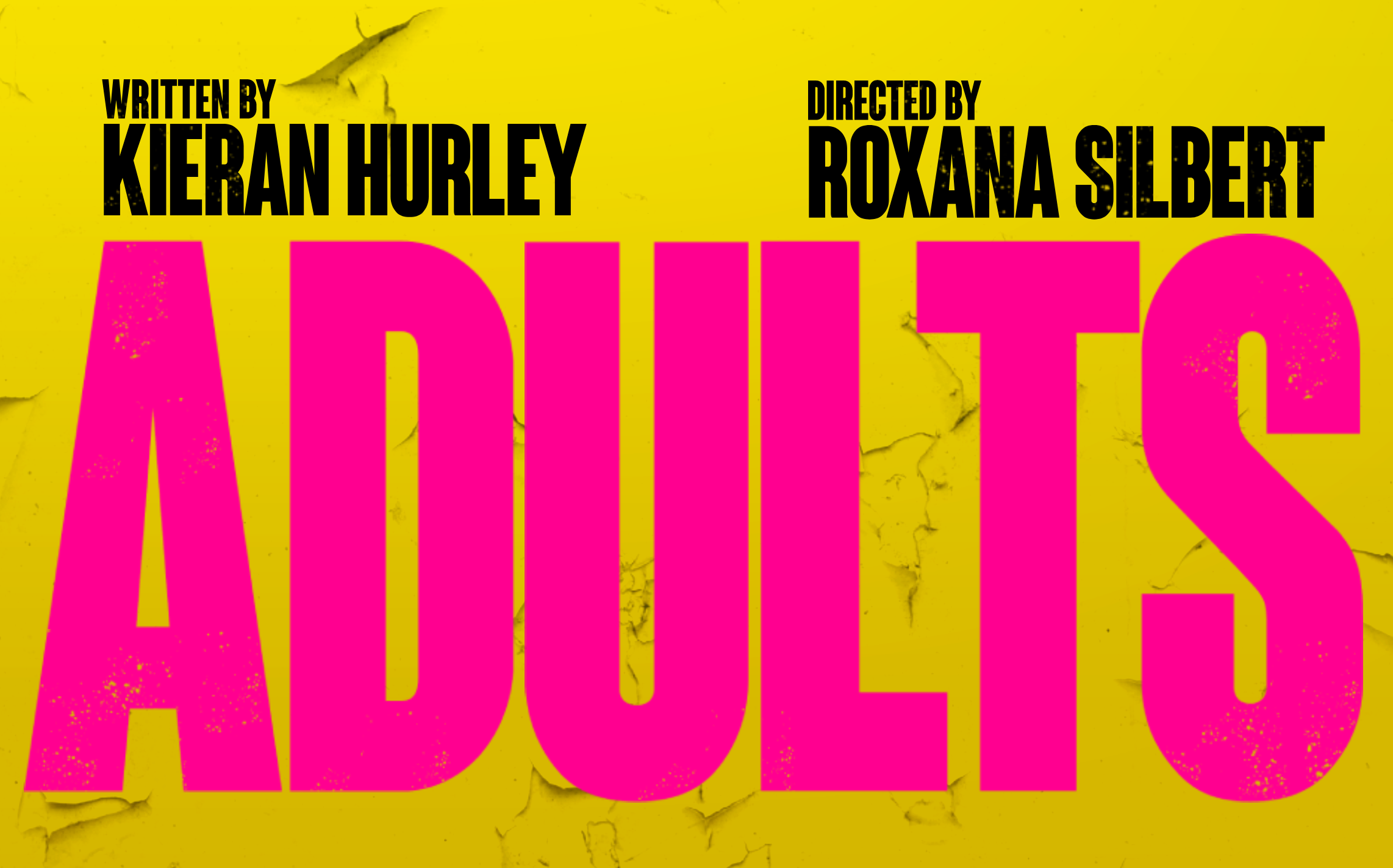
Zara (Dani Heron) has got things sorted, or as sorted as they can be, given the current state of the world. Admittedly, being a sex worker isn’t exactly living the dream, but her brothel is an ethical one – run as a workers’ collective – and she’s proud of the judgement-free service she and her colleague, Jay (Anders Hayward) provide. But still, it’s more than a little awkward when a new customer turns out to be her old teacher…

Mr Urquhart, or Iain (Conleth Hill), isn’t best pleased either. He was nervous anyway, and now he’s scared and embarrassed; he feels exposed. He’s only here to see if acting on his vague attraction to young men might help alleviate his misery, because he can’t go on as he is, hopeless and desperate, sick of his job, his marriage, even his kids…

As if the classroom reminiscences weren’t cringey enough, when Jay turns up – late – he’s got his baby daughter in tow. How can any of them collude in building a fantasy, when reality keeps intruding?

I’ve been a fan of playwright Kieran Hurley’s work since I saw Chalk Farm way back in 2013. He can always be relied upon to offer witty, thought-provoking material, with relatable, convincing characters, and Adults proves this once again. Both Zara’s skittish bravado and Jay’s reckless desperation are perfectly captured by Heron and Hayward, but it’s Hill’s depiction of Iain’s self-loathing and defensiveness that drives the piece. He’s done everything right, hasn’t he? So why does it all feel so wrong?

Directed by Roxanna Silbert, Adults has a stillness at its core, leading the audience to really listen, to hear what all three characters say, to see them for the complex, fascinating people they are. We’re all doomed, the message seems to be, so we might as well try to offer each other a bit of comfort while we can. Every generation will blame the one that’s gone before; it’s the way of the world. And every generation will fuck things up in their turn; we never manage to create that ‘better world’ we always say we want for our kids. It’s tragic – but here it’s belly-laugh funny too.

Sharp, incisive and hugely entertaining, Adults is another must-see offering from 2023’s TravFest.

4.4 stars

Susan Singfield