Fackham Hall

14/12/25

Cineworld, Edinburgh

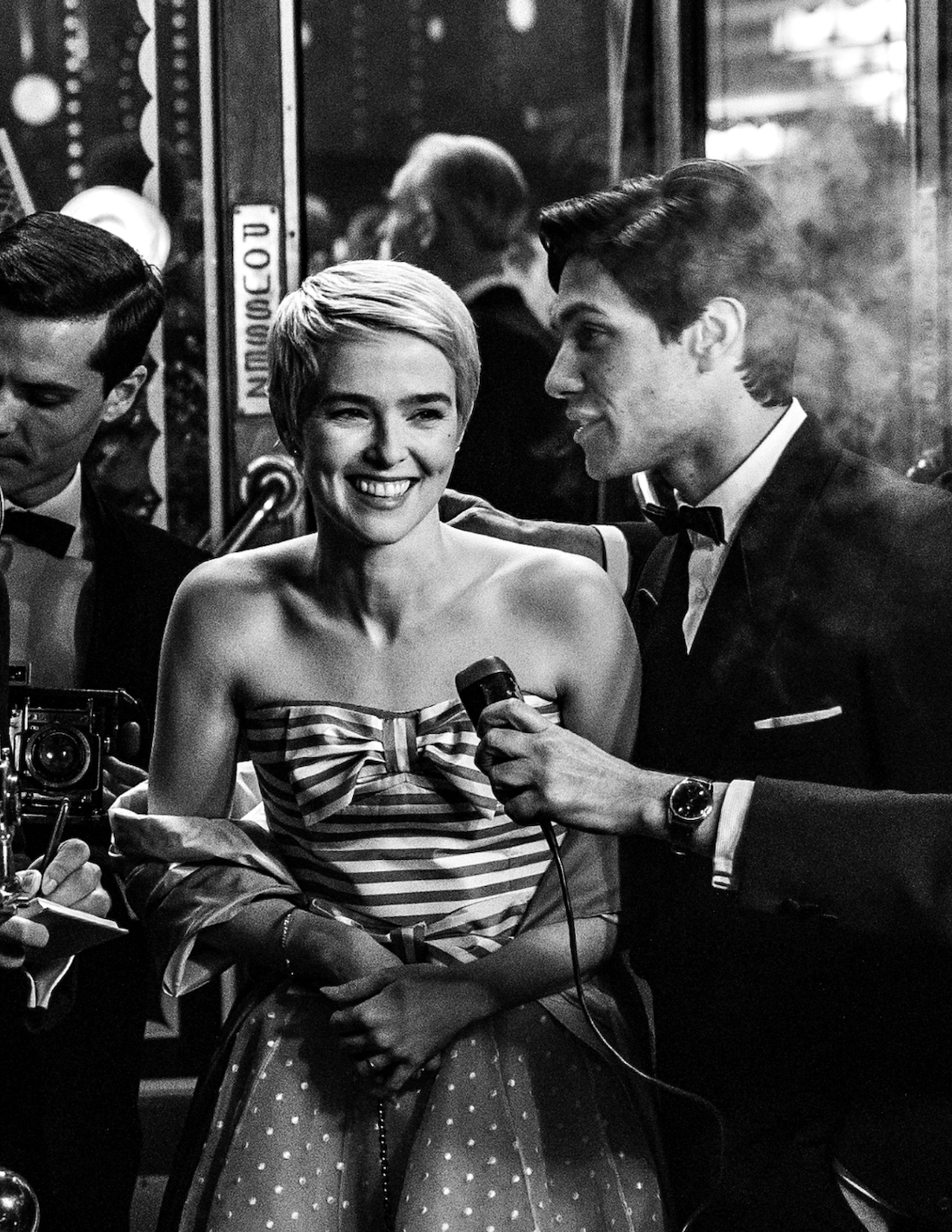
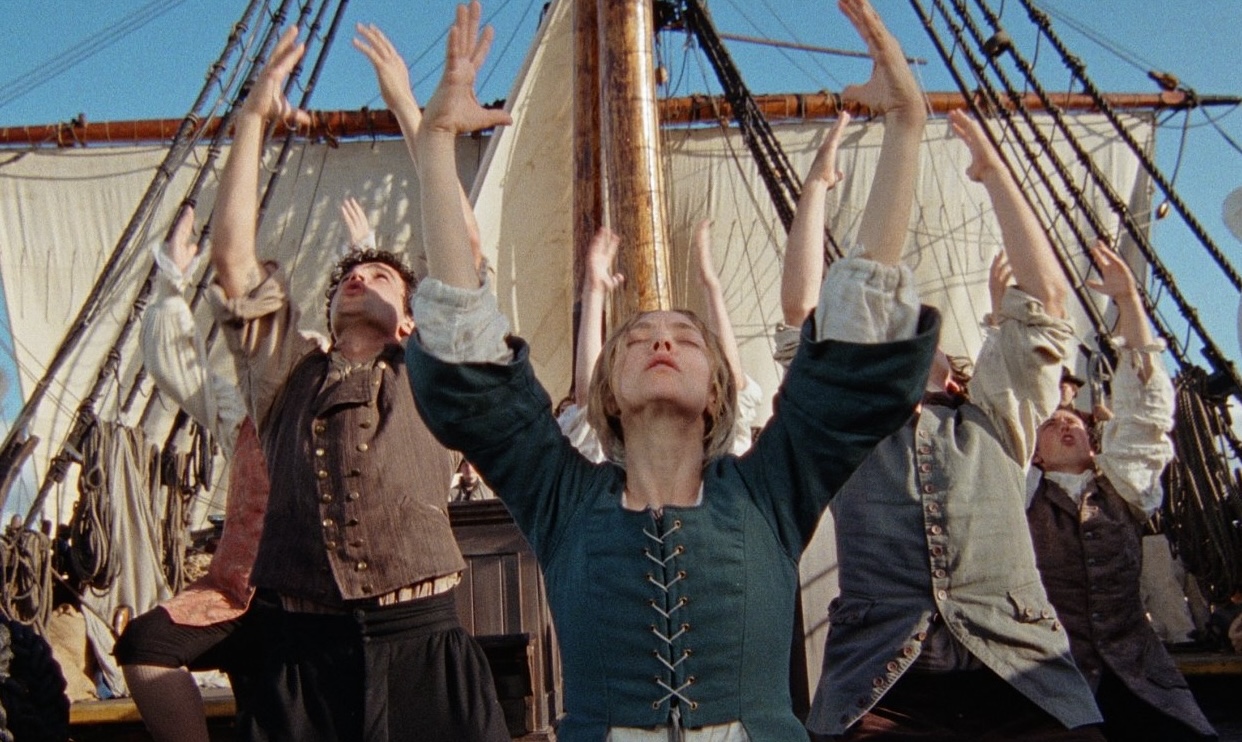
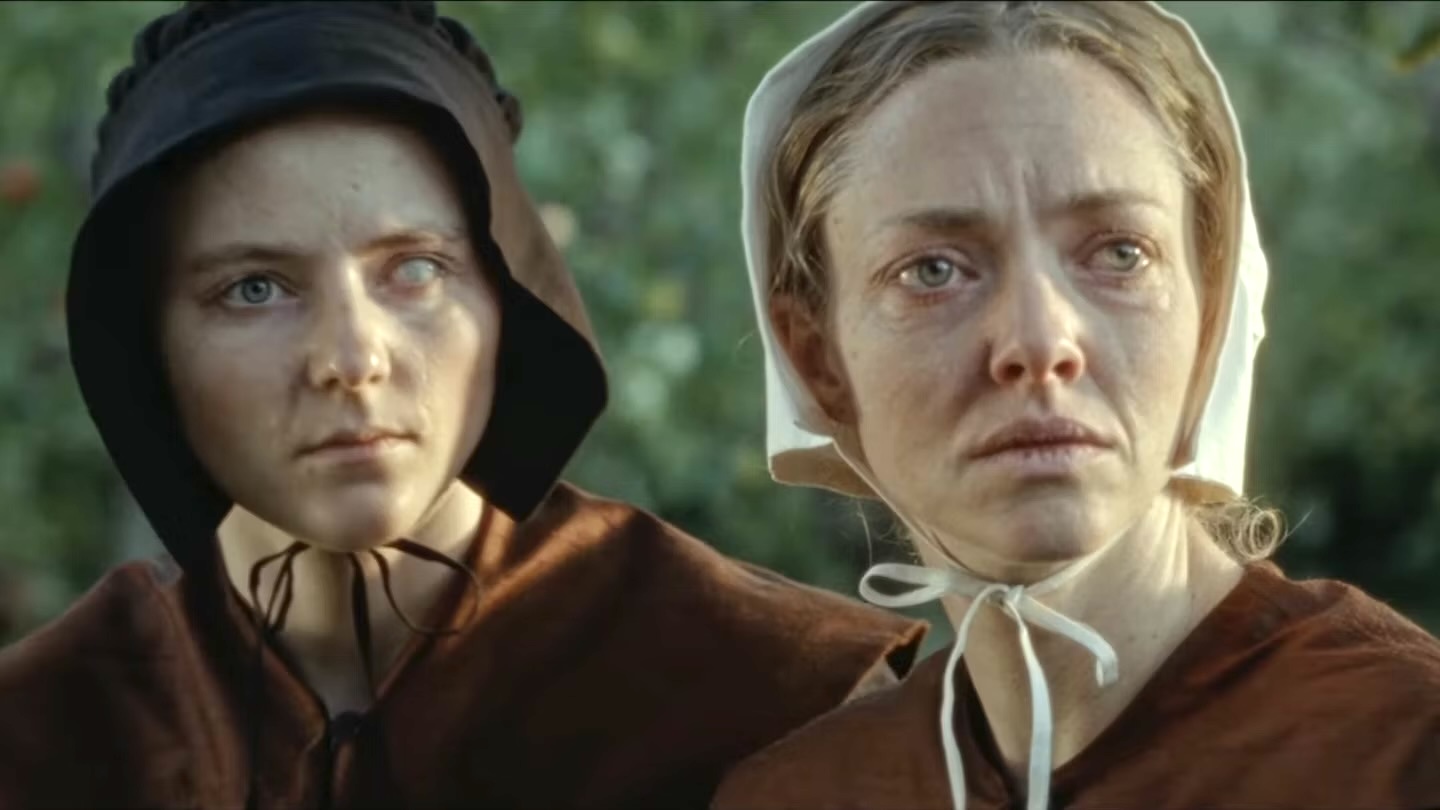
I’ve never fallen under the spell of Downton Abbey (even though I loved Gosford Park, the film that spawned it), so I’m more than happy to see the franchise lampooned – and that’s pretty much the motivation behind Fackham Hall. Based by an idea by comedian Jimmy Carr and his brother Patrick (and adapted by three other writers), this sprightly tale thunders along at full gallop, flinging out a whole deluge of jokes, sight gags and historical references as it proceeds. Anyone who’s come to this expecting subtlety has clearly come to the wrong place, but that’s not a criticism. I enjoy the experience and, if a joke occasionally falls flat, well it’s reassuring to know that there’ll be another one along in the blink of an eye.

The titular hall is the ancestral home of Lord and Lady Davenport (Damian Lewis and Katherine Waterston). They have two daughters, Poppy (Emma Laird) and Rose (Thomasin McKenzie), and – in the time-honoured tradition of the upper classes – Poppy is due to marry her first cousin, the odious Archibald (Tom Felton), in order to keep their stately home in the family. But on the big day, Poppy simply cannot bring herself to do it – which inevitably puts a lot of pressure on Rose to step up and take one for the team.

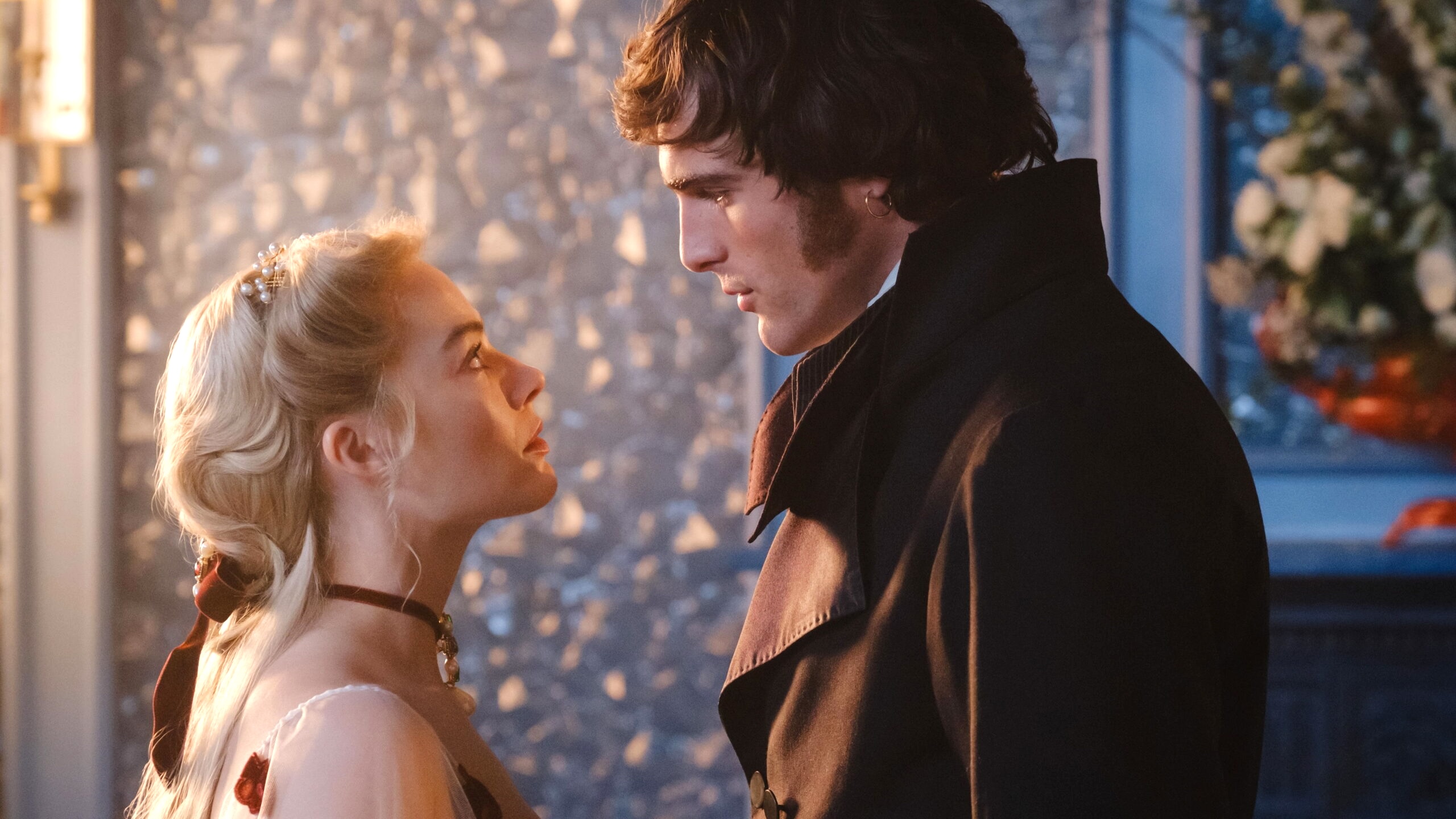
But then handsome and homeless young pickpocket, Eric (Ben Radcliffe), is selected to deliver an urgent message to Lord Davenport and, on the way there, he and Rose cross paths. While this is unfortunate in one way – she’s at the wheel of a car and he’s on a bicycle – once they’ve set eyes on each other, it’s clear that romance is their destiny. But if Rose decides to be with Eric, what will happen to their family estate?

And then a key character is murdered – and the plot begins to thicken.

The recent reboot of The Naked Gun seems to have reignited the public’s taste for a decent spoof and, on that level, Fackham Hall doesn’t disappoint. I spend the film’s duration alternately chuckling, groaning and occasionally guffawing out loud at the film’s smörgåsbord of comic offerings. (The sight gags arrive so relentlessly, I’m actually in danger of missing some of them.)

Director Jim O’Hanlon keeps the pot bubbling nicely and the production is blessed with a cast of excellent actors, who appreciate that the secret of a spoof is to play everything absolutely straight. Anna Maxwell-Martin is great as the ruthless housekeeper, Mrs McCallister, and I love Tim McMullen’s deadpan performance as the butler, Cyril, who also doubles as a prototype AI assistant. Carr has a couple of funny cameos as a short-sighted vicar who specialises in making every sermon a series of tortuous misunderstandings. And I’m delighted by one of the Davenport’s house guests in particular: JRR Tolkien, who is working on what will become his best-known book, finding inspiration in the strangest places…

The big ‘reveal’ at the end will come as a surprise to absolutely nobody but, really, in something like this the usual rules of criticism feel somewhat superfluous. Some Downton diehards might clutch their pearls in outrage, but I have a lot of fun with this and no doubt many others – from both upstairs and downstairs – will find plenty to enjoy.

4 stars

Philip Caveney

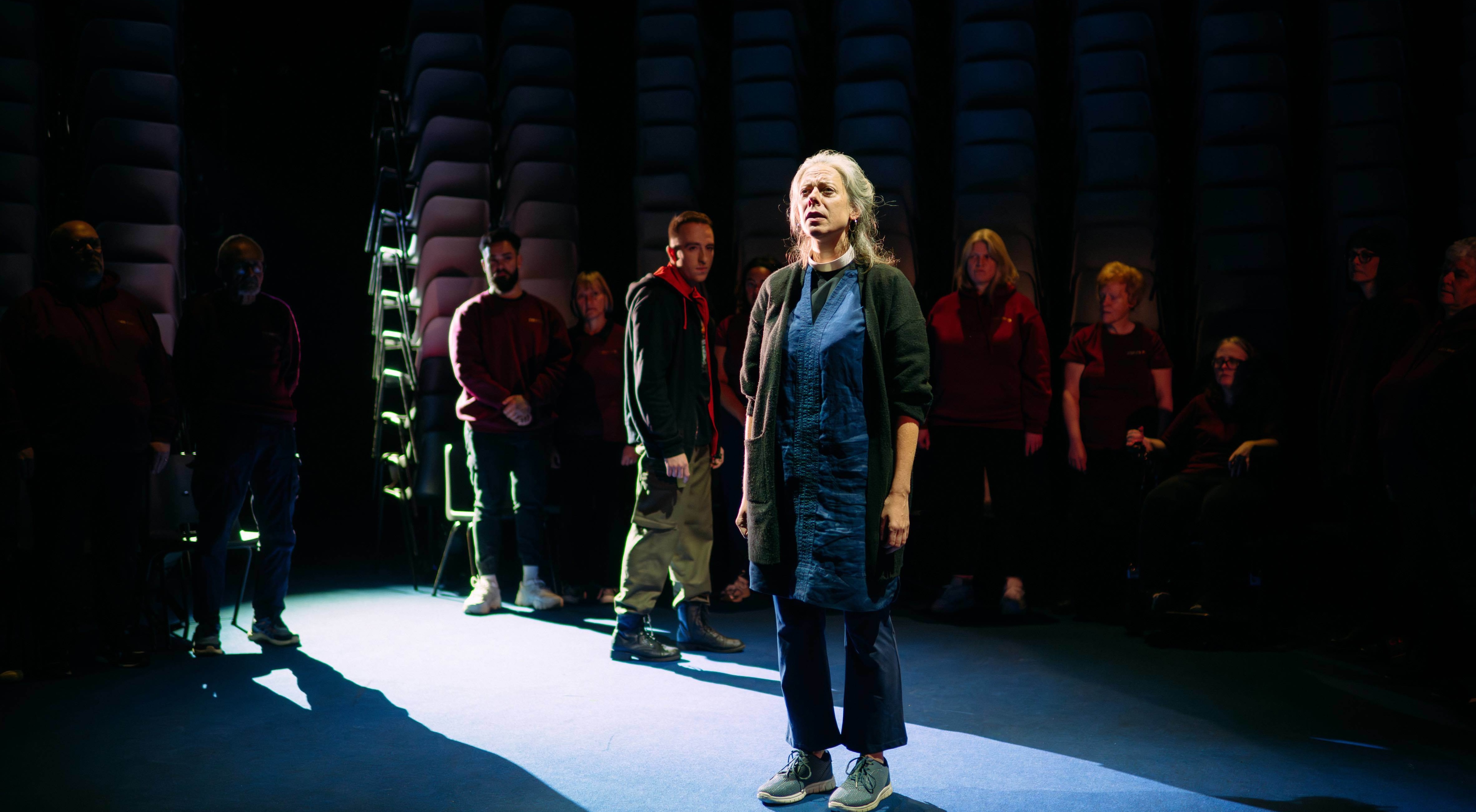
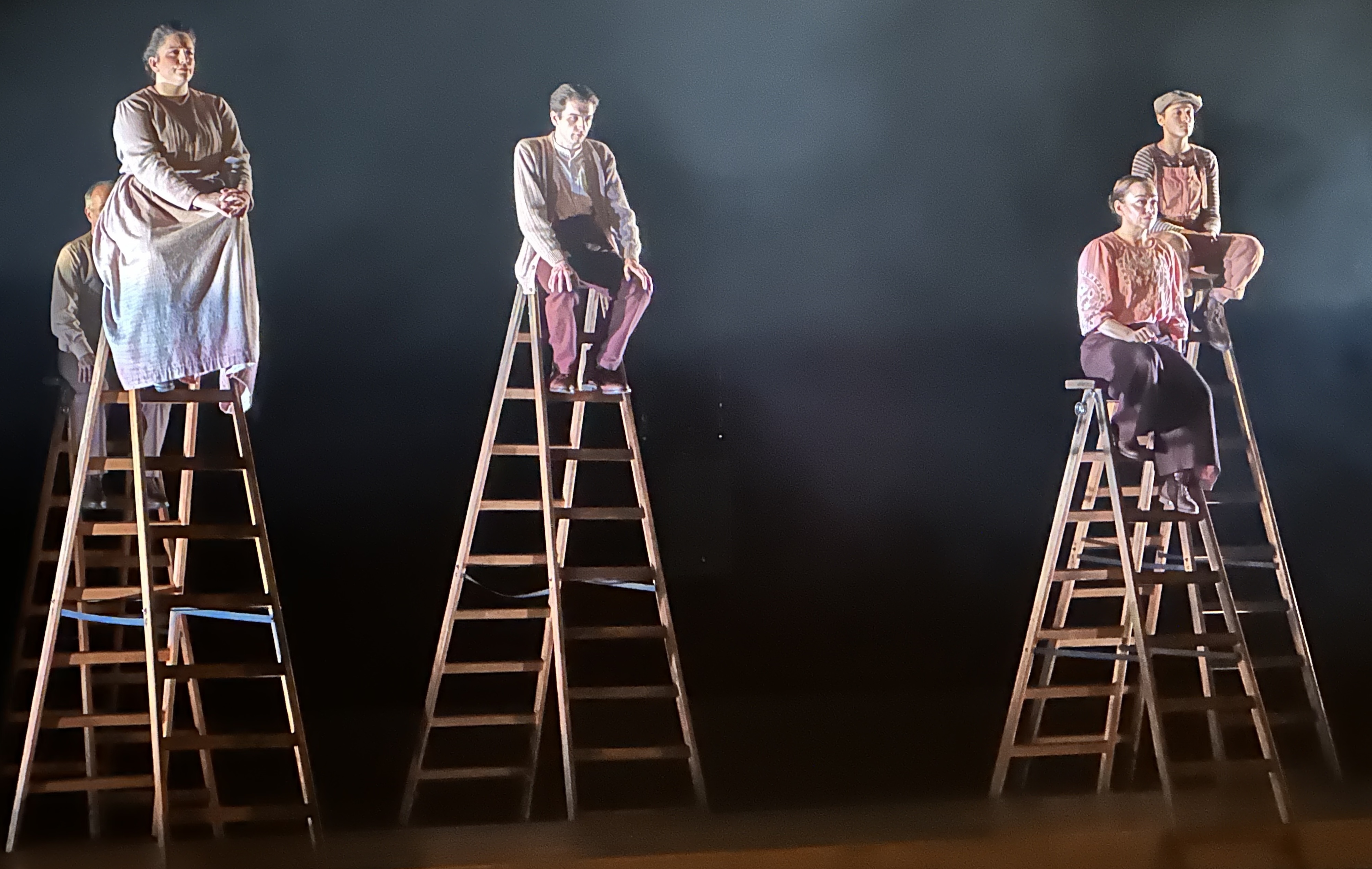
4Play: 4 New Plays by 4 Scottish Playwrights

12/12/25

Traverse Theatre, Edinburgh

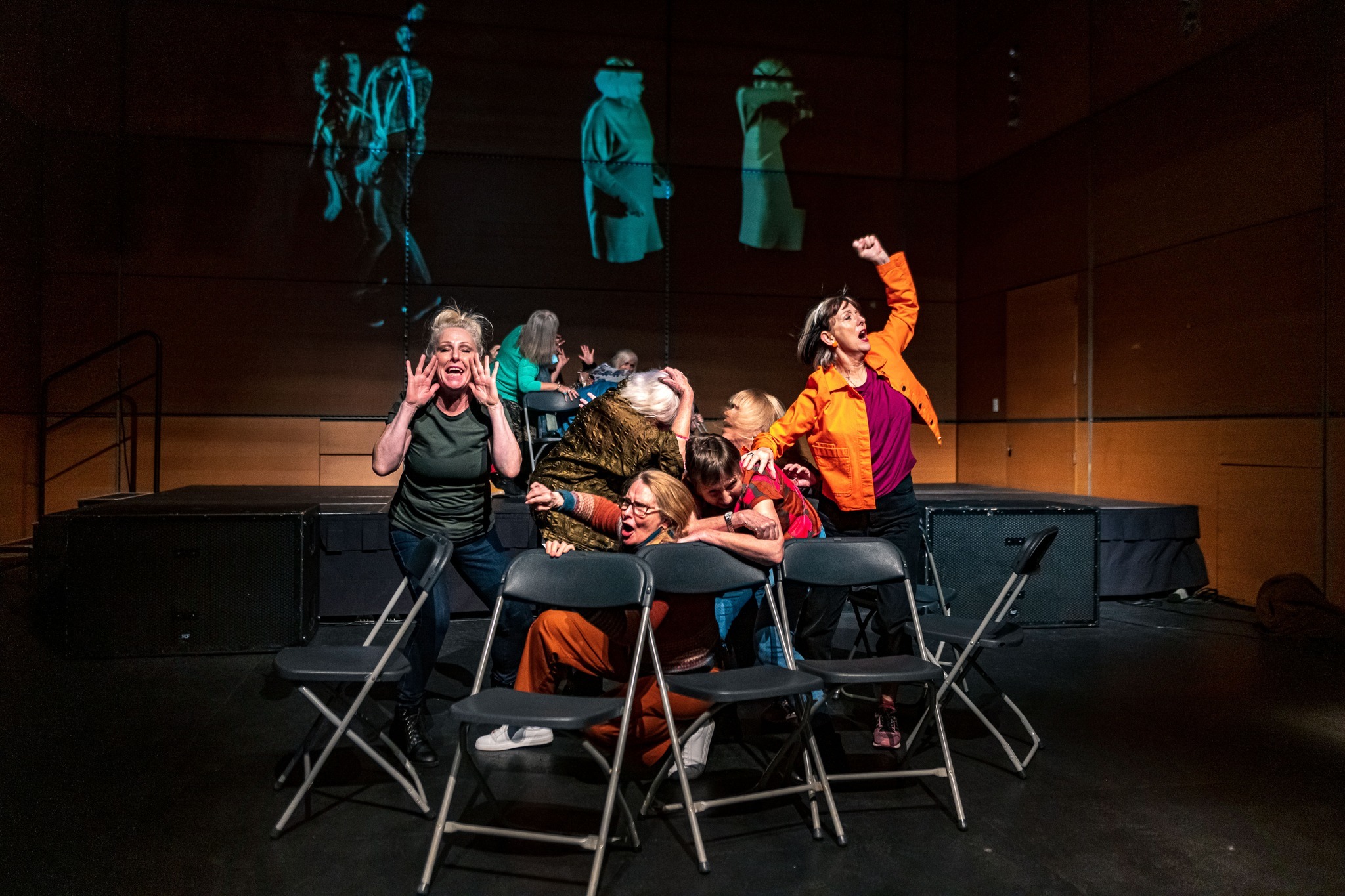
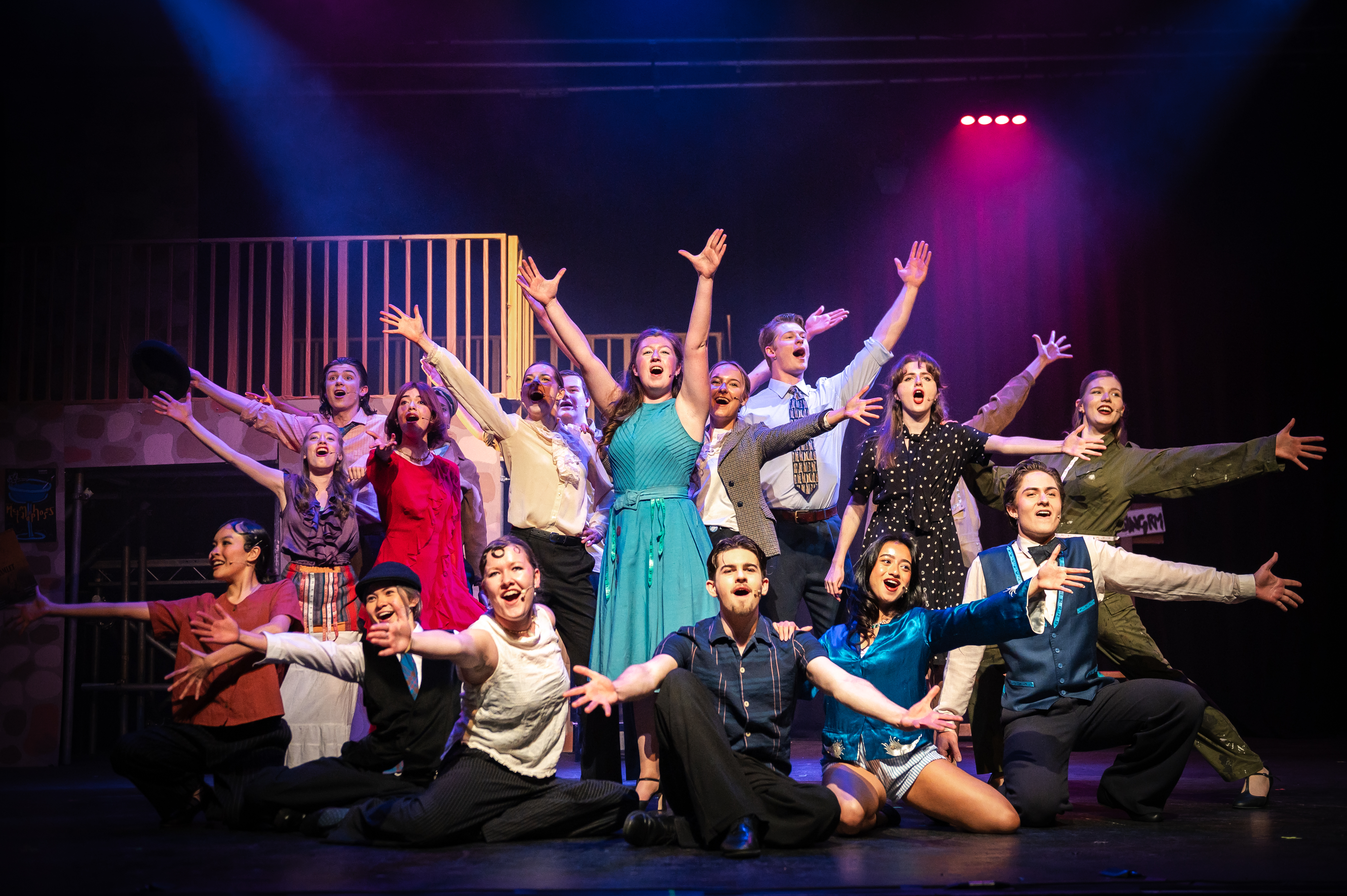
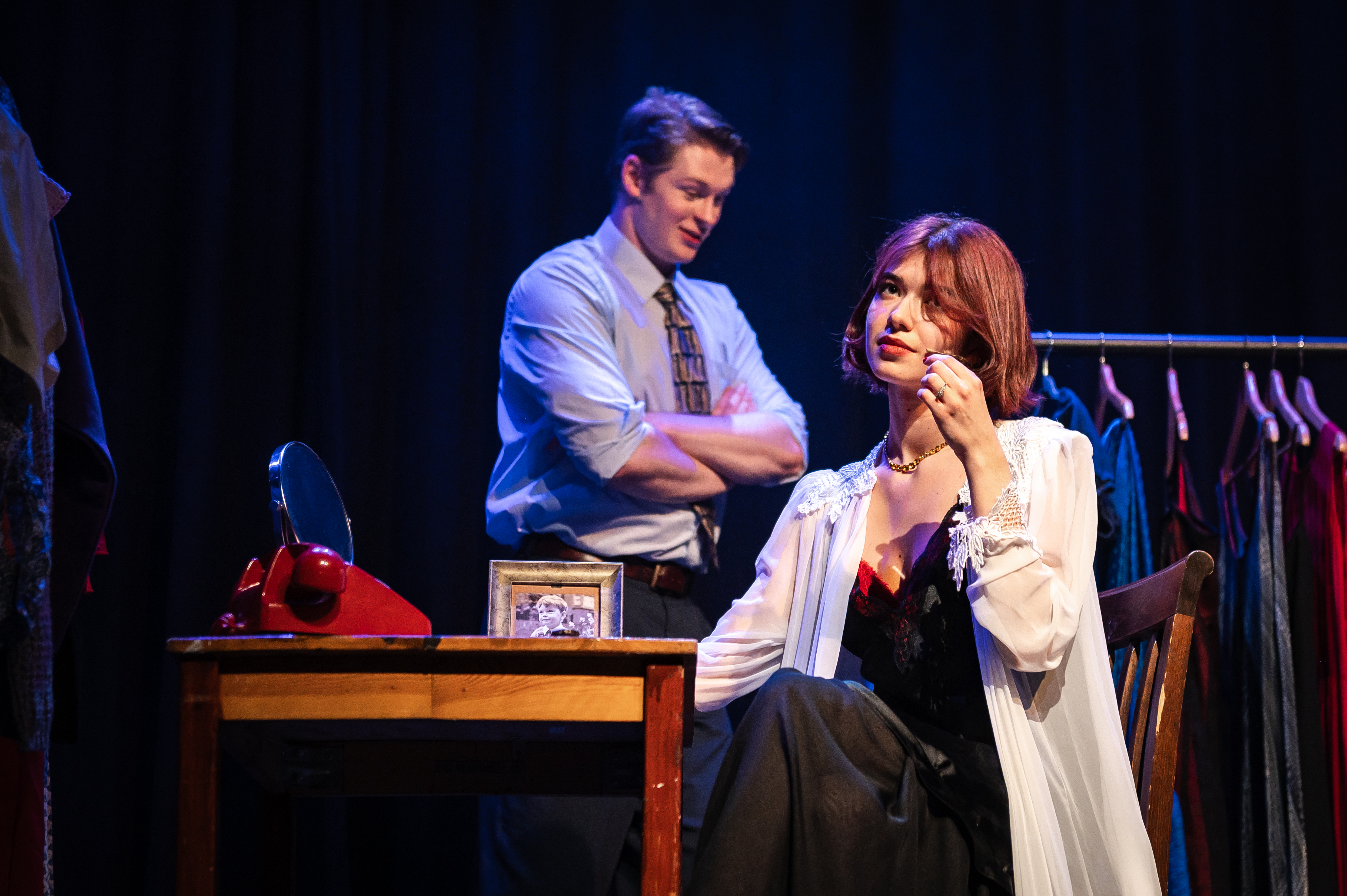
Last year, 4Play comprised four full plays, performed over two nights. This time around, it’s a truncated affair, with excerpts rather than entire scripts. The first two pieces are only ten minutes long, while the second pair are given longer to develop their themes, each with a running time of approximately twenty-five minutes.

We open with a short extract from Ruaraidh Murray’s Chips, directed by Michael Nardone and Jake Sleet. Nothing to do with the California Highway Patrol, this is a fictionalised account of a true-life tale of… microchip theft. Apparently it was a thing in the 1990s. As if breaking, entering and taking apart computers wasn’t enough of a challenge, Kaz (Christie Russell-Brown) is heavily pregnant, and her partner-in-crime, Wan (Calum Manchip), isn’t exactly focused on the job…

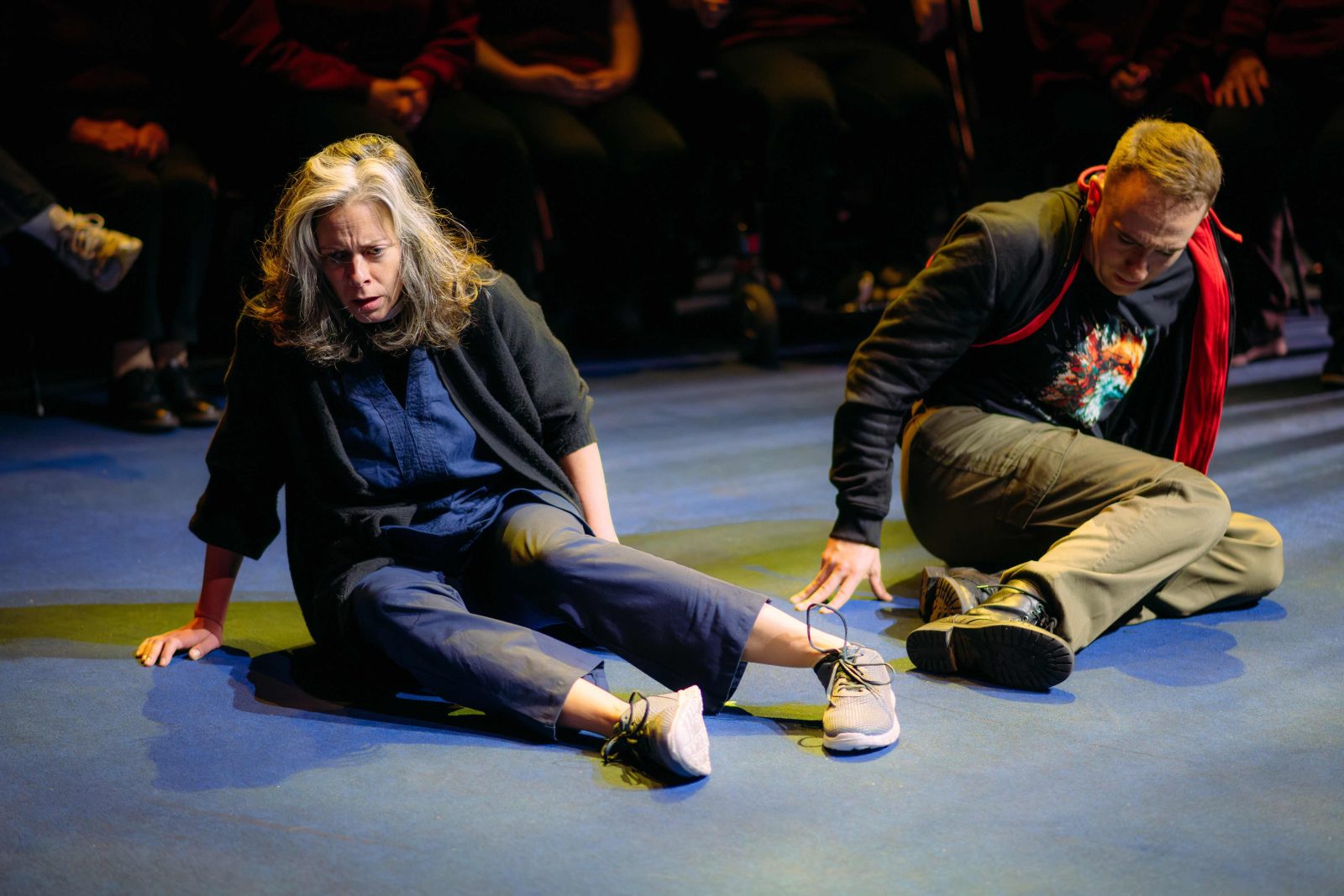
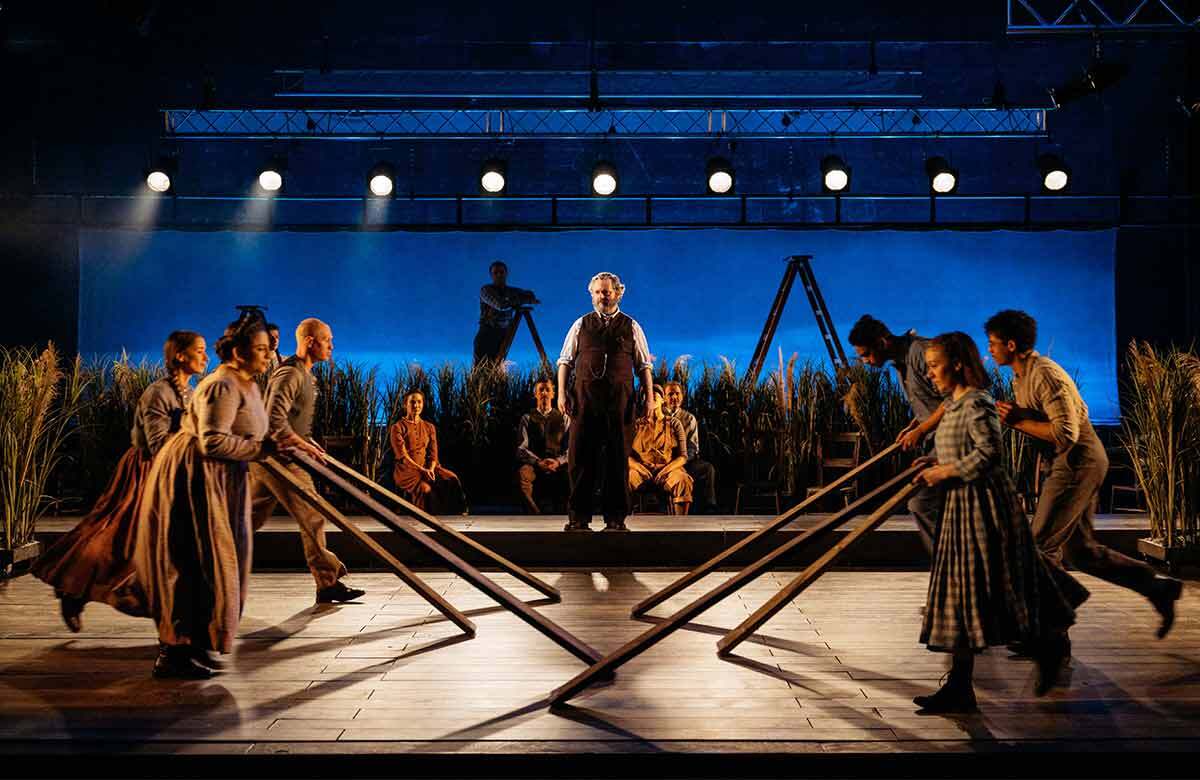
The second piece is Brace, written by Geraldine Lang and directed by Matthew Attwood. Paul (Jack Elvey) and Lewis (Kieran Lee-Hamilton) are apprentice scaffolders, struggling to learn their trade without any real guidance. In their business, mistakes have material consequences, and it’s the people at the bottom of the pile who have to pay. Although I appreciate that the physicality of the boys’ work is key to the piece, I can’t help feeling that it’s a mistake to spend so much time constructing the scaffolding; I’d prefer to hear more dialogue and delve further into the plot.

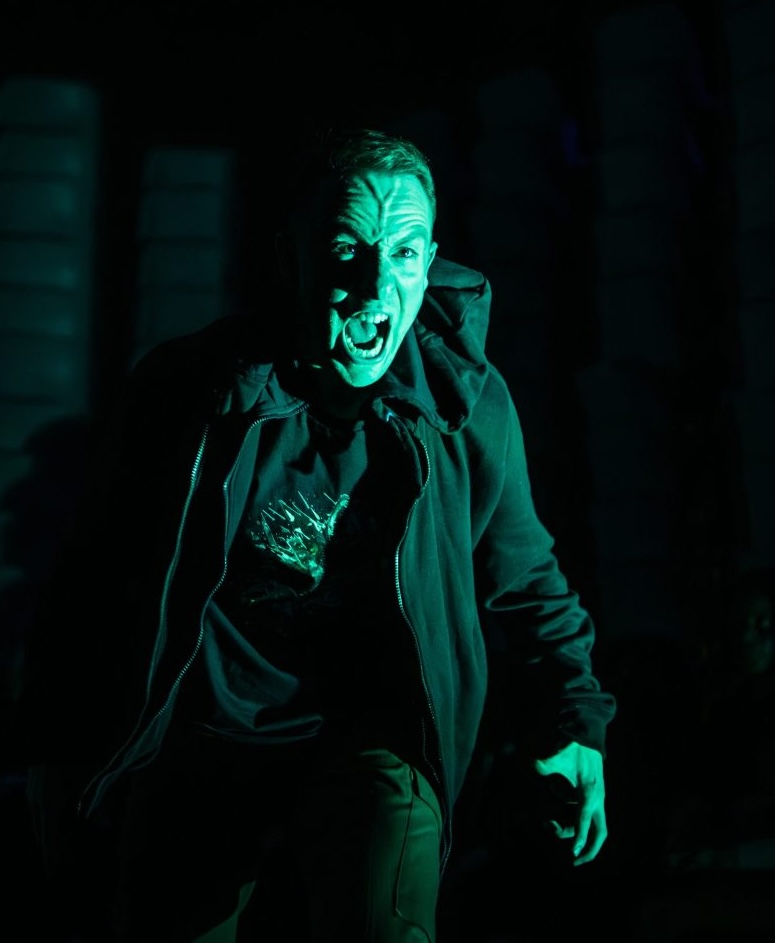
After the interval, it’s Sunday Palms, which is by far our favourite of tonight’s plays. From the opening soundscape – an oddly unsettling aural representation of a man returning home from work to his empty flat – to the awkward dialogue that follows the unexpected appearance of a childhood friend, Sean Langtree’s script is utterly compelling. Directed by Grace Ava Barker, the piece is immediately intriguing, and I’m fascinated to know where the story leads. Why is Brian (Daniel Campbell) so alarmed by Nathan (Langtree)’s presence? Whose victory does the title presage? Langtree’s Nathan is perfectly observed – just that little bit too needy, too edgy – while Campbell nails Brian’s discomfort, his attempts to hold to societal norms in the face of Nathan’s peculiar demands.

Last up, it’s Hunt by Andrea McKenzie, directed by Gwen M Dolan. We’re in the near future, and AI has taken over the cities. Mags (Deborah Whyte) and Joel (McKenzie) are yearning for a simpler life: to step away from their computers and connect with nature. The trouble is, they’re more familiar with tech than they are with tents, neither has remembered to pack the kettle – and how exactly do you light a fire? What’s more, Joel soon discovers that Mags hasn’t been entirely honest with her, and there’s more to this trip than she’s been told…

Reductions in length notwithstanding, 4Play – and other schemes like it – are vital to ensuring that new voices are heard in theatre. 4Play has had considerable success, introducing Katy Nixon’s Cheapo and Mikey Burnett’s Colours Run, which have both spread their wings and flown to critical acclaim. As Scotland’s new writing theatre, it makes perfect sense for the Traverse to support the event, and we’re delighted to have this opportunity to see emerging playwrights develop their skills.

3.2 stars

Susan Singfield

Eternity

12/12/25

Cineworld, Edinburgh

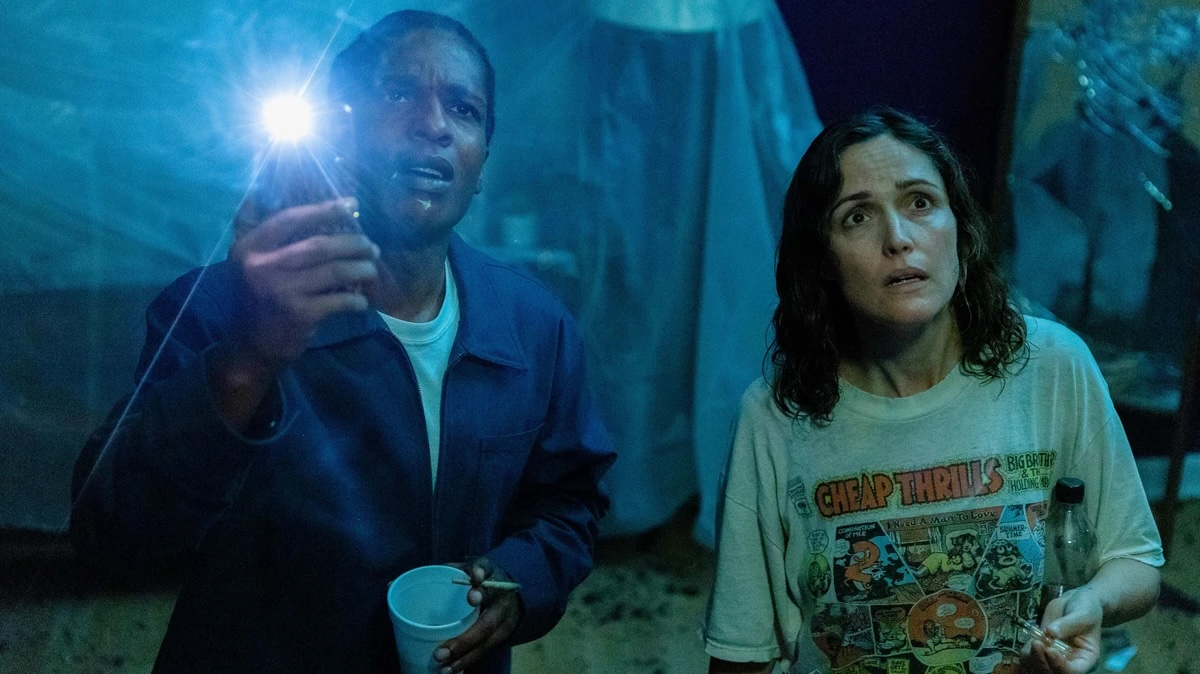
The festive season is upon us so what better time to release a charming, romantic comedy about, er… death? That’s Eternity’s central premise, but hey, don’t let it put you off.

In the film’s opening scenes, we join elderly couple, Larry (Barry Primus) and Joan (Betty Buckley), as they drive to a gender reveal party, bickering all the way there. What they haven’t revealed to their family members is that Joan is in the final stages of cancer and only has a short time left to live. But, ironically, it’s Larry who receives notice of an urgent appointment with his own mortality, thanks to getting a pesky pretzel stuck in his throat.

He suddenly finds himself on board a train as it arrives at ‘The Junction,’ a stopping-off place on the journey to Eternity. Larry (now played by Miles Teller) has been transformed to his younger self, able to do squats without pain, but understandably confused as to his current situation. Luckily, he’s been assigned an ‘Afterlife Co-ordinator’ called Anna (Da’Vine Joy Randolph) and, when Larry explains that his wife will be joining him any time now, Anna arranges special dispensation for him to wait for her. 

In the meantime, Anna advises Larry to browse all the many brochures on offer in order to choose an Eternity that will be suitable for him and Joan. There are lots of different settings to choose from, ranging from different types of scenery to what can only be described as niche worlds. But Anna warns Larry that once a destination has been chosen, it cannot be changed – no matter what.

Soon enough, Joan arrives (looking uncannily like Elizabeth Olsen), and Larry is waiting eagerly to greet her. Unfortunately, so is Luke (Callum Turner), her first husband, who was killed in the Korean war. And he’s been waiting for more than sixty years to be reunited with her… which is awkward, to say the very least.

There’s lots to like about Eternity, not least its depiction of the afterlife, which has the general look and feel of a glossy holiday marketing exhibition, with representatives of the various destinations eager to sign up the recently deceased. I find myself laughing out loud at the absurdity of some of the concepts that prospective customers are offered. Germany in the 1930s but with 100% less Nazis? What’s not to like? And I love the ‘Archives’ where the dead can visit key scenes from their past, all of them presented as low-budget stage adaptations of the actual events.

The performances from the three leads are engaging and there’s some sparky interplay between Randolph’s Anna and Luke’s Afterlife Co-ordinator, Ryan (John Early). If I have slight reservations, it’s with the script, co-written by Patrick Cunnane and director David Freyne, which in its final stretches appears to bend some of the rules that it’s previously taken great pains to establish. But hey, it’s no deal- breaker. This is overall a thoughtful and engaging story with a pervading sense of melancholy.

If it occasionally invites comparisons with classics like Powell and Pressburger’s A Matter of Life and Death, well, that’s no bad thing either. Those seeking something a bit different this Christmas should find plenty here to keep them hooked. Just don’t take pretzels as your snack of choice.

4.2 stars

Philip Caveney

Wicked: For Good

06/12/25

Cineworld, Edinburgh

Despite being dazzling, bold and unashamedly in-your-face, Wicked: For Good somehow manages to fall flat. Perhaps the problem lies in the year-long gap between the two parts of this story; it’s like a glass of champagne that’s been left out too long and lost its fizz.

That said, in many ways I prefer this second act (which I’m refusing to call a sequel, because it isn’t: the story arc spans both films, and neither stands alone). At least there’s a resolution here, and I enjoy the creative ways the storyline feeds into The Wizard of Oz. Narratively, For Good – directed by Jon M Chu – is stronger than Wicked, but as a musical? I’m no aficionado, but even I can tell there’s only one real banger in this show (Defying Gravity), and it isn’t reprised here. As a result, the big song and dance numbers, even with Christopher Scott’s sumptuous choreography and the cast’s impressive vocals, just aren’t very memorable.

We catch up with Elphaba (Cynthia Erivo) and Glinda (Ariana Grande-Butera) after their erstwhile friendship has been well and truly shattered by the Wizard (Jeff Goldblum) and Madame Morrible (Michelle Yeoh). Neither young woman is exactly happy about the way the duo uses propaganda and misinformation to control the citizens of Oz but, while Glinda opts for a pragmatic, ‘if-you-can’t-beat-’em-join-’em’ approach, Elphaba favours revolution, exposing the truth at any cost. Each feels betrayed by the other…

The two leads are magnificent: perfectly cast and with crackling on-screen chemistry. Their combined talent is beyond formidable, and the strongest scenes are those where they’re together. But they’re let down by a histrionic script (by Winnie Holzman, Dana Fox and Gregory Maguire), where emotions are always dialled up to eleven, and unrequited love is enough of an excuse to destroy a realm. It’s all very teenage – and all very one-note. Nessa (Marissa Bode) fares especially badly, her death-by-Kansas-farmhouse so fudged that you wouldn’t know what had happened if you weren’t familiar with the tale.

There’s plenty to admire here: the production values are second-to-none, and the world-building is exquisite. I just think that it would have been better to make one excellent three-hour film rather than two quite good ones, whose combined five hours add up to less than the sum of their parts.

If you’ve already seen Wicked, then you’ll need to watch For Good to see how it all turns out. It’s not dreadful (there are certainly worse ways to spend a winter afternoon). But is it worth all the money and the hype? You’ll have to decide for yourself if you want to follow the yellow brick road back to Oz.

3.5 stars

Susan Singfield

Pillion

04/12/25

Cineworld, Edinburgh

Adapted from Adam Mars Jones’ 2019 novel, Box Hill, Pillion is – I think it’s fair to say – something of an oddity. Described by one of its stars as a ‘dom-com,’ it’s set within the world of BDSM and has been assigned an 18 certificate for nudity and explicit sex. And yet there are elements at play here to appeal to a much broader audience than you might expect.

Colin (Harry Melling) is an affable young fellow, still living with his parents. He works as a traffic warden and occasionally sings as part of his father Pete’s barber-shop quartet. Pete (Douglas Hodge) is every bit as genial as his son, but he’s coming to terms with the fact that his wife, Peggy (Lesley Sharp), is in the final stages of her life after a long struggle with cancer. Colin’s parents know he is gay; in fact, Peggy has devoted her final months to trying to get him fixed up with a suitable boyfriend, but he doesn’t like any of the dates she sets up for him.

And then, at the local pub where the group regularly performs, Harry encounters Ray (Alexander Skarsgård), a handsome but monosyllabic biker. Something clicks between them and, when Ray hands Colin a note (on the back of a beermat), instructing him to be at a certain place at a certain time, Colin doesn’t hesitate to comply.

It isn’t long before Colin is on his knees in a dark alleyway giving Ray a BJ – and shortly thereafter, he’s initiated into the small group of submissive followers who ride pillion with Ray’s biker friends, ready to accede to their masters’ sadistic whims. Soon Colin has shaved off his long hair and is decked out in racy leather outfits, complete with a padlock around his neck.

In these scenes the 18 certificate is certainly well-earned – but it’s important to note that Colin enthusiastically consents to every indignity that’s meted out to him. Indeed, he seems to thrive on this new regime, as he discovers a sense of community that he’s never had before.

There’s more to the film than just the sexual content. A wonderfully toe-curling scene where Peggy cajoles Colin into bringing Ray to the family home for dinner and then delivers her unflinching opinion of him is a particular delight – and I’m quite unprepared for the genuinely poignant conclusion. There are also several scenes that make me completely re-evaluate everything that has gone before.

Both Melling and Skarsgård are outstanding in their polar opposite roles: one so vulnerable and desperate to show his devotion; the other locked away, sullen and uncommunicative. Director/screenwriter Harry Lighton handles the difficult material with skill and it’s no great surprise to learn that Pillion has recently walked away from the British Independent Film Awards with five trophies, including best film and best debut screenwriter. It’s also stirred up some indignant editorials in the press, enquiring how the BBC could have ‘lowered itself’ to commission something like this.

But there are all kinds of voices in the world and Pillion sheds fresh light onto a subject about which I previously knew very little. Of course, it won’t be to everyone’s taste but I can honestly say that I haven’t seen quite anything like this before, which – to my mind – is one of the highest recommendations a film can aspire to.

4.6 stars

Philip Caveney
The Fifth Step: NT Live

01/12/25

Dominion Cinema, Edinburgh

As if NT Live performances weren’t enough of a treat, we’ve recently ramped up the indulgence levels by choosing to watch them at Edinburgh’s most bougie cinema, the Dominion. At 3pm this afternoon, we zip up our raincoats and venture out into the December drizzle, ready for the half-hour walk that will take us to our huge, reclining seats.

The Fifth Step is a compact, one-act play by Jack Ireland, and its ninety-minute running time is perfectly judged. This is a tight and concentrated piece, where small impulses are magnified, vague doubts forensically explored. The in-the-round set, designed by Milla Clark, is almost brutalist, comprising a stark square with raised, cushioned sides, reminiscent of a boxing ring or a trampoline: a taut jump mat, ready to absorb the characters’ anger, or give them the push they need to set themselves free.

We’re in the world of AA, where acceptance meets strict protocols and kindness sometimes seems harsh. Jack Lowden plays Luka, a twenty-something alcoholic, scared that he’s turning into his dad, and desperate to avoid this destiny. Nervy and uncertain, he isn’t sure that he can do it, not when sobriety leaves a booze-shaped void he fills with loneliness and self-loathing. Hovering in the room after a meeting, he gets chatting to James (Martin Freeman), who has been on the wagon for more than twenty-five years. The older man knows exactly what Luka is going through, and offers to become his sponsor. From hereon in, we watch as their relationship develops – and as they both continue to battle against their respective addictions.

Ireland’s script is darkly funny, and director Finn Den Hertog maximises its comic potential, without ever belittling the men’s experiences. Not much happens, and yet all of human life is here: our frailty, our fabulousness; our bravado, our beauty; our destructiveness and our shared desperation. Luka begins by looking for easy answers: if he does whatever his sponsor says, then surely he’ll find happiness. But James has his own demons to grapple with and he knows that life is far more complex than that. You just have to keep on being honest, keep facing up to your own failings – and keep supporting one another along the way…

Unsurprisingly, Lowden and Freeman deliver faultless performances. They’re perfectly cast, Freeman’s wry stillness the ideal foil for Lowden’s twitchy, pent-up energy. A fascinating insight into not just addiction but also notions of authority and responsibility, this is definitely one to watch if it’s showing at a cinema near you.

4 stars

Susan Singfield

She Rides Shotgun

29/11/25

Prime Video

Now and then (and more increasingly in these troubled times) a film deserving of a theatrical release finds itself unceremoniously shunted straight onto streaming. She Rides Shotgun is one such production. While it doesn’t exactly reinvent the wheel, this tautly-paced action thriller has all the ingredients required to keep a viewer hooked to the final frame, not least impressive performances from Taron Egerton and newcomer, Ana Sophia Heger.

10-year-old Polly Huff (Heger) is waiting patiently outside her school in Los Angeles (though the film is mostly shot in and around Alberquerque), fully expecting to be picked up by her mom. She’s understandably bewildered when her estranged father, Nate (Egerton), turns up at the wheel of a stolen vehicle and bundles her into the passenger seat. Polly knows that Nate has only recently been released from prison and is also aware that her mother has moved on with her life and now has a new partner. 

But once installed in a seedy motel room, Polly overhears a television news report informing her that both her mom and stepdad have been murdered, and that Nate is the main suspect for the crime. What’s more, the killings have been linked to a white supremacist movement called Aryan Steel.

Before Polly quite knows what’s happening, Nate is cutting and dying her hair and preparing to take her off on a desperate run for the Mexican border.

As I said, She Rides Shotgun doesn’t have the most original premise – indeed, with those New Mexico locations and that evocative title, it feels suspiciously like a contemporary Western – but director Nick Rowland ensures that the unfolding events are seen through Polly’s POV, and he somehow manages to imbue the resulting mix of gun fights, punch-ups and car chases with enough verve to keep me on the edge of my seat.

Events get more complicated when it transpires that nearly every police officer the duo encounter on their travels is linked to the aforementioned Aryan Steel. It’s hard to know who they can trust – though Detective John Park (Rob Yang) seems the likeliest contender for that role – and he says he has a plan that can secure their future…

Egerton (looking like he’s ingested a mountain of protein shakes since his last screen outing and sporting a ripped physique that’s seemingly carved from granite) manages to convey a father’s desperate need to protect his daughter. Heger’s performance is extraordinary, her evident vulnerability bringing me close to tears, especially at the film’s heartbreaking conclusion.

So, job done: this is well worth catching, even if those vast desert landscapes do deserve to be seen on a much bigger screen.

4.2 stars

Philip Caveney

Cinderella: A Fairytale

29/11/25

Royal Lyceum Theatre, Edinburgh

Look, I love a good panto as much as the next drama queen. Still, I have to admit there is something very special about this chance to see a Christmassy rendition of one of the world’s most famous fairy-tales without the distraction of all the boo-hiss-he’s-behind-you-wink-wink-nod-nod stuff. Cinderella‘s plucky orphan narrative is a compelling one, not least because of its moral certainty, where the good are rewarded and the bad are well and truly punished: there’s vengeance at play here, as well as virtue. And, in this version by Sally Cookson, Adam Peck and the Original Company, that dichotomy is writ large.

Ella (Olivia Hemmati) lives in a gloriously-realised enchanted forest, all dappled sunlight and multi-coloured birds. The home she shares with her dad (Richard Conlon) is one of those idyllic, romantically-ramshackle cottages where poor people live in story books, and she’s happy there. But when Father marries Mother (Nicole Cooper), everything changes: not only does her step-mum impose a whole raft of irritating rules, she also brings along her own two children, Sister (Christina Gordon) and Brother (Matthew Forbes), who are so priggish and uptight that Ella can’t stand them. And then, just as she’s getting used to the new regime, Father dies, leaving a grieving Ella at Mother’s mercy…

The strength of this show lies in its aesthetic: Francis O’Connor’s set and costume design evoke an ethereal other-worldliness, where magic feels eminently possible. The bird puppets (directed by Forbes and manned by Leo Shak, Stephanie Cremona and the cast) are fabulous, their rainbow plumes as appealing as they are fantastical. Even as a middle-aged woman, I’m completely captivated; how alluring must this staging be for the children in the audience?

The love story element is underplayed: Prince (Sam Stopford) is a nerdy teenage ornithologist and he and Ella strike up such a lovely, convincing friendship that the idea of their marriage seems jarring and incongruous. Director Jemima Levick wisely eschews any overt wedding pageantry, but I do wonder if it would be better to remove the romance entirely, focusing instead on the simple affection between the pair. After all, it’s not as if there’s the same financial imperative for this Ella, who seems to be living in a whimsical approximation of the contemporary world, as there was for her Grimm progenitor, who needed a husband to escape her servitude.

Cooper is obviously having a whale of a time as the odious Mother, camping up her tantrums and cruelty to create a deliciously-devilish interpretation of the character. The protracted toe-chopping sequence – the production’s only real nod to the folk story’s dark heart – is a gruesome highlight. Meanwhile, Gordon and Forbes’ Ugly Siblings are more sympathetic and nuanced than their traditional counterparts, frightened and corrupted by their toxic mum – and clearly redeemable. Carly Anderson has less to do as Queen, who appears here as a slightly-sozzled, benignly-bemused socialite. It’s an interesting take on the role but she is under-used.

Jon Beales’ music and Emily Jane Boyle’s choreography complement each other perfectly, enhancing the story and ensuring the pace never flags.

All in all, this is a delightful production, and one that is sure to enthral audiences of all ages this festive season.

4.2 stars

Susan Singfield

Inside No. 9: Stage/Fright

27/11/25

Playhouse Theatre, Edinburgh

I’m rarely excited to see theatre inspired by television but I was keen to secure tickets for Inside No. 9 as soon as this tour was announced. Like so many others, I’ve been an avid fan of Reece Shearsmith and Steve Pemberton ever since I first saw them (along with Mark Gatiss) in 1999’s The League of Gentlemen. And, more recently, No. 9 has been one of the few television series I’ve watched avidly, through all nine of its seasons, marvelling at the sheer ingenuity of these two men, who are masters of the tricky art of horror comedy.

It’s clear that they have many other faithful followers because the capacious Playhouse is a complete sell-out tonight. The audience is somewhat restless so the opening sketch, in which we are confronted by rows of theatre seats looking straight back at us, is an inspired choice, while the subject – the ways in which noisy audience members can incur the wrath of somebody trying to watch a play – is doubly so. And even if a large section of the first act is overly-familiar – based around the classic TV episode Bernie Clifton’s Dressing Room – well, that’s only like your favourite rock band smashing out some of their established hits before introducing you to their new material.

In the second act, the duo, assisted by a sizeable cast, do exactly that. What initially appears to be a group of characters enacting a delicious slice of grand guignol theatre in a Victorian asylum is revealed to be… ah, but that would be telling. Like so much of their output, Shearsmith and Pemberton have woven elements of surprise into the piece and it would be a crime to reveal too much. Suffice to say that this extended sketch utilises cinematic elements, somehow blending the two distinct disciplines of theatre and film into one satisfying whole. While there’s much here that is deliciously, darkly funny, there are also moments of extreme tension and some genuinely effective jump-scares.

A word of warning: don’t be like those members of tonight’s audience who leap up from their seats the moment the house lights come up and race for the exits – because there’s more to come and you don’t want to miss the further revelations that unfold.

This is yet another assured collaboration from the gruesome twosome. Where will Shearsmith and Pemberton venture next? Your guess is as good as mine, but wherever it is, bring it on! I’m keen to see whatever they’ve got up their sleeves.

4.6 stars

Philip Caveney
Sisu: Road to Revenge

23/11/25

Cineworld, Edinburgh

I missed Sisu on its first release, but caught up with it on streaming some time later. It was easy to see why it was such a hit in its native Finland and why so many people had raved about it. This simple, action adventure in which a near-silent old man single-handedly despatched an entire battalion of Nazis in ever-more inventive ways was a thoroughly decent watch. And who doesn’t want to see Nazis get their comeuppance?

But of course, Sisu’s success meant that there would be the inevitable sequel. And what’s left to say?

Writer/director Jalmari Helander has fallen back on the age-old technique of telling the same story again but making it bigger, louder and even more unbelievable. He’s switched out those pesky Nazis for some caricatured Russians and thrown in a George Miller-esque vehicle chase and an aerial sequence for good measure. Plus some very big explosions.

It’s 1946, the war is done and dusted, and Helander’s silent hero, Aatami (Jorma Tormilla), has decided to nip across the newly-instigated border to take his old home apart plank by plank so he can transport it back to a new location, where he plans to rebuild it… as you do.

But when a top-rank KGB officer hears what’s happening, he releases imprisoned Red Army leader Igor Draganov (Stephen Lang) and instructs him to go in pursuit of Aatami and.. ahem… finnish him off. Draganov is, of course, the man who killed Aatami’s wife and two children, utilising the unusual method of cutting them to bits with a spade, something he’s so proud of he mentions it twice.

All this information is imparted in the film’s opening fifteen minutes and the rest of it (aside from a short coda) is devoted to the ensuing mayhem as Aatami slaughters what feels like the entire male population of Russia with a series of increasingly outlandish improvised weapons. This is a man capable of turning a paper handkerchief into something with the killing potential of an AK47. While I’m happy to suspend my disbelief to a certain level, I have to draw the line at watching him deflect an approaching fighter plane with a length of roof timber, or propelling a train along a track at super speed simply by igniting the rocket it’s carrying on a flatbed.

Yes, I know, it’s not meant to be realistic – but neither is it a superhero film and Aatami’s abilities somehow feel more suited to that genre.

More worrying to my mind are the later scenes where Aatami is captured and brutally tortured by the people who have simply been instructed to kill him. The damage inflicted upon his bare flesh borders on the prurient. And God forbid if at some point we had flashbacks to earlier days and his memories of that family he spends all his time trying to avenge. It’s almost amusing to learn that Tormilla is a respected theatrical actor in his homeland, when all he’s required to do here is bleed copiously, grunt when he’s obliged to walk barefoot on glass and occasionally decapitate one of his many opponents. But hey, that’s showbiz.

Looking desperately around for something to enthuse about, I will say that cinematographer Mila Orasmaa does a creditable job of capturing all the madness on film and that the music of Juri Seppä and Tuomas Wäinölä has a stirring Ennio Morricone quality that sometimes makes me feel I’m watching a Sergio Leone western. (Not that we’re anywhere near that exalted league.)

And then there’s the aforementioned coda, which – against all the odds – is poignant and strangely moving. Though in the case of Sisu: Road to Revenge, it does feel suspiciously like too little, too late.

3 stars

Philip Caveney