
Uncategorized

Still: A Michael J Fox Movie

20/05/23

Apple TV

The name Michael J Fox is synonymous with three things: Marty McFly; a teenage, basketball-playing werewolf; and Parkinson’s disease. Mega-famous in the 1980s for smash hit films Back to the Future and Teen Wolf, Fox is just as well-known these days for his candid communications about living with a degenerative brain disorder. This inventive documentary, by Davis Guggenheim, is revelatory – about Fox, as well as about Parkinson’s.

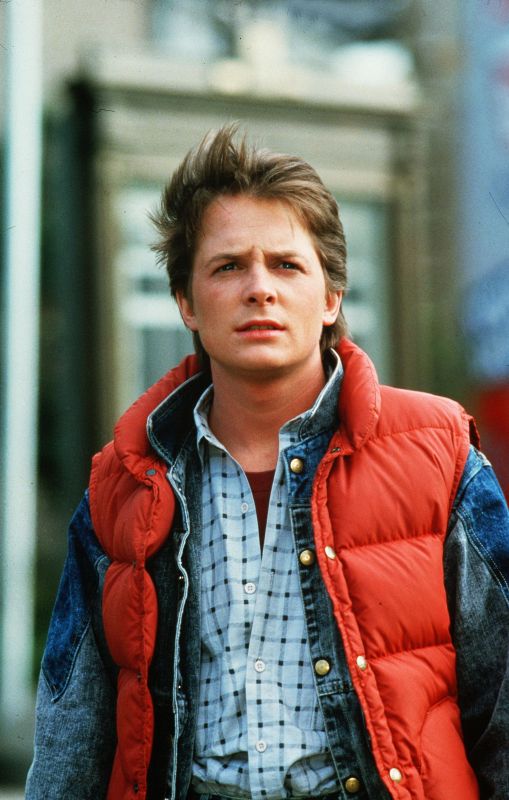
Fox has always exuded on-screen warmth. He’s the epitome of likeable: wry, self-deprecating and funny. Whatever role I’ve seen him in, he brings these qualities to bear. Watching Still, it soon becomes apparent that that’s just who he is, which isn’t to denigrate his acting ability: he’s played a range of types – but always with a hint of sweetness shining through.

Guggenheim’s biopic is thoughtful and meandering, cutting between past and present, making clever use of film clips to illustrate key details of Fox’s life and character. From tiny live-wire working-class Canadian kid to tiny live-wire Hollywood star, we see how Fox’s kinetic energy (and general niceness) propelled him to success. It also enables him to live contentedly: unusually for someone in his career, he’s sustained a long and happy marriage and is clearly close to his four kids. Fox’s wife, Tracy Pollan, is an actor too (they met on hit TV show Family Ties) and the pair seem truly devoted. It’s lovely to see.

In some ways, the film is harrowing, because it doesn’t pull any punches about the realities of living with Parkinson’s. Fox falls over a lot and hurts himself when he lands: he’s broken all the bones around his left eye. He shakes uncontrollably, all the time; he struggles to walk. He relies on medication, very aware of when it’s wearing off and he needs his next pill. He has a lot of physio, which helps to keep him mobile. Presumably Parkinson’s sufferers without his kind of money can’t access quite so much one-to-one therapy; even with it, things are tough.

But in other ways, the film is uplifting, because – while it steadfastly avoids the ‘disabled person as inspiration’ trope – it also shows how the condition doesn’t really change the man. Michael is still very much Michael, with the same twinkle, the same humour, the same candour.

It’s fascinating to listen to him describe the tricks he employed in the early days of his diagnosis (aged only 29), when he was desperate to hide his tremors from the world. Once you know what he’s doing, footage from Spin City, the TV show he was making back then, takes on a whole new significance.

Still is a weirdly feelgood film – a testimony to a life well-lived.

4.6 stars

Susan Singfield

Love the Sinner

17/05/23

Traverse Theatre, Edinburgh

The seven deadly sins have been a source of inspiration for many writers over the centuries. This fabulous interpretation from poet/performer Imogen Stirling gives them a powerful contemporary relevance. Conceived during lockdown, it’s an assured piece of gig theatre, which takes those seven infamous traits and reimagines them as everyday people, living in a contemporary city beset by a near-apocalyptic rainstorm. We’re in Glasgow and the Clyde is threatening to burst its banks.

It’s here that our protagonist, Sloth, finally stirs herself from the bed she’s been lying in for far too long and ventures out onto the rain-lashed streets to attend a party hosted by her friend, Gluttony. Stirling’s playful and incisive words evoke a whole series of familiar tropes – the social-media obsessed millennial, the guilt-afflicted porn addict, the business-centred entrepreneur intent on looking good at all times. But these are more than just stock characters: Stirling’s astute words skewer them, imbuing each of them with a cinematic clarity, bringing them to life as she reveals their flaws and strengths.

This is by no means a solo endeavour. Stirling’s verbal observations are accompanied by musician Sonia Killmann’s ominous soundscapes. She sits front of stage, conjuring pulsing, vibrant music and occasionally lending her vocals to Stirling as they sing together in lilting harmony. Behind the performers, Ellie Thompson’s enthralling video and projection designs offer atmospheric images of the city at night and tantalising glimpses of out-of-focus characters reacting to Stirling’s monologue. Matthew Lenton directs the whole endeavour with great skill, helming the piece to its powerful and frenetic conclusion.

As the last chords fade, I find myself applauding enthusiastically with the rest of the packed audience and wishing there could be some kind of encore – but how would you follow this?

Love the Sinner is a mesmerising piece of theatre. Catch it if you can.

4. 6 stars

Philip Caveney

Evil Dead Rise

23/04/23

Cineworld, Edinburgh

True confession time. I’ve always had a bit of a soft spot for The Evil Dead.

In 1981, Sam Raimi’s original movie, made for shirt buttons and starring his best buddy, Bruce Campbell, made a big impact on my younger movie-going self. The fact that, on its initial release, it became ensnared in the Government’s absurd ‘video-nasty’ ban only served to make it a cause célèbre and, when it finally earned itself a proper release, it made tons of money. The sequel in 1987 allowed the duo to make the film they’d always wanted to, with a much bigger budget and a welcome dose of added humour. And finally, 1992’s Army of Darkness (AKA The Medieval Dead) offered a conclusion that was so bat-shit crazy it finished off the trilogy in entertaining style.

It’s undeniably a tough act to follow – as director Fede Alvarez discovered in 2013, when he attempted a revamp, which came and went without making much of a splash – but Irish writer/director Lee Cronin’s Evil Dead Rise (what happened to the The, I wonder?) jumps headlong into a spirited reimagining without pausing to ask if it’s a good idea. The presence of an 18 certificate suggests that this isn’t going to be the kind of movie that judiciously cuts away from the gore – and so proves to be the case. Those of a nervous disposition, please be warned that this is harrowing stuff.

We open, as ever, in a remote lakeside cabin where three holiday makers are having a bad time. If this short pre-credit sequence suffers from a case of ‘seen it all before’, then the following action, which backtracks 24 hours, does feel markedly more original, transplanting the action to a scuzzy high rise apartment in Los Angeles.

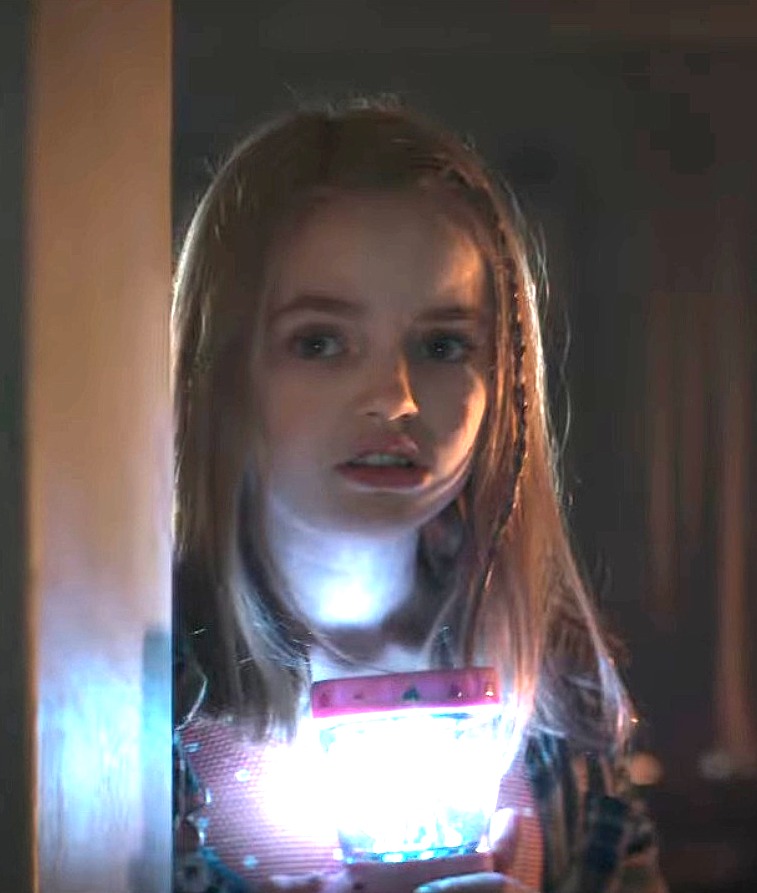
It’s here that, upon finding that she’s pregnant, guitar technician, Beth (Lily Sullivan), arrives in search of her estranged sister, Ellie (Alyssa Sutherland), who has recently suffered a breakup with her partner. Ellie seems to be a contender for struggling parent of the year, attempting to raise her three kids, Bridgette (Gabrielle Echols), Danny (Morgan Davies) and cute but weird little ‘un Kassie (Nell Fisher) in a condemned apartment that’s due to be closed down sometime in the near future. A power cut promptly ensues. What else to do then but send the kids out to collect some takeaway pizza?

Things head in an even more dodgy direction when a sudden earthquake opens up fissures in the street, revealing an ancient underground bank vault, festooned with crucifixes. Danny can’t resist going down there for a quick recce and emerges with some old LP records and a very familiar-looking book… yep. you guessed it. That book. Don’t bring it home, Danny! Don’t… ah well. He brings it home. Of course he does.

All too soon, Ellie has become infected by the powers of evil and is happily attempting to chow down on her offspring. It falls to Beth to try and protect them. But trapped in the apartment, with stairways and elevators destroyed by the quake, how can she and her young charges ever hope to escape from the now demented Ellie, who is hellbent on their destruction?

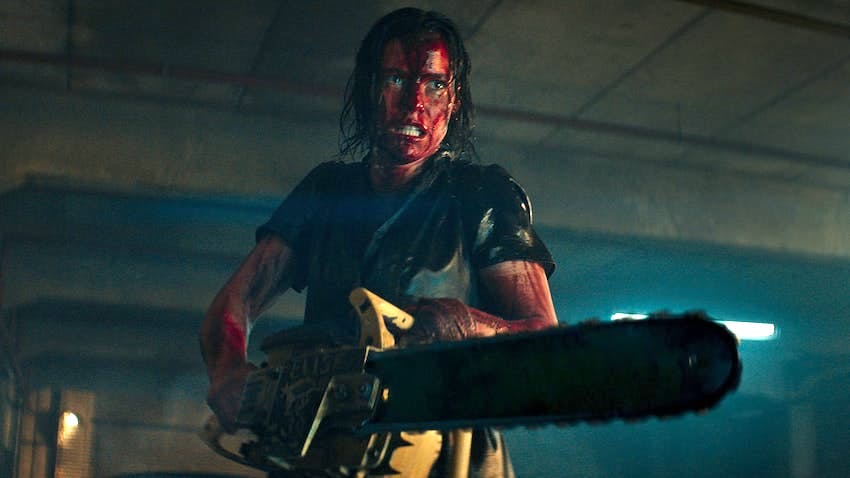
I won’t lie to you. What follows is hard to watch – an exercise in nerve-shredding, no-holds-barred mayhem. If the aim of the exercise is to horrify, then Cronin succeeds in spades. Susan later admits to having seen only forty minutes or so of the film, spending the remainder of the running time with her hands over her eyes. For those made of sterner stuff, there are decapitations, eviscerations and the use of a cheese grater in a style you’re unlikely to see on Masterchef. Viewers in the know (and we are legion) will spot occasional nods to the original trilogy that feel more like homages than copycats – and there’s one great big reference to Stanley Kubrick’s The Shining, just for fun. Oh yes, Bruce Campbell – who executive produced the film along with Raimi – makes a sort of cameo in this film. See if you can spot him!

I am suitably entertained (if that’s the right word) and emerge from the screening feeling that, if filmmakers must insist on rebooting former glories rather than coming up with new ideas, then Evil Dead Rise is more successful than many revamps that have gone before. But one thing’s for certain: this isn’t a film for the faint-hearted.

3. 8 stars

Philip Caveney

Wish You Were Dead

04/04/23

Festival Theatre, Edinburgh

Even hardworking police officers deserve a holiday now and then, which is why Inspector Roy Grace (George Rainsford), his wife, Cleo (Giovanna Fletcher), and their baby son, Noah, are visiting a remote château south of Paris. They’ve brought their resourceful American friend, Kaitlynn (Gemma Stryan), with them to act as chief babyminder. But a combination of bad weather conditions and terrible traffic means that they arrive at their destination far later than scheduled. They’ve been expecting to meet up with Kaitlynn’s boyfriend, Jack, but there seems to be no sign of him – and the place they’ve chosen as their stopover really isn’t what they were expecting. For one thing it’s a chambre d’hôte (a kind of glorified Airbnb) and, what’s more, there’s something very odd going on here…

This sixth stage adaptation of Peter James’ successful Inspector Grace crime series began life as a novella, inspired by a holiday from hell that James and his real life wife endured back in the day. It opens like one of those Bloodbath in the House of Death horror spoofs that we’re all so familiar with. It’s a dark and stormy night; there’s a creepy looking interior complete with a suit of armour; there are baleful paintings on every wall and (quelle horreur!) no internet reception! But any laughter generated here is entirely unintentional. The would-be holidaymakers keep stumbling across ominous clues and, as the plot slowly unravels, a tale of deception and cold revenge is gradually revealed.

But there are issues: too much of the dialogue doubles as exposition and too much of that dialogue is delivered in a declamatory style – while the presence of a swaggering bad guy with an old axe to grind (though decently played by Clive Mantle) is a familiar device I’ve seen too often for comfort.

As events steadily mount to a crescendo, complete with artlessly telegraphed ‘twists’ and decidedly unlikely decisions on the part of the villains of the story, I feel my patience wearing perilously thin. Michael Holt’s set design is impressive and deserves a better tale than the one that’s offered here. The ‘upstairs room’, glimpsed through a gauze screen, is a nice touch – though I’m pretty sure it was used in the previous James adaptation, Looking Good Dead.

In the end, I decide that this production is aimed at avid Peter James fans (of whom there are many) but, if I’m entirely honest, it’s really not for me.

2.5 stars

Philip Caveney

Revelations of Rab McVie

24/02/23

Traverse Theatre, Edinburgh

The word ‘psychedelic’ is often misapplied to theatrical ventures but, in the case of Revelations of Rab McVie, I think it’s entirely appropriate. This challenging piece of gig theatre is mind-bending in the best sense of the word: an exhilarating collaboration between a group of musicians, a visual artist and an actor – which succeeds on just about every level.

The performance begins…

To my left, there’s the Scottish three-piece, The Filthy Tongues, augmented in this case by two other musicians. As vocalist Martin Metcalfe, decked out like some surreal preacher, unleashes a series of memorable songs about darkness and decay, he’s anchored by the metronomic rhythms of drummer Derek Kelly and bass player Fin Wilson. The results have me hooked from the first chords of the opening song, The Ghost of Rab McVie. Alex Shedlock adds extra guitar and keyboards to the mix, while Asim Rasool takes care of a whole range of percussion.

To my right, artist Maria Rud works on a sheet of horizontal glass, smearing paint with brushes and sponges (but mostly with her bare hands). Her endeavours are projected onto a huge backdrop and they are mesmerising. From an initial sludge of colour, she is able to conjure vivid landscapes, bizarre animals, cloaked figures and even an enigmatic portrait of a mysterious figure, gazing benignly down at the audience. Lit from behind, her translucent creations are like surreal stained-glass windows, and what’s also interesting is the way she interacts with the music, at times almost appearing to conduct it with her paint-splashed hands. Each successive image is washed away, like a sand castle extinguished by a rising tide, only to be replaced by something new and equally intriguing

And now, centre stage, a silhouette rises from one of the paintings and stumbles out of it. It’s Rab McVie himself, as portrayed by actor Tam Dean Burn, a grotesque leering presence, transported by visions that only he can see. From time to time, he proclaims a string of half-intelligible observations, including a detailed description of the Four Horsemen of the Apocalypse. He tears off his clothes. He picks up a megaphone and bellows at us.

This eclectic mix of performers is directed with aplomb by Maria Pattinson. If I were to claim to understand everything that’s going on here, I’d be lying. Suffice to say that I am swept up in the piece, riveted by what’s happening onstage, my gaze moving back and forth as I try to take in every detail. I later read that the piece started life as an essay by Rud, written shortly before the invasion of Ukraine, which may account for the disturbing ‘end of days’ vibe that dominates the production. Whatever its roots, this has blossomed into something unique and spectacular.

4.4 stars

Philip Caveney

EO

14/02/23

The Cameo, Edinburgh

Veteran director Jerzy Skolimowski has certainly been around the block. I first became aware of him as co-writer of Roman Polanski’s debut feature Knife in the Water in 1962. (It was later remade by Hollywood as Dead Calm.) I also remember seeing his early directorial feature Deep End in 1970 – and being quietly blown away by it. 

Over the years, the man occasionally resurfaces with something entirely unexpected. Most recently, he’s been glimpsed as an actor in – of all things –  Avengers Assemble. But few could have foreseen that a man in his mid-80s would come up with something as radically different and downright captivating as EO. This powerful, episodic – and ultimately tragic – tale centres on the adventures of… a donkey. That title also serves as the name of its lead character, a reference to the braying sounds he occasionally makes, sometimes with calamitous results. Co-written by Skolimowski and his partner, Ewa Piaskowska, this is an extraordinarily accomplished film, the work of a director at the height of his powers.

When we first meet Eo, he’s working in a small travelling circus somewhere in Poland, where he performs alongside Kasandra (Sandra Drzymalska), who clearly adores the very sawdust on which he treads. But when the circus is besieged by angry animal rights supporters, Eo, along with his fellow circus animals, is led into a truck and driven away. He soon finds himself sequestered in a fancy stable, alongside a collection of thoroughbred horses, but – while they are spoiled and pampered by their human keepers – he is required to pull a cart and perform menial tasks. And his dreams are haunted by images of Kasandra and those nightly circus performances.

After an unfortunate accident involving a trophy cabinet, Eo is sent away to a petting farm where he is required to interact with groups of children and it’s here that he seems to have the best opportunity to thrive. But, after a brief visit from a drunken Kasandra, Eo escapes from his enclosure and wanders away in search of her. The resulting quest takes him through a whole series of misadventures. Michal Dymek’s stunning cinematography captures some truly astonishing sequences, while Pawel Mykietyn’s eerie score provides a ravishing accompaniment. 

On his journey Eo encounters humanity in all its forms and he’s not always treated gently – a scene where he is brutally attacked by drunken football supporters will linger long after the credits have rolled. 

Throughout everything, Eo’s placid composure somehow sets him apart from the humans with whom he’s obliged to interact. Lingering closeups of his gentle eyes are particularly affecting and the unlikely central role (performed, it turns out, by six different donkeys) is brilliantly realised. The true strength of the story is that it’s nearly all observed from Eo’s point of view – indeed, the two scenes where it diverges from that conceit feel strangely intrusive and are the only reason why this film doesn’t attain a perfect five stars. 

As EO trots trustingly towards a truly heartrending conclusion, I’m increasingly compelled to consider humanity’s inherent cruelty towards the other creatures who share the planet, and who surely deserve a better fate than the one that’s meted out here. EO is a little masterpiece, and if you can manage to track it down on a big screen, so much the better.

4.8 stars

Philip Caveney

The Fantastic Life of Minnie Rubinski

09/02/23

The Fruitmarket Gallery, Edinburgh

Vision Mechanic’s production of The Fantastic Life of Minnie Rubinski was conceived during the pandemic and is inspired by creative director Kim Bergsagel’s mother (real name Sondra Rubin). Part movie, part installation and part puppet-show, it’s an affecting look into the memories and changing fortunes of one woman’s life.

Entering the performance space, we find ourselves in a darkened room dominated by a central ‘brain,’ a little shelter where we are invited to sit awhile and listen to the recorded sounds of a jumble of voices and musical cues. From there, we can follow one of a number of illuminated ‘synapses’ to a whole series of screens showing vignettes of key incidents from Minnie’s life. The characters are puppets, moving around custom-built sets, which are presented in intricate detail – check out the sequence in a 1950s supermarket and take a close look at the hundreds of items ranged on the shelves. The attention to detail is astonishing!

The scenes we are offered range from charming glimpses of Minnie’s childhood, to the years of her unfulfilling marriage, her time spent running a swish art gallery and latterly, her final days in a care home as she increasingly descends into dementia. It’s in these latter stretches that some of her adventures become particularly bizarre and the lines between memories and hallucinations are allowed to blur. We can choose to watch the sequences chronologically or simply go to whichever screen is vacant at any given time and piece everything together from what’s onscreen. (I really recommend this approach. It’s oddly like playing detective and the storyline is so skilfully handled, it never becomes confusing.)

Of course, a production like this isn’t the work of one person, but of a whole team of creative artists – puppet makers, set dressers, musicians, you name it – and their splendid endeavours are up there on the screens for all to see, as they pool their diverse talents to create a charming and fascinating narrative. I can honestly say I’ve never seen anything quite like this before.

Interested parties should make a beeline for the Fruitmarket Gallery, because this delightful production, showing as part of the Manipulate Festival, is only available to view until Sunday 12th February. Go and spend forty-five minutes in Minnie’s extraordinary world. It’ll be time well spent.

4.4 stars

Philip Caveney

Babylon

20/01/23

Cineworld, Edinburgh

Babylon arrives in British cinemas surrounded by all the signs of a cinematic disaster. The complaints are depressingly familiar. It’s too expensive, too complicated and, at three hours and nine minutes, too flipping long for mass consumption – though that doesn’t seem to have been a problem for the vapid Avatar: the Way of Water. The proof of the pudding, of course, is in the eating – and for anyone remotely interested in the history of cinema, this is a delicious confection, to be consumed slowly, relishing every mouthful. It manages to hold me spellbound throughout.

It’s the year 1926 and the silent cinema industry is rejoicing in its unparrallelled power and glory, staging depraved and profligate parties/orgies in the Hollywood Hills. Jack Conrad (Brad Pitt), a silent movie star in the tradition of John Gilbert, has enjoyed an impressive career thus far and is blissfully unaware of the massive sea change that will hit the industry in just one year’s time. Meanwhile Manny Torres (Diego Calva) is taking his first steps into the industry he’s always longed to be part of, mainly by saying ‘yes’ to anything that comes his way – even if that means agreeing  to transport an elephant to one the aforementioned parties. Sidney Palmer (Jovan Adepo) is a trumpet player, whose presence at that very event initiates an opportunity to take his place – abeit briefly – in the Hollywood firmament. 

And then there’s Nellie LaRoy (Margot Robbie), self-styled wild child, currently broke and living in a shit hole, but able to bluff her way into any soiree. She’s not just convinced that she’s destined to be a star – she thinks she already is one, but nobody’s noticed yet. When she and Manny bump into each other, sparks fly between them – but it will be several years before they have anything resembling a relationship. 

Babylon is another film about the magic of cinema, though it also has some harsh observations to make about the process of stardom – the arbitary quality of it, the way it defiines and redefines the people it happens to and how, in most cases it destroys them. Several of the characters here are based upon real people and, in some cases, they’re easy to identify. Others are composites. There are some wonderful evocations of the film-making process. An early scene depicting the shooting of a ‘silent’ sequence which features a battle between medieval armies is a joyful, rampaging slice of mayhem, with actual carnage occurring in the process. It’s contrasted with a scene just a year later, where the filming of an early ‘talkie’ is dependent on quiet, and constantly, maddeningly disrupted by every squeak of a shoe, every rustle of clothing.

And there’s a powerful coda in 1952 as an older, wiser Manny slips into a cinema to watch Singin’ in the Rain, only to see his life flashing before his eyes and twisted into comedy. The film’s final sequence is either utterly mesmerising or alienating – there are some walkouts at  this point from those in the latter faction – but I adore it.

Babylon is big, powerful, ambitious and illuminating, all qualities that ought to make it a massive cinematic hit. But we seem to be living in an age where – James Cameron excepted – smaller, more personal films are ruiling the roost. This carries me effortlessly through its duration. Pitt is superb as a once great performer, watching in puzzlement as his powers wain. But Babylon is really Robbie’s film. As the dangerous, self-destructive Nellie LaRoy, she’s the beating heart of this sumptuous, powerful epic.

4.6 stars

Philip Caveney

Dulse

08/01/23

Queensferry Street, Edinburgh

The New Year’s festivities are over, the decorations are packed away (in our case into a tiny box), and we’re into the dreary days of early January – a time when not very much happens. So aren’t we glad we took advantage of some Black Friday deals and lined up a couple of gastronomic treats for early 2023? The first of them is for a Sunday roast at Dulse. It’s here that chef Dean Banks has lined up a eclectic menu, all based around seafood. Seafood for a Sunday roast? Does this compute? More of that later.

We’ve dined in this building before, of course, back when it was L’escargot Blanc, a cosy French restaurant, all nooks and crannies, with an authentic country inn kind of feel. Now the place has been opened out and given a brighter, more contemporary look. Somehow it feels as though it’s doubled in size, which can’t be possible. We order a bottle of the house white – a lovely melon-flavoured Languedoc that rejoices under the name of Baron de Badassiere (which we inevitably dub ‘Baron Badass,’ mainly because there’s nobody to stop us). We sip our drinks and peruse the menu.

For starters we order a delightful trout pastrami – sashimi styled slices of fish bursting with flavour and served with rye bread and a dollop of Katy Rodgers creme fraiche. Each bite is a little taste of heaven, the crispy rye bread a perfect foil for the smoky, succulent slices of fish. There’s also a huge bowl of Singapore mussels, which for me are the star of the show, as they reside in a superb, spicy broth, packed with garlic and chillies, each mouthful offering that delightful catch at the back of the throat. We see now why the waitress advised us to also order the bread loaf with sustainable butter, because chunks of this fabulous grain bread dunked into the broth are just heavenly. The plates are cleared in record time and we’re already brighter than we were.

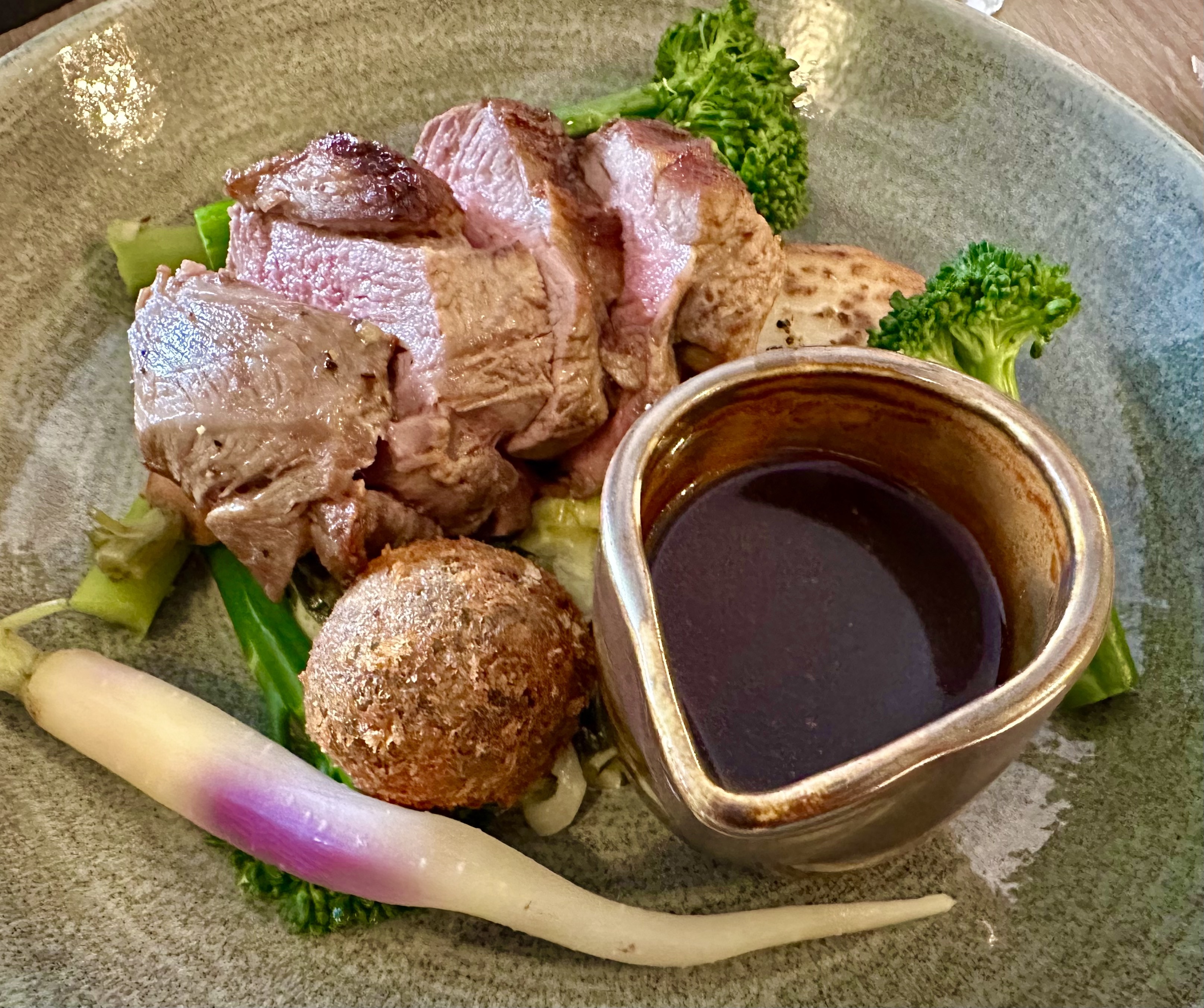
Now for the main course, the Sunday roast. Picture, if you will, the images that those two words conjure in your mind’s eye and then erase them and think again. In place of the meat course, there’s a whole slow roasted plaice, sliced down the middle but left on the bone, the flesh so delicate that it virtually melts in the mouth. I’ve had plaice many times, but this is a revelation. So too are the accompaniments, which are roast new potatoes, perfectly cooked, with a crispy exterior and soft, buttery inside. There’s a also a couple of wedges of charred hispi cabbage, deliciously crunchy and with a couple of sauces to pour over, one flavoured with saffron, the other, lemon. It’s hard to decide which is the best, but eventually we decide on the lemon. I’ve never had a Sunday roast like this before and, unlike the traditional alternative, when it’s finished I don’t feel stuffed to the gills.

Which is great because there’s a pudding (when is there not a pudding?) and, though both of them sound unprepossessing, each in its own way is quietly impressive. There’s a dulce de leche chocolate pave, served with a scoop of vanilla ice cream, and it’s both perfectly executed and perfectly delicious. Then there’s a plum and apple crumble, which in itself seems like a reinvention, the chunks of fruit cooked al dente, the crumble topping light and (dare we use this word?) sort of… healthy. It’s all finished off with a dollop of cream.

Suddenly, January doesn’t seem quite so dreary. Anybody wishing to partake of some stunning seafood should hurry on down to Queensferry Street at their earliest opportunity. This is a game-changer.

5 stars

Philip Caveney
White Noise

13/12/22

The Cameo, Edinburgh

Noah Baumbach’s latest film – based on the 1985 novel by Dom Delillo – is mostly about death: humanity’s fear of it, the inevitability of it and the final irrefutable truth that one day it comes to us all. If this makes White Noise sound about as much fun as a car crash at a funeral, don’t be misled. It’s a fascinating film, by turns absurdly funny, deeply puzzling and profoundly worrying. If, ultimately, it attempts to bite off a little more than it can chew, it’s nonetheless an ambitious and bravely experimental slice of filmmaking.

We’re somewhere in the American midwest where Jack Gladney (Adam Driver) is ‘Professor of Hitler Studies’ at the prestigious ‘College on the Hill’, where he’s fond of waxing lyrical about the rise of the Nazis without, it seems, any inkling of how distressing a subject it actually is. He’s also hiding the embarrassing fact that he can’t speak a word of German. Jack enjoys an adversarial friendship with another lecturer, Murray Siskind (Don Cheadle), who specialises in two main subjects, Elvis and er… car crashes. A scene where the two men attempt to engage in a kind of intellectual battle of wits in front of a spellbound class is a particular highlight.

Jack lives with his wife, Babette (Greta Gerwig), and their extended family. Both have had previous marriages and the gaggle of kids who live with them are all better informed than either of their parents. The family lives in a bubble of domestic bliss, interspersed with regular trips to a gigantic, day-glo supermarket, which seems to hold for them the importance of a church. But not everything is quite as cosy as it seems. What are those pills that Babette is secretly taking? And why, when challenged, does she deny their very existence?

Matters take a dramatic turn for the worse when a freight train laden with dangerous chemicals collides with an articulated lorry, carrying something equally nasty. The result in an ‘airborne toxic event’ which sends clouds of deadly fumes into the sky. The Gladney family – and just about everybody else in the vicinity – vacate their home in a desperate attempt to escape. But what exactly are they fleeing from? And what’s the prognosis if you’re exposed to those ‘deadly’ clouds? Nobody seems to know.

White Noise offers as many questions as it does answers. If not everything we’re offered here quite comes off, much of it works brilliantly. Baumbach’s vision of suburban America is packed full of surprises, from doctors who clearly don’t care about the welfare of their patients to a Mother Superior who rubbishes the idea of heaven and angels. There are perfectly judged performances from Driver and Gerwig (particularly the latter who plays her role as if in a permanent drug daze) and Lol Crawley’s cinematography gives everything an unearthly sheen.

In the film’s final third, Jack finds himself driven to seek out the person responsible for Babette’s addiction, but even that doesn’t follow the lines you’d generally expect to encounter in such a narrative. It’s here that the film begins to feel a little too unhinged, though the enterprise is rescued by a delightful end-credit sequence.

It’s an ingenious device that keeps me glued to my seat until the screen finally fades to black.  

3. 8 stars

Philip Caveney