Uncategorized

Nope

15/08/22

Cineworld, Edinburgh

From it’s earliest beginnings, Jordan Peele’s Nope has been cloaked in the kind of secrecy, normally reserved for Christopher Nolan movies – and inconveniently, it’s arrived slap bang in the middle of the Edinburgh Festival, a month I usually devote entirely to comedy and theatre. Nevertheless, I make time to see it. Now having done that, I’m not entirely sure I’m any better off.

Nope is the story of the Hayward siblings, OJ (Daniel Kaluuya) and Emerald (Keke Palmer), who, after the mysterious death of their father – struck by something unidentified from the heavens – are struggling to keep their business going. They supply horses to the film and television industry but OJ isn’t the best at getting on with people, while Emerald is his polar opposite, too interested in promoting her own projects. (We also learn that Haywards are direct descendants of the unnamed black jockey from the iconic silent film by Eadweard Muybridge.)

With revenue falling, OJ decides to sell some of his stock to Ricky ‘Jupe’ Park (Steven Yeun), who runs a ramshackle Western show, based not far from the Haywards’ ranch. Ricky is a former child actor, whose career was infamously ended when the simian star of his TV series ran amok and attacked his human co-stars. Scenes from the carnage in the studio prefigure the main action, but this feels like an entirely different idea grafted uncomfortably onto the main storyline.

OJ begins to suspect that something is hiding in the clouds above the ranch, something that’s responsible for his father’s death and which might be of extra-terrestrial origin. He and Emerald decide they need to photograph it, telling themselves that the resulting pictures will be their ‘Oprah’ moment, the answer to all their money worries. With this in mind they enlist local tech worker, Angel (Brandon Perea), to help them achieve their goal and they set about capturing the mystery on film.

But what’s up there might not be what they think it is…

Many films are short of ideas, but Nope has the opposite problem. Not content to make a straightforward UFO film, Peele throws in a whole mess of different images and subtexts. Some of them are great, others mystifying, but what’s for sure is that they don’t coalesce enough to make a satisfying whole. While there are certainly spectacular moments here – especially when the IMAX photography concentrates on the heavens and the action taking place up there, I leave feeling annoyed that Nope is neither fish nor foul. It could have been a superior sci-fi epic or it could have been a sinister horror tale. It can’t successfully be both those things.

Which ultimately means that Peele started at the top of his game with Get Out, slipped up somewhat with his second release, the ambitious but flawed Us, and now needs to consider very carefully where he goes next.

3 stars

Philip Caveney

Christopher Bliss: Captain Words Eye

15/08/22

Pleasance Courtyard (Beneath), Edinburgh

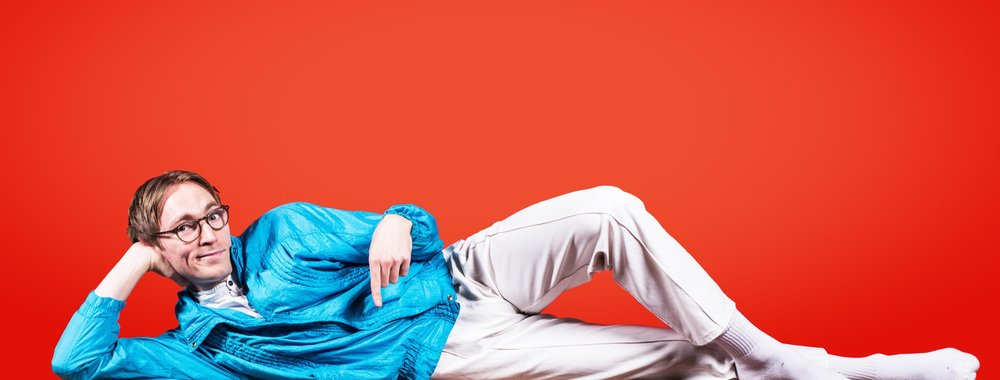
Christopher Bliss is just too good to be true. He swaggers into the room to the strains of Living La Vida Loca, slapping the upraised hands of the front row as he sweeps by. He’s dressed in truly horrible style – including the fashion ‘NO!’ of orthopaedic sandals with white socks – and, without further ado, proceeds to deliver his ‘masterclass in novel writing’ with not an ounce of self-awareness. Writing a novel is easy he assures us; he’s written hundreds! He never spends more than five minutes on each of them and he never ever rewrites a single word!

As a (ahem!) novelist, I can only sit there and reflect on the sorry fact that I’ve been doing it wrong for so many years.

Bliss, of course, is a construct (think David Brent or Alan Partridge). He’s the creation of comedian, Rob Carter, but we won’t hold that against him, especially when he’s mastered every written art save for one – the thing that’s always eluded him is character comedy. Meta? I guess so! He proceeds to commandeer the room and quickly has the audience eating out of his hand. Perhaps what we’re witnessing here is actually a master class in audience manipulation. He’s clearly in his element as he interacts with the crowd and soon has us shouting out suggestions, making noises of both attraction and repulsion, even bellowing his ‘catchphrase’ (“Ruddy hell!”) at regular intervals. It seems that he’s on the lookout for an apprentice and one of us might just be that lucky person.

Bliss is a new name to me and I can only regret that it’s taken me this long to encounter him. He’s that rarest of things, a brilliant character comedian… and a literary genius to boot. I can’t wait for his words of advice on poetry, which I have long considered my Achilles heel.

Those seeking his words of wisdom should hurry on down to the Pleasance Courtyard without further delay – it can only be a matter of time before the literary festival claims him as one of their own.

4.4 stars

Philip Caveney

Chris Dugdale: Ethermind

11/08/22

Assembly Rooms (Drawing Room), George Street, Edinburgh

We’re already approaching the end of the first week of the Fringe. Our feet are just about walked off, we’re knackered, but we’re happy, because Fringe is back in full swing and we’ve seen some incredible new acts – plus a few familiar favourites. Chris Dugdale definitely falls into the latter category. We first caught his act way back in 2015 and he’s a been a fixture on our schedule ever since. It’s not that we’re fans of magic, per se, but there’s something about this magician that just clicks with us. The cheery patter, his likeable personality – and the fact that he never ever fails to astonish us.

His speciality is close-up magic. He even provides a video camera, trained on his hands, as he goes through an extended card routine with an astonished young lad picked from the crowd. ‘I want to show you a trick,’ says Chris. And we gasp out loud. How does he do that? Every time I think, ‘I’ll really concentrate this time and I’ll see how he gets that card into the box without even touching it. One year, he’ll let his guard down and I’ll catch him out.’

And every year, I’m just as baffled.

And then there’s the mind-reading tricks, the way he seems able to reach into your head and make you do stuff that you cannot rationally explain. Remember the old familiar trick your granddad did when he pulled a coin from your ear at Christmas parties? Mr D gives the routine a fresh new twist and puts you right back in that enchanted state of mind you had in childhood

But listen, I’m not going to bore on about this. If you see only one magician at the Fringe this year, there’s a logical choice. Now concentrate! I want you to picture something. Are you concentrating? I’m seeing a name in my mind… it’s appearing gradually in front of you, like something approaching through a dust storm. It’s taking shape… Can you see it now? Correct!

The name is CHRIS DUGDALE. Now go grab a ticket before they sell out.

5 stars

Philip Caveney

BriTANick

08/08/22

The Box, George Square

Comedy sketch duo (trio, if you include their invisible horse, Midnight), Brian McElhaney and Nick Kocher, hail from Atlanta, Georgia, and call themselves BriTANick (it rhymes with Titanic). They are currently appearing in an adapted shipping container on George Square, much to Nick’s evident disgust, but the place is sold out tonight and the punters are lapping it up.

“Brian” is the more driven of the two, intent on pursuing his art and attaining his goals, while “Nick” has clearly been created for the sole purpose of putting his partner’s dreams through the shredder, mostly by whingeing about stuff: the flight attendant who gave him inferior seats on the flight to Edinburgh; the fact that he and his wife had agreed to have no sexual contact until their wedding – which has already been postponed for two years because of the pandemic; he’s not a happy bunny.

Sketch comedy is notoriously difficult to get right but McElhaney and Kocher do an excellent job of it – they are confident performers, adept at incorporating whatever happens into their show. A couple of late arrivals find themselves featured at one point to much hilarity. They also have a flair for the surreal – Midnight is the first invisible horse we haven’t seen at this year’s Fringe. The sketches are wide ranging, skipping effortlessly from Pythonesque whimsy to clever character studies, and their post-modernist approach to taboo subjects allows them to get away with material that, in less skilled hands, might make audiences uncomfortable.

Of course, the acid test is does it make you laugh? And the answer is a resounding ‘yes!’ I spend the hour giggling, chortling, sniggering and yes, even laughing out loud at some of their more absurd antics. I particularly enjoy an extended thread about dreams. Is Brian really going out with Salma Hayek? Is that an invisible knife I don’t see before me? Only one sketch (a piece abut man-snogging) feels a little over-extended, but most sequences are short and punchy and I do admire the way they keep drawing a line through to earlier sketches to ensure that everything, no matter how disparate, hangs together as a whole.

Audiences hungry for laughter – and let’s face it, after recent world events, that’s most of us – will find it waiting for them in a metal box on George Square. Grab your tickets, form an orderly queue and head inside… but mind you don’t step on Midnight’s tail.

4 stars

Philip Caveney

The Midwich Cuckoos

17/06/22

Now TV

I first encountered the novels of John Wyndham while still at school. I started, like many others, with The Day of the Triffids and remember being blown away by the sheer inventiveness of it. Wyndham’s ‘home counties disaster’ genre was unlike anything I’d ever read before. And then I picked up a copy of The Midwich Cuckoos, which again had an inspired idea at its heart and was deliciously creepy.

It’s not surprising that the movies soon got in on the action. Cuckoos was first filmed in 1960 as Village of the Damned, only two years after the novel’s release. It’s a bold move to attempt to bring Wyndham’s story up to date, but this seven part series from Sky Max, created and written by David Farr, does a pretty good job of it.

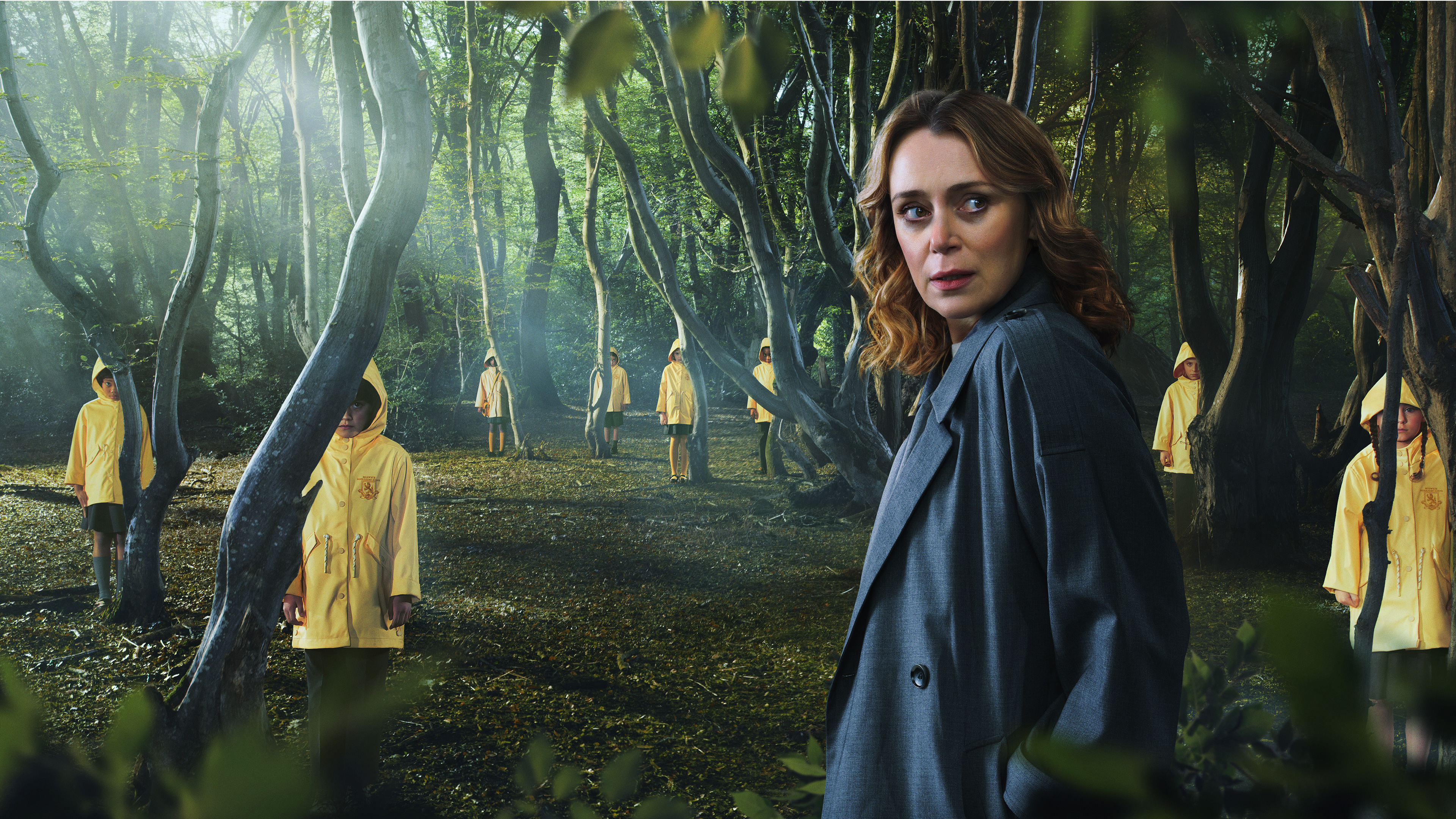
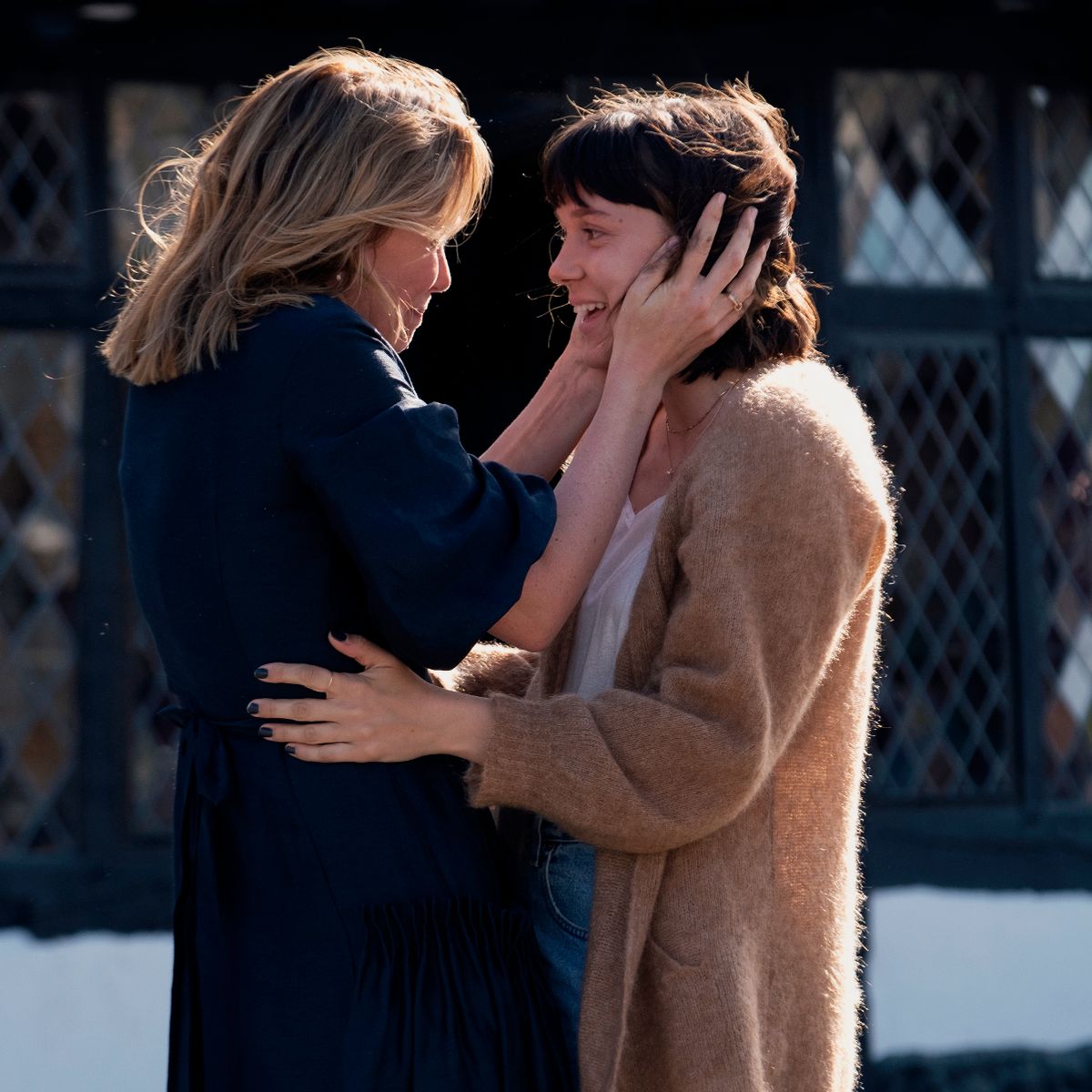
Keely Hawes stars as psychologist Dr Susannah Zellaby, struggling to connect with her daughter, Cassie (Synnove Karlsen), who has a history of poor mental health and drug abuse. On a rare trip into London, Susannah is horrified to hear of a mystifying occurrence in her home village of Midwich. After a sudden, inexplicable loss of power, everybody in the village falls unconscious at the same moment. When they wake, twenty-four hours later, it’s to the bizarre discovery that every female resident – including Cassie – has fallen pregnant. Susannah finds herself increasingly drawn into working with the initially bewildered new mothers.

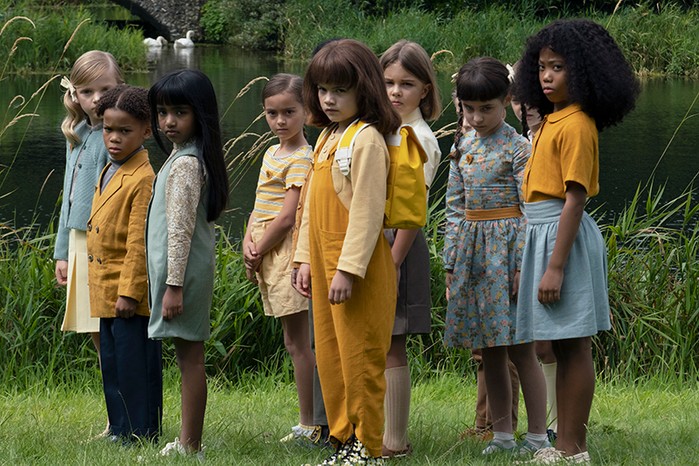
The government quickly moves in to keep the event a closely guarded secret. As time moves on, the babies are born and it’s soon becomes apparent that these are no ordinary children. They grow faster than they ought to, they demonstrate learning abilities beyond their years and, it transpires, they have a collective ‘hive’ consciousness. If something happens to one of them, the rest know about it instantly. And they are very, VERY protective of each other.

The Midwich depicted here is entirely believable: a middle-class, middle-income suburb, populated by characters who are fleshed out beyond the usual stereotypes. The production team have wisely moved away from the blonde-haired Village of the Damned kids and created something entirely different – and the creepiness of the source novel is effectively conveyed, the young actors exuding their sinister presence. Resident police officer Paul Haynes (Max Beesley), who ironically lost his pregnant wife during the blackout, has the unenviable task of attempting to make sense of it all, while also establishing a relationship with his wife’s sister, Jodie (Lara Rossi), and the strange boy she has given birth to.

Plaudits should go to the four cinematographers who filmed the lush, sun-drenched locations, which contrast effectively with the eerie sci-fi elements, making them all the more powerful. The story builds effectively over seven episodes to a suspenseful – and quite cold-blooded – climax. I’m slightly perturbed by the fact that this is referred to as ‘Season 1.’ I seriously doubt there’s much more to say about this story, but of course, Village of the Damned had its own (inferior) sequel back in the day and perhaps it’s inevitable that more will follow.

For now, this makes for the perfect binge-watch.

4.4 stars

Philip Caveney

Cluedo

10/05/22

King’s Theatre, Edinburgh

The game of Cluedo was something I only played occasionally as a kid – and, because I had an annoying habit of disobeying the rules (why would I answer questions honestly if I might be the murderer?), I was rarely asked to play a second time, as my presence tended to plunge every game into chaos.

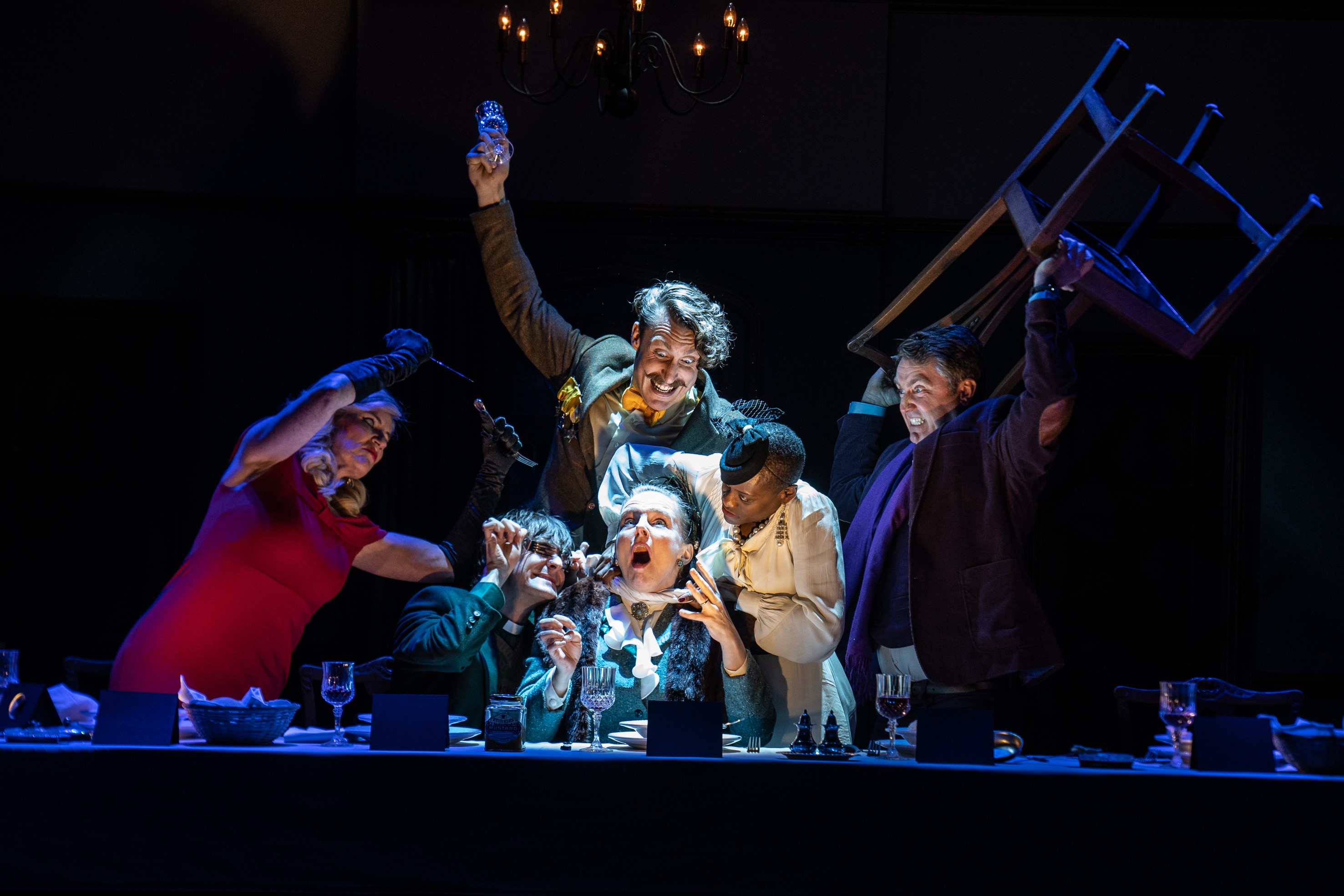
This stage version, based on an original screenplay by Jonathan Lynn and adapted by Sandy Rustin, is pretty chaotic too. It’s directed by Mark Bell (of The Play That Goes Wrong) and, as you might expect, leans heavily into the absurd.

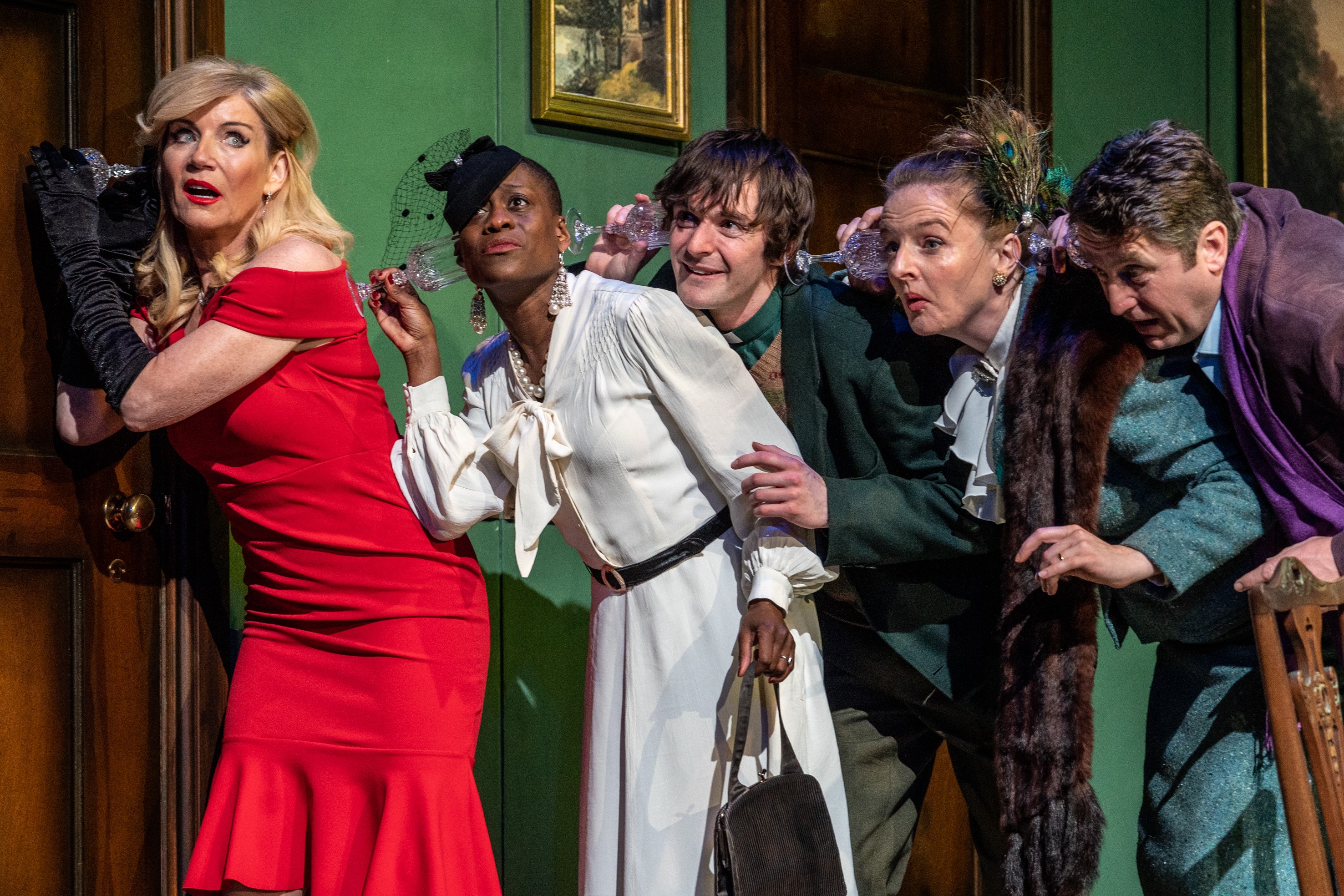
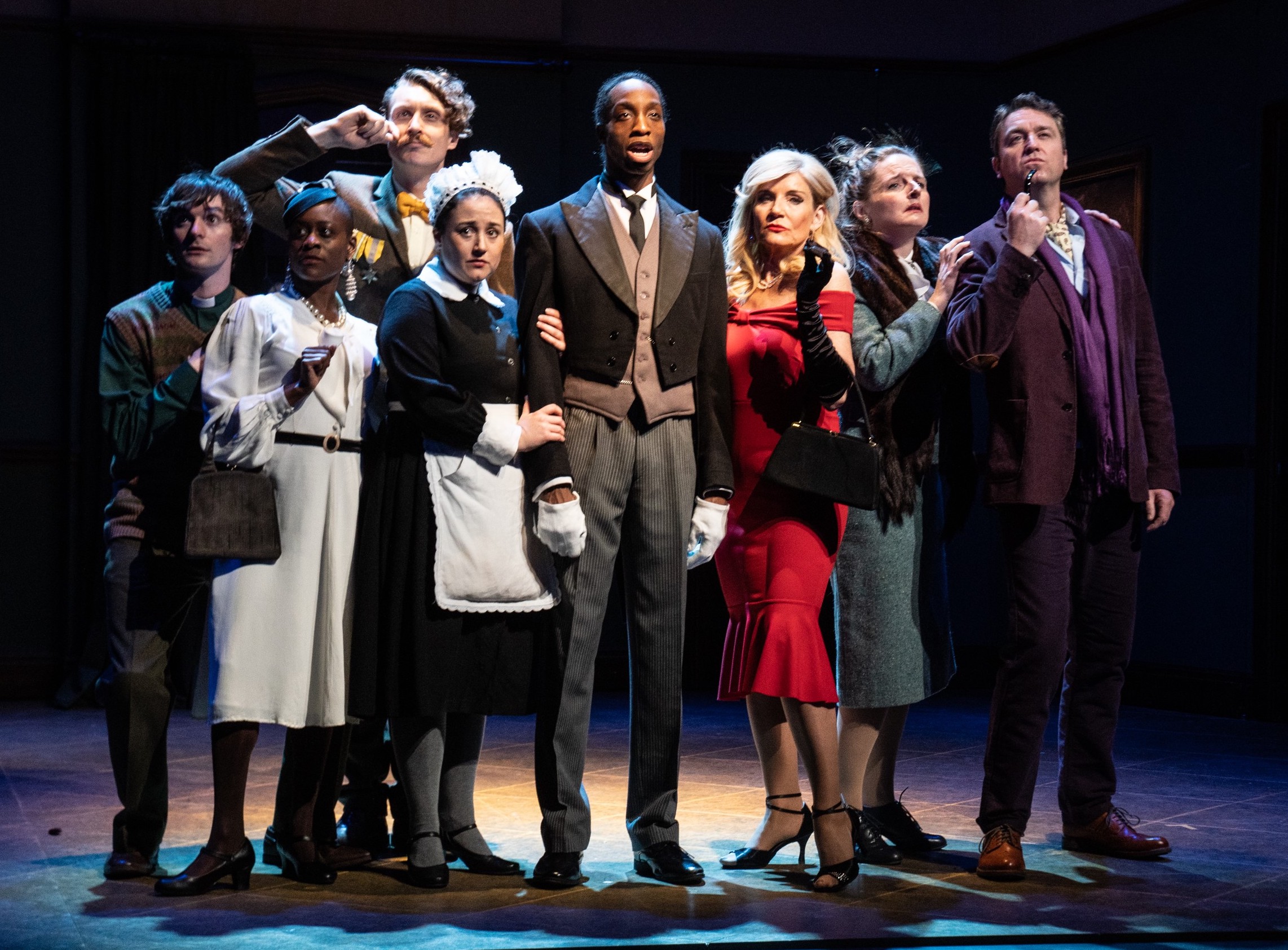
All the usual suspects are in evidence: the mysterious Miss Scarlett (Michelle Collins), the accident-prone Reverend Green (Tom Babbage) and the dim-witted Colonel Mustard (Wesley Griffith). Throw in the pompous Professor Plum (Daniel Casey) the enigmatic Mrs White (Etisyai Philip) and the boozy Mrs Peacock (Judith Amsenga) and we have the full set. Of course there’s a butler, Wadsworth (Jean Luke-Worrell), who acts as our guide and explains that those colour-coded names are simply pseudonyms. The six guests have been invited here by a certain ‘Mr Boddy’, who has information about their nefarious goings-on. Each of them is issued with their own unique murder weapon (you all know what they are) and the fun dutifully ensues.

And it is fun, provided you don’t pause too long to consider the sheer improbability of it all. Without wasting any time, the story galumphs happily from one unlikely event to another. A cunningly devised set is repeatedly opened up like a puzzle box to reveal secret corridors and adjacent rooms and there’s plenty of silly, tongue-twisty wordplay – particularly from Luke-Worrell: his rapid fire replay of ‘what’s happened so far’ is the play’s best sequence and earns a round of applause all of its own. Hats off to Harry Bradley, who keeps popping up in a variety of guises only to be promptly murdered – it’s a living of a kind, I suppose. A repeated motif where a character utters another character’s name ad infinitum is also the cause of much mirth and it’s clear that tonight’s audience are having great fun with the proceedings.

And that’s pretty much what Cluedo is – fast, funny and frenetic, it does what it says on the Waddington’s box.

3.4 stars

Philip Caveney

All My Sons

29/04/22

Teviot Underground, Edinburgh

There are good playwrights and there are great ones. Arthur Miller definitely belongs in the latter category. It’s a brave student theatre group that dares to tackle one of his works but, down in the crowded basement of the Teviot Underground, EUTC take on his 1947 play All My Sons and, with great skill and determination, make it their own.

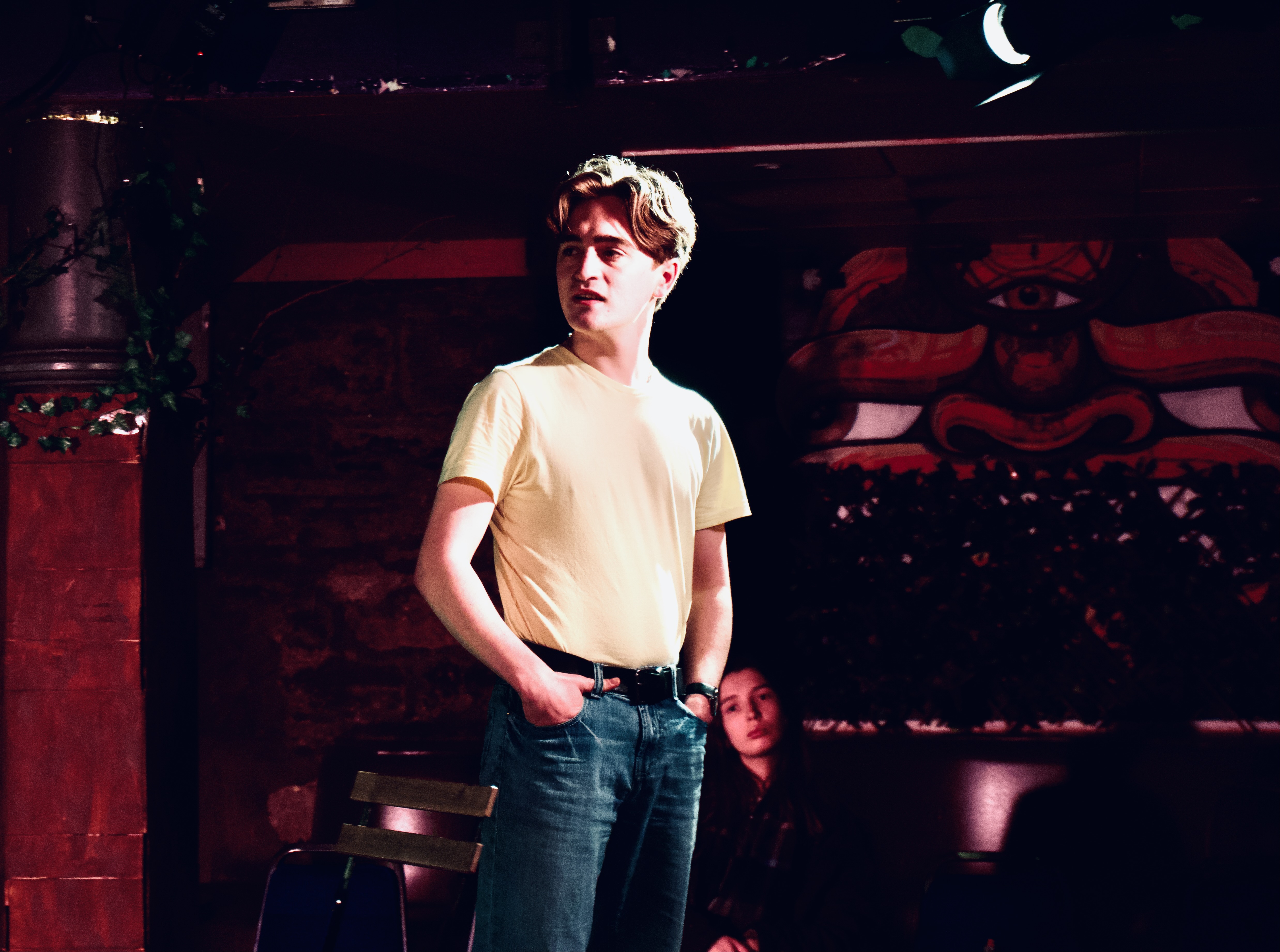
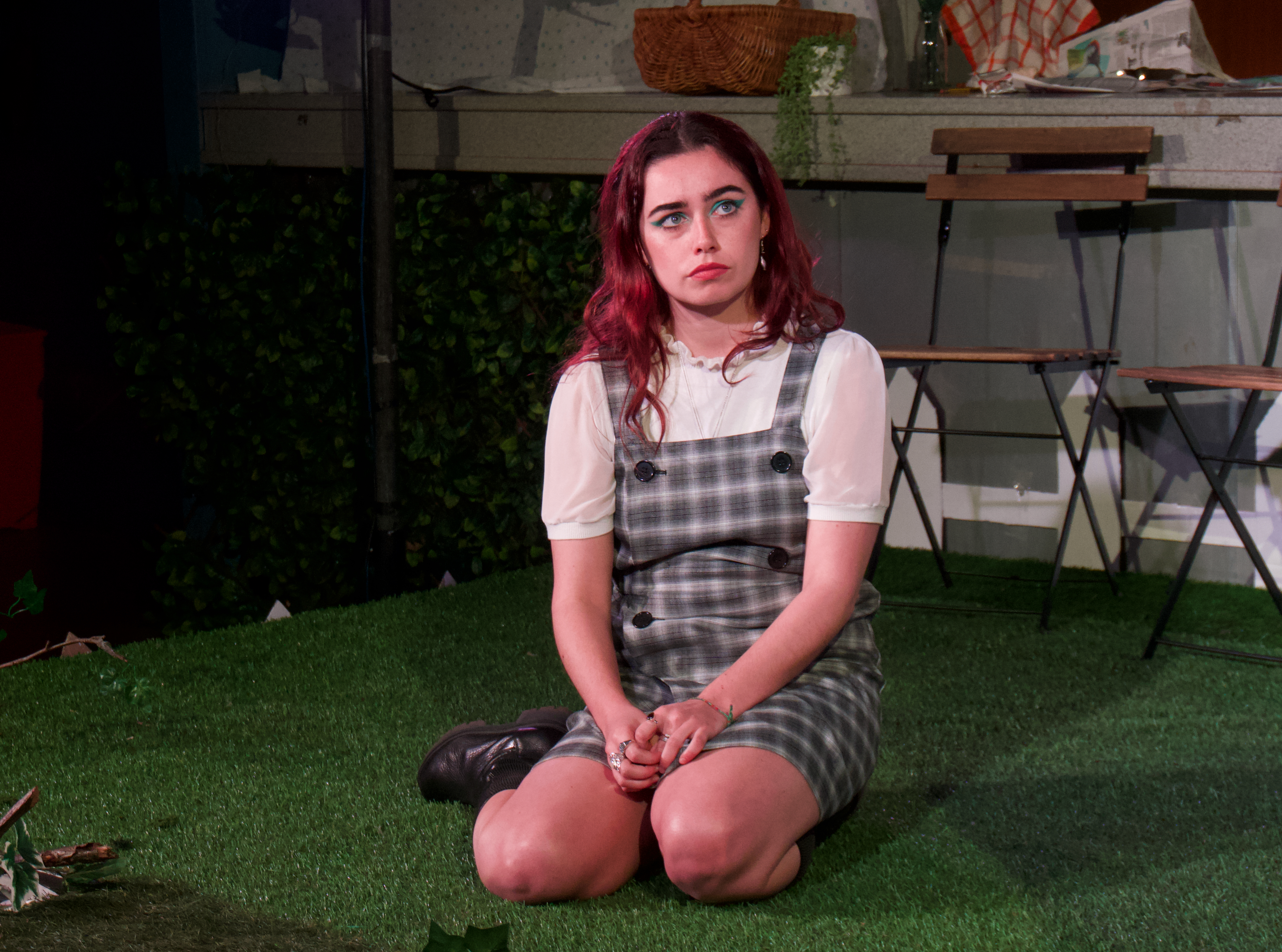
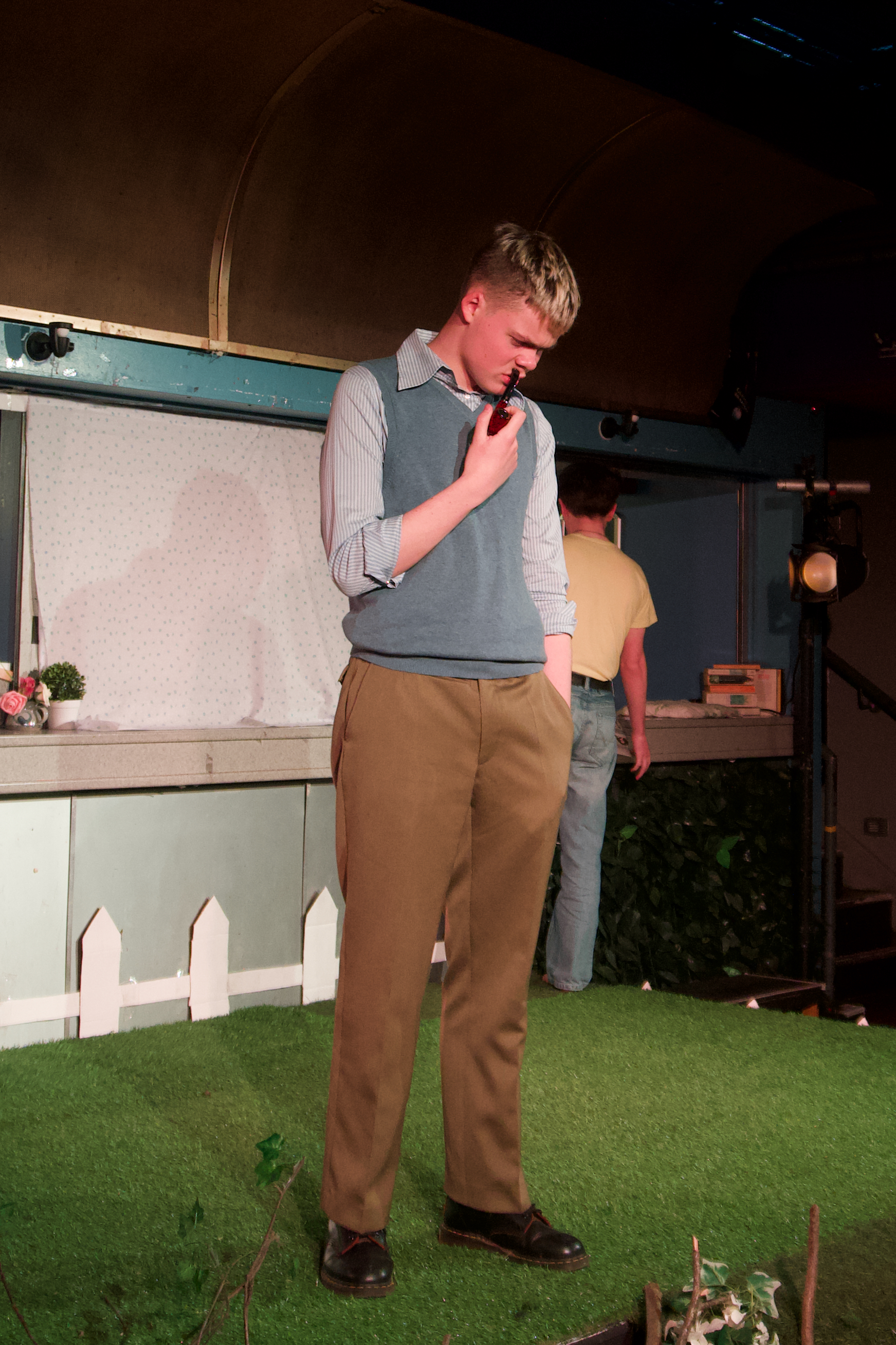
This is the story of the Keller family and it takes place entirely in the garden of their home. It’s the night after a storm has uprooted a beloved tree, planted three years earlier in memory of the family’s youngest son, Larry, a fighter pilot who went missing in the war. Patriarch and factory owner, Joe (Ted Ackery), has survived accusations of shipping defective airplane parts to the military during the conflict and has subsequently prospered, even though his partner, Steve, still languishes in jail, found guilty of the charge.

Joe’s devoted son, Chris (Conor O’ Cuinn), is in line to take over the family business, but it’s not going to be plain sailing. He is hopelessly in love with Ann Deever (Olivia Carpenter), Larry’s former fiancée and she, in turn, has feelings for him. But Chris’s mother, Kate (Lucy Melrose), steadfastly refuses to give up hope that her lost son will one day return – and accepting this new union would, for her, be the final nail in her missing son’s coffin.

As ever with student theatre, the staging here is clearly constrained by budget, but the set designers have applied themselves to the task with great ingenuity; and using the canteen area at the back of the stage to depict the interior of the family home is a terrific idea. Interestingly, the costuming evokes the late 1960s and snatches of Bob Dylan and The Doors on the soundtrack accentuate the idea that this is a tragedy that could just as easily be applied to the Vietnam War – or any other one, come to that. The spectre of profiteering from war is, I’m afraid, universal.

But what really comes across in this production are the performances, with the four leads in particular submitting thrilling interpretations of their roles. And it doesn’t end there. The supporting roles of the family’s neighbours – who all know that Joe is guilty but have conspired to overlook the fact – are also delivered with utter conviction. There’s no weak link here – and there’s a palpable moment in the middle of the first act, when you sense these young performers coming to the realisation that they have their characters nailed and are going to make them fly.

Into this volatile atmosphere comes George (Priya Basra), Ann’s older brother, now a successful lawyer, who has previously accepted Joe’s acquittal and refused to see his own father ever since the trial – until now, that is. Now he has talked to his father and the wool has finally been pulled from his eyes. He visits the Kellers intent on seeking revenge.

The slowly rising tension builds steadily to a climax of extraordinary power. It’s a hard-hearted soul indeed who won’t be moved to tears by its shattering conclusion. EUTC have achieved something here that they can be truly proud of and, if you have the chance to catch this performance, then I’d advise you to take it.

It’s an assured interpretation of one of Arthur Miller’s greatest works.

4.6 stars

Philip Caveney

Ondine

27/03/22

Teviot Underground, Edinburgh

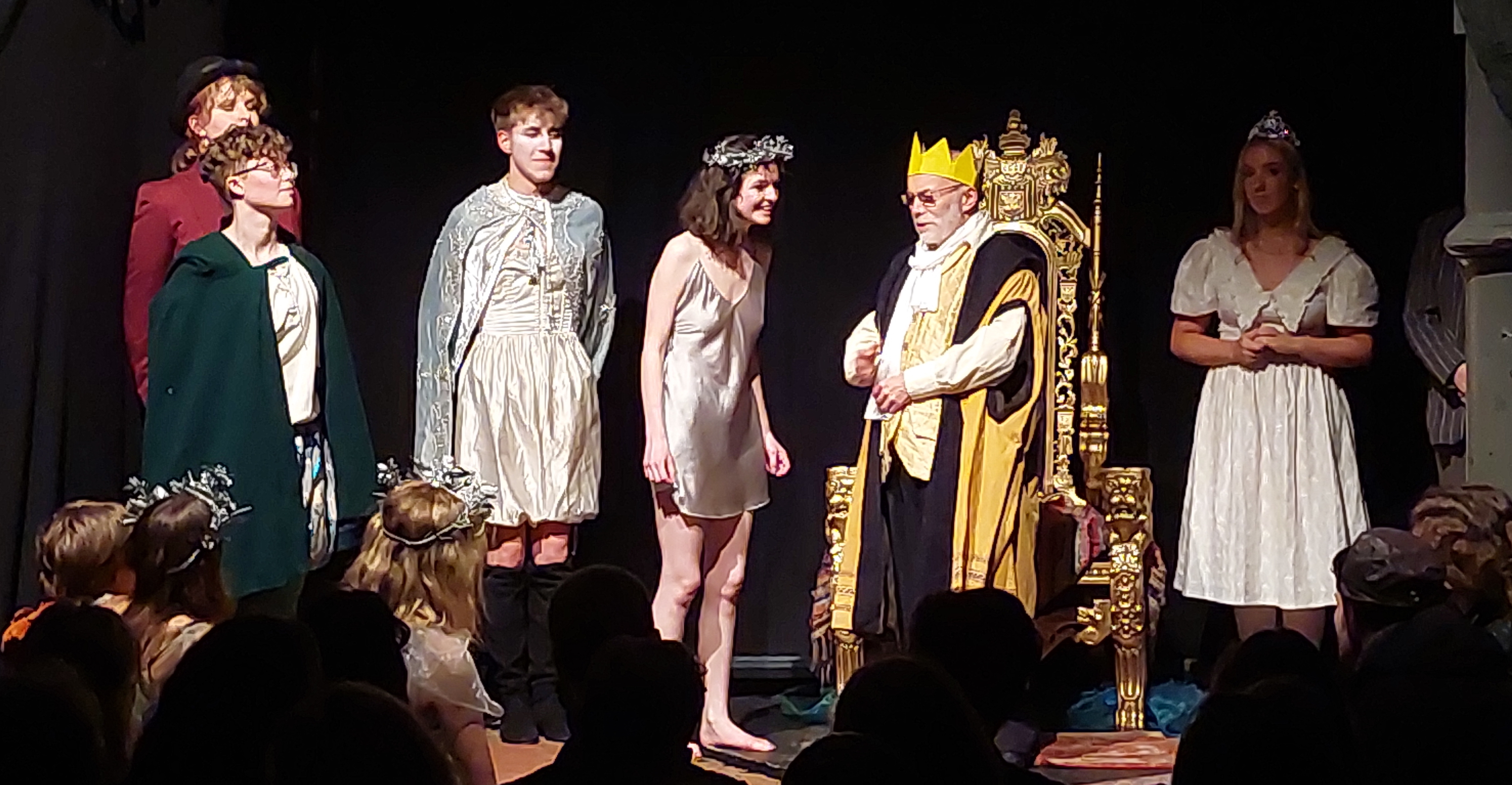
We’re at another student production, down in the Teviot Underground, where we’ve seen many excellent Fringe shows over the years. It’s here that Theatre Paradok have taken on Ondine, a fascinating play by Jean Giradaux, first performed in 1938 (and which, in the 1960s, famously featured Audrey Hepburn in the title role).

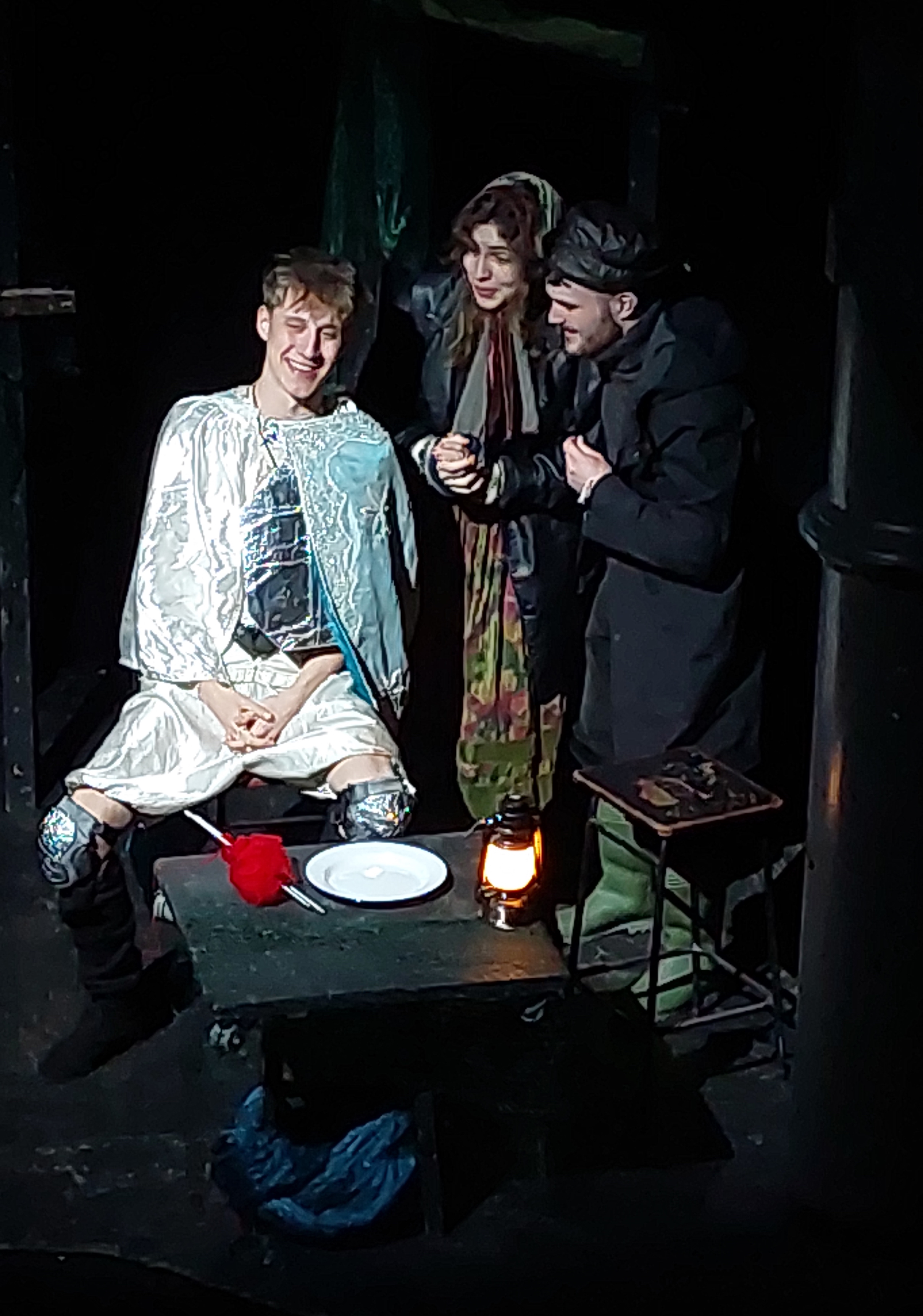
All the usual problems are in evidence tonight: a tiny, oddly-shaped stage; a selection of cobbled-together costumes and ramshackle props. There’s also a background buzz of voices coming from the bar next door, and yet the sizeable cast overcome these problems with admirable skill and determination. 

In a remote cottage, Fisherman Auguste (Huw Turnbull) and his wife Eugenie (Sophie Craig) await the return of their ‘daughter,’ Ondine (Clare Robinson). They are fully aware that she’s not their real child, but a changeling, substituted for their infant years ago, and now running wild in the midst of a storm. Ondine is a nature spirit who, though supposedly fifteen years old, has actually been around for centuries and is immortal.

Into this weird scenario wanders Hans (Kristjan Gudjonsson) a knight-errant, currently in love with and betrothed to Princess Bertha (Alice Humphries). He’s ridden into the country to contemplate his upcoming nuptials, but one look at Ondine and he is entranced. She too seems impetuously keen to be his bride.

But by the play’s second act, it’s already clear that the new union is beset by insurmountable problems, not least the fact that, in order to become Hans’s bride, Ondine has been forced to make a draconian pact with The Old One…

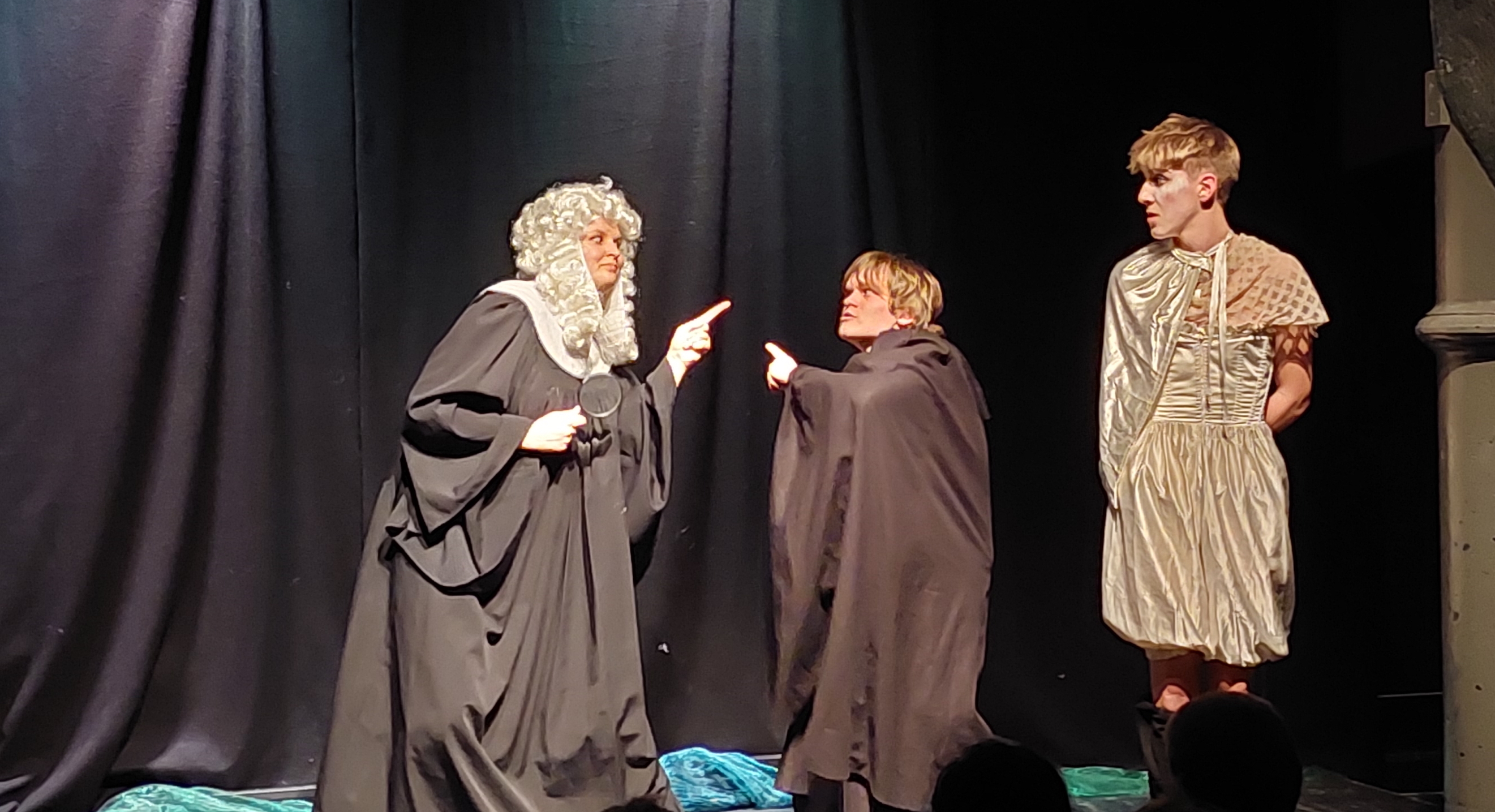
To suggest that Ondine is a weird play would be something of an understatement. It occasionally borders on the deranged. But its themes seem powerfully prescient today – the frailty of mankind, the ways in which we have lost touch with the healing powers of nature – and are right there in the story’s subtext. There are some terrific performances here, particularly from Robinson, who manages to keep the feverish intensity of the central character blazing throughout and whose inability to tell lies is the cause of much humour. Gudjonsson is also terrific, imbuing Hans with a sardonic wit and a sense of fatalism, which make his final scenes genuinely poignant. I also enjoy Adam Wu’s double role of The Old One and The Illusionist, managing to slip effortlessly from silent threat to cheerful swagger, while Angus Morrison and Trudy Kalvynaite offer a cheerfully knockabout double act as the two pompous magistrates called in to judge Ondine’s ‘infidelity.’

Director Philomène Cheynet has worked wonders with the uncompromising performance space, making me forgive its shortcomings and allowing me to focus on the strength of the performances. 

Ondine continues until the 30th March, and those looking for something quirky and absolutely unique should definitely seek it out.

4 stars

Philip Caveney

The Rocky Horror Show

21/02/22

King’s Theatre, Edinburgh

‘It’s just a jump to the left… and then a step to the righ-hi-hi-hight!’

It’s hard to believe that Richard O’Brien’s shlock-horror musical began its theatrical journey way back in 1973. Like many others, I didn’t actually witness it until The Rocky Horror Picture Show hit cinema screens in 1975. I can honestly say I’d never seen anything like it. The sexual politics were startling to say the least, Tim Curry’s Frank N Furter virtually burned up the screen, and yet the film didn’t make much of an impact at the box office. Go figure.

It wasn’t until much, MUCH later that it began to build its dedicated cult following.

Die-hard fans are only slightly in evidence at the King’s Theatre tonight, a few brave souls sporting French maid outfits, stockings and suspenders – which may have more to do with the Scottish weather than anything else. But the elderly couple sitting in front of me are clearly longtime fans, singing along with every single number and helping each other into the aisle to smash The Time Warp.

Rocky Horror is just a gloriously silly romp with canny sci-fi references, backed up by a whole string of banging songs. From the opening chords onwards, I’m hooked.

Brad (Ore Oduba) and Janet (Haley Flaherty) are two wholesome (okay, repressed) people, whose car breaks down one stormy night. They take refuge in that creepy-looking castle they passed a couple of miles back. Here they meet their unconventional host, Frank N Furter (Stephen Webb), his handyman, Riff Raff (Kristian Lavercombe), his maid Magenta (Suzie AcAdam) and a whole gaggle of deranged characters with a propensity for dissolute behaviour.

Furter, it transpires, has been working on a special project and Brad and Janet have arrived on the very night he plans to unveil Rocky (Ben Westhead), the perfect sexual companion.

This production, directed by Christopher Luscombe, moves like the proverbial tiger on vaseline – the dance routines are brilliantly executed, Webb is wonderfully flamboyant as Furter and, of course, the presence of The Narrator (Philip Franks) is the production’s trump card. Suave, sophisticated and delightfully potty-mouthed, he fields interjections from the more vocal followers and offers a few pithy observations in return. One of them, about Prince Andrew, has the entire audience applauding.

Okay, so the first half still features the lion’s share of the best songs – which has always slightly unbalanced the production – and there are a couple of scenes in the second half that, viewed through a contemporary gaze do feel a bit… well, rapey… but of course, this was written at a time when the subject of sexual politics was in its infancy. O’ Brien’s main theme – that people should embrace and celebrate their sexual identities – still seems somehow ahead of the game forty-nine years after the show’s birth. And it seems highly unlikely that anybody is going to attempt an update this late in the game.

This is an absolute delight. As the performers thunder into a reprise of the show’s two best songs, the entire audience is up on its feet, clapping, dancing and singing along. Few nights out at the theatre are as deliriously enjoyable as this – and as we wander out into the night, we’re still humming The Time Warp.

After so long shut away in glum silence, we all deserve a large helping of Rocky. If this doesn’t put a great big stupid grin on your face, then nothing will.

4.6 stars

Philip Caveney

The Dresser

15/02/22

King’s Theatre, Edinburgh

The Dresser is about a poorly actor. He’s famous – a big draw – and the company fears that his illness might preclude him from appearing on stage as the eponymous King Lear (itself a play where the lead character is afflicted by old age and ill health). It’s somewhat ironic, then, that Julian Clary, in the titular role of Norman, has been obliged to drop out of tonight’s performance, and we have an understudy in his place.

But it’s an ill wind that blows nobody any good and Clary’s absence provides an opportunity for supporting actor Samuel Holmes to step into his shoes and I’m happy to report that he nails the camp, manipulative Norman with aplomb. How would Clary have handled the role? I’ll probably never know. That’s show business.

It’s 1941 and the London theatres are struggling through the rigours of the blitz. As the minutes tick relentlessly by towards yet another performance, actor-manager ‘Sir’ (Matthew Kelly) is nowhere to be found. His wife, ‘Her Ladyship’ (Emma Amos), due to play Cordelia opposite him, tells Norman that she’s just left him on a hospital ward. Stage manager Madge (Rebecca Charles) wants to call off the show but Norman vehemently stalls her, insisting that the man he has been dressing for so many years has never missed a performance yet. He’ll be there.

Sure enough, Sir comes plodding dutifully in, looking like he’s gone ten rounds with a heavyweight boxer. Of course he’ll go on! If only he could remember which of the bard’s plays he’s actually supposed to be doing tonight … and if only he was still strong enough to carry his wife onstage for her final scene.

Ronald Harwood’s play (memorably filmed in 1983 with Tom Courtenay and Albert Finney) is inspired by the five years that Harwood spent working as a dresser to Sir Donald Wolfit – a situation I can relate to, as I worked briefly as a dresser to Sylvester McCoy, when he was Puck in Theatr Clwyd’s A Midsummer Night’s Dream. It depicts an age when the term ‘the show must go on’ really earned its stripes, when actor-managers like Sir really did keep the theatrical wheels turning. It’s cleverly staged: a seedy dressing room rises magically to reveal the wings of a theatre, where anxious cast and crew can look out onto whatever’s happening on stage.

While the play feels rather static, full of complex speeches, it’s nevertheless beautifully written and there are some bitterly funny lines to savour, particularly from Norman, who is adept at slaying his adversaries with acerbic one-liners. He also has a faultless memory of every town the company has played in and seems to reserve special contempt for Colwyn Bay (hailing from North Wales, we’re acutely aware of this one!).

The parallels between Sir’s current situation and those of the character he’s depicting are astutely drawn and there’s a brilliant onstage metamorphosis, where Sir, a rambling shivering figure in grubby underwear, gradually transforms into Shakespeare’s king. And of course, there are also the parallels between Lear and his fool – a relationship that’s echoed in the play’s poignant conclusion.

Kelly is terrific in his role – endlessly self-aggrandising but caught in the headlights of his advancing senility – while congratulations should go to Holmes, who must have been rehearsing those lines up to the opening, and who never fluffs one of them.

All the best to Mr Clary for a swift recovery.

4 stars

Philip Caveney