Theatre

SIX The Musical Live!

27/04/25

Cineworld, Edinburgh

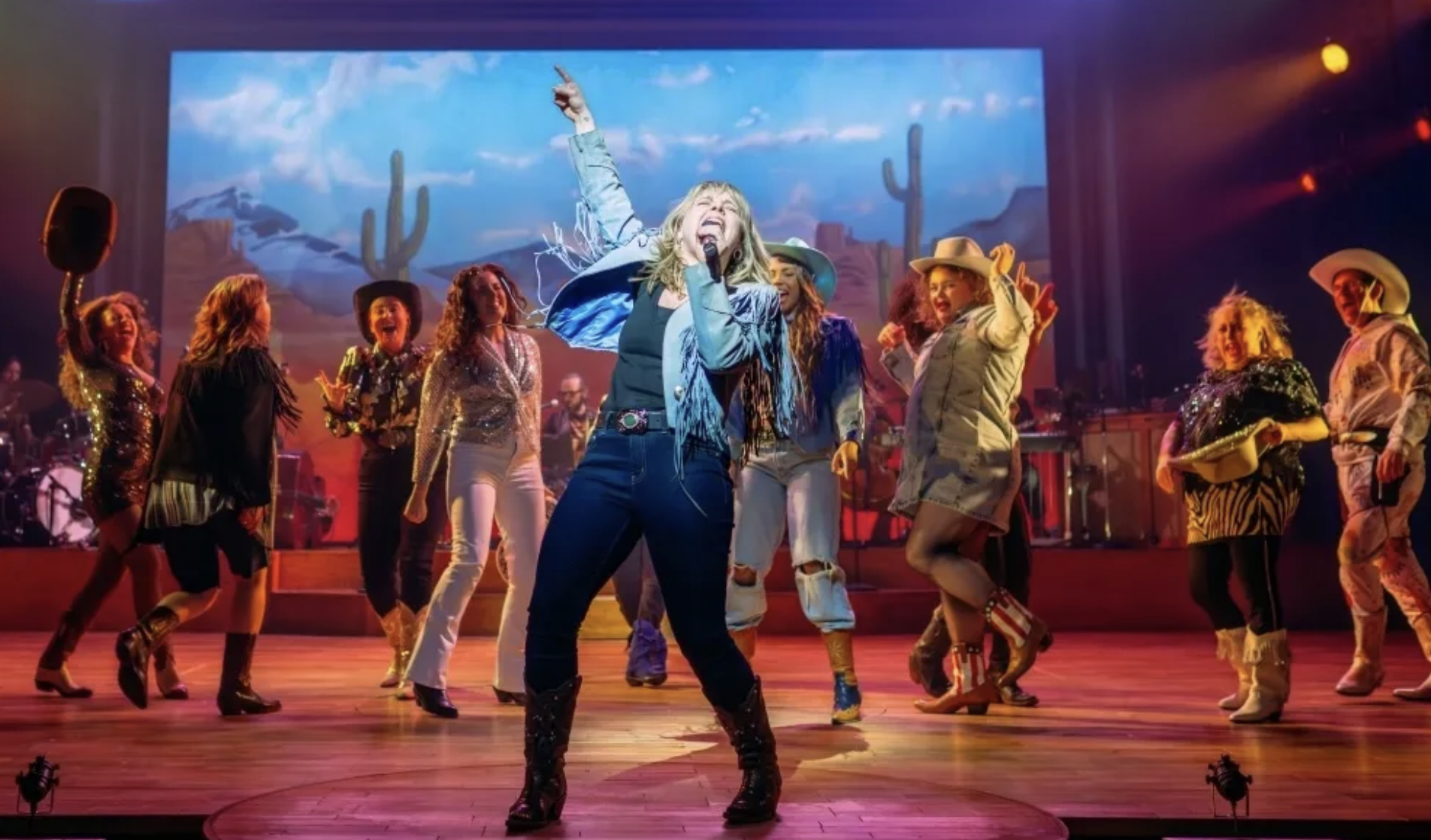
We first saw SIX The Musical in 2018 on its triumphant return to the Edinburgh Fringe. A year earlier, as a bare-bones student production, it had garnered a lot of attention. Now it was back with a big budget and a lot of buzz. We duly went along to the purple upside-down cow tent dominating George Square Gardens (AKA the Udderbelly) and immediately understood what all the fuss was about. With its high-octane energy and witty lyrics, this re-writing of herstory was bursting with vim and invention. Afterwards, we bought the album and listened to it on repeat.

We saw it a second time when it came to the Festival Theatre on tour, now with a different cast. The production was as compelling as ever – but those Udderbelly Queens will always reign as far as we’re concerned.

So we’re delighted to see that an original-cast reunion performance has been filmed; what’s more, it’s included in our Cineworld Unlimited plan. What better way to spend a Sunday morning than engaging in a little Fringe-nostalgia, and trying to suppress the urge to sing along with some of our favourite songs?

It’s astonishing to think that Lucy Moss and Toby Marlow were still at uni when they wrote this juggernaut, which now boasts more than a thousand performances both in the West End and on Broadway, to say nothing of its wider global reach. Their combined talent is truly awesome and, directed by Liz Clare, the musical absolutely deserves its huge success.

The conceit is simple: each of Horrid Henry’s wives thinks she’s the most historically important. Unable to come to a consensus, they decide to battle it out via the medium of song, so that the audience can judge who’s suffered the most and is therefore the most deserving. It’s hardly a spoiler to reveal that, in this feminist reframing, they end up setting their differences aside and embracing their sisterhood. After all, together they amount to more than just one word in a stupid rhyme, right? Combined, they’re the main reason anyone remembers Henry at all.

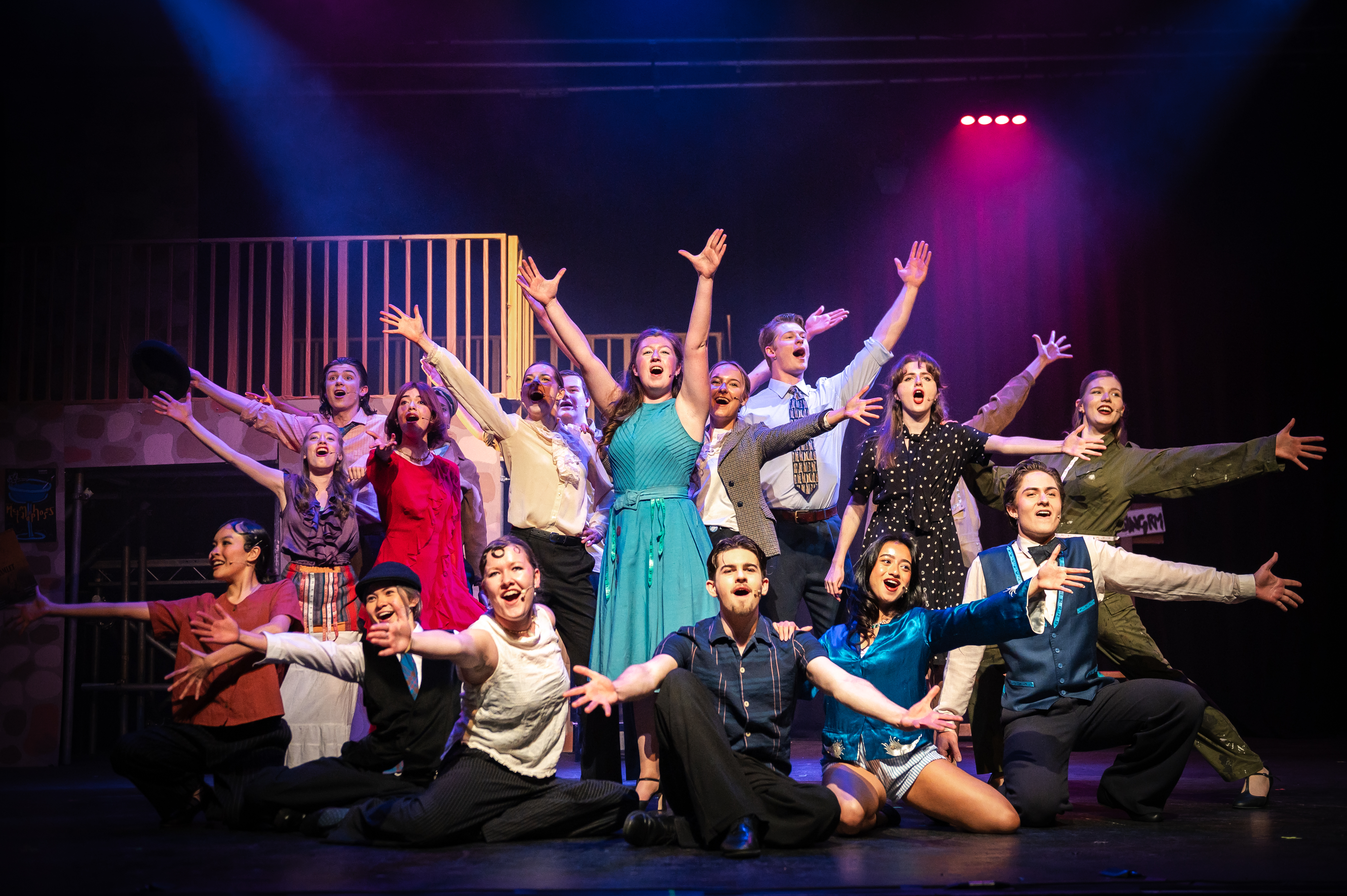
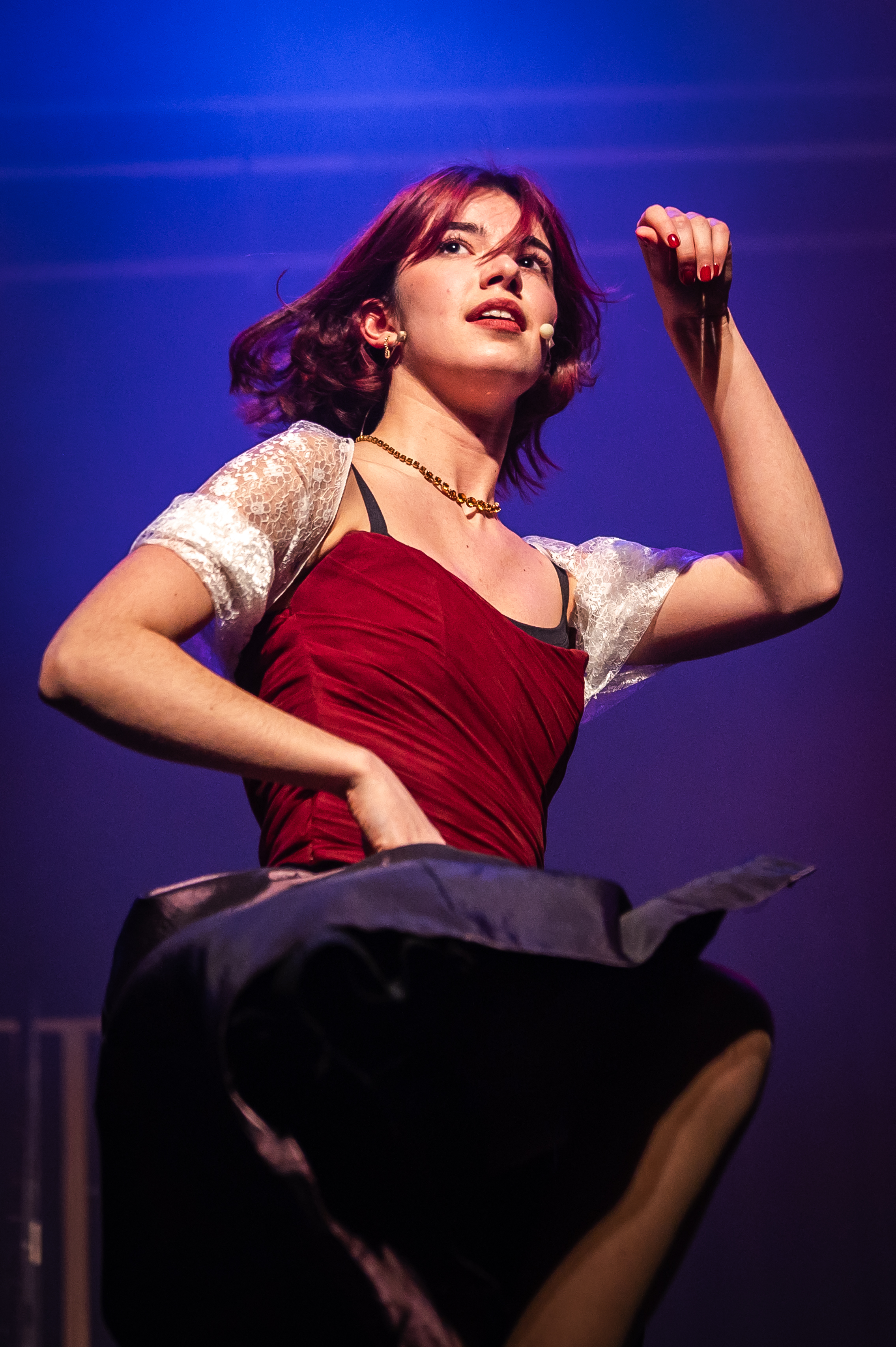
They sing in herstorical order: Jarneia Richard-Noel (Catherine of Aragon – divorced), Millie O’Connell (Anne Boleyn – beheaded), Natalie Paris (Jane Seymour – died), Alexia McIntosh (Anne of Cleves – divorced), Aimie Atkinson (Katherine Howard – beheaded) and Maiya Quansah-Breed (Catherine Parr – survived). The songs are wonderfully distinct, incorporating Latin-American-tinged funk, a plaintive ballad and thumping Teutonic techno. Each Queen earns every minute of her time on the throne.

For anyone who hasn’t seen it, grab the chance while you can: this version, filmed live at London’s Vaudeville Theatre, comes with a précis of the production’s journey, as well as a pre-show cast interview, and has several showings a day in multiplexes this week. You’d be hard pressed to find a more dynamic and entertaining group of dead women to spend your time with.

5 stars

Susan Singfield
A Little Inquest Into What We Are All Doing Here

24/04/25

Traverse Theatre, Edinburgh

As the title suggests, ThisEgg’s A Little Inquest Into What We Are All Doing Here takes the form of a legal hearing scrutinising the cancellation of their 2022 piece, The Family Sex Show. Some readers may remember the furore: news of the play, aiming to open up avenues for safe, open conversations about sex for children and parents, was picked up by extremist hard-right groups, and there were calls for it to stop. And so, before it was fully developed, the fledgling drama had its wings well and truly clipped. Venues, understandably scared by bomb threats, pulled out. Members of the company, their families and venue staff were called paedophiles and subjected to death threats. The pearl-clutching moral outrage had its intended effect, and The Family Sex Show never made it into production.

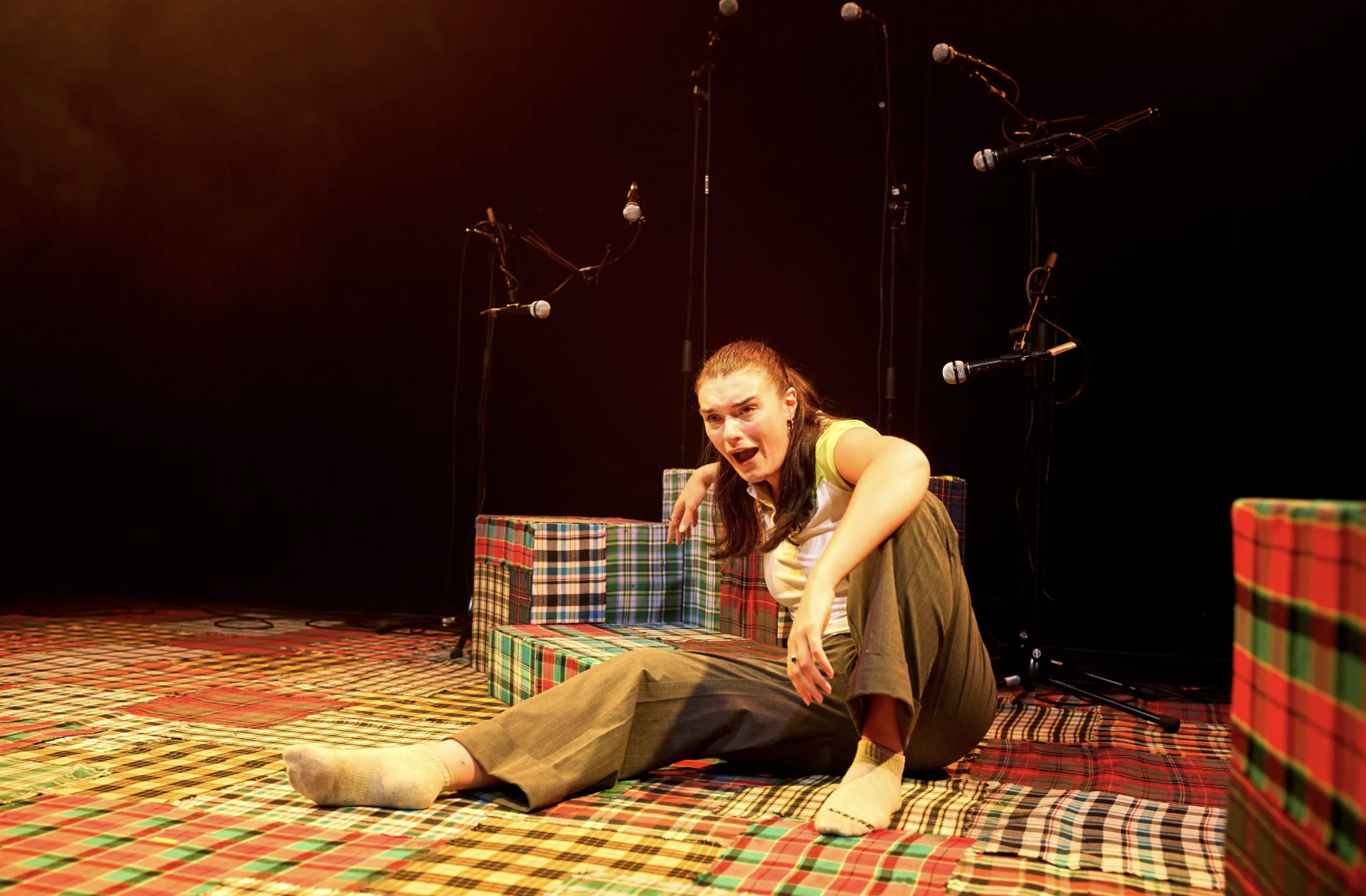
Lead artist and producer Josie Dale-Jones sits behind a desk and speaks into a microphone, laying out the details for us to consider. She is scrupulously even-handed, not only defending her much-maligned play, but also acknowledging some of the mistakes she made along the way.

The main focus, however, is on two issues.

First, our current approach to sex education does children a disservice. Not everyone has parents who are willing – or even able – to listen to their concerns and offer them sensible advice. Teachers have neither the time nor the training to deliver the guidance young people need in this area. So what’s the answer? Let them learn about sex and relationships from their equally ill-informed classmates? From porn? Or perhaps we should leave it to Andrew Tate to let them know what’s what? The Family Sex Show might have had its faults, but it should never have been cancelled without even being seen. How can we decry something without understanding what it is? At least ThisEgg were trying to make a difference. Who knows? Maybe this play would have been some youngsters’ salvation, helping them to navigate their way through their thorny adolescent years.

Second, being the victim of a wave of public vitriol is horrific. Dale-Jones reads out a selection of the violent, misogynistic emails and letters she received. They’re terrifying. Who are these people, who – hiding behind the anonymity of a jaunty email address – casually advise a stranger to commit suicide, or threaten to murder them, gleefully citing their parents’ address? They’re not so few in number that we can afford to rest easy. They walk among us. Maybe we’re related to them; maybe, unwittingly, we count them as friends. Unsurprisingly, the impact on the recipients’ mental health is devastating.

Dale-Jones is a committed performer, and the interrogative format of Abbi Greenland’s script stops the piece from feeling too didactic. The wider concerns are skilfully woven into her personal story, combining the macro with the micro to form a challenging and thought-provoking narrative.

About forty minutes into this hour-long production, there is a sudden shift of gear, and we find ourselves hurtling in an entirely unexpected direction. There’s glitter, tap-dancing, a second actor (Laurence Baker) – and a depiction of the dying throes of a longterm relationship. Here, director Rachel Lemon offers us a glimpse of the more private consequences of being silenced: the loss of confidence; the loss of self-esteem; the loss of income. This section is figurative, providing a stark contrast to the more literal earlier stretches. I like the audacity but, although there are some moments I enjoy and admire, I find it weakens the message overall.

Nonetheless, this is a clever, provocative piece of theatre, which raises a lot of important points for debate. It’s easy to see why it won a Fringe First award last year.

3.6 stars

Susan Singfield
Looking For Me Friend: The Music of Victoria Wood

23/04/25

Traverse Theatre, Edinburgh

Victoria Wood was on my radar early on. Like many others, I first became aware of her when she appeared on (and won) TV talent show New Faces in 1974. Over the years, I regularly tuned in to her latest TV iteration, witnessing her various working partnerships with the likes of Julie Walters, Celia Imrie and Maxine Peake – and was dismayed to hear of her death from oesophageal cancer in 2015 at the age of just 62.

Paulus grew up through the strictures of the 1970s and 80s and, as a gay man, he found Wood an inspiration, enjoying in particular her songs and the playful way she used lyrics to create and define characters. When he met kindred spirit, Michael Roulston, it was perhaps inevitable that the two of them would eventually collaborate on a show, which they brought to the Edinburgh Fringe in 2022.

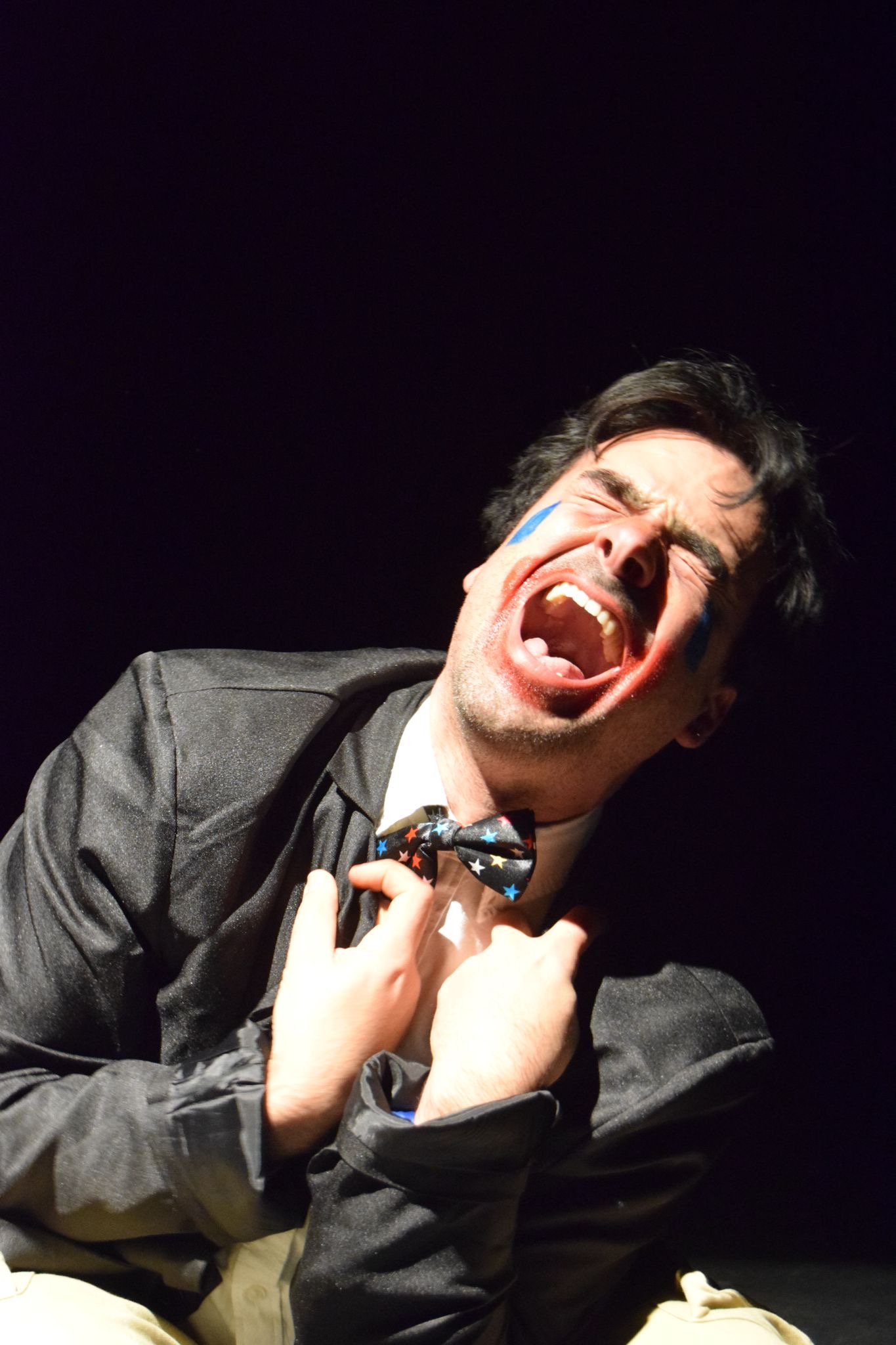
Looking For Me Friend is essentially a love letter to Victoria Wood, a celebration of the woman who would never use the word ‘biscuit’ when she could say ‘Garibaldi,’ who helped launch the careers of so many other performers, who always came across as somebody you’d love to have a long chat with over a cup of coffee. (I’m fascinated when Paulus tells us that, early in his career, he sent begging letters to scores of entertainers asking for their financial help and the only one who actually came back with a cheque – for £50- was Victoria Wood.) Sadly, he never met her in person.

This is a warm hug of a show, and Paulus is a confident and charming performer, nailing each song with aplomb and chatting with the audience in between. This isn’t an impersonation so much an interpretation of Wood’s best musical pieces, which vary in tone from laugh-out-loud funny to downright heartbreaking. Roulston provides sensitive musical accompaniment and occasionally weighs in with some pithy one-liners from Wood’s back catalogue. The two men work together with absolute ease.

It’s clear that there are some people in tonight’s audience who harbour the same devotion to the woman that inspired Paulus, some of them able to shout out even Wood’s most obscure catch-phrases on cue. I’m not that much of an expert myself but listening to the surprising range of material in tonight’s performance does make me appreciate that I’ve missed out on much of the late comedian’s finest compositions. Of course, you don’t have to be a Victoria Wood fan to enjoy this show: even in the unlikely event that you’ve never heard of her, you’ll feel that this is an hour and a half in which you’ve been thoroughly entertained.

Looking For Me Friend has just one more show in Edinburgh before it moves on to pastures new, so grab some tickets. Do it! Do it toniiiiiiiight!

4 stars

Philip Caveney

Ivor

15/04/25

Traverse Theatre, Edinburgh

It’s Scarlet’s twenty-first birthday, and she’s promised to spend it with her mum. Single-parent Sarah (Laura Harvey) is beyond excited: she’s not enjoying her empty nest, and is determined to go the extra mile for her student daughter (Alice Glass). A landmark occasion requires a significant gift – and what could be more significant than an actual iceberg?

The titular piece of polar glacier – “Ivor” – dominates both the family kitchen and the Traverse 2’s stage: a great big hulking metaphor, displaced and dangerous.

Scarlet’s not exactly delighted by the surprise. Not only is it weird, it’s also way too much. She feels suffocated by her mother’s ridiculous largesse. How now can she break the news that, in fact, she won’t be staying here after all? That she’s planning to go to London with her girlfriend, Jude (Betty Valencia), and has only popped in to collect something…

Jennifer Adam’s sprawling script encompasses ecological disaster, terrorism and helicopter parenting. The creaking, leaking iceberg symbolises more than the melting ice caps: it’s a reminder of the enormity of the task ahead for Jude and Scarlet, young women determined to save the world. Meanwhile, the petty squabbles and hypocrisies between the three loom just as large. It’s a lot to pack in to fifty minutes’ playing time and, although director Catriona MacLeod succeeds in pacing it well, I can’t help wishing there were a little less here. Valencia’s performance is strong, but I think the play would be more compelling without Jude, with a tighter focus on the mother-daughter dynamic, set against the ever-looming climate crisis.

Heather Grace Currie’s clever design almost fills the small stage with an Ivor comprising huge white sheets teased into peaks, which is quite an achievement on a small budget. Unfortunately, this affects the sight-lines, and I wonder if a more abstract construction – an up-lit empty frame, for example – might serve the piece better.

The idea behind Ivor is pleasingly quirky but, in its current form, it doesn’t really suit the PPP running-time. Given longer to develop its themes – Jude’s family’s experiences in Colombia in particular need a lot more attention – this could be a really fascinating play, with much to say about the troubled times we live in.

3 stars

Susan Singfield
Calamity Jane

15/04/25

Festival Theatre, Edinburgh

As a kid, I was a little bit obsessed with Western movies and I still have a powerful recollection of sitting in a UK cinema, watching enthralled as Doris Day rode a stagecoach across a desert landscape belting out a stirring rendition of The Deadwood Stage. (Checking on the dates, I can see that I was only three years old when Calamity Jane was released, so clearly this was some time after that. I’m guessing I was maybe nine or ten.) When I hear that a touring version of the stage musical is coming to Edinburgh, I’m naturally eager to revisit it.

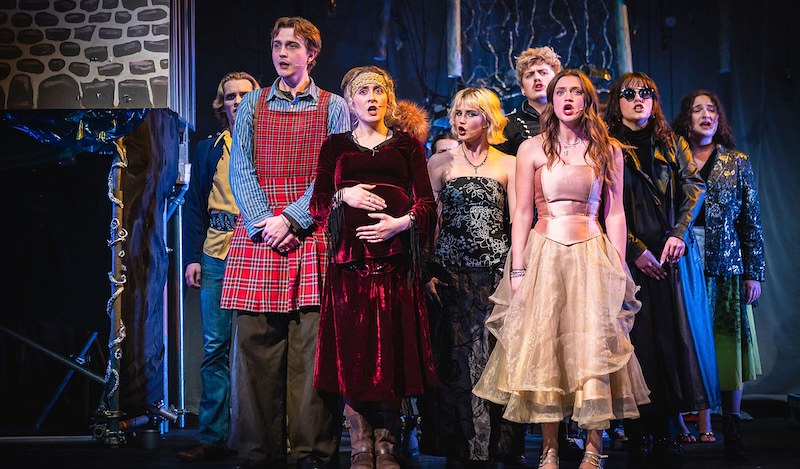
If Calamity (real name Martha Jane Canary) hadn’t actually existed, she’d seem an impossibly far-fetched invention: a cross-dressing stagecoach driver/gambler/gold prospector/rodeo star, she really did have a relationship with the legendary Bill Hickok, before going on to star in Buffalo Bill’s Wild West Show. Adapted from Hames O’ Hanlon’s 1953 screenplay by Charles K Freeman and featuring songs by Sammy Fain and Paul Francis Webster, this is a rootin’ tootin’ barnstormer of a show, that has no higher ambition than to entertain an audience, an aim which it effortlessly achieves.

Carrie Hope Fletcher dons the buckskins to play the larger-than-life title role, attacking the more upbeat numbers like Windy City with absolute gusto and bringing a thrilling resonance to the show’s most enduring song, Secret Love. Tomas Wolstenholme handles the role of Wild Bill Hickok with panache and submits a lovely acoustic version of Higher Than a Hawk. There are assured performances from Samuel Holmes as effete song-and-dance man, Francis Fryer, and from Seren Sandham-Davies as Katie Brown, both of whom are victims of mistaken identity. But this is a true ensemble piece, with just about every member of the large cast ready and able to play an instrument at the drop of a stetson. This approach gives the show a propulsive energy that never falters, racing from one roistering set-piece to the next.

The episodic storyline is based around a series of misunderstandings, each perhaps too readily resolved by the indefatigable Calamity, but it would be hard to imagine a more downright enjoyable night at the theatre. Tonight’s packed audience rises to the occasion, clapping enthusiastically along to the final hoedown at a volume that threatens to blow the roof off the theatre. You could grumble that songs like A Woman’s Touch and Tis Harry I’m Planning to Marry are a tad reductive, but this piece is completely unapologetic about its origins and, apart from a few minor tweaks, sticks closely to the original screenplay.

I come out humming The Black Hills of Dakota; if you can manage to resist the impulse, then you’ve clearly got a lot more control than I have. If you’re looking for simple, unfettered fun, then why not mosey on down to the Festival Theatre where Calamity and her posse will be kicking up a storm every night until the 19th of April?

4.4 stars

Philip Caveney

Night, Idiot

12/04/25

Traverse Theatre, Edinburgh

Night, Idiot promises to be a breezy comedy of manners, with a strong focus on inter-generational differences. Dani (Zoë Bullock) and her boyfriend, Paul (Andrew Barrett), have just moved into a new flat, and they’ve barely started unpacking when Paul’s mum, Ruth (Pauline Lynch), announces a visit. Zoë’s nervous: she’s only met Ruth once before and that didn’t go well. After all, it’s hardly Zoë’s fault that Paul is still working in a coffee shop, or that his great novel remains a concept rather than anything as concrete as a finished manuscript. So it’s Zoë’s job as a paralegal that pays the rent and bills; so what? That’s up to her and Paul. But Ruth has other ideas: she wants her son to fulfil his potential. And, more importantly, she wants grandchildren. Soon.

The first third is very funny, if sometimes a little far-fetched (surely no one is ever as blunt as Ruth in their criticism of their child’s partner?). But something is clearly troubling Dani…

And then things take a darker turn…

Directed by Shilpa T-Hyland, Night, Idiot is a dynamic piece of theatre: poignant, engaging and full of twists and turns. The script – by Bullock – is clever, offering clear insight into Dani’s mental anguish as she obsessively replays events, dwelling on every Sliding-Doors moment and pondering what might have been. These glimpses into the hypothetical are slick, and I like the fact that Bullock doesn’t offer any easy answers for us or Dani, and nor does she shy away from difficult themes.

Bullock and Lynch make an appealingly-fiery central duo, while Barrett ensures Paul is a sympathetic character, despite his uncommunicative nature and ultimate cowardice. Bullock in particular gets to show off her acting chops: watch out for her so-heavily-signposted-this-isn’t-a-spoiler rendition of Shrek and you’ll see exactly what I mean.

Night, Idiot is an ideal piece for A Play, A Pie and A Pint, with lots packed into the short running time. There’s emotional heft here and I find myself really rooting for the characters. Zoë Bullock is clearly one to watch.

4.3 stars

Susan Singfield
Alas! Poor Yorick

08/04/25

Studio Theatre, Edinburgh

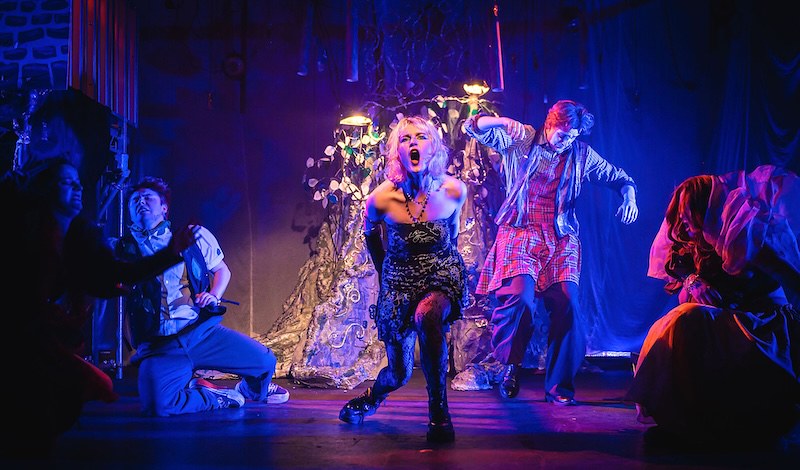
As the name suggests, Alas! Poor Yorick is a reimagining of Hamlet, which centres on the minor characters of the gravediggers, those fellows of infinite jest who seem to revel in making the simplest actions long and needlessly complicated. John Gorick (as well as rhyming nicely with Yorick) doubles as the first gravedigger and a recalcitrant donkey, forever chasing an elusive carrot. Jon Haynes plays his assistant and (at one point) Hamlet himself, eager to orate over the burial place of the long-deceased jester, even if he does keep picking a soliloquy from the wrong blooming play.

Ridiculusmus enact their long-established brand of clowning, a Godot-like exploration of repetition, occasionally punctuated by absurd observations and deliberately naff jokes, though it must be said that tonight’s performance isn’t as sprightly as I would like, the extended riffs on the futility of existence feeling a little too creaky for comfort.
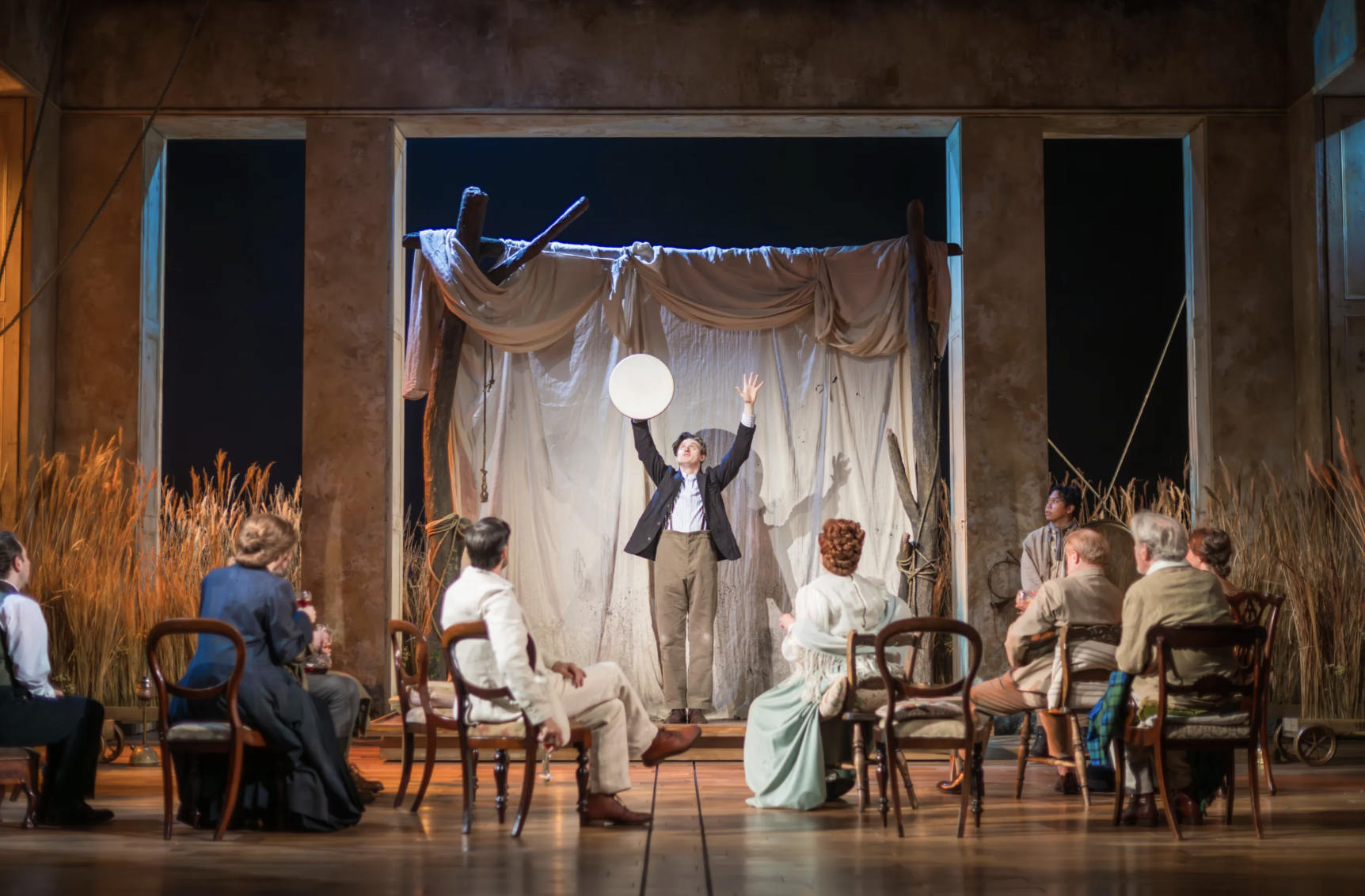
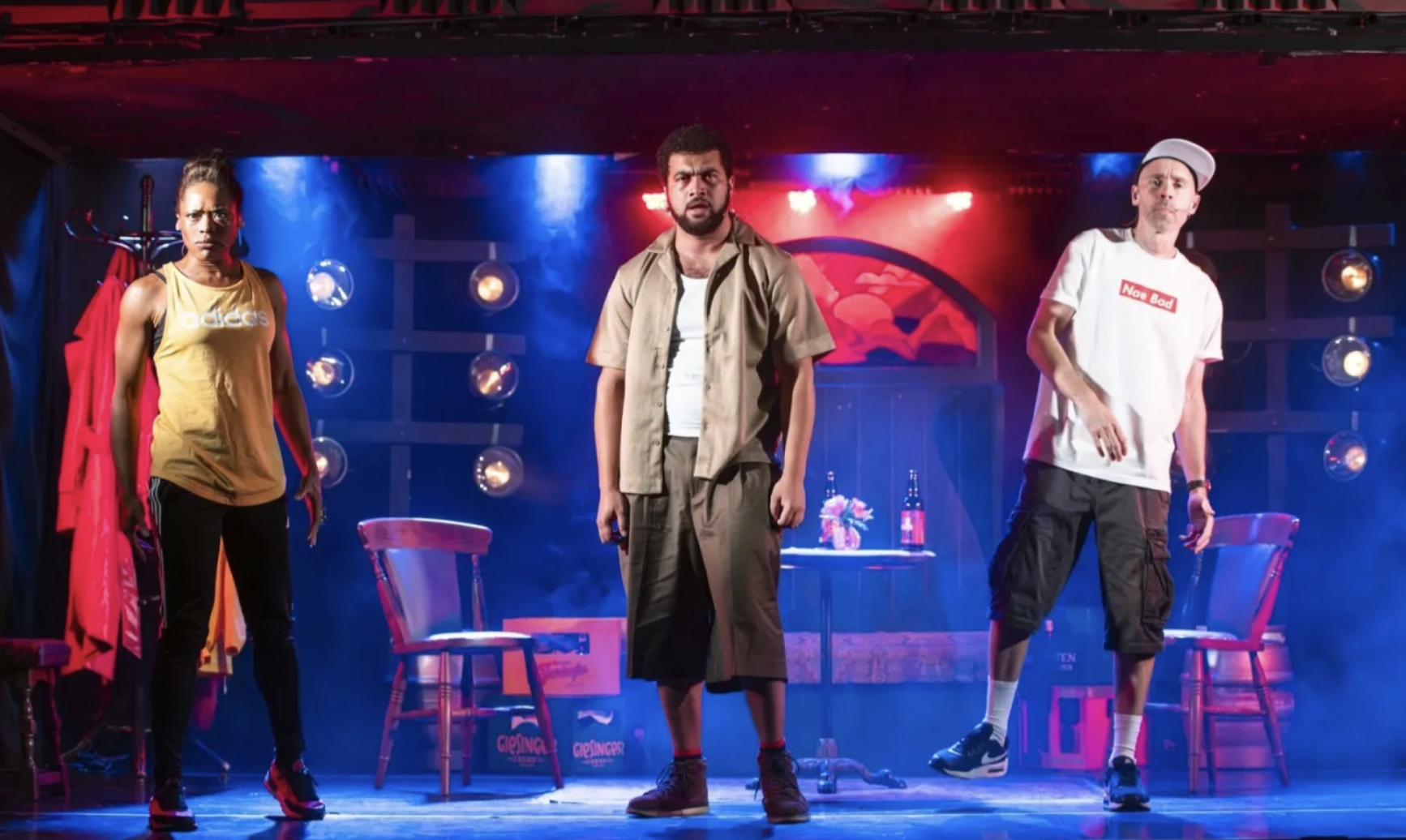
In the latter stages of the narrative, the arrival of players from the Lung Ha Theatre Company do lend the piece a splash of vigour and a startling change of pace. Emma McCaffrey plays a priest with an unGodly liking for the bottle, while Gavin Yule offers an interesting spin on Laertes. We’ve seen these performers in several very different productions over the years and their versatility is impressive.

If there’s a sticking point here, it’s that the clowning is a little muted and reserved and I’m not convinced that it quite comes off – and the vivacity of the final section only serves to highlight this.

Still, it’s always interesting to explore the possible backstories of Hamlet’s minor characters, and those particular Shakespearean fools/gravediggers will never seem the same again.

3 stars

Philip Caveney

Dancing Shoes

01/04/25

Traverse Theatre, Edinburgh

01/04/25

Traverse Theatre, Edinburgh

Lunchtime theatre generally comes with built-in limitations – small casts, modest sets, humble props. But sometimes a production is so chock-full of joy that it effortlessly transcends all barriers. Dancing Shoes, written by Stephen Christopher and Graeme Smith and directed by Brian Logan, is a perfect example: a ‘little’ play that has a lot to say about male friendship and the pressures of trying to escape the stigma of addiction.

We are at a meeting of a support group somewhere in Edinburgh, where recovering drug addicts Craig (Ross Allan) and Jay (Craig Mclean) are eager to introduce themselves and tell us all about their friend, Donny (Stephen Docherty). He’s an older man, something of a loner, who – left to his own devices for far too long – eventually succumbed to the powerful lure of alcohol. Since his mother’s death, he’s been drinking several bottles of wine a night and has become enveloped by an overpowering sense of shame. 

But after visiting the group, he’s managed to step away from temptation and is determined not to slip back into his former habits. At one meeting, the three men discuss the things that really fire them up. Donny makes a surprising admission: he loves to dance. And when Jay gets out his phone and innocently films Donny, leaping around his apartment to one of his favourite tunes, none of them is quite prepared for what happens next…

From this simple premise, a delightful story emerges – an uplifting and heartwarming tale about the pursuit of personal happiness. The script is fast-paced and acerbic, the men’s conversation often laugh-out-loud-funny, yet utterly authentic.

The story is anchored by three delightful performances. Docherty reveals Donny’s inner self, forever peeking cautiously out from behind a veneer of respectability, but simultaneously compelled to reach for new horizons. Allan is terrific as the deadpan, fatalistic Craig, all too aware of how lives can sometimes go awry. And McLean is wonderfully enthusiastic as Jay, constantly looking for ways to turn the latest events to his own advantage. These are not caricatures but fully-fleshed human beings, who carry the scars of their respective addictions deep within them.

The packed audience at this A Play, A Pie and A Pint event reward the performers with a heartfelt ovation and I’m in total agreement with them. Anybody in search of an uplifting afternoon of theatre should slip on their spangly dancing shoes and quickstep their way to the Traverse.

5 stars

Philip Caveney

Dr Strangelove: National Theatre Live

29/03/25

Cineworld, Edinburgh

In 1964, I watched Stanley Kubrick’s dark satire, Dr Strangelove, in an RAF cinema somewhere in darkest Lincolnshire. I was thirteen years old, arguably a bit too young to fully appreciate its biting satire, but I remember being absolutely terrified by the apocalyptic ending, which left me feeling decidedly nervous about the world’s future.

Fast forward to the early 1980s, where I attend a stand-up gig at the Old Grey Mare pub in Didsbury, Greater Manchester. Friends have encouraged me to go along and catch a gifted young impressionist called Steve Coogan, who they predict ‘has a promising future ahead of him.’ It costs me fifty pence to get in and the funniest routine is the one where Coogan adopts the persona of a BBC reporter, commentating on a live tragedy unfolding in… er… Camberwick Green.

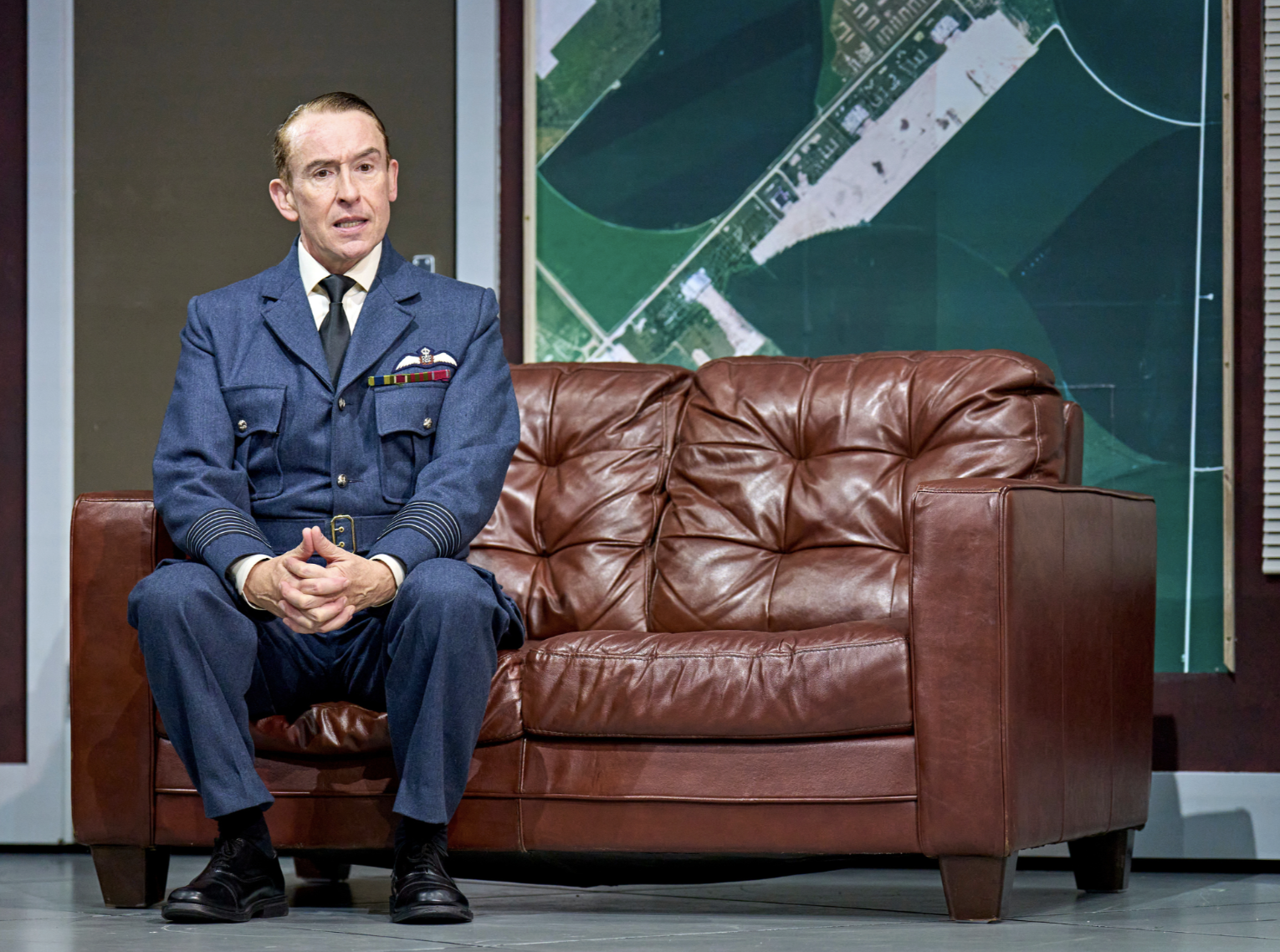
What I could never have predicted is that in 2025, Coogan would be starring in an adaptation of Kubrick’s film, adapted by Armando Iannucci from the original screenplay co-written by Kubrick and Terry Southern – and, perhaps more pertinently, that a story that played like an outrageous spoof in the 1960s feels suspiciously like a cautionary warning in the present day.

Brigadier General Jack D Ripper (John Hopkins) has a paranoid breakdown and orders a B52 bomber, piloted by Major TJ ‘King’ Kong (Coogan, in one of four roles) to drop a nuclear device on a target in the Soviet Union. President Merkin Muffley (also Coogan), after being briefed by General Buck Turgidson (Giles Terrera), finds himself presented with the tricky task of contacting the Russian President to warn him of the incoming attack. The Russian premier is understandably not too happy about the situation, especially when he learns that the aircraft is maintaining complete radio silence, and that the attack can therefore not be called off.

A whole series of disastrous events ensue…

This brilliantly-staged production is a weird hybrid – part play, part film – and at times it is astonishing in its sheer invention. Coogan is extraordinary. Like Peter Sellars before him, he also takes on the role of RAF officer Group Captain Lionel Mandrake and, of course, the titular Dr S, a man who can’t seem to stop himself from making involuntary Nazi salutes… (Now where have I seen that recently?) Some of the lightning-fast costume changes he’s obliged to undergo are so slickly done that I’m left gasping.

But it’s not just Coogan who excels here. Hopkins plays the cigar-chomping, alpha male, Jack D Ripper with panache, while Terrera milks plenty of laughs as the scheming, self-serving Turgidson. There’s a huge cast at work here and every one of them is drilled to perfection.

Hildegard Bechtler’s set design is accomplished, opening and closing to disclose a wild variety of settings, even managing to convincingly place the audience in the cockpit of a B52 bomber, flying over mountainous terrain. Iannucci handles the adaptation with a light touch, capturing the original film perfectly and only occasionally tweaking the script to accommodate more recent references.

You don’t have to have seen the original to appreciate this superb production, but it might prompt many to investigate it on streaming. Kubrick made many great films over his long career and was famously pernickety about his work. But I have no doubt that he would be absolutely delighted by what director Sean Foley and his team have done with what could be the filmmaker’s greatest achievement.

5 stars

Philip Caveney

Wasps

25/03/25

Traverse Theatre, Edinburgh

Cameron Forbes’ Wasps, the latest offering from A Play, A Pie and A Pint, buzzes along busily, like its  hymenoptera lookalike. Anchored by a gutsy performance from Yolanda Mitchell, this tragic coming-of-age monologue has quite a sting in its tail (sorry, not sorry).

Teenager Rianne (Mitchell) just wants to fit in. At school, she’s perfected the art of invisibility: if she dresses right, wears her make-up exactly so, earns just enough detentions, she can move through the corridors without attracting any attention at all. But there are downsides to never being seen. For one thing, her crush, Oran, doesn’t seem to realise she exists. And for another, not even her best friend notices when her life implodes…

I’m not usually a fan of so-called inspirational quotations but “what doesn’t kill you makes you stronger” serves as a pretty decent précis of Wasps‘ central message. And I mean that in a good way. Rianne faces some really serious problems – including a confrontation with her spheksophobia -which she has to dig deep to face up to. And yes, she emerges battle-scarred, but at least she’s no longer desperate to disappear. She’s bolder, braver and ready to take up space. A bit more… wasp-like.

Director Lesley Hart ensures that the pace never flags, so that the play has a convincingly propulsive teenage energy, and Mitchell does a wonderful job of conveying both Rianne’s turbulent emotions and her evident disdain for many of the people in her life, evinced by her scathing impressions of them.

Gillian Argo’s set is visually arresting. I like the hexagonal construction, suggestive of a wasp’s nest, and the flickering projections of the worker wasps . However, I’m not always fully convinced by the wasp analogy; the comparison is perhaps stretched a little too thin. I’m also left with a couple of nagging questions about the plausibility of some of what occurs. (I can’t elucidate without spoilers but let’s just say that, though social care in the UK is undoubtedly in dire straits, Rianne is a vulnerable child and her situation would surely be flagged up; she wouldn’t be left to deal with it entirely alone.)

Nonetheless, this is a sprightly, engaging piece of drama, with some lively writing and a spirited delivery – a worthy addition to the PPP canon.

4 stars

Susan Singfield