Theatre

Dancing Shoes

01/04/25

Traverse Theatre, Edinburgh

01/04/25

Traverse Theatre, Edinburgh

Lunchtime theatre generally comes with built-in limitations – small casts, modest sets, humble props. But sometimes a production is so chock-full of joy that it effortlessly transcends all barriers. Dancing Shoes, written by Stephen Christopher and Graeme Smith and directed by Brian Logan, is a perfect example: a ‘little’ play that has a lot to say about male friendship and the pressures of trying to escape the stigma of addiction.

We are at a meeting of a support group somewhere in Edinburgh, where recovering drug addicts Craig (Ross Allan) and Jay (Craig Mclean) are eager to introduce themselves and tell us all about their friend, Donny (Stephen Docherty). He’s an older man, something of a loner, who – left to his own devices for far too long – eventually succumbed to the powerful lure of alcohol. Since his mother’s death, he’s been drinking several bottles of wine a night and has become enveloped by an overpowering sense of shame. 

But after visiting the group, he’s managed to step away from temptation and is determined not to slip back into his former habits. At one meeting, the three men discuss the things that really fire them up. Donny makes a surprising admission: he loves to dance. And when Jay gets out his phone and innocently films Donny, leaping around his apartment to one of his favourite tunes, none of them is quite prepared for what happens next…

From this simple premise, a delightful story emerges – an uplifting and heartwarming tale about the pursuit of personal happiness. The script is fast-paced and acerbic, the men’s conversation often laugh-out-loud-funny, yet utterly authentic.

The story is anchored by three delightful performances. Docherty reveals Donny’s inner self, forever peeking cautiously out from behind a veneer of respectability, but simultaneously compelled to reach for new horizons. Allan is terrific as the deadpan, fatalistic Craig, all too aware of how lives can sometimes go awry. And McLean is wonderfully enthusiastic as Jay, constantly looking for ways to turn the latest events to his own advantage. These are not caricatures but fully-fleshed human beings, who carry the scars of their respective addictions deep within them.

The packed audience at this A Play, A Pie and A Pint event reward the performers with a heartfelt ovation and I’m in total agreement with them. Anybody in search of an uplifting afternoon of theatre should slip on their spangly dancing shoes and quickstep their way to the Traverse.

5 stars

Philip Caveney
Dr Strangelove: National Theatre Live

29/03/25

Cineworld, Edinburgh

In 1964, I watched Stanley Kubrick’s dark satire, Dr Strangelove, in an RAF cinema somewhere in darkest Lincolnshire. I was thirteen years old, arguably a bit too young to fully appreciate its biting satire, but I remember being absolutely terrified by the apocalyptic ending, which left me feeling decidedly nervous about the world’s future.

Fast forward to the early 1980s, where I attend a stand-up gig at the Old Grey Mare pub in Didsbury, Greater Manchester. Friends have encouraged me to go along and catch a gifted young impressionist called Steve Coogan, who they predict ‘has a promising future ahead of him.’ It costs me fifty pence to get in and the funniest routine is the one where Coogan adopts the persona of a BBC reporter, commentating on a live tragedy unfolding in… er… Camberwick Green.

What I could never have predicted is that in 2025, Coogan would be starring in an adaptation of Kubrick’s film, adapted by Armando Iannucci from the original screenplay co-written by Kubrick and Terry Southern – and, perhaps more pertinently, that a story that played like an outrageous spoof in the 1960s feels suspiciously like a cautionary warning in the present day.

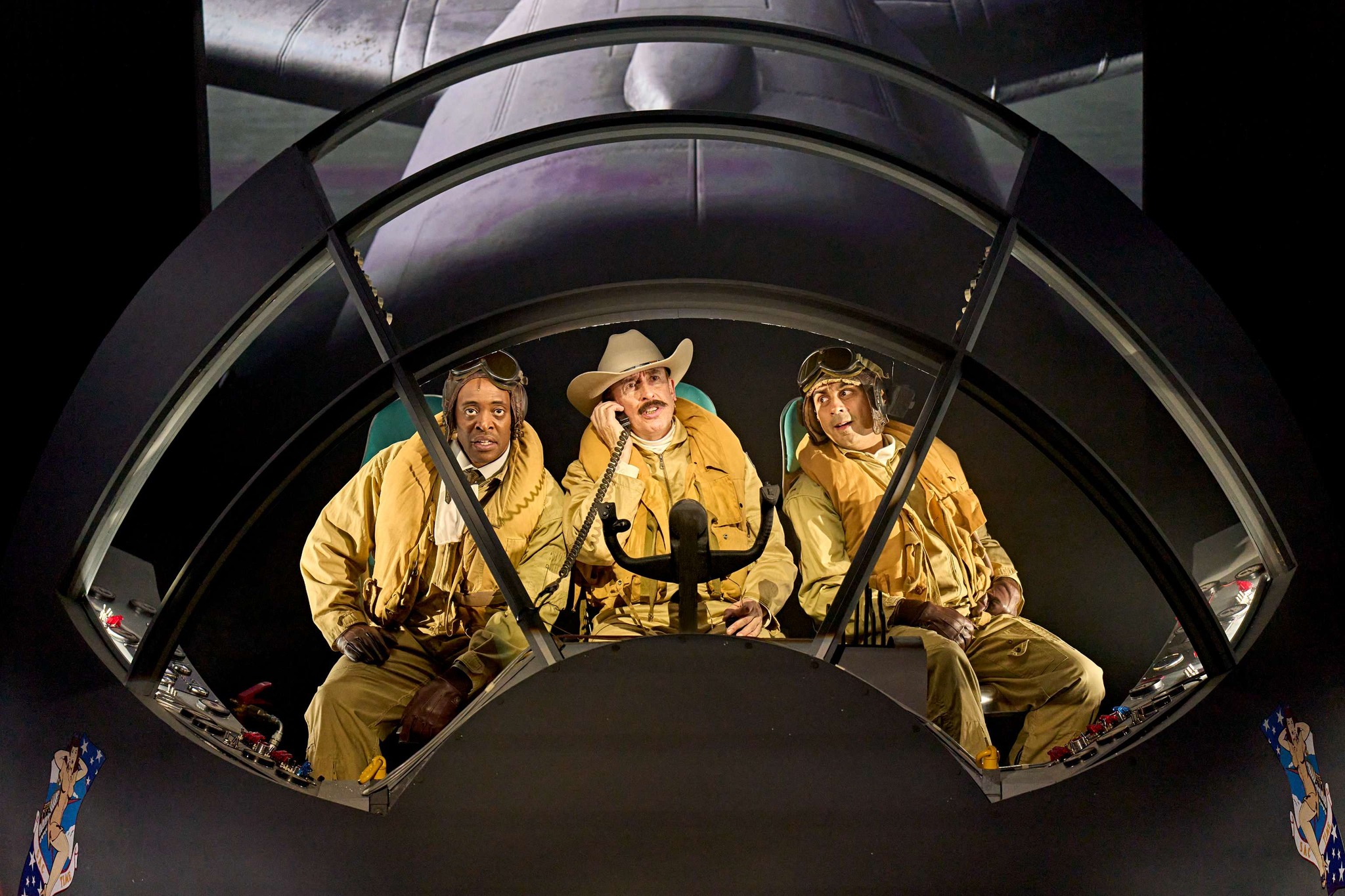
Brigadier General Jack D Ripper (John Hopkins) has a paranoid breakdown and orders a B52 bomber, piloted by Major TJ ‘King’ Kong (Coogan, in one of four roles) to drop a nuclear device on a target in the Soviet Union. President Merkin Muffley (also Coogan), after being briefed by General Buck Turgidson (Giles Terrera), finds himself presented with the tricky task of contacting the Russian President to warn him of the incoming attack. The Russian premier is understandably not too happy about the situation, especially when he learns that the aircraft is maintaining complete radio silence, and that the attack can therefore not be called off.

A whole series of disastrous events ensue…

This brilliantly-staged production is a weird hybrid – part play, part film – and at times it is astonishing in its sheer invention. Coogan is extraordinary. Like Peter Sellars before him, he also takes on the role of RAF officer Group Captain Lionel Mandrake and, of course, the titular Dr S, a man who can’t seem to stop himself from making involuntary Nazi salutes… (Now where have I seen that recently?) Some of the lightning-fast costume changes he’s obliged to undergo are so slickly done that I’m left gasping.

But it’s not just Coogan who excels here. Hopkins plays the cigar-chomping, alpha male, Jack D Ripper with panache, while Terrera milks plenty of laughs as the scheming, self-serving Turgidson. There’s a huge cast at work here and every one of them is drilled to perfection.

Hildegard Bechtler’s set design is accomplished, opening and closing to disclose a wild variety of settings, even managing to convincingly place the audience in the cockpit of a B52 bomber, flying over mountainous terrain. Iannucci handles the adaptation with a light touch, capturing the original film perfectly and only occasionally tweaking the script to accommodate more recent references.

You don’t have to have seen the original to appreciate this superb production, but it might prompt many to investigate it on streaming. Kubrick made many great films over his long career and was famously pernickety about his work. But I have no doubt that he would be absolutely delighted by what director Sean Foley and his team have done with what could be the filmmaker’s greatest achievement.

5 stars

Philip Caveney

Wasps

25/03/25

Traverse Theatre, Edinburgh

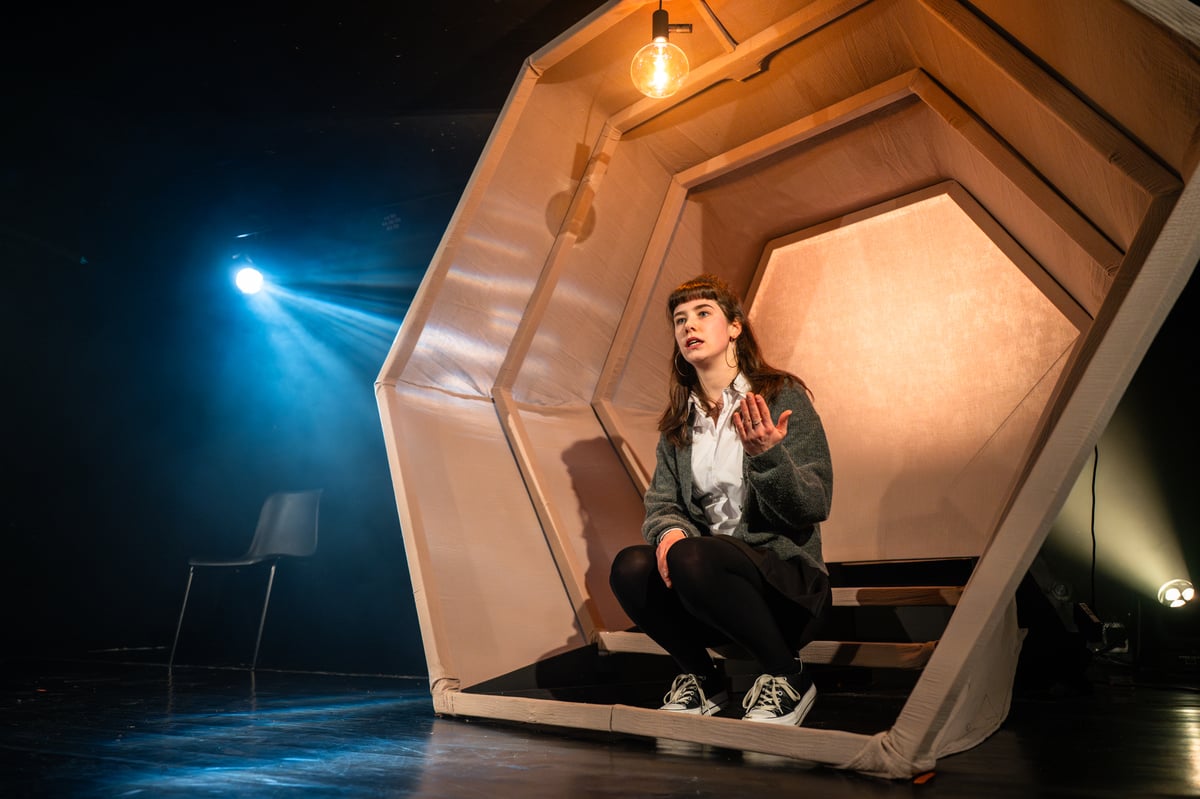
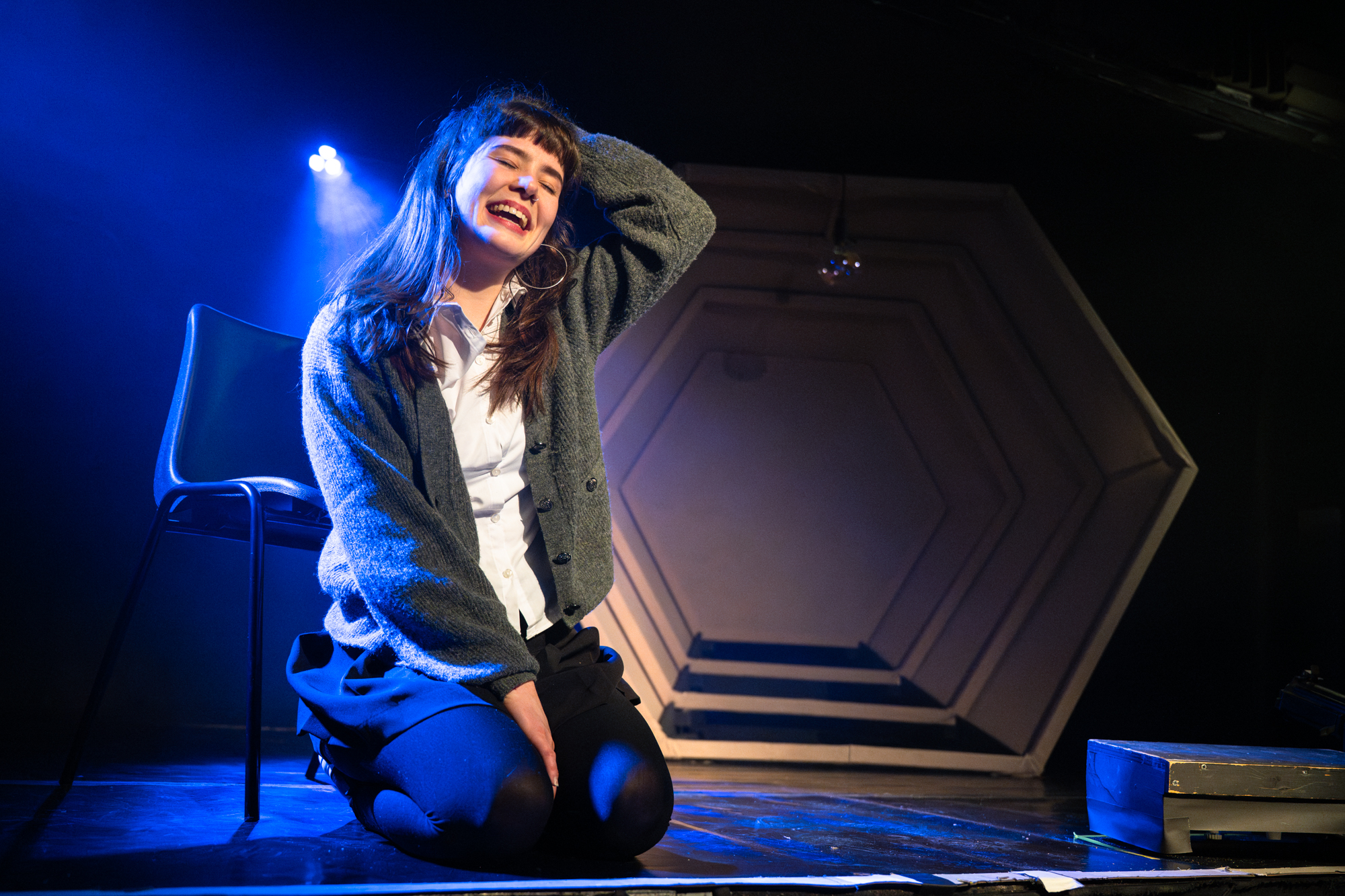
Cameron Forbes’ Wasps, the latest offering from A Play, A Pie and A Pint, buzzes along busily, like its  hymenoptera lookalike. Anchored by a gutsy performance from Yolanda Mitchell, this tragic coming-of-age monologue has quite a sting in its tail (sorry, not sorry).

Teenager Rianne (Mitchell) just wants to fit in. At school, she’s perfected the art of invisibility: if she dresses right, wears her make-up exactly so, earns just enough detentions, she can move through the corridors without attracting any attention at all. But there are downsides to never being seen. For one thing, her crush, Oran, doesn’t seem to realise she exists. And for another, not even her best friend notices when her life implodes…

I’m not usually a fan of so-called inspirational quotations but “what doesn’t kill you makes you stronger” serves as a pretty decent précis of Wasps‘ central message. And I mean that in a good way. Rianne faces some really serious problems – including a confrontation with her spheksophobia -which she has to dig deep to face up to. And yes, she emerges battle-scarred, but at least she’s no longer desperate to disappear. She’s bolder, braver and ready to take up space. A bit more… wasp-like.

Director Lesley Hart ensures that the pace never flags, so that the play has a convincingly propulsive teenage energy, and Mitchell does a wonderful job of conveying both Rianne’s turbulent emotions and her evident disdain for many of the people in her life, evinced by her scathing impressions of them.

Gillian Argo’s set is visually arresting. I like the hexagonal construction, suggestive of a wasp’s nest, and the flickering projections of the worker wasps . However, I’m not always fully convinced by the wasp analogy; the comparison is perhaps stretched a little too thin. I’m also left with a couple of nagging questions about the plausibility of some of what occurs. (I can’t elucidate without spoilers but let’s just say that, though social care in the UK is undoubtedly in dire straits, Rianne is a vulnerable child and her situation would surely be flagged up; she wouldn’t be left to deal with it entirely alone.)

Nonetheless, this is a sprightly, engaging piece of drama, with some lively writing and a spirited delivery – a worthy addition to the PPP canon.

4 stars

Susan Singfield

Wild Rose

20/03/25

Lyceum Theatre, Edinburgh

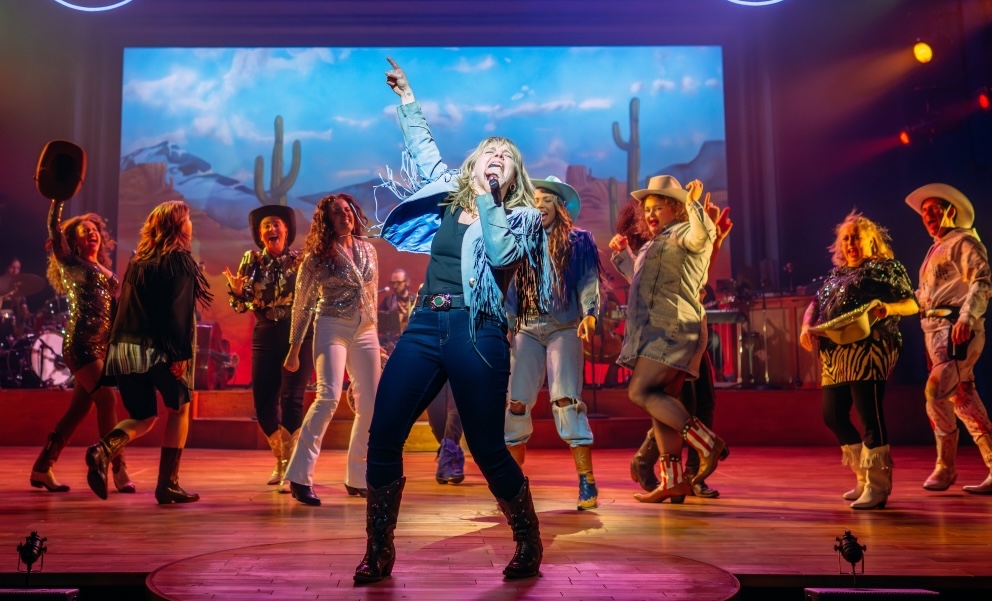
Rose-Lynn Harlan (Dawn Sievewright) has a dream: to appear on the stage of Nashville’s legendary Grand Ol’ Opry, belting out a country song – not a country and western song, mind you. It’s an important distinction. So, being banged up in prison for a year wasn’t part of the grand ol’ plan – but now she’s served her time and is finally able to head back to her mum, Marion (Blythe Duff), who has been dutifully looking after Rose-Lynn’s two young children, Lyle (Leo Stephen) and Wynonna (Jessie-Lou Harvie).

Rose-Lynn is dismayed to find that her kids have become disaffected by her long absence and that their former trust in her has been all but eroded. What’s more, they view her long-cherished dream as selfishness. And that’s not all that has changed. When she calls in at the Grand Ol’ Opry, Glasgow – where she previously had a residency – she discovers that her regular slot has been handed to the dreaded Alan Boyne (Andy Clark), a long-haired carpet fitter with a sideline as a charisma-free country singer.

Desperate to keep her head above water, Rose-Lynn takes a part-time post as a cleaner, working for the highly-privileged Susannah (Janet Kumah). She’s a go-getter and, once she’s heard Rose-Lynn sing, she becomes determined to put her in touch with legendary DJ Bob Harris, who Susannah believes might be able to offer some good advice.

Rose-Lynn realises that her long-cherished ambitions are still burning as fiercely as ever…

This assured version of the 2018 film (adapted by its original screenwriter, Nicole Taylor) makes a seemingly effortless transition to the stage. A prison-set opening where Rose-Lynn and her fellow inmates launch headlong into a propulsive rendition of Country Girl sets the tone perfectly, with Sievewright stepping into Jessie Buckley’s cowboy boots with absolute authority. An eight-piece band ranged across the back of the stage performs a varied selection of numbers, from banging rockers to lilting, steel-guitar layered ballads. And it’s not just Sievewright supplying the singing.

As bar-owner, Jackie, Louise McCarthy belts out her own fair share of raunchy vocals, Duff does a fabulous job with a haunting song of regret and even the two youngest members of the cast have the opportunity to shine as vocalists. Clark – who takes on a number of roles – proves himself an invaluable asset to the production, as does Hannah Jarrett-Scott, who appears as two (very different) characters.

Chloe Lamford’s simple but effective set design works beautifully alongside Jessica Hung Han Yun’s inventive lighting and Lewis den Hartog’s simple-but-effective video design. John Tiffany handles the directorial reins with absolute aplomb. It’s worth mentioning, I think, that Wild Rose will be the final production under David Greig’s eight-year spell as the Lyceum’s artistic director. He leaves on an impressive high note.

Wild Rose is a fabulously entertaining story about ambition and acceptance, anchored by a knockout performance from Dawn Sievewright. Anyone in search of an uplifting night at the theatre will find it here. And you don’t have to be a die-hard country fan to enjoy this fabulous show.

5 stars

Philip Caveney
Eilidh, Eilidh, Eilidh

18/03/25

Traverse Theatre, Edinburgh

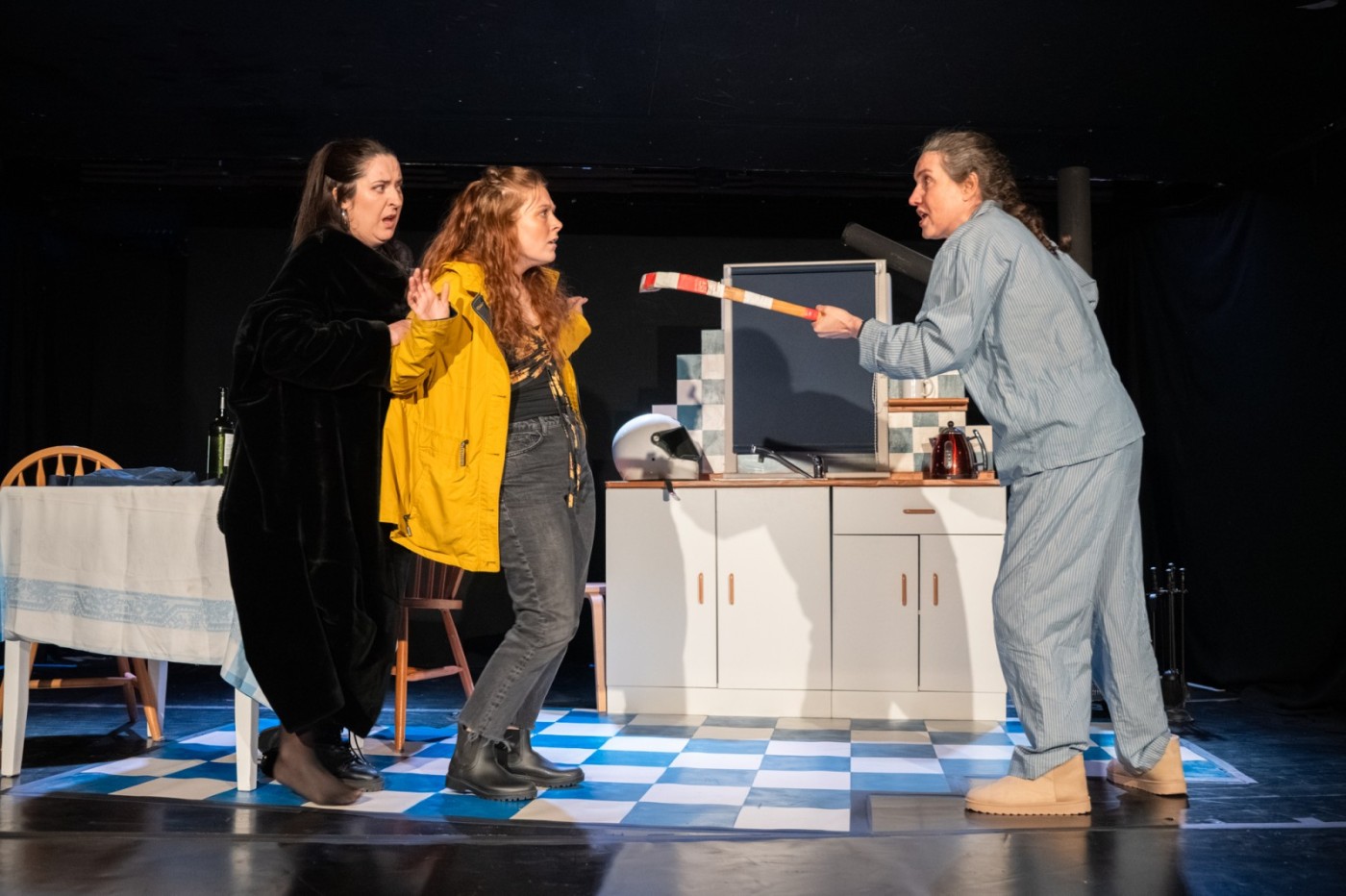
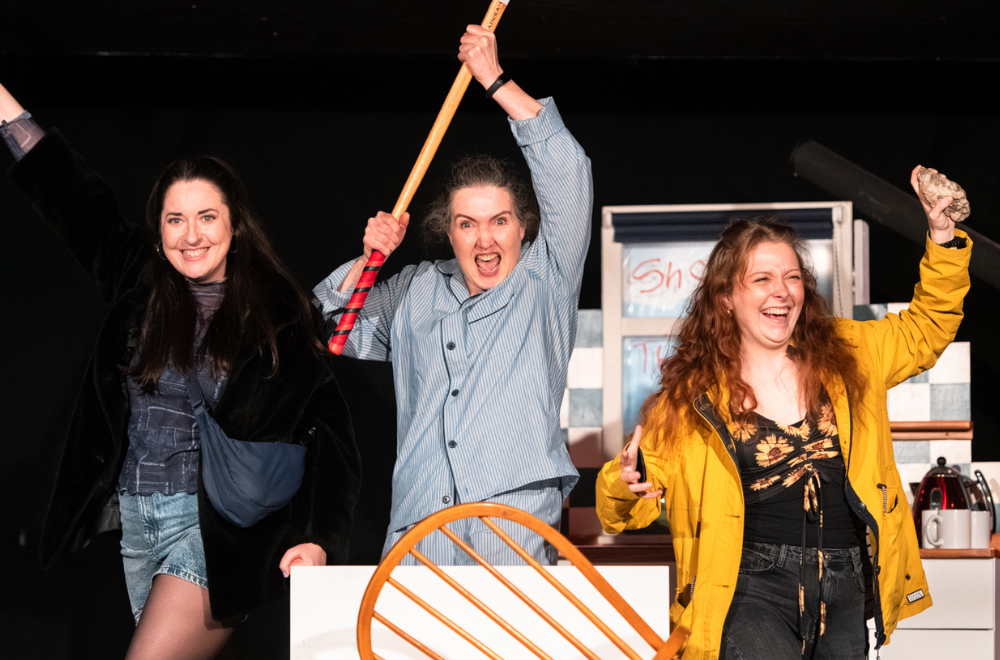
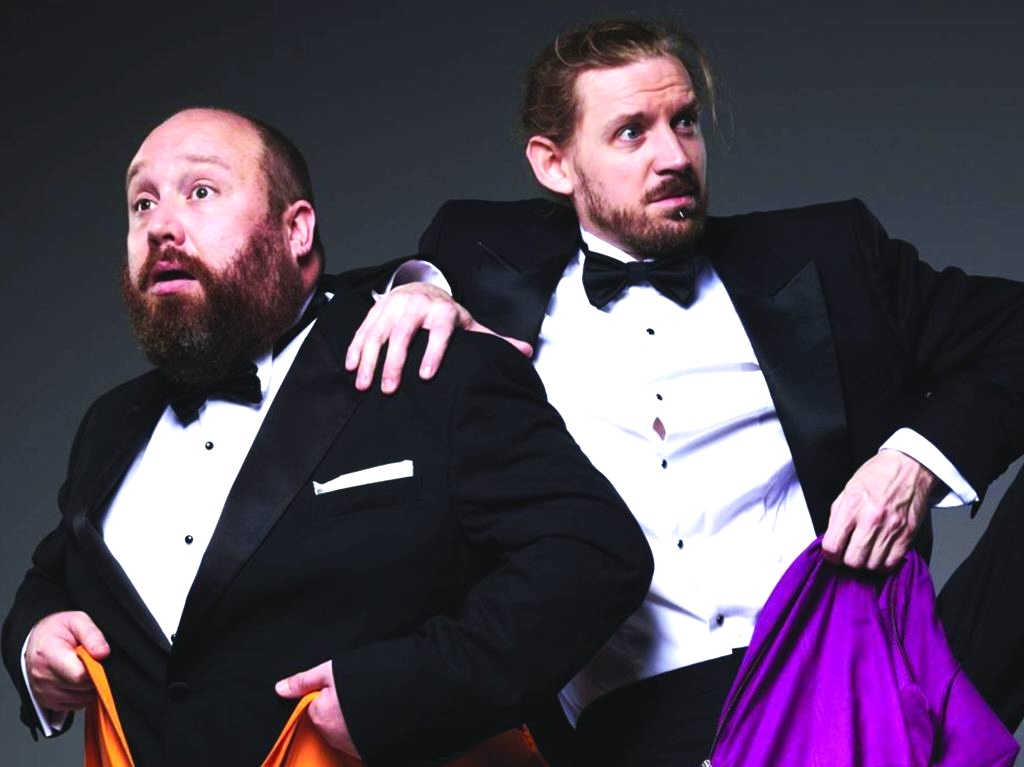
This three-hander, written and directed by Lana Pheutan, explores the rural housing crisis through the lens of drunken cousins, Eilidh (MJ Deans) and Eilidh Bheag (Chelsea Grace). The two women are in their late twenties, ready to embrace their adult lives but thwarted by the prevalence of AirBNBs on their native island, Skye. “I’m a teacher!” wails Eilidh. “I deserve my dream home…” While her sense of entitlement is quite comical – she’s been working for just a few years and her unemployed boyfriend isn’t even looking for a job – she’s not wrong in her assessment of a broken housing market, where flats are snapped up by remote investors before locals can even get a look in. But living back at her mum’s is starting to wear her down…

Her solution? To persuade Eilidh Bheag to break into a holiday let with her and then… um… Well. She hasn’t really worked out what should happen next. It just seemed like a good idea half an hour ago, when the pub landlord refused them a lock-in.

MJ Deans imbues Eilidh with lots of sass and self-righteousness, while Chelsea Grace’s Eilidh Bheag provides a calmer foil, tempering the former’s outrage with a few gentle home truths. After all, Eilidh Bheag is the one who’s stayed on Skye, while her cousin’s been living the high life in Glasgow for the past eight years. How dare she come back to the island and accuse her of pandering to tourists, being “part of the problem”? “You only care when it directly affects you,” snaps Eilidh Bheag at last, tired of being hectored. 

The altercation is disrupted by the unexpected arrival of Miss Nicille Mhicheil (Annie Grace), an elderly local resident. The dynamic changes, and an inter-generational element is added to the polemic, injecting more nuance. 

Pheutan’s direction is sprightly and the pace never drops, although the dialogue occasionally sounds a little too much like rhetoric, the issues taking precedence over the characters and their immediate situation. On the plus side, the occasional use of Gaelic serves as a reminder of the culture the community stands to lose, and also sounds very authentic (I’m from North Wales, so the pattern is a familiar one: it feels very natural to me to speak English with a smattering of Welsh phrases). 

Eilidh, Eilidh, Eilidh succeeds in raising awareness of an important problem – and even moots an answer, albeit a little simplistic.  All in all, this is a heartfelt and ultimately heartwarming piece of drama. 

4 stars

Susan Singfield

Chef

14/03/25

Traverse Theatre, Edinburgh

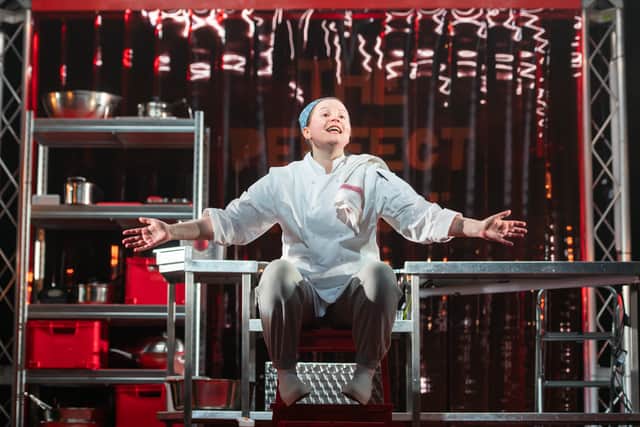
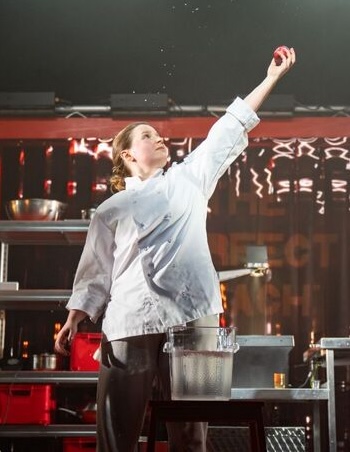
We are in a working kitchen and Chef (Rebecca Benson) is commenting on the purity of a peach, how so many cooks see it as their duty to corrupt and mask its natural flavour in their constant mission to seek out exotic new recipes. Here is somebody who has an almost religious fervour about food: its presentation, its flavours, the impact it can have on our lives. As she warms to her theme, we learn that the preparation of food has been both her salvation and her downfall. Alongside her, a silent kitchen porter – and BSL interpreter (Yvonne Strain) – helps her out whenever she needs to illustrate a point.

Sabrina Mahfouz’s Chef is an extraordinary play, a monologue delivered in a lyrical, almost poetic flow of startling imagery, the various sections of the narrator’s life introduced around specific recipes, each one important to her development. We learn about her hardscrabble youth, her uncaring father, her fierce determination to one day have a Michelin star displayed above the entrance to her own premises. And we gradually learn about what brought her to this particular kitchen today.

The tone at first is light, stuffed with delicious descriptions that flow from Benson’s tongue like manna – but, as the play stretches into its second half, other darker flavours begin to creep in: the shocking tang of corruption, a hint of something rotten at the heart of this tale of vaulting ambition.

And I love the fact that the story ends with a note of duality, the possibility that all might not be as straightforward as it initially appears…

Anchored by a powerhouse performance by Benson that ranges from uplifting fervour to unfettered rage, the piece is skilfully directed by André Agius, with Peter Small’s lighting design switching us effortlessly from place to place in the narrator’s cluttered headspace – and I’ve never seen a BSL interpreter so seamlessly incorporated into a performance, with Strain making an important contribution to the production that goes beyond the practical purposes she’s been put there for.

This is a riveting slice of theatre, brilliantly performed and expertly presented.

5 stars

Philip Caveney

The Happiness index: Jonny & the Baptists

13/03/25

Traverse Theatre, Edinburgh

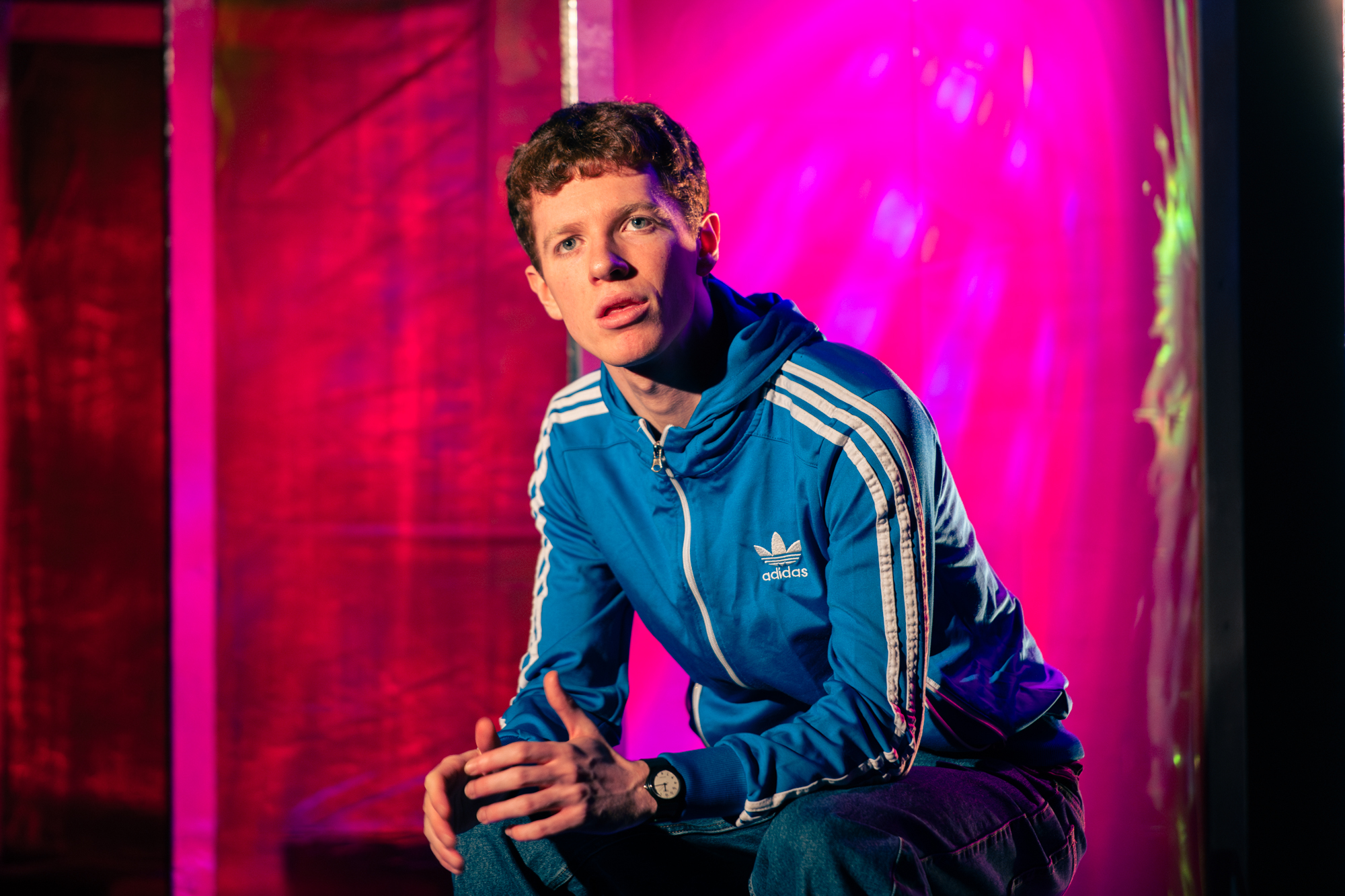
We’ve been aware of Jonny & the Baptists for quite some time, though we’ve somehow never managed to catch their act… until now. This is strange when you consider that we saw (and enjoyed) Jonny Donahoe’s delightful solo piece, Every Brilliant Thing, at the Edinburgh Fringe way back in 2015. 

Still, no matter – here we are at the Traverse 2 and there’s Jonny and his ‘Baptists’ (Paddy Gervers – don’t worry it’s explained later), decked out in their colourful Lucy and Yak jumpsuits and ready to launch themselves into their latest opus.

The Happiness Index – so I’m reliably informed – was originally conceived by one David Cameron, some time before he steered the UK into the disastrous car crash that was Brexit. It was, allegedly, a means of qualifying exactly how ‘happy’ his constituents were. As two struggling self-employed performers, both plagued by mental health issues and coming to terms with the fact that performing in Europe was now effectively off the cards, Jonny and Paddy were not chuckle-bunnies. And as the Conservatives’ disastrous years in power unfolded, the pair were clearly not destined to have much respite from the situation.

The ensuing account of their years of struggle could so easily be a tale of steadily-mounting misery, but instead we’re treated to a kind of stream-of-consciousness blitzkrieg, composed of equal parts caustic patter and seemingly unrelated songs, all of which are bitterly funny and most of which have me laughing out loud, sometimes in outright disbelief at what’s just been said.

Somewhere in there, there’s J and the B’s woeful attempts to compose advertising jingles – I can only picture the looks of disbelief of the faces of the people who might have commissioned them. There’s a thank you to one Nigel Farage, whose outraged complaint about being ‘mocked by people who are taking money from the Arts Council’ alerted the performers to the fact that they might actually be eligible for such funding in the first place. There are songs about the various medications for depression and their potential side effects. There’s a swift summation of Liz Truss’s short lived prime-ministerial career. And there’s a song about a monkey’s funeral (of course there is!) that frankly defies description.

If the object of tonight’s exercise is to lift my spirits, then Jonny & the Baptists succeed in epic style. Maybe it’s simply that I’m on the same wavelength as them, but this is one of the funniest shows I’ve seen in a very long time. Afterwards, I spend an hour or so on YouTube, checking out some of the duo’s greatest hits, which are well worth further investigation.

In short, if your own happiness index is at a low ebb, my prescription would be to find a venue where Jonny & the Baptists are playing and get yourselves down there at your earliest opportunity. If laughter really is the best medicine, this is the place to get your fix.

4.2 stars

Philip Caveney 
Spring Awakening

12/03/25

Bedlam Theatre, Edinburgh

It’s mind-blowing to think that Frank Wedekind’s Frühlings Erwachen was written in 1890, when Kaiser Wilhelm II ruled the Deutsches Reich, Queen Victoria was on the British throne and Robert Gascoyne-Cecil (nope, me neither) was our PM. In a world where women weren’t even allowed to show their ankles, it’s not surprising that it was sixteen years before someone dared to stage this controversial exposé of the dangers of repression, with its bold depictions of teenage sexuality – not to mention rape, suicide and abuse.

Steven Sater and Duncan Sheik’s musical adaptation premiered on Broadway in 2006, exactly one hundred years after Wedekind’s play finally opened at Berlin’s Deutsches Theater, under the direction of Max Reinhardt. Despite the addition of some banging rock songs and more than a few profanities, this modern version actually pulls more punches than the original, most notably by omitting the rape and softening the ending. Nonetheless, it still has the capacity to shock, and to remind us that we make sex dangerous by hiding it, by making it taboo.

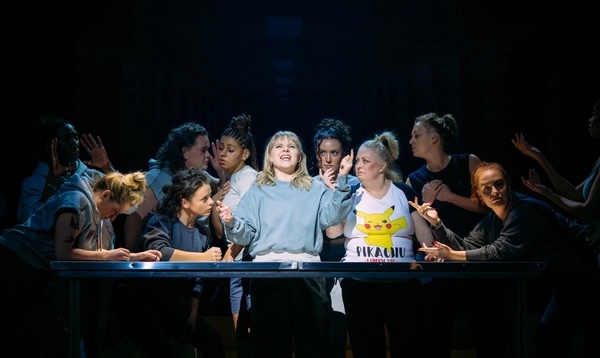
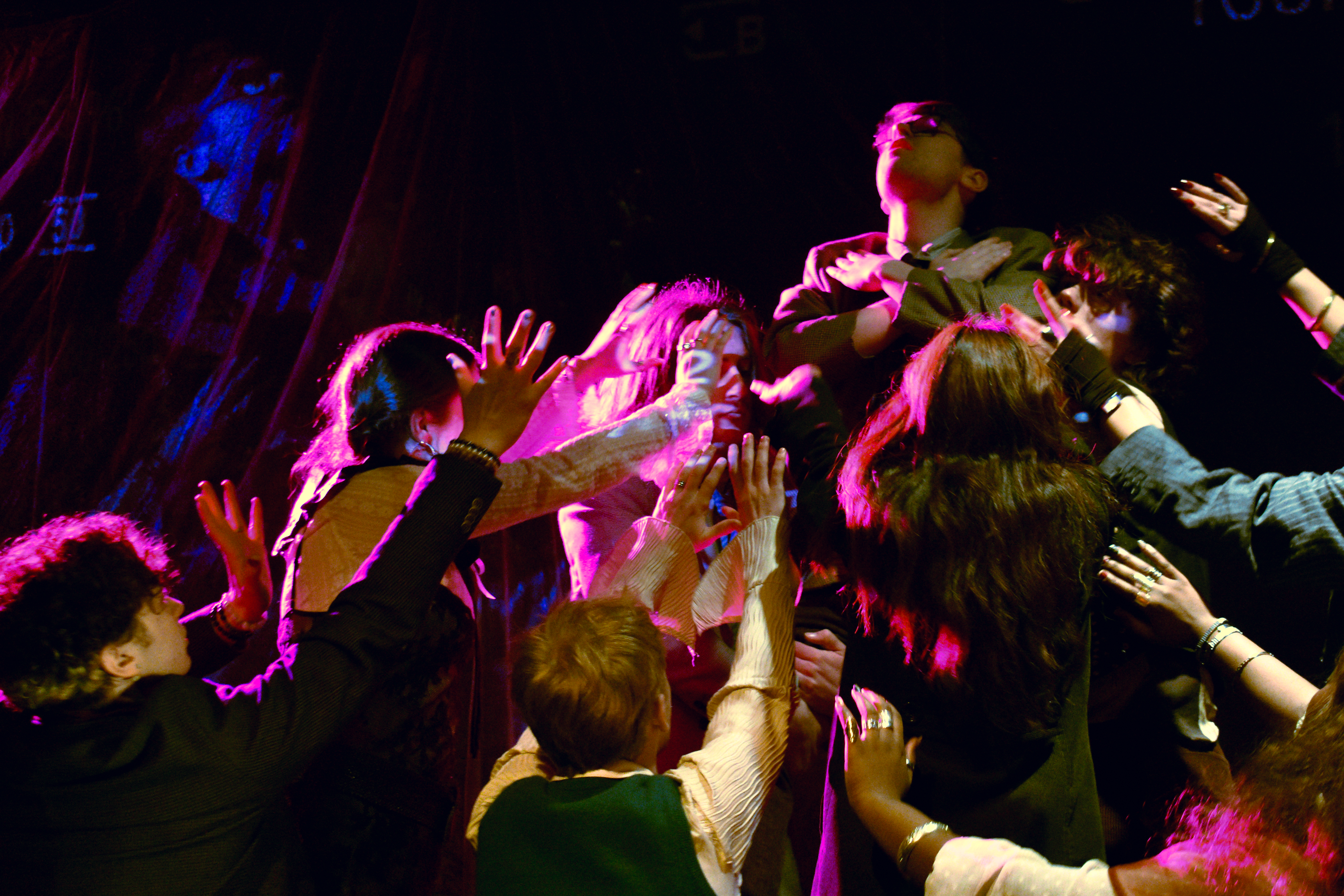
Set in 19th century Germany, this is a story about a group of young people coming of age under the stifling weight of moral expectations. Wendla (Hattie Sumners) asks how babies are made. Scandalised, her mother (Sophie Davis, who plays all the adult women) first shouts and then equivocates, condemning her daughter to an ignorance which will have severe consequences. Meanwhile, Moritz (Shaun Hamilton) is struggling to keep up with his schoolwork, and fear of failure takes him to a devastating place. Melchior (Daniel Fischer) seems stronger than the others: thanks to a combination of intelligence and a liberal mother, he’s more knowledgeable than his friends, and therefore better equipped to cope with life. Still, the authoritarian regimes of school and church soon drag him under too; no one is safe in this society.

Theatre Paradok’s production succeeds in conveying those most fundamental of teenage emotions: exuberance and despair (I’m guessing the student cast don’t have to dig that deeply to remember how raw and overwhelming those feelings can be). Sheik’s eclectic soundtrack is beautifully interpreted by musical directors Nonny Jones and Ruairidh Nicholson, the choral numbers being particularly impressive. The live band – hidden in the wings – are terrific, and plaintive solos by Sumners, Gemima Iseka-Bekano (Ilse) and Hamilton evoke some strong responses.

The show’s aesthetic is great. I love the androgyny of the costumes, with feminine dresses worn over masculine suits; the queer coding is fabulously done. The set is simple but very effective: items of underwear are stapled to a curtain framing a large gauze backdrop, onto which short animations and live videos are projected, creating an ethereal doubling effect and amplifying the characters’ emotions.

Directors Rue Richardson and Jane Morgan manage their large cast with aplomb. The play is dynamic and visually very appealing, from the arresting choreography (by Františka Vosátková, along with Richardson, Morgan and Andrea Adriana Prawono) to the boisterous shenanigans of the teenage boys. The gauze curtain makes metaphors literal: dead characters appear from ‘beyond the veil’, while ‘a veil is drawn’ over Wendla and Melchior’s lovemaking. However, Ernst (Michael Butler) and Hänschen (Max Middleton)’s homosexual relationship is placed boldly centre-stage – perhaps a subtle nod to the idea that some things shouldn’t be re-closeted.

I do have one criticism, and it’s the emergency exit door, stage left, which is open to the elements. Bedlam is a chilly venue at the best of times; tonight, with an outside temperature of 1°C, I could do without sitting in a freezing draught. And it’s not just the cold that’s a problem, there’s the noise of the city too: traffic and sirens and people passing by, all making a claim on my attention. I can see that the options are limited by the need to house the band, but – for the sake of one entrance and one exit – it’s surely not worth making the audience so uncomfortable.

Nevertheless, this production of Spring Awakening is a triumph: a lively, thought-provoking piece of theatre, as relevant now as it was more than a century ago.

4.2 stars

Susan Singfield


Kev Campbell Was He

11/03/25

Traverse Theatre, Edinburgh

Today’s A Play, A Pie and A Pint performance  begins in unprepossessing style: an empty stage with a toilet placed centrally; uptempo music thundering along for quite some time – almost too much time – and then our titular hero bursts frantically into view, pulls down his pants and er… relieves himself. 

Mission accomplished, Kev (Alexander Tait) realises that the toilet cubicle he is sitting in is entirely free of graffiti, so he sets about changing that situation, by the application of his trusty pen – of which we will learn more later. Kev, as you may have gathered, is a bit of a lad, a freewheeling Glasgow boy, stuck in a dead-end job at a backstreet cafe. He has little prospect of achieving much in his life, but is determined to drink and laugh and chat shite, in order to get himself through another day and late into the following night.

And if he is occasionally given to indulging in strange cinematic fantasies, well, where’s the harm in that? We all get through it the best way we can, eh?

And then somebody steps into the cubicle next to Kev and sits down to read The Great Gatsby, an occurrence that inadvertently kicks off a string of events that will eventually encourage Kev to head off in an entirely different direction…

For the first ten minutes or so, I don’t really think I’m destined to enjoy Kev Campbell Was He, which appears at first to be a series of character studies, offering insights into the respective mindsets of the people Kev knows, but offering little in the way of anything surprising. But my preconceptions are cleverly shattered when the story takes a beguiling and unexpected twist and I begin to  realise that this is a tale about thwarted ambition – about a youth shackled by his working-class origins for too long. It’s about someone who has been told repeatedly that to nurture a dream is futile, that attempting to step into a world where he doesn’t quite fit can only end in tears. 

In many ways, it makes me think back to my own younger days, when I nursed powerful ambitions to become a writer and everyone was virtually lining up to tell me why I couldn’t hope to step into that rarified atmosphere. Fifty-odd novels later, the message of the play hits home with considerable force. People are so often warned not to chase their dreams but at the end of the day, what else do we have?

Tait is an assured young performer who handles the different personas he inhabits with total confidence and makes me believe in each one of them. But he’s not just an actor, he’s also a playwright: Kev Campbell Was He is his debut play, recently nominated for the David McLennan Award. It’s by turns funny, sad and bittersweet and, I have to say, it’s a promising start for somebody who seems destined to go on to greater heights.

All this, plus a pie and a pint. What are you waiting for?

4 stars

Philip Caveney

James Rowland: Piece of Work

08/03/25

Traverse Theatre, Edinburgh

Piece of Work is the second in James Rowland’s Songs of the Heart trilogy. We saw the first, Learning to Fly, back in November 2023, and we’ve yet to catch the third, James Rowland Dies at the End of the Show. We’re here tonight with a friend and we’ve warned her about Rowland’s propensity for undressing, so none of us is particularly surprised when the show starts with him removing his T shirt and trackies and replacing them with plaid pyjamas. We’re just relieved he’s kept his undies on this time – and also a little confused by the costume choice. What do PJs have to do with anything? There’s nothing about him being in bed or even much about him being indoors…

Instead, this is a story about fathers and sons: about Rowland coming to terms with his old man’s death; about his ersatz brother, Chris, whose dad rejected him; and about The Prince of Denmark and Old Hamlet. The three narratives are interwoven, shining a (literal) light on the complexities of paternal relationships and their potentially devastating impact. Rowland, Chris, Hamlet – all abandoned, one way or another. All railing at their absent fathers for leaving them to deal with a scary, fucked-up world.

It’s also a story about suicide, and Hamlet’s ideation in the “to be or not to be” soliloquy is rendered very explicit here. It’s heavy stuff, but Rowland has a light touch, and knows just when to pull us back from the brink. His openness and affability make it easy to trust him with weighty topics without feeling overwhelmed.

It’s a great concept and Rowland has a charmingly vulnerable stage persona, but there are elements of the story that feel under-explored, especially the climactic confrontation between Chris and Dick, which feels almost thrown away. There’s surely more to explore in the tale of Rowland’s performance at the Royal College of Music too; for such a frank actor, it really seems like he’s holding back.

Nonetheless, I’m drawn into the story, and I find myself wanting to know where Rowland goes in the final part of this trilogy.

3.2 stars

Susan SIngfield