Theatre

The Pantomime Adventures of Peter Pan

01/12/23

Festival Theatre, Edinburgh

It’s that time of year again – oh yes, it is. We’re sitting in the Festival Theatre, where there’s a very festive atmosphere. Behind us, two rows of Cubs and Brownies chatter excitedly, waving light-up wands and eating vast amounts of chocolate. Families, including adults, are no less giddy. Christmas outfits are clearly de rigeur: there’s an abundance of baubles and sparkle, from headbands to socks and every item in between. We’re soon caught up in the fun.

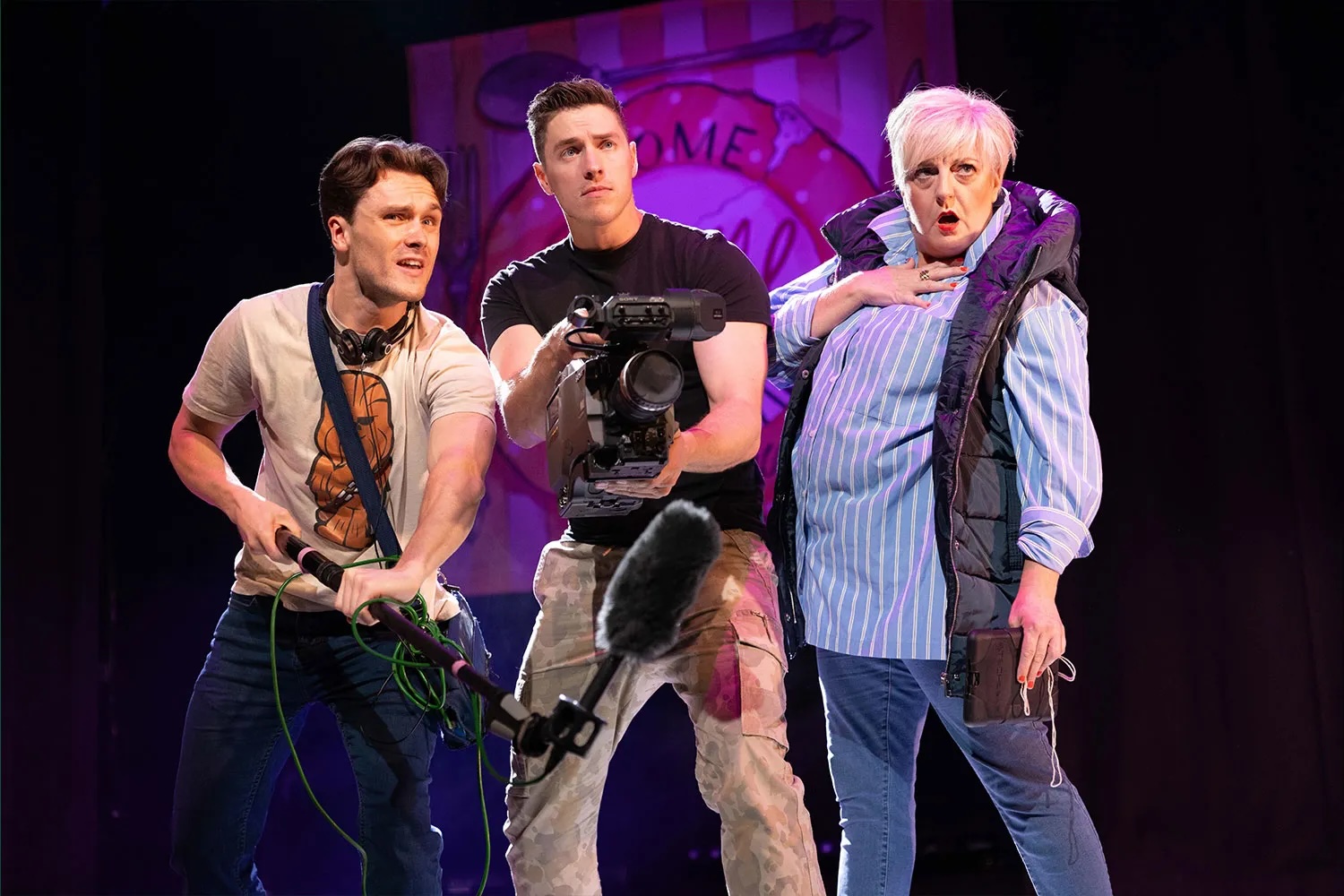
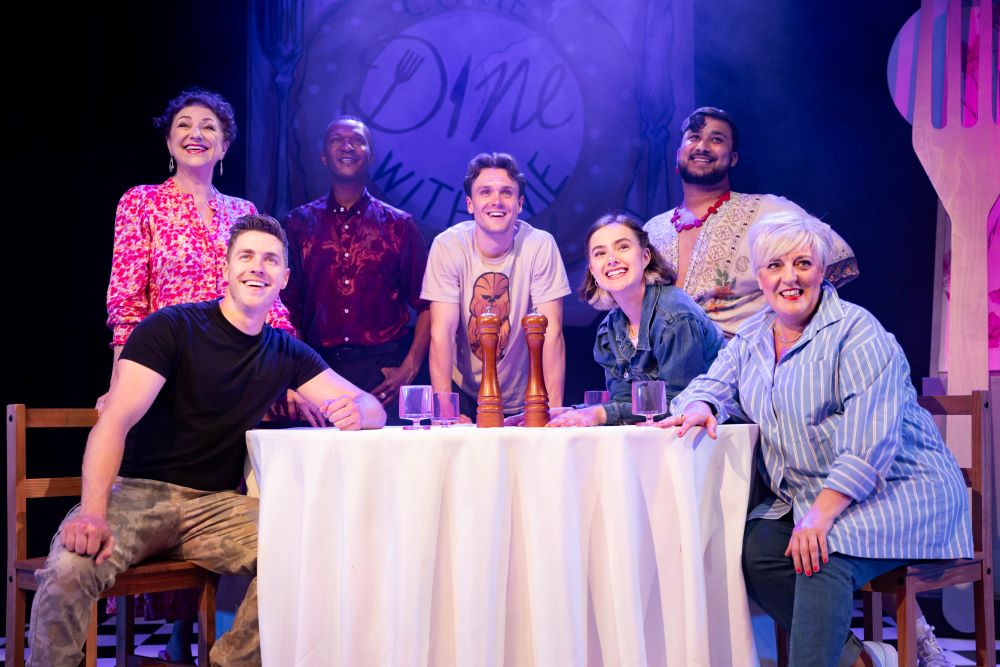
This year’s theme (and it is a theme, rather than a story) is Peter Pan. This version of the tale (written by Harry Michaels and Allan Stewart) takes the form of a sequel to JM Barrie’s original. Even though his old adversary, Captain Hook (Grant Stott) was eaten by Jock the Big Green Croc a long time ago, Peter Pan (Kieran Lynch) is in trouble: the pixie dust that allows him to fly has disappeared from the magic waterfall, leaving him grounded. He sends Tink (Rebecca Stenhouse) to fetch his old friend, Wendy (Robyn Whyte), to see if she can help. It soon transpires that somehow Hook has returned, and that he’s behind the problem… Can he and Starkey (Clare Gray) persuade the erstwhile ship’s cook, May McSmee (Stewart) and her son (Jordan Young), to rejoin his crew?

This Peter Panto is as big and bold a show as we’ve come to expect. Crossroads’ production values are always impressive: the costumes lavish, the props spectacular. The opening sequence sets the standard, with a beautifully animated video-projection that leads us straight into the fantasy. The lighting (by Jack Ryan) is very clever, transforming the same set in an instant from a pretty pastel fairyland into a terrifying red-hued pirate lair. The sound (by Guy Coletta and Andrew Kirkby) is dialled way past eleven, immersing us in Neverland. And there are pyrotechnics a-plenty too.

Pantomime survives by being endlessly adaptable, and nowhere is this more apparent than in the casting of Flawless as Hook’s pirate crew. This is a masterstroke, lending the pantomime some real edge, as the street dancers inject a dose of cool into the cheesiness. What seems on paper like an odd marriage, in fact works really well within the piece. It’s not just their awe-inspiring dance moves, but their presence as a kind of Greek chorus, observing the ridiculous antics around them and providing a silent commentary and response.

Stewart and Stott are the lynchpins, and this is a silver panto-versary for both of them. Their onstage rapport is legendary, and it lives up to the hype. They know how to work together to mine the laughs, and always give the impression that they’re having the time of their lives. Stewart is a fabulous Dame – his Aunty May can’t help but dominate every scene she’s in – and Stott clearly relishes his cartoonish villainy. Jordan Young fits in well as the still new-ish number three (following Andy Gray’s sad demise), and his clowning is superb.

There are a couple of negatives. It’s no secret that plot always comes second to tropes in a panto but the balance shifts a little too far here. The storyline gets lost: Peter Pan and Wendy are sidelined and Captain Hook’s redemption doesn’t really register. What’s more, the climactic moment when Peter Pan finally flies again (I’m not counting that as a spoiler – the only surprise would be if he didn’t) just isn’t as impressive as it should be. We’ve already seen Tink take to the air, after all, so it’s a little underwhelming when Peter just follows the same trajectory. I don’t think it helps that the cast look out into the auditorium when they’re wondering where Peter is, so that the audience follow their guidance and look up, prepared to see him appear above our heads; it’s an anticlimax when he simply descends from the flies on strings and flutters across the stage. In any other production, this would be enough, but our expectations have been elevated by the amazing animatronic crocodile and other effects.

But it seems churlish to dwell on these niggles when everything is nigh-on perfect and we’re having so much fun. The Pantomime Adventures of Peter Pan is on until Hogmanay, so grab yourself a ticket, dig out your Santa deeley-boppers and head on down to the Festival Theatre for a few hours of sheer joy.

5 stars

Susan Singfield

The Snow Queen

25/11/23

Lyceum Theatre, Edinburgh

Hans Christian Andersen’s The Snow Queen has never been my favourite fairytale. Although there are plenty of gloriously memorable images – and the book I had as a child was beautifully illustrated – I’ve always found the plot unwieldy. Happily, in this very Scottish adaptation, Morna Young does an excellent job of clearing the dead wood, jettisoning some of the unnecessary complications and illuminating the story’s season-appropriate warm heart.

We start off in Victorian Edinburgh, where we were for last year’s An Edinburgh Christmas Carol. But we don’t stay there long: The Snow Queen is about a quest, so of course there’s an epic journey to be made. Best friends Gerda (Rosie Graham) and Kei (Sebastian Lim-Seet) are orphans, living with their respective grandparents. Every evening, they climb up onto the roof of their tenement to tend to their pot plants and plan for the future. Kei dreams of going to university, while Gerda wants to see the world.

Meanwhile, in another realm, some trolls have broken a magic mirror and its shards have caused havoc, turning Beira, the Scottish Queen of Winter, into the evil Cailleach Bheur (Claire Dargo), determined to reign forever, and never relinquish her power to Bride, the Queen of Spring. Bride (Naomi Stirrat) isn’t strong enough to overpower the Snow Queen, but she does manage to slow her down – by planting five seeds of spring inside five human beings. So far, the Snow Queen has tracked down four… and now she thinks she knows where the fifth one lies. Kei doesn’t stand a chance. Corrupted by the magic mirror, he turns against Gerda and follows the Cailleach Bheur to her icy lair. But the Snow Queen has reckoned without Gerda, and underestimated the power of true friendship…

With a lively score by Finn Anderson and some very memorable songs – including Quines Gotta Fight and the innuendo-rich A Horse with a Horn – this production is as bold and vivacious as everything we’ve seen Cora Bissett direct. Graham and Lim-Seet convince as sweet and wholesome children, while Dargo’s white witch is suitably scary. Samuel Pashby – who plays Corbie, the Snow Queen’s corvid assistant – is an excellent clown, his gymnastic capers always engaging. But it’s Hamish the Unicorn (Richard Conlon) who steals the show, which does unbalance things a little – but, honestly, it doesn’t matter a jot. After all, this is a piece of festive family fun, and it’s hardly surprising that a rainbow-farting magical beast should be the mane (sorry) attraction.

I’m a little bit in love with Emily James’ set, which mirrors (and thus closes) the Lyceum’s dress circle, reflecting the theatre back at us. It’s huge and imposing and difficult for the actors to negotiate – and therein lies its beauty. The image is as in-your-face as it gets, too direct to count as subtext, and I admire its audacity. It’s impossible to ignore. James’ costumes are wonderfully opulent too: I’m drawn to the bright colours of the flowers in the fairy garden, and to the Cailleach Bheur’s shimmering pastels.

The Snow Queen straddles the line between theatre and panto, Hamish’s broad humour contrasting with the more serious underlying themes. For the most part, I think this works, although some of the jokes don’t land as well as they might, eliciting titters rather than belly laughs. Perhaps it would be an idea to have Hamish and Corbie engage more directly with the audience, signalling the tonal change. Nonetheless, the enthusiasm with which the final rendition of A Horse with a Horn is sung suggests that even the youngest attendees are fully on board.

A sparkling delight.

4 stars

Susan Singfield

Play Pretend

24/11/23

Traverse Theatre

Framework Theatre is a rather special support organisation for emerging theatre-makers in Scotland, helping to build a “better, stronger, Scottish theatre sector”. It’s often said that you should write about what you know, and playwright Katie Fraser certainly does that, with this self-referential piece about, um, emerging theatre-makers, battling the old guard and forging a new way.

Actors Amy (Claire Wootton) and Greg (Gerry Kielty) are rehearsing a new piece about Flora MacDonald and Bonnie Prince Charlie. For her, it’s an exciting opportunity, her first professional role since leaving drama school. For him, it’s a backwards step; his career trajectory has been stymied by an unspecified scandal, so he’s slumming it, waiting out his time on the naughty step by directing and starring in this ‘little’ play.

To begin with, Amy is deferential, and Greg responds well to this. He’s pleasant, happy to share the benefits of his experience. But we soon see his darker side as Amy gains confidence and begins to question his peculiar interpretation of what is supposed to be a feminist play, written by ‘Harriet’, a young female playwright.

It makes sense that Greg should contrive to keep Harriet from the rehearsal room, as he tries to assert his dominance over the narrative. But Play Pretend suffers a little from the absence of this third character: I find my attention diverted from the action on stage as I wonder why she doesn’t ignore his instructions and come to see what’s happening to her play. It might be more convincing if we were to hear Greg making up outrageous excuses about why she can’t attend.

Fraser’s script comprises a series of vignettes, from which the story emerges bit by bit, the two actors learning more about each other as the rehearsal process goes on. It’s a strong idea and generally works well, although I do find myself wishing for higher stakes, and for a bolder, more cathartic climax.

Laura Valerie Walker’s sprightly direction highlights the meta-theatricality of the piece. The slow-motion transitions are effective in conveying the passing of time, moving us from one snapshot to the next, reminding us that this is all a performance, but they are too protracted, and start to become a little wearisome towards the end. The set, by Isadora Gough, with its over-abundance of tape marks on the floor and moveable furniture, reinforces the point that this is a constructed image, an illusion, designed to tell a tale.

Both Wootton and Kielty inhabit their dual roles convincingly. Wootton nails Amy’s mixture of self-assurance and desperation, her superficial politeness masking her frustration with Greg’s pomposity. She needs this part to kickstart her career, so she forces herself to put up with his condescension – but Wootton shows us what a struggle this is. It is to Kielty’s credit that we feel any sympathy for Greg: he is a bombastic, arrogant man, showing no contrition for his past aberrations and riding roughshod over the two young women he’s working with, assuming that he knows more than both the playwright and female lead about what this feminist drama needs. Nonetheless, Kielty manages to convey Greg’s underlying vulnerability, his fear at being left behind as the tide turns, his self-esteem dependent on his status.

With its artfully-woven historical and contemporary strands, Play Pretend is a thought-provoking and insightful piece about the struggles we face as we try to move towards a more egalitarian society. When you’re used to privilege, as the saying goes, equality feels like oppression.

4 stars

Susan Singfield

Flip!

03/11/23

Summerhall, Edinburgh

Racheal Ofori’s FLIP! is a fresh and keen-eyed take on the Faust story. Two young graduates, eager to make their mark, are enjoying moderate success on their WePipe channel. Their videos are vibrant and fun, full of silly catchphrases and exuberant dance routines, pragmatic beauty tips and off-the-cuff remarks. They’re enjoying making them – and it shows. For Crystal (Jadesola Odunjo), the collaboration and creativity are paramount, but Carleen (Leah St Luce) is hungry for cold hard cash. She has to be: unlike Crystal, she doesn’t have parents who can bankroll her, and her hard-earned degree doesn’t seem to be helping her to get a decent job.

So when a new app starts to gain traction, Carleen is all over it. FLIP! is hugely popular, its short video format both punchy and easily accessible. Crystal takes a bit of convincing – she’s not keen on the app’s style or ethos – but, before long, the duo are doing well. Until Crystal says something that other users don’t like, and she’s trending for all the wrong reasons…

Carleen is faced with a dilemma: should she stand by her friend and eschew her newfound notoriety, or sign a deal with FLIP! as one of their brand ambassadors?

Under Emily Aboud’s assured direction, FLIP! is a kinetic, engaging piece of theatre, turning an almost empty stage into a convincing digital universe. Aline David’s lively choreography helps to underscore the characters’ youth – their exuberance and naïvety – and both Odunjo and St Luce deliver flawless performances, charting the characters’ respective journeys from dreams to despair.

Because, of course, just as every action has an equal and opposite reaction, every exciting new promise of autonomy and riches soon has the sharks circling, working out how they can exploit it for their own ends. And FLIP! are no exception, cunningly demanding the rights to Carleen’s digital image and then using AI to create content for her. Sure, she’s making money, but she’s no creative control, no pride in her work. The fun has gone – and so has her best friend. But if she reneges on the deal, what then? FLIP! will just use someone else, and she’ll be back in a dead-end job. There’s no way out.

Ofori’s social commentary is sharp and incisive, and we leave the theatre with much to discuss. FLIP!‘s Edinburgh run is over now, but it’ll be at the Soho Theatre from 7th-25th November, so do try to catch it if you’re in London. It’s FLIP!pin’ great!

4.3 stars

Susan Singfield

Dead Dad Dog

02/11/23

Traverse Theatre, Edinburgh

John McKay’s quirkily titled play originally debuted at the Traverse in 1988, before transferring to the Royal Court Theatre in London – so it’s great to have the opportunity to see it back in its original home. This deceptively simple two-hander takes the form of a series of titled vignettes punctuated by snatches of classic 80s pop songs.

It’s early morning in Edinburgh and ‘Ek’ (Angus Miller) is preparing breakfast and psyching himself up for an interview at BBC Scotland, where he hopes to start a new career. He’s ill-prepared for the arrival of his father, Willie (Liam Brennan), a quiet man in a loud suit. Ek’s surprise is understandable: Willie has been dead for twelve years. He explains that he’s been granted the opportunity to visit Ek so that the two of them can ‘reconnect’. “Heaven,” he tells Ek, “is OK.”

The visit comes with some awkward conditions. Ek and his dear-departed Dad must remain within a few paces of each other at all times (otherwise there are disastrous side-effects). What’s more, Willie can be seen – and heard – by all and sundry. Which is awkward to say the very least. But Ek is determined to attend his job interview anyway, and even goes ahead with a date with his latest crush. A bad idea? Well yes, but this is hardly a realistic story and much pleasure is derived from the absurd comedic situations that the duo are obliged to stumble through.

Both Miller and Brennan offer assured and likeable performances and I love the simplicity of the staging, where one wooden chair is the only prop, pressed into service to represent a whole range of different things. There’s a strangely old-fashioned feel to the piece – so much has changed since 1988 – and sadly, a planned second half, featuring a more contemporary sequel, Sonny Boy, is unable to go ahead due to illness in the cast. (The current foul weather conditions might be part of the problem too.)

This is a shame, because added pleasure would surely stem from seeing how things have metamorphosed over the intervening years. Nonetheless, Dead Dad Dog is an entertaining piece. Liz Carruther’s direction keeps the pot bubbling merrily away and McKay’s script provokes much hilarity (and the occasional touch of pathos) as we go. Fingers crossed we get to see that sequel.

4 stars

Philip Caveney

The Grandmothers Grimm

01/11/23

Traverse Theatre, Edinburgh

The Grandmothers Grimm, written and directed by Emily Ingram, returns to Edinburgh for the final two nights of its latest tour. Premiered in 2017, this long-running play continues to resonate six years later, drawing in a sizeable crowd tonight at the Traverse.

Revisionist fairy tales are nothing new: like pantomimes, these stories survive because they’re endlessly adaptable. But this production, by Some Kind of Theatre, is more about intellectual property: who invented the stories, who owns them – and who gets the credit.

It’s no surprise to learn that the past was sexist (the present is pretty sexist too). But it is perhaps news that the Grimm brothers’ project – collecting traditional folk tales for a compendium – actually deprived a lot of working-class female storytellers of their living, like a nineteenth-century Spotify. After all, who’s going to pay to listen to an old woman tell them a story if they have ready access to a printed copy of the text? Jacob (Justin Skelton) and Wilhelm (Gerry Kielty) might argue that they never claimed authorship of the tales, readily acknowledging their process, but it was their names on the cover – and their profits in the bank.

Marie Müller (Ingram) opens the play, alone, weaving her narrative with practised ease. This, we understand, is how the stories were traditionally told: a paying audience listening, rapt, as an elderly, peasant woman draws us in. When Jacob and Wilhelm burst onto the stage, accompanied by the middle-class Marie Hassenpflug (Sophie Harris), it’s clear that Old Marie doesn’t stand a chance. She’s displaced, allowed to speak only for as long as it takes for the brothers to transcribe her words.

Hassenpflug doesn’t fare much better. She’s educated so the Grimms are superficially more respectful towards her. Nonetheless, they purloin her stories with a blatant disregard for her authorship; it doesn’t occur to them to credit her (a bit like those celebrity children’s authors, who don’t credit their ghost writers…). Harris imbues Hassenpflug with a fierce dignity, which makes for a stark contrast to the brothers’ pettiness.

Kietly’s Wilhelm is focused on sales. He thinks the stories need to be sanitised so that parents will buy them for their children. Skelton’s Jacob hates this idea: he doesn’t want to create the kind of sappy stories he associates with Charles Perrault. He favours a warts and all approach, arguing that the darkness is what makes the tales. I’d agree with him if it weren’t for the fact that his version of ‘authenticity’ denies the existence of the real originators.

The staging could hardly be more simple: the performance area is almost empty, save for a desk and a couple of books; the only additional props are some feathers, cups and apples. This is no-frills, low-budget, black-box theatre – and none the worse for it. Skelton provides the comic relief, galloping round the stage as a donkey prince, as the quartet bring the various tales to life. It’s deftly done, so that we hear the original versions and then see them warped and changed. The pace never falters.

If The Grandmothers Grimm feels like a natural fit for the Edinburgh Fringe, then it’s nice to be transported back to August on this cold November night.

4 stars

Susan Singfield

Treason the Musical

27/10/23

Festival Theatre, Edinburgh

“Remember, remember, the fifth of November, gunpowder, treason and plot. I see no reason why gunpowder treason should ever be forgot.”

We haven’t forgotten, of course. Bonfire Night looms large in the national calendar: every year, we bundle up in hats and gloves for an evening of funfairs, ginger parkin and fireworks. Guy Fawkes is burned again and again, his straw-stuffed effigies punished annually for his attempted crime.

So no, he’s not forgotten. But what exactly do we remember?

On the way to the theatre, I realise just how shaky my own grasp of the history is. I know that Guy Fawkes and some Catholic collaborators attempted to blow up the Houses of Parliament and that it was something to do with the Reformation. I know that he was hung, drawn and quartered. And, um, that’s it.

So I’m fascinated to learn more about the context, to understand how James I/VI angered Catholics by reneging on his promise to stop persecuting them, sacrificing their freedom for his own financial gain. Ricky Allan’s songs and Charli Eglington’s book help to illuminate the lives of those forced to deny their faith. It’s a salient message: in a world of tyranny and subjugation, terrorism is inevitable.

Although Guy Fawkes (Gabriel Akamo) is the name we all know, this show, directed by Hannah Chissick, focuses primarily on Martha and Thomas Percy (Nicole Raquel Dennis and Sam Ferriday), opening with their illicit wedding and charting their troubled marriage. Although both actors deliver strong performances, this seems like something of a mis-step, as the ups and downs of their relationship are less interesting than the actual gunpowder plot, which is relegated into second place.

In fact, Fawkes barely features in the actual story here. Instead, he’s cast as an observer, a narrator, leading the audience through the events as they unfold. This has a curiously distancing effect: he never actually enters the scenes to interact with the other characters, so it appears as if he were not involved. This means that the ending, when he’s captured and tortured, feels unearned. We don’t know what he’s being punished for.

There’s a problem with the pacing too, particularly in the second act. While the first is punctuated with a little levity in the form of Oscar Conlon-Morrey’s Iago-like Robert Cecil, manipulating King James (Joe McFadden) with practised ease, the second is a far more sombre affair, with too many ballads getting in the way of the action. Dennis and Emilie Louise Israel (Anne Vaux) give it socks and their soaring voices are undeniably impressive, but it does get a little wearing listening to them worry about how ‘vulnerable’ their menfolk are, when I’m impatient to know what’s going on with the barrels of explosives and the attack on parliament.

There is much to like, however. I love Taylor Walker’s choreography: the ensemble work is impressive, the artful movement adding to the sense of menace and unease. And the vocals are impressive: perhaps Israel is the standout, but there are no weak links here. It’s a real pleasure to listen to these performers sing.

Best of all, the production looks sumptuous: between them, Philip Witcomb (set) and Jason Taylor (lights) have created a thing of beauty, all sliding doors and shafts of light; one moment a palace, the next a tunnel. The transitions are instant and almost magical, an exemplar of stagecraft’s sleight of hand. The moment when a boat comes sliding out of the darkness is thrilling, transporting us to the Thames at night, the tension immediately cranked right up.

So, although it smoulders rather than going off with a bang, this is certainly a handsome piece of work.

3 stars

Susan Singfield

Battery Park

26/10/23

Traverse Theatre, Edinburgh

Whatever happened to Battery Park? Back in the 90s, they were ‘the band most likely to happen’, but they suddenly – irrevocably – split, leaving just one iconic album for their many fans to remember them by. So where and why did it all go wrong.? The beauty of Andy McGregor’s love letter to the Britpop era is that it’s all done with such veracity it’s hard to believe that it’s a piece of fiction – that the titular band never existed.

The play opens in the present day. Angie (Chloe-Ann Tylor) is at University and she’s doing her dissertation on Britpop (of course she is!). She tracks down Tommy (Chris Alexander), drinking alone in his regular haunt at Greenock Bowling Club, and asks him for the inside story. He needs a little persuading but soon enough he’s reminiscing about his younger self (Stuart Edgar), his older brother, Ed (Tommy McGowan), and their best pal, Biffy (Charlie West), who is one of those guys who likes to hang around with musicians – a drummer. Tommy has been writing songs and, lured by the possibility of a paid gig at the aforementioned bowling club, the boys hastily put together their band.

But while Tommy can write a catchy song, he’s not that confident a performer, so when Lucy (also played by Tylor) mentions that her best friend, Robyn (Kim Allan), is a brilliant vocalist/guitarist, it’s a no-brainer. Robyn is confident, talented and determined to make it big, no matter what it takes. From their very first performance, the new line-up seems destined for success…

Battery Park captures the sweaty exuberance of a band’s early days with absolute authority, providing an inspired mix of drama and high-octane rock. Kenneth McLeod’s set design somehow manages to incorporate all the necessary jumble of instruments and amplification into the story without ever getting its leads tangled, and I find myself marvelling at the ingenuity: the speaker cabinet that doubles as a safe is inspired!

While the first act chronicles the band’s dizzy rise to the brink of stardom, Tommy has signalled from the outset that the second will detail its heartbreaking descent into ignominy. The resulting dramatic irony is almost too much to take. By the closing stages, I’m watching with tears in my eyes.

All the performers excel, both as actors and musicians – and it certainly helps that the band’s numbers (also written by McGregor) are a series of propulsive bangers, each one containing a memorable hook in the chorus. As the musicians hit the final chords of the closing song, the applause erupts, intense and heartfelt.

As gig theatre goes, this is a perfect example of the craft. Don’t miss it.

5 stars

Philip Caveney
Disfunction

24/10/23

Traverse Theatre, Edinburgh

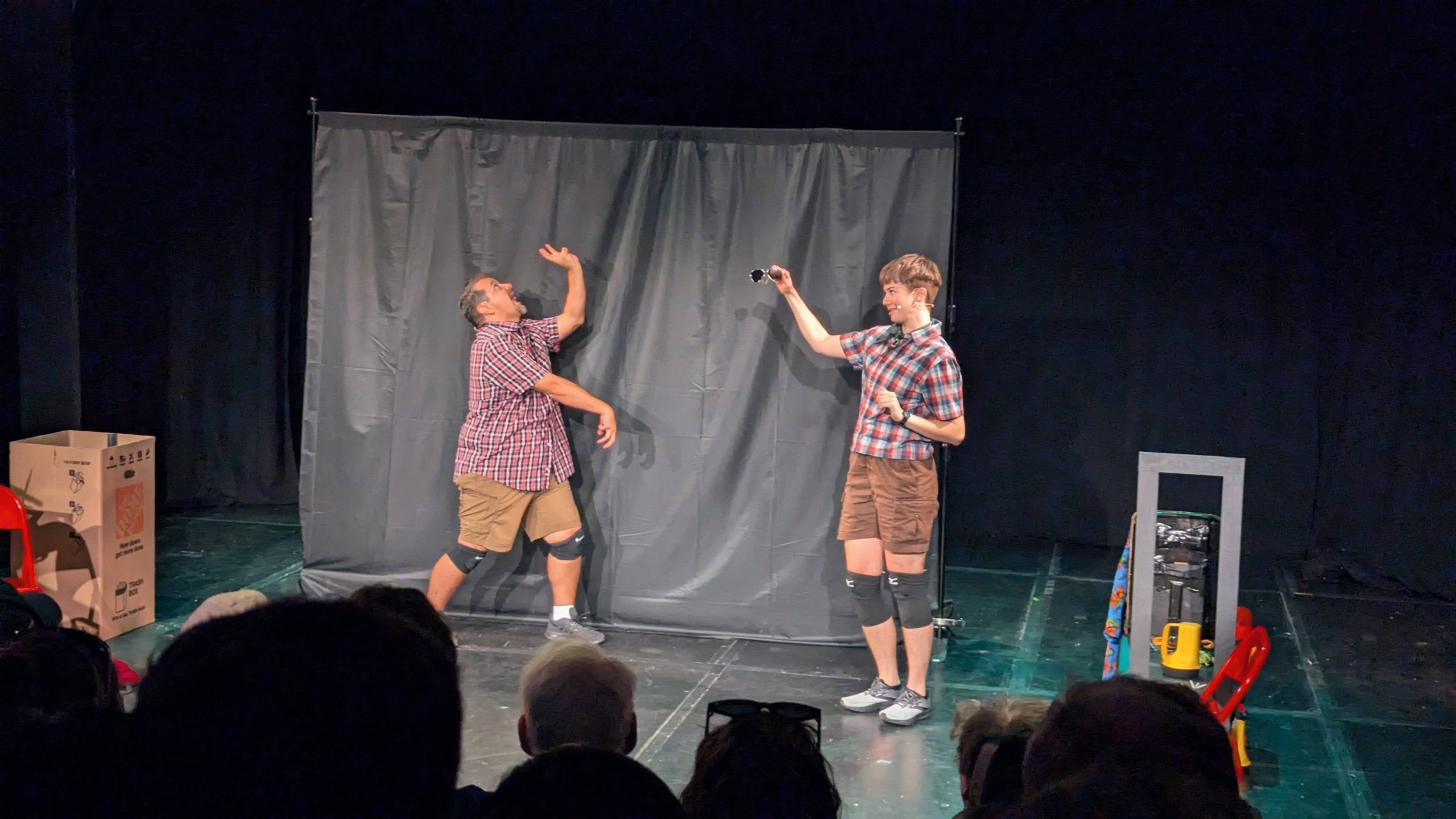
Sadly, this is the final PPP of the season; Tuesday lunchtimes just won’t be the same without an invigorating hour of original theatre. Luckily, Disfunction (“with an ‘i'”) provides a rousing send-off. This is first-rate stuff: a beautifully distilled character study, with a slice of social commentary on the side.

Kate Bowen’s play tells the story of sisters Moira and Melanie (Maureens Beattie and Carr respectively) and a game they’ve been honing for fifty years. Their goddaughter, Tanya (Betty Valencia), thinks she’s found a way to monetise their creation – by turning it into a sort of reality-TV experience, where viewers can pay to watch them play. At its best, the game is all Taskmaster-style fun: one round requires a blindfolded participant to put a pin in a map and then (sans blindfold) make their way to wherever the pin lands. Caveat: no cars allowed. Oh, and once they get there, they need to take a photograph of themselves. With four animals.

At its worst, the game is an exercise in, well, dysfunction. With a ‘y’.

The Maureens are surely two of Scotland’s national treasures, aren’t they? It feels like a real privilege to see these two great actors in such an intimate setting. They clearly relish their roles, especially Carr, who gets the plum part of the sassy, self-destructive Melanie. But Beattie is just as impressive as the more reserved and taciturn Moira, and Valencia more than holds her own as troubled Tanya, all bright-eyed desperation, a paper-thin smile covering her pain.

Lu Kemp’s kinetic direction means that the characters are always in motion (notable moments include a hilarious performance of Whigfield’s Saturday Night routine), and highlights that peculiar combative closeness that defines so many families.

Are there any negatives? Not really. Disfunction‘s role-playing political round perhaps stretches credulity (if there are only three people playing and each one has to ‘be’ a politician, who has set the questions to catch the others out?), but that’s my only gripe. Otherwise, it’s a pure delight. After all, as Tanya so cannily perceives, who doesn’t want to watch a bunch of strangers tearing themselves apart?

4.5 stars

Susan Singfield

Moorcroft

24/10/23

Traverse Theatre, Edinburgh

It’s Garry (Martin Docherty)’s 50th birthday and he’s not in the mood for a celebration. Instead, he prefers to think back to his teenage years and the wee amateur football team he put together with his best friends in Renfrew. He warns us in advance, this isn’t going to be an easy ride…

He assembles his crew. For starters, there’s Mick (Jatinder Singh Randhawa), once a promising member of a junior football team, now plying his trade as a hairdresser. There’s Tubs (Dylan Wood), who is gay – and in a 1980s small town, that’s seriously difficult – and there’s Paul (Sean Connor), struggling to cope with an abusive, alcoholic father. Noodles (Santino Smith) appears to be the most successful of the crew, with a decent job and the money to pay for some fancy football shirts (but should they be that shade of maroon?). Sooty (Kyle Gardiner) is a dedicated mod with a fishtail parka and no higher ambition than to ‘do a Quadrophenia’ and ride his scooter to Brighton, while Mince (Bailey Newsome) has an uncanny propensity for saying the wrong thing at the wrong time… every time.

But from their very first training session, the teammates work well together. The go from strength to strength, finding pleasure in the simple joys of kicking a ball around a pitch. They are blissfully unaware that darker times are inexorably closing in on them.

Moorcroft, written and directed by Elidh Loan, is a fabulous slice of theatre, one that moves effortlessly through a whole series of emotions. It swerves from raucous hilarity to visceral anger to heartrending tragedy with all the sure-footed precision of a well-drilled team. There are superb performances from the entire cast – particularly from Newsome as the slow-witted but oddly adorable Mince – and I especially enjoy the physical sequences as the team leap, twirl and kick their way through a series of energetic routines backed by a selection of 80s bangers. Loan knows exactly when to switch the mood. One minute I’m laughing out loud, the next my eyes are filling with tears.

It would be so easy to dismiss this as ‘a play about football’ but it’s much more than that. Moorcroft is a meditation on masculinity, its strengths, its weaknesses. It’s a reflection on the everyday deprivation of working-class life, and it’s a lament about the awful injustice of fate. Compelling and propulsive throughout, it never once relaxes its powerful grip.

It shoots, it scores. It’s a winner.

5 stars

Philip Caveney