Theatre

Escaped Alone

14/03/24

Traverse Theatre, Edinburgh

First performed at the Royal Court in 2016, Caryl Churchill’s Escaped Alone is a fascinating piece, revealing some essential human truths despite the brevity of its running time.

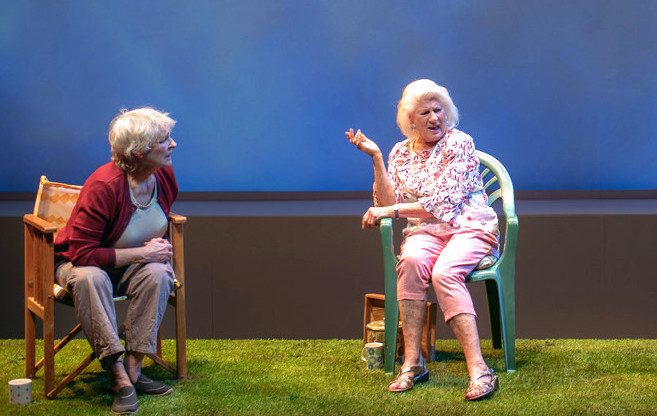
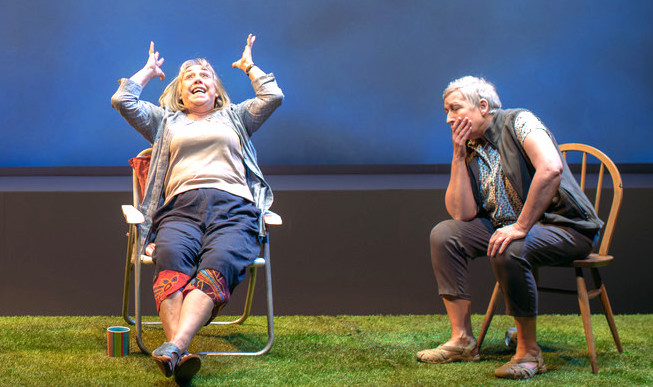
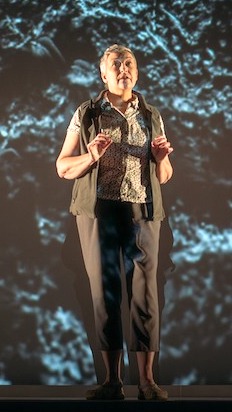
Three retired women – neighbours – sit in a garden, chatting inconsequentially. Mrs Jarrett (Blythe Duff) calls out a greeting as she passes by and is invited to take a seat. On the surface, she fits in, joining in the conversation. But she’s plagued by her knowledge of what’s happening in the news. At regular intervals, while the other women freeze, Mrs Jarrett rises and stands before Lewis den Hertog’s bleak black and white video projection, monologuing about apocalyptic events in the world beyond the garden. It’s like she’s zoning out, and we’re inside her head – and then she’s back again, making small talk, as if nothing has happened.

Although the catastrophes Mrs Jarrett describes are absurd in their extremity – all food has been diverted to TV channels; the hungry only know breakfast as an image on their screens; obese people sell their flesh, cutting rashers from their own bodies – the situation is depressingly normal. Just this morning, listening to the radio, I hear that 300 kidnapped Nigerian schoolchildren are still missing. In Gaza, shots have been fired at starving Palestinians waiting for a food truck. War still rages in Ukraine. It’s horrible. “Should we have curry or pasta for dinner tonight?” I ask my husband. We’re all fiddling while Rome burns.

The set, designed by Anna Orton, heightens the feeling of pretence. The grass is too green, the sky too blue; it’s what the women want to see, not what’s really there.

But, however fervently they cling to the façade they’ve created, real life keeps creeping in. “I’d love to go to Japan,” muses the agoraphobic (Anne Kidd). “Get yourself to Tesco first,” advises the caustic former GP (Joanna Tope), puncturing the daydream. Most resolutely cheerful of all is the ex-hairdresser (Irene McDougall), fresh out of prison for killing her husband. She went down for manslaughter, “but it might have been murder, in actual fact.” Nothing is what it seems.

Under Johanna Bowman’s direction, the performances are pulsing with vitality. There’s an urgency to proceedings that underscores the latent horror. Churchill’s script offers no real plot or character progression and this Tron Theatre production makes sense of that. It’s a snapshot of the way we’re stuck: a never-ending cycle of looking away; distracting ourselves from what’s really happening; ignoring the overpowering emotion consuming us.

“Terrible rage. Terrible rage. TERRIBLE RAGE.”

4.3 stars

Susan Singfield
A Giant on the Bridge

08/03/24

Traverse Theatre, Edinburgh

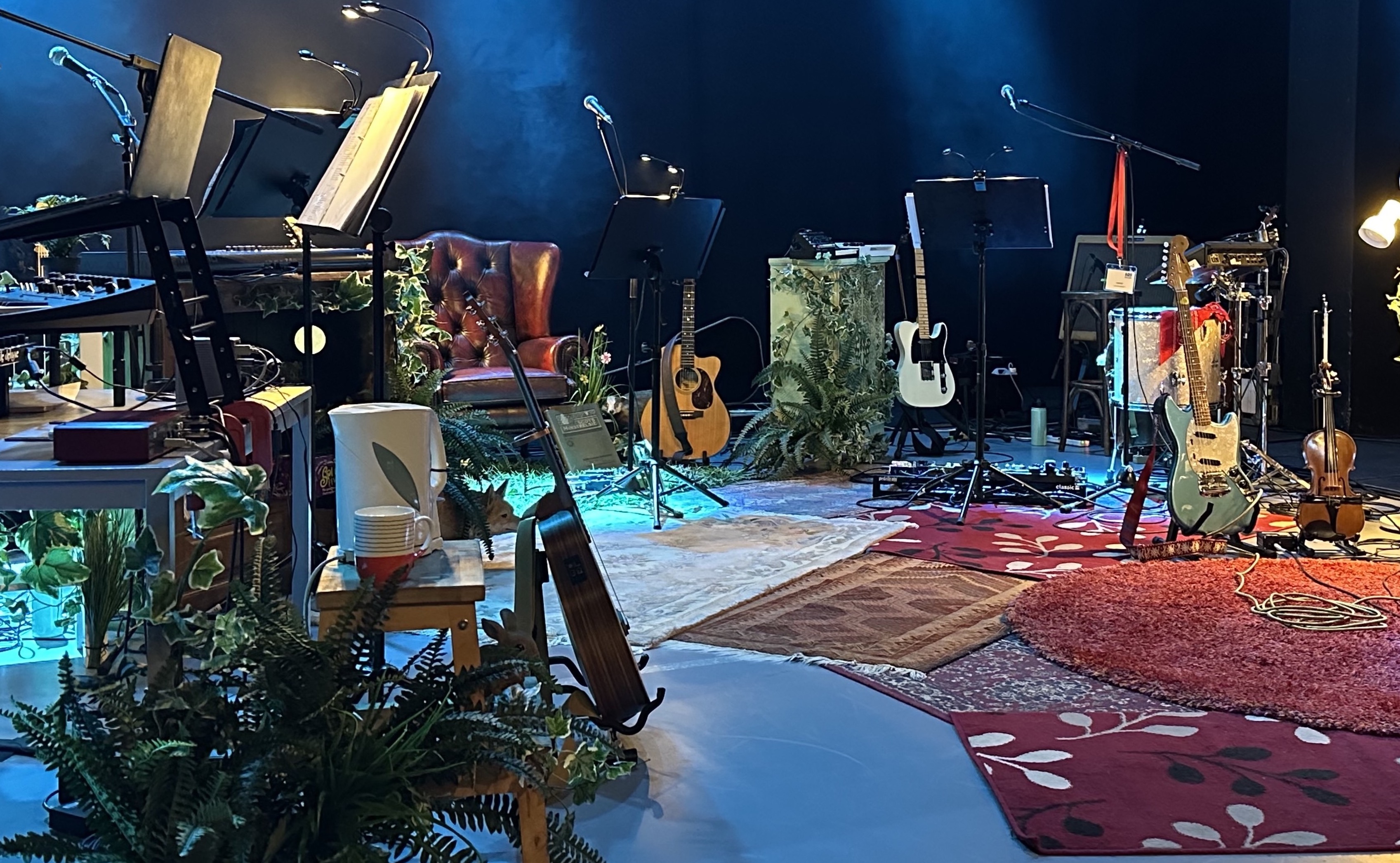
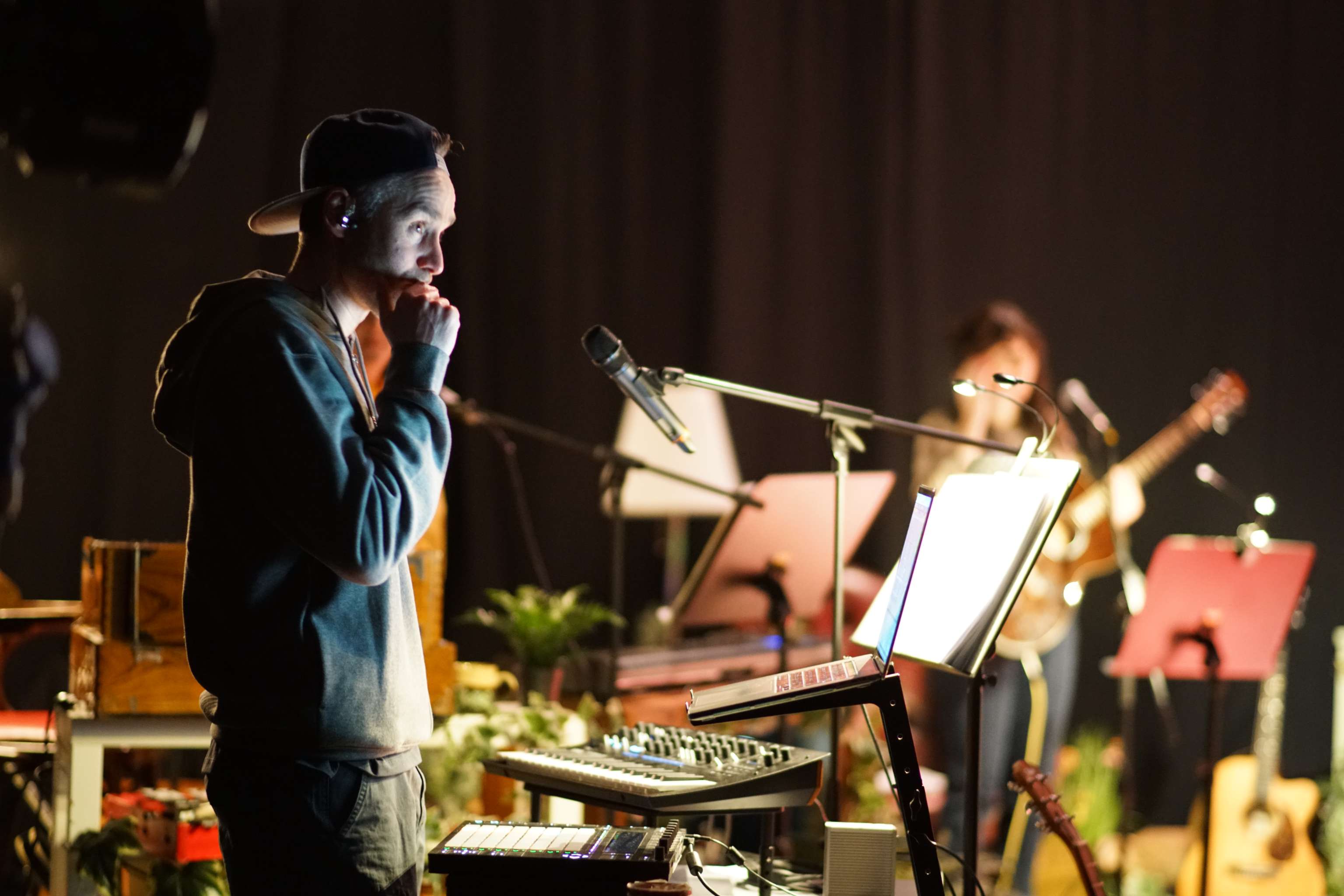
One look at the stage in Traverse 1 is enough to convince me that tonight, I’m going to witness some serious musicianship. There’s a complex arrangement of guitars and drums on display, as well as electronic keyboards, a violin, a harmonium and other instruments I cannot even name. They’re all connected by a jumble of leads and microphones that make me wonder how anyone will negotiate their way through it without tripping up. Then six musicians emerge from the wings, pick up their respective instruments and launch headlong into an extended piece of gig theatre that pretty soon has me in raptures.

Devised by Liam Hurley and Jo Mango, A Giant on the Bridge is created from a collection of songs written in Vox Sessions by the inmates of prisons across Scotland. It’s heartening to acknowledge that this joyful music has emanated from such grim beginnings, but here it is: a complex, labyrinthine piece that explores a whole range of different moods, moving from plaintive acoustic ballads to propulsive electric rock.

There are five different narratives here, the performers often breaking the fourth wall to speak directly to the audience. Louis Abbot delivers The Songwriter’s Story, telling us in essence about his daily routine, trying to coax music from troubled prisoners. Kim Grant delivers her Giant Story, a traditional tale about an imprisoned giantess, who has lost her heart to a ruthless king. Jo Mango gives us Clem’s Story; she’s a social worker and poet whose interactions with the daughter of an inmate unlock her own past trauma, while Jill O’Sullivan shares June’s Story, playing the role of a young woman looking after the daughter of her twin brother, D, and preparing for his imminent release from prison. And finally, Solareye relates D’s Story; he’s a man who sees and translates everything that happens to him into a distinctive form of rap.

If this description makes it all sound like a complex jumble, make no mistake: the various story threads are brilliantly interwoven, the narratives cunningly echoing and reinforcing each other, before the strands are drawn together into a heartfelt and uplifting conclusion. I find myself constantly thrilled by the sheer ambition of this production and the way its various goals have been so consummately achieved. The musicians also take on acting roles with aplomb.

It’s not just me who loves this show.. The wild applause from a packed audience is confirmation of how successful – and how unique – this musical experiment is. If you can grab a ticket to see it before it moves on, I urge you to take the opportunity. This is something very special.

5 stars

Philip Caveney

Bread and Breakfast

05/03/24

Traverse Theatre, Edinburgh

The latest production in the A Play, A Pie and A Pint season offers a distinct change of pace. Who’s up for a good old-fashioned British farce? You know, the kind of vehicle that Brian Rix would have had a field day with back in the 1960s – slapstick characters painted with broad strokes and even broader dialogue.

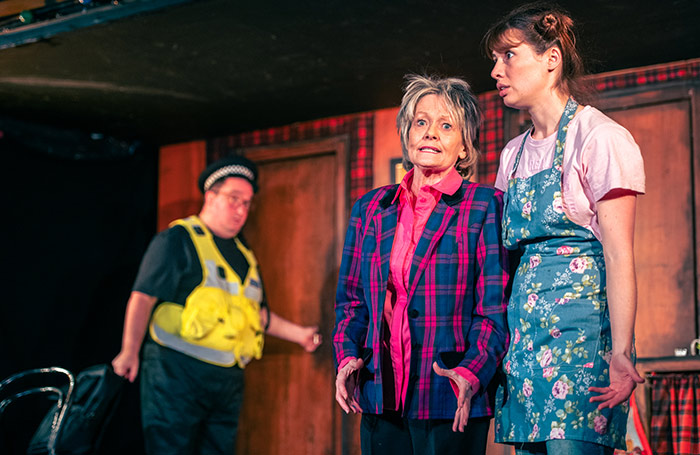
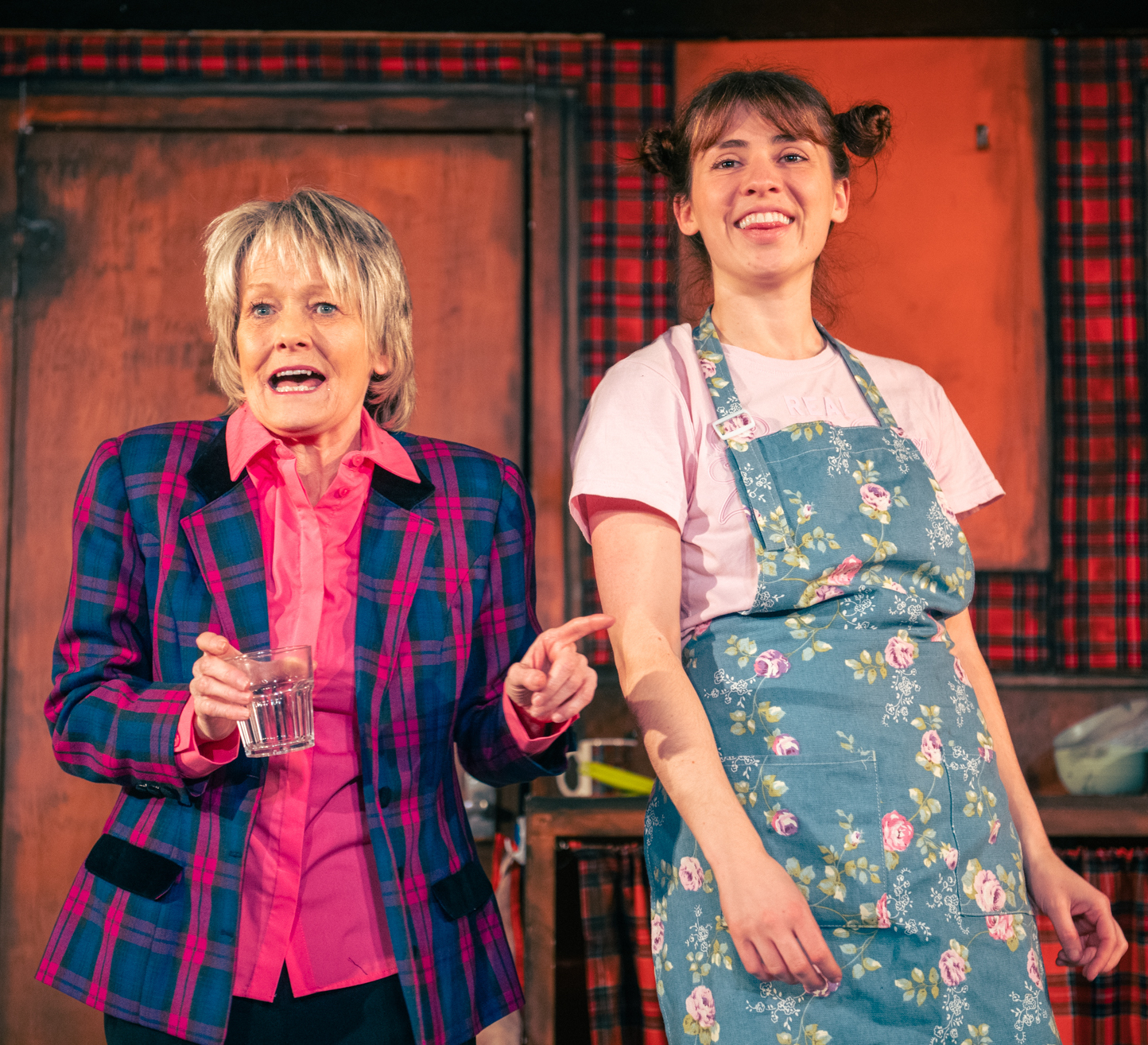
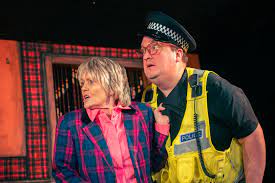
Welcome to Nessie’s Lodge, a bed and breakfast somewhere in the Highlands, a place where holidaymakers can relax in real style – provided they turn a blind eye to the indigestible food and the bedbugs… not to mention the rats. I said not to mention them! Proprietor Irene (Maureen Carr) is growing rather tired of the business, even though it boasts a single star from the AA. She dreams of selling the establishment to anybody who’s dumb enough to shell out money for it. But she’s continually hampered by her dimwitted young employee, Jo (Erin Elkin), who somehow manages to misinterpret every instruction she’s given. 

Then, in a distinctly Fawlty Towers twist, an AA restaurant inspector (James Peake) arrives out of the blue and the writing’s on the wall for Nessie’s Lodge. Also on the wall is a possibly priceless work of art that might just save Irene’s bacon…

Bread and Breakfast, written by Kirsty Halliday and directed by Laila Noble, has some genuinely funny lines in the mix, though there’s a worrying tendency to over-signal and over-explain them. Furthermore, it should also be said that those classic Whitehall farces were always anchored by absolute precision and excellent production values – which we can’t really expect from a modestly-budgeted lunchtime show.

The packed crowd at this afternoon’s show are clearly enjoying themselves, laughing throughout. As ever, stalwart actor Carr generates her own brand of potty-mouthed good humour; she’s a natural comic and has the audience in the palm of her hand. Elkin is excellent as Jo, giving her an edgy, almost manic appeal, as she flails from one hapless misunderstanding to another. Meanwhile Peake has the funniest moment of the show, as he delivers a spirited rendition of God Save Our Gracious Quing!  

If Bread and Breakfast isn’t quite to my taste, it’s nevertheless interesting to see a play so tonally different from anything I’ve previously seen at PPP.

3 stars

Philip Caveney

Peak Stuff

01/03/24

Traverse Theatre, Edinburgh

ThickSkin Theatre have a reputation for ambitious, cutting-edge theatre and I’m happy to say that Peak Stuff – a riveting new play by Billie Collins – does not disappoint. Indeed, this edgy slice of words and music manages to keep me on the edge of my seat throughout. 

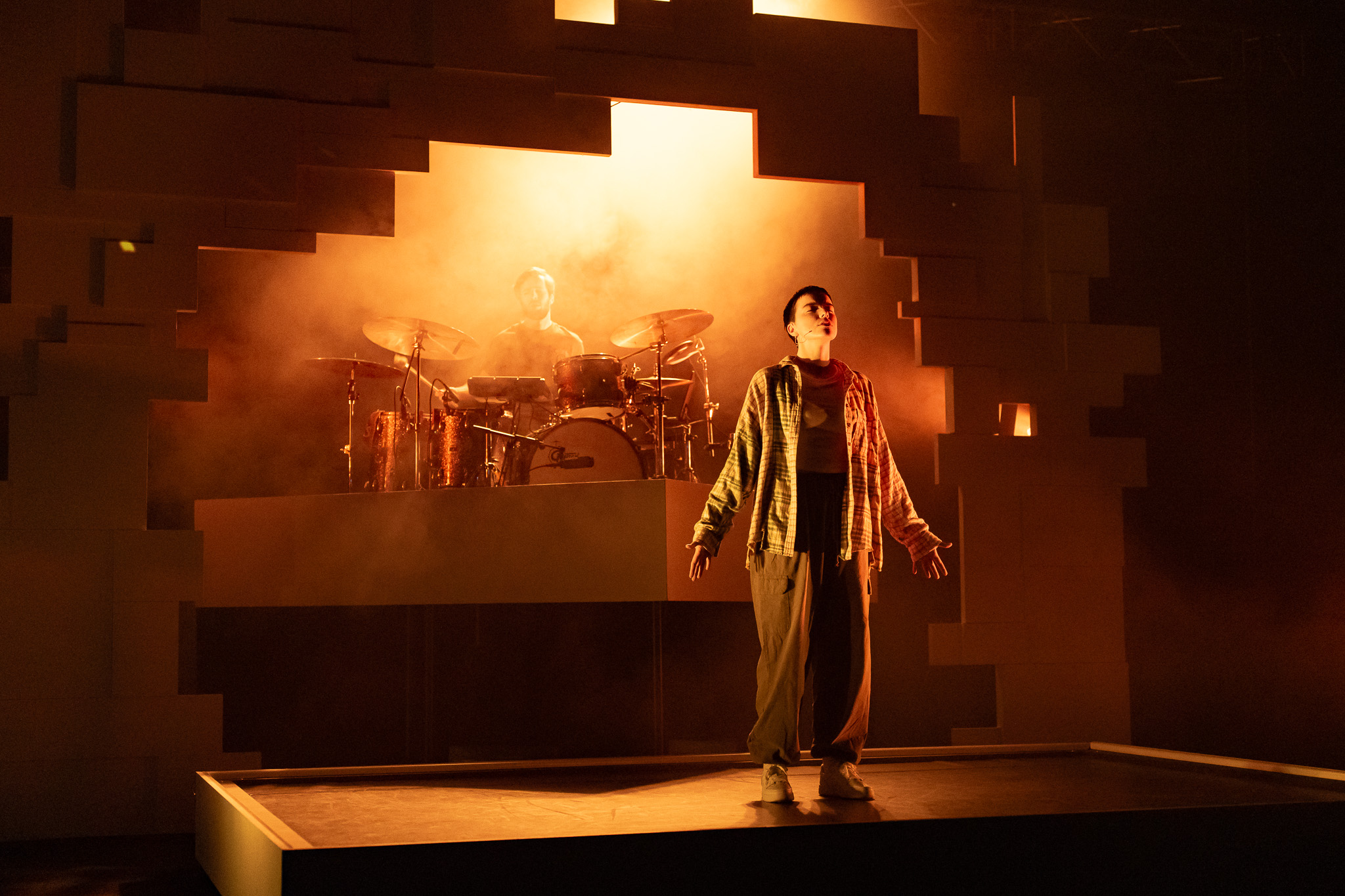
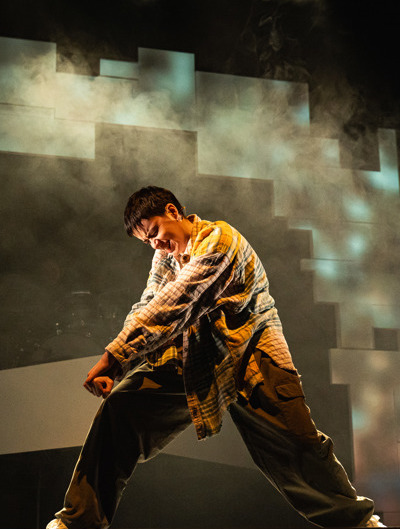
I’m immediately pulled in by the ingenious set design, which has drummer Matthew Churcher poised in the midst of a hollow, which is itself surrounded by a series of flat panels onto which Jim Dawson and Izzy Pye’s video designs are projected. Churcher is, in effect, the beating heart of the story, his intricate, propulsive rhythms combining with the soaring, majestic music of Neil Bettles (who also directs) and interacting with the narratives of three disparate characters, all memorably played by Meg Lewis.

Alice is a disaffected teenager, who is both appalled and galvanised by the awful reality of life in the 21st century. The world is burning and nobody seems to care! She’s determined to make her voice of protest heard above the hubbub, but is unsure of exactly how to go about making it happen. Ben works in marketing and is a loner, currently living in his mother’s house, which he is steadily filling to bursting point with a whole series of pointless purchases. They include a massive collection of branded trainers, which he never even takes out of their boxes. Online influencer Charlie is gleefully devoting herself to her latest project: selling parts of her body online to the highest bidder, starting with the little finger of her left hand…

How the lives of this strange, unconnected trio unfold is the bedrock upon which Peak Stuff is built – and the greatest wonder of this multifaceted piece is that there are so many ways it could go wrong; the whole edifice could easily collapse in upon itself in a stream of disconnected words, music and lights. The fact that it never does is surely testament to how tightly drilled this creative unit is. Lewis moves effortlessly from character to character, with just the slightest of changes to her voice and posture; Churcher keeps supplying those metronomic rhythms as the excitement steadily builds – and the three narratives combine with the eye-popping video projections which take us from Albert Square, Manchester to the heart of a blazing building.

This is bold, experimental theatre at its finest and the tumultuous applause that greets the final chord is evidence that tonight’s audience has been just as thrilled as I am.

4.6 stars

Philip Caveney

Jack

27/02/24

Traverse Theatre, Edinburgh

It’s a wet and miserable February day, but we don’t care because A Play, A Pie and A Pint is back – and if I say the new season starts with a whimper, that’s no bad thing. Because the whimper belongs to Jack.

And Jack is a puppy.

At first, our protagonist (Lawrence Boothman) isn’t too enamoured with his Christmas present. He doesn’t like dogs. They smell and they piss everywhere and they require a lot of care. But he can’t say that to ‘Him’, his un-named partner, can he? That’d be ungrateful. “Aw,” he says instead. “You shouldn’t have. Thank you.”

Of course, it doesn’t take Jack long to win the protagonist over, vet bills and chewed-up espadrilles notwithstanding. And when ‘He’ is killed in a car accident, Jack is both a source of comfort and a reason to go on.

Appealingly directed by Gareth Nicholls, Jack is a witty, engaging monologue, effortlessly straddling the line between acerbic humour and devastating emotion. Boothman reels us in from the opening lines and we’re absolutely with the protagonist as he mourns his lover and struggles to cope with his grief.

Liam Moffat’s nicely-crafted script paints a convincing portrait of a man adrift. The protagonist doesn’t know how to be a widower; he’s too young; there’s no template for him to follow. Heartbroken, he rebuffs his London friends but, away from the security of his crowd, he’s startled by the homophobia that denies the importance of his relationship and excludes him from his partner’s funeral.

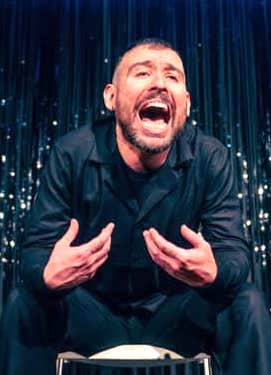
The set, designed by Kenny Miller, is suitably simple: a raised platform with a sparkly backdrop, a single plastic chair and a ticker tape bearing captions for each successive ‘chapter’ of the protagonist’s story. Dogs really aren’t just for Christmas, it turns out.

So Jack gets this PPP off to a flying start. No, I’m not crying. You are.

4.4 stars

Susan Singfield

Vanya: National Theatre Live

23/02/24

Cameo Cinema, Edinburgh

I have previously been somewhat baffled by the general adulation heaped upon Andrew Scott. Don’t get me wrong, I’ve always thought him a perfectly decent actor, but have somehow failed to appreciate the full depths of his talent.

Until now.

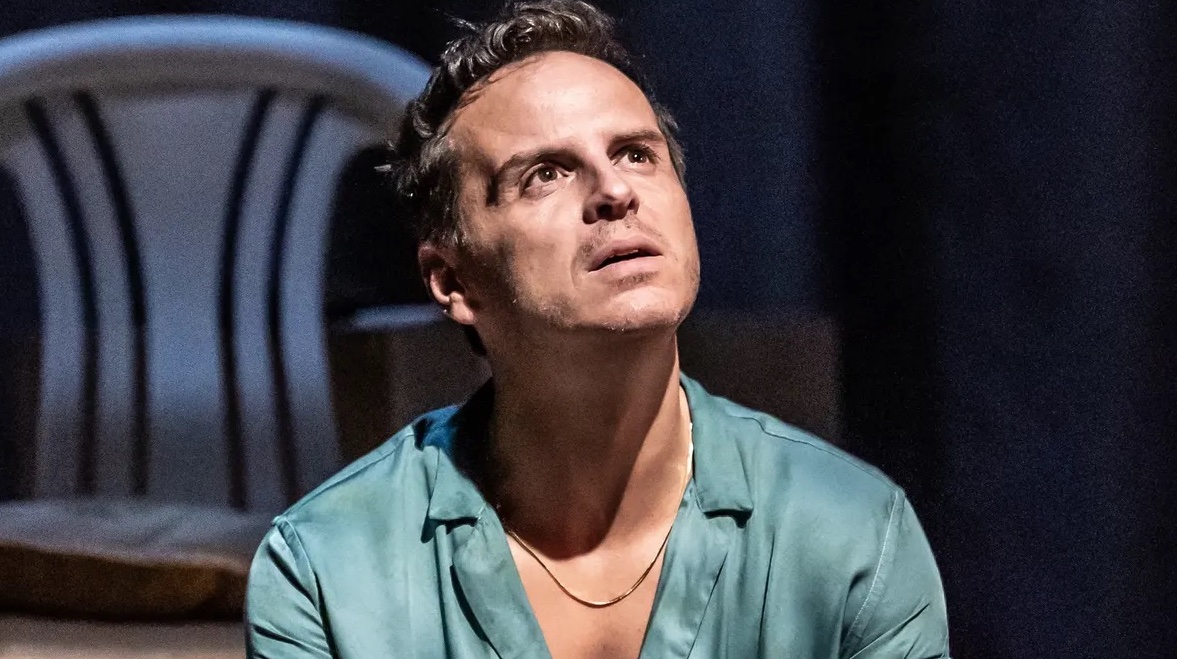
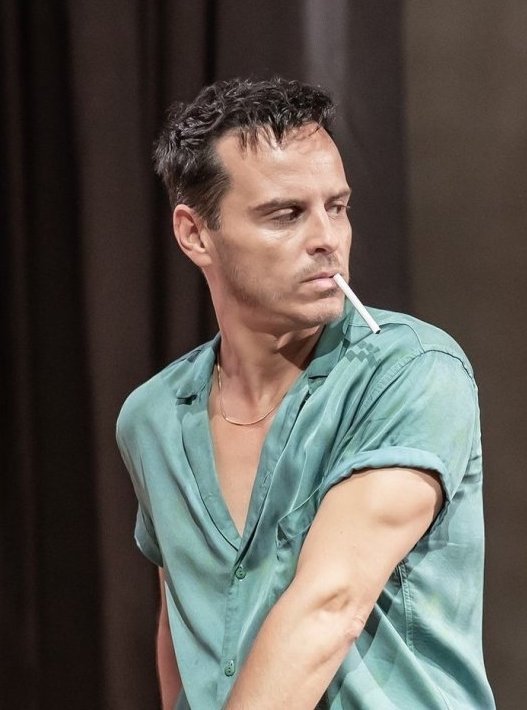
Simon Stephens’ brilliant adaptation of Anton Chekov’s Uncle Vanya features seven characters in a complex tale of a family’s interactions on a remote country estate. All of them are played – perhaps inhabited would be a more accurate word – by Scott. There’s no recourse to any costume changes and the set design amounts to little more than a series of chairs, a piano and a doorway. Scott slips effortlessly from one character to the next, using only slight modulations of voice and tiny mannerisms to tell me instantly who he is at any given moment. The effect is uncanny. The term tour de force is often used but I’ve rarely seen it so consummately earned.

Credit should also go to Stephens, whose script strips the story back to its basics (and slightly updates it) so that all the characters’ motivations are clear from the outset – and to director Sam Yates who keeps the whole enterprise beautifully understated, so that it flows from scene to scene like honey in a heatwave. But the lion’s share of the accolades must go to Scott, who is mesmerising in every role: pompous and self-aggrandising at Aleksandr Sebryakov, the retired professor still obsessed with working on his latest project; smooth and sensual as Aleksandr’s young wife Helena; and painfully self-conscious as his daughter Sofia, who has always been told that she’s ‘plain’.

He’s delightfully gossipy as Maria – the mother of the titular Ivan (Vanya), a hard working man who has selflessly devoted himself to supporting Aleksandr, whom he has idolised since childhood – and wonderfully tragic as Mikhail, the middle-aged country doctor who is desperately in love with Helena.

And finally, he is comically ingratiating as Ilya, an impoverished landowner, now dependent on the goodwill of the Sebryakov family. A delightful running joke has us (and the rest of the cast) forgetting that he’s there, observing everything that happens.

If this sounds hopelessly complicated on paper, fear not. The wonder of this National Theatre Live production is the way in which it glides like gossamer through the cuts and thrusts of a family drama, where even a scene where Scott is obliged to make love to himself unfolds like a dream. Throw in a rendition of Jacques Brel’s heartbreaking ballad If You Go Away and I’m completely sold, a convert to Scott’s evident talent.

Vanya – and Scott – are both extraordinary. If you get the opportunity to see this, I urge you to take it.

5 stars

Philip Caveney

Two Sisters

15/02/24

Royal Lyceum Theatre, Edinburgh

As the title suggests, there’s more than a nod to Chekhov in David Greig’s new play, Two Sisters, currently premiering at Edinburgh’s Royal Lyceum Theatre, where he’s also artistic director. And it’s not all about the gun…

That’s not to say that this is an adaptation; it’s not. The plot, structure and cast of characters are very different. And yet it is, despite all that, a cleverly updated version of the same idea, embracing the Russian’s major themes – suffering, love, longing, change – and distilling his bitter humour and nihilistic worldview into something immediately recognisable to a modern audience.

Emma (Jess Hardwick) is a corporate lawyer, married to a hotshot businessman with his own plane. She’s also pregnant and sees her impending motherhood as some kind of deadline: if she can’t pen a novel before the baby’s born, then it will be too late. With this in mind, she books herself a caravan at the holiday park she used to visit with her family as a child. A whole week to herself, reminiscing and writing. What could be more perfect?

But she’s reckoned without her flaky older sister, Amy (Shauna Macdonald), who’s always ricocheting from one crisis to another. This time, her long-suffering husband has caught her shagging the plumber, so she’s come to cry on Emma’s shoulder. 

And rekindle an old flame…

Directed by Wils Wilson, this is a slow-paced piece, reflecting the characters’ inertia. The chorus of teenagers embodies this listlessness too, at once pulsing with life and stymied by lethargy. They hang around the park, aloof and watchful. Nothing escapes their attention. It all matters too much, and yet it doesn’t matter at all.

Macdonald and Hardwick are a charismatic duo, the former’s sharp edges and barely-suppressed longing contrasting perfectly with the latter’s languid determination. Their relationship feels real and convincing. 

Lisbeth Burian’s wonderful set is like a brutal mirror, emphasising the grottiness of the seaside resort, with its peeling edges, dingy caravans and rusting climbing frame. Emma might be blind to the park’s fatal decline, indulging in nostalgia-fuelled fantasies of restoration, but we in the audience are all too aware that it is a lost cause. 

There are a few false notes. I find myself distracted by Lance (Erik Olsson)’s assertion that he’s only ever left Fife to visit Ibiza, when he clearly has a Swedish accent. I wonder too why Amy’s been sleeping in her car when she’s got a job in television; surely she can afford a hotel? These are minor points, but they snag, pulling me out of the drama. I also think that the fourth-wall-breaking teenage chorus could be given more to do; the play comes to life whenever they’re involved.

In true Chekhovian spirit, there is no easy take-home message here; the characters are not gifted with a happy ending, and the threads are not neatly tied. Instead we’re left with a sense of  melancholy. “Our life is not ended yet. We shall live! The music is so happy, so joyful, and it seems as though in a little while we shall know what we are living for, why we are suffering… If we only knew – if we only knew!”

4 stars

Susan Singfield

The Taming of the Shrew

09/02/24

Pleasance Theatre, Edinburgh

It’s hard to believe it’s five years since we saw EUSC’s last version of The Taming of the Shrew; it feels much more recent. Directed by Tilly Botsford, it was a marked success.

Any notion we have that it might be too soon for the student company to revisit this controversial play is soon dispelled when we realise how very different this interpretation is. Director Minna Gillett’s gender-swapped adaptation cleverly unearths the humour, reminding us that it was always intended to be a comedy, just like the fabulous 10 Things I Hate About You, which Gillett cites as inspiration.

Of course, the central relationship between ‘Petruchia’ (Maria Wollgast) and ‘Kit’ (Ted Ackery) is irredeemably toxic – she bullies and gaslights him into submission – but it doesn’t feel as problematic as the Petruchio/Kat pairing: Petruchia doesn’t have the weight of an entire patriarchal system behind her, and Kit isn’t institutionally broken. It’s still horrible on a personal level, less so on a political one.

Usually, the shrew is the lead role but here the tamer takes centre stage, and Wollgast shines as the suitor, oozing charisma as she struts and frets her hour upon the stage. Ted Ackery clearly relishes his turn as the brattish Kit, imbuing him with a surly teenage petulance and playing up the comic elements. Fraser Murray (as Tranio) has the house in stitches, while Anna Yarwood (as Grumia) and Juliet Gentle (as Biondella) both prove excellent clowns. Indeed, the whole company performs well; there is no weak link here.

The set, designed by Émilie Noël, is suitably fresh and contemporary, and impressively professional. In fact, everything about this show feels right. Gillett has got to the very heart of the piece, nimbly side-stepping or overturning all the problematic aspects in a simple, unfussy way.

This Shrew is a triumph.

4.6 stars

Susan Singfield
The House

03/02/24

Traverse Theatre, Edinburgh

Imagine if you will a Punch and Judy show, elevated to the very peak of its puppetry potential – where, in an incredibly complex set, a whole cast of brilliantly-sculpted characters caper and bicker with all the subtleties of human comedians – and you’ve pretty much got what Sofie Krog Teater’s The House is all about. Appearing at the Traverse Theatre as part of the Manipulate Festival, this has a sold-out crowd screeching with laughter as it rockets to an uproarious conclusion.

We are told first of how a house can speak of what has happened within its walls, and then we’re shown the titular abode, an old crematorium. It’s been owned for years by an old woman who now lies in a four-poster bed up in the top bedroom, rapidly approaching her demise. Her nephew, Henry (who bears an uncanny resemblance to Stan Laurel), and his wife, Cora ( a cigarette constantly jutting from her mouth), run the business on her behalf. Cora knows that there’s a will that names them as their great aunt’s successors and she’s gleefully counting the days to the big payoff. But at the last minute, a lawyer is summoned and an important change is made…

Cora is intent on keeping the house for herself – and only the old woman’s faithful dog stands between her and justice.

I know that puppeteers Sofie Krog and David Faraco are concealed within that miniature house somewhere, because I definitely saw them climb inside it at the beginning. And I know they must be operating everything that happens, but the illusion is so brilliantly engineered, I forget about them completely as they unleash one ingeniously conceived bout of slapstick after another.

The puppets themselves are wonderful little creations, so full of character and nuance that they almost come alive as they scamper from room to room, trying to outwit each other. Everything about this performance – the lighting, the music, the props – is exquisite and I love the piece’s grisly sense of humour, its celebration of the darkness of the human soul. Oh, and did I mention that the house can revolve, to show us an entirely different view of what’s happening within?

If you haven’t managed to catch Sofie Krog Teater on this visit, do keep an eye out for them in future. This unique show offers a touch of genius that will brighten the day of anyone lucky enough to see it.

5 stars

Philip Caveney

Protest

27/01/24

Traverse Theatre, Edinburgh

Hannah Lavery’s 2023 play, Protest, makes a brief but welcome return to Edinburgh as part of its new tour, with two performances at the Traverse this weekend. Having missed it at last year’s International Children’s Festival, we’re delighted to have the chance to catch up with this lively, engaging production from Fuel, Imaginate, Northern Stage and the National Theatre of Scotland.

Amy Jane Cook’s set is a brightly-coloured children’s playground, the natural habitat of the P7 girls whose story this is. The climbing frames and running track serve both to entertain and to constrain, opening up possibilities at the same time as imposing limitations.

Through three cleverly-interwoven monologues, we learn about the challenges faced by these very different characters. Alice (Kirsty MacLaren) is a live wire – and the best runner in her class, so she’s outraged when a boy gets chosen for the final leg of the inter-form relay. Jade (Harmony Rose-Bremner) has always been proud of her family history but her happiness is “dented” when she faces racist abuse for the first time; suddenly, she doesn’t feel so secure in her home town. Meanwhile Chloe (Amy Murphy), a quiet, introverted child, has the weight of the world on her shoulders. She’s desperate to save the planet, but how can she do it on her own? She hasn’t got any friends and she can’t even ask her brother to help her any more, because he’s gone all moody since their dad left home.

But is any of these girls prepared to accept what’s happening? No way. They’ve got their Grans on their side, and they’re ready to stand up. To raise their voices. To protest.

Under Natalie Ibu’s assured direction, this is a vibrant, kinetic piece of theatre, the girls’ unselfconscious physicality propelling the action. Rarely still, they’re bursting with energy and enthusiasm, besides themselves with the injustice of it all and delighted with their efforts to put things right. It’s tonally spot-on, embracing the naïve optimism of eleven-year-olds – and reminding us how this might just be what we need to change the world.

Splendidly acted, this is a delightful and inspiring play, and I am pleased to see that it has attracted a young audience today. Children aged 8+ should get a lot from it – and the adults accompanying them are in for a thought-provoking treat as well.

4.3 stars

Susan Singfield