Theatre

4PLAY: 4 New Plays from 4 Edinburgh Playwrights

05/12/2406/12/24

Traverse Theatre, Edinburgh

As Scotland’s new writing theatre, the Traverse is the natural home for the 4PLAY collective to showcase their work. Over four nights, four emerging Edinburgh playwrights see their stories brought to life on the iconic Trav 2 stage – and all are greeted with delight by enthusiastic audiences.

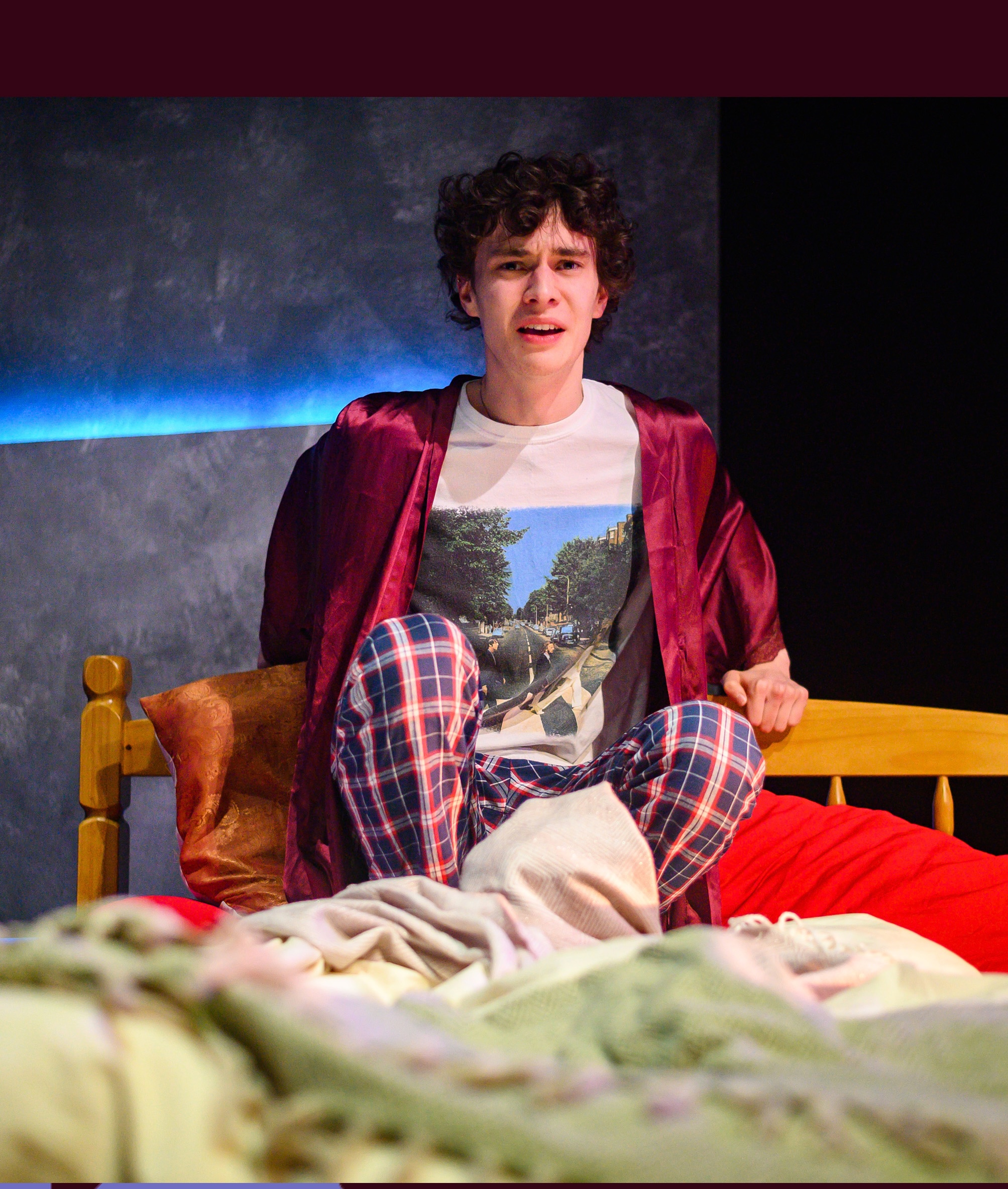
First up is Fuckers by Ruaraidh Murray. From its opening moments, it’s clear that this is the no-holds-barred production its title suggests. In blackout, we listen to a noisy orgasm and then, as the lights go up, we’re confronted with a naked couple, daring each other to try a new sex act. As beginnings go, this is undeniably memorable! The pair are Andrew (Liam Ballantyine), a Scot, and Lois (Olivia Caw), an American, two performers who fall in love at the Fringe. But their sexual attraction is soured by their vaulting ambition, which o’erleaps itself and dooms their relationship. Directed by Eleanor Felton – aided by Sasha Harrington as a very necessary intimacy coordinator – this is a high-octane piece with an engaging energy. However, although the nudity works at first, establishing the physical nature of the affair, the constant dressing and undressing disrupts the flow and slows down the action, which is a real shame for such a kinetic piece.

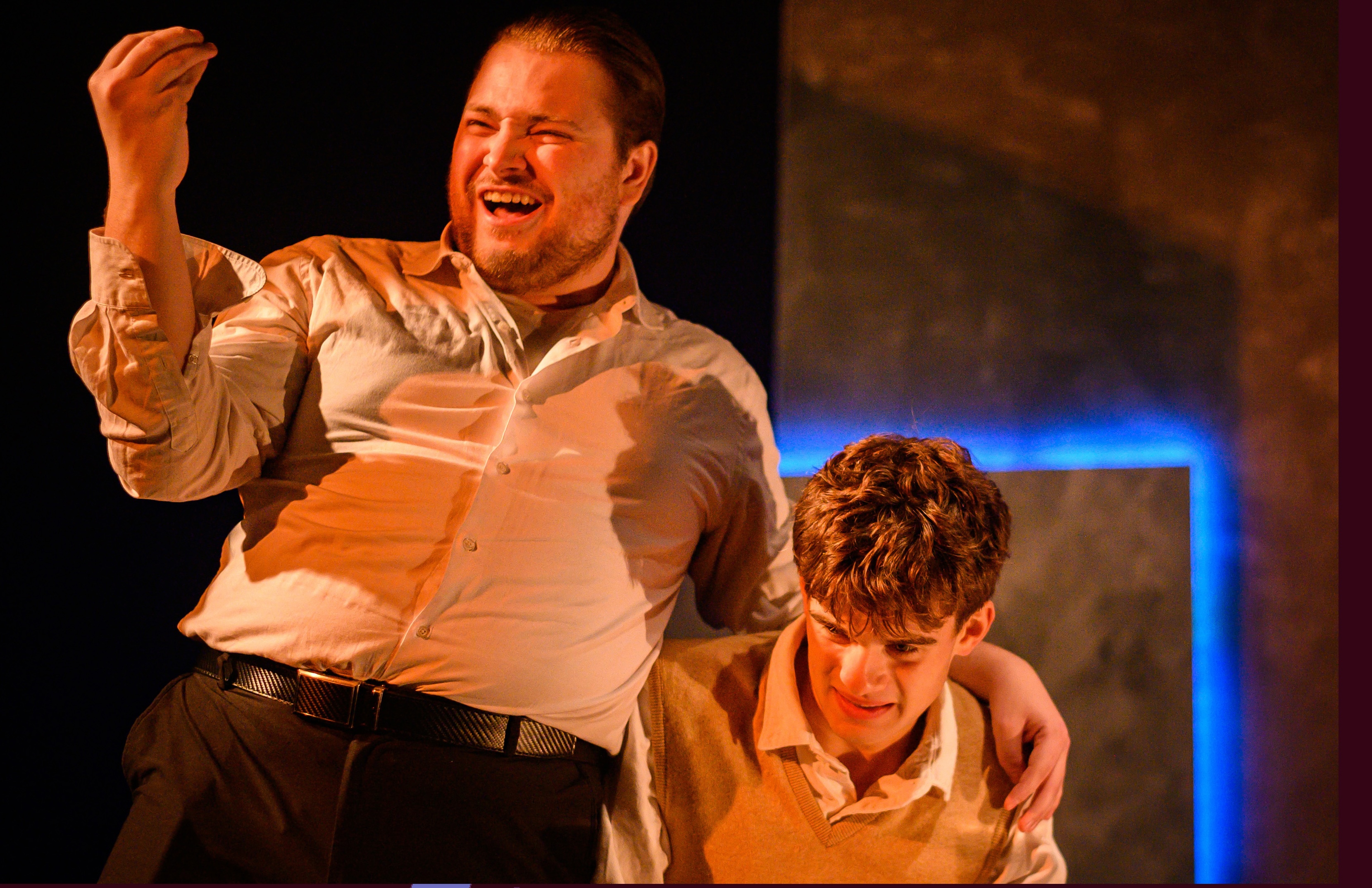
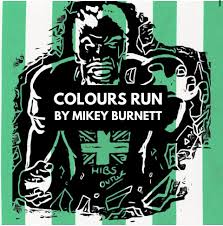
Colours Run, written by Mikey Burnett and directed by Grace Ava Baker, tells the story of self-professed Hibs-loving hardman, Pongo (Ruaraidh Murray), who may have finally taken his nihilistic antics a step too far. Fearing retribution after handing out one beating too many, he heads home, anticipating the knock at the door that could come at any moment. Pongo lives with his younger brother, Pete (Sean Langtree), who openly idolises his big bruv and does everything he’s told, which means that he rarely goes out into the real world. Both Murray and Langtree are utterly compelling in their respective roles, Langtree appealingly vulnerable, Murray cold and calculating. The section where the pair play Who Wants to Be a Millionaire is wildly funny – but in the play’s latter half, Burnett’s script takes a confident step into darker, more transgressive territory. The nail-biting conclusion (which seems to echo Of Mice and Men) is simply but brilliantly handled.

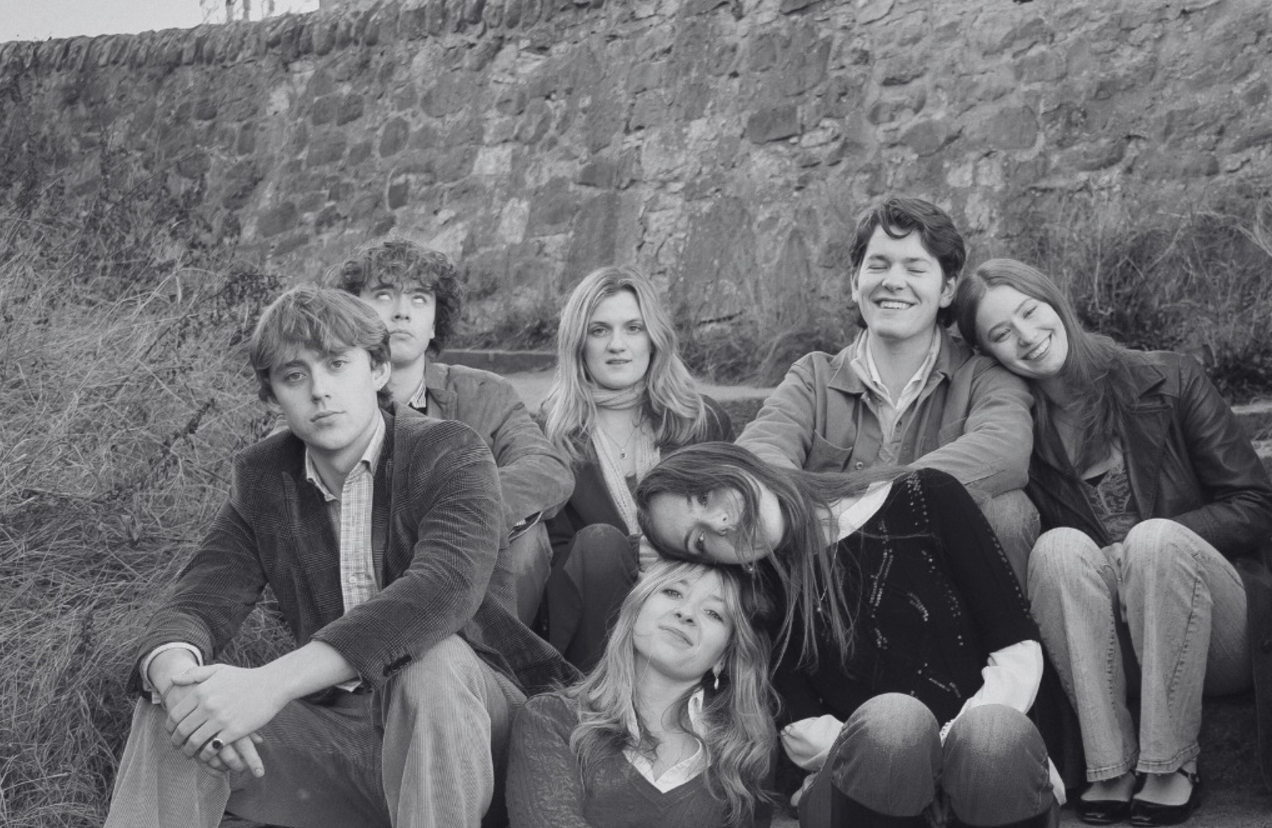
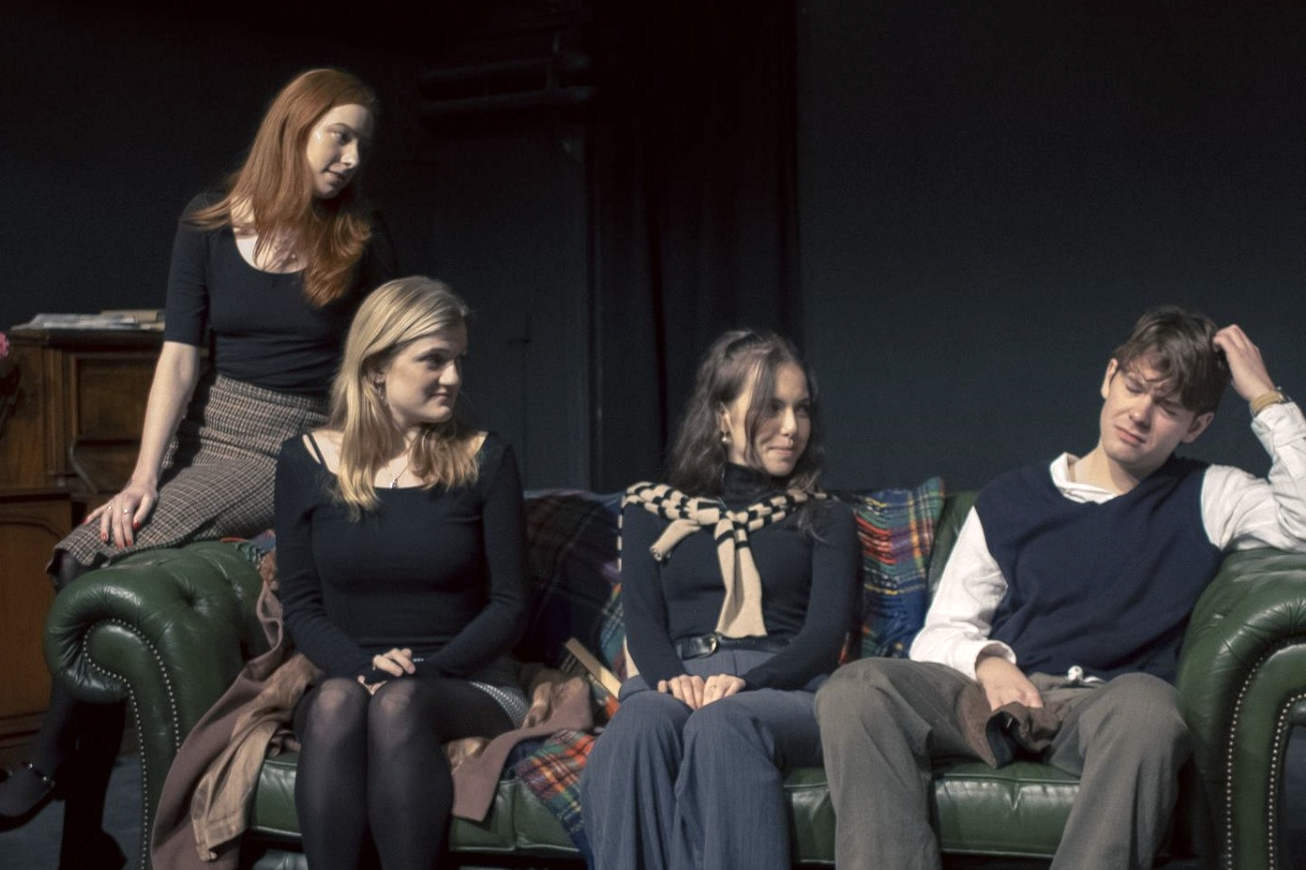
Butterflies and Benefits, written and directed by Andrea McKenzie, boasts a cast of five and looks at the lives of four young protagonists enjoying a hedonistic lifestyle in the Edinburgh of the 1990s. Maz (Amy Glass) is having a great time partying until she falls under the spell of Mik (Michael Francis), an opportunistic coke-fiend who cannot extricate himself from the grip of the drug. Pretty soon, Maz falls pregnant and her close friends Abs (Lex Joyce) and Dee (Isla Campbell) can only look on in dismay as Maz and Mik enter a spiral of destruction. The long trance/dance sequences scattered throughout the narrative occasionally impede the momentum, and a single scene featuring health worker, Doc (Laverne Edmonds), doesn’t do enough to earn the character’s place in the story. This is an all-too-familiar warning about the dangers of drug addiction and the importance of friendship.

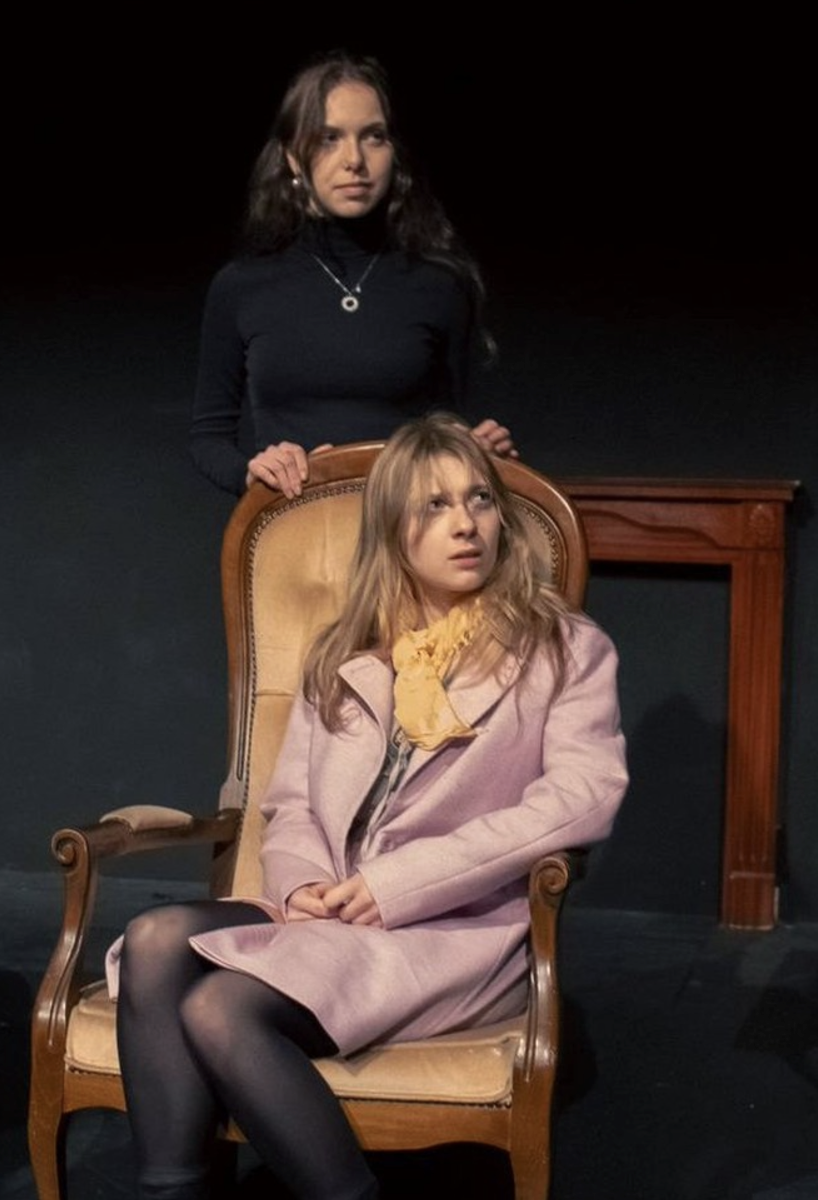
Last, but certainly not least, is Cheapo by Katy Nixon. A tight two-hander, this is our favourite of the four plays, deftly exploring the impact of a traumatic event on a pair of frightened teenagers. Something happened to Kyla (Heidi Steel) at a recent party, and she needs Andrew (Dayton Mungai) to help her sort it out. But he knows that her version of events is just a form of self-protection, and he’s not prepared to go along with the lies she’s telling herself. In a not-especially-subtle-but-nonetheless-effective metaphor, they play a game of chess, arguing about their possible moves while fighting to avoid checkmate. Under Gwen M Dolan’s direction, the tension is undercut by some beautifully-realised flights of fancy, as the duo imagine how their lives might have played out in alternate realities. Nixon’s script is spare and succinct, without a wasted word. She’s certainly one to watch.

What a treat it has been to see this quartet of plays, exploring stories from the edges of society. We look forward to seeing what these playwrights do next, and also to 2025’s 4PLAY.

4 stars

Susan Singfield & Philip Caveney
Treasure Island

29/11/24

Lyceum Theatre, Edinburgh

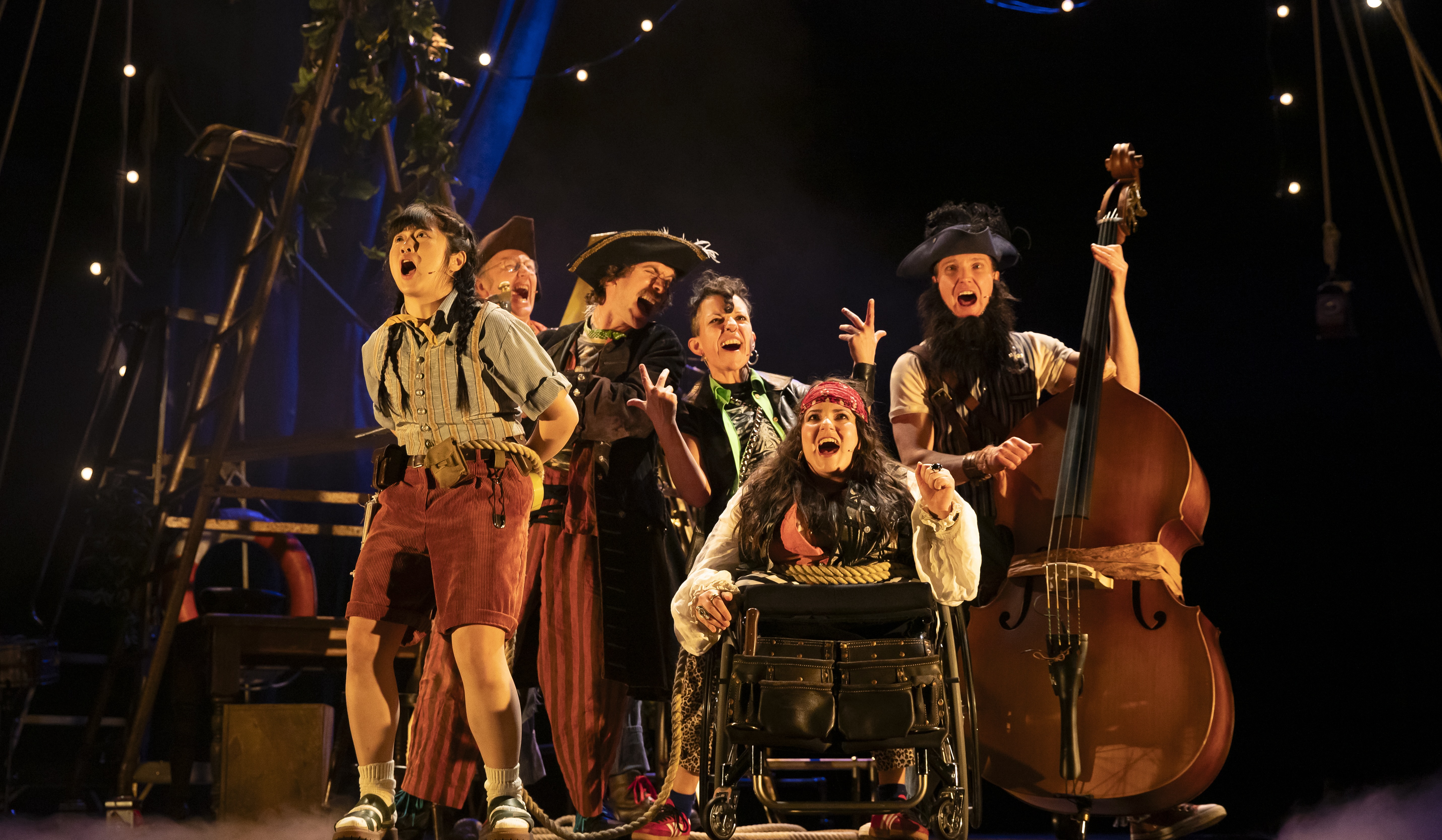
A satisfying Christmas show can be a decidedly tricky thing to pull off. If Robert Louis Stevenson’s Treasure Island initially seems an unlikely vehicle for such a venture, my qualms are short-lived. Duncan McLean’s sprightly adaptation of the classic tale is perfectly pitched for family entertainment. It sticks surprisingly close to the original plot, but throws in enough delightful twists to make me forget that I’ve heard this story so many times before.

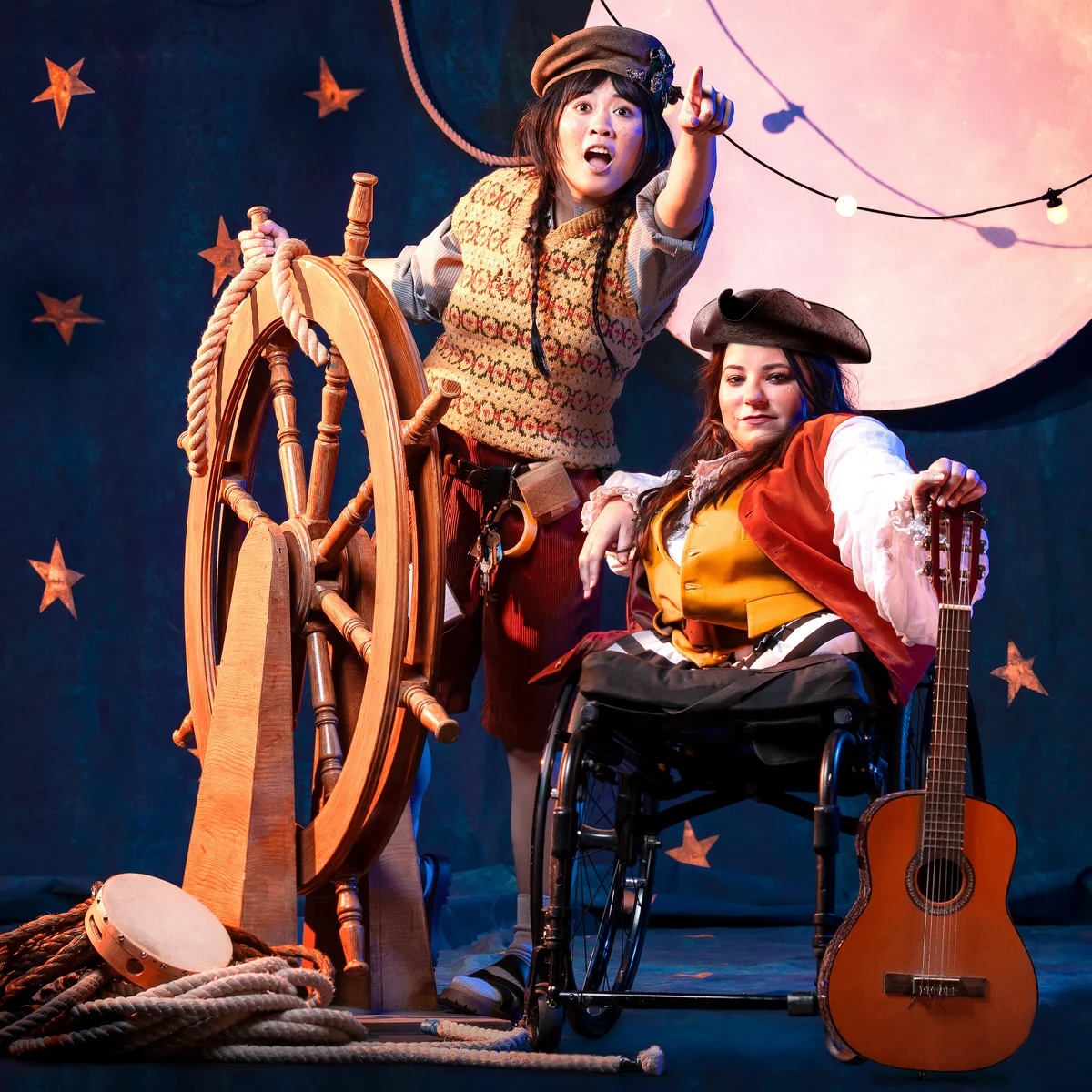
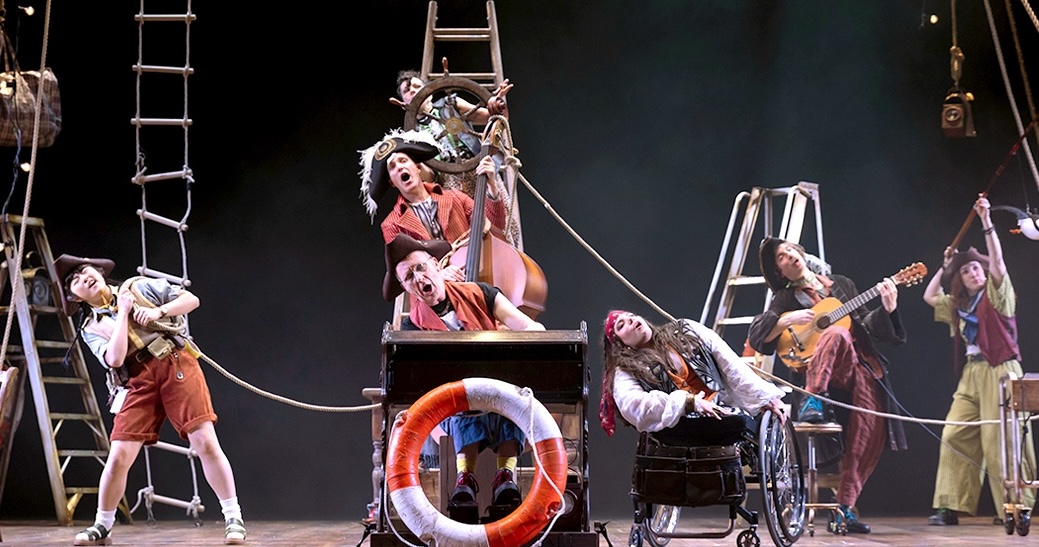
The tale begins in the Admiral Benbow Home for Reformed Pirates. It’s coming on Christmas and young Jim Hawkins (Jade Chan) is attempting to keep the unruly residents (a pack of former cut-throats) suitably entertained with a story. But it turns out that ex-buccaneers take a dim view of books about macrame and bird-spotting, so Jim reluctantly offers to recount the events that brought them all together in the first place. It helps that the pirates have plenty of talents they can bring to bear in the telling, not least the fact that they can all sing, dance and bash out tunes on a variety of musical instruments.

The story begins in time-honoured fashion with the arrival of Billy Bones (Itxaxo Moreno) at the Admiral Benbow and, of course, the delivery of the dreaded Black Spot – and it isn’t long before Jim has possession of the fabled treasure map. He enlists the help of The Laird of Leith (a delightfully silly performance by TJ Holmes), who owns a ship called The Hispaniola. The Laird engages the services of a pie-maker called Lean Jean Silver (Amy Conachan), who has a pet puffin (expertly operated by Dylan Read). But Lean Jean may not be as benign as she appears…

The main changes to the story are geographical. McLean is based in the Orkney Islands so, in this version of the story, the Hispaniola heads North, towards colder waters. Alex Berry’s effective set design manages to somehow encapsulate the look and feel of an old sailing ship using not much more than ropes, rigging and strategically-placed stepladders, while everyday objects are pressed into service to become boats and aquatic creatures. Director Wils Wilson expertly deploys the small cast, sending them racing and capering over every inch of the Lyceum’s spacious stage, assisted by piratical-looking stage hands. At times, it feels like there’s a much bigger crew at work.

There are sword fights and chases, thrills and spills aplenty, and Tim Dalling (who also plays an engaging Ben Gunn) has written a selection of charming songs to accompany the action, ranging from plaintive ballads to raunchy rock-and-roll.

If only he had a singalong Christmas ditty up his sleeve, something to send every audience homewards singing the chorus. Oh wait, it turns out he has.

Treasure Island is a must-see for the festive season – you’ll laugh, you’ll tremble, you’ll tap your feet to the jaunty jigs and reels – and even the youngest members of the family will find themselves riveted. So step right this way, ye scurvy dogs – and have a merry puffin Christmas!

4.6 stars

Philip Caveney
Men Don’t Talk

17/11/24

Scottish Storytelling Centre, Edinburgh

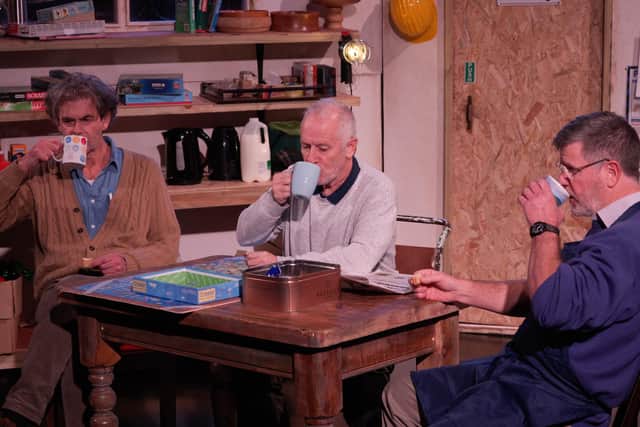
“You’ve not been here before, have you?” asks Ken (Dougal Lee), addressing a member of the audience who has ostensibly turned up at the Men’s Shed for the first time. “How do you take your tea?”

“Er, just milk,” says the man in Row 2.

The shed boasts two kettles, Ken tells us proudly, switching one on and putting tea bags into a couple of mugs. While he waits for the water to boil, he chats amiably about why he’s been coming to the Men’s Shed ever since he retired. He needs a bit of space away from his wife, he says. They’ve never been under each other’s feet before. The shed is a place where he can come to enjoy the company of other men. And build a bat box.

He pours water into the mugs, adds milk, squeezes the tea bags and pops them into a food waste bin. Then he hands the mug over to the man behind me. “There you go.”

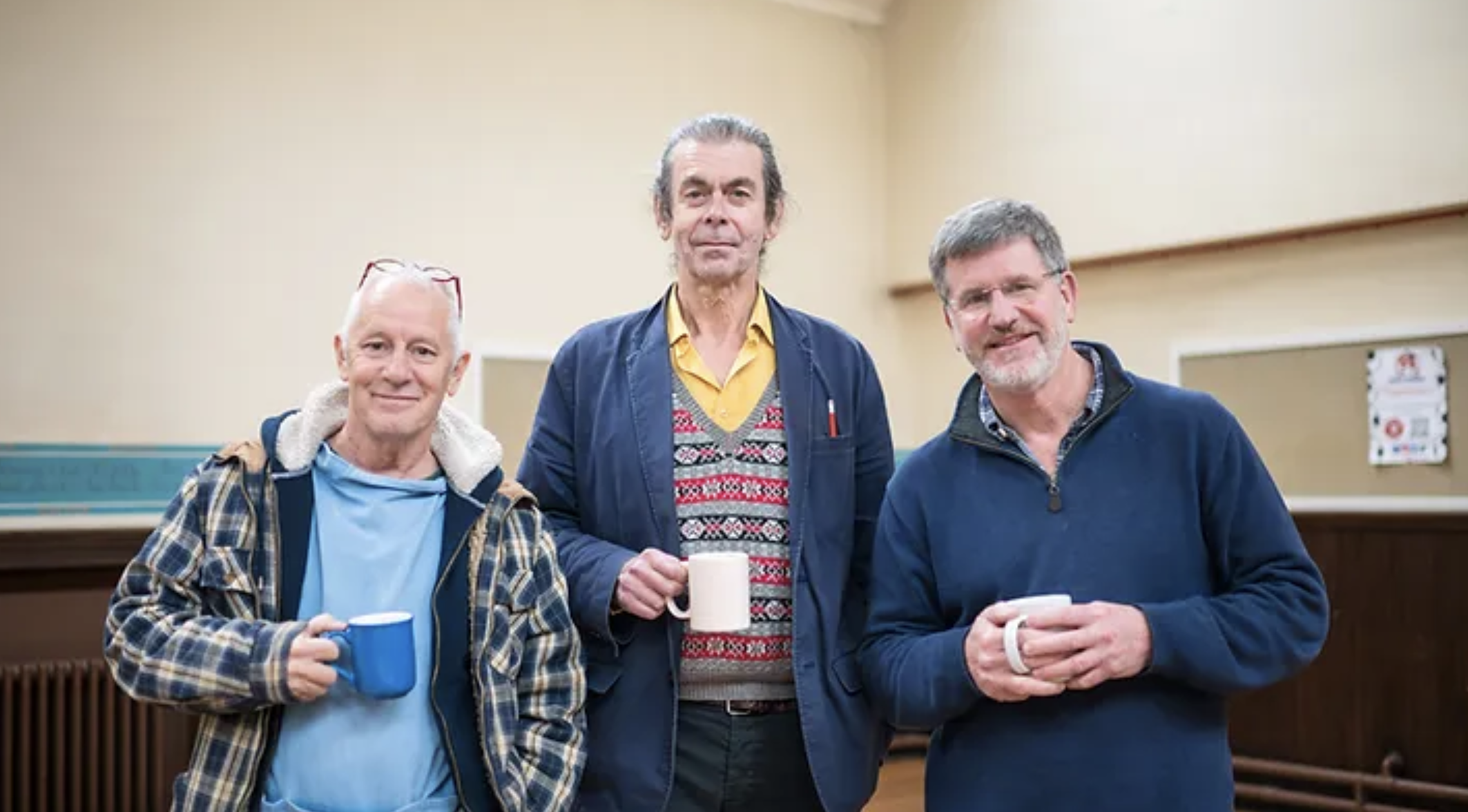
Writer-director Clare Prenton’s script has an endearingly gentle tone. The atmosphere in the shed is relaxed and understated; it’s easy to see why it appeals to the men who visit it. Based on extensive interviews with real-life Men’s Shed members, Prenton shines a light on the importance of creating spaces where men can talk.

Because they don’t, apparently. Unless they’re shoulder to shoulder, that is, rather than face to face. Men’s Sheds provide opportunities to learn new skills and there’s no pressure on the members to open up about their feelings. But, working alongside one another, helping out with art or craft or DIY projects, it turns out that men begin to feel comfortable sharing their personal stories. And that they are more than willing to put an arm around a pal’s shoulder and support them if they can.

This matters, because men’s mental health is in crisis. Suicide rates are worryingly high. The good news is that change is happening: we no longer tell our children that boys don’t cry; we don’t encourage repression or a stiff upper lip. And Men’s Sheds can play an pivotal part in this shift, especially for older guys.

As well as Ken, we also meet Jimmy (Billy Mack), an alcoholic who needs somewhere to be that isn’t the pub, and Tom (Greg Powrie), a widower who’s taken up woodwork since his wife’s demise. Through these characters and their meandering conversations – which cover PTSD, grief and custard creams -Prenton presents a convincing case, even when dealing with the controversial issue of whether women should be allowed to join. Ken’s the outlier who says no, while the others – including forty offstage members – have all voted yes. No one agrees with Ken but it’s to Prenton’s credit that his impassioned argument isn’t ridiculed, and he isn’t reduced to a clichéd misogynist for expressing this desire.

Today’s performance is BSL interpreted, and I’m impressed by how well the interpreter is incorporated into the action. He’s a named member of the Men’s Shed, greeted as Greg, drinking tea and eating biscuits with the rest of them, nodding hello and then translating what they say. It’s neatly done.

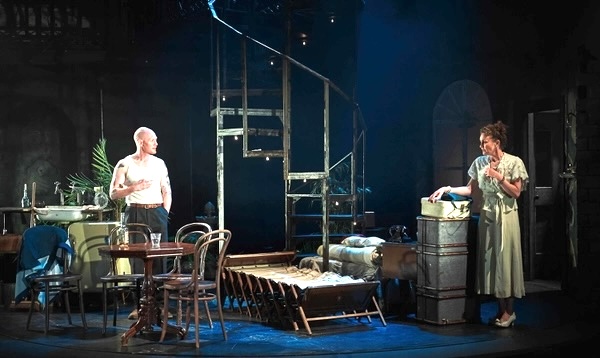
I also love the fact that the detailed, naturalistic set, designed by Frances Collier, has been built by Peebles & DIstrict Men’s Shed. This adds to the feeling that this is a truly inclusive piece, and that Prenton has treated her subject with the respect and gravitas it deserves. It’s a didactic play, but – although I definitely feel that I have learned something – I never feel lectured. And, if I were a man in need of a chat or a new project or simply somewhere convivial to be, I’d certainly be checking to see if there was a Men’s Shed in my locale.

4 stars

Susan SIngfield

Pygmalion

15/11/24

Bedlam Theatre, Edinburgh

We last saw Pygmalion in 2010 at Manchester’s Royal Exchange Theatre, with Cush Jumbo and Simon Robson as the central duo. Fourteen years later, we’re at Bedlam, keen to see what EUTC will do with George Bernard Shaw’s famous tale of transcending social boundaries. The promo material promises an interesting modernisation, as working-class biology student, Eliza, fresh from Belfast, comes into the orbit of English trust fund baby, Henry, at Edinburgh university.

Directors Shira David and Victoria Ge do a good job of illuminating the play’s humour, the acerbic dialogue and pratfalls eliciting belly laughs from the audience. However, the updated premise doesn’t quite work for me. In the original version, Eliza is in real need and Henry’s tuition offers her a way out of her poverty. What’s more, in 1913, when the play was set, accents were directly linked to opportunity: if Eliza Doolittle could learn to speak like a lady, a different world would open up to her. I find myself struggling to see what’s in it for this Eliza. It’s asking a lot of an audience to accept that a student at a prestigious university is “in the gutter” just because she has an Irish accent – she sounds the same as my GP and local pharmacist, as film stars and TV presenters. We need to see more of her struggle to believe in it. An evening job selling flowers isn’t such a hardship, after all. Nor is it clear why this young Henry Higgins – himself a student – wants to take on the project. This isn’t helped by the scene transitions: long blackouts cover minimal scenery changes, slowing down the action and pulling us out of Eliza and Henry’s world, making it harder for us to suspend our disbelief.

Costume-wise, the coding needs to be clearer. Eliza has an expensive-looking hair cut and brand new Dr Marten’s at the beginning but keeps on her ripped tights even when she’s been re-styled. It also comes as a shock at the end of the play when Eliza says that Henry is too old for her, because that hasn’t been signalled prior to this moment.

Despite these misgivings, it’s an enjoyable production. Connie Bailie has all the requisite charm for Eliza and Frankie Reid is suitably churlish as Henry. George Laing’s Pickering is perhaps the most convincingly-drawn character – disinterested and affable, outwardly pleasant but ultimately untouched by Eliza’s plight. Michael Healey provides comic relief as the hapless Freddy Eynsford-Hill, while Lisa Gillham, Aislinn McSharry and Mia Cresswell-Melstrøm work well as a trio of posh young women, supportive of Eliza and rolling their eyes at their pal Henry’s all-too-familiar nonsense.

In the end, this is a laudable idea that doesn’t quite come off – but I remain impressed by EUTC’s drive and ambition. After all, “What is life but a series of inspired follies?”

3 stars

Susan Singfield

The Tailor of Inverness

14/11/24

Traverse Theatre, Edinburgh

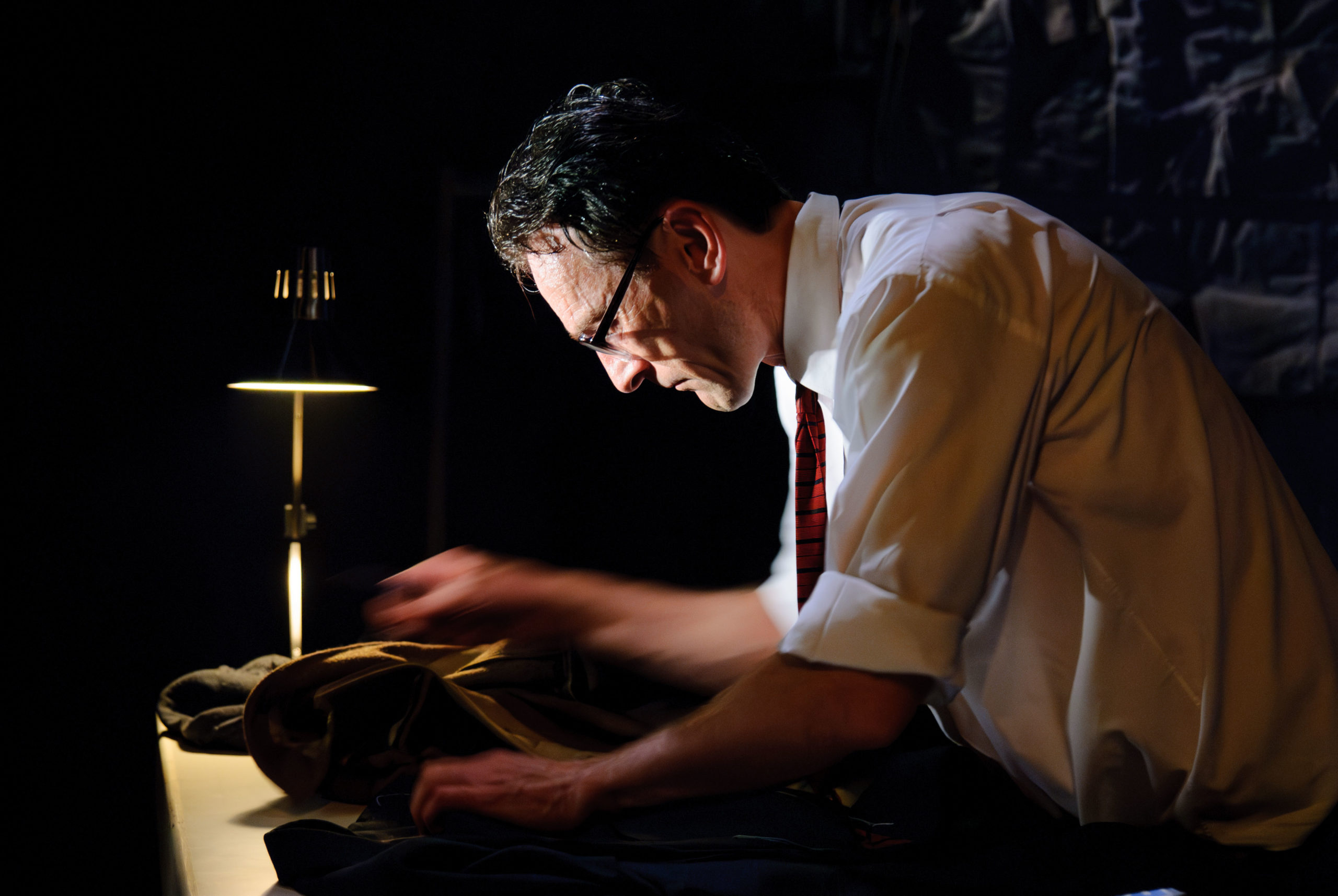
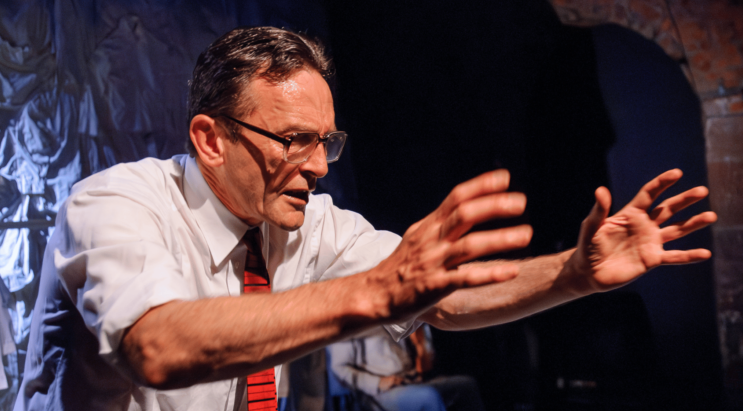
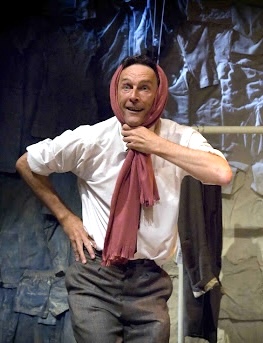
 Matthew Zajac’s remarkable monologue tells the true story of his father, Matteusz, born in Poland and destined to be inextricably caught up in the turbulent happenings of the Second World War, despatched first to fight for his home country and then, latterly, enlisted by both the German and the Russian armies. But when we first meet Matteusz, he’s telling his young son a popular folk tale about a boy and his father, pursued through the snow by a pack of wolves. Zajac speaks initially in Polish, the translated words projected onto a backdrop that is itself a collage of countless garments, plastered onto a wall. As Zajac talks, fiddle player Gavin Marwick provides an inventive accompaniment and the musician remains onstage throughout, his playing reflecting the varying moods.

Zajac soon switches to English, speaking in his father’s voice (with a delightful Polish/Scottish accent), telling us of his early days in Glasgow: how he first became a tailor and how he eventually ended up in the more tranquil environs of Inverness. It’s warm, amusing stuff, but it’s evident as he talks that there’s more – much more – that he is not ready to reveal right now. It’s only as the story progresses that the various threads are unravelled and the hard truths emerge. When Hitler’s forces invade Poland, Matteusz’s life is irrevocably disrupted and, in the desperate struggle to survive, this man’s ultimate loyalty can only be to himself.

Of course, real life has none of the convenience of fiction and sometimes Matteusz’s story is so complex, so labyrinthine, it’s hard for me to get a fix on exactly what’s happening. Maps are projected onto the backdrop to illustrate Matteusz’s travels during the years of conflict – from Poland to Russia, from Galicia to Africa. A series of different uniforms are pressed into service to depict his switching loyalties. Well, not loyalties exactly, but which particular army he is next forced to enlist in.

Zajac is an accomplished storyteller and he manages to hold a packed audience spellbound as, in the later sections of the narrative, he switches from being his father to being himself, as he sets out on a mission to unravel the parts of Matteusz’s life that have been kept hidden – and to track down the sibling that Matthew didn’t even know existed. 

It’s an extraordinary tale and it’s weirdly unsettling to hear Zajac talking about the butchery going on between Russians and Ukrainians back down the years, only to reflect how essentially nothing has changed. The Tailor of Inverness is by no means a perfect piece of theatre – I feel sure that solving the issues of those more bewildering sections is not beyond the efforts of a playwright – but perhaps the play’s continuing success points to the old adage of not fixing what isn’t broken. 

And there’s little doubting the exuberant applause which Zajac receives as he takes his final bow.

3.7 stars

Philip Caveney
The Brenda Line

13/11/24

Traverse Theatre, Edinburgh

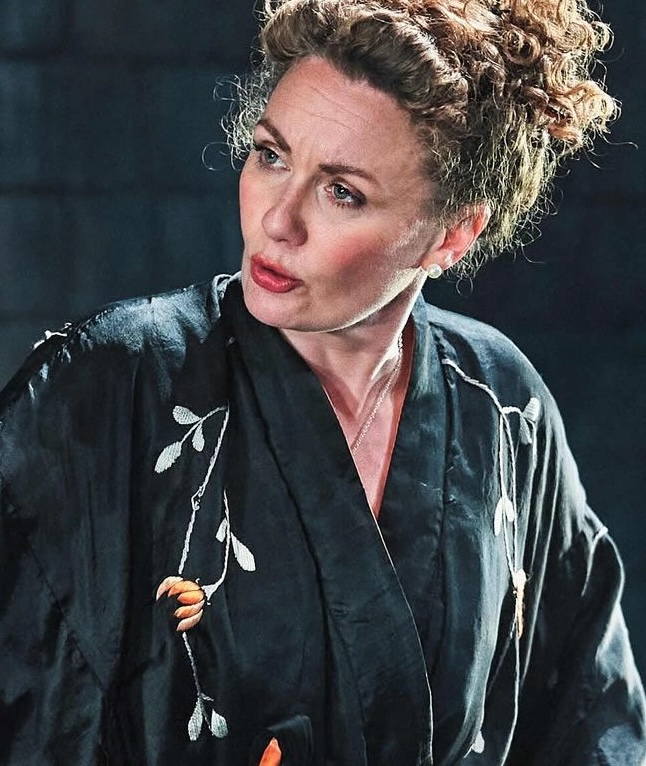
Harry Mould’s debut play is an exploration of a little-known aspect of the Samaritans’ work. Until today, I hadn’t even considered that there might be any need for ethical debate around the simple kindness of providing a ‘listening ear’, offering comfort to the desperate, company to the lonely, a glimmer of hope to the suicidal. But – through their own mother’s experiences – Mould has uncovered something weirdly problematic in the organisation’s past: the eponymous ‘Brendas’, designated volunteers, who (between 1958 and 1987) consented to hear out those men who called seeking sexual gratification, wanting someone to talk to while they masturbated. Anglican vicar Edward “Chad” Varah founded the Samaritans on the principle that it should be a non-judgemental organisation, turning no-one away. But of course, these particular callers pose a moral conundrum, rife with contention.

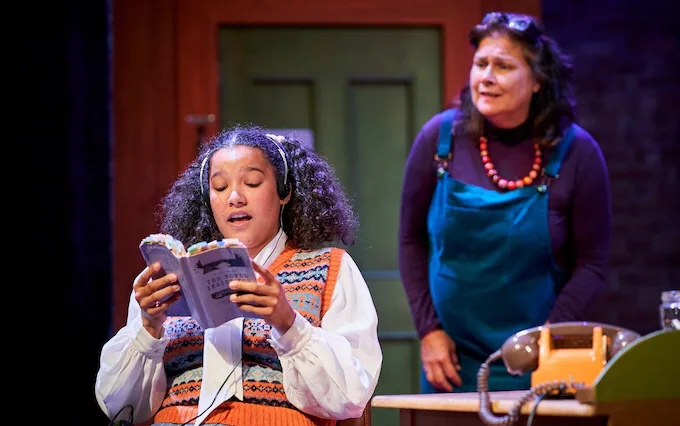
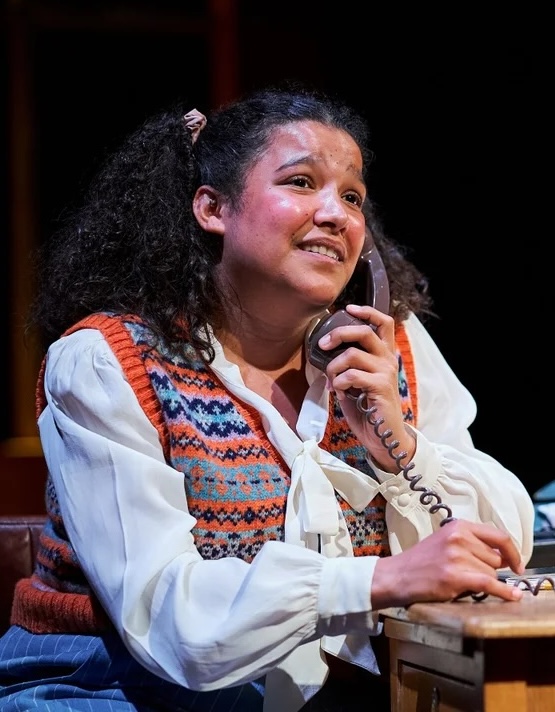
Mould positions the issue as a debate between two chalk-and-cheese volunteers. Anne (Fiona Bruce) is an old-hand with a pragmatic approach to the work she does. She’s warm but gruff, confident but self-effacing, and perfectly comfortable listening to her “befriendable regulars” talking about the knickers they imagine she’s wearing or telling her about their erections. Karen (Charlotte Grayson) is only eighteen, and she’s Anne’s polar opposite: an engaging, opinionated character whose lively charm belies her brittle reserve. She’s innocent, prudish and very defensive about her lack of life experience – and she certainly isn’t going to hold back from telling Anne exactly what she’s doing wrong. In response, Anne smiles, shrugs and offers to make tea.

It’s a winning formula and, directed by Ben Occhipinti, the actors infuse their characters with disarming likability. This makes sense; they’re good people, giving up their time to try to help others, spurred on by the urge to make a difference in a troubled world. Mould’s dialogue is very well-written, and I especially enjoy the allusions to the women’s backstories, rendering them convincingly real: Anne’s unrequited love for her former colleague, Gracie; Karen’s inability to make friends and her struggle to deal with the prejudice she encounters as a mixed-race woman.

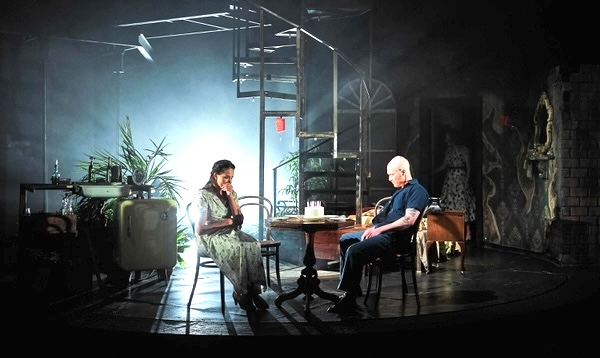
The detailed, naturalistic set, designed by Natalie Fern, clearly evokes that particular ilk of workplace claustrophobia, where everything outside seems oddly unreal and diminished, in this case heightened by the blacked out windows and emphatically locked door.

However, while Karen’s argument is well-defined, Mould seems on shakier ground with the older woman’s reasoning – we never hear a lucid explanation as to why Anne accepts her role as a Brenda. She has had many years to consider her position, so it seems logical that she would be able to put forward a compelling defence. Instead, she’s strangely reticent. Nonetheless, by the end, Karen seems to have accepted Anne’s line of thinking, which I find a little confusing. I don’t know what Anne has said to change Karen’s mind.

Despite the subject matter, the writing is also a little coy: although Karen refers to the inherent power dynamic between the male caller and the female listener, there’s no deeper consideration of what this means – of how Anne might derive a sense of power herself from these calls, for example, or even feel somehow that she deserves the degradation. What drives the men to call these anonymous women and is it okay for “Chad” – the leader – to ask his workers to comply? I can’t help feeling that there is more to be explored here.

Nonetheless, Mould has created two engaging, memorable protagonists and, through them, they have shed light on a fascinating piece of recent history.

And now it’s time for me to call my mum and tell her what I’ve learned tonight about her name…

3 stars

Susan Singfield

Angels in America: Part One – The Millennium Approaches

08/11/24

Bedlam Theatre, Edinburgh

New York playwright Tony Kushner’s 1991 “fantasia on national themes” is notoriously complex, but we’ve come to expect EUTC to tackle ambitious projects head-on, so we’re not surprised to learn that they’ve chosen this seminal play for their latest production. We’re excited to see what Gen Z will bring to this play about their Gen X predecessors, as they struggle to deal with a deadly epidemic, populist prejudice and rampant capitalism. Plus ça change, plus c’est la même chose… I’m guessing they can relate.

El Mair plays Prior Walter, a young man with a recent AIDS diagnosis and a distraught boyfriend. Louis (Leo Odgers) doesn’t want to deal with the realities of illness: the puke, the shit, the spectre of death. Prior is devastated by Louis’s abandonment, and retreats ever further into a fantasy world, ably assisted by the cocktail of drugs he has to take to manage his condition.

Meanwhile, Louis’s colleague, Joe (Will Grice), is facing demons of his own: his Mormon faith doesn’t allow him to acknowledge his homosexuality and remaining in the closet is killing him. But when he tries to come out to his mother, Hannah (Ava Vaccari, who excels throughout this production in a number of roles), she refuses to listen. “This conversation didn’t happen.” Of course, the secret also has a devastating impact on his wife, Harper (Natalia Campbell), who is addicted to Valium and, like Prior, plagued by visions.

As if Joe weren’t already dealing with enough pressure, his mentor, sleazy lawyer Roy Cohn (Hunter King) – the only real-life character in this fictional world – is determined to put Joe’s shiny good-boy persona to use, finding him a job in Washington DC, close to the seat of power. (“I make presidents,” he says, King’s already chilling performance heightened by the wider context, the combination of Trump’s re-election and Abi Abbasi’s recent film, The Apprentice, which details Cohn’s influence on the young Donald.)

Directed by Meri Suonenlahti and Andrew More, Angels in America is a triumph. The student cast are more than up to it, imbuing their characters with heart as well as humour; there’s some real intelligence at play here. The naturalistic performance style works well, emphasising the strangeness of the more fantastical sequences, such as Harper and Prior’s dream meeting. Campbell and Mair, both talented actors, are especially compelling in this scene, their fragility writ large as they stare at each other ‘through a glass darkly’. Louis Handley’s set design mirrors these contrasts, the prosaic heaviness of the bed and desk and sofa juxtaposed by dreamily-lit pastel backdrops, which move on casters between each scene, so that the landscape subtly shifts and dips, illuminating the characters’ growing disorientation. Full use is made of the theatre’s history as a former chapel too, the huge blacked-out window above the stage lit to suggest the angels’ presence.

It’s astounding what EUTC manage to achieve with their limited budget: the final scene in particular is a coup de théâtre (I won’t say any more; I won’t spoil the surprise). Suffice to say, it’s worth bundling up in your winter woollies and heading to Bedlam to catch this one. Three and a half hours fly by like the eponymous angel. I only wish they were doing Part Two: Perestroika as well.

4.8 stars

Susan Singfield

Bright Places

06/11/24

Traverse Theatre, Edinburgh

Rae Mainwaring’s Bright Places is advertised with the quirky tag-line, “a three-woman, one-woman show about Multiple Sclerosis, MS for short, not to be confused with M&S or S&M.” It’s an apt introduction to what proves to be a thoughtful yet riotous piece of theatre, exploring both the playwright’s personal experiences and the wider picture of societal responses to disability.

I love the writing. It’s to Mainwaring’s credit that she has managed to convey the brutal realities of her condition with such humour and heart. She neatly avoids any disabled-person-as-inspiration traps, presenting us instead with a young protagonist (‘Louise’) learning to navigate a landscape she never expected to inhabit, slowly adjusting to her new limitations while also finding ways to hold on to the fun-loving, lively person she’s always been. Mainwaring doesn’t shy away from the difficulties Louise faces, but they’re not all-encompassing. MS is part of Louise’s life; it isn’t the whole thing.

Produced by Carbon Theatre in association with Birmingham Rep, the style is boldly meta-theatrical, opening with the trio of accomplished actors (Lauren Foster, Aimee Berwick and Rebecca Holmes) explaining why they, three non-disabled women of different ages, races and physical appearances, are playing ‘Louise’ – who is both a fictional construction but also Rae, the playwright. It’s complex but it all makes perfect sense as they tell it, and addresses the question of authenticity head-on. Rae can’t perform this ‘one woman’ show herself: it’s literally the work of three people, and she’s got MS. It’d exhaust her.

Under Tessa Walker’s direction, Bright Places is a fast-paced and lively piece, all high-octane vitality, even as Louise’s energy flags. We’re led from nightclubs to hospitals, sickbeds to game shows, anger to acceptance. The costumes are bold, sequinned and vivid, as irrepressible as Louise. As Rae. And the soundtrack is bangin’.

A delight from start to finish, Bright Places is the most fun you’ll ever have learning about a chronic autoimmune disease. It’s got two more nights here in Edinburgh before continuing on its UK tour (next up, Exeter). Catch it if you can.

4.3 stars

Susan Singfield

No Love Songs

31/10/24

Traverse Theatre, Edinburgh

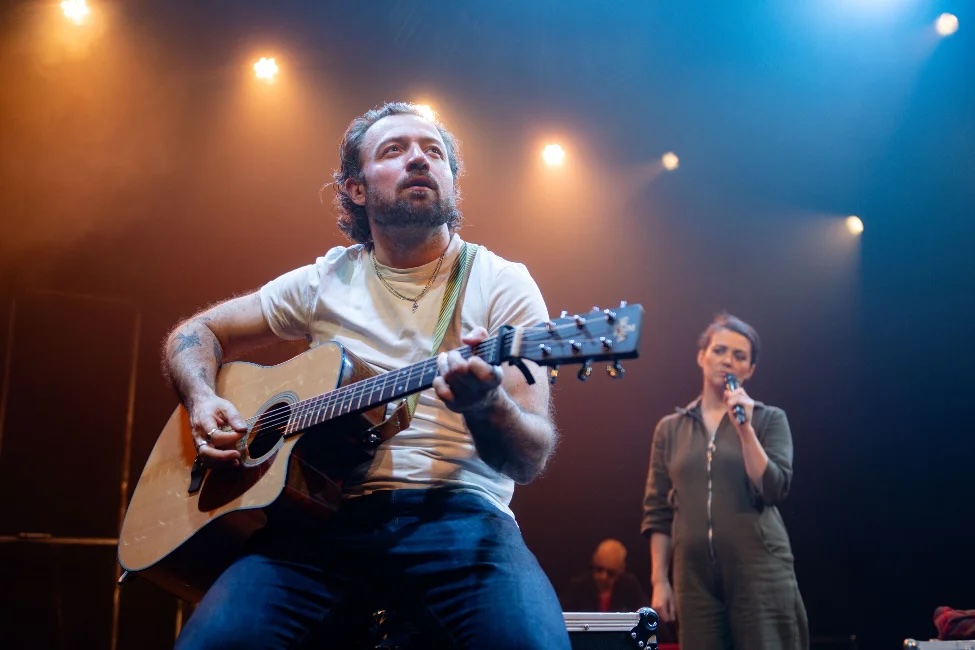
No Love Songs is a sweetly bleak piece of gig theatre, at once an unflinching exploration of post-natal depression and a testimony to the power of, well, love.

With music by The View’s frontman, Kyle Falconer – lifted from his solo album, No Love Songs for Laura – the book comes courtesy of the titular Laura (Wilde), his partner, and Johnny McKnight and is based on their real-life experiences.

Jessie (John McLarnon) is a musician. Sure, he’s mostly playing weddings and sweaty Dundee dive bars, but he has big dreams. Lana (Anna Russell-Martin), newly arrived in town to embark on a fashion course at the college, is full of creative ambition too. Together, they think, they can take on the world. When Lana becomes pregnant, they’re excited about their shared future.

But reality can be a bitch, and Lana – like one in five new mothers – struggles with post-natal depression. In a master-stroke of bad timing, Jessie is offered a big break: the chance to go on tour in America. Not only is this important for his musical career, it’s also an opportunity for him to earn some proper money for his family. If all goes well, they might even be able to buy a house.

“You have to go,” says Lana. It’s only a couple of months, right? She’ll be fine.

But Lana is not fine and a gulf opens up between the pair, as Jessie embraces his new life while Lana spirals into despair. What’s wrong with her? Why isn’t she ‘yummy’ like all the other mummies out there? She’s humiliated by her failure.

Jessie’s role as a musician means that the songs fit seamlessly into this play, with the conceit that we are witness to their creation: they are being written in response to the events as they unfurl. There’s a wide variety of styles, ranging from poppy to plaintive, and there’s some real emotional heft here too. I’m not much of a crier, but there are definitely tears in my eyes at moments tonight.

Directors Andrew Panton and Tashi Gore create a gentle, natural tone: there’s a relaxed ease between McLarnon and Russell-Martin that makes them convince as a couple. It could be argued that their obvious affection undermines the tension, suggesting from the start that everything is going to be okay. But I don’t mind that: the subject matter is so dark that it helps to know that there is a glimmer of light on the horizon.

As heart-warming as it is heart-wrenching, No Love Songs is – despite its title – a lyrical musing on the very notion of love.

4.4 stars

Susan Singfield

A Streetcar Named Desire

26/10/24

Lyceum Theatre, Edinburgh

It’s sometimes hard to believe that Tennessee Williams’ A Street Car Named Desire was first performed in 1947. This powerful mixture of one man’s toxic masculinity overpowering a woman’s fragile mental condition feels somehow utterly contemporary in its telling, and this perfectly-pitched adaptation by Pitlochry Festival Theatre is compelling in every scene.

Stella (Nalini Chetty) and Stanley Kowalski (Matthew Trevannion) live in a cramped, two-room apartment in the French Quarter of New Orleans. Stella is pregnant and she’s understandably taken aback when her older sister, high school teacher Blanche DuBois (Kirsty Stuart), arrives unexpectedly, lugging a massive trunk and lacking the necessary funds to pay for a hotel room. Blanche announces that, after the death of their mother, the family plantation, Belle Reve, has been ‘lost to creditors,’ and Blanche has nowhere else to turn.

Stanley is immediately suspicious about Blanche’s rambling explanation for her presence, particularly when he hears about the loss of the DuBois family property, which he has always believed he is owed a share of. When Blanche begins a tentative romance with his card-playing buddy, Mitch (Keith Macpherson), he determines to do a little snooping…

Stuart is superb in the role of Blanche, nailing the woman’s ever-shifting moods with consummate skill, one moment critical and demanding, the next coquettish and playful. Sound designer Pippa Murphy adds to her disturbed moods by overlaying scratchy soundscapes as Blanche is haunted by something terrible that happened in her youth. As the loathsome Stanley, Trevannion has a field day, strutting and bellowing around the cramped environment like a rooster, asserting his dominance over everyone who has the bad fortune to come into pecking distance. Chetty, meanwhile, navigates the turbulent waters between Blanche and Stanley, seemingly unable (and unwilling) to resist her husband’s rapacious demands. No matter how many times he attacks her, she always goes back for more.

Designer Emily James has chosen to situate the Kowalski apartment on a huge turntable and this is a masterstroke. As it rumbles around, presenting different views of both the interior and exterior of the apartment, it increasingly resembles a deranged carousel with the players caught in its unhealthy embrace, unable to get off the ride until it arrives at its ghastly destination. Director Elizabeth Newman eschews the victim-blaming that so often blights interpretations of this play and turns up the heat on the sweaty, malevolent scenario, so that the play’s final half makes intense, disturbing viewing. Those who are triggered by scenes of sexual violence should be warned that there are some challenging moments here, but for me, it’s like passing a car wreck on the motorway – I cannot tear my gaze away.

If you’re thinking, ‘Well, I’ve seen this play before,’ perhaps you should think again. This is a mesmerising slice of theatre, that feels as important now as it ever did.

5 stars

Philip Caveney