Theatre

4Play: 4 New Plays by 4 Scottish Playwrights

12/12/25

Traverse Theatre, Edinburgh

Last year, 4Play comprised four full plays, performed over two nights. This time around, it’s a truncated affair, with excerpts rather than entire scripts. The first two pieces are only ten minutes long, while the second pair are given longer to develop their themes, each with a running time of approximately twenty-five minutes.

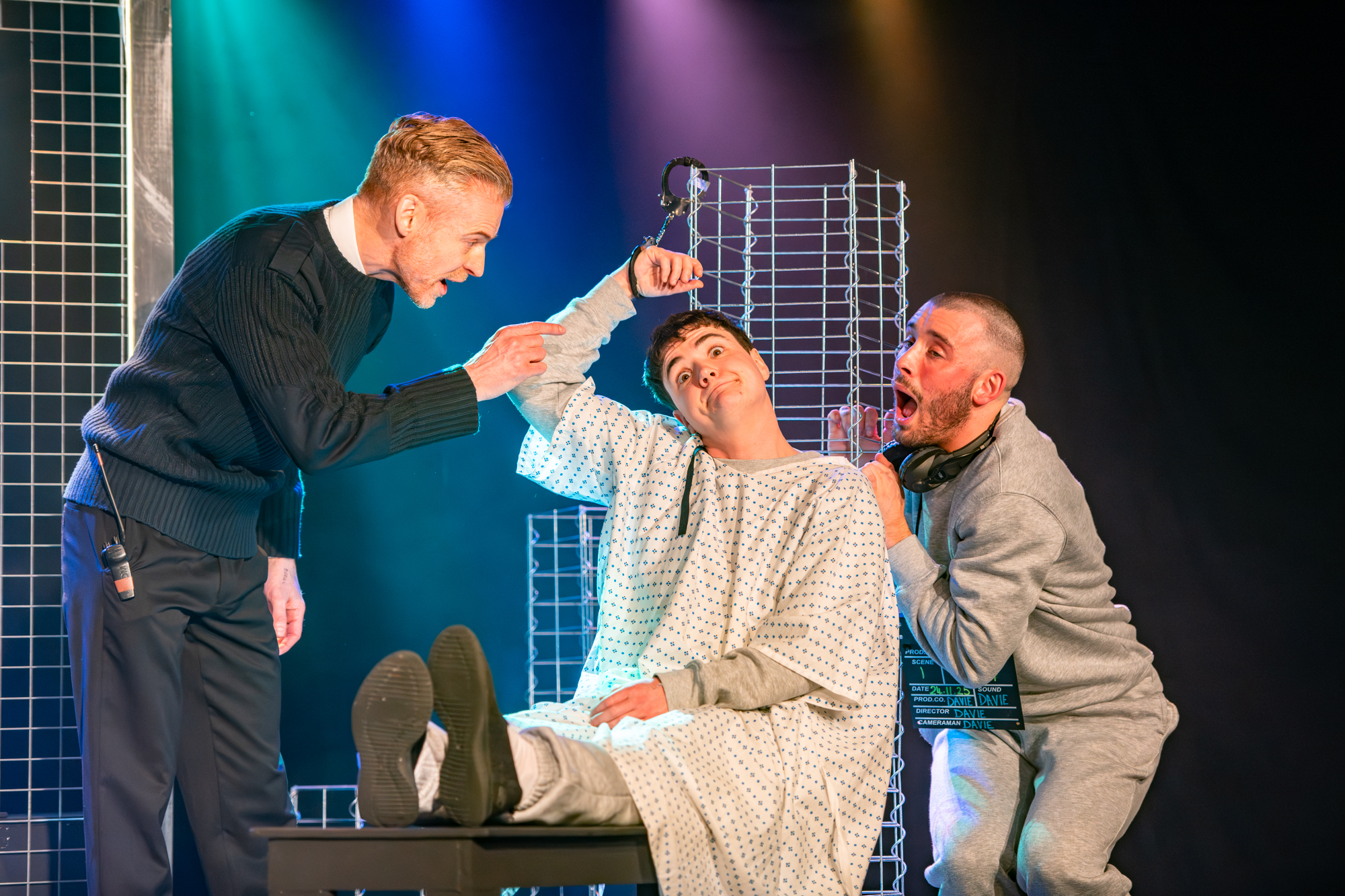
We open with a short extract from Ruaraidh Murray’s Chips, directed by Michael Nardone and Jake Sleet. Nothing to do with the California Highway Patrol, this is a fictionalised account of a true-life tale of… microchip theft. Apparently it was a thing in the 1990s. As if breaking, entering and taking apart computers wasn’t enough of a challenge, Kaz (Christie Russell-Brown) is heavily pregnant, and her partner-in-crime, Wan (Calum Manchip), isn’t exactly focused on the job…

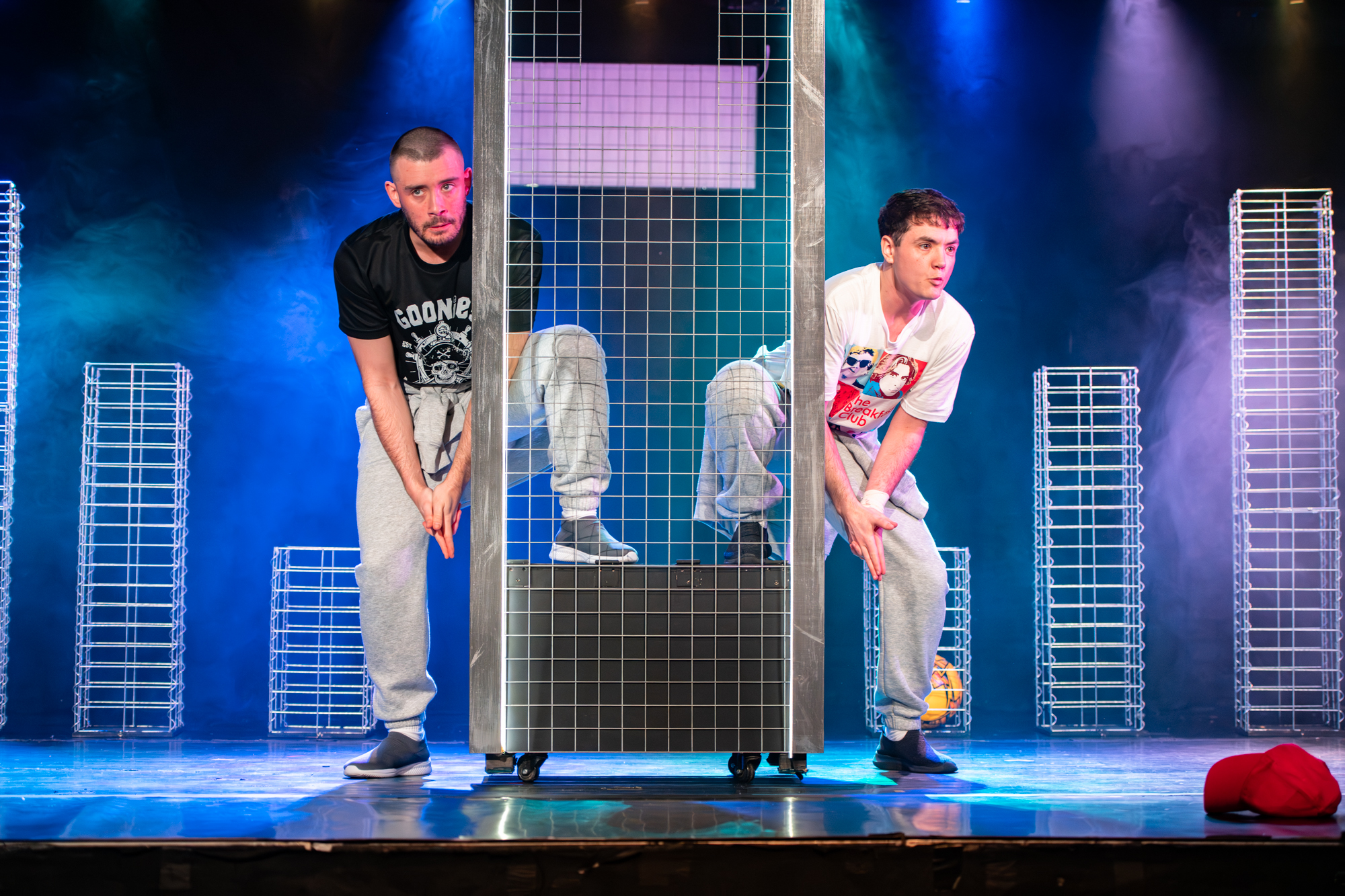
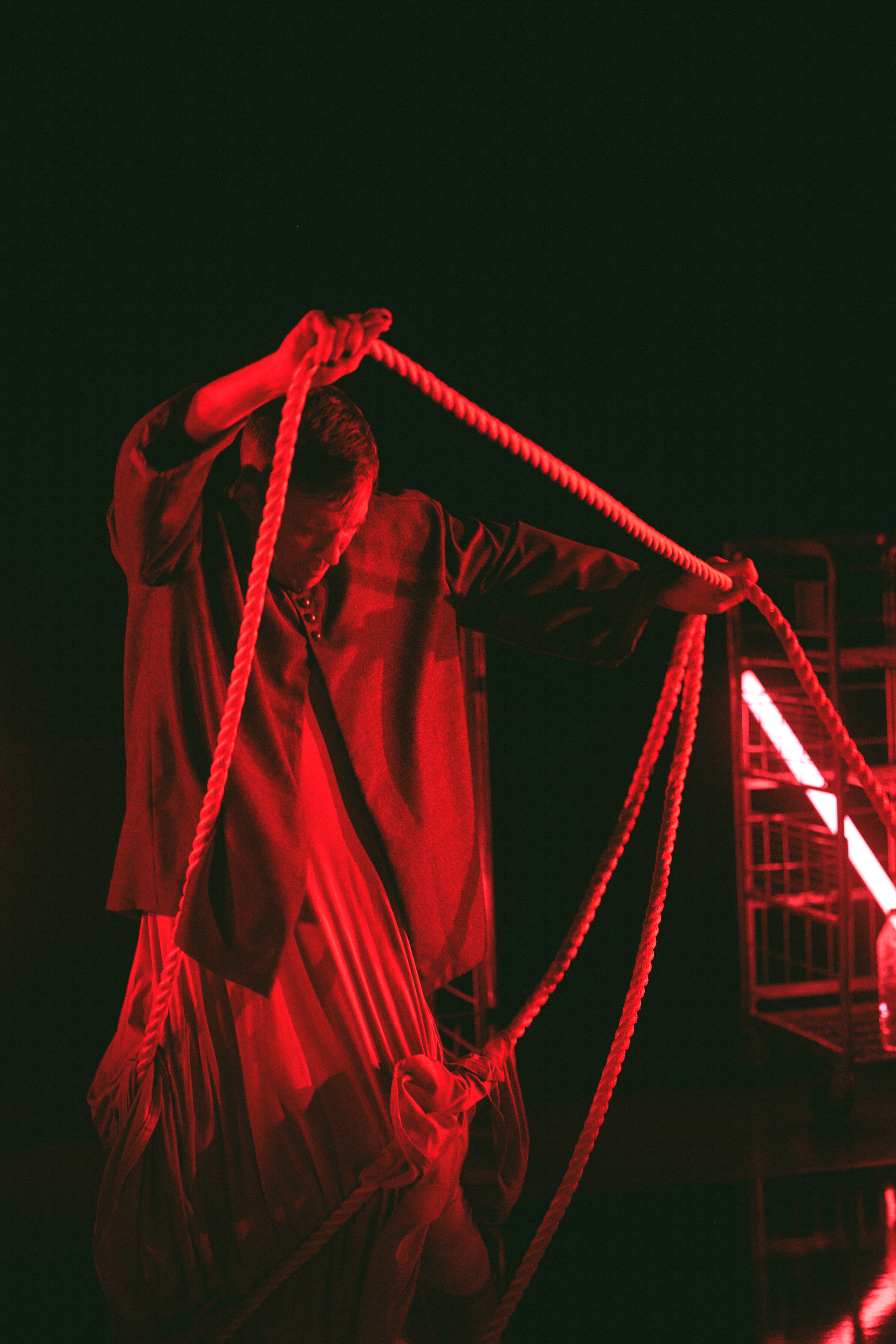
The second piece is Brace, written by Geraldine Lang and directed by Matthew Attwood. Paul (Jack Elvey) and Lewis (Kieran Lee-Hamilton) are apprentice scaffolders, struggling to learn their trade without any real guidance. In their business, mistakes have material consequences, and it’s the people at the bottom of the pile who have to pay. Although I appreciate that the physicality of the boys’ work is key to the piece, I can’t help feeling that it’s a mistake to spend so much time constructing the scaffolding; I’d prefer to hear more dialogue and delve further into the plot.

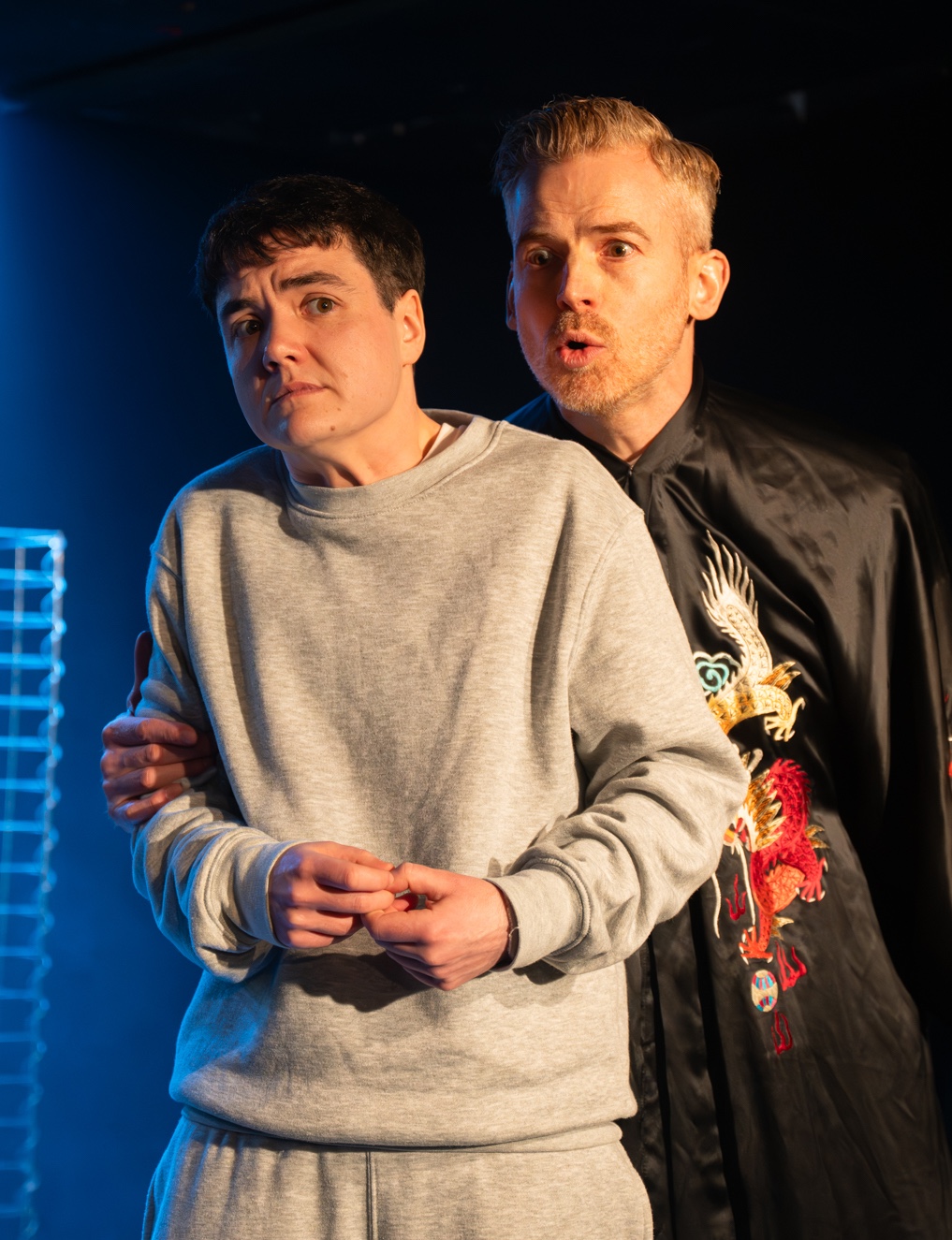
After the interval, it’s Sunday Palms, which is by far our favourite of tonight’s plays. From the opening soundscape – an oddly unsettling aural representation of a man returning home from work to his empty flat – to the awkward dialogue that follows the unexpected appearance of a childhood friend, Sean Langtree’s script is utterly compelling. Directed by Grace Ava Barker, the piece is immediately intriguing, and I’m fascinated to know where the story leads. Why is Brian (Daniel Campbell) so alarmed by Nathan (Langtree)’s presence? Whose victory does the title presage? Langtree’s Nathan is perfectly observed – just that little bit too needy, too edgy – while Campbell nails Brian’s discomfort, his attempts to hold to societal norms in the face of Nathan’s peculiar demands.

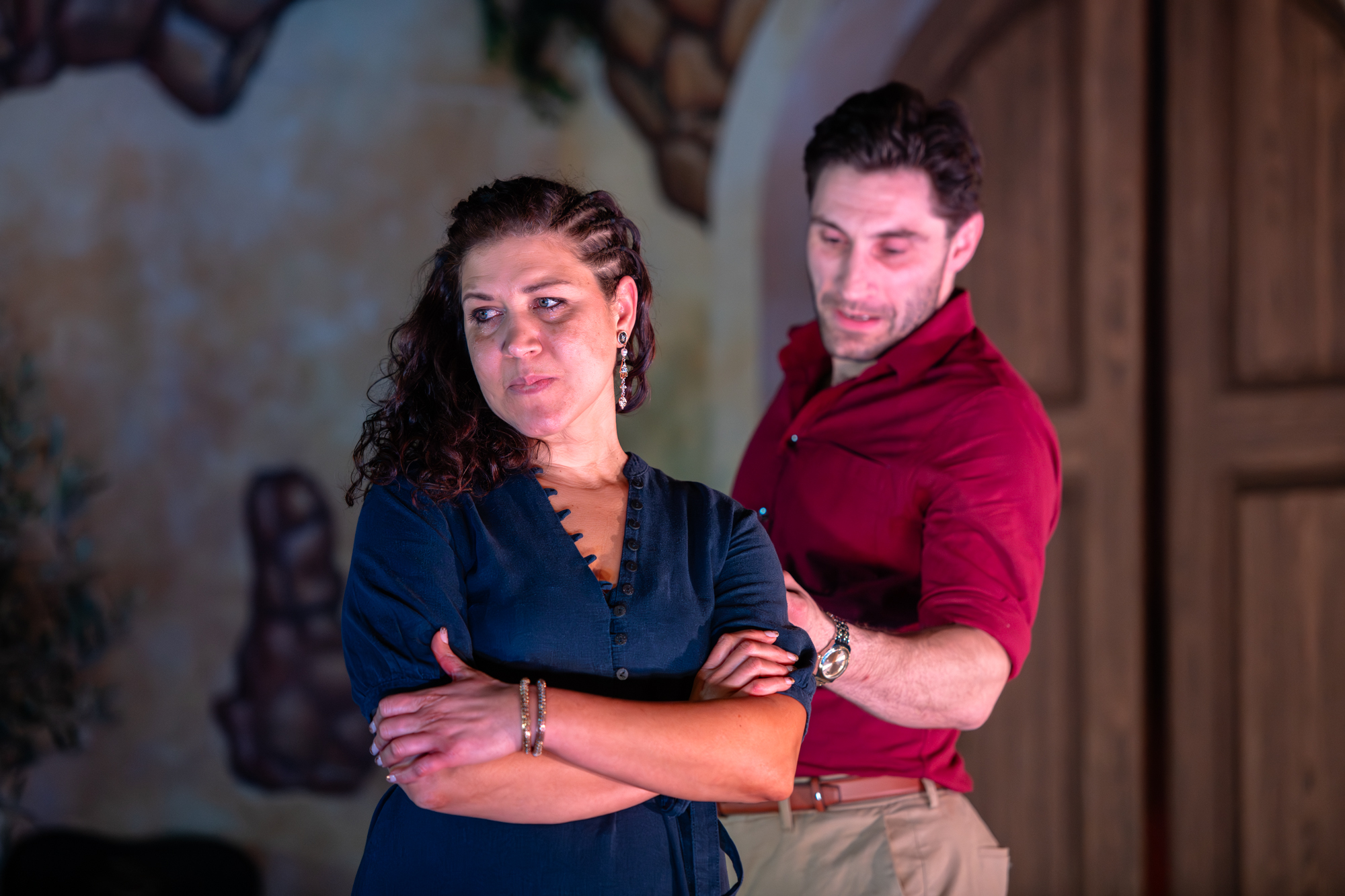
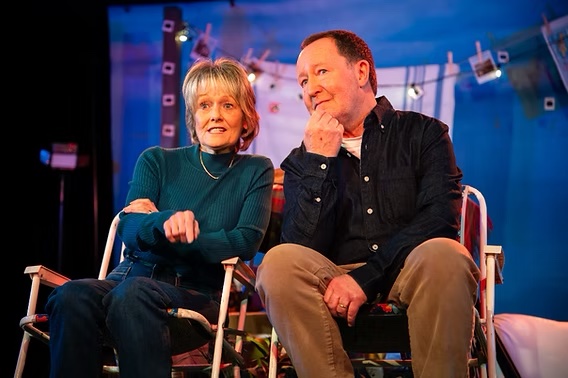
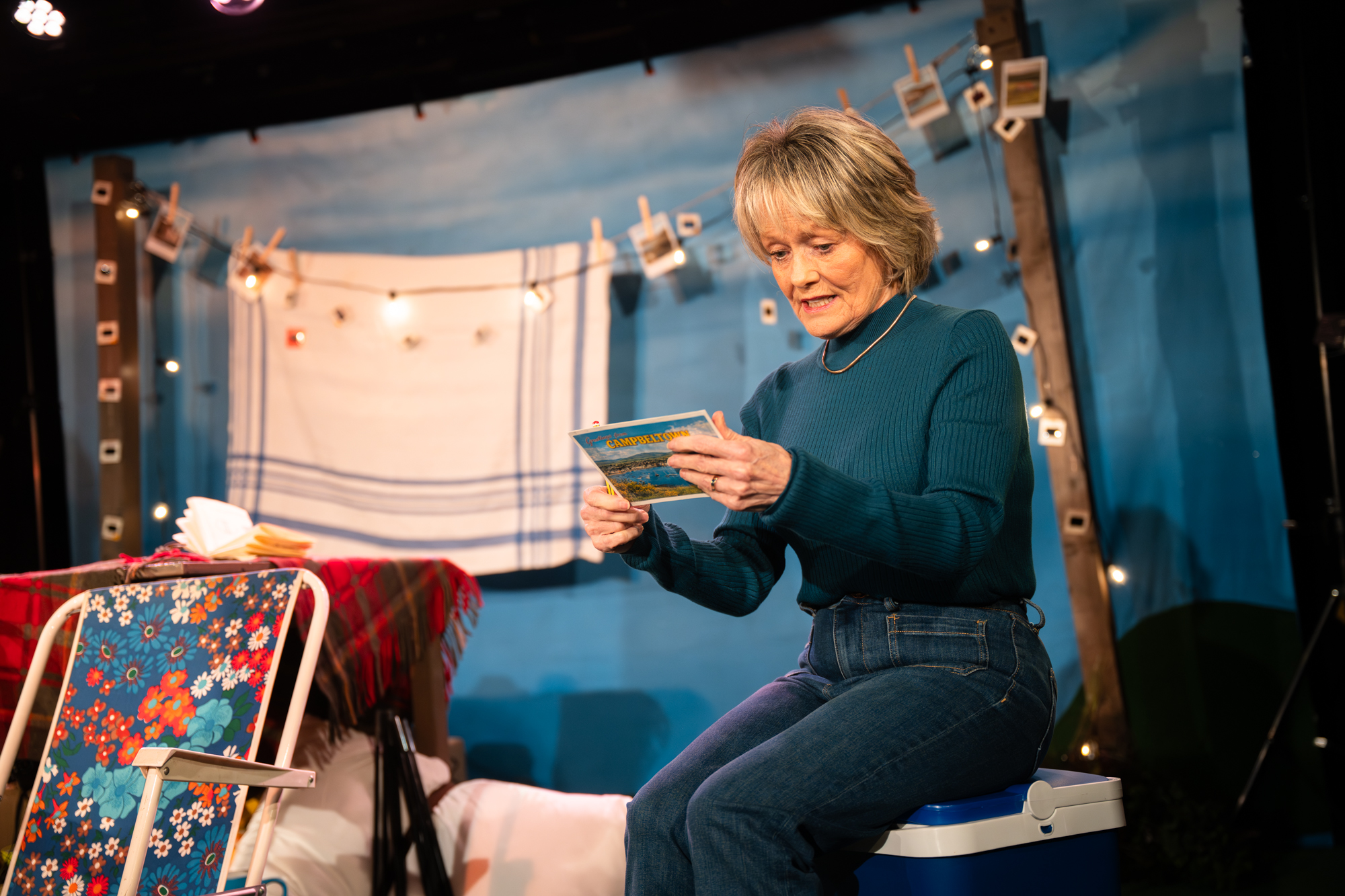
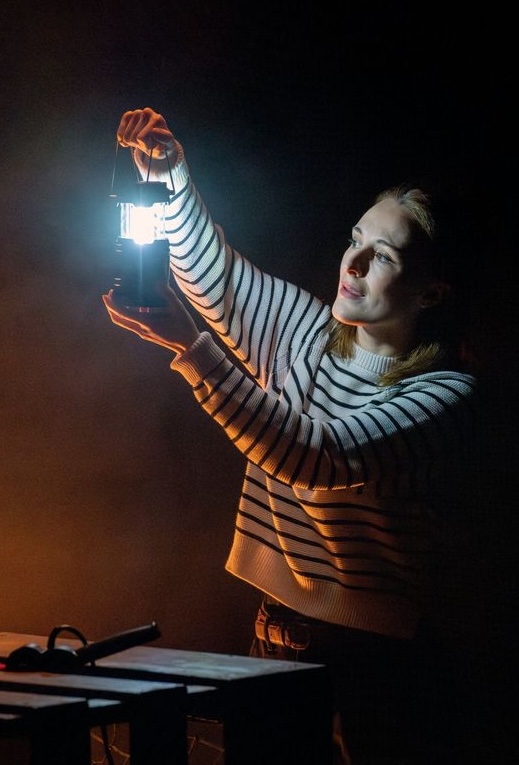
Last up, it’s Hunt by Andrea McKenzie, directed by Gwen M Dolan. We’re in the near future, and AI has taken over the cities. Mags (Deborah Whyte) and Joel (McKenzie) are yearning for a simpler life: to step away from their computers and connect with nature. The trouble is, they’re more familiar with tech than they are with tents, neither has remembered to pack the kettle – and how exactly do you light a fire? What’s more, Joel soon discovers that Mags hasn’t been entirely honest with her, and there’s more to this trip than she’s been told…

Reductions in length notwithstanding, 4Play – and other schemes like it – are vital to ensuring that new voices are heard in theatre. 4Play has had considerable success, introducing Katy Nixon’s Cheapo and Mikey Burnett’s Colours Run, which have both spread their wings and flown to critical acclaim. As Scotland’s new writing theatre, it makes perfect sense for the Traverse to support the event, and we’re delighted to have this opportunity to see emerging playwrights develop their skills.

3.2 stars

Susan Singfield

The Fifth Step: NT Live

01/12/25

Dominion Cinema, Edinburgh

As if NT Live performances weren’t enough of a treat, we’ve recently ramped up the indulgence levels by choosing to watch them at Edinburgh’s most bougie cinema, the Dominion. At 3pm this afternoon, we zip up our raincoats and venture out into the December drizzle, ready for the half-hour walk that will take us to our huge, reclining seats.

The Fifth Step is a compact, one-act play by Jack Ireland, and its ninety-minute running time is perfectly judged. This is a tight and concentrated piece, where small impulses are magnified, vague doubts forensically explored. The in-the-round set, designed by Milla Clark, is almost brutalist, comprising a stark square with raised, cushioned sides, reminiscent of a boxing ring or a trampoline: a taut jump mat, ready to absorb the characters’ anger, or give them the push they need to set themselves free.

We’re in the world of AA, where acceptance meets strict protocols and kindness sometimes seems harsh. Jack Lowden plays Luka, a twenty-something alcoholic, scared that he’s turning into his dad, and desperate to avoid this destiny. Nervy and uncertain, he isn’t sure that he can do it, not when sobriety leaves a booze-shaped void he fills with loneliness and self-loathing. Hovering in the room after a meeting, he gets chatting to James (Martin Freeman), who has been on the wagon for more than twenty-five years. The older man knows exactly what Luka is going through, and offers to become his sponsor. From hereon in, we watch as their relationship develops – and as they both continue to battle against their respective addictions.

Ireland’s script is darkly funny, and director Finn Den Hertog maximises its comic potential, without ever belittling the men’s experiences. Not much happens, and yet all of human life is here: our frailty, our fabulousness; our bravado, our beauty; our destructiveness and our shared desperation. Luka begins by looking for easy answers: if he does whatever his sponsor says, then surely he’ll find happiness. But James has his own demons to grapple with and he knows that life is far more complex than that. You just have to keep on being honest, keep facing up to your own failings – and keep supporting one another along the way…

Unsurprisingly, Lowden and Freeman deliver faultless performances. They’re perfectly cast, Freeman’s wry stillness the ideal foil for Lowden’s twitchy, pent-up energy. A fascinating insight into not just addiction but also notions of authority and responsibility, this is definitely one to watch if it’s showing at a cinema near you.

4 stars

Susan Singfield

Cinderella: A Fairytale

29/11/25

Royal Lyceum Theatre, Edinburgh

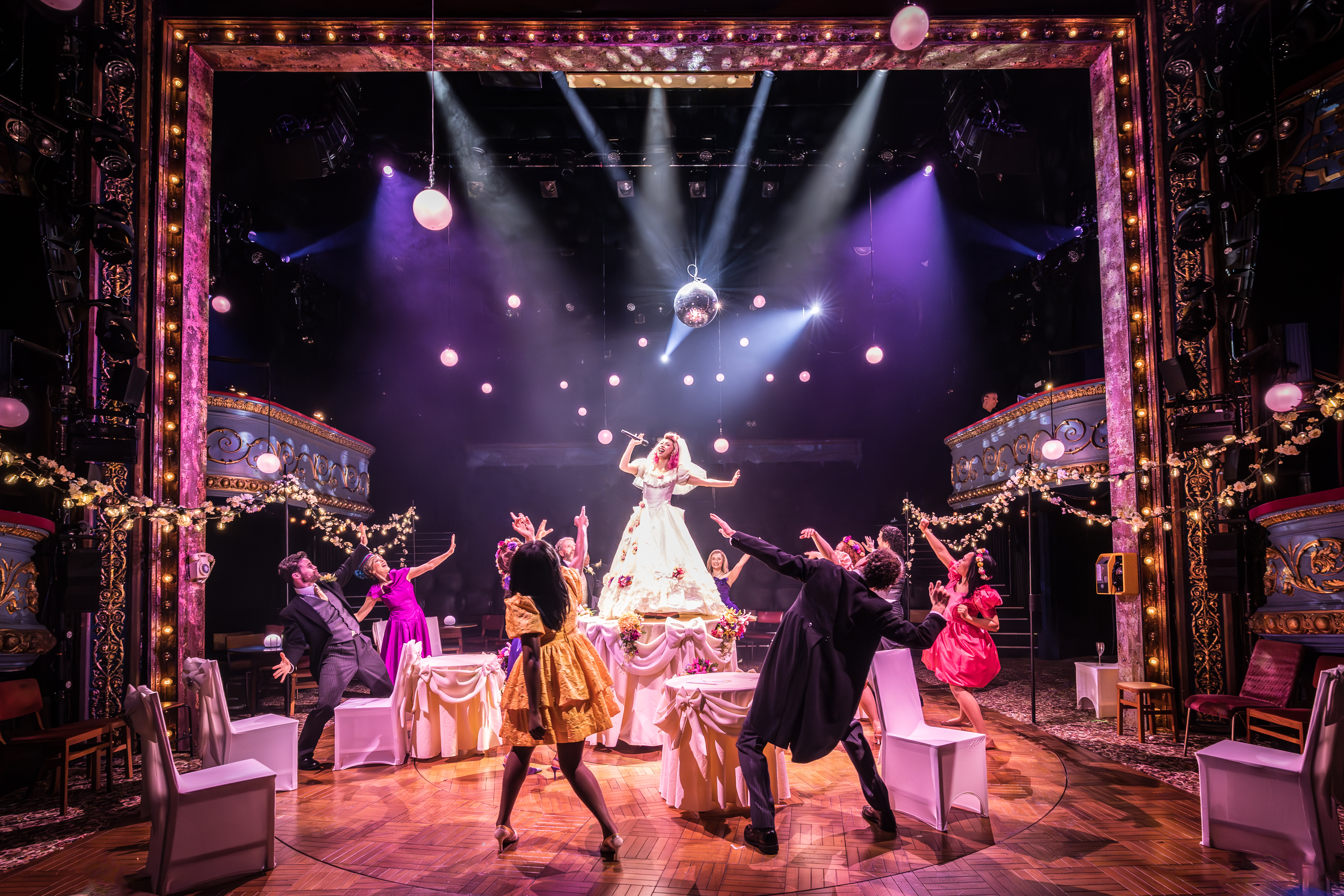
Look, I love a good panto as much as the next drama queen. Still, I have to admit there is something very special about this chance to see a Christmassy rendition of one of the world’s most famous fairy-tales without the distraction of all the boo-hiss-he’s-behind-you-wink-wink-nod-nod stuff. Cinderella‘s plucky orphan narrative is a compelling one, not least because of its moral certainty, where the good are rewarded and the bad are well and truly punished: there’s vengeance at play here, as well as virtue. And, in this version by Sally Cookson, Adam Peck and the Original Company, that dichotomy is writ large.

Ella (Olivia Hemmati) lives in a gloriously-realised enchanted forest, all dappled sunlight and multi-coloured birds. The home she shares with her dad (Richard Conlon) is one of those idyllic, romantically-ramshackle cottages where poor people live in story books, and she’s happy there. But when Father marries Mother (Nicole Cooper), everything changes: not only does her step-mum impose a whole raft of irritating rules, she also brings along her own two children, Sister (Christina Gordon) and Brother (Matthew Forbes), who are so priggish and uptight that Ella can’t stand them. And then, just as she’s getting used to the new regime, Father dies, leaving a grieving Ella at Mother’s mercy…

The strength of this show lies in its aesthetic: Francis O’Connor’s set and costume design evoke an ethereal other-worldliness, where magic feels eminently possible. The bird puppets (directed by Forbes and manned by Leo Shak, Stephanie Cremona and the cast) are fabulous, their rainbow plumes as appealing as they are fantastical. Even as a middle-aged woman, I’m completely captivated; how alluring must this staging be for the children in the audience?

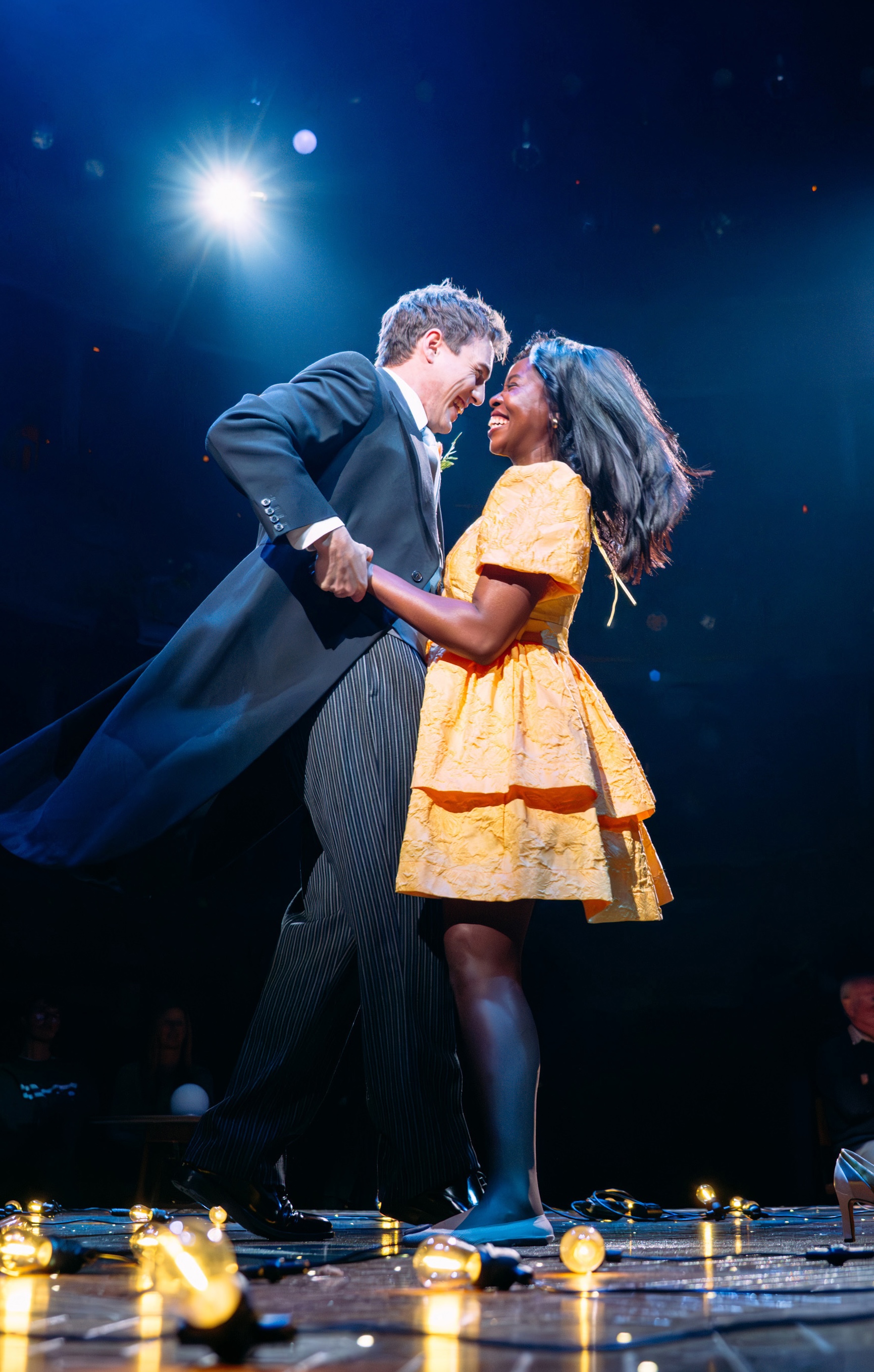
The love story element is underplayed: Prince (Sam Stopford) is a nerdy teenage ornithologist and he and Ella strike up such a lovely, convincing friendship that the idea of their marriage seems jarring and incongruous. Director Jemima Levick wisely eschews any overt wedding pageantry, but I do wonder if it would be better to remove the romance entirely, focusing instead on the simple affection between the pair. After all, it’s not as if there’s the same financial imperative for this Ella, who seems to be living in a whimsical approximation of the contemporary world, as there was for her Grimm progenitor, who needed a husband to escape her servitude.

Cooper is obviously having a whale of a time as the odious Mother, camping up her tantrums and cruelty to create a deliciously-devilish interpretation of the character. The protracted toe-chopping sequence – the production’s only real nod to the folk story’s dark heart – is a gruesome highlight. Meanwhile, Gordon and Forbes’ Ugly Siblings are more sympathetic and nuanced than their traditional counterparts, frightened and corrupted by their toxic mum – and clearly redeemable. Carly Anderson has less to do as Queen, who appears here as a slightly-sozzled, benignly-bemused socialite. It’s an interesting take on the role but she is under-used.

Jon Beales’ music and Emily Jane Boyle’s choreography complement each other perfectly, enhancing the story and ensuring the pace never flags.

All in all, this is a delightful production, and one that is sure to enthral audiences of all ages this festive season.

4.2 stars

Susan Singfield

The Glass Menagerie

07/11/25

Royal Lyceum Theatre, Edinburgh

Directed by Andrew Panton, this production of The Glass Menagerie (from Dundee Rep, Citizens and the Royal Lyceum) is an altogether gentler and less histrionic affair than other interpretations I have seen – and all the more compelling for it. Emily James’ barely-there set echoes the characters’ fragility, underscoring the narrator’s opening assertion that the play “is not realistic.” The overt theatricality – the fourth-wall breaking; the exaggerated miming as the family eat a meal – paradoxically emphasises the underlying authenticity, the idea that this is “truth in the pleasant disguise of illusion”.

The time: 1937. The place: St Louis, Missouri. Our narrator is Tom Wingfield (Christopher Jordan-Marshall), and it’s no coincidence that he shares his initials with the playwright. The Glass Menagerie was described by Tennessee Williams as “a memory play,” a loosely autobiographical attempt to pin down his relationship with his emotional past – so it makes perfect sense that Tom should be an aspiring writer, desperate to escape the clutches of a dead-end job in a broken economy. He is consumed by the need for freedom in all its guises – creative, personal, sexual – bitterly resentful of his mother’s insistence that it is his duty to stay at home and provide for her and his sister.

His mother, Amanda (Sara Stewart), is the kind of fading Southern belle Williams is famous for, but – at least in this iteration – she’s less monstrous than Blanche DuBois or Maggie the Cat. This Amanda reminds me more of Austen’s Mrs Bennett: a woman made ridiculous by her desire to find a husband for her daughter, even though her zealotry makes perfect sense in a society where women are financially dependent on men. Stewart imbues Amanda with warmth and likability, while also making clear exactly why Tom finds her so intolerable.

Amy Conachan’s Laura is irresistible. She is Tom’s older sister, but a combination of shyness and disability means that she is far less worldly-wise than him. In fact, they are opposites in almost every respect. While Tom finds the city too small and claustrophobic, Laura is agoraphobic, too terrified even to open the front door, let alone build a life for herself outside the home. Tom rails against his situation but Laura has ruefully accepted her lot in life, successfully side-stepping Amanda’s attempts to set her up on dates and dedicating herself to the care of her collection of delicate glass ornaments. So it’s all the more heartbreaking to see her open up to Tom’s kindly friend, Jim (Declan Spaine), only to have her hopes dashed by his smiling comment that he’d love to have a sister just like her. Exquisitely acted, the extended duologue between this pair is a real highlight for me.

The dreamy nature of the play is further emphasised by the music, liltingly performed by Spaine as the story unfolds, and Simon Wilkinson’s light design perfectly complements the ethereal atmosphere, at times illuminating the characters’ faces in such a way as to almost create cinematic close-ups, so that we’re forced to focus on their pain and misery.

This beautifully-realised production of The Glass Menagerie has only one more showing at the Lyceum, so you’ll have to be quick if you want to get yourself a ticket for tonight’s performance.

4.6 stars

Susan Singfield

Arlington

06/11/25

Traverse Theatre, Edinburgh

Rarely has the word ‘challenging’ felt more appropriate. Set in a dystopian near future, where an unexplained catastrophe appears to have afflicted the world, Enda Walsh’s Arlington plays out like some kind of enigmatic parable and, even after it’s finished, I cannot honestly say that I fully understand what it’s trying to say to me. But I do feel powerfully affected by it.

The play is divided into three distinct sections. In the first act, we meet Isla (Aisha Goodman), a young woman who has been kept prisoner in a Rapunzel-like tower since childhood and has only ever communicated with the outside world via a microphone to an unseen assistant. But now that man has gone, and The Young Man (Alex Austin) takes his place. He’s unsure of himself and clearly unfamiliar with the recording equipment, which leads to some genuinely awkward happenings and some caustically funny exchanges. He also strikes up an immediate connection with Isla, which eventually leads them both somewhere unexpected…

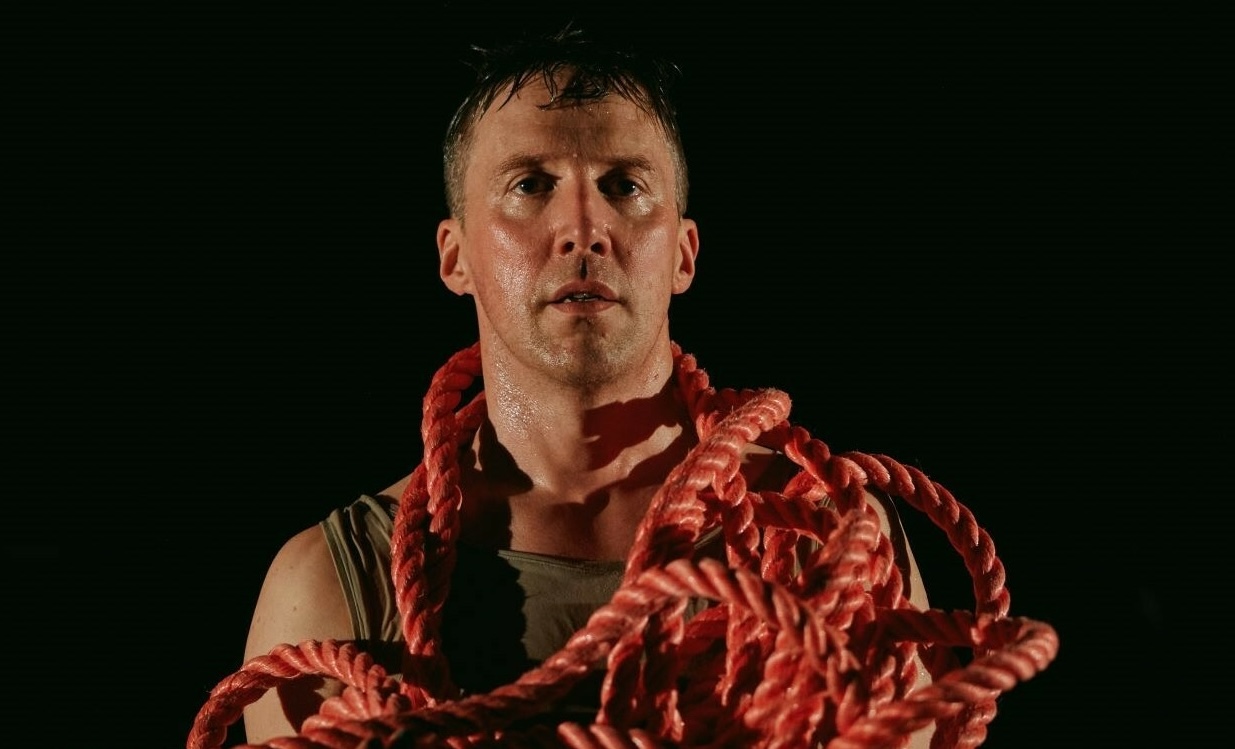
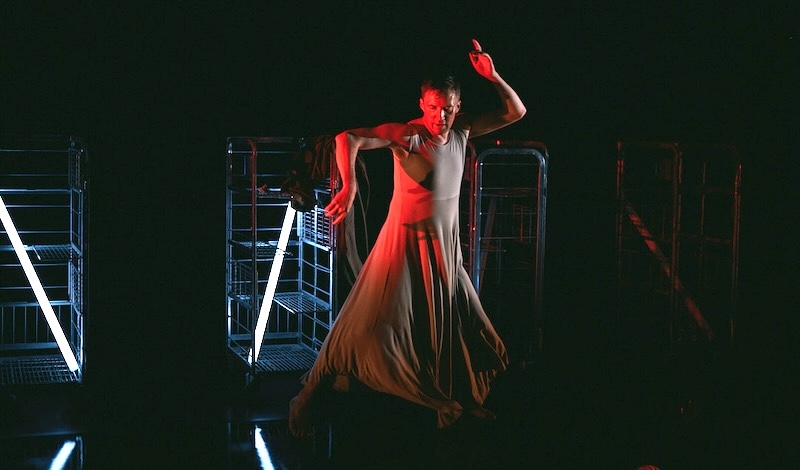
There’s an abrupt cut to the second part, which is essentially an extended dance sequence, performed by Jack Anderson – and this is, I think, the element that many viewers will find divisive. This is not to say that the piece isn’t brilliantly performed; indeed, it’s quite extraordinary, its central premise based (I think) on the many numbing repetitions that life imposes on us. At times, Anderson seems to virtually float around the stage, an ecstatic expression on his face, only the occasional flurry of sweat bearing testimony to the incredible effort he’s putting into this.

The dance goes on for – whisper it – twenty-five minutes – which according to your individual preferences will be either a joyful revelation or an ordeal to be got through.

And then we cut to the final section, where a bloodied Young Man has been made to take Isla’s place and is now being cruelly interrogated by a sardonic female voice. He’s also obliged to take part in humiliating gameshow-like endeavours, simply to be allowed to sleep…

Co-directed by Lucy Ireland and Jim Manganello, Arlington is ingeniously staged, the main action taking place on a raised dais with banks of surveillance equipment ranged below it. All too often I find myself watching events unfold via the monitors, drawn I suppose to the prurient nature of it. There’s also a huge projection screen behind the main stage on which images sporadically appear. These are sometimes very effective, especially an almost transcendental scene where Isla describes an imagined walk through a forest and it magisterially appears as she talks.

Each viewer will take from this play what they think its intention is. For me, it seems to confirm that, no matter how cruel and distancing the world may become, a meaningful relationship can always survive whatever onslaught is thrown at it – and that perhaps, in the end, love really is all that matters.

But I could be way off beam and, in a strange way, that is the play’s main strength. Those who like their theatre cut-and-dried may not warm to it but, long after leaving the theatre, some of the images linger in my mind’s eye, waiting for me to come up with new explanations for what they might actually mean.

4 stars

Philip Caveney

Righ Lasgair: The Fisher King

28/10/25

Traverse Theatre, Edinburgh

Lexie (Fiona MacNeil) and Effie (MJ Deans) have lived on the Isle of Lewis since childhood. At Lexie’s insistence, they have set off on a fishing trip to the remote Loch that she used to visit with her late father, back when she was wee. Effie has gone along with the idea, but it’s clear from the get-go she’s really not suited to the outdoor life, complaining every step of the way and much more interested in singing and chatting nonsense than pressing on with the hike.

On the long trek to their destination, Lexie spins yarns about some of the mysterious mythological creatures that are connected with this mountainous landscape. Chief among them is the elusive Righ Lasgar: The Fisher King, a creature renowned for luring his victims to their bloody deaths by apparently granting their heart’s desire. Lexie is desperate to catch fish today and, after a distinctly unpromising start, the two women begin to reel them in…

Kenny Boyle’s understated supernatural folk tale would, on the face of it, suggest that it’s an appropriate subject this close to Hallowe’en, but perhaps it’s too understated for its own good: the duo’s bickering is mostly played for laughs, which means that a late-stage attempt to shift the tone abruptly into the realms of terror really doesn’t come off.

There are other issues. While of course it’s commendable to incorporate Gaelic elements into new Scottish writing, reeling off words in the language and then repeating them in English feels ponderous. Non-Gaelic speakers should be able to work out what’s being said from the context. Furthermore, Lexie’s late-stage ‘revelation’ has no impact because it’s something that’s already been announced much earlier in the play.

MacNeil and Deans give this their best shot, and Heather Grace Currie’s set design cleverly evokes the great outdoors in the tiny space of Traverse 2. The costuming of the titular creature (played by Adam Buksh) is also pretty impressive but, sadly, it fails to generate the necessary chills to make that final gear-change work.

2.8 stars

Philip Caveney

Little Women

24/10/25

Bedlam Theatre, Edinburgh

First, a plea to the good people of Bedlam: for the love of all little women, good wives and little men, PLEASE stop leaving the fire exit door open during your productions. Christopher Columbus! It’s cold enough in this unheated theatre without letting in a blast of late October air! I wasn’t expecting to identify quite so closely with Amy after her fall through the ice, “shivering, dripping and crying” until she’s wrapped in blankets in front of a fire.

But, to quote Louisa May Alcott, “there is always light behind the clouds” and EUTC’s Little Women, directed by Lauryn McGuire and Meri Suonenlahti, is a case in point: a bright, sparky production, perfectly encapsulating the wholesome vivacity of the nineteenth-century New England classic.

Not a lot happens in Little Women – the coming-of-age novel is character rather than plot-driven – so the play’s success relies on the actors’ embodiment of the four sisters. Liv De Pury excels as Alcott’s alter-ego, Jo, the irrepressible second child, who rails against the constraints of her gender and burns with ambition to become a writer. De Pury imbues the popular heroine with sass and drive, creating an engaging protagonist for us to root for. Sophie Davis’s Meg is a softer, sweeter young woman than Jo, but no less likeable, her warmth and kind nature almost palpable. Elsie Frith, as Beth, captures the girl’s gentleness and fragility, while Rachel McLaren shines as Amy, the melodramatic baby of the March family, eliciting much laughter from tonight’s audience.

The set (managed by Azalea Drace) works well, making the most of the small stage. A raised area represents Jo’s garret, with the rest of the performance space given over to the March family’s living room. The trusty green Chesterfield is back (it’s made an appearance in almost every show we’ve see in this venue), its period style especially appropriate for this piece. I also like the fact that the sisters actually play the old upright piano, rather than relying on recorded sound.

The costumes (managed by Millie Franchi) are similarly effective, making clever use of corsets to convert simple modern skirts into clear approximations of 1800s fashion.

The production as a whole works well. Dylan Kaeuper (Laurie) and Theodore Casimir-Lambert (John Brooke) provide excellent support as the love interests, while Roni Kane (Marmee), Hunter King (Father) and Rufus Goodman (Old Mr Laurence) are all impressively convincing as characters much older than themselves. Watching events play out, I feel transported back into the cocoon of my childhood, curled up in bed reading about these faraway adolescents and their travails.

I can’t urge you to buy a ticket because there’s only one performance left and I know that it’s sold out. But I can congratulate EUTC on another delightful production, allowing this good wife to indulge in a little nostalgia and leave the theatre with a great big smile on her face.

4.4 stars

Susan Singfield

Batshit

23/10/25

Traverse Theatre, Edinburgh

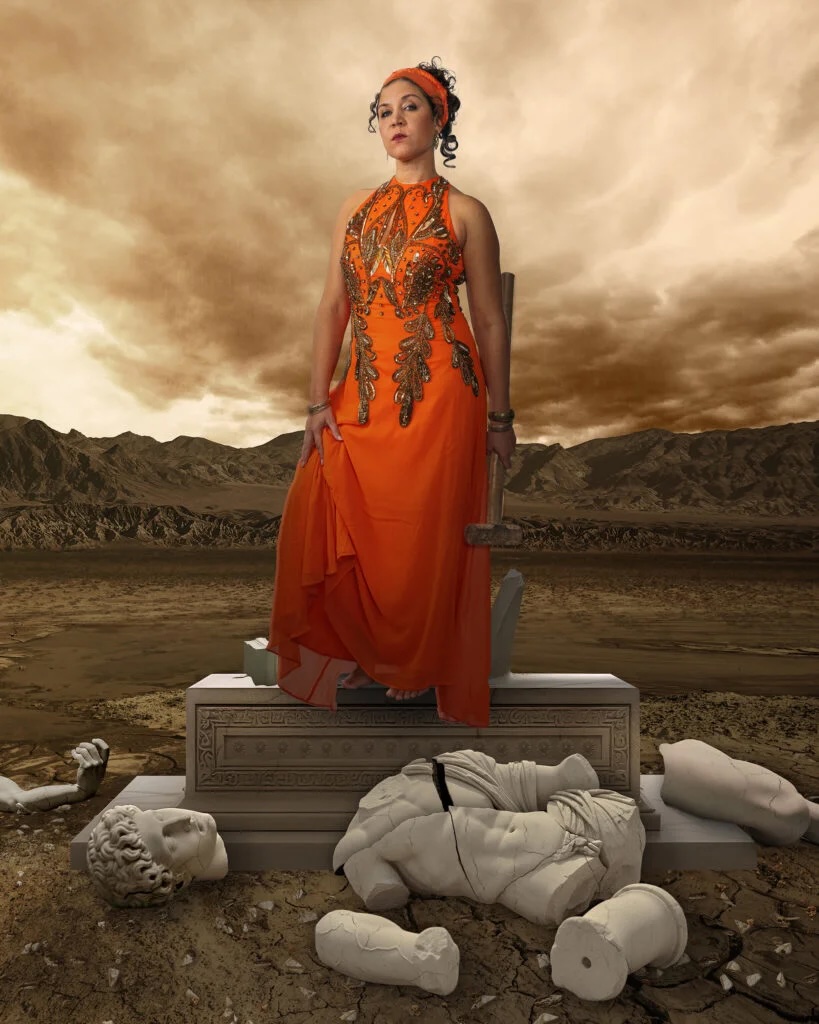
Leah Shelton’s Batshit explores the prevailing notion of madness as a female malady, where women’s physical and emotional states are pathologised and othered, deemed peculiar because they differ from the ‘norm’, i.e. the male.

Equal parts cabaret, polemic and eulogy to Shelton’s grandma, Gwen, this clever one-woman show brings its disparate strands together with absolute precision. It’s a demanding piece, blending the personal and the political with compelling sincerity. 

Gwen’s story is the microcosm, neatly illuminating the bigger picture. In the 1960s, following a miscarriage, she announced she didn’t want to be a housewife any more. Crazy, eh? Her husband certainly thought so and, backed up by a male-dominated medical profession, managed to have her sectioned. Despite many months of incarceration, drugged to the eyeballs and under constant surveillance, Gwen didn’t change her mind. She must be really, really cuckoo, right? Maybe repeated sessions of ECT might encourage her to listen to reason? Spoiler: they did. Turns out that people say what you want them to if you torture them enough…

Shelton is a talented physical performer, contorting her body to mirror her characters’ contorted thoughts. The movements are exaggerated and often grotesque, but delivered with such charm and gravitas that they never seem absurd. The metaphors are writ large – there’s nothing subtle about a straight jacket or a gag – but they’re incredibly effective, reminding us that we need to be vigilant even in these so-called enlightened times. Women’s freedoms have been hard-won and we take them for granted at our peril. Have you ever heard an angry or frustrated man being dismissed as ‘hysterical’?

Directed by Ursula Martinez, Batshit is a dazzling firework of a production, its message lingering in a trail of sparks that keep me thinking long after the applause has died away. These three nights at the Traverse (23-25 October) mark the end of the UK tour, so be sure to catch it while you can!

4.3 stars

Susan Singfield
The Seagull

15/10/25

Lyceum Theatre, Edinburgh

Sometimes a particular production of a play can be a revelation. The Royal Lyceum’s The Seagull is a good case in point. Chekhov famously insisted that his plays were actually comedies – yet every time I’ve gone along to see one, I have been presented with something ponderous and rather miserable.

This inspired interpretation of the Russian’s best-known play, adapted by Mike Paulson, finally sets the record straight. While it’s indisputable that the story has a tragic conclusion, the journey there is spirited and so chock-full of acerbic humour that, from the opening lines, I’m laughing.

In the first act, the elderly and infirm Pyotr Sorin (John Bett) is entertaining his family and their friends at his country estate. His younger sister, former actress Irena Arkadina (Caroline Quentin), has brought along her son, Konstantin (Lorn McDonald), who is deeply in his mother’s thrall and has aspirations to be a playwright. Irena is also accompanied by her lover, Trigorin (Dyfan Dwyfor), a fêted young writer, though it’s clear he derives very little pleasure from his success.

Although unnerved by Trigorin’s presence, Konstantin presses ahead with a performance of his latest project. He’s enlisted the help of an aspiring actress, Nina (Harmony Rose-Bremner), who lives on a neighbouring estate. He claims to be seeking a ‘new theatrical form’ and he’s devastated when his mother airily dismisses the monologue as ‘incomprehensible.’ He’s even more upset when Nina (who he clearly adores) seems much more interested in talking to Trigorin than to him.

Meanwhile, Masha (Tallulah Greive), the daughter of the estate’s boorish steward, Shamrayev (Steven McNicholl), is hopelessly in love with Konstantin, though he seems barely aware of her existence. She views the fact that shy local schoolteacher, Medvendenko (Michael Dylan), is in love with her as something of a major irritation.

In such a tangle of unfulfilled longing, it’s inevitable that tragedy is waiting somewhere in the wings…

There’s so much to enjoy here and not just Quentin’s perfectly-judged performance as the conceited, self-aggrandising Irena, intent on making every conversation all about her. The gathering of disparate characters is well-realised, with Bremner excelling in the role of the increasingly-unsettled Nina, whose obsession with becoming an actress threatens to lead her headlong into madness. Dylan generates a goodly share of the laughs as the hapless and self-critical Medvendenko, in particular during his pithy exchanges with the local physician, Dr Dorn (Forbes Masson), who seems to have brought along enough laudanum to put everyone out of their misery.

I’m entranced by Anna Kelsey’s autumnal set design, particularly in the first act where Konstantin’s outdoor stage has an ethereal beauty. Director James Brining brings out all the nuances of Chekhov’s witty script and the piece seems to zip along, buoyed by what I assume is the simple intention of making this one of the most accessible Chekhovs you’re ever likely to see – an aim that is accomplished with élan.

4.5 stars

Philip Caveney

Maybe Tomorrow

14/10/25

Traverse Theatre, Edinburgh

Glamour and strife! Bigger than life!”

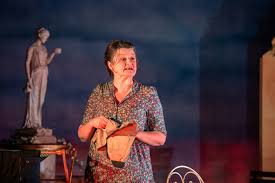
Siân Silver (Liz Ewing)’s showbiz career is careering towards the end of Sunthorpe-on-Sea’s dilapidated pier, where the seventy-five-year-old singer is gamely touting her outmoded razzle-dazzle to ever-smaller audiences for a measly £250 a week. It’s a long way from the stardom she dreamed of, but at least she’s still on stage, performing – until the theatre manager tells her she’s no longer required. Siân doesn’t know who she is if she’s not sparkling in the spotlight. What’s left when even the dregs she’s settled for are so cruelly stripped away?

Forced to confront her failure, Siân is visited by the ghost of Siânny past (Julia Murray). Young Siânny is brimming with hope and vitality, urging her future self to embody the spirit of her long-time heroine, Little Orphan Annie. Instead of bemoaning her hard-knock life, Siânny thinks Siân should focus on making the most of the years she has left. “Maybe now it’s time…”

At first, Siân’s having none of it but she soon realises she has nothing to lose. Why not step into the plucky red-head’s ankle socks and Mary Janes? After all, why should little girls have all the fun? The role of Annie is wasted on a ten-year-old! If she has to bow out, then she’ll do it on her own terms…

Written by Hannah Jarrett-Scott with music and lyrics by Brian James O’Sullivan, Maybe Tomorrow is a decidedly quirky piece of musical theatre, rife with heart and humour. The songs work well, paying homage to Charles Strouse’s original score without allowing it to overwhelm this play. Under Lesley Hart’s direction, Ewing shines as the protagonist (and not just because of her sequinned costumes), imbuing the fading performer with pathos. Siân is talented but unappreciated: of course she’s resentful; of course she’s angry at her producer-ex, who promised her centre-stage but left her in the wings. Murray provides excellent support, not only as the vivacious Siânny, but also as a series of minor male characters, with an impressive range of hats, accents and, um, farts.

An ageing Annie-fan myself, I enjoy this show immensely. It’s undeniably absurd, but somehow rather beautiful. It feels like the start of something that could easily evolve into a full-length musical production, where both themes and characters would have more space to breathe. Why not pop along to the Traverse this week and see for yourself? “You’re gonna have a swell time.”

4 stars

Susan Singfield