Film

The French Dispatch

23/10/21

Cameo, Edinburgh

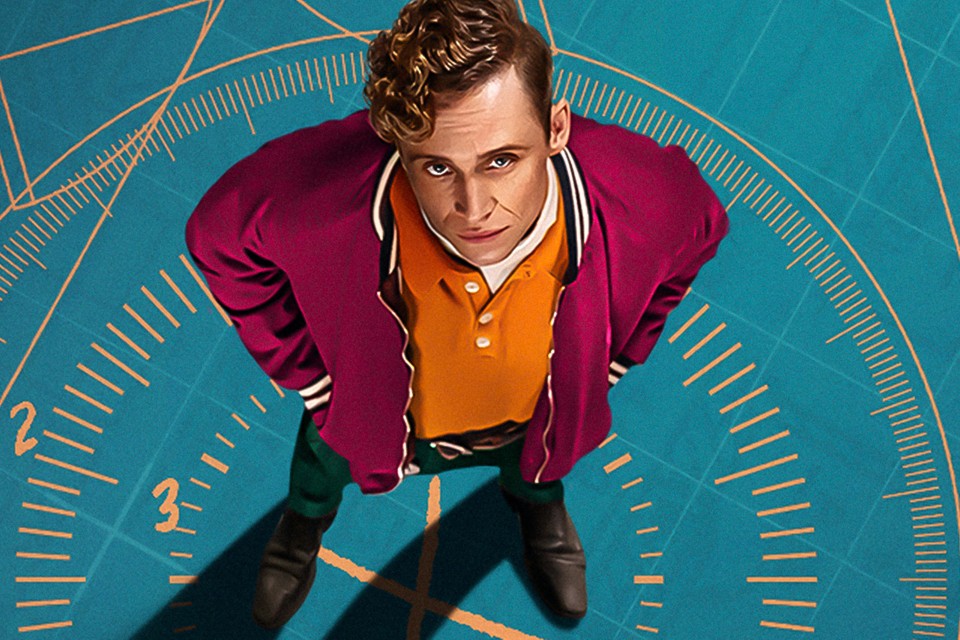
The word ‘quirky’ could almost have been invented for Wes Anderson. Since his breakthrough with Bottle Rocket in 1996, the director has relentlessly followed the path less travelled. Along the way, he’s dallied with stop-frame animation and, in his live-action features, has developed a visual style used by nobody else in the business. Take off a blindfold in a movie theatre and watch ten seconds of any one of his films and, chances are, you’ll recognise his style instantly.

Now here’s the much-delayed The French Dispatch, a portmanteau made up of three short films, linked by a framing device. It probably has a valid claim for being the most Wes Anderson-like film yet as it employs all of the tics and, yes, quirks we associate with him: those bizarre doll house vistas; jarring cuts from colour to monochrome; weird frozen tableaux of action scenes – and characters that are as eccentric as they are amusing. And, of course, there’s also the WA repertory company, a seemingly endless supply of big-name actors, who seem perfectly happy to put their famous mugs in front of the camera, even if they’ve not actually been given much to do.

We begin at the offices of the titular publication, a New Yorker-style literary magazine that is itself an offshoot off a newspaper in Kansas, yet somehow has its headquarters at the top of a ramshackle building in the sleepy French town of Ennui-Sur-Blasé. It’s from here that editor Arthur Howitzer Jnr (Bill Murray) sends his various critics around the country to seek out and document stories of interest – and we are subsequently treated to three of them, all set in the 1960s.

First up we have the tale of convicted murderer, Moses Rosenthaler (Benicio Del Toro), who, inspired by his love for prison warden – and sometime model – Simone (Lea Seydoux), decides to express his love, by creating works of modern art in tribute to her. He inadvertently becomes a cause celebre. Next there’s the story of journalist Lucinda Krementz (Frances McDormand) and her dalliance with dashing young revolutionary, Zefferelli (Timothée Chalamet), whose rebellion against authority is played out as a literal game of chess. Finally, there’s the story of writer Roebuck Wright (Jeffrey Wright), assigned to write a piece about celebrated prison chef, Nescafier (Steve Park), only to find himself caught up in a kidnapping drama involving the adopted son of the prison’s Commisaire (Mathieu Almaric).

The stories are dazzlingly told and the main theme here seems to be one of affection for an age that’s largely gone – a yearning for old-school journalism, when editors cared more about the writing than the money it might generate. Anderson – who co-wrote the story – also has much scorn to heap on the world of art, mocking the ways in which commerce waits greedily in the wings to get its hooks into the next big thing, qualities evidenced by Adrien Brody’s ruthless art dealer, Julien Cadazio. There’s some evident homaging going on here too. The second piece eerily captures the look of French new wave cinema – and did I imagine that little salute to The Twilight Zone’s Rod Serling?

I have to say that I admire The French Dispatch enormously, rather than love it. There’s always an element of grandstanding about Anderson’s work, a celebration of his own uniqueness that can sometimes feel a little too arch – and the parade of characters unleashed here are essentially caricatures rather than people I can believe in. Perhaps that’s entirely the point, but it’s a quality that can polarise audiences.

Suffice to say, if you’re a fan of the director, you certainly won’t be disappointed by what’s on offer here. This is Wes Anderson turned up all the way up to 11. And, in the unlikely event that it’s the first of his films you’ve seen, then enjoy the trip.

4.4 stars

Philip Caveney
Dune

21/10/21

Cineworld, Edinburgh

After the long shutdown of the pandemic and the recent Bond-led ‘resurrection’ of cinema, what we need next is an epic – one of those big, sprawling sci-fi adventures replete with stunning alien landscapes and awe-inducing special effects. So Dune really couldn’t come at a better time, but director Denis Villeneuve must be all too aware of the potential pitfalls. A previous attempt to put Frank Herbert’s source novel onto film – in 1984 – almost stopped David Lynch’s burgeoning career dead in its tracks. And while Lynch attempted to pack the entire contents of the book into one film, Villeneuve adds the extra gamble of shooting just the first half of the story, trusting to providence that the resulting movie will be successful enough to bring him sufficient revenue to make the second part.

The jury is still out on that but initial worldwide box office figures look promising.

It’s the year 10,191 and Duke Leto Atreides (Oscar Isaac) has recently been assigned – by the Emperor of the Universe, no less – to become the fief ruler of the desert planet of Arrakis (Or Dune, as it’s sometimes known). He and the rest of House Atreides will be taking over from its previous overlords, House Harkonnen, led by the corrupt Baron Vladimir (a hideously bloated Stellan Skarsgård). Arakis is the source of spice, a mysterious substance that pretty much runs the entire solar system, so of course the Harkonnens are far from pleased about being ousted from their exalted position.

Meanwhile, Leto’s son, Paul (Timothée Chalamet), has been having recurring dreams about Arakis, or – more specifically – about a young woman who lives there, Chani (Zendaya). She is one of the indigenous Fremen, who have always endured a precarious existence under the yoke of their despotic rulers. Paul begins to think that he’s destined for something important and, when he learns his friend, Duncan Idaho (Jason Momoa), is setting off on a preliminary reconnaissance of the planet, Paul begs to be allowed to accompany him. But he’s told he must wait until Leto and the others can go with him.

So it is not until he and the rest of House Atreides set foot on the sun-blasted sands of Arakis that they discover they are venturing into a carefully laid trap….

James Herbert’s novel has an almost messianic following and I imagine most of its readers will be pleased with what’s on offer here. Villeneuve’s direction, combined with the almost hallucinatory qualities of Greig Fraser’s cinematography and Hans Zimmer’s eerie score, makes for a memorable experience. The casting is impeccable, with Rebecca Ferguson excellent as Paul’s mother, Lady Jessica, and Josh Brolin a perfect choice as the dour warrior, Gurney Halleck. And then, of course, there are those infamous sandworms, one of the elements that really didn’t work in Lynch’s movie, but they certainly generate lots of tension here…

Villeneuve keeps everything bubbling along at a sedate pace, taking enough time to set out his stall. The world-building is beautifully done and the theme of colonialism convincingly explored. And if Paul Atreides is just another in a long list of Christ figures, a popular conceit in science fiction, well it hardly matters. Dune carries us along on a tidal wave of sensory overload until we dimly register that the first instalment is over and we’ll have to wait another year to see how things turn out for Paul.

Quibbles? Well, yes, and it’s one that’s becoming increasingly common. Dune has a 12A certificate, which means that some of the more violent elements of the tale have been downplayed. While I understand there’s a wish to maximise the potential audience for the film, this was never going to be another Star Wars (Dune comes from a much more po-faced universe than Obi Wan and his merry gang). So I think a 15 would be a much better fit. But I absolutely understand why it is what it is.

That said, I enjoy the film enormously and I’m sure I won’t be the only one eager for a second helping, which… all being well… will be coming to a universe near you in the not-too-distant future.

4. 6 stars

Philip Caveney
The Last Duel

16/10/21

Cineworld, Edinburgh

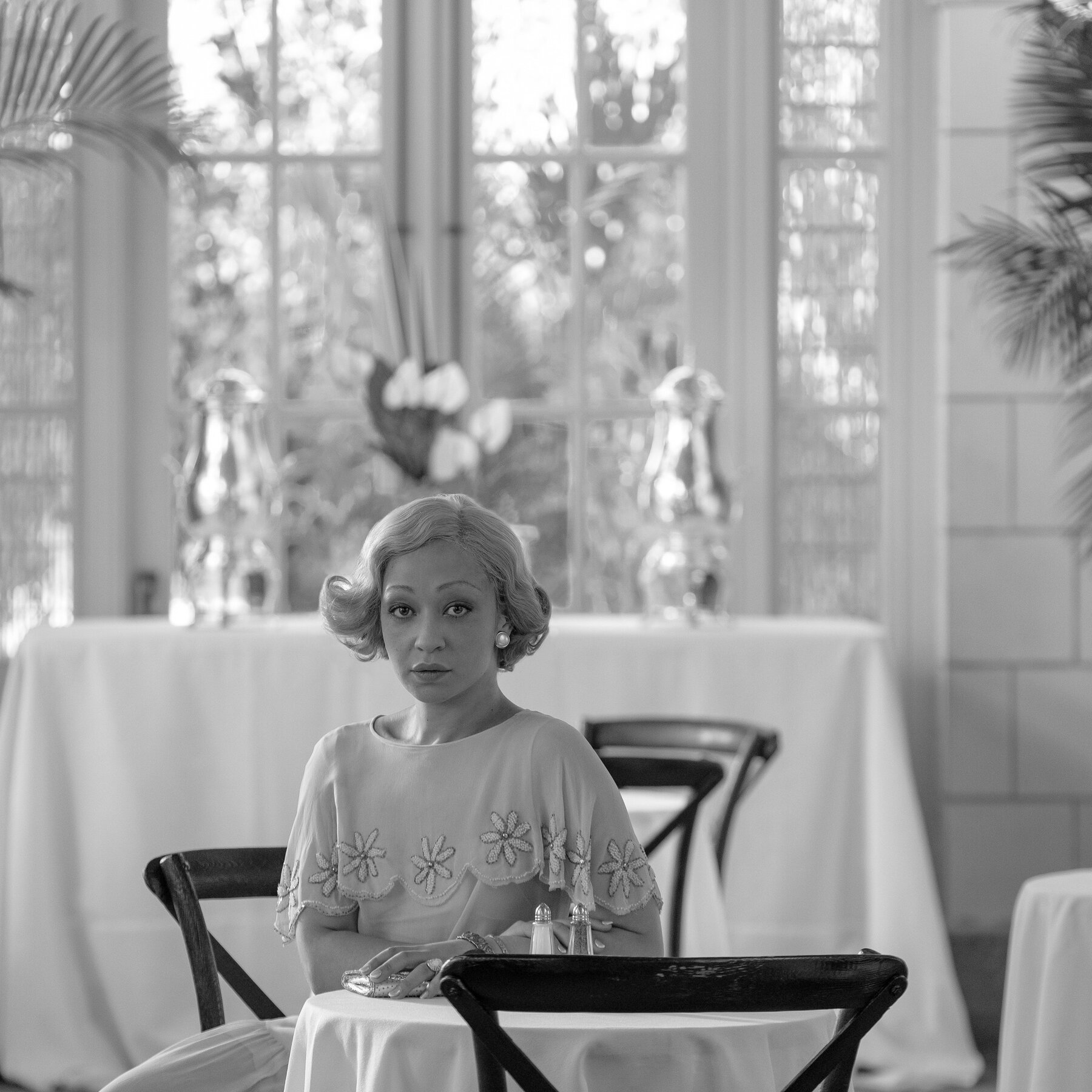
You have to hand it to Ridley Scott. At an age when most people are seeking nothing more than a mug of Horlicks and a pair of comfy slippers, he’s still creating big, powerful movies at a rate that would make most younger directors quail. Lurking just over the cinematic horizon is The House of Gucci, but meanwhile there’s The Last Duel, a powerful slice of true history, that unfolds its controversial story over a leisurely two hours and thirty-two minutes. Set in France in the fourteenth century, it relates the story of the last official duel ever fought there.

After years of military service in various wars under the sponsorship of Count Pierre d’ Alençon (Ben Affleck), Sir Jean de Carrouges (Matt Damon) is struggling to maintain his house and lands, after the death of his wife. So he marries Marguerite de Thibouville (Jodie Comer), the daughter of a disgraced but prosperous landowner. As part of the dowry, Jean is promised an area of land he’s long coveted, so he’s understandably miffed when Pierre takes control of it and gifts it to his squire, Jacques le Gris (Adam Driver), a former friend of Jean’s.

A powerful rivalry develops between the two men – a rivalry that finally culminates in Jacques visiting Jean’s castle in his absence and raping Marguerite. Jacques denies the allegation – in his self-aggrandising mind, Marguerite was attracted to him and therefore there was no rape. She meanwhile insists on speaking out against her assailant in an age when women in such situations were advised to keep quiet about such matters for their own safety.

Jean demands that Jacques meets him in mortal combat, and that God should decide who is telling the truth – but the consequences of him losing the fight are severe to say the very least. Marguerite will be burned alive if God judges her to be a liar.

The message here is inescapable. In a world where toxic masculinity holds sway, a woman’s word is worth nothing. She is expected to obey her husband in all matters and keep her mouth firmly shut, just as Jean’s mother, Nicole (Harriet Walter), had to when she was younger. It’s sad to observe that, many centuries later, this situation hasn’t improved as much as it should have done. Only recently, certain commentators in America have insisted on holding to the medieval belief that a woman cannot become pregnant through rape. It beggars belief but it’s still out there.

The Last Duel is told, Rashomon style, in three separate chapters, each one seen from the point of view of one of the leading characters. Often we see the same scene replayed with sometimes subtle, sometimes jarring differences. It’s not until we reach the final stretch that we witness Marguerite’s account of what actually happened to her and there’s no doubt in our minds that hers is the one we ought to believe. The script by Damon, Afflick and Nicole Holofcener, based on the novel by Eric Jager, is perfectly judged and a quick perusal of the actual events reveals that the writers have been assiduously faithful to what happened. Both Damon and Driver excel as men driven by their own overbearing sense of privilege, while Comer dazzles in every frame, clearly a woman on the verge of becoming a major star of the big screen. Little wonder that Scott has lined her up to play Josephine in his upcoming Napoleon biopic.

This is serious, grown-up filmmaking of a kind that’s sadly all too rare in a cinema dominated by cartoonish fantasy films. Scott has always excelled in recreating history on an epic scale and The Last Duel doesn’t disappoint. The big screen virtually explodes with a whole series of magnificent set pieces. Here is a medieval world that convinces down to the final detail, one that looks and feels thoroughly believable. And is there any other director who can depict medieval warfare in such brutal, unflinching detail? For once, the film’s 18 certificate feels entirely appropriate. I find myself gasping at just about every sword, axe and hammer blow.

The Last Duel won’t be for everyone, but for me it provides a visual feast with a compelling and fascinating story – and reinforces my belief that Ridley Scott is one of cinema’s most enduring and most versatile talents.

4.6 stars

Philip Caveney
No Time to Die

06/10/21

Cineworld, Edinburgh

My first Bond film was everyone else’s first Bond film. Dr No.

It was 1962, I was eleven years old, sitting in a cinema in Singapore, and I remember being suitably dazzled by the experience. I’d honestly never seen anything quite like it before. I was probably a bit too young but, back then, nobody seemed to care too much about asking for your ID. After that, I considered myself a genuine Bond fan. From Russia With Love (still in my humble opinion the best in the series), Goldfinger, Thunderball… you know the rest. I think I saw every one of them, even after Sean Connery had jumped ship and the character went through more changes than Dr Who. I disliked Roger Moore in the role (too affable) but still watched the movies – and I reacted with various degrees of approval and bemusement as new incarnations appeared over the years.

I thoroughly approved when Daniel Craig delivered a great big kick up the franchise with 2006’s Casino Royale – even though the suspicion lingers that Eon Films had simply studied the Jason Bourne movies and borrowed some of its action tropes. Still, the series continued to have traction and 2012’s Skyfall ranks as one of the biggest earners of all time. So there’s no denying the Bond films’ longevity, nor the simple fact that, where Tenet failed to put bums back on seats, NTTD appears to be succeeding.

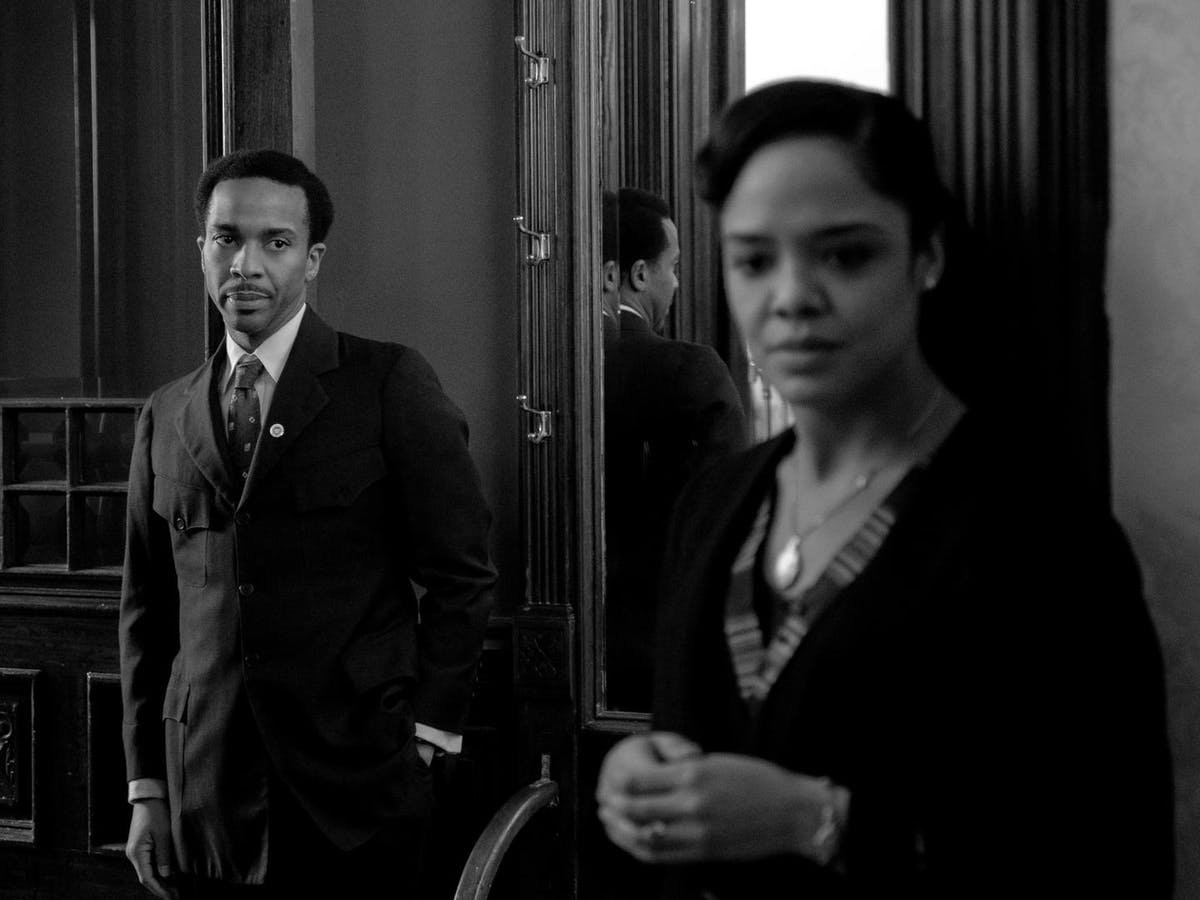
And now here we are, a full two years after its projected release, and No Time to Die marks Craig’s swan song as the world’s most successful secret agent. Little wonder so much hope has been pinned on 007’s return and little wonder too that the advertising preceding the film seems to go on for just about forever.

We (finally) begin in time-honoured fashion with a pre-credits sequence. A little girl is terrorised by a sinister masked villain in a snow-bound location. Years later, that little girl has grown up to be Madeleine Swan (Léa Seydoux) and she and Bond are enjoying a passionate love affair in a very picturesque part of Italy. But of course, we know, don’t we, that such happiness can’t go on for very long?

Visiting the grave of old flame, Vesper Lynde, Bond is lucky to survive an explosion – and then there’s a succession of breathless action sequences featuring cars and motorbikes and a leap from a bridge that would be ludicrous if some poor stuntman hadn’t actually had to do it for real. It’s perfectly timed, brilliantly executed, a joy to behold.

But then of course, comes that familiar theme music and the realisation that we’ve still got an entire film to sit through. Quite why that film has to be two hours and forty-three minutes long is a puzzle. Trim thirty minutes out of this sucker and you’d have a triumphant action flick, but hey, swan songs can’t be dismissed too lightly, and it has to be said that there’s still plenty here to enjoy. It’s clear from the get-go that a lot of holy cows are being slaughtered in the process. Long-running characters are summarily handed their termination notices, old preconceptions are briskly upturned and you can’t say that Eon haven’t done their level best to drag the old misogynist kicking and screaming into the twenty-first century. A black female 007? That would never have happened under the old guard’s watch. There are also some wry observations about Bond’s age and the more keen-eyed viewer will spot references to classic moments in earlier films.

Some of the familiar problems still linger. Villain Lyutsifer Safin (Rami Malek) may have sound reasons for wanting to inflict a deadly virus on his enemies but why does he feel the need to unleash the same punishment upon the entire world? And why is it still considered fair game to equate facial disfiguration with such evil?

But there are some surprises too. I have to admit that I really don’t see the final twist coming. And quite what happens from here is anybody’s guess. There are plenty of people saying that it should simply end, but given the potential earnings that a new Bond could generate, I’ll be very surprised if it does.

Maybe it will simply have to Die Another Day.

4.2 stars

Philip Caveney

The Green Knight

02/10/21

Amazon Prime

Has there ever been a more divisive movie than The Green Knight?

Unceremoniously pulled from its intended theatrical release and plonked onto Amazon Prime, it’s interesting to look at the audience reviews, which feature a plethora of five star ratings and an equal number of one stars. The latter break down into three distinct groups. Many people decry that the film is simply ‘too dark’ for their modest screens – and I have to agree that, if ever a film demanded to be seen at the cinema, this is the one.

More worrying are the blatantly racist comments about the casting of Asian actor, Dev Patel, as the ‘quintessential British hero’ Sir Gawain. But this is a work of chivalric fiction, written anonymously in the fourteenth century. It’s not as if director, David Lowery set out to do a biopic about Winston Churchill. Gawain could be played by any actor and Patel is terrific in the role.

The third strand is the most baffling: people complaining that, over the film’s two hour duration, ‘absolutely nothing happens’ – even though most of them casually add that they stopped watching after twenty minutes or so! The truth is that a lot happens in this film, even if the story unfolds at a leisurely pace, and what happens is fascinating stuff, open to a viewer’s own interpretation.

Our hero is the nephew of The King (Sean Harris), and we’re first introduced to Gawain as a slovenly layabout, happily carrying on with commoner Essel (Alicia Vikander), but, despite her entreaties, showing no inclination to marry her. One Christmas Eve, Gawain is summoned to a feast at the castle where he is invited to sit at his Uncle’s side. At this point, there’s an unexpected visitor, the titular Green Knight (Ralph Ineson). He rides in and issues a playful challenge. If any man will face him in combat, he will offer them the chance to strike him with a sword. But in one year’s time, that man must present himself to the Green Knight and receive the same treatment in return. Gawain recklessly steps up to the plate and, no doubt fuelled by a little too much alcohol, lops off the knight’s head, thinking perhaps that it will end there – whereupon the ancient warrior picks up his severed bonce and gleefully rides away.

One year later, as Christmas looms, Gawain is understandably nervous. After some procrastination, and girdled by a protective belt fashioned by his witchlike mother (Sarita Chowdhury), he sets off for the Green Chapel to meet with his adversary.

A classic quest dutifully unfolds. On his travels, Gawain meets with a duplicitous young thief (Barry Keoghan), a talking fox, and a mysterious lord (Joel Edgerton). He also has a close encounter with the lord’s wife – also played by Vikander – who tests Gawain’s mettle as a ‘gallant knight’…

The Green Knight is a splendid film. I love the gorgeous cinematography, its grubby depiction of a medieval world. I enjoy the various themes that criss-cross throughout the story. Here is a profound meditation on death, on coming of age, on the need for a brash young man to find his maturity. It explores the constant struggle between pagan beliefs and the rising power of Christianity (note how the Green Knight is depicted as the Green Man of mythology). I love the strange hallucinogenic interlude where Gawain encounters a race of giants and I marvel at the fact that, hours after the credits have rolled, we’re still discussing the meaning of some of the film’s weirder moments.

Of course this won’t be for everyone. And of course, some will see it as pretentious. But in many ways, The Green Knight is one of the most original films I’ve ever seen. It should have had its proper chance to dazzle us on the big screen.

4.6 stars

Philip Caveney

The Guilty

01/10/21

Netflix

Director Antoine Fuqua has previous form with cop movies. 2001 ‘s Training Day brought Denzel Washington a well-deserved Oscar, while End of Watch (2012), starring Jake Gyllenhaal, was also a memorable addition to the genre. Gyllenhaal returns in this riveting slice of drama, a remake of a Danish movie of the same name. Here he’s Joe Baylor, currently relieved of his usual duties as an L.A. street cop – for reasons that will eventually be revealed – and demoted to handing emergency calls in the midst of a catastrophic wildfire, which is straining emergency services to the limit.

Baylor is edgy and unpredictable. He’s suffering from asthma and going through the throes of a painful separation from his wife and young daughter. He’s also nervous about an important court appearance he’ll be making the following morning. But, for now, he has an important job to do and, when he receives a panicked call from Emily (voiced by Riley Keogh), he goes straight into protective mode, trying to find a way to get her away from her husband, Henry (Peter Sarsgaard), who has her locked in the back of a speeding van. In the process of his enquiries, Baylor also discovers that the couple have two young children left alone at home…

The Guilty is essentially a one-hander, with Gyllenhaal onscreen throughout. Though the hard scrabble bustle of the emergency room is fully realised, his supporting actors are relegated to background roles or appear simply as disembodied voices on phone lines. Given this approach, it’s remarkable that the film manages to generate almost unbearable levels of suspense as Fuqua steadily racks up the peril and the potential repercussions of Baylor’s actions. It’s not until the halfway point that we start to fully appreciate something worrying. Baylor may not be handling the situation as well as he could. Perhaps he’s letting his instincts overrule his common sense.

Gyllenhaal submits a stellar performance here, making us fully appreciate the complexities of this flawed character and pulling us further and further into his troubled world. Ultimately, the only thing that lets The Guilty down is the film’s conclusion, which seems unwilling to embrace the full enormity of what lies behind Baylor’s impending court case – and there’s an unlikely late development that slightly defuses the film’s power. Screenwriter Nic Pizolatto should have had the guts to step up to an unpalatable truth, which would make this story more hard-hitting.

That said, The Guilty is one of those rare creatures (along with Buried and Locke), a filmed monologue that fully deserves its place on the big screen. Though of course, as a Netflix film, the size of the screen will depend on whatever you have to view it on.

3.9 stars

Philip Caveney

Sweetheart

25/09/21

Cineworld, Edinburgh

Writer-director Marley Morrison’s debut feature is a charming coming-of-age tale, brimful of angst and high-octane emotions.

Seventeen-year-old AJ (Nell Barlow) is being taken on holiday against her will. Sure, she used to love going to Dorset’s Freshwater Holiday Park when she was a kid, but things have changed. For one, her dad’s not with them this time, and no one’s told her why her parents have split up. For another, the entertainment’s lame, and she doesn’t like sunbathing or swimming or talking to people. Okay?

But seventeen is an annoying age, with autonomy just out of reach. For now, AJ’s mum, Tina (Jo Hartley), gets to make the rules, and AJ has no choice but to spend the week cooped up in a caravan. Her sisters are there too: the younger Dayna (Tabitha Byron) and the older – and very pregnant – Lucy (Sophia Di Martino). Lucy’s boyfriend, Steve (Samuel Anderson), is clearly used to the family dynamic. He’s truly the nicest guy on earth, smiling and sympathising with everyone, making coffee and carrying bags and providing reassuring hugs. Every holiday needs a Steve.

AJ’s at odds with the world. She’s been in trouble at school; she just doesn’t fit in. She’s cut her hair in a fit of pique; she hides away in a bucket hat and aviator shades. She doesn’t want to conform but she doesn’t know what she wants. Her mum tells her to go out into the caravan park and “make some friends;” AJ just looks at her in despair. How?

And yet, thanks to the lovely lifeguard Isla (Ella-Rae Smith), that’s exactly what she does. AJ falls for Isla the minute she sees her, and the attraction seems mutual, although AJ’s convinced that “girls like Isla have boyfriends.” And it’s true, in a way: Isla’s a free spirit, and – although she’s not in a relationship – she does like having sex with boys. But that doesn’t mean she’s not interested in AJ…

Morrison really captures the raw pain of being a teenager: the self-conscious awkwardness; the self-loathing; the unfocused rage at a world that doesn’t understand, that should understand, that doesn’t hear what’s being unsaid. The family relationships are expertly drawn, the characters opening up as the as the story unfolds, so that we can see each of them clearly.

The young holiday-camp workers are believable too. At first, they seem supremely cool and confident but, as AJ gets to know them better, she soon learns that they have their own issues, their own dreams, desires and disappointments. And they seem to like AJ: she’s found a crowd where she can have fun.

I grew up in North Wales and had summer jobs in holiday parks a lot like Freshwater. Cinematographers Emily Almond Barr and Matthew Wicks have certainly captured their spirit here, and I’m particularly impressed by the nuanced way the clubhouse is depicted, at once horribly kitsch and embarrassing (from AJ’s point of view) and full of sparkle and promise and respite from the world (as seen by Tina and Dayna).

This is an age-old tale, and there aren’t many surprises, but it’s been lovingly updated and is never less than compelling.

4 stars

Susan Singfield

Herself

23/09/21

Cineworld, Edinburgh

The multi-talented Clare Dunne co-wrote this script, has a sole credit for ‘story,’ and also plays the titular ‘Herself.’ It seems fitting that this film should be a kind-of-but-not-at-all-really one-woman project, just like the house that her character, Sandra, wants to build.

Sandra’s husband, Gary (Ian Lloyd Henderson), is a violent man. Sandra’s been saving up so that she can leave him, but he finds her secret money-stash and decides to punish her. She’s clearly been anticipating the attack, and gives her oldest daughter, Emma (Ruby Rose O’Hara), the signal they’ve arranged. Emma races off to the nearest shop and shows them Sandra’s hand-written message. ‘Help. Phone the Garda. My life is in danger.’ It’s a heartbreaking moment; no one could fail to be moved by Emma’s trusting, fearful little face, imploring the shopkeeper to understand.

It works: Sandra doesn’t die. And she escapes from the relationship. But her new situation just isn’t tenable: she relies on painkillers and a wrist support to cope with the nerve damage Gary inflicted on her arm, and she’s living in a hotel room next to Dublin Airport, miles away from her daughters’ school and friends. There are no cooking facilities, and the only place for the kids to play is the multi-storey car park. Sandra has two cleaning jobs – in a bar and in a private home – and she struggles to get to them on time. Something, somewhere, has to change.

And Sandra has to make the change. Herself.

This is a deceptively gentle film, with a searing polemic at its heart. There’s Gary, wheedling for another chance. There’s the courts – for all the fall-out: the custody arrangements, the maintenance payments. And there’s the council and their housing list. When Sandra approaches them with an eminently sensible plan (“You have all this land. Lend me the money to build a house on it and I’ll pay you rent. It’ll work out cheaper than putting me up in a hotel”), it’s obvious the answer is going to be no. The person behind the desk doesn’t have the power to green-light such a project and, even if she did, the bureaucracy involved would be mind-boggling. Anyway, if places were being allocated, Sandra probably wouldn’t qualify. Not while there’s a housing shortage, and plenty of people worse off than her.

But Herself, directed by Phyllida Lloyd, is also a fairy tale, a fantasy about what might happen, if only… If only rich people shared the land they have; if only communities worked together to help those in need.

Enter, stage right: the fairy godmother – disguised here as grumpy doctor, Peggy (the inimitable Harriet Walter). Sandra’s is Peggy’s cleaner; she’s been using the doctor’s laptop to sneak a peek at YouTube instruction videos on how to build her own house, and Peggy realises she can help. She has a big garden, standing empty, with more than enough space. And she’ll also lend Sandra the money she needs.

It’s enough to get the ball rolling. Retired builder, Aido (Conleth Hill), is reluctant at first, but is swayed by his son, Francis (Daniel Ryan)’s desire to assist. He’s soon joined by a host of volunteers, all eager to make a difference. There’s a lovely lesson here: by helping Sandra, they help themselves, each acquiring a sense of purpose and accomplishment.

This is a multi-layered tale, and there are surprises here that I won’t spoil. Suffice to say, it’s unpredictable, and avoids clichés, both of character and story arc. If occasionally it veers close to mawkishness, it always cuts away in time, which is testament to Dunne and co-writer Malcolm Campbell’s skilful writing.

The two child actors (O’Hara and Molly McCann) are both terrific – natural and sweet and utterly believable – and the supporting cast is uniformly strong. But this is Dunne’s film in every way. She owns it. Herself.

4.1 stars

Susan Singfield

Shang-Chi and the Legend of the Ten Rings

14/09/21

Cineworld, Edinburgh

I’m somewhat late to this but the word is that Shang-Chi has been one of cinema’s biggest hitters – though the three other people in the audience for my showing doesn’t exactly suggest that Cineworld is being overrun.

This film is an important addition to the Marvel Universe in the same way that Black Panther was – and those like me, who are old enough to remember the impact made by the original Bruce Lee films, will understand how important it is that American Asians have their own superhero to root for. So here he is, played by the extremely likeable Simu Liu as ‘Shaun,’ an unassuming lad working in a valet at a hotel in San Francisco, parking the cars of rich customers, ably assisted by his best friend Katy (Awkwafina).

But Shaun has a secret. He isn’t quite as unassuming as he appears. He is, in fact, Shang Chi, the son of the ruthless – and immortal- Xu Wenwu (Tony Chiu-Wai Leung), the possessor of ten mystical golden rings that give him the power of a thousand men, enabling him to vanquish entire armies single-handedly. Always a useful thing. But when Shaun is attacked by a bunch of armed warriors on a bus, who have been sent by Xu to steal the fancy green amulet that Shaun has worn since he was a little boy, he begins to realise that his toxic dad is seeking to renew their acquaintance – and that Shaun’s sister, Xialing (Meng’er Zhang), is probably going to be drawn into his father’s orbit too. It’s time to stop pretending and step up to face the consequences.

The film opens well (once we’re past a rather po-faced introduction) and the aforementioned bus punch-up is nicely done, with Awkwafina providing some much-needed comic relief as the put-upon-friend in a difficult situation, but it isn’t very long before Shaun and Katy are off on a mission to the mystical village of Ta Lo, where an ancient community lives surrounded by mystical creatures and a helpful water dragon. They also meet Trevor Slattery (Ben Kingsley), a former actor, who can somehow talk to mystical creatures. (Again, file this one in the comic relief section.)

From this point, the story seems to ramp up the pomposity, as Xu Wenwu, who believes he’s being summoned by his late wife, arrives with an army of warriors in tow, intent on setting free an ancient evil dragon who has been locked away in some forbidden cavern… and a massive cosmic punch-up dutifully ensues.

I have to say that, in the film’s latter stages, it loses me somewhat. The stodgy, leaden feel of the story makes two hours seem like three and I feel sorry for the wonderful Michelle Yeoh, who is saddled with a ‘wise auntie’ role and is therefore required to say something profound every time she opens her mouth. While it’s clear that much money has been lavished on the CGI budget and it’s certainly a handsome film, but the final dragon-on-dragon conflict just seems cumbersome and goes on and on, until I’m reduced to checking my watch at regular intervals.

A final coda, with Benedict Wong summoning Shaun and Katy into the extended Marvel Universe, doesn’t feel remotely enticing and I’m unlikely to watch whatever comes next.

In the end, Shang Chi‘s main failing is that it can’t seem to make up its mind what it wants to be. As a kung fu kick- about, it works well enough, but director Destin Daniel Cretton seems intent on making it more than that, overburdening the film with meaning in order to cover all the bases and – for my money at least – he doesn’t really succeed.

3.4 stars

Philip Caveney

Candyman

05/09/21

Cineworld

Horror remakes can be decidedly tricky customers. Like those endless Halloween sequels, for instance, they can turn out to be pale retreads of a brilliant original. I have good memories of Bernard Rose’s 1992 Candyman, which was so much more than just another creepy slasher movie. That said, I’m also uncomfortably aware it had its own slew of inferior sequels, so I’m not exactly filled with anticipation at the prospect of Candyman 2021. But, with Jordan Peele attached as producer, I’m hopeful that this new offering from director Nia DaCosta might have something different to offer.

It’s clear from the get-go that this is intended to be more than just a straightforward reboot. For one thing, the opening credits (even the Universal logo) are reversed left to right, as though reflected in a mirror – a delightful reference to the film’s central premise – and then the startlingly stylistic cinematography takes a grip on my senses, aided and abetted by delightful shadow-puppet sequences, depicting the history of the film’s infamous urban legend. There’s also a powerful ‘black lives matter’ subtext running through this version. Some critics have derided it, claiming that it is hammered home a little too forcefully, but I disagree. The message is an important one and it’s clearly stated. It adds to, rather than reduces, the power of the story. And that has to be a good thing, right?

Twenty-seven years after the events of the first film, visual artist Anthony McCoy (Yahya Abdul-Mateen II) is living in a swish high-rise apartment in the area of Chicago that borders the old Cabrini Green housing project where the original Candyman strutted his grisly stuff. This part of the city has been gentrified over the years and now, Anthony and his art-dealer partner, Brianna (Teyonah Parris), spend their time sipping expensive wine and attending flashy art exhibitions. But Anthony has lost his painting mojo. It’s been some time since he came up with anything new.

When Brianna’s younger brother, Troy (Nathan Stewart-Jarrett), tells him about an old urban legend, Anthony is interested enough to wander into Cabrini Green with a camera, looking for inspiration. It’s there that he meets William Burke (Colman Domingo), who tells him more about the story of the Candyman. And it’s there too that Anthony is stung by a bee and begins to experience some startling reactions to the venom…

Cinematographer John Guleserian creates a world where everything seems inverted. The sinister glass towers of Anthony’s home are depicted upside down as though plunging into sinister depths, rather than reaching for the sky. Much of the ensuing action is glimpsed via reflections in mirrored surfaces – and one sequence where an art critic is murdered in her high rise apartment, filmed in a distanced silent long shot actually makes me gasp. I have been made to feel like a helpless observer. The film doesn’t shy away from its slasher roots either. There are some genuinely wince-inducing murders and a couple of instances of extreme body horror that almost have me looking away from the screen. But the violence, though savage, never feels salacious – and DaCosta has the canny knack of knowing exactly when to cut away from the action.

Ultimately, this feels like a palpable win, a film that treats the original with reverence but also manages to develop the story in coherent and inventive ways. The stylish art direction adds a dazzling sheen to the whole enterprise. There’s also a wonderful joke in here that provides, once and for all, the definitive answer to an age old question: ‘Why do people in horror movies go wandering down staircases into dark and gloomy cellars?’ I won’t reveal what happens but, in the midst of all the dread, it actually makes me laugh out loud.

There will always be reboots of popular horror movies and many of them won’t be worth the price of admission. But this one, I feel, is a cut above.

4.6 stars

Philip Caveney