Film

The Hermit of Treig

14/04/22

Mareel, Lerwick, Shetland

When we book our tickets for the The Hermit of Treig, it seems very fitting: we’ll be watching a documentary about a recluse living in a remote Scottish location, while we’re in a remote Scottish location! Such perfect symmetry! And it’d be a good idea, if it weren’t for the fact that Mareel – despite being the UK’s most northerly music, cinema and creative industries centre – doesn’t feel remote at all. It’s a bustling, vibrant place, and the Thursday evening showing is all but sold out.

Not that we’re complaining. We feel right at home. (In fact, Mareel is very much like HOME, one of our favourite Manchester venues). We sit in the sun-soaked, glass-walled bar for an hour before showtime, sipping beer and Prosecco, enjoying the buzz. The staff are friendly and the place pristine. It’s a real find.

And Lizzie MacKenzie’s debut film is a find too. She’s spent ten years following Ken Smith, the eponymous hermit. And, over those years, a real friendship seems to have emerged. He may have turned his back on civilisation, but he’s an amiable sort: chatty and engaging and happy to share his musings.

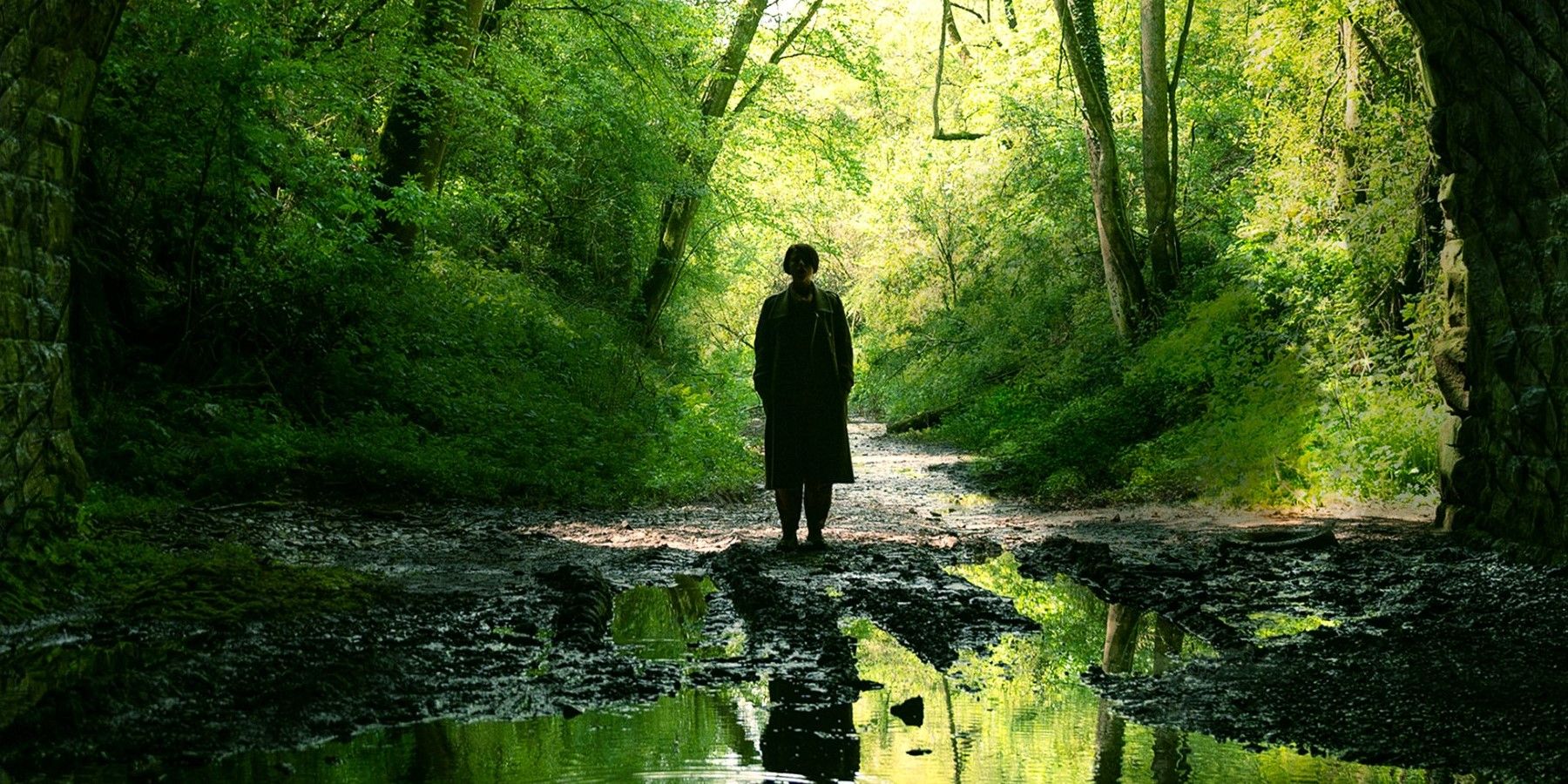
When he was twenty-six, Ken was viciously attacked, and suffered a brain haemorrhage as a result. His doctors feared he would never speak or walk again. But Ken pulled through and, as soon as he was well enough, he set off to live his life on his own terms. He went to Canada and lived wild in Yukon for a few years, before returning to the UK and heading north to Scotland. He walked the length and breadth of the country he says, before finally deciding to stay put near Loch Treig. And this is where the young film-maker finds him, living off-grid in a home-made wooden cabin, far far from any beaten track, foraging for food and revelling in his splendid isolation.

It’s a lovingly crafted film, with a tender heart; it’s easy to see why MacKenzie won the audience award at this year’s Glasgow Film Festival. It’s not just the cinematography (MacKenzie’s) and photography (Smith’s) that dazzle with their natural beauty; the documentary shimmers with kindness and humanity too. Ken is seventy-two years old now. He’s not as strong as he was. He’s had a stroke. How long will he be able to manage?

It’s heart-warming to see the local (okay, local-ish) community rally round. Everyone’s so respectful of Ken’s way of life. They try to help him, but they don’t dictate; they don’t attempt to change him. And Ken’s pretty accepting too: hopeful that he’ll be able to continue living independently in his beloved hut, but pragmatic about the possibility that he might not.

There are some gaps in the narrative that I’d like explained. Is Ken allowed to just build a home in the woods? How does he get his photographs developed? What was the story behind his first cabin being destroyed? There are tantalising hints at avenues left unexplored.

Still, just like Mareel, The Hermit of Treig isn’t what we expect. And, like Mareel, that’s absolutely a good thing.

4 stars

Susan Singfield

True Things

07/04/22

Cineworld, Edinburgh

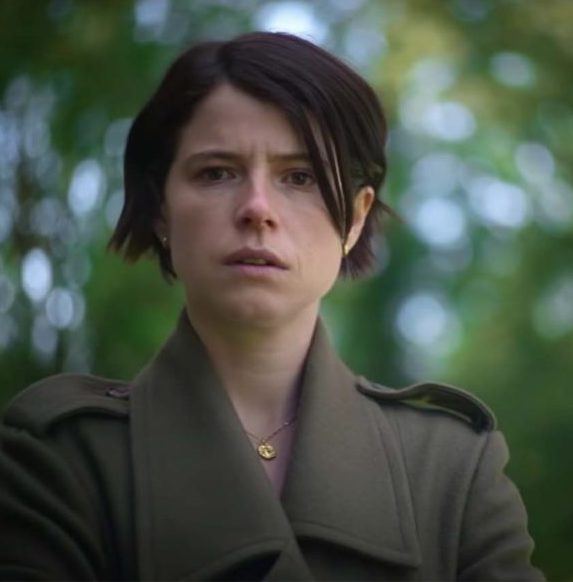
Kate (Ruth Wilson) has reached a difficult point on life’s highway. 

She’s somewhere in her thirties and struggling to hold down a thankless job at a benefits office in Ramsgate, where her customers seem to specialise in hurling abuse at her. She has no significant other in her life, no real interests and spends much of her free time gazing wistfully at exotic locations on her computer screen. Her work colleague, Alison (Hayley Squires), is trying to hook her up with one of her male friends, telling her that she needs to start playing the field if she doesn’t want to be a spinster all her life – while Kate’s mum (Elizabeth Rider) criticises her daughter’s ‘difficult nature,’ which – apparently – makes her come across badly to others. Kate’s dad (Frank McCusker) just seems obsessed with giving her home-grown vegetables from his allotment.

It’s clear that Kate is badly in need of new horizons – and things change dramatically when she conducts an interview with ‘Blond’ (Tom Burke), a handsome stranger, who freely admits to having done time in prison and cheekily wants to know if she’s free for lunch later on.

Against all better judgement, Kate accepts the invitation and shortly thereafter finds herself engaged in frantic sex in a high rise car park. To say that she’s smitten by Blond would be something of an understatement. She becomes instantly obsessed with him, unable to function properly when he’s not there, constantly waiting for a call or a text or… something. 

The trouble is, Blond is in complete control of this dangerous liaison and careful to give nothing away about his situation or his intentions. As viewers, we learn as little about him as Kate does. He’s an enigma and a pretty toxic one at that. It’s crystal clear that, if Kate cannot break the powerful hold he has on her, she is destined for heartbreak.

Harry Wootliff’s powerful little film is a veritable powder keg of longing, a symphony of doomed ambition. It’s as much a meditation on the theme of loneliness as it is an examination of the powerful pull of sexuality. Wilson is terrific here, offering yet another of her bruised outsiders struggling to survive the vagaries of life. She takes Kate through a maelstrom of subjugation until she finally seizes agency on a Spanish dance floor, thrashing ecstatically around to the sound of PJ Harvey’s Rid of Me

Burke, meanwhile, makes me understand exactly why Kate is in Blond’s thrall, even when he’s being obnoxiously vague about his intentions or heartlessly exploiting her utter devotion to him. He is powerfully charismatic. The film is essentially a two-hander, with an underused Squires doing the best she can with the thankless role of Alison.

It could be argued that True Things is relentlessly one-note, but if that’s the case, then it’s a note played with utter perfection by skilled artists. The characters here feel absolutely genuine and the slow-burn, languorous atmosphere is further intensified by Ashley Connor’s woozy cinematography, which often depicts events in an out of focus haze. A scene where Kate reels drunkenly around at a house party almost has me reaching for the alka seltzer. Furthermore, there’s a delicious duality to what’s depicted onscreen. I’m not always certain that scenes I’ve just watched have actually happened or are simply imaginings plucked from within Kate’s troubled head-space 

This could easily be annoying but, in the case of True Things, it gives the film added depth.

4 stars

Philip Caveney
The Eyes of Tammy Faye

28/03/22

Disney +

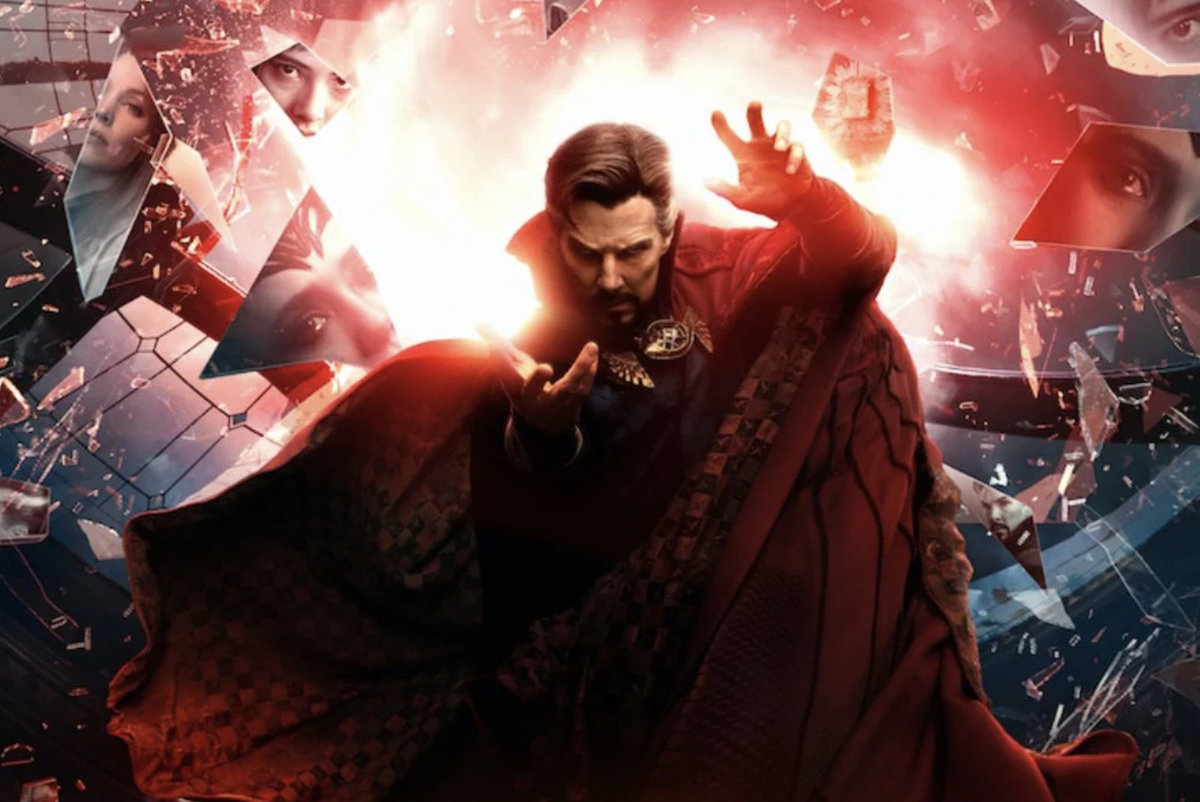
The Eyes of Tammy Faye never made it to ‘a cinema near us,’ despite being relentlessly trailed. Still, as previously documented, we’ve signed up to Disney+ for a short spell, thanks to their dastardly decision not to release Turning Red anywhere else – and the presence of Tammy Faye on the platform makes us slightly less aggrieved about it.

Michael Showalter’s film works just fine on the small screen; it’s about TV after all: an intimate biopic of one of the USA’s most infamous televangelists, based on a documentary by Fenton Bailey and Randy Barbato. After hosting a successful Christian puppet show for their local channel, Tammy Faye (Jessica Chastain) and her husband, Jim Bakker (Andrew Garfield), co-founded The PTL Club in 1974, and soon found they had a TV hit on their hands. By 1978, they were ready to embark on a new money-making project: a Christian theme park called Heritage USA, all funded by their fans/parishioners – or ‘partners’ as they referred to them.

The couple’s finances burgeoned along with their popularity, and they were soon splashing the cash, luxuriating in fur coats and art-filled mansions. Tammy gained notoriety for her outspoken support for the LGBT community, and particularly HIV/AIDS sufferers. Other high-profile evangelists disapproved of her convictions, but Tammy’s public preaching of love and acceptance made a real difference to the popular discourse. Jim, on the other hand, was causing controversy in other ways, and – in 1989 – found himself convicted on several counts of fraud and conspiracy, and was imprisoned for his crimes.

If Tammy is a woman of contradictions (and she is), then so is the film. There are some glorious sequences (the final rendition of Hallelujah, for example, and Tammy’s disarming approach to a group of teenage hoodlums poking fun at her). But there are also glaring omissions. The couple’s early path to local TV is never shown, and Richard’s extra-marital dalliances and abuses – both hetero and homosexual – are only tangentially referred to. Of course, we are seeing things through Tammy’s eyes, as the title makes clear, but her ignorance means that we miss some of the most compelling aspects of the tale.

Make no mistake, Chastain is exceptional in the titular role: this is a truly stellar performance. Her Tammy is a wonderfully appealing woman, a heady mix of strength and vulnerability, naïvety and nouse. Even when she’s ridiculous – with her tattooed make-up and desperate smile – she’s somehow dignified and commands respect. Chastain pulled the Oscar for this last night, and it’s not hard to see why.

Still, a perfect performance doesn’t always equate to a perfect film, and this one sadly falls short.

3.7 stars

Susan Singfield

The Worst Person in the World

26/03/22

Cineworld, Edinburgh

I have to confess to an almost total ignorance of Norwegian cinema before the good word-of-mouth for Joachim Trier’s latest film prompts me to give it a try.

The Worst Person in the World is a rare beauty, a picaresque tale of life and love in contemporary Oslo, built around a superb, award-winning performance by Renate Reinsve. She’s Julie, who, when we first encounter her, is a medical student, bored by the reality of slicing up bodies and fast coming to the conclusion that’s she’s chosen the wrong subject.

Shortly thereafter, she breaks up with her boyfriend, decides to study psychology instead, and then jumps ship again in favour of a photography course.

Until she starts dabbling with writing…

Fast approaching her thirtieth birthday, Julie realises that, despite all her best endeavours, she still doesn’t have a game plan for the future and, when she meets acclaimed comic artist, Aksel (Anders Danielsen Lie), the two of them hit it off immediately. Soon they’re sharing an apartment. But Aksel is older than her and already talking about the possibility of starting a family. Julie appreciates she’s supposed to want that too, but is painfully aware that she still hasn’t found her own path.

And then one night, she skips out of a dull launch for Aksel’s latest book and recklessly crashes a stranger’s wedding party, where she has a chance encounter with Eivind (Herbert Nordrum), an easygoing barista. The two of them share their darkest secrets and Julie begins to realise, to her dismay, that she is falling for him…

If this all sounds like something you’ve seen a thousand times before, don’t be misled. TWPITW, co- written by Trier with Eskil Vogt, is a multi-faceted creation. Broken down into a kind of visual novel, it’s related in twelve ‘chapters,’ along with a prologue and an epilogue. The film positively buzzes with invention – from the magical scene where Julie runs through an Oslo where every other character is frozen into immobility to a weird magic mushroom experience at a house party – and on to a conclusion that is both heart-breaking yet, somehow, life-affirming. It’s all brilliantly paced and thoroughly entertaining. An eclectic soundtrack featuring a whole variety of performers only adds to the ‘whatever next?’ atmosphere.

I love the fact that Julie is an unreliable character, struggling to find her way in the world. Is she the ‘Worst Person’ of the title? Well, it’s actually Aksel who uses the phrase, but he’s referring to himself when he says it. But really he’s just a little out of touch in a world where all his long-held views are increasingly perceived as controversial. And Julie isn’t terrible either; she just wants to find her own identity and won’t settle for anything less.

This feels uncannily like real life, with all its messy complications, many of which can never be resolved, only put down to the twisted trials of human experience.

It’s hard to remember a film that has nailed the convoluted path to maturity with such absolute conviction. If you’re tired of the conventional (and happy to read subtitles), The Worst Person in the World may be just the cinematic experience you’ve been waiting for. However you feel about this film, I’m pretty confident you won’t be bored by it.

4.7 stars

Philip Caveney
Turning Red

24/03/22

Disney +

The House of Mouse’s decision to release all new Pixar films directly to their in-house streaming service seems incredibly short-sighted – and not just because this is a time when cinemas are really struggling to tempt viewers back into seats. Mostly, it’s because the gorgeous animation that exemplifies Pixar is made to be shown on the biggest screens available. However, Disney seem not for turning, so it’s time to renew that monthly subscription.

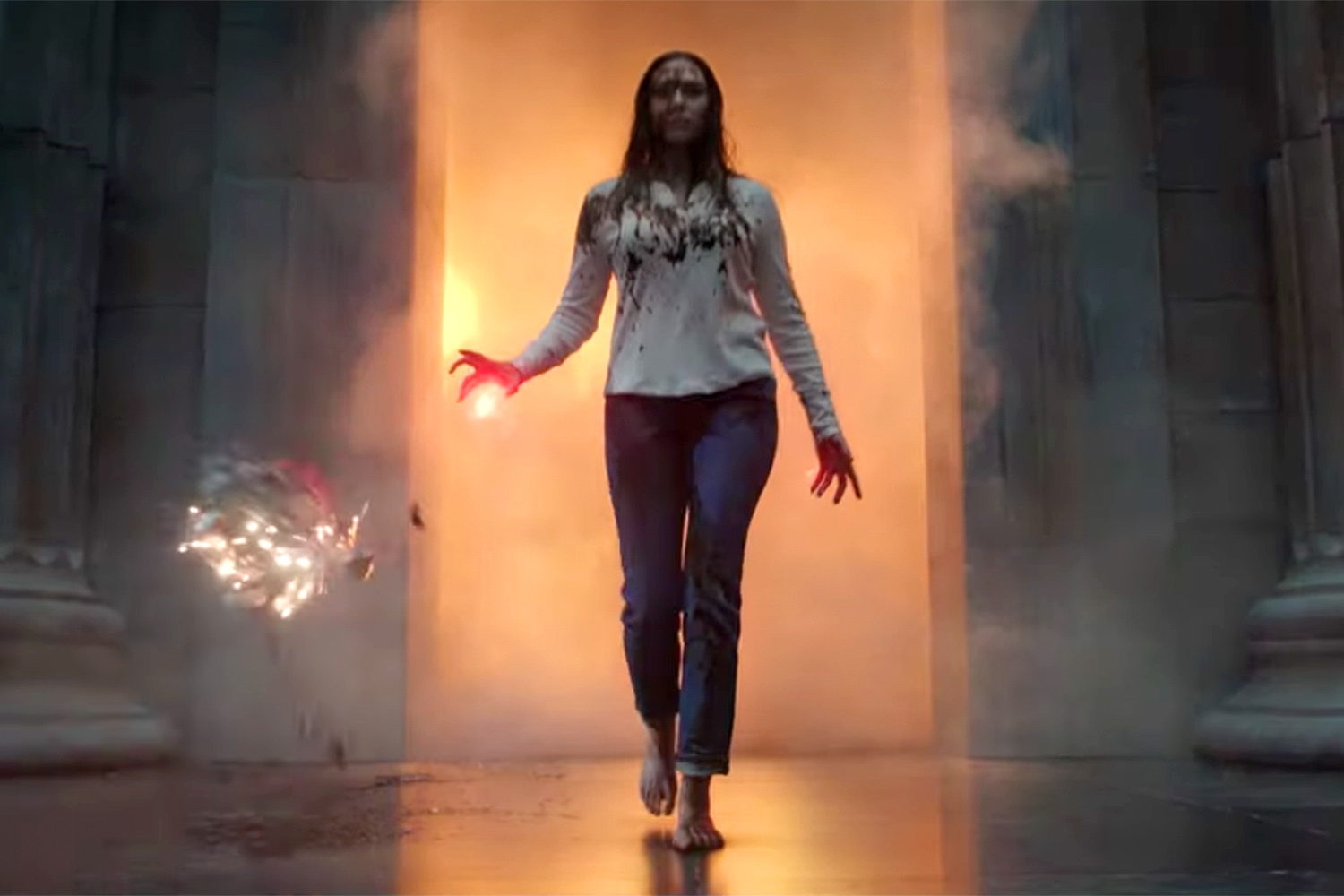
Turning Red is set in Toronto in 2002 . Meilin (Rosalie Chiang) is thirteen years old, a good girl who excels as a scholar and spends most of her spare time helping her domineering Mother, Ming (Sandra Oh), to run the family temple, a place dedicated to their illustrious ancestor, Sun Yee. Meanwhile, Meilin’s father, Jin (Orion Lee), cooks up some amazing food. In scenes that could have come straight from a Studio Ghibli feature, his dishes are enough to make this reviewer’s mouth water.

With her three bosom buddies, Miriam (Ava Morse), Priya (Maitreyi Remakrishnan) and Abby (Hyein Park), Meilin is a fan of the hot new boy band, 4*Town. She also discovers, to her dismay, that she’s developing a crush on handsome local store clerk, Tyler (Tristran Allerick Chen), who she has always professed to hate. She is hurtling headlong towards puberty and the resulting rush of hormones has an unfortunate effect on Meilin. She finds herself suddenly transforming into a giant red panda at the most inopportune moments (although I’m not sure when would be a good time). This is the result of an ancient transformation that every young woman of her family must undergo.

It can be cured, Ming assures her daughter, but not until a month has passed. Awkward.

And then news reaches Meilin that 4*Town are going to be performing at a huge concert in Toronto and she and her friends know that, whatever else comes or goes, they will have to be there in order to ‘become women.’ So how are they ever going to raise the hefty price of admission?

From the outset it’s clear that Pixar, already the most innovative of animation studios, is setting out to walk a path where no other cartoon makers have dared to venture. The Red Panda is clearly a metaphor, standing in for the turmoil and confusion of adolescence – the film even manages to cover the subject of menstruation without raising so much as an eyebrow. All credit to director Domee Shi, who has clearly used her own youth in Canada as inspiration for the story, co-writing the screenplay with Julia Cho and Sarah Streicher. Hats off also to songwriters Billie Eilish and Finneas, who manage to capture the vapid tosh that is 4*Town’s music with ease.

This is a gorgeous film, all about the power of womanhood and the healing properties of friendship. The fact that it’s wrapped up in a pretty parcel of jaw-dropping animation doesn’t dilute its message one jot – and the climactic showdown at the 4*Town arena concert – where events begin to feel a little like Pandazilla – brings everything to a suitably powerful conclusion.

Even on our modest screen at home this looks dazzling, so how it would have looked on IMAX can only be wistfully imagined.

4.4 stars

Philip Caveney
The Phantom of the Open

20/03/22

Cineworld, Edinburgh

Good golf movies are few and far between. Tin Cup, maybe. Happy Gilmore?

After being trumpeted for what seems like forever, The Phantom of the Open has finally er… opened and, after having seen the needlessly detailed trailer for what feels like a thousand viewings, it’s hard for the actual film to generate any real surprises. Which is a pity, though hardly the fault of writer Simon Farnaby or director Craig Roberts.

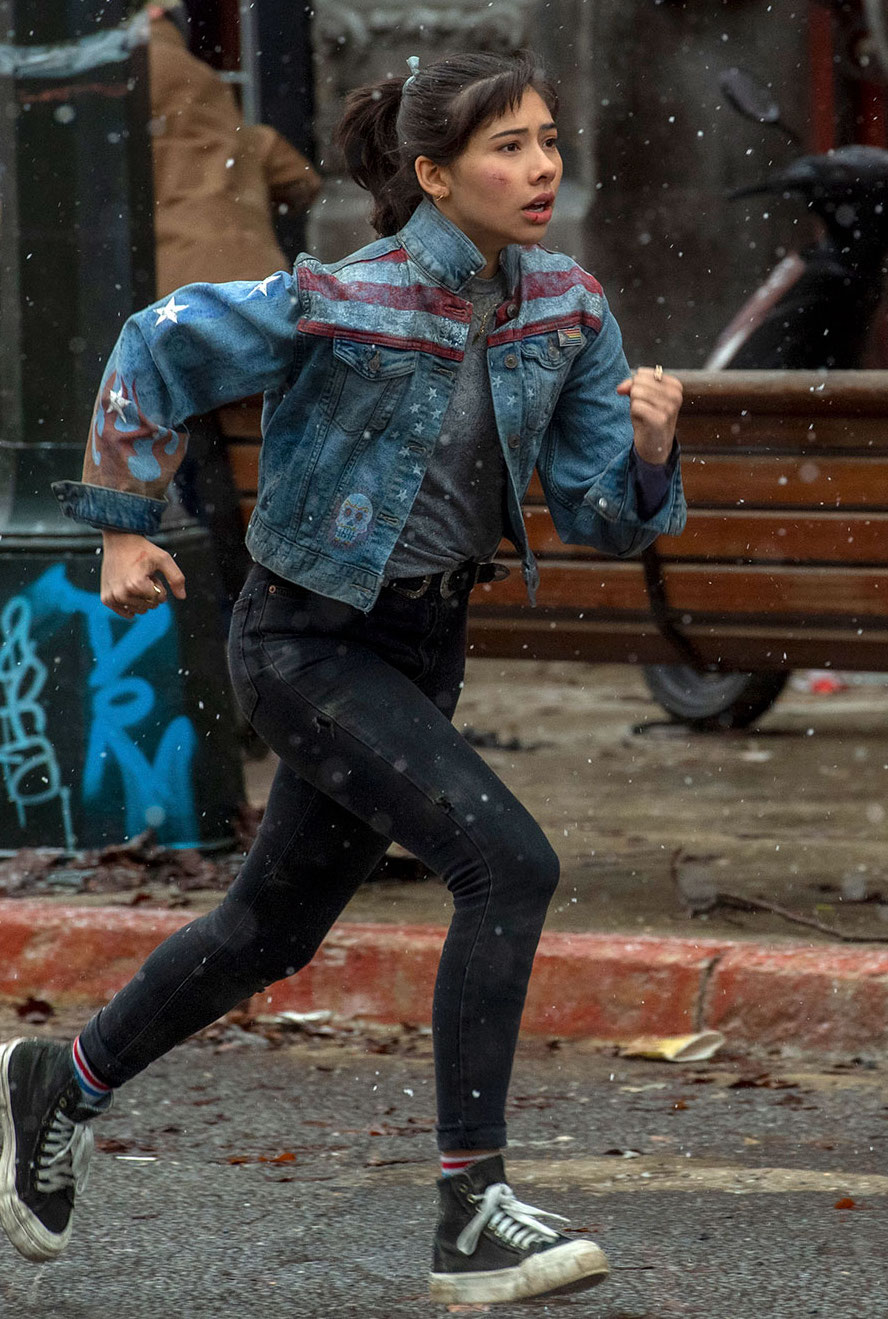
This is the true story of Maurice Flitcroft, a sixty-five-year-old crane operator, who, despite having no experience of – or indeed aptitude for – the game of golf, decides to enter the British Open Golf Championship. He initially appears as himself but, later, when he becomes persona non grata, under a series of increasingly unlikely nom de plumes. He’s also the father of twins, who briefly became the disco dancing champions of the world. (Seriously, you couldn’t make this stuff up.) It’s an immensely likeable story and, as played by Mark Rylance, Flitcroft is an immensely likeable chap: shy and unassuming, but with the dogged determination to keep going, no matter what.

‘Practice makes perfect,’ he’s fond of saying. A lot.

His lofty ambitions are aided by his ever-supportive wife, Jean (Sally Hawkins), but vigorously opposed by his nemesis, Keith McKenzie (Rhys Ifans), a sneering official who sees golf as the realm of the well-to-do, not for some working-class oik with ideas above his station.

But of course, the fickle public does have a habit of flocking to support an underdog. When Flitcroft’s lamentable debut earns him the worst score in the history of the Open, he’s spotted by Daily Mirror journalist Lloyd Donovan (Ash Tandon), who takes the opportunity to give him that titular nickname and to ensure that plenty of other golf fans hear all about him.

And that’s pretty much all we get in this warm-hearted romp – from Flitcroft’s disastrous attempts to gain skills in his adopted sport to the unexpected discovery that, in America, there’s a whole society of golfers who follow him with adoration. There’s an attempt to instil more dramatic meat into the story when Flitcroft’s desperate misadventures embarrass his upwardly-mobile stepson, Michael (Jake Davies), a wheeler and dealer at the shipyard where his father is employed. Can the two of them ever reconcile their differences? But this feels like a side-issue. The Phantom of the Open is mostly a good-natured attack on the old chuckle-muscles and in that respect, it comes up to par.

As an aside though, I do wish cinema trailers would resist giving away so much of an upcoming film. This might have fared better in my affections if I hadn’t felt as though I could act as a prompt for most of the actors’ lines. Just saying.

3.8 stars

Philip Caveney

Ali & Ava

16/03/22

Cineworld, Edinburgh

Clio Bernard is not exactly the most prolific of directors. Her last outing, Dark River, was released in 2017 – and we have to go all the way back to 2013 for The Selfish Giant. Her films are essentially evocations of working class life that might, initially, appear slight, but which are cleverly nuanced. Her characters are never allowed to be stereotypes; indeed, at times they are positively surprising.

Ali & Ava sits happily with her former endeavours: gentle, essentially heartwarming – but with hidden depths.

The setting is the multi-cultural hub of Bradford and, when we first meet Ali (Adeel Ahktar), he’s standing on the roof of his car, dancing to the techno-music blasting from his headphones. Ali is an affable fellow, a landlord of sorts,. He’s hyperactive (and probably somewhere on the autistic spectrum) and has a passion for listening to (and making) music. Meanwhile, he collects the various rents he’s owed, looks after his extended family and tries to come to terms with the fact that his wife, Runa (Ellora Torchia), after the death of their first child, has fallen out of love with him and is ready to move on with her life.

He has accepted this, but steadfastly refuses to announce the change to the rest of his family.

Ava (Claire Rushbrook) works as a teaching assistant at the local primary school. After the death of her Irish Catholic husband, she has devoted her life to her children and grandchildren. Her youngest son, Callum (Shaun Thomas), already a father himself, is still mourning the passing of the dad he idolised, even though his parents’ marriage was hardly a blissful union. Indeed, Ava chose to leave her husband because of his regular physical abuse of her.

Inevitably, Ali and Ava fall into each other’s orbits and, as their friendship deepens and blossoms into something more serious, so their lives become ever more difficult. Callum is immediately hostile to Ali, seeing him as an intruder, and it seems that everything the couple attempt together is subject to unsympathetic scrutiny from those around them.

In the midst of this hard-scrabble existence, Barnard manages to conjure moments of real beauty: fireworks blossoming silently above the rooftops of the city; children parading through the streets with coloured lights. There’s a joyful moment where Ali’s boundless enthusiasm manages to turn a potentially nasty situation into an uninhibited dance in the middle of a dodgy estate. Barnard draws intriguing comparisons between Ali in one of his music-fuelled trances and a little girl at the primary school, who is happy to clamber to the top of a climbing frame, but afraid to descend.

Ali & Ava isn’t exactly a blockbuster but, in its quiet, assured way, it’s worthy of attention – and further confirmation that Barnard is a director with a rare talent for realistic drama.

4 stars

Philip Caveney

The Bombardment

12/03/22

Netflix

The Bombardment (original title The Shadow in My Eye, or Skyggen i mit øje) would be a harrowing movie at any time. Right now, as the war in Ukraine escalates and dominates the newsreels, it’s an especially difficult watch. And, of course, all the more vital. Writer/director Ole Bornedal’s unflinching portrayal of this true-life tragedy doesn’t allow us to avert our gaze from the human cost of war.

Copenhagen, 1945. The city is in Nazi hands. Members of the Danish resistance have been strategically positioned under the roof of the Gestapo headquarters, forming a human shield the Germans hope will make the Allies think twice before bombing. The RAF devise a dangerous plan, to attack the building from the side. But it’s risky, not least because of how low the jets must fly, and hitting the right target is far from assured…

Bornedal’s deceptively scattershot approach to the story works well: the details accumulate to form a devastating account of what occupation and bombing really mean to the people on the ground – and in the air. There’s a whole host of characters – all vulnerable, all flawed, all damaged by the war. Frederik (Alex Høgh Andersen) is a traitor, despised by his family, working alongside the Nazis; Teresa (Fanny Bornedal) is a novice nun, her faith sorely tested by the horrors her God has failed to stop. Perhaps the most tragic figure of all is Henry (Bertram Bisgaard Enevoldsen), a young boy so traumatised by what he’s witnessed that he’s lost the power of speech. He’s especially afraid of the open sky, so – in desperation – his mother sends him to the city, where he’s taken under the wings of his vivacious younger cousin, Rigmor (Ester Birch), and her friend, Eva (Ella Josephine Lund Nilsson). The children’s performances are heartbreaking: between them, they exude a horribly credible mix of youthful exuberance and awful anxiety, and it’s hard to deal with just how defenceless they are.

Lasse Frank Johannessen’s cinematography is as unrelenting as Bornedal’s script: although the landscapes and architecture are undoubtedly beautiful, nothing is sugar-coated here. The grimy underbelly is as visible as the polished exteriors; there is no attempt to hide the harsh realities.

Despite the violence and frantic manoeuvring, the film moves at a slow pace, giving us time to understand the characters, to care about them and their fates. Of course, this only serves to make the final climactic scenes all the more devastating. This is a powerful piece of cinema, but it’s not for the faint-hearted.

4 stars

Susan Singfield

Red Rocket

12/03/22

Cineworld, Edinburgh

The Florida Project was one of the undoubted cinematic highlights of 2017. Director Sean Baker’s ability to depict working-class American life is his real strength. No matter how wretched his characters, no matter how squalid their existences, he somehow manages to invest them with an innate nobility, finding the true characters hiding beneath the masks they show to the world.

Red Rocket continues in that vein, following the misadventures of one Mikey Saber (Simon Rex), former porn star, now down on his luck. Carrying the cuts and bruises of a recent business ‘disagreement,’ he arrives in his former hometown of Texas City with no car, no luggage and only twenty-two dollars to his name. He wastes no time but walks directly to the home of his estranged wife, Lexi (Bree Elrod), who now lives with her mother, Lil (Brenda Deiss). Neither of them is pleased to have him turn up unannounced on their doorstep, but Mikey pleads with them and eventually gets permission to sleep on their sofa ‘just for a few nights.’

Once in, he starts to wear them down, his first objective to get off that sofa and into his wife’s double bed. At first, he goes everywhere on Lexi’s borrowed bike, but soon begins to exploit his local ‘celeb’ status, starting with impressionable next-door neighbour, Lonnie (Ethan Darbonne), who quickly accepts the role of Mikey’s unpaid chauffeur. After some doomed attempts to find honest work, Mikey enlists with local drug queenpin, Leondria (Judy Hill), selling dope and steadily accruing the funds he needs to relaunch his stalled career.

And then, he visits local coffee shop, The Donut Hole, where he meets seventeen year old ‘Strawberry’ (Suzanna Son), a sparky young waitress who’s drawn to Mikey’s glamorous swagger and outsider status. He is instantly smitten too, not by love, but by the idea of a hot business opportunity. Surely he can act as Strawberry’s manager and launch her as the porn industry’s hottest new star? Would that be a way back in?

As you will have gathered, Mikey is an utterly detestable creep and I really ought to be hissing him off the screen, but, as played by Rex (himself a former porn star), he radiates so much charm and charisma that I absolutely understand how so many people are taken in by him. Here is a man always on the lookout for an opportunity to help himself to whatever’s available, who thinks nothing of dumping on those who have put their trust in him. It’s surely no accident that the television screens repeatedly reference a certain Donald Trump – proof positive that, in America, a shameless liar really can can make it to the top of the tree.

Red Rocket is built around an extraordinary performance from Rex – he is simply outstanding in the central role. Son too is fabulous as the naive teenager he’s so callously grooming. But there are some people who can see through Mikey’s charms. Leondria’s hard-bitten daughter, June (Brittany Rodriguez), recognises him instantly for what he is – and makes no secret of the fact that she distrusts him.

Baker’s film, despite a running time of over two hours, never puts a foot wrong. His cast of characters are brilliantly explored and (as in The Florida Project) he even makes the grotty urban landscapes of Texas City look vibrant and – especially at night – shimmering with possibility.

Catch this on the big screen if you can. It’s a must-see.

5 stars

Philip Caveney

The Duke

09/03/22

Cineworld, Edinburgh

The latest entry in the ‘truth is stranger than fiction’ genre is The Duke – the final feature from versatile director, the late Roger Michell. This is the story of the improbably named Kempton Bunton (Jim Broadbent), an irascible campaigner for pensioners’ rights, women’s suffrage and, in his spare time, a would-be playwright. Quite why his script The Adventures of Susan Christ never found an audience is anybody’s guess.

It’s the early 1960s and ,while England’s capital is celebrating a new-found sense of freedom, life on the gloomy streets of Newcastle is a somewhat bleaker prospect, as Bunton stumbles from job-to-job, constantly losing them because of his propensity to stand up against any signs of injustice he encounters. His long-suffering wife, Dorothy (Helen Mirren), slogs her guts out as a home help to her more affluent neighbour, Mrs Gowling (Anna Maxwell Martin), in order to make ends meet. She is mortified when her husband is obliged to spend a short spell in prison for non-payment of his TV licence (free TV for OAPs being his current pet project).

Meanwhile the couple’s younger son, Jackie (Fionn Whitehead), dreams of building and selling luxury boats, while his brother, Kenny (Jack Bundeira), has his own run-ins with the police to contend with.

And then a valuable painting of The Duke of Wellington by Goya is ‘borrowed’ from the National Gallery – and when it winds up hidden in the back of the Bunton’s wardrobe, it’s only a matter of time before the merde hits the fan.

The Duke is an irresistibly enjoyable piece that manages to evade the cosy complacency of so many films aimed at more mature audiences. Michell’s direction cleverly juxtaposes glossy widescreen shots of London with the grubby, timeworn realities of 60s Newcastle and the humdrum rigours of everyday working-class life are convincingly captured. The Buntons feel like real characters rather than archetypes. A past sadness that Kempton and Dorothy share is skilfully revealed in Richard Bean and Clive Coleman’s canny script – and there’s also a twist to the tale that genuinely takes me by surprise.

But this is surely Broadbent’s film. He’s terrific in the central role, making us genuinely care about a character who was, by all accounts, a bit of a wastrel. The penultimate scene where Bunton stands up in court to discuss the art theft with his barrister, Jeremy Hutchinson (Matthew Goode), had me laughing out loud and is probably worth the price of admission all by itself. Meanwhile, Mirren handles her role as the family matriarch with her usual aplomb and even manages to knit aggressively.

I’m hoping that some enterprising theatre will finally decide to stage one of Bunton’s lost plays – I’d love to see whether Susan Christ achieves her ambitions – but until that happens, The Duke is sure to send you on your way with a smile on your face.

4 stars

Philip Caveney