Film

Pistol

03/06/22

Disney +

Looking back, it’s hard to fully appreciate the full cataclysm delivered to the United Kingdom by the arrival of The Sex Pistols in 1975. Here were four working class lads who could barely play their instruments and who seemed more interested in causing controversy than producing hit records. They did manage the latter, even if the radio initially refused to play them. Now, with the Jubilee in full swing, it’s a really interesting time for this six part series to land – and, if the House of Mouse seems an unlikely home for it, Danny Boyle as director makes perfect sense.

Working alongside regular collaborator, cinematographer Anthony Dod Mantel, Boyle makes this much more than a standard rock biopic. The extended running time offers him the opportunity to explore a more diverse landscape. Co-written by guitarist Steve Jones (played here by Toby Wallace), and based on his auto-biography, this shows how the Pistols were a construct, created in the fevered brain of agent provocateur Malcolm McLaren (a wonderfully smarmy performance by Thomas Brodie-Sangster). His callous machinations are clearly displayed, as he edges out original bassist Glen Matlock (Christian Lees) – who he considers too straight and too musically accomplished – in favour of Sid Vicious (Louis Partridge), who can’t play a note but looks perfect.

Dod Mantel’s restless cameras capture everyone else in the vicinity. They include Chrissie Hynde (Sydney Chandler), who comes within a hair’s breadth of fronting the band; Vivienne Westwood (Talulah Riley), who creates the Pistols’ iconic look; and Jordan (Maisie Williams), who blazes a trail for women’s rights in her own fearless way. (Sadly, the real Jordan died only weeks before this series was released.)

Boyle liberally peppers the proceedings with contemporary newsreel footage, tabloid headlines and clips of established musicians touting their pompous productions: an extract from Rick Wakeman’s ‘King Arthur & The Knight’s of the Round Table – on Ice’ really ought to be a spoof, but sadly isn’t.

There are uncannily realistic recreations of true events, including the Pistols’ explosive appearance on the Bill Grundy TV show, their ill-fated tour around the north of England and their even more disastrous attempt to play a series of gigs in America. There’s an inevitable dip in episode seven as the heartbreaking relationship between Vicious and Nancy Spungen (Emma Appleton) reaches its inevitable conclusion, but Boyle could hardly have left it out – and, happily, the lost momentum is soon recovered.

It’s interesting to note that the actors perform their own music and vocals, so much respect is due to Anson Boon, who has the difficult task of portraying John Lydon and actually making us care about him. His performance is a particular triumph.

Eagle-eyed viewers may spot the fact that Boyle occasionally slips performance footage of the real band into the mix and it’s entirely to his credit that those moments are genuinely hard to spot. Poor advance reviews mean that I don’t expect to like it as much as I do – indeed, I find it so utterly compulsive, I watch all six episodes in two hugely enjoyable binges.

Never mind the bad buzz – this really is the bollocks!

4.2 stars

Philip Caveney

Men

01/06/22

Cineworld, Edinburgh

What is it about writer/director Alex Garland? He’s a man who continually comes up with great ideas, but from his collected works, I’d be hard pressed to pick out one film that’s truly satisfying. Men is a good case in point. For a good two thirds of this atmospheric folk horror tale, I’m absolutely loving it.

But then…

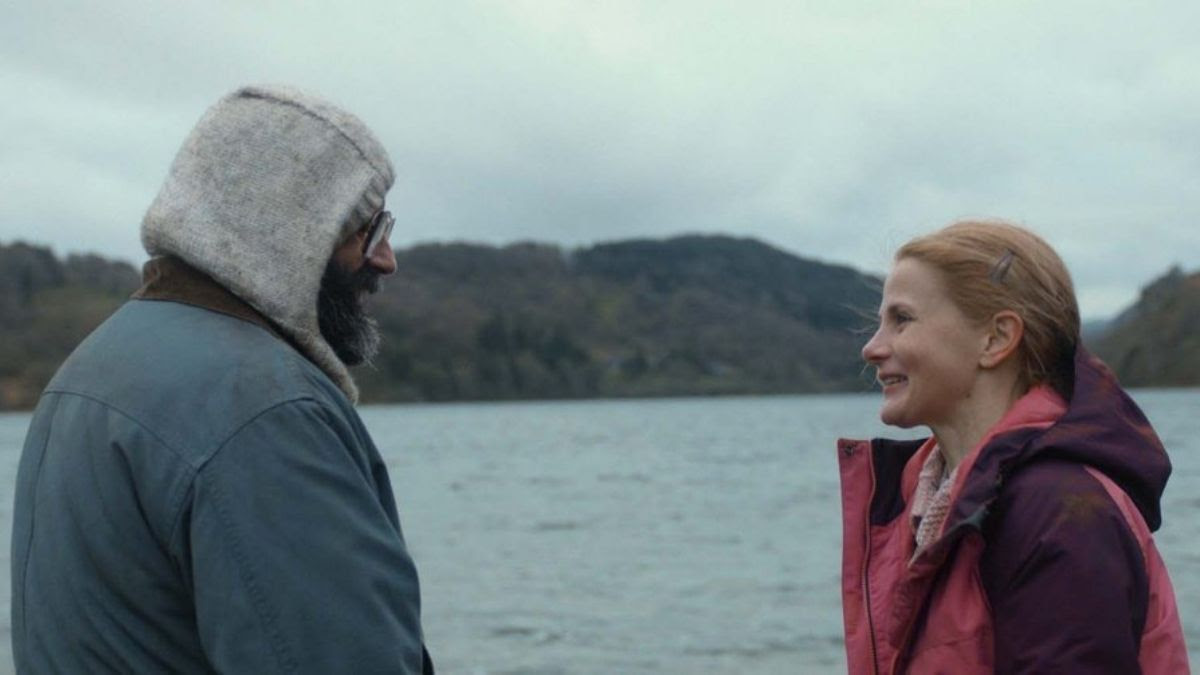
Harper (Jessie Buckley) has recently been through a tough time. She’s mourning her husband, James (Paapa Essiedu), and is haunted by the idea that he’s committed suicide because she wanted to divorce him. Badly in need of respite, she heads off to a remote country guesthouse in the hope that a bit of solitude will help to heal her wounds. There, she is greeted by the owner, Geoffrey (Rory Kinnear), a plummy, officious sort who playfully chides her for helping herself to an apple from his tree when she arrives. ‘Forbidden fruit and all that.’

Harper decides to take a walk in the countryside, (in a glorious extended sequence that really shows off the skills of cinematographer, Rob Hardy) and begins to think that she may be on the road to recovery. But then she has a spooky encounter in an abandoned railway tunnel and shortly thereafter, is terrorised by a naked man, who she thinks, may be stalking her.

As she encounters more of the local population (nearly all of them male), she begins to realise that this isn’t going to be the peaceful sojourn she’s been hoping for…

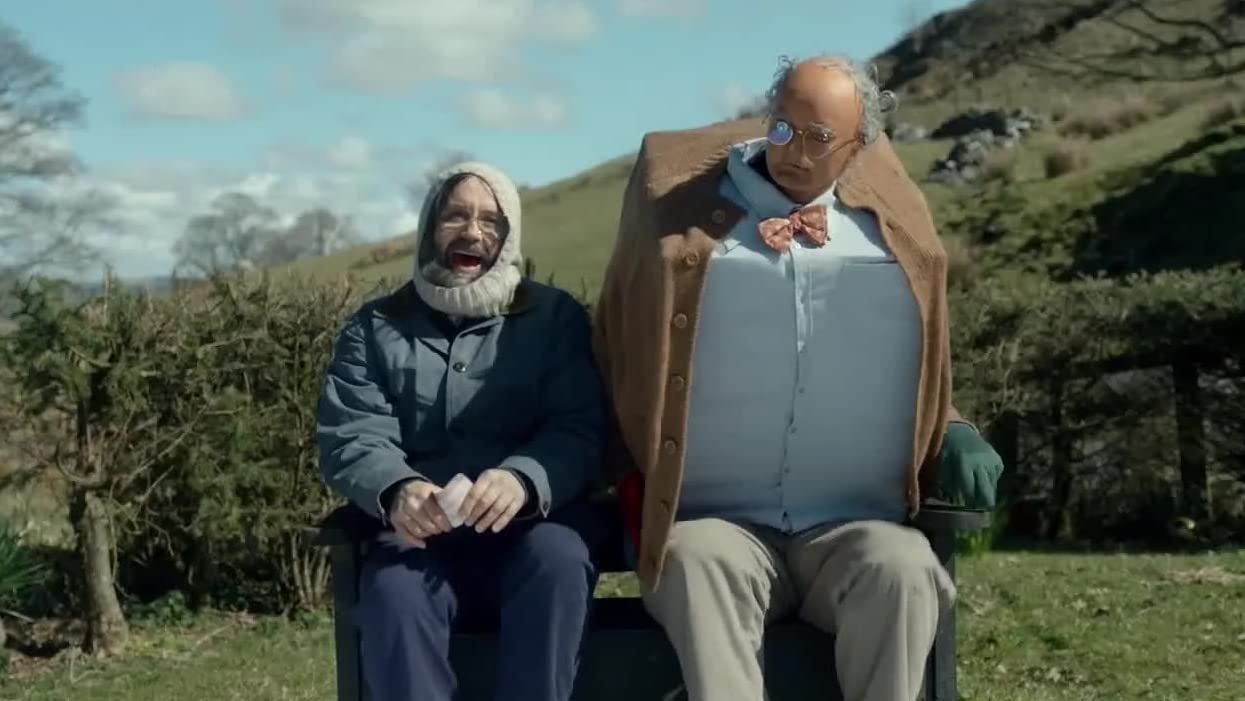
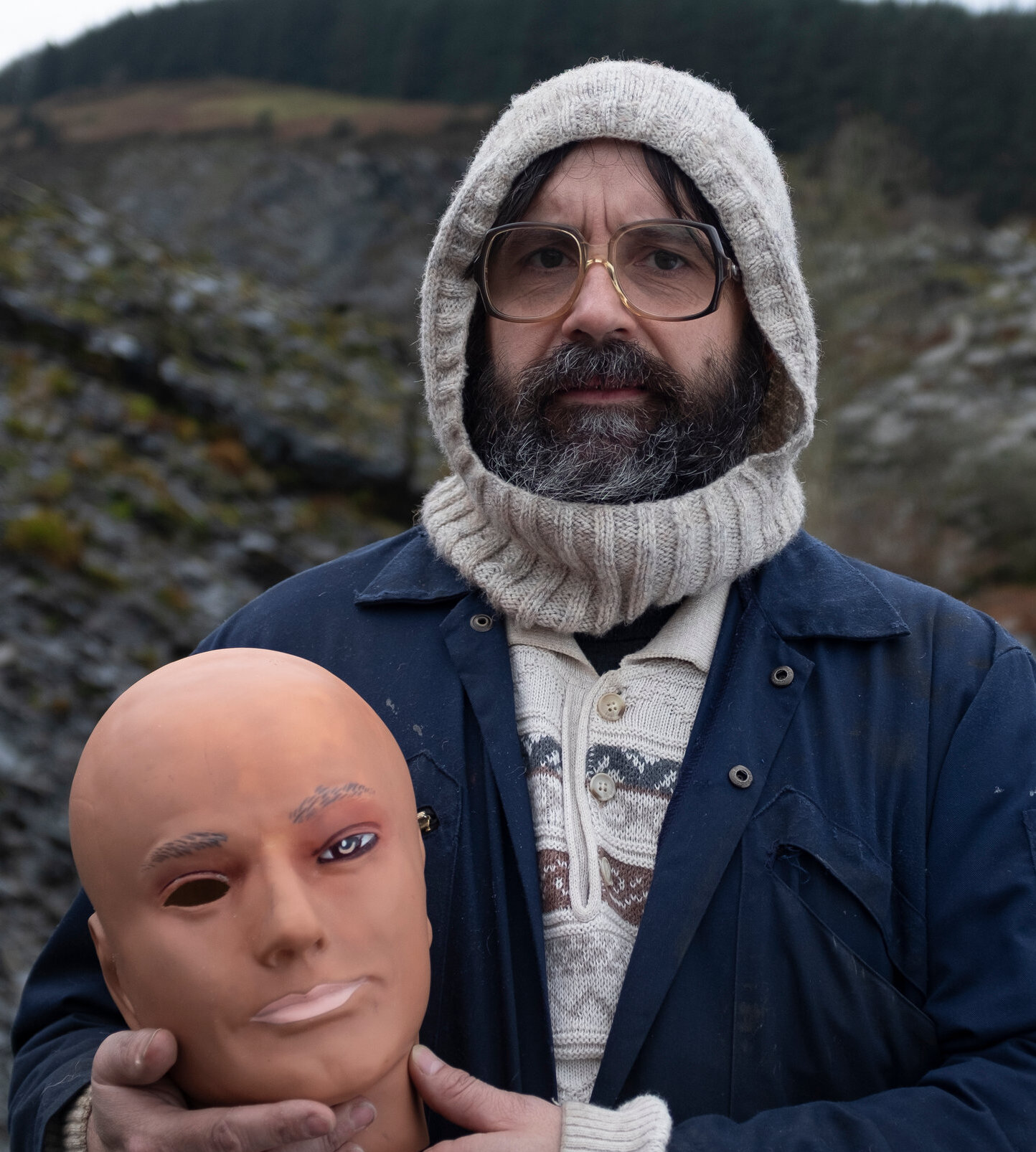
You’ll already have read that the film’s big conceit is that every male character (except for James) is played by Rory Kinnear – and played brilliantly, I might add, his creations ranging from a deliciously sinister local priest to a troubled teenage boy. Buckley too is terrific, in a challenging role where she is obliged to do most of her emoting in silence.

The film’s subtext would be perfectly clear even without the massive clue offered in its title. All of Kinnear’s characters are examples of toxic masculinity, the essence instilled from birth and manifested in different ways – in sarcasm, in outmoded chivalric beliefs and, sometimes, in outright violence. These men all stem from the same poisoned root. The idea is perfectly expressed in the film’s first two thirds and no viewer will be in any doubt about Garland’s intentions.

So why, I ask myself, does he decide, in the film’s final stretch, to double down on the message, presenting an extended body-horror climax that tells us pretty much what we already know. I feel as though I’m being bludgeoned repeatedly over the head with the same premise, as though I can’t be trusted to appreciate its meaning.

And then, there’s the final bit, which without any warning throws a handful of doubt into the mix, obfuscating that message and ensuring that I leave the cinema feeling confused.

At any rate, it’s a disappointing conclusion to a film that has me hooked from the start.

3.6 stars

Philip Caveney
Top Gun: Maverick

25/05/22

Cineworld, Edinburgh

I wasn’t a big fan of the original Top Gun.

Reviewing it for City Life Magazine in 1986, I complained that the film felt like a glossy advertisement for the US Navy – and I wasn’t in the least bit surprised when the American military elected to instal enrolment booths in cinemas showing the film, so that pumped-up youngsters could walk straight out of a viewing and sign themselves up for active service.

This sequel had already been a long time coming before the pandemic obliged its release date to be pushed back several times. Finally, here it is, with Tom Cruise still looking perfectly serviceable in the hunky action man role and with Joseph Kosinski taking up the directorial reins on behalf of the late Tony Scott.

Years after the events depicted in the first movie, we meet Pete ‘Maverick’ Mitchell, still a mere Captain, while most of his contemporaries are either dead or have risen through the ranks. He’s now working as a test pilot and is still more than ready to bend the rules when the powers-that-be threaten to close down his current project.

Close to facing a court martial, he’s ‘rescued’ by his former teammate Tom ‘Iceman’ Kazansky (Val Kilmer), who gets him assigned as instructor to an elite group of young pilots, training for a dangerous mission in Iran.

Mitchell soon discovers that one of his students is Bradley ‘Rooster’ Bradshaw (Miles Teller), the son of his old wingman ‘Goose.’ Bradshaw blames Mitchell for the death of his father – and for the the fact that he chose to hold him back in his training for several years. Can Maverick somehow bury the hatchet with Rooster and, at the same time, teach him to become a valuable member of his young team?

Hey, does the Pope shit in the woods?

Maverick is, I’m glad to say, a major improvement on the original film. Yes, it’s still pumped full of testosterone and yes, there’s still (inevitably) some major dick-swinging on display, but this story is considerably more nuanced than its predecessor and at least here the female characters are allowed to be more than just compliant love interests. There is still some romance, of course: Maverick hooks up with an ex, Penelope Benjamin (Jennifer Connelly), now conveniently divorced and running the local bar. It’s hardly a plot spoiler to say that, yes, old sparks are destined to fly.

As with the first movie, there are some extraordinary flight sequences here and they are given extra oomph when I remember that Cruise is doing it all for real, which is a mark of the man’s commitment to his craft. Unlike its perfectly honed lead, the film does get somewhat lumpen around the mid section, when a series of training sequences go into rather more detail than is necessary. It could do with a little less of that.

But things rally magnificently for a genuinely pulse-quickening final half hour and (yes, I admit it) a heartwarming conclusion. While you could argue that plot-wise it’s all faintly ridiculous (and you wouldn’t be wrong on that score), this is nonetheless a slice of highly polished entertainment that largely succeeds in taking its original premise to unexpected new heights.

3.8 stars

Philip Caveney
Benediction

21/05/22

Cineworld, Edinburgh

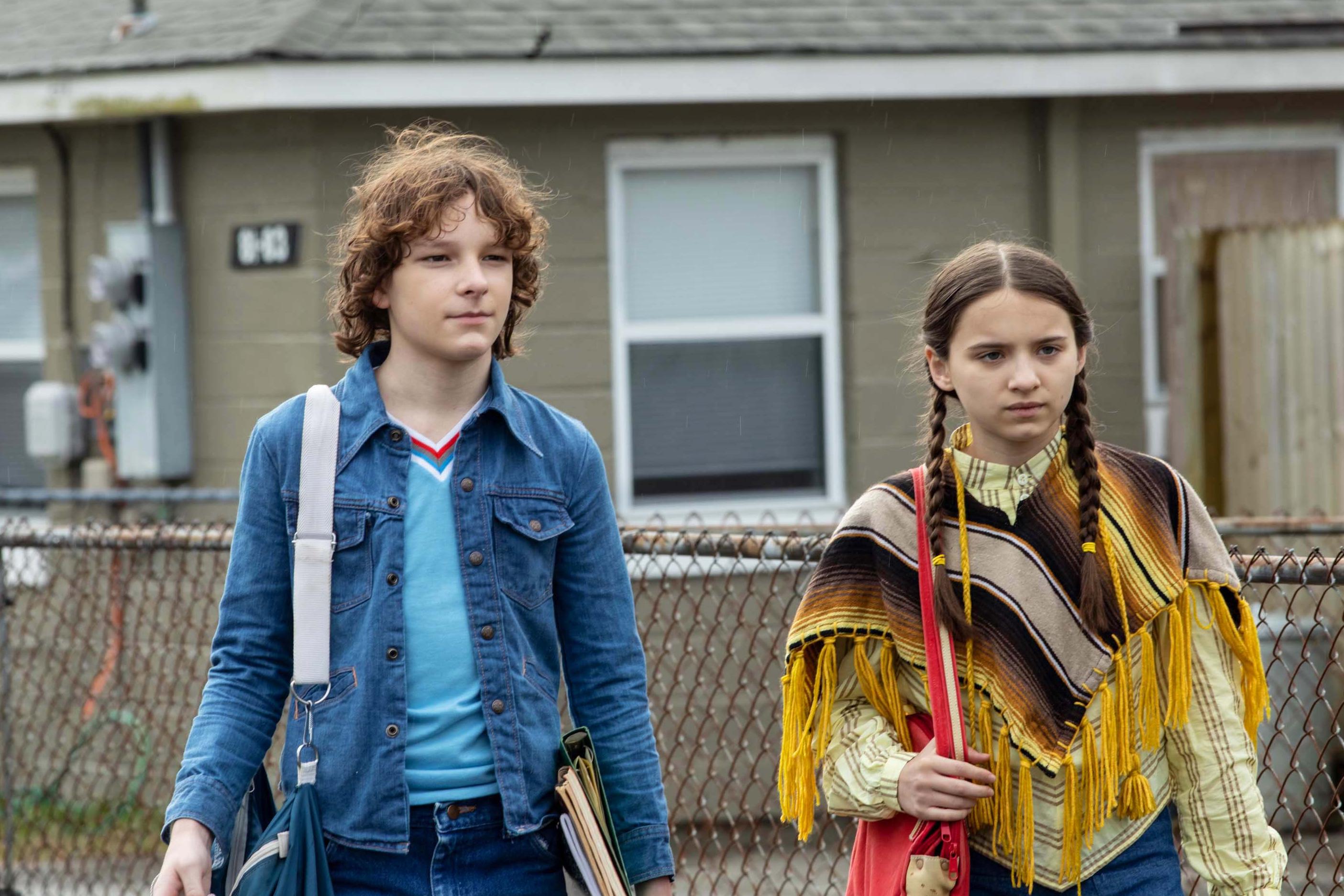
Once thought of as the foremost chronicler of British working-class life, writer/director Terence Davies turns his attention to the more privileged world of the poet and novelist, Seigfried Sassoon, in a bleak but affecting account of his life. When we first meet Sassoon (Jack Lowden) he’s already a decorated war hero, who has publicly announced his hatred for the political machinations of the conflict and his refusal to have anything more to do with it.

He’s duly packed off to Craiglockheart, Scotland, to undergo ‘therapy’ and is issued with an armband which identifies him as suffering from mental health issues, rather than as a conscientious objector. The latter, of course, generally tended to end up in front of a firing squad.

At Craiglockheart, Sassoon finds himself under the sympathetic care of Dr Rivers (Ben Daniels), who – like Sassoon – is secretly homosexual; it’s also here that he meets young poet Wilfred Owen (Matthew Tennysson), to whom he becomes a friend and a mentor – whilst wistfully observing that Owen is the greater talent. Owen, of course, is soon declared to be ‘cured’ and despatched back to the trenches, where he is destined to die at just twenty-five years old.

As the years roll by and the jazz age seems to offer the promise of a more permissive society, Sassoon moves through a series of relationships with unsuitable men. These include Ivor Novello (Jeremy Irvine), depicted here as a thoroughly odious piece of work – and Stephen Tennent (Calam Lynch), who despises the very concept of fidelity. Davies captures the spirit of the age with great skill and the marvellously bitchy banter deployed by Sassoon’s acquaintances is endlessly entertaining. There’s also an uncomfortable scene where Sassoon is invited to recite a poem at a soirée and manages to destroy the evening with the literary equivalent of an articulated lorry smashing through a plate glass window.

Again the years roll by and another war ensues. In an ill-advised attempt to achieve outward respectability, Sassoon decides to marry Hester Gatty (Kate Philips), and it’s clear from the outset that their marriage is not going to end well. In later scenes, the poet has transformed into a bitter, guilt-wracked recluse – this version played by Peter Capaldi – struggling to connect with his son, George (Richard Goulding), and haunted by the fact that he has never found the acclaim he feels is his due. Capaldi looks nothing like Lowden, but perhaps that’s the point. Isolated in a world he no longer identifies with – a straight world of pop music and disposable trivia – Sassoon really does seem like an entirely different person.

Austere and elegiac, Benediction won’t be for everyone, but for poetry lovers there are readings of some of Sassoon’s finest works, often recited over harrowing black and white sequences from the First World War – the spectre that shaped his talent and from which he never really escaped. It’s perhaps ironic that the film’s moving climax is handed over to Wilfred Owen, whose shattering poem, Disabled, provides the soundtrack for Sassoon’s greatest moment of self-realisation.

Benediction is a fascinating piece – an evocation of a period that seemed to offer the possibility of sexual freedom, but somehow never truly delivered on that promise – and the life story of a man haunted by his own ghosts.

Horror of wounds and anger at the foe,
And loss of things desired; all these must pass.
We are the happy legion, for we know
Time’s but a golden wind that shakes the grass.

4.2 stars

Philip Caveney
A-ha: The Movie

20/05/22

The Cameo, Edinburgh

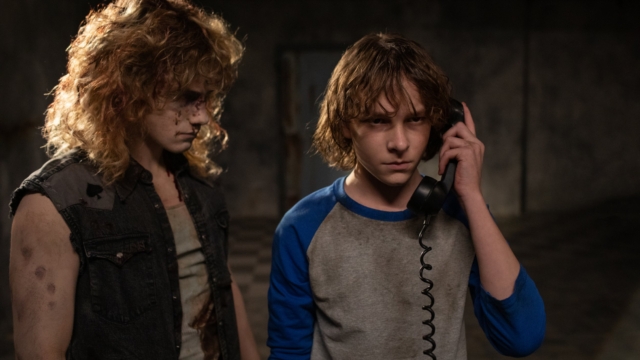
I was never a big A-ha fan, but I was a teenager in the 80s, so I couldn’t miss them – and there was never any denying that Take on Me was a banging tune with a mightily impressive video. And yes, a few plaited leather bands might have made their way onto my wrists and, okay, I might have covered my French book with a Smash Hits centrefold of Morten Harket – I mean, I had to cover it in something, right? But I didn’t know much about them, apart from their names and that they were Norwegian. I wasn’t interested.

But now, I discover, there’s more to them than met the eye.

Until now, I’ve never realised that they had real musical ambition. I’ve filed them under ‘pretty boy band’ in my mind, and paid them little heed. This fortieth anniversary documentary reveals my ignorance: there’s some serious musical ability here, obscured by the way they were marketed back in the day.

I hadn’t known they were still going – have been going all along, albeit with breaks. They seem tethered to one another, despite some pretty serious tension.

Magne Furuholmen (or ‘Mags’) emerges as the most compelling character. He’s in thrall to songwriter/guitarist Pål Waaktaar, who’s been his friend and bandmate since they were twelve. He’s resentful of him too: Pål insisted Mags should relinquish his beloved guitar in order to play keyboards, and then refused to give him a writing credit for Take on Me, despite the fact that the catchy synth riff was indisputably Mags’ creation. The rancour has clearly been festering for years, but there’s respect and nostalgia and maybe even love in the mix; they’re like brothers, I suppose, bound together by something bigger than any grievance. Still, Mags’ broken heart is more than just a metaphor.

Morten is the glamorous outsider, with a beautiful face and the voice of an angel. Pål knows exactly how to write for his voice, to showcase his skill. Harket seems more content than the others, despite his self-avowed perfectionism and constant self-criticism. He knows where to draw the line – when to remove himself from the fray; how to remain level-headed, even in the presence of two-hundred-thousand adoring fans.

Thomas Robsahm and Aslaug Holm’s film provides a fascinating insight, not just into the band themselves, but also into the industry around them: I’ve never seen a producer’s impact so clearly depicted. Nor have I ever been so aware of a PR machine shaping the way celebs are seen: at the height of their fame, there was a huge chasm between A-ha’s projected image and how they saw themselves.

In the end, I’m left feeling sad for these three seemingly lovely men, none of whom seems to be enjoying life, despite their indisputable success in a field they all profess to love. Maybe this is why they keep returning: hoping against hope that the next tour, the next album, will finally be the one to bring them that elusive happiness.

4 stars

Susan Singfield

Everything Everywhere All at Once

13/05/22

Cineworld, Edinburgh

Cinematic multiverses seem to be coming thick and fast at the moment. No sooner has Dr Strange shuffled his way through one, then this arrives. Everything Everywhere All at Once is the sophomore effort from the directorial partnership known as ‘The Daniels.’ (I didn’t catch their debut, Swiss Army Man, but I know it has its followers.) EEAAO is currently receiving enthusiastic buzz and has already been garlanded with glowing reviews, but – though it undoubtedly has moments of genuine brilliance – it often feels as though the directors aren’t as in control of their concept as they ought to be.

Evelyn Wang (Michelle Yeoh) and her timid husband, Waymond (Ke Huy Quan), run a chaotic laundromat in Simi Valley, California. Evelyn isn’t happy with her life and she’s constantly at odds with her daughter, Joy (Stephanie Hsu), who is gay, something that Evelyn tries to hide from her father, Gong Gong (James Wang). The family are summoned to the IRS office where they are subjected to an interrogation by ruthless tax inspector, Deirdre Beaubeirdre (Jamie Lee Curtis). Evelyn has tried to claim a karaoke machine as a legitimate business expense and Deirdre isn’t at all happy.

It’s round about this point that Waymond reveals that he’s not actually who he seems, but a Waymond from an entirely different reality. He’s come here to try to prevent Evelyn from being destroyed by an evil entity who looks very like her own daughter.

It would be pointless to try to give any more plot details because from hereon in – as the title might suggest – what ensues is a breathless free-for-all, as Evelyn stumbles helplessly in and out of her various incarnations, acquiring skills along the way. One minute she’s a skilled martial artist, the next a trained chef, then she’s an opera singer and, in what must be the film’s most bizarre sequence, a lesbian with hot-dog sausages for fingers. Along the way, there are references to other movies – 2001: A Space Odyssey, In the Mood for Love and er… Ratatouille, to name but three.

But it’s an exasperating journey. One moment, I’m genuinely impressed by what I’m watching, the next I’m just… confused. Where are we? What’s happening?

Yeoh is splendid in what must be the most eccentric role-choice of her career, while Huy Quan (who has barely graced cinema screens for more than four decades) makes a decent fist of Waymond. It’s interesting to note that The Daniels did first consider Jackie Chan for this role (a kung-fu punch-up where Waymond uses a bumbag as a set of improvised nunchuks could have stepped right out of one of Chan’s films). There are some comedy sequences in the mix too, and the crowd at the screening I attend are laughing throughout.

But all too often if feels as though The Daniels are deliberately going for cheap shots. Another fight scene involving butt plugs and oversized dildos just feels exploitative – and do we really need to see Evelyn eating her father’s snot? Furthermore, with a running time of two hours and nineteen minutes, EEAAO definitely overstays it’s welcome.

This then, is the curate’s egg multiverse – good in parts, but occasionally indigestible.

3.8 stars

Philip Caveney
Doctor Strange in the Multiverse of Madness

06/05/22

Cineworld, Edinburgh

Another Marvel, another Multiverse – and am I the only one who’s growing a little weary of this device? It worked wonders in the Spider-Man franchise, but can it do the same for my other old go-to comic favourite, Doctor Strange? Well possibly, but I have to admit the main thing that draws me to this is the presence of Sam Raimi in the director’s chair.

Raimi has released some great movies over the years: The Evil Dead and its super-charged sequels, as well as A Simple Plan and Drag Me to Hell – but it’s a while since he’s had a chance to strut his cinematic stuff. While he’s always been a director who dances to his own tune, can he successfully apply those considerable talents to Marvel’s famously constricting template?

The answer is, ‘sort of.’

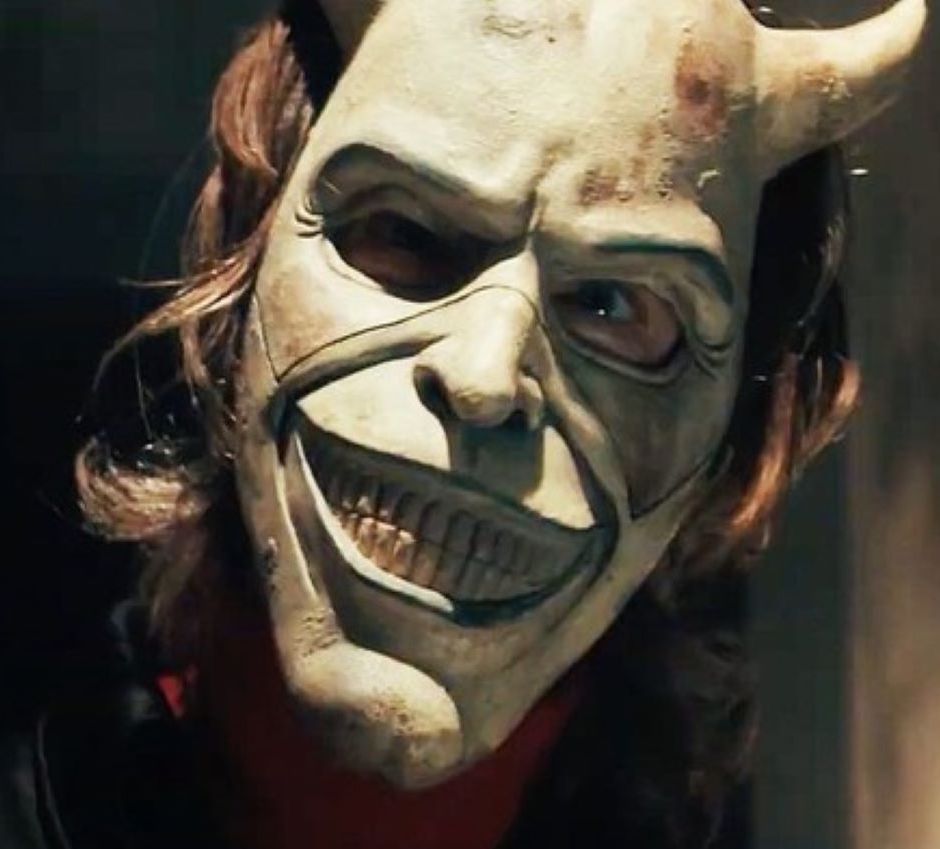
DSITMOM starts, appropriately enough with a dream sequence, where Stephen Strange (Benedict Cumberbatch) witnesses a twisted, evil version of himself attacking a teenage girl. But is it a dream? When, shortly afterwards, Strange encounters the girl in real life, she turns out to be America Chavez (Xochitl Gomez), who has the ability to travel across the multiverse with ease, though (rather conveniently) she doesn’t know how she does it. Or, for that matter, why. Nor can she explain why she’s being pursued by a giant one-eyed octopus. But hey, these things can happen, right?

Sensing that she’s in danger (no shit, Sherlock), Strange seeks help from Wanda Maximoff (Elizabeth Olsen), only to discover that she’s not going to be any help at all. Demented by the recent death of her partner and terrified she might lose the two children she loves so much (the ones who don’t actually exist), Wanda decides to steal America’s power for her own wicked ends, an action that will cause the girl’s death. (Incidentally, for someone who’s supposed to be a genius, Strange seems to be very adept at putting his foot in things. He’s the one who messed everything up in No Way Home – and now this.)

I’m not going to relate any more of the plot because, frankly, it’s as mad as a box of frogs (I suppose the title should have warned me), but the more important question is, can this nonsense hold together as a movie, and the answer is ‘just about.’ DSITMOM is essentially a series of frantic action set-pieces, loosely strung together. Though they are occasionally eye-popping and sometimes make me feel that I’ve inadvertently dropped a tab of acid, they never really gel into a convincing story arc.

Different versions of popular Marvel characters keep popping out of the woodwork and in many cases are actually killed, but because we know they’re not the real McCoy, there’s no real sense of threat here. Cumberbatch gets to portray several different Stephens, which was probably more fun for him than it proves to be for an audience. The parts that work best for me are the Sam Raimi moments, the few scenes where he’s allowed to employ the tropes of low budget horror – and of course there’s the inevitable cameo from Bruce Campbell, which is always welcome. But too often Raimi’s singular vision is swamped in the sturm und drang of state-of-the-art special effects.

Elsewhere, actors of the the calibre of Benedict Wong, Chiwetel Ejiofor and Patrick Stewart are called upon to utter some truly naff dialogue, courtesy of screenwriter Michael Waldron.

The usual post-credits sequence suggests that Strange will be even stranger in the next instalment, if and when it happens. The enthusiastic applause from the mainly teenage audience at the end of this screening suggests that I may well be in the minority here.

Doctor Strange (and possibly Mr Raimi) will be back. Watch this space.

3.4 stars

Philip Caveney
Happening

03/05/22

The Cameo, Edinburgh

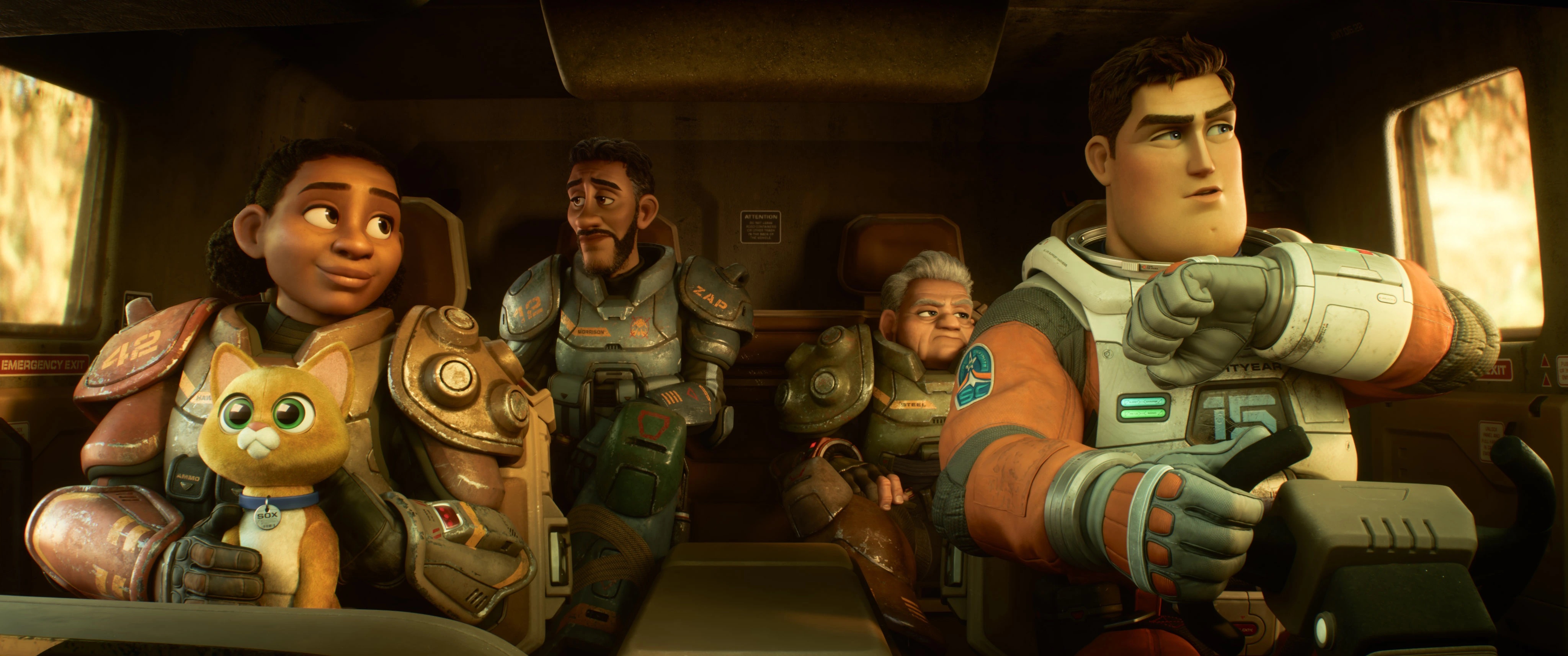
Happening – or L’événement – is a harrowing tale, directed by Audrey Diwan and based on author Annie Ernaux’s experience of an unwanted pregnancy. It’s 1963, and the students at Angoulême university are preparing for their exams. It’s hot and hormones are running wild, but sex is a shameful, clandestine activity, and ‘getting caught’ is every girl’s nightmare.

When Anne (Anamaria Vartolomei)’s period is late, she knows exactly what it means. She faces a stark choice: have a baby and forsake her dreams of a career in academia, or have an abortion, thus risking imprisonment or death. She’s a clever girl, destined for great things. She can’t bear to see her future curtailed; she’s not ready to be a mother. But procuring a termination proves punishingly difficult.

This is a hard film to watch. Vartolomei is compelling in the lead role, and her desperate isolation really strikes a chord. Poor Anne! No woman should have to go through such troubles alone. The ‘father,’ Maxime (Julien Frison), is useless. He’s more worried about what his friends think of Anne than he is about her plight. What does she want him to do? Nothing, she tells him. She’ll manage by herself – just as she has throughout this ordeal. Because there’s no one who can help. Not her mum (Sandrine Bonnaire); she’s so proud of her brainy daughter – how can Anne face disappointing her? Not her best friends (Luàna Bajrami and Louise Orry-Diquéro) – she can’t make them complicit because they’d face gaol time too. Not her doctor – he’s definitely not on her side. So Anne is utterly, irrevocably, unbearably alone.

She does find a way, of course. Women do. This is why banning abortion is nothing more than an act of wanton cruelty. Unwanted pregnancies don’t miraculously become wanted ones; women’s lives just get harder. Anne has to skulk in the shadows, begging for help from people she barely knows, hoping against hope they don’t betray her. And, when she does – finally – find someone who can assist her, she has to sell everything she owns to fund the procedure.

Meanwhile, Maxime’s still frolicking on the beach with his pals, his life untouched.

It makes me angry, watching this at the same time as Roe V Wade is under fire in the USA. We know what happens when women can’t access legal, safe abortions: they die. The Supreme Court is attacking women’s basic human rights, condemning thousands to suffer. How dare they?

Happening‘s release is a timely reminder of what we stand to lose. Although it’s set in the 1960s, it doesn’t have the feel of a period drama: the fashions are neutral, the obviously contemporary details restricted to the music and the law. This lends the film an immediacy: this issue isn’t just an historical one.

Laurent Tangy’s cinematography captures the oppressive summer heat, the bleached colours reminding us of time’s inexorable progress. As the weeks unfold and Anne approaches the point of no return, the impulse to look away becomes almost irresistible.

And yet we can’t. We mustn’t. Because Anne doesn’t have that luxury.

5 stars

Susan Singfield

The Unbearable Weight of Massive Talent

23/04/22

Cineworld, Edinburgh

As most cinema-goers will testify there are actually two Nicholas Cages. One of them is the skilled actor who won an Oscar for Leaving Last Vegas and starred in a whole string of superior action movies like Face/Off and Con Air. Then there’s his more recent incarnation, the wild-eyed weirdo who seems happy to turn up for any old film, so long as there’s a pay cheque and a handy chainsaw. Unfortunately, we’ve been seeing rather too much of the latter Cage over the past few years.

TUWOMT takes this basic idea and runs with it, creating something that’s both incredibly meta and perfectly happy to hold the long-cherished values of Hollywood up to ridicule. Sometimes, a great idea comes from out of the blue and, luckily, director/writer Tom Gormican and co-writer Kevin Etten managed to persuade Cage to sign on for this bizarre project, because it really couldn’t have worked without him. The result is one of the most immensely likeable movies I’ve seen in quite a while.

Actor ‘Nick Cage’ is on his uppers. He’s starred in a few too many stinkers and has failed to land the role he thinks might change his career for the better. He’s getting desperate – and it doesn’t help that his younger alter ego, ‘Nicky Coppola,’ keeps popping out of the woodwork to berate him for forgetting that he’s a film star first and an actor second. Meanwhile, he’s living in a hotel (where he owes $600,000 in back rent), he’s divorced from his long-suffering wife, Olivia (Sharon Horgan), and he’s rapidly losing the affection of his teenage daughter, Addy (Lily Mo Sheen).

When Cage’s agent, Richard (Neil Patrick Harris), mentions that Nick has just been offered a million dollars to attend a birthday party in Mallorca, he reluctantly accepts and is whisked off to the mansion of Javi Guttierrez (Pedro Pascal). Javi is Nick’s number one fan and has a collection of Cage-related movie memorabilia to prove it. He’s also written a screenplay that he wants Nick to star in. Awkward.

Almost before you can draw a breath, events start to pile in from the wings. CIA operative Vivian (Tiffany Haddish) informs Nick that Javi is a dangerous criminal who may just have kidnapped the daughter of a prominent anti-corruption politician. She wants Nick to work with her to find out where the girl has been hidden. It doesn’t help that he and Javi are getting along like a house on fire, sharing an affection for great films like The Cabinet of Dr Caligari and er… Paddington 2. Oh, and one other thing. They’re planning to write a screenplay together…

If this is starting to sound distinctly unhinged, that’s exactly what TUWOMT is all about, but it’s crazy like a fox. There’s something infectiously funny about the idea of undermining the pomposity of Hollywood and Cage never holds back, investing his character – himself – with a whole raft of pretentious interests and self-destructive urges. He doesn’t actually play his part for laughs but attacks it with genuine acting skill and the film is all the funnier for it.

He and Pascal cook up a fine old bromance amidst the mayhem and, as their planned screenplay develops, so the film hurtles breathlessly from one set-piece to the next. Amidst the resulting onslaught of shoot-outs and car chases, there really isn’t time to stop for a moment and consider how unlikely it all is, but it hardly matters. While TUWOMT is unlikely to feature on future lists of ‘the best Nicolas Cage Movies of all time,’ it’s nonetheless a hoot from start to finish.

And it’s also proof that Paddington 2 – awarded a full 5 stars here on B&B – is one of the greatest films ever made.

4 stars

Philip Caveney
The Northman

19/04/22

Cineworld, Edinburgh

It seems suspiciously like fate. Here I am – only just returned from a week in Shetland, where I’ve been researching Vikings – and this film is waiting for me at the local cineplex. Of course I have to see it. I can’t not see it. But I have some reservations. For one thing, despite the film’s almost indecent rash of five star reviews, I haven’t been exactly enamoured by Robert Egger’s previous offerings, The Witch and (more especially) The Lighthouse, both of which felt like cases of style over content.

It’s clear from the get-go, that The Northman is a big step up for Eggers (who co-wrote the screenplay with Sjon). His evocation of Viking life is vividly painted in freshly-spilled viscera across a massive landscape. The world-building here is dirty, ugly and thoroughly convincing. In the opening scenes, we meet young Prince Amleth (Oscar Novak), welcoming his father, King Aurvandil (Ethan Hawke), back from his conquests. Amleth’s mother, Queen Gudrún (Nicole Kidman), is rather less welcoming and the reason for that soon becomes clear. She has secretly allied with Aurvandil’s brother, Fjölnir (Claes Bang), who is determined to kill Aurvandil and his son, and take Gudrún as his wife.

If the story seems familiar, it ought to. The ancient Scandinavian legend of Amleth is the tale that initially inspired Shakespeare to write Hamlet.

Amleth manages to escape from the bloody mutiny and, when next we meet him, he’s grown into a thoroughly buff Alexander Skarsgård, who, adopted by another tribe, has become a fully-fledged wolf warrior, a berserker. An ensuing battle sequence leaves no femur unshattered, no skull uncleft. Those viewers who wince at bloody violence may prefer to avoid this film at all costs – or spend a lot of time looking away from the screen.

Amleth learns that his uncle Fjölnir has had his stolen kingdom taken from him and has been exiled to Iceland, where he’s attempting to make a new life for himself as a sheep farmer. Gudrún has gone with him and Amleth knows that he must follow. So he disguises himself as a slave (by first branding his chest with a hot coal) and stows aboard a boat taking a consignment of workers over to Fjölnir. On the hazardous journey across the ocean, he meets up with Olga of the Birch Forest (Anya Taylor-Joy), a self-professed earth witch, and quickly falls under her spell.

But can this new love quell the thirst for vengeance that has consumed him since childhood?

The Northman is by no means perfect. It’s at its best when depicting the savage lifestyle of the Vikings and I also love the hallucinatory images that often flood the screen, particularly Amleth’s repeated visions of the legendary Tree of Yggdrasill, where family members are suspended like ripening fruit from its entwined branches. There’s also a spectacular Valkerie ride that carries me headlong to Valhalla.

Kidman, though initially underused, does get one scene that puts an entirely different spin on circumstances and makes me appreciate why she’s a director’s go-to for so many difficult roles. I would also have liked to see more of Willem Dafoe who, as Heimar the Fool, has clearly been drafted in to fill the Yorrick-shaped hole in the piece.

If I have a criticism, it’s simply that the age-old theme of revenge offers little in the way of surprise – indeed, there’s one point in the film’s later stages that seems to offer a braver and less conventional solution to Amleth’s torture, should he be man enough to take it – but, perhaps inevitably, it’s thrown aside and our rugged hero goes back to the well-worn path he’s always been destined to tread. Which makes the final fiery confrontation a little underwhelming.

Still, there’s no doubt that this is Eggers’ most assured film thus far – and I’m definitely interested to see where he goes next.

4.2 stars

Philip Caveney