Film

Hatching

17/09/22

Cineworld, Edinburgh

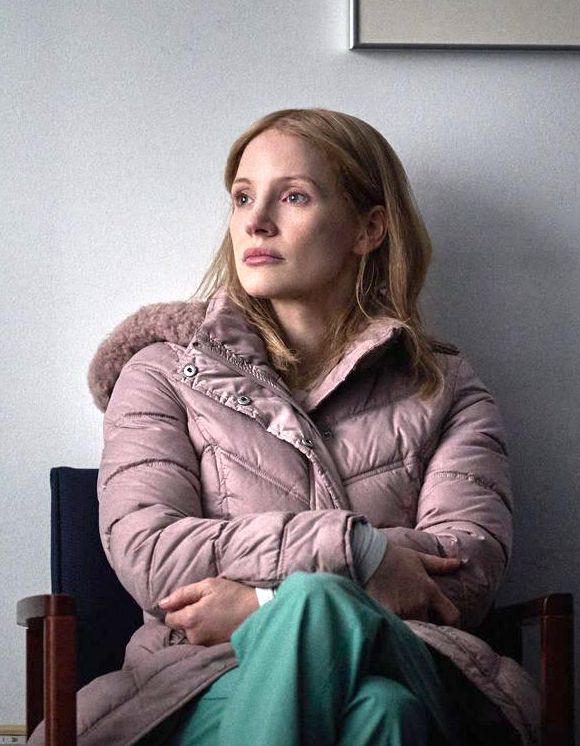
Hatching (or Pahanhautoja) is Finnish writer/director Hanna Bergholm’s feature debut, a coming-of-age horror that follows a well-trodden path, but also positions us firmly in the here and now – and does so with panache.

Tinja (Siiri Solalinna) is a sweet-natured tween gymnast. We first encounter her via her mum (Sophia Heikkilä)’s Lovely Everyday Life vlog, where Tinja is shown smiling as she practises, stretching and bending, before cuddling up on the family sofa in their beautifully decorated suburban home. But the carefully curated perfection is brutally disrupted by the appearance of a bird, which wreaks destruction as it flaps, terrified, around the room, breaking all manner of delicate glass ornaments. Not to worry: Tinja’s mum knows exactly how to deal with things that don’t suit the image she wants to project. “We can crop it out,” she says, of Tinja’s foot, when it isn’t pointed properly. It turns out her ruthlessness extends to birds – and their necks.

As Tinja struggles to reach the standard required for a big gymnastics competition, we start to see just how pushy her mum really is, and her dad (Jani Volanen) is too weak to help. Her little brother, Matias (Oiva Ollila), only makes things worse, teasing and goading his sister, as younger siblings are wont to do. So when Tinja catches her mum kissing Tero (Reino Nordin), the guy who’s come to repair their chandelier – broken by the bird – it’s all a bit too much. “It can be our secret,” says her mum, making Tinja complicit in the affair. Tinja nods and blinks back tears – then heads out into the forest, where she finds an egg. And now she has a secret of her own…

It’s not too much of a spoiler to say that what hatches is a doppelgänger – because that’s the whole point of the tale. “Alli” is Bertha, Mr Hyde and Frankenstein’s monster: she is Tinja’s rage made flesh. And, try as she might, Tinja can’t control Alli…

Hatching is a stylish, unsettling film, and the cinematography (by Jarkko T. Laine) really cements the disconnect between the lavishly filtered vlog and murky reality. The soundtrack (by Stein Berge Svendsen) is eerie and haunting: it’s discomfiting, and disrupts any sense of harmony, however carefully Tinja’s mum tries to manufacture it. And Solalinna is mesmerising in the lead role: at once innocent and steely, victim and victor.

There are some issues though. The allegory feels a little heavy-handed at times, and some of the imagery is a bit on the nose. Alli’s early incarnations look, well, silly, rather than frightening, and the horror diminishes in intensity over the course of the story, rather than building. The ending comes with a whimper rather than a bang and, because we’re never shown how events impact either on the family or the outside world, the stakes just aren’t high enough.

In the end, Hatching feels like exactly what it is: an imperfect but promising first attempt. I’ll certainly be keen to see what Bergholm comes up with next.

3.4 stars

Susan Singfield

See How They Run

14/09/22

Cineworld, Edinburgh

The recent success of Rian Johnson’s Knives Out seems to have rekindled a cinematic interest in whodunits. Johnson’s sequel, Glass Onion, is due out soon (on Netflix) but, meanwhile, on the big screen there’s See How They Run, a lighthearted spin on the genre, directed by Tom George (previously best known for TV’s This Country) and written by Mark Chappell.

It’s 1953 and Agatha Christie’s The Mousetrap is already approaching its one hundredth performance. Moves are afoot to turn it into a motion picture, spearheaded by odious American screenwriter Leo Kopernick (Adrien Brody) who wants the chosen screenwriter, Mervyn Cocker-Norris (David Oyelowo), to amp up the sex and violence to make it more screen-worthy. Okay, so there is a clause in the play’s contract, stating that it can never make the transition into film until its theatrical run has ended… but that won’t be long, surely?

Kopernick quickly winds up dead (don’t worry, this is in no way a spoiler) and suspicion initially falls on Cocker-Norris. But, as rumpled, hard-drinking Inspector Stoppard (Sam Rockwell) soon begins to discover, there are lots of people in the cast and crew who have reasons to bear a grudge – and anyway, he has his hands pretty full with his over-eager assistant, Constable Stalker (Saoirse Ronan).

See How They Run is a tremendously likeable film, virtually stuffed to the gills with big-name actors having a ball in small roles, many of them based on real life characters. Harris Dickinson offers a nicely judged Richard Attenborough (who starred in The Mousetrap‘s original production) and Pearl Chanda is excellent too as his wife and co-star, Sheila Sim. Rockwell does a suitably world-weary turn as Stoppard, but for my money it’s Ronan who really makes this fly, creating an absolutely adorable character, determined to make her mark in a world that has until now been entirely dominated by men. Plaudits should also go to comedian Tim Key, who does a brilliant job of embodying a loathsome police commissioner.

As you might expect, the script is as meta as you like, with plenty of in-jokes and sly references for theatrical fans to pick up on – but, more importantly perhaps, this is funny throughout, with some perfectly timed pratfalls thrown in for good measure. While it’s hardly destined to linger for long in a viewer’s mind, it’s nonetheless a very pleasant way to spend a well-paced hour and thirty-eight minutes.

4.2 stars

Philip Caveney
Fall

07/09/22

Cineworld, Edinburgh

Nearly twelve months after Becky (Grace Caroline Currey) loses her husband, Dan, in a tragic mountain climbing accident, she’s become a hard-drinking recluse, increasingly alienated from her worried father, James (Jeffrey Dean Morgan).

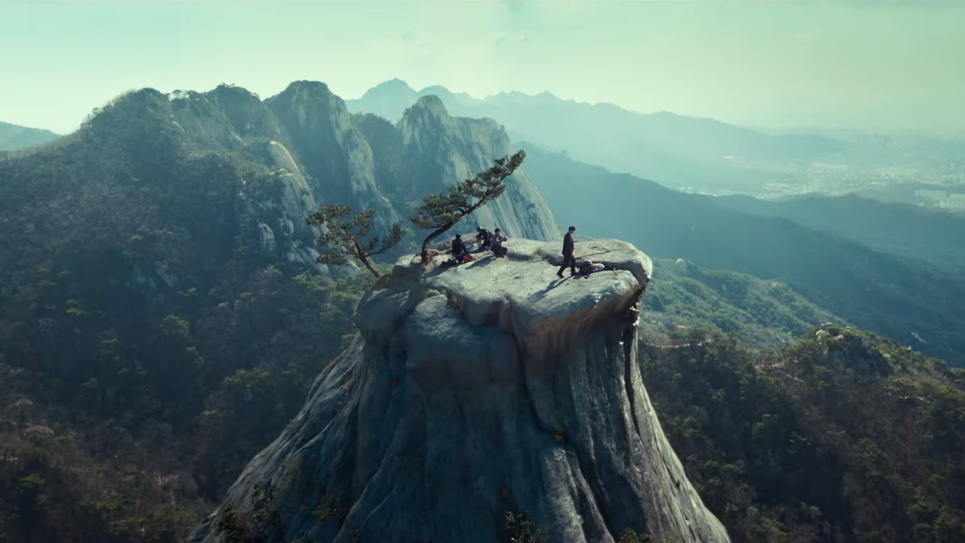
Then, out of the blue, she’s approached by Hunter (Virginia Gardner), who was with Becky and Dan on that fatal climb. Hunter is pursuing a new interest as a YouTuber, specialising in dangerous stunts while shouting “Whoo-hooh” into her iPhone. She wants Becky to accompany her on a different kind of climb, ascending a ladder to the top of an ageing TV tower, which – we are casually informed – is the fourth highest in the USA. 

After some doubts, Becky agrees to the trip and before you can say ‘bad idea’, the twosome  are clambering gamely upwards into the heavens…

Fall is a simple idea and one that doesn’t auger well for a one-hour-forty-seven-minute duration – so it’s to director Scott Mann’s credit that the story (co-written by Mann and Jonathan Frank) gets its tenacious hooks into you very quickly and holds you in a state of extreme anxiety right up to its conclusion.

Everything that can go wrong does go wrong: bad workmanship, hungry vultures, and Hunter’s insistence on pushing every boundary. It all adds to the torment, but it’s so cleverly handled, there’s barely time to consider how silly it all is. Furthermore, while I can’t be sure how much of this was actually done for real by stunt performers, it looks all-too convincing.

If some of the ‘revelations’ are perhaps a little too obviously sign-posted, there are others that really jerk the rug from under you (a perilous thing to do when you’re hundreds of feet in the air).

As somebody who isn’t good with heights this is a particularly intense experience but, it’s a thriller and I can hardly complain that I’ve been shortchanged.

4 stars

Philip Caveney 

Three Thousand Years of Longing

04/09/22

Cineworld, Edinburgh

First, a little bit about George Miller. I’m a big fan.

He is, of course, the Antipodean director who gave the world the Mad Max movies – and who, after an interval of twenty-seven years, did the near impossible by returning to the franchise and delivering what is arguably the finest action movie of 2015 – Mad Max: Fury Road. But wait, there’s more! What about The Witches of Eastwick? Brilliant film! And what about Babe? And, er… okay, I haven’t seen Happy Feet but it was a massive hit with the kids.

I guess what I’m saying is that Miller is no one-trick pony. And if nothing else, Three Thousand Years of Longing is proof of that. Co-written by Miller and based on a short story by AS Byatt, this is a film about the enduring power of storytelling. It wears its literary credentials with pride – indeed, the film is divided up into ‘chapters’ – and the result is enchanting in the most literal sense of the word.

Alithea (Tilda Swinton) is a narratologist (it’s a real thing), who has devoted her life to the study of stories. At one point, she makes the brilliant observation that “all gods and monsters outlive their purpose and are reduced to the role of metaphor”. On a trip to Turkey, where she’s been booked to speak at a literary conference, she buys a souvenir at the old bazaar in Istanbul, an ancient glass bottle. Whilst attempting to clean it with an electric toothbrush, Alithea accidentally releases its occupant, The Djinn (Idris Elba), who has spent a lot of time locked up in a variety of similar vessels.

It isn’t long before he and Alithea are exchanging extracts from their respective life stories…

I love this film, which offers a magical, Arabian Nights-style odyssey through a series of exotic landscapes, peopled by a host of fascinating characters. It would be so easy to get this wrong, ‘othering’ the various magical creatures who stride through the ensuing adventures, but Miller never puts a foot wrong and there’s a delicious fluidity to John Seale’s epic cinematography and Margaret Sixel’s editing, which mean the unfolding stories are never allowed to stagnate. Elba gets to escape from lion-thumping duties (see Beast) to prove his acting chops, and Tilda Swinton is as delightfully enigmatic as ever.

“You can’t put the genie back in the bottle,” is a well known adage, but apparently you can, as The Djinn learns to his regret. Also, faithfulness is so often taken for granted by the people who receive it. One other thing: this may be the first movie I’ve seen where the COVID pandemic is visually referenced with crowds of people in an auditorium wearing face masks. This was a big event in world history and yet most film makers have chosen to ignore it. Why?

Three Thousand Years of Longing probably won’t put a huge amount of bums on seats (I suspect that it’s too thoughtful, too labyrinthine to be a big hitter), but it’s nevertheless a gorgeous, exciting slice of cinema that’s clearly the work of a director who, in his late seventies, is at the peak of his powers.

Next up, Furiosa! Can’t wait.

4.5 stars

Philip Caveney

My Old School

01/09/22

The Cameo, Edinburgh

Truth, they say, is stranger than fiction. In Brian MacKinnon’s case, the two are intertwined. He’s the Peter Pan of Glasgow, the perennial schoolboy who returned – aged thirty-two – to the classrooms of his youth, determined to press rewind and try again, hoping for a different outcome second time around. Because MacKinnon had only ever had one desire: to become a doctor. And, if at first you don’t succeed…

…then you change your name to Brandon Lee and pretend to be sixteen. Right?

Right.

My Old School, directed by Jono McLeod, is a little masterpiece. The documentary blends animation with archive footage; audio recordings of MacKinnon with lip-synching from Alan Cummings; former classmates’ recollections with teachers’ regrets. Perhaps McLeod’s insider-status helps: he was actually there, one of Brandon’s peers; he’s able to acknowledge how benign MacKinnon’s deception was, as well as how bloody weird. There’s no attempt here to sensationalise, to turn this into something creepy or dangerous. Instead, the focus is on how strange – and ultimately sad – MacKinnon’s story is.

Cummings manages to convey MacKinnon’s peculiar blend of arrogance and vulnerability, and the animation (by Rory Lowe et al) has a retro Grange Hill vibe that suits the period. Brandon’s school pals come across as a kindly, forgiving bunch, more bemused than outraged by his deception.

In the end, there’s a terrible sense of poignancy, as we realise that everyone else has moved on, their schooldays firmly behind them. They’re busy living their lives: they are pharmacists, comedians, parents, carers, wrestlers, business leaders – and film makers. Meanwhile, MacKinnon is stuck, clinging to the past, chasing the memory of a broken dream.

4.5 stars

Susan Singfield

Beast

31/08/22

Cineworld, Edinburgh

Listen! Hear that? The swishing noise is the sound of thousands of tourists reaching for their pens and crossing ‘African Safari’ off their bucket lists.

In the rather generically titled Beast, American doctor Nate Samuels (Idris Elba) takes his two young daughters, Meredith (Liana Samuels) and Norah (Leah Jeffries), back to the remote part of Africa from where their late mother originated. Since his wife’s death from cancer, Nate has become somewhat distanced from the girls, so he’s arranged to hook up with his old pal, game warden, Martin Battles (Sharlto Copley), for a family holiday, that will be part safari, part tribute, part bonding experience.

What Nate and his companions don’t know is what’s happened in the film’s opening scenes, where a group of poachers have slaughtered an entire pride of lions but have failed to kill the dominant male, who is understandably miffed and looking for vengeance. This is a lion who appears to share genes with Michael Myers. He’s unstoppable – and it isn’t long before the safari has turned into a desperate attempt to survive…

Beast may essentially be a kind of landlocked Jaws, but it’s nonetheless effectively done. Screenwriters Ryan Engle and Jaime Primak Sullivan team with director Balthasar Kormákur to assemble a lean machine of a film, that alternates between Nate’s attempts to reconnect with his daughters and a series of nerve-shredding suspense sequences. I find myself flinching and gasping at every sound, as the Samuels are chased, cornered, clawed and battered, always in dire danger of becoming lion fodder. Those who dislike injury details will find themselves looking away from the screen at key points.

It’s surprisingly effective. The titular beast has been CGI generated, but is nevertheless very convincing – there’s none of the dead eyed, ‘uncanny valley’ look that affects so many computerised critters – and I find myself suitably terrorised throughout. There are some nicely integrated dream sequences too, one of which really throws me a googlie. Despite its ‘Man v Monster’ storyline, this isn’t any kind of retro macho piece: there’s nuance aplenty, and the two young girls are well-rounded, believable characters, who play an integral part in their own survival.

This isn’t going to change your life, but those who relish the idea of seeing Idris Elba punch a lion in the face will certainly get a kick out of Beast. The African tourist board, on the other hand, may not look quite so kindly upon it.

You’ll believe a lion can bear a grudge.

4 stars

Philip Caveney

Gwledd (The Feast)

24/08/22

The Cameo, Edinburgh

A Welsh language horror feature on general release, showing at a cinema near me – a good 200 miles away from my native land? How can I resist? (Answer: I can’t.)

Another lure is the actor Annes Elwy. We were mesmerised by her performance as scary teenager Mia in the bilingual TV series Craith (Hidden); it was clear that hers was a name we’d hear again. And here she is, playing another scary teenager. No doubt she’s just as skilled in portraying different character types, but – ooh – she is adept at this. This time, she’s Cadi – a sullen, watchful kind of girl, a kitchen hand in the village pub, drafted in to help the local MP and his wife to host a dinner party for some important guests.

But something is rotten in the state of Cymru. Gwyn (Julian Lewis Jones) and Glenda (Nia Roberts) might seem successful: check out their swanky new house, stark and incongruous in the lush Welsh countryside. But they’re dancing with the devil, allowing local businessman, Euros (Rhodri Meilir), to drill their land for precious minerals. Their neighbour, Mair (Lisa Palfrey), is appalled. “What if She awakens?” she asks, when Glenda tries to persuade her to let Euros mine ‘the Rise’, part of which is on her farm.

But of course, She is already awake – and ready to exact revenge…

So far, so good. Gwledd, written by Roger Williams, has all the hallmarks of the folk horror films we love. Sadly, it has some issues too, which mean it doesn’t quite hit the mark.

The first problem is its glacial pace. I’m all for a bit of mounting dread, but the first hour is so slow it’s almost soporific. It’s like the scenes are being stretched to fill the running time, which isn’t a good look. And then there’s the recaps for the hard of thinking; director Lee Haven Jones needs to trust his audience more. I don’t need to see a flashback to a piece of glass being hidden: I noted it just thirty minutes ago; it was a memorable thing. In the end, the story is just a bit too obvious, and – although the stakes are definitely raised in the final stretches – it’s too little and too late.

There are plus points. Elwy is wonderfully enigmatic in this role, and Steffan Cennydd (Guto) and Sion Alun Davies (Gweirydd) clearly relish playing the hosts’ creepily twisted sons. The soundtrack, by Samuel Sim, is very atmospheric too, and it’s impressive to see how much gore can be wrung from what is obviously a small budget.

But in the end, even though I really, really want to like it, Gwledd feels like a bit of a let-down.

3 stars

Susan Singfield

JD Shapiro: I’m With Stupid

22/08/22

Gilded Balloon, Teviot (Billiard Room), Edinburgh

It’s a Monday night on the Fringe and it’s raining, which no doubt explains why the audience in the Billiard Room is best described as ‘modest’. No matter. JD Shapiro takes the small number in his stride and comes out with all guns blazing, ready to dish the dirt on his adventures in the screen trade. He warns us right up front he’s going to be dropping a lot of names tonight, but clearly has no fucks to give on that score. Drop them he does, in large quantities.

Shapiro is the kid from New Jersey, who arrived in LA with one hundred bucks in his pocket and a crazy dream in his head – a dream of making it big in Hollywood. He’s the guy who wrote a silly movie called Robin Hood: Men in Tights (on spec) and managed to get it into the hands of Mel Brooks, via the dentist that they both used. He’s also the guy who, when offered a first chance to direct a movie, turned down Dude, Where’s My Car? (yeah, I know, but it made a ton of money) in favour of a little thing called Battlefield Earth, starring John Travolta, which now rejoices under the title of the ‘worst film ever made’.

Shapiro is refreshingly open about it. He agrees that Battlefield Earth is terrible and tells us he spent some time trying to get his name removed from the project before it ever came out. Because, of course, the finished movie wasn’t what he’d envisaged at all… but you know, too many cooks and all that.

Shapiro is a likeable character with a real twinkle in his eye, a raconteur who interacts easily with us, offering us a series of projected illustrations from various points in his career, and his opinions on all manner of things. He talks about the time he took Michael Jackson for a ride in his jeep, the crazy projects he tried to launch with Marlon Brando (who actually seemed more interested in making cookies), and the fifteen years he spent working alongside his closest pal, Stan Lee. With names like this to drop, who wouldn’t go for it?

This show is part stand-up, part memoir, and it’s a splendid way to pass an hour on the Fringe.

I leave feeling strangely upbeat, thinking that I must have another look at the screen adaptation I made of one of my novels. I wonder if my dentist has any contacts? You never know…

Meanwhile, why not take the opportunity to nip down to the Billiard Room and experience for yourself the ups and downs of the film industry?

4.2 stars

Philip Caveney

The Sea Beast

24/07/22

Netflix

While Netflix might not be the cinematic treasure trove it was during lockdown, there are still some rewards to be found lurking in its lockers. The Sea Beast is a great case in point, a delightfully inventive family film, a collaboration between Sony Pictures’ Imageworks and Netflix Animation. This is an assured production that comes close to challenging the best of Pixar and Dreamworks. While other Netflix animated projects have been summarily axed after recent losses of revenue, this one has thankfully made it to the finish line – and it’s fabulous.

The story is set in an imaginary world where humanity has been at war for centuries with a whole variety of semi-mythical sea creatures. Leading the fight is ‘The Inevitable’, a red-masted schooner commanded by the legendary Captain Crow (voiced by Jared Harris). Crow, though still formidable, is growing older and looking for somebody to succeed him. The obvious choice is Jacob Holland (Karl Urban), found drifting on a piece of wreckage as a child and now grown up to be a consummate hunter of the ocean’s denizens. He is, in many ways, the son that Crow never had.

But when a plucky little girl called Maisie Brumble (Zaris-Angel Hator) stows aboard The Inevitable, Jacob’s conversations with her soon have him questioning aspects of his life that he’s always taken for granted. Why must this endless slaughter perpetuate? Are the sea creatures really the monsters that popular literature has painted them as? And is Captain Crow – fixated on his endless search to vanquish the ‘Red Bluster’ that blinded him in one eye many years ago – just as duped as everybody else?

Those who detect a reference to Melville’s Captain Ahab are not mistaken, but this is more than just a seafaring yarn with literary ambitions. It’s also a clever allegory about humankind’s endless quest to vanquish everything and anything it doesn’t properly understand.

There are some superb characterisations here – Maisie is a particularly delightful creation and there are some adorable little blue creatures that have, perhaps inevitably, already made the transition into plush toys. The world building here is extraordinarily accomplished, with every aspect of this imagined civilisation thought through and delivered with absolute authority. Frantic action sequences are balanced by gentler, heart warming scenes and the pace is never allowed to flag.

But best of all is the animation itself, especially the depictions of the ocean in its ever-changing forms, from tranquil turquoise to turbulent indigo. Not for the first time, I find myself wanting to watch this on a giant screen, which really is where it deserves to be viewed. Helmed by former Disney big-hitter, Chris Williams, this is well worth your consideration and, happily, the adults are likely to be every bit as entranced as their offspring.

4.2 stars

Philip Caveney

Where the Crawdads Sing

23/07/22

Cineworld, Edinburgh

Delia Owens’ blockbuster novel Where the Crawdads Sing makes the transition into film, thanks to Reece Witherspoon’s production company, Hello Sunshine. I’ve never read the book but it’s probably just as well. The fact that it’s sold twelve million copies worldwide would make anything I have to say about it sound suspiciously like sour grapes. Suffice to say, I really hope it’s more convincing than the film.

This is the story of Kya Clark, a little girl living with her family in a remote shack, deep in the marshes of North Carolina. Kya’s Pa (Garret Dillahunt) is a violent drunk, a man so odious that first his wife leaves him, then his two daughters, then his son. None of them bothers to take poor little Kya, so she has to look after him on her own (thanks, guys!) Then Pa abandons Kya and she is obliged to fend for herself, grubbing a living by digging up mussels and selling them to the nice couple who run the local store. She tries a day in school, but is subjected to so much sniggering and cruelty from the other pupils that she runs home and never goes back. Somehow she manages to evade the authorities for… well, years. Mind you, this is the 1960s. It was a different time.

Quite how grubby little Kya metamorphoses into the impeccably turned-out Daisy Edgar-Jones is only one of the many mysteries here, but perhaps it’s something to do with washing your hair in swamp water. Eventually, Kya has a romantic dalliance with ‘nice’ Tate (Taylor John Smith) who teaches her to read (apparently in a matter of weeks). Then, when Tate heads off to college, she hooks up with the rather less cuddly, Chase (Harris Dickinson), who seems to be on a mission to be even more toxic than Kya’s Pa. We know from the film’s opening that Chase has ended up dead at the bottom of a lookout tower and that Kya is on trial for his murder. Luckily, she has the help of ‘nice’ lawyer Tom Milton (David Strathairn), who has come out of retirement in order to defend her…

If I’m making this sound unbelievable that’s because it really is – and it doesn’t help that its all painted in such broad brush strokes that nuance doesn’t get a look in. The people are overblown caricatures and the eyebrow-raising events just keep right on coming. Kya, it turns out, has the ability to draw and paint like a pro (without any formal training) and her very first submission to a publisher results in a life-changing publishing deal! Yeah, right. Apparently, there’s a massive demand for a book about swamp shells.

Edgar-Jones does the best she can with the thankless lead role, but she struggles as her character progresses through a series of dull events, which have the eerie ability to make a two-hour movie feel more like three. It’s not just me. The audience starts filtering out long before the final scene but I stick resolutely in my seat to see the film’s final – heavily-signposted – ‘twist’.

Of course, crawdads can’t actually sing, so Taylor Swift steps in with a specially-written ballad over the credits. Which is arguably the best thing here, but it’s a very low bar. Those who enjoyed the book might want to give this a go, but be warned: it’s underwhelming to say the least.

2.6 stars

Philip Caveney