Film

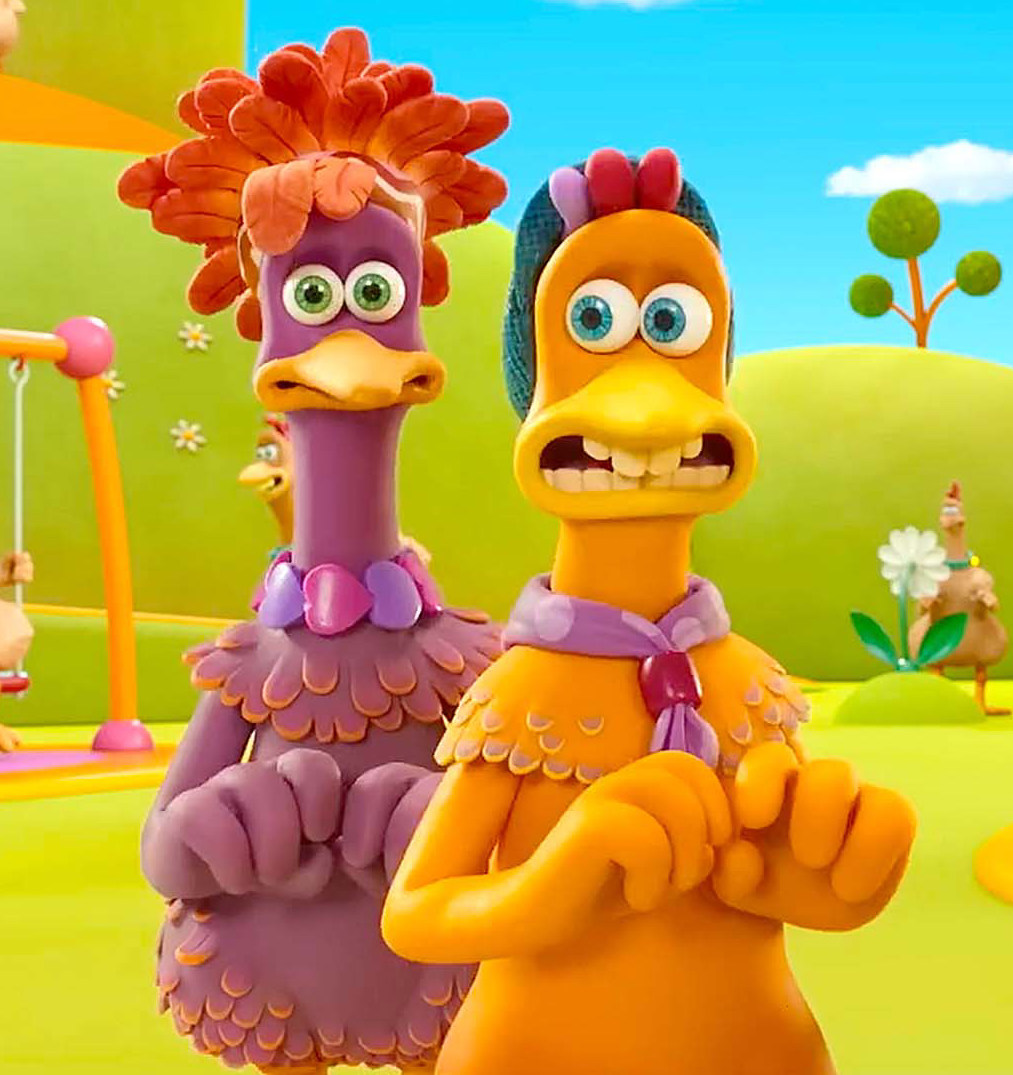
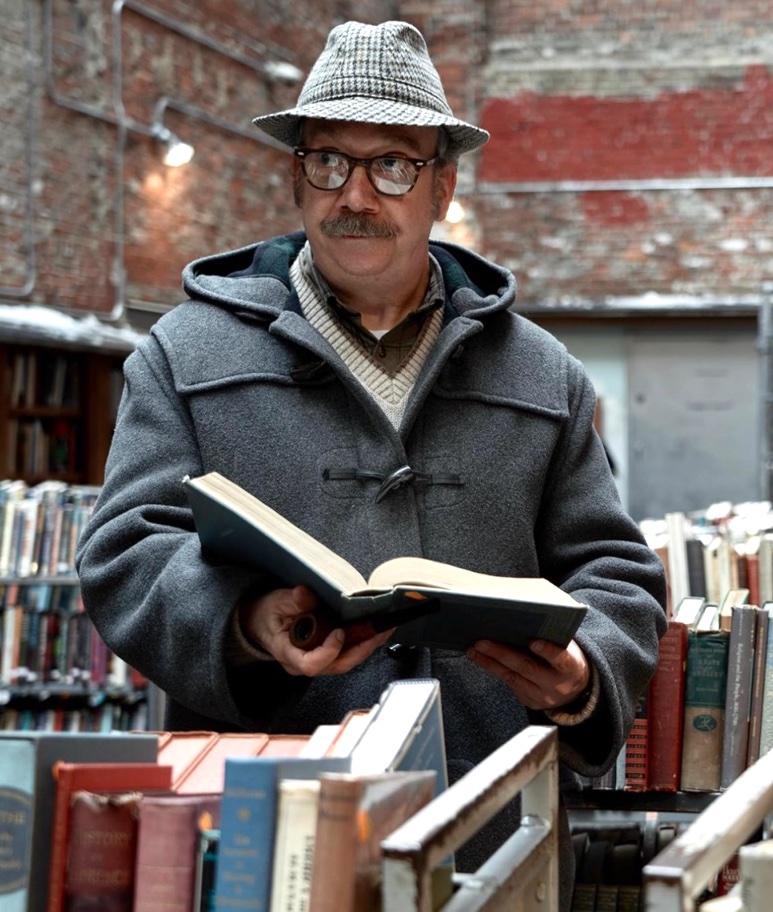
Wonka

08/12/23

Cineworld, Edinburgh

The omens were always good for Wonka. Director Paul King and writer Simon Farnaby have already delivered two brilliant (5 star) Paddington films, but were willing to assign the upcoming Paddington in Peru to other hands in order to focus on this origin tale based around Roald Dahl’s most celebrated character. What’s more, Timothée Chalamet – who seems to have the uncanny ability to choose box office winners with ease – was signed up for the title role right from the very beginning.

And sure enough, Wonka turns out to be as sure-footed as you might reasonably hope, powered by a deliciously silly story and some sparky songs by Neil Hannon, plus a couple of bangers salvaged from the much-loved 1971 film starring Gene Wilder. Laughter, music and magic: they’re all here in abundance.

In this version of the tale, the young Willy Wonka arrives in a city that looks suspiciously Parisian (but is actually Oxford). His masterplan is to pursue an ambition he’s had since childhood: to create the world’s most delicious chocolate.

Armed with an original recipe from his late mother (a barely glimpsed Sally Hawkins) and augmented by some magical tricks he’s picked up along the way, Wonka has mastered the chocolatier’s arts to the final degree, but has somehow neglected to learn how to read. Which explains why he soon ends up as a prisoner, working in a hellish laundry run by Mrs Scrubbit (Olivia Colman, for once playing a convincingly loathsome character) and Mr Bleacher (an equally odious Tom Davis). It’s here that Wonka acquires a small army of workmates, including Noodle (Calah Lane), a teenage orphan who has mysterious origins of her own and who soon proves to be Wonka’s most valuable ally.

When he’s eventually able to sneak out and pursue his main goal, he quickly discovers that the local chocolate industry is dominated by three powerful and devious men, Slugworth (Paterson Joseph), Prodnose (Matt Lucas) and Fickelgruber (Matthew Baynton), who are willing to go to any lengths to protect the stranglehold they currently enjoy. They see Wonka as a potential threat and will stop at nothing to eliminate him…

Mostly, this works a treat. Chalamet is an astute choice for the lead role, capturing the man-child quality of young WW, whilst still managing to hint at the darker elements that lurk deep within him. Lane is suitably adorable and, if the triumvirate of evil chocolate barons never really exude as much malice as you’d like, it’s no big deal. The only real misstep is the fate of the local police chief (played by Keegan Michael-Key), who takes bribes in the form of chocolate and who steadily puts on more and more weight, until he’s almost too big to fit in his car. While this fat-shaming device may be true to the ethos of Mr Dahl, it feels somewhat out of place in a contemporary story.

And of course this being a Wonka tale there must be Oompa-Loompas, played here by an orange-skinned, green-haired Hugh Grant, who is wonderfully pompous and self-possessed, yet somehow manages to be quite adorable at the same time. As you might guess, Mr Grant is obliged to dance (again), something he allegedly hates doing. He’s used sparingly through the film but still nearly manages to steal it from under Chalamet’s nimble feet.

All-in-all, Wonka is an enjoyable family film, as bright, glittering and irresistible as a bumper hamper packed with tasty treats. It’s interesting to note, however, that I didn’t come out of this feeling like tucking into some. On the contrary, a scene where Willy and Noodle find themselves drowning in a big vat of molten chocolate actually has me feeling faintly queasy.

Nonetheless, those seeking an enjoyable couple of hours at the cinema, could do a lot worse than buying a ticket for this delightful offering, which will appeal to viewers of all ages.

4.4 stars

Philip Caveney

The Nightmare Before Christmas (30th Anniversary Edition)

03/12/23

Cineworld, Edinburgh

Let’s talk Christmas movies. There are many cinema fans out there who will tell you that It’s a Wonderful Life provides the perfect festive viewing. Others will argue that Love Actually is the real deal. There are even a few diehards who will doggedly insist that the ideal place to spend a couple of seasonal hours is Nakatomi Plaza.

But listen up. The Nightmare Before Christmas is (improbably) thirty years old and has been rereleased in a new digital print. What’s more, it’s currently showing in cinemas across the UK in 4DX. Those looking for a cinematic treat in the run up to the festivities should take the chance to revisit its charms.

The twisted brainchild of Tim Burton, this animated fantasy adventure is more of a team effort than much of his later output. Henry Selick takes up the directorial reins, Michael McDowell and Caroline Thompson handle the screenplay and Danny Elfman composes the score – even handling the vocals for lead character, Jack Skellington (elsewhere voiced by Chris Sarandon).

Jack is the unofficial King of Halloween Town, expending all his efforts on the annual task of providing its creepy inhabitants with all the grisly delights the big night demands. But he’s become jaded with the predictability of it all and longs for something a wee bit different. When he chances upon the festive preparations happening in neighbouring Christmas Town, he spots an opportunity to make a dramatic change for the better. Why can’t his followers get in on the act? They may be a collection of undead horrors but don’t they deserve a little fun?

But of course, even the best of intentions can go awry.

Meanwhile, Jack is unaware that Sally (Catherine O’ Hara), an assembled creature put together by the villainous Doctor Finklestein (William Hickey), worships him from afar and is having terrible premonitions about this new change of direction. She wants – more than anything else – to help Jack but he seems totally focused on his new direction…

Deceptively simple yet virtually bursting at the seams with visual invention, TNBC‘s stop-frame animation provides a constant source of delight and achieves the near-impossible, managing to be simultaneously both deliciously creepy and suitably heartwarming. Indeed, the two different ingredients are juxtaposed with such panache, it’s a constant thrill to see what will happen next. One minute I’m wincing as a child pulls a horrendously unsuitable ‘gift’ from its wrapping, the next I’m sighing with relief as Santa Claus (voiced by Edward Ivory) steps up to the plate to ensure that Christmas comes in as planned. Elfman’s score is memorable and the new 3D print looks absolutely gorgeous.

The 4DX experience, normally reserved for big action blockbusters and violent punch ups, works a treat here, as we are swirled and jolted back and forth along with the frantic onscreen antics. Not sure I’m mad about the sudden stench of ‘Frog’s Breath’ that assails us at one point, but hey, it all contributes to making this a Christmas treat we’re unlikely to forget in a hurry.

Glancing around at this afternoon’s audience, I’m surprised to see that it’s entirely composed of grown-ups, which seems a shame, because kids will adore this quirky alternative to the latest anodyne Disney animation. Big kids like me will surely love it too. Win win.

4.6 stars

Philip Caveney

Napoleon

25/11/23

Cineworld, Edinburgh

Over his long career, Ridley Scott has taken on all manner of subjects, in pretty much every genre you can name. It’s interesting to note that his very first feature film, The Duelists, was set during the Napoleonic era, so perhaps it was only a matter of time before he returned to the period and took on the story of the little Corsican – a subject that has brought many other directors to their personal Waterloo. In this particular case, it’s taken forty-six years to get there.

Some cinephiles will tell you that the ultimate Napoleon movie has already been realised way back in 1927, when Abel Gance produced a staggering version of the great man’s life under the same title. It was certainly remarkable and I speak as someone who sat through one of Kevin Brownlow’s restorations of the film in the early 80s – all five and a half hours of it (complete with a live symphony orchestra and several judicious toilet breaks). Compared to that, Scott’s two hours and thirty-eight minutes seems relatively jaunty.

Those who have complained that this version is historically inaccurate may be missing the point. Scott is clearly far more interested in the legend than the reality. It’s a matter of record, for instance, that Napoleon probably owes his defeat at Waterloo to the fact that he suffered from bleeding haemorrhoids and couldn’t sit on his horse – but that’s a film that nobody wants to see.

And yes, Joaquin Phoenix may be too old for this role, and surely needed some de-ageing for those early scenes, but he makes a great job of it, mining the man’s hubris and determination to the core, even descending into brattishness when taunted with the spectre of England’s superior navy. Vanessa Kirby offers up a more opaque Josephine, playing everything so close to her bosom that we’re never entirely sure if she actually loves her husband or merely sees him as her personal plaything. Their complex relationship is at the beating heart of this film and perhaps it would have been more fairly titled Napoleon and Josephine.

The inevitable result is that pretty much everybody else in the film is reduced to cameo roles, including Rupert Everett as the Duke of Wellington and an unusually hirsute Mark Bonnar as Napolean’s early confidante, Junot. David Scarpa’s screenplay makes a determined attempt to find some humour amidst all the pomp and misery.

But of course, Scott is the king of spectacle and if it’s battle scenes you’re looking for, there are plenty of them here, so thrillingly recreated that I find myself wincing at every explosion, every visceral thrust of a sabre. Each of the major confrontations is depicted in a different way and I particularly relish the scenes set in the Russian winter, where Napoleon is left bewildered by the fact that his adversaries refuse to meet him on the battlefield, even choosing to torch Moscow rather that surrender it to him. This is stirring stuff, the awful choreography of destruction played with absolute conviction and I cannot think of a director who could have made a better job of it.

Producers Apple Films have already announced that a four hour plus director’s cut of Napoleon is waiting somewhere down the line, and while this has worked for Scott before with Kingdom of Heaven, I’m not convinced that a longer film can hope to add much to the exhilarating theatrical release, which has me gripped pretty much from start to finish.

4.4 stars

Philip Caveney

Saltburn

22/11/23

Cineworld, Edinburgh

Emerald Fennell’s second film shares some DNA with her debut: they’re both stories of revenge writ large, of simmering grievance metamorphosing into violence. But, while Promising Young Woman was an out-and-out success, Saltburn is more of a mixed bag.

Oliver (Barry Keoghan) is a fish out of water at his Oxford college. Not only has he made the terrible faux pas of devouring every book on the summer reading list, he’s also got a Scouse accent and his tuxedo is rented. “The sleeves are too long,” sneers his tutorial-mate, Farleigh (Archie Madekwe). “Still, you almost pass.” Frustrated by his outsider status and bored rigid by Jake (Will Gibson), apparently the only other non-posh person in the city, Oliver becomes obsessed with Felix (Jacob Elordi), insinuating himself into the young aristocrat’s circle. Felix warms to Oliver, taking him under his wing and inviting him to spend the summer at his family home. Oliver is delighted: the titular Saltburn is a bastion of excess and he is more than ready to indulge himself. But, as the weeks slip by and real life looms, things begin to take a darker turn…

The first third of this film is anachronistic. It’s supposed to be set in 2006, but the Oxford we see here feels like a throwback to the 1920s. Although there’s no denying that the university is still disproportionately posh, by the time the movie’s events occur, about 50% of Oxford undergraduates came from state schools (the figure is 68% now) – and, even among those who were privately educated, only a tiny number were as privileged as Felix and his friends. I find myself rolling my eyes at the idea that Oliver and Jake might stand out amongst their peers, or that anyone would notice them enough to bellow “scholarship boy” as they pass by. It’s unnecessary too: Oliver’s desire to move in Felix’s orbit doesn’t need to be dependent on the absence of any other working or middle-class people.

When the action moves to Saltburn, things improve dramatically – although the sense of stepping back in time might be heightened if Fennell were more effective in capturing the early noughties in the opening stretch. Here we meet Felix’s parents, Sir James (Richard E Grant, on top form) and Elspeth (played with obvious glee by Rosamund Pike). “Mummy” is the best thing about the whole movie, delightfully lacking in self-awareness, blithely callous in every word and deed. She gets the funniest lines too, and Pike delivers them with deadly precision: when Elspeth hears of her erstwhile friend’s death, for example, she responds with a scathing, “She’ll do anything to get attention.”

If the revenge, when it comes, is faintly ridiculous, then it’s found a suitable home in Saltburn, where everything is magnified, where there’s too much space, too many artefacts, too many people and too much money. The house and grounds provide a perfect backdrop for this illustration of careless privilege, and Linus Sandgren’s cinematography is almost hallucinogenic, reinforcing the sense of dislocation from the outside world.

Of course, there are many ways to read this sly, allusive story, with its Brideshead references and satirical tone. The most generous interpretation is that the joke is on the upper classes, depicted here as shallow and vacuous, playing games with other people’s lives to relieve their louche ennui. But it also comes across as a warning to the toffs to beware the pesky proles. Give us an inch and we’ll take a mile; we just don’t know our place. Fennell (whose own rarefied life is far closer to the Cattans’ than to Oliver’s) reveals an unfortunate blind spot when it comes to class. Elspeth references Pulp’s Common People early on, refuting the idea that the lyrics refer to her. “No, it wasn’t based on me. She had a thirst for knowledge. I’ve never wanted to know anything.” But there are a few lines later in the song that are perhaps more relevant: “Like a dog lying in a corner, they will bite you and never warn you. Look out! They’ll tear your insides out.” There appears to be an underlying (perhaps unconscious) snobbery at play.

Despite its dodgy subtext, Saltburn is a curate’s egg of a movie, with some very good parts indeed, and the final sequence – set to Murder on the Dancefloor – is utterly glorious. I look forward to what Fennell does next, albeit with some trepidation.

3.3 stars

Susan SIngfield

Nandor Fodor and the Talking Mongoose

19/11/23

Amazon Prime

There are are some so-called ‘true’ stories that, if presented as fiction, would simply be dismissed as sheer nonsense. And then there’s ‘Gef,’ the talking mongoose, alleged to have haunted the Irving family on the Isle of Man in the 1930s, a situation deemed credible enough to prompt esteemed investigators into travelling to the Irvings’ remote farmhouse in order to establish whether or not Gef is actually real. Even the BBC produced a film about him and, for a while his fame was widespread. My main reaction to the story is one of bewilderment: why did anyone take this blatant baloney seriously?

I’ve heard about the story previously, thanks to an episode of the podcast, No Such Thing as a Fish, so my interest is sparked when I hear about writer/director Adam Sigal’s feature film. However, the fact that it hasn’t troubled the cinemas but has been unceremoniously dumped onto Amazon Prime suggests that there can’t be much here to shout about and, sadly, this proves to be the case.

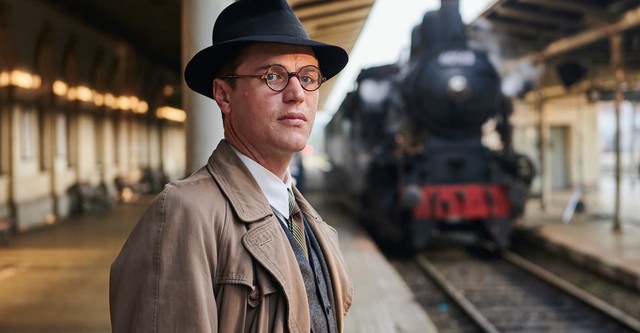
Respected psychological researcher, Doctor Nandor Fodor (Simon Pegg), receives a letter from the Irving family telling him all about their resident mongoose and, after consulting esteemed colleague, Harry Price (Chistopher Lloyd), who has also investigated the case without reaching a satisfying conclusion, Fodor is intrigued enough to travel to the Isle of Man, accompanied by his assistant, Anne (Minnie Driver), to whom he may or may not be attracted. (It speaks volumes about the storytelling when I have to report that I’m still not sure sure about that element.)

Once there, they meet the affable Mr Irving (Tim Downie) and the other members of his household, including his teenage daughter, Voirrey (Jessica Balmer), who makes no secret of the fact that she is an accomplished ventriloquist. (I know: suspicious, right?)

But Fodor’s subsequent attempts to get to the truth of the matter are met with a whole series of bewildering obfuscations. Is Gef real? (No.) Or is he a cunningly contrived hoax, designed to bring people to the Irvings’ remote farm for reasons that can only be guessed at? Normally in cases of deception, the idea is to generate money, but that certainly isn’t what’s happening here. While the Irvings are far from being destitute, they live a frugal existence.

Sigal’s film is certainly enigmatic and it’s also handsomely filmed, the era convincingly evoked thanks to Sara Deane’s assured cinematography – but the screenplay spends far too much time telling us about events that have happened off screen, whilst offering us only the barest glimpses of Gef (voiced by Neil Gaiman). Both Pegg and Driver do their best with their respective characters, despite being given so little to work with. In the end though, the biggest mystery of all is how this unremarkable little project managed to pull in such a strong cast.

By the time we reach the underwhelming conclusion, I’ve pretty much given up on the film, and that’s a shame. There’s something so off-the-wall captivating about its central premise, that I’m left with the powerful conviction that there’s surely a great film to be made about Gef and his escapades.

Sadly, this isn’t it.

2.8 stars

Philip Caveney
The Killer

13/11/23

Netflix

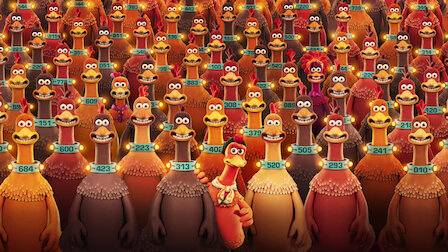
The arrival of a new film by David Fincher is always of interest, but apart from limited screenings at a few independent cinemas, The Killer has quietly dropped onto Netflix without much trumpeting. Based on Alexis Nolent’s graphic novel of the same name, this sees Michael Fassbender as the titular assassin, who, when we first encounter him, is stalking his latest target, whilst simultaneously providing a running commentary. This comes across as a self-help manual for would-be professional murderers and would perhaps be more impressive if the projected hit didn’t go spectacularly awry.

But it does and, shortly afterwards, a revenge attack is carried out on our psychopathic hero’s nearest and dearest, whereupon (cliché alert!) he is obliged to travel around the world ensuring that those who were hired to clean up after his errors are brought to book in the severest manner possible.

Fincher is an accomplished director and the long opening sequence is beautifully handled, the tension and suspense steadily mounting as the seconds tick by. Likewise, an extended fight sequence in an apartment somewhere in Florida is brutally and viscerally captured in bone-crunching detail. The assassin’s preoccupation with listening to The Smiths as he works provides a wonderfully quirky detail and Erik Messerschmidt’s sleek cinematography is a delight.

But there’s an inherent problem here and it’s one of empathy. It’s hard for a viewer to care about a sociopath and even harder to sympathise with him when he’s given the kind of rough treatment he generally doles out to his victims. We never really learn anything about them – or him for that matter – and the only other person we meet in any detail, The Expert (Tilda Swinton), isn’t on screen long enough to make her presence felt.

Ultimately, this is an exercise in style that needs more content to back it up. Yes, the various components are masterfully assembled, and yes, it’s an example of skilfully-constructed images, but I’m left chasing shadows for the best part of two hours and, no matter how artfully that’s depicted, it’s really not enough to make this a satisfying piece of cinema.

3.4 stars

Philip Caveney

Anatomy of a Fall

11/11/23

Cineworld, Edinburgh

Winner of this year’s Palme d’Or at Cannes, Justine Triet’s Anatomy of a Fall is a sly and unconventional crime drama that steadfastly refuses to follow the familiar tropes of the whodunnit, preferring instead to explore the psychologies of its characters. It manages to sustain an air of mystery without ever offering viewers anything resembling a plausible solution – and yet, somehow, this only serves to make the story all the more intriguing.

In her remote chalet in the French Alps, novelist Sandra Voiter (Sandra Hüller) is attempting to conduct an interview with graduate student Zoé (Camille Rutherford). There’s an obvious attraction between the two – Sandra is openly bisexual – but up in the roof space, Sandra’s husband, Samuel (Alan Davies lookalike, Samuel Theis), is asserting his presence by doing some noisy manual work. He’s also playing music at an ear-shattering volume, which makes the planned interview impossible. It is soon abandoned and Zoé leaves. 

Shortly afterwards, Sandra and Samuel’s visually-impaired son, Daniel (Milo Machado Graner), takes his dog for a walk in the snow and, on his return, he (quite literally) stumbles upon the bloody corpse of his father, lying a short distance from the house. Samuel has fallen from the attic space, striking a shed on the way down.

But did he jump – or was he pushed?

Soon, an investigation is under way and Sandra is the only suspect. Her past actions are making her look ever-more unreliable, so her attorney (Swann Arlaud) is struggling to construct a credible defence – and it probably doesn’t help that he is attracted to her. Meanwhile, the prosecutor (Antoine Reinartz) seems to have made it his personal mission to see her behind bars. 

The irony here is that the person with the clearest vision of what’s actually going on is a boy whose eyes don’t work…

Anatomy of a Fall is a strange beast indeed, a film that becomes increasingly compelling as it moves ever further away from anything approaching a straightforward resolution. The fact that the two main characters are writers of fiction – and the ways in which the narrative becomes increasingly more speculative as the case progresses – adds to the sense of intrigue. And then there’s a late-stage flashback, prompted by the discovery of an audiotape (recorded by Samuel), which sets everything spinning in an entirely different direction. Hüller offers a compelling performance in the lead role, but it’s young Machado Graner who makes the biggest impression, as the indefatigable Daniel, struggling to come to terms with the death of his father.

The nebulous nature of the plotting will doubtless have Agatha Christie spinning in her grave, but this feels like a fresh and unconventional approach to the crime genre and it’s easy to see why the film was chosen as the winner of one of cinema’s most coveted prizes. 

4.3 stars

Philip Caveney
The Royal Hotel / Hotel Coolgardie

04/11/23

Cineworld, Edinburgh / Amazon Prime

We watch The Royal Hotel in the cinema. It’s fascinating. We know it’s based on a documentary, but how much of it is true? We head straight home and seek out Hotel Coolgardie.

Wow.

Hotel Coolgardie centres on two Finnish backpackers, Lina and Steph. When their wallets are stolen in Perth, they need to work to earn some money. An agency finds them a job serving drinks in a remote mining town. “You have to be able to cope with male attention,” they are warned. They don’t seem to notice the flashing red light. (Or perhaps they just feel reassured by the mitigating presence of a filmmaker.)

The pub is run by an odious landlord, who proudly informs the agency that it’s okay if the girls are inexperienced so long as they’re good-looking, and then takes great delight in bellowing at them when they arrive, belittling them for not understanding the local dialect and for not instinctively grasping the idiosyncrasies of his business. His clientele are heavy drinkers, and lewd behaviour is encouraged. “My customers grow an extra leg when new girls come into town,” he leers, as he puts out a sign announcing their arrival. In the bar, the men discuss who’ll be the first to ‘bag’ one of them. They know they’re being filmed; clearly, they don’t think they’re doing anything wrong.

Pete Gleeson’s documentary serves as a salutary lesson: when sexism and xenophobia are normalised, they thrive, especially within an isolated community. Coolgardie is not a safe place for Lina and Steph and, because they’re not willing to play along with the roles they’ve been assigned, they’re mocked and resented by the locals.

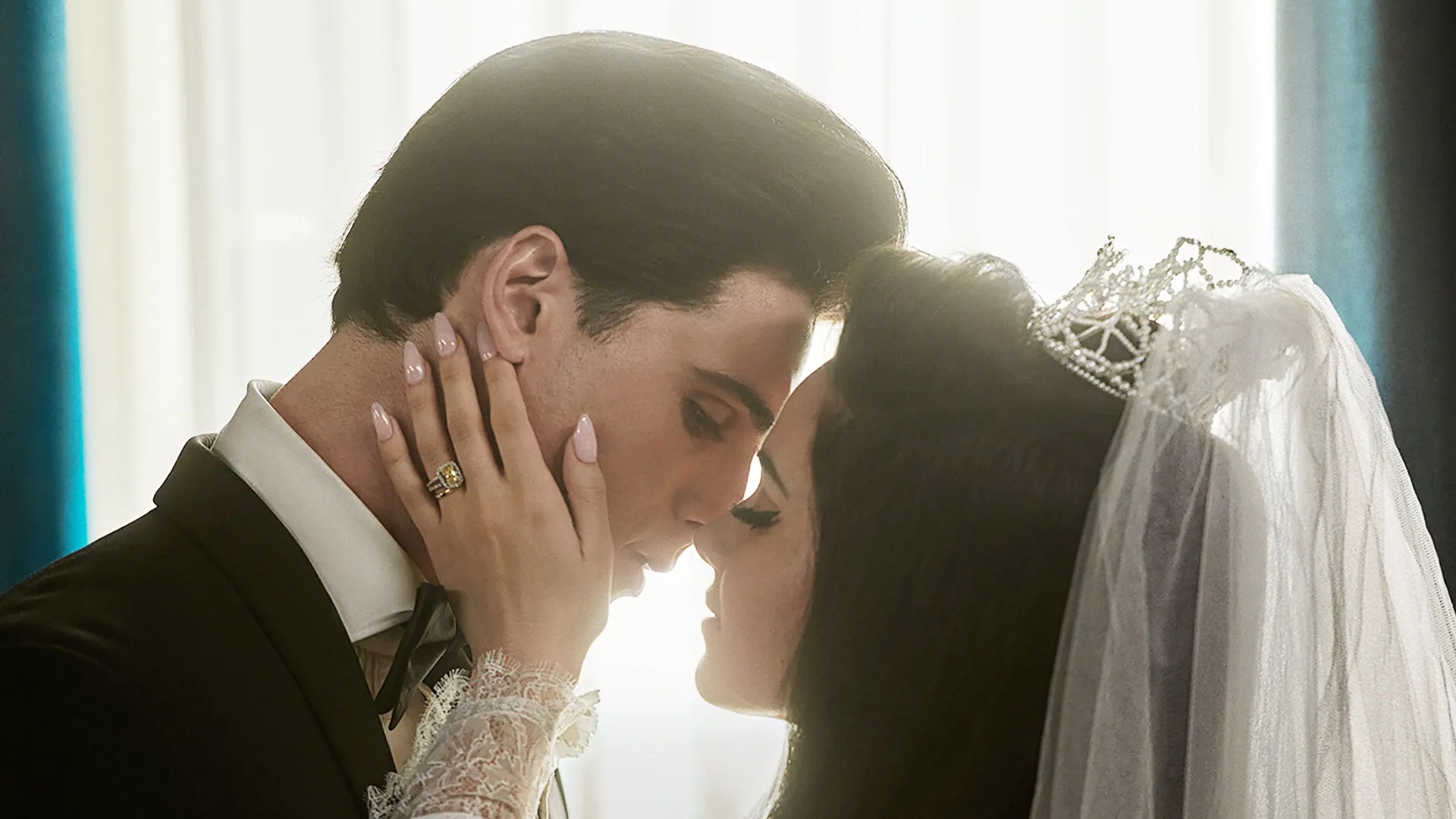
Writer-director Kitty Green seizes on the horror elements of this real-life set-up, highlighting the remoteness of the location as Canadian backpacking duo Hanna (Julia Garner) and Liv (Jessica Henwick) make their arduous bus journey through the empty desert. The Royal Hotel is dirtier and dingier than its counterpart; its customers nastier and more deliberate. The score, by Jed Palmer, ramps up the disquietude, and tension mounts as first Liv begins to assimilate, and then their only ally, Carol (Ursula Yovich), departs, leaving Hanna to face her adversaries alone.

Somehow, Green’s amplification makes the story less menacing. Gleeson’s documentary shows a more nuanced view of the community: we see the men’s vulnerability as well as their defensiveness, the insecurities that fuel their misogyny. This doesn’t excuse them or diminish their threat; in fact, it makes them more frightening because, unlike the cartoonish bad guys in Green’s film, they’re all-too recognisable. In the Royal Hotel, the men are uniformly terrifying; in the Hotel Coolgardie, there is a scale. “Canman” John Joseph Lowe, for example, has a genuinely sweet side. Sure, he’s a rambling drunk who demands too much of the girls’ attention and creeps them out by showering them with unwanted gifts, but he also looks out for them, drives them where they want to go and truly wants to help. On the other hand, “Pikey” – reincarnated in The Royal Hotel as Dolly (Daniel Henshall) – is a terrifying man, spewing hatred towards all women because no one wants to sleep with him. “It’s because I haven’t got a driving licence,” he says. “That’s not the reason,” Lina tells him. Henshall’s Dolly is horrible, but nothing he does is as scary as Pikey’s quiet, all-consuming rage.

What’s more, while Hotel Coolgardie‘s bogeyman is sexism, The Royal Hotel‘s seems to be Australia. The difference is subtly drawn, but it’s there. In the documentary, we see the magnification of a bigoted culture, flourishing in this particular spot thanks to an enabling landlord. In the movie, the implication is that Canada is somehow different, that the problem is specifically Australian working-class men.

Still, I wish that Gleeson had acknowledged his presence in Hotel Coolgardie; there’s something disingenuous in the way the film suggests the women are in real danger, when we know that he’s always there with them, filming everything, reducing their risk. But I still prefer it to Green’s film, which undermines the truth of Hanna and Liv’s situation by allowing them to ‘win’. The coda at the end of The Royal Hotel is far more chilling.

It makes sense to view these two films as a pair. My dearest hope is that the job agency stops sending young women out to places like Coolgardie. It’s not enough to warn them that they have to be okay with male attention. They need to warn the landlords instead: our clients have human and employment rights.

The Royal Hotel3.4 stars

Hotel Coolgardie – 4 stars

Susan Singfield

Roald Dahl/Wes Anderson

29/10/23

Netflix

A new film by Wes Anderson is always an interesting proposition. Four new films – the longest of which has a running time of just thirty-seven minutes – is a downright intriguing one.

It must be said from the start that these are less motion pictures than illustrated stories (imagine, if you will, a kind of turbo-charged Jackanory and you’ll get the general idea). First up, there’s the aforementioned longest entry in the quartet, The Wonderful Story of Henry Sugar, which – to begin with – is told by Dahl himself (uncannily impersonated by Ralph Fiennes). The author begins to relate the story of the mysterious Imdad Khan (Ben Kingsley), a man who can see without using his eyes. Khan’s story is then picked up by two doctors (Dev Patel and Richard Ayoade) and they, in turn, transfer their attention to the titular character (played by Benedict Cumberbatch), a man who becomes obsessed with the notion of becoming an expert card cheat. (As you do.)

It’s all delivered as narration (at a breakneck pace) and, of course, the set dressing has the usual Anderson style: a series of exquisite puzzle-boxes, expertly linked together, opening and closing as the tale unravels. It’s beautiful to watch, but ultimately the story leaves me with a powerful sensation of so what?

The Swan (narrated by Rupert Friend) is, for me, the strongest narrative here, the distressing tale of a young boy called Peter (Asa Jennings), who is horribly bullied by a couple of local lads with access to a rifle (always a recipe for trouble) and which culminates in a poignant and rather distressing conclusion. The story is delivered by Friend as he wanders along a series of labyrinthine passageways and this is perhaps the most kinetic of the films.

The Rat Catcher features Fiennes as the central character, a rather creepy individual who visits a garage and offers his services to the proprietor (Friend again), while the tale is told by a narrator (Ayoade). The subtext of this one is rather less straightforward, as is the style. I can’t remember ever seeing an actor miming invisible objects in a film before! The rat catcher has assimilated all the qualities of the creatures he’s supposed to be eradicating and, when he fails in his attempts to locate them (in a haystack), he tries to make up for his failure in a demonstration of unpleasantness. Again, I feel that the story’s conclusion is rather underwhelming.

Finally there’s Poison, an account set in post-colonial India, in which Harry (Cumberbatch) lies in bed convinced that a krait (a venomous snake) is lying asleep on his chest and that the slightest move will cause it to bite him. A local police officer (Patel) and a doctor (Kingsley) are enlisted to resolve the situation and, to give them their fair due, they do their level best. The story culminates in a short and rather shocking demonstration of racism, which some viewers will find unsettling, but is surely the whole point of Dahl’s story – that former white rulers will always refuse to acknowledge their own failings. Strangely, Poison seems to have a similar theme to its predecessor.

With such brevity, it seems fairest to judge the four films as a whole – and indeed, Anderson has said that what attracted him to the idea is the notion that they comprise a kind of interlocking narrative. While this quartet is always visually compelling, I can’t help wishing that this inimitable director had settled on some better examples from Dahl’s extensive back catalogue. There are plenty to choose from.

If you have Netflix, they’re certainly worth clicking through. If nothing else, you’ll be charmed by their quirkiness and the uncompromising style that exemplifies Anderson’s approach to cinema.

3.4 stars

Philip Caveney

Killers of the Flower Moon

22/10/23

Cineworld, Edinburgh

A quick glance at IMDB informs me that I first watched a Martin Scorcese movie way back in 1976 – Taxi Driver – and that I have seen pretty much every film he’s directed since. So naturally I am eager to see Killers of the Flower Moon, though somewhat apprehensive at its prodigious running time of three hours and twenty-six minutes. 

Set in the early 1920s, it tells the story of the Osage tribe, native Americans who, after being shunted unceremoniously from their Kansas homeland to a reservation in the wilds of Oklahoma, subsequently discover that the land they have been allocated contains vast quantities of crude oil – and that they are now the richest people per capita in the USA.

Of course, this being America, it’s complicated. For one thing, the Osage can’t just be allowed to own their own money. The very idea! In most cases, they must have a white guarantor to enable them to have access to it. And naturally, there are plenty of unscrupulous people in the vicinity, who are eager to put their hands on that wealth – even if it means arranging for the regular liquidation of certain members of the tribe. Suspicious deaths among the Osage are all too common, and such crimes are rarely even investigated.

Chief among the white opportunists is rancher ‘King’ William Hale (Robert De Niro), who purports to be the tribe’s greatest friend and has even learned to speak their language, but who secretly wheels and deals to ensure that large amounts of Osage money keeps flowing in his general direction. When his nephew, First World War veteran Ernest (Leonardo DiCaprio), arrives looking to make a new start, Hale ensures that he crosses the path of Osage woman, Mollie (Lily Gladstone), telling Ernest that this will be an opportunity for both of them to make a killing…

There’s no doubt that this true story, based on the book by David Gran, makes for compelling viewing – and the film’s two-hundred-million dollar budget ensures that Scorcese’s evocation of the era is beautifully realised. Many of the great director’s touches are in evidence here: the matter-of-fact quality of the murders; the chilling depictions of everyday cruelty and avarice; and, as ever, there’s Scorcese’s uncanny ability to choose the perfect music to accompany any given scene.

There are also three extraordinary performances to savour. Di Caprio as the sullen, selfish and frankly not-very-bright Ernest may be a career-best display of acting. He plays the role as a kind of arrested adolescent with a constantly glum expression, as though he’s being admonished for something he’s done (or maybe hasn’t done). Old hand De Niro is horribly oleaginous as Hale, a man so utterly devious, it’s a wonder he can manage to walk in a straight line. And Gladstone is terrific as Mollie, managing to convey so much with a withering look, a shrug, a silence. Her calm presence is somehow this turbulent story’s anchor.

The film’s first and concluding thirds, the set-up and pay-off – when FBI man Tom White (Jesse Plemons) arrives to initiate a long-awaited investigation –  easily hold my attention, but that middle section feels decidedly baggy and and the constant stream of viewers nipping out for a judicious toilet break is really distracting. It prompts the inevitable question: does the film need to be so long? In my opinion, no. Trimmed back by an hour, this could have been even more satisfying. I can’t help but think wistfully back to the likes of Lawrence of Arabia and Doctor Zhivago, epic films that always included an intermission around the halfway mark for this very reason.

That said, I love Killer’s ironic coda, which presents an account of what we have just seen as a soapy ‘true crime’ vintage radio recording, and which also features a cameo from Mr Scorcese himself. But the film fails to mention the fact (which I read about elsewhere) that the heinous conditions that the Osage tribe suffers in this film persist to this day. They are still being stiffed by the oil companies, who have brazenly commandeered the ‘black gold’ that continues to bubble up from beneath their reservation. And their demands for justice remain unheard.

Land of the free? Don’t make me laugh.

4.2 stars

Philip Caveney