
Film

Pillion

04/12/25

Cineworld, Edinburgh

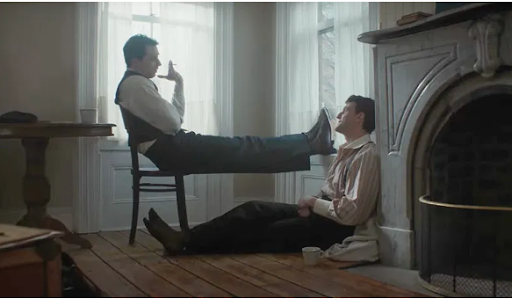
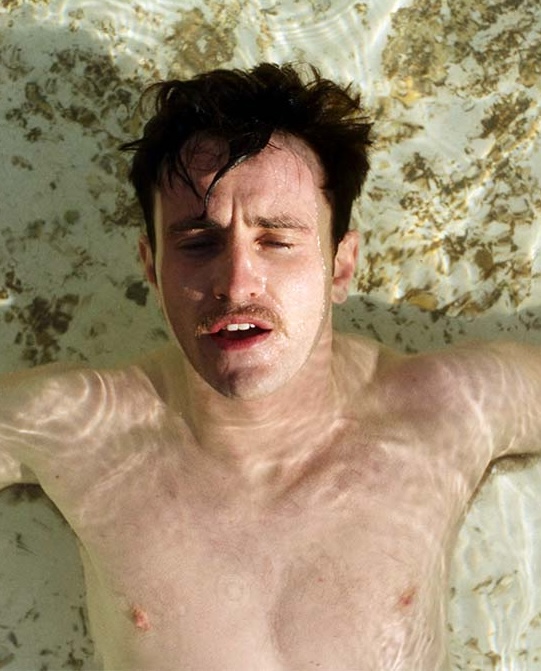
Adapted from Adam Mars Jones’ 2019 novel, Box Hill, Pillion is – I think it’s fair to say – something of an oddity. Described by one of its stars as a ‘dom-com,’ it’s set within the world of BDSM and has been assigned an 18 certificate for nudity and explicit sex. And yet there are elements at play here to appeal to a much broader audience than you might expect.

Colin (Harry Melling) is an affable young fellow, still living with his parents. He works as a traffic warden and occasionally sings as part of his father Pete’s barber-shop quartet. Pete (Douglas Hodge) is every bit as genial as his son, but he’s coming to terms with the fact that his wife, Peggy (Lesley Sharp), is in the final stages of her life after a long struggle with cancer. Colin’s parents know he is gay; in fact, Peggy has devoted her final months to trying to get him fixed up with a suitable boyfriend, but he doesn’t like any of the dates she sets up for him.

And then, at the local pub where the group regularly performs, Harry encounters Ray (Alexander Skarsgård), a handsome but monosyllabic biker. Something clicks between them and, when Ray hands Colin a note (on the back of a beermat), instructing him to be at a certain place at a certain time, Colin doesn’t hesitate to comply.

It isn’t long before Colin is on his knees in a dark alleyway giving Ray a BJ – and shortly thereafter, he’s initiated into the small group of submissive followers who ride pillion with Ray’s biker friends, ready to accede to their masters’ sadistic whims. Soon Colin has shaved off his long hair and is decked out in racy leather outfits, complete with a padlock around his neck.

In these scenes the 18 certificate is certainly well-earned – but it’s important to note that Colin enthusiastically consents to every indignity that’s meted out to him. Indeed, he seems to thrive on this new regime, as he discovers a sense of community that he’s never had before.

There’s more to the film than just the sexual content. A wonderfully toe-curling scene where Peggy cajoles Colin into bringing Ray to the family home for dinner and then delivers her unflinching opinion of him is a particular delight – and I’m quite unprepared for the genuinely poignant conclusion. There are also several scenes that make me completely re-evaluate everything that has gone before.

Both Melling and Skarsgård are outstanding in their polar opposite roles: one so vulnerable and desperate to show his devotion; the other locked away, sullen and uncommunicative. Director/screenwriter Harry Lighton handles the difficult material with skill and it’s no great surprise to learn that Pillion has recently walked away from the British Independent Film Awards with five trophies, including best film and best debut screenwriter. It’s also stirred up some indignant editorials in the press, enquiring how the BBC could have ‘lowered itself’ to commission something like this.

But there are all kinds of voices in the world and Pillion sheds fresh light onto a subject about which I previously knew very little. Of course, it won’t be to everyone’s taste but I can honestly say that I haven’t seen quite anything like this before, which – to my mind – is one of the highest recommendations a film can aspire to.

4.6 stars

Philip Caveney

The Fifth Step: NT Live

01/12/25

Dominion Cinema, Edinburgh

As if NT Live performances weren’t enough of a treat, we’ve recently ramped up the indulgence levels by choosing to watch them at Edinburgh’s most bougie cinema, the Dominion. At 3pm this afternoon, we zip up our raincoats and venture out into the December drizzle, ready for the half-hour walk that will take us to our huge, reclining seats.

The Fifth Step is a compact, one-act play by Jack Ireland, and its ninety-minute running time is perfectly judged. This is a tight and concentrated piece, where small impulses are magnified, vague doubts forensically explored. The in-the-round set, designed by Milla Clark, is almost brutalist, comprising a stark square with raised, cushioned sides, reminiscent of a boxing ring or a trampoline: a taut jump mat, ready to absorb the characters’ anger, or give them the push they need to set themselves free.

We’re in the world of AA, where acceptance meets strict protocols and kindness sometimes seems harsh. Jack Lowden plays Luka, a twenty-something alcoholic, scared that he’s turning into his dad, and desperate to avoid this destiny. Nervy and uncertain, he isn’t sure that he can do it, not when sobriety leaves a booze-shaped void he fills with loneliness and self-loathing. Hovering in the room after a meeting, he gets chatting to James (Martin Freeman), who has been on the wagon for more than twenty-five years. The older man knows exactly what Luka is going through, and offers to become his sponsor. From hereon in, we watch as their relationship develops – and as they both continue to battle against their respective addictions.

Ireland’s script is darkly funny, and director Finn Den Hertog maximises its comic potential, without ever belittling the men’s experiences. Not much happens, and yet all of human life is here: our frailty, our fabulousness; our bravado, our beauty; our destructiveness and our shared desperation. Luka begins by looking for easy answers: if he does whatever his sponsor says, then surely he’ll find happiness. But James has his own demons to grapple with and he knows that life is far more complex than that. You just have to keep on being honest, keep facing up to your own failings – and keep supporting one another along the way…

Unsurprisingly, Lowden and Freeman deliver faultless performances. They’re perfectly cast, Freeman’s wry stillness the ideal foil for Lowden’s twitchy, pent-up energy. A fascinating insight into not just addiction but also notions of authority and responsibility, this is definitely one to watch if it’s showing at a cinema near you.

4 stars

Susan Singfield

Keeper

22/11/25

Cineworld, Edinburgh

In 2024 Longlegs established Osgood Perkins as a horror auteur. If 2025’s The Monkey felt more like an audacious splatter comedy than anything else, it still delivered a fresh approach to his chosen genre. Keeper is perhaps closer in tone to the first film, a brooding atmospheric piece that takes its own sweet time to offer the viewer any real clues as to what’s actually going on. For reasons best known to Cineworld, it’s only offered in a late night screening, but I’m interested enough by what’s gone before to seek it out.

Liz (Tatiana Maslany), an artist, and Malcolm (Rossif Sutherland), a doctor, have been going out together for a year and, as a treat, he takes her to his secluded cabin in the woods for a leisurely weekend. As ever in these scenarios, Liz has no qualms about accompanying him, seemingly unperturbed by the fact that, despite being with him for quite some time, she really doesn’t know very much about him.

When they arrive, a chocolate-smeared package is waiting for them. Malcolm explains that the cabin’s ‘caretaker’ has baked them a special cake as a welcome present. Liz is understandably dismayed to discover that the cabin isn’t quite as remote as she’s been led to believe. There’s another one nearby, which – Malcolm explains – belongs to his cousin, who he rarely ever speaks to. But shortly thereafter, Darren (Birkett Turton) pays them an unscheduled visit and turns out to be a smirking, obnoxious creep. He’s accompanied by Minka (Eden Weiss), a young model who Darren claims can’t speak a word of English. But in a rare moment when they’re alone, Minka warns Liz – in English – not to eat the cake.

But Malcolm is insistent that she should sample a piece – it would be rude not to, he tells her – so she complies and, later, waking in the night, finds herself compelled to sneak downstairs and devour the rest of it…

Keeper is a weirdly compelling story written by Nick Leppard and inspired, I suspect, by the myth of Bluebeard. This is a film that exerts a powerful sense of dread throughout, one that chooses to derive its chills from things only half-heard and half-seen. Unexplained shadows move inexplicably across a scene, blurred visions exist somewhere between sleep and wakefulness and occasionally we’re unsure of what’s actually happening and what belongs in Liz’s dreams.

What is that out-of-focus shape lurking in the background of a scene? Who is that talking somewhere upstairs? And who are the mysterious women from different time zones who we keep catching glimpses of? Whoever they are, they’re clearly not happy.

Perkins handles the various elements with considerable skill and, for the first hour, manages to keep this pressure cooker of a tale bubbling nicely – but an attempt in the final third to offer a coherent explanation for what’s actually going on places the story in the realms of folk horror and is arguably not quite as assured as what’s gone before. 

Still, this is nonetheless big steps ahead of the usual slice-and-dice-cabin-in-the-woods fare we’ve seen so many times before and, even if I don’t get home till after midnight, it’s worth the price of admission. News that Perkins has another film arriving shortly confirms that he’s not one to rest on his laurels. I’ll be interested to see whatever he comes up with next.

3.8 stars

Philip Caveney

Nuremberg

22/11/25

Cineworld, Edinburgh

It’s 1945 and, in the midst of the chaos following the end of World War 2, Reichsmarshall Herman Göring (Russell Crowe) surrenders to American troops (although he makes it blatantly clear that he still expects them to carry his suitcases). When the news reaches United States Supreme Court Justice Robert Jackson (Michael Shannon), he begins to draw up plans for an International Military Tribunal, which will charge Göring and other surviving Nazi leaders with war crimes – and what better place to enact this than in the venue where the late Adolf Hitler held his infamous rallies in the 1930s?

Jackson takes a leave of absence from the supreme court and meets up with British prosecutor, Sir David Maxwell Fyfe (Richard E. Grant), who will assist him in trying the case. He also enlists the services of army psychiatrist, Douglas Kelly (Rami Malek), who – assisted by German-English translator, Sergeant Howie Triest (Leo Woodall) – will attempt to get to know Göring and the other captured Nazi leaders before the trial begins. Maybe the old proverb about knowing your enemies will be useful. Besides, Kelly has ideas about writing a best-selling book afterwards.

He begins to make progress with Göring and tells himself that the two of them have established the basis of a genuine friendship – but he will come to learn that Göring has his own agenda…

Nuremberg, written and directed by James Vanderbilt, has some big boots to fill. Many people remember Stanley Kramer’s 1961 movie, Judgement at Nuremberg, long regarded as a cinematic milestone – and I have to admit that, based on his recent screen outings, I have big doubts about Russell Crowe taking on such a difficult role. So I’m both surprised and delighted to say that I’m impressed by the film and by Crowe’s performance which captures Göring’s smirking, confident persona with genuine skill. Shannon is quietly magnificent in his role and Grant is handed a fabulous cameo courtroom scene, which he handles with his usual aplomb. Malek is often accused of over-acting but he does a good job here too, showing how Kelly’s ambitions destroy his own future.

I won’t pretend that this is an easy watch. The latter stages of the trial include the showing of genuine footage from concentration camps and there’s been no attempt to soften or obscure the devastating images they contain. I spend much of the film fighting back tears as I watch the horrors unfold. But the scenes are shown so unflinchingly to make a really important point: that the evils that men do are not carried out through devotion to a cause, nor for the greater good of the world. Such crimes are enacted because of greed, and because there are people who see such brutality as merely a means to an end, a way to further their own unspeakable agendas.

So my advice would be to steel yourselves and go and see Nuremberg. Then think about where the world is now – and how perilously close we are to allowing such horrors to proliferate once again.

4.4 stars

Philip Caveney

Die, My Love

16/11/25

Filmhouse, Edinburgh

Die, My Love, based on Ariana Harwicz’s acclaimed novel, is another irresistible movie from Scottish director, Lynne Ramsay. With a script by Ramsay, Enda Walsh and Alice Birch, this unflinching study of a woman’s postpartum psychological breakdown is as compelling as it is harrowing – and Jennifer Lawrence is frankly wonderful in the lead role.

Grace (Lawrence) and Jackson (Robert Pattinson) are expecting their first baby and, in preparation for this new chapter of their lives, they move into Jackson’s deceased uncle’s house. They’re not fazed by the piles of leaves in every room, the old-fashioned decor or even a minor rat infestation: they’re young, excited and in love. They’ll make it work.

But once Grace gives birth to Harry, the spark between her and Jackson dies. She’s stuck at home: bored, resentful and unable to cope. Jackson’s job means that he can escape from the oppressive confines of their isolated house, but Grace’s work is writing; it doesn’t get her out and she can’t focus on it anyway. “I don’t do that any more,” she says.

She loves her baby but she feels trapped and abandoned. Jackson never wants to have sex with her any more, although the box of condoms in his car seems to be getting lighter by the week. She refuses to be just Harry’s mother: why can’t she also still be Grace-the-writer, Grace-and-Jackson, Grace-the-wild, the-impulsive, the-let’s-have-fun? With only Jackson’s bereaved mother, Pam (the fabulous Sissy Spacek), for company, Grace’s mental health begins to deteriorate, her behaviour becoming ever more erratic and dangerous.

Ramsay’s film is undoubtedly dark, but it’s bleakly funny too. Grace’s blunt responses to the platitudes she’s offered often fall into the “things-we-all-wish-we-could-say-but-can’t” category, and – if it weren’t for all the damage they cause – her devil-may-care actions are almost inspirational. I feel sorry for both Grace and Jackson, a couple trapped in a relationship that no longer works, dragging each other down in their attempts to meet society’s expectations of them. “Let’s get married,” says Jackson in desperation. Maybe a wedding is the glue they need to stick them back together?

Or maybe not…

More than anything, this movie reminds me of Charlotte Perkins-Gilman’s The Yellow Wallpaper; indeed, there are several overt references here to the 19th century short story, not least in Grace’s frantic stripping of the heavily-patterned wallpaper with her fingernails, or her crawling through the long grass just like Perkin-Gilman’s “creeping woman”. It’s not just the remote house and the remote husband, nor even the medicalisation of female emotions or the retreat into a fantasy world. More than any of that, it’s the mind-numbing boredom of the protagonist’s existence, and her refusal to accept this as her lot.

A real contender for my film of the year, Die, My Love is a bravura piece of movie-making: stark, beautiful and as uncompromising as its heroine.

5 stars

Susan Singfield
The Running Man

15/11/25

Cineworld, Edinburgh

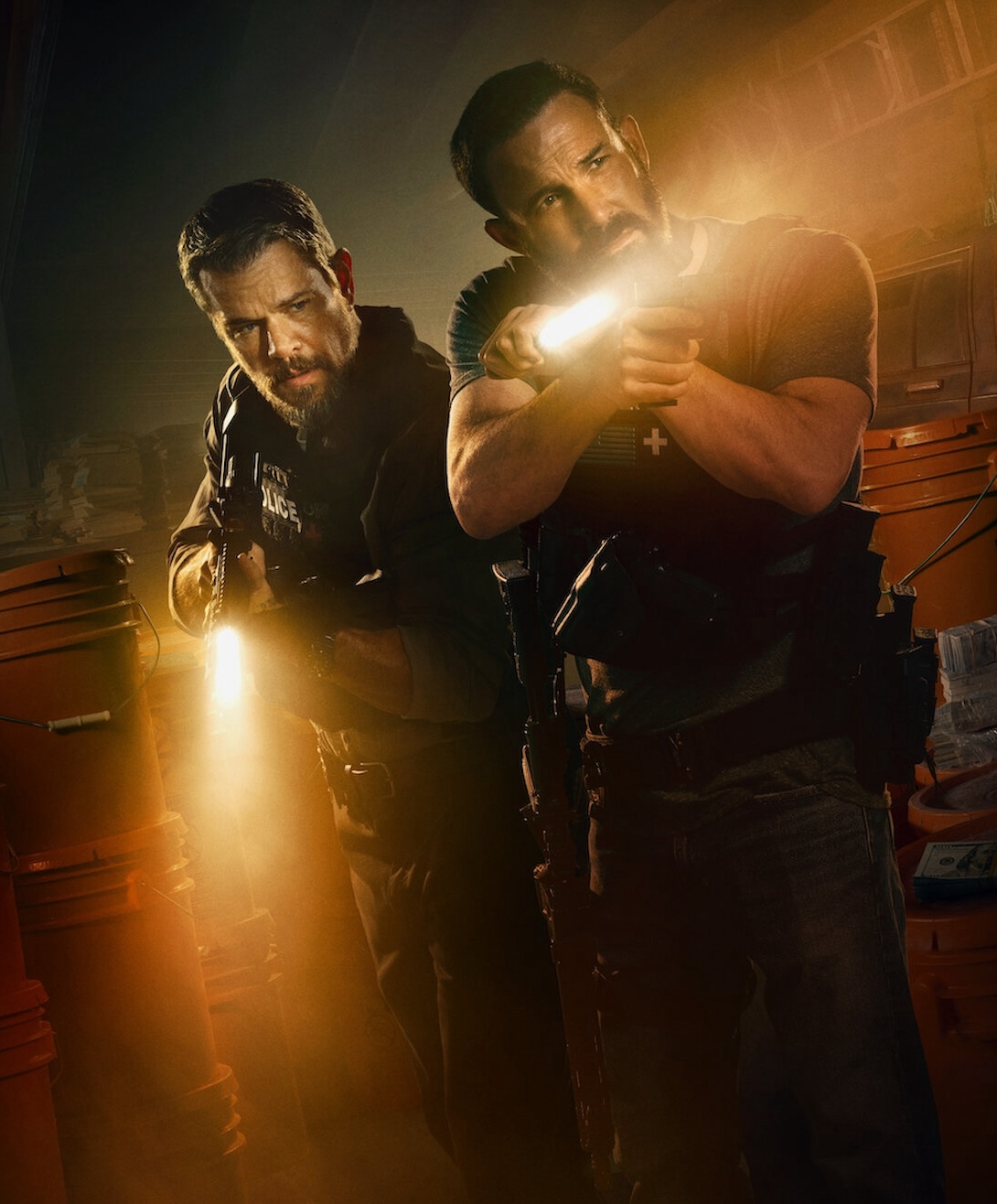
A new Edgar Wright movie is generally a cause for celebration, even if The Running Man falls some way short of the dizzy heights he attained with films like Baby Driver and Last Night in Soho. And it certainly goes a long way to erase the memory of the shonky 1987 version of this story, which featured characters running around in multi-coloured jumpsuits and prompted author Stephen King to have his name removed from the credits. This adaptation, it turns out, comes with the author’s seal of approval.

The original novella is famously set in 2025: America has become a dystopian authoritarian police state, where the poverty-stricken working classes are ruled by corporate media networks, who keep them hooked on an endless diet of brutal reality-TV game shows. This used to feel like a big stretch but, with recent political developments in the USA, it seems an all-too credible premise.

Ben Richards (Glen Powell) is a blue-collar worker, currently black-listed because of his tendency to voice his feelings about the rotten state of his day-to-day existence. His wife, Sheila (Jayme Lawson), works at a hostess bar in Co-Op City and the couple are desperately trying to scrape together enough money to buy medicine for their sick infant daughter. Ben tells Sheila that he’s seriously thinking of signing up as a contestant on one of those hazardous game shows, but promises her that he won’t try his luck on the one with the biggest payout: The Running Man.

But of course, it’s hardly a surprise that the show’s producer – the smarmy, toothy, super-positive Mike Killian (Josh Brolin) – thinks Ben will make an ideal player for the titular game and that he could be the very first person in the show’s history to walk away with the billion-dollar prize money. It’s a tempting proposition…

This is a big, brash, blockbuster of a film with enough world-building to make Co-Op City (a heavily disguised Glasgow) look queasily realistic. With the help of his old friend, Molie (an underused William H Macy), Ben manages to start off his run aided by a couple of fairly convincing disguises and some forged paperwork – but the odds are stacked and there’s a team of professional hunters hot on his trail. They know all the angles and it’s only a matter of time before they begin to close in. The result is a super-propulsive chase movie, which swings expertly from one action-packed sequence to the next, with Ben escaping death by a hair’s breadth at every turn. It’s thrilling enough to keep me on the edge of my seat for the film’s first half.

A later section where Ben ends up seeking refuge in the home of rebel Elton Parrakis (Michael Cera) is, for me, the film’s weakest hand. Parrakis has rigged his home with boobytraps and a long sequence where a group of hunters attempt to enter it plays out like Home Alone on steroids. While it’s undeniably fun, it serves to dilute the air of menace that the director and his co-writer, Michael Bacall, have worked so hard to create.

Furthermore, the film has no credible roles for its female characters. Sheila is only really present in the film’s early scenes and an attempt in the final third to introduce Amelia (Emilia Jones), a civilian whom Ben is obliged to take as his hostage, offers her too little to do and not enough reason for actually being there, right up the point where she is – quite literally – parachuted out of the story.

Nevertheless, this is eminently watchable stuff. It’s perhaps unfortunate that another of King’s ‘Richard Bachman’ books, The Long Walk, hit the screens only a couple of months ago and arguably made a better fist of adapting what is a very similar – if somewhat more sedate – concept.

But those who book tickets for The Running Man will surely find plenty here to enjoy. Sharp-eyed viewers may even spot a familiar face gracing America’s one-hundred dollar bills…

3.8 stars

Philip Caveney

The Choral

09/11/25

Cineworld, Ediburgh

The year is 1916 and in the fictional Yorkshire town of Ramsden, the local choral society is drawing up plans for its next production – but the depredations of war have taken their inevitable toll. Most of the village’s males are either away fighting or already dead. Yet, ironically, with so many of them buried on the Western Front, the most under-employed person on the society’s committee is Mr Trickett (Alun Armstrong), the local undertaker.

The choral’s leader, Alderman Bernard Duxbury (Roger Allam), is painfully aware that his own voice is at best, average but, as the man who provides most of the funds for these productions – and who badly needs distraction after the death of his own son in the trenches – he presses ahead with his plans for the next show, in which he fully expects to sing the lead. 

With the former musical director recently enlisted, Duxbury is keen to acquire the services of Dr Henry Guthrie (Ralph Fiennes) as his replacement, but here too lie problems. Guthrie makes no secret of the fact that he lived and worked for several years in (whisper it) Germany! There are many locals who feel this taints him irrevocably – and why does he spend so much time in the library checking out news articles about the German navy? But other members of the committee, Mr Fyton (Mark Addy) and Mr Horner (Robert Emms), have to grudgingly admit that the man is a real talent.

But once they have him on board, what piece of music can the society possibly perform? Nearly every title they come up with has been written by a German! Eventually, Guthrie alights upon The Dream of Gerontius by Edward Elgar, a suitably British composer. Duxbury gives the title role his best endeavour, but it’s clear that something’s not working…

This original screenplay by Alan Bennett, directed by Nicholas Hytner, could so easily be one of those traditional feel-good features, with the plucky inhabitants of Ramsden coming together to create a masterpiece and performing it to a packed auditorium of spellbound locals – and, while this isn’t so very far from what’s actually delivered here, the telling steers clear of schmaltz and offers something more gritty, nuanced and realistic. 

Guthrie enlists many of his performers from the local hospital where soldiers, recovering from their injuries, are happy to have something else to concentrate on. And for the role of Gerontius, how about young soldier, Clyde (Jacob Dudman)? He has returned to his hometown minus his right arm, only to find that the girl he loves, Bella (Emily Fairn), has fallen for another boy in his absence. If ever there was someone with a real understanding of loss, here he is – and luckily, he has a decent voice.

The production gradually starts to come together. When Salvation Army worker, Mary (Amara Okereke), innocently invites Sir Edward Elgar (Simon Russell Beale) along to see a rehearsal, nobody expects that he’ll actually turn up… or that he will turn out to be such a self-aggrandising bellend, maybe the one man who can stop the show in its tracks. There’s a genuine sense of jeopardy as realisation dawns.

But the element of The Choral that I find the most affecting is the depiction of the youths of the town, who use the whole enterprise as a means to meet members of the opposite sex, to have some fun and enjoy a laugh, all the time painfully aware that the clock is ticking, and that their 18th birthdays are fast approaching… along with their call-up papers.

The Choral is an engaging and melancholic piece that serves as a reminder of the awful injustice of war, and the healing power of communal art in times of tribulation.

4 stars

Philip Caveney

Bugonia

02/11/25

Cineworld, Edinburgh

Yorgos Lanthimos must qualify as one of the hardest-working directors in the business – and one of the most consistently brilliant. Since his breakout with The Lobster in 2015, he’s unleashed a whole string of knockout films and, as I’ve observed elsewhere, he has the gift of turning the wildest, most experimental ideas into palpable hits at the box office. If, in its opening scenes, Bugonia seems like his most straightforward story yet, don’t be fooled. Eyebrow-raising revelations are waiting an hour or so further down the line.

Michelle Fuller (Emma Stone) is the CEO of pharmaceutical megacorporation, Auxolith, located in an unspecified area of the USA – though surprisingly, much of the film was actually shot in and around High Wycombe. As she goes about her business, she’s blissfully unaware that her movements are being studied by Teddy Gantz (Jesse Plemons), a lowly worker at her company’s packaging warehouse.

In his spare time, Teddy studies internet conspiracies and has come to the conclusion that Michelle is actually an ‘Andromedan’ – an alien creature responsible for many of the problems currently facing humanity. She’s also indirectly responsible for the plight of his mother, Sandy (Alicia Silverstone), who is on life support after being used as a test case for one of Auxolith’s experimental drug projects. Worst of all, in Teddy’s mind, is the fact that Michelle is also directly responsible for the decline of the honeybee, which is key to the world’s survival.

Assisted by his vulnerable cousin, Don (Aiden Delbis), Teddy kidnaps Michelle and the two men take her to their ramshackle home in the middle of nowhere. They take the precaution of shaving her head and covering her with antihistamine cream – to prevent her from contacting her ‘mothership’. Teddy wants to use Michelle as a bargaining tool with the Andromedan Emperor, so he can negotiate freedom for the human race. But first, Michelle must be interrogated…

It would be a crime to reveal any more about the plot but, once again, I find myself marvelling at Lanthimos’s ability to manipulate me as a viewer, leading me first in one direction, then in an entirely different one before dashing all my assumptions. There are moments here where I have to restrain myself from gasping out loud. Inspired by Save the Green Planet by South Korean filmmaker, Jang Joon-hwan (which I haven’t seen), Bugonia has been adapted by Will Tracey and, in its latter sections, incorporates elements of a high-stakes thriller as Michelle is obliged to use all her considerable skills to stay alive.

Both Stone and Plemons are utterly captivating in the central roles and it’s easy to see why they’ve become members of Lanthimos’s repertory theatre – while there’s something utterly adorable about Delbis as the hapless Don, unable to challenge the commands given to him by Teddy, even when it’s evident that they disgust and confuse him.

But the film’s true triumph is only revealed in a final extended sequence, where Lanthimos brings all the different strands of the story together to create a shattering, thought-provoking conclusion. The director has announced that he’s ‘taking a rest’ after this and, following a run that includes The Favourite, The Killing of a Sacred Deer, Poor Things and Kinds of Kindness, I’d say he’s definitely earned one.

5 stars

Philip Caveney

All of You

01/11/25

Apple TV

Simon (Brett Goldstein) and Laura (Imogen Poots) are best friends, who spend much of their time together, drinking and chatting shit in trendy London bars and nightclubs. From the moment we first encounter them, it’s pretty clear that they are just made to be a couple – but in the slightly futuristic world in which they dwell, the latest craze is a simple test that can identify the person who is your ‘soulmate.’ Simon is pretty cynical about the idea, but is prepared to pay the substantial sum for Laura to take the test and discover who her perfect match might be.

Then the story jumps forward several years. Laura is now married to Lukas (Steven Cree) – the affable and thoroughly likeable Scotsman who was identified in the selection process – and she’s pregnant with his child. But a complication has occurred and the only person handy to drive her to the local hospital is her old mate, Simon.

As the story continues in a series of flash forwards, it’s clear that at every stage, he’s still in thrall to Laura, ready to drop everything whenever she snaps her fingers – and, eventually, the inevitable consequence occurs…

All of You, co-written by Goldstein with director William Bridges, is a clever slice of minimalist cinema, one which trusts its audience to work out exactly what’s happening in each successive scene. Aside from the obvious flourishes – Goldstein’s beard varies in length from shot to shot – it also manages to convey more subtle changes in the characters as they grow older, amplifying those traits that are set in stone. It also features some fabulous locations around the UK.

Both Goldstein and Poots embody their roles with skill, hinting at the awful tragedy that lurks behind their jokey, smart-arse demeanours. From the word go, it’s clear that a reckoning is coming… but how and when will it occur?

If there’s a problem here, it’s that most viewers will (like me) think that one of the central duo is being a coward of the lowest order – I’ll leave it to you to decide which one that is – but it doesn’t make the eventual conclusion any less tragic. This Apple Original film didn’t qualify for a theatrical release but, for those with the appropriate subscription, it’s worth checking out. While it doesn’t exactly reinvent the wheel, it’s fresh enough to keep you hooked to the final frame.

3.6 stars

Philip Caveney

Springsteen: Deliver Me From Nowhere

29/10/25

Cineworld, Edinburgh

Many people who, like me, purchased Bruce Springsteen’s Nebraska on its release in 1982, must have experienced the same bewilderment as I did. How had the Boss gone from the stirring, upbeat anthems of Thunder Road and Hungry Heart to this bleak, introspective slice of Americana? And, perhaps more importantly, why? Okay, after a few listens, a couple of those ballads did eventually get their hooks into me but, as a career move, it seemed a spectacularly ill-judged decision.

Scott Cooper’s film, based on Warren Zane’s book, sets out to explain exactly what happened and, in choosing to concentrate on that difficult album, runs the risk of alienating itself from those fans who were anticipating an upbeat celebration of the great musician’s life and work (much like the record itself). True, when we first see Bruce (Jeremy Allen White) onscreen, he’s powering through a blistering performance of Born to Run. Coming off stage, he’s informed by his manager and close friend, Jon Landau (Jeremy Strong), that, with his latest album (The River) at number one in the charts, he is standing on the edge of superstardom.

But in the following break from touring, Bruce appears to be heading into a depression. He happens to catch a glimpse of Terence Malik’s 1973 film, Badlands, on TV, featuring newcomers Martin Sheen and Sissy Spacek – and in that moment a spark is ignited. Pretty soon, he’s reading up on Charles Starkweather and the killing spree he and his teenage girlfriend, Caril Anne Fugate, embarked on back in 1958. Bruce starts to write the lyrics of what will become Nebraska’s title track.

He’s driven by powerful memories of his own childhood, the issues he experienced with his abusive father, Douglas, played in flashback by Stephen Graham, who gives a brooding, mostly silent performance opposite an intense turn from Matthew Antony Pelicano Jnr as Young Bruce. Something that happened between father and son in those formative years is clearly behind Bruce’s current malaise.

Back in the present, he enlists the help of recording technician Mike Batlan (Paul Walter Hauser) to capture the new songs as they emerge on a simple 4-track deck at home. But, as his obsession with the new project steadily grows – and his record label continually pester him for new product – so he becomes increasingly determined that the resulting album must be as stripped-back as the songs on the ‘demo’ cassette he’s already recorded…

Deliver Me from Nowhere is essentially about a kind of exorcism, an artist’s attempt to cleanse himself of the emotional baggage he’s carried around since childhood. While the story offers an interesting angle on a lesser-known aspect of Springsteen’s career, it’s not the kind of material that biopics are traditionally built upon. Several viewers at the screening I attend decide to vote with their feet around an hour in. While I’m engaged enough to stay in my seat till the closing credits, I have to admit that overall the film is a mixture of the good, the bad and the downright puzzling.

Jeremy Allen White, it must be said, doesn’t look an awful lot like Springsteen, but still manages to portray the man with absolute conviction and, perhaps more importantly, he captures the Boss’s distinctive voice with evident skill. Strong is an exceptional performer and makes the softly-spoken, nurturing approach of Landau interesting to observe. The man clearly had the patience of a saint.

But the female performers are less well-served. Gaby Hoffman, as Bruce’s mum, Adele, and Grace Gummer as Landau’s wife, Barbara, are granted barely enough dialogue to justify their presence. Elsewhere, we witness Bruce’s on-off romance with waitress Faye Romano (Odessa Young), a fictional character who is a composite of several girlfriends he had around this time. Young does her best with what’s she given which is, to be honest, nowhere near enough.

There’s a frankly exasperating moment where Bruce is finally about to unburden himself to a psychiatrist, to explain exactly what’s been haunting him all these years… only for the camera to suddenly cut away, leaving the audience literally in the dark. On the plus side, there are a couple of upbeat scenes set in New Jersey club, The Stone Pony, that celebrate the energy and excitement of the early 80s rock scene. And a recreation of the original recording session for the song Born in the USA, is a definite high point.

But too often, Deliver Me From Nowhere struggles to justify its considerable running time. Hardcore Springsteen fans will find enough elements here to pique their interest but those with only a passing knowledge of the man and his work may soon start running out of patience.

3.4 stars

Philip Caveney