Film

La Bête (The Beast)

08/06/24

Cameo Cinema, Edinburgh

Some films almost defy logical analysis and Bertrand Bonello’s La Bête is one such er… beast, depicting as it does three distinct time-strands, each one featuring different versions of the same two characters. We first meet Gabrielle (Léa Seydoux) in a green-screen room, where the film’s director is talking her through a scene where she must pick up a knife from a kitchen table. This instantly alerts the audience to the fact that what we are about to see is an elaborate construct.

The story begins in 2044, where AI has pretty much taken over everyone’s lives, leaving them with precious little to do. Gabrielle is struggling to come to terms with a thankless job, which requires her to put her hand on a glass screen every so often. She decides to undergo ‘purification’, a procedure which will remove all of her troublesome human emotions. Meanwhile, she is offered the companionship of a doll, Poupée Kelly (Guslagie Malanda), who will do anything that Gabrielle asks of her.

As the purification begins events flash back to Paris in the year 1910, where Gabrielle meets Louis (George McKay) at a society party. In this version of her life, Gabrielle is a talented musician and she’s happily married to Georges (Martin Scali), a doll-maker, but her chance encounter with Louis clearly strikes a significant chord with both of them.

Have they already met somewhere else? Gabrielle confides to Louis that for most of her life she has lived with the fear that something terrible is going to happen to her. And just when that’s starting to sink in, we flash forward again to the year 2014, where Gabrielle is trying to make a living as a model and Louis is a terrifying incel, spewing hatred onto social media, intent on destroying all those women who have so callously spurned him over the years…

Bonello’s film is the very definition of a slow-burner, a whole series of events and repetitions gradually building to relate a mystifying narrative. Gina (Marta Hoskins), a blank-eyed clairvoyant, keeps popping up to put an even more disturbing spin on what’s happening. If I claimed to absolutely understand everything that happens in the film’s two hours and twenty-six minutes, I’d be exaggerating. I’m also unsure if a climactic scene, which appears to echo David Lynch’s Blue Velvet, is an intentional homage or just a coincidence.

Whatever, as the story moves assuredly through its many (often startling) twists and turns, I find myself increasingly fascinated with what I’m watching. Seydoux is fabulous in all of her versions and McKay (who took over the role of Louis at very short notice – and also learned to speak French into the bargain) continues to be a chameleon, seemingly able to transform himself into whatever is asked of him.

La Bête arrives heavily laden with five-star reviews and, though I’m not quite in that camp, I do feel this is a bold, ambitious film that goes to places where few others have dared to tread. I also readily accept that it won’t be for everyone.

Please note, in place of the usual rolling credits, viewers are offered the opportunity to scan a QR code instead, something I did for the purposes of this review. I urge everyone to do the same, only because there’s also a short clip on there that offers yet another piece to this enigmatic puzzle of a film.

4.2 stars

Philip Caveney

Young Woman and the Sea

03/06/24

Cineworld, Edinburgh

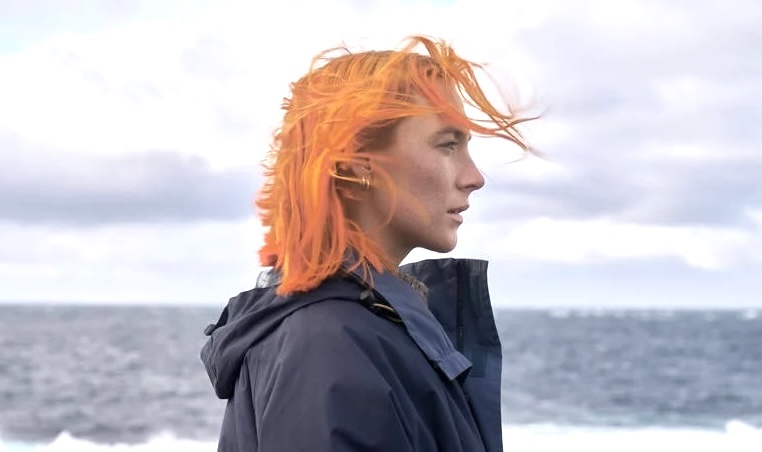
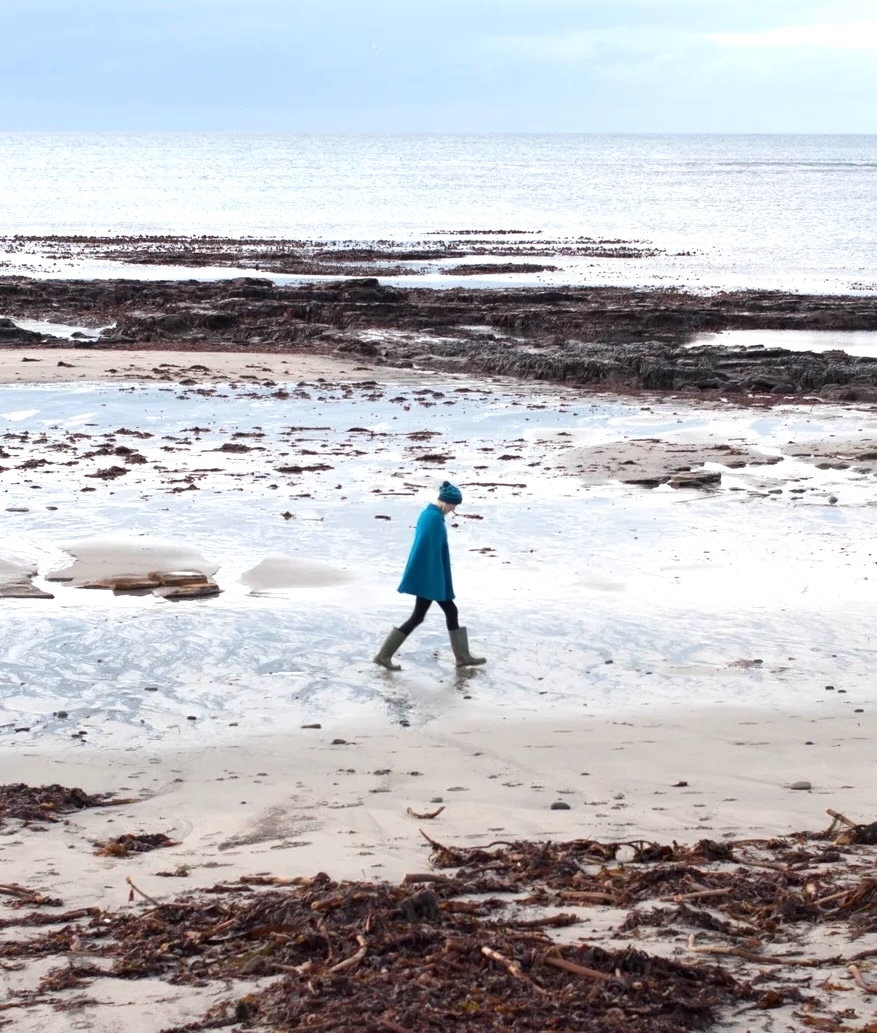
As true stories go, few are as inspiring as that of Trudy Ederle, who in 1926 was the first woman to swim the English Channel. If it sounds a bit so-so now, when so many people have managed it, consider how difficult it must have been in an era where there was little in the way of swim technology – and at a time when women were expected to stay quietly at home and look after the family.

We’re first introduced to young Trudy (Olive Abercrombie) in 1914 when she’s suffering from a bout of measles that’s expected to kill her. Out in New York harbour, a fire on a passenger boat has killed a large number of people, most of them women, who burned to death because none of them had ever been taught to swim. When Trudy makes a miraculous recovery from her illness, her indefatigable mother, Gertrude (Jeanette Hain), decides that Trudy (now played by Daisy Ridley) and her sister, Margaret (Tilda Cobham-Hervey), shall have swimming lessons, even though the concept is virtually unheard of. The girls’ father, Henry (Kim Bodnia), a butcher by trade, doesn’t encourage the idea. He would rather see his daughters married with kids at the earliest opportunity and preferably to other German butchers. Whatever will these women want next? The vote?

Luckily, the girls fall under the influence of fearless swimming trainer Charlotte (Sian Clifford), who can see no logical reason why women shouldn’t be allowed to swim competitively and, sure enough, they take to the sport like… ahem… ducks to water. Trudy soon has her eyes on bigger prizes and even gets to take part in the 1924 Summer Olympics – but her determination stretches to different horizons and she’s very aware that, so far at least, no woman has ever swum across the English Channel…

This is a Disney film, but screenwriter Jeff Nathanson mostly manages to steer clear of the schmaltz, only occasionally flirting with it in the shallows. Of course, there has to be a villain in a film like this, and that duty falls to Christopher Eccleston (sporting a spectacularly dodgy Glaswegian accent) as Jabez Wolffe, the man picked to be Trudy’s trainer for her first attempt. A failed channel swimmer himself (22 attempts!), Wolffe is clearly the wrong man for the job and it’s hardly surprising that the enterprise is doomed to failure – but then Trudy falls in with Bill Burgess (Stephen Graham), the second man to make it across (in 1911!), who can see her potential and is prepared to pick up where Wolffe left off.

The rest, as they say, is history, but director Joachim Rønning does a spectacular job of creating almost unbearable suspense even though the ending is a matter of record. And Trudy’s epic swim, through bad weather, stinging jellyfish and – worst of all – almost total darkness, makes for an absorbing and compelling experience in the cinema.

How well this will fare in a summer where some excellent films are failing to find an audience is anybody’s guess, but as ever, it’s worth catching this one on the big screen before it drifts on by.

4.3 stars

Philip Caveney
Hit Man

30/05/24

Cineworld, Edinburgh

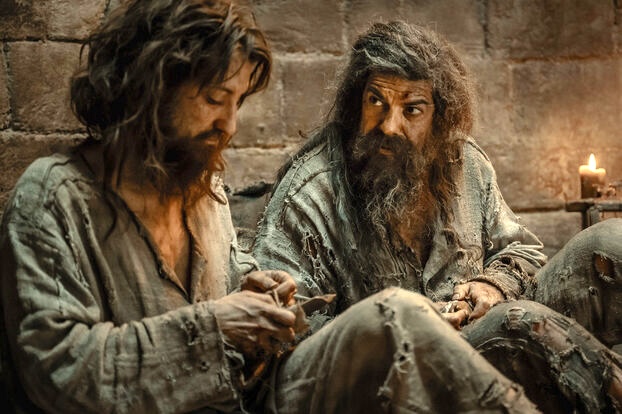
Here’s that increasingly rare creature, a Netflix original movie that’s actually been given a theatrical release before being dumped onto streaming. Hit Man is a curious creation, loosely based on the career of the recently deceased Gary Johnson, a University lecturer from New Orleans who also had a sideline working for the local police department as a fake contract killer. As you do. Wearing a wire, he would meet with potential ’employers’, accept their money and coax them into confessing their desire to pay him to murder somebody… on tape.

It’s best not to dig too deeply on that score. Suffice to say that this is a witty, amoral confection which travels to some unexpected places, mostly because it doesn’t bother sticking too closely to the truth.

Johnson (Glen Powell) finds himself taking over the fake hit man role from his police colleague, Jasper (a wonderfully seedy performance by Austin Amelio), and, though initially reluctant to do so, Johnson quickly discovers that his background in philosophy has equipped him to be really good at the different roles he has to take on, each one tailored to appeal to his latest client. It all goes swimmingly until he encounters Maddy Masters (Adria Arjona), who wants to call down a hit on her husband, Ray (Evan Holtzman), who appears to be a thoroughly nasty piece of work.

Sensing that she’s headed for trouble – and at the same time, powerfully attracted to her – Johnson talks her out of going through with the hit and ends up having a wild affair with her, allowing her to continue in the belief that he is actually ‘Ron’, a professional contract killer.

Powell, who has been hotly tipped to become a major star ever since his supporting role in Top Gun: Maverick, is undeniably watchable here, inhabiting a whole range of different personas with considerable aplomb. As if that wasn’t enough, he also co-wrote the screenplay with veteran director Richard Linklater. Arjona, too, seems destined for bigger things, managing to make us care about a character we’d probably be best advised to steer clear of if we met her in real life.

As Hit Man twists and turns through a series of increasingly problematic situations, I find myself both entertained and puzzled. The script takes great pains to assure me that hit men are a fictional invention (Linklater even includes a sequence showing some memorable ‘hits’ from famous films across the decades). But if this is true, should we really be prosecuting people who attempt to hire them? Isn’t that entrapment? Or does an attempt to hire a killer automatically make the hirer guilty?

One other thought. Where do hit men advertise their services? The Times? Exchange and Mart?

Whatever the case, this film is funny, intelligent and well worth catching on the big screen, providing you can find a cinema near you that’s showing it. If you’re happy to stream it, you won’t have long to wait.

4.2 stars

Philip Caveney
Furiosa: a Mad Max Saga

25/05/24

Cineworld, Edinburgh

Furiosa is my most anticipated film of the year but to fully explain why, it’s necessary to briefly look back at the career of writer/director George Miller. I saw the first film in the Mad Max franchise way back in 1979, a modest, low-budget revenge thriller starring a young Mel Gibson. It was perfectly watchable but gave no idea of the wonders that were to follow. 

In 1983, The Road Warrior brought back the titular character with a bigger budget and an iconic look that depicted Australia in the years following a nuclear war. It was louder, more ambitious and gloriously inventive, an unstoppable thrill ride. In 1985, Beyond Thunderdome brought in Tina Turner for a guest appearance and appeared to round off the franchise in grand style. 

In normal circumstances, that would probably have been the end of it. So when Miller resurfaced nearly thirty years later with Fury Road, I had very low expectations. Tom Hardy stepped into the scuffed boots of Max and Charlize Theron played a new character, Furiosa. The film was an extraordinary, foot-to-the-metal, adrenaline-powered masterpiece, one that left me stunned at its conclusion. I saw it a second time in 3D and, two years later, was one of the first in the queue for the special Black and Chrome edition. How was Miller ever going to follow such a powerful creation?

He took his time. I was astonished to realise just the other day that it’s a full nine years since Fury Road’s release. The worst thing that could happen, I thought, would be if he tried to replicate the previous film’s simple, propulsive structure – and happily he’s gone in an entirely different direction. Of course he has. He’s George Miller.

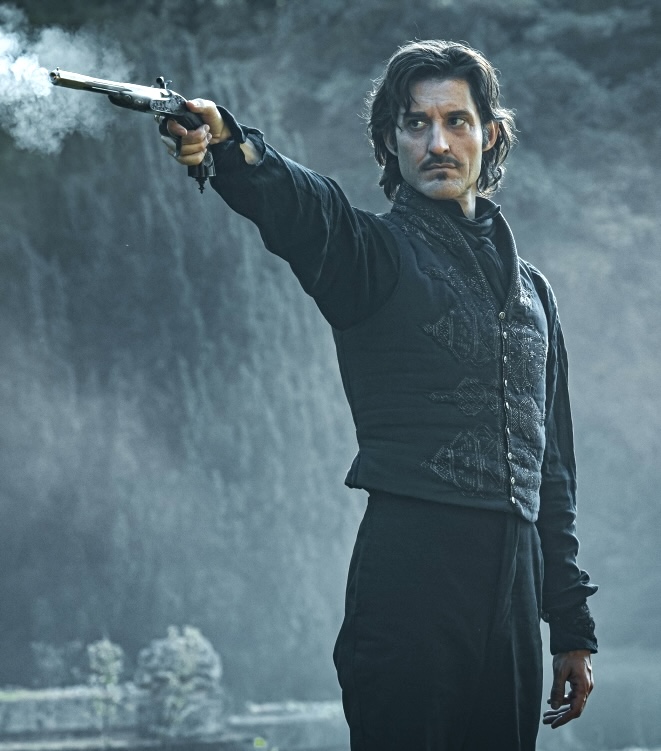
Furiosa is a prequel, a much more episodic affair than its predecessor, divided into five chapters (each with a portentous title) and, unlike Fury Road’s three and a half day timeline, this is set over something like eighteen years. We first meet the young Furiosa (Alyla Browne) in ‘The Green Place,’ the childhood home she spent most of Fury Road trying to get back to, and it’s clear at a glance why she was missing this verdant ‘place of abundance’ in the midst of a desert. But her tranquil life is rudely disrupted when she is kidnapped by a gang of bikers from the wasteland and taken to the kingdom of Dementus (Chris Hemsworth), a motor-mouthed, self-aggrandising ruler, who is used to taking whatever he wants whenever he wants it. Furiosa is merely his latest acquisition. But the girl’s mother, Mary (Charlee Fraser), follows her, intent on taking her home again at any cost…

What immediately hits me about this film is the glorious world-building that’s going on. This is an eye-popping spectacle. Every shot caught by cinematographer Simon Duggan is ravishing and Jenny Beavan’s costume design is endlessly inventive. Add the powerful sound design and you have a film that literally shakes you in your seat. It’s a full hour before Alyla Browne mutates into Anya Taylor-Joy in one of the most accomplished on-screen transformations I’ve ever witnessed. Given only thirty lines of dialogue in the entire film, Taylor-Joy has to convey her character mostly using her eyes. She somehow manages to show Furiosa’s inner turmoil, only briefly finding solace in the affection of rig-driver Praetorian Jack (Tom Burke). Her most powerful motivator – a desire for revenge – is ever present and often propels her into rage. It’s fascinating to watch her. Hemsworth is also wonderful as Dementus, so much more than a cardboard cut-out villain. Here is a man with his own inner turmoil and awareness of his failings. He really should play bad guys more often.

Motor lovers shouldn’t despair because Miller’s trademark behemoth vehicles are in evidence – including a chariot pulled by three motorbikes – and there’s an extended chase sequence that pulls out all the stops, particularly in the part where Praetoran Jack’s rig is attacked by paragliders. As ever, hats off to the stunt performers who make this such a thrill ride. 

But Furiosa is more – much more – than just another action flick. It’s also about the power of mythology, the ways in which stories of epic odysseys perpetuate and endure across the centuries. It’s about the desire of humanity to survive against overwhelming odds and the ways in which religions are shaped by those who invent them. But mostly, it’s about a 79-year-old director at the height of his powers, being unleashed into the world’s biggest sandbox and invited to play. And here, Miller shows more unbridled invention than I’ve seen in a very long time. 

My advice? Get thee to the biggest IMAX screen available, buckle in and enjoy the ride. Oh, and Max? He’s there… but you’ll need to keep your eyes peeled to spot him.

5 stars

Philip Caveney
Hoard

19/05/24

Cineworld, Edinburgh

It’s London, some time in the 1980s. Cynthia (Hayley Squires) and her daughter Maria (Lily Beau Leach) are very close, with a whole host of funny rituals and secret games. They watch movies, threading popcorn on string; they dance until they fall over laughing; they go out at night, scavenging from bins.

The house is full to bursting. When she comes home from school, Maria has to climb over the detritus blocking the front door. Her pet ferret, Pearl, goes missing for days. She can’t find her PE kit. In trouble – again – for ‘forgetting’ it, she snaps at her mum. “I hate us. I’ve been to other people’s houses. They’re not like this.”

When the teetering mounds of junk literally crush Cynthia, Maria is taken into care.

Fast forward to 1994. Maria (Saura Lightfoot Leon) is sixteen now. ‘Mum’ is Michelle (Samantha Spiro), who’s been fostering her for years. Despite still being something of an outsider, Maria has been functioning quite well. But there’s a perfect storm brewing: she’s left school but doesn’t have a job; her only friend, Laraib (Deba Hekmat), is moving away; and news comes in of Cynthia’s death. Enter thirty-year-old Michael (Joseph Quinn), an ex-foster kid of Michelle’s who needs a place to stay for a few weeks. He’s a refuse collector, and Maria finds herself drawn to him, his smell kindling childhood memories. And then she begins to emulate her mother’s hoarding ways…

There’s a lot to admire about Hoard. It’s an ambitious piece, and debut writer-director Luna Carmoon depicts Maria’s fracturing mental health with an unflinching eye, managing to convey both her inner turmoil and how she appears to those outside. The thread of images – fireworks, sherbert, tin drums, irons – is boldly interwoven; and the metaphor-made-literal bullfight scene is particularly memorable. Both Leach and Leon evoke empathy for Maria, convincingly portraying her complex character. Squires is wonderful as Cynthia too, her brittle joie de vivre always just about to crack.

The first act is brilliant, but the early stretches of the second are less compelling: I find it hard to believe in Maria’s relationship with Laraib and in her interactions with the people at the pub. I don’t understand why the lovely Michelle would keep inviting her friend, Sam (Cathy Tyson), to bring her daughters over to visit, when she knows that they bully Maria.

Things pick up again as Michael and Maria fuel each other’s neuroses, spinning further and further out of control. It’s a tough watch – even stomach-churning – but that’s okay; it should be. The resolution, when it comes, is perhaps a little pat, but it’s a relief nonetheless. A short coda provides a clue as to where the story comes from, apparently inspired by events from Carmoon’s own life.

If the ambition sometimes exceeds the execution, Hoard is never less than interesting, and Saura Lightfoot Leon is certainly one to watch.

3.2 stars

Susan Singfield

IF

18/05/24

Cineworld, Edinburgh

Written, produced and directed by John “A Quiet Place” Krasinski, IF is quite a departure for the filmmaker. Instead of the unsettling horror and dread he’s renowned for, this sentimental kids’ film is essentially an exhortation not to put away childish things. “You have to stop,” says twelve-year-old Bea to her prankster dad, who needs surgery for his broken heart. “Never!” he responds, twirling his IV pole in a tango, smiling into the googly eyes he’s placed on its bag.

Bea (Cailey Fleming) has been through the mill. Her mom (Catharine Daddario) died of cancer a few years ago, so she’s understandably terrified when her dad (Krasinski) falls ill. His hospital is in New York, so Bea stays with her granny (Fiona Shaw) in Brooklyn Heights for the duration. It’s close enough for her to visit every day, and also gives her a chance to reconnect with some early memories – although she’s quick to remind her well-meaning granny that she’s not a kid any more.

But Bea soon realises that something strange is happening in the apartment building. Catching a glimpse of a girl-sized ballerina-butterfly, she follows it up the stairs, where she discovers a room inhabited by a man called Cal (Ryan Reynolds), whose job is to care for the abandoned IFs of the title: imaginary friends whose children have grown up and forgotten them.

The IFs provide a welcome distraction. Of course, at twelve Bea is far too old for an IF of her own, but she’s more than happy to help Cal find new placements for all those languishing in a retirement home in Coney Island…

There’s a lot to like: Fleming is a delightful performer, there’s an impressive array of stars voicing the IFs, and the whole thing looks wonderful, the blend of live action and animation beautifully realised. The underlying message, though simple, is nicely conveyed, and there are some memorable set pieces, including a jubilant dance number to Tina Turner’s Better Be Good To Me.

But IF is a frustrating film. The storyline is muddled, with gaping flaws in its internal logic and some unconvincing details that distract from the flow. If it’s a contemporary piece – as it’s meant to be – why does no one have a smartphone? And why is a twelve-year-old girl allowed to wander around a strange city at night alone? The one time her granny asks where she’s been, Bea simply shrugs and tells her, “Out with friends.” If this were a tale of benign neglect, then that might suffice, but nothing else in the story suggests that’s the case.

What’s more, for something that’s supposed to be a comedy, it’s not very funny. Giant cuddly-monster Blue (voiced by Steve Carrell) sneezes a lot and blunders around banging into things, but never quite reaches the level of clowning that elicits a laugh. The emotional stuff is better: Bea’s fear of losing her father is tangible, as is her granny’s inept desire to make her happy. But even here, there are untapped resources: Nurse Janet and Benjamin, a sick little boy in the same hospital as Bea’s dad, are two great characters played by two great actors (Liza Colón-Zayas and Alan Kim), both criminally under-used.

All in all, IF is a perfectly watchable film – but there’s a better one in there, struggling to get out.

3 stars

Susan Singfield

Kingdom of the Planet of the Apes

09/05/24

Cineworld, Edinburgh

When author Pierre Boulle published his science fiction novel La Planéte des Singes in 1963, he could have had no idea of the protracted cinematic legacy that awaited it. In 1968, Planet of the Apes starring Charlton Heston was a massive hit and had one of the most iconic final scenes in history. It spawned four (admittedly patchy) sequels and, in the 1970s, became a long-running television series, of which I still have fond memories.

In 2001, Tim Burton attempted a big-screen reboot, but only his staunchest fans would claim that it was in any way a success.

So when, ten years later, director Rupert Wyatt made another attempt to apply the old defibrillators, I had low expectations (which, in retrospect, may have helped). Rise of the Planet of the Apes was a cracking film which centred on a remarkable mo-cap performance by Andy Serkis as Caesar. Two more films (both directed by Matt Reeves) continued in the same vein, rounding off with War for the Planet of the Apes in 2017. Surely there was nothing more to be said on the talking simian subject?

Ahem.

Wes Ball’s Kingdom of the Planet of the Apes begins with a glimpse of Caesar on his funeral pyre and then scampers nimbly onwards for many years, introducing us to a new hero, Noa (Owen Teague). Noa is one of a tribe of chimpanzee hunter-gatherers, who specialise in training eagles, which they send out to catch fish for them. The apes are now the dominant species on the planet and the few humans that Noa encounters are savages who, thanks to a mysterious virus, have lost their ability to speak.

Noa is approaching a coming-of-age ceremony for which he needs a freshly-laid eagle’s egg but, when the one he’s been carrying around with him gets scrambled, he’s obliged to ride out in search of a replacement. He comes up against a gang of aggressive bonobos, under the despotic leadership of Proximus ‘Caesar ‘(Kevin Durand), who has realised that – much like the Romans before him – he can make the name a hereditary title and subvert everything that his illustrious progenitor ever believed in. Noa also meets a wise old orangutan called Raka (Peter Macon) and a human called Mae (Freya Allan), who, unlike most of her species, can speak eloquently. She has a secret mission to carry out in the ruins of the nearby city where Proximus reigns, so Noa and Mae travel there together. They are captured and made to swear allegiance to Proximus. Another captive human, Trevathan (William H. Macy), tells Noa that Proximus is spending much of his time trying to gain entry to a massive underground vault which may just contain a ‘book’ which could restore the power of speech to humanity….

If this is beginning to sound complicated, let me assure you that on the screen it’s even more so – and this gives the story a muddled quality, particularly in the saggy middle section of its lengthy running time. Don’t get me wrong, the film has many qualities to commend it. Like its three predecessors, the world-building here is brilliantly done and the exotic (Australian) locations are awe-inspiring to say the very least. Also, the mo-cap characters are depicted with astonishing nuance and it’s to the film’s credit that, despite a massive cast of simians, I am never confused as to who is who.

As the film thunders into its final stretches there’s a major revelation – and I remind myself that Wes Ball has made no secret of the fact that he sees KOTPOTA as the opening salvo in a trilogy. But looking around the scant audience for this afternoon’s performance, I can’t help wondering if there’s any appetite for it. Maybe this lucrative franchise is finally approaching its extinction. If that’s the case, it’s had a pretty impressive run – and, even if this instalment feels like something of a step down, it’s nonetheless a fantastic visual achievement.

Those with a taste for mo-cap marvels should swing down to their nearest multiplex, choose the biggest screen available and… go ape.

3.3 stars

Philip Caveney
In the Land of Saints and Sinners

07/04/24

Netflix

In recent years, Liam Neeson’s film output seems to have evolved into a series of geri-action brawls, so In the Land of Saints and Sinners comes as something of a breath of fresh air. Not that it doesn’t feature plenty of action – it does. But it’s also a deceptively gentle, almost pastoral, sort of film that has the good sense to show us enough about its many characters to make us care what happens to them.

Written by Mark Michael McNally and Terry Loane, the story takes place largely in the tranquil setting of Glencomcille, County Donegal. It’s 1976 and Finbar Murphy (Neeson) is a pillar of the community, kind, gentle and always ready to help anyone in trouble. He’s best friends with the local garda officer Vinnie (Ciarán Hinds) and enjoys a chaste but tender relationship with his neighbour, Rita (Niamh Cusack). But like many freelancers, Finbar has hidden depths.

Since the death of his wife, he’s worked for local crime kingpin, Robert McQue (Colm Meaney), helping to rid him of his enemies by taking them to a tranquil nook, despatching them with his trusty shotgun and burying them deep. He always plants a tree to commemorate each shooting and there are a lot of saplings in evidence.

But his latest victim (another contract killer)’s final words strike a chord with Finbar and make him think wistfully about abandoning this lucrative sideline and doing something less stressful. He asks McQue to pass on his cleaning-up duties to eager young hotshot, Kevin (Jack Gleeson), and McQue reluctantly agrees. But it isn’t long before the actions of nasty piece of work, Curtis June (Desmond Eastwood), recall Finbar to his former endeavours. Curtis is the brother of Doireann (Kerry Condon), a member of the provisional IRA, who, with two other members of her unit, is currently hiding out in in Glencomcille after fleeing a bombing incident in Belfast. Doireann is a force to be reckoned with and it’s clear that the tranquility of this sleepy suburb is soon to be rudely interrupted…

Though the ever-present threat of violence does inevitably build to a bloody conclusion, what really works for the film are the moments that lead up to it. Neeson is great here, as a kind, caring and avuncular character, always ready to do what has to be done when the situation demands it. He’s surrounded by the cream of Irish talent, not least Condon (a recent Oscar-winner, lest we forget, for The Banshees of Inisherin), who imbues Doireann with a fierce and unrelenting determination to destroy anyone reckless enough to stand in her way. Gleeson’s Kevin is also a revelation, a kid who’s never been treated kindly and who nurtures a hopeless ambition to go to California where, he’s been told, peace and love are currently in the air. Mind you, all the characters in this drama have the resonance of real people and that’s one of the elements that makes it work so effectively.

Director Robert Lorenz uses the majestic landscape of Donegal to the film’s advantage, counterpointing scenes of stark violence with the beauty and serenity of nature. It all makes for something far more nuanced than I’d normally expect to find in this genre – and ensures that the tragedy of its brutal conclusion is all the more affecting.

4.2 stars

Philip Caveney
The Fall Guy

05/04/24

Cineworld, Edinburgh

Those of us who have lived on this planet for a substantial number of years will probably have fond memories of the 80s TV series that inspired this film. I have little doubt that director (and former stunt man) David Leitch may himself have found inspiration in it for his own subsequent career. I have vague memories of Lee Majors as Colt Seavers, the guy who ‘makes Eastwood look so good,’ but I’d struggle to remember any storylines from the show.

Leitch’s reinvention is a romp, a big, audacious and sometimes hilarious movie that never hesitates to amp up the silliness of the concept. I can’t remember when I last laughed so much at a screening and I’ve been somewhat dismayed by the dour reviews from other critics who have dismissed the film – as though it has no right whatsoever to have fun. I completely disagree.

In this version, Seavers is played by Ryan Gosling, exuding that sleepy sensuality that has made him such a bankable star. Seavers is in recovery after a disastrous on-set accident and has since turned his (broken) back on the movie business. He now makes his living valeting cars instead of crashing them. He’s also ghosted his former lover, camera woman Jody Moreno (Emily Blunt), and is painfully aware that this was a big mistake.

Out of the blue, Colt gets a call from big-time film producer Gail Meyer (Hannah Waddingham), who wants him in Sydney, Australia to work on her latest would-be blockbuster, Metalstorm. Colt is initially reluctant to comply until he hears that the film in question is Jody’s directorial debut and that she has personally asked for his involvement. Spotting a chance to rekindle that botched relationship, Colt jumps aboard the first available plane.

Once there, Gail informs him that Jody hasn’t really asked for his presence at all – in fact she’s still pretty pissed off with him. The issue is that the film’s star, the egotistical Tom Ryder (Aaron Taylor-Johnson), has gone missing and, without him, the project is as good as dead. Colt knows Tom well: he’s performed stunts for the actor for years. But his attempts to find him lead Colt down a perilous rabbit hole where everybody he encounters is trying to kill him…

Okay, so the plot wouldn’t win any prizes for originality, but writer Drew Pearce manages to keep the cinematic pot bubbling with inventive humour and there’s enough chemistry between Gosling and Blunt to make me care about how things turn out for the two of them. I love the scene where Jody makes Colt apologise for his past behaviour in front of the film’s massive cast – using a loud hailer. There’s also a very funny sequence where Colt is accompanied everywhere he goes by a unicorn. (Don’t ask.) Waddingham is terrific as the bombastic Gail and Taylor-Johnson (who also had a key role in Leitch’s last film, Bullet Train) manages to make Ryder more than just a cardboard cutout. Eagle-eyed viewers may spot David Collins of the Umbilical Brothers (one of our favourite acts at last year’s Edinburgh Fringe) in a small role as a camera technician. Oh and Metalstorm? I could be wrong, but I suspect that this weird looking alien/cowboy mash-up may be Leitch’s way of having a sly dig at (the admittedly po-faced) Dune.

And then, of course, there are the stunts, each one more elaborate and eye-popping than the last. The Fall Guy is, more than anything else, a celebration of the unsung stand-ins who risk life and limb every time they step in front of a movie camera. It’s no coincidence that in one conversation, Colt berates the fact that the Oscars still haven’t managed to offer a gong for the year’s most spectacular stunt, despite plenty of lobbying. That’s something that this film could just tip the balance for.

Naturally, there are obligatory walk-on roles for Lee Majors and his former sidekick, Heather Thomas, playing the least convincing Australian police officers in history. Well, it would be rude not to feature them somewhere, right? I could argue that the film might easily have lost half an hour in its running time and been a leaner, meaner beast, but – that said – I wouldn’t want to be the one to choose which bits to cut out. The Fall Guy is, quite simply, a whole ton of fun.

A series of clips over the end credits revealing how the action sequences were achieved adds yet another layer to the film. I sit there watching stunt players, doubling for actors, pretending to be stunt players. Let’s face it, that’s about as meta as you could reasonably ask for.

4.3 stars

Philip Caveney
Love Lies Bleeding

04/05/24

Cineworld, Edinburgh

Rose Glass’s impressive debut film, St Maud, had its UK release slap bang in the middle of lockdown and could only be viewed via streaming. As I watched, I was uncomfortably aware of how much better it would look projected onto a giant screen. Glass’s sophomore film, Love Lies Bleeding, would appear (at least on paper) to be a more straightforward beast than its predecessor, a gritty crime thriller set in New Mexico, sometime in the 1980s. But as I might have predicted, it’s anything but. Here, a genre traditionally driven by male protagonists is ingeniously hijacked to become a vehicle that is equal parts horror and queer romance.

Lou (Kristen Stewart) manages a sleazy gym owned by her dodgy and prosperous father, Lou Senior (Ed Harris). She spends much of her time unblocking toilets and fending off the amorous advances of Daisy (Anna Baryshnikov). Then a stranger visits the gym. Jackie (Katy O’ Brian) is a bodybuilder, intent on preparing herself for a big competition to be held in Las Vegas, and determined to be there at any cost. There’s an instant attraction between the two women and it isn’t long before the two of them are having frantic sex and Lou is shooting Jackie up with ampules taken from her illicit supply of steroids. (Those with an aversion to hypodermics will find themselves looking away at this point.)

Matters become more complicated when Lou finds out that Jackie has taken a job at the gun range owned by Lou Senior. Lou really doesn’t have much to do with her old man, because of something that happened to her in the past, something she’d much rather forget about. Matters come to a head when Lou’s much-loved sister, Beth (Jena Malone), is brutally assaulted by her scumbag partner, JJ (Dave Franco). Jackie, popped up on too many steroids, decides to exact bloody revenge…

The story, co-written by Glass and Weronika Tofilska, takes some sinewy twists and turns from this point and, as the complications pile on, so the suspense steadily mounts. An atmosphere of dread is aided and abetted by the inventive cinematography of Ben Fordesman, who exploits the eeriness of those desert locations to the full, while Clint Mansell’s ominous score helps to amp up the tension.

While this is less of a horror film than St Maud, Glass still manages to throw in some startling tropes – Jackie’s performance at the much-anticipated Las Vegas show starts majestically enough but quickly descends into some truly disturbing imagery as the aforementioned steroids exert their influence. Stewart is, as ever, completely convincing in her role and O’Brian, who is also a martial arts instructor (she developed her stunning physique especially for this film), is astonishing. Veteran Ed Harris, sporting some horrific hair extensions, lends his character a palpable malevolence, inviting comparison to the giant insects Lou Senior breeds (and occasionally eats) in his leisure time.

It’s in the film’s final furlong that Glass really swings for the windmills, unleashing an astonishing development that is as surreal as it’s exhilarating. And if the final coda at first feels like a minor misstep, it makes perfect sense once I’ve had a chance to ponder it.

Best of all, this time, there’s the wonderful luxury of watching the film unfold on a screen that’s big enough to contain its super-ripped star. Don’t wait for streaming. See Love Lies Bleeding as it is meant to be viewed.

4.6 stars

Philip Caveney