Film

The Bikeriders

27/06/24

Cineworld, Edinburgh

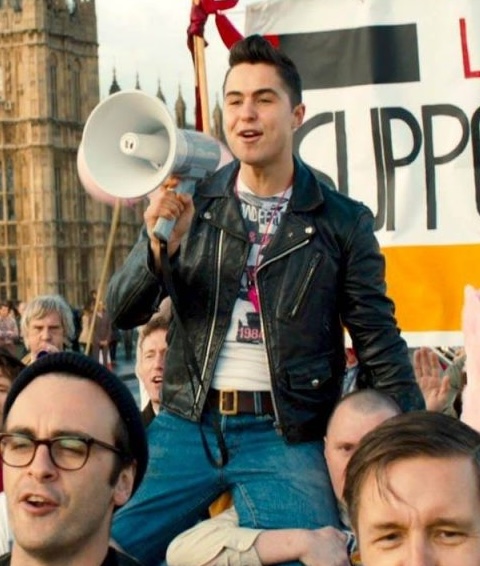
The poster for The Bikeriders might lead a viewer to expect something rather different from what this film actually is: a serious recreation of the misadventures of a motorcycle club, founded in the early 60s and initially memorialised in a 1967 book by photojournalist Danny Lyon.

In Jeff Nichols’ film, we see Danny (Mike Faist) conducting a series of interviews with Kathy (Jodie Comer). She’s the long-term girlfriend of Benny (Austin Butler), a member of `The Vandals’, a Chicago-based group of bike enthusiasts, created and led by Johnny (Tom Hardy). In its early days, the group has a rigid code of honour that none of its members will ever ignore. Indeed, when we first encounter Benny, he’s about to be badly beaten up by a couple of rednecks when he refuses to remove his ‘colours’ in a local bar.

But as the years move on and the Vandals’ numbers inevitably begin to swell, that original code becomes increasingly muddied by the raft of newcomers, each with their own agenda. They include The Kid (Toby Wallace), a tough young wannabe, who has set his sights on joining up and who isn’t about to let anything stand in his path.

While The Bikeriders is light on plot, it’s loaded with characterisation. Comer is extraordinary as Kathy, who chronicles the group’s history in an eerily impressive midwestern accent; and Hardy too is eminently watchable as their leader, channeling early Marlon Brando (at one point we even see Johnny watching The Wild One and virtually taking notes). He’s somewhat mystified to discover that the Vandals are increasingly like a runaway train that, once kicked into life, proves impossible to stop. As Benny, Butler has very little in the way of dialogue, but his chain-smoking, smouldering presence makes it easy to understand why Kathy is so obsessed with him.

The other members of the gang have their own opportunities to shine. Nichols’ regular muse, Michael Shannon, is effective as the dim-witted Zipco, a man who has been repeatedly passed over by society since childhood and who has found his spiritual home amongst this gang of misfits – and Emery Cohen is also effective as Cockroach, who is destined to ride a motorcycle in the future for an entirely different reason. The 60s and 70s settings are convincingly evoked and fans of vintage motorcycles will doubtless be drooling at the sight of scores of bikes thundering in formation along the highways. But the tone of the film is essentially an elegy, a lament for the many ways in which an original idea can be twisted and debased until its original aims have all but vanished.

This won’t be for everyone. There’s no denying that it glamourises thuggery and, with a running time of nearly two hours, it could perhaps have benefitted from a tighter edit, especially around its flabby midsection. Nichols has spent the best part of twenty years putting the film together and it feels very much like a labour of love. Those looking for thrills and action might prefer to look elsewhere. But if it’s classy performances you’re after, you’ve definitely chosen the right vehicle.

3. 8 stars

Philip Caveney

Bad Boys: Ride or Die

19/06/24

Cineworld, Edinburgh

True confession. I’ve never watched a Bad Boys film. Until now.

And having watched one, I can never regain that feeling of being blissfully oblivious to the franchise. Here’s what happens: I find I have the opportunity to see a movie and the only one that starts at a convenient time is Bad Boys: Ride or Die. I know that the previous instalment, Bad Boys for Life, took a shitload of money at the box office, so I decide to book a ticket. After all, how bad can it be?

The answer to that is an unequivocal ‘very.’ It may have helped if I’d seen the previous instalment, but there’s not much I can do about that because nothing short of a hefty bribe will ever induce me to go back for a second helping of this nonsense. There is a plot and I will attempt to (briefly) explain it.

Mike Lowrey (Will Smith) gets married to Kelly (Vanessa Hudgens) and at the following knees-up, Mike’s sidekick, Marcus Burnett (Martin Lawrence), suffers a near-fatal heart attack. He manages to shrug it off (virtually overnight) and seems reinvigorated by the experience, to the extent that he starts throwing himself headlong into every situation like a teenager on steroids.

Then there’s bad news. The BB’s previous boss, Captain Howard (Joe Pantoliano), who was shot dead in the last film, is being framed by ‘The Cartel.’ They are downloading millions of dollars into his bank account. (Full disclosure: I watch the film carefully but I honestly have no idea why they are doing this). Of course, Mike and Marcus love their ex-boss and so, when they receive videos featuring him – only to be watched in the event of his death – they vow to clear his name.

In this endeavour they are aided by Mike’s illegitimate son, Armando (Jacob Scipio), who was in jail but escapes after a helicopter crash. Armando is subsequently hunted by US Marshall Judy (Rhea Seehorn), who has sworn to kill him. (Again, I guess I needed to have seen For Ever to fully appreciate why. Or, I don’t know, maybe they could have put in a few flashbacks? Just saying.)

There ensues a series of shoot-outs in a variety of locations in Florida, where gangs of bad guys are punched, shot, stabbed or blown to smithereens but, since I don’t know anything about them, I don’t care – though I am strangely bewildered by their seeming ability to reproduce mid-action so that what seems like a handful at the start winds up as a veritable army. There’s also a climactic gun battle in an abandoned theme park (of course there is) that for no apparent reason features a gigantic albino alligator, who you just know is going to eat somebody.

Every so often, Mike and Marcus break off from killing people to have an improvised comedy conversation about life, or jelly beans, or… barbecues. I’m hoping it’s improvised because if screenwriters Chris Bremner and Will Beall actually scripted this, there’s little hope left for humanity. Smith keeps his performance relatively downbeat while Laurence acts like he’s still having that heart attack, gurning and dilating his eyes every time he speaks and, at one point, even shouting ‘Chitty Chitty Bang Bang Motherfucker!’ which again, probably refers back to… something. I am somewhat saddened to see the excellent Seehorn (of Better Call Saul) reduced to running around in a bullet proof vest and looking angry, but at least she’s given more to do than the other female characters.

Directors Adil El Arbi and Bilall Fallah give cinematographer Robrecht Heyvaert every opportunity to employ a whole battery of arty styles to every action sequence, so that even in the simplest punch-up it’s impossible to tell who is hitting who and why. One extended sequence plays out like a video game, with the camera freewheeling around an interior like a super-charged pinball.

The credits finally roll and I let out a long sigh of relief. Then I scuttle out, just in case there’s a Bad Boys post-credit sequence. I’ve seen enough of this franchise to last me a lifetime.

2 stars

Philip Caveney

Inside Out 2

16/06/24

Cineworld, Edinburgh

In 2015, Inside Out was a deserved hit for Pixar Animation, a clever and sophisticated story about the antics of the various emotions that dwell within a human being, helping them – and, for much of the time, hindering them. We awarded the film 5 stars and wondered if its creators would deem it worthy of a sequel. Nine years later, here it is and, while it might not be quite as perfect as its innovative predecessor, it’s nonetheless beautifully executed and full of glorious invention.

Riley (voiced by Kensington Tallman) is now thirteen years old, a promising ice hockey player who makes up a formidable sporting trio with her best friends, Grace (Grace Lu) and Bree (Sumayyah Nuriddin-Green.) Meanwhile, the inner team that maintains Riley’s everyday existence is being ably supervised by Joy (Amy Poehler), who manages to keep Fear (Tony Hale), Sadness (Phyllis Smith), Anger (Lewis Black) and Disgust (Liza Lapira) in check as Riley approaches adolescence.

But when she and her friends are invited to a weekend hockey camp by an influential coach, a puberty alarm goes off, and some new recruits promptly turn up to join the party. They are Anxiety (Maya Hawke), Envy (Ayo Edebiri), Ennui (Adèle Exarchopoulos) and Embarrassment (Paul Walter Hauser.) Suddenly, Riley isn’t the calm, capable creature she used to be; she’s a nervous wreck – and Joy and her team are going to have a heck of a job getting her through the weekend…

There’s enough progression here to make this worth the price of the ticket, and screenwriters Meg LeFauve and Dave Holstein have a lot of fun unleashing a whole torrent of problems for Joy and co. to deal with as best they can. We’re introduced to a bunch of eye-popping new locations, many of them built around puns. Ever tried drifting along the Stream of Memory whilst braving a Brainstorm? Here’s your opportunity.

As ever, the animation is bright and brash and beautifully detailed. Check out Grace’s chipped nail varnish for starters! I worried first time out that there might not be enough here to appeal to younger kids and this sequel seems even more intent on aiming for the teen market. The wee ones at the screening I attend seem to spend an awful lot of their time going back and forth for toilet breaks. Their parents on the other hand are doubtless having a field day playing ‘spot the movie reference’ and there’s enough inventive twists here to keep them on board. I love the repeated joke about sweet Grandmother figure, Nostalgia, who keeps making hopeful appearances only to be told to ‘come back in a few years.’ Clever. The ultimate message – of course there’s a message, there always is – manages to avoid being chock full of schmaltz and the ending is nicely handled.

Pixar have been in a bit of a slump in recent years, but despite that unadventurous title, Inside Out 2 puts them back where they belong, ahead of most of the Hollywood competition. Not sure there’s enough left to risk making this a trilogy, but we’ll see how that pans out. Meanwhile, the message remains the same. For best results, see it on a cinema screen!

4.5 stars

Philip Caveney

Sasquatch Sunset

15/06/24

Cameo Cinema, Edinburgh

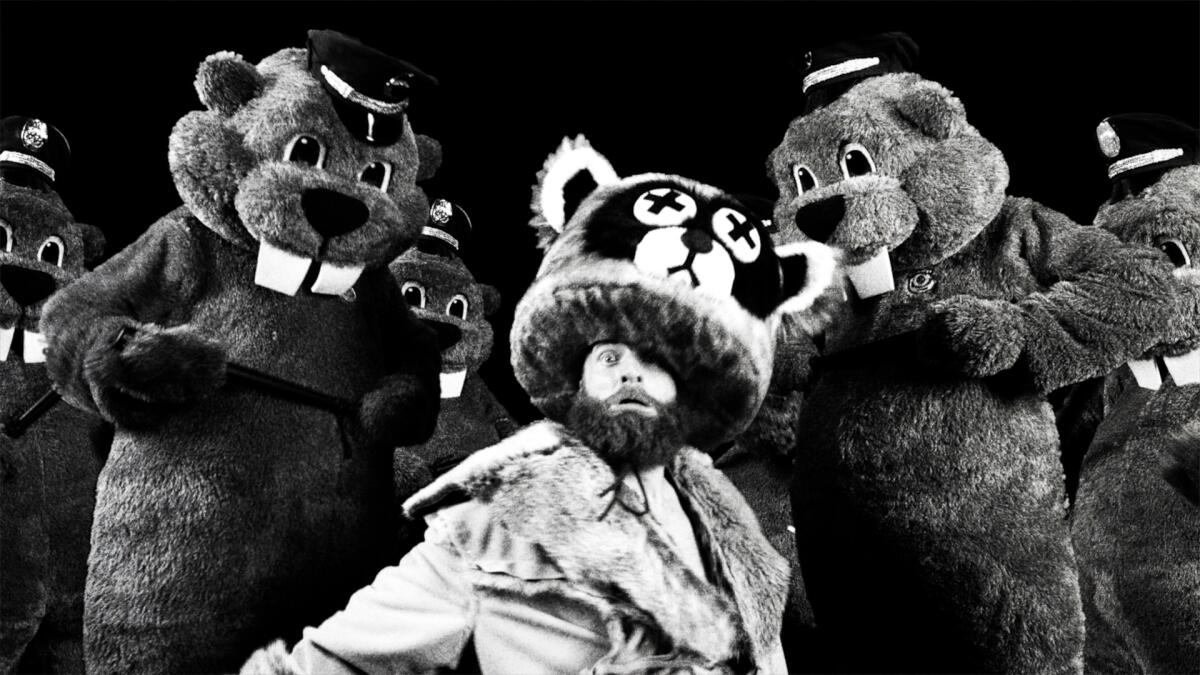
There’s a charming idea at the heart of Sasquatch Sunset, which follows, season by season, a year in the lives of four sasquatches (sasqui?). They live in a remote forest somewhere in North America. There’s an alpha male (Nathan Zellner), a beta male (Jesse Eisenberg), a pregnant female (Riley Keough) and a child (Christophe Zajac-Denek) and the four of them amble around the forest, foraging for food, attempting to procreate and every night constructing a crude shelter in which to sleep. They also spend time thumping tree trunks with branches in an attempt to contact others of their species – with no success.

The conceit of this film, conceived and directed by Nathan and David Zellner, is to treat it with all the seriousness of a nature documentary and, as our four protagonists go about their shuffling business in the tranquility of various woodland settings, there are indeed moments of wry amusement and occasionally some suspense as they stumble into peril.

The creature makeup is pretty convincing – though the film’s budget clearly didn’t extend to making a new-born sasquatch look convincing – and there are surely some cogent observations about the process of survival that can easily be extended to endangered species in the real world. Sasquatch Sunset is, I suppose, an allegory and it doesn’t take a Sherlock Holmes to work out what it’s really about.

But ultimately, there isn’t really enough here to fill the film’s (relatively short) running time and, by the halfway mark, I find myself longing for some more progression. Though the film flirts with the possibility of the creatures encountering humans, this never happens. It would have made an excellent short but, to my mind at least, as a feature-length movie it feels like an interesting failure.

2.8 stars

Philip Caveney

The Dead Don’t Hurt

10/06/24

Cineworld, Edinburgh

I’ve always had a soft spot for Westerns but these days (on the big screen, at least) they’re about as rare as hens’ teeth. The Dead Don’t Hurt is clearly a passion project for Viggo Mortensen. As well as starring, he wrote it, directed it and even created the distinctive folk-tinged score. (For all I know, he did the catering as well.) As Westerns go, this is an atypical example, featuring few of the genre’s familiar tropes and cleverly subverting the ones that it actually does borrow. It’s handsomely mounted and beautifully filmed by cinematographer Marcel Zyskind.

Mortensen plays Danish immigrant carpenter, Holger Olsen, who, when we first encounter him, is bidding a sad farewell to his dying partner, Vivienne Le Coudy (Vicky Krieps), watched by their young son, Vincent (Atlas Green). From here the story flashes back to Holger’s first meeting with Vivienne, showing how he instantly falls under the spell of this headstrong, unconventional young woman.

The main action of the story occurs when Holger and Vivienne set up home together in a remote cabin, close to the town of Elk Flats, Nevada, a place dominated by corrupt landowner, Alfred Jeffries (Garret Dillahunt) and his violently-inclined son, Weston (Solly McLeod). Together with crooked Mayor Rudolph Schiller (Danny Huston), the Jeffries have the place pretty much under their collective thumbs – the evils of capitalism are already exerting a powerful influence and God help anyone who dares to oppose it.

When Holger decides to enlist in the Union Army to fight in the Civil War, his only option is to leave Vivienne alone to run the homestead and, of course, he is away for years. While he’s gone, Vivienne is at the mercy of Weston, who has had his eye on her from their first meeting…

The Dead Don’t Hurt unfolds a compelling story of anger and retribution and both Krieps and Mortensen portray their characters with sensitivity. The various shifts in time and place are handled with considerable skill and the scenes where Vivienne manages to grow exotic flowers in the heart of the Nevada badlands are particularly memorable. It’s clear from the outset that the story is heading (inevitably) towards darker territory and, while Weston is a relentlessly unpleasant character, there’s some explanation for why this might be the case.

Even a climactic showdown between hero and villain is understated and the film is brave enough to offer an open-ended conclusion as to where Holger and Vincent may be headed next.

While it’s unlikely to make much of a dent at the box office, this is enjoyable stuff and those who have a hankering for a decent Western should seek it out on the big screen, where those Nevada landscapes will look more impressive than on streaming.

3.8 stars

Philip Caveney
La Bête (The Beast)

08/06/24

Cameo Cinema, Edinburgh

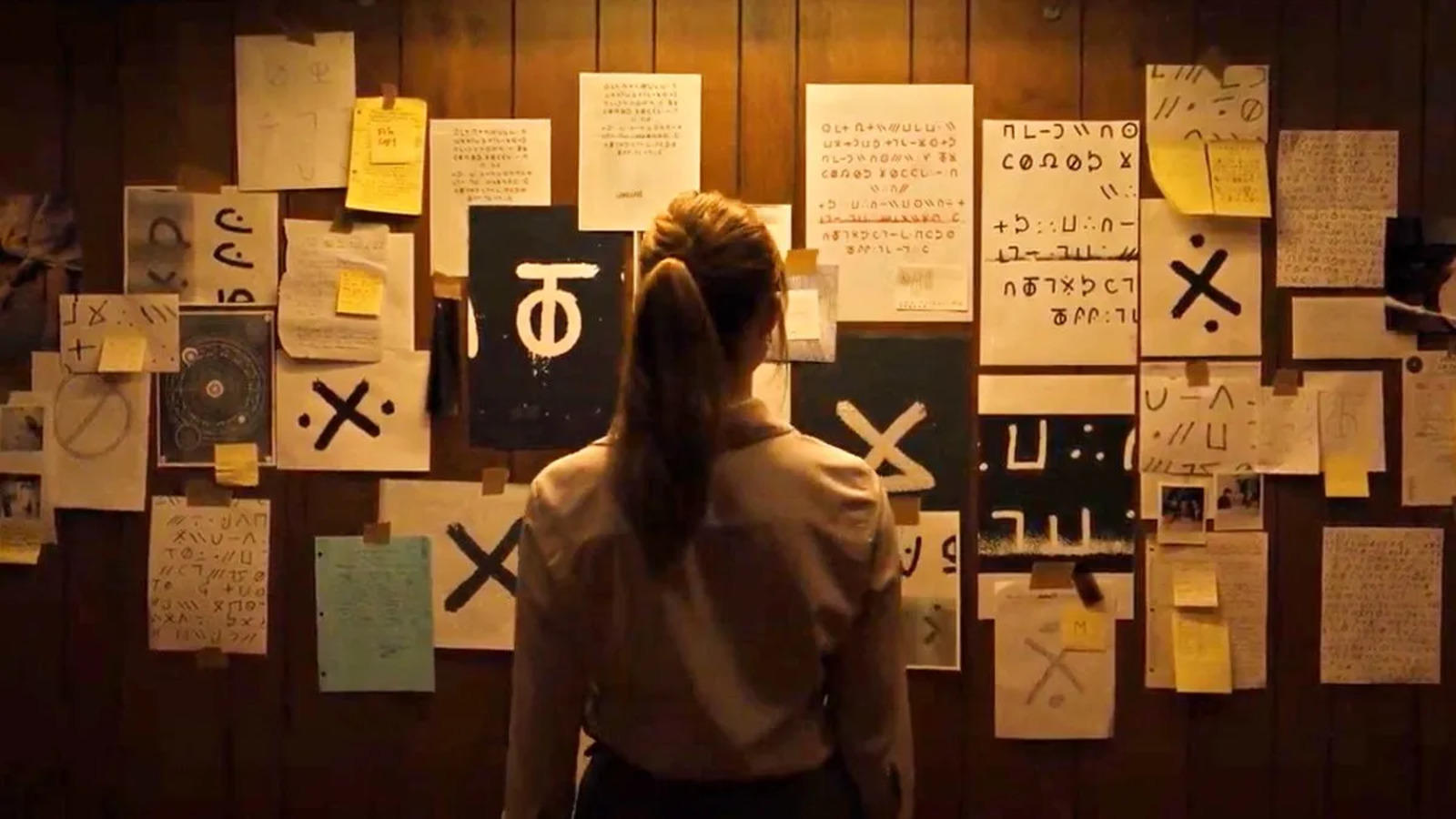
Some films almost defy logical analysis and Bertrand Bonello’s La Bête is one such er… beast, depicting as it does three distinct time-strands, each one featuring different versions of the same two characters. We first meet Gabrielle (Léa Seydoux) in a green-screen room, where the film’s director is talking her through a scene where she must pick up a knife from a kitchen table. This instantly alerts the audience to the fact that what we are about to see is an elaborate construct.

The story begins in 2044, where AI has pretty much taken over everyone’s lives, leaving them with precious little to do. Gabrielle is struggling to come to terms with a thankless job, which requires her to put her hand on a glass screen every so often. She decides to undergo ‘purification’, a procedure which will remove all of her troublesome human emotions. Meanwhile, she is offered the companionship of a doll, Poupée Kelly (Guslagie Malanda), who will do anything that Gabrielle asks of her.

As the purification begins events flash back to Paris in the year 1910, where Gabrielle meets Louis (George McKay) at a society party. In this version of her life, Gabrielle is a talented musician and she’s happily married to Georges (Martin Scali), a doll-maker, but her chance encounter with Louis clearly strikes a significant chord with both of them.

Have they already met somewhere else? Gabrielle confides to Louis that for most of her life she has lived with the fear that something terrible is going to happen to her. And just when that’s starting to sink in, we flash forward again to the year 2014, where Gabrielle is trying to make a living as a model and Louis is a terrifying incel, spewing hatred onto social media, intent on destroying all those women who have so callously spurned him over the years…

Bonello’s film is the very definition of a slow-burner, a whole series of events and repetitions gradually building to relate a mystifying narrative. Gina (Marta Hoskins), a blank-eyed clairvoyant, keeps popping up to put an even more disturbing spin on what’s happening. If I claimed to absolutely understand everything that happens in the film’s two hours and twenty-six minutes, I’d be exaggerating. I’m also unsure if a climactic scene, which appears to echo David Lynch’s Blue Velvet, is an intentional homage or just a coincidence.

Whatever, as the story moves assuredly through its many (often startling) twists and turns, I find myself increasingly fascinated with what I’m watching. Seydoux is fabulous in all of her versions and McKay (who took over the role of Louis at very short notice – and also learned to speak French into the bargain) continues to be a chameleon, seemingly able to transform himself into whatever is asked of him.

La Bête arrives heavily laden with five-star reviews and, though I’m not quite in that camp, I do feel this is a bold, ambitious film that goes to places where few others have dared to tread. I also readily accept that it won’t be for everyone.

Please note, in place of the usual rolling credits, viewers are offered the opportunity to scan a QR code instead, something I did for the purposes of this review. I urge everyone to do the same, only because there’s also a short clip on there that offers yet another piece to this enigmatic puzzle of a film.

4.2 stars

Philip Caveney
Young Woman and the Sea

03/06/24

Cineworld, Edinburgh

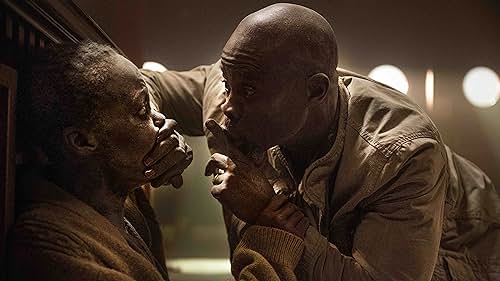
As true stories go, few are as inspiring as that of Trudy Ederle, who in 1926 was the first woman to swim the English Channel. If it sounds a bit so-so now, when so many people have managed it, consider how difficult it must have been in an era where there was little in the way of swim technology – and at a time when women were expected to stay quietly at home and look after the family.

We’re first introduced to young Trudy (Olive Abercrombie) in 1914 when she’s suffering from a bout of measles that’s expected to kill her. Out in New York harbour, a fire on a passenger boat has killed a large number of people, most of them women, who burned to death because none of them had ever been taught to swim. When Trudy makes a miraculous recovery from her illness, her indefatigable mother, Gertrude (Jeanette Hain), decides that Trudy (now played by Daisy Ridley) and her sister, Margaret (Tilda Cobham-Hervey), shall have swimming lessons, even though the concept is virtually unheard of. The girls’ father, Henry (Kim Bodnia), a butcher by trade, doesn’t encourage the idea. He would rather see his daughters married with kids at the earliest opportunity and preferably to other German butchers. Whatever will these women want next? The vote?

Luckily, the girls fall under the influence of fearless swimming trainer Charlotte (Sian Clifford), who can see no logical reason why women shouldn’t be allowed to swim competitively and, sure enough, they take to the sport like… ahem… ducks to water. Trudy soon has her eyes on bigger prizes and even gets to take part in the 1924 Summer Olympics – but her determination stretches to different horizons and she’s very aware that, so far at least, no woman has ever swum across the English Channel…

This is a Disney film, but screenwriter Jeff Nathanson mostly manages to steer clear of the schmaltz, only occasionally flirting with it in the shallows. Of course, there has to be a villain in a film like this, and that duty falls to Christopher Eccleston (sporting a spectacularly dodgy Glaswegian accent) as Jabez Wolffe, the man picked to be Trudy’s trainer for her first attempt. A failed channel swimmer himself (22 attempts!), Wolffe is clearly the wrong man for the job and it’s hardly surprising that the enterprise is doomed to failure – but then Trudy falls in with Bill Burgess (Stephen Graham), the second man to make it across (in 1911!), who can see her potential and is prepared to pick up where Wolffe left off.

The rest, as they say, is history, but director Joachim Rønning does a spectacular job of creating almost unbearable suspense even though the ending is a matter of record. And Trudy’s epic swim, through bad weather, stinging jellyfish and – worst of all – almost total darkness, makes for an absorbing and compelling experience in the cinema.

How well this will fare in a summer where some excellent films are failing to find an audience is anybody’s guess, but as ever, it’s worth catching this one on the big screen before it drifts on by.

4.3 stars

Philip Caveney
Hit Man

30/05/24

Cineworld, Edinburgh

Here’s that increasingly rare creature, a Netflix original movie that’s actually been given a theatrical release before being dumped onto streaming. Hit Man is a curious creation, loosely based on the career of the recently deceased Gary Johnson, a University lecturer from New Orleans who also had a sideline working for the local police department as a fake contract killer. As you do. Wearing a wire, he would meet with potential ’employers’, accept their money and coax them into confessing their desire to pay him to murder somebody… on tape.

It’s best not to dig too deeply on that score. Suffice to say that this is a witty, amoral confection which travels to some unexpected places, mostly because it doesn’t bother sticking too closely to the truth.

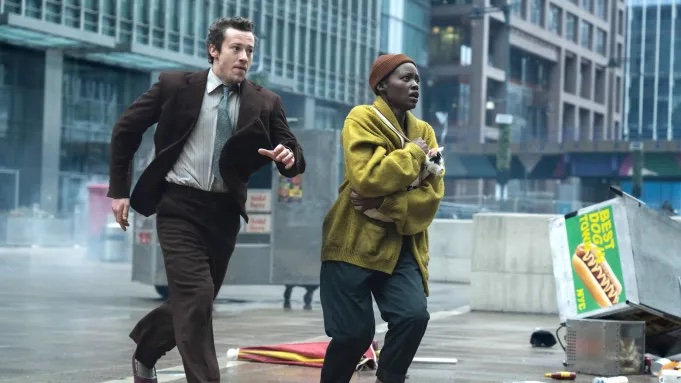
Johnson (Glen Powell) finds himself taking over the fake hit man role from his police colleague, Jasper (a wonderfully seedy performance by Austin Amelio), and, though initially reluctant to do so, Johnson quickly discovers that his background in philosophy has equipped him to be really good at the different roles he has to take on, each one tailored to appeal to his latest client. It all goes swimmingly until he encounters Maddy Masters (Adria Arjona), who wants to call down a hit on her husband, Ray (Evan Holtzman), who appears to be a thoroughly nasty piece of work.

Sensing that she’s headed for trouble – and at the same time, powerfully attracted to her – Johnson talks her out of going through with the hit and ends up having a wild affair with her, allowing her to continue in the belief that he is actually ‘Ron’, a professional contract killer.

Powell, who has been hotly tipped to become a major star ever since his supporting role in Top Gun: Maverick, is undeniably watchable here, inhabiting a whole range of different personas with considerable aplomb. As if that wasn’t enough, he also co-wrote the screenplay with veteran director Richard Linklater. Arjona, too, seems destined for bigger things, managing to make us care about a character we’d probably be best advised to steer clear of if we met her in real life.

As Hit Man twists and turns through a series of increasingly problematic situations, I find myself both entertained and puzzled. The script takes great pains to assure me that hit men are a fictional invention (Linklater even includes a sequence showing some memorable ‘hits’ from famous films across the decades). But if this is true, should we really be prosecuting people who attempt to hire them? Isn’t that entrapment? Or does an attempt to hire a killer automatically make the hirer guilty?

One other thought. Where do hit men advertise their services? The Times? Exchange and Mart?

Whatever the case, this film is funny, intelligent and well worth catching on the big screen, providing you can find a cinema near you that’s showing it. If you’re happy to stream it, you won’t have long to wait.

4.2 stars

Philip Caveney
Furiosa: a Mad Max Saga

25/05/24

Cineworld, Edinburgh

Furiosa is my most anticipated film of the year but to fully explain why, it’s necessary to briefly look back at the career of writer/director George Miller. I saw the first film in the Mad Max franchise way back in 1979, a modest, low-budget revenge thriller starring a young Mel Gibson. It was perfectly watchable but gave no idea of the wonders that were to follow. 

In 1983, The Road Warrior brought back the titular character with a bigger budget and an iconic look that depicted Australia in the years following a nuclear war. It was louder, more ambitious and gloriously inventive, an unstoppable thrill ride. In 1985, Beyond Thunderdome brought in Tina Turner for a guest appearance and appeared to round off the franchise in grand style. 

In normal circumstances, that would probably have been the end of it. So when Miller resurfaced nearly thirty years later with Fury Road, I had very low expectations. Tom Hardy stepped into the scuffed boots of Max and Charlize Theron played a new character, Furiosa. The film was an extraordinary, foot-to-the-metal, adrenaline-powered masterpiece, one that left me stunned at its conclusion. I saw it a second time in 3D and, two years later, was one of the first in the queue for the special Black and Chrome edition. How was Miller ever going to follow such a powerful creation?

He took his time. I was astonished to realise just the other day that it’s a full nine years since Fury Road’s release. The worst thing that could happen, I thought, would be if he tried to replicate the previous film’s simple, propulsive structure – and happily he’s gone in an entirely different direction. Of course he has. He’s George Miller.

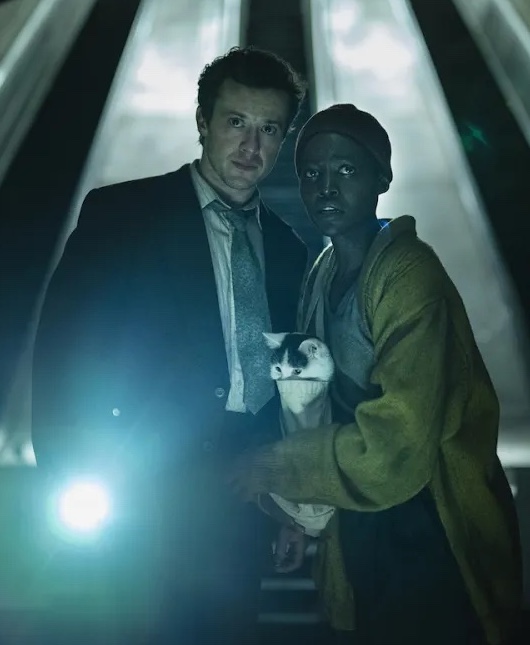
Furiosa is a prequel, a much more episodic affair than its predecessor, divided into five chapters (each with a portentous title) and, unlike Fury Road’s three and a half day timeline, this is set over something like eighteen years. We first meet the young Furiosa (Alyla Browne) in ‘The Green Place,’ the childhood home she spent most of Fury Road trying to get back to, and it’s clear at a glance why she was missing this verdant ‘place of abundance’ in the midst of a desert. But her tranquil life is rudely disrupted when she is kidnapped by a gang of bikers from the wasteland and taken to the kingdom of Dementus (Chris Hemsworth), a motor-mouthed, self-aggrandising ruler, who is used to taking whatever he wants whenever he wants it. Furiosa is merely his latest acquisition. But the girl’s mother, Mary (Charlee Fraser), follows her, intent on taking her home again at any cost…

What immediately hits me about this film is the glorious world-building that’s going on. This is an eye-popping spectacle. Every shot caught by cinematographer Simon Duggan is ravishing and Jenny Beavan’s costume design is endlessly inventive. Add the powerful sound design and you have a film that literally shakes you in your seat. It’s a full hour before Alyla Browne mutates into Anya Taylor-Joy in one of the most accomplished on-screen transformations I’ve ever witnessed. Given only thirty lines of dialogue in the entire film, Taylor-Joy has to convey her character mostly using her eyes. She somehow manages to show Furiosa’s inner turmoil, only briefly finding solace in the affection of rig-driver Praetorian Jack (Tom Burke). Her most powerful motivator – a desire for revenge – is ever present and often propels her into rage. It’s fascinating to watch her. Hemsworth is also wonderful as Dementus, so much more than a cardboard cut-out villain. Here is a man with his own inner turmoil and awareness of his failings. He really should play bad guys more often.

Motor lovers shouldn’t despair because Miller’s trademark behemoth vehicles are in evidence – including a chariot pulled by three motorbikes – and there’s an extended chase sequence that pulls out all the stops, particularly in the part where Praetoran Jack’s rig is attacked by paragliders. As ever, hats off to the stunt performers who make this such a thrill ride. 

But Furiosa is more – much more – than just another action flick. It’s also about the power of mythology, the ways in which stories of epic odysseys perpetuate and endure across the centuries. It’s about the desire of humanity to survive against overwhelming odds and the ways in which religions are shaped by those who invent them. But mostly, it’s about a 79-year-old director at the height of his powers, being unleashed into the world’s biggest sandbox and invited to play. And here, Miller shows more unbridled invention than I’ve seen in a very long time. 

My advice? Get thee to the biggest IMAX screen available, buckle in and enjoy the ride. Oh, and Max? He’s there… but you’ll need to keep your eyes peeled to spot him.

5 stars

Philip Caveney
Hoard

19/05/24

Cineworld, Edinburgh

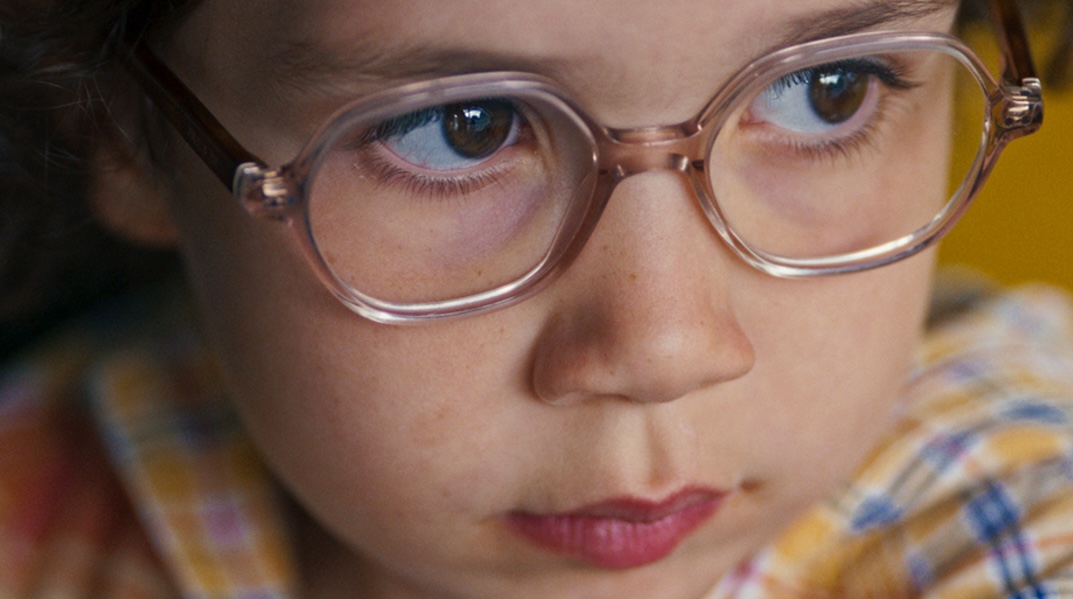
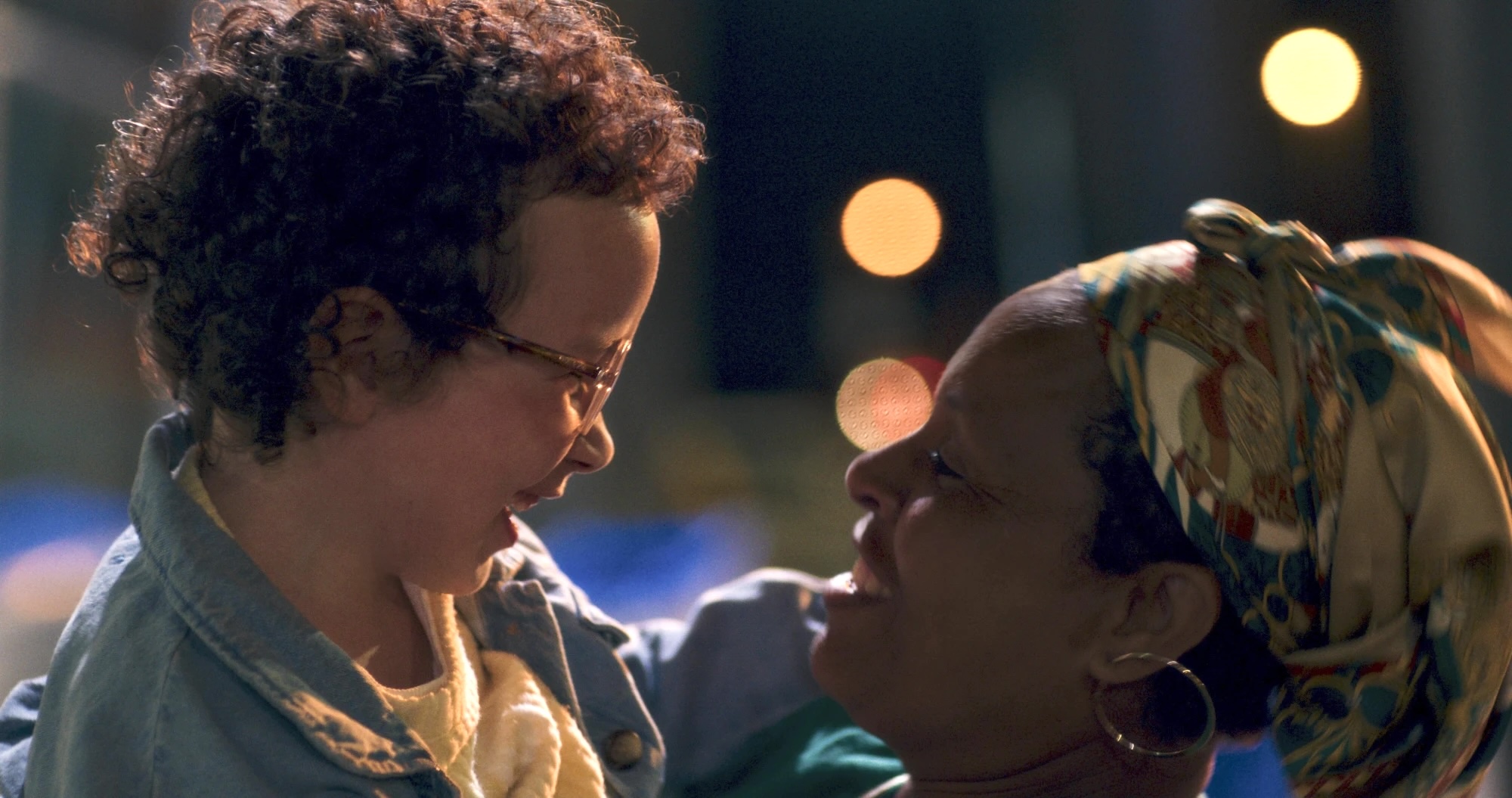
It’s London, some time in the 1980s. Cynthia (Hayley Squires) and her daughter Maria (Lily Beau Leach) are very close, with a whole host of funny rituals and secret games. They watch movies, threading popcorn on string; they dance until they fall over laughing; they go out at night, scavenging from bins.

The house is full to bursting. When she comes home from school, Maria has to climb over the detritus blocking the front door. Her pet ferret, Pearl, goes missing for days. She can’t find her PE kit. In trouble – again – for ‘forgetting’ it, she snaps at her mum. “I hate us. I’ve been to other people’s houses. They’re not like this.”

When the teetering mounds of junk literally crush Cynthia, Maria is taken into care.

Fast forward to 1994. Maria (Saura Lightfoot Leon) is sixteen now. ‘Mum’ is Michelle (Samantha Spiro), who’s been fostering her for years. Despite still being something of an outsider, Maria has been functioning quite well. But there’s a perfect storm brewing: she’s left school but doesn’t have a job; her only friend, Laraib (Deba Hekmat), is moving away; and news comes in of Cynthia’s death. Enter thirty-year-old Michael (Joseph Quinn), an ex-foster kid of Michelle’s who needs a place to stay for a few weeks. He’s a refuse collector, and Maria finds herself drawn to him, his smell kindling childhood memories. And then she begins to emulate her mother’s hoarding ways…

There’s a lot to admire about Hoard. It’s an ambitious piece, and debut writer-director Luna Carmoon depicts Maria’s fracturing mental health with an unflinching eye, managing to convey both her inner turmoil and how she appears to those outside. The thread of images – fireworks, sherbert, tin drums, irons – is boldly interwoven; and the metaphor-made-literal bullfight scene is particularly memorable. Both Leach and Leon evoke empathy for Maria, convincingly portraying her complex character. Squires is wonderful as Cynthia too, her brittle joie de vivre always just about to crack.

The first act is brilliant, but the early stretches of the second are less compelling: I find it hard to believe in Maria’s relationship with Laraib and in her interactions with the people at the pub. I don’t understand why the lovely Michelle would keep inviting her friend, Sam (Cathy Tyson), to bring her daughters over to visit, when she knows that they bully Maria.

Things pick up again as Michael and Maria fuel each other’s neuroses, spinning further and further out of control. It’s a tough watch – even stomach-churning – but that’s okay; it should be. The resolution, when it comes, is perhaps a little pat, but it’s a relief nonetheless. A short coda provides a clue as to where the story comes from, apparently inspired by events from Carmoon’s own life.

If the ambition sometimes exceeds the execution, Hoard is never less than interesting, and Saura Lightfoot Leon is certainly one to watch.

3.2 stars

Susan Singfield