Author: Bouquets & Brickbats

Theatre Bouquets 2021

2021 was a disappointing year for theatre lovers. The venues were dark for many months and, when they finally opened again, there was an understandable tendency to go with surefire hits that had already established their ability to put bums on seats. In August, the Edinburgh Fringe – usually packed with new material – was a shadow of its former self. But, against all the odds, some playmakers still managed to make their mark, and we were able to enjoy some exciting material. Here are the standouts:

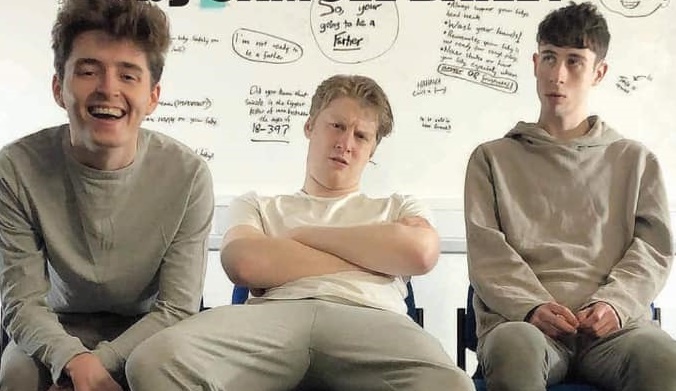
Shook – theSpaceUK

‘… a stunning piece all round: the writing, direction and performances combine to create something really powerful and yet humbling. A fascinating examination of masculinity and fatherhood.’

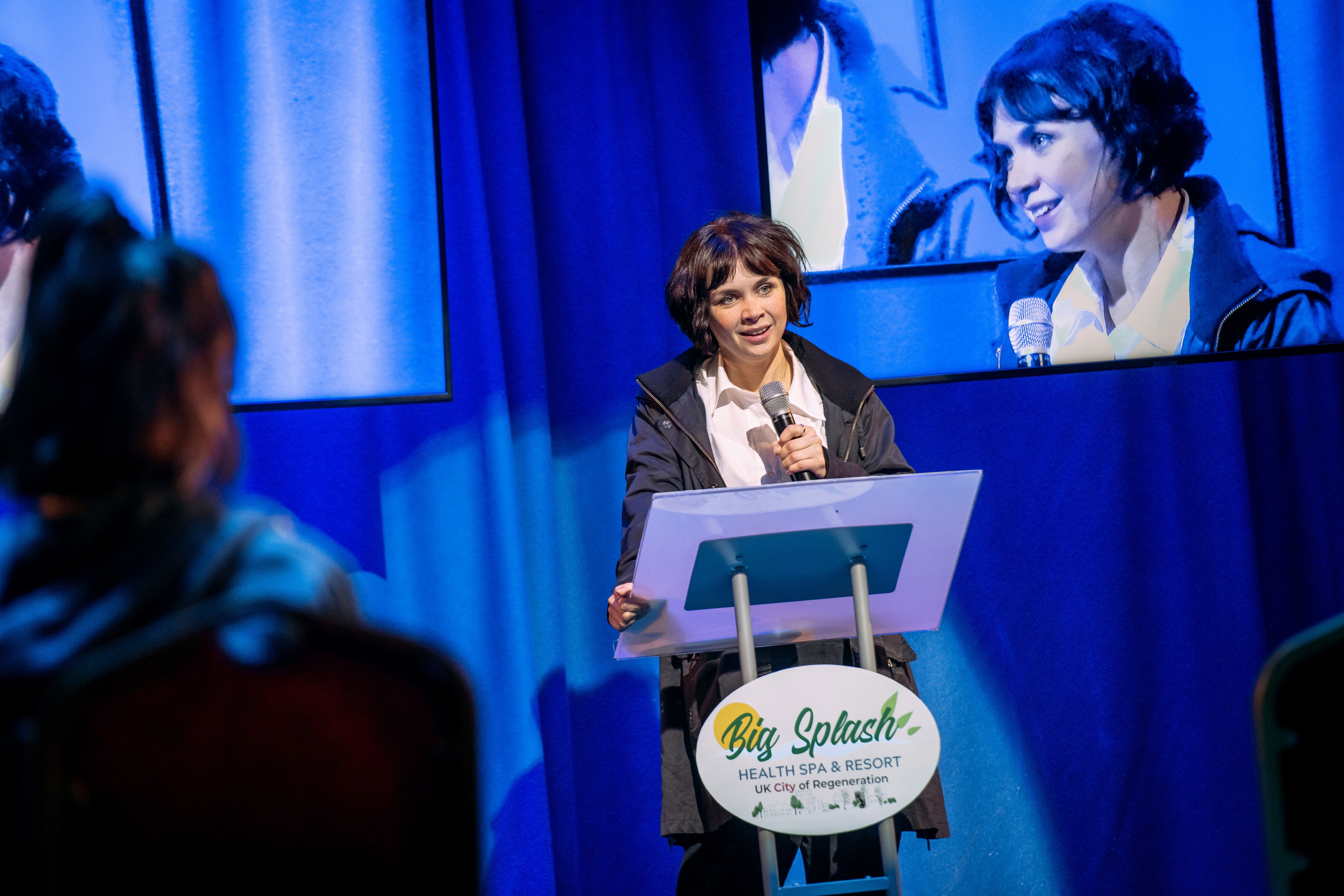
Screen 9 The Pleasance

‘… While this is nobody’s idea of a fun night out at The Fringe, it’s nonetheless an enervating and thought-provoking theatrical experience, not to be missed.’

The Enemy – King’s Theatre

‘… combines Ibsen’s timeless appeal with something bold and fresh. It’s almost guaranteed to get bums on seats, while simultaneously allowing playmakers a chance to experiment. Good call!’

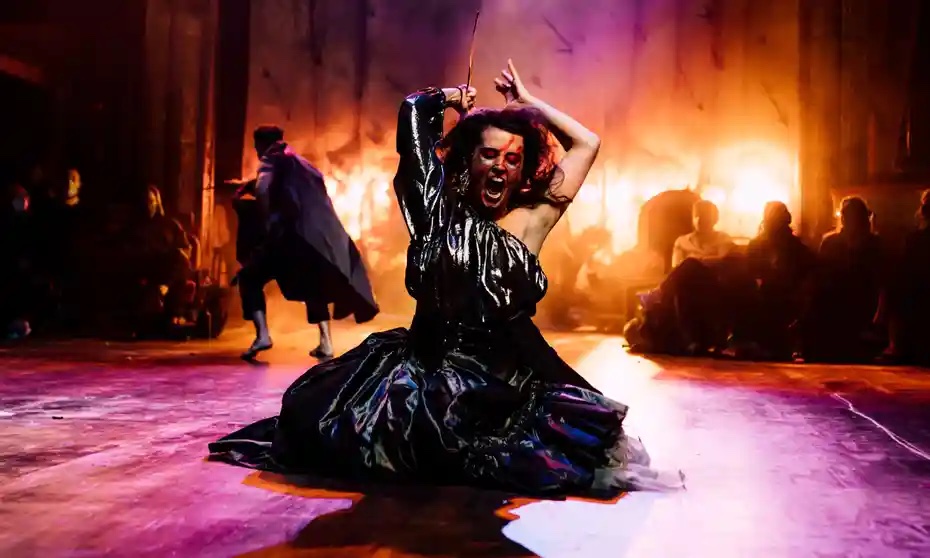
Life is a DreamThe Lyceum

‘… what comes across so powerfully here is the magical feel of the production and the excitement of seeing something new, fresh and innovative.’

Sleeping Beauty – King’s Theatre

‘…as warm and comforting as a comfy cardy or a mug of hot chocolate – exactly what’s needed on a cold winter’s night.’

Film Bouquets 2021

It’s that time again – time to look back and select our favourite films of the past year. It’s been more difficult than usual, because of course, many of the films we saw in the early months of 2021 had to be watched on small screens at home. But we gave it our best shot. It’s probably also worth pointing out that the movies we’ve chosen are not necessarily based on their original scores, but on how much they’ve stayed with us since first viewing them.

Promising Young Woman

‘Emerald Fennel’s debut film is fresh, funny, terrifying and compelling…. and Mulligan is perfect for the central role: one minute she’s all sweet vulnerability, the next a steely avenging angel.’

Minari

‘… gentle, lyrical and beautifully understated, yet in those lovingly crafted twists and turns lies a powerful message about the importance of family and the folly of blind ambition.’

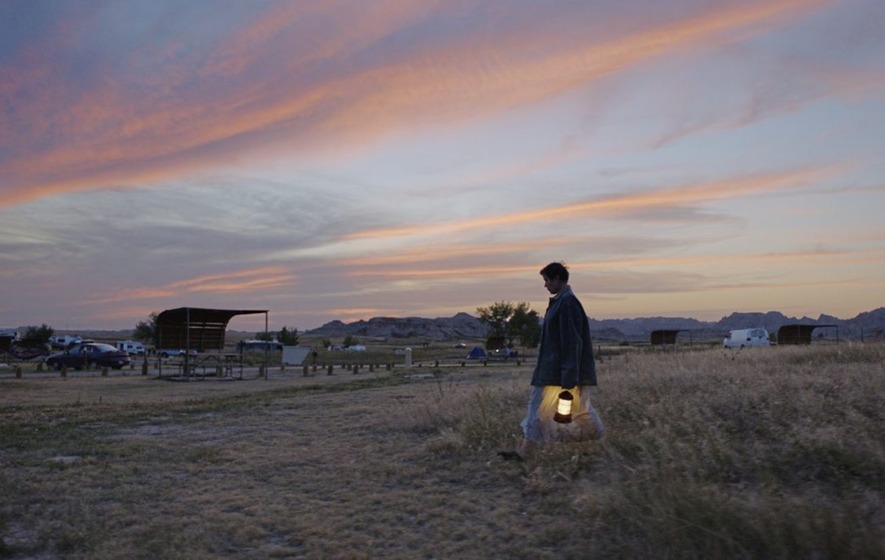
Nomadland

‘Chloe Zhao’s extraordinary film draws a line that can be traced back to the pioneers of the Old West – or perhaps more accurately to the migrant workers of Steinbeck’s Of Mice and Men…’

The Father

‘… Hopkins takes his character through a range of moods and manifestations – from grandstanding showoff to sly insinuator – before delivering a final, desperate scene that is absolutely devastating.’

Another Round

‘This is a film that highlights the powerful allure of alcohol, a film that makes you understand why so many of us can’t help but dance to its tune.’

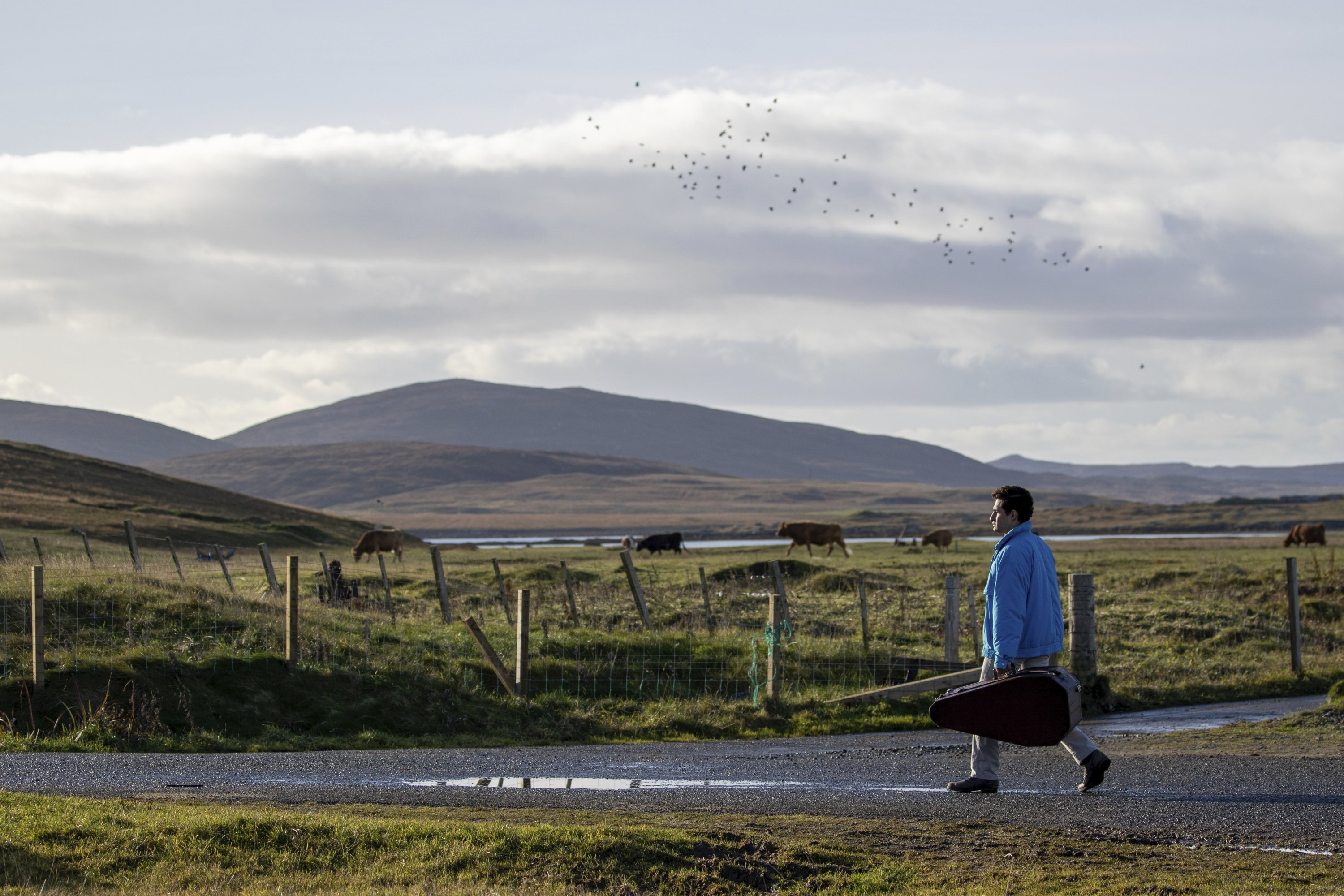
Limbo

‘Ben Sharrock has created a mesmerising, slow burn of a story, the bleakness undercut by moments of humour and genuine poignancy. The result is curiously heartwarming.’

Last Night in Soho

‘Edgar Wright swoops and soars and segues through the various unearthly set pieces with consummate skill and, while terrible things happen to Ellie, she is never allowed to be ‘the victim.’

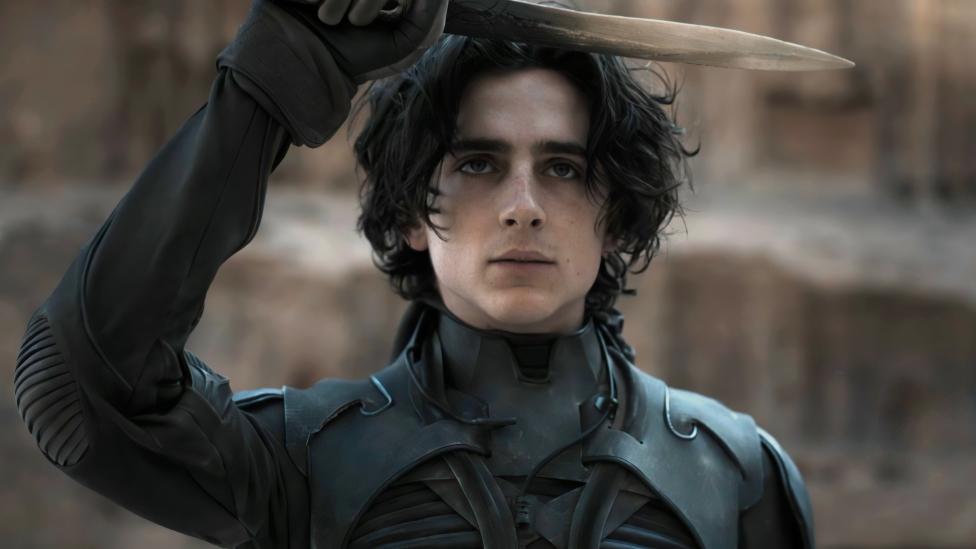
Dune

‘After the long shutdown of the pandemic, what we need next is an epic – a big sprawling sci-fi adventure with stunning alien landscapes and awe-inducing special effects…’

The Last Duel

‘Both Damon and Driver excel as men driven by their own overbearing privilege, while Comer dazzles in every frame, clearly on the verge of becoming a major star of the big screen.’

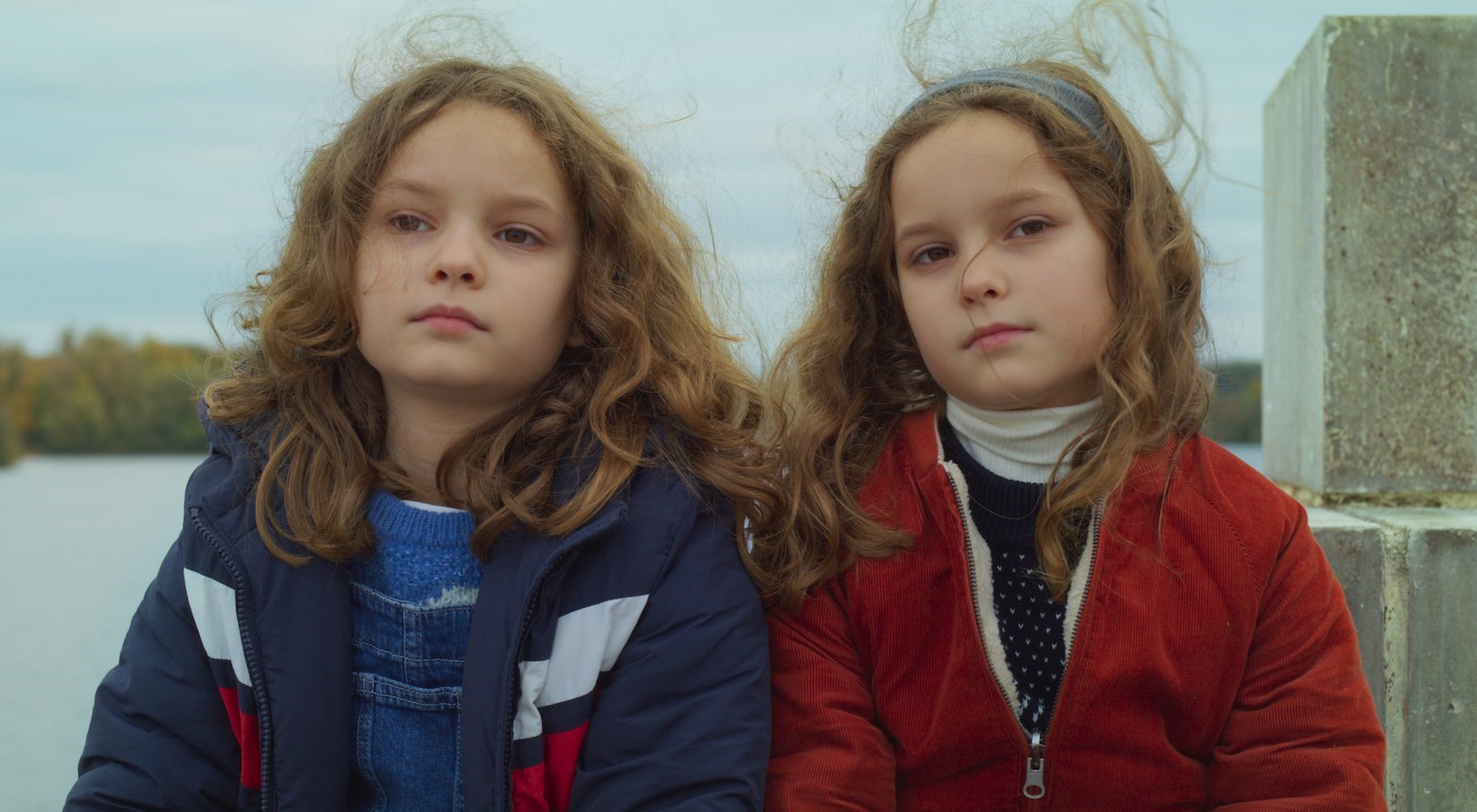
Petite Maman

‘… relates its intimate story over just seventy-two minutes and yet, in its own muted way, it’s a magical experience, with a central premise that stays with me long after the credits have rolled.’

Licorice Pizza

03/01/22

Cameo Cinema, Edinburgh

Paul Thomas Anderson has directed some of my all-time favourite films.

Boogie Nights, Magnolia and There Will Be Blood are all gems, a triumvirate that any filmmaker would be proud to leave as a cinematic legacy. But more recently, his work has underwhelmed me. Inherent Vice (2014) was an incoherent mess and 2017’s Phantom Thread – though wildly acclaimed by many critics – left me curiously unmoved.

On the face of it then, Licorice Pizza feels like a return to his comfort zone, exploring the sleazy canyons of the San Fernando Valley in the early 70s, an era that yielded such delights in Boogie Nights. This is the story of Gary Valentine (Cooper Hoffman), a supremely confident fifteen-year-old child ‘actor’ and all- round entrepreneur, with an extended family working to his orders on a variety of different projects. While it quickly becomes clear that Gary may be overestimating his own genius, he seems to have convinced a surprising number of others to give his projects a whirl.

Then, out of the blue, he falls in love at first sight with Alana (Alana Haim) who is twenty-five and makes no bones about telling Gary that he hasn’t a hope in hell of ending up with her. (This age thing, by the way, feels needlessly controversial. Hoffman’s actual age is eighteen and Haim thirty, so it would have had the same dynamic if they’d simply nudged Gary’s age up a year or so. Just saying.)

Despite Alana’s protestations, something sticks and she agrees to meet him for a drink. Soon enough, she becomes his loyal sidekick (although she’s insistent that they’re just friends), and he’s trying to get her into the movies…

What follows is an exuberant scramble of a film, as Gary and Alana run (and I mean literally) all around the valley, struggling through the ups and downs of an on/off relationship, while Gary tries out his madcap enterprises, setting himself up as a purveyor of waterbeds and – when the oncoming fuel crisis puts the kibosh on that – relaunching himself as the owner of a pinball arcade. The anarchic sprawl that ensues in that emporium probably mirrors the kind of youthful carnage that was played out in the Licorice Pizza record stores from which the film takes its name. – but that’s just my best guess.

Along the way, the duo encounter ageing action-movie star, Jack Holden (Sean Penn), desperate to impress Alana with an impromptu motorbike stunt, and terrifying coke freak Jon Peters (Bradley Cooper) who urgently wants to purchase a water bed for his wife, Barbara Streisand! Watch out too for a sensational cameo from Harriet Samsom Harris as Gary’s agent, Mary Grady, who delivers an object lesson in how to make the most of limited screen time.

This is a kinetic, adrenalin-fuelled movie, pushed along by bold, swooping cinematography and a no-holds-barred 70s soundtrack. Hoffman (the son of Anderson’s old muse, Philip Seymour Hoffman) is terrific as Gary and has great chemistry with Haim. She is, of course, a member of the rock trio that bears her name (for whom Anderson has shot several videos) and, as if to emphasise the ‘home movie’ feel of the project, Haim’s sisters – and even her parents – have supporting roles to play in this story.

While Licorice Pizza can’t claim to be up there with the very best of Anderson’s films, it nevertheless delivers a thoroughly enjoyable ride as Gary and Alana run side-by-side and finally – inevitably- towards each other. I fully expect to see its two stars going on to greater things.

And for Paul Thomas Anderson, this is definitely a step in the right direction.

4 stars

Philip Caveney

The Lost Daughter

02/01/22

Netflix

I really want to like The Lost Daughter. After all, it’s directed by Maggie Gyllenhaal, and stars two of my favourite actors, Olivia Colman and Jessie Buckley. The reviews I’ve read have all been glowing, so I’m expecting great things. And yet, in the end, it just doesn’t seem to have enough heft: it’s all build up, with weak foundations and no catharsis.

Colman and Buckley both play Leda Caruso. Buckley, of course, plays the younger iteration, a twenty-something post-grad student, struggling to balance her burgeoning academic career with the demands of her marriage and two young children. Time has rendered such issues less pressing for Colman’s Leda, who – approaching fifty – is now a professor, free to spend the summer alone on a Greek island, her adult daughters busy leading their own lives.

The movie opens with Colman’s Leda collapsing on the beach, so we know from the start that something isn’t right. In a series of flashbacks, we are shown what has brought Leda here, from the working-holiday immediately preceding her fall to the ‘crushing responsibility’ of motherhood that overwhelmed her younger self.

At first, the holiday seems idyllic. The island is undoubtedly beautiful; Leda’s apartment is charming; the sun is shining; the beach is quiet. There are hints that something is amiss: the mouldy fruit in the bowl; an insect buzzing on her pillow. But all seems well until a large, brash American family arrives, rudely interrupting Leda’s peace. When their matriarch, Callie (Dagmara Dominczyk), pregnant for the first time at forty-two, asks Leda to move her lounger so that the family can sit together, Leda stubbornly refuses. And an animosity is born that overshadows her whole stay…

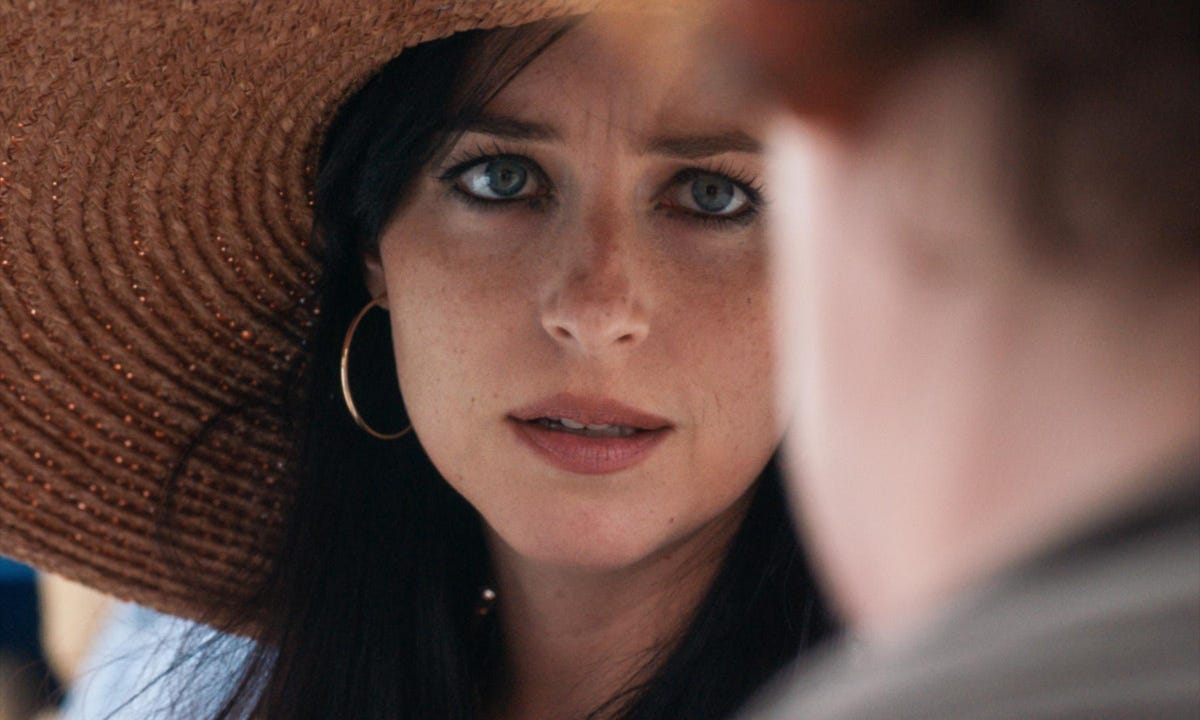
Despite her instinctive dislike of the family, Leda finds herself drawn to Callie’s glamorous sister-in-law, Nina (Dakota Johnson), whose relationship with her daughter, Elena (Athena Martin), reminds Leda of her own past. When Elena goes missing, Leda helps to find her, and the two women form an uneasy bond.

So far, so good. As a character study, this film is wonderful. Leda is a complex and interesting woman, whose conflicting desires and ambivalence towards parenthood make her an all-too-rare sight on our screens. But, though it pains me to say it, the casting doesn’t quite work. No one can reasonably argue that Colman and Buckley aren’t terrific actors, and they both deliver here, offering detailed and nuanced performances. But they don’t cohere: their Ledas are two different people. It’s not just the way they look; audiences are used to suspending their disbelief on that account. They sound so very different though – Buckley’s sonorous tones at odds with Colman’s girlish, higher-pitched voice – and their movement doesn’t match either.

Gyllenhaal’s direction isn’t bad. She utilises close-ups to excellent effect, and really ramps up the tension: a sense of all-pervading menace is cleverly evinced. But what’s the point, I wonder, if it never amounts to anything? I’m left frustrated by the damp squib of an ending, with nothing calamitous ever revealed or resolved.

A little internet searching shows me the missing piece: in Elena Ferrante’s source novel, Leda is from Naples (instead of ‘Shipley, near Leeds’) and the invading family is also Neapolitan. The sense of dread Leda feels when she encounters them isn’t just snobbery, it’s actual fear, based on her own past, and her own experience of a Mafia-style clan. Perhaps it’s this change that makes Leda’s sense of foreboding harder to understand – and weakens the story in the process.

It feels like a squandered opportunity.

3.4 stars

Susan Singfield

The King’s Man

02/01/22

Cineworld, Edinburgh

I enjoyed Matthew Vaughn’s two Kingsman movies. A refreshing take on the spy genre, written with a nod and a cheeky grin, they provided easy, if undemanding, entertainment. After long delays caused by the pandemic, we finally get to see The King’s Man, a sort of origins tale, which explains how the Kingsman Agency came into being.

And, not to put too fine a point on it, this is a very different kettle of fish – some of which is well past its sell-by date. It isn’t that Vaughn’s screenplay (written this time without Jane Goldman) is short on ideas. There are just too many of them, fighting with each other for breathing space and frankly as risible as the proverbial box of frogs.

After the violent death of his wife in South Africa, Lord Oxford (Ralph Fiennes), a rich pacifist do-gooder swears to shield his young son from any possibility of warfare. Twelve years later, Conrad (Harris Dickinson) has grown to be a young man and, with the world hurtling headlong towards the conflict of the First World War, he decides he wants to be involved. He’s blissfully unaware that, over the intervening years, his father has created a special network of spies, working alongside two of his trusted servants, Polly (Gemma Arterton) and Shola (Djimon Hounsou). Working with other ‘domestics’ across the world, all with access to centres of government, the trio are able to gather evidence of any approaching catastrophe and take steps to avoid unnecessary lives being lost… yes, that really is the premise!

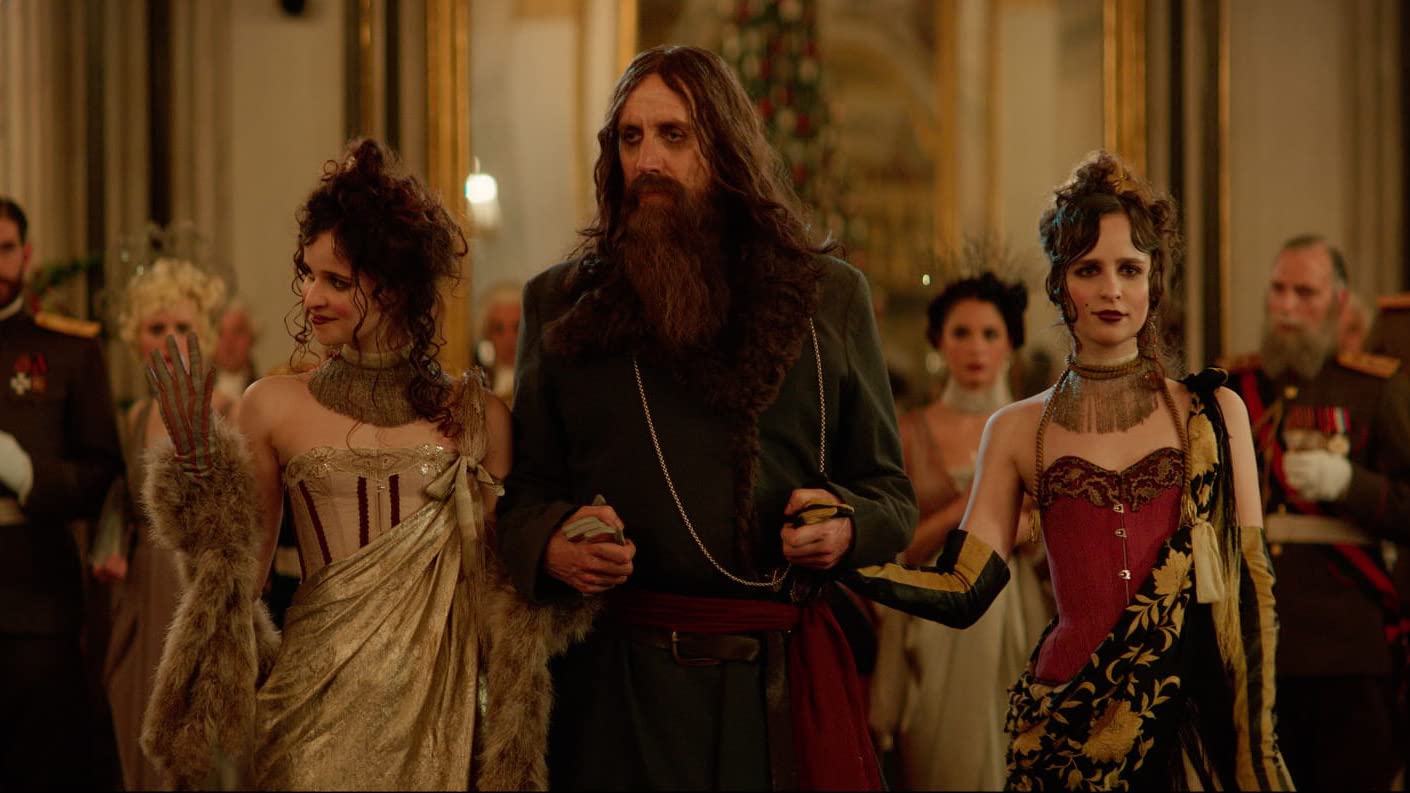
Cue a series of unlikely adventures, with Oxford and son working alongside Lord Kitchener (Charles Dance), being present at the assassination of Duke Franz Ferdinand and even taking on Grigori Rasputin (Rhys Ifans) in a martial-arts infused punch-up (actually one of the films better sequences). Meanwhile Tom Hollander struggles with a triple role as three of history’s most famous cousins – King George, Kaiser Wilhelm and Czar Nicholas – and ultimately, we learn that the entire war has been engineered by… No, I can’t tell you. Not without being embarrassed by the sheer absurdity of it. Put it this way. I seriously doubt you’ll see it coming.

While it’s true there are a couple of excellent action set-pieces in the later stretches of the film, there’s a long grim wait before we get to them, during which we are treated to a parade of caricatures that wouldn’t seem out of place in a Carry On film. There are also some conspiracy theories that frankly beggar belief. The final straw is the use of Dulce et Decorum est to pass comment on the senseless slaughter of the First World War. While Fiennes reads it beautifully, it’s hard not to imagine Wilfred Owen spinning in his grave as Vaughan makes a desperate attempt to have his Bakewell Tart and eat it.

The overall message here seems to be that humanity always depends on rich toffs to step in and bail them out of trouble when, once again, the rest of us make a mess of things. Fiennes, a superb actor, is worthy of better material than he’s given here and I’m not referring to the tailoring.

It’s a great shame, because clearly a lot of time, effort and money has been expended on this production. Released on Boxing Day in an apparent attempt to hoover up the Christmas market, I seriously doubt this will recoup what must have been a considerable investment.

Even during the festive season, there’s only so much cheese an audience can swallow.

2.8 stars

Philip Caveney

The Tragedy of Macbeth

01/01/22

Filmhouse, Edinburgh

I’m not sure what to make of the writing credit for this latest adaptation of Macbeth. The wording – ‘written for the screen by Joel Coen, based on the play by William Shakespeare’ – seems a tad… hubristic. Because this is mostly Shakespeare’s work, albeit deftly sprinkled with some movie dust. Coen’s direction here is sublime, and his pared back adaptation works really well. It’s just, y’know. ‘Play by William Shakespeare; adapted for the screen by Joel Coen’ would sit better.

But it’s my only real gripe (if I overlook the absence of a single Scottish accent in the, ahem, Scottish play). This is the best movie version I’ve seen – and I have seen a lot. Although Shakespeare never specifies the Macbeths’ ages, I’ve tended towards the view that they ought to be young: all that swagger and ambition and impatience. When they’re portrayed as middle-aged, something seems to be lost. Here, both lord and lady are actually old: they’re in their sixties; nigh on retirement age. And it all starts to make sense again: this is a last-ditch attempt to fulfil their dreams. Time and place “have made themselves” and the Macbeths can’t resist the temptation to finally realise their desires.

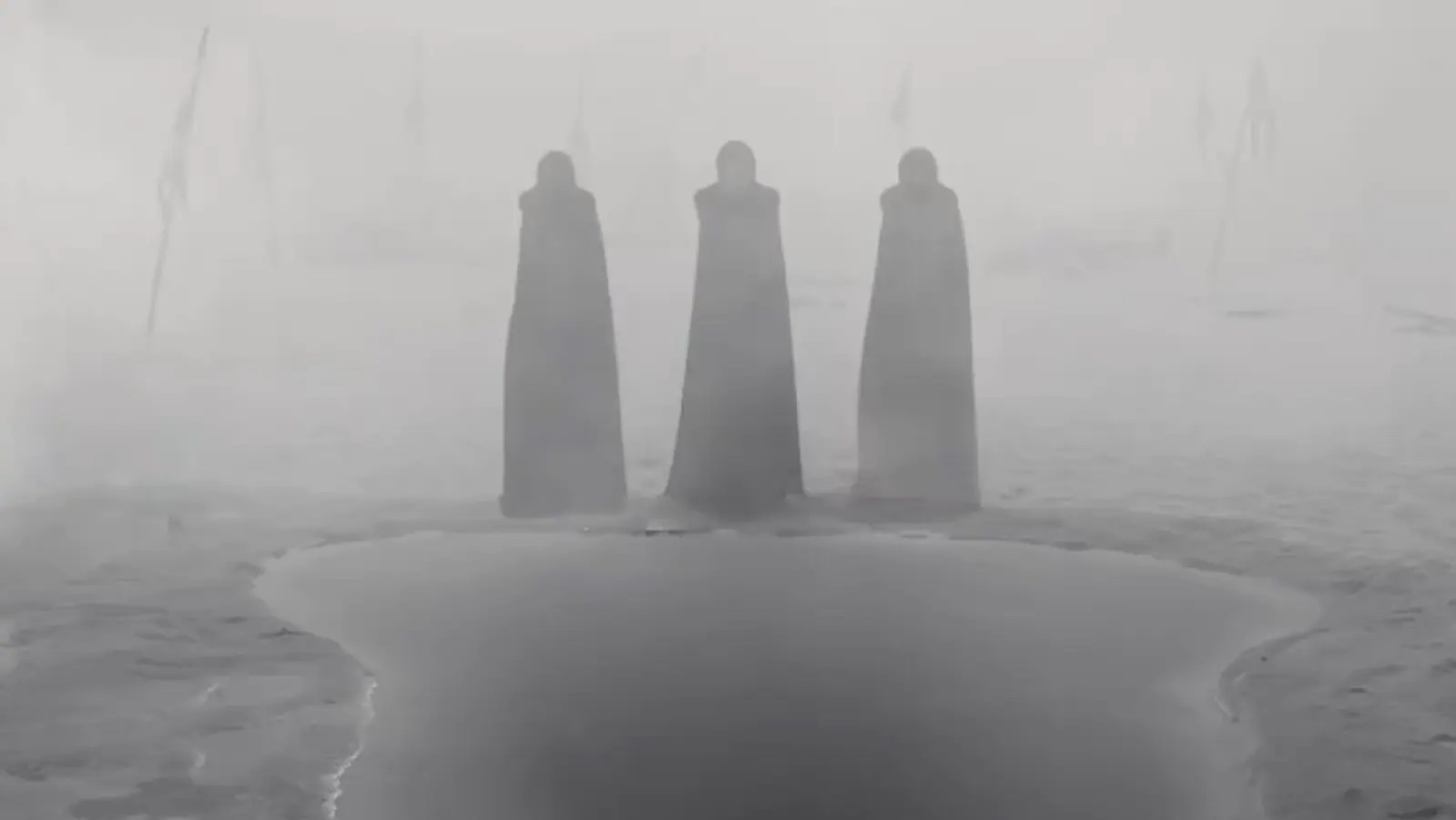
Shot in black and white, Coen’s Macbeth is a claustrophobic affair, with none of the epic battle scenes I’ve grown used to seeing in big-screen adaptations. Indeed, it feels very theatrical, the castle walls as contained and constraining as any stage could be. We rarely venture out of Macbeth’s castle; when we do, it’s into countryside so swathed in mist that very little is visible. This is a stripped back version of the play, shining a spotlight on the key elements and emotions.

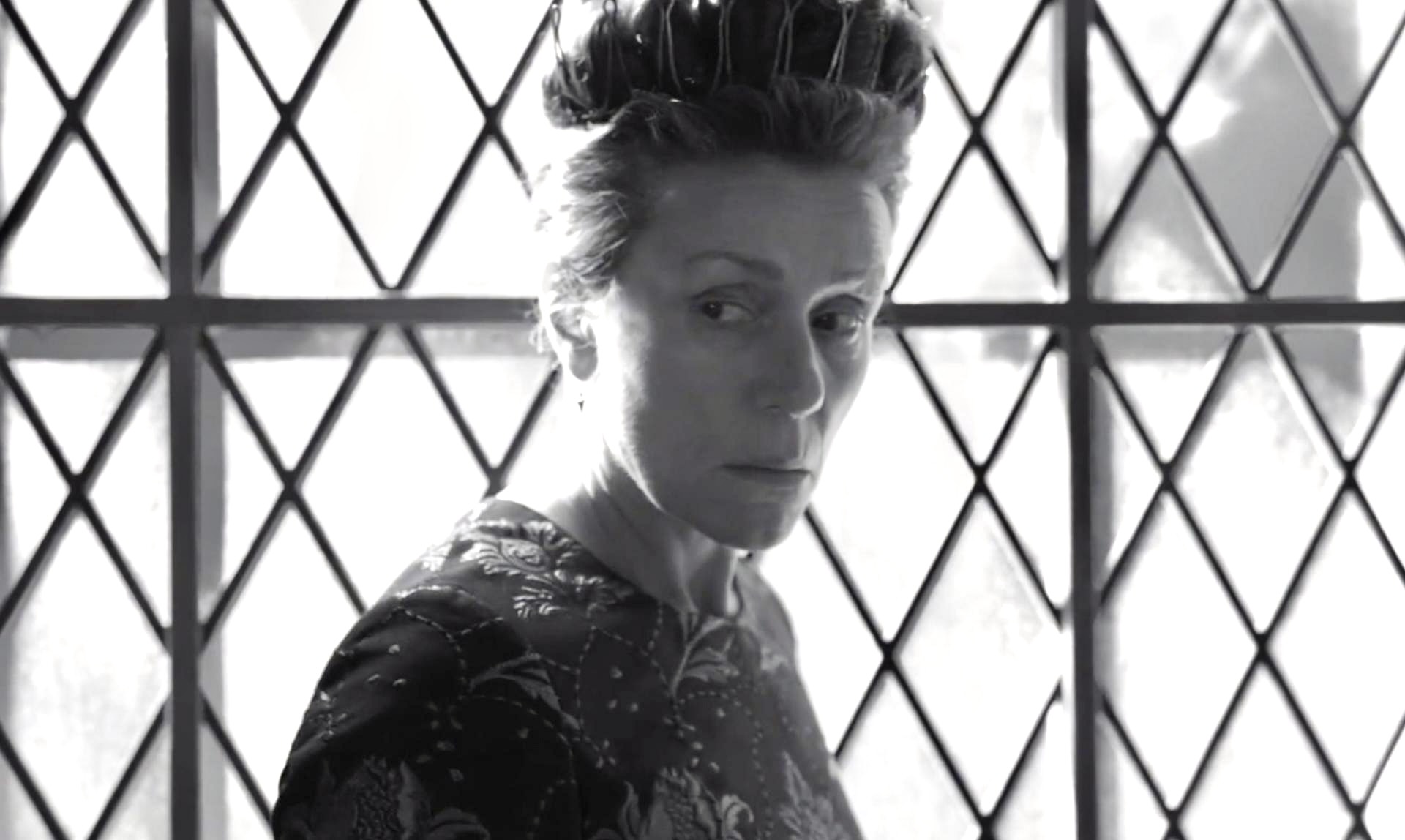
Denzel Washington is magnificent as the flawed hero: this is a towering performance, at once imposing and accessible. We can believe in him as a good man corrupted by greed, unable to live with his own actions. Likewise, Frances McDormand gives us a Lady Macbeth we can understand: she’s not presented here as a temptress, leading Macbeth to his doom, but as his partner, his equal, persuading him to indulge in a shared fantasy. The consequences are as devastating to her as they are to him.

Kathryn Hunter – playing all three witches – is perhaps my favourite thing about this production. She’s a gifted physical performer, and lends the shape-shifting ‘weird sisters’ a wonderful unearthly quality. Again, Coen’s judicious employment of theatrical devices (it can’t be incidental that Hunter has worked extensively with Complicité) makes for a compelling and unusual movie; this is a successful hybrid.

Coen only deviates from Shakespeare when it comes to Ross (Alex Hassell). A minor character in the original play, he appears here as a Machiavellian schemer, sidling up to where the power is, with one eye always on what might happen next. He’s Iago; he’s Tony Soprano; he’s Dominic Cummings. The additional layer really works.

In short, this is a triumph. It lays bare the heart of Shakespeare’s play. So, proceed further in this business; be the same in thine own act and valour as thou art in desire, and get yourself to the cinema. This is too good to miss.

4.8 stars

Susan Singfield

Don’t Look Up

24/12/21

Netflix

It’s Christmas Eve, so of course we all want something cheery and cuddly to watch… right?

Adam McKay’s Don’t look Up may just qualify as the least likely candidate for a fun Christmas movie in the history of such things, and yet this whip-smart, prescient and funny satire somehow hits all the right buttons to provide an evening of entertaining viewing.

Scientist Doctor Randall Mindy (Leonardo DiCaprio) is initially excited when one of his students, Kate Dibiasky (Jennifer Lawrence), discovers a new comet in the solar system, but he’s rather less pleased when their projections suggest that said comet – a massive heavenly projectile – is due to collide with planet earth in something less than six months’ time. This will be an extinction event.

Understandably spooked, they contact an expert, Professor Teddy Oglethorpe (Ron Morgan), with their findings and the three of them alert the White House. Initially, they are treated like a trio of cranks. President Orlean (Meryl Streep) is much more interested in her mid-term prospects, currently on the skids since she’s been found emailing pictures of her ahem… lady parts… to a her boyfriend. Orlean’s son, the Trumpian Jason (Jonah Hill), appears to have the intellect of a sandwich toaster and is more interested on what’s trending on social media than any upcoming real-life calamity.

But the reality slowly dawns. This is actually going to happen…

So who is going to save the world? Could it be the powerful mobile phone entrepreneur, Peter Isherwell (Mark Rylance), a cross between Elon Musk and Tim Cook? Or maybe the vacuous (but influential) pop star, Riley Bina (Ariana Grande), who can at least compose a saccharine song abut what’s happening? And what about the callous, self-regarding chat show host, Brie Eventree (Cate Blanchett), or her smug co-presenter, Jack Bremmer (Tyler Perry)?

Then President Orlean realises that she might be able to manipulate the approaching catastrophe in order to improve her own ratings. As the comet inexorably approaches, nobody seems able to agree on a sensible course of action…

Don’t look Up is played for laughs, but it’s ridiculously easy to spot the real life targets McKay has in his sights and, wild as this all is, it’s scarily believable. Substitute the word ‘comet’ for say, ‘pandemic’ or ‘global warming,’ and you’ll see the same cast of characters strutting their stuff: the scientists, the non-believers, the conspiracy-theorists and the tech billionaires, all determined to turn any disaster to their advantage.

McKay walks a perilous tightrope to a suspenseful conclusion that is both devastating – and, at the same time, devastatingly funny. Okay, like I said, not everybody will want to stomach this Netflix Original production quite so close to Christmas. All that turkey and mincemeat might be enough to swallow right now. But as you head into the New Year, be sure to tune in. It’s simply too good to miss.

And make sure you watch till the very end…

4.4 stars

Philip Caveney

Spider-Man: No Way Home

17/12/21

Cineworld, Edinburgh

I’ve seen most of the superhero movies and the one franchise I consistently enjoy is Spider-Man. I suppose it makes perfect sense. I was a big fan of the comic books back in the day and the films – all three of the major strands – have always had that lightness of touch that somehow steps aside from the pomposity of so many Marvel projects. Played mostly for laughs, the ‘Spidys’ have a levity about them, as their young protagonist goes about his heroic duties, whilst trying to woo his girlfriend and ensure that he gets a proper education.

I was somewhat apprehensive when I picked up on the various rumblings about the Multiverse (inevitable, I suppose, after the success of Lord and Miller’s wonderful Into the Spider-Verse) and also, the heavily-trumpeted presence of a certain Doctor Strange, but, as it turns out, I needn’t have worried. While this is undoubtedly the most complex Spider-Film to date, the sparky script by Chris McKenna and Erik Sommers manages to keep things moving briskly along. Every time a scene threatens to become too portentous, they throw in a snarky comment or a bit of tomfoolery and everything blurs back into motion. The two hour running time is never allowed to drag.

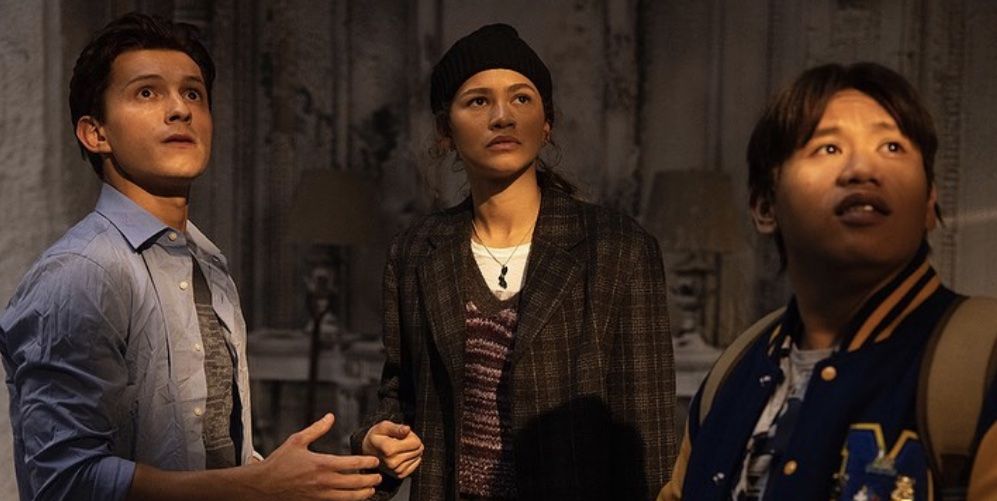
No Way Home picks up at the cliff-hanging moment where Far From Home left off – with Peter Parker (Tom Holland) being publicly outed. The ensuing fallout from that event kickstarts the new film straight into action and it barely stops to take a breath. It all feels horribly real as Peter, Aunt May (Marisa Tomei), MJ (Zendaya) and Ned (Jacob Batalon) are trolled, mocked and despised by the right-wing buffoons who have been listening to shock-jock, J. Jonah Jameson (JK Simmons). It’s weirdly prescient.

Feeling cornered and understandably worried about those he loves, Peter has what he thinks is a brilliant idea. He approaches his old pal Doctor Strange (Benedict Cumberbatch) and asks him to reverse time (as you do) so everyone will forget that he’s actually our favourite neighbourhood web-slinger.

Needless to say it’s a very bad idea.

Strange’s celestial tinkering accidentally opens a breach in the Multiverse and, almost before Peter knows what happening, he’s being pursued by adversaries from across time – they include Doc Octopus (Alfred Molina), the Green Goblin (Willem Dafoe) and many, many others, most of whom are astonished to find that Peter doesn’t look anything like the man they remember, but are perfectly happy to try and kill him anyway. Luckily, he doesn’t have to fight them off single-handedly, because he’s offered help from an unexpected quarter…

As is so often the case with these movies, there’s an extended super-powered punch-up at the conclusion, but even this is saved from becoming tedious by liberal deployment of the aforementioned witty dialogue – and there’s a surprisingly poignant coda to the film, which ties all the multifarious strands neatly together. Holland has hinted that this may be as far as his involvement will go and I have to say, if he does choose to step away, he’ll be leaving a very accomplished trilogy to remember him by.

Mind you, it’s clear that this won’t be the end. A post-credits teaser dangles the dubious prospect of a Spawn/Spider-Man mash up, which really isn’t something I relish, but Sony are bound to want to involve their other big-selling franchise at some point, so we’ll see what happens on that score.

Those who are willing to stay in their seats till the credits stop rolling will be rewarded with a trailer for the upcoming Dr Strange movie, which looks… strange, to say the very least.

But meanwhile, No Way Home is well worth your attention. Even unapologetic spandex-haters should give this one the benefit of the doubt. Because, you know what? It rocks.

4.6 stars

Philip Caveney

West Side Story

16/12/21

Cineworld, Edinburgh

Though an admitted fan of musicals, Steven Spielberg has never attempted one: until now, that is.

It’s perhaps typical of the man that he’s taken on one of the most acclaimed musicals in history and he’s quick to point out that this reboot isn’t based on Robert Wise and Jerome Robin’s 1961 motion picture, but on the original stage version, created by Leonard Bernstein, Stephen Sondheim and Arthur Laurents. In essence, the great director hasn’t changed so very much. The setting is still New York, some time in the 1950s, but here, we’re made aware from the opening sequence that the neighbourhood is undergoing major demolition in order to accommodate the building of the swishy new Lincoln Centre. The place is already doomed.

Spielberg has also settled some worries from the original film version, where white actors wore brown makeup in order to look ‘authentically’ Puerto Rican. He’s also added a non-binary character called Anybodys (Iris Menas) and has left some stretches of Spanish dialogue un-subtitled, relying on non-Spanish-speaking audiences being able to work out what’s actually being said. But mostly he’s left it to the sweeping cinematography of Hanusz Kaminsky and of course that series of solid gold songs to carry us through a world of finger-clicking dance routines and declarations of eternal love.

There’s part of me that wishes he’d tinkered a bit more than he has. But still…

I won’t waste time on needless plot details. If you’re familiar with Romeo and Juliet, you pretty much know what to expect.

The Romeo figure here is Tony (Ansel Elgort), recently released from prison after one punchup too many and literally towering over his diminutive love interest, Maria (Rachel Zegler). But of course, Tony is a former member of The Jets gang, while Maria’s brother, Bernardo (David Alvarez), is the leader of their Puerto Rican rivals, The Sharks, who hate all Jets as a matter of principle – and the feeling is mutual.

It can only end in bloodshed.

West Side Story 2021 is handsomely mounted and uniformly well acted – Ariana DeBose as Anita is a particular standout – and it’s also lovely to see Rita Moreno (who played Anita in the 1961 film) cast here as Valentina, the owner of the local drug store, from where she delivers her own haunting version of Tonight. But the film is at its best during the big ensemble numbers – a rousing rendition of America, played out on the busy streets of New York is fabulous and the climactic rumble between the two gangs, in a deserted salt warehouse is also visually striking.

What’s more, Spielberg even manages to make the cheesy I Feel Pretty – a song that has previously brought me out in hives – much more palatable, by the simple expedient of setting it in the flashy department store where Maria and her girl friends work – as cleaners.

So why does the film fail to thrill me? It could be, I suppose, that there are simply too few surprises. Perhaps if I were seeing the story for the very first time, I’d be more excited, but apart from some judicious airbrushing and those magnificent production values, I’m suffering from a bad case of ‘seen it all before.’ Viewers who weren’t even born in 1961 will doubtless have an entirely different view of it.

In the end, I admire it… but I don’t love it.

3.8 stars

Philip Caveney

Lamb

15/12/21

Cineworld, Edinburgh

Hear that rustling noise?

It’s the sound of many tourists frantically crossing ‘a visit to Iceland’ off their bucket lists. It’s not that the place isn’t geographically stunning. In Lamb, Eli Arenson’s cinematography shows it in all its misty splendour. But in Valdemar Jóhannsson’s debut feature it seems a dark and menacing place, particularly in the remote part of the countryside where a married couple ply a lonely trade as sheep farmers.

It’s lambing season and Maria (Noomi Rapace) and Ingvar (Hilmir Snær Guõnason) are literally working around the clock, assisting pregnant sheep with the messy process of giving birth, something which is shown in considerable detail. And then one particular lamb is born and there is something about this one – something that spurs the couple to take it into their house, to feed it bottled milk and even to give it a name – Ada. It would be criminal to reveal any more than that, but suffice to say that Jóhannsson cunningly holds back on any explanation for quite some time. When the truth is finally revealed, it hits me like a sucker-punch to the gut and I find myself intrigued.

The sheep farmers’ idyll is rudely interrupted by the unexpected arrival of Ingvar’s younger brother, Pétur (Björn Hlynur Haradldsson), a former pop star turned full time wastrel. It’s clear from his first appearance that he and Maria have some history together, which makes things awkward. But what is Pétur going to make of the new addition to the family, particularly when he learns of the lengths that Maria has gone to in order to ensure she has no rivals for Ada’s affection?

Lamb lets the central couple’s backstory emerge at a leisurely pace and, though it skimps on detail, there’s enough for me to fill in the gaps. It’s rather like having just enough pieces of a jigsaw to reveal the outline of something distinctly unsettling.

This is a very unusual film to say the least. It plays rather like a contemporary fairy tale, full of forbidding imagery and, at times, almost unbearable suspense. I’ve never seen anything quite like it before . As the story unfolds, I find myself formulating various possible resolutions, but there’s no way I could guess at the direction in which Jóhannsson and co-writer, Sjón are ultimately heading.

4.5 stars

Philip Caveney