Month: January 2025

Moments

30/01/25

The Studio at Festival Theatre, Edinburgh

One of the UK’s leading visual theatre companies, Theatre Re focus on making “deeply moving non-verbal productions about universal human challenges and the fragility of life”. Their latest piece, Moments, lays bare the creative process, taking the audience on a journey from nothing to something, from the flicker of an idea to a compelling dramatic sequence.

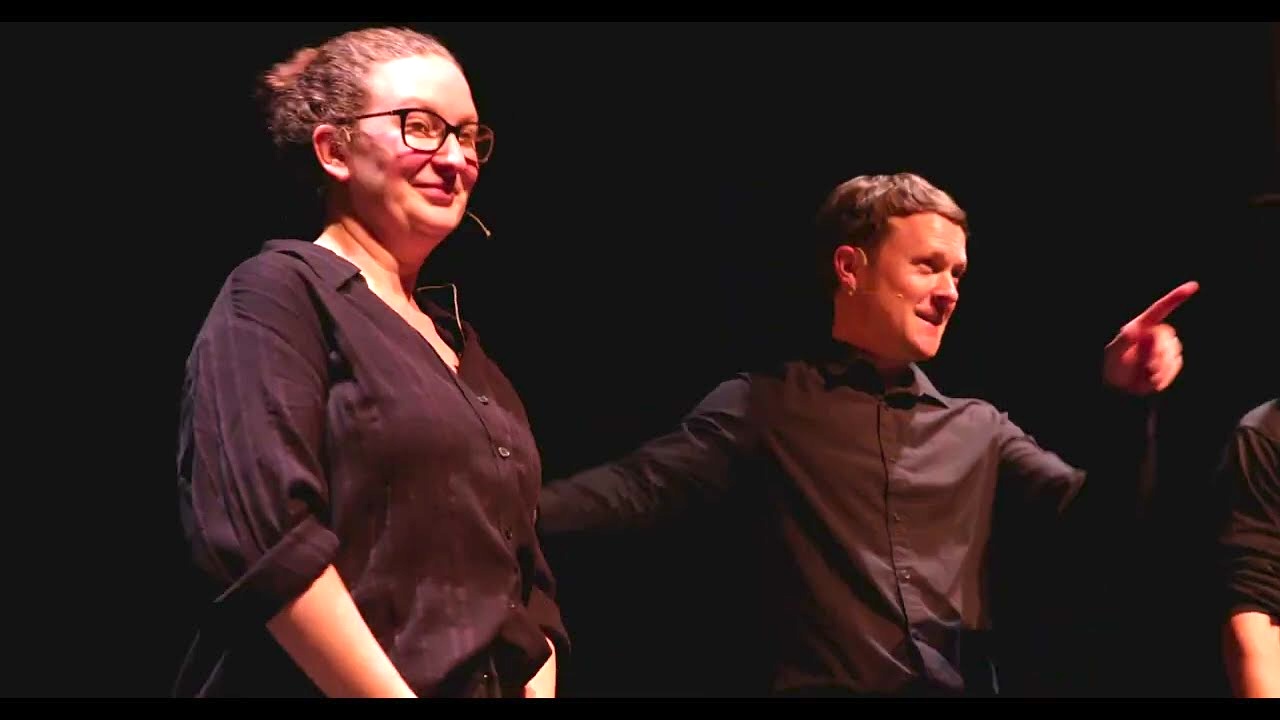
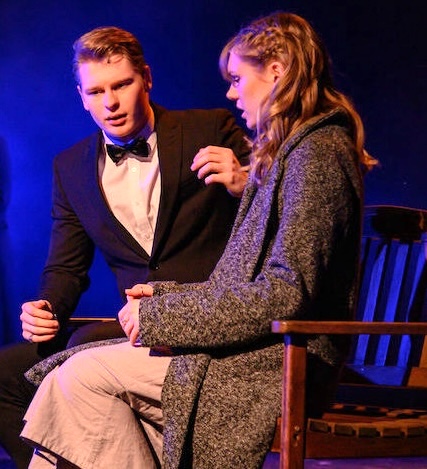
The metatheatrical concept is made clear from the outset, as four performers – dressed in rehearsal blacks – stand in a line and introduce themselves. They are: Guillaume Pigé – conceiver, director, actor and mime; Dr Katherine Graham – lighting designer; Alex Judd – composer; and Anna Kitson – BSL interpreter. From the sound desk behind us comes the disembodied voice of Benjamin Adams. They describe their roles and what they each bring to a show.

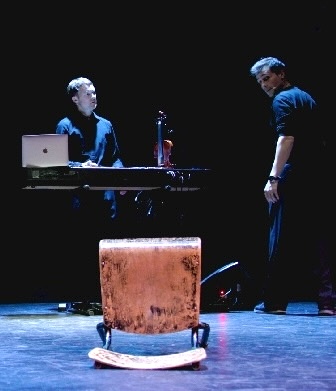
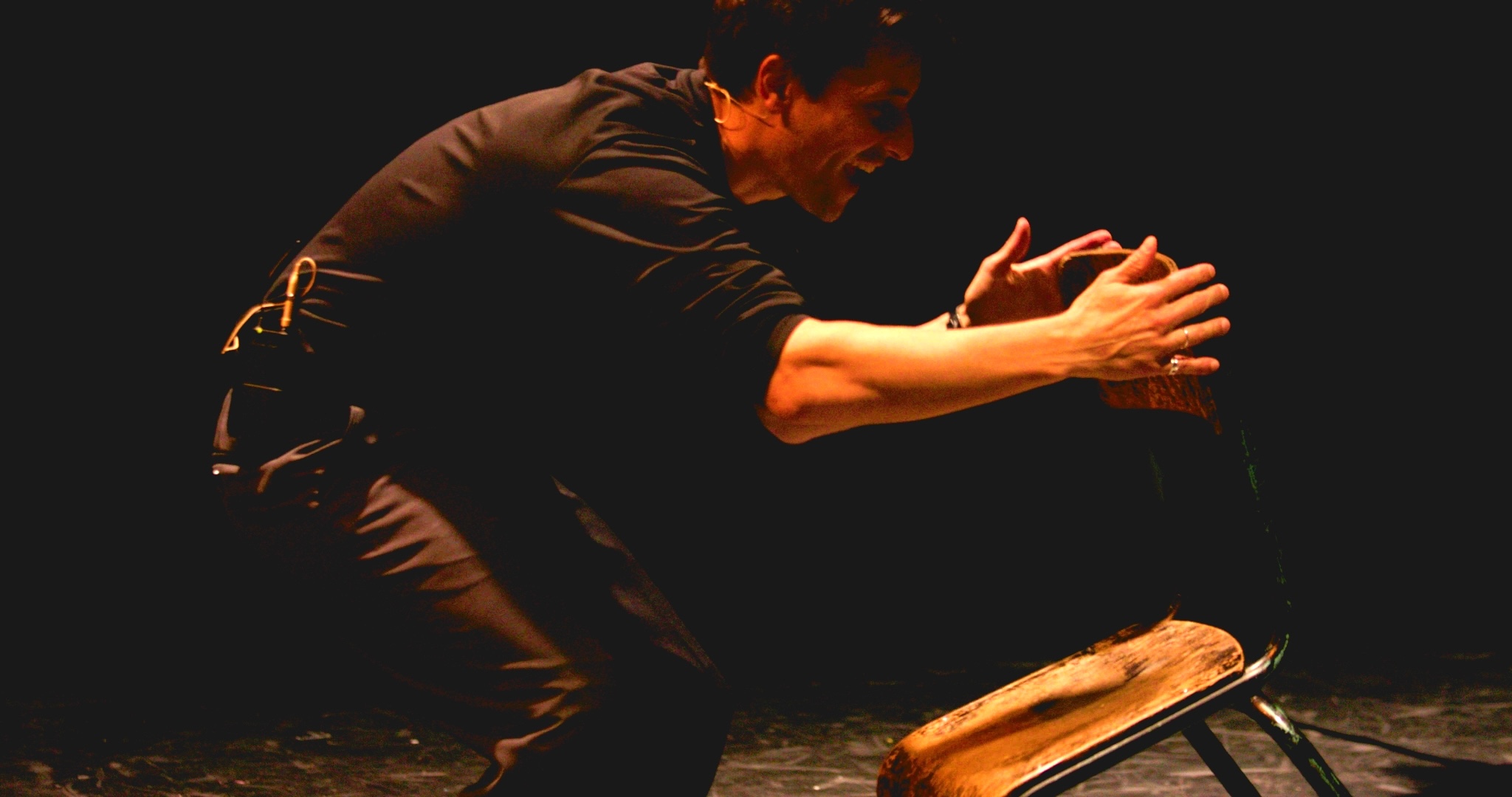
And then they begin. A chair, at first simply functional, changes before our eyes, becoming a child and then a father. The mood switches, initially light and amusing, then emotionally charged. The intensity swells with the music; the lighting focuses our attention one way and another. There is dialogue but it’s in French, so – for me, at least, with my school level knowledge of the language – it’s more about tone and tenor than it is about the words.

There’s no denying how skilful these theatre-makers are: the performances are incredibly precise and absorbing, and it’s fascinating to see what they can do with a bare stage, no costumes and one prop. However, it feels more like a demonstration than a play; it’s an exemplar of how to develop a piece of drama but the final scene – the culmination of the process – is too brief to be satisfying.

Moments would work well as an introduction to a drama workshop for A level, Higher or Uni students. It’s a dynamic and engaging piece of work that would surely appeal to anyone interested in learning about the process of making theatre.

3 stars

Susan Singfield

Presence

26/01/25

Cineworld, Edinburgh

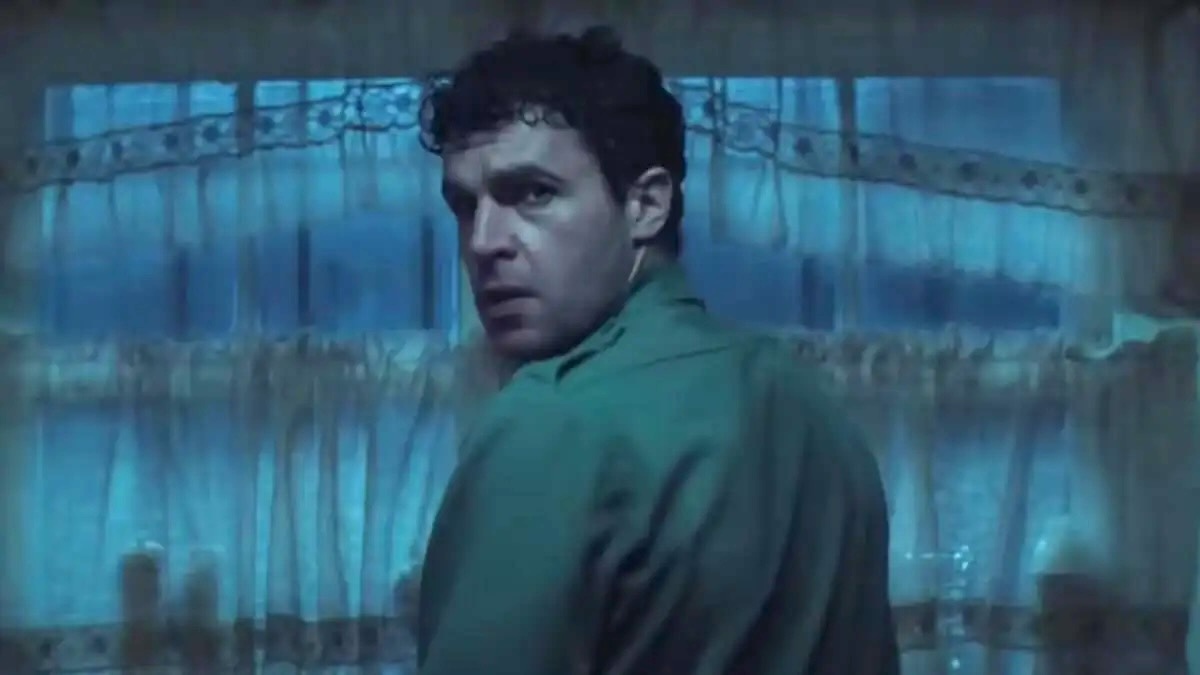
Steven Soderbergh’s latest film is Presence, a taut little ghost story told with absolute assurance. Striking a perfect balance between genre tropes and a fresh approach, this is an intelligent and entertaining piece of work, well worth eighty-five minutes of anybody’s time.

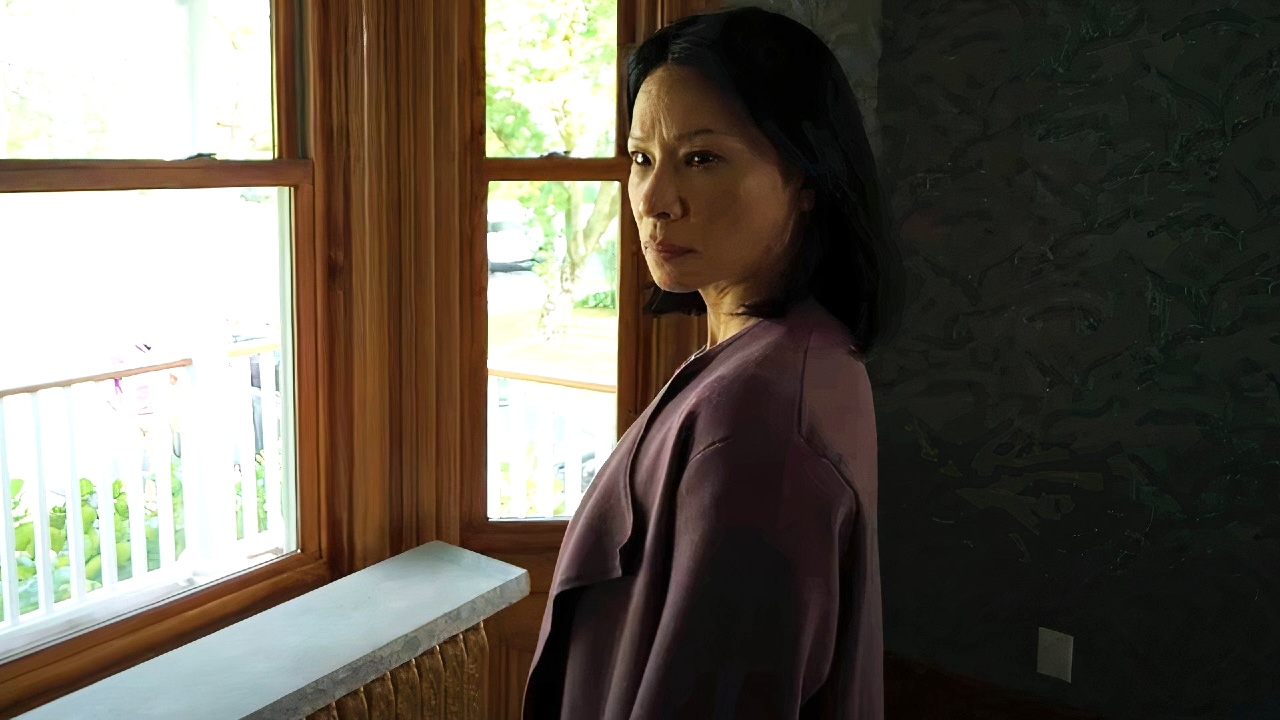
Rebekah (Lucy Liu) is immensely proud of her son, Tyler (Eddy Maday), and determined to maximise his chances of a swimming scholarship, even if it means relocating to a different school district. Her husband, Chris (Chris Sullivan), is unconvinced. After all, it’s only a couple of months since Tyler’s younger sister, Chloe (Callina Liang), lost her best friend to a drug overdose. How will she cope with the upheaval?

But Rebekah is an unstoppable force and so the family duly moves. But Chloe becomes aware that there’s a presence in the new house. Someone – or something – is watching her. Did something bad once happen here?

So far, so predictable – but don’t be fooled. Written by David Koepp, this is a highly original tale with twists and turns aplenty. Its simple surface belies its depths: I find myself thinking about it for hours afterwards, recalling hints and clues that were hiding in plain sight.

Soderbergh’s cinematography sets a claustrophobic tone, as we witness everything from the point of view of the titular presence, peering out from behind the shadows, apparently unable to leave the house. Time sputters forward jerkily: the rooms are empty, then filled with furniture; the walls change colour; trinkets appear; messes are made. The family dynamics are slowly revealed: the cracks in Chris and Rebekah’s marriage; Chloe’s longing for her mom’s attention; the chasm separating Chloe from her jockish brother. Whatever the presence is, it doesn’t seem to want to cause her harm…

Liang might be a relative newcomer, but she more than holds her own in the lead role, creating a compelling and engaging character for the audience to root for. Liu and Sullivan convince as a disaffected couple, while Maday and West Mulholland (as Tyler’s team-mate, Ryan), provide the boyish bantz.

It would be criminal to reveal more here, and so I won’t. Suffice to say that this is a welcome addition to the ghost story cannon. And I look forward to seeing what else the prolific Soderbergh has to offer, in next month’s highly anticipated Black Bag.

4 stars

Susan Singfield

The Brutalist

25/01/25

Cineworld, Edinburgh

It’s evident from the very beginning of The Brutalist that director Brady Corbet is determined to establish his own rules. Instead of rolling vertically, like every other credit sequence you’ve seen, the words slide horizontally across the screen and resemble the work of a groundbreaking graphic designer. Using VistaVision – a screen format popularised in the 1950s – the film has its own distinctive look. It has a prodigious running time of over three-and-a-half hours, but, much like the old epics of David Lean, viewers are afforded a fifteen-minute interval, so we can avail ourselves of a toilet break.

It’s a wonder then that The Brutalist is so utterly compelling that I barely even notice its length. This is monumental in every sense of the word and perhaps the biggest wonder of all is that it’s been created on a budget of less than ten million dollars – a fraction of most films conceived on this scale.

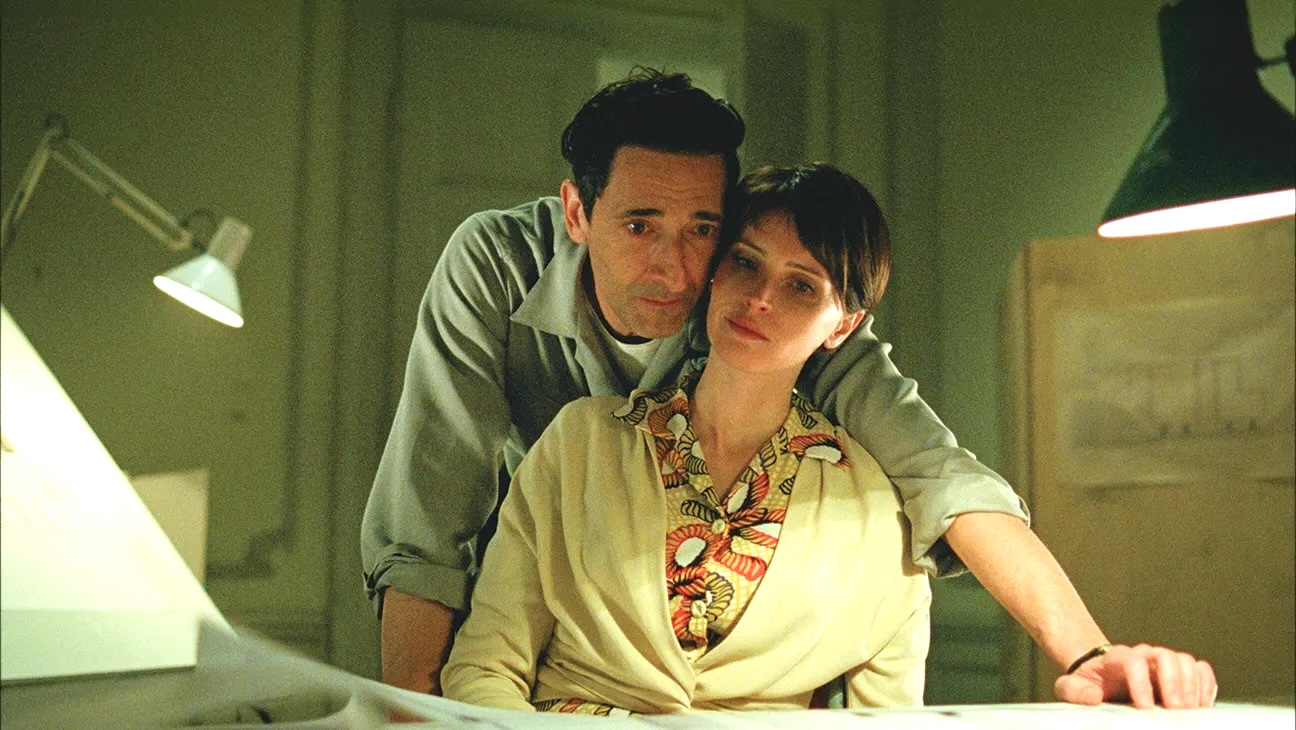
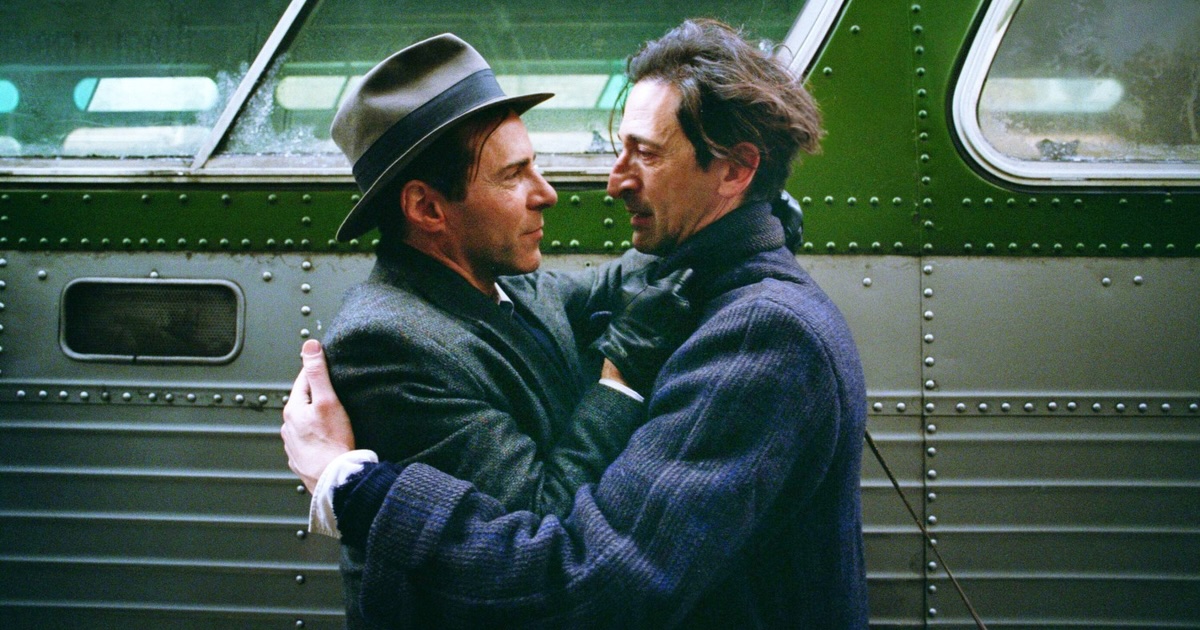
The story begins in 1947 with a series of fragmentary glimpses of Jewish refugee, László Tóth (Adrien Brody) travelling by ship from his native Hungary to begin a new life in America. He has been forcibly separated from his wife, Erzsébet (Felicity Jones), and his orphaned niece, Zsófia (Raffey Cassiday), and imprisoned in Dachau concentration camp for most of the war, but has now been offered sanctuary in Pennsylvania by his cousin, Attila (Alessandro Nivola), and his Catholic wife, Audrey (Emma Laird). The couple run a small furniture store and Attila is well aware that, before the war, László worked as an architect of the Bauhaus School. His design skills, Attila thinks, will come in useful.

Attila is approached by Harry Lee Van Buren (Joe Alwyn), who wants to commission László to redesign his father Harrison’s private library as a birthday surprise. Rather than do a straightforward upgrade, László transforms the room into a stunning work of art. When Harrison (Guy Pearce) arrives home earlier than expected, he clearly doesn’t approve of what’s been done in his absence and flies into a rage, ordering László and Attila to leave. Harry subsequently refuses to pay for the work and, as a consequence, László finds himself thrown out of his cousin’s place, with no better prospect than labouring to earn his daily bread. With his friend, Gordon (Isaac de Bankholé), he sinks into heroin addiction.

But when the redesigned library appears in the pages of an influential style magazine, Harrison undergoes a dramatic change of heart. Suddenly, he wants to be László’s patron, to converse with him, to fully understand his working methods. What’s more, he has influential Jewish friends who will be able to help him to bring Erzsébet and Zsófia over from Hungary to be with him. And then Harrison starts talking about a new commission: a massive civic centre dedicated to his late wife, a place where the local community can meet and enrich their lives.

But in the fullness of time, László will discover that such indulgences come at a price that will utterly compromise his artistic freedom – and will impinge upon his life in ways he could never have anticipated…

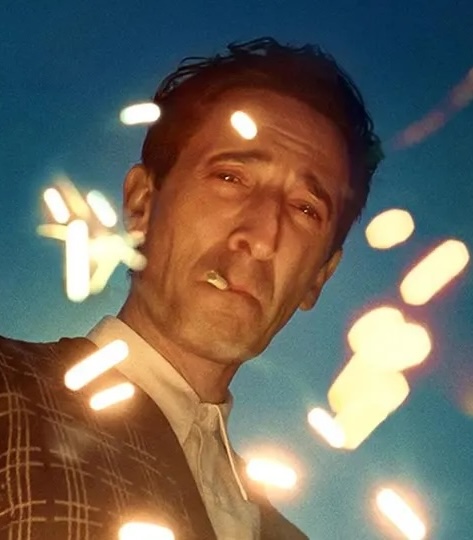
The Brutalist is a remarkable film in so many ways, not least because of Brody’s powerful performance in the lead role, a tortured artist, forced to compromise his talent at every turn. Pearce is also terrific as the self-aggrandising Harrison and Alwyn excels as his sneering, deeply unpleasant son, a man used to getting his own way in everything he approaches. Jones doesn’t enter the story until the film’s second half but submits a beautifully nuanced performance as Erzsébet, a woman still physically tortured by the aftermath of the starvation she suffered during the war. I should also mention Daniel Blumberg’s wonderful score, which provides the perfect accompaniment to Lol Crowley’s eye-popping cinematography.

The film has plenty to say about the creative process and it nails perfectly the powerful seduction that success offers to any artist – the fateful allure of patronage and its unpalatable compromises. Brady’s screenplay, co-written with Mona Fastvold, is wise enough to hint at unspeakable things rather than spelling them out – and it keeps me hooked until the final frame.

Will Brody lift the ‘best actor’ gong at this year’s Oscars? It’s a strong possibility in a year that features a whole bunch of commendable performances. Meanwhile, go and see The Brutalist and marvel at its epic qualities – and, if possible, watch it on an IMAX screen to best appreciate the wonders of VistaVision.

5 stars

Philip Caveney
Singin’ in the Rain

23/01/25

Pleasance Theatre, Edinburgh

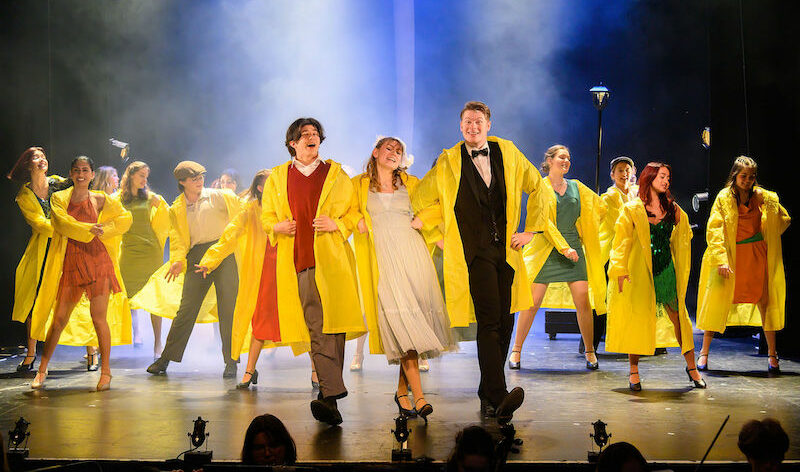
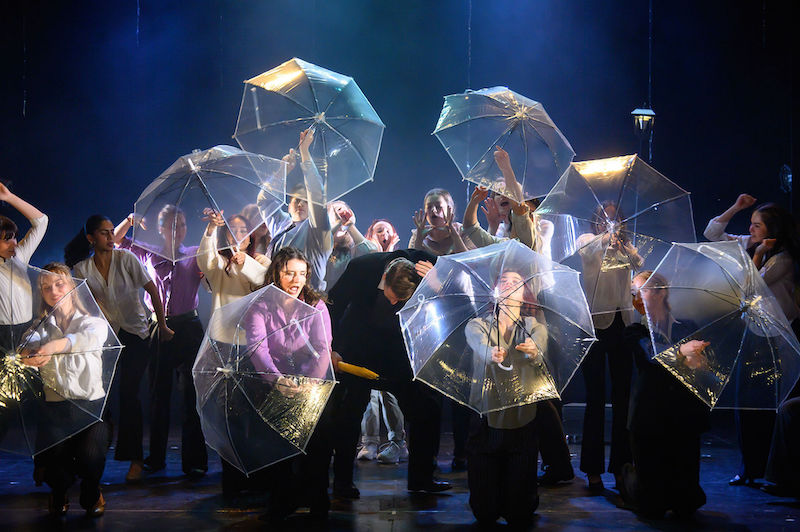
In Edinburgh, a storm’s a-comin’ in… but before it hits, there’s the chance to catch EUSOG’s delightful adaptation of this classic 1952 Hollywood Musical. Back in 2022, we saw the touring production at the Festival Theatre, which boasted a massive budget and gallons of real water bucketing down from the heavens. A high bar indeed. But we’ve seen enough EUSOG shows to know that these talented students will deliver something special – and we’re not disappointed.

The year is 1927 and Dan Lockwood (Ewan Robertson) and Lina Lamont (Amelia Brenan) are the golden couple of silent cinema. Movie fans believe them to be an item and, for the sake of their own popularity, they allow this belief to flourish. Dan has steadily worked his way up the slippery pole of fame alongside his childhood friend, Cosmo Brown (Dan J Bryant), a wisecracking song-and-dance man. But of course a new film release – Al Jolson’s The Jazz Singer – is about to change the face of cinema forever. Lockwood and Lamont realise that they need to make a talking picture. But there’s a problem: Lina has a screeching voice with all the appeal of fingernails being dragged down a clapperboard.

And then Dan meets Kathy Seldon (Hannah Shaw), a theatre performer, who claims to never go to the cinema, and who plans to head off to New York to pursue a career on the stage – you know, real acting. She also has a lovely singing voice. And Dan is irrevocably smitten…

There are many good reasons why the original film still features in most critics’ lists of the greatest musicals of all time. It boasts a sparkling screenplay by Betty Camden and Adolph Green and a whole clutch of memorable songs by Nacio Herb Brown and Arthur Freed. What this production might lack in special effects is more than made up for by the dazzling and exuberant performances of its young cast, who take on the most demanding of roles with aplomb.

Robertson is the powerful anchor at the heart of the piece, singing up a storm, while Shaw is a delight in the ingenue role. Brenan is having the best time as Lamont, gleefully mangling her lines and performing What’s Wrong With Me? in tones that could shatter plate glass. And, as is the case in the film, it’s Cosmo who steals so many of the scenes: Bryant clowns with considerable skill and his performance of Make ’em Laugh even manages to rival Donald O’Connor’s most celebrated routine.

As ever with these productions, there is a large chorus and every performer gives it one hundred percent. Director Freya White and choreographer Rosalyn Harper have their huge cast moving effortlessly through a series of pratfalls and complex dance routines – and let’s not forget the input of musical directors Evie Alberti and Sebastian Schneeburger, who guide a seventeen-piece orchestra through that unforgettable score. The standing ovation from tonight’s packed crowd is genuine and well-earned.

Sadly, Storm Éowyn has already put paid to Friday night’s performance and fingers are currently crossed for the Saturday. If it does go ahead, then please take the opportunity to catch this captivating show, which to my mind personifies the very essence of pure entertainment. I’m willing to bet you’ll come out smiling and singing the title song, no matter what the weather’s doing.

4.8 stars

Philip Caveney

The Merchant of Venice

22/01/25

The Royal Lyceum, Edinburgh

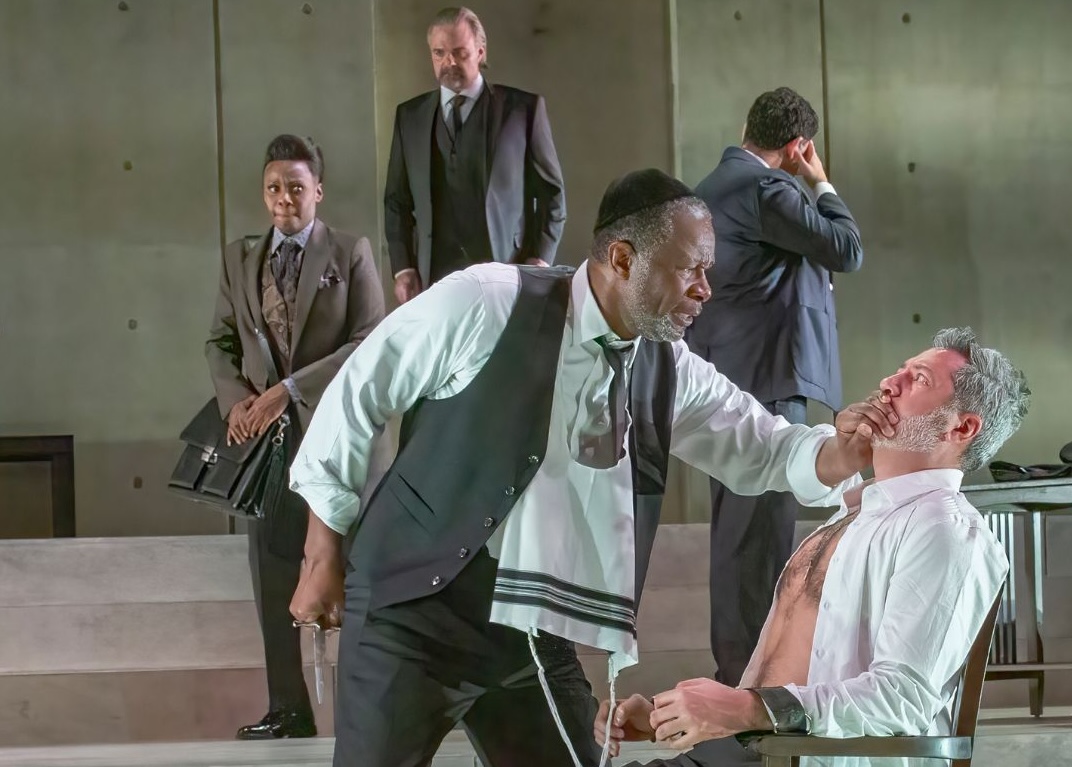
New York’s Theatre for a New Audience brings The Merchant of Venice to Edinburgh’s Royal Lyceum as part of a reciprocal exchange programme. Starring John Douglas Thompson as Shylock, this is a bold and provocative production, drawing explicit links between 16th century Venice and an all-too-believable near-future USA.

Director Arin Arbus says she wants “to discover what this play means to us in the here and now” – and she certainly does that, using Merchant to hold up a mirror to a divided society where people’s views are polarised and entrenched. In Shylock’s Venice, Jews have few rights. They are forced to live in ghettos, prohibited from owning property, limited in the kind of work they are allowed to do. The prejudice runs deep: even Antonio (Alfredo Narciso), widely reputed to be one of the good guys – “a kinder gentleman treads not the earth” – deems it appropriate to spit at Shylock and call him a dog, all while asking him for money. In the modern American dystopia where this production is set, Thompson’s Black Shylock suffers comparable – and recognisable – iniquities.

It feels like a timely reminder of what we need to avoid, of where discrimination and inequality inevitably lead. Who can blame Shylock’s daughter, Jessica (Danaya Esperanza), for wanting to escape the ghetto, for hooking up with Lorenzo (David Lee Huynh) and converting to Christianity? Why shouldn’t she seek a better life? But it’s her desertion that pushes Shylock, already at breaking point, over the edge, fuelling his thirst for vengeance. What has he left to lose? Just as the Christian Venetians treat the Jews as a homogenous group to be despised, so Shylock views them all as one enemy. No wonder he is furious; no wonder he shows Antonio no mercy.

But the odds are stacked against him. The legal system isn’t fair or balanced: the laws are written by the powerful. Plus ça change, plus c’est la même chose. Power corrupts. Even Portia (Isabel Arraiza), who seems a pretty decent sort at first, isn’t immune. She changes when she assumes the mantle of supremacy, swaggering into the court in her borrowed clothes and treating Shylock with cruel contempt. Arbus’s direction highlights this theme; indeed, this version of the courtroom scene is the most intensely horrifying I have ever seen. The auditorium is eerily silent, as if we’re all holding our collective breath, appalled by Portia’s gloating as she humiliates Shylock.

I’m watching this just three days after Donald Trump has issued an executive order dismantling federal diversity, equity and inclusion programmes, which lends this consciously diverse production even more weight and urgency. Shakespeare’s message transcends the centuries; we have to heed its warning.

4.6 stars

Susan Singfield

Wolf Man

18/01/25

Cineworld, Edinburgh

Director Leigh Whannell last plundered the vaults of Universal Studios with his reboot of The Invisible Man (2020), where he managed to completely reimagine the 1933 source film (starring Claude Rains) as a twisty-turny nail-biter with Elisabeth Moss. The Wolf Man, a 1941 fright flick for Lon Chaney, has had plenty of remakes over the years, but few of them have ever managed to unleash the story’s full potential. While Whannell makes a spirited attempt here, framing this as an allegory about a man trying to escape from the toxic influences of his late father, the telling is poorly-paced and runs out of steam long before it ends.

It begins with an effective flashback. A young boy called Blake (Zac Chandler) heads out on a hunting expedition into the forests of Oregon with his authoritarian father, Grady (Sam Jaeger). The two of them live alone in a remote cabin (in the woods, naturally) and Blake has overheard Grady talking on the CB radio, making ominous remarks about something ‘dangerous’ that lurks in the forest, so the kid is understandably pretty nervous. Sure enough, in a thoroughly gripping sequence, the two hunters find themselves becoming potential prey as they are pursued by an unseen creature…

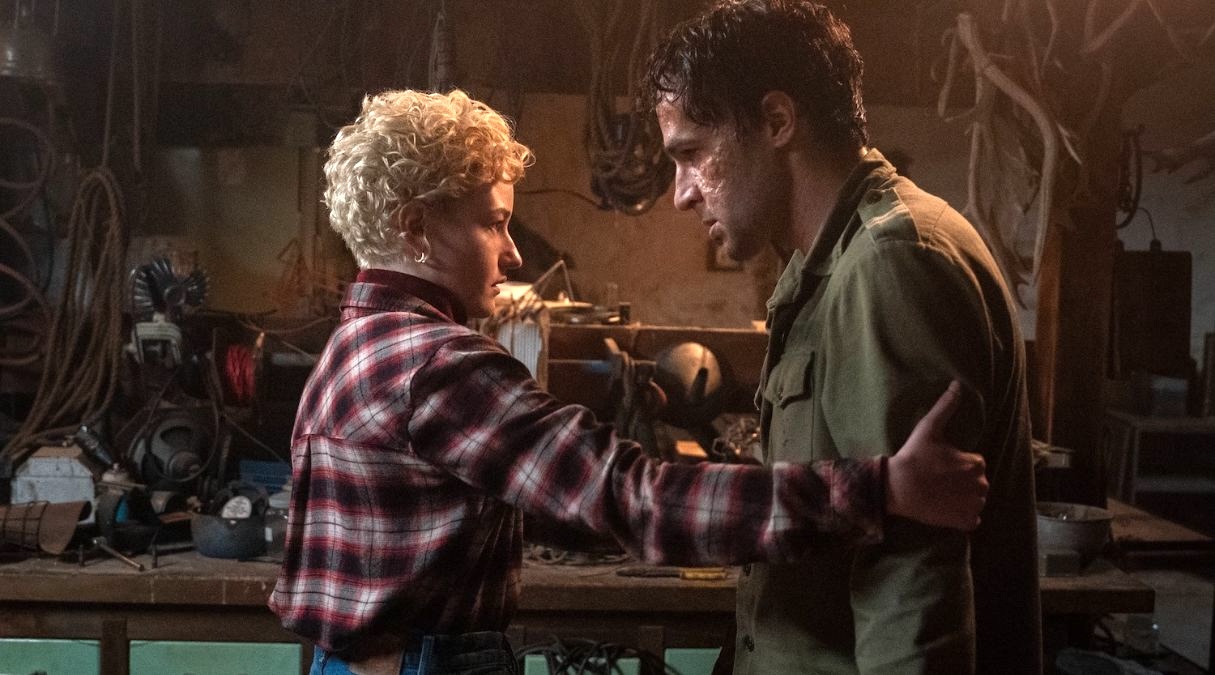
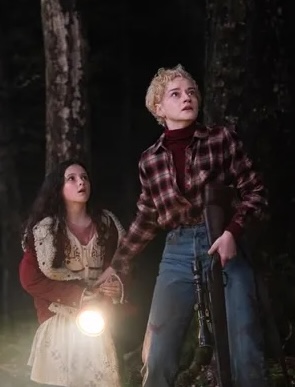
40 years later, Blake (now played by Christopher Abbott) is living in San Francisco. He’s a would-be writer who has lost his mojo and is playing the role of house-husband while his journalist wife, Charlotte (Julia Garner), puts food on the table. Blake is constantly worried about their young daughter, Ginger (Matilda Firth), and sees his sole reason for existence as a mission to protect her from harm.

Grady, meanwhile, has been missing presumed dead for a very long time. When news comes through that the authorities have officially pronounced him ‘deceased,’ Blake comes up with an idea. Why don’t the three of them hire a van, drive out to Oregon and clear out his father’s cabin, whilst having a relaxing holiday in the process? At this stage, I’m not sure which is most unlikely – Blake’s suggestion or his wife and daughter’s decision to say ‘Hey, why not?’

But it happens anyway and, in what feels like a rather rushed narrative, the three of them drive to Oregon and find themselves menaced by a mysterious upright beast even before they properly arrive at their destination…

To give the film its due, Whannell manages to cook up impressive levels of suspense for the film’s first hour. Stefan Duscio’s murky cinematography and Benjamin Walfisch’s eerie music add to the steadily mounting sense of dread. When Blake suffers an injury and begins to transform into – well, take a wild guess – his situation seems to mirror a whole series of possible references from drug addiction to generic inheritance. But just as I’m thinking that this is going to be a triumph, there’s a major development (I’m confident you’ll spot it when it arrives) where the story reaches its logical conclusion, and where it really ought to end.

Except that there’s still another half hour to fill – and so the action continues, squandering most of the Brownie points earned so far, in what feels like a series of completely superfluous extra scenes. As is so often the case, the more we see of the titular creature, the less menacing it becomes. A last, thought-provoking scene arrives a little too late to undo the damage.

A shame, because that first hour definitely takes the viewer to some very uncomfortable places – and it’s hard not to conclude that, if it had only taken the family a little longer to get to the cabin, this could have been a much more satisfying experience.

3.4 stars

Philip Caveney

A Complete Unknown

17/01/25

Cineworld, Edinburgh

Writer/director James Mangold has been down the music biopic route before with 2005’s Walk The Line (featuring Joaquin Phoenix as Johnny Cash), but the news that he was planning a film about Bob Dylan felt like a decidedly tall order. After all, Robert Zimmerman is the proverbial mystery wrapped up in an enigma, a man who has unabashedly invented (and reinvented) the details of his own story from the very start of his career. It’s to Mangold’s credit then, that A Complete Unknown is such a triumph, eschewing the idea of a ‘whole life’ depiction and choosing instead to focus on five turbulent years from the musician’s life.

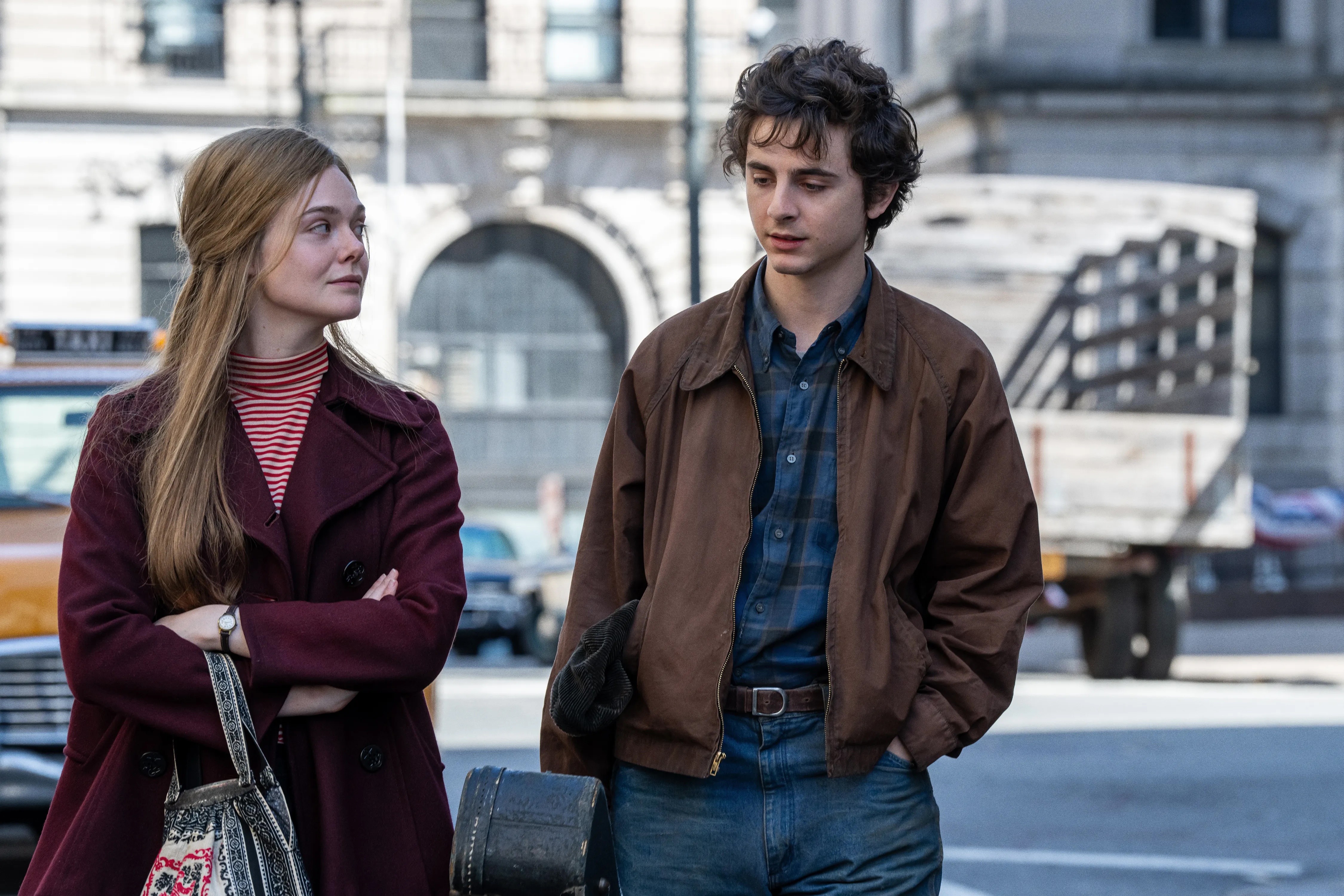
it’s 1961 and a twenty-year-old Dylan hitchhikes from his home in Duluth, Minnesota to Greystone Park Psychiatric Hospital in New Jersey, where folk legend Woody Guthrie (Scoot McNairie) is slowly succumbing to the ravages of Huntingdon’s Disease. Guthrie is Dylan’s hero and he has come here to sing to him, as song he’s written all about the man. Present at the impromptu performance is Guthrie’s friend and fellow folk stalwart, Pete Seeger (Edward Norton). He’s impressed both by the song and the performer’s confidence, so he takes Dylan under his wing and starts introducing him to the flourishing folk scene in the coffee houses of New York City.

It isn’t long before his regular appearances start to gain him a reputation. At one concert he meets Sylvie Russo (Elle Fanning, a thinly disguised version of Dylan’s real life muse, the late Suze Rotolo), and the two of them become lovers and constant companions. He also meets folk singer Joan Baez (Monica Barbaro), already something of a star on the folk circuit. Baez covers some of Dylan’s songs and helps to bring his work to a wider audience, and inevitably, a romantic entanglement ensues between them.

And then, Dylan begins to tire of the strictures of the folk scene and finds himself increasingly drawn to the trappings of rock music – the fashions, the poses, the volume. But he is to discover that folk puritans are opposed to sullying ‘their’ music with electric guitars and keyboards. It becomes clear that the transition won’t be an easy one to make…

These days, I am by no means a Bob Dylan fan, but I did follow him during the mid sixties and have always held a soft spot for Highway 61 Revisited – which, coincidentally, is the album around which this film reaches its climax. In the lead role Timothée Chalamet is quite simply astonishing, offering a performance that goes beyond the realms of mere impersonation. He actually performs all the songs and plays guitar on them. (A post screening Q & A tells me that he didn’t play the instrument before this film, but had the opportunity to work on his character for five years and figured he might as well go all-in). Co-star Barbaro had barely sung a note before she landed the role of Joan Baez, but she somehow nails the woman’s unique vocal style effortlessly.

And then of course, there are the songs, each one indelibly memorable and delivered with enhanced power at this IMAX screening, so that the film’s two hour plus running time seems to positively flash by. Dylan, as portrayed by Chalamet, is a whole contradiction of characters, by turns vulnerable, scheming, hard bitten and amorous, sneering, vindictive, reckless and determined. Of course, Chalamet has been nominated for an Oscar and, should he be successful, then it will be well-earned.

A Complete Unknown is a remarkable achievement, a film that captures the era in which it’s set with absolute veracity and which chooses to focus on one of the most important moments in music history. It’s fascinating to watch it unfold. (Okay, so a few small details have been tweaked – that infamous cry of ‘Judas!’ occurred at the Free Trade Hall, Manchester, not the Newport Folk Festival, but it matters not one jot.) This is a movie to enjoy on the big screen with the best sound system available. After the recent financial failure of the brilliant Better Man, I’m reluctant to speculate on what this film might achieve at the box office, but for my money, it ticks all the boxes.

It’s a musical feast. Dig in.

5 stars

Philip Caveney

A Real Pain

12/01/25

Cineworld, Edinburgh

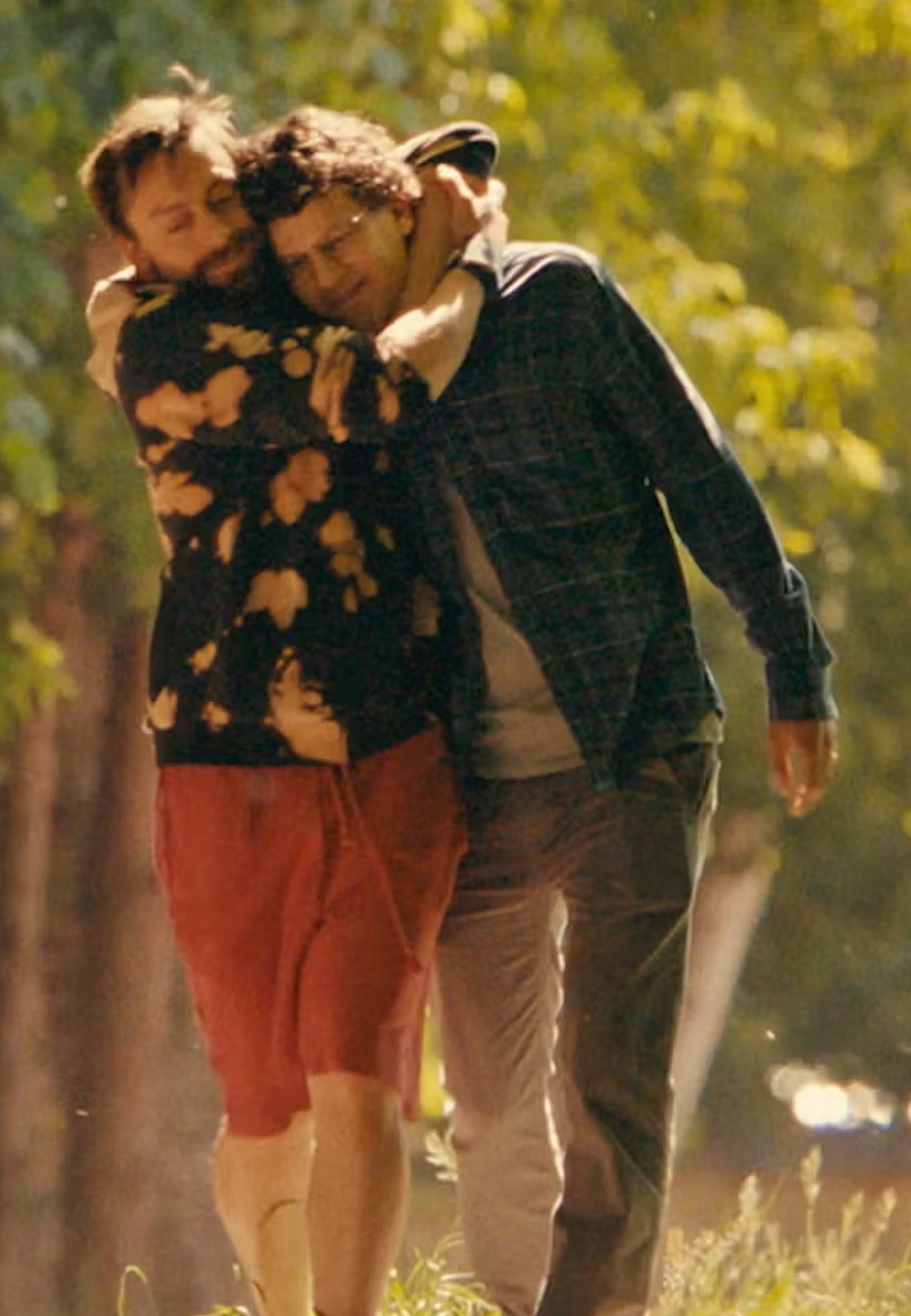
On paper, it sounds like a terrible idea: a comedy about chalk-and-cheese Jewish cousins on a tourist trip to a concentration camp. I’m sorry, what? But Jesse Eisenberg’s script successfully navigates the many potential pitfalls, and A Real Pain emerges as a thoughtful exploration of how we try to make sense of the horrors of recent history, expertly leavened by the mismatched buddy lols.

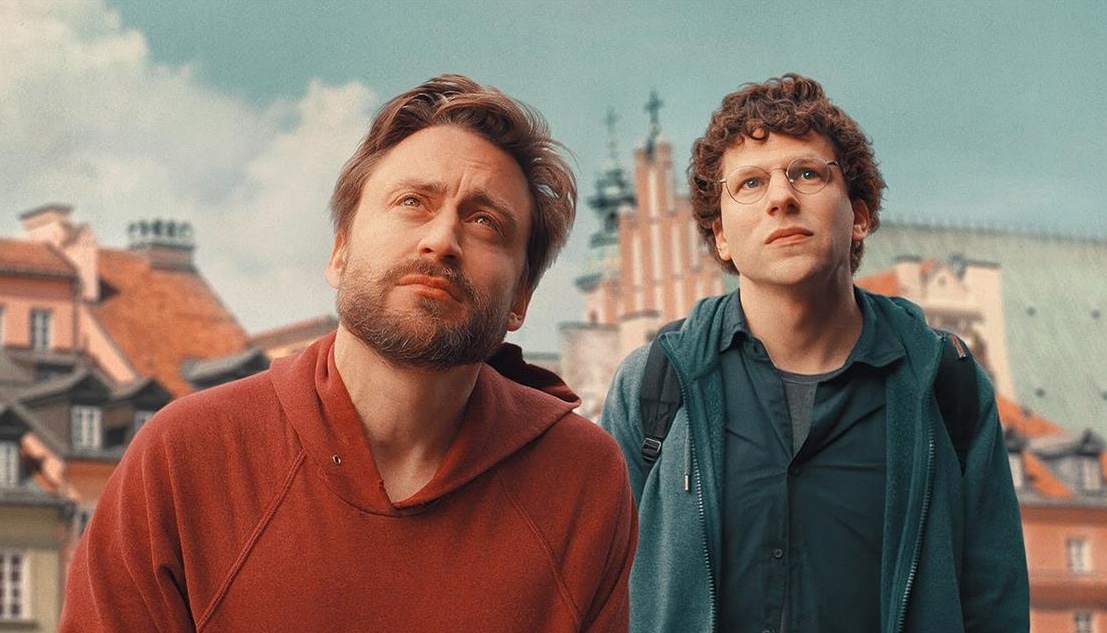
This is very much Eisenberg’s project: he also directs and co-stars as David, the uptight, neurotic half of the central pair. Kieran Culkin is Benji, the cousin he was inseparable from when they were young. Their backstory emerges through the dialogue: as they approach forty, we learn, David doesn’t want to hang out with Benji like he used to. He’s moved to NYC, where he has a wife, a child and a career to focus on. Benji, on the other hand, has yet to find his groove. Sure, he’s funny, charming and very popular, but he’s also living in his parents’ basement, depressed, without a steady job. Their paths rarely cross. But then their beloved Grandmother Dory dies, leaving money in her will for the two of them to travel to Poland, to see the house where she grew up and the camp that she survived. It feels like a canny final plan, to reunite her grandsons while also honouring the past.

It helps, of course, that Eisenberg and Culkin are both such strong actors, easily securing the audience’s sympathy. Culkin in particular shines here in the showier role, Benji’s vulnerability writ large, despite his devil-may-care attitude. Even as he’s selfishly appropriating the window seat – again – or disrupting a whole train carriage with a tantrum, it’s impossible not to feel protective of him, the carapace he’s constructed so obviously fragile. Eisenberg provides the comedic foil; he’s the helpless observer apologising for his cousin’s outbursts, blinking with embarrassment as Benji transgresses social mores.

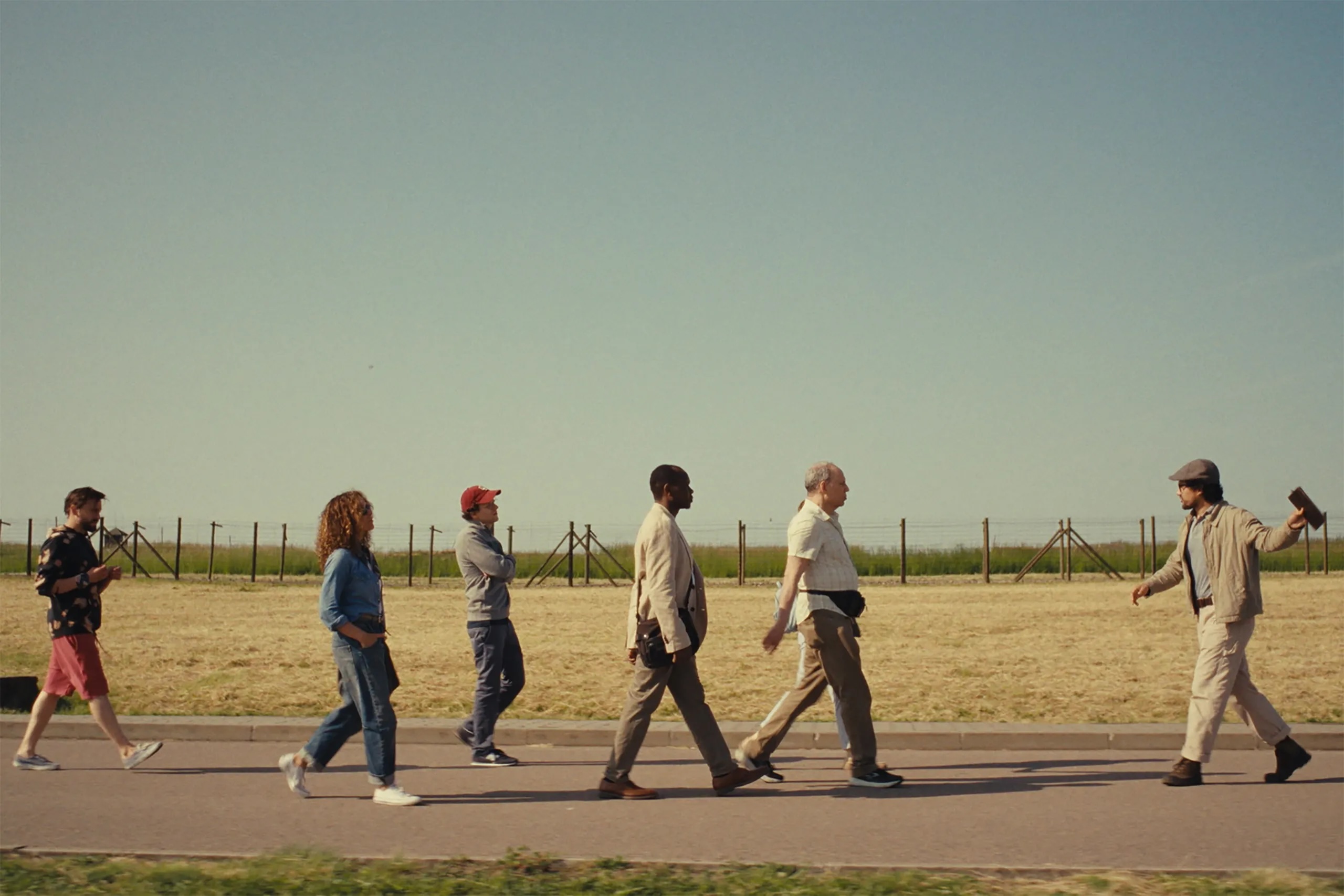
The supporting cast are also well-drawn, a convincing mix of characters, contentedly muddling along. British tour guide James (Will Sharpe) is an affable chap. He’s not Jewish but he is an Oxford graduate with a detailed knowledge of Polish history. The two solo travellers are Marcia (Jennifer Grey), a recently-divorced woman in her early sixties, and Eloge (Kurt Egyiawan), a survivor of the Rwandan genocide who has emigrated to the USA and converted to Judaism. Married couple Mark and Diane (Daniel Oreskes and Liza Sadovy) complete the group; like David and Benji, they’re visiting Lublin because it’s where their family comes from – and where many of them were killed.

The scenes in the Majdanek concentration camp are very moving. Eisenberg sensibly eschews any directorial flourishes here: there’s no music, no flashbacks, no fancy editing tricks. The bare walls speak for themselves, atrocities literally etched onto them in the blue stains left by poison gas. The tour group moves through in silence; their return bus journey passes quietly too, as they reflect on what they’ve seen – and what it means. Later, smoking a joint on the hotel roof, David points out three lights. “That’s the camp,” he says. “It’s so close” – a perfect example of the understated poignancy that makes the movie work so well.

A Real Pain is a clever film, a tight ninety minutes of carefully-structured storytelling, with never a dull moment. Eisenberg straddles the line between respect and irreverence, gently mocking people’s reactions without ever trivialising the Holocaust. It’s no mean feat to create such a heartwarming, thought-provoking tragicomedy.

4.4 stars

Susan Singfield

Saturday Night

11/01/25

Cineworld, Edinburgh

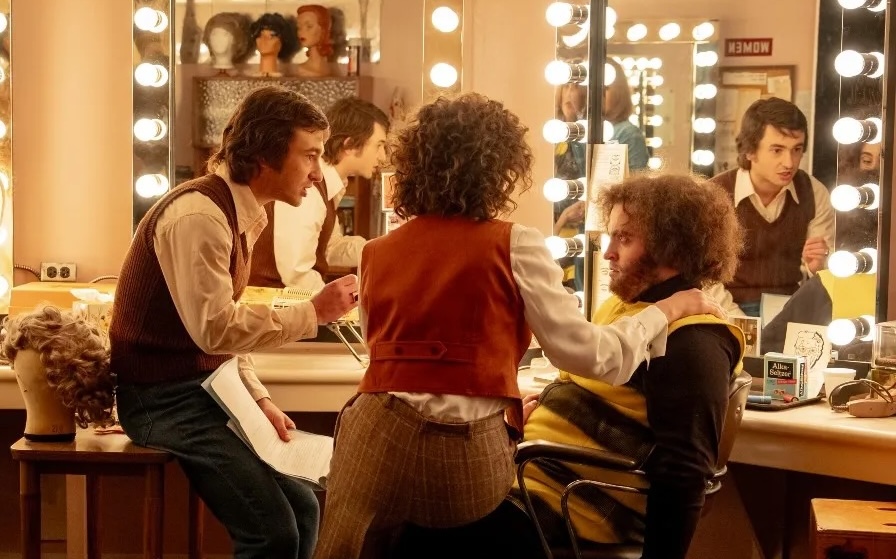
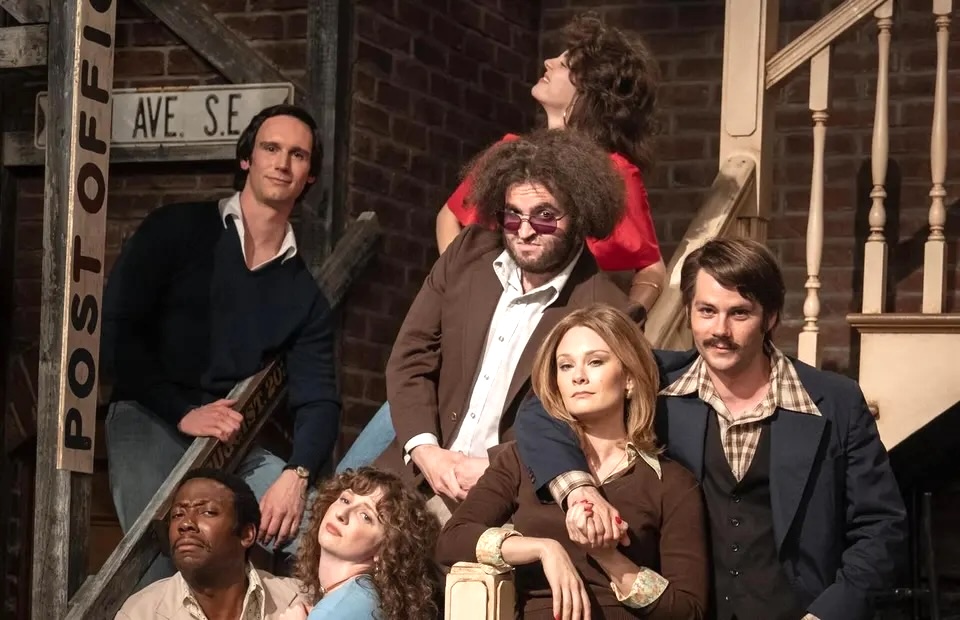
It’s Saturday night, so this Unlimited screening of er… Saturday Night feels entirely appropriate. Directed by Jason Reitman, who also co-wrote the screenplay with Gil Kenan, it tells the inside story of a turbulent midnight production at NBC studios, New York, on the 11th October 1975. Saturday Night Live is of course, still running, a major American institution, but Reitman’s film shows how close it came to never being transmitted in the first place.

Ambitious young TV producer, Lorne Michaels (Gabrielle LaBelle), his wife and lead writer, Rose Schuster (Rachel Sennot), and their understandably nervous co-producer, Dick Ebersol (Cooper Hoffman), find themselves trying to control an anarchic bunch of comedians and musicians. They include the assured front-runner, Chevy Chase (Cory Michael Smith), the ever-adaptable Dan Ackroyd (Dylan O’ Brian) and the doomed, drug-raddled John Belushi (Matt Wood), who hasn’t even managed to sign his contract.

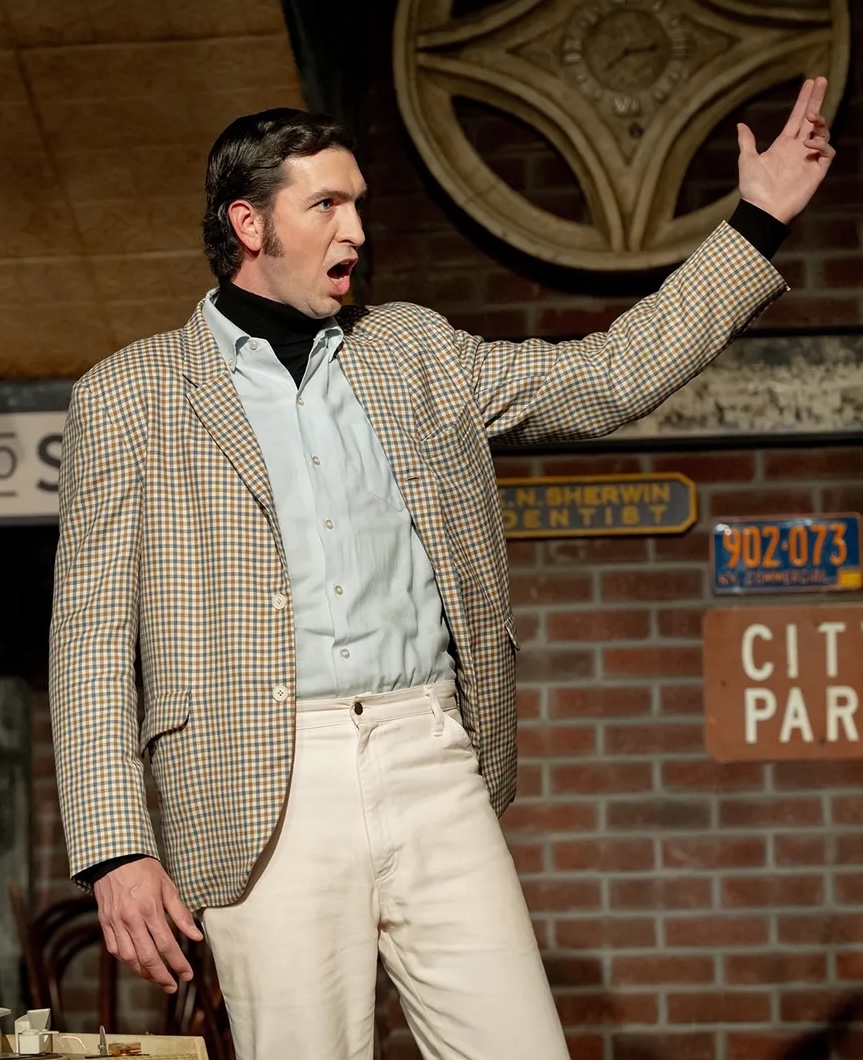
As Michaels wanders disconsolately around the studio, trying to instil some kind of order to the deranged proceedings, he’s uncomfortably aware of old hands gleefully anticipating a disaster of Titanic proportions. Sneering TV producer Dave Tebet (Willem Dafoe) and legendary presenter Milton Berle (JK Simmons) both offer scene-stealing cameos. A special nod should also go to Succession’s Nicholas Braun in the duel roles of Andy Kaufman and Jim Henson, the former weird and inexplicably funny, the latter dismayed and strangely puritanical about the ways in which his Muppet creations have been despoiled by their co stars.

There’s a terrific sense of urgency about Saturday Night. I’m alerted to the fact that time is ticking away from the opening scenes onwards and the various confrontations, problems and disasters that occur are initially well handled – but it’s hard to instil any sense of real jeopardy when the world knows that everything is going to turn out fine in the end. And, while that sense of propulsion works well at the beginning and end of the film, there’s a somewhat lumpen middle section that never seems entirely sure which direction to take.

American viewers will be invested in the story, but it doesn’t mean as much here in the UK where SNL isn’t as well-known – and audiences whose only connection to any of these stars is via the National Lampoon and Ghostbusters films may struggle to identify with it.

But that said, there’s plenty here to enjoy. I particularly relish Jon Batiste’s spirited impersonation of Billy Preston and Naomi McPherson’s turn as Janis Ian, singing At Seventeen. LaBelle’s performance as Michaels is also assured, pinning down the inner struggle between the man’s vulnerability and his soaring ambition.

This film won’t be for everyone, but for those who were enthusiastic cinema-goers in the 1970s, it’s fascinating to witness how many stellar (and sometimes spectacularly short-lived) acting careers were launched by what happened on that fateful Saturday Night.

3.6 stars

Philip Caveney

Here

08/01/25

Cineworld, Edinburgh

If a film deserves accolades for originality then Here definitely earns them. I’ve never seen anything quite like it. That said, it does feel very much like an experiment, with director Robert Zemeckis continuing the fascination with movie technology he’s been relentlessly pursuing since 2004’s The Polar Express. Not everything in the film quite comes off – but the parts that do are extraordinary.

Take the opening sequence for instance, where a fixed camera offers a changing view of a particular point on the compass and, through a series of portals, we are offered glimpses of the ever-changing landscape from the world’s inception and onwards across the unfolding centuries. The gimmick of the film – and there’s no better word to describe it – is that the camera never moves its position. Eventually, we see the woodland where it stands being cleared and, later, a house is constructed around it until it is enclosed in a room. Through the window there’s a view of a much grander house, which once belonged to the illegitimate son of Thomas Jefferson, but here, in the more modest home across the street, a series of middle-class families move in and play out scenes from their lives. The aforementioned portals are used to zip the viewer back and forth in time, allowing us to catch glimpses set in different eras.

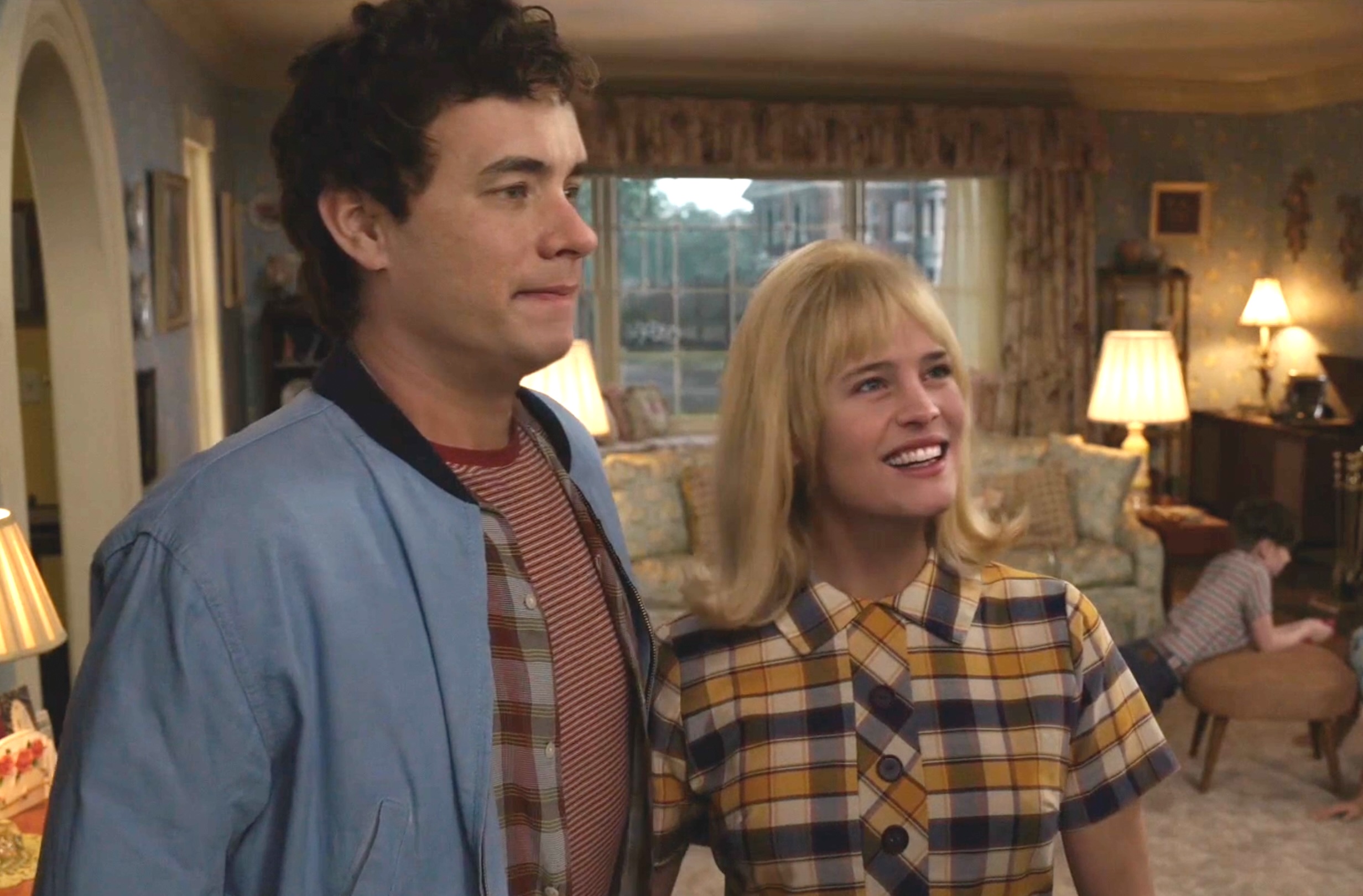
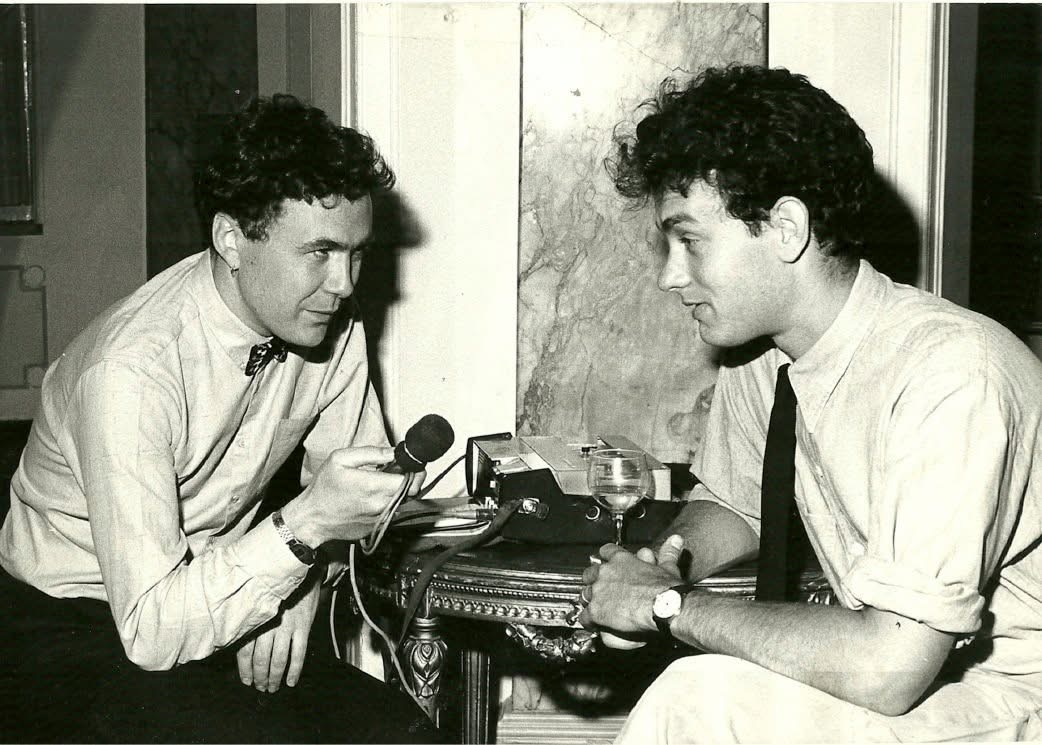
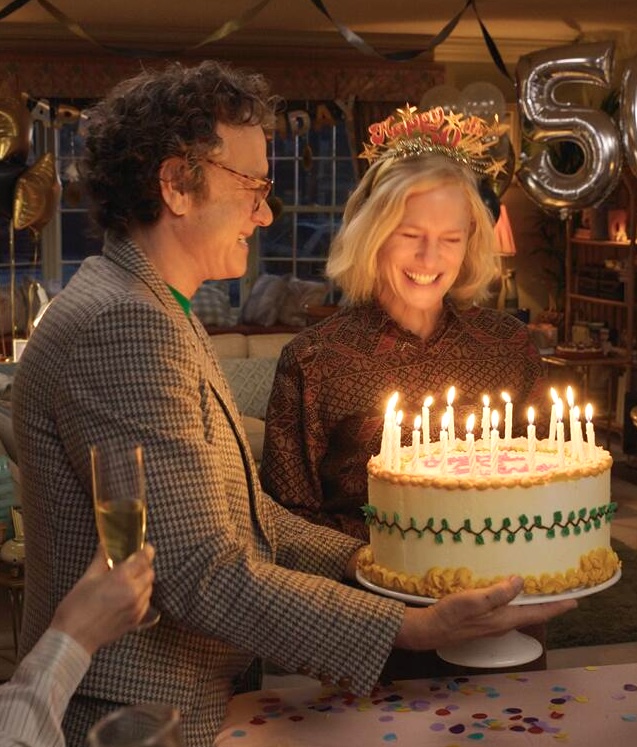
Al (Paul Bettany), who has recently returned from the Second World War, and his wife, Rose (Kelly Reilly), move into the house and start a family. One of their children is Richard, a frenetic, hyperactive sort, played by four different kids before transforming into Tom Hanks. The growing-up process encompasses cowboy hats, drum kits and eventually an obsession with the idea of becoming an artist. (Substitute the word ‘writer’ and I’m pretty much looking at my own youth.) With the use of sophisticated de-aging software, Hanks is exactly how I remember him in 1984 when, as a reporter for Piccadilly Radio, Manchester, I interviewed him for the film Splash. I make no apology for including that image here, because to my mind, this is the quality that Here (adapted by Eric Roth from a graphic novel by Richard McGuire) handles with considerable skill: the ability to transcend the limitations of time.

Richard introduces his parents to Margaret (Robin Wright) and, soon enough, she’s pregnant and Richard is beginning his own journey into adulthood, with all its joys, disappointments and trials. This central thread works well, but some of the other strands are less convincing. A narrative about a romance between a Native American brave and a young woman from his tribe feels too picture-book cute to be convincing – and I’d like to learn more about the Black family that moves in after Richard and Margaret have left the house. A scene where Devon Harris (Nicholas Pinnock) instructs his son Justin (Cache Vanderpuye) about what to do if his car is ever stopped by the police, hints at bigger themes that might have been more challenging than the invention of the La-Z-Boy armchair.

Here won’t be for everyone. The many strands that make up the narrative are occasionally somewhat confusing and that insistence on keeping the point of view so stubbornly fixed occasionally necessitates some unlikely seating arrangements in order to ensure that everybody remains in shot.

Still, I admire Zemeckis’s determination to keep pushing the boundaries of cinema and I think it’s fair to say that the man who gave us Back to the Future, Forrest Gump and Cast Away has earned the right to spend his time playing in the sand box. Here isn’t up there with his best work but it’s nonetheless an intriguing and highly original concept.

3.8 stars

Philip Caveney