Month: August 2023

Things Hidden Since the Foundation of the World

17/08/23

Traverse Theatre, Edinburgh

Every Fringe offers at least one production that takes hold of your perception and gives it a thorough kicking. Things Hidden Since the Foundation of the World fits happily – if not exactly comfortably – into that category. Going in, I’m not quite sure what to expect and, coming out, not entirely sure what I’ve just witnessed… but I’m definitely thinking about it. A lot.

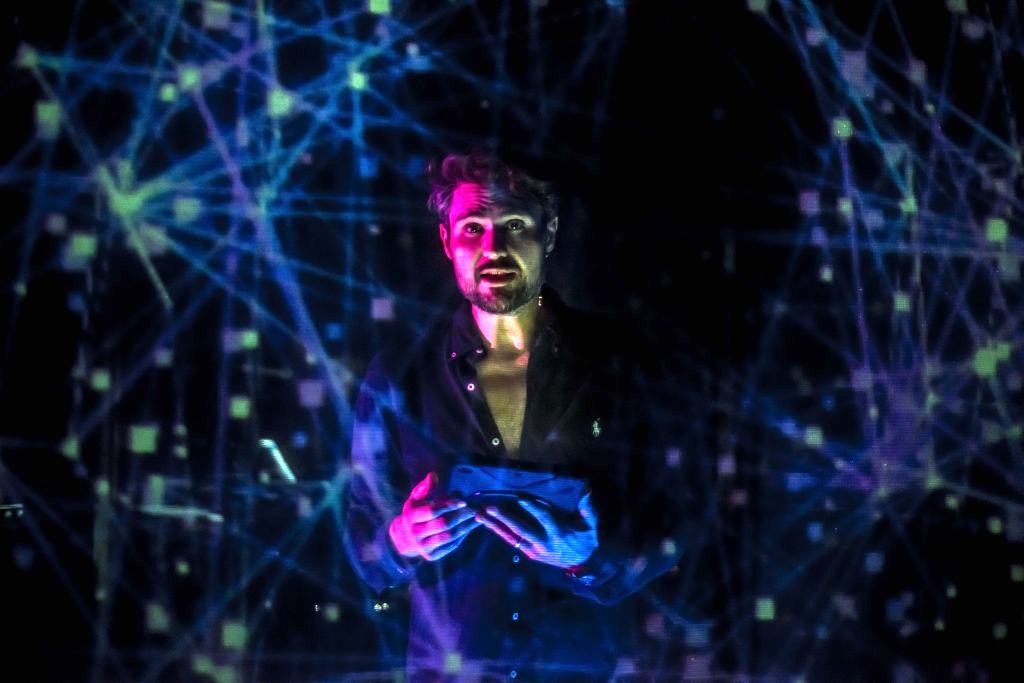
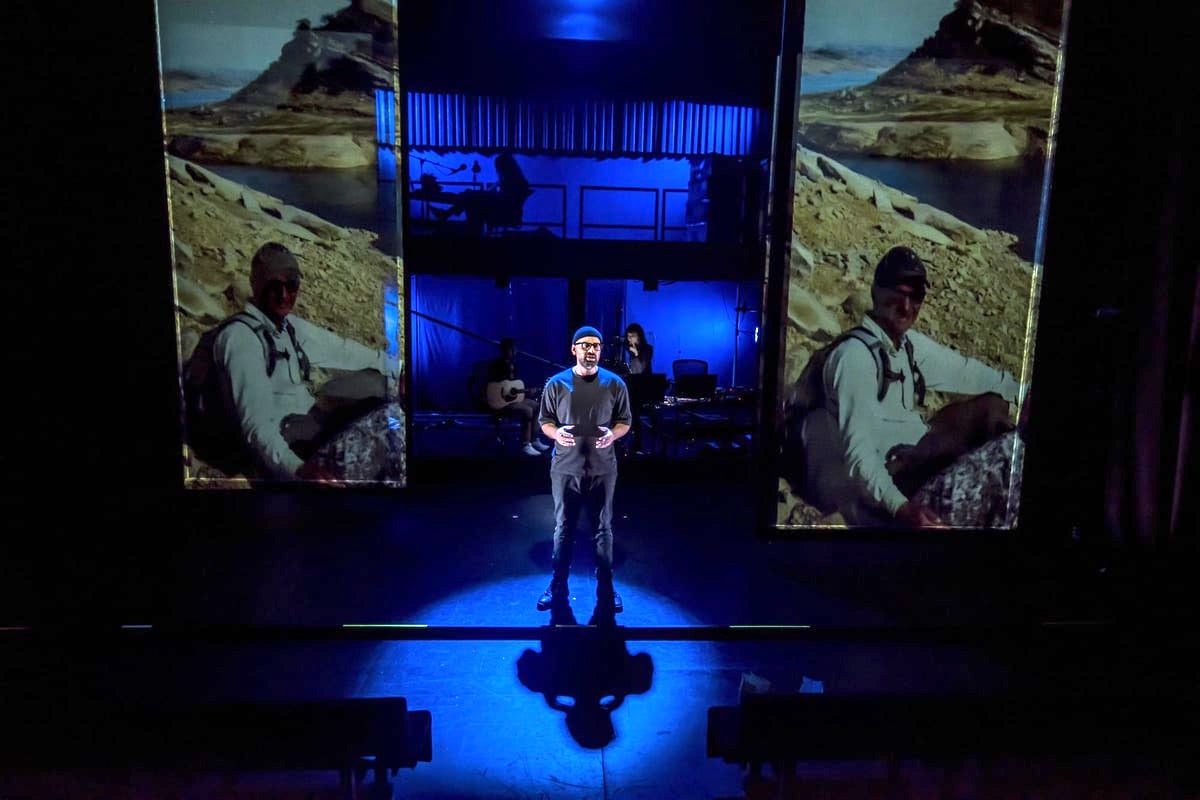
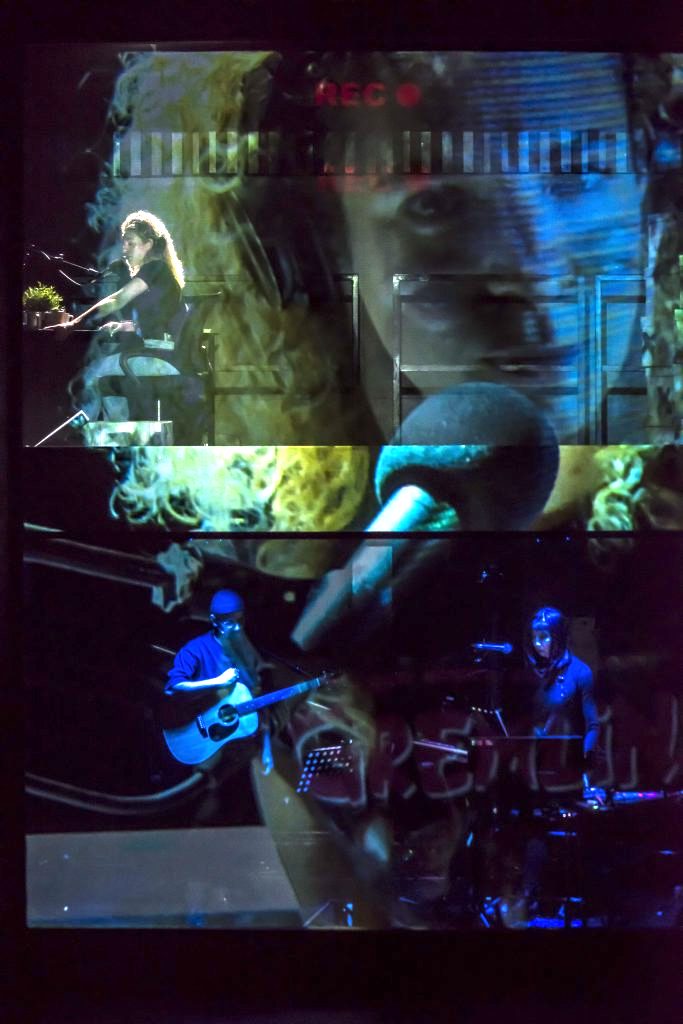
We begin with writer/director Javaad Alipoor walking out to deliver what I assume is a pre-show chat, but which actually turns out to be the beginning of the story. He tells us about the unreliability of Wikipedia searches, the way that everything in the world is subjective, open to different interpretations. He then mentions the unsolved murder of Iranian pop star, Fereydoun Farrokhzad at a flat in Berlin in 1992. Farrokhzad, we are told, was Iran’s answer to Tom Jones – but even that description is open to interpretation. As Alipoor talks, a dark grey wall behind him suddenly lights up with an image, a moustachioed man in a glittery jacket singing a pop song. Then, the walls slide aside and, projected onto a transparent screen, we see the image of another Iranian musician, King Raad (huge in Iran, unknown outside of it and now exiled to Canada). He talks about his own harrowing experiences, including the tragic death of his father.

Later, a compartment opens to reveal a room deeper within the set and we see that Raad is actually here in person, creating music with musician Mee-Lee Hay. The moment when he points out that now would be a propitious time to assassinate him is chilling.

The final piece falls into place as, up on a high platform, Asha Read hosts a podcast, asking questions about Farrokhzad’s murder, suggesting that perhaps the whole thing is a conspiracy, that the reasons for his death might be more complicated than we could possibly imagine. And as all these elements play out, the high-tech screens and various layers of the set begin to blossom into mind-blowing patterns, bursting with vivid colours, everything intermingling as Read’s questions become ever more complicated, ever more unfathomable.

The final sections are probably the closest I’ve ever come to experiencing an acid trip in the theatre. My head seems to be bursting with possibilities, my brain virtually turning itself inside out as it struggles to comprehend what’s happening. Actually, that makes the experience sound unpleasant, but I promise you it’s not. And I find myself falling back on that familiar cliché, that this production is like nothing I’ve ever seen before – but clichés exist for a reason. While I refuse to pretend that I know exactly what’s going on here, I’m happy to admit that I enjoy the cerebral workout it gives me.

If the Edinburgh Fringe is all about experimentation (and it really should be), then this intriguing and strangely compelling production has found its ideal home.

4.2 stars

Philip Caveney
Tony! (The Tony Blair Rock Opera)

17/08/23

Pleasance at EICC, Edinburgh

Having hot-footed it here from one political satire that doesn’t work, it’s gratifying to find one that actually does. The fact that the venue offers the most comfortable seating on the fringe is a wonderful bonus. Tony! (The Tony Blair Rock Opera) is bold and propulsive and packed with clever observations. As well as making me laugh out loud, it also makes me think

As one of the people who voted Tony Blair into power – and voted for him twice again – even after the debacle of the ‘weapons of mass destruction’ – it feels like the right time to reappraise the story of the man who changed the Labour Party, who made them electable for the first time in just about forever.

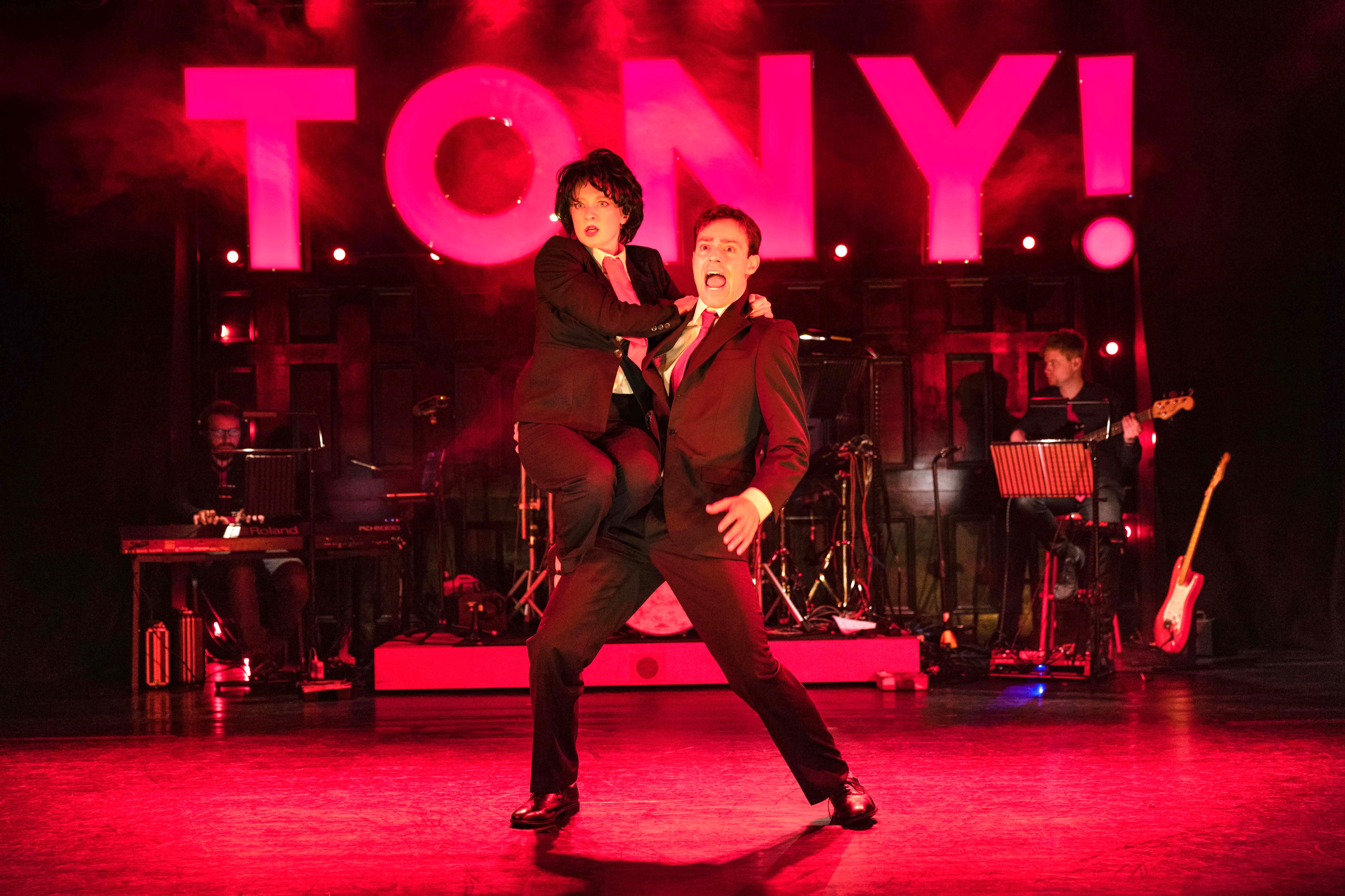
With lyrics by Harry Hill and music by Steve Brown, Tony! begins at the very beginning as our hero (Jack Whittle) emerges fully formed from his mother’s womb, complete with that winning smile and the belief that the world is his oyster. Within minutes, he’s grown up, been given his first electric guitar, grown his hair long and gone to University. Pretty soon, he’s fronting rock band Ugly Rumours and knocking out some funky riffs with moderate success. His greatest ambition at this time? To meet Mick Jaggers (sic). But instead he meets Cherie Booth (Tori Burgess), who introduces him to the world of politics and… well, you know the rest.

Or do you? With three musicians blasting out a series of catchy rock songs, the production hammers merrily along, introducing major political figures as it goes, with the ensemble cast given plenty of individual opportunities to shine. Howard Samuels impresses as a wonderfully creepy Peter Mandelson (with a sideline in making balloon animals); Phil Sealy is a (perhaps unfairly) buffoonish Gordon Brown; and Martin Johnston’s Neil Kinnock feels perfectly pitched.

Watch out too for Emma Jay Thomas as Princess Diana, who nails ‘the people’s Princess’ with aplomb. Through it all, Whittle is the consummate front man, singing, dancing and grinning like he’s breakfasted on amphetamines.

This is an object lesson in how to satirise a political figure, playing for laughs but hinting at so much more. At the fringe, you go past the sixty-minute mark at your peril and Tony! goes to ninety without ever losing its impetus. I exit the theatre with an ear worm, happily singing the chorus to the climactic number, even though it prominently features the word ‘assholes.’ 

Apologies to the people at the bus stop. I wasn’t referring to you, honest.

4.6 stars

Philip Caveney

Dom: the Play

17/08/23

Assembly Rooms (Ballroom), Edinburgh

The first thing to say about Dom: The Play is that it’s not what I’m expecting. Unsurprisingly, at the world’s largest arts festival, the vibe is mostly liberal and self-aware. Like its namesake, Dom: The Play is neither of these things.

This isn’t necessarily a problem – I’m all for challenging my own preconceptions – but the play just doesn’t really work for me. It’s not incisive or satirical; instead, it’s a seventy-five minute defence of Cummings, devoid of any critical analysis of his time in government. It’s easy to understand how people believed the rumours, cunningly circulated by playwright Lloyd Evans, that Cummings actually wrote the script. The closest the play comes to any kind of criticism is the acknowledgement that he didn’t actually manage to achieve what he set out to do.

Although the publicity material promises to reveal the truth about what really happened at Barnard Castle, it doesn’t: he’s never brought to task. In reality, Dom simply dismisses it in one line: “I didn’t break the law.” Surely, even if Cummings the character can’t see his own flaws, the play ought to expose them? Here he’s presented exactly as he seems to see himself: as a visionary hampered only by other people’s mediocrity.

Dom: The Play is an oddity in other ways too. It’s tonally uneven: the bad-wig pantomime buffoonery of Tim Hudson’s Boris sits uneasily alongside the long TED talk-style sections, where Cummings (a very convincing Chris Porter) is given space to expound on his ideas, while the sketches depicting Nicola Sturgeon, Michael Gove, civil servants and Guardian readers are very broad and rarely succeed in skewering their targets.

It’s all a bit icky. There’s something very misogynistic in the way an offstage Carrie Johnson is portrayed, as if she’s Eve or Lady Macbeth, responsible for her husband’s downfall, and there are some revoltingly classist jibes too, e.g. a line about Angela Rayner, which might well be a verbatim quote, but is presented here not as something awful that should never have been said, but as a funny joke, and one we’re invited to laugh at.

I leave disappointed. It feels as though this play is meant to rehabilitate Dom in the eyes of the public, but in truth it feels as smug and tone-deaf as the man himself. I’m angry all over again – about his boorishness and self-importance, and about the damage he wrought.

2.6 stars

Susan Singfield

Strategic Love Play

16/08/23

Summerhall (Roundabout), Edinburgh

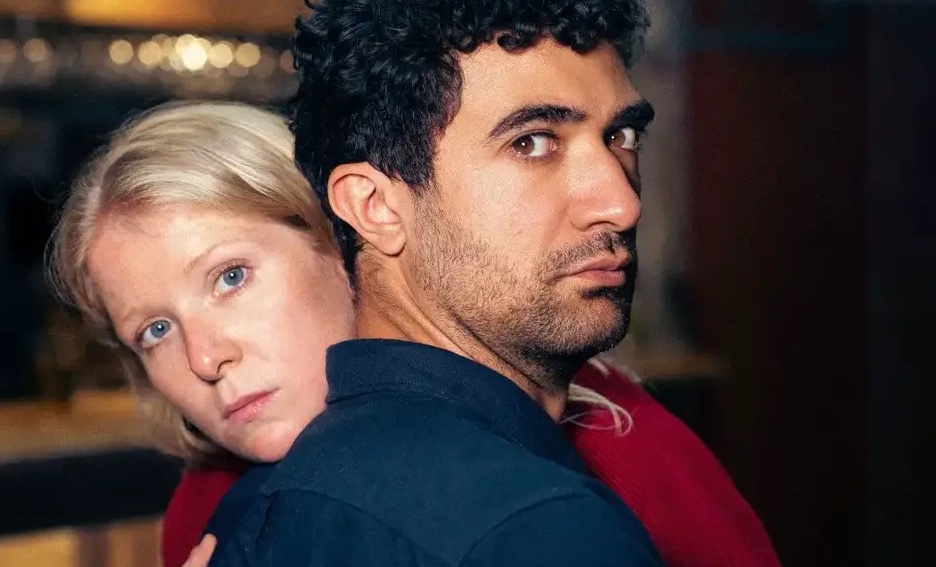
So, they have both swiped right on their phones and here they are, meeting up for that all-important first date. Him (Archie Backhouse) is finally getting over a failed relationship and is ready to look for someone new. Her (Letty Thomas) has a different agenda entirely. She wants to cut the crap, avoid all the usual platitudes, go straight for the jugular. And he isn’t quite ready for the onslaught of home truths he’s about to be bombarded with.

Strategic Love Play, written by Miriam Battye and directed by Katie Posner, is a spare and cynical piece that keeps heading in unexpected directions. No sooner do I think I have the measure of it, then it veers off again and the result is as intriguing as it is unsettling. I enjoy it most in its opening stretches when Her is letting rip, shredding all the familiar notions of romance and gleefully tossing them into the wastebasket. It’s cynical, abrasive and very funny.

But as her demands and expectations develop, the more outrageous and off-the-wall the narrative becomes, a bleak and cynical philosophy about the nature of relationships and the scant possibilities of love and life in the age of Tinder.

Both actors submit pitch-perfect performances and I love Rhys Jarman’s simple but effective set design, the tight circle that spins around to show us a different view of the two characters: the merry-go-round of human relationships; the endless quest to find the perfect partner as the passengers spin around and around, just to end up back where they began.

And I love the surprise uses to which an overhead lamp can be put.

I don’t want to say too much about where this ends up – but the conclusion catches me by surprise as much as it catches Him. Despite all the laughs, this is ultimately a brutal and misanthropic play, with a jaundiced view of human relationships.

But, as I leave Roundabout, I make an important decision: I’m going to borrow that little trick with a packet of crisps.

3.8 stars

Philip Caveney

Tituba

16/08/23

C Venues Aurora (Main House), Lauriston Street, Edinburgh

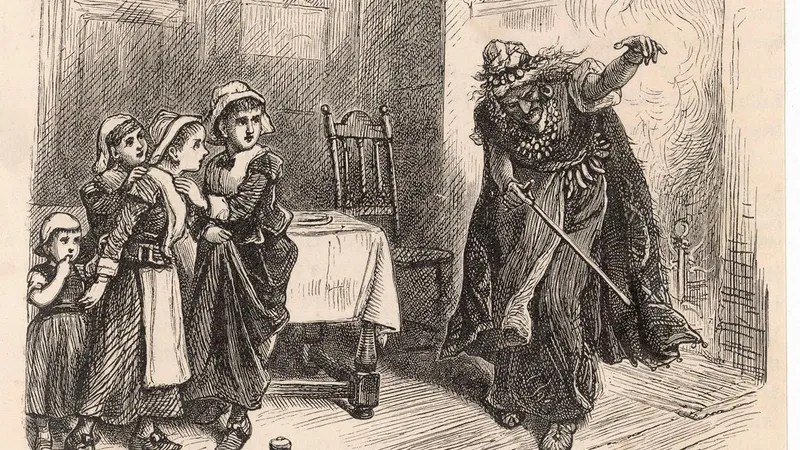
Written as a correction to Arthur Miller’s The Crucible, which relegates Tituba to the sidelines, Winsome Pinnock’s 2016 monologue reinstates her as a central figure, a key player in the Salem Witch Trials. Whereas Miller shows her practising witchcraft with the town’s white children, encouraging them to dance naked and sacrifice chickens, and then ignores her, Pinnock returns to the transcripts of the court cases, where Tituba was the first to confess, the first to name others and thus take her revenge on those who had enslaved her. Of course The Crucible is a wonderful play, but it’s a shame Miller silences Tituba as he does, because her story is really interesting, as well as important.

In this lyrical monologue, Pinnock explores Tituba’s backstory, as well as her motivation for denouncing the townspeople in Salem. I learn for the first time that she’s Caribbean, not African, and see how she has more reason than anyone else in the play to grasp this opportunity to seize power. Almost everyone in Salem is oppressed to some extent: the church exerts a strong grip, demanding adherence to its punitive codes. But there’s a clear hierarchy within this: first the white men, then the white women and then the white children. At the bottom of the pile are the Black women and children, the latter sold and sent away, the former worked to the bone and whipped on a whim. No wonder Tituba speaks out.

In this Africanus World production for C Venues, Faith Martin Abongo delivers an intense, compelling performance, accentuating the poetic rhythm of Pinnock’s words. This Tituba is riveting, illuminating; I learn a lot about her world. The section where she is beaten is hard to watch – as it should be – and it’s to Abongo’s credit that I can almost feel Samuel Parris’s cruel presence.

If there’s a criticism here, it’s to do with the staging. This is an intimate play, but the Main Hall is vast and cavernous and some of the words are hard to hear. I think the piece would work better if it were brought forward, closer to the audience, and if – instead of exiting between each scene, only to return moments later having made a simple costume change – Abongo were to remain onstage throughout.

All in all, this is a beautifully-crafted piece of writing, and Abongo does it justice.

3 stars

Susan Singfield

Raising Kane

16/08/23

Assembly George Square Studios (Studio Four), Edinburgh

I’ve been a fan of Orson Welles ever since I first viewed Citizen Kane at my art school film society. While the term ‘genius’ is probably over-used in the cinema industry, in this man’s case it always felt like a good fit. He was only twenty-six years old when he directed Kane, his movie debut, a film that would figure on ‘best of’ lists for decades to come.

But the project was doomed from the word go. Media mogul William Randolph Hearst decided that the film was a thinly-veiled account of his own life and went out of his way to ensure that Welles’ career would never be allowed to develop, reducing a wildly talented man to the ignominy of having to hunt around for the funds to allow him to make more films. But that maverick genius still shone through, despite the micro-budgets he was obliged to work with.

So it is perhaps inevitable that I end up visiting David Shopland’s one-man show, looking to see if I can learn anything more about the man. Shopland enters and the immediate effect is startling. Not only does he bear more than a passing resemblance to his subject, but he’s chosen to transform himself into monochrome, with the application of makeup and an astute choice of wardrobe. Shopland takes a seat and tells us about Welles’s childhood, his interest in theatre from an early age, and the widespread panic caused in America by his groundbreaking radio adaptation of War of the Worlds.

Occasionally, some of his utterances strike an odd note – the details don’t quite fit with the actual history – but don’t worry, all will be explained later. The monologue itself is well written and the voice convinces, though as the performance stretches out, I start to feel it’s all a little bit one-note, that this piece would benefit from an occasional change of pace, some sections that show us what happened, rather than telling us about it. But that, ironically, would require a bigger budget…

It’s not till we’re heading into the final furlong, that a change most definitely does occur – but it would be a spoiler to say anything more on that subject. Suffice to say, those with an interest in Orson Welles – and those who would like to know more about his story – should make a beeline for Studio Four, where David Shopland and Orson Welles both await your presence.

3 stars

Philip Caveney

The Umbilical Brothers: The Distraction

15/08/23

Assembly Roxy, Edinburgh

Although this is (almost) our first experience of The Umbilical Brothers, they’ve been around for a long time, successfully plying their madcap blend of mime and soundscapes to appreciative audiences since the mid-90s.

We caught a glimpse of the sort of show they’re best known for at the Assembly Gala Launch, where David Collins performed a series of ever-more complex and surreal actions, accompanied by Shane Dundas’s weird and wonderful sound effects.

The Distraction is something else entirely though, a departure from their established style – although still just as silly and inventive. This show is all about the tech, specifically green screens and multiple cameras, and I’ve never seen anything quite like it.

You can almost hear them saying, “That’d be fun!” and then adding a series of ‘what-ifs’ until a show’s worth of shenanigans has been established.

Even while we’re waiting for the sell-out audience to file in, we get a sense of how cheery it’s going to be, as a series of groan-worthy jokes is displayed on the big screen that dominates the stage. It’s a canny move, setting the tone for the next hour.

There are some tech glitches in the first ten minutes, and it’s hard to tell if they’re real or part of the act. If the former, no matter – the delay is entertaining in itself. If, as I suspect, the latter is true, it’s a neat move, instilling a sense of jeopardy, and reminding the audience to be impressed by how much computer wizardry is being used.

Over the next sixty minutes, the duo mine the possibilities of live green-screen action, taking us from outer space to the depths of the ocean, via TV sports (played with babies – don’t ask), a guest appearance from Steve Jobs and more than one exploding head. There is audience participation – but not as you know it. And there are lots of dolls. If this all sounds like an amorphous mass of nonsense, then that’s exactly what it is – but brilliantly so.

I defy anyone to watch The Distraction without laughing all the way through.

4.5 stars

Susan Singfield

Casting the Runes

15/08/23

Pleasance Courtyard (Above), Edinburgh

M R James’s short story Casting The Runes is a classic British chiller, and one that has been adapted for stage many times (and even into a film in Jacques Tourneur’s 1953 Night of the Demon). Theatre company Box Tale Soup have taken up the gauntlet and present us with this slick and brilliantly-designed production, which utilises a range of cleverly-constructed props and some fabulous puppetry, all created by the central duo, Noel Byrne and Antonia Christophers.

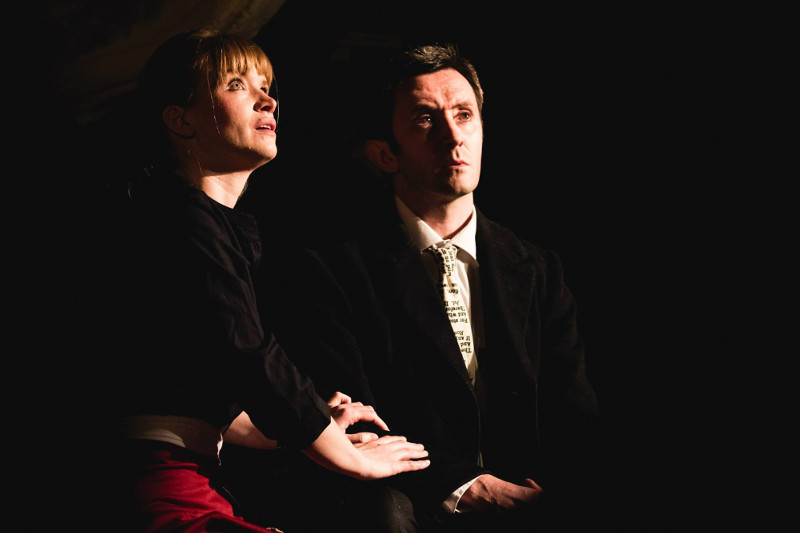
Edward Dunning (Byrne) thinks himself an expert on the supernatural – or rather, he has devoted his life to debunking it at every opportunity. So of course, he has repeatedly ignored the approaches of a certain Mr Karswell, who is eager for Dunning to have a look at his latest opus, a book about witchcraft. But then Dunning is approached by Rebecca Harrington (Christophers), sister of the literary critic, John Harrington, who was reckless enough to give Karswell’s previous literary efforts a bad review – only to meet with a mysterious and horrible death shortly afterwards.

When Dunning begins to receive some very odd items in the post and then an eerie book is handed to him by Karswell himself, he begins to realise that something is amiss – and that he is in serious danger of suffering the same fate as Harrington…

This is an ingeniously-designed production, where even the scene transitions are meticulous and intriguing enough to become an integral part of the show. The costumes, the props and the set are all treated with the same attention to detail, embellished with little flourishes that echo the runic theme.

It could be argued that there may actually be a bit too much focus on the transitions here, especially when some of the scenes are so brief – and that the script (much like the original story, published in 1911) does an awful lot of telling and not enough showing. But Byrne, Christophers and their bizarre puppet co-stars all submit sterling performances, while director Adam Lensing does an impressive job of racking up the steadily-mounting air of apprehension.

I’m perhaps a little too familiar with the story for my own good and am therefore denied the wonderful twist at the end, but this is an assured production from a talented and very idiosyncratic company. Judging by the sold-out house and the enthusiastic applause, the rest of the audience agrees with me.

4.2 stars

Philip Caveney
Blue

14/08/23

Assembly George Square (The Box), Edinburgh

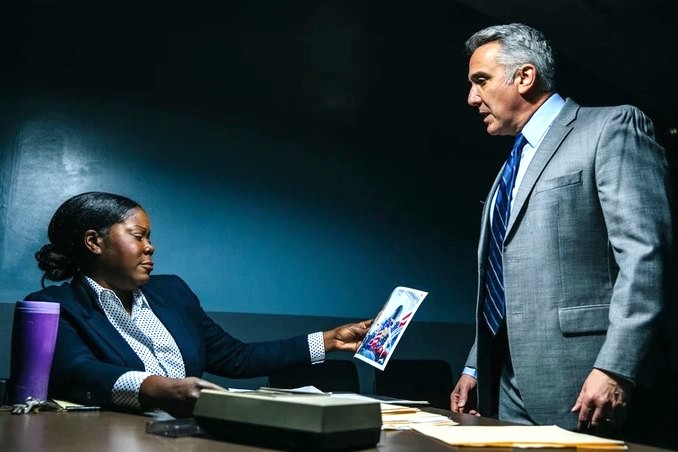
Blue by June Carryl is an intense two-hander, focusing on the aftermath of a police shooting.

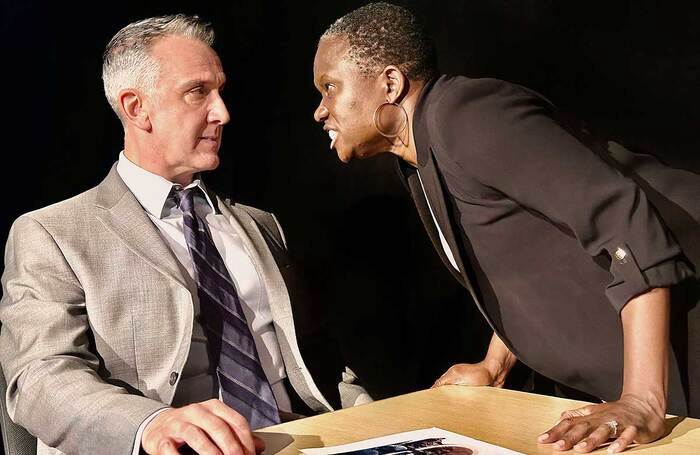
Sully Boyd (John Colella), sorry, Sergeant Sully Boyd, as he is quick to remind us, is used to the Police Department’s internal discipline procedure. He’s had complaints levied against him before. Being interviewed by a fellow officer is just a formality, isn’t it? And anyway, this time the investigator is Rhonda Parker (Carryl), an old family friend. Sully’s known Rhonda since she was a kid; he was pals with her dad; heck, her husband used to be his partner, before he quit the force.

But something is different. For starters, this ‘mistake’ is much, much worse than the others. He’s shot and killed a Black motorist, and there’s no evidence that the guy did anything wrong. There is evidence, however, of Sully’s mounting racism, his conviction that something is being stolen from him, from all white men. As the aphorism goes, “When you’re accustomed to privilege, equality feels like oppression.”

Sully can reminisce about the good old days as much as he likes, but his true feelings have been brutally exposed, and another Black man has paid the price. African-American Rhonda isn’t about to let him off the hook…

Post-George Floyd, there has been a sea-change: first the groundswell of the Black Lives Matter movement and then pushback from those who think that, if Black lives matter, it means that white lives don’t. Blue is a blistering illustration of what this looks like in practice, of how a police force that is supposed to serve and protect us all equally is incapable of doing so, because its vision of ‘us’ is rooted in white supremacy.

It is to both Colella’s credit as an actor and Carryl’s as a writer that Sully does not come across as a two-dimensional baddy. He clearly sees himself as a decent guy, someone who’s put in his time serving his country, and just doesn’t understand why things have to change. He likes his position of privilege, even if he won’t acknowledge it.

However, it’s Carryl’s emotive performance that brings this important two-hander to its powerful and devastating conclusion.

4.6 stars

Susan SIngfield

Bangers

14/08/23

Roundabout at Summerhall, Edinburgh

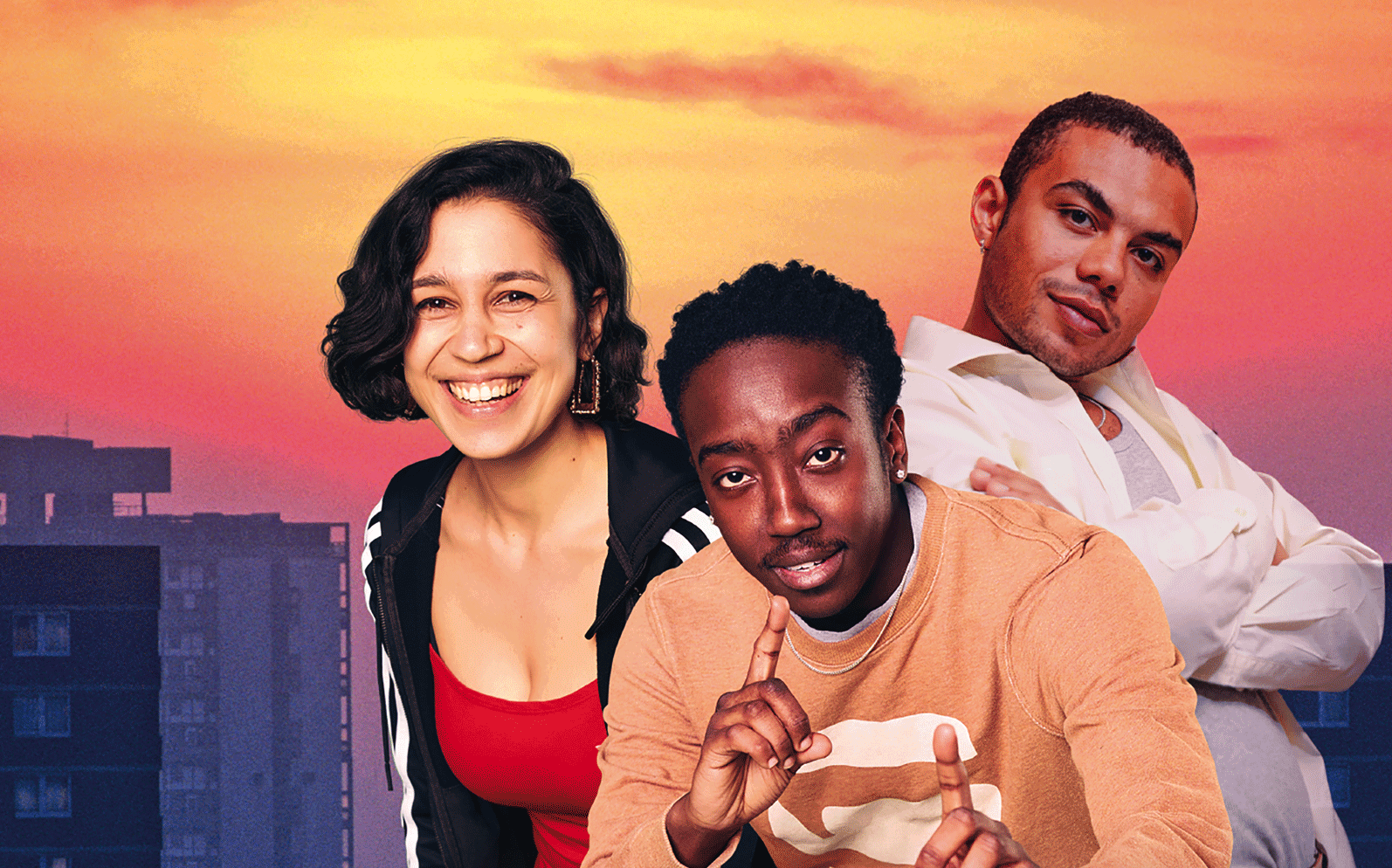
Bangers is a tale told in rhyme, rap and R&B, a propulsive slice of gig theatre that feels as much like a party night as a performance. Set somewhere in the city of London, it’s the story of two unconnected characters, Aria (Danusia Samal – who wrote this) and Cleff (Darragh Hand), both of whom are going though rocky patches in their lives.

Cleff is coming to terms with the recent death of his father and struggling to decide whether to pursue his musical ambitions or, to please his Mum, take the safer route of passing exams and going to college. Aria is still haunted by a crush she had years ago, on the teacher who first mentored her and inspired her to perform. When Cleff and Aria bump into each other in a nightclub, it’s clear from the outset that they’re capable of making sweet music together, if only they can find a clear path through the debris of their respective issues.

The performance is presided over (you might more accurately say refereed by) an acerbic house DJ (Duramaney Kamba), who often intervenes when Aria and Cleff squabble and who employs a whole range of sound motifs to keep them in check. There’s a genuine good-time vibe to this show and Roundabout is packed to the rafters with cheering, clapping onlookers.

The story is told through ten different tracks. Samal and Hand take on several different personae as the story unfolds, but there are no real visual clues to help me spot when there’s been a change – which makes things a bit confusing at times. And, while I believe in Cleff’s story arc, Aria’s stretches my credulity. Could somebody really be hung up for so long over something so slight?

A late plot twist is probably meant to come as a big surprise, but I’m sure I’m not the only one who can see it coming.

Nonetheless, it’s hard to resist the sheer exuberance of the performances and the overall mood is so celebratory, I find myself compelled to go with the flow. By the show’s conclusion, I’m up on my feet with the rest of the crowd, urging the three performers on to their final joyful song.

4 stars

Philip Caveney