Month: April 2023

Wish You Were Dead

04/04/23

Festival Theatre, Edinburgh

Even hardworking police officers deserve a holiday now and then, which is why Inspector Roy Grace (George Rainsford), his wife, Cleo (Giovanna Fletcher), and their baby son, Noah, are visiting a remote château south of Paris. They’ve brought their resourceful American friend, Kaitlynn (Gemma Stryan), with them to act as chief babyminder. But a combination of bad weather conditions and terrible traffic means that they arrive at their destination far later than scheduled. They’ve been expecting to meet up with Kaitlynn’s boyfriend, Jack, but there seems to be no sign of him – and the place they’ve chosen as their stopover really isn’t what they were expecting. For one thing it’s a chambre d’hôte (a kind of glorified Airbnb) and, what’s more, there’s something very odd going on here…

This sixth stage adaptation of Peter James’ successful Inspector Grace crime series began life as a novella, inspired by a holiday from hell that James and his real life wife endured back in the day. It opens like one of those Bloodbath in the House of Death horror spoofs that we’re all so familiar with. It’s a dark and stormy night; there’s a creepy looking interior complete with a suit of armour; there are baleful paintings on every wall and (quelle horreur!) no internet reception! But any laughter generated here is entirely unintentional. The would-be holidaymakers keep stumbling across ominous clues and, as the plot slowly unravels, a tale of deception and cold revenge is gradually revealed.

But there are issues: too much of the dialogue doubles as exposition and too much of that dialogue is delivered in a declamatory style – while the presence of a swaggering bad guy with an old axe to grind (though decently played by Clive Mantle) is a familiar device I’ve seen too often for comfort.

As events steadily mount to a crescendo, complete with artlessly telegraphed ‘twists’ and decidedly unlikely decisions on the part of the villains of the story, I feel my patience wearing perilously thin. Michael Holt’s set design is impressive and deserves a better tale than the one that’s offered here. The ‘upstairs room’, glimpsed through a gauze screen, is a nice touch – though I’m pretty sure it was used in the previous James adaptation, Looking Good Dead.

In the end, I decide that this production is aimed at avid Peter James fans (of whom there are many) but, if I’m entirely honest, it’s really not for me.

2.5 stars

Philip Caveney

The Spark

04/04/23

Traverse Theatre, Edinburgh

It’s hard to believe it’s taken until now – the 2020s – for the term ‘perimenopause’ to enter popular discourse, although, ironically, my computer has just underlined it in red, signalling an unknown word – so maybe we’ve still got a way to go. Nevertheless, we’re moving inexorably away from hushed murmurings about ‘the change’ and oblique references to ‘hot flushes’, and instead naming all of the physical and mental symptoms of this life-altering process. It turns out it’s not just your periods petering to a halt. No such luck. Instead it’s some or all of the following: joint pain, exhaustion, menstrual cramps, decreased (or increased) libido, mood swings, anger, vaginal dryness, brain fog… it’s quite the gut punch. Almost literally.

In The Spark, playwright Kathy McKean explores the impact of the perimenopause on a politician. Robin (the brilliant Nicole Cooper) is struggling in a system that seems designed to constrain her. And whereas, in her younger years, she might have bitten her lip and done what needed to be done in order to get ahead, she’s at ‘that age’ now, and the fuck-it factor has set in. No, she won’t stand by while a group of men harass a young girl at a bus stop. No, she won’t deliver the anodyne presentation her speech-writer, James (Johnny Panchaud), has concocted – a bowdlerised version of her own from-the-heart first draft. No, she won’t accept that she’s powerless to affect change. Because otherwise, what’s it all for?

Directed by Gordon Barr, the three actors effortlessly illuminate the chaos inside Robin’s head, as her adversarial discussions with both James and her long-suffering GP, Maggie (Beth Marshall), build to a cacophony. Maggie’s got enough problems of her own – and she blames Robin for some of them. After all, Robin was, until recently, the minister for health. She knows how over-worked the nation’s doctors are; how can she possibly think Maggie has time to deal with what seems on the surface like a pretty bog-standard set of symptoms? Except that Robin’s menopausal heat seems to manifesting itself outside her body, and who knows where that will end…

The writing here is sharp and the delivery fast-paced and engaging. The Spark seems like a fitting finale to what has been a particularly strong season of A Play, a Pie and a Pint. It’s not perfect – it’s a simple idea that builds well at first, but doesn’t deliver the shocking crescendo it perhaps should, and maybe takes aim at the wrong target (I can think of many institutions more deserving of a middle-aged woman’s ire than the parliament at Holyrood). But it’s good to see this subject aired, and in such a witty, thought-provoking way.

4 stars

Susan Singfield

The Night of the 12th (La Nuit du 12)

02/04/23

Cameo Cinema, Edinburgh

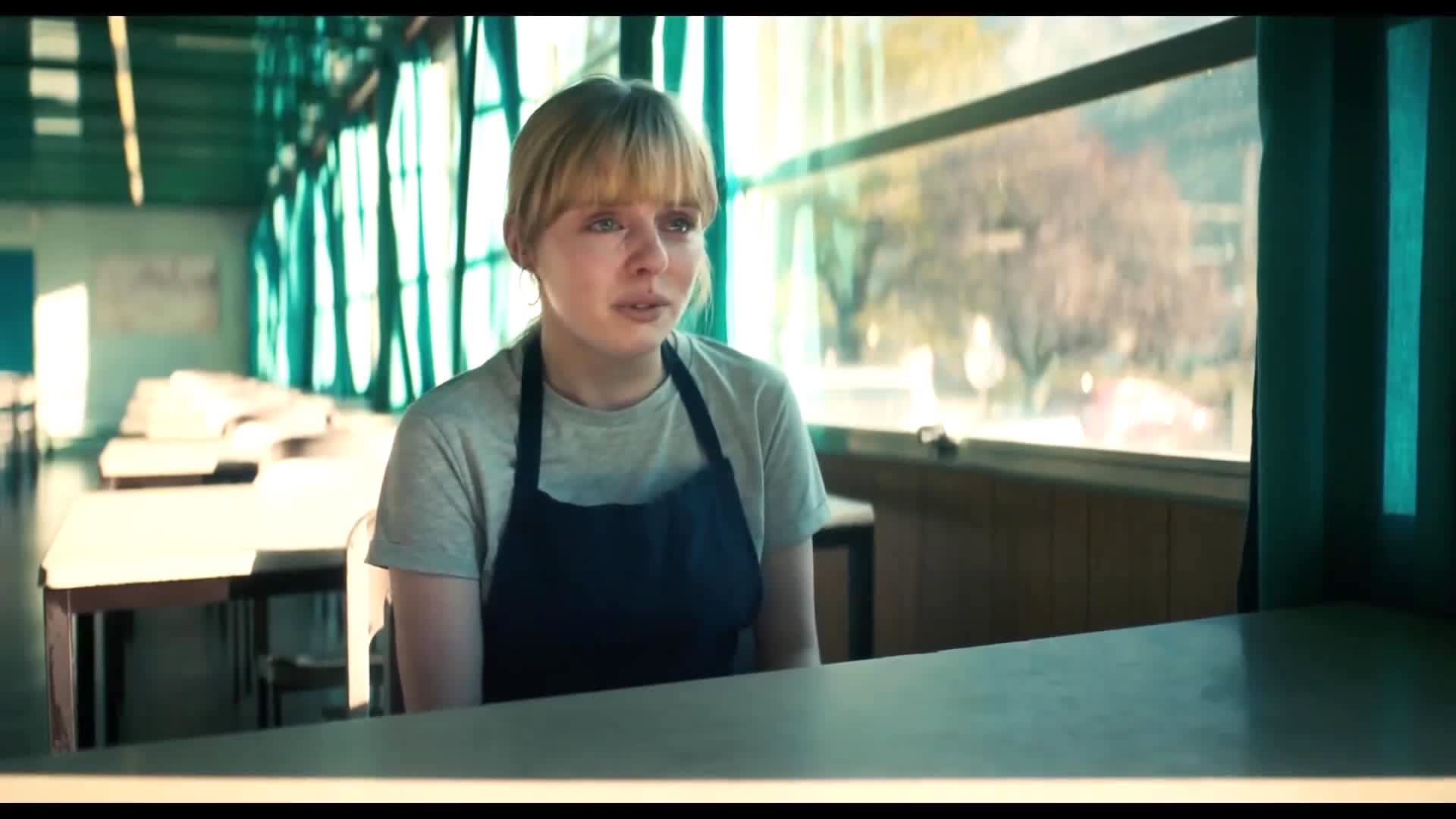
Written by Gilles Marchand and directed by Dominik Moll, The Night of the 12th features few of the traditional tropes we might expect to find in a crime procedural. It’s based around an (unsolved) real-life murder and, though it occasionally gives the impression that there may be a satisfying solution waiting for us at the film’s conclusion, it steadfastly refuses to supply one. Here is a story that is far more interested in the effects that a crime has on those assigned to investigate it than in the crime itself. It’s a brave decision on the part of the filmmakers but one that – for me at least – feels suspiciously like a game-changer.

It’s the night of October 12th 2016 and Clara (Lula Cotton-Frapier) leaves the house of her friend, Stéphanie (Pauline Serieys), in the picturesque mountain village of Grenoble, to walk the short distance home. But on her way back, she’s approached by a masked stranger, who flings petrol into her face and sets her ablaze. Her body is discovered the following morning, burned almost beyond recognition.

Newly appointed police chief Yohan Vivès (Bastien Boullion) is assigned to head up the resulting murder investigation, assisted by his close friend, irascible older cop, Marceau (Bouli Lanners). Marceau is currently having serious marital issues, which make him even more unpredictable than usual and Yohan spends much of his time reigning in Marceau’s excesses. Yohan also makes a mess of breaking the news of the murder to Clara’s mother.

The team of investigators soon uncover a whole parade of suspicious males, many of whom have, at some point, enjoyed a sexual relationship with Clara. They range from a toxic bully, who has been previously arrested for beating up a girlfriend; a local weirdo living in a squat close to the murder scene; and a rapper, who has openly threatened to ‘burn’ Clara in the lyrics of one of his recorded songs, available to view on YouTube. But what initially promises to be an open and shut case keeps leading the team of investigators along a series of dead ends and, as the days, months and years slip inexorably by, Yohan is increasingly affected by his total inability to make any headway with the case…

The Night of the 12th exerts a powerful grip and its overarching theme appears to be a meditation on the nature of evil. It also explores an awful truth: that it is generally men who commit such terrible crimes against women, and it’s also mostly men who are tasked with solving them. When a new female judge (Anouk Grinberg) takes over, Yohan finds himself reinvigorated by her presence and ready to give the case one last push. But is it a change that’s come too late to be of any help?

Dark, brooding and mysterious, The Night of the 12th will surely infuriate those who prefer their mysteries to have a definitive answer, but it manages to keep me hooked right up to the final frame and, for me, that’s enough to recommend it as one to watch. I’ll be the first to acknowledge, however, that the film won’t be for everyone. Watch this for the journey rather than for the final destination.

4.2 stars

Philip Caveney

Castle Lennox

31/03/23

Lyceum Theatre, Edinburgh

The titular Castle Lennox is a hospital, but not as we know it. Places like this – providing long-term residential care for people with learning disabilities, shutting them off from the outside world – no longer exist. Here, playwright Linda McLean explores the pros and the cons: the deep, affecting friendships forged and the toxic regime, rife with bullying.

It’s 1969 and teenager Annis (Emma McCaffrey) is proving too much of a handful for her stepmother (Fletcher Mathers). Annis is lively, independent and full of fun, and she also has a learning disability, which means she’s eligible for enrolment at Castle Lennox. Simultaneously entranced and terrified by its fairytale appearance, Annis enters with hope as well as trepidation. But the staff nurse (Mathers again) takes against her, and – as the years tick inexorably by – Annis’s spirit seems to be quashed. Thankfully, there are also some moments of joy, such as her tentative romance with fellow patient, William (Gavin Yule) – but is she too institutionalised to cope when, twenty years later, Castle Lennox finally closes down?

Castle Lennox, directed by Maria Oller, is a joint production between the Lyceum and Lung Ha, Scotland’s leading theatre company for learning disabled actors. It’s a superb example of how empowering and inclusive drama can be, a cleverly-woven narrative that both supports and enables its fine cast, as well as engaging a sold-out house. McCaffrey shines in the lead role, but fellow actors Yule, Emma Clark (Jo) and Nicola Tuxworth (Marie) also stand out, the latter clearly relishing her devilish character.

But, although the individuals are great, it’s the choral scenes that really make this piece. Movement director Janice Parker creates a bold dynamic, evoking the cheerful chaos of the laundry and Saturday tea parties, and the performers are all absolutely on their game, singing and dancing with gusto and aplomb. BSL interpreter Rachel Amey is nicely integrated into the production, subtly assuming the role of Annis’s dead mother, reassuring her daughter when she’s feeling low.

Karen Tennent’s nifty set places us first in an enchanted forest, where a grand gateway yields to an altogether more prosaic and clinical space, where white curtains segregate the patients from outsiders – and from each other. The costume design (by Alison Brown) also helps to locate us both in time and place, and I like the way Annis’s clothes become drabber as the institution wears her down.

All in all, Castle Lennox is a delight, well-deserving of the standing ovation it receives tonight.

4 stars

Susan Singfield