Month: March 2023

Babs

14/03/23

Traverse Theatre, Edinburgh

This week’s A Play, A Pie and A Pint is the pithily titled Babs by Morna Young. We’ve enjoyed Young’s work before – Lost at Sea and Aye, Elvis are both excellent examples of Scottish theatre – so we arrive at the Traverse this Tuesday lunch time with high expectations. The set, by Gemma Patchett and Jonny Scott, doesn’t give much away: there are a few fir trees, some pipes, a couple of skulls and a ukelele – an eclectic mix, promising something unusual.

We’re not disappointed.

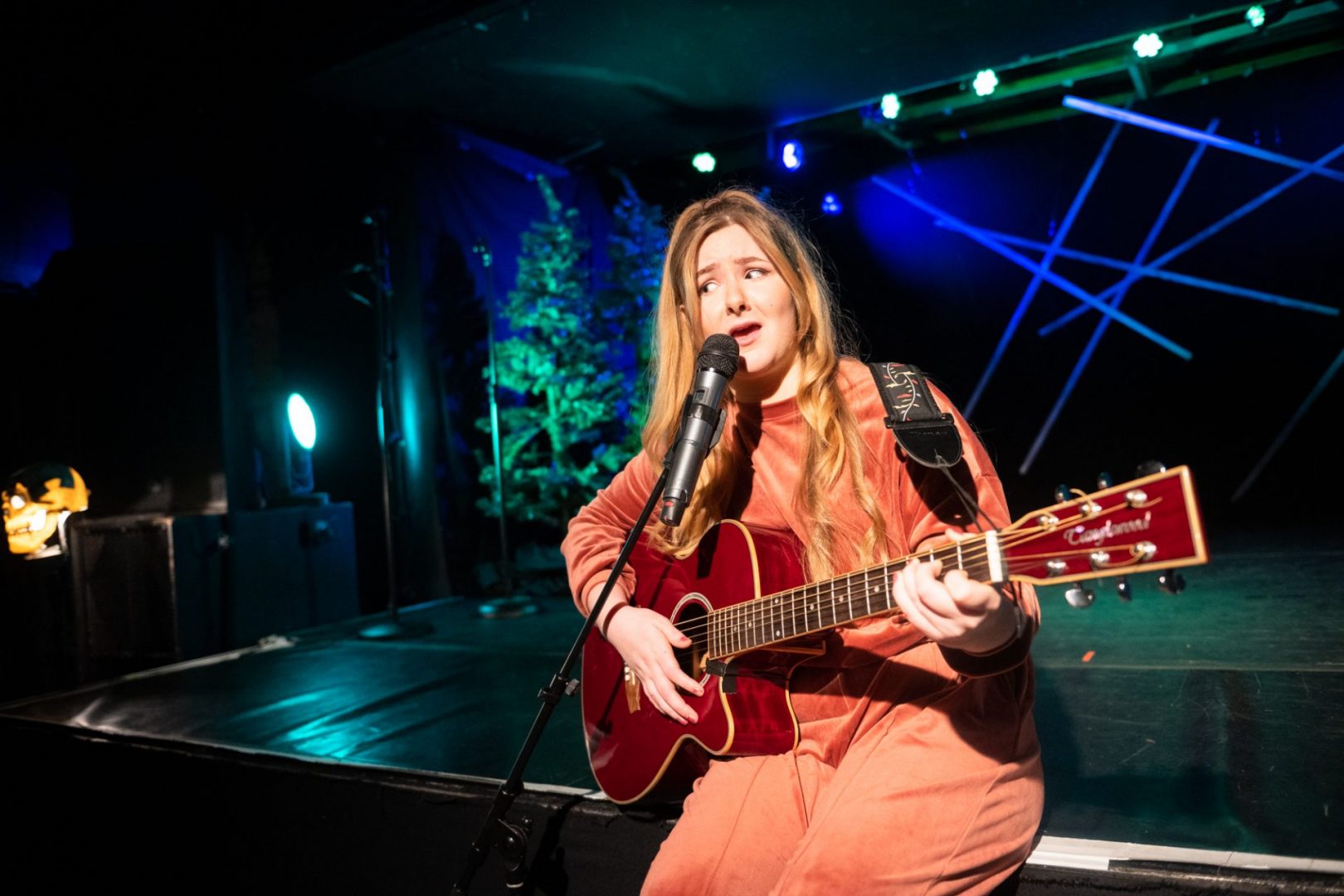
Bethany Tennick plays Lisa, a troubled young quine from Aberdeen, who lives for her annual holiday with her best pal, Shelley. Apart from that, all Lisa has is her guitar, her tunes and a truckload of attitude. So when Shelley decides she’d rather go away with her new boyfriend, Gareth, Lisa is raging. How dare Shelley ditch her? Desperate and drunk, she signs up for a solo retreat, which turns out to be life-changing, because ‘Babs’, the mysterious host, is none other than Baba Yaga – she of the iron teeth and chicken-legged house… Why has she invited Lisa here?

Young’s decision to write the piece in Doric dialect gives it an urgent authenticity, underscoring Lisa’s need to be true to herself, even as she searches for a new identity. She is a bold, in-your-face character, and Tennick imbues her with such spark and vim that it’s impossible not to warm to her, even when she’s being completely unreasonable. The songs (composed by Tennick) add an extra dimension, showing us that Lisa has the potential to be more than ‘a sheep’, even if she can’t yet see it herself. The plaintive ode to her mother is especially emotive.

Despite its dark themes, Babs is essentially a comedy, and I spend much of the fifty-minute running time laughing at Lisa’s disproportionate outrage, or at her renditions of the other characters who populate the tale. Director Beth Morton keeps the pace snappy, and every joke lands well with the audience.

I’m fair-tricket to say this is another winner from 2023’s first PPP season.

4.2 stars

Susan Singfield

65

11/03/23

Cineworld, Edinburgh

It was clear before 65 even arrived that something was amiss with this project. Two planned release dates were swiftly abandoned, as though the project were seeking a landing at a time when not much else was happening cinema-wise. On paper, the premise sounds good. Adam Driver versus dinosaurs? What could possibly go wrong?

From the get-go, 65 requires viewers to accept a pretty unlikely set-up – that somewhere in the universe, sixty-five million years ago, a planet existed where the inhabits looked human, acted human and some of them even spoke perfect English. This is by no means a spoiler, it’s spelled out in text in the film’s opening moments. Mills (Driver) is a spaceship pilot, who has recently been charged with the task of heading up a two-year mission (we’re never given any of the details of what he’s expected to achieve out there). He’s agreed to leave his – everyday sexism alert! – un-named wife (Nika King) and his daughter, Nevine (Chloe Coleman), back on his home planet because the latter is suffering from an unspecified illness and Mills will now be earning triple his usual wages, which will no doubt pay for all those pesky hospital bills.

A year or so later, he’s travelling through space in a ship that’s also carrying a group of anonymous passengers in suspended animation (again we’re not trusted with an explanation for this), when a sudden meteor strike sends the ship hurtling towards an unknown planet. Mills survives the subsequent crash, along with a nine-year-old girl, Koa (Ariana Greenblatt). Now the two of them must somehow make their way to the ship’s escape pod, which is inconveniently stranded on top of a mountain.

The planet? It’s Earth. And it’s heavily populated by dinosaurs…

The term ‘stripped-back’ has never felt more appropriate – and, while the set-up strains credulity, it’s simply and effectively done. But once Mills and Koa are installed on this hostile planet, the film has nothing left but a series of frantic chases as our two heroes are pursued hither and thither by a bunch of scaly co-stars with no higher ambition than to eat their visitors. While the film looks great (the scenes shot in the Florida Everglades are particularly eye-catching), the inevitable result is monotony.

Attempts to vary things up are mostly centred around Mill’s recorded memories of his daughter – though, curiously there are none of his wife. (Did they fall out? We don’t know!) I am asked to suspend my disbelief every time a miraculous event saves Mills and Koa, allowing them to escape apparently certain death by a hair’s breadth. Written and directed by Scott Beck and Bryan Woods, who created the superior A Quiet Place, I can’t help feeling that at some point there must have been a lot more information built into this film, cut out piece-by-piece after successive test screenings, perhaps. This may account for the finished movie’s relatively lean running time, and I suspect that, somewhere in the archives, there’s a director’s cut, which features a lot more information than we’re offered here.

It’s by no means a terrible film. The dinosaurs are decently rendered in CGI and I’m genuinely excited by the first attack – but, by the seventh or eighth, I find myself looking at my watch, wondering when I’ll be able to achieve escape velocity.

2. 8 stars

Philip Caveney

Close

09/03/23

Cineworld, Edinburgh

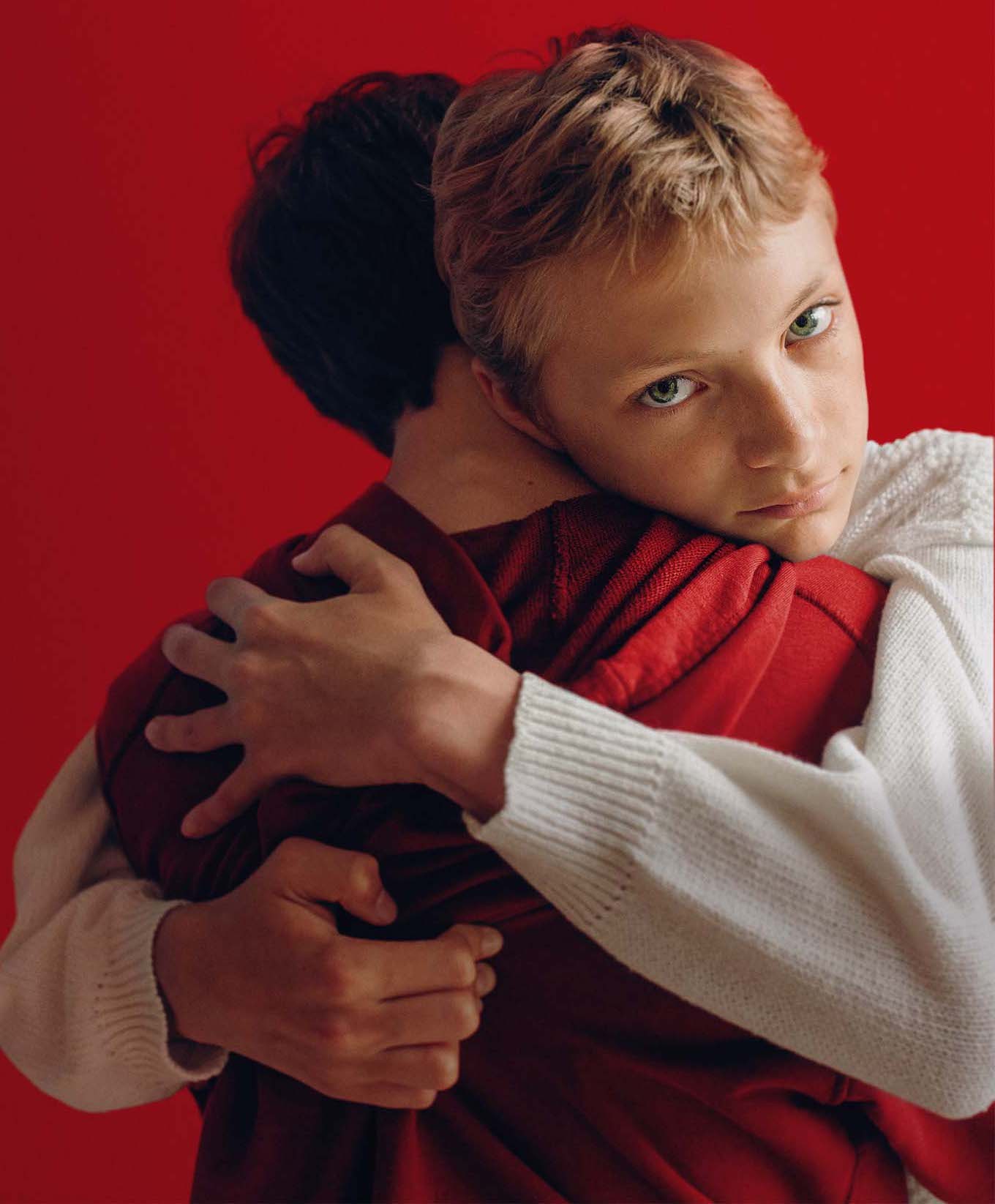
Léo (Eden Dambine) and Rémy (Gustav De Waele) have been friends for as long as they can remember. At the grand old age of age of thirteen they are pretty much inseparable, riding their bikes side-by-side through the lush Belgian countryside and enjoying adventures conjured from their combined imaginations. Léo’s parents are market gardeners, who work almost around the clock, planting, growing and harvesting fields of beautiful flowers. Léo often spends his nights at Remy’s house. His parents, Sophie (Émilie Dequenne) and Peter (Kevin Janssens), are always welcoming and Léo thinks nothing of sharing a bed with Rémy, or of telling him his deepest, darkest secrets.

But everything changes when the boys start high school. A casual question from a girl – ‘are you two a couple?’ – prompts Léo to reassess the friendship. Eager to fit in with his classmates, he begins to put up barriers between himself and Rémy, making a determined effort to distance himself and, as if to emphasise his masculine side, even joining the school’s rough and tumble ice hockey team. When Rémy considers following suit, Léo bluntly dissuades him.

These actions cause an ever-widening rift between the boys – one that has tragic consequences.

Directer Lucas Dhont (who co-wrote the screenplay with Angelo Tijssens) crafts a simple but deeply affecting narrative that unfolds across a year’s changing seasons. He coaxes extraordinary performances from his two young leads – particularly from Dambine, who features in just about every scene and whose angelic face seems able to fleetingly portray a whole host of conflicting emotions. He’s also able to convey Léo’s total inability to articulate his regret – and his desperate attempts to reconnect with Sophie are the stuff of tragedy.

Valentin Hadjadje’s mournful score accentuates the mounting sorrow, while Frank van den Eeden’s languorous cinematography bathes the whole enterprise in the warm, golden glow of childhood. The final sequences of Close are deeply compelling and – it must be said – utterly heartbreaking. It’s only as the end credits roll that the enormity of what’s happened fully hits home.

This is a powerful and evocative portrayal of growing up, and the complexities of male friendship. Catch it on the big screen if you can – and prepare to be devastated.

4. 6 stars

Philip Caveney

You Bury Me

08/03/23

Lyceum Theatre, Edinburgh

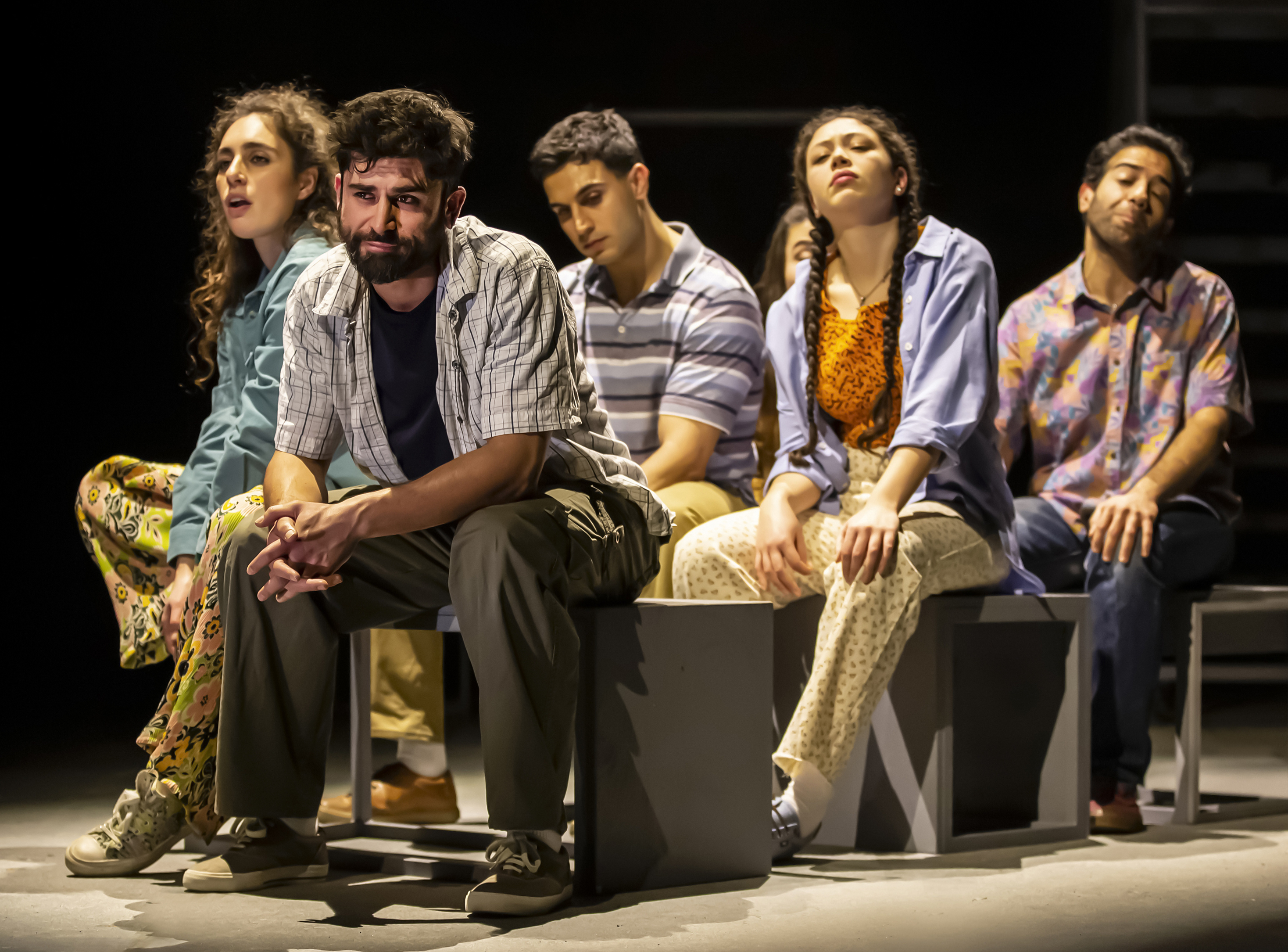
You Bury Me is a play about six young Egyptians coming of age in the aftermath of the Arab Spring – “a generation emerging from a national trauma, determined to live and love freely”. It’s a fascinating premise. I’m aware of the Arab Spring, of course; I read the news. But I don’t know anything about life in modern Egypt, nor of the ‘what happens next’. I’m keen to learn more.

Written by an anonymous playwright – under the alias ‘Ahlam’ – and directed by Katie Posner, the play is a co-production with the ever-dependable Paines Plough (among others), and the winner of 2020’s Women’s Prize for Playwriting. Its strength lies in the verve and vitality of the characters, all brimful of youthful energy, fighting to find their places in a changing world.

Alia (Hanna Khogali) and Tamer (Moe Bar-El) have both just graduated from university, but they’ve little experience of sex and relationships. They’re in love and want to get married, but it’s not as easy as all that. Alia is Muslim and Tamer is Christian; Alia’s family, who all work for the police, will not be pleased – and Cairo is a city where displeasing the police can have serious consequences…

Meanwhile, eighteen-year-old Maya (Yasemin Özdemir) is making the most of her last year of high school, attending every party she can, and making out with lots of guys. She’s bubbly and outgoing, and doesn’t care a jot about her ‘reputation’. New girl Lina (Eleanor Nawal) is shy and insecure, but opposites attract sometimes, and the two soon become firm friends – but is this enough for Lina?

Osman (Tarrick Benham) is Maya’s half brother, and he’s a political writer, publishing a blog that makes him a target for the authorities. We never see his girlfriend, Zeina, but we learn that she’s an activist too, so it’s no surprise to learn that Rafik (Nezar Alderazi) – who’s staying with Osman because his dad has kicked him out for being gay – thinks there are people watching the house. The two men fear for each other: Osman urges Rafik to delete Grindr, while Rafik wants Osman to stop writing his blog. But neither is prepared to sacrifice their sense of self in order to feel ‘safe’.

All six actors deliver lively and spirited performances, and I like the choral narration that provides context. Özdemir in particular really owns the stage; she is very charismatic, and Maya and Lina’s burgeoning friendship is always believable. Khogali and Bar-El make the most of the humour in Alia and Tamer’s fumbling sexual encounters, as well as inviting empathy for the lovers’ plight.

Although Benham and Alderazi both inhabit their roles well, their strand of the play is less satisfying, mainly because it is all told rather than shown. We don’t see any of Rafik’s dates, nor his family disowning him. Neither do we find out anything about what Osman is actually writing: the political discourse here is frustratingly vague. What is he saying that is so inflammatory, and how much danger is he really in? Without these details, Osman’s rage at his blog being deleted lacks context, and Rafik’s big emotional scene doesn’t elicit as much sympathy as it ought.

You Bury Me is eminently watchable – in the same way as an episode of Friends or Skins – and there are plenty of laughs, as well as moments of sadness. Ultimately, however, I don’t think it quite delivers on its political promise.

3.3 stars

Susan Singfield
Burning Bright

07/03/23

Traverse Theatre, Edinburgh

This latest season of A Play, A Pie and A Pint promises to be a good ‘un. Hot on the heels of last week’s sprightly Until It’s Gone comes Burning Bright, Áine King’s apocalyptic depiction of the climate crisis engulfing us. It’s no surprise to learn that this play won the 2022 David MacLennan award: it’s evocative and visual, a big story told in small fragments, as economical as poetry.

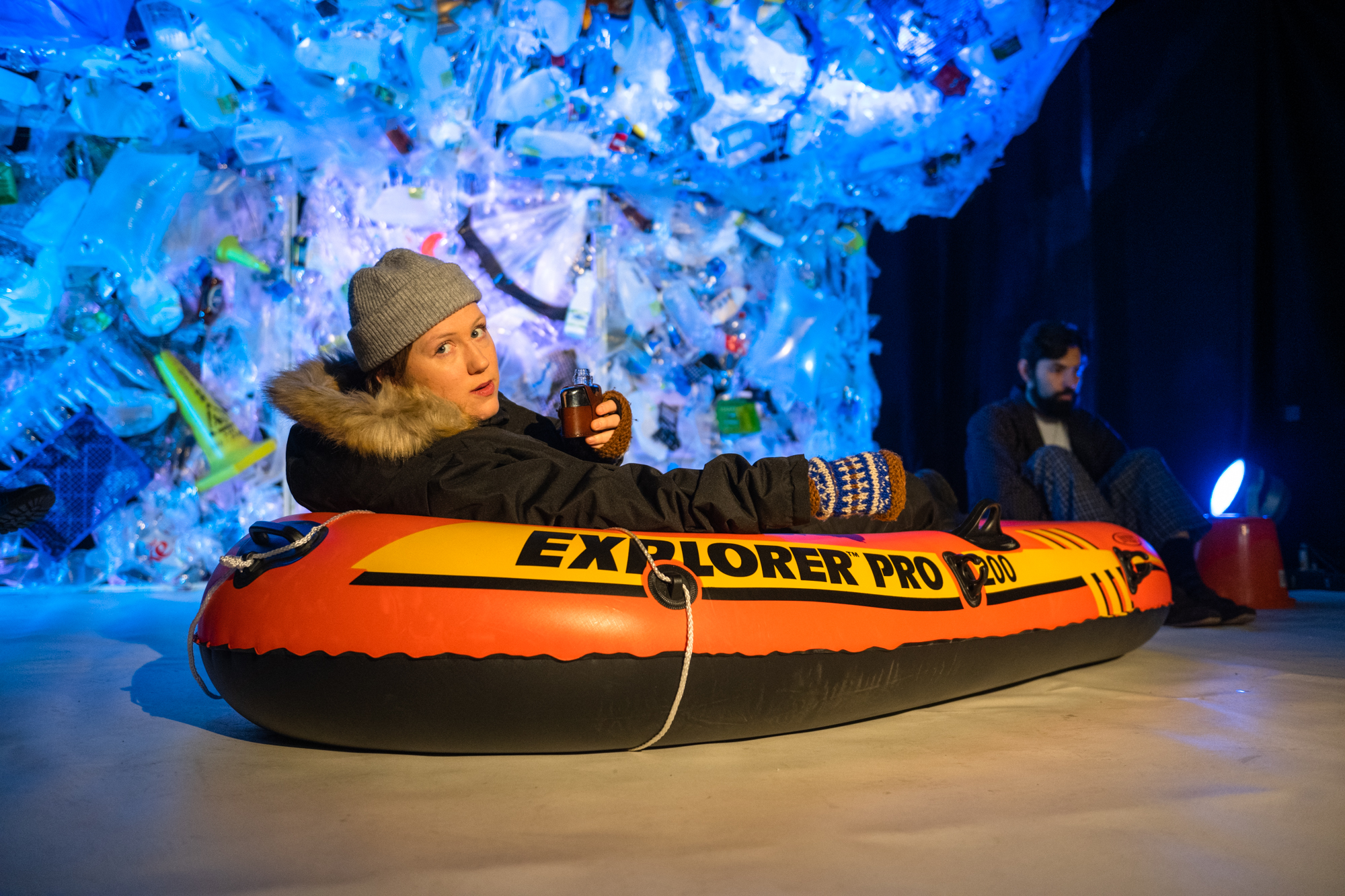
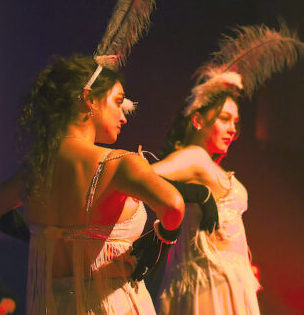
We are presented with three disparate narratives, linked by an over-arching theme of environmental collapse. Suzanne Magowan is a TV journalist desperately chasing a story about Australian wildfires, more interested in saving her career than in saving the earth. Hannah Jarrett-Scott plays a grief-stricken young woman with an eco-tourism business, taking rich adventurers on her boat, The Ice Princess, to see the polar ice caps before they’re gone. And Adam Buksh is a survivor: he’s escaped floods and tigers in his native India, and now he’s navigating racism on his Glasgow street.

The performances are all strong, the characters compellingly portrayed, and the writing is gorgeously cinematic – the image of a blazing horse, for example, is horribly mesmerising. Roxana Haines (director), Gemma Patchett and Jonny Scott (designers) achieve astonishing things with a tiny stage and a minimal set, so that it’s easy to suspend my disbelief and accept that I am, simultaneously, in the Arctic, Australia, Scotland and India, witnessing fire, floods and melting ice caps.

The conceit works to emphasise the ubiquity and urgency of climate breakdown. Even these characters, closer to the epicentres of disaster than most of us, are each only aware of one aspect of the problem. But here in the audience, we are shown the cumulative effect: their monologues are tangled and entwined, so that we see their interdependence and the extent of the catastrophe that’s looming over us. The image is there throughout, cleverly captured in the juxtaposition of the encroaching wave of plastic waste that dominates the set, and the tiny dinghy representing our precarious position.

Burning Bright is a superbly accomplished piece of theatre, skilfully illuminating why climate change is an issue we can’t afford to ignore.

4.7 stars

Susan Singfield

The Queen’s Head

05/03/23

Pen-Y-Bont Road, Glanwydden, Llandudno Junction

We’re in North Wales for a couple of days and my wonderful mother-in-law wants to take us out for lunch. Indeed, she’s already booked a table at The Queen’s Head in Glanwydden, a place about which we know precisely nothing, but Brenda assures us that we’re going to like it. She’s been there before. So who are we to argue?

Happily, she’s not wrong. The Queen’s Head is one of those secluded country taverns where they offer a menu that goes well beyond the kind of fare often associated with ‘pub grub’. It’s no surprise then that the place is thriving, but the pleasant staff keep everything running like clockwork – and the food is impressive. Take the starters for instance. Well, you can’t because we made very short work of them, but they are excellent examples of how to begin a meal with a flourish.

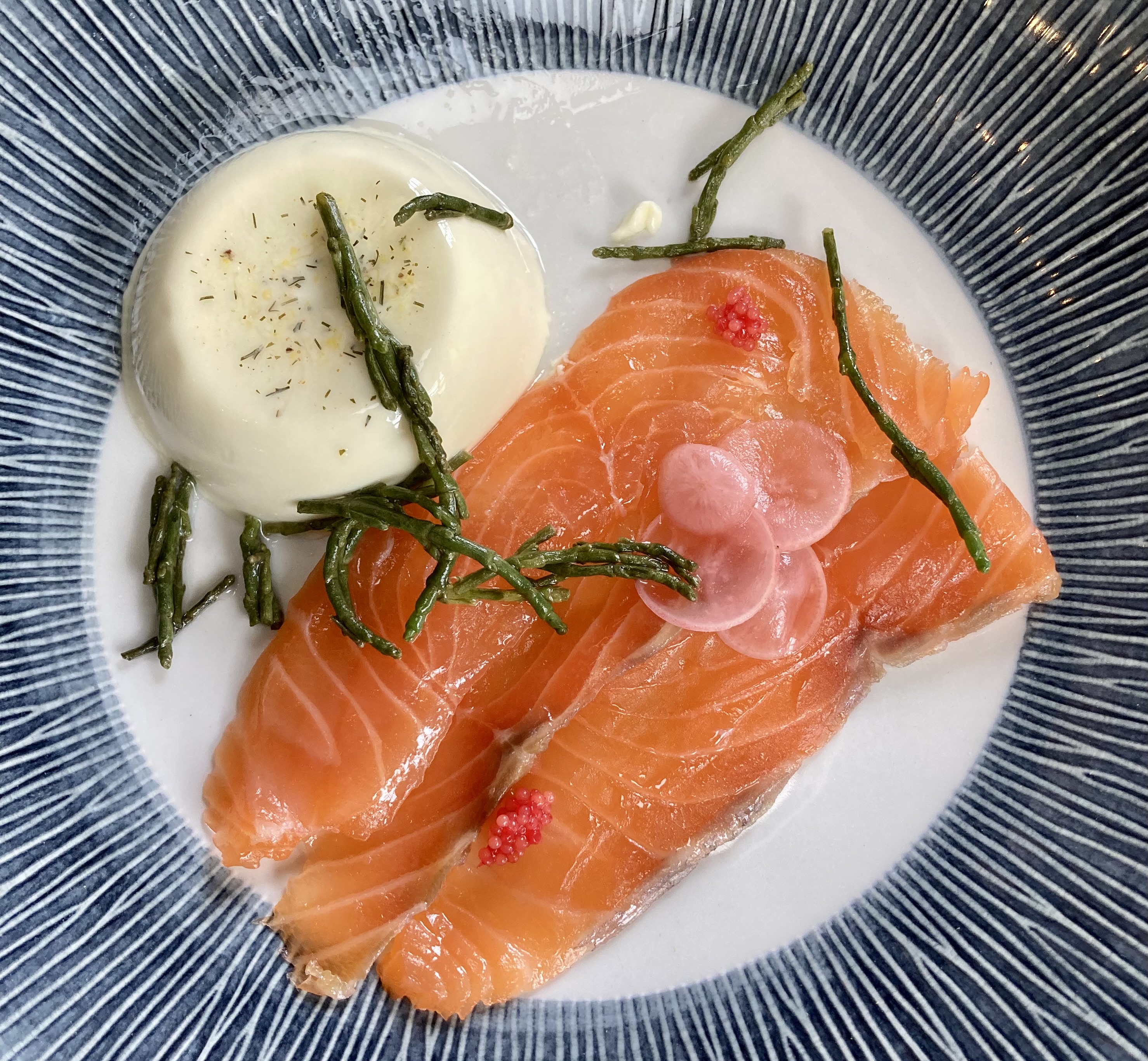
I have chosen the Aberfalls orange gin cured smoked salmon, a generous slice of fish, served with fresh dill panna cotta, sea asparagus and radish salad. It is simply inspired, handsomely presented and bursting with flavour. Susan has the miso and coriander buttered potted prawns, replete with sesame and seaweed and chunks of toasted Pagnotta bread. The seaweed in particular is a real surprise, tangy with lemon, offering a delightful contrast to those fleshy, spicy prawns. We note that Brenda skips the starters, claiming that she’s ‘saving herself’ for the main course. And then it arrives – and we see what she means.

It’s a Sunday so we’ve all gone for the roast option. Brenda has the topside of Welsh beef, thick slices of tender meat, with lashings of gravy. I dig into a roasted loin of pork which comes with apricot, mushroom and sage stuffing. Again, it’s perfectly prepared and there’s a crunchy strip of crackling for good measure. Susan opts for the sweet potato, chestnut and apricot nut roast with creamed leeks and veggie gravy. All dishes come with the full Sunday dinner accompaniment: magnificent Yorkshire puddings – cathedrals of batter with crispy peaks and meltingly soft centres. There are also superb roast potatoes, as well as mash, carrots, broccoli and red cabbage. And we order extra veg (of course we do), in the form of a sumptuous cauliflower cheese.

It may seem churlish, but the only complaint we have here is that the portions are enormous and it’s hard to know what to miss out because… well, we have to leave room for puddings, right? It would be rude not to.

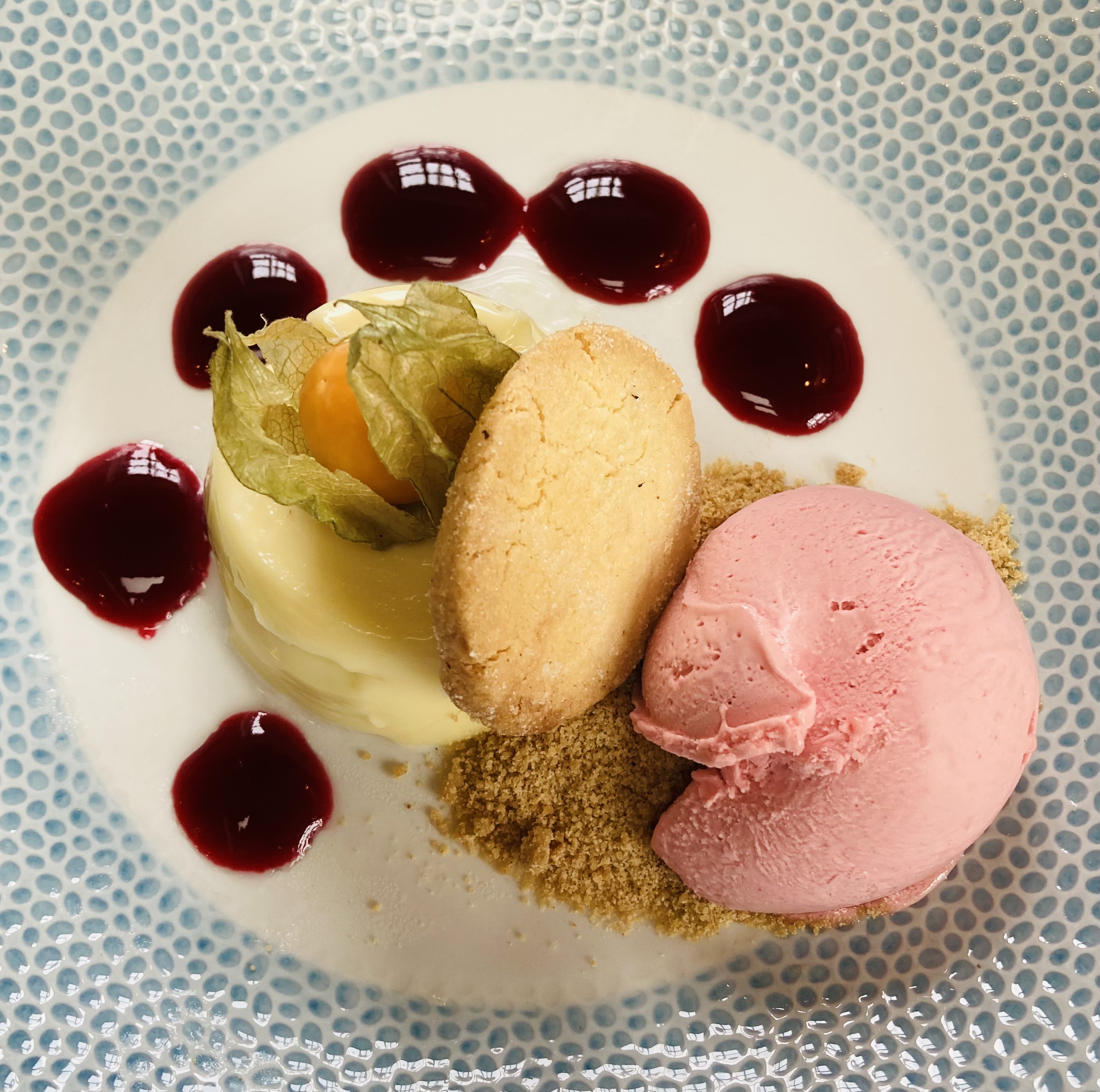
Brenda goes for the vanilla panna cotta with raspberry coulis, which is quite the prettiest dish on the table and comes with strawberry ice cream, biscuit crumb and shortbread. I cannot resist the lemon posset, which is creamy and luxurious, served with a zesty orange sorbet and delicate meringue disks. Susan orders the treacle tart – sweet, crumbly, softer than expected and served with a delicious scoop of coconut ice cream.

We emerge from the feast feeling pleasantly sated and determined to spread the word. The Queen’s Head is the perfect venue for an indulgent dining experience and it’s available to everyone within walking or driving distance of Glanwydden.

Brenda, on the other hand, is all ours. Hands off!

4. 8 stars

Philip Caveney

Julius Caesar

03/03/23

Debating Hall, Teviot Row House, Edinburgh

It’s a fascinating concept – Shakespeare’s classic play reimagined as a gangster epic.

Imagine those stirring soliloquies as delivered by a young Robert De Niro or Al Pacino – the senate represented by mob mosses and wise guys, bustling around the tables of a crowded nightclub while a live band blasts out spirited jazz. That’s what we have here and, fortuitously, the baroque setting of the Teviot’s debating hall proves to be the ideal location. EUSOG have never lacked ambition and this production, directed by Devki Panchmatia, may be their most confident offering yet. There’s a powerful buzz tonight and extra seats have to be added at the last minute to accommodate an enthusiastic audience.

In this version, Francesco Davi plays the titular role as a swaggering Don, appearing to general acclaim while a fawning Mark Antony (Julia Lisa) hangs on his every word and wastes no opportunity to ingratiate himself. But Cassius (Tom Wells) is growing tired of obeying the whims of a man he perceives as a ruthless dictator. He enlists Caesar’s old friend, Brutus (Haig Lucas), as his co-conspirator. It isn’t long before they have enlisted the services of others with similar intentions and a fateful date is set: the Ides of March, where Caesar will meet with bloody retribution..,.

I’ve always felt that the play is oddly weighted, the first half culminating in one of the bard’s finest scenes (and, as performed by Julia Lisa, it’s certainly the high point of this production). The final third feels more ramshackle, condensing years of civil war into a few brief skirmishes – and there’s also the impression that some of the longer interactions could benefit from some judicious editing. I know, I know. A bit late to bring it up now!

Unfortunately, the play starts later than the advertised time and the interval stretches on for so long that the hard-earned momentum evaporates and the cast have to work really hard to recapture it. It must also be said that the decision to stick rigidly to those wise-guy accents means that it’s not always an easy matter to follow every character’s dialogue. Those audience members who know the speeches by heart will have no issue with that, but it’s a while since I last studied the play and, occasionally, I find myself struggling.

Still, there’s much here to admire. Victoria White’s costume design is impeccable and Luca Stier’s set convincingly evokes the atmosphere of a nightclub. Isabelle Hodgson offers up a sneering, duplicitous Casca, while Tom Cresswell manages to shine both as Cicero and in his brief appearance as Cinna the poet.

The strobe-lit fight scenes are effectively done, while Panchmatia manages to keep a large cast moving around the crowded stage with great efficiency. And of course, it’s always heartening to witness a young company showing total commitment to a challenging project. Here, EUSOG deliver a Julius Caesar like no other.

3.8 stars

Philip Caveney

Until It’s Gone

28/02/23

Traverse Theatre, Edinburgh

This sprightly two-hander packs a lot into its fifty-minute running time. Until It’s Gone is the first of 2023’s A Play, a Pie and a Pint offerings, and it’s a corker: Alison Carr’s tight and cleverly-crafted script imagines a future where all of womankind have disappeared, and men are left to make the best of a world without them. In stark contrast to Charlotte Perkins-Gilman’s Herland, where women have created a female Utopia, this male-only Scotland is a dystopian mess, its citizens desperate for the women to return from their unspecified and unexplained exile.

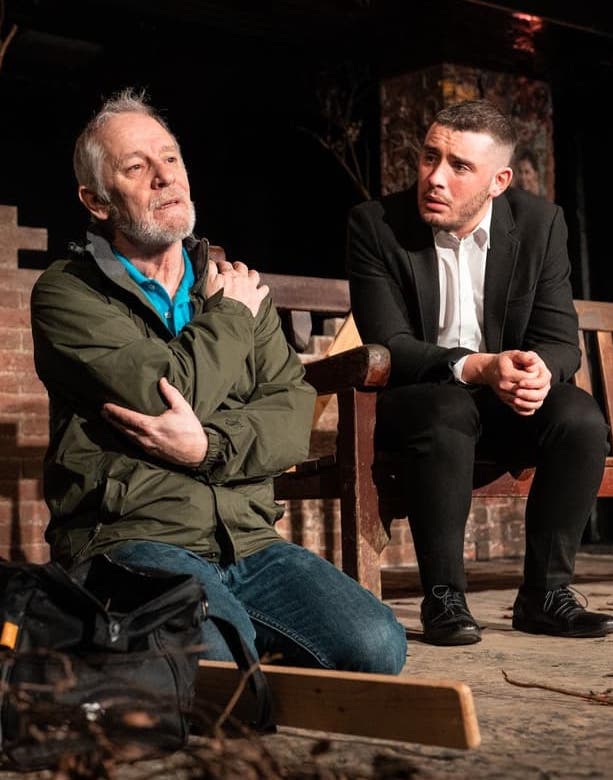
We’re offered a glimpse into this terrifying scenario through a simple park-bench, chalk-and-cheese set-up: a meeting between an eager young man of twenty-five (Sean Connor) and a gruff older one (Billy Mack). They’ve been matched by a supposedly ‘world-beating’ app, but this is not a date – or at least, not a conventional one. They are two avowedly heterosexual, cis-gendered men, following a strict government mandate to ‘connect’ – because things aren’t sustainable as they are. Through this smallest of microcosms, Carr seeds just enough information into the men’s darkly comic dialogue to allow us to envisage the bigger picture, the tortured society in which they live, where schools are closed, most interactions happen online, and everything feels wrong.

The characters are beautifully realised, played with warmth and humour by Connor and Mack, even as they expose the men’s real pain. The generational divide is deftly managed, the initial chasm between them narrowing as they talk and share confidences, slowly realising that they’re more alike than not, that their shared fate should bind them rather than pull them apart.

Under Caitlin Skinner’s assured direction, the play’s political points are clearly made without ever feeling intrusive. I like the cheeky use of tableaux and blackouts to mark the passage of time at the beginning, and the set – by Gemma Patchett and Jonny Scott – is modest but strikingly effective. I’m especially drawn to the myriad images of women adorning the tumbledown walls, and find myself wondering if they are ‘missing’ posters or simply photos, there to remind the men of what they’ve lost. 

Because, of course, you never know until it’s gone…

4.4 stars

Susan Singfield