Month: November 2022

Living

09/11/22

Cineworld, Edinburgh

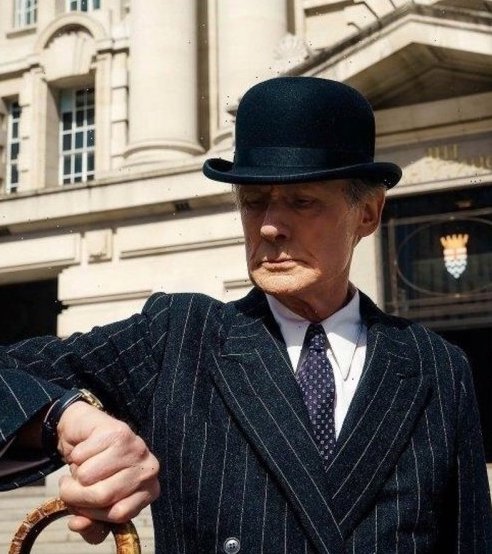
Scripted by novelist Kazuo Ishiguro and directed by Oliver Hermanus, Living is a remake of Akira Kurosawa’s celebrated film, Ikiru – the story of a man coming to the end of his life and desperately trying to right the wrongs of his wasted opportunities. Set in the same era as the original, the story is cleverly relocated to a city hall somewhere in London, where a battalion of bowler-hatted wage slaves put reams of printed paper into order. The office is presided over by Mr Williams (Bill Nighy) a man so grievously incapable of meaningful conversation, that the office’s sole female occupant, Miss Harris (Aimee Lou Wood), has secretly dubbed him ‘Mr Zombie.’

But when his doctor informs him that, courtesy of stomach cancer, he has only a few months left to live, Williams finds he is totally incapable of talking about it to his son and daughter-in-law, preferring instead to unload on a random stranger he meets in a cafe, louche ‘artist’, Sutherland (Tom Burke). Sutherland listens in bewilderment as Williams tells him that he’s never properly lived his life and his solution is to take Williams out on the lash, visiting a series of seedy bars and strip clubs. This offers Williams some momentary respite from his torture, but no real answers.

Next, he has a chance encounter with Miss Harris, and ultimately takes her into his confidence. These scenes could easily be creepy, but it’s clear that Williams is inspired not by lust, but by the young woman’s youth: her ability to take pleasure in the smallest things – like the knickerbocker glory she gleefully chooses when the two of them have lunch at Fortnum’s. It’s these scenes that are the film’s strongest suit and one lengthy monologue from Williams, as he recalls happier times, actually has me filling up with tears.

Ultimately, Living is all about the inability of people to communicate with each other and the point is eloquently made, but – given the film’s length and the fact that it moves with all the urgency of glacial erosion – it sometimes feels as though it makes it several times over. Williams’ elevation to a kind of sainthood, as his final moments are recalled by a passing police constable (Thomas Coombes), come dangerously close to mawkishness. Furthermore, there’s a part of me that feels there’s a kind of cheating going on here. Williams’ progressing illness is conveyed with little more than the occasional grimace and a discreet spot of blood on a handkerchief. Otherwise, he remains as perfectly attired and implacable as ever. None of the horrors of his cancer are ever shown and we all know, don’t we, that real life is never as convenient as that?

Still, there’s plenty to admire here. Nighy was doubtless put on this earth to play the role of Williams, his chiselled, impassive features somehow managing to convey the torment that lies beneath that calm exterior – and Wood is simply adorable as the ingenue who breezes briefly through the fusty atmosphere of the office, before moving on to better things. Kudos should also go to the sound department, for the lustrous music that underpins the films key moments, accentuating the poignancy and regret of the central premise. The era is convincingly evoked, right down to the opening and closing credits and Sandy Powell’s meticulous costume design is, as ever, spot on.

A final thought. I wonder if this – like the film that inspired it – would have looked even more sumptuous in black and white?

3. 8 stars

Philip Caveney

Barbarian

08/11/22

Cineworld, Edinburgh

There’s been a lot of hush-hushery from the makers of Barbarian, of the ‘don’t give away the ending’ variety. I can totally understand why. Writer/director Zach Creggar has put together a low-budget horror tale that seems to delight in pulling the rug from under the viewer at regular intervals. No sooner am I thinking, ‘Ah, I know what’s happening here,’ than I am obliged to indulge in a major rethink, until – eventually – I’m in the ‘what the hell is happening here?’ camp.

I rather like being in this position and, in the end, I find I’m awarding points for Creggar’s chutzpah, as he gleefully galumphs into uncharted territory. Put it this way: if you can work out where it’s all going, you’re way ahead of me.

Tess (Georgina Campbell) is travelling to an Airbnb in a run-down neighbourhood of Detroit, ignoring regular calls from someone who we presume is her troublesome ex. She arrives in the dead of night, exhausted, only to find that the place is already occupied by Keith (Bill Skarsgärd), who seems thoroughly nice and agreeable. But is he? When Tess discovers that every hotel in Detroit is fully booked because of a convention, she reluctantly accepts Keith’s invitation to take the bed while he sleeps on the sofa, but she’s understandably apprehensive when he offers her a glass of wine.

The atmosphere is already freighted with anxiety and, when Tess wakes up in the night to find that her previously locked bedroom door is open, it’s clear that darker things are coming. These include: the unexpected arrival of the Airbnb’s owner, toxic male film director, A J (Justin Long); flashbacks to the antics of a very disturbing fellow called Frank (Richard Brake); and then there’s… no, sorry, I can’t really tell you about that. You probably wouldn’t believe me anyway.

Campbell and Skarsgärd are both terrific, and Long is convincing as the odious AJ. But Barbarian goes to some pretty horrible places. As the title suggests, there are various barbaric situations for viewers to get through and those who draw the line at seeing a man beaten to death with his own arm might prefer to give this one a miss. Like many films in the horror genre, it’s only in the closing stages that some of what’s happening onscreen begins to stretch credulity. (I was always told that all falling objects descend at the same speed – but apparently not.)

However, it’s been a while since a horror film has surprised me in such a positive way, and in that spirit, I’m happy to commend this film as a right riveting watch.

Just make sure you double-lock your bedroom door when you get home afterwards. It’s best to be on the safe side.

4.2 stars

Philip Caveney

Jinnistan

08/11/22

Traverse Theatre, Edinburgh

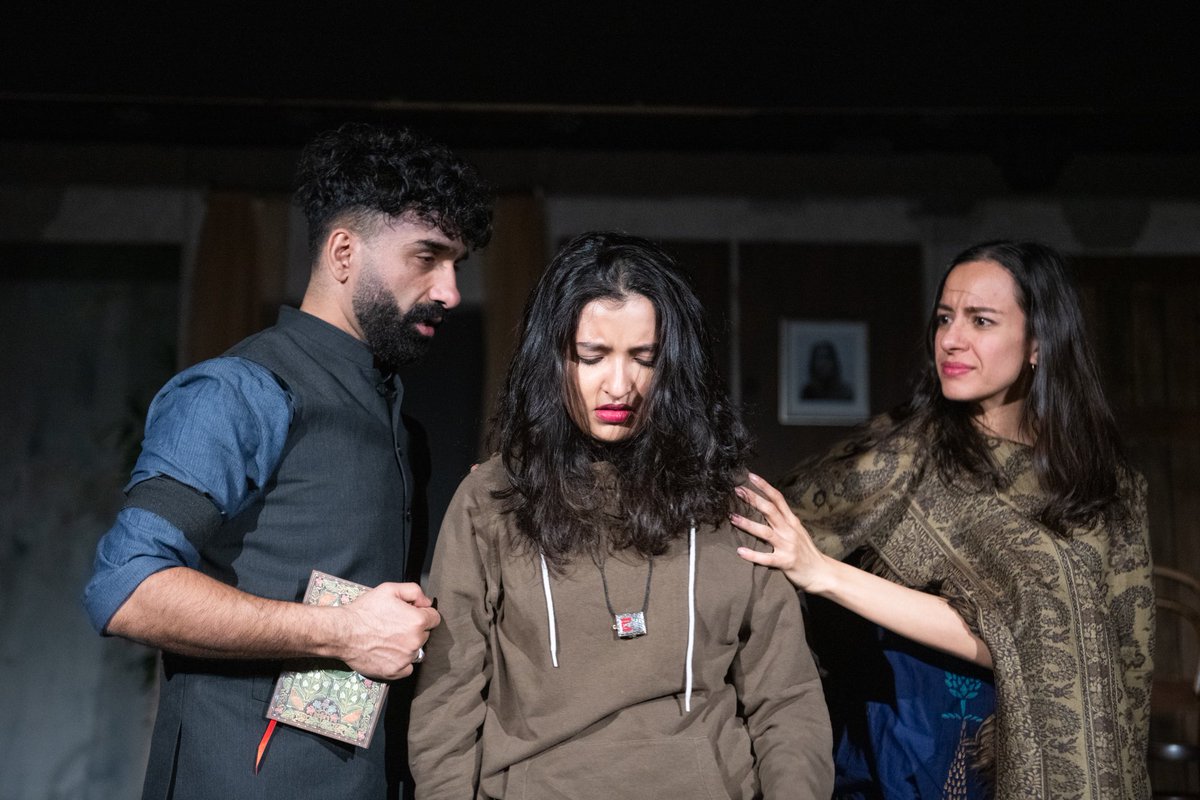
Jinnistan, directed by Niloo-Far Khan, is the last of this season’s PPP productions, and – in a break with the norm – it’s in the ‘big theatre’, aka Traverse One. This seems fitting, as the play’s parameters are bigger than normal too, encompassing not just the world as we know it, but the spirit realm as well. The Jinnistan of the title co-exists with Pakistan – but relations are strained, to say the least.

Malik (Taqi Nazeer, who also wrote the script) moved from Scotland to Pakistan a year ago. His wife, Layla (Avita Jay), and teenage daughter, Asiya (Iman Akhtar), have followed him there. Asiya’s not happy, and neither is Malik. She wanted to stay at home with her pals. and he – well, he isn’t saying. I guess it isn’t easy to tell your family that it’s your destiny to be a genie-fighter, and that there are annual rituals you need to perform in order to save lives.

This is essentially a low-fi horror, and all the genre’s tropes are in evidence here. Spooky graveyard? Check. Family secret? Check. Wayward teenage girl possessed by an evil spirit? Check. Nazeer keeps things fresh by transposing the action to a different culture, seamlessly blending Arabic and English to give a clear sense of place. The setting is enhanced by special effects, which – though obviously constrained by budget – are serviceable enough, conveying a feeling of unease.

Akhtar delivers an impressive performance, imbuing Ayisa with a convincing mix of swagger and insecurity. The sound design (by Niroshini Thambar) is also excellent: the jinn’s voice truly seems to emanate from somewhere beyond the here and now.

I do have some quibbles: the script is a little uneven, for example, and there are jarring moments of humour that undermine the building tension, so that – ultimately – the stakes are never really raised. The recorded voices, though well-delivered, are over-used: all too often, I find myself listening to a block of exposition, while looking at a blank or static stage.

Nonetheless, Jinnistan is an entertaining piece of lunchtime theatre, and a fitting end to this round of PPP’s lunchtime offerings.

3 stars

Susan Singfield

All Quiet on the Western Front

05/11/22

Netflix

Erich Maria Remarque’s novel, All Quiet on the Western Front, first published in 1923, was that rarest of things – a runaway bestseller that carried at its heart a powerful anti-war message. In 1930 it was adapted into a movie, directed by Lewis Milestone, and it easily won that year’s Oscar for best film. In 1979, a pedestrian TV version struggled to compete with what had gone before and is now pretty much forgotten. It would be a brave soul indeed who thought they could do anything fresh with the subject.

Hats off then to writer/director Edward Berger, who steps gamely up to the diving board and takes a headlong plunge. Here is a version of the tale that doubles down on the futility of warfare and is able to depict the full visceral horror of life and death in the trenches in ways that Milestone would never have been allowed to in the 1920s.

We begin with a chilling scene of hundreds of dead German soldiers in the aftermath of a battle. We see their uniforms bieng stripped from them, then taken away to be laundered and packaged. Next we encounter our hero, Paul Bäumer (Felix Kammerer), still a naïve teenage schoolboy. He and his classmates are swept up in the idea of being heroes for a just cause and can’t wait to enlist, to do their duty. But all too soon, they arrive on the Western Front, unwittingly wearing the dead men’s uniforms, and begin to realise that all their childish fantasies are about to be torn to pieces by the bloody conflict around them.

The set pieces that follow make for harrowing viewing. The battle scenes are epic in scale, brilliantly captured by James Friend’s cinematography, and Berger doesn’t flinch from depicting scenes of utter carnage. An extended sequence where Paul’s battalion encounters tanks for the first time is particularly memorable – but there are quieter scenes too. Paul’s growing friendship with his comrade ‘Kat’ (Albrect Schuch) is expertly drawn, and the regular cutaways to politician Matthias Erzberger (Daniel Brühl), frantically trying to negotiate a truce as yet another brutal conflict approaches, add notes of suspense. Of course, we all know where this is leading. Volker Bertelmann’s ominous score contributes to the growing sense of unease.

Milestone’s iconic ending (taken from the novel) is so well known, I completely understand why Berger chose not to use it. In this version, he offers a desperate race against time, which may lack the elegance of the original concept, but the utter futility of the situation is once again brought to the fore and it makes for a powerful conclusion.

I can hardly recommend this as an uplifting watch – indeed, there are moments here that make me want to look away. But the novel’s original message is still very much in evidence.

4.2 stars

Philip Caveney

The Good Nurse

29/10/22

Netflix

Films about real-life serial killers usually break down into two distinct groups. There are those that exploit the original story for lurid shock effect and have no real interest in looking for answers. Then there are those that are prepared to delve a little deeper into the circumstances surrounding a series of events. The Good Nurse, directed by Tobias Lindholm, definitely belongs in the latter category. There’s no mistaking the fact that the screenplay – written by Krysty Wilson-Cairns (and based on the book by Charles Graeber) is much more interested in the motivation than the crimes themselves.

The film focuses primarily on the nurse of the title. She’s Amy Laughren (Jessica Chastain), a single mom, struggling to balance her punishing work schedule at a New Jersey hospital with looking after her two young daughters – and she’s suffering from a debilitating heart condition. Put simply, Amy cannot afford to take time off work because she’s not been in her current post long enough to qualify for health insurance. She needs to keep going for another year, if she can.

And then along comes new recruit, Charlie Cullen (Eddie Redmayne), a likeable and considerate workmate, who quickly guesses at Amy’s health issues and does his best to help her out, appearing to care deeply about her difficult situation. The two of them quickly become close friends, with Charlie even helping to look after Amy’s daughters, Maya (Evan McDowell) and Alex (Alix West Lefler), when the going gets particularly tough.

But then there are some unexplained fatalities on the hospital ward, and two investigators, Tim Braun (Noah Emmerich) and Danny Baldwin (Mnmandi Asomugha), show up, asking some worrying questions. Why has Charlie Cullen been repeatedly shunted from hospital to hospital over his long career? Why does he always leave after a spike in deaths? And why do his former employers always seem so reluctant to pursue any questions about him?

This is another true crime story that boggles the mind: The Good Nurse doesn’t hesitate to point the finger of accusation at the American health care system, identifying it as a major enabler of Cullen’s exploits. Indeed, it’s the main reason why a man responsible for one of the highest murder tolls in history remains, ironically, a name that few people are familiar with. Essentially a taut two-hander, the film is as compelling as it is baffling. Chastain is terrific as Laughren, torn between her genuine friendship with Cullen and the dawning realisation that he is not the affable fellow he appears to be. Redmayne keeps his performance understated, only unleashing the full force of his character’s anger in one confrontational interview, yet he still manages to convey the frightening creature that hides behind that bland, smiling exterior.

We still don’t know – and probably never will – what motivated Cullen’s apparently random acts of murder, but The Good Nurse is unflinching in its portrayal of a health system motivated by profit and with scant regard for those who depend upon it for their survival.

4.2 stars

Philip Caveney