Month: August 2021

Limbo

09/08/21

Cameo Cinema, Edinburgh

The opening scene of Limbo is wonderfully absurd. Helga (Sidse Babett Knudsen) and her partner, Boris (Kenneth Collard), are dancing to It Started With a Kiss, watched by a bemused group of young men. It’s all part of the refugees’ training on how they should comport themselves, if their bids for political asylum are successful. As the song heats up, so the dancing becomes ever more frenetic, ever more ridiculous.

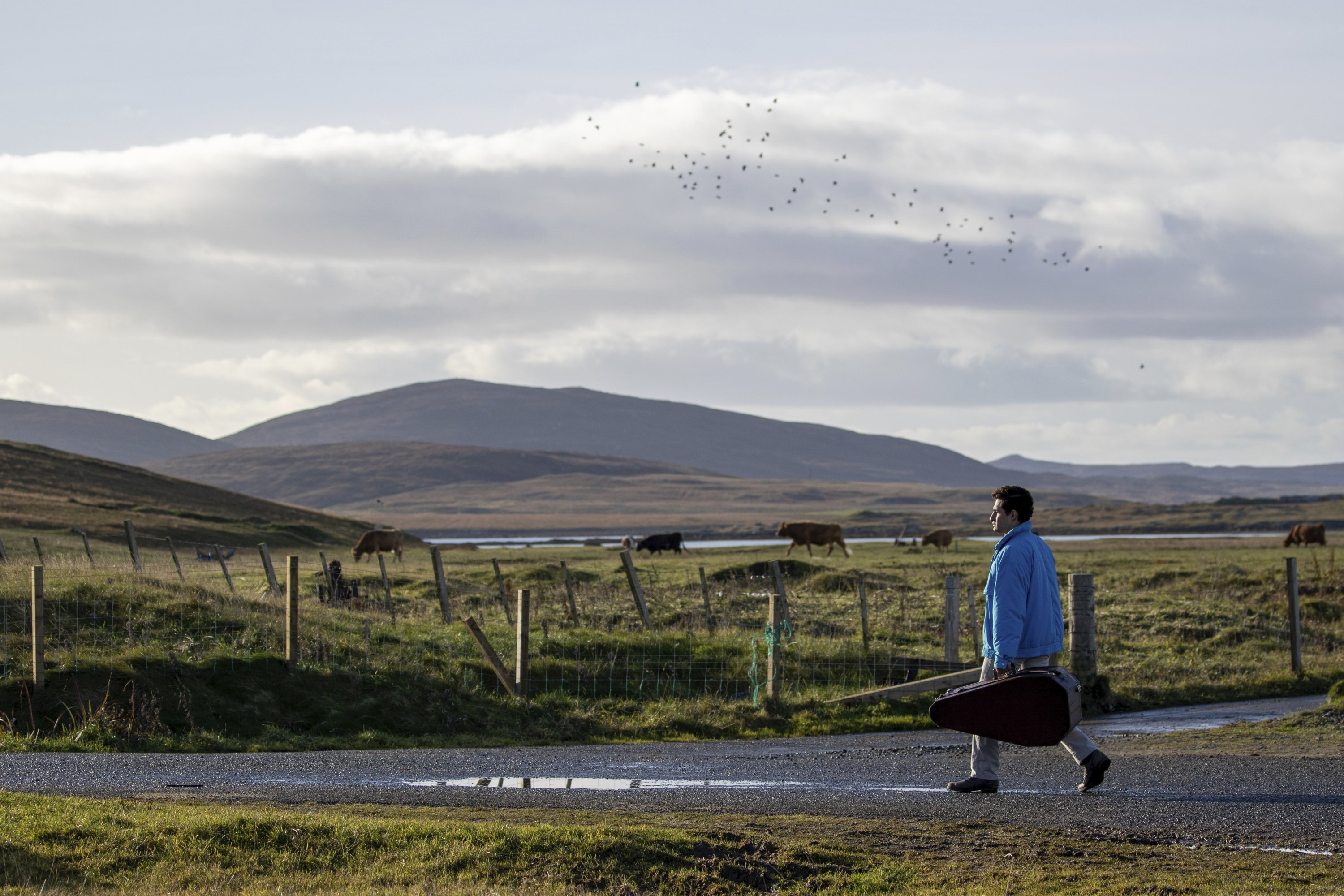
In the front row of the audience sits the impassive Omar (Amir El-Masry), who has recently fled from Syria and is now living alongside three other asylum-seekers in a little house on a remote Scottish island. Omar carries an Oud with him everywhere he goes – a stringed instrument rather like a large mandolin. He is, we’re told, a gifted musician, but hasn’t attempted to play since arriving in Scotland.

He claims, the instrument doesn’t sound the same as it used to.

One of Omar’s housemates, Farhad (Vikash Bhai), keeps urging him to play again, even offering to be his agent/manager, to promote a concert in the local community hall. Farhad has recently left Afghanistan and longs to live and work in London. He wants to follow in the footsteps of his hero, Freddie Mercury, with whom he shares a moustache and a religion – if not any talent. The other two housemates are ‘brothers’ Wasef (Ola Orebiyi) and Abedi (Kwabena Ansah), who seem to be constantly arguing. Wasef wants to play football for Chelsea, while Abedi’s ambitions are much more realistic. He’ll be happy to find work as a cleaner.

All four men – and the other refugees they encounter at the community centre – are lost in a kind of limbo. Unable to work, unable to leave, they can only wander aimlessly around the bleak island locations, and occasionally – in scenes that feel like a homage to Bill Forsyth’s Local Hero – use the local phone box to make calls to their loved ones. Omar regularly talks to his parents, who now live in Istanbul. They always mention Omar’s brother Nabil, the ‘hero’ who stayed in Syria to defend his homeland. They ask Omar for money, but he has none to send them, and they repeatedly ask him if he’s playing his Oud…

Director Ben Sharrock has created a mesmerising, slow burn of a story, the bleakness cleverly undercut by moments of humour and genuine poignancy. When Omar is approached by four joy-riding teenagers, I fear the worst, especially when they ask him if he’s a terrorist. But the result is curiously heartwarming – Limbo is a constant surprise, confident enough to take its own sweet time unfolding its story.

Again and again, the camera leaves the action to gaze wistfully along a seemingly endless road leading into the distance, an ambiguous image: does it offer the possibility of escape, or is it just a highway to nowhere?

4.6 stars

Philip Caveney

Mediocre White Male

07/08/21

Assembly Roxy, Central

Mediocre White Male is a cunningly structured monologue, which starts with the protagonist (played by Will Close) performing a few lines in character as the resident ‘ghost’ in a stately home somewhere in Winchester. But it isn’t long before those melodramatic proclamations are abandoned and he’s climbed down off his plinth to chat informally with the audience. He confesses himself bewildered by the complexities of modern life, and by sexual politics in particular.

Why can’t he refer to his young female colleagues as ‘girls,’ he wonders? Why must be endure workshops on the subject of gender equality? He’s thirty years old, for goodness sake! Surely his experience must stand for something?

The nuanced script by Close and his co-writer, Joe von Malachowski, might have been better suited to a more intimate venue. In the lofty surroundings of the Assembly Roxy, the opening sections of this feel distanced, rather than just socially distanced – and it takes a while before the narrative really begins to hook me in. But hook me it eventually does, at first making me feel sorry for this much put-upon character, who seems horribly misunderstood by everyone who knows him. Sidelined by his friends, shunned by his colleagues, he nurtures a deep sense of regret for a relationship that went badly wrong, back in his youth. What happened ten years ago has changed his life. He’s now a loner, still working in the uninspiring job that was only meant to be a temporary position.

It’s only as his tale enters its later stretches that I begin to fully appreciate what this story is really about- that what’s actually being related here is a tale of toxic masculinity, one that deftly demonstrates how white male privilege can assert such a powerful grip. The full impact of the deception is cleverly held back until the final line of dialogue.

Okay, if I’m honest, I feel this would work better if the character were older – some of the ‘bewildering’ things our protagonist mentions ought to fit easily enough into the wheelhouse of your average thirty year old – and those early sections would benefit from a more humorous approach. If the audience began by laughing out loud, rather than just chuckling, the monologue’s latter stages would be all the more affecting.

But Close is nonetheless a compelling narrator and it’s an interesting – and thought-provoking – piece of theatre.

3.8 stars

Philip Caveney

Corpsing

07/12/21

the SpaceUK Triplex, Hill Place, Edinburgh

Well, it’s been a long time coming, but live theatre is back, and – here at Bouquets & Brickbats – we feel as though all our Christmases have come at once (and, by Christmas, we mean the usual, fun-filled occasion, not the travesty of last year’s non-festive damp squib). And what better way to start than with Edinburgh-based Red Rabbit Theatre’s Corpsing, a new comedy-drama by Callum Ferguson and Lewis Lauder?

It tells the tale of Elliot (Dillon MacDonald), a recent graduate of Imperial College, London, armed with a degree in business studies and a newly-inherited funeral parlour. Elliot only ever met his grandfather once, so he’s not exactly overcome with emotion to learn that the old man is dead; instead, he’s keen to grasp the opportunity to run his own company, and put his theoretical knowledge into practice. Unfortunately for Elliot, his grandfather’s assistant, Charlie (Lewis Gemmell), soon lets slip that things haven’t always been done exactly by the book… and a trawl through a pile of unopened letters reveals another surprise: an auditor is arriving. Tomorrow.

What ensues is a playful three-hander, with dead bodies and misunderstandings a-plenty. The auditor, Fiona (Anya Burrows), is disarmingly friendly, but her inane chatter and frequent giggles mask a steely nature. How will Elliot and Charlie keep their business afloat?

There is a lot to like about this play. It’s laugh-out-loud funny in places, and the three actors work well together; despite being heightened for comic effect, their characters are all believable as well as distinctive. Gemmell clearly revels in the role of funnyman, but MacDonald and Burrows make great stooges; this is clearly a real team piece.

Okay, so I do have a few quibbles. The script sags a little at times: the conversation between Elliot and Charlie about the pros and cons of euthanasia, while interesting, outstays its welcome, and there’s perhaps too much exposition in the final scene. And it has to be said, there are a few plot-holes – why does Charlie need to wrap corpses in bin-bags, for example, and drag them to the premises? Aren’t there coffins and hearses here? There’s also more stage traffic than there needs to be: the set changes are unnecessarily complicated (why waste time swapping two very similar tables, when one would work just fine?), and I find myself irked by the empty file that’s supposedly ‘full of documents’ and the plastic water bottle labelled ‘champagne.’ Of course, I don’t expect expensive props in a Fringe piece, but these do feel a bit school-play, which is a shame, when the piece is – in general – rather good.

If you’re looking for a fun, light-hearted and engaging way to spend an hour – in a room with real people watching a real performance in real time – then you could do a lot worse than this.

3.4 stars

Susan Singfield

The Suicide Squad

03/08/21

Cineworld

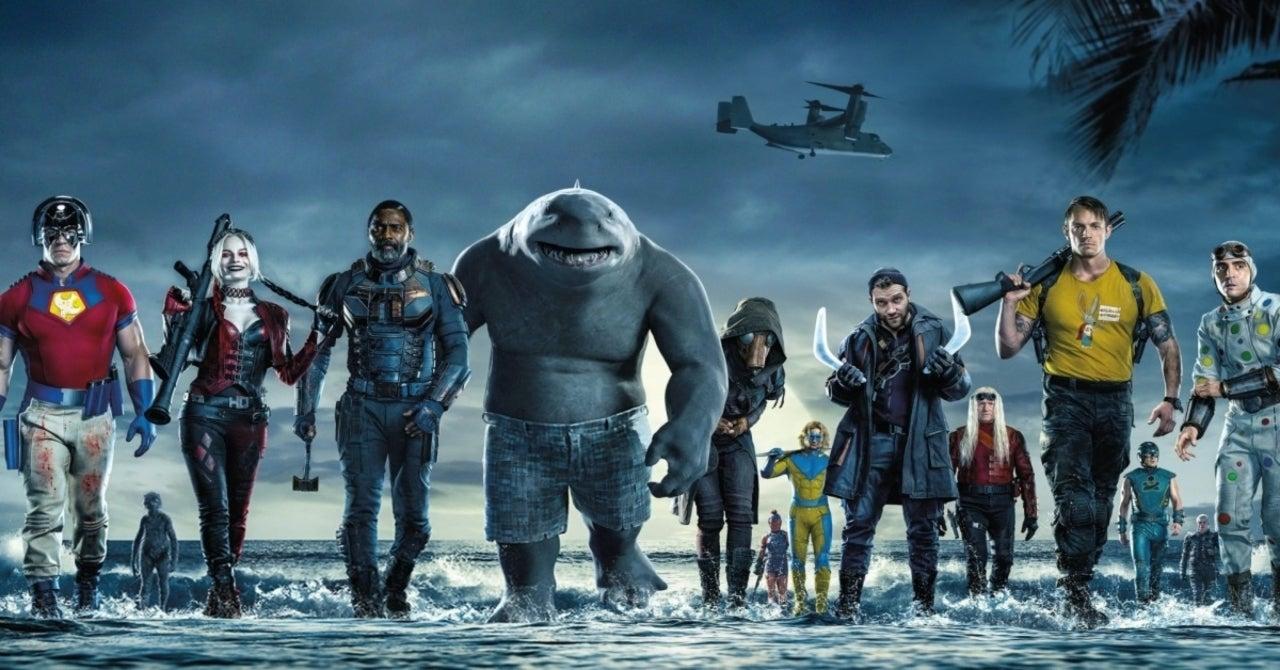
DC’s increasingly desperate attempts to rival the success of The Marvel Universe seem to be exemplified by this muddled and over-inflated offering from James Gunn. Not to be confused with David Ayers Suicide Squad, this is The Suicide Squad, but, much like its predecessor, it suffers from a bad case of #toomanysuperheroes. While it’s surely a more successful attempt to put those titular antiheroes onscreen, it still feels overlong, overcomplicated and, quite possibly, just over.

It starts well enough with the ruthless Amanda Waller (Viola Davis, playing it straight) recruiting convicted hitman Savant (Michael Rooker) for a dangerous mission. She offers him an opportunity to reduce his prison sentence if he manages to survive, but adds the pesky complication that, if he tries to bail, a device in his head will explode. We then meet the rest of the team, one of whom we know from the first film and the rest of whom seem expendable. The familiar face belongs to Colonel Rick Flag (Joel Kinnaman) and it soon becomes clear that his team only exists to serve as a distraction, while the real squad, led by Bloodsport (Idris Elba), gets on with the actual mission. He’s joined by another character we’ve met before, Harley Quinn (Margot Robbie), and by some very odd newbies, including Peacemaker (John Cena), Polka-Dot Man (David Dastmalchian), King Shark (a man with a shark’s head voiced by Sylvester Stallone) and Ratcatcher 2 (Daniela Melchior) who… well, suffice to say if you suffer from a fear of rodents, this film may not be for you.

There follow two hours and twelve minutes of fights, explosions, stunts and some explicitly bloody dismemberment, sailing very close to the wind considering the film’s 15 certificate. We’re treated to several shots of King Shark eating his opponents, which is probably meant to be comical, but is way too graphic for comfort. There’s also a sort of plot here, though it’s frankly bananas. The squad are sent to a South American country, where – in a ‘secret’ laboratory – scientists, under the supervision of Thinker (Peter Capaldi), are rearing a… giant starfish called Starro the Conqueror… yes, I know, at times it feels like a hyperactive six-year-old wrote the screenplay.

Like many of these big budget spectaculars, it’s a game of diminishing returns. There are too many punch ups, too many silly one-liners and too long a running time. Around the hour and a half mark, I’m starting to glance at my watch. Robbie’s Harley Quinn is by the far the best character, and she gets the film’s finest moment, an extended sequence where she escapes from prison to the tune of Just a Gigalo, the copious blood spatter replaced by flurries of animated flowers. It’s delightful and, if the rest of it were up to this standard, this would be a more positive review.

As it stands, it’s hard to be enthusiastic. A post-credits sequence which appears to offer a spin-off featuring one of the story’s less likeable characters is hardly an alluring prospect. Maybe I’ll give that one a miss.

3.4 stars

Philip Caveney

The Sparks Brothers

02/08/21

Cameo Cinema

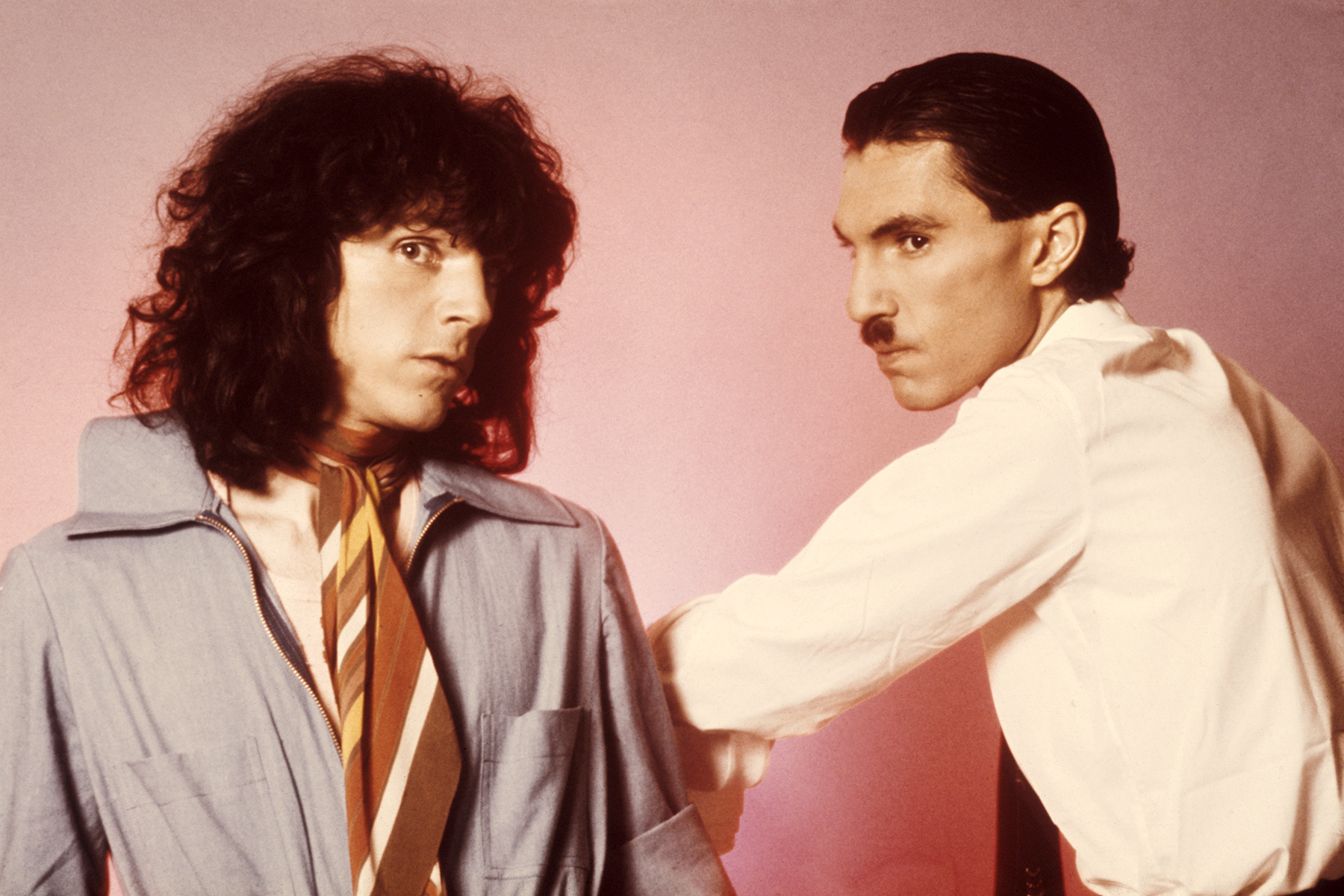
Picture this. It’s 1973 and I’m sitting at home watching Top of the Pops, which, when I think about it, is pretty much all I ever did in 1973. And then, quite without warning, up pops a band called Sparks and they’re really, REALLY weird. The keyboard player is a mop-headed energetic hunk, while his older brother sits motionlessly at a keyboard looking like a villain from a Buster Keaton movie. The song, of course, is This Town Ain’t Big Enough for the Both of Us, and it isn’t like anything I’ve ever heard before. The next time I see my mates (we’re in a band, obviously), we’re all like, ‘Did you see those guys on TOTP? What the fuck was that?’

And from there, Sparks pretty much disappeared off my radar. I assumed that they’d packed it in, called it a day, broken up because of ‘musical differences.’ But, as it turned out, they hadn’t.

Over a fifty year career, they kept right on going, creating their idiosyncratic music and releasing new records every so often, some of which were acclaimed, others perceived as abject failures. Though their backing musicians changed, the core duo of Ron and Russell Mael remained intact. Over those years, it turns out, they picked up a legion of fans, many of them musicians themselves and one of whom was the film director Edgar Wright. When Wright asked, ‘Why has there never been a film about Ron and Russell Mael?’ he repeatedly met with a baffled silence. So, eventually, he decided to make one himself.

And here’s the result: a forensic (and, it has to be said, lengthy) study of the Sparks phenomenon, featuring interviews with a whole horde of musicians, writers, comedians and movie makers, all of whom, unlike me, kept watching and listening to Sparks, and many of whom are all too ready to admit that they were greatly influenced by the band. (One of them, Todd Rundgren, who produced their first album when they were known as Half Nelson, is surely a man who deserves this kind of documentary treatment all to himself, but I digress.)

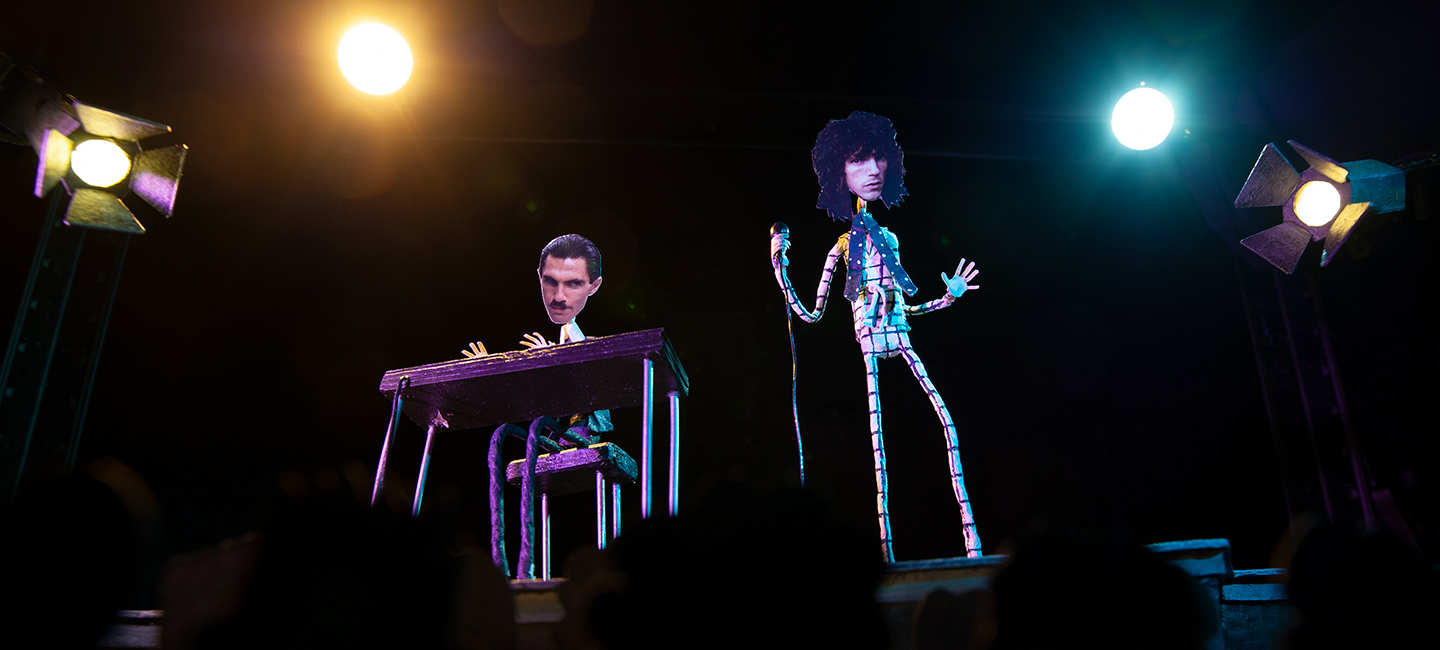
The Sparks Brothers is fascinating in many ways. For one thing, it pretty much eschews the main thrust of your average rock doc, which is to get under the skin of its subject and break down any enigma that might have been there. Somehow, Ron and Russell emerge from this film every bit as enigmatic as they were before. All we really learn about them is that they are workaholics. Wright deals with every single album release over two-hours-and-twenty minutes, and we get to see the two men age as their story unfolds, but Wright’s magpie-like approach (using documentary and newsreel footage, stop frame animation, montage and interviews) means that the film never overstays its welcome. The sad truth about the Maels seems to be that they steadfastly refused to stand still. If they’d made slight variations on their successful third album, Kimono My House, they’d doubtless have been filling stadiums worldwide. But, as Oscar Wilde observed, versatility is a curse, and it is their very need to keep reinventing themselves that has ultimately limited their appeal. But it’s not just about keeping their fans happy. As many musicians admit here, they were a massive influence on their peers, Ron’s synth-based riffs being ‘borrowed’ from everyone from Erasure to Duran Duran.

It seems like an auspicious time to bring the Maels back into the limelight, with their Leos Carax-directed musical Annette due to arrive in cinemas sometime soon – and promising to be every bit as eccentric as the Maels themselves. Until then, The Sparks Brothers is well worth your time.

Of course it will help if you’re already a fan, but really, you don’t have to be.

4.4 stars

Philip Caveney