Winona Ryder

Beetlejuice Beetlejuice

06/09/24

Cineworld, Edinburgh

The juice is loose!

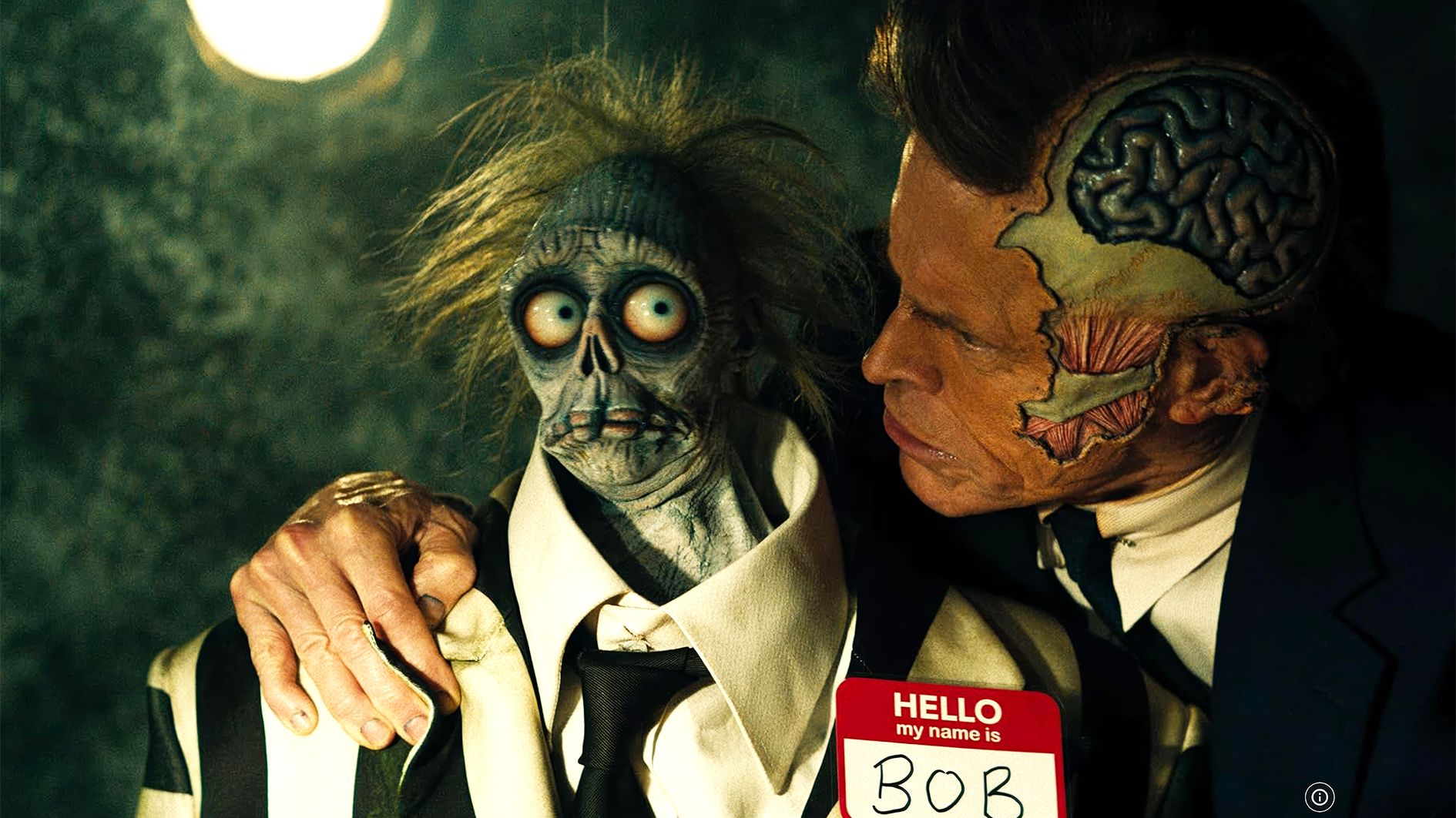
Look, there’s no getting around the fact that Beetlejuice Beetlejuice isn’t a very good film. That’s not to say I don’t enjoy it. I do; I’m not immune to nostalgia. I was seventeen when the original movie was released and I loved Winona. “I myself am strange and unusual,” was every teenage goth girl’s clarion call and Lydia Deetz was my style icon for the next decade. So of course I’m watching Tim Burton’s long-awaited sequel on the day of its release.

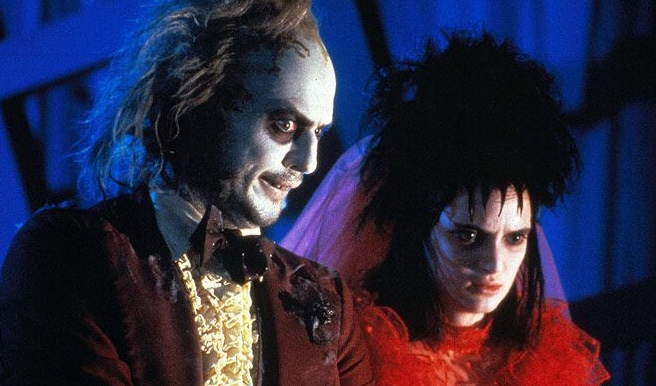
It’s been thirty-six years but Ryder has barely changed. Nor has Michael Keaton: his Beetlejuice is as repellant as ever. Still, at least his lust for Lydia is a bit less creepy now that she’s an adult.

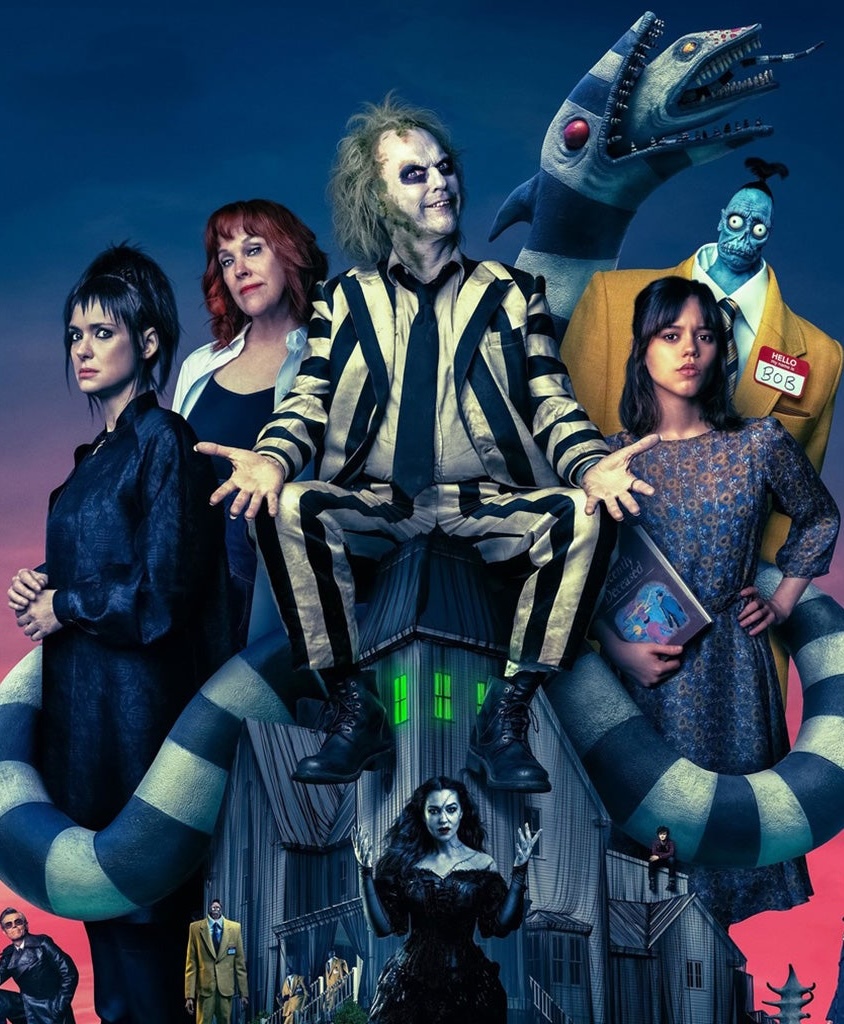
Adult Lydia is a celebrated medium. This makes me laugh: it’s gloriously obvious. She’s in the middle of recording her TV show when her stepmum, Delia (Catherine O’Hara) calls with bad news: Lydia’s dad, Charles, has died. It’s time to head back to the haunted house in Winter River, with dodgy boyfriend Rory (Justin Theroux) and angry daughter Astrid (Jenna Ortega) in tow. It’ll be fine. All she has to do is stay away from the model village in the attic and make sure no one says “Beetlejuice” three times.

Beetlejuice. Beetlejuice. Beetle… Oops.

Sadly, from hereon in, the plot veers out of control, as wild and unpredictable as its eponymous antihero. In the underworld, a brilliant sequence where Beetlejuice’s ex-wife, Delores (Monica Bellucci), declares vengeance on him even as she’s stapling her dismembered body parts back together peters out into nothing, squandering a fun idea and a strong performance. Willem Dafoe is similarly under-used as Wolf Jackson, a dead actor struggling to differentiate between himself and the long-running character he played. It’s a neat set-up with nowhere to go. Meanwhile, in the land of the living, Rory is pressuring Lydia to marry him, Delia is turning Charles’ death into an art installation, and Astrid – still mourning her own dad, Richard (Santiago Cabrera) – has met a cute boy (Arthur Conti), who likes reading almost as much as she does… It’s scattershot to say the least.

Of course, when you throw this much at something, some of it sticks – but there’s a lot of wastage. The animated sequence showing Charles’ death is nicely done, but it feels like a segment from a different film. Even more out of place is the black-and-white Italian flashback, the nod to horror pioneer Mario Bava an easter egg for the wrong audience.

It’s much more of a kids’ film than I remember. In fact, Beetlejuice Beetlejuice reminds me of Alice in Wonderland (Lewis Carroll’s original, not Burton’s dismal remake). The imagery is remarkable, there are a lot of memorable characters and some gorgeous set pieces – but the rambling story doesn’t make much sense. Still, I guess there are worse insults. Alice isn’t exactly a failure, and maybe Beetlejuice X 2 will prove similarly popular. At tonight’s screening, the prevalence of gleeful tweenagers in stripy costumes suggests it well might.

So why not go see it and judge for yourself? If you’re happy to sit back for a couple of undemanding hours of gothic silliness, buy your ticket now. You get a free demon possession with every exorcism…

3 stars

Susan Singfield
Heathers: The Musical

28/03/23

Cameo Cinema, Edinburgh

In 1988, I was seventeen – and so was Veronica Sawyer. “You’re right; it really blows.” Luckily for me, high school in Abergele wasn’t quite as combative as it was in Sherwood, Ohio, and I never had to murder anyone. I did love Heathers though, and not just because Winona Ryder starred in it.

Written by Daniel Waters and directed by Michael Lehmann, the gloriously anarchic Heathers soon gained cult film status, so it’s no surprise that it morphed into a musical a decade or so later, nor that this stage version also has longevity. Here we are in 2023; unlike me, Veronica is still a teenager, still navigating the halls of Westerberg High, still trying to fit in.

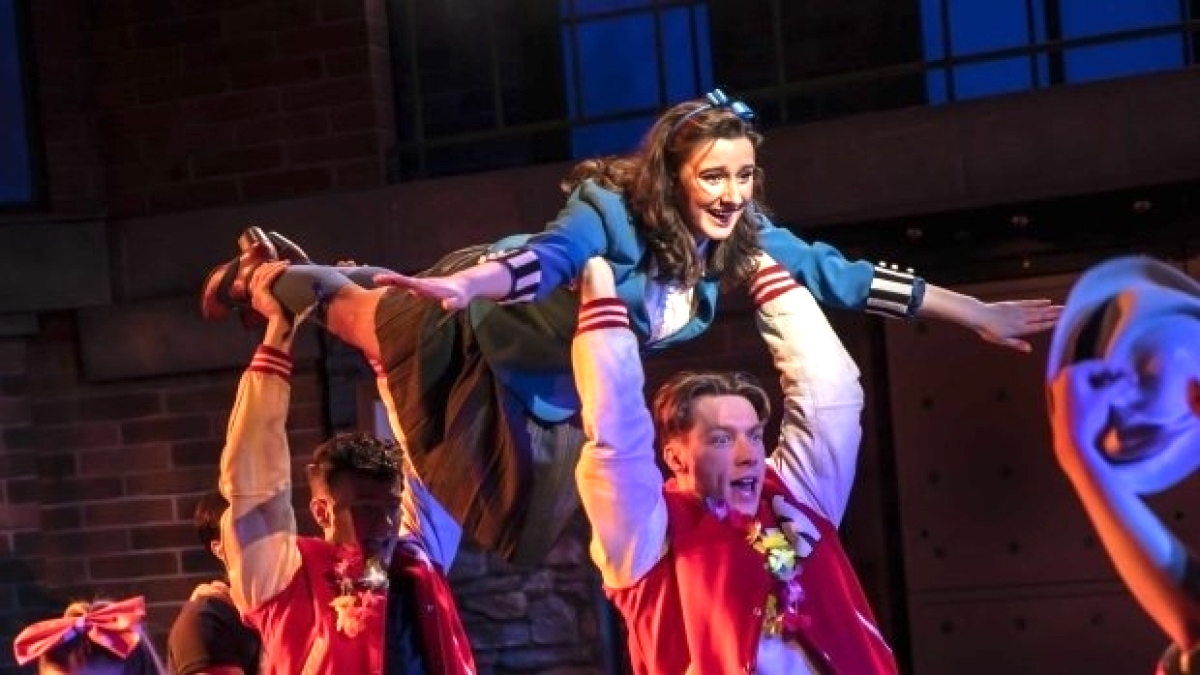
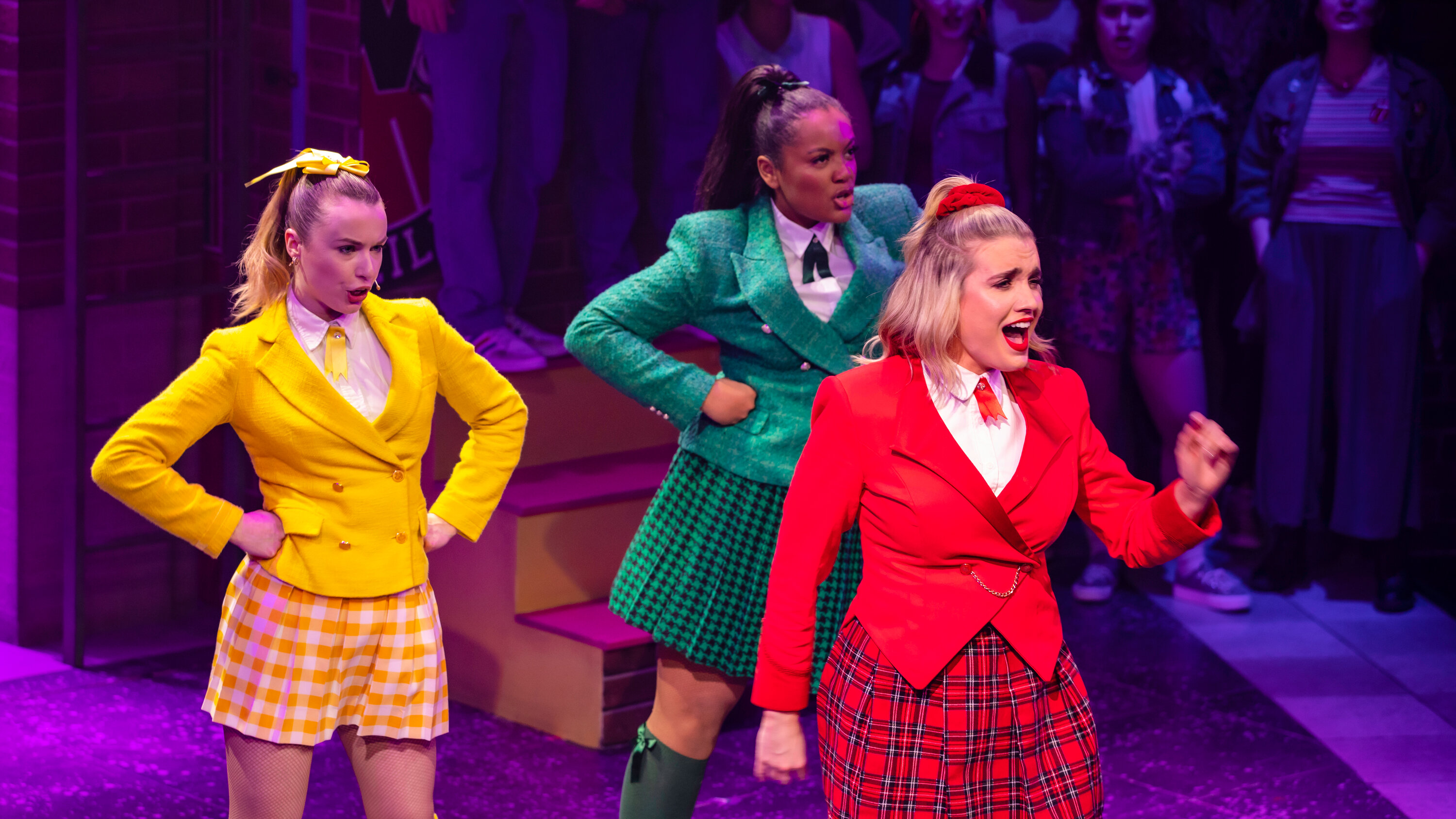
The plot is sprawling and bonkers, the humour dark. Tired of being bullied, Veronica (Ailsa Davidson) comes up with a cunning plan: she will use her excellent forgery skills to bribe the three most popular girls at school into letting her hang around with them. In return for a fake hall pass or two, Heathers Duke, McNamara, and Chandler (Vivian Panka, Teleri Hughes and Maddison Firth) give Veronica a makeover and the status she craves. And sure, she feels bad about turning her back on her best pal, Martha (Mhairi Angus), but it’s a matter of survival, right?

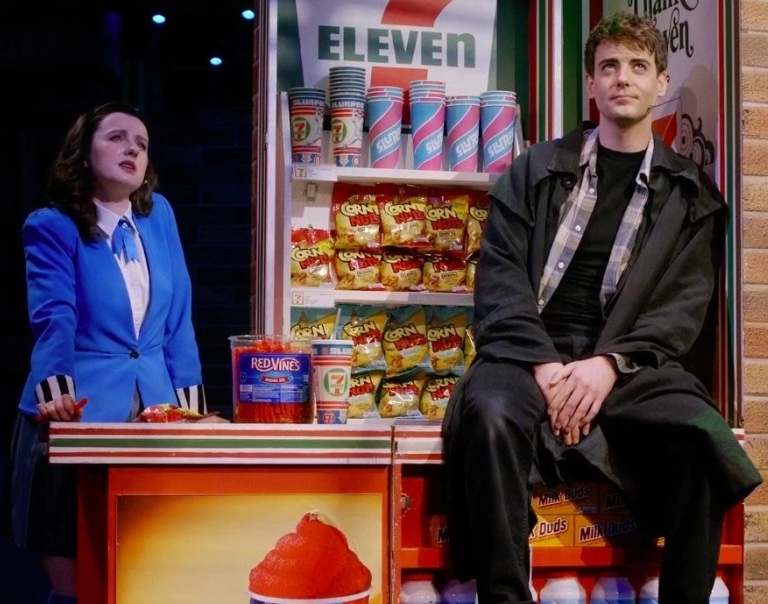
Except not everyone survives. Heather Chandler’s cruelty becomes too much for Veronica, and she longs to escape the stifling ‘friendship’. Enter bad boy JD (Simon Gordon). He takes an interest in Veronica’s problems – and offers some pretty drastic solutions. For a while, Veronica is drawn to his sexy brand of nihilism, but soon realises he is dangerous. Can she extricate herself before even more damage is done?

It’s no easy feat to make a rambunctious, feelgood musical about murder, attempted rape, homophobia, suicide and school shootings, but writers Kevin Murphy and Laurence O’Keefe seem to have done just that. Despite its age, the show clearly still resonates: tonight’s screening is full, and the audience is mostly young women – who probably only know Winona from her role in Stranger Things. It’s an unabashedly schlocky piece of theatre, as camp as Christmas and – despite the body count – just bursting with life. I like the slight softening of JD’s character (he’s less sympathetic in the film, without as much backstory), and the constant presence of Heather Chandler’s kimono-clad ghost works well: she’s the most dynamic character in the play, and it would be a shame to lose her in the first act.

Directed by Andy Fickman, the chorus numbers are vibrant and the choreography suitably zippy, maximising the potential of The Other Palace Theatre’s small stage. Davidson shines in the lead role, her vocals impressive and her characterisation spot on. With its bright colour palette and bold delivery, Heathers provides the same kind of high-octane girl-power as Six.

“I know who I’m eating lunch with on Monday. Do you?”

4.3 stars

Susan Singfield

Little Women

15/12/19

Here, at last, are screen versions of the Little Women I’ve had in my head since I read the book when I was eight. Headstrong, unconventional Jo, born to write and desperate for a bigger life; romantic Meg, yearning for riches but choosing (relative) impoverishment with her one true love; shy, saintly, not-long-for-this-world Beth; and Amy, little Amy, all drive and ambition, always trying to impress (or beat) Jo.

I grew up with these girls, and every adaptation I’ve seen has failed to realise them convincingly. Except Jo, of course; there are lots of lovely screen-Jos (Katherine Hepburn, June Allyson, Winona Ryder). She’s the most captivating character, the Lizzie Bennett: it’s easy for a good actor to capture her spirit. But her movie sisters have always been a disappointment to me, even when played by talented performers. They’ve never felt right. Until now.

Saoirse Ronan makes a marvellous Jo (of course she does); Emma Watson perfectly embodies Meg’s earnest longing; Eliza Scanlen imbues Beth with strength as well as a sweet nature. But it’s Florence Pugh’s pugnacious, jealous Amy that has me almost exclaiming with delight. Here she is: a proud and lively girl, both friend and rival to her big sister Jo. She’s bloody brilliant.

Writer-director Greta Gerwig shows us once again how talented she is: this is Little Women writ large, barely deviating from the source material, but bringing contemporary resonances to the fore. There’s less piety and sermonising here than there is in Alcott’s novel, and the chronology is disrupted, so that we first meet Jo as an already published, ambitious woman, negotiating the terms for her latest stories while working in New York. The girls’ childhood is shown through a series of flashbacks, and we flit back and forth in time, never confused, even though the same actors perform throughout, ageing ten years through hairstyles, clothing, poise and gait. This structure gives prominence to the women the girls become, contrasting their childhood aspirations with what they actually achieve.

There’s such vivacity and energy here, it’s impossible not to be charmed; Gerwig has captured the very heart of Alcott’s fictionalised autobiography. The story arc actually works better in the film, and the audacious ending is a genuine master-stroke.

Timothée Chalamet is an inspired choice for Laurie, depicting with ease the neighbour’s loneliness and need for love, as well as his playful decadence. Laura Dern makes an excellent Marmee, and who else but Meryl Streep could have played Aunt March to Ronan’s Jo?

I have a couple of quibbles. I don’t know why middle-aged, paunchy, German Professor Bhaer is replaced with a young, handsome Frenchman (Louis Garrel);  why shouldn’t Jo establish a less conventional friendship? And I would like to see more of Meg: her character is well-established, but her storylines are too truncated, I think.

But honestly, these are just tiny niggles. This movie makes me really happy; indeed, the last ten minutes have me grinning so widely I actually hurt my face. Bravo! A fabulous film to end the year.

5 stars

Susan Singfield