Willem Dafoe

Saturday Night

11/01/25

Cineworld, Edinburgh

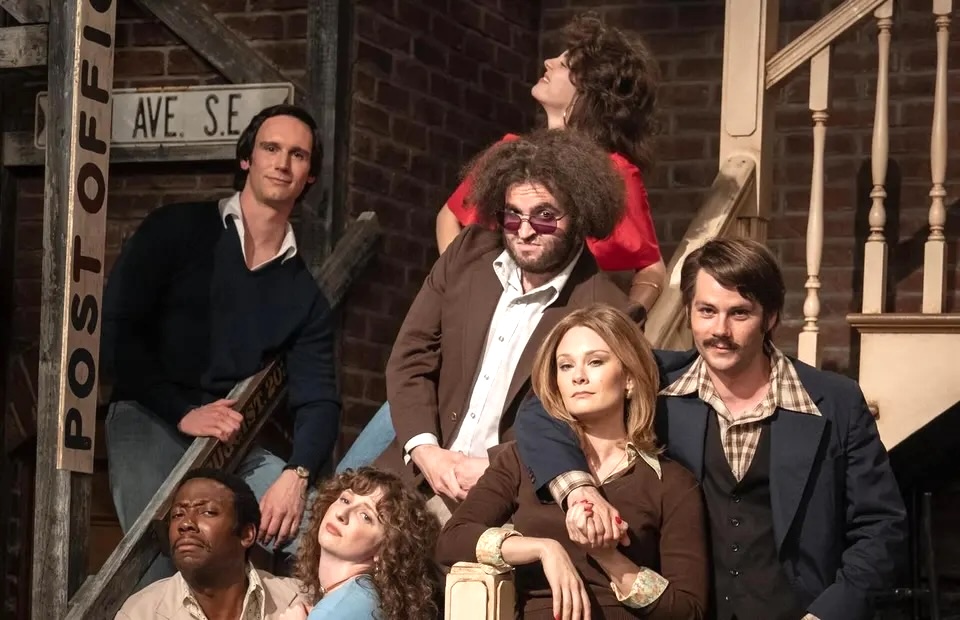
It’s Saturday night, so this Unlimited screening of er… Saturday Night feels entirely appropriate. Directed by Jason Reitman, who also co-wrote the screenplay with Gil Kenan, it tells the inside story of a turbulent midnight production at NBC studios, New York, on the 11th October 1975. Saturday Night Live is of course, still running, a major American institution, but Reitman’s film shows how close it came to never being transmitted in the first place.

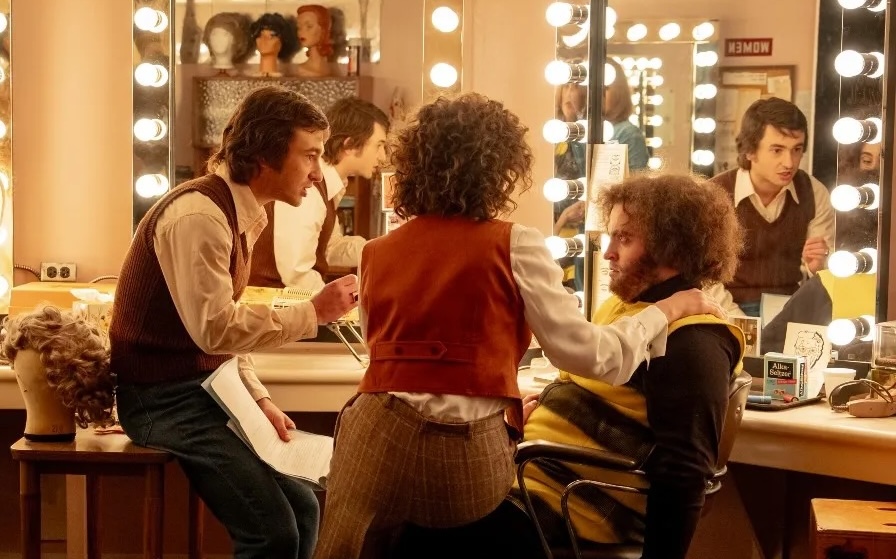
Ambitious young TV producer, Lorne Michaels (Gabrielle LaBelle), his wife and lead writer, Rose Schuster (Rachel Sennot), and their understandably nervous co-producer, Dick Ebersol (Cooper Hoffman), find themselves trying to control an anarchic bunch of comedians and musicians. They include the assured front-runner, Chevy Chase (Cory Michael Smith), the ever-adaptable Dan Ackroyd (Dylan O’ Brian) and the doomed, drug-raddled John Belushi (Matt Wood), who hasn’t even managed to sign his contract.

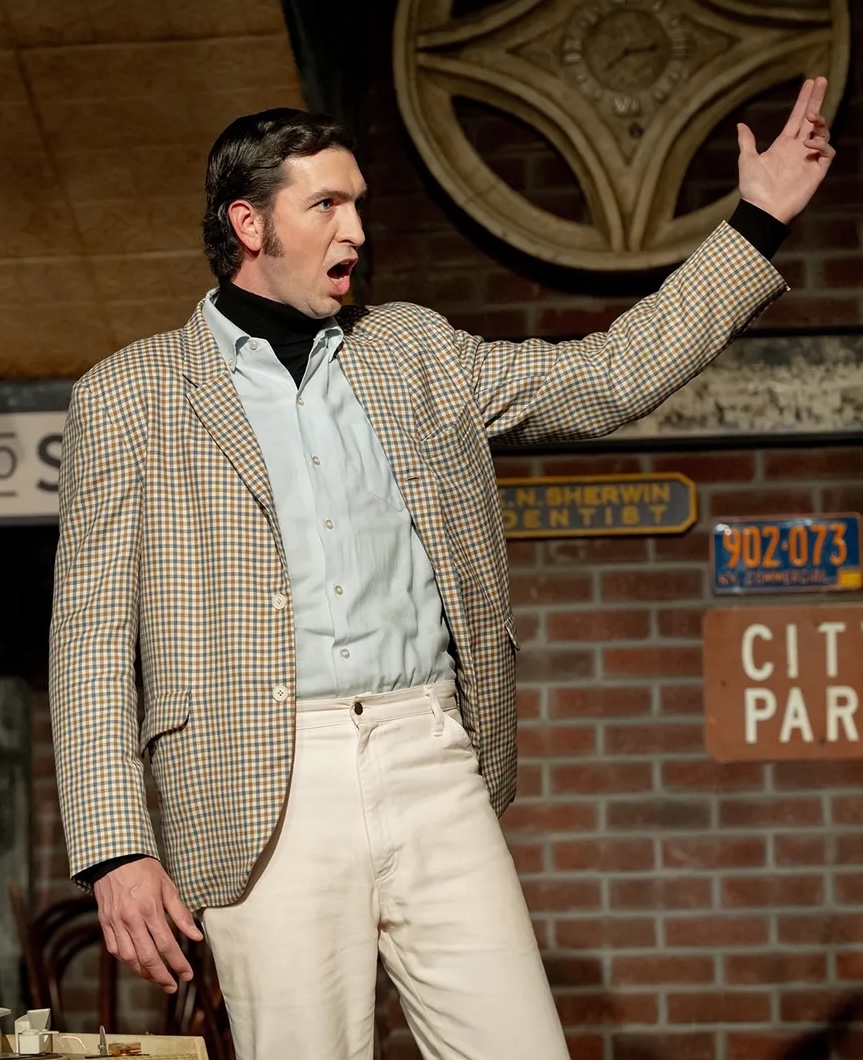
As Michaels wanders disconsolately around the studio, trying to instil some kind of order to the deranged proceedings, he’s uncomfortably aware of old hands gleefully anticipating a disaster of Titanic proportions. Sneering TV producer Dave Tebet (Willem Dafoe) and legendary presenter Milton Berle (JK Simmons) both offer scene-stealing cameos. A special nod should also go to Succession’s Nicholas Braun in the duel roles of Andy Kaufman and Jim Henson, the former weird and inexplicably funny, the latter dismayed and strangely puritanical about the ways in which his Muppet creations have been despoiled by their co stars.

There’s a terrific sense of urgency about Saturday Night. I’m alerted to the fact that time is ticking away from the opening scenes onwards and the various confrontations, problems and disasters that occur are initially well handled – but it’s hard to instil any sense of real jeopardy when the world knows that everything is going to turn out fine in the end. And, while that sense of propulsion works well at the beginning and end of the film, there’s a somewhat lumpen middle section that never seems entirely sure which direction to take.

American viewers will be invested in the story, but it doesn’t mean as much here in the UK where SNL isn’t as well-known – and audiences whose only connection to any of these stars is via the National Lampoon and Ghostbusters films may struggle to identify with it.

But that said, there’s plenty here to enjoy. I particularly relish Jon Batiste’s spirited impersonation of Billy Preston and Naomi McPherson’s turn as Janis Ian, singing At Seventeen. LaBelle’s performance as Michaels is also assured, pinning down the inner struggle between the man’s vulnerability and his soaring ambition.

This film won’t be for everyone, but for those who were enthusiastic cinema-goers in the 1970s, it’s fascinating to witness how many stellar (and sometimes spectacularly short-lived) acting careers were launched by what happened on that fateful Saturday Night.

3.6 stars

Philip Caveney

Nosferatu

02/01/25

Cineworld, Edinburgh

Most cinema fans have a blind spot: a director who has plenty of ardent fans, but who they just don’t get. Mine is the American director, Robert Eggers. Since his debut in 2015 with The Witch, each successive film has been received rapturously by a devoted following, while I remain underwhelmed. I quite enjoyed his fourth effort, The Northman, but was was left cold by its predecessor, The Lighthouse, and sadly I’m in (if you’ll forgive the pun) the same boat with Nosferatu, which has achieved Eggers’ biggest ever opening weekend. An extended director’s cut is already being seriously talked about. I view the film at my earliest opportunity, really wanting to enjoy it, ready to be pleasantly surprised, but sadly, once again, my hopes are confounded.

Nosferatu began life as a silent movie way back in 1922. Directed by FW Murnau, it was an unauthorised adaptation of Bram Stoker’s Dracula (or to put it in modern parlance, a rip-off). It was, understandably, the subject of a court order from Stoker’s heirs, who demanded that all copies of the film should be destroyed. But, against all the odds, a few prints survived the cull and Murnau’s plagiarised brainchild went on to become a much-lauded classic.

High time for a reboot then? Well okay, provided you discount Werner Herzog’s 1979 adaptation, Nosferatu the Vampyre, which cast Klaus Kinski in the role of the evil Count Orlok, and which I thought made a pretty decent job of it.

But since childhood, apparently, Eggers has wanted to film his version, so here it is, weighing in at a ponderous two hours and twelve minutes. It feels pointless to relate the plot, since in all but a few details, it’s Dracula with the names and locations changed. Bill Skarsgård takes the thankless role of the supernatural Count, compelled to lurk in the shadows, sporting an extravagant moustache and croaking risible lines in a subsonic rumble. It sounds like he’s gargling with porridge. Lily-Rose Depp plays Ellen, the unfortunate subject of the Count’s lust, while Nicolas Hoult is her husband, estate agent Thomas Hutter. He has been charged with the task of heading out into the middle of the Carpathians to sort out Count Orlok’s plans to up-sticks and move to Thomas’s home town of Wisborg, Germany. Of course, there must also be a Van Helsing figure in the mix and that role falls to Eggers’ regular muse Willem Dafoe as Professor Albin Eberhart Von Franz.

To give the film its due, it looks pretty impressive in 35 mm, with many of Murnau’s original scenes recreated in meticulous detail. The costumes and makeup are handsomely done and Depp, Hoult and Dafoe all submit peerless performances, backed up by a cast of dependable actors. But the glacial pace of the proceedings makes me much too aware of how long the film is and, judging by the general restlessness of the audience at tonight’s screening, I’m not the only one suffering. There’s an endless trooping back and forth to the toilets.

What’s more, if the idea of an adaptation is to take the opportunity to offer a fresh perspective, why stick so slavishly to what has gone before? Why retain the misogynistic storyline where a woman, as punishment for her youthful sexual desires, now has to submit to a predatory man’s advances in order to save the husband she really loves? Sure, the story is set in the 1800s but we’re in the 2020s and it’s not some precious relic that can’t be tweaked.

What I mostly can’t forgive is the fact that this is supposed to be a horror film and yet nothing here is in the least bit scary, just occasionally bloody and unpleasant. Those with an aversion to rats might want to give this a swerve as there are moments where the creatures run riot across the streets of the city and, in some scenes, scamper gleefully across the bodies of the actors. I stick it out to the end but frankly, I’m glad when it’s over.

There will no doubt be plenty of devotees queuing up to tell me I’ve got it wrong, but I can do nothing more about it. I’m just not a fan of the Robert Eggers’ style. The news that his next planned film is a reboot of Jim Henson’s muppet/David Bowie crossover, Labyrinth (I promise I’m not making this up), fills me with more terror than Nosferatu ever could.

2.8 stars

Philip Caveney

Beetlejuice Beetlejuice

06/09/24

Cineworld, Edinburgh

The juice is loose!

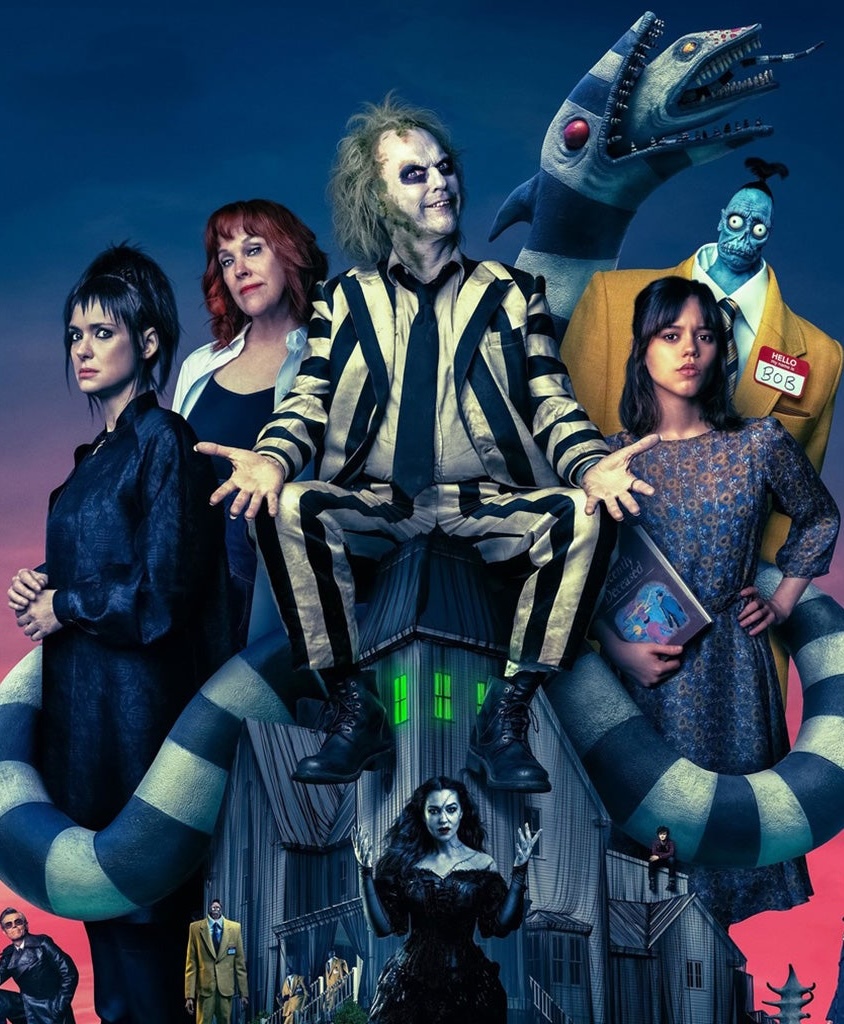
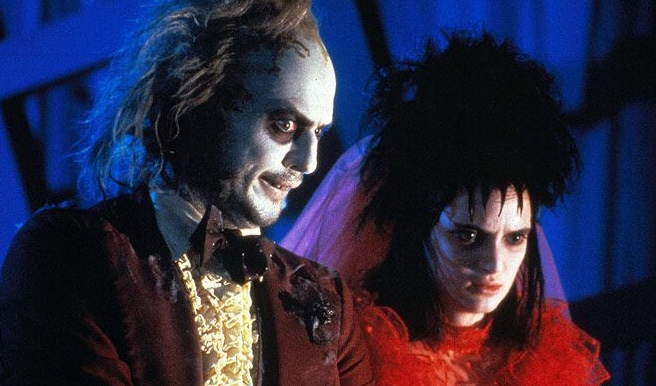
Look, there’s no getting around the fact that Beetlejuice Beetlejuice isn’t a very good film. That’s not to say I don’t enjoy it. I do; I’m not immune to nostalgia. I was seventeen when the original movie was released and I loved Winona. “I myself am strange and unusual,” was every teenage goth girl’s clarion call and Lydia Deetz was my style icon for the next decade. So of course I’m watching Tim Burton’s long-awaited sequel on the day of its release.

It’s been thirty-six years but Ryder has barely changed. Nor has Michael Keaton: his Beetlejuice is as repellant as ever. Still, at least his lust for Lydia is a bit less creepy now that she’s an adult.

Adult Lydia is a celebrated medium. This makes me laugh: it’s gloriously obvious. She’s in the middle of recording her TV show when her stepmum, Delia (Catherine O’Hara) calls with bad news: Lydia’s dad, Charles, has died. It’s time to head back to the haunted house in Winter River, with dodgy boyfriend Rory (Justin Theroux) and angry daughter Astrid (Jenna Ortega) in tow. It’ll be fine. All she has to do is stay away from the model village in the attic and make sure no one says “Beetlejuice” three times.

Beetlejuice. Beetlejuice. Beetle… Oops.

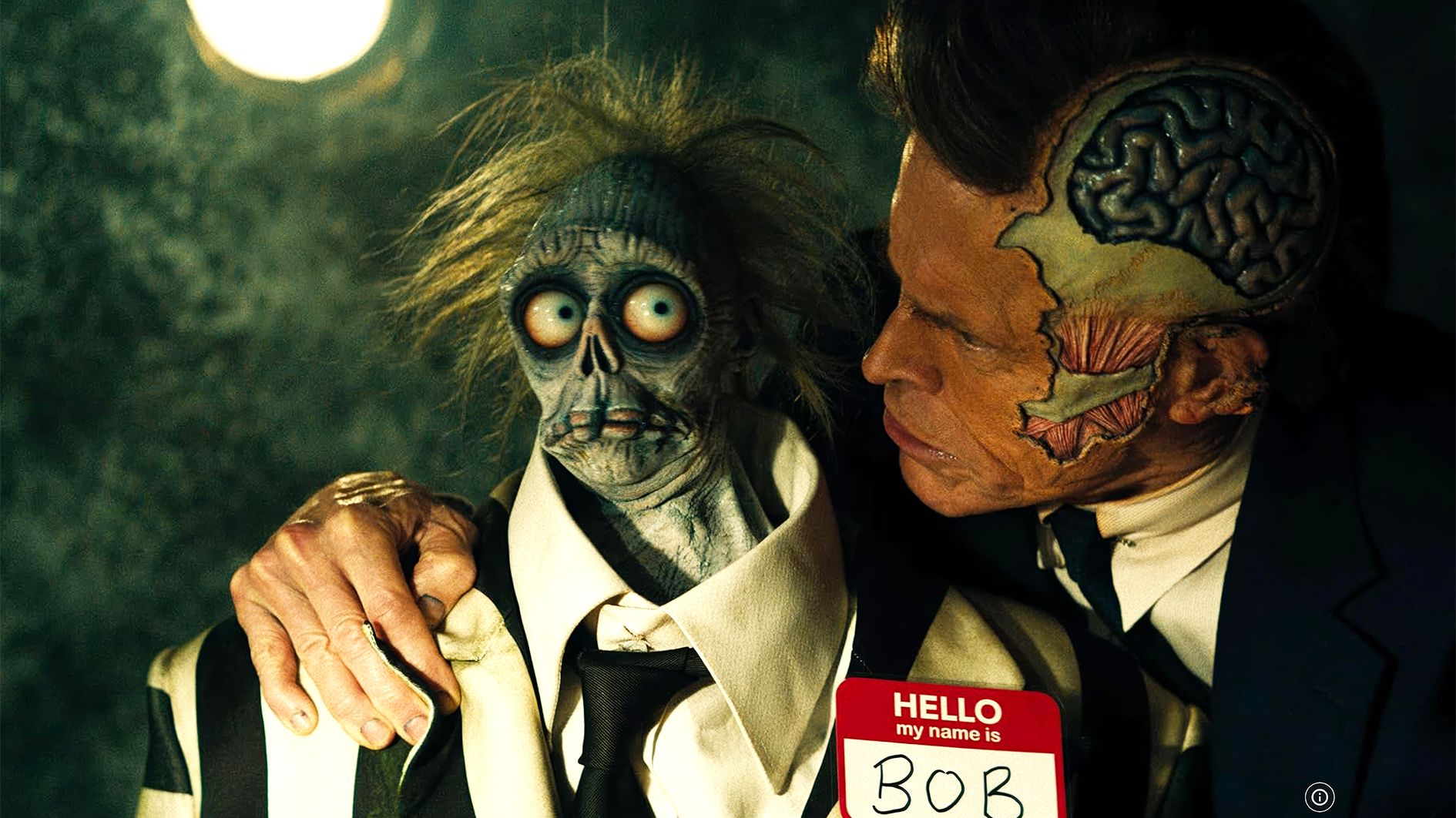
Sadly, from hereon in, the plot veers out of control, as wild and unpredictable as its eponymous antihero. In the underworld, a brilliant sequence where Beetlejuice’s ex-wife, Delores (Monica Bellucci), declares vengeance on him even as she’s stapling her dismembered body parts back together peters out into nothing, squandering a fun idea and a strong performance. Willem Dafoe is similarly under-used as Wolf Jackson, a dead actor struggling to differentiate between himself and the long-running character he played. It’s a neat set-up with nowhere to go. Meanwhile, in the land of the living, Rory is pressuring Lydia to marry him, Delia is turning Charles’ death into an art installation, and Astrid – still mourning her own dad, Richard (Santiago Cabrera) – has met a cute boy (Arthur Conti), who likes reading almost as much as she does… It’s scattershot to say the least.

Of course, when you throw this much at something, some of it sticks – but there’s a lot of wastage. The animated sequence showing Charles’ death is nicely done, but it feels like a segment from a different film. Even more out of place is the black-and-white Italian flashback, the nod to horror pioneer Mario Bava an easter egg for the wrong audience.

It’s much more of a kids’ film than I remember. In fact, Beetlejuice Beetlejuice reminds me of Alice in Wonderland (Lewis Carroll’s original, not Burton’s dismal remake). The imagery is remarkable, there are a lot of memorable characters and some gorgeous set pieces – but the rambling story doesn’t make much sense. Still, I guess there are worse insults. Alice isn’t exactly a failure, and maybe Beetlejuice X 2 will prove similarly popular. At tonight’s screening, the prevalence of gleeful tweenagers in stripy costumes suggests it well might.

So why not go see it and judge for yourself? If you’re happy to sit back for a couple of undemanding hours of gothic silliness, buy your ticket now. You get a free demon possession with every exorcism…

3 stars

Susan Singfield

Kinds of Kindness

28/06/24

Cineworld, Edinburgh

You have to hand it to Greek director Yorgos Lanthimos – he doesn’t let the grass grow. His sublime adaptation of Poor Things only aired in January, bringing with it a well-deserved Oscar for Emma Stone – and already, here’s his next creation, a more stripped-back, contemporary tale: a kind of portmanteau featuring three different stories with the same actors playing different roles.

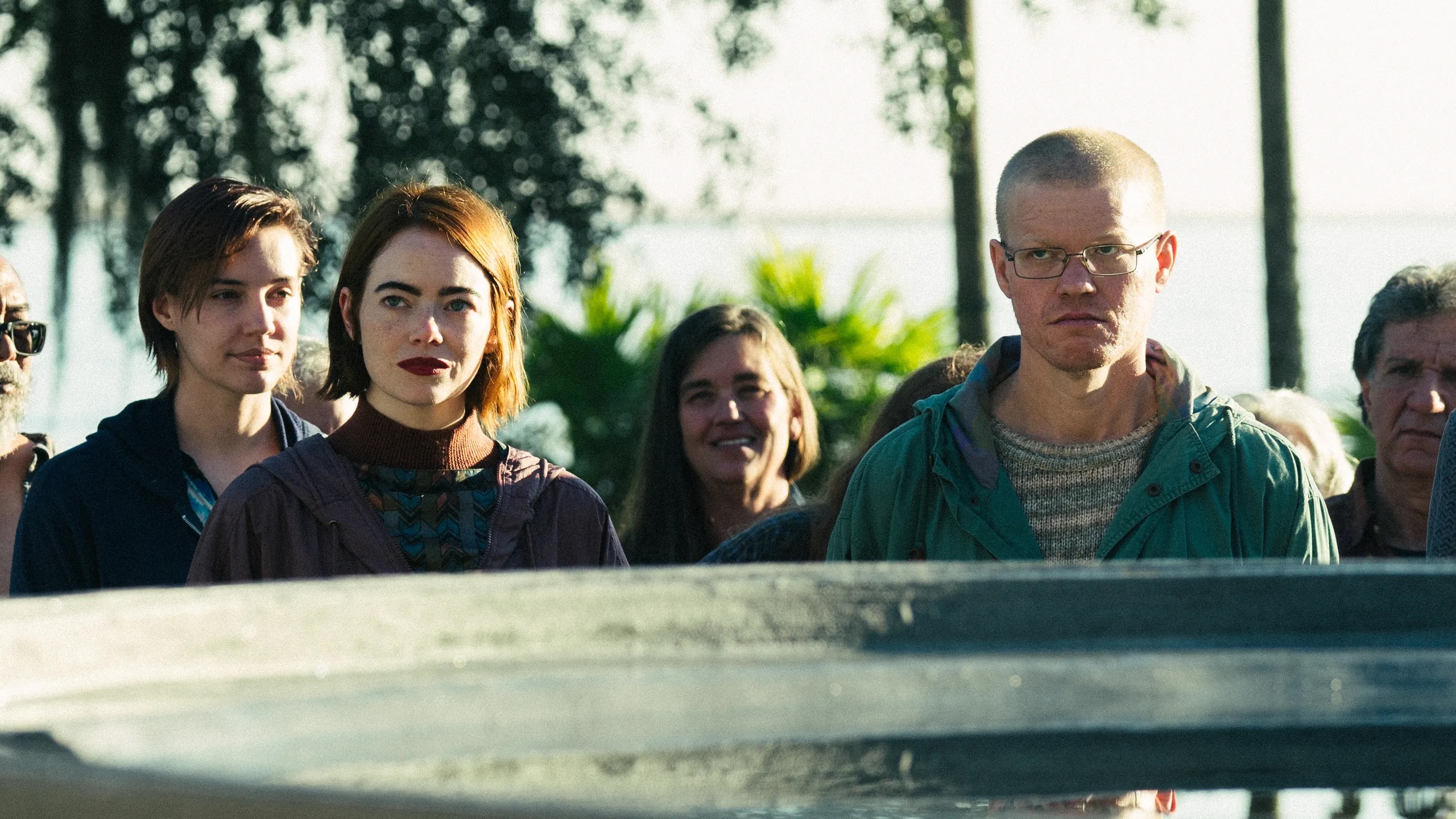
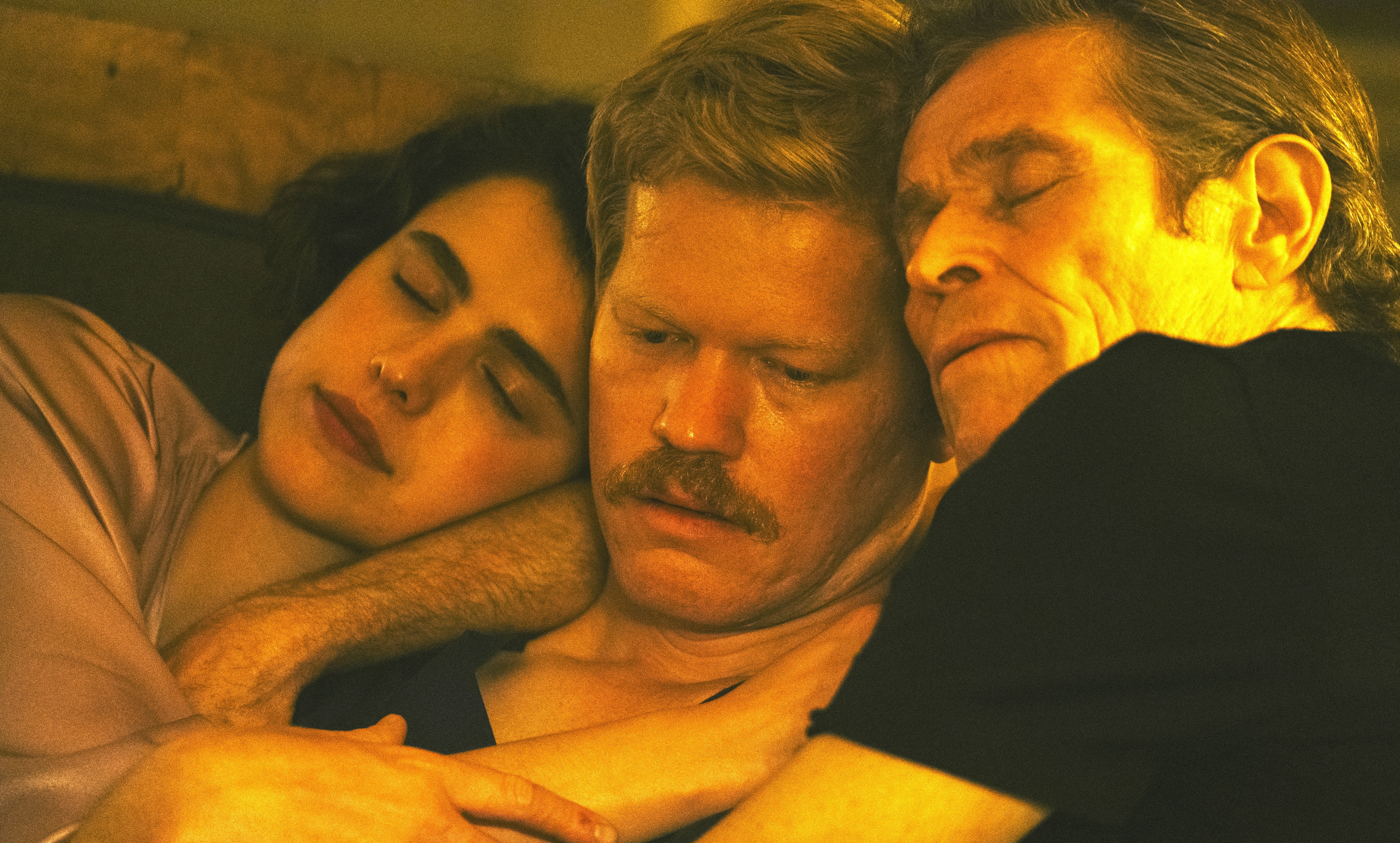
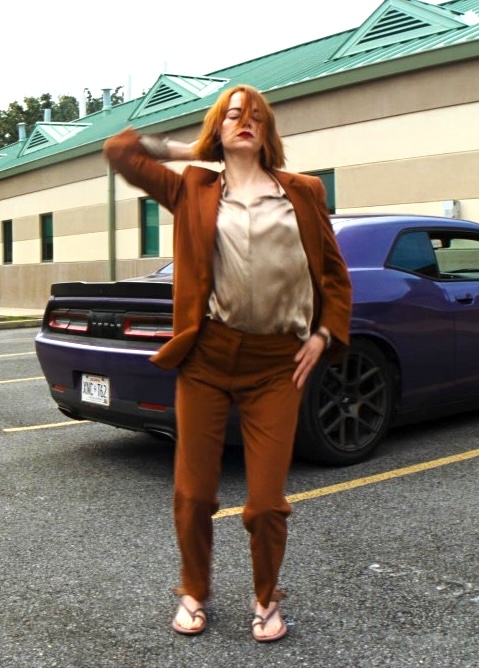
Kinds of Kindness, co-written by Lanthimos with long-time collaborator Efthiminus Filippou, begins with The Death of RMF. This is the story of Robert (Jesse Plemons), a submissive office worker who is compelled by his ruthless boss, Raymond (Willem Dafoe), to carry out a series of humiliating duties. He finally baulks at committing an extraordinary act of violence and is consequently cast out of Raymond’s orbit. Seeking solace, he attempts to forge a relationship with chance encounter, Rita (Emma Stone), but soon makes an unsettling discovery…

In the second tale, RMF is Flying, Plemons plays cop Daniel, whose wife, Liz (Stone), is missing, shipwrecked on a desert island. When she finally returns, Daniel starts to notice changes in her character and, in order to test her, he asks her to to prove her love for him.

In the concluding story RMF Eats a Sandwich, Plemons and Stone play Emily and Andrew, disciples in a weird cult run by Omi (Dafoe again). The two of them have been assigned a difficult task – to locate a mysterious woman who has the power to re-animate the now dead RMF (Yorgos Stefanakos). Could veterinarian Ruth (Margaret Qualley) be the woman to accomplish the impossible?

If this all sounds incomprehensible on paper, fear not, because Lanthimos takes enough time to delineate every character arc with such skill that there is never any confusion about what’s happening onscreen, even when it’s totally mind boggling. These stories are allegories focusing on three of life’s greatest preoccupations: work, marriage and religion – and, as the bizarre events unfold, audiences are led fearlessly through a series of interactions that alternate between harsh reality and haunting dreamscapes.

If I claimed I understood everything that happens here I’d be lying. I only know that this is exciting, unpredictable filmmaking, and – as I was with Poor Things – I’m fascinated to see large numbers of people turning out to see what Lanthimos has come up with. I can think of few other directors who have this ability to push boundaries and simultaneously satisfy the box office. I’m already excited to see what he will come up with next.

While this may not be the exquisite slice of cinematic perfection that was its predecessor, it’s nonetheless the work of a gifted director at the top of his game. Don’t miss it.

4.6 stars

Philip Caveney
Poor Things

12/01/24

Cineworld, Edinburgh

What is Yorgos Lanthimos’ secret? Since 2015’s The Lobster, he has released a string of wild, absurdly funny and generally unhinged films, the kind of projects you’d expect to see consigned to little art house cinemas, but – as we saw withThe Favourite – his inventive offerings are pulling in the big crowds and attracting top-flight performers to star in them. Tonight’s early evening screening is packed with a predominantly young crowd, who spill out afterwards, excitedly discussing what they’ve just watched. In an age where predictable comic-book films have ruled the roost for far too long, this is heartening to see.

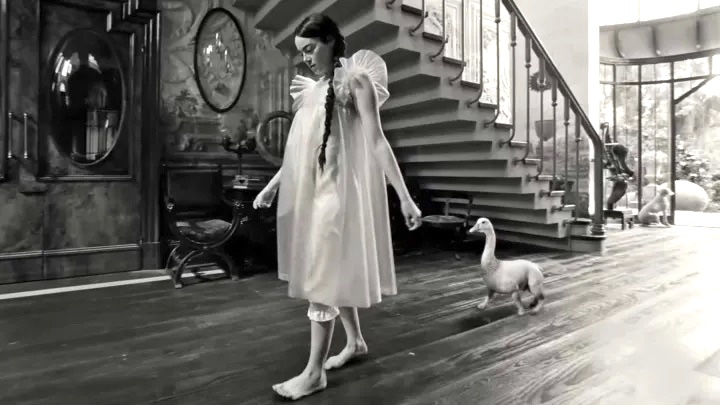
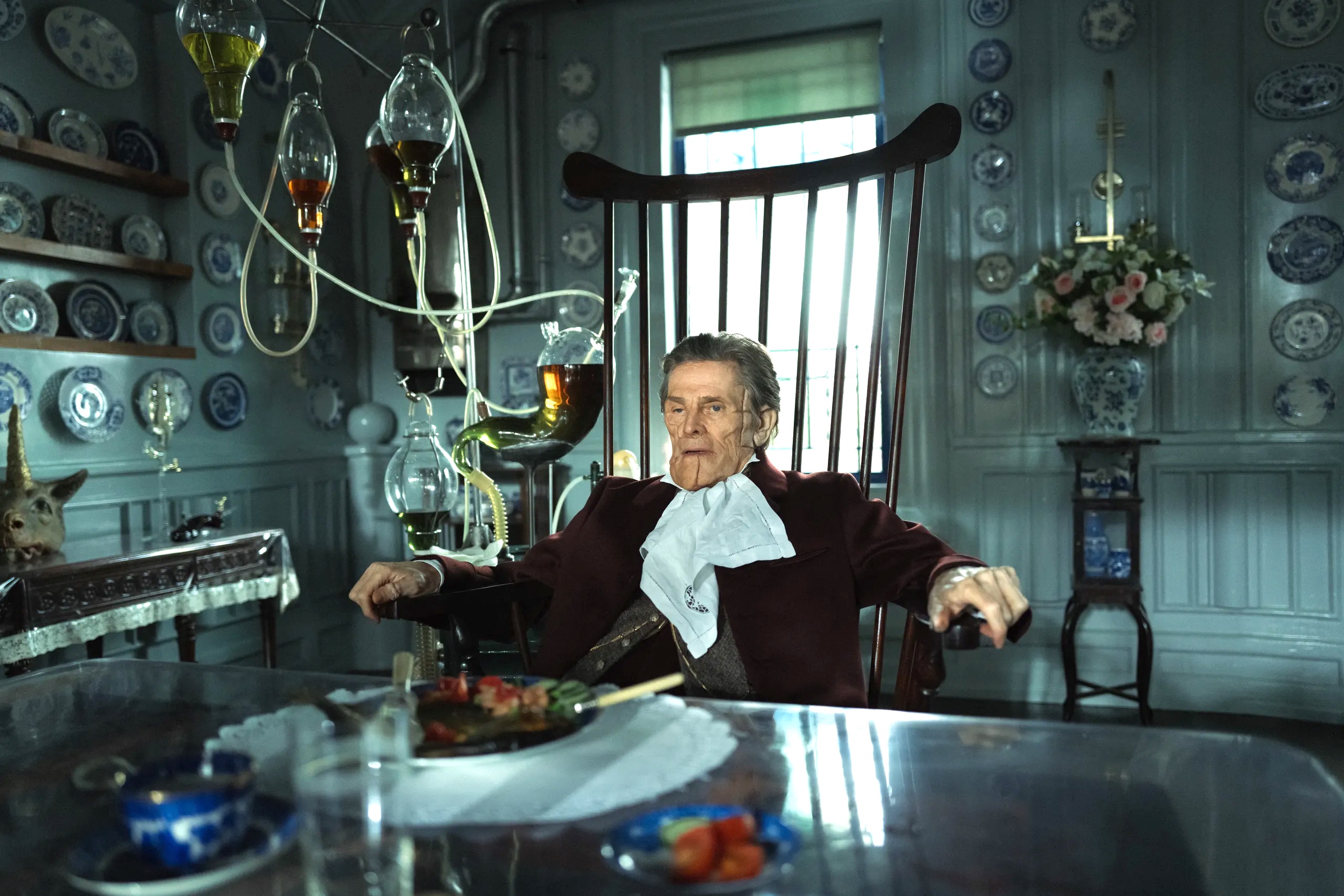
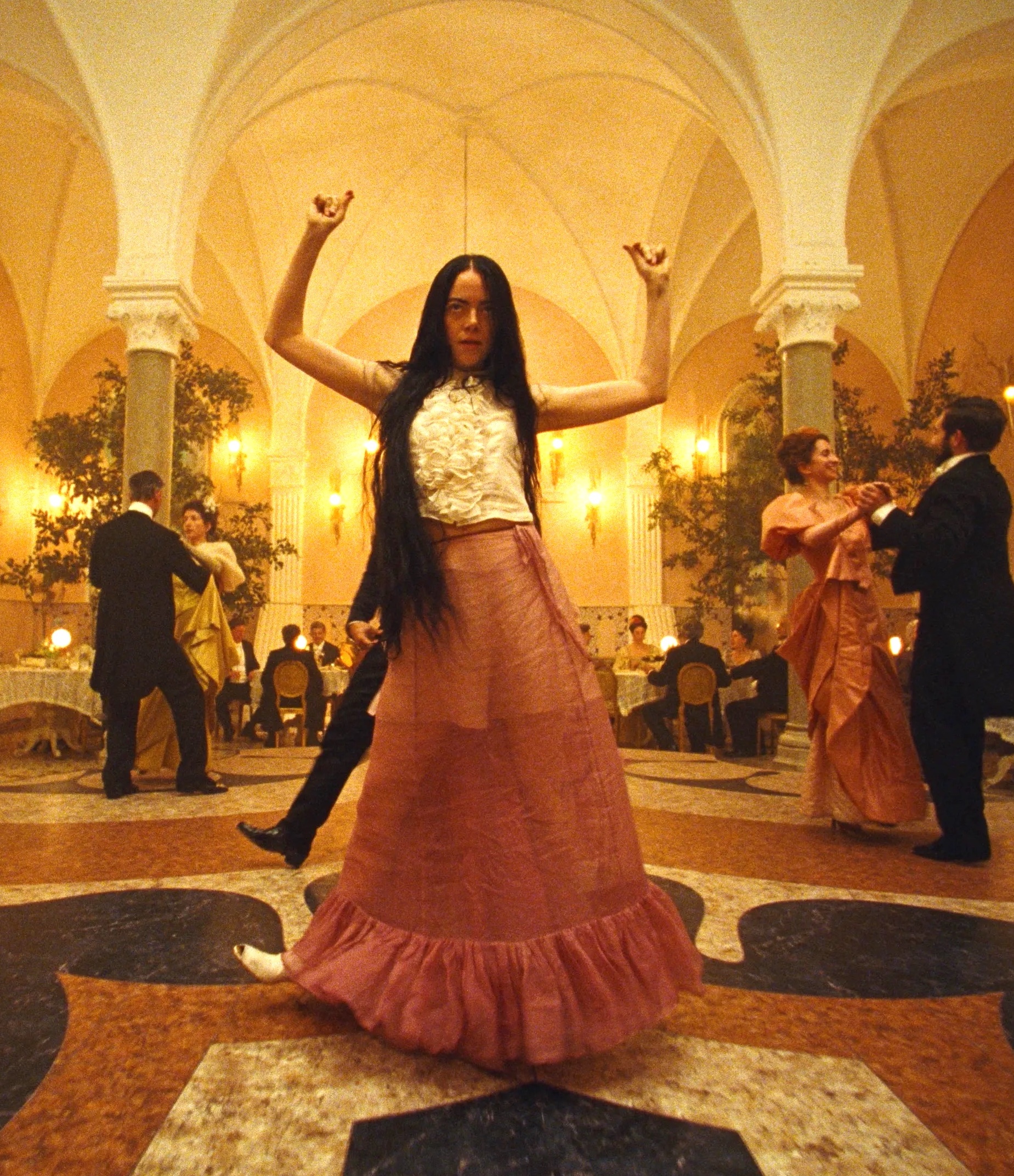
Poor Things, adapted by Tony McNamara from the novel by Glaswegian author Alasdair Gray, is surely Lanthimos’ most surreal piece yet. It’s been relocated to London (much to the ire of Gray’s fans) and relates the story of Bella Baxter (Emma Stone), a woman who, in the film’s opening scene, throws herself from a bridge into the River Thames. Her corpse is found by Dr Godwin Baxter (Willem Dafoe), a scientist in the Victor Frankenstein tradition. He carries her to his laboratory, reanimates her and makes a few radical adjustments, creating a new being who has to completely relearn how to speak, walk and generally comport herself.

Godwin is assisted by his young protégée, Max (Ramy Youssef), who quickly falls in love with Bella, but into this already weird scenario wanders caddish lawyer, Duncan Wedderburn (Mark Ruffalo). He spots an opportunity and promptly purloins Bella for his own nefarious purposes. He whisks her away on a whistle-stop tour of the world, calling in at some of the strangest cities you’ll ever witness on the screen…

It’s hard to know where to start throwing superlatives at this, but I’ll try.

Poor Things simply vibrates and hums with pure invention, switching from black and white, to heightened colour, from fish-eye lens interiors and cramped city streets, to majestic – almost hallucinatory -landscapes, every frame so packed with ideas that I’m convinced I could watch this a dozen times and spot something new with every viewing. Stone, in a performance that has already claimed a Golden Globe and seems a good bet for an Oscar, is extraordinary here, uncannily inhabiting the character of a naïve woman. She is subjugated and exploited by the vicissitudes of toxic males, but somehow manages to assert her own agency and emerge victorious. Dafoe, who could so easily have been a clichéd horror figure, emerges as a sympathetic and weirdly adorable character, who has devoted his life to exploring the mysteries of science but still cares about his ‘daughter”s happiness. Hats-off also to composer Jerskin Fendrix for the suitably eerie score, which complements the action perfectly.

A word of warning: Poor Things has an 18 certificate and some of the content – especially those sections set in Paris – are unapologetically sexual in nature, but the film somehow never feels prurient. These scenes only serve to fuel the essence of the story: how the inherent nature of mankind is to corrupt and destroy everything of value. This may sound po-faced, but I’ve seldom seen a message delivered with such unfettered exuberance.

This is Lanthimos’ best feature yet (after The Favourite, that’s praise indeed). I’m already excited to hear about where he’s headed next. Just name the date, Yorgos; I’ll be first in the queue.

5 stars

Philip Caveney

The Northman

19/04/22

Cineworld, Edinburgh

It seems suspiciously like fate. Here I am – only just returned from a week in Shetland, where I’ve been researching Vikings – and this film is waiting for me at the local cineplex. Of course I have to see it. I can’t not see it. But I have some reservations. For one thing, despite the film’s almost indecent rash of five star reviews, I haven’t been exactly enamoured by Robert Egger’s previous offerings, The Witch and (more especially) The Lighthouse, both of which felt like cases of style over content.

It’s clear from the get-go, that The Northman is a big step up for Eggers (who co-wrote the screenplay with Sjon). His evocation of Viking life is vividly painted in freshly-spilled viscera across a massive landscape. The world-building here is dirty, ugly and thoroughly convincing. In the opening scenes, we meet young Prince Amleth (Oscar Novak), welcoming his father, King Aurvandil (Ethan Hawke), back from his conquests. Amleth’s mother, Queen Gudrún (Nicole Kidman), is rather less welcoming and the reason for that soon becomes clear. She has secretly allied with Aurvandil’s brother, Fjölnir (Claes Bang), who is determined to kill Aurvandil and his son, and take Gudrún as his wife.

If the story seems familiar, it ought to. The ancient Scandinavian legend of Amleth is the tale that initially inspired Shakespeare to write Hamlet.

Amleth manages to escape from the bloody mutiny and, when next we meet him, he’s grown into a thoroughly buff Alexander Skarsgård, who, adopted by another tribe, has become a fully-fledged wolf warrior, a berserker. An ensuing battle sequence leaves no femur unshattered, no skull uncleft. Those viewers who wince at bloody violence may prefer to avoid this film at all costs – or spend a lot of time looking away from the screen.

Amleth learns that his uncle Fjölnir has had his stolen kingdom taken from him and has been exiled to Iceland, where he’s attempting to make a new life for himself as a sheep farmer. Gudrún has gone with him and Amleth knows that he must follow. So he disguises himself as a slave (by first branding his chest with a hot coal) and stows aboard a boat taking a consignment of workers over to Fjölnir. On the hazardous journey across the ocean, he meets up with Olga of the Birch Forest (Anya Taylor-Joy), a self-professed earth witch, and quickly falls under her spell.

But can this new love quell the thirst for vengeance that has consumed him since childhood?

The Northman is by no means perfect. It’s at its best when depicting the savage lifestyle of the Vikings and I also love the hallucinatory images that often flood the screen, particularly Amleth’s repeated visions of the legendary Tree of Yggdrasill, where family members are suspended like ripening fruit from its entwined branches. There’s also a spectacular Valkerie ride that carries me headlong to Valhalla.

Kidman, though initially underused, does get one scene that puts an entirely different spin on circumstances and makes me appreciate why she’s a director’s go-to for so many difficult roles. I would also have liked to see more of Willem Dafoe who, as Heimar the Fool, has clearly been drafted in to fill the Yorrick-shaped hole in the piece.

If I have a criticism, it’s simply that the age-old theme of revenge offers little in the way of surprise – indeed, there’s one point in the film’s later stages that seems to offer a braver and less conventional solution to Amleth’s torture, should he be man enough to take it – but, perhaps inevitably, it’s thrown aside and our rugged hero goes back to the well-worn path he’s always been destined to tread. Which makes the final fiery confrontation a little underwhelming.

Still, there’s no doubt that this is Eggers’ most assured film thus far – and I’m definitely interested to see where he goes next.

4.2 stars

Philip Caveney

Nightmare Alley

25/01/22

Cineworld, Edinburgh

After the heartwarming optimism of Belfast, could there be a more contrary film than Nightmare Alley? This bleak, cynical tale of corrupt grifters, who spend their days trying to part the vulnerable from their worldly wealth, is a noir in the truest sense of the word, and marks the first time that Guillermo del Toro has stepped away from the supernatural or  sci-fi in order to tell a story. That said, this is every bit as dark as anything he’s done before.

It is of course, a remake, originally filmed in 1947 and starring Tyrone Power. Here, the boots of the lead character, Stanton Carlisle, are convincingly filled by Bradley Cooper. When we first meet Carlisle he’s carefully eradicating all traces of something he’s done – something bad that can only be cleansed by fire – but we won’t be given more detail until much later. After a long ride on an overnight bus, Carlisle arrives on the doorstep of a seedy carnival run by Clem Hoatley (Willem Dafoe), a venal charmer who thinks nothing of employing alcoholics and passing them off as ‘geeks’ – supposed ‘wild men’, who will bite the heads of live chickens for the entertainment of the carnival’s visitors.

Carlisle makes himself useful, helping to pitch tents and dispose of rubbish. He meets up with ‘Zeena’ (Toni Collette), who runs a mind-reading act alongside her alcoholic husband, Pete (David Strathairn), and, spotting an opportunity, Carlisle succumbs to Zeena’s charms, whilst filching the basics of Pete’s old routine for future use.

The carnival provides a wonderful setting, an atmospheric world where the neon-lit, tawdry wonders seem to throb with an innate sense of dread. Carlisle meets up with Molly (Rooney Mara), whose act has her being ‘electrocuted’ on a nightly basis. Carlisle transfers his affections to her, and the couple head off to the film’s second act, which takes up the story two years later. Now Carlisle and Molly are running a successful night club act, using Pete’s old blueprint, and are living the highlife. What could possibly go wrong?

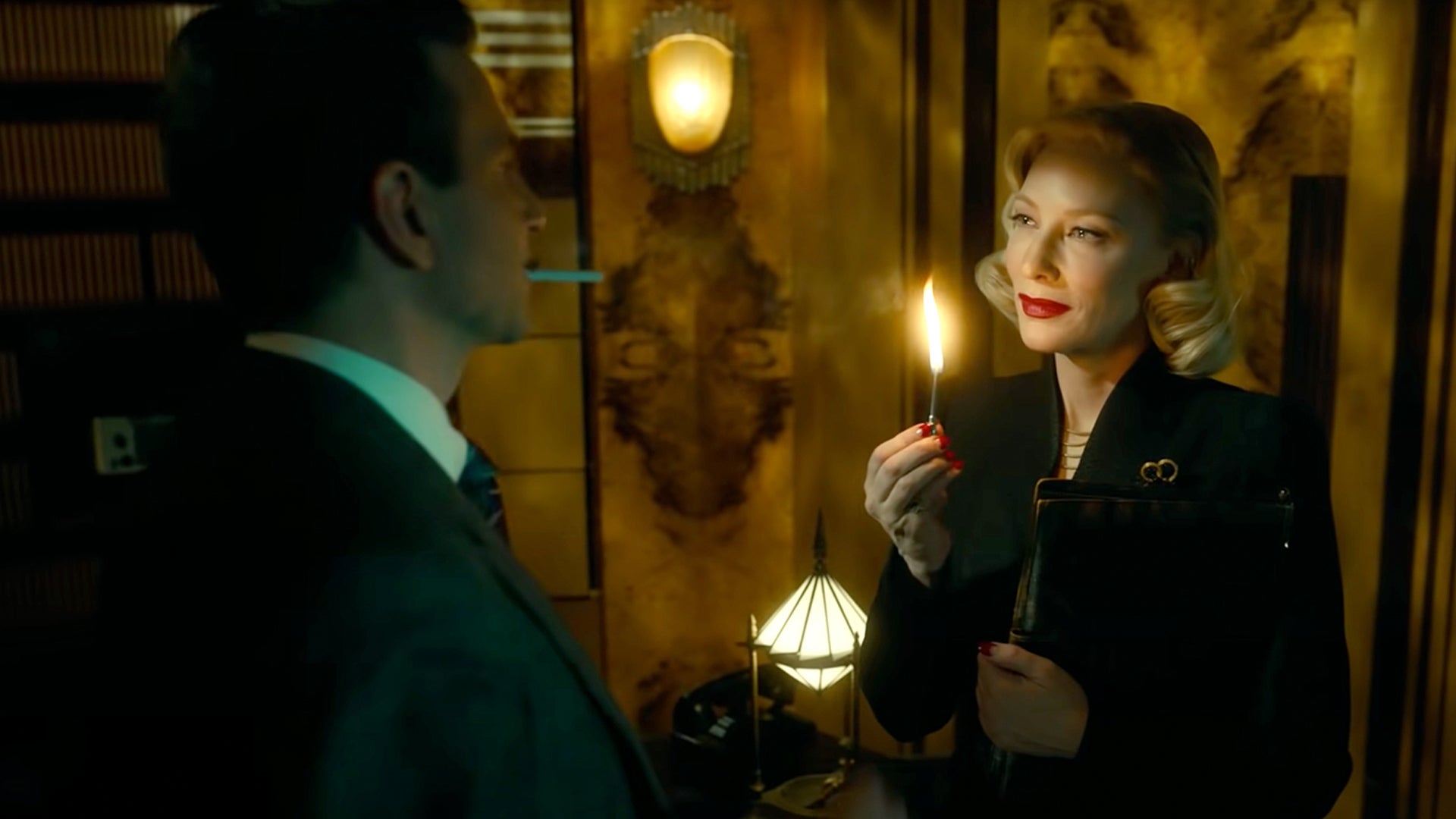
Well, this is noir, so of course there has to be a femme fatal and she dutifully arrives in the shape of psychologist Dr Lilith Ritter (Cate Blanchett). She starts to dangle the prospect of even greater riches in front of Carlisle. Will he yield to temptation?

Del Toro’s theme here is that the unscrupulous operate by exploiting the weaknesses of their victims, whether they’re doing it from the grubby confines of a canvas tent or the swish environs of an art deco apartment building. And, as ever, the wealthy are never happy to stand still, when they can see even more riches glittering enticingly, just out of reach.

Nightmare Alley is proper, grown-up filmmaking. The lengthy running-time and serious subject matter will doubtless put some punters off, and financial success will rather depend on whether any of its predicted Oscar nominations come to fruition. While this might not be the slice of cinematic perfection that is The Shape of Water, it’s nonetheless the work of a gifted director at the peak of his powers, handling a tricky subject with consummate skill, aided and abetted by the dazzling cinematography of Dan Lautsen.

Plans are afoot to release a monochrome version of this, but it’s hard to imagine how it could look any more lush than it does here, with every frame a veritable work of art.

4.8 stars

Philip Caveney


Spider-Man: No Way Home

17/12/21

Cineworld, Edinburgh

I’ve seen most of the superhero movies and the one franchise I consistently enjoy is Spider-Man. I suppose it makes perfect sense. I was a big fan of the comic books back in the day and the films – all three of the major strands – have always had that lightness of touch that somehow steps aside from the pomposity of so many Marvel projects. Played mostly for laughs, the ‘Spidys’ have a levity about them, as their young protagonist goes about his heroic duties, whilst trying to woo his girlfriend and ensure that he gets a proper education.

I was somewhat apprehensive when I picked up on the various rumblings about the Multiverse (inevitable, I suppose, after the success of Lord and Miller’s wonderful Into the Spider-Verse) and also, the heavily-trumpeted presence of a certain Doctor Strange, but, as it turns out, I needn’t have worried. While this is undoubtedly the most complex Spider-Film to date, the sparky script by Chris McKenna and Erik Sommers manages to keep things moving briskly along. Every time a scene threatens to become too portentous, they throw in a snarky comment or a bit of tomfoolery and everything blurs back into motion. The two hour running time is never allowed to drag.

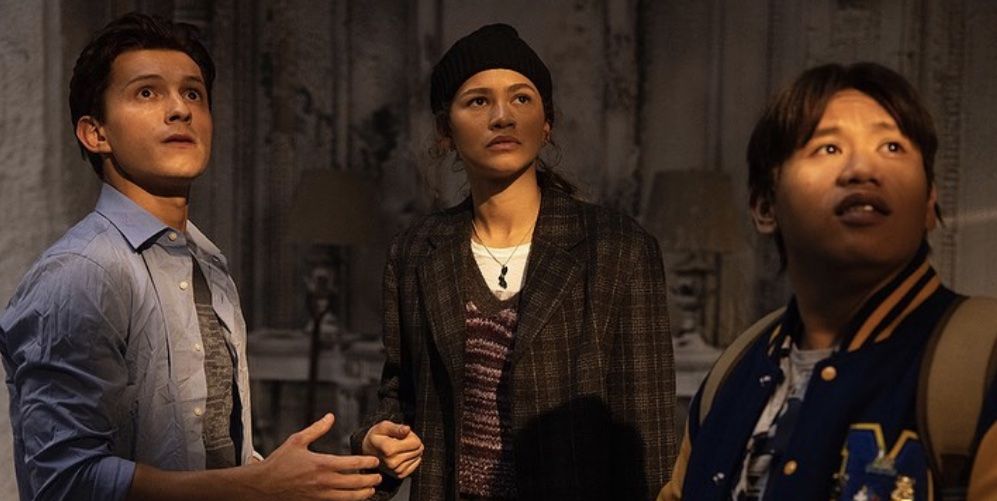
No Way Home picks up at the cliff-hanging moment where Far From Home left off – with Peter Parker (Tom Holland) being publicly outed. The ensuing fallout from that event kickstarts the new film straight into action and it barely stops to take a breath. It all feels horribly real as Peter, Aunt May (Marisa Tomei), MJ (Zendaya) and Ned (Jacob Batalon) are trolled, mocked and despised by the right-wing buffoons who have been listening to shock-jock, J. Jonah Jameson (JK Simmons). It’s weirdly prescient.

Feeling cornered and understandably worried about those he loves, Peter has what he thinks is a brilliant idea. He approaches his old pal Doctor Strange (Benedict Cumberbatch) and asks him to reverse time (as you do) so everyone will forget that he’s actually our favourite neighbourhood web-slinger.

Needless to say it’s a very bad idea.

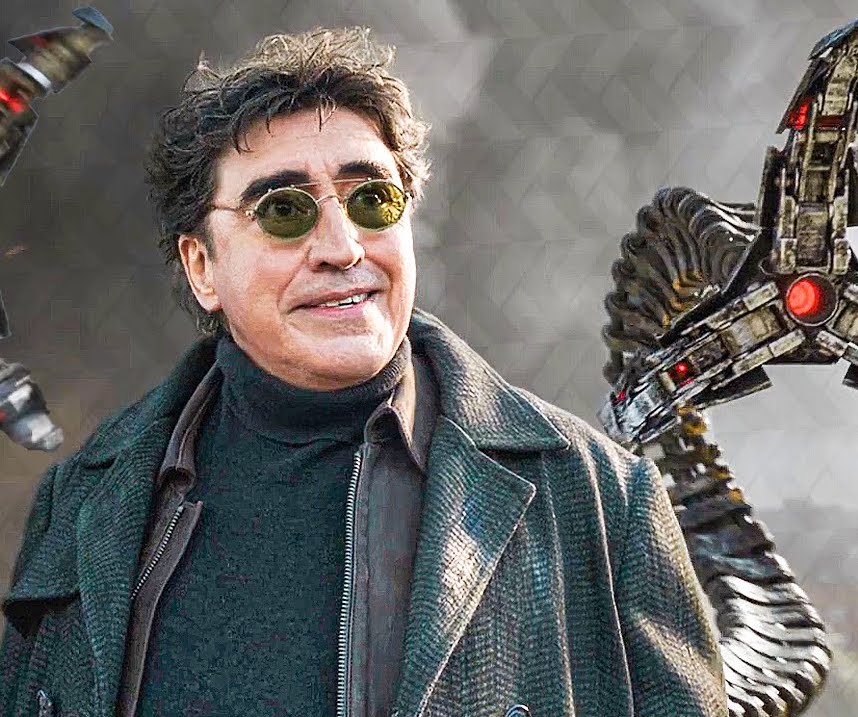
Strange’s celestial tinkering accidentally opens a breach in the Multiverse and, almost before Peter knows what happening, he’s being pursued by adversaries from across time – they include Doc Octopus (Alfred Molina), the Green Goblin (Willem Dafoe) and many, many others, most of whom are astonished to find that Peter doesn’t look anything like the man they remember, but are perfectly happy to try and kill him anyway. Luckily, he doesn’t have to fight them off single-handedly, because he’s offered help from an unexpected quarter…

As is so often the case with these movies, there’s an extended super-powered punch-up at the conclusion, but even this is saved from becoming tedious by liberal deployment of the aforementioned witty dialogue – and there’s a surprisingly poignant coda to the film, which ties all the multifarious strands neatly together. Holland has hinted that this may be as far as his involvement will go and I have to say, if he does choose to step away, he’ll be leaving a very accomplished trilogy to remember him by.

Mind you, it’s clear that this won’t be the end. A post-credits teaser dangles the dubious prospect of a Spawn/Spider-Man mash up, which really isn’t something I relish, but Sony are bound to want to involve their other big-selling franchise at some point, so we’ll see what happens on that score.

Those who are willing to stay in their seats till the credits stop rolling will be rewarded with a trailer for the upcoming Dr Strange movie, which looks… strange, to say the very least.

But meanwhile, No Way Home is well worth your attention. Even unapologetic spandex-haters should give this one the benefit of the doubt. Because, you know what? It rocks.

4.6 stars

Philip Caveney

The Lighthouse

05/02/20

It’s always frustrating, isn’t it, when others commend the work of a particular director and – for the life of you – you just don’t see what they love about it?

I’ve felt like that about Quentin Tarantino, pretty much since Pulp Fiction onwards; more recently, I really didn’t care for Robert Eggers’ debut film, The Witch, which many respected critics hailed as nothing short of a masterpiece. Now here’s his sophomore effort, The Lighthouse, which arrives in cinemas virtually creaking beneath the weight of the many superlatives that have been heaped upon it. Of course I have to give him a second chance, right?

This doom laden two-hander, shot in grainy black and white on 35mm stock and projected in a claustrophobic 1:19:1 aspect ratio, concerns the story of two ‘wickies,’ despatched to a remote lighthouse off the coast of New England, where they are to live and work for a month. Thomas Wake (Willem Dafoe) is an old hand, who lords it over new recruit Ephraim Winslow (Robert Pattinson), making him take on most of the menial duties while he reserves the tending of the light itself as his own personal privilege. He also mentions that Winslow’s predecessor went mad after seeing some ‘enchantment in the light’ and hints that something bad happened to him.

The two men embark on their dull and thankless routine, which is depicted in punishing detail. Wake is a drinker of alcohol and, though Winslow resists the temptation to join him at first, he soon succumbs. When a terrible storm maroons the men long past the time when they should have been heading back to the mainland, madness and depravity rapidly descend upon them…

Sadly, I am left completely unstirred by what ensues. Here is a ‘horror’ movie that completely fails to generate any sense of threat, an allegory that cloaks its meaning to an irritating degree. What we’re left with is a study of two tedious examples of toxic masculinity, who spend most of the time in silence and then ramble away in what Eggers insists is an aproximation of the language of the late 19th century, but which is mostly rendered unintelligible by the over-enthusiastic sound effects. They fight a bit too. And sing. And dance.

Winslow’s character has recurring dreams (possibly memories, it’s never entirely clear) of discovering a mermaid and having sex with her – sadly that appears to be the only role for a woman in this film – and there are visions of tentacles, floating logs and a severed head that might just belong to Winslow’s predecessor.

There are various attempts to allude to classical elements. The killing of a bird presaging disaster is surely a nod to The Ancient Mariner, while a climactic image seems to refer to the myth of Prometheus. But honestly, there’s so little incident in this film’s one hour, forty-nine minute run, that I spend most of my time feeling as bored as its two protagonists. Dafoe and Pattinson are both excellent actors, but neither is given enough to do here (unless you count Wake’s unbridled flatulence) and, when the final credits roll, I leave wondering, once again, what it is about Eggers that generates so much adoration?

I really wanted to like this film. And I gave it my best shot. Honestly.

2 stars

Philip Caveney


Motherless Brooklyn

13/12/19

Motherless Brooklyn, based on the novel by Jonathan Letham, has clearly been a labour of love for actor, Edward Norton. He’s been trying to put a movie version together for something like fifteen years now and, finally, here’s the result. As well as starring as lead character Lionel Essrog, Norton has gone ‘the full Orson Welles,’ serving as screenwriter, executive producer and director. He’s transposed the novel’s setting from the 1990s to the 1950s, an astute move, as the look and feel of the film is most definitely noir. Dick Pope’s bleak cinematography evokes memories of some of the great movies in this genre, particularly Chinatown.

Lionel is working for a small-time detective agency in New York. When we join the action, he and Gilbert (Ethan Supplee) are watching out for their boss, Frank Minna (Bruce Willis), who has an important meeting with some powerful people and has asked his employees to covertly back him up. 

The meeting goes spectacularly wrong and Frank winds up with a bullet in his gut. As a result, Lionel finds himself following up on Frank’s recent cases, one of which has him following Laura (Gugu Mbatha-Raw), an activist and daughter of a local jazz club owner. Lionel is able to call on some pretty special skills, as he has an uncanny ability to recall everything that’s ever been said to him. He also has a tendency to blurt out seemingly unconnected utterances at random moments – it’s probably Tourette’s syndrome but, this being the 1950s, his condition doesn’t yet appear to have a name.

As Lionel digs deeper into the case, he comes up against ruthless property developer, Moses Randolph (Alec Baldwin) and also Randolph’s mysterious, down-at-heel critic, Paul (Willem Dafoe). But what do these two men have to do with Laura? And will the unravelling of the case prove dangerous for both her and Lionel?

Motherless Brooklyn is a curiously old-fashioned concoction, one that takes its own sweet time to roll out its labyrinthine story, but Norton, in what is only his second attempt at directing a movie (his first was Keeping the Faith in 2000) has done a pretty good job of pulling the various narrative strands into a satisfying whole. His performance is pitch perfect and he’s helped by a stellar supporting cast. Baldwin is particularly good as the decidedly Trumpian Randolph, a dead-eyed, frost-hearted megalomaniac with no scruples whatsoever, while Mbatha-Raw dazzles like an orchid in the drab heart of 50s America. I like the way Lionel’s disability is handled (it feels very convincing, just a part of who he is, ordinary to those who know him) and I also enjoy the film’s refusal to tie its storylines up with easy resolutions. Finally, it’s worth mentioning that the jazz score, a style of music that usually repels me, works brilliantly here, as does a haunting piece by Radiohead’s Thom Yorke.

This won’t be for everyone, but those with an enduring love of film noir will find plenty here to savour – and Norton deserves much credit for his tenacity in seeing this slow-gestating project through to the end.

4.2 stars

Philip Caveney