27/02/25
Bedlam Theatre, Edinburgh
We enter the auditorium to the strains of Jarvis Cocker warning a rich girl of what it’s really like to be common, to “watch your life slide out of view / and dance and drink and screw / because there’s nothing else to do.” Okay, so tonight’s play – Jim Cartwright’s Road – is set in the mid-80s, a whole decade before Pulp’s song was released, but the lyrics couldn’t be more apt. It’s a fitting anthem to what is essentially a series of bleak vignettes: snapshots of the residents of a Lancashire road as they navigate their way through another grim weekend, trying to find some glimmers of joy in Thatcher’s broken Britain.
This is a sprawling, kaleidoscopic play, but EUTC’s students do an impressive job of wrangling it into shape, creating a vibrant, cohesive show. I especially enjoy their commitment to world-building, with actors in character as the audience files in, as well as throughout the interval, when some chat to people in the toilet queue, while others invite us to join them on stage to dance at Bisto’s Beatoven Disco with DJ Ronan Lenane. (There’s also a pre-show in the bar, but there’s not a lot of room in there, so we don’t get to experience what that’s like.)
I have mixed feelings about Cartwright’s script. Groundbreaking when it premiered in 1986, there’s no denying its continued relevance, as the UK struggles with a cost-of-living crisis and a hollowed-out job market. It’s an elegy for the working-class, and I like its bold spirit and the stylised way the characters voice their despair, saying all the things that usually remain unspoken, masked by politeness and a “chin-up” mentality. However, while the issues sadly haven’t aged, the writing style has: it seems heavy-handed compared to more recent polemics, hitting the audience repeatedly over the head with a message we understand from early on.
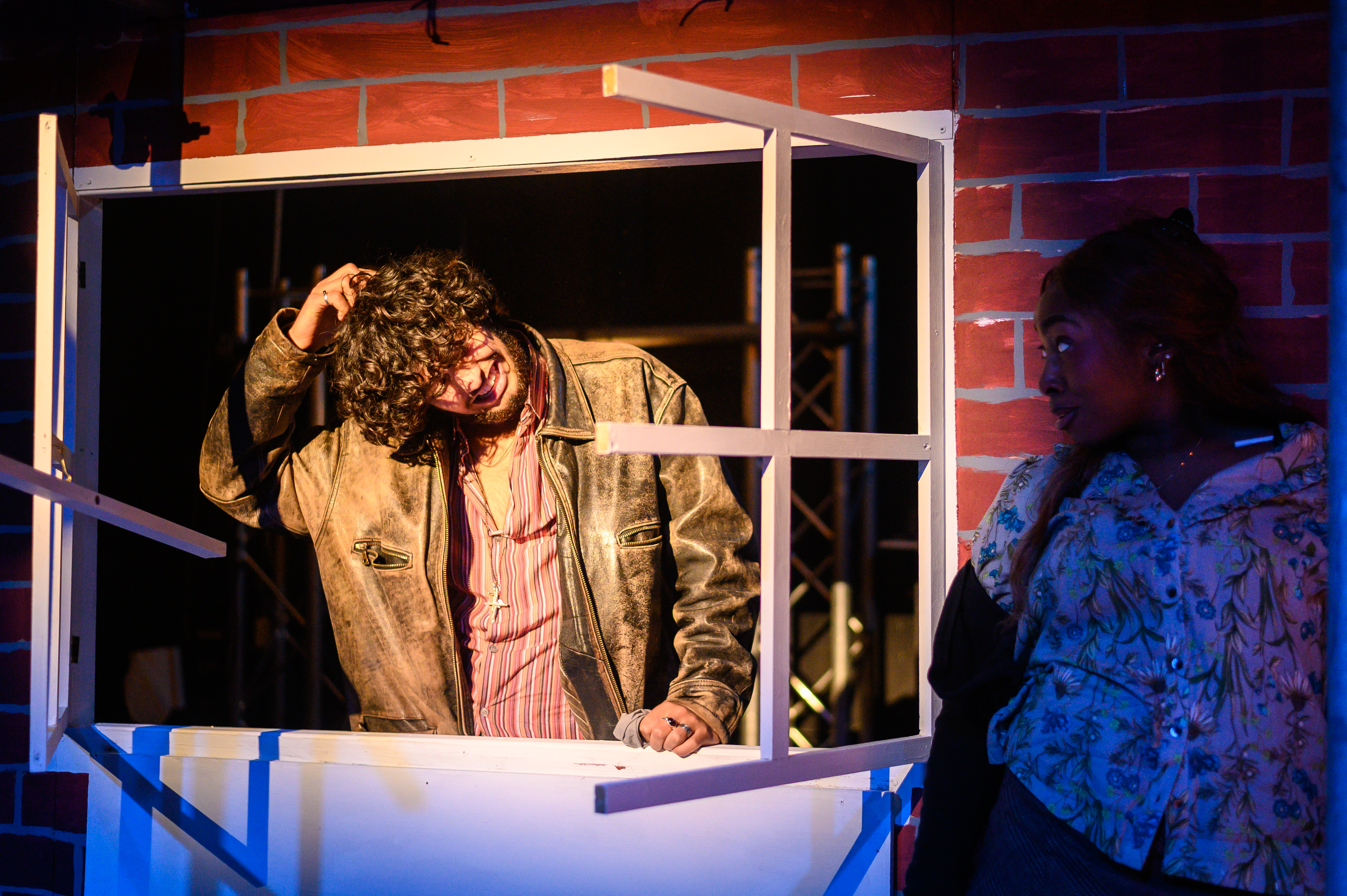
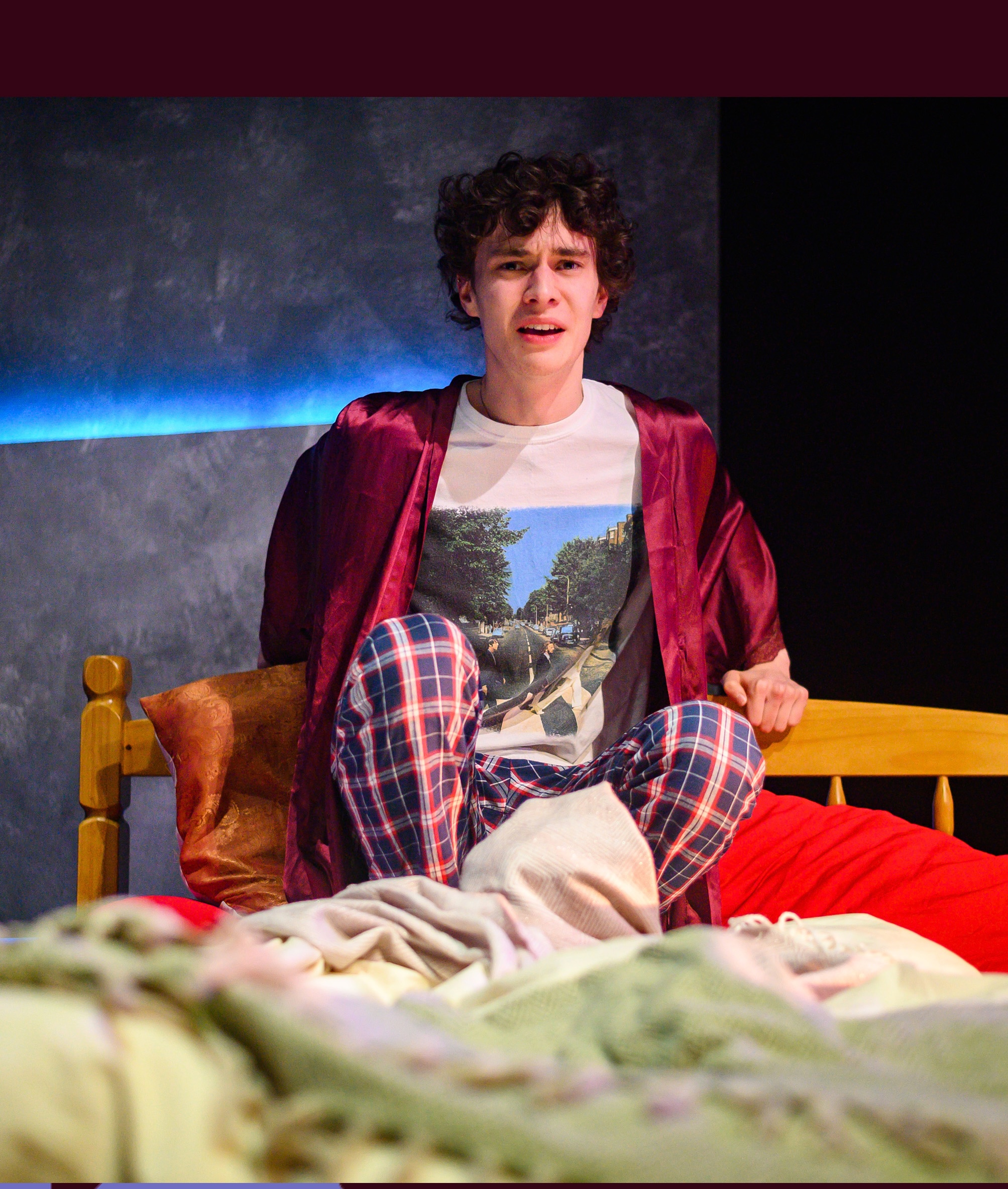
Nonetheless, this is an impressive production, and the array of talent in the room is undeniable. Under Moses Brzeski-Reilly and Dan Bryant’s inventive direction, Bedlam’s performance space is almost unrecognisable. Instead of the usual end-on stage, we have a thrust, the audience positioned around three sides. The fourth side sports a door, a big window and some scaffolding, and the gallery above is also pressed into use. The square performance space is divided into four distinct areas, the road, a ginnel, a living room and a bedroom, the latter pair representing the interiors of several different homes. Miki Ivan’s complex lighting design is crucial in guiding the audience to the various locations.
The sound design – by Millie Franchi – is admirably detailed, the ambience convincing and evocative. However, thanks to a combination of the thrust staging and the venue’s vaulted ceiling, there are moments when I find myself struggling to hear what some of the characters are saying, especially those who are facing away from me on the far side of the room.
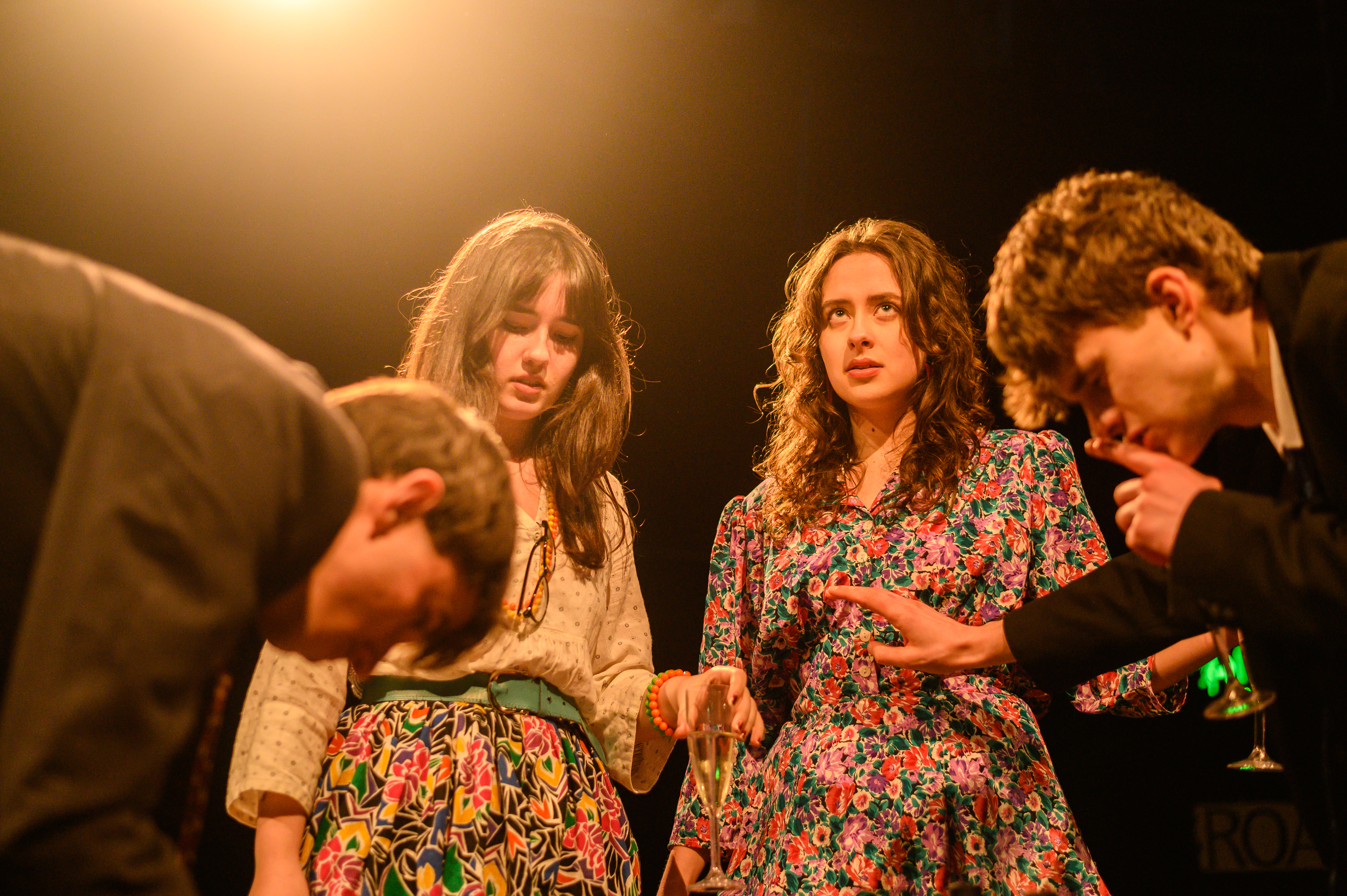
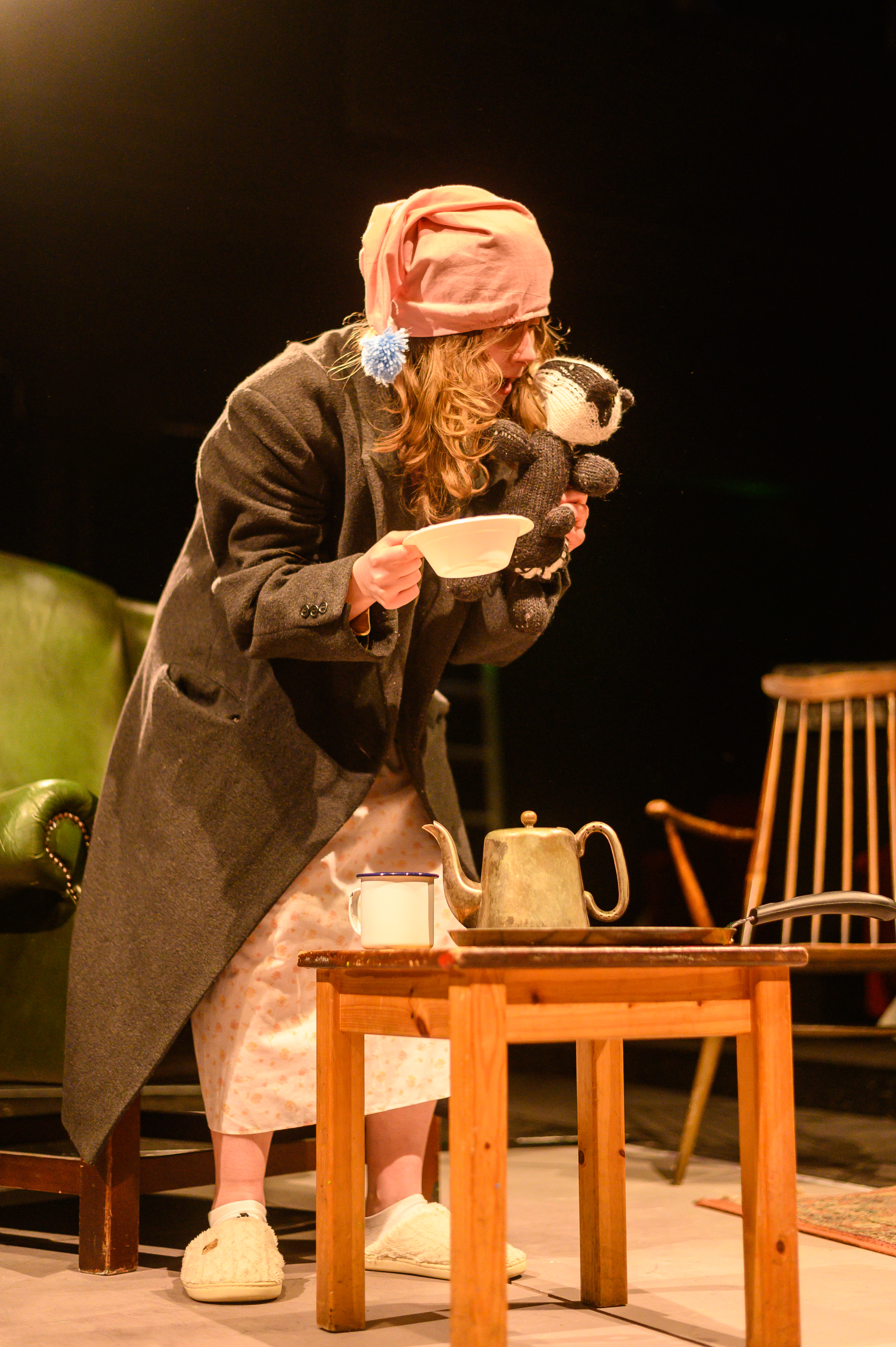
It’s hard to single out individual performers in an ensemble piece like this, but there are a few standouts. Ava Godfrey, Amelia Duda, Will Grice and Sam Gearing absolutely nail the climactic scene where Louise and Carol’s double date with Brink and Eddie transforms from a nihilistic drinking session into an almost spiritual attempt to conjure up some happiness. Ava Vaccari is compelling as Molly, an elderly woman suffering from Alzheimers, while Noah Sarvesvaran provides the centre point as Scullery, the drunken vagrant who guides the audience through proceedings.
Once again, EUTC have succeeded in putting their own inimitable stamp on a classic production. There are just two more chances to see this before it closes, so why not head on down to Bedlam and join in the mayhem.
4 stars
Susan Singfield

 Bouquets & Brickbats