Whoopi Goldberg

Sister Act

04/10/23

Festival Theatre, Edinburgh

There are some films that make the transition to stage musical against all the odds – and there are others that are clearly destined to be that very thing from the word go. 1992’s Sister Act, a comedy vehicle for the then rising star Whoopi Goldberg, definitely belongs in the latter category. Funny, irreverent and already packed with rousing gospel tunes, this feels like a natural progression.

Philadelphia, 1977. Deloris Van Cartier (Landi Oshinowo) is trying to make headway as a singer on the Philly soul scene and, when we first meet her, she’s auditioning at a nightclub owned by her shady boyfriend, Curtis (Ian Gareth-Jones). Curtis (who naturally is married) assures Deloris that she’s not quite ready for stardom and offers her one of his wife’s cast off fur coats as compensation. Deloris already has doubts about the wisdom of the relationship and this is compounded when she witnesses Curtis murdering one of his henchmen, whom he suspects is a police informant.

Deloris seeks help at the local police station, where she encounters former school chum and crush, ‘Steady’ Eddie Souther (Alphie Parker). Eddie wants Deloris to lie low until she can speak about the murder in court and he thinks he has the perfect hideout for her. It’s a convent, Our Lady of Perpetual Sorrow, an ancient establishment that has fallen on hard times and is struggling to survive. It’s presided over by the acerbic Mother Superior (Lesley Joseph), who struggles to cope with Deloris’s potty mouth and, in an act of desperation, assigns her the task of coaching the convent’s resident choir, which is frankly terrible.

But Deloris has her own methods of coaxing the best performances out of the sisters and the results are startling to say the least.

What ensues is a slick, funny, exhilarating and sometimes uproarious sequence of events that never loses momentum. There’s so much here to relish. The vocal performances of Oshinowo – and of Lizzy Bea who plays the young noviciate, Sister Mary Robert – are simply thrilling to witness, their voices soaring over the sound of a live band. The resident nuns all have their own individual characters and I’m particularly impressed by Isabel Canning’s Sister Mary Patrick, whose enthusiastic twirls and gestures demonstrate the sheer exuberance of a woman discovering the joy of her own inner creativity.

The set and costume designs by Morgan Large are gorgeous, a wonderful mash up of stained glass and 70s kitsch, the many complex scene changes happening as if by magic. Alistair David’s choreography makes everything look effortless and Joseph demonstrates the kind of comic chops that have kept her treading the boards for so many years. And yes, maybe there is a big dollop of schmaltz thrown in for good measure, but hey, that’s no hardship.

By the finale, which features more sequins than seems humanly possible, I’m clapping along with the rest of the packed audience, loving every minute. The term ‘feel-good theatre’ is sometimes overused but I can’t think of a more appropriate description for Sister Act. This is a ton of fun.

4.2 stars

Philip Caveney

Luck

16/07/23

Apple TV

After experiencing some er… issues at his old outfit, former head honcho of Pixar John Lasseter has formed his own studio, Skydance Animation, along with a whole bunch of other producers. Their first release, Luck, an Apple original, has all the visual hallmarks of a Pixar production, though directors Peggy Holmes and Javier Abad – and writers Kiel Murray and Jonathan Aibel – don’t seem able to negotiate the fine line between emotion and mawkishness quite as skilfully as Pixar do.

The film starts confidently enough with orphan Sam (Eva Noblezada) turning eighteen and accepting that the ‘forever family’ she’s always longed for simply isn’t going to happen. She must strike out on her own, find a job and learn to fend for herself. It’s refreshing to see an older protagonist at the centre of an animated story and, when we learn that Sam’s always been cursed with bad luck, the point is skilfully demonstrated by a series of beautifully-timed slapstick routines.

But Sam’s luck changes dramatically for the better when she shares a snack with a talking black cat called Bob (entertainingly voiced by Simon Pegg in a dodgy Scottish accent. Don’t worry, it’s explained later…). Bob leaves behind a lucky penny, which Sam picks up – whereupon, her own luck changes for the better. If she drops a slice of toast now, it lands jam side up! But Sam vows to give that penny to a little girl at the orphanage, who Sam knows is hoping to be adopted.

When she inadvertently drops the penny down a toilet, Bob comes back in search of it – and, before she quite knows what’s happening, Sam is accompanying Bob to the legendary ‘Land of Luck’ in search of a replacement…

Luck is a bit of a mixed bag. The early sections, set in the real world, work just fine and hit the chuckle buttons, promising a thoroughly enjoyable experience – but, once in the fantasy world, everything becomes a bit too complicated for its own good and, as a result, it feels less assured. The story galumphs along at full steam expecting us to take a lot in our stride: a tribe of penny-polishing leprechauns with awful accents (no excuses offered this time); a Queen dragon voiced by Jane Fonda; a leprechaun captain (Whoopi Goldberg); and a camp moustachioed unicorn called Geoff (Flula Borg), who is fond of a workout down the gym.

But then it turns out there’s also a Land of Bad Luck and, when Geoff’s complicated machinery (it keeps the two opposing forces balanced) goes a bit haywire, we’re told there’s a danger of all the good luck in the world disappearing, a possibility that unfortunately generates no jeopardy whatsoever.

Not awful then, by any stretch of the imagination, but frankly not in the same league as some of Pixar’s big-hitters – though, truth be told, even they are struggling to reach their former heights. Why would that be I wonder? Bad stories? Bad management decisions ? Or just bad luck?

You decide.

3.4 stars

Philip Caveney

Till

07/01/23

Cineworld, Edinburgh

The story of Emmett Till and his mother, Maimie Till-Mobley, is a real-life tragedy that echoes down the years, a case that was only fully resolved in 2022 – even though the initial events unfolded more than sixty years ago.

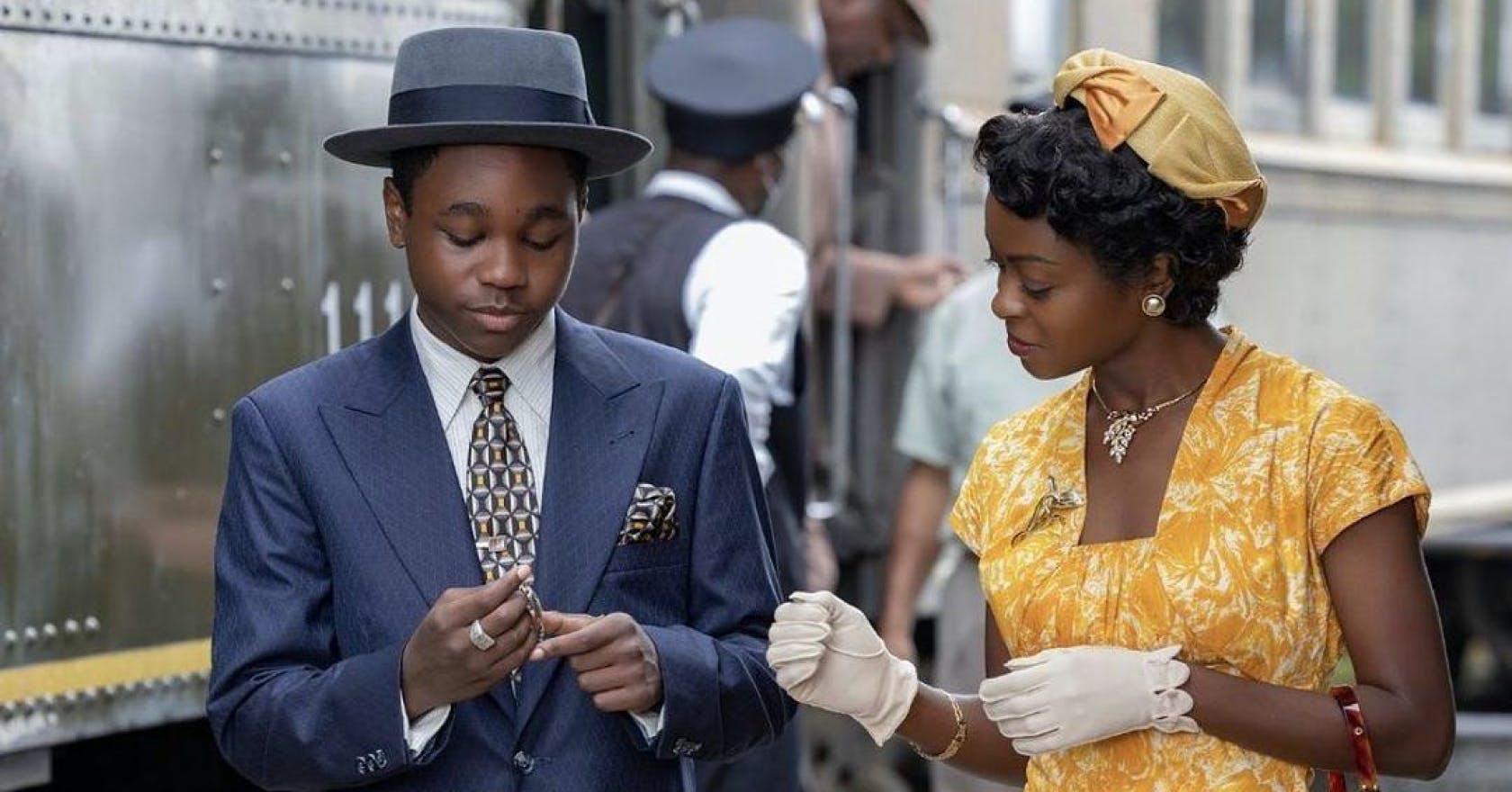
It’s August 1955, and Mamie (Danielle Deadwyler) lives and works in Chicago. Her husband died during World War 2, but she has found herself a decent job (the only Black woman in her office) and is well able to give her live-wire fourteen year old son, Emmett (Jalyn Hall), a comfortable life. Mamie is understandably worried when Emmett announces his wish to go and visit his cousins and work with them on a cotton plantation in Mississippi for the summer. She knows that it will be a stark cultural change from the relatively enlightened city in which the boy has grown up – and she knows too that he’s always ready to lark around and crack jokes. Mamie’s mother, Alma (Whoopi Goldberg), advises her to warn her son to keep his head down. “If he does that, he’ll be fine,” she says. “He’ll be back in no time.” So Mamie reluctantly agrees to the visit.

But her worst fears are soon shockingly realised. In Mississippi, Emmett visits a convenience store and makes friendly overtures to Carolyn Bryant (Haley Bennett), the white woman behind the counter. The next time Mamie sees her son is at the railway station in Chicago, where she views his brutalised, barely recognisable body in a wooden box. He’s been beaten, shot and lynched.

Chinonye Chuku’s film is fuelled by righteous anger, the knowledge that such brutality can – and still does – exist in one of the world’s more powerful countries. There are plenty of other characters in the story, all faithfully rendered, but it is Deadwyler’s extraordinarily powerful performance that gives it wings. Little wonder she’s considered a front-runner for the next Oscars.

If I’m honest, the screenplay (by Chuku, Michael Reilly and Keith Beauchamp) has a tendency to occasionally drift into too much exposition, and the slowly unfolding process of the trial can sometimes seem ponderous. But that’s a minor niggle. I’d be lying if I didn’t admit to viewing much of this through a fuzzy veil of helpless tears.

The most shocking details of all are reserved for the end credits, one of which actually makes me gasp in disbelief.

If you’re looking for a cheery outing to the movies, Till really isn’t the film for you, but it’s an important piece of relatively recent history and a fitting tribute to the memory of both Emmett Till and his incredibly brave and resourceful mother. My advice? Steel yourselves and take a long, hard look.

4 stars

Philip Caveney